Perspectives
Anecdotal, Historical And Critical Commentaries on Genetics
Edited
by
James
F.
Crow and William
F.
Dove
LODs
Past
and
Present
Newton
E.
Morton
Human Genetics, University of Southampton, Princess Anne Hospital, Southampton SO16 5YA, United Kingdom
I
NFORMATION on linkage in the human is accumu- lated as a succession of samples, each of which may be small relative to the amount of data required to detect linkage. Analysis within a sample of pedigrees may be complex, with untested individuals, incomplete penetrance, and multiple loci. Despite these obstacles, several hundred disease loci have been mapped, in many cases with sufficient accuracy to permit positional cloning of a gene whose product was unknown. Now polygenic disease is being attacked with some success in maps that include hundreds of markers per chromo- some and that pave the way for sequencing large parts of the genome. These developments testify to the powerof intellectual curiosity to overcome intractable prob- lems and may rank among the most significant applica- tions of genetics to human welfare.
Linkage before LODs: FELIX BERNSTEIN was one of the pioneers in what is now called genetic epidemiology (CROW 1993). He is perhaps best known for his analysis of the A B 0 locus and bioassay of racial admixture, but he was also the first to realize that linkage could be detected in human pedigrees by taking the product of frequencies that must be in coupling or repulsion, whatever the phase of linkage (BERNSTEIN 1931). Vari- ous modifications of this method were made by WIENER
(1932), HOGBEN (1934), and HALDANE (1934), but they were superseded by the maximum likelihood u scores of FISHER (1935) and FINNEY (1940). Although this ele- gant method is fully efficient in the limit for loose link- age, it has several disadvantages. Only the asymptotic distribution is known, but many linkage samples are small. FISHER’S scores are difficult to compute except in simple twogeneration cases and do not accommodate matings of known phase. They are not efficient for close linkage and do not give a good estimate of the recombi- nation fraction. Finally, insufficient attention was paid to the low prior probability that two random loci are linked, which implies that a conservative significance level must be used to provide reasonable assurance that a statistically significant linkage is real. For these reasons the u-score approach was abandoned in the fifties.
Another approach was pioneered by PENROSE (1935)
Genetics 140: 7-12 (May, 1995)
for sib pairs with unspecified parents. This did not be- come popular in the search for major loci because it neglects information in the phenotypes of parents and relatives, does not give an estimate of recombination, and is unreliable when multiple pairs are drawn from the same sibship. However, sib-pair methods have re- cently been revived for complex inheritance and for dis- ease of late onset where the parents are rarely available. In this early period only three autosomal linkages were discovered: between the Lutheran blood group
(LU) and ABH secretion
( S E )
by MOHR (1951); one form of ellipticytosis (ELI) and the Rhesus blood group( R H )
by LAWLER (1954) ; and the nail patella syndrome(NPSI) with the A B 0 blood group (RENWICK and LAWLER 1955; RENWICK and SCHULZE 1965). All these markers had high penetrance, precise diagnosis, and good survival, so that large pedigrees could be col- lected. Blood groups were markers of choice, despite dominance of antigenic factors. The next period would be characterized by markers with codominance and by analysis based on calculated probabilities.
LODs before linkage: Since its introduction by NEY- MAN and PEARSON (1928), the likelihood ratio has been accepted as the optimal basis for statistical decisions. It is defined on the ith sample
Si
as A, = P(Si(
H I ) / P(Sil Ha), where Ha and HI are alternative hypotheses. The likelihood ratio is to statistics as the microscope is to cytogenetics. Because probabilities for independent samples are multiplicative and a likelihood ratio may be called odds, it was natural for BARNARD (1949) to introduce the logarithm of the likelihood ratio and to call this quantity a LOD (logarithms of odds). There- fore, if z, = log Ai is the LOD for the zthsample, then the LOD for a set of independent samples is 2 =X:==,
G. In this formulation of LODs, the probabilities are conditional and the prior probabilities are unspeci- fied. BARNARD was also interested in “average LODs” in whichnAi,
the product of the Ai, is integrated over a prior distribution under HI to give a weighted means c u m to contrast them with other scoring procedures. They have three useful properties. First, for any pre- specified alternative Hl they give a conservative estimate of significance,
P ( Z
>
log AI Ho<
l / A ) . (1)Second, if common logarithms are used (as they are by convention in genetics) and if HI differs from Ho by m
efficiently estimated parameters, then in the limit for large samples under H ,
(2 In 1O)Z =
‘
x
(d.f. = m) (2)( N E W and PWON 1928). Third, if Ho and HI are jointly exhaustive and mutually exclusive and if the prior distribution is correctly specified, the posterior probability of Hl is
where P ( H l ) / P ( H , ) is called the prior (or “forward”) odds (BARNARD 1949).
These three properties have led to different applica- tions of LODs. One of these was a consequence of World War 11, during which a refugee from the Nazis undertook to optimize the statistical procedure by which a consign- ment of bombs was selected or rejected by test explosion of a random sample. If the sample were too large, too few bombs would be left for the war. If the sample were too small, men and planes would be wasted on duds. This led ABRAHAM WALD to sequential analysis, whereby two hypotheses specifylng acceptable and nonacceptable parameters are discriminated with tolerable errors by the smallest mean number of observations. Military secrecy delayed publication of his work until 1947 (WALD 1947), the year in which HALDANE and SMITH (1947) first ap- plied LODs to analysis of linkage.
Linkage before DNA Two developments in the fif-
ties accelerated linkage mapping. The first was the ap- plication of starch gel electrophoresis to detect genetic variation in proteins (SMITHIES 1955, 1995). Many of these systems were polymorphic, and codominance of alleles was the rule. The laboratories in London and Copenhagen that had initially dominated studies of hu- man linkage adopted isozymes and continued to lead the field. The Galton Laboratory had been headed by R. A. FISHER, who saw the promise of blood groups as linkage markers (FISHER 1935). He was succeeded by LIONEL PENROSE, with J. B. S. HALDANE as Weldon Pro- fessor. Younger members of the Galton Laboratory in- cluded C. A. B. SMITH, SYLVIA LAWLER, JAMES RENWICK, and later PETER COOK and SUSAN POVEY, all of whom shared enthusiasm for linkage. Their close collabora- tors included R. R. RACE and RUTH SANGER in blood groups and PATRICIA JACOBS in cytogenetics. ELIZABETH ROBSON provided a bridge between these enthusiasts and the isozyme research of HARRY HARRIS, the next Galton professor, whom she succeeded.
JAN MOHR (1951) at the Institute for Human Genetics in Copenhagen was the discoverer of the first autosomal linkage, of the Lutheran blood group to the Lewis blood group, that was subsequently shown to be an interaction between the LEand SE loci (the latter being the marker he detected). German and Scandinavian law on child support favors genetic markers that can be used in paternity cases, and so there was a strong tradition of blood grouping and later isozyme typing in Denmark. The head of the Institute, TACE KEMP, was a pioneer in human population genetics, and the insti- tute provided a stable base for the long-term linkage studies that MOHR undertook after he succeeded KEMP. It is unlikely that the patience required for such re- search with no immediate payoff (like the work of WAT- SON and CRICK at the same time) would be supported by research grants today.
The increasing volume of linkage data demanded a method of analysis that would escape the limitations of
u scores, of which I first became aware when confronted by pedigrees of Pelger-Huet anomaly and elliptocytosis in Japan (MORTON et al. 1954; FUJII et al. 1955) and to which I was attracted as my interests shifted from Drosophila to human genetics. During this time and my years at the University of Wisconsin, JAMES CROW was a fount of encouragement and stimulation. One of my colleagues in the Atomic Bomb Casualty Commis- sion was JAMES RENWICK, seconded from the medical corps that served the Commonwealth army of occupa- tion and their troops at war in Korea. On our return from Japan we became more interested in linkage, lead- ing RENWICK to join the Galton Laboratory and me to write a Ph.D. thesis on LODs (MORTON 1955), at that time a subject of great interest among statisticians be- cause of WALD’S (1947) book on sequential analysis, and among human geneticists because of a paper by HALDANE and SMITH (1947) on linkage of colorblind- ness and hemophilia. The appeal of sequential analysis was its simplicity and efficiency, conjoined with the fact that linkage detection often depended on a succession of samples, after each of which linkage could be ac- cepted, rejected, or subjected to further test. This cor- responded exactly with a sequential sampling rule to accept H , for 2
>
log A and to accept H,, for Z<
log B, where H, specifies a probability in terms of re- combination frequency 8
<
0.5 and H0 assumes no linkage (0 = 0.5). Increasing the size of a sample makes the test more conservative and the average sample size larger. For simplicity, WALD developed his theory in terms of a preassigned value of 8, and for many years some statisticians assumed that his bound on the type4
2
z
o
-2
-4
I I I I I
0 0.1 0.2 0.3 0.4 0.5
e
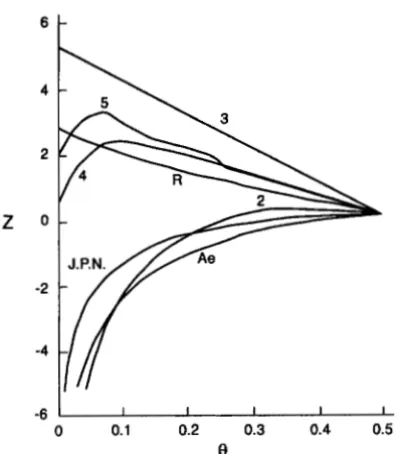
FIGURE 1.-LODs for elliptocytosis and RH. Pedigrees 3,
4 , 5 , and R are ELI, closely linked to RH. Pedigrees 2, Ae and J.P.N. are unlinked EL2 and EL3.
disprove earlier claims of autosomal and partial sex link- age, the two reports from the Galton Laboratory were confirmed (MORTON 1957), and elliptocytosis was shown to involve dominant alleles at different loci in different pedigrees (MORTON 1956). One locus, close to RH, determines the protein band 4.1, while the oth- ers are a spectrin (SPTAI) and
p
spectrin(SPTB).
These proteins are essential for the integrity of the erythrocyte membrane. Linkage heterogeneity of this type due to one of several mechanisms is common for human disease. To demonstrate the first example (Fig- ure l ) , I used the chi-square test derived from Equation
2, (2
In 10) i, -4,
where is the maximum LOD in the ith sample,2
is the maximum LOD overall, and there are m - 1 d.f. The a test of C. A. B. SMITH (1963) is more powerful. It takes the likelihood ratio asX. = aP(SJH1)
+
(1 - a)P(&IHO)P(
Si
I
Ho)=
aP(S,IHI)/P(SiJHo)
+
1 - (4)where a is the proportion of families linked to the marker. Because 8 and a are both estimated, it is neces- sary to make some allowance when testing linkage for the extra degree of freedom (LANDER and LINCOLN
1988; RISCH 1989).
There is nothing in likelihood ratio theory that man- dates a particular choice of logarithms. Following SMITH (1953), I used common logarithms (base 10) that are now universally accepted. Some mathematicians have expressed a preference for natural logarithms (base e), but the advantage of a factor of 2 over a factor of 4.6
is too tenuous to counterbalance the confusion that such a change would cause in a practice that has lasted for forty years.
8 -
..."...
L = 0.50 Morgans-
L = 1.oo
"L = 1.50 "
i;
' I
1 1 I I
I I I 1 I I I 1
I I
' I
""
6 - I I
4
"...
-1.
"._
.%..
/ / If(e)
"...
"._
"...
/2 .
-""""-"-
I I
0 0.1 0 0.20 0.30 0.40 0.50
e
FIGURE 2.-The distribution of the recombinant fraction
0 for chromosomes of length L.
Early studies presented a standard LOD table with values of
8
from 0 to 0.5, from which the likelihood could be recovered.As
the volume of data grew this became impractical, and today it is usual to report only the maximum likelihood estimate 8 and corresponding LOD if 8 f 0.5, but otherwise a smaller value (usually 0.3), so that the equivalent number of meioses and recombinants can be estimated. Thus the distinction between sequential and nonsequential tests has dimin- ished but may be reinforced for polygenic traits, where one sample is usually insufficient to assert linkage.SMITH (1954) and RENWICK (1968) were the first to recognize the importance of sex differences in recombi- nation, which are greater in the human than in the mouse, and to develop methods to factor LODs by sex. Because of their work, it is now usual and should be mandatory to present sex-specific LODs, so that maps may be constructed for both sexes and their differences studied in relation to condensation, coiling, protein binding, and other factors. Sex differences affect risks in genetic counseling and optimal analysis for high- resolution mapping.
The Galton Laboratory has maintained a strong inter- est in Bayesian statistics, the impact of which has been equivocal. WANE and SMITH (1947) suggested "chiefly from a comparison with the known linkage values of Drosophila" that the recombination fraction for linked genes has a nearly uniform distribution from 0 to 0.5.
autosomal loci was about 0.05 (MORTON 1955), and s u b sequent data refined this to 0.054 (REWCK 1969). With the uniform approximation or a more exact one, the average odds
A
may be calculated, leading to inference about the posterior probability of linkage that appeals strongly to Bayesians. Alternatively, if p(O) is the power of the test when the true recombination value is9
andg ( O ) is the prior probability of
9
given synteny, thenSA’*
g(O)p(O)dO is the expected value ofA,
which can be used to select a significance level that is “reasonable” in the sense that a large proportion of statistically signifi- cant results will be true (MORTON 1955). The approach is more appealing to frequentists, who distrust Bayesian assumptions. For two random loci a value of 2>
3 and therefore a<
0.001 is appropriate if sample size is ade- quate to detect close linkage. However, in smaller sam- ples (such as most single pedigrees) this condition is not met (SKOLNICK et al. 1984; R S C H 1991), and therefore the Bayesian calculation may be favored. However, if there is linkage in some families, the prior probability does not correspond to a uniform distribution but more closely to Equation 4, and so the calculations are error- prone (GENIN et al. 1995). Although R. A. FISHER thought he had annihilated Bayesians, he was wrong. They con- tinue to be dissatisfied with significance tests and to de- fend some formulation of posterior probability that may be useful in some cases. There is even a computer pro- gram (SIGMA) that attempts to construct maps from subjective probabilities, exploding the linear chromo- some into a tree diagram that purports to give subjective order free of genetic and physical distances (BISHOP1994; POVEY et al. 1994).
The success of LOD scores has obscured the seminal paper of C.
A.
B. SMITH (1953), which was largely con- cerned with probabilities for sib pairs and extension of FISHER’S scores to pedigrees, with one section devoted to autozygosity mapping. LODs were introduced and their advantages were noted, but application was lim- ited to matings of known phase and to trios and pairs of sibs with untested parents for the special case of a rare gene and a codominant marker. He was concerned about the computation of LODs, a problem of the ut- most seriousness in Britain from 1950 to 1975 because of the protection afforded to computers manufactured in the United Kingdom. Unfortunately, domestic com- puters seldom worked and had poor compilers. A gen- eration of researchers was sacrificed to protectionism, and scientific computing in Britain still suffers from the check to confidence and originality suffered in that period. Under this stimulus, RENWICK did his linkagecomputing in Baltimore (RENWICK and BOLLINC 1967),
and JOHN EDWARDS turned to New York (FALK and ED- WARDS 1970). The first portable computer program for computing LODs in general pedigrees (LIPED) was de- veloped by Om (1974).
By the end of the seventies gene mappers were accus- tomed to meet every two years at workshops. About
300 loci had been assigned to the human autosomes (HUMAN GENE MAPPING 1979), and there were LODs for about half of them. Linkage had been comple- mented by expression of a human protein in somatic cell hybrids and in situ hybridization of radioactive probes (RUDDLE et al. 1972), although these physical methods gave lower resolution. Linkage maps were con- structed by multiple painvise LODs, in the most favor- able case spanning 13 loci (RAO et al. 1979). Integration of genetic and physical data was crude and largely s u b jective. A database of LODs had been published (KEATS
1981), but the database on physical assignment was a card index with no linkage data. The stage was set for an advance that would strain these resources to the breaking point.
The DNA revolution: SOUTHERN (1975) demon- strated that specific DNA sequences could be separated by gel electrophoresis. This soon led to use of restric- tion fragment length polymorphisms as linkage mark- ers (SOLOMON and BODMER 1979; BOTSTEIN et al. 1980),
through LODs, and locus-oriented multiple painvise mapping can cope with thousands of loci per chromo- some. There is no longer any motive to reconstruct the map by crude seriation or stepwise addition, nor to select by necessarily subjective criteria a small set of gold star loci for an index map. Instead, map integra- tion must be used to improve dense but locally unrelia- ble maps by reference to a location database that in- cludes accumulated LODs as well as physical data. Only in this way can an enormously expensive mapping effort be used efficiently to characterize disease genes and to validate YAC and other contigs preparatory to se- quencing.
An interesting recent development has been the res- urrection of nonparametric sib-pair methods for poly- genic inheritance, one of which is based on the
asymp
totic distribution (Equation2)
of a LOD for identity by descent (RISCH 1990; HOLMANS 1993). This and other nonparametric methods are robust to ascertainment bias (and therefore lend themselves to meta-analysis of multiple samples), but are less reliable than conven- tional LODs in small samples or with related sib pairs (COLLINS and MORTON 1995). Some investigators use weak significance levels to continue sampling, on the basis of their intuition that power is less than for major loci but the likely number of minor genes is great. The resultant error rate has not been determined, and the power of nonparametric methods against an appro- priate genetic model is unknown.Among genetic models the two-allele, two-locus model has seen greatest use, with a linked “major” locus and an unlinked “modifier” that is a surrogate for more complex inheritance (MORTON et al. 1992). Allelic association is represented by coupling frequen- cies: if ci is the coupling frequency for the ith allele Ai
with frequency
p i ,
then pici is the frequency of haplo- types bearing Ai and an allele at the major locus for disease susceptibility, the total frequency of susceptibil- ity alleles at that locus being q =Zp,ci.
Therefore, a single model tests both linkage and allelic association.To do this within the framework of statistical tests re- quires that Equations 1 and
2
be extended: if a genetic model specifies m nuisance parametersRo
under Ho describing gene frequencies and genotypic effects andm
+
r parametersO1
under HI, and if the parameters are efficiently estimated under each hypothesis, then Equation 1 holds with r = 1, while Equation 2 holds for all r.This approach and alternatives are being discussed vehemently, as is the optimal sampling strategy. The more the search for polygenes depends on replicate samples, the more closely it conforms to sequential Sam- pling. The LODs that were proposed to detect linkage forty years ago, when the human gene map was only a dream, have proven their fitness to survive in a changed environment. It rests with alternatives to demonstrate equal viability.
LITERATURE CITED
BARNARD, G. A., 1949 Statistical inference. J. R. Stat. SOC. B11:
BERNSTEIN, F. 1931 Zur Grundlegung der Vererbung beim Menschen. Z. indukt. Abstammungs. Vererbungsl. 57: 113-138.
BISHOP, M. J. (Editor) 1994 Cui& to Human Genome Computing. Aca- demic Press, London.
BOTSTEIN, D., R. L. WHITE, M. SKOLNICK and R. W. DAVIS, 1980 Con- struction of a genetic linkage map in man using restriction frag- ment length polymorphisms.
Am.
J. Hum. Genet. 32: 314-331.BUETOW, K H. 1991 Influence of aberrant observations on high- resolution linkage analysis outcomes.
Am.
J. Hum. Genet. 4 9CHOTAI, J., 1984 On the lod score method in linkage analysis. Ann. Hum. Genet. 4 8 359-378.
COLLINS, A., and N. E. MORTON, 1991 Significance of maximal lods. Ann. Hum. Genet. 5 5 39-41.
COLLINS, A,, and N. E. MORTON, 1995 Nonparametric tests for link- age with dependent sibpairs. Hum. Hered. (in press). CROW, J. F., 1993 FELIX BERNSTEIN and the first human marker
locus. Genetics 133: 4-7.
DAUSSET, J., H. CANN, D. COHEN, M. LATHROP, J. M. LALOUEL et
al., 1990 Centre d’Etude du Polymorphisme Humain (CEPH):
collaborative genetic mapping of the human genome. Genomics 6 575-577.
FALK, C. T., and J. H. EDWARDS, 1970 A computer approach to the analysis of family genetic data for detection of linkage. Genetics
64: s18.
FINNEY, D. J., 1940 The detection of linkage. Ann. Eugen. 10:
FISHER, R. A,, 1935 Eugenics, academic and practical. Eugen. Rev.
27: 95-100.
FUJII, T., W. C. MOLONEY and N. E. MORTON, 1955 Data on linkage of ovelocytosis and blood groups.
Am.
J. Hum. Genet. 7: 72-75.G ~ N I N , E., M. MARTINEZ and F. CLERGET-DARPOUX, 1995 Posterior probability of linkage and maximal lod score. Ann. Hum. Genet.
59: 123-132.
HALDANE, J. B. S., 1934 Methods for the detection of autosomal linkage in man. Ann. Eugen. 6 26-65.
H A L D A N E , J. B. S., and C. A. B. SMITH, 1947 A new estimate of the linkage between the genes for haemophilia and colour-blindness in man. Ann. Eugen. 14: 10-31.
HOGBEN, L. T., 1934 The detection of linkage in human families. Proc. R. SOC. Lond. B114: 340-363.
HOLMANS, P., 1993 Asymptotic properties of affected sibpair analy- sis. Am. J. Hum. Genet. 5 2 362-374.
HUMAN GENE MAPPING 5, 1979 Cytogenet. Cell Genet. 25: 1-236.
KEATS, B. J. B., 1981 Linkage and Chromosome Mapping in Man. Uni- versity of Hawaii, Honolulu.
LANDER, E. S., and S. E. LINCOLN, 1988 The appropriate threshold for declaring linkage when allowing sex-specific recombination rates. Am. J. Hum. Genet. 43: 396-400.
LAWLER, S. D., 1954 Family studies showing linkage between ellipto- cytosis and the Rhesus blood group system. Proc. Int. Congr. Genet., IX, Caryologia Suppl., p. 1199.
MOHR, J., 1951 A search for linkage between the Lutheran blood group and other hereditary characters. Acta Pathol. Microbiol. Scand. 28: 207-210.
MORTON, N. E., 1955 Sequential tests for the detection of linkage.
Am. J. Hum. Genet. 7: 277-318.
MORTON, N. E., 1956 The detection and estimation of linkage be- tween the genes for elliptocytosis and the Rh blood type. Am. J. Hum. Genet. 8: 80-96.
MORTON, N. E., 1957 Further scoring types in sequential linkage tests, with a critical review of autosomal and partial sex linkage in man. Am. J. Hum. Genet. 9: 55-75.
MORTON, N. E., W. C. MOLONEY and T. FUJII, 1954 Linkage in man. Pelger’s nuclear anomaly, taste, and blood groups.
Am.
J. Hum. Genet. 6 38-43.MORTON, N. E., A. COLLINS, A. LAWRENCE and D. C. SHIELDS, 1992
Algorithms for a location database. Ann. Hum. Genet. 56:
NEYMAN, J., and E. S. PEARSON, 1928 On the use and interpretation of certain test criteria for purposes of statistical reference. Biome- trika 20A: 175-240, 263-294.
115-139.
985-994.
171-214.
Om, J. 1974 Estimation of the recombination fraction in human pedigrees-efficient computation of the likelihood for human linkage studies. Am. J. Hum. Genet. 26: 588-597.
Om, J., 1991 Analysis of Human Genetic Linkage, revised. Johns H o p kins University Press, Baltimore.
PEARSON, P. L., B. MAIDAK, M. CHIPPERFIELD and R. ROBBINS, 1991
The human genome initiative: do databases reflect current prog- ress? Science 254: 214-215.
PENROSE, L. S., 1935 The detection of autosomal linkage in data which consist of pairs of brothers and sisters of unspecified par- entage. Ann. Eugen. 6: 133-138.
POVEY, S., J. ARMOUR, P. FARNDON, J. L. HAINES, M. KNoWLEs et al.,
1994 Report on the third international workshop on chromo- some 9. Ann. Hum. Genet. 5 8 177-250.
b o , D. C., B. J. B. KFATS, J. M. LALOUEL, N. E. MORTON and S. YEE,
1979 A maximum likelihood map of chromosome 1.
Am.
J. Hum. Genet. 31: 680-696.RENWICK, J. H., 1968 Ratio of female to male recombination fraction in man. Bull. Eur. SOC. Hum. Genet. 2 7-12.
RENWICK, J. H., 1969 Progress in mapping human autosomes. Br.
Med. Bull. 25: 65-73.
RENWICK, J. H., and D. R. BOLLING, 1967 A program-complex for encoding, analysis and storing human linkage data. Am. J. Hum. Genet. 1 9 360-367.
RENWICK, J. H., and S. D. LAWLER, 1955 Genetical linkage between the AB0 and nail-patella loci. Ann. Hum. Genet. 19: 312-331.
RENWICK, J. H., and J. SCHULZE, 1965 Male and female recombina- tion fraction for the nail-pate1la:ABO linkage in man. Ann. Hum. Genet. 28: 379-392.
RISCH, N., 1989 Linkage detection tests under heterogeneity. Genet. Epidemiol. 6 473-480.
RISCH, N., 1990 Linkage strategies for genetically complex traits.
111. The effect of marker polymorphism on analysis of affected relative pairs.
Am.
J. Hum. Genet. 46 242-253.RISCH, N., 1991 A note on multiple testing procedures in linkage analysis. Am. J. Hum. Genet. 48: 1058-1064.
RUDDLE, F., F. RICCIUTI, F. S. MCMORFUS, J. TISCHFIELD, R. CREAGAN
et al., 1972 Somatic cell genetic assignment of peptidase and the RH linkage group to chromosome A-1 in man. Science 176:
1429-1431.
SKOLNICK, M. H., E. A. THOMPSON, D. T. BISHOP and L. A. CANNON,
1984 Possible linkage of a breast cancer-susceptibility locus to the AB0locus: sensitivity of LOD scores to a single new recombi- nant observation. Genet. Epidemiol. 1: 363-373.
SMITH, C. A. B., 1953 The detection of linkage in human genetics (with discussion). J. R. Stat. SOC. B14: 153-192.
SMITH, C. A. B., 1954 The separation of the sexes of parents in the detection of human linkage. Ann. Eugen. 18: 278-301.
SMITH, C. A. B., 1959 Some comments on the statistical methods used in linkage investigations.
Am.
J. Hum. Genet. 11: 289-304.SMITH, C. A. B., 1963 Testing for heterogeneity of recombination fraction in human genetics. Ann. Hum. Genet. 27: 175-182.
SMITHIES, O., 1955 Zone electrophoresis in starch gels: group varia-
J. 61: 629-641.
tions in the serum proteins of normal human adults. Biochem.
SMITHIES, O., 1995 Early days of gel electrophoresis. Genetics
139: 1-4.
SOLOMON, E., and W. F. BODMER, 1979 Evolution of sickle variant gene. Lancet ii:923.
SOUTHERN, E. M., 1975 Detection of specific sequences among
DNA fragments separated by gel electrophoresis. J. Mol. Biol.
98: 503-517.
WALD, A,, 1947 Sequential Analysis. Wiley, New York.
WIENER, A. S., 1932 Method of measuring linkage in human ge- netics, with special reference to blood groups. Genetics 17: