Copyright to IJAREEIE DOI:10.15662/IJAREEIE.2017.0603088 1666
Energy Efficient Routing Algorithm
R. Siva
1, J. Mohan
2, C. Surya Raj
3, D. Vignesh
41Assistant Professor, Department of ECE, New Prince Shri Bhavani College of Engineering and Technology, Chennai,
India
234UG Student, Department of ECE,New Prince Shri Bhavani College of Engineering
and Technology, Chennai, India
ABSTRACT: In Wireless Sensor Networks (WSNs), the benefits of exploiting the sink mobility to persist network lifetime have been well recognized. In physical environments, all kinds of obstacles could exit in the sensing field. Therefore, a research challenge is how to efficiently dispatch the mobile sink to find an obstacle-avoiding shortest route. This paper presents an energy-efficient routing mechanism based on the cluster-based method for the mobile sink in WSNs with obstacles. According to the cluster-based method, the nodes selected as cluster heads collect data from their cluster members and transfer the data collected to the mobile sink. The mobile sink starts the data-gathering route periodically from the starting site, then directly collects data from these cluster heads in a single-hop range, and finally returns to the starting site. However, due to the complexity of the scheduling problem in WSNs with obstacles, the conventional algorithms are difficult to resolve. To remedy this issue, we propose an efficient scheduling mechanism based on spanning graphs in this paper. Based on the spanning graph, we present a heuristic algorithm for the mobile sink to find the obstacle-avoiding shortest route. Simulation results verify the effectiveness of our method.
KEYWORDS: Wireless Sensor Networks (WSNs), obstacles, energy-efficient routing, mobile sink, spanning graph.
I. INTRODUCTION
Wireless Sensor Networks have been applied in many respects including health monitoring, environmental monitoring, military surveillance, and many others as Internet of Thing. In traditional sensor networks, the sink node is static and the traffic pattern usually follows a many-to one model. Thus sensors near sink node will allow more traffic load and deplete their energy much faster than those far away from sink node, causing hot spot problem, which has severely impact on network connectivity. Compared with traditional network scheme, sink mobility strategy can effectively alleviate the problem so that lengthen network lifetime [1]. The data from static nodes can be collected by mobile nodes in one-hop or multi-hop way. Mobile nodes are used as the mobile sink which moves across the sensing field to collect data. On the one hand, the mobile sink reduces the communication overhead for sensor nodes close to the base station or the sink, which leads to the uniform energy consumption. One the other hand, with the movement of the sink, we can better handle the disconnected and sparse network. Therefore, the network life time can be significantly lengthen by the optimum control of the route of the mobile sink [2].
II. METHODOLOGY
ISSN (Print) : 2320 – 3765 ISSN (Online): 2278 – 8875
I
nternational
J
ournal of
A
dvanced
R
esearch in
E
lectrical,
E
lectronics and
I
nstrumentation
E
ngineering
(An ISO 3297: 2007 Certified Organization)
Website: www.ijareeie.com
Vol. 6, Issue 3, March 2017
Copyright to IJAREEIE DOI:10.15662/IJAREEIE.2017.0603088 1667
that the network lifetime is defined as the time interval from sensor nodes start working until the death of all static sensors. According to the cluster-based algorithm, all sensor nodes in the network are divided into two categories: cluster heads and cluster members .Cluster heads collect data from their cluster members who collect environment information and then forward the data to the sink either directly or via relaying across other cluster heads. Due to movement of the sink, the mobile sink can move nearest the cluster heads and consume less energy. We can balance energy consumption of sensor nodes by using the cluster-based algorithm. Therefore, the network lifetime will be prolonged significantly. To solve the scheduling for the mobile sink, we use the LEACH (low-energy adaptive clustering hierarchy) protocol [3].
Fig.1. Cluster Partition
From the figure, we assume that the mobile sink can’t move across hurdles. To solve the obstacle-avoiding shortest path problem, we present a heuristic obstacle-avoiding procedure.
2.1. Heuristic Obstacle-Avoiding Algorithm:
Copyright to IJAREEIE DOI:10.15662/IJAREEIE.2017.0603088 1668
Fig.2. Grid Graph of Sensing Field
Here, we also use grid-based techniques to elucidate the scheduling problem of the mobile sink. The sensing region is distributed into the same size grid cells by means of the grid-based systems. Apparently, edges of obstacles interconnect grid cells and obstacles may occupy part of some grid cells. Once obstacles conquer part of one grid cell, we take on that the grid cell is regarded as obstacles. Therefore, we obtain regularization shape of obstacles that makes it easier for the mobile sink to find an obstacle-avoiding shortest path.
Conferring to the spanning graph of the sensing field in Figure 3, we can finally find the obstacle-avoiding shortest path for the mobile sink.
Fig.3. Spanning Graph of Sensing Field
III. PERFORMANCE ANALYSIS
ISSN (Print) : 2320 – 3765 ISSN (Online): 2278 – 8875
I
nternational
J
ournal of
A
dvanced
R
esearch in
E
lectrical,
E
lectronics and
I
nstrumentation
E
ngineering
(An ISO 3297: 2007 Certified Organization)
Website: www.ijareeie.com
Vol. 6, Issue 3, March 2017
Copyright to IJAREEIE DOI:10.15662/IJAREEIE.2017.0603088 1669
sensing field with obstacles. According to the network lifetime and the movement path of mobile sink, we present investigational results of the algorithm which are given below.
Table.1: System Parameters
PARAMETERS VALUES
Grid Size 10m
Dimension of sensing field 10m*10m
Initial Energy 0.4J
Transmit Amplifier 10 (or)0.0013
Number of nodes 100
Data Aggregation 4nJ/bit/report
Transmitter/Receiver Electronics 50nJ/bit
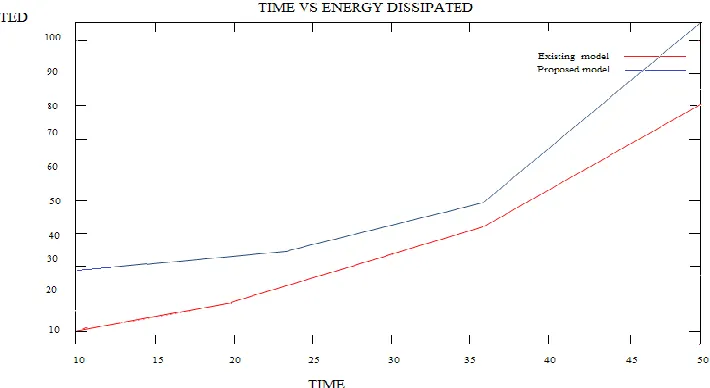
Figure 3, shows the network lifetime comparison between the LEACH algorithm, each grid and cluster based algorithmfor obstacle avoiding shortest path.
Copyright to IJAREEIE DOI:10.15662/IJAREEIE.2017.0603088 1670
Fig.5. Iteration Vs No.of Nodes
Fig.6. Error rate Vs Message Cast
ISSN (Print) : 2320 – 3765 ISSN (Online): 2278 – 8875
I
nternational
J
ournal of
A
dvanced
R
esearch in
E
lectrical,
E
lectronics and
I
nstrumentation
E
ngineering
(An ISO 3297: 2007 Certified Organization)
Website: www.ijareeie.com
Vol. 6, Issue 3, March 2017
Copyright to IJAREEIE DOI:10.15662/IJAREEIE.2017.0603088 1671
Fig.7. Movement of the mobile sink
The mobile sink, which visits each stop site for collecting data along line segments, begins its movement from the starting site and finally returns to the starting site. Here, we assume that the mobile sink collects data only once each round at the stop site. Taken collectively, our cluster based scheme is more capable than the other schemes. These experiments reveal that we can use heuristic obstacle avoiding algorithm to find an obstacle avoiding shortest way for the mobile sink. In particular, our cluster based scheme better concert.
III. CONCLUSION
In this paper, we utilized the mobile sink to extend the network lifetime and cluster based algorithm to consume low energy. At a same time, construct the spanning graph to find the obstacle avoiding shortest path for mobile sink. Finally, found the obstacle avoiding shortest path for extend the network lifetime. Since the Heuristic Obstacle-avoiding Algorithm is used in this paper, to find out the shortest path. The result may change a lot when we used different algorithm. Therefore, how to design a clustering algorithm to make the results optimal is the future work.
REFERENCES
1.Guihai Chen, Chengfa Li, Mao Ye and Jie Wu, An Unequal Cluster-based Routing Protocol in Wireless Sensor Networks, Wireless Networks, Vol.15, No.2, 2009, pp.193-207
2.M. Zhao, Y. Yang, and C. Wang, ‘‘Mobile data gathering with load balanced clustering and dual data uploading in wireless s ensor networks,’’ IEEE Trans. Mobile Computer., vol. 14, no. 4, pp. 770–785, Apr. 2015.
3.W. B. Heinzelman, A. P. Chandrakasan and H. Balakrishnan. “An application-specific protocol architecture for wireless micro sensor networks,’’ IEEE Trans. Wireless Communication., vol. 1, no. 4, pp. 660–670.