University of Windsor University of Windsor
Scholarship at UWindsor
Scholarship at UWindsor
Electronic Theses and Dissertations Theses, Dissertations, and Major Papers
10-5-2017
FPGA-Based Acceleration of Expectation Maximization Algorithm
FPGA-Based Acceleration of Expectation Maximization Algorithm
using High Level Synthesis
using High Level Synthesis
Mohammad Abdul Momen
University of Windsor
Follow this and additional works at: https://scholar.uwindsor.ca/etd
Recommended Citation Recommended Citation
Momen, Mohammad Abdul, "FPGA-Based Acceleration of Expectation Maximization Algorithm using High Level Synthesis" (2017). Electronic Theses and Dissertations. 7279.
https://scholar.uwindsor.ca/etd/7279
This online database contains the full-text of PhD dissertations and Masters’ theses of University of Windsor students from 1954 forward. These documents are made available for personal study and research purposes only, in accordance with the Canadian Copyright Act and the Creative Commons license—CC BY-NC-ND (Attribution, Non-Commercial, No Derivative Works). Under this license, works must always be attributed to the copyright holder (original author), cannot be used for any commercial purposes, and may not be altered. Any other use would require the permission of the copyright holder. Students may inquire about withdrawing their dissertation and/or thesis from this database. For additional inquiries, please contact the repository administrator via email
FPGA-Based Acceleration of Expectation Maximization
Algorithm using High Level Synthesis
by
Mohammad Abdul Momen
A Thesis
Submitted to the Faculty of Graduate Studies
through the Department of Electrical and Computer Engineering
in Partial Fulfillment of the Requirements for
the Degree of Master of Applied Science
at the University of Windsor
Windsor, Ontario, Canada
2017
FPGA-Based Acceleration of Expectation Maximization Algorithm using HLS Tool
by
Mohammad Abdul Momen
APPROVED BY:
__________________________________________
T. Bolisetti
Department of Civil and Environmental Engineering
____________________________________________
M. Abdelkhalek
Department of Electrical and Computer Engineering
_____________________________________________
M. Khalid, Advisor
Department of Electrical and Computer Engineering
iii
Author's Declaration of Originality
I hereby certify that I am the sole author of this thesis and that no part of this
thesis has been published or submitted for publication.
I certify that, to the best of my knowledge, my thesis does not infringe upon
anyone’s copyright nor violate any proprietary rights and that any ideas, techniques,
quotations, or any other material from the work of other people included in my thesis,
published or otherwise, are fully acknowledged in accordance with the standard
referencing practices. Furthermore, to the extent that I have included copyrighted
material that surpasses the bounds of fair dealing within the meaning of the Canada
Copyright Act, I certify that I have obtained a written permission from the copyright
owner(s) to include such material(s) in my thesis and have included copies of such
copyright clearances to my appendix.
I declare that this is a true copy of my thesis, including any final revisions, as
approved by my thesis committee and the Graduate Studies office and that this thesis has
iv
Abstract
Expectation Maximization (EM) is a soft clustering algorithm which partitions data
iteratively into M clusters. It is one of the most popular data mining algorithms that uses
Gaussian Mixture Models (GMM) for probability density modeling and is widely used in
applications such as signal processing and Machine Learning (ML). EM requires high
computation time and large amount of memory when dealing with large data sets.
Conventionally, the HDL-based design methodology is used to program FPGAs for
accelerating computationally intensive algorithms. In many real world applications,
FPGA provide great speedup along with lower power consumption compared to
multi-core CPUs and GPUs. Intel FPGA SDK for OpenCL enables developers with no
hardware knowledge to program the FPGAs with short development time. This thesis
presents an optimized implementation of EM algorithm on Stratix V and Arria 10 FPGAs
using Intel FPGA SDK for OpenCL. Comparison of performance and power
consumption between CPU, GPU and FPGA is presented for various dimension and
cluster sizes. Compared to an Intel(R) Xeon(R) CPU E5-2637 our fully optimized
OpenCL model for EM targeting Arria 10 FPGA achieved up to 1000X speedup in terms
v
Acknowledgements
Firstly, I would like to express my deepest gratitude to my supervisor Dr. Khalid
for giving me the opportunity to work under his supervision. I am very grateful for his
advice, guidance, support and encouragement during my study and research.
I would like to thank Dr. Maher AbdelKhalek and Dr. Tirupati Bolisetti for being
part of my thesis committee. They provided insightful suggestions to improve my
research.
I am also grateful to Dr. Roberto Muscedere for his help in maintaining the
workstations in our research lab.
I am dedicating my research to my parents. Without their continued support and
vi
Table of Contents
Author's Declaration of Originality ... iii
Abstract ... iv
Acknowledgements ... v
List of Tables ... viii
List of Figures ... ix
List of Acronyms ... x
Chapter 1 Introduction ... 1
1.1. Motivation... 1
1.2. Objectives ... 2
1.3. Thesis Outline ... 2
Chapter 2 High Level Synthesis for FPGAs ... 4
2.1. FPGA Architecture ... 4
2.2. High-Level Synthesis ... 5
2.3. Overview of OpenCL ... 6
2.3.1. Platform Model ... 7
2.3.2. Execution Model ... 8
2.3.3. Memory Model ... 10
2.3.4. Programming Model ... 11
2.4. Intel FPGA SDK for OpenCL ... 12
2.4.1. Overview ... 12
2.4.2. Design Flow ... 13
2.4.3. Optimization Strategies in Intel FPGS SDK for OpenCL ... 15
2.5. Summary ... 20
Chapter 3 Expectation Maximization ... 21
3.1. Background ... 21
3.2. Previous Work on Accelerating EM-GMM ... 24
3.2.1. Acceleration on GPUs ... 24
3.2.2. Acceleration on FPGAs ... 24
vii
Chapter 4 Optimized EM-GMM OpenCL FPGA Implementation ... 27
4.1. EM-GMM OpenCL Model for FPGA ... 27
4.1.1. Initialization ... 29
4.1.2. M-Step ... 29
4.1.3. Pre-Calculation E-Step ... 31
4.1.4. E-Step ... 32
4.2. Optimization for different Problem Sizes ... 35
4.3. Summary ... 36
Chapter 5 Experimental Results ... 37
5.1. Experimental Setup ... 37
5.2. Dataset ... 38
5.3. Power Measurement... 39
5.4. Performance analysis ... 40
5.4.1. Performance Results ... 40
5.4.2. Speedup ... 45
5.4.3. FPGA Resource Utilization ... 50
5.4.4. Performance Comparison Between CPU and FPGA in Relation to FPGA Resource Utilization ... 54
5.4.5. Comparison with Previous EM Research ... 57
5.5. Verification of Results ... 59
5.6. Summary ... 59
Chapter 6 Conclusion ... 60
6.1. Future Work ... 61
References ... 62
Appendix A: EM-GMM Opencl Kernel Code ... 67
viii
List of Tables
Table 1 Overview of Currently Available HLS CAD Tools [12]. ... 6
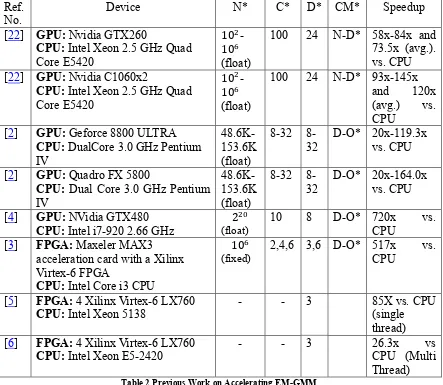
Table 2 Previous Work on Accelerating EM-GMM. ... 25
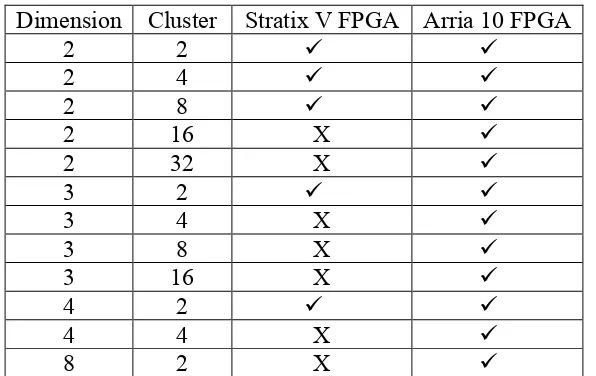
Table 3 Dimension and Cluster achived on Stratix V A7 FPGA and Arria 10 FPGA. ... 35
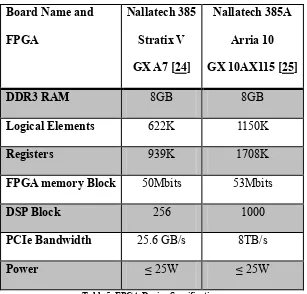
Table 4 Device list and Description. ... 37
Table 5 FPGA Device Specification. ... 38
Table 6 Power Consumption of CPUs and FPGAs. ... 39
Table 7 Performance comparison of FPGAs over CPUs and FPGA Resource Usage for highest cluster achieved by each dimension. ... 55
Table 8 Performance comparison of FPGAs and FPGA Resource Usage for highest cluster achieved by each dimension. ... 56
Table 9 IPS*and speedup gained by our implementation over other implementations. ... 57
ix
List of Figures
Figure 1 Intel Arria 10 Architecture. ... 5
Figure 2 Platform Model, from [14]. ... 7
Figure 3 Execution Model (2D Range), from [19]. ... 9
Figure 4 Memory Model, from [14]. ... 10
Figure 5 Memory model of Intel FPGA SDK for OpenCL. ... 12
Figure 6 Intel FPGA SDK for OpenCL Design Flow [19]. ... 14
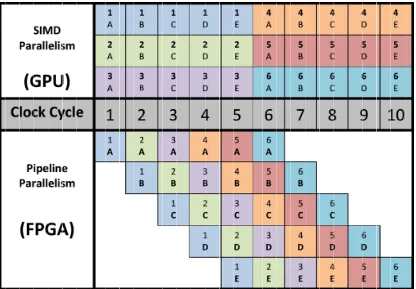
Figure 7 Difference between Data Parallelism and Pipeline Parallelism, taken from [16]. ... 17
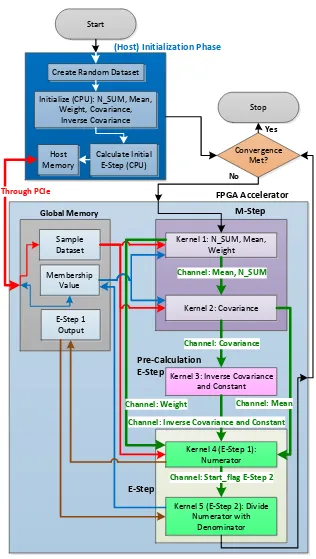
Figure 8 EM-GMM operational flow OpenCL FPGA. ... 28
Figure 9 FPGA Execution Time for EM. ... 42
Figure 10 CPU Execution Time. ... 42
Figure 11 FPGA Throughput for EM. ... 43
Figure 12 CPU Throughput for EM. ... 43
Figure 13 FPGA Throughput/Power. ... 44
Figure 14 CPU Throughput/Power. ... 44
Figure 15 CPU1 Speedup (T) over CPU2. ... 45
Figure 16 Stratix V FPGA Speedup (T) over CPUs. ... 46
Figure 17 Arria 10 FPGA Speedup (T) over CPUs. ... 46
Figure 18 Arria 10 FPGA Speedup (T) overs Stratix V FPGA ... 47
Figure 19 CPU 1 Speedup (T/P) over CPU 2 ... 48
Figure 20 Stratix V FPGA Speedup (T/P) over CPUs. ... 48
Figure 21 Arria 10 FPGA Speedup (T/P) over CPUs. ... 49
Figure 22 Arria 10 FPGA Speedup (T/P) over Stratix V FPGA. ... 49
Figure 23 FPGA Logic Element Utilization. ... 51
Figure 24 FPGA ALUT Utilization. ... 51
Figure 25 FPGA Register Utilization. ... 52
Figure 26 FPGA Memory Block Utilization. ... 52
Figure 27 FPGA DSP Block Utilization. ... 53
x
List of Acronyms
EM Expectation Maximization
GMM Gaussian Mixture Model
FPGA Field Programmable Array
ML Machine Learning
HDL Hardware Descriptive Language
HLS High-Level Synthesis
CPU Central Processing Unit
ALM Adaptive Logic Module
AOCL Altera SDK for OpenCL
AOC Altera Offline Compiler
API Application Programming Interface
ASIC Application Specific Integrated Circuits
CUDA Compute Unified Device Architecture
GPU Graphics Processing Unit
HPC High-Performance Computing
LAB Logic Array Block
LE Logic Element
LUT Look Up Table
OpenCL Open Computing Language
SIMD Single Instruction Multiple Data
xi
MLE Maximum Likelihood Estimation
1
Chapter 1
Introduction
1.1. Motivation
Currently, Machine Learning algorithms are highly used to solve complex
computationally intensive problems. Maximum Likelihood Estimation (MLE) carries a
lot of standing in parametric estimation. MLE is used to calculate and fit a statistical
model from sample dataset. EM computes Maximum Likelihood (ML) iteratively where
the dataset is incomplete or some data is missing. EM contains two steps: the E-step or
Expectation step which computers log-likelihood from the dataset and assigns each
sample to clusters consequently and M-step or Maximization step maximizes the
log-likelihood provided by E-step. Both steps of EM are repeated until log-log-likelihood reaches
convergence [1]. EM is a computationally complex problem and consumes more memory
and hardware resources compared to other clustering algorithms. As a result, hardware
accelerators such as Graphic Processing Units (GPU) [2][4] and Field Programmable
Gate Arrays (FPGA) [3][5][6] have been utilized to increase the throughput of the EM.
Traditionally, GPUs are used to accelerate ML algorithms because of high
throughput and better memory bandwidth. However, GPU has a huge drawback. GPU
power consumption is very high. On the other hand, FPGA-based accelerators provide
high throughput with low power consumption.
There are three [3][5][6] FPGA-based EM implementations currently available in the
literature. Two of these [5][6] designs were implemented at the Register Transfer Level
2
OpenCL [23] is a High-level synthesis (HLS) tool that provides the opportunity to
program FPGA in a high-level language, specifically Open Computing Language
(OpenCL) to accelerate the design process. HLS helps developers to program FPGA
with little FPGA knowledge and to achieve peak performance by utilizing optimized
OpenCL specification. The Altera Offline Compiler (AOC) automatically converts
OpenCL code to optimized Verilog model and compiles into FPGA hardware binaries.
Since developers need less hardware knowledge, time to market and cost for HLS is
much lower than RTL-based design methodology.
1.2.Objectives
The main objectives of this thesis are to answer following questions:
Can FPGA gain better throughput compared to other HPC platforms using Intel
FPGA SDK for OpenCL?
How much speedup will we gain in Arria 10 FPGA compared to Stratix V FPGA?
What dimension and cluster sizes can we fit in Stratix V and Arria 10 FPGAs?
1.3.Thesis Outline
The thesis is organized as follows:
Chapter 2 discusses background information about FPGA, HLS, OpenCL and
Intel FPGA SDK for OpenCL.
In Chapter 3, we first provide a brief discussion about Expectation Maximization
3
Chapter 4 provides explanation on how we designed the kernels for Expectation
Maximization algorithm to get a better speedup.
In Chapter 5 we present HLS synthesis results for EM and their analysis. We
present a comparison of EM implementation results using state of the art CPUs, GPUs
and FPGAs.
We conclude in Chapter 6 will a summary this research and suggestions for future
work.
4
Chapter 2
High Level Synthesis for FPGAs
Computation demand in HPC has increased rapidly in recent years and this trend will
continue for the foreseeable future. Traditionally multi-core CPUs were for HPC.
Because of ease of programming, data and instruction parallelism and high throughput
general purpose GPU is widely used for HPC. But that comes at the cost of high power
consumption. To obtain high throughput with less power consumption architecture,
things like memory organization and interconnect topology needs to comply with
algorithmic requirements [7]. In [8], is has been assessed that for any HPC platform half
of its lifetime cost is power consumption. Since FPGAs has reprogrammable,
reconfigurable resource with high throughput and less power consumption, FPGA is
more suitable for HPC. In the following section, we will discuss FPGA Architecture,
HLS, OpenCL and Intel FPGA SDK for OpenCL.
2.1. FPGA Architecture
Field Programmable Gate Array (FPGA) is a reprogrammable and reconfigurable
large Integrated Circuit (IC) that consists of a large number of of Look-Up Tables (LUT)
and flip flops. These can be used to create custom hardware functionality and execute any
algorithm as a digital circuit. Development in FPGA is less costly and time-consuming,
though Application Specific Integrated Circuit (ASIC) has more throughput and less
power consumption compared to FPGA [9]. Modern FPGAs consists of both fine-grained
by Xilinx and Intel [
Figure
Traditionally
to design hardware
on FPGAs.
HDL model and then it synthesizes, places and routes the design on targeted FPGA
requires
cannot program FPGA and because of this most companies are using CPUs and GPUs for
HPC rather than FPGAs.
2.2.
programming language such as C/C++ by Xilinx and Intel [
Figure
Traditionally
to design hardware
on FPGAs.
HDL model and then it synthesizes, places and routes the design on targeted FPGA
requires
cannot program FPGA and because of this most companies are using CPUs and GPUs for
HPC rather than FPGAs.
2.2.
programming language such as C/C++ by Xilinx and Intel [
Figure 1
Traditionally
to design hardware
on FPGAs.
HDL model and then it synthesizes, places and routes the design on targeted FPGA
requires
cannot program FPGA and because of this most companies are using CPUs and GPUs for
HPC rather than FPGAs.
High
High
programming language such as C/C++ by Xilinx and Intel [
1, which is an
Traditionally
to design hardware
on FPGAs.
HDL model and then it synthesizes, places and routes the design on targeted FPGA
requires extensive hardware knowledge. People with
cannot program FPGA and because of this most companies are using CPUs and GPUs for
HPC rather than FPGAs.
High
High-programming language such as C/C++ by Xilinx and Intel [
, which is an
Traditionally,
to design hardware
on FPGAs. An RTL level synthesis
HDL model and then it synthesizes, places and routes the design on targeted FPGA
extensive hardware knowledge. People with
cannot program FPGA and because of this most companies are using CPUs and GPUs for
HPC rather than FPGAs.
High-Level Synthesis
-level
programming language such as C/C++ by Xilinx and Intel [
, which is an
, Hardware Descriptive Language (HDL) such as Verilog and VHDL
to design hardware
An RTL level synthesis
HDL model and then it synthesizes, places and routes the design on targeted FPGA
extensive hardware knowledge. People with
cannot program FPGA and because of this most companies are using CPUs and GPUs for
HPC rather than FPGAs.
Level Synthesis
level
programming language such as C/C++ by Xilinx and Intel [
, which is an
Hardware Descriptive Language (HDL) such as Verilog and VHDL
to design hardware
An RTL level synthesis
HDL model and then it synthesizes, places and routes the design on targeted FPGA
extensive hardware knowledge. People with
cannot program FPGA and because of this most companies are using CPUs and GPUs for
HPC rather than FPGAs.
Level Synthesis
Synthesis (HLS) is a method where a developer can use
programming language such as C/C++ by Xilinx and Intel [10
, which is an Intel Arria 10
Hardware Descriptive Language (HDL) such as Verilog and VHDL
to design hardware at
An RTL level synthesis
HDL model and then it synthesizes, places and routes the design on targeted FPGA
extensive hardware knowledge. People with
cannot program FPGA and because of this most companies are using CPUs and GPUs for
HPC rather than FPGAs.
Level Synthesis
Synthesis (HLS) is a method where a developer can use
programming language such as C/C++
10].
Intel Arria 10
Hardware Descriptive Language (HDL) such as Verilog and VHDL
the
An RTL level synthesis
HDL model and then it synthesizes, places and routes the design on targeted FPGA
extensive hardware knowledge. People with
cannot program FPGA and because of this most companies are using CPUs and GPUs for
HPC rather than FPGAs.
Level Synthesis
Synthesis (HLS) is a method where a developer can use
programming language such as C/C++ The
Intel Arria 10
Hardware Descriptive Language (HDL) such as Verilog and VHDL
the Register Transfer Level (RTL) or Gate level
An RTL level synthesis
HDL model and then it synthesizes, places and routes the design on targeted FPGA
extensive hardware knowledge. People with
cannot program FPGA and because of this most companies are using CPUs and GPUs for
Level Synthesis
Synthesis (HLS) is a method where a developer can use
programming language such as C/C++
The overall architecture of a state
Intel Arria 10
Figure
Hardware Descriptive Language (HDL) such as Verilog and VHDL
Register Transfer Level (RTL) or Gate level
An RTL level synthesis
HDL model and then it synthesizes, places and routes the design on targeted FPGA
extensive hardware knowledge. People with
cannot program FPGA and because of this most companies are using CPUs and GPUs for
Level Synthesis
Synthesis (HLS) is a method where a developer can use
programming language such as C/C++
overall architecture of a state
Intel Arria 10
Figure
Hardware Descriptive Language (HDL) such as Verilog and VHDL
Register Transfer Level (RTL) or Gate level
An RTL level synthesis
HDL model and then it synthesizes, places and routes the design on targeted FPGA
extensive hardware knowledge. People with
cannot program FPGA and because of this most companies are using CPUs and GPUs for
Synthesis (HLS) is a method where a developer can use
programming language such as C/C++
overall architecture of a state
Intel Arria 10 FPGA
Figure 1
Hardware Descriptive Language (HDL) such as Verilog and VHDL
Register Transfer Level (RTL) or Gate level
An RTL level synthesis
HDL model and then it synthesizes, places and routes the design on targeted FPGA
extensive hardware knowledge. People with
cannot program FPGA and because of this most companies are using CPUs and GPUs for
Synthesis (HLS) is a method where a developer can use
programming language such as C/C++
overall architecture of a state
FPGA
1 Intel Arria 10 Architecture.
Hardware Descriptive Language (HDL) such as Verilog and VHDL
Register Transfer Level (RTL) or Gate level
An RTL level synthesis Computer Aided Design (CAD) tool first
HDL model and then it synthesizes, places and routes the design on targeted FPGA
extensive hardware knowledge. People with
cannot program FPGA and because of this most companies are using CPUs and GPUs for
Synthesis (HLS) is a method where a developer can use
programming language such as C/C++ or
overall architecture of a state
FPGA [
Intel Arria 10 Architecture.
Hardware Descriptive Language (HDL) such as Verilog and VHDL
Register Transfer Level (RTL) or Gate level
Computer Aided Design (CAD) tool first
HDL model and then it synthesizes, places and routes the design on targeted FPGA
extensive hardware knowledge. People with
cannot program FPGA and because of this most companies are using CPUs and GPUs for
Synthesis (HLS) is a method where a developer can use
or System C to overall architecture of a state
[11
Intel Arria 10 Architecture.
Hardware Descriptive Language (HDL) such as Verilog and VHDL
Register Transfer Level (RTL) or Gate level
Computer Aided Design (CAD) tool first
HDL model and then it synthesizes, places and routes the design on targeted FPGA
extensive hardware knowledge. People with
cannot program FPGA and because of this most companies are using CPUs and GPUs for
Synthesis (HLS) is a method where a developer can use
System C to overall architecture of a state
11].
Intel Arria 10 Architecture.
Hardware Descriptive Language (HDL) such as Verilog and VHDL
Register Transfer Level (RTL) or Gate level
Computer Aided Design (CAD) tool first
HDL model and then it synthesizes, places and routes the design on targeted FPGA
extensive hardware knowledge. People with
cannot program FPGA and because of this most companies are using CPUs and GPUs for
Synthesis (HLS) is a method where a developer can use
System C to overall architecture of a state
.
Intel Arria 10 Architecture.
Hardware Descriptive Language (HDL) such as Verilog and VHDL
Register Transfer Level (RTL) or Gate level
Computer Aided Design (CAD) tool first
HDL model and then it synthesizes, places and routes the design on targeted FPGA
extensive hardware knowledge. People with
cannot program FPGA and because of this most companies are using CPUs and GPUs for
Synthesis (HLS) is a method where a developer can use
System C to overall architecture of a state
Intel Arria 10 Architecture.
Hardware Descriptive Language (HDL) such as Verilog and VHDL
Register Transfer Level (RTL) or Gate level
Computer Aided Design (CAD) tool first
HDL model and then it synthesizes, places and routes the design on targeted FPGA
extensive hardware knowledge. People with
cannot program FPGA and because of this most companies are using CPUs and GPUs for
Synthesis (HLS) is a method where a developer can use
System C to overall architecture of a state
Intel Arria 10 Architecture.
Hardware Descriptive Language (HDL) such as Verilog and VHDL
Register Transfer Level (RTL) or Gate level
Computer Aided Design (CAD) tool first
HDL model and then it synthesizes, places and routes the design on targeted FPGA
extensive hardware knowledge. People with little
cannot program FPGA and because of this most companies are using CPUs and GPUs for
Synthesis (HLS) is a method where a developer can use
System C to specify any overall architecture of a
state-Intel Arria 10 Architecture.
Hardware Descriptive Language (HDL) such as Verilog and VHDL
Register Transfer Level (RTL) or Gate level
Computer Aided Design (CAD) tool first
HDL model and then it synthesizes, places and routes the design on targeted FPGA
little
cannot program FPGA and because of this most companies are using CPUs and GPUs for
Synthesis (HLS) is a method where a developer can use
specify any
-of-Hardware Descriptive Language (HDL) such as Verilog and VHDL
Register Transfer Level (RTL) or Gate level
Computer Aided Design (CAD) tool first
HDL model and then it synthesizes, places and routes the design on targeted FPGA
little or no hardware knowledge
cannot program FPGA and because of this most companies are using CPUs and GPUs for
Synthesis (HLS) is a method where a developer can use
specify any -the
Hardware Descriptive Language (HDL) such as Verilog and VHDL
Register Transfer Level (RTL) or Gate level
Computer Aided Design (CAD) tool first
HDL model and then it synthesizes, places and routes the design on targeted FPGA
or no hardware knowledge
cannot program FPGA and because of this most companies are using CPUs and GPUs for
Synthesis (HLS) is a method where a developer can use
specify any
the-art FPGA is shown in
Hardware Descriptive Language (HDL) such as Verilog and VHDL
Register Transfer Level (RTL) or Gate level
Computer Aided Design (CAD) tool first
HDL model and then it synthesizes, places and routes the design on targeted FPGA
or no hardware knowledge
cannot program FPGA and because of this most companies are using CPUs and GPUs for
Synthesis (HLS) is a method where a developer can use
specify any algorithm which art FPGA is shown in
Hardware Descriptive Language (HDL) such as Verilog and VHDL
Register Transfer Level (RTL) or Gate level for
Computer Aided Design (CAD) tool first
HDL model and then it synthesizes, places and routes the design on targeted FPGA
or no hardware knowledge
cannot program FPGA and because of this most companies are using CPUs and GPUs for
Synthesis (HLS) is a method where a developer can use
algorithm which art FPGA is shown in
Hardware Descriptive Language (HDL) such as Verilog and VHDL
for implement
Computer Aided Design (CAD) tool first
HDL model and then it synthesizes, places and routes the design on targeted FPGA
or no hardware knowledge
cannot program FPGA and because of this most companies are using CPUs and GPUs for
Synthesis (HLS) is a method where a developer can use
algorithm which art FPGA is shown in
Hardware Descriptive Language (HDL) such as Verilog and VHDL
implement
Computer Aided Design (CAD) tool first
HDL model and then it synthesizes, places and routes the design on targeted FPGA
or no hardware knowledge
cannot program FPGA and because of this most companies are using CPUs and GPUs for
Synthesis (HLS) is a method where a developer can use a
algorithm which art FPGA is shown in
Hardware Descriptive Language (HDL) such as Verilog and VHDL
implement
Computer Aided Design (CAD) tool first reads the
HDL model and then it synthesizes, places and routes the design on targeted FPGA
or no hardware knowledge
cannot program FPGA and because of this most companies are using CPUs and GPUs for
High
algorithm which art FPGA is shown in
Hardware Descriptive Language (HDL) such as Verilog and VHDL is
implement
reads the
HDL model and then it synthesizes, places and routes the design on targeted FPGA.
or no hardware knowledge
cannot program FPGA and because of this most companies are using CPUs and GPUs for
High-algorithm which art FPGA is shown in
is used
implementation
reads the
. This
or no hardware knowledge
cannot program FPGA and because of this most companies are using CPUs and GPUs for
-level
algorithm which is
5
art FPGA is shown in
used
ation
reads the
This
or no hardware knowledge
cannot program FPGA and because of this most companies are using CPUs and GPUs for
level
is be art FPGA is shown in
used
ation
reads the
This
or no hardware knowledge
cannot program FPGA and because of this most companies are using CPUs and GPUs for
6
synthesized in an optimized manner to hardware. With HLS, even software a developer
can target any supported FPGA and synthesize optimized hardware. Currently, there are
several HLS CAD tools available in both academia and industry. Table 2 shows some of
these HLS CAD tools. For our research, we used Intel FPAG SDK for OpenCL.
Table 1 Overview of Currently Available HLS CAD Tools [12].
Owner Compiler License Input Output Intel Intel FPGA
SDK for OpenCL
Commercial C with OpenCL
Verilog
Xilinx Vivado HLS Commercial C/C++ System C
VHDL/Verilog System C Cadence CtoS Commercial SystemC
TLM/C++
Verilog System C Mentor
Graphics
DK Design Suite
Commercial Handel-C VHDL/Verilog
Maxeler MaxCompiler Commercial MaxJ RTL
Synopsys Synphony C Commercial C/C++ VHDL/Verilog System C LegUp U.Toronto Academic C Verilog
2.3.Overview of OpenCL
Open Computing Language (OpenCL) is the first industry standard framework for
heterogeneous computing with the compatibility of HLS. Normally, CPUs, GPUs, DSPs
are included in the heterogeneous platform. Because of HLS, FPGAs are added
heterogeneous platform list. OpenCL consists of C99 based programming standard and
also Application Program Interface (API). Using OpenCL, a developer can program
multiple devices where using Compute Unified Device Architecture (CUDA), a
developer can only program Nvidia GPUs. OpenCL is open source programming
Creative Technology, ARM Holdings, ZiiLABS, IBM, Samsung, Imagination
Tec
use
The
2.3.1.
Every platform consists of 2 units. First one is host unit which is usual
second unit is device unit which is one of more combination of devices
unit controls device runtime. In device unit, any device controlled by the OpenCL
platform contains one or more Compute Units (CUs) and each CU consists of
Processing Units (PUs).
computation.
Creative Technology, ARM Holdings, ZiiLABS, IBM, Samsung, Imagination
Technologies, Qualcomm, Apple, Nvidia, Vivante, AMD, Xilinx, and Intel support and
uses
The
2.3.1.
Every platform consists of 2 units. First one is host unit which is usual
second unit is device unit which is one of more combination of devices
unit controls device runtime. In device unit, any device controlled by the OpenCL
platform contains one or more Compute Units (CUs) and each CU consists of
Processing Units (PUs).
computation.
Creative Technology, ARM Holdings, ZiiLABS, IBM, Samsung, Imagination
hnologies, Qualcomm, Apple, Nvidia, Vivante, AMD, Xilinx, and Intel support and
s it [
The OpenCL
2.3.1.
Every platform consists of 2 units. First one is host unit which is usual
second unit is device unit which is one of more combination of devices
unit controls device runtime. In device unit, any device controlled by the OpenCL
platform contains one or more Compute Units (CUs) and each CU consists of
Processing Units (PUs).
computation.
Creative Technology, ARM Holdings, ZiiLABS, IBM, Samsung, Imagination
hnologies, Qualcomm, Apple, Nvidia, Vivante, AMD, Xilinx, and Intel support and
[13
OpenCL
Platform Model
Every platform consists of 2 units. First one is host unit which is usual
second unit is device unit which is one of more combination of devices
unit controls device runtime. In device unit, any device controlled by the OpenCL
platform contains one or more Compute Units (CUs) and each CU consists of
Processing Units (PUs).
computation.
Creative Technology, ARM Holdings, ZiiLABS, IBM, Samsung, Imagination
hnologies, Qualcomm, Apple, Nvidia, Vivante, AMD, Xilinx, and Intel support and
13].
OpenCL
Platform Model
Every platform consists of 2 units. First one is host unit which is usual
second unit is device unit which is one of more combination of devices
unit controls device runtime. In device unit, any device controlled by the OpenCL
platform contains one or more Compute Units (CUs) and each CU consists of
Processing Units (PUs).
computation.
Creative Technology, ARM Holdings, ZiiLABS, IBM, Samsung, Imagination
hnologies, Qualcomm, Apple, Nvidia, Vivante, AMD, Xilinx, and Intel support and
framework is divided into four models.
Platform Model
Every platform consists of 2 units. First one is host unit which is usual
second unit is device unit which is one of more combination of devices
unit controls device runtime. In device unit, any device controlled by the OpenCL
platform contains one or more Compute Units (CUs) and each CU consists of
Processing Units (PUs).
Creative Technology, ARM Holdings, ZiiLABS, IBM, Samsung, Imagination
hnologies, Qualcomm, Apple, Nvidia, Vivante, AMD, Xilinx, and Intel support and
framework is divided into four models.
Platform Model
Every platform consists of 2 units. First one is host unit which is usual
second unit is device unit which is one of more combination of devices
unit controls device runtime. In device unit, any device controlled by the OpenCL
platform contains one or more Compute Units (CUs) and each CU consists of
Processing Units (PUs).
Creative Technology, ARM Holdings, ZiiLABS, IBM, Samsung, Imagination
hnologies, Qualcomm, Apple, Nvidia, Vivante, AMD, Xilinx, and Intel support and
framework is divided into four models.
Platform Model
Every platform consists of 2 units. First one is host unit which is usual
second unit is device unit which is one of more combination of devices
unit controls device runtime. In device unit, any device controlled by the OpenCL
platform contains one or more Compute Units (CUs) and each CU consists of
Processing Units (PUs).
Creative Technology, ARM Holdings, ZiiLABS, IBM, Samsung, Imagination
hnologies, Qualcomm, Apple, Nvidia, Vivante, AMD, Xilinx, and Intel support and
framework is divided into four models.
Platform Model
Every platform consists of 2 units. First one is host unit which is usual
second unit is device unit which is one of more combination of devices
unit controls device runtime. In device unit, any device controlled by the OpenCL
platform contains one or more Compute Units (CUs) and each CU consists of
Processing Units (PUs).
Creative Technology, ARM Holdings, ZiiLABS, IBM, Samsung, Imagination
hnologies, Qualcomm, Apple, Nvidia, Vivante, AMD, Xilinx, and Intel support and
framework is divided into four models.
Every platform consists of 2 units. First one is host unit which is usual
second unit is device unit which is one of more combination of devices
unit controls device runtime. In device unit, any device controlled by the OpenCL
platform contains one or more Compute Units (CUs) and each CU consists of
Processing Units (PUs). The Processing Elements (PEs) or work
Creative Technology, ARM Holdings, ZiiLABS, IBM, Samsung, Imagination
hnologies, Qualcomm, Apple, Nvidia, Vivante, AMD, Xilinx, and Intel support and
framework is divided into four models.
Every platform consists of 2 units. First one is host unit which is usual
second unit is device unit which is one of more combination of devices
unit controls device runtime. In device unit, any device controlled by the OpenCL
platform contains one or more Compute Units (CUs) and each CU consists of
The Processing Elements (PEs) or work
Figure
Creative Technology, ARM Holdings, ZiiLABS, IBM, Samsung, Imagination
hnologies, Qualcomm, Apple, Nvidia, Vivante, AMD, Xilinx, and Intel support and
framework is divided into four models.
Every platform consists of 2 units. First one is host unit which is usual
second unit is device unit which is one of more combination of devices
unit controls device runtime. In device unit, any device controlled by the OpenCL
platform contains one or more Compute Units (CUs) and each CU consists of
The Processing Elements (PEs) or work
Figure
Creative Technology, ARM Holdings, ZiiLABS, IBM, Samsung, Imagination
hnologies, Qualcomm, Apple, Nvidia, Vivante, AMD, Xilinx, and Intel support and
framework is divided into four models.
Every platform consists of 2 units. First one is host unit which is usual
second unit is device unit which is one of more combination of devices
unit controls device runtime. In device unit, any device controlled by the OpenCL
platform contains one or more Compute Units (CUs) and each CU consists of
The Processing Elements (PEs) or work
Figure 2
Creative Technology, ARM Holdings, ZiiLABS, IBM, Samsung, Imagination
hnologies, Qualcomm, Apple, Nvidia, Vivante, AMD, Xilinx, and Intel support and
framework is divided into four models.
Every platform consists of 2 units. First one is host unit which is usual
second unit is device unit which is one of more combination of devices
unit controls device runtime. In device unit, any device controlled by the OpenCL
platform contains one or more Compute Units (CUs) and each CU consists of
The Processing Elements (PEs) or work
2 Platform Model, from [
Creative Technology, ARM Holdings, ZiiLABS, IBM, Samsung, Imagination
hnologies, Qualcomm, Apple, Nvidia, Vivante, AMD, Xilinx, and Intel support and
framework is divided into four models.
Every platform consists of 2 units. First one is host unit which is usual
second unit is device unit which is one of more combination of devices
unit controls device runtime. In device unit, any device controlled by the OpenCL
platform contains one or more Compute Units (CUs) and each CU consists of
The Processing Elements (PEs) or work
Platform Model, from [
Creative Technology, ARM Holdings, ZiiLABS, IBM, Samsung, Imagination
hnologies, Qualcomm, Apple, Nvidia, Vivante, AMD, Xilinx, and Intel support and
framework is divided into four models.
Every platform consists of 2 units. First one is host unit which is usual
second unit is device unit which is one of more combination of devices
unit controls device runtime. In device unit, any device controlled by the OpenCL
platform contains one or more Compute Units (CUs) and each CU consists of
The Processing Elements (PEs) or work
Platform Model, from [
Creative Technology, ARM Holdings, ZiiLABS, IBM, Samsung, Imagination
hnologies, Qualcomm, Apple, Nvidia, Vivante, AMD, Xilinx, and Intel support and
framework is divided into four models.
Every platform consists of 2 units. First one is host unit which is usual
second unit is device unit which is one of more combination of devices
unit controls device runtime. In device unit, any device controlled by the OpenCL
platform contains one or more Compute Units (CUs) and each CU consists of
The Processing Elements (PEs) or work
Platform Model, from [
Creative Technology, ARM Holdings, ZiiLABS, IBM, Samsung, Imagination
hnologies, Qualcomm, Apple, Nvidia, Vivante, AMD, Xilinx, and Intel support and
framework is divided into four models.
Every platform consists of 2 units. First one is host unit which is usual
second unit is device unit which is one of more combination of devices
unit controls device runtime. In device unit, any device controlled by the OpenCL
platform contains one or more Compute Units (CUs) and each CU consists of
The Processing Elements (PEs) or work
Platform Model, from [
Creative Technology, ARM Holdings, ZiiLABS, IBM, Samsung, Imagination
hnologies, Qualcomm, Apple, Nvidia, Vivante, AMD, Xilinx, and Intel support and
framework is divided into four models.
Every platform consists of 2 units. First one is host unit which is usual
second unit is device unit which is one of more combination of devices
unit controls device runtime. In device unit, any device controlled by the OpenCL
platform contains one or more Compute Units (CUs) and each CU consists of
The Processing Elements (PEs) or work
Platform Model, from [
Creative Technology, ARM Holdings, ZiiLABS, IBM, Samsung, Imagination
hnologies, Qualcomm, Apple, Nvidia, Vivante, AMD, Xilinx, and Intel support and
Every platform consists of 2 units. First one is host unit which is usual
second unit is device unit which is one of more combination of devices
unit controls device runtime. In device unit, any device controlled by the OpenCL
platform contains one or more Compute Units (CUs) and each CU consists of
The Processing Elements (PEs) or work
Platform Model, from [14
Creative Technology, ARM Holdings, ZiiLABS, IBM, Samsung, Imagination
hnologies, Qualcomm, Apple, Nvidia, Vivante, AMD, Xilinx, and Intel support and
Every platform consists of 2 units. First one is host unit which is usual
second unit is device unit which is one of more combination of devices
unit controls device runtime. In device unit, any device controlled by the OpenCL
platform contains one or more Compute Units (CUs) and each CU consists of
The Processing Elements (PEs) or work
14].
Creative Technology, ARM Holdings, ZiiLABS, IBM, Samsung, Imagination
hnologies, Qualcomm, Apple, Nvidia, Vivante, AMD, Xilinx, and Intel support and
Every platform consists of 2 units. First one is host unit which is usual
second unit is device unit which is one of more combination of devices
unit controls device runtime. In device unit, any device controlled by the OpenCL
platform contains one or more Compute Units (CUs) and each CU consists of
The Processing Elements (PEs) or work
Creative Technology, ARM Holdings, ZiiLABS, IBM, Samsung, Imagination
hnologies, Qualcomm, Apple, Nvidia, Vivante, AMD, Xilinx, and Intel support and
Every platform consists of 2 units. First one is host unit which is usual
second unit is device unit which is one of more combination of devices
unit controls device runtime. In device unit, any device controlled by the OpenCL
platform contains one or more Compute Units (CUs) and each CU consists of
The Processing Elements (PEs) or work
Creative Technology, ARM Holdings, ZiiLABS, IBM, Samsung, Imagination
hnologies, Qualcomm, Apple, Nvidia, Vivante, AMD, Xilinx, and Intel support and
Every platform consists of 2 units. First one is host unit which is usual
second unit is device unit which is one of more combination of devices
unit controls device runtime. In device unit, any device controlled by the OpenCL
platform contains one or more Compute Units (CUs) and each CU consists of
The Processing Elements (PEs) or work-items
Creative Technology, ARM Holdings, ZiiLABS, IBM, Samsung, Imagination
hnologies, Qualcomm, Apple, Nvidia, Vivante, AMD, Xilinx, and Intel support and
Every platform consists of 2 units. First one is host unit which is usual
second unit is device unit which is one of more combination of devices
unit controls device runtime. In device unit, any device controlled by the OpenCL
platform contains one or more Compute Units (CUs) and each CU consists of
items
Creative Technology, ARM Holdings, ZiiLABS, IBM, Samsung, Imagination
hnologies, Qualcomm, Apple, Nvidia, Vivante, AMD, Xilinx, and Intel support and
Every platform consists of 2 units. First one is host unit which is usually a CPU and
second unit is device unit which is one of more combination of devices Figure
unit controls device runtime. In device unit, any device controlled by the OpenCL
platform contains one or more Compute Units (CUs) and each CU consists of
items do
Creative Technology, ARM Holdings, ZiiLABS, IBM, Samsung, Imagination
hnologies, Qualcomm, Apple, Nvidia, Vivante, AMD, Xilinx, and Intel support and
ly a CPU and
Figure
unit controls device runtime. In device unit, any device controlled by the OpenCL
platform contains one or more Compute Units (CUs) and each CU consists of
does
Creative Technology, ARM Holdings, ZiiLABS, IBM, Samsung, Imagination
hnologies, Qualcomm, Apple, Nvidia, Vivante, AMD, Xilinx, and Intel support and
ly a CPU and
Figure
unit controls device runtime. In device unit, any device controlled by the OpenCL
platform contains one or more Compute Units (CUs) and each CU consists of
es the actual Creative Technology, ARM Holdings, ZiiLABS, IBM, Samsung, Imagination
hnologies, Qualcomm, Apple, Nvidia, Vivante, AMD, Xilinx, and Intel support and
ly a CPU and
Figure 2. Host
unit controls device runtime. In device unit, any device controlled by the OpenCL
platform contains one or more Compute Units (CUs) and each CU consists of multiple
the actual Creative Technology, ARM Holdings, ZiiLABS, IBM, Samsung, Imagination
hnologies, Qualcomm, Apple, Nvidia, Vivante, AMD, Xilinx, and Intel support and
ly a CPU and
. Host
unit controls device runtime. In device unit, any device controlled by the OpenCL
multiple
the actual
7
Creative Technology, ARM Holdings, ZiiLABS, IBM, Samsung, Imagination
hnologies, Qualcomm, Apple, Nvidia, Vivante, AMD, Xilinx, and Intel support and
ly a CPU and
. Host
unit controls device runtime. In device unit, any device controlled by the OpenCL
multiple
the actual Creative Technology, ARM Holdings, ZiiLABS, IBM, Samsung, Imagination
hnologies, Qualcomm, Apple, Nvidia, Vivante, AMD, Xilinx, and Intel support and
ly a CPU and
. Host
unit controls device runtime. In device unit, any device controlled by the OpenCL
8
2.3.2.Execution Model
An OpenCL program needs host code and kernel code to run and execute. The
developer writes Host code in C/C++ with API to manage memory objects, program
objects and command queues for the kernel. Kernel code consists of the main
computationally intensive part of the algorithm which is executed on the device or
devices.
Context:
The contest consists of all crucial information regarding the targeted one or more
devices and it is created for one or more devices.
Program Objects:
During runtime, the program provides a dynamic library for multiple kernels and
also includes kernel/kernels binary implementation.
Memory Object:
Memory objects are used to transfer back and forth between the host and one or
more devices. A memory object is used as kernel data input and output. We will
discuss more memory object on next sections.
Command Queue:
Using command queue host manages the execution of commands. Command queue
contains three commands: For Memory command to transfer data within memory,
Kernel command to launch one or kernels and Synchronization command creates a
Work Groups and Work ItemsWork Groups and Work Items
Kernels
can be multiple dimensions distributed in multi
has a unique ID called Global
same
collection of work
ID and work
Mapping of work
example with four
into all four
items are work
different wor
Work Groups and Work Items
Kernels
can be multiple dimensions distributed in multi
has a unique ID called Global
same
collection of work
ID and work
Mapping of work
example with four
into all four
items are work
different wor
Work Groups and Work Items
Kernels
can be multiple dimensions distributed in multi
has a unique ID called Global
same operation with diff
collection of work
ID and work
Mapping of work
example with four
into all four
items are work
different wor
Work Groups and Work Items
Kernels consist
can be multiple dimensions distributed in multi
has a unique ID called Global
operation with diff
collection of work
ID and work
Mapping of work
example with four
into all four
items are work
different wor
Work Groups and Work Items
consist
can be multiple dimensions distributed in multi
has a unique ID called Global
operation with diff
collection of work
ID and work-item within has its own Local
Mapping of work
example with four
into all four workgroups
items are work
different work
Work Groups and Work Items
consist of multiple threads and each thread is called work
can be multiple dimensions distributed in multi
has a unique ID called Global
operation with diff
collection of work
item within has its own Local
Mapping of work
example with four
workgroups
items are work
k-groups may or may not run concurrently. Work Groups and Work Items
of multiple threads and each thread is called work
can be multiple dimensions distributed in multi
has a unique ID called Global
operation with diff
collection of work-items is called a
item within has its own Local
Mapping of work-items in a 2D Range space is shown in fig
example with four
workgroups
items are work-items are executed concurrently. Conversely, work
groups may or may not run concurrently. Work Groups and Work Items
of multiple threads and each thread is called work
can be multiple dimensions distributed in multi
has a unique ID called Global
operation with diff
items is called a
item within has its own Local
items in a 2D Range space is shown in fig
example with four workgroups
workgroups
items are executed concurrently. Conversely, work
groups may or may not run concurrently.
Figure
Work Groups and Work Items
of multiple threads and each thread is called work
can be multiple dimensions distributed in multi
has a unique ID called Global
operation with different data.
items is called a
item within has its own Local
items in a 2D Range space is shown in fig
workgroups
workgroups
items are executed concurrently. Conversely, work
groups may or may not run concurrently.
Figure
Work Groups and Work Items
of multiple threads and each thread is called work
can be multiple dimensions distributed in multi
has a unique ID called Global
operation with different data.
items is called a
item within has its own Local
items in a 2D Range space is shown in fig
workgroups
(5x5 work
items are executed concurrently. Conversely, work
groups may or may not run concurrently.
Figure 3 Execution Model (2D Range), from [
Work Groups and Work Items:
of multiple threads and each thread is called work
can be multiple dimensions distributed in multi
has a unique ID called Global-ID
erent data.
items is called a
item within has its own Local
items in a 2D Range space is shown in fig
workgroups
(5x5 work
items are executed concurrently. Conversely, work
groups may or may not run concurrently.
Execution Model (2D Range), from [
:
of multiple threads and each thread is called work
can be multiple dimensions distributed in multi
ID
erent data.
items is called a
item within has its own Local
items in a 2D Range space is shown in fig
workgroups and total of 10x10 work
(5x5 work
items are executed concurrently. Conversely, work
groups may or may not run concurrently.
Execution Model (2D Range), from [
of multiple threads and each thread is called work
can be multiple dimensions distributed in multi
ID in
erent data. A c
items is called a workgroup
item within has its own Local
items in a 2D Range space is shown in fig
and total of 10x10 work
(5x5 work-items in each). Inside a work
items are executed concurrently. Conversely, work
groups may or may not run concurrently.
Execution Model (2D Range), from [
of multiple threads and each thread is called work
can be multiple dimensions distributed in multi
in the index space. Each work
A c
workgroup
item within has its own Local
items in a 2D Range space is shown in fig
and total of 10x10 work
items in each). Inside a work
items are executed concurrently. Conversely, work
groups may or may not run concurrently.
Execution Model (2D Range), from [
of multiple threads and each thread is called work
can be multiple dimensions distributed in multi
the index space. Each work
A collection
workgroup
item within has its own
Local-items in a 2D Range space is shown in fig
and total of 10x10 work
items in each). Inside a work
items are executed concurrently. Conversely, work
groups may or may not run concurrently.
Execution Model (2D Range), from [
of multiple threads and each thread is called work
can be multiple dimensions distributed in multi
the index space. Each work
ollection
workgroup
-ID.
items in a 2D Range space is shown in fig
and total of 10x10 work
items in each). Inside a work
items are executed concurrently. Conversely, work
groups may or may not run concurrently.
Execution Model (2D Range), from [
of multiple threads and each thread is called work
can be multiple dimensions distributed in multi-dimensional space. Each work
the index space. Each work
ollection
workgroup. Each workgroup has its own Group
ID.
items in a 2D Range space is shown in fig
and total of 10x10 work
items in each). Inside a work
items are executed concurrently. Conversely, work
groups may or may not run concurrently.
Execution Model (2D Range), from [
of multiple threads and each thread is called work
dimensional space. Each work
the index space. Each work
ollection of Work
Each workgroup has its own Group
items in a 2D Range space is shown in fig
and total of 10x10 work
items in each). Inside a work
items are executed concurrently. Conversely, work
groups may or may not run concurrently.
Execution Model (2D Range), from [
of multiple threads and each thread is called work
dimensional space. Each work
the index space. Each work
of Work
Each workgroup has its own Group
items in a 2D Range space is shown in fig
and total of 10x10 work
items in each). Inside a work
items are executed concurrently. Conversely, work
groups may or may not run concurrently.
Execution Model (2D Range), from [
of multiple threads and each thread is called work
dimensional space. Each work
the index space. Each work
of Work
Each workgroup has its own Group
items in a 2D Range space is shown in fig
and total of 10x10
work-items in each). Inside a work
items are executed concurrently. Conversely, work
groups may or may not run concurrently.
Execution Model (2D Range), from [19].
of multiple threads and each thread is called work
dimensional space. Each work
the index space. Each work
of Work-items in a dimension or
Each workgroup has its own Group
items in a 2D Range space is shown in figure
-items are equally divided
items in each). Inside a work
items are executed concurrently. Conversely, work
groups may or may not run concurrently.
].
of multiple threads and each thread is called work
dimensional space. Each work
the index space. Each work
items in a dimension or
Each workgroup has its own Group
ure
items are equally divided
items in each). Inside a work
items are executed concurrently. Conversely, work of multiple threads and each thread is called
work-dimensional space. Each work
the index space. Each work-item executes
items in a dimension or
Each workgroup has its own Group
3. We are g
items are equally divided
items in each). Inside a
work-items are executed concurrently. Conversely, work -item. Work
dimensional space. Each work
item executes
items in a dimension or
Each workgroup has its own Group
3. We are g
items are equally divided
-group, all work
items are executed concurrently. Conversely, work item. Work
dimensional space. Each work
item executes
items in a dimension or
Each workgroup has its own Group
3. We are g
items are equally divided
group, all work
items are executed concurrently. Conversely, work item. Work
dimensional space. Each work
item executes
items in a dimension or
Each workgroup has its own Group
3. We are g
items are equally divided
group, all work
items are executed concurrently. Conversely, work-items of item. Work
dimensional space. Each work
item executes
items in a dimension or
Each workgroup has its own Group
3. We are giving an
items are equally divided
group, all work
items of item. Work-item
dimensional space. Each work-item
item executes the
items in a dimension or
Each workgroup has its own Group
iving an
items are equally divided
group, all work
items of
9
item
item
the
items in a dimension or
Each workgroup has its own
Group-iving an
items are equally divided
group, all
work-items of item
item
items in a dimension or
iving an
items are equally divided
![Figure Figure Figure 11, which is an , which is an , which is an Intel Arria 10 , which is an , which is an Intel Arria 10 Intel Arria 10 Intel Arria 10 Intel Arria 10 Intel Arria 10 FPGA FPGA FPGA [[1111]](https://thumb-us.123doks.com/thumbv2/123dok_us/1376486.1170335/17.612.134.535.141.344/figure-figure-figure-arria-intel-arria-intel-arria.webp)
![Table 1 Overview of Currently Available HLS CAD Tools [12].](https://thumb-us.123doks.com/thumbv2/123dok_us/1376486.1170335/18.612.103.548.211.412/table-overview-currently-available-hls-cad-tools.webp)
![Figure Figure Figure 22 Platform Model, from [Platform Model, from [Platform Model, from [Platform Model, from [Platform Model, from [Platform Model, from [Platform Model, from [1414]](https://thumb-us.123doks.com/thumbv2/123dok_us/1376486.1170335/19.612.114.515.394.616/figure-platform-platform-platform-platform-platform-platform-platform.webp)
![Figure Figure Figure 44 Memory Model, from [Memory Model, from [Memory Model, from [Memory Model, from [Memory Model, from [Memory Model, from [Memory Model, from [1414]](https://thumb-us.123doks.com/thumbv2/123dok_us/1376486.1170335/22.612.121.530.344.622/figure-figure-memory-memory-memory-memory-memory-memory.webp)
![Figure 6 Intel FPGA SDK for OpenCL Design Flow [19].](https://thumb-us.123doks.com/thumbv2/123dok_us/1376486.1170335/26.612.142.510.169.682/figure-intel-fpga-sdk-for-opencl-design-flow.webp)