Article
1
Engineering Design Driven by Models and Measures:
2
the Case of a Rigid Inflatable Boat
3
Cristiano Fragassa 1,*
4
1 Department of Industrial Engineering, University of Bologna, viale Risorgimento 2, Bologna, Italy
5
* Correspondence: [email protected] ; Tel.: +39-347-697-4046
6
7
Abstract: Rigid-hulled inflatable boats are extremely practical and popular nowadays. They offer a
8
effective conciliation among usability and costs. Their stable and seaworthy behaviour is
9
guaranteed by performing hydroplaning hulls coupled with unsinkable inflated tubes. At the same
10
time, their design is often based on tradition and preconceptions. Rarely, the design assumptions
11
are validated by the reality or, even, by deeper investigations. In this article, both numerical
12
methods and experimental mechanics techniques are proposed as an essential way for supporting
13
the designers in their decisive tasks. Three different situations are detailed where a numerical or an
14
experimental approach shows its benefit inside the engineering design process: firstly permitting to
15
investigate the behaviour of materials driving the fiberglass selection; then measuring the levels of
16
stress and strain in the hull during sailing; finally, using all available information as a base for
17
developing numerical models of the hull slamming in waves. Even if the discussion is focused on a
18
rigid inflatable boat, large part of its considerations is relevant beyond this special case.
19
Keywords: boat design; experimental mechanics; stress-strain analysis; numerical modelling; rigid
20
inflatable boat; fiber-reinforced composite.
21
22
1. Introduction
23
A rigid-hulled inflatable boat or, in a simpler way, a rigid inflatable boat (RIB) [1], represents a
24
very popular family of light crafts, offering high performances and additional practical advantages.
25
These crafts demonstrate stability in navigation thanks to specific design solutions pairing a
26
solid and resistant hull with flexible tubes at the gunwale [2]. In addition, the inflatable collar
27
permits to keep buoyancy even in the case of a huge quantity of water is shipped aboard in relation
28
to bad sea conditions [3].
29
RIBs are generally between 4 and 9 meters as length, although, sometimes, they can raise up to
30
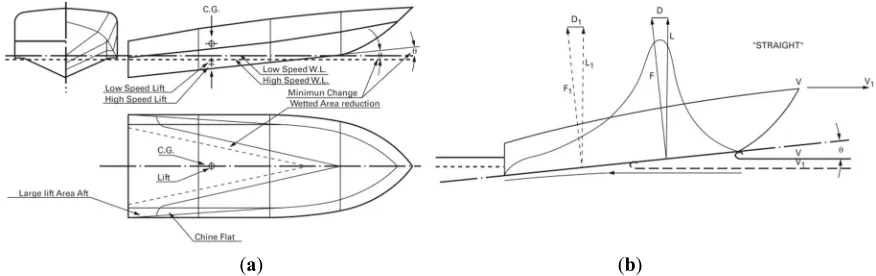
18 meters. These boats are often moved by one or more outboard motors with, typically, a power
31
between 4 to 200 kW. RIBs represents a valid sailing solution to an extremely wide range of
32
utilization, able to include special applications as rescue craft, safety boats for sailing, tenders at the
33
service of larger boats and ships [4]. Their shallow draught, high maneuverability, speed and
34
relative resistance to damage in low-speed collisions are specific advantages offered by these
35
vehicles thanks to specific design solutions and materials.
36
The hull is commonly realized in steel, wood or aluminum [5], even if in the recent decades
37
Fiber-Reinforced Polymer (FRP) composites grow into the largest material solution. FRP composites
38
permit, in fact, to create desired shapes and smooth surfaces thanks to manufacturing processes
39
which competitiveness is difficult, if not impossible, to tie using other materials [6].
40
Between the large family of reinforced materials for boats building [7], the Glass-Reinforced
41
Plastics (GRP) seem to represent the best compromise between the different needs, with special
42
attention of performance against costs. At the same time, reinforces in carbon fibers [8] or in natural
43
ones (as flax or basalt [9-10]) can be preferred whenever special conditions occurred as, for instance,
44
highest structural requirements (e.g. stiffness, lightness) or eco-sustainability are respectively
45
required. Some boat manufacturers also weave with other uncommon solutions of reinforcement
46
(including Kevlar or nanofibers [11]) into the composite sheets for extra strength, moving the general
47
technology toward hybrid materials [12, 13].
48
Beyond the material selected, the hull of a RIB has to be carefully designed and shaped with the
49
scope to increase the boat performance in the water by optimizing its hydroplaning characteristics
50
[14]. It means that benefits are offered not only in terms of speed, maneuverability, consumptions
51
but also of safety, comfort, usability [15-16].
52
As one, the design is often based, in the case of RIBs, on tradition and preconceptions [17]. For
53
instance, some designers are relatively unaware of the stress/strain levels characterizing a hull
54
during the different conditions of sailing, since their attention is mainly concentrated on the
55
observance of standards and technical prescriptions. Furthermore, not all naval design studies seem
56
to be dealing daily with the concepts of numerical simulations, as an instrument to aid the
57
optimization of boats [18]. Still today many designers continue to work in traditional terms of
58
centers of mass, water lines, hull lines, 2D schemes, hydrostatic tables and so on, trying in this way
59
to put a limit on the complexity of the real fluid-structure interactions (Figure 1).
60
61
62
(a) (b)
63
Figure 1. Example of diagrams traditionally used during the engineering design process for
64
evaluating: a) hull behaviour as speed varies; b) trend of the forces on the hull while under way.
65
66
Besides, numerical modelling and simulations, permitting to describe in mathematical terms
67
the multiple aspects of the real world and their evolution over time, could be an essential part in ship
68
design process and optimization [18]. Today the role of modelling is widely consolidated in many
69
sectors, thanks to the dramatic increase in computer speed that now allows the scientific calculation
70
of complex systems, otherwise inaccessible to comprehension, completing more traditional tools.
71
Unfortunately, we are far from having mathematical models and calculation tools so handy and
72
versatile to provide valid answers in all the various fields of ship design. As we go into detail to
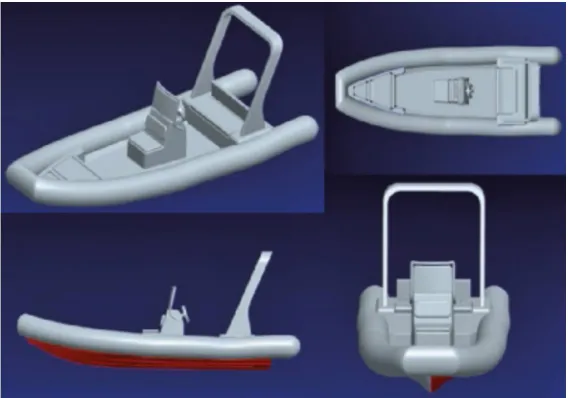
73
better address the problems, we discover the complexity of reality [19]. This concern is particularly
74
manifest in the realization of a high-performance crafts. For their optimization, in fact, it is a
75
question of solving the fluid dynamics equations around the boat, taking into account the variability
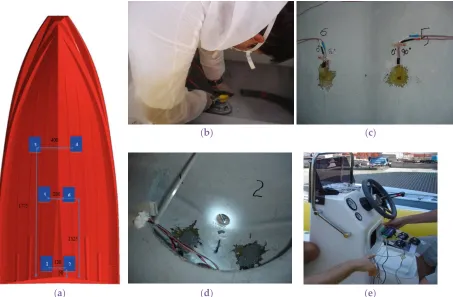
76
of winds, waves and speed [20]. But the interaction between the fluids (air and water) and the
77
structural components (hull, submerged appendages, sails and mast) must also be considered. And
78
this is only to indicate what are the most important aspects to consider with the goal of minimizing
79
water resistance and maximizing the thrust of the sails. To proceed in this way, it is still necessary to
80
manage a complex modelling, taking into account aspects such as: the viscosity of the water, the
81
transition between laminar flow and turbulent flow (with the vortices born), the turbulent trails
82
generated by the interaction of the flow with the immersed parts, the shape of the wave that is
83
generated on the hull and more [21, 22]. For example, one should solve equations that shape the
84
coupling between the air and water motions and the resulting waveform, supplemented by
85
additional equations constituting the models for the calculation of turbulent energy and its rate of
86
dissipation [23]. It follows that the ability to make accurate calculations is not always within the
87
2. Materials and Methods
89
The present study intends to show how experimental mechanics techniques and numerical
90
methods can be conveniently use in supporting design choices without an excessive intensification
91
in the workload or in the complexity of the design procedure. In particular, there are here presented:
92
1. In-lab experiments with the aim at investigating the behaviour of fiberglass, used in the boat
93
manufacturing, by testing specimens in tensile, flexural and impact tests. Different mixtures of
94
resins and glass reinforcements are also compared with the scope to select the best
95
combinations of material properties.
96
2. In-field experiments, installing a network of sensors and instruments on the RIB for acquiring
97
data during sailing: three outings on the sea, in normal and extreme conditions, with the scope
98
to evaluate the stresses and strains in the hull gliding through waves.
99
3. Numerical simulations by the use of Smoothed-particle hydrodynamics (SPH), combined with
100
FEM with the scope to investigate the effect of waves motion and impact on ship structures.
101
2.1. In-lab experiments
102
The current regulation in yachts design is UNI EN ISO 12215 regarding hull construction and
103
scantlings for small crafts especially in that part (Part 5) concerning the design pressures for monohulls,
104
design stresses, scantlings determination. It specifically suggests the use of tensile, flexural and
105
interlaminar shear tests as material test methods providing the minimum mechanical properties that
106
composite materials must have to be used to build the hull (Table 1).
107
108
Table 1. mechanical properties, reference standards for testing and minimum thresholds (ISO 12215)
109
110
Propriety Standard Threshold [MPa]
Flexural Strength ISO 178 135
Flexural Modulus ISO 178 5200
Interlaminar Shear Strength ISO 14130 15
111
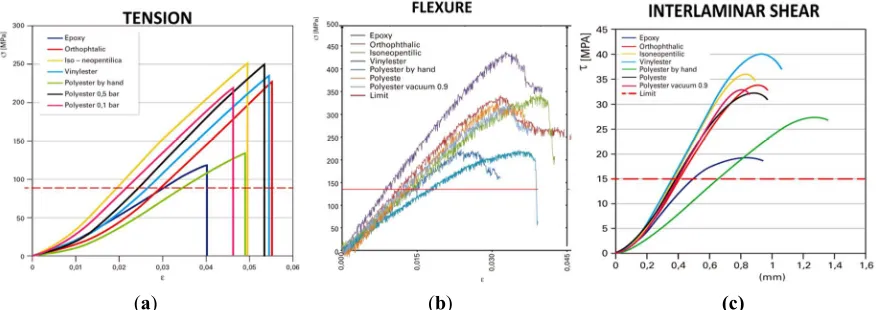
Then, a specific standard was used in each, able to provide information to carry out that test.
112
These standards detail aspects as the geometry of test equipment, the testing speed, the dimensions
113
and number of specimens. In particular, it states that, for each type of resin under investigation, a
114
minimum of 5 specimens is required.
115
In this study, 7 resins were analyzed and compared: Epoxy, Orthophtalic, Iso-neopentilic,
116
Vinylester and 3 different Polyesters. Tests were carried out using an Italsigma hydraulic testing
117
machine with 100kN HBM Gmbh load cells.
118
2.1.1. Tensile tests
119
The tensile tests were planned and carried out following the indications of ISO 527-1/4
120
standards. Since the sheet was made up of layers of coupled mat, the direction of tension made no
121
significant difference. The samples had nominal dimensions of width 25 mm, length 250 or 150 mm
122
and thickness 4 mm. Supports in aluminium 50 mm long and 3 mm thick were glued to the samples
123
using LOCTITE 9466 AB glue. A minimum of five samples were tested for each resin system. The
124
test speed was 0.02 mm/s (figure 2a).
125
2.1.2. Flexural tests
126
The flexural tests were planned and carried out to the ISO 178 standard. The samples were
127
realized in rectangular shape, 10 mm length, 80 mm width 3.5 mm thickness, and distance between
128
supports of 56 mm, or 4 manually laminated samples 15 mm length, 110 mm width, 5.5 mm
129
thickness and distance 90 mm. For each resin system at least five samples were tested. The test speed
130
2.1.3. Interlaminar shear tests
132
The interlaminar shear tests were planned and carried out to the indications of the ISO 14130
133
standard. The samples were rectangular, length 10 mm, height 40 mm, width 5 mm, height 20 mm,
134
with the distance between supports of 17.5 mm. The test speed was 0.02 mm/s (figure 2c).
135
The failure methods were investigated with particular attention.
136
137
(a) (b) (c)
138
Figure 2. Equipment and samples during the a) tensile, b) flexural and c) interlaminar shear tests.
139
2.2. In-field experiments
140
A prototype RIB, based on the Mariner 530 model, was used for stress tests. It was a 6-seater,
141
450kg boat, 4.95m long and 1.75m in the beam, with a 15kW/20hp engine (Figure 3).
142
143
144
Figure 3. A prototype RIB used for sailing tests
145
146
Experiments monitored accelerations and strains installing strain gages and accelerometers on
147
the boat (Figure 4). Accelerations were measured in the fore and aft and athwartships directions of
148
the hull. The values of acceleration made it possible to correlate tests carried out in different sea
149
conditions, but also to provide an interesting overall parameter for evaluating the comfort.
150
Strains were measured in 6 different locations on the hull, revealing longitudinal and transvers
151
deformations. In total 15 measures were realized: 3 accelerations and 12 deformations. In particular,
152
the strain gauges were positioned in the way to monitor the most remarkable parts in terms of water
153
effect during the different conditions and speeds of sailing (figure 4a). The duplication of strain
154
gages (and measures) in a symmetrical configuration was preferred for a better investigation of
155
unexpected phenomena.
156
Boat surfaces were carefully cleaned and treated before gluing the strain gauges (figure 4b). The
158
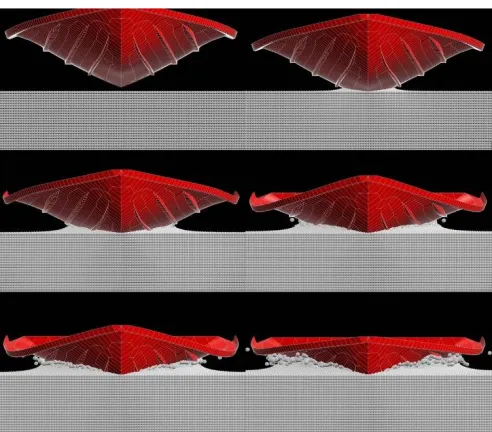
glue was also used to protect these sensors (figure 4c). The weight effects of the fuel tank and driver
159
were also monitored (figure 4d). A three-axis accelerometer was placed in the cockpit, together with
160
data acquisition, signal conditioners/wireless amplifiers and other electronic devices. (Figure 4e).
161
The tests were carried out on three different days, two with calm sea, to verify the sensitivity of
162
the measurement system even under very low stresses. Each test day saw several measurement
163
sessions using trajectories, speeds and acceleration in an attempt to represent best various driving
164
styles. Inside each test day, several test sessions were realized. Each session of measure lasted about
165
1 minute: this choice made it easier to analyse data and separate the effects.
166
167
(b) (c)
(a) (d) (e)
Figure 4. Placement of the strain gauges: a) map of placement; b) preparing the surfaces for gluing
168
on the strain gauges; c) train gauges in the cockpit, affected by the weight of the fuel tank and driver;
169
d) stern strain gauges to monitor the most stressed areas; e) data acquisition and other ICT devices.
170
2.3. Numerical simulations
171
The numerical study of the impact between a moving body and a free surface of water is a
172
familiar problem both in the naval and aeronautical fields, and concerns the interaction phenomena
173
between hulls, offshore structures, aircraft with the water surface, sometimes considered in its wave
174
motion. The main purpose of this type of research is to trace the load transferred during the impact
175
to the structure under examination to verify the conditions of resistance or proceed to a redesign.
176
Usually, these studies start from experimental tests, interpreted through empirical laws and, only
177
recently, studied through numerical simulations.
178
These investigations must be implemented by numerical codes that permit to properly model
179
the fluid-structure interaction. These codes originate from the Lagrangian formulation programs
180
developed for crash problems, but also allow the interface of continuous based on Eulerian spatial
181
description. In this kind of calculations the fluid constitutive model, the fluid-structure interaction
182
algorithms and the computational efficacy represent critical aspects. This study present an
183
alternative approach based on mixing Finite Elements (FE) and Smoothed-particle hydrodynamics
184
(SPH).
185
Slamming simulations were performed with LS-Dyna commercial software. SPH elements were
187
used for fluid modelling. SPH particles, equispaced and of identical size (radius of influence of 25
188
mm) were placed in a fluid region of dimensions 7 m x 3 m for a depth of 1.5 m. The properties of the
189
fluid were modelled by means of a state equation according to the Gruneisen formulation (Eq. 1).
190
191
p=
r0C 2
m1+ 1-g0
2
æ è
ç ö
ø ÷m-a
2m
2
é
ë ê
ù
û ú
1-
(
S1-1)
m-S2 m2
m+1-S3 m3
m+1
(
)
2é
ë ê ê
ù
û ú ú
2+
(
g0+am)
E(1)
192
where E represents the internal energy per unit of volume, and =-where is the ratio between
193
final and initial density. The numerical values of the other constants are reported in Table 2.
194
The fluid is initially at rest, is subject only to gravity acceleration and is constrained in space by
195
non-reflecting edges, so as to avoid the reflection of the pressure waves.
196
Table 2. Water constants according to the Gruneisen model.
197
C
[m/s]S
1S
2S
3
0[Kg/m
3]
1480
2.56
1.986
1.2268
1000
0.5
198
The hull was modelled using Finite Elements (FE) shell type, 4 nodes with 2 points of integration
199
in the thickness, for a total of 26000 elements (as shown in Figure 5). The hull thickness was
200
considered constant throughout the model, and equal to 12 mm. The material had the characteristics
201
of a composite laminate with a matt of glass fiber and polyester matrix, with properties of E1 = E2 =
202
24 GPa, = 0.3, = 2800 Kg / m3, implemented as an elastic linear material without damage models.
203
The numerical simulation simulated the entry into the water (as drop test) with an entry speed
204
of 8 m / s. The speed component was purely vertical and the hulls inclined with the bow to a greater
205
portion of the stern (as shown in Figure 5).
206
207
208
209
210
Figure 5. Discretization of the model through shell elements. The hull is discretized by 26000 shell
211
elements with 4 nodes with 2 points of integration in the thickness.
212
3. Results
213
3.1. Material properties
214
Tensile tests provided a measure of the strength (σ) and stiffness (E) of the laminate as a whole,
216
thus including both the contribution of these seven resin and fibres in their specific stratification.
217
In particular, Figure 6a shows the stress-strain diagrams noting that:
218
- the standard requires tensile strength of 80 MPa which is amply satisfied by all the resin
219
systems. As a practical result, all the materials and sequence of stratification under investigation
220
are adequate for creating the strength laid down by the standard;
221
- almost all the resins showed an ultimate tensile stress of between 220 and 250 MPa with better
222
characteristics for isoneopentilic and orthophthalic resins at 0.5 bar, while hand laminated
223
polyester resin and epoxy resin had the worst performance;
224
- for hand laminated polyester, this performance is due to the greater percentage of resin
225
compared with fibre and to the presence of air porosity in the manual laminate compared with
226
other techniques (VARTM);
227
- epoxy resin shows decidedly low values in relation to the problems illustrated in starting
228
reticulation of the resin in the sample sheet.
229
3.1.2. Flexural properties
230
Similarly, Figure 6b shows the stress-strain diagrams for the flexural tests noting that:
231
- the standard demands flexural strength of 135 MPa and a flexural modulus of 5200 MPa which
232
is amply satisfied by all the resin systems; all the resin systems are thus adequate for offering the
233
strength specified by the standard.
234
The resins can be grouped into three categories:
235
- best resin: Vinylester, which has properties decidedly superior to the others but is more
236
expensive; it is recommended for special or high-performance applications;
237
- hand laminated polyester and epoxy: these have the worst characteristics, but it must be
238
underlined that the poor result of epoxy resin is linked to the fact that it was made at
239
environmental temperature, normally epoxy resins have much better performance;
240
- the others: they all show very similar behaviour and are equivalent.
241
3.1.3. Interlaminar shear properties
242
Finally, Figure 6c shows the main results obtained from the interlaminar shear tests. For each
243
sample the shear methods were classified and the calculation of the maximum shear force is shown.
244
In particular, it is shown the shear-displacement diagrams where it is possible to note that:
245
- the standard requires interlaminar shear resistance of 15 MPa which was largely satisfied by all
246
the resin systems;
247
- the best system is once again vinylester with performance decidedly better than that of the
248
others: in this case too epoxy resin shows unusually low values for the partial reticulation of the
249
sample sheet;
250
- the remaining resins have similar behaviour with a slight preference for isonepentilic resin.
251
252
253
(a) (b) (c)
254
3.2. Loads and deformations
256
Each navigation tests started with the transport thought the port and launch in the basin (Figure
257
7). Figure 8 shows an example of a cruising followed during a measurement session, starting from
258
calm water in the port followed by sudden accelerations. In particular, the GPS trace shows the
259
presence of specific criteria in the measurements. In this case, for instance, the criterion was to reach
260
the maximum speed (about 20 km/h), then turn in a fixed time through a set angle marked on the
261
helm. In this way the RIB ran over its own wake, with waves of roughly the same height, to improve
262
the repeatability of the measurements.
263
264
265
(a) (b)
266
Figure 7. Initial phase: a) transport through the port and b) launch in the basin of the rigid inflatable
267
instrumented boat.
268
269
270
Figure 8. Example of route followed during one of the test sessions: strong acceleration and repeated
271
rotations made it possible to investigate the effect of self-generated waves on the hull.
272
273
Figure 9 shows an example of a part of measures acquired during this specific test. The
274
acceleration is expressed only with its vertical component (the most significant) while for stress all
275
three components are evident. Although strains (and related stresses) were very far from the safety
276
limits of fiberglass, these tests aimed above all to represent a method that makes possible to create an
277
“instrumented prototype” for resistance tests and design evaluation.
278
This prototype was not only intended to investigate the behaviour of the craft during normal
279
operation, but also in extreme conditions laid down by the specifications or future regulations such,
280
for example, as the inflatable being dropped from heights from 3 to 6 m, which are being prepared,
281
or sailing on moderate or rough water.
282
284
285
286
(a) (b)
287
Figure 9. Investigating the hull behaviour in different moments: a) accelerations and b) strains
288
3.3. Numerical predictions
289
This simulation permitted to investigate the situation of the hull impacting against the water
290
surface in specific conditions (e.g. impact speed, impact direction and so on) in terms of time
291
evolution of displacement, speed and acceleration (Figure 10).
292
In this case it is possible to note that the maximum acceleration is achieved shortly after the start
293
of the impact, when the speed is high and only a small part of the hull is in contact with the water.
294
This force counteracts the inertia of the craft. A moment is then generated which deforms the hull to
295
the outside and tends to "push" the structure. As water enters the inlet, the wet surface of the hull
296
increases and elastic strain energy accumulates. As the wetted surface increases, the moment caused
297
by the hydrodynamic force increases and generates a bending moment that is opposite and stronger
298
300
Figure 10. Displacement, Speed and Acceleration of the bow and stern during the impact.
301
302
Figure 11 shows a sequence of images of the water entering while Figure 12 shows the (Von
303
Mises) stress level associated with the deformations of the hull. The colors in the figure represent the
304
range from 0 MPa (blue) to 50 MPa (red). The most stressed regions are the keel, where the
305
hydrodynamic pressure is maximum, and the terminal part of the side members, where a greater
306
mass is concentrated and therefore the elastic deformation is maximum.
307
308
309
Figure 11. Sequence of the simulation of the entry into the water of the hull.
310
311
4. Discussion and Conclusion
313
This article, as said, aims at demonstrating how numerical models and experimental techniques,
314
even in the case of simplified and quick procedures, can be conveniently used for supporting the
315
designers in their decisive tasks.
316
Concerning those experiments that can be performed in lab, the article shows how they can be
317
implemented in accordance with well-known standard arriving to a practical characterization of the
318
resin systems, supporting a final selection. But experiments also provided additional evidences that
319
can be useful for a more informed choice as, for instance:
320
- the epoxy system does not appear to be usable at typical temperatures for boat production;
321
- there are significant difference in mechanical performances obtainable with advanced
322
techniques compared with the classic manual methods.
323
Concerning the experiments in sailing conditions, the article shows the advantages of the RIBs
324
respect to other traditional boats, but also its limits when its specificities are not reflected in the
325
design process. Extremely safe, thanks to the inflatable collar that makes it unsinkable and increase
326
the lateral stability, but also thanks to its low weight and dimension, this craft present several
327
functional benefits. Driven by very powerful engines in relation to their displacement, RIBs can
328
plane on waves and do not simply slide along the water. This, which means much of the hull spends
329
a great deal of its time in the air, considerably reduces drag, optimizing speed and efficiency.
330
At once, from experimental data it was possible to immediately observe the intense impulsive
331
loads acting on its structures, together with a maximum at the intersection between the hull and the
332
water line. This peak moves and changes in intensity as the hull planes, decreasing and moving
333
astern the more of the hull is out of the water. At the same time the hull undergoes strong and
334
continual impacts on the water surface that demand careful and robust design. Besides, clearly
335
understanding what happens in the interaction between fluid and structure is not an easy task,
336
especially in non-nominal conditions as in the case of a strangely shaped hull moving in rapid
337
zigzags among the waves.
338
With the aim at moving a step toward this comprehension, numerical models and simulations
339
can provide a help, as demonstrated. Through the coupled SPH and FEM methods it was possible to
340
study the complex aspect of fluid-structural interaction and the mutual influence between the fluid
341
motion and the hull deformation. For instance, observing the behaviour of stern and bow during
342
their entry into the water, it was possible to recognize that the stern, the first to touch the water, is
343
also the first to decelerate. This generates a moment on the hull that slightly increases the fall speed
344
of the bow, which impacts on the water afterwards. The peaks of the maximum accelerations of the
345
stern and the bow are therefore out of phase. And so on.
346
347
Funding: This research, named ‘New concept boats’, was funded by the Emilia Romagna Region, Italy, as part of
348
the Regional Operation Program that uses resources from European Regional Development Fund (ERDF) with
349
the aim to strengthen economic and social cohesion in the European Union.
350
351
Acknowledgments: The research was supported by Mariner Srl, Stilplast Srl, Ravenna with technical support
352
and donations in kind. In-lab experiments were carried out at the MaSTeR Lab, University of Bologna, under
353
the supervision of Lorenzo Donati and Enrico Troiani. In field experiments were carried out in front of the port
354
of Ravenna, Italy, Adriatic Sea, under the supervision of Giangiacomo Minak. Special thanks to Vanda Roversi,
355
Riccardo Panciroli, Ana Pavlovic for their efforts.
356
357
Conflicts of Interest: The author declare no conflict of interest.
358
359
References
361
1. Pike, D. The Complete RIB Manual: The Definitive Guide to Design, Handling and Maintenance. A&C Black;
362
London, UK, 2013.
363
2. Townsend, N.C.; Wilson P.A.; Austen S. What influences rigid inflatable boat motions?. Proc. Institution of
364
Mechanical Engineers, Part M: Journal of Engineering for the Maritime Environment 2008, 222(4), 207-217.
365
3. Salvesen, N.; Tuck E.O.; Faltinsen O. Ship motions and sea loads. SNAME Transactions 1970, 78, 250-287.
366
4. Versmissen, H.; Haasnoot, T. Rigid Inflatable Boats. In Handbook on Drowning. Task Force on Rescue–Rescue
367
Techniques; Brewster, C.B.; Brons R.K., Eds.; Springer: Berlin, Germany, 2007; 5(13), pp. 264.
368
5. Pollard, S. F. Boatbuilding with Aluminum: A Complete Guide for the Amateur and Small Shop. 2nd ed.;
369
McGraw-Hill Professional: NY, US, 2006.
370
6. Fragassa, C. From Design to Production: an integrated advanced methodology to speed up the
371
industrialization of wooden boats. Journal of Ship Production and Design 2017, 33(2), 1–10.
372
7. Marsh, G. 50 years of reinforced plastic boats. Reinforced plastics 2006, 50(9), 16-19.
373
8. Marsh, G. Composites boost patrol craft performance. Reinforced Plastics 2006, 50(2), 18-22.
374
9. De Paola, S.; Minak, G.; Fragassa, C.; Pavlovic, A. Green Composites: A Review of State of Art. In
375
Proceedings of the 30th Danubia Adria Symposium on Advanced Mechanics, Primosten, Croatia, 25-28
376
September 2013; Croatian Society of Mechanics, 2013, p. 77-78.
377
10. Hyseni, A.; De Paola, S.; Minak, G.; Fragassa, C. Mechanical Characterization of EcoComposites. In
378
Proceedings of the 30th Danubia Adria Symposium on Advanced Mechanics, Primosten, Croatia, 25-28
379
September 2013; Croatian Society of Mechanics, 2013, 175-176.
380
11. Fotouhi, M., Saghafi, H., et al.. Effect of PVDF nanofibers on the fracture behavior of composite laminates
381
for high-speed woodworking machines. Proceedings of the Institution of Mechanical Engineers, Part C: Journal
382
of Mechanical Engineering Science 2017, Vol 231, No. 1, pp. 31-43.
383
12. Fragassa, C., Pavlovic, A., Santulli, C. Mechanical and impact characterisation of flax and basalt fibre
384
bio-vinylester composites and their hybrids. Composites Part B: Engineering 2018, 137, 247-259.
385
13. Zivkovic, I., Pavlovic, A., et al.. Influence of moisture absorption on the impact properties of flax, basalt
386
and hybrid flax/ basalt fiber reinforced green composites. Composites Part B: Engineering 2017, 111, 148-164.
387
14. Townsend, N.C.; Coe, T.E.; Wilson, P.A.; Shenoi, R.A. High speed marine craft motion mitigation using
388
flexible hull design. Ocean Engineering 2012, 42, 126-134.
389
15. Hudson, D.A., Turnock, S.R., Lewis, S.G. Predicting motions of high-speed rigid inflatable boats:
390
Improved wedge impact prediction. In Proceeding of The Ninth International Conference on Fast Sea
391
Transportation (FAST2007), 23 - 27 Sep 2007; Shanghai, China, 2007, 377-383.
392
16. Wines, C. Stability and Safety Issues for High Speed Operation of Rigid Inflatable Boats. In Proceeding of
393
the 11th International Conference on Fast Sea Transportation, Hawaii, 2011, 844-849.
394
17. Schumann, B.; Ferraro, M.; et al.. Better design decisions through operational modeling during the early
395
design phases. Journal of Aerospace Information Systems 2014, 11(4), 195-210.
396
18. Jones, A.T. Design space exploration and optimization using modern ship design tools. Doctoral
397
dissertation, Massachusetts Institute of Technology, Cambridge, US, 2014.
398
19. Abrate, S. Hull slam. Applied Mechanics Reviews 2011, 64(6), no. 060803.
399
20. Savitsky, D. Hydrodynamic design of planing hulls. Marine Technology 1964, 1(1), 71-96.
400
21. Ircani, A.; Martelli, M.; Viviani, M. et al. A simulation approach for planing boats propulsion and
401
manoeuvrability. Trans. Royal Inst. of Naval Architects Part B: Int. J. of Small Craft Technology 2016, 158, 27-42.
402
22. Panciroli, R.; Abrate, S.; Minak, G.; Zucchelli, A. Hydroelasticity in water-entry problems: Comparison
403
between experimental and SPH results. Composite Structures 2012, 94(2), 532-539.
404
23. Panciroli, R. Hydroelastic impacts of deformable wedges. In Dynamic Failure of Composite and Sandwich
405
Structures; Abrate, S. et al., Eds.; Springer: NY, USA, 2013; pp. 1-45. ISBN 9789400753280
406
24. Almeter, J.M. Resistance prediction of planing hulls: State of the art. A comparison of empirical vs.