International Journal of COPD
Dove
press
O r I g I n a l r e s e a r C h
open access to scientific and medical research
Open access Full Text article
Knowledge and pharmaceutical care practice
regarding inhaled therapy among registered and
unregistered pharmacists: an urgent need for a
patient-oriented health care educational program
in Iraq
shaymaa abdalwahed abdulameer
Faculty of Pharmacy, al-rafidain University College, Baghdad, Iraq
Background: Inadequate inhaled aerosol device demonstration and technique by health care
professionals can lead to poor disease control. The aims of this study were to develop and validate Knowledge of Aerosol Tool (KAT) among registered and unregistered pharmacists and to assess the pharmaceutical care practice among registered pharmacists.
Methods: The KAT and pharmaceutical care practice questionnaires were developed and modified from previous reports, then an observational cross-sectional study with a convenience sample size of 340 was carried out among registered and unregistered pharmacists. The validation process included face validity and reliability, and item analysis was carried out.
Results: The results showed good face validity and reliability with Cronbach’s alpha test and Pearson’s correlation coefficient for test–retest of 0.637 and 0.440, respectively. The KAT item difficulty index for most items was between 0.130 and 0.667. The total KAT scores for registered and unregistered pharmacists were 10.13±3.152 and 8.29±2.930, respectively, which revealed inadequate pharmacist knowledge of inhaled aerosol device technique and therapies. In addition, only 38.38% of the total sample was found to have a high KAT level score. The results showed higher KAT scores among males, pharmacists with a family history of respiratory disease, and pharmacists with a master’s degree. For the registered pharmacists, there were positive correlations between the total KAT score and the total pharmaceutical care practice score and the average number of patients with a respiratory disease seen by the pharmacist weekly, respectively. Moreover, there was a positive correlation between the total KAT score and its aerosol administration subscale with pharmacotherapy care and comorbid disease management practice care.
Conclusion: The KAT showed good validity and reliability, hence, it can be used for training or educational purposes. This study showed that professional knowledge and pharmaceutical care are a major concern in Iraq. KAT implementation depends on the whole educational process from undergraduate study to residence training.
Keywords: aerosol knowledge, pharmaceutical care, validation, pharmacist
Introduction
For higher efficiency and fewer side effects, aerosol medications are preferred for obstructive airway diseases.1 However, the most serious limitation is patient skill in using the device. The incorrect use of aerosol devices can lead to poor disease Correspondence: shaymaa abdalwahed
abdulameer
Faculty of Pharmacy, Al-Rafidain University College, Palestine street, Baghdad 10052, Iraq
email [email protected]
Journal name: International Journal of COPD Article Designation: Original Research Year: 2018
Volume: 13
Running head verso: Abdulameer
Running head recto: Knowledge and pharmaceutical care practice regarding inhaled therapy DOI: 157403
International Journal of Chronic Obstructive Pulmonary Disease downloaded from https://www.dovepress.com/ by 118.70.13.36 on 22-Aug-2020
For personal use only.
Dovepress
abdulameer
control.2–4 Therefore, patients must use them correctly for successful pharmacological action. For these reasons, training the patient on how to use inhaler devices correctly is very important, as stated by the clinical practice guidelines for asthma and COPD, the European Respiratory Society, and the International Society for Aerosols in Medicine.5–7
Several studies showed that most patients did not handle inhaler devices properly.8–13 Moreover, it has been reported that health care professionals who prescribe or supervise patients’ use and skills had poor knowledge and skills regarding aerosol use.14–19 Undoubtedly, when the health care professionals are uncertain and have questionable skills on how to use aerosol devices, the patient definitely cannot be expected to use them properly. In addition, the pharmacist is the last line of defense before patients attempt to self-administer medication, as the pharmacist plays a significant role in patient education; however, there is a paucity of literature regarding this issue.
According to the report of the Ministry of Health in Iraq, primary health care centers were visited by approximately 230,000 asthmatic patients in 2013 and approximately 200,000 patients per year are either hospitalized or treated in an emergency room.20 Moreover, a recent study has found that a substantial proportion of patients with asthma or COPD are using their inhaler incorrectly.21 Most of pharmacists’ knowledge is gained from formal study or practice. In Iraq, colleges of pharmacy (government or private universities) offer a bachelor’s degree in pharmaceutical sciences which enables the graduates to work as a pharmacist (in govern-ment, private or both sectors). On reviewing the pharmacy curriculum, it was found that the clinical pharmacy and thera-peutics subjects were studied over 2 years (4th and 5th year students, respectively). Clinical pharmacy subject has 3 h credits (2 h theoretical and 1 h practical per semester) while therapeutics has 5 h credits (theoretical only). Asthma and COPD topics have only 3 h slots only (4th year students). In addition, objective structured clinical examination (OSCE) is not offered in the curriculum of these colleges. Moreover, guidelines on how to use aerosol medications are not even included in the textbooks of these colleges.
Furthermore, pharmacists’ knowledge of aerosol medi-cations clearly affects patient response to medication and other pharmaceutical care practice. Additionally, patients seeking advice, treatment, and reassurance should receive the correct information and guidance regarding their medications during patient-centered communication with the pharmacist. Therefore, the aims of this study were to develop and validate Knowledge of Aerosol Tool (KAT) among registered and
unregistered pharmacists and to assess the pharmaceutical care practice among registered pharmacists.
Methods
Participants and study design
An observational cross-sectional study was carried out between November 2016 and April 2017 in Baghdad, the capital of Iraq. Baghdad city has two large district areas named Al-Kharkh and Al-Rusafa. Random cluster sampling method was used to select three areas from each. All retail pharmacies from those areas were considered eligible for participation in the study. All eligible pharmacies were visited by the researcher. Pharmacists declining participation at this initial contact were excluded from the study. Pharmacists deferring until a later date for reasons of inconvenience received two additional visits only; deferment at this time excluded the pharmacist from study. All participants provided written informed consent prior to participation in this study. All personal information collected was considered confidential. The study protocol was approved by the Scientific Committee of Al-Rafidain University Collage, Baghdad, Iraq.
The study comprised of three sections. The first section involved background and demographic information. The second and the third sections were KAT questionnaire and pharmaceutical care practice questionnaire.
Instruments and measurements
The KAT is a 24 multiple-choice item tool in English language with two subscales designed to measure the knowledge of aerosol administration technique and aerosol medicine use with a total score ranging from 0 to 24. A higher score means more knowledge. The KAT questionnaire has two unrelated subscales. Each subscale has 12 items (score ranging from 0 to 12). Then, arbitrarily, two groups were generated: low (range 0–5 points) and high (range 6–12 points) levels for each subscale. Hence, the total lowest score of KAT for adequate (or high) knowledge will be 12. Thus, a cutoff point of 12 was chosen to discriminate between high and low levels. The KAT questionnaire was developed, modi-fied, and compiled from previous reports on comprehensive assessment of aerosol knowledge regarding diverse inhaler devices and common medicine used in Iraq.1,22,23 In addition, pharmaceutical care practice questionnaire was modified from previous report to measure the registered pharmacists care practice.24 It is 4-point Likert type scale (Never, score 1; Always, score 4) with a total score ranging from 5 to 20. Higher score means higher practice.
International Journal of Chronic Obstructive Pulmonary Disease downloaded from https://www.dovepress.com/ by 118.70.13.36 on 22-Aug-2020
Dovepress Knowledge and pharmaceutical care practice regarding inhaled therapy
sample size
A recommendation suggested that at least five subjects per item are needed to evaluate the reliability and validity of KAT questionnaire.25 Therefore, 120 participants were needed for the purpose of validation. Doubling the sample size, with an additional 30% as drop out, was considered necessary for the study to overcome erroneous results and increase the reli-ability of the conclusions. With this number of participants, it would be possible to discriminate between high and low correlations.26 Only 195 registered pharmacists (pharmacists who graduated from college of pharmacy and members of the Syndicate of Iraqi Pharmacists [SIP]) were accepted to be involved in this study and completed the questionnaire. Twenty five participants from the sample population were randomly selected for test–retest reliability within 1–2 weeks and not included in the final sample study. During the registration meeting governed by the SIP for unregistered pharmacists (pharmacists newly graduated from college of pharmacy and not members of SIP), a comparable sample (N=170) was selected randomly.
Validation and reliability
Face validity
Face validity is the capacity of an item to measure the construct that it proposes to measure.27 Five experts in the pharmacy field were invited in order to test the degree of difficulty, clarity, appropriateness, and comprehensiveness of the questionnaire items and to provide feedback and judge the face validity of KAT questionnaire.
reliability
The internal consistency of KAT questionnaire was evalu-ated using Cronbach’s alpha with a minimum acceptable criterion above 0.50. The corrected item total correlations between the scales and their corresponding items were assessed with a minimum acceptable correlation of 0.20.28 Pearson’s correlation coefficient was used to evaluate test– retest reliability.25
statistical analysis
Percentages, frequencies, and mean ± SD were used when applicable. The significance level was set at a P-value less than 0.05 using Predictive Analytics Software version 19.0. The chi square, Mann–Whitney U, and Kruskal–Wallis tests were used to evaluate the association and differences when applicable. The statistical analysis of the validation processes included assessing reliability (Cronbach’s alpha and test– retest) and item analysis.
Results
Out of a total of 312 registered pharmacists receiving the questionnaire, only 170 agreed to participate in this study (total response 54.49%). The total sample for validation study was 340 (170 registered pharmacists and 170 unregistered pharmacists), in addition to 25 registered pharmacists for test–retest analysis.
sociodemographic
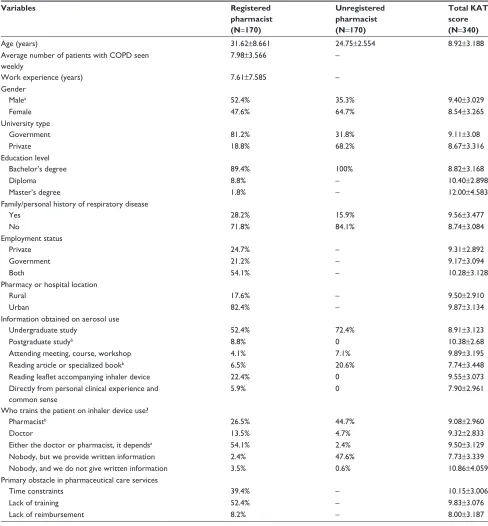
The demographic characteristics of the study population are presented in Table 1. For registered pharmacists, the average patient number with respiratory disease seen weekly and pharmacists’ years of work experience were 7.98±3.566 and 7.61±7.585 years, respectively. The most common source of information about aerosol was undergraduate study (52.4%) followed by reading leaflets of the inhaler devices (22.4%). The most common answer about who trains patients on inhaler devices was “either the doctor or pharma-cist” (54.1%). More than half of the registered pharmacists agreed that the primary obstacle in pharmaceutical care services was the lack of training (52.4%), followed by time constraints (39.4%). While for unregistered pharmacists, the most common sources of information obtained about aerosol use were undergraduate study (72.4%) followed by reading articles or specialized books (20.6%). The most common answer about who trains patients on inhaler devices was “nobody, but we provide written information” (47.6%).
Validation and reliability
For the reliability, the Cronbach’s alpha test of internal con-sistency was 0.637 for the 24 items of KAT, and it is within the recommended acceptable result for reliability.28 The test– retest reliability of the 24 items of KAT indicated worthy reliability and stability of the instrument with Pearson’s correlation coefficient of 0.440 (P,0.05).
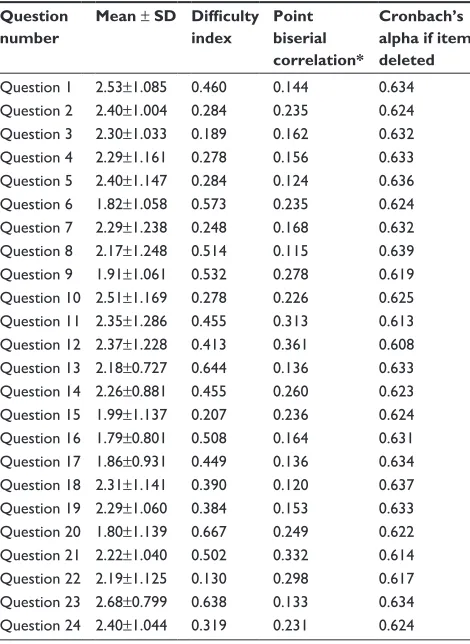
Regarding item analysis for KAT, the item difficulty index for most items was between 0.130 and 0.667, which is satisfactory (Table 2). No item scored above 0.70 (which indicated that most of the subjects answered these questions incorrectly) and two items (item 3, 22) had low difficulty index below 0.20. However, these two items were retained as they reflected basic knowledge regarding aerosol therapy administration technique and use. The corrected item-total correlation (point biserial correlation) values ranged from 0.115 to 0.361 (Table 2). Although 12 items (item 1, 3, 4, 5, 7, 8, 13, 16, 17, 18, 19, and 23) showed corrected item-total correlation value of less than 0.20, all items appeared to be suitable for retention depending on the
International Journal of Chronic Obstructive Pulmonary Disease downloaded from https://www.dovepress.com/ by 118.70.13.36 on 22-Aug-2020
Dovepress
abdulameer
meaningfulness of the items and the study design’s scientific point of view. Ferguson’s sigma for the questionnaire was 0.948, which is considered perfect.
Knowledge of aerosol
Table 3 shows the correct answer percentage of KAT and its two subscales. The total KAT scores for registered and
unregistered pharmacists were 10.13±3.152 and 8.29±2.930, respectively, which revealed inadequate pharmacist knowl-edge of inhaled therapies and technique. In addition, only 38.38% of the total sample was found to have high KAT level scores. The results showed that the registered pharmacists had a higher total KAT and its subscales scores than unregistered pharmacists (P,0.01).
Table 1 The demographic data of registered and unregistered community pharmacists in Iraq
Variables Registered
pharmacist (N=170)
Unregistered pharmacist (N=170)
Total KAT score (N=340)
age (years) 31.62±8.661 24.75±2.554 8.92±3.188
average number of patients with COPD seen weekly
7.98±3.566 –
Work experience (years) 7.61±7.585 –
gender
Malea 52.4% 35.3% 9.40±3.029
Female 47.6% 64.7% 8.54±3.265
University type
government 81.2% 31.8% 9.11±3.08
Private 18.8% 68.2% 8.67±3.316
education level
Bachelor’s degree 89.4% 100% 8.82±3.168
Diploma 8.8% – 10.40±2.898
Master’s degree 1.8% – 12.00±4.583
Family/personal history of respiratory disease
Yes 28.2% 15.9% 9.56±3.477
no 71.8% 84.1% 8.74±3.084
employment status
Private 24.7% – 9.31±2.892
government 21.2% – 9.17±3.094
Both 54.1% – 10.28±3.128
Pharmacy or hospital location
rural 17.6% – 9.50±2.910
Urban 82.4% – 9.87±3.134
Information obtained on aerosol use
Undergraduate study 52.4% 72.4% 8.91±3.123
Postgraduate studyb 8.8% 0 10.38±2.68
attending meeting, course, workshop 4.1% 7.1% 9.89±3.195
reading article or specialized bookb 6.5% 20.6% 7.74±3.448
Reading leaflet accompanying inhaler device 22.4% 0 9.55±3.073
Directly from personal clinical experience and common sense
5.9% 0 7.90±2.961
Who trains the patient on inhaler device use?
Pharmacistb 26.5% 44.7% 9.08±2.960
Doctor 13.5% 4.7% 9.32±2.833
either the doctor or pharmacist, it dependsa 54.1% 2.4% 9.50±3.129
nobody, but we provide written information 2.4% 47.6% 7.73±3.339
nobody, and we do not give written information 3.5% 0.6% 10.86±4.059
Primary obstacle in pharmaceutical care services
Time constraints 39.4% – 10.15±3.006
lack of training 52.4% – 9.83±3.076
lack of reimbursement 8.2% – 8.00±3.187
Notes: Data presented as mean ± standard deviation or percentage. Significant difference between groups,aP,0.001; bP,0.05.
Abbreviation: KaT, Knowledge of aerosol Tool.
International Journal of Chronic Obstructive Pulmonary Disease downloaded from https://www.dovepress.com/ by 118.70.13.36 on 22-Aug-2020
Dovepress Knowledge and pharmaceutical care practice regarding inhaled therapy
The results showed a higher proportion of KAT scores among male pharmacists with a family history of respiratory diseases and pharmacists with a master’s degree (P,0.05). Furthermore, pharmacists with a postgraduate degree and who read leaflets accompanying inhaler devices had higher total KAT scores than pharmacists who read articles or books specialized in the field (P,0.05). Additionally, there were significant differences in the total KAT score according to the pharmacists’ attitude regarding who trains the patient on inhaler device use (P,0.05). Finally, the results showed
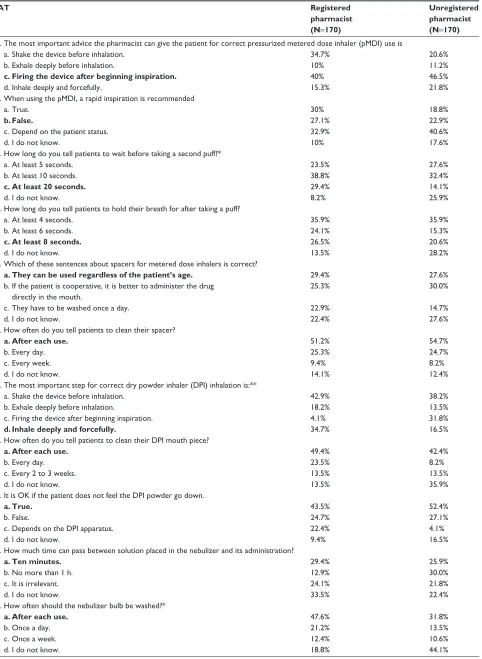
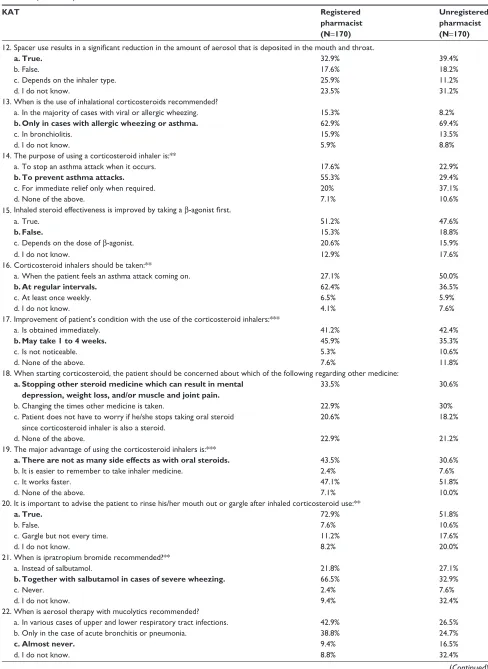
insignificant associations between total KAT score and university type, employment status, pharmacy or hospital location area, and primary obstacles in pharmaceutical care services (P.0.05). There were significant associations between the pharmacist type and some of KAT questions (3, 7, 11, 14, 16, 17, 19, 20, 21, and 23, P,0.05). The results showed that the registered pharmacists had a higher cor-rect answer response for these questions than unregistered pharmacists. Table 4 shows the percentage of correct response and incorrect response of each question of KAT among the sample population.
Pharmaceutical care practice
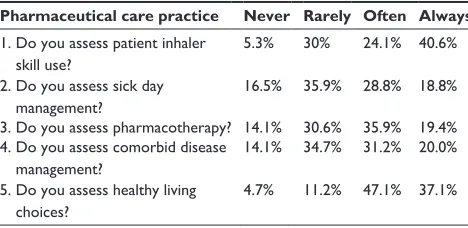
Table 5 shows pharmaceutical care practice questionnaire results of registered community pharmacists in Iraq. The pharmaceutical care practice scores of registered pharmacists were moderate (12.42±3.258) and only 22.90% had low prac-tice scores. There were significant differences between phar-maceutical care practice and the university type (higher scores with government university [P,0.05]), and the pharmacists’ attitude (pharmacists who train patients on inhaler device use had higher practice scores than others [P,0.05]).
KaT and pharmaceutical care practice
correlations
For the registered pharmacists, there were positive correla-tions between the total KAT score and the total pharmaceuti-cal care practice score (r=0.196, P,0.05) and the average number of patients with a respiratory disease seen weekly by the pharmacist (r=0.463, P,0.01). Moreover, there were positive correlations between total KAT score and aerosol administration technique subscale with pharmacotherapy care practice (r=0.188, P,0.05 and r=0.239, P,0.01, respectively) and comorbid disease management care prac-tice (r=0.208, P,0.01 and r=0.179, P,0.05, respectively) (Table 6). The knowledge of aerosol medicine use subscale was positively correlated only with comorbid disease
Table 2 Psychometric properties of the KaT by item analysis (n=340)
Question number
Mean ± SD Difficulty index
Point biserial correlation*
Cronbach’s alpha if item deleted
Question 1 2.53±1.085 0.460 0.144 0.634 Question 2 2.40±1.004 0.284 0.235 0.624 Question 3 2.30±1.033 0.189 0.162 0.632 Question 4 2.29±1.161 0.278 0.156 0.633 Question 5 2.40±1.147 0.284 0.124 0.636 Question 6 1.82±1.058 0.573 0.235 0.624 Question 7 2.29±1.238 0.248 0.168 0.632 Question 8 2.17±1.248 0.514 0.115 0.639 Question 9 1.91±1.061 0.532 0.278 0.619 Question 10 2.51±1.169 0.278 0.226 0.625 Question 11 2.35±1.286 0.455 0.313 0.613 Question 12 2.37±1.228 0.413 0.361 0.608 Question 13 2.18±0.727 0.644 0.136 0.633 Question 14 2.26±0.881 0.455 0.260 0.623 Question 15 1.99±1.137 0.207 0.236 0.624 Question 16 1.79±0.801 0.508 0.164 0.631 Question 17 1.86±0.931 0.449 0.136 0.634 Question 18 2.31±1.141 0.390 0.120 0.637 Question 19 2.29±1.060 0.384 0.153 0.633 Question 20 1.80±1.139 0.667 0.249 0.622 Question 21 2.22±1.040 0.502 0.332 0.614 Question 22 2.19±1.125 0.130 0.298 0.617 Question 23 2.68±0.799 0.638 0.133 0.634 Question 24 2.40±1.044 0.319 0.231 0.624
Note: *Corrected item-total correlation.
Abbreviation: KaT, Knowledge of aerosol Tool.
Table 3 Descriptive and correct answer percentages for KaT and its subscales
Characteristics KAT Knowledge of aerosol administration techniques subscale
Knowledge of aerosol medicine use subscale
Total sample (N=340)
Registered pharmacists (N=170)
Unregistered pharmacists (N=170)
Total sample (N=340)
Registered pharmacists (N=170)
Unregistered pharmacists (N=170)
Total sample (N=340)
Registered pharmacists (N=170)
Unregistered pharmacists (N=170)
Mean ± sD 9.21±3.175 10.13±3.152 8.29±2.930 4.18±1.885 4.41±1.954 3.95±1.788 5.03±2.248 5.72±2.085 4.35±2.201
Potential range 0–24 0–24 0–24 0–12 0–12 0–12 0–12 0–12 0–12
Correct answer 38.38% 42.21 34.54% 34.83% 36.75 32.91% 41.92% 47.67 36.25%
Abbreviation: KaT, Knowledge of aerosol Tool.
International Journal of Chronic Obstructive Pulmonary Disease downloaded from https://www.dovepress.com/ by 118.70.13.36 on 22-Aug-2020
Dovepress
abdulameer
Table 4 KaT answer frequencies (n=340)
KAT Registered
pharmacist (N=170)
Unregistered pharmacist (N=170)
1.The most important advice the pharmacist can give the patient for correct pressurized metered dose inhaler (pMDI) use is
a. shake the device before inhalation. 34.7% 20.6%
b. exhale deeply before inhalation. 10% 11.2%
c. Firing the device after beginning inspiration. 40% 46.5%
d. Inhale deeply and forcefully. 15.3% 21.8%
2.When using the pMDI, a rapid inspiration is recommended
a. True. 30% 18.8%
b. False. 27.1% 22.9%
c. Depend on the patient status. 32.9% 40.6%
d. I do not know. 10% 17.6%
3.how long do you tell patients to wait before taking a second puff?*
a. at least 5 seconds. 23.5% 27.6%
b. at least 10 seconds. 38.8% 32.4%
c. At least 20 seconds. 29.4% 14.1%
d. I do not know. 8.2% 25.9%
4.how long do you tell patients to hold their breath for after taking a puff?
a. at least 4 seconds. 35.9% 35.9%
b. at least 6 seconds. 24.1% 15.3%
c. At least 8 seconds. 26.5% 20.6%
d. I do not know. 13.5% 28.2%
5.Which of these sentences about spacers for metered dose inhalers is correct?
a. They can be used regardless of the patient’s age. 29.4% 27.6% b. If the patient is cooperative, it is better to administer the drug
directly in the mouth.
25.3% 30.0%
c. They have to be washed once a day. 22.9% 14.7%
d. I do not know. 22.4% 27.6%
6.how often do you tell patients to clean their spacer?
a. After each use. 51.2% 54.7%
b. every day. 25.3% 24.7%
c. every week. 9.4% 8.2%
d. I do not know. 14.1% 12.4%
7.The most important step for correct dry powder inhaler (DPI) inhalation is:**
a. shake the device before inhalation. 42.9% 38.2%
b. exhale deeply before inhalation. 18.2% 13.5%
c. Firing the device after beginning inspiration. 4.1% 31.8%
d. Inhale deeply and forcefully. 34.7% 16.5%
8.how often do you tell patients to clean their DPI mouth piece?
a. After each use. 49.4% 42.4%
b. every day. 23.5% 8.2%
c. every 2 to 3 weeks. 13.5% 13.5%
d. I do not know. 13.5% 35.9%
9.It is OK if the patient does not feel the DPI powder go down.
a. True. 43.5% 52.4%
b. False. 24.7% 27.1%
c. Depends on the DPI apparatus. 22.4% 4.1%
d. I do not know. 9.4% 16.5%
10.how much time can pass between solution placed in the nebulizer and its administration?
a. Ten minutes. 29.4% 25.9%
b. no more than 1 h. 12.9% 30.0%
c. It is irrelevant. 24.1% 21.8%
d. I do not know. 33.5% 22.4%
11.how often should the nebulizer bulb be washed?*
a. After each use. 47.6% 31.8%
b. Once a day. 21.2% 13.5%
c. Once a week. 12.4% 10.6%
d. I do not know. 18.8% 44.1%
(Continued)
International Journal of Chronic Obstructive Pulmonary Disease downloaded from https://www.dovepress.com/ by 118.70.13.36 on 22-Aug-2020
Dovepress Knowledge and pharmaceutical care practice regarding inhaled therapy
Table 4 (Continued)
KAT Registered
pharmacist (N=170)
Unregistered pharmacist (N=170)
12. Spacer use results in a significant reduction in the amount of aerosol that is deposited in the mouth and throat.
a. True. 32.9% 39.4%
b. False. 17.6% 18.2%
c. Depends on the inhaler type. 25.9% 11.2%
d. I do not know. 23.5% 31.2%
13. When is the use of inhalational corticosteroids recommended?
a. In the majority of cases with viral or allergic wheezing. 15.3% 8.2%
b. Only in cases with allergic wheezing or asthma. 62.9% 69.4%
c. In bronchiolitis. 15.9% 13.5%
d. I do not know. 5.9% 8.8%
14. The purpose of using a corticosteroid inhaler is:**
a. To stop an asthma attack when it occurs. 17.6% 22.9%
b. To prevent asthma attacks. 55.3% 29.4%
c. For immediate relief only when required. 20% 37.1%
d. none of the above. 7.1% 10.6%
15. Inhaled steroid effectiveness is improved by taking a β-agonist first.
a. True. 51.2% 47.6%
b. False. 15.3% 18.8%
c. Depends on the dose of β-agonist. 20.6% 15.9%
d. I do not know. 12.9% 17.6%
16. Corticosteroid inhalers should be taken:**
a. When the patient feels an asthma attack coming on. 27.1% 50.0%
b. At regular intervals. 62.4% 36.5%
c. at least once weekly. 6.5% 5.9%
d. I do not know. 4.1% 7.6%
17. Improvement of patient’s condition with the use of the corticosteroid inhalers:***
a. Is obtained immediately. 41.2% 42.4%
b. May take 1 to 4 weeks. 45.9% 35.3%
c. Is not noticeable. 5.3% 10.6%
d. none of the above. 7.6% 11.8%
18. When starting corticosteroid, the patient should be concerned about which of the following regarding other medicine:
a. Stopping other steroid medicine which can result in mental depression, weight loss, and/or muscle and joint pain.
33.5% 30.6%
b. Changing the times other medicine is taken. 22.9% 30%
c. Patient does not have to worry if he/she stops taking oral steroid since corticosteroid inhaler is also a steroid.
20.6% 18.2%
d. none of the above. 22.9% 21.2%
19. The major advantage of using the corticosteroid inhalers is:***
a. There are not as many side effects as with oral steroids. 43.5% 30.6%
b. It is easier to remember to take inhaler medicine. 2.4% 7.6%
c. It works faster. 47.1% 51.8%
d. none of the above. 7.1% 10.0%
20. It is important to advise the patient to rinse his/her mouth out or gargle after inhaled corticosteroid use:**
a. True. 72.9% 51.8%
b. False. 7.6% 10.6%
c. gargle but not every time. 11.2% 17.6%
d. I do not know. 8.2% 20.0%
21. When is ipratropium bromide recommended?**
a. Instead of salbutamol. 21.8% 27.1%
b. Together with salbutamol in cases of severe wheezing. 66.5% 32.9%
c. never. 2.4% 7.6%
d. I do not know. 9.4% 32.4%
22. When is aerosol therapy with mucolytics recommended?
a. In various cases of upper and lower respiratory tract infections. 42.9% 26.5%
b. Only in the case of acute bronchitis or pneumonia. 38.8% 24.7%
c. Almost never. 9.4% 16.5%
d. I do not know. 8.8% 32.4%
(Continued)
International Journal of Chronic Obstructive Pulmonary Disease downloaded from https://www.dovepress.com/ by 118.70.13.36 on 22-Aug-2020
Dovepress
abdulameer
Table 4 (Continued)
KAT Registered
pharmacist (N=170)
Unregistered pharmacist (N=170)
23. What is the first-choice treatment for respiratory distress?*
a. Mucolytic aerosol. 8.2% 14.1%
b. Inhaled corticosteroid aerosol. 18.8% 20.6%
c. Salbutamol aerosol. 67.6% 51.2%
d. I do not know. 5.3% 14.1%
24. Which of the following is true when salbutamol aerosol is used for bronchiolitis?
a. It should be used until obtaining a clinical cure. 18.8% 26.5%
b. It should only be continued in the case of a positive response.
36.5% 31.8%
c. It should be used together with corticosteroid inhaler. 28.8% 18.2%
d. I do not know. 15.9% 23.5%
Notes: Correct answers appear in bold; significant association *P,0.01, **P,0.001, ***P,0.05.
Abbreviation: KaT, Knowledge of aerosol Tool.
management care practice (r=0.154, P,0.05). There were significant correlations between KAT total score with both knowledge of aerosol administration technique subscale (r=0.680) and knowledge of aerosol medicine use subscale (r=0.814), (all P,0.01). In addition, there was a significant correlation between KAT subscales (r=0.162, P,0.01). Furthermore, a significant association was found between KAT levels (high and low) and practice levels (high and low) (P,0.05).
Discussion
All health care professionals have the responsibility to ensure that patients take their medications correctly, especially aerosol medications. Nowadays, there are a lot of aerosol devices that enhance patients’ adherence to medication but instructions on how to use them is still the responsibility of the health care professional at each visit.
Many studies have shown that registered pharmacists were inadequately demonstrating aerosol medication technique.23,29–31 However, no study has focused on aerosol
knowledge of unregistered pharmacists or the effect of aerosol knowledge on pharmaceutical care practice or diverse inhaler device knowledge technique.
The KAT questionnaire showed good validity and reli-ability and is suitable for use for training purposes. This study showed a low level of knowledge regarding aerosol administration and medication use among both registered and unregistered pharmacists. Many factors affected participants’ knowledge, eg, gender, a family history of asthma or COPD, educational level, and source of information. A previous report showed gender, age, years of work experience did not affect pharmacists’ aerosol knowledge.32 In contrast, these factors did not affect the pharmaceutical care practice of the registered pharmacists. Moreover, the results showed that work experience had no effect on the pharmaceutical care practice, which is inconsistent with a previous report.33 This may be due to lack of training, as 52% of the participants showed that lack of training is the primary obstacle, even though the result was insignificant. As a consequence, low level of knowledge directly affects the pharmaceutical care practice among Iraqi pharmacists as there was a positive cor-relation between them as mentioned previously. The results showed that the average patient number had a positive cor-relation with the KAT and the practice scores, respectively. This means that the number of patients who seek advice is a motivating factor for pharmacists to increase their knowledge regarding aerosol and pharmaceutical care practice. How-ever, the overall knowledge and practice scores in the sample population were low and medium, respectively. Therefore, changing ways of education and training can improve the overall knowledge and practice to enable better service to the community.34–37 Also, it was found that collaboration Table 5 appropriate pharmaceutical care practice regarding
inhaled therapy among registered community pharmacists in Iraq (n=170)
Pharmaceutical care practice Never Rarely Often Always
1. Do you assess patient inhaler skill use?
5.3% 30% 24.1% 40.6% 2. Do you assess sick day
management?
16.5% 35.9% 28.8% 18.8% 3. Do you assess pharmacotherapy? 14.1% 30.6% 35.9% 19.4% 4. Do you assess comorbid disease
management?
14.1% 34.7% 31.2% 20.0% 5. Do you assess healthy living
choices?
4.7% 11.2% 47.1% 37.1%
International Journal of Chronic Obstructive Pulmonary Disease downloaded from https://www.dovepress.com/ by 118.70.13.36 on 22-Aug-2020
Dovepress Knowledge and pharmaceutical care practice regarding inhaled therapy
Table 6 Correlation matrix between pharmaceutical care practice and knowledge of aerosol tool (n=170)
Characteristics Total KAT
score
Knowledge of aerosol administration techniques subscale
Knowledge of aerosol medicine use subscale
Total KaT – 0.680** 0.814**
Do you assess patient inhaler skill use? 0.133 0.033 0.141
Do you assess sick day management? 0.117 0.111 0.084
Do you assess pharmacotherapy? 0.188* 0.239** 0.063
Do you assess comorbid disease management? 0.208** 0.179* 0.154*
Do you assess healthy living choices? 0.092 0.029 0.150
Note: *P,0.05, **P,0.01.
Abbreviation: KaT, Knowledge of aerosol Tool.
between the health care providers can enhance the overall outcome of the patients.36,38
A previous report showed that pharmacists’ professional performance was under-appreciated by the Iraqi society as only 20.20% of the sample population showed that the knowledge of the pharmacist will lead them to choose a particular community pharmacy.39 This is due to the lack of advice and information they received from the pharmacists. Ibrahim et al’s study supports our findings that a low KAT score of pharmacists will affect the pharmacists’ practice professionally and finally patients’ attitude toward the pharmacists’ role in the community. Another study showed that a high level of pharmaceutical care practice enhanced patients’ appreciation.33 Therefore, to enhance the knowledge and pharmaceutical care regarding any disease, Iraqi col-leges should either offer OSCE exams and increase the total credits of the clinical pharmacy and therapeutic subjects or offer a Pharm-D program which is more oriented to patient care and pharmaceutical practice. For example, in Iraq, the students are taught chemistry (chemistry and pharmaceutical chemistry) for ten semesters (5 years), while for clinical phar-macy subjects it is only 2 years (four semesters, starting from 4th and 5th years). Every community pharmacist should be an expert in pharmaceutical care, pharmacotherapy, and health promotion and have good communication skills. Thus, it is important that the pharmacy courses offered in Iraq keep up with the rising demands of patient-centered health care.
In Iraq, it is important to include training exams or continuous educational programs (like continuing profes-sional development and continuing pharmacy education) offered by the SIP or any official institutes as a prerequisite to becoming a licensed registered pharmacist. The Ministry of Health offers a free of charge Clinical Pharmacy Pro-gram, but not for all unregistered pharmacists (only for top ten graduates).40 Overall, these programs will increase the pharmacists’ knowledge, attitude, and practice toward
pharmaceutical care.34,41 An alternative option is to focus on educational research with emphasis on the objective mea-sures of clinical professional performance, so as to improve pharmacy education and residency training.34
Conclusion
Using a validated tool to evaluate the knowledge and practice of health care professionals is an important step to improve the whole educational process or enhance pharmaceutical care. The KAT showed good validity and reliability, hence, it can be used for training or educational purposes. This study showed that professional knowledge and pharmaceutical care are a major concern in Iraq. Its implementation depends on the whole educational process from undergraduate study to residence training.
Disclosure
The author reports no conflicts of interest in this work.
References
1. Plaza V, Sanchis J, Roura P, et al. Physicians’ knowledge of inhaler devices and inhalation techniques remains poor in Spain. J Aerosol Med Pulm Drug Deliv.2012;25(1):16–22.
2. Barnes PJ. Achieving asthma control. Curr Med Res Opin.2005;21 Suppl 4:S5–S9.
3. Giraud V, Roche N. Misuse of corticosteroid metered-dose inhaler is associated with decreased asthma stability. Eur Respir J.2002;19(2): 246–251.
4. Lindgren S, Bake B, Larsson S. Clinical consequences of inadequate inhalation technique in asthma therapy. Eur J Respir Dis.1987;70(2): 93–98.
5. Gerald LB, Bailey WC. Global initiative for chronic obstructive lung disease. J Cardiopulm Rehabil Prev.2002;22(4):234–244.
6. Laube BL, Janssens HM, de Jongh FH, et al. What the pulmonary spe-cialist should know about the new inhalation therapies. Eur Respir J. 2011;37(6):1308–1417.
7. Plaza Moral V, Alonso Mostaza S, Alvarez Rodriguez C, et al. Spanish guideline on the management of asthma. J Investig Allergol Clin Immunol.2016;26 (Suppl 1):1–92.
8. De Blaquiere P, Christensen DB, Carter WB, Martin TR. Use and misuse of metered-dose inhalers by patients with chronic lung disease. A con-trolled, randomized trial of two instruction methods. Am Rev Respir Dis. 1989;140(4):910–916.
International Journal of Chronic Obstructive Pulmonary Disease downloaded from https://www.dovepress.com/ by 118.70.13.36 on 22-Aug-2020
International Journal of COPD
Publish your work in this journal
Submit your manuscript here: http://www.dovepress.com/international-journal-of-chronic-obstructive-pulmonary-disease-journal
The International Journal of COPD is an international, peer-reviewed journal of therapeutics and pharmacology focusing on concise rapid reporting of clinical studies and reviews in COPD. Special focus is given to the pathophysiological processes underlying the disease, intervention programs, patient focused education, and self management protocols.
This journal is indexed on PubMed Central, MedLine and CAS. The manuscript management system is completely online and includes a very quick and fair peer-review system, which is all easy to use. Visit http://www.dovepress.com/testimonials.php to read real quotes from published authors.
Dovepress
Dove
press
abdulameer
9. Goodman DE, Israel E, Rosenberg M, Johnston R, Weiss ST, Drazen JM. The influence of age, diagnosis, and gender on proper use of metered-dose inhalers. Am J Respir Crit Care Med.1994;150(5 Pt 1): 1256–1261.
10. Molimard M, Raherison C, Lignot S, Depont F, Abouelfath A, Moore N. Assessment of handling of inhaler devices in real life: an observational study in 3811 patients in primary care. J Aerosol Med.2003;16(3): 249–254.
11. Thompson J, Irvine T, Grathwohl K, Roth B. Misuse of metered-dose inhalers in hospitalized patients. Chest.1994;105(3):715–717. 12. van Beerendonk I, Mesters I, Mudde AN, Tan TD. Assessment of the
inhalation technique in outpatients with asthma or chronic obstructive pulmonary disease using a metered-dose inhaler or dry powder device.
J Asthma.1998;35(3):273–279.
13. Van der Palen J, Klein JJ, Kerkhoff AH, van Herwaarden CL. Evaluation of the effectiveness of four different inhalers in patients with chronic obstructive pulmonary disease. Thorax.1995;50(11):1183–1187. 14. Hanania NA, Wittman R, Kesten S, Chapman KR. Medical
person-nel’s knowledge of and ability to use inhaling devices: metered-dose inhalers, spacing chambers, and breath-actuated dry powder inhalers.
Chest.1994;105(1):111–116.
15. Kelling JS, Strohl KP, Smith RL, Altose MD. Physician knowledge in the use of canister nebulizers. Chest.1983;83(4):612–614.
16. Kim SH, Kwak HJ, Kim TB, et al. Inappropriate techniques used by internal medicine residents with three kinds of inhalers (a metered dose inhaler, Diskus, and Turbuhaler): changes after a single teaching session. J Asthma.2009;46(9):944–950.
17. Plaza V, Giner J, Gomez J, Casan P, Sanchis J. [Health workers’ knowledge and skills regarding the use of the Turbuhaler inhaler].
Arch Bronconeumol.1997;33(3):113–117. Spanish.
18. Plaza V, Sanchis J. Medical personnel and patient skill in the use of metered dose inhalers: a multicentric study. CESEA Group. Respiration. 1998;65(3):195–198.
19. Self TH, Arnold LB, Czosnowski LM, Swanson JM, Swanson H. Inadequate skill of healthcare professionals in using asthma inhalation devices. J Asthma.2007;44(8):593–598.
20. Ministry of Health. Annual Report. Baghdad: Republic of Iraq; 2014. 21. Khudhair HG, Abood HA, Mousawi AM, Hatab SJ, Al-Obaidi IA, Abutiheen AA. Technical errors in using inhalers among patients with asthma or COPD in Iraq. Iraqi J Med Sci.2017;15(1): 4–12.
22. Esposito S, Brivio A, Tagliabue C, et al. Knowledge of oxygen admin-istration, aerosol medicine, and chest physiotherapy among pediatric healthcare workers in Italy. J Aerosol Med Pulm Drug Deliv.2011; 24(3):149–156.
23. Kesten S, Zive K, Chapman KR. Pharmacist knowledge and abil-ity to use inhaled medication delivery systems. Chest.1993;104(6): 1737–1742.
24. Simpson SH, Haggarty S, Johnson JA, Schindel TJ, Tsuyuki RT, Lewanczuk R. Survey of pharmacist activities and attitudes in diabetes management. Can Pharm J.2009;142(3):128–134.
25. Streiner DL, Norman GR, Cairney J. Health Measurement Scales: A Practical Guide to Their Development and Use. Canada: Oxford University Press; 2015.
26. Dawson-Saunders B, Trapp RG. Basic and Clinical Biostatistics.
New York: Lange Medical Books/McGraw-Hill; 2004.
27. DeVon HA, Block ME, Moyle-Wright P, et al. A psychometric tool-box for testing validity and reliability. J Nurs Scholarsh.2007;39(2): 155–164.
28. Cronbach LJ. Coefficient alpha and the internal structure of tests.
Psychometrika.1951;16(3):297–334.
29. Adnan M, Karim S, Khan S, Al-Wabel NA. Comparative evaluation of metered-dose inhaler technique demonstration among commu-nity pharmacists in Al Qassim and Al-Ahsa region, Saudi-Arabia.
Saudi Pharm J.2015;23(2):138–142.
30. Cain WT, Cable G, Oppenheimer JJ. The ability of the community pharmacist to learn the proper actuation techniques of inhaler devices.
J Allergy Clin Immunol.2001;108(6):918–920.
31. Osman A, Ahmed Hassan IS, Ibrahim MI. Are Sudanese community pharmacists capable to prescribe and demonstrate asthma inhaler devices to patrons? A mystery patient study. Pharm Pract (Granada).2012; 10(2):110–115.
32. Nduka SO, Anetoh MU, Amorha KC, Henry OO, Okonta MJ. Use of simulated patient approach to assess the community pharmacists’ knowledge of appropriate use of metered dose inhaler. J Basic Clin Pharm.2016;7(4):116–119.
33. Oparah AC, Eferakeya AE. Attitudes of Nigerian pharmacists towards pharmaceutical care. Pharm World Sci.2005;27(3):208–214. 34. American College of Clinical Pharmacy; Burke JM, Miller WA, et al.
Clinical pharmacist competencies. Pharmacotherapy.2008;28(6): 806–815.
35. Herbert CP. Changing the culture: Interprofessional education for collaborative patient-centred practice in Canada. J Interprof Care. 2005;19 Suppl 1:1–4.
36. Murphy JE, Nappi JM, Bosso JA, et al. American College of Clinical Pharmacy’s vision of the future: postgraduate pharmacy residency train-ing as a prerequisite for direct patient care practice. Pharmacotherapy. 2006;26(5):722–733.
37. No authors listed. Position paper on critical care pharmacy services. Society of Critical Care Medicine and American College of Clinical Pharmacy. Pharmacotherapy.2000;20(11):1400–1406.
38. Knoell DL, Pierson JE, Marsh CB, Allen JN, Pathak DS. Measurement of outcomes in adults receiving pharmaceutical care in a comprehensive asthma outpatient clinic. Pharmacotherapy.1998;18(6):1365–1374. 39. Ibrahim IR, Al Tukmagi HF, Wayyes A. Attitudes of Iraqi society
towards the role of community pharmacists. Inov Pharm.2013;4(2): 1–10.
40. Rasheed JI, Abbas HM. Implementation of a clinical pharmacy training program in Iraqi teaching hospitals. Iraqi J Pharm Sci.2012;21(1): 1–5.
41. Rouse MJ. Continuing professional development in pharmacy. J Pharm Technol.2004;20(5):303–306.
International Journal of Chronic Obstructive Pulmonary Disease downloaded from https://www.dovepress.com/ by 118.70.13.36 on 22-Aug-2020