CHARLES JOSEPH MAYALA
A DISSERTATION SUBMITTED IN PARTIAL FULFILMENT OF THE REQUIREMENTS FOR THE DEGREE OF MASTER OF EDUCATION IN
ADMINISTRATION, PLANNING AND POLICY STUDIES OF THE OPEN UNIVERSITY OF TANZANIA
CERTIFICATION
The undersigned, certifies that she has read and hereby recommends for acceptance by the Open University of Tanzania a dissertation entitled, contribution of primary education development program to access and quality of primary education”. The case study of Arusha City in partial fulfillment of the requirements for the degree of master of education administration, planning and policy studies of the Open University of Tanzania. ………. Dr. Mary Ogondiek (Supervisor) Date: ………
COPYRIGHT
"No part of this dissertation may be reproduced, stored in any retrieval system, or transmitted in any form by any means, electronic, mechanical, photocopying, recording or otherwise without prior written permission of the author or the Open University of Tanzania in that behalf".
DECLARATION
I, Charles Joseph Mayala, do hereby declare that this dissertation is my own original work and that it has not been presented and will not be presented to any other University for a similar or any other degree award.
……….………. Signature
……….………. Date
ACKNOWLEDGEMENT
I am grateful to those who have extended timely help in giving critical comments. I also grateful to acknowledge all staff of Open University of Tanzania Arusha Centre who has taken pain to assist me whenever needed, My family members, professional colleagues , friends especially Ms Lillian Mbagai for typing this dissertation work. I would also like to extend my gratitude to my supervisor Dr, Ogondiek whose comments and suggestions I found useful.
ABSTRACT
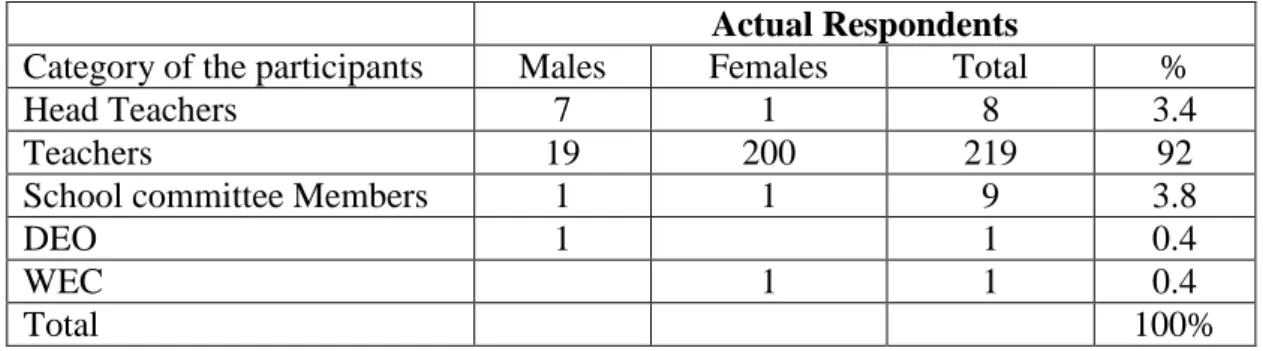
This study analyzed the contribution of PEDP to access and quality of primary education in Arusha, with the following specific objectives, evaluate the effect of PEDP on teaching and learning environments, the effect of PEDP on performance of Pupils and also determine the impacts of PEDP on enrollment of class one pupils. The study was conducted in Arusha District and included eight primary schools. The study employed qualitative approach to answer research questions; interview, questionnaires observation and documentary review were used to collect data. Qualitative data were processed through thematic analysis and presented in tables, pie charts and graphs indicating frequencies and percentages. The study involved two hundred and thirty six (236) respondents from eight primary schools in Arusha city. It included thirty two (32) males and two hundred and four (204) females. Among the respondents are eight (8) head teachers and two hundred and nineteen (219) classroom teachers and nine (9) members of school committee. Findings revealed that PEDP has both negative and positive impacts Positive impacts includes improvements of school infrastructures which influences conducive environment, improvement of academic performance, the sufficient numbers of qualified teachers. Negative impacts involves an increase of the number of enrolment especially in standard one, an increase of the enrolment is an obstacles in learning which goes together with overcrowded classrooms. The study came out with the following recommendations; The Government should establish a long continuous Education development program to address the problems facing the sector, also involve all stakeholders and lastly the school management committees should find other sources of fund to supplement that provided from the central Government.
TABLE OF CONTENTS CERTIFICATION ... ii COPYRIGHT ... iii DECLARATION ... iv ACKNOWLEDGEMENT ... v ABSTRACT ... vi
LIST OF TABLES ... xii
LIST OF FIGURES ... xiii
LIST OF ABBREVIATIONS ... xiv
CHAPTER ONE ... 1
1.0 INTRODUCTION AND BACKGROUND OF THE STUDY ... 1
1.1 Introduction ... 1
1.2 Background of the Study ... 1
1.3 Statement of the Problem ... 3
1.4 Objectives of the Study ... 4
1.4.1 Main Objectives ... 4
1.4.2 Specific Objectives ... 5
1.5 Research Questions ... 5
1.5.1 Specific Questions ... 5
1.6 Significance of the Study. ... 5
1.7 Limitations and Delimitation of the Study ... 6
1.7.1 Limitations of the Study ... 6
1.7.2 Delimitations ... 8
CHAPTER TWO ... 10
2.0 LITERATURE REVIEW ... 10
2.1 Introduction ... 10
2.2 Theoretical Review ... 10
2.2.1 Global Perspective ... 11
2.3 Trends of Education in Tanzania... 13
2.3.1 Colonial Education ... 13
2.3.2 Educations after Independence ... 14
2.3.3 Education Sector Development Program (ESDP) ... 17
2.3.4 Structure and Status of Education System ... 18
2.4 Empirical Reviews and Research Gap ... 20
2.4.1 History of PEDP ... 20
2.5 Underlying Assumptions ... 29
2.6 Policies for Better Quality ... 30
2.7 Variables that Influence Teaching and Learning Processes ... 30
2.8 Factors that Determine Quality of Education ... 30
2.9 Research Gaps ... 31
CHAPTER THREE ... 34
3.0 RESEARCH METHODOLOGY ... 34
3.1 Introduction ... 34
3.2 Area of the Study ... 34
3.3 Research Approaches ... 36
3.4 Research Design ... 36
3.6 Sample and Sample Size ... 37
3.6.1 Sampling Techniques ... 38
3.6.2 Sample Schools ... 38
3.6.3 Head Teachers ... 39
3.6.4 Teachers‟ Sample ... 39
3.7 Variables and Measurements ... 39
3.8 Types of Data ... 40
3.8.1 Primary Data ... 40
3.8.2 Secondary Data ... 41
3.9 Methods of Data Collection and Instruments ... 41
3.9.1 Interviews ... 41
3.9.2 Observations ... 42
3.9.3 Focused Group Discussions ... 42
3.9.4 Documentary Sources ... 43
3.9.5 Questionnaires ... 44
3.10 Data Analysis Procedure ... 44
3.11 Ethical Considerations ... 45
3.12 Reliability and Validity of the Research Study ... 45
3.12.1 Reliability ... 45
3.12.2 Validity ... 46
CHAPTER FOUR ... 48
4.0 DATA PRESENTATION, ANALYSIS AND DISCUSSION ... 48
4.1 Introduction ... 48
4.3 Knowledge of PEDP ... 48
4.4 Teaching and Learning Environment Prior and After the Program ... 49
4.3.1 Classrooms Infrastructure ... 49
4.3.2 Availability of Desks ... 51
4.4 Enrollment Statistics for Class One During and After the PEDP ... 53
4.4.1 Allocation of Teachers ... 56
4.4.2 Qualifications of Teachers ... 57
4.5 Trends of Academic Performance ... 58
4.6 Challenges Faced PEDP During and After Implementation ... 59
CHAPTER FIVE ... 61 5.0 DISCUSSION ... 61 5.1 Pupils Enrolment ... 61 5.2 Improved Facilities ... 62 5.3 Provisions of Desks ... 62 5.4 Teachers ... 63
5.5 Availability of pit Latrines: ... 63
5.6 Trends of Performance at District level ... 64
5.7 Challenges Observed ... 65
CHAPTER SIX ... 67
1.0 SUMMARY, CONCLUSION AND RECCOMENDATIONS ... 67
6.1 Introduction ... 67
6.2 Summary of the Study ... 67
6.3 Summary of the Research Findings ... 68
6.5 Recommendations for Immediate Action and Further Studies ... 69
6.5.1 Recommendation for immediate Action ... 70
6.5.2 Recommendations for Further studies ... 70
REFFERENCES ... 72
APPENDICES ... 76
LIST OF TABLES
Table 3.1 National Standard Seven Examination Results for Some
Government Schools 2014 ... 35
Table 3.2: Sample and Sample Size ... 38
Table 4.1: Classroom Status for the Eight Sampled Schools ... 50
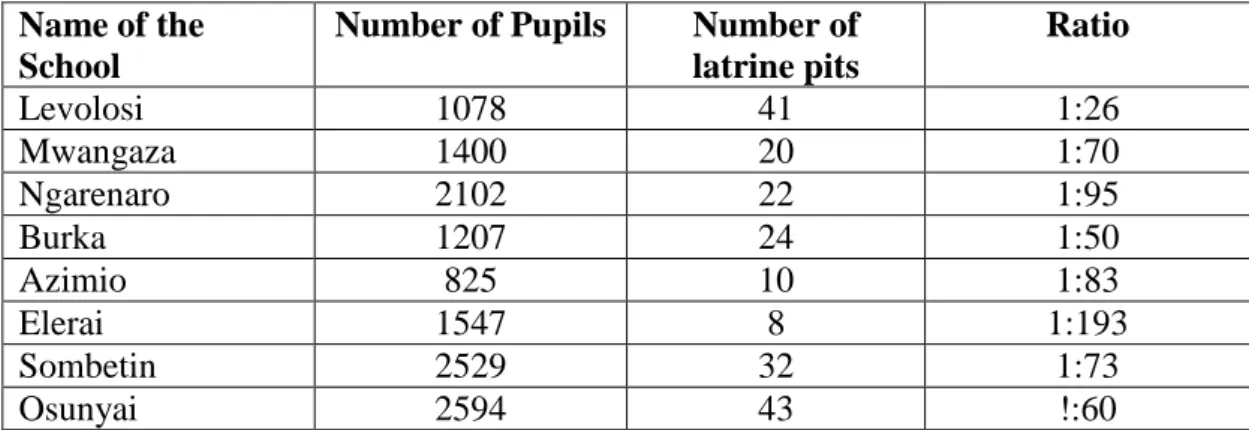
Table 4.2: Latrine Ratios for the Eight Sampled Schools ... 52
Table 4.3: Trends of Enrolment in Standard One ... 54
Table 4.4: Ratios of Boys to Girls in Sampled Schools ... 54
Table 4.5: Allocation of Teachers in Sampled Schools ... 57
Table 4.6: Teachers Qualification ... 58
Table 4.7: Trends of Academic Performance Level ... 59
Table 4.8: Frequency Response of Challenges ... 60
LIST OF FIGURES
Figure 1.1: Structure of Education in Tanzania ... 19
Figure 2.2: Conceptual Framework ... 29
Figure 3.1: Geographical Location of Arusha City ... 35
Figure 3.2: Study Population ... 37
Figure 4.1: Number of Desks in Surveyed Schools ... 51
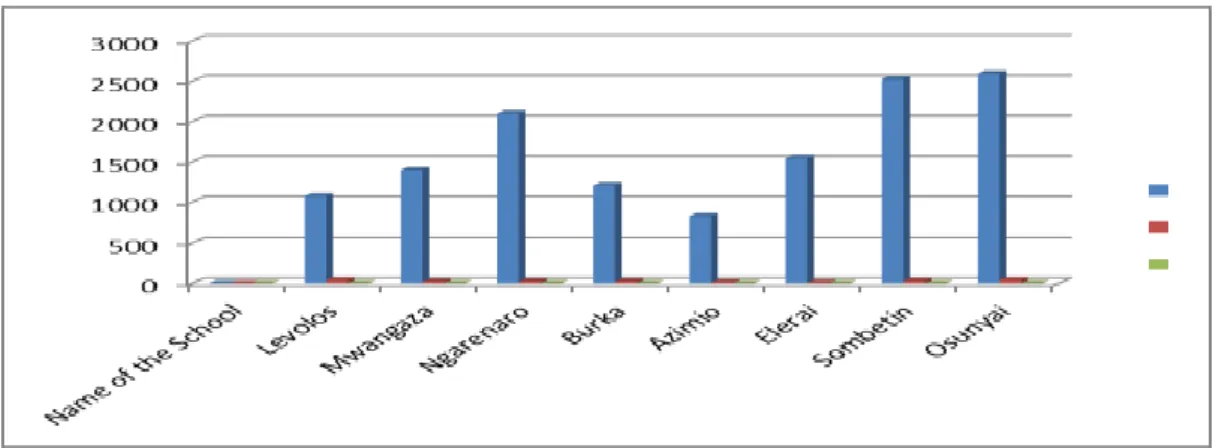
Figure 4.2: Number of Latrines in Eight Sampled Schools ... 53
Figure 4.3: Ratios of Boys to Girls in Sampled Schools ... 55
LIST OF ABBREVIATIONS AIDS Acquired Immunodeficiency Syndrome BEDC Basic Education Development committee CG Capitation Grant
DEO District Education officer DG Development Grant
ESDP Education Sector Development Program ESR Education for Self-Reliance
GER Gross Enrolment Ratio
HIV Human Immunodeficiency Virus
IEC Information Education and Communication LGRP Local Government Reform Program
MOEC Ministry of Education and Culture NER Net Enrolment Ratio
PEDP Primary Education Development Program SEDP Secondary Education Development Program SPSS Statistical Package for Social Science
TPR Teacher Pupil Ratio
UPE Universal Primary Education UTI Urinary tract Infection
CHAPTER ONE
1.0INTRODUCTION AND BACKGROUND OF THE STUDY
1.1 Introduction
Tanzania has mainly focused its development strategies on fighting ignorance, diseases and poverty. Investment in human capital is essentially recognized as central to improving the quality of lives of Tanzanian and reduction of Poverty. The 1995 Education reform program was aimed at addressing problems facing primary education sector including low enrolment rates, crowded poorly furnished and unfinished classrooms, shortage of teaching and learning materials, inadequate qualified teachers, increased poor attendance and dropout rates and low performance at primary school leaving examinations.
The Government recognizes that the existence of these challenges hinders the delivery of quality Primary Education in Tanzania, and the attainment of National Strategy for Growth and Poverty Reduction. In its effort to address the identified challenges, in 2001 launched the Primary Education Development Program (PEDP), and hence this research paper aimed at looking on the contribution made by this program on Primary Education.
1.2 Background of the Study
In 2001 the government of Tanzania launched the Primary Education development plan (PEDP), following a decrease of number of students Registered, dropout, poor teaching environments, lack of books and few numbers of qualified teachers. In order
to make sure that the above problems are solved, (PEDP) had to be launched. The implementation of PEDP started in January 2002 with four main objectives, namely, enrolment expansion, quality improvement, capacity building and strengthening institutional arrangement. Capitation Grant (CG) and Development Grant (DG) was introduced by the government, school fees and enrolment related contributions were abolished so that parents could enroll and ensure compulsory attendance of their children to school.
Before the introduction of PEDP, there has been a concern about the quality of education provided with many schools in Tanzania. (DFID) 1999, (Kuleana, MOEC, 2001).Even the former President Hon. Benjamin William Mkapa has openly declared that the quality of education is in serious trouble all the way especially at Primary school level where performance is quite pathetic,(Mosha 2000):, Despite the quality of education there was also worry about the lack of access to primary education. According to UNESCO statistics, Tanzania managed to increase the Gross Enrolment Rate (GER) from 33% in 1970 to 94% in 1981, it dropped to about 62% by 1998. The Net Enrolment Rate (NER) felt from 68% in1991 to 46% in1998, means that fewer than 50% of the school age population were attending Primary schools. The introduction of Primary Education Development Plan (PEDP) (MOEC 2001) had serious strategies to tackle the problems related to access and quality of primary education in Tanzania.
PEDP as it started in January 2002 aimed to ensure that quality primary education is available to all children with the age to be enrolled by the end of 2006. To affect
primary education in Tanzania PEDP went beyond the aims of UPE, which primarily concentrated in expanding access, PEDP includes an emphasis on improving quality of teaching and learning and increasing funding available at the school level.
1.3 Statement of the Problem
Primary Education Development Program was implemented by the Tanzania Government in collaboration with World Bank and local communities to address the quality of education especially in mainland Tanzania. It started in financial year 2001/2002 in all Government primary schools which were in existence. It is linked with the Education sector Development program (ESDP), the Government Education and Training Policy, and the Local Government Reform Program. (LGDP). The implementation of PEDP was the most significant intervention in the primary education sector in the last two decades. Education for self-Reliance (ESR) launched in 1960‟s was a politically delivered intervention, questioning the purpose content and outcome of the education progress. ESR set out a vision for the education sector and linked it to the socio-economic vision for the nation. PEDP on the other hand, appears to be an education technocrat‟s project. It was developed to revamp primary education in the country by addressing problems that arises in the sector. It is a comprehensive national five year (2002-2006) program. It focuses on intervention in primary education by increasing inputs onto the sector, to bring about qualitative and quantitative improvement.
The introduction and implementation of PEDP achieved the following, enrolment of pupils in standard one increased substantially from 500,000 to over 1,624,000 pupils
in the 1st year of implementation; this was enhanced by the abolishment of school fees and all related contributions, Teaching and learning environment improved due to construction and renovation of classrooms, teacher‟s houses, sanitary facilities and offices. However the mobilization of voluntary community contribution to projects in the form of labour increased participation in the development of the Education sector in the country. School management and Governance improved to school committee training. Despite these successes PEDP has failed to completely finish the scarcity of classrooms, due to increased enrolment most of the classes are still overcrowded in most of the schools. The grant disbursed in schools were not enough to cuter for schools needs and were not disbursed on time, (PEDP) has failed to address the long lasting cries from teachers on low salaries and wages, unpaid leaves and transfer costs which has left most of the teachers unmotivated.
The Primary Education Development Program was planned to bring an overall improvement in Education sector, But the Citizen dated 15/12/2009 reported more than 50 percent of the primary school students who sat for Primary school examinations failed. And it is from this reason the researcher was attracted to make a study on the contribution of Primary Education Development Program (PEDP) Arusha district been the area of study.
1.4 Objectives of the Study 1.4.1 Main Objectives
The main objective of the study was to assess the contribution of PEDP on quality and access of primary school education in Arusha city.
1.4.2 Specific Objectives
The study was guided by the following specific objectives:
i) To evaluate the effect of PEDP on teaching and learning environment. ii) To evaluate the effect of PEDP on performance of pupils.
iii) To determine the impacts of PEDP on enrollment of class one pupil‟s.
1.5 Research Questions 1.5.1 Specific Questions
i) How were the teaching and learning environments prior and after PEDP? ii) How were the Quality of Education and access of students to Education
before and after PEDP?
iii) What were the enrollment levels of standard one pupil before and after PEDP?
1.6 Significance of the Study
Education is very important in the individual and nation development by contributing to sustainable Poverty reduction, building a diseases free society and providing critical thinkers. The finding of this study will enable those working in the Education sector, partners, donors and Parents increase their outreach to enable the young generation get quality Education.
The results of this study will make policy makers identify the gaps and the weaknesses currently present in the primary Education level and come out with the proper policies which will make all children with the age of joining primary
Education enrolled and get relevant education. The study will also benefit the investors willing to invest in Education as the needs and opportunities will be identified.
The study is very important to the researcher as the student at the Open University of Tanzania, completion of this research will make him be awarded a Master‟s Degree in Education Administration Planning and policy studies. The findings of this study will help other people and Education partners to be aware of the contribution of PEDP in education sector in Tanzania; it is also expected that after this study other Institutions which are education stakeholders will use this information to examine themselves on their targets during the implementation of PEDP. It is also expected that this study will attract more researchers in the educational system which will explore more issues that will lead to improve situations where deficiency has been found .It is also possible that educational planners, Policy makers to use this research results to plan and make changes which will help the education sector to improve the service, by providing quality education, to provide adequate services and increase the possibility to all people to be able to equally have access to Primary Education.
1.7 Limitations and Delimitation of the Study 1.7.1 Limitations of the Study
The study had the following limitations; lack of Fund to cover a big area which could have included a big sample to represent a good number of Teachers present in Arusha City, for that case I was forced to use the simplest way of transport (Bodaboda), sometimes walking during data collection to reach the schools. In
particular the study only involved 8 schools hence future studies should include larger sample size for long term better results. For this case study it may be difficult to generalize to other PEDP courses/activities. However it may be possible to generalize to other similar programs. By including as much details as possible regarding the case the reader will be able to see if it is possible to find similarities with other programs.
These details should improve the reliability of the case study. Drawing together themes across the participant‟s data there may be a possibility that the individual accounts be lost, although the nature of the programs as a whole might begin to be understood.
It is recognized that the individual accounts had value on their own right. However for the purpose of this study they were not focused upon beyond the individual quotes. Although qualitative research allow for the impact of the researcher to acknowledge on the data collection and analysis process, it also looks at the extent of the correction between the researcher and the quality of the interaction. All of these significantly influence the nature of the data that is collected and the researcher was aware of this throughout the process.
As a new qualitative researcher it was particularly important to reflect on my interview skills after each interview. To improve trustworthiness and to acknowledge my interpretive influence on the data, the researcher outlined the background, epistemology, ontology that influenced Research design.
This allows the reader to determine the credibility of the dissertation process in relation to the current research paradigm. In the data collection process it is recognized that transcribing data is fraught with slippage.(miles and Huberman.1994). There is an immediate interpretive influence on the level of details included in the transcript with this in mind, once the data was coded, the recording were listened to again for confirmation that tone did not illuminate or reflect something different from the inferred meanings.
Education should be treated as a strategic agent for the transformation and for the creation of a well-educated nation, sufficiently equipped with the knowledge needed to competently and competitively save the development, challenges which face the nation. In this light the education system should be restructured and transformed quantitatively with a focus on promoting creativity and problem solving (vision 2025 p.25 quoted in PEDP P.3).
1.7.2 Delimitations
Geographically the study was carried out in the government primary schools particularly Arusha. The schools which were investigated are those under PEDP provided with capitation and development grant to aid for teaching and learning process in order to ensure access, equity, and quality education. The study was confined within a specified area that is eight primary schools. The uniqueness of the study within a specified context makes it difficult to replicate exactly in another context. Participant‟s responses will be reflections of, and confined to their personal experiences in PEDP program including the self-assessment component. Due to the
time factor and lack of comprehensive database the researcher may not locate all the schools, teachers and pupils facilities and others who did not respond to the program positively. This may skew the results of the statistical analysis in the first quantitative phase of the study
1.8 Definitions of Conceptual Terms
Quality: This is the standard of something as measured or compared to other things of the similar kind.
Access: Literally the word access is the ability or right to enter, get near or get something. In education, access to education is the ability of individuals to get education regardless of their differences.
Primary Education: Primary education in Tanzania refers to that full time program of education provided. According to the Government approved curricula and availed to pupils aged six and half to fourteen years
Environment: Some total of all things which surrounds an organism, the surrounding or condition in which an organism live or operate, and can affect the behavior of the organism either positively or negatively.
CHAPTER TWO 2.0LITERATURE REVIEW
2.1 Introduction
This Literature review gives the theoretical stance of the study, definition of key terms, concepts of primary education Development Program. Gives the reader in a nutshell the contents that are covered to fulfill the needs in the objective and the answers for the hypothesis proposed and questions of the study.
2.2 Theoretical Review
School learning environment has a positive impact on student‟s academic performance; academic standard is influenced by the quality of infrastructure and knowledge of the teachers.
Ecological system theory, Bronfenbren (1997) encompasses that the layered environmental system of microcosms in which human development takes place and emphasized the importance of fairly teachers and school as the lager social cultural environment on examining purely learning relationship between the students in the classroom as well as between teachers and students. From the theory the social cultural environment includes availability of desks, knowledgeable teachers, and enough space in the class. Earthman (2002), in his study proposed that comfortable classroom and small number of pupils enhance teachers effectiveness and provide opportunity for students to ask more questions and receive required attention from the teacher.
Social Learning Theory, Bandura (1977).explains human learning behavior in terms of continuous, reciprocal interaction between cognitive, behavioral and environmental influences. Academic and social outcome will improve only when classroom become learning communities and teaching become a learner centered community of practice and not confined to school but cover other setting such as workplace and organizations environment. Commenting on the environment influence on learning Olutola (1989) revealed that school adequately provided with the necessary facilities. Their students perform better in their examinations. Inadequate desks, chairs and classes in Tanzanian schools is the major barrier to good performance of students in Tanzania.
Motivational and Humanists Theory, A paradigm that emerged in 1960‟s on the human freedom, dignity and potential, according to Huitt (2001), People act in with intentionality and values, development of actualized people in a cooperative, supportive environment. The theory also emphasizes the importance of supportive environment in learning .Durosaro (1998) reported that even if the education curriculum is relevant and well operated, if the school facilities and environment are not supportive, not enough and badly managed the result of the learning/teaching activity will be negative.
2.2.1 Global Perspective
The global perspectives of education are the process of acquiring developed by learning process in training an individual. The central theme of education is to enable young person to participate fully in shaping a better, shared future for the world. It
aimed at inculcating a sense of self and appreciating of cultural diversity, affirmation of social justice and human rights as well building peace and actions for the sustainable future in times and places.
Many government in the world have developed global, regional or country initiatives program to provide education to their citizens, with understanding that education is an essential tool for not only for economic growth but also social stability, Regional and sub regional levels special efforts have been directed at ensuring achievement of Universal Primary Education to meet the requirement of the Millennium Development Goals.
A few Sub Saharan countries have higher than 60% enrolment. In Ethiopia and Mali school enrolment is below 30%.In most countries far fewer girls are enrolled and stay in primary school than boys. In Benin, only 62% girls attend school for every 100 boys who are able to do so.
Sub Saharan countries have made great efforts in education, but challenges remained. It is noted that half of Africa‟s Primary school-aged children are not in school and less than half of those entering first grade will complete their primary education. Many will drop out before they acquire minimal levels of literacy and numeracy (UNESCO 2006).
Formal education was introduced by the colonial regime in Africa. Before the coming of colonialism, Africans were leaving through normal daily activities from the people among them people learned by living and doing in the homes and on the
farms, they were taught the skills of the society and the behavior expected of its members. By listening to the stories of the elders they learned the tribal history and the relationship they have with other tribes. Through these custom sharing young people were taught to adapt and conform to the values, taboos and culture of their relevant society. Thus Education was “informal,” every adult played the role of a teacher. This made the education to be more relevant to the child from the society where he was born. Lack of the formality did not mean that there was no education; it is through education that the daughter of peasant can become a doctor that the son of a mine worker can become the head of the mine that the child of farm worker can become the president of a great nation (Mandela 2005). So the traditional form of education passed the prevailing norms and practice of the indigenous society through elders.
The purpose of the traditional education activities was to transmit a common culture and prevailing gender based division of labor. Education thus simultaneously fulfilled a culturally cohesive and socio-differential role. Education should be treated as a strategic agent for mindset transformation and for the creation of a well educated nation, sufficiently equipped with the knowledge needed to competitively solve the development challenges which face the nation. (URT.1999).
2.3 Trends of Education in Tanzania 2.3.1 Colonial Education
Colonial education was not aimed to prepare the citizen to work for their nation, but it was oriented to develop and inculcate the European culture. It has the purpose of
having low wage workers. Different religious groups provided this education as the means of getting religions followers. Generally colonial education developed a spirit of capitalism. Its emphasis was to bring western culture and not to develop Tanzanian culture. This is supported by Nyerere (1969); the education provided by the colonial government in the two countries which now form Tanzania had a different purpose. It was not designed to prepare young people for the services of their own county; instead it was motivated by a desire to inculcate the values of the colonial society and to train individuals for the service of the colonial state.
The educational activities undertaken by the missionary organization introduced competing values into the indigenous society, as the primary objective was to civilize and Christianize the “heathen “population. The colonial interest in Education derived from its growing needs for middle layers of administrative personnel that could provide proper level of communication and for technical personnel that could secure economic development in their territory, and the spread of formal education was very slow and marginalized. Access to basic education in Tanzania was scarce with wide inequalities in terms of race, religion and gender. Many primary schools had been established by Christian missionaries, hence providing Christians with favorable education access. In1947 under 10 percent of the school age population was enrolled in primary schools. At secondary level less than one percent and no female student progressed beyond the primary level (Cameron and Dodd (1970).
2.3.2 Educations After Independence
to education was the primary emphasis from the government. All children had equal opportunity of joining government school and all were getting support from the government. Education was closely related to the understanding of Tanzania as a poor, underdeveloped and with agricultural economy. The crucial purpose of education turned to prepare the young for working in a rural society all citizens for participation in free and democratic society. Nyerere in his book Freedom and Socialization (1968) pointed out that in 1961 there were 490,000 children attending primary school in Tanganyika, the majority going out up to standard four. In 1967 there were 825,000 children attending such school, this shows that discrimination on grounds of religion was brought to an end.
Education was made to inculcate a strong sense of commitment to the total community through the promotions of cooperative endeavor and creations of acceptance of the values appropriate for the future. The promotion of such characteristic and commitment was to be facilitated by integrating the school with their surrounding communities, thus turning them into both economic and educational institutions.
Following the Arusha Declaration in 1967, new agricultural based curriculum for primary school was introduced with a new policy of Education for self-Reliance (ESR). This encouraged school upkeep through income raising activities. The abolishment of school fees at primary level in 1973 was a key factor to support the expansion of primary education so as to achieve universal Primary Education (UPE) by 1989. In the Musoma Resolution of 1974 Primary Education was made
compulsory, universal and terminal, The education act was passed in 1978 which made primary enrolment and attendance between the age of seven and thirteen compulsory, the number of primary school pupils enrollment increased almost immediately after the Musoma resolution up to four fold during the 1970‟s and continued to rise until 1983. However the primary Education expansion did not match by a similar expansion at secondary level. The number of STD VII leavers admitted in secondary school dropped from 36 percent in 1961 to 19 percent in 1967 and 7 percent in 1980 (knight and sabot 1990).
Following a change in policy regarding restrictions on the Private//NGO sector in the mid 1980‟s prior to 1984. The percent of form I pupils in non government secondary schools rose from 7 percent in 1960 to 29 percent in 1970 to 43 percent in 1980 and 60 percent in 1992. The dramatic and rapid expansion at primary level together with the declining of national economic performance had detrimental consequences in terms of education quality. Structural adjustment program which included currency devaluation, reducing government expenditure, civil service retrenchment and privatization were the efforts to address the economic crisis. Due to these economic changes the education sector started to encourage private sector to invest in education. By the mid 1990‟s households faced rising costs at primary and secondary levels, low enrolment and high dropout continue to characterize the primary education system, and rising direct cost to households raised fears that enrollments may decline further (IDS and MOEC 1996). Although there has been strong government commitment to solving of the education sector (Primary Education Master Plan 1995a).
2.3.3 Education Sector Development Program
The Education sector Development Program (ESDP) is among the efforts of Tanzania Government in Investing in human capital as central to the quality of lives of Tanzanians. In 1998 an overall framework for the development of the education system was prepared to cover all education subsectors. It has five objectives
a) Expand access to primary Education, b) Improve education quality at primary level, c) Increase pupils retention and completion, d) Improve Institutional arrangement and
e) Enhance capacity building for efficient and effective delivery of education services. (URT 2004).
This visionary plan with projections of up to 2010 when the country achieved 50 percent primary – secondary transition rate that many translate into having over 500,000 pupils joining secondary Education enrolment reaching above 2,000, 000 by 2010 compared to 345,000 in 2003.
The quality improvement component of the plan addresses the provision of high quality competence, required aptitudes and right attitudes in all subjects. Special attention is to be paid to competence in sciences, mathematics and language.
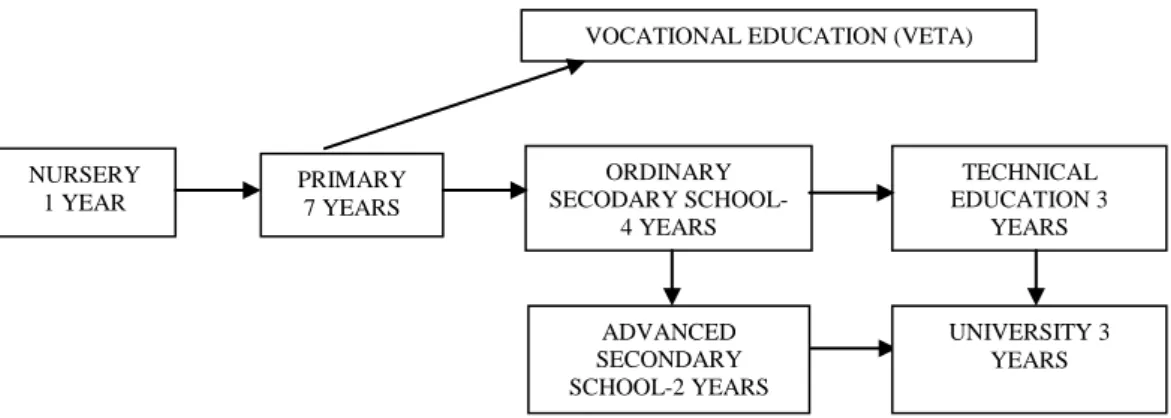
The system of Education in Tanzania is based on the 7-4-2-3 system: 7 years of primary school followed by four years of secondary school leading to ordinary level (O-level). From ordinary level there are two years of advanced level. In O-level
studies there is an examination in form two which make students who pass to continue in form three, and those who fail repeat the class. This has the aim of improving the performance of students after completing the two years studies of the advanced level. Students can join the University on average, a student can complete the Bachelors Degree for three years, although some major require more time up to four years.
Tanzania being among the poor countries in the world, it is only through education where the country can free people from poverty, ignorance and diseases. A Tanzania estimate of real gross domestic product growth rate is only 7% (CIA world Fact book 2013). This shows that Tanzania needs to put more efforts in education, educating its people so that can increase its social capital and have its economic status.
Despite a focus on Education the country‟s development strategies and the support of donors, universal primary education has not been achieved therefore, together with donors. The Government launched the Primary Education Development Program (PEDP) in 2001, where its aim was to ensure that all children have equal access to good quality primary education.
2.3.4 Structure and Status of Education System
Formal education in Tanzania Mainland is structured in the following order of study as it has been described in the diagram below. Each child who is not less than five years of age is eligible for enrollment for pre-primary education for a period of two years. Attendance is not compulsory. Government primary schools teach in Kiswahili.
Figure 1.1: Structure of Education in Tanzania
A number of private schools with substantial attendance fee teach in English, it is compulsory for every child who has reached the age of seven years to be enrolled for primary education. In order to make all children have equal chance to attend Primary schools, the government in 2002 eliminated the primary school tuition fee in public schools, but families still pay for uniforms, testing fees and school supplies. Free tuition has led to a massive increase in the number of children enrollment in primary schools, from 4,839,361 in 2001 to 7,959,884 in 2006 to 8,410,000 in 2008.
This increase has not been accompanied by a proportional increase in resources for teachers, classrooms and books. The ratio of pupils to qualified teachers nationwide in 2010 was 54.1, which was 35% above the goal of 40.1. Every region exceeded the goal except for Kilimanjaro and Dar-es-salaam. In 2006, the gross primary enrollment rate was 110.3% and the net primary enrollment rate was 97.8% the gross primary enrollment rate is the ration of the total number of students attending primary school to official primary school – age population. The net primary enrollment rate is the ratio of the total number of primary school age children
NURSERY
1 YEAR PRIMARY 7 YEARS
VOCATIONAL EDUCATION (VETA)
ORDINARY SECODARY SCHOOL- 4 YEARS ADVANCED SECONDARY SCHOOL-2 YEARS UNIVERSITY 3 YEARS TECHNICAL EDUCATION 3 YEARS
enrolled in primary school to the official primary school age population. These rates are based on the number of students formally registered in primary school and therefore do not necessarily reflect actual school attendance in 2000 57% of children age 5 -14 years attended school.
According to Rakesh Rejan (2004) there is no nation in the world which can have true development and democracy without education. Taking into consideration the importance of education the Government launched the Primary Education Development plan (PEDP) and the Secondary Education Development plan (SEDP).
2.4 Empirical Reviews and Research Gap 2.4.1 History of PEDP
The primary Education Development plan (PEDP) is perhaps the most ambitious attempt, after Universal Primary Education (UPE) drive in 1977 to affect primary education in Tanzania. PEDP goes beyond the aims of UPE, which was primarily concentrated on expanding access. PEDP is more comprehensive in its scope. In addition to addressing access, it includes an emphasis on improving the quality of teaching and learning, increasing funding available at the school level and making Institutional arrangements more democratic and transparent throughout the system. PEDP aimed to transform the nature of schooling in Tanzania and help ensure that every child is able to enjoy his or her right to quality primary education.
The ministry of Education and Vocational Training, in collaboration with the Prime Minister‟s office, Regional Administration and Local Government is responsible for
the implementation of PEDP. The Implementation of PEDP was the most significant Intervention in the primary education sector, in the last two decades. Education for Self-Reliance (ESR) Launched in 1960‟s, was a politically derived Intervention questioning the purpose, content and outcome of the education process. ESR set out a vision for Education Sector and linked it to the socio economic vision for the nation. PEDP, on the other hand appears to be an education technocratic project. It was developed to revamp primary Education in the country by addressing problems that had risen in the sector; it was a comprehensive, national five year (2002 – 2006) program. It focused on Interventions in primary education by increasing inputs into the sector, to bring about qualitative and quantitative improvement. The four main components of PEDP were; enrolment expansion, quality improvement, capacity building and strengthening institutional arrangements.
The program funded by the Government‟s own resources by a soft loan of USD 150 million from World Bank and by numerous other donors including the European Union, Sweden, Norway, Ireland Canada and others (URT Report 2003).
Tanzania is one of the poorest countries in Africa, it‟s per capital income, GDP stood at around US 300 in 2005 compared to sub-Sahara Africans Average of US$ 568 it is estimated that about 36 percent of the population are below the poverty line. Poverty is also more purulent among the rural areas where of 87 parents of the poor live although they account for 67 percent of the population. The UNDP‟S 2006 Human Development Report ranks Tanzania 162 out of 177 countries.
2.4.1.1Enrolment Statistics
The highest priority in PEDP was to increase overall gross and net enrolment of girls and boys (URT); 2001:4).PEPP aimed at having all the children between the ages 7 to 12 enrolled in standard one by 2005. In the Past, some parents failed to send their children to school due to school fees and other contribution that parents were required to pay.
To ensure that parental Inability to pay school fees was not a hindrance to accessing school, The Government decided to abolish school fees and all other mandatory parental contributions. In 2001 president Benjamin William Mkapa announced a removal of charges for primary Education (URT 2003. 10) and the same was reflected in Tanzania first Poverty Reduction Strategy paper (PRSP).
A multimedia Public Information Education and communication (IEC) Campaign was undertaken to sensitize all stakeholders about PEDP and its implications URT(2001.5). PEDP also aimed to ensure that all children from disadvantaged groups, AIDS orphans, are enrolled (URT 2001,5) however, it appeared to be no national strategy for ensuring that orphans and other marginalized children enroll and attend schools. PEDP Review of 2004 (URT 2004, 52) found that teachers and school committee members have very little appreciation of the need of “impaired” children. In some schools teachers indicated that some children with disabilities, especially the hearing and speech impaired and those with low mental capabilities were being denied enrolment because the school had neither the physical facilities nor the human capacities to handle such children (URT 2003, 68).
The number of children with disabilities who are enrolled in schools is small. National monitoring report of 2004 shows that there are only 8,181 boys and 5933 girls with disabilities who are enrolled in primary schools. No data on the total number of children with disabilities is available, though this is estimated by disability organization and the WHO to be about 10% of the population. In developing countries it is estimated that around 2% of children with disabilities attend school (Arbeiter and Hartley, (2002).
2.4.1.2Distributions of Teachers
Allocation of teachers to councils was based on teacher pupil ratio (TPR), during the first year of the PEDP Implementation efforts were made to have a more equitable distribution of teachers and to reduce regional inequalities in TPR. All councils with teachers Pupil ratio of 1:50 were given the night to recruit teachers. (URT: 2002 6,8).
However a big inequality of teachers between urban schools and schools in remote areas was big where teachers are unwilling to be posted (URT: 2002a, 34, URT 2003, 20, URT 2004 a, 37) Better qualified teachers‟ also tend to be found in urban areas. The concentration of female teachers in most urban schools which proves a strong resistance for teachers to accept posts in rural schools (URT: 2004b, 47).
PEDP review of 2003 realized that there were no easy solution to the problem, which related partly to the lack of facilities, like houses especially in remote areas and inaccessible areas and Partly to the poor provision of incentives‟ to teachers (URT 2003, 20) it was also stipulated that the minimal school instruction week will be 20 hours of instruction time (URT: 2001, 6 – 7).
PEDP proposed that there should be an expansion in the number of teachers employed within the schools. In 2001 before the introduction of PEDP there were 105,921 teachers working in primary schools. (MOEC2003a). PEDP projected that there would be 137,071 teachers in schools by the end of 2006,representing an increase of 29% far short of the expected 67% pupils enrolment by the mid 2004.Figures show that the total number of teachers was 119,773, an increase of 13%from 2001.(MOEC.2004b). The National Monitoring Report of 2004 (URT.2004a) indicated a shortage of 57,640 teachers and pointed out that it was a significant challenge to the teachers training capacity which is 12,000 teachers per year.
2.4.1.3Classrooms
The construction of classroom and other important building was funded through the investment Development grant which was managed by school committees. Thus has been a major success of PEDP to meet the expanded enrolment. Apart from construction of classrooms the government provided fund for construction of teacher‟s houses. PEDP stated that teachers‟ houses were to be constructed to provide incentives; especially to female teachers to work in remote rural areas (URT 2001, 7).
Approximately 30,000 new classes were constructed between 2002 and 2004,and 20,000 were still under construction (MOEC, 2004a).implies that the government was close to its target of building a total of 54,000 new classrooms during PEDP (MOEC,2001).
2.4.1.4 Quality Improvements
Primary Education quality improvement was the priority of PEDP (URT: 2001, 9) quality was to be improved through; improving teachers‟ teaching methods , make sure that good quality learning and teaching materials are available and ensuring the necessary support for maintaining education standards (URT: 2009).
2.4.1.5 Teaching Method
PEDP proposed to enable teachers to acquire, develop and use appropriate teaching styles that are academically sound, child friendly and gender sensitive. But PEDP review of 2003 found that teachers, head teacher ward education coordinators and district education officers lacked awareness of the child – centered and active leaning approaches (URT 2003.49) the review in 2004 (URT: 2004b, 37) argued that changing the culture of teaching and learning is a long term goal, but it is possible to find simple and practical ways to make teaching and learning an enjoyable and a productive experience for children and Teachers. Low adoption of participatory teaching and leaving methods among most college tutors implies that there is poor modeling for teacher trainees (URT 2004B. 43) Training of tutors through seminar and workshops assures that the knowledge; skills acquired during seminar will automatically be adopted and implemented. The quality of education depends mostly on the ability of the present teachers to manage the organization of the materials teaching and how actively engages the children in the learning process especially in the class. Kamwela (2000).
2000,Rajan and Sumra 2003,and Aga khan Foundation 2004) pointed out that majority of teachers use lecture teaching method .This involves the teachers writing on the blackboard followed by some verbal explanations while pupils copying down the contents in their exercise books. Normally teachers ask simple questions as the way of clarifying the lesson. Pupils respond by been selected from a pool of those who raise their hands. Mostly, classroom teaching is teacher centered; children sit in rows where there is little interaction with each other. Pupils are simply recipients of what the teacher is transmitting.
2.4.1.6Learning Resources
Resources were provided to ensure that schools acquire the required text books, it has the aim of reducing the pupil to book ration to 1:3 in 2002 and 1:1 by 2006, Although the ratio was not reached in 2002, the pupil – to book ratio improved and parents were reported to be happy with the trend (URT 2003, 43) In 2004, schools were allocated funds to purchase books and the system worked well (URT 2004b, 33). Again in order to improve the learning environments, schools were allocated funds to purchase desks. Nevertheless, the desk situation remained critical, of the total requirement of 1,897,253 desks only 549,083 desks were available (URT 2004b 28) of the total requirements 253,617 latrines, only 100,770 were available. The situation of water was even more critical; many schools had no water facilities either for drinking or for other uses. Schools were allocated a capitation grant of US 10 dollars per pupil per year (of which 4 dollars was for books and learning material). Schools were receiving the capitation grant but the disbursement was irregular (URT 2003.43).
2.4.1.7Capacity Building
As a result of increased student enrolment the need for increased enrolment in teachers‟ Colleges were observed. To ensure that teachers got the appropriate pedagogical skills and knowledge, the qualifications, knowledge and skills of teacher training college tutors were to be upgraded (URT. 2001, 11 – 12) For continuous Professional development and the re- training of pre-service college tutors was developed by the Quality Improvement Technical working group and approved by the Basic Education Development Committee (BEDC) (URT; 2003, 47). Nevertheless, Review of 2004 found that 65% of tutors in Government teachers training colleges were under qualified. In order to recruit as many teachers as possible, the Government decided to reduce student training at the colleges from two years to one. In the second year, student‟s teachers were pasted to schools and were meant to receive on job training (URT 2003 .20). And get professional supports from the college, The District Education Officers (DEO‟s) office, inspectorate, ward education coordinators, and Head teachers. In practice student teachers received little support while in the field. Visits by college tutors were constrained by lack of funds from the Ministry of Education and Culture and lack of or inadequate transport. As a result hurried visits were organized with the result that financial accountability, rather than the professional development of teachers become the priority (URT 2004b.41) Both the 2003 and 2004 review report state that experienced teachers do not mentor the student teachers adequately (URT 2003, URT: 2004b 41).
2.4.1.8Management and Governance
coordinators, Inspectors and Local Government authorities, region and National, staff (URT: 2004b, 12), This has the aim of improving management capacity at various levels. To accomplish this several activities were planned to strengthen management and Governance, these were
Extending to all schools the concept of and skills for whole school Development planning (URT: 2001, 5).
Ensuring that school committees are gender balanced, democratically constituted and Inclusive of all key stakeholders (URT: 2001, 13)
The issue of HIV/AIDS, gender and governance will be maintained into all management training( URT: 2001, 13),
School Committee to be provided with training regarding their new roles and responsibility (URT: 2001, 13).
2.4.1.9Financial Management
At the school level funds intended for the schools were reaching the targets and achieving the objectives of improving the quality of education through provision of more classrooms, desks. Latrines, text books, and other teaching and leaving materials (URT: 2004a, 27; URT 2004, 12) in order to manage this fund and to deal with new financing mechanisms under PEDP there was a need to develop financial capacities at various levels.
2.4.1.10 PEDP Institutional Arrangements
The Institutional arrangements stipulated in the PEDP have been articulated to under pin the local Governmental Reform Program (LGRP). LGRP is the mechanism for
decentralization and devolution of power to local levels to ensure service delivery. PEDP aimed at supporting the development of capacity of personnel and structure at the local level to enable them participate In the comprehensive planning and delivery of higher quality primary education services (URT: 2001, 4) Coordination between councils and schools has been good, and in spite of the change of role, PEDP has successfully ensured that schools have books, new buildings and functioning book accounts, the management of money at school level was impressive (URT:200B, 11).
2.5 Underlying Assumptions
The underlying assumption of this study is that any improvement in classes built, trained teachers, training material, the quality of education will be improved thus the country will get well trained labor force and this improve different sectors both Government and private which eventually improving social or community well being
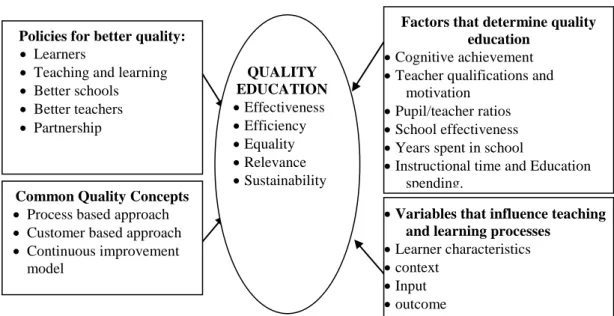
Figure 2.2 Conceptual Framework
Source: Education Quality Research Program Consortium (EdQual RPC) - Implementing Education Quality in Low Income Countries: www.edqual.org.
Policies for better quality:
Learners
Teaching and learning
Better schools
Better teachers
Partnership
Common Quality Concepts
Process based approach
Customer based approach
Continuous improvement model QUALITY EDUCATION Effectiveness Efficiency Equality Relevance Sustainability
Variables that influence teaching
and learning processes
Learner characteristics
context
Input
outcome
Factors that determine quality education
Cognitive achievement
Teacher qualifications and
motivation
Pupil/teacher ratios
School effectiveness
Years spent in school
Instructional time and Education
In an attempt to establish research thought patterns, this section provided a comprehensive framework for understanding, monitoring and improving education quality. The concept is adapted from a paper - Implementing Education Quality in Low Income Countries by EdQual RPC Graduate School of Education. It outlines how quality education is shaped by the entire design of the education system. It established what elements need to be incorporated in the formulation policy so as to ensure quality education and its adaptability to the constantly changing nature of global patterns.
2.6 Policies for Better Quality
On examining the key policy options for improving the teaching and learning process, emphasis is placed on school effectiveness. Areas include: learners, as they are at the centre of teaching and learning, better teachers, better schools and build partnerships.
2.7 Variables that Influence Teaching and Learning Processes
The different variables influencing the processes of teaching and learning contained in the framework are: learner characteristics, context, inputs and outcomes.
2.8 Factors that Determine Quality of Education
There are multiple factors that determine education quality. These are: cognitive achievement, teacher qualifications and motivation, pupil/teacher ratios, school effectiveness, years spent in school, instructional time and education spending.
referring to key academic texts. World Bank and UNESCO document (2005). The approaches to education quality reviewed, covers the three main educational goals that Chitty (2002) identified, namely:- human fulfillment, preparation for the world of work and contributing to social progress and social change. We have identified five key dimensions of quality: - effectiveness, efficiency, equality, relevance and sustainability. These five dimensions can serve as a basis for analyzing the quality of educational innovations aimed any aspect of the education system (e.g. policy changes, national administration, local administration, classroom interventions) to conceptualizing quality.
The relationship between the variables is that improvement of the communities development depends much on the education provided in schools, and how the process of accessing education to all people which also include increasing awareness to different countries such as business and agriculture. Traditional education prepared a person to adapt in the environment and gives a person skills and ability to identify his or her responsibility in the society to become a productive individual and has no end. Nyerere (1968).
2.9 Research Gaps
In considering the literature above, large number of children with the age of joining standard one were not enrolled, PEDP Review of 2004 states that a large number of 7 years old are not enrolling in standard one. There are 630.821 children between the ages of 7- 13 who are not in school (URT: 2004b, 25).
The number of children with disabilities who are enrolled in schools is small. National monitoring report of 2004 shows that there are only 8,181 boys and 5933 girls with disabilities who are enrolled in primary schools (2004a, 15) No national data on the total number of children with disabilities is available. It is evident that in developing the education sector, policy makers have been careful enough to design programs and provide a framework for the translation and implementation of national policy. In doing this, inference has been drawn from various external sources. Consideration has as well been given to the practical situation of the education sector in the country.
However most of the literature attempting to monitor and evaluate the program, after exploring the objectives and strategies employed in the implementation of the program, have been guided in their studies to conclude in the affirmative as far as the program achievements are concerned.
Nevertheless the successes have clearly been mainly quantitative, showing a visible increase in the number of schools, enrolment, classrooms, with the exception of the variation noticed in the academic performance of students.
This study therefore identifies a need for an in-depth investigation of the qualitative result of the program on the general state of education in the country. Despite the fact that Tanzania has done a commendable job as far as increasing the school enrollment rate is concerned, the quality of education remains uncertain and the country is called on to focus on improving it. This is evident as expressed by the World Bank Director
for Human Development – Africa Region RitvaReinikkain (The Guardian Newspaper, 2013) that “students are not receiving their lessons well due to poor learning environment. The problem is not just with some of the teachers, even the teaching methodology is fault.
The country has a long way to go in raising classroom standards. A document issued by the Ministry of Education on Tanzania beyond Tomorrow initiative says, "Up to 20 students share a textbook and reference books in some schools. Libraries, teaching and learning aids are extremely in short supply, while the curriculum was last updated in 2005". The document adds that the average student to classroom ratio is 4, but ratios of up to 100 students per classroom are common in the country. In this kind of situation interactive learning and individual attention from teachers is impossible due to class sizes". Classrooms are therefore so overcrowded, which challenges the few teachers Tanzania has to maintain a calm learning environment. There is need to evaluate and provide information to indicate whether the PEDP program made an impact both quantitatively and qualitatively as is intended and clearly stated in its main objective. Therefore, this study aims at identifying the contribution of PEDP to Access and Quality of Primary Education in Arusha City.
CHAPTER THREE
3.0RESEARCH METHODOLOGY
3.1 Introduction
This chapter describes the overall area of study, research approaches, research design, study populations and sample and sample size. This chapter is also subdivided into sub sections such as sampling techniques, sampled schools, and methods employed in the process of the data collection, analysis and presentation, validity and reliability of instruments and the methods of analyzing the data.
3.2 Area of the Study
Arusha City is in Northern Tanzania and the capital of the Arusha region with a population of 416,442 plus 323, 198 in the surrounding Arusha City (2012 census). As of 1994, Arusha City was the wealthiest city in Tanzania with 91,024 Tanzanian shillings. As of 2002 the population of the Arusha City was 282,712. The Arusha District is administratively divided into seventeen wards. Baraa, Daraja mbili, Elerai, Engutoto, Kaloleni kati, Kimandolu, Lemara, Levolosi, Ngarenaro, Olorien, Sekei, Sokon 1, Sombertini, Terrat, Themi and Ungalimited. Is the district where the Arusha declaration announced. And carries the history of Tanzania.
The Primary Education Development Program was a national policy aimed to bring good quality primary education; referring the 2014 Primary Education Leaving Certificate examination results in Arusha Region, were not good as it has been indicated in the table below.
Table 3.1: National Standard Seven Examination Results for Some Government Schools 2014
Name of School Position Nationwide Total Primary School in Tanzania
Terrat 10463 15867 Olbak 10271 15867 Ilengijavi 11459 15867 Mungushi 12600 15867 Enjoro 11754 15867 Lamoloki 10831 15867 Losinon 11795 15867 Okokola 13041 15867 Olchorovusi 10647 15867 Mlangalini 13583 15867 Elkisongo 12183 15867 Engutukoiti 15425 15867 Source (NECTA, 2014)
The table above shows the performance of some of the schools from Arusha region, these results are generally good. Total numbers of primary schools sat for the national examination were 15867. Taking an example of ENGUTUKOITI Primary school, it was almost the last, since it held a 15425 position out of 15867.and the rest of the schools were under 10 thousand positions wise as it can be observed in the table above. These results attracted the researcher to make a study in one of the district in Arusha regions to find out the Contributions in access and Quality of Primary Education Development Program in Arusha.
Figure 3.1 Geographical Location of Arusha City Source: RAS 2015
3.3 Research Approaches
This study used the mixed approach that means qualitative and quantitative approaches. According to Kombo and Tromp (2006) using of mixed methods maximize the strengths and minimize the limitations. The using of mixed methods allowed each approach to contribute knowledge to the understanding of the research problem than a single method design. Although the study used mixed approach the dominant approach was qualitative approach because it provided descriptive accounts targeted to understanding a phenomenon using data that were collected in a variety of ways such as interviews, observations, questionnaires and documentary review.
The study used both qualitative and quantitative approach; these were the ideal method because of the need to present a descriptive and explanation of the situation of the current problem.
3.4 Research Design
The design of the study based on descriptive and diagnostic research. According to Kothari (2004) the descriptive research studies are those concerns with describing the characteristics of a particular Individual or group, where as diagnostic research studies determine the frequency with which something occurs or its association with something else. Owiso (2001) defined descriptive research as a scientific method of investigating in which data are corrected and analyzed in order to provide description and explanation about the current status of a problem.
3.5 Study Populations
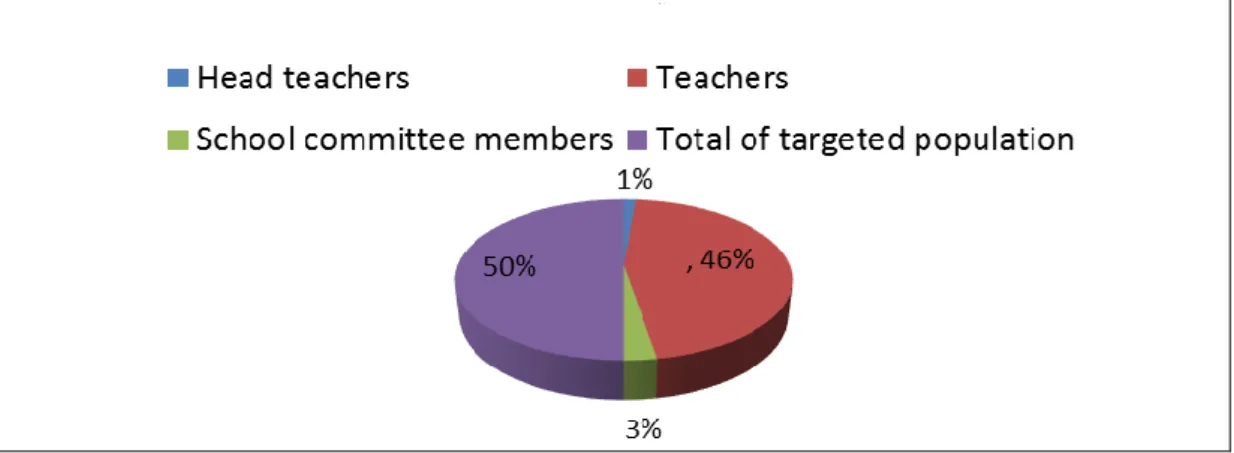
Best and Khan (1998) defined population as a group of individuals who have characteristics in common that are of interest to the researcher. In this study, the populations of Interests were the primary schools and the community in Arusha City in four selected wards namely Elerai ward, Levolosi ward, Sombetini ward and Ngarenaro ward. The population included both women and men of different ages. There were a total of 300 respondents
Figure 3.2 study Population
3.6 Sample and Sample Size
A sample is a group of respondent drawn/ taken from the target population from which the researcher is interested to get the information. A small representative part of the population is selected for observation. The sample size refers to the number of respondents for each group to be involved in the study drawn from the population. Best and Khan (2006). According to Kombo and Tromp (2006), sampling is the procedure which a researcher uses to gather people, places, or things for the study purpose. In this study a sample of 8 public primary schools was selected. The sample included teachers, head teachers and school committee members.