A Process Assessment Framework for Rural ICT Projects in Developing Countries: An Exploration of the Siyakhula Living Lab, South Africa
A thesis submitted in fulfillment of the requirements for the degree of
MASTER OF SCIENCE
RHODES UNIVERSITY
By
Umeoniso Joshua Osah
Department of Information Systems
December 2012
i
Abstract
Rural development can be supported by information and knowledge which are key strategic resources for socio economic development. ICTs enable the facilitation and communication of information between remotely dispersed individuals or groups and more developed regions. While it has become common place that ICTs possess capabilities to potentially support rural development, the concept of ICT for development (ICT4D) is still fraught with challenges and barriers, which impede the success and sustainability of ICT4D projects. It is therefore essential to evaluate rural ICT projects, as such an analysis may aid in revealing information related to the need, effectiveness, impact, and sustainability of these projects. This research seeks to further the implementation and exploration of the Rural ICT Comprehensive Evaluation Framework (RICT-CEF), through the application of the Process Assessment domain in a real life rural ICT project environment. The RICT-CEF framework consisting of 7 evaluation domains has the primary objective of evaluating rural ICT projects from their inception stages to post implementation. A process assessment seeks to determine whether or not a rural ICT project is operating to implement its intended functions in the intended way specified in the projects plan. Such an assessment is invaluable to a comprehensive evaluation. Evaluation questions for a process assessment are centred around critical themes of project performance. Critical themes are aspects of a programme or projects implementation which must be enacted in order to achieve desired project outcomes.
This research study is aimed at identifying critical themes of process assessment relevant to rural ICT4D projects. To identify critical themes, assessment approaches on social programme process assessments, evaluation of information systems in use, and rural ICT4D project evaluation case studies are comparatively analysed. Fourteen assessment approaches from these three categories are selected based on criteria. To analyse selected assessment approaches, a template is created based on the research questions, foundational literature on process assessment and identified challenges applicable to process assessments of rural ICT4D projects. Comparing and contrasting critical themes from these assessment approaches highlight critical themes essential to assess in the iterative implementation phase of rural ICT projects. Accentuated critical themes include, service utilization, organizational function and external project factors. These themes, along with suggested guiding principles from literature for conducting process assessments enable the creation of a framework for conducting process assessments of rural ICT projects. The framework is labelled “the Rural ICT Project Process Assessment Framework (PAF)”. The application of the
RICTP-ii PAF in a real life rural ICT project through a design science case study provides lessons learned (suitability and shortcomings) from applying the framework. This essentially demonstrates the sensitivity of the RICTP-PAF to rural contexts in which it is implemented in. For instance, the implemented prototype of the RICTP-PAF reveals that the framework places a great deal of emphasis on rural beneficiary perspectives. A practice which has been lacking in such evaluation exercises. Furthermore, the guiding principles elucidated, bring to mind best practices to deal with issues such as stakeholder conflict, unreliable data elicitation and unethical assessment practices. The RICTP-PAF represents a fundamental tool for process assessments of rural ICT projects, and may be adopted and customized to various rural ICT project contexts in developing countries.
iii
Table of Contents
Abstract ... i
List of Tables ... viii
List of Figures ... ix
Acknowledgements ... x
Chapter 1: Research Introduction ... 1
1.1 Introduction ... 2 1.2 Research Context ... 2 1.3 Research Goals ... 5 1.4 Research Methodology ... 6 1.5 Summary of Results ... 7 1.6 Organisation of Thesis ... 9
Chapter 2: Rural development and ICTs ... 12
2.1 Introduction ... 13
2.2 Rural Development... 14
2.3 Importance of Information and Knowledge as Rural Development Enablers ... 16
2.4 Constraints of Information Effectiveness in Rural Development ... 17
2.5 Uses of ICTs in Rural Development ... 20
2.6 Challenges that Impede Successful Employment of ICTs for Development ... 26
2.7 Conclusion ... 31
Chapter 3:Evaluation of Rural ICT4D projects ... 33
3.1 Introduction ... 34
3.2 Importance of Rural ICT Project Evaluation ... 35
3.3 Knowledge Gaps in Rural ICT Project Evaluation ... 36
3.4 The Rural ICT Comprehensive Evaluation Framework (RICT-CEF) ... 38
3.5 RICT-CEF Structure ... 38
3.5.1 The RICT-CEF Domains and Evaluation Life-Cycle ... 40
3.6 Process Assessment in Rural ICT Projects ... 41
3.7 Importance of Process Assessment in Rural ICT Projects ... 42 3.7.1 Replication of Successful implementation processes for similar ICT4D projects 42
iv
3.7.2 Satisfying ICT4D Stakeholder interest ... 42
3.7.3 Equity of ICT Service Distribution amongst sub-groups ... 43
3.7.4 Linking project processes to outputs and outcomes ... 43
3.7.5 Understanding the relationship amongst various project components ... 43
3.8 Shortcomings of process assessments applicable to rural ICT projects ... 44
3.8.1 Disparate measures across project sites ... 44
3.8.2 Resource constraints limiting the amount of potential data which can be collected ... 44
3.8.3 Few Training opportunities to specialize ... 45
3.8.4 Criteria setting for acceptable performance ... 45
3.8.5 Not Enough Emphasis on Internal Stakeholder Perspectives ... 46
3.9 Rural ICT Process Assessment Questions and Critical Themes ... 47
3.10 Conclusion ... 47
Chapter 4:An Analysis of Assessment Approaches to Identify Critical Themes ... 49
4.1 Introduction ... 50
4.2 Critical Themes of Programme Process Assessment ... 50
4.3 A Comparative Analysis of Critical Themes across Social Programmes/ Information Systems in Use and Rural ICT Cases ... 52
4.4 Template for Analysing Critical Themes of Process Assessment ... 53
4.5 Analysis of Critical Themes in Social Programme Process Assessment ... 55
4.5.1 Criteria for selecting assessment approaches which identify Critical Themes of process assessment in social programmes ... 56
4.5.2 Summary of Analysis of Critical Themes of Process Assessment in Social Programmes ... 62
4.6 Identifying Critical themes of Process Assessment from select Information Systems Evaluation Approaches... 64
4.6.1 Criteria for Selection of approaches which identify Critical Themes of Process Assessment in Information systems projects ... 67
4.6.2 Summary of critical aspects to assess while information systems are in use ... 73
4.7 Identification of Critical Themes of Process Assessment from Select ICT4D assessment approaches ... 74
4.7.1 Criteria for Selecting Rural ICT4D cases to identify Critical Themes of process assessment ... 74
v 4.7.2 Summary of an analysis of ICT4D cases identifying critical themes of process
assessment ... 81
4.8 A Comparative Analysis of Identified Critical Themes from all categories ... 83
4.9 Critical Themes Identified across assessment approaches ... 83
4.9.1 Critical Themes related to Project Recipients ... 83
4.9.2 Critical Themes related to Intervention Providers (Organisational functions) ... 93
4.9.3 External Project Factors ... 102
4.10 Conclusion ... 104
Chapter 5:A Framework for Assessing Critical Themes of Process Assessment in Rural ICT4D projects ... 105
5.1 Introduction ... 106
5.2 A Framework for Conducting Rural ICT Project Process Assessments using Critical Themes of Project Performance ... 106
5.3 Guiding Principles for Conducting Rural ICT Process Assessments ... 107
5.3.1 Collaborative Evaluator/Stakeholder Relationship ... 107
5.3.2 Programme theory specification ... 108
5.3.3 Validate evaluation questions ... 108
5.3.4 Quality Control throughout data collection and analysis phase ... 108
5.3.5 Ethical Consideration ... 109
5.4 Critical Themes of Process Assessment in Rural ICT4D projects ... 109
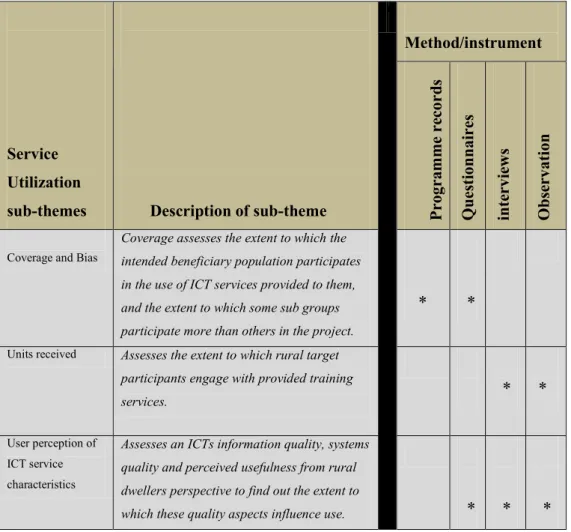
5.4.1 Service Utilization ... 110
5.4.2 Organizational Function ... 117
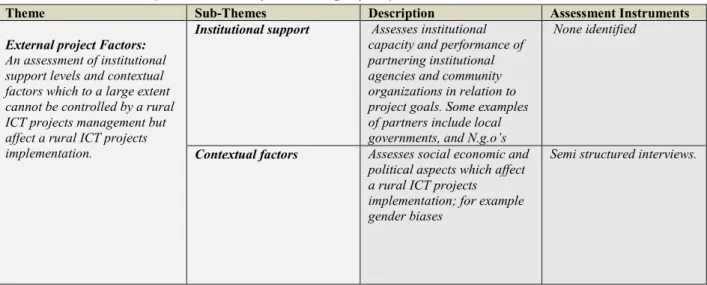
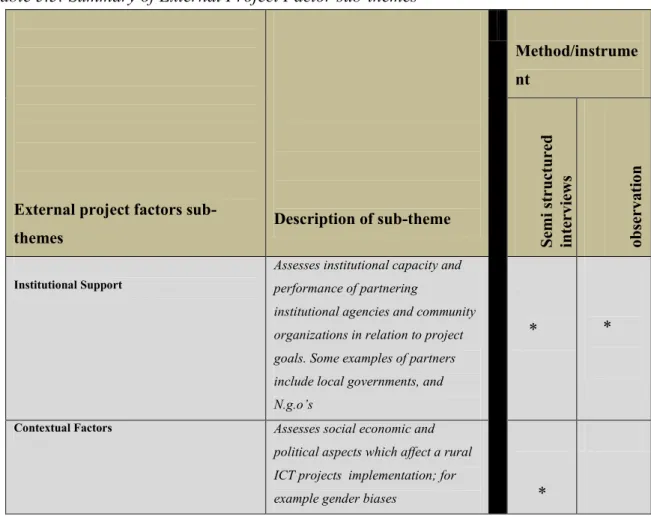
5.4.3 External Project Factors ... 122
5.5 Conclusion ... 124
Chapter 6:Case study Research Methodology ... 126
6.1 Introduction ... 127
6.2 Research Paradigm ... 127
6.3 Research Strategy ... 127
6.4 Scope of the RICTP-PAF Application ... 129
6.5 The Case Study Design ... 129
vi
6.5.2 The Unit of Analysis ... 130
6.5.3 The Research Instruments ... 130
6.5.3.1 Interviews ... 130 6.5.3.2 Participant Observation ... 131 6.5.3.3 Document analysis ... 132 6.5.4 Data analysis ... 133 6.5.5 Ethics ... 133 6.6 Conclusion ... 135
Chapter 7:A Case Study Exploration of Process Assessment in the Siyakhula Living Lab ... 136
7.1 Introduction ... 137
7.2 An Overview of the Siyakhula Living Lab ... 137
7.3 The SLL Presence in the Mbashe Municipality ... 138
7.4 Objectives of the Siyakhula Living Lab ... 140
7.4.1 Short Term... 140
7.4.2 Medium Term ... 141
7.4.3 Long Term ... 141
7.5 ICT Infrastructure in the SLL ... 141
7.5.1 Software Platform and applications ... 143
7.6 The Programme Theory of the SLL ... 144
7.6.1 The Service Utilization Plan ... 144
7.7 Reflective Report on Applying the RICTP-PAF in the SLL ... 146
7.7.1 Application of guiding principles to the assessment process ... 147
7.7.1b Lessons Learned from Applying Guidelines ... 151
7.7.2 Reflection on Assessing Service Utilization in the SLL ... 154
7.7.2.1 Assessing Coverage and Bias ... 154
7.7.2.1b Lessons learned from assessing coverage and bias ... 158
7.7.2.2 Assessing User Perception of ICT Service Characteristics ... 161
7.7.2.2b Lessons learned from conducting User perception assessment ... 165
7.7.2.3 Assessing for the presence of sustainable use factors ... 167
7.7.2.3b Lessons learned from assessing for the presence of factors suggesting there will be sustainable use of ICTs in the long run ... 169
vii
7.7.2.4 Assessing Training Units Received By Rural Beneficiaries ... 170
7.7.2.4 b Lessons learned from observed assessment of Units received ... 173
7.8 General Lessons Learned from Applying the RICTP-PAF ... 173
7.9 Reflection on Feedback... 175
7.10 Conclusion ... 176
Chapter 8:Revised RICTP-PAF ... 177
8.1 Introduction ... 178
8.2 Revisions to the RICTP-PAF ... 178
8.2.1 Application of Guiding Principles ... 178
8.2.2 Assessing Service Utilization sub themes ... 180
8.2.2.1 Coverage and Bias ... 180
8.2.2.2 User perception of ICT service characteristics ... 183
8.2.2.3 Identifying the Presence of factors suggesting there will be sustainable use of ICTs in the long run ... 183
8.2.2.4 Units Received from Training ... 183
8.2.5 The Overall Structure of the Process Assessment Framework ... 188
8.3 An Overview of the RICTP-PAF Application ... 188
8.4 Conclusion ... 189
Chapter 9: Conclusion and Future Research ... 191
9.1 Introduction ... 192
9.2 Research Contribution ... 192
9.3 Future Research ... 197
9.3.1 Enhancing the RICTP-PAF ... 197
9.3.2 Application of Subsequent Domains of the RICT-CEF ... 197
9.3.3 Exploring other Process Assessment Approaches to identify more Critical Themes and principles ... 197
9.3.4 Applying the RICTP-PAF to other ICT4D Project Cases ... 198
9.4 In Closing ... 198
viii
List of Tables
Table 4.1: A template for analysing critical themes of process assessment ... 54
Table 4.2: A review of critical themes of process assessment in social programmes ... 57
Table 4.3: Six types of generic information systems evaluation types ... 67
Table 4.4: A review of critical evaluation aspects of Information systems in Use ... 70
Table 4.5: A review of critical themes of process assessment from selected ICT4D approaches ... 76
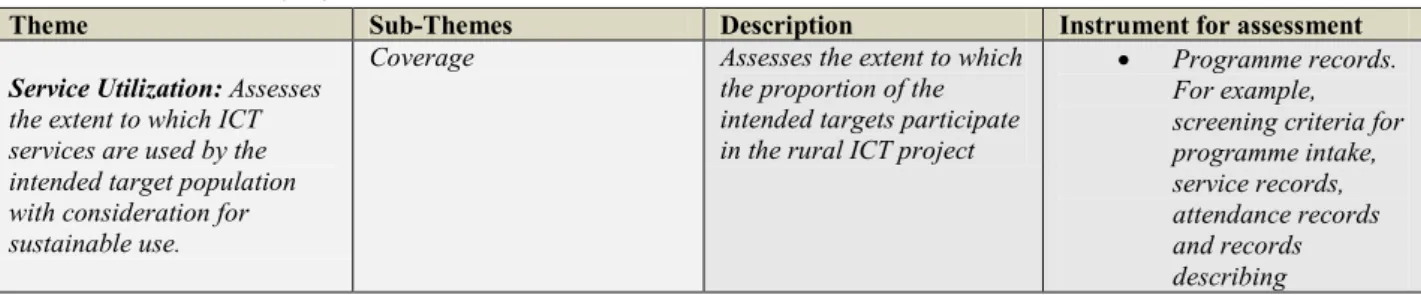
Table 4.6: Summary of service utilization themes... 92
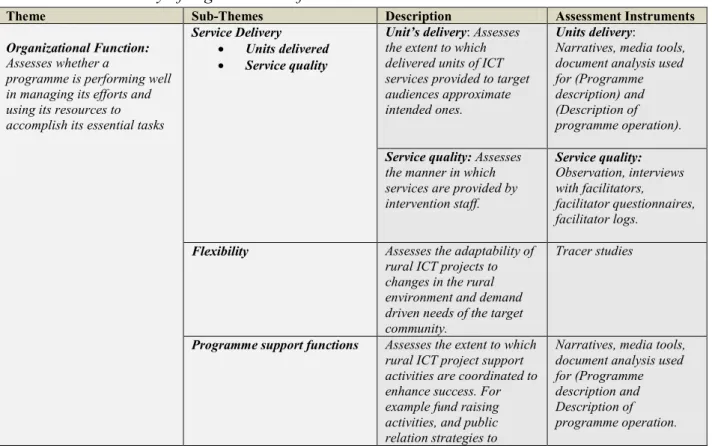
Table 4.7: A summary of organizational function and its sub-themes ... 101
Table 4.8: A summary sub-themes of external project factors ... 104
Table 5.1: Summary of service utilization sub-themes ... 116
Table 5.2: Summary of Organizational function sub-themes ... 121
Table 5.3: Summary of External Project Factor sub-themes ... 124
Table 8.1: Enhancements to guiding principles for conducting a process assessment ... 179
Table 8.2: An enhancement of the RICTP-PAF’s proposed methods for assessing coverage and bias ... 181
Table 8.3: An enhancement of the RICTP-PAF’s proposed methods for assessing user perception of ICT service characteristics. ... 184
Table 8.4: An enhancement of the RICTP-PAF’s proposed methods for assessing for the presence of factors promoting sustainable use of ICTs ... 185
Table 8.5: An enhancement of the RICTP-PAF’s proposed methods for assessing units received ... 186
ix
List of Figures
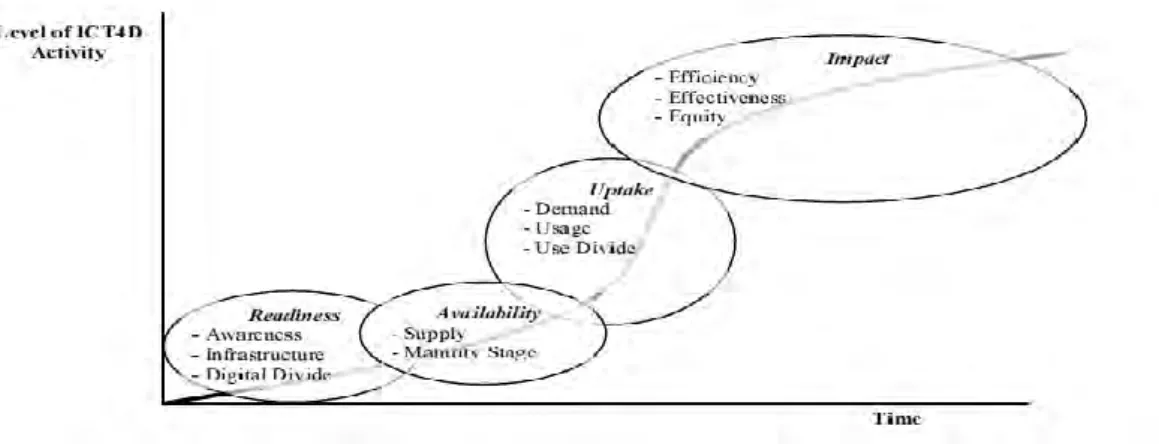
Figure 3:1: Changing focus of ICT4D assessment over time ... 37
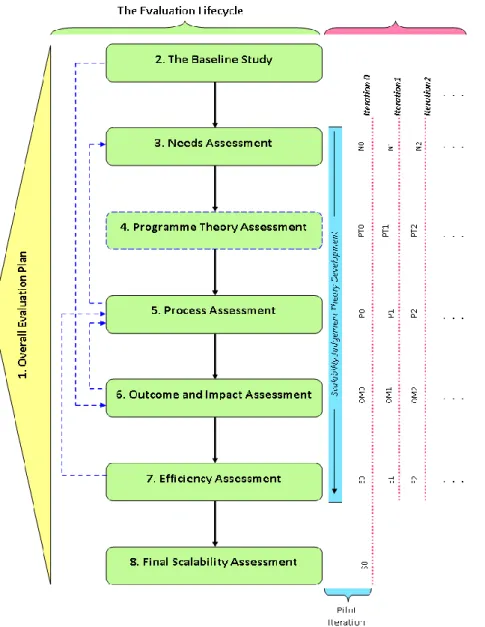
Figure 3.2: Rural ICT Comprehensive Evaluation Framework (RICT-CEF) ... 39
Figure 5.1: Rural ICT Project Process Assessment Framework (RICTP-PAF) ... 107
Figure 7.1: Schools which serve as points of presence (connected schools) by the SLL ... 140
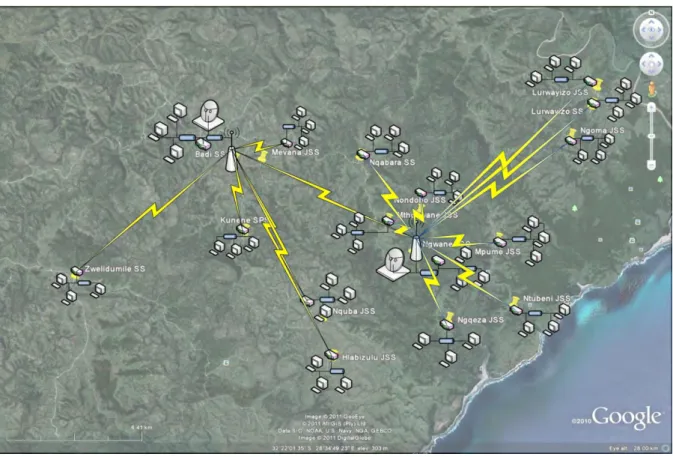
Figure 7.2: Network infrastructure of the SLL points of presence in Dwesa (connected schools). ... 143
Figure 7.3: The SLL service utilization plan leading up to access of ICT services ... 145
Figure 8.1: The Enhanced Rural ICT Project Process Assessment Framework (RICTP-PAF) ... 188
x
Acknowledgements
I would like to thank GOD who gave me the strength to go through with this research project. I would also like to express gratitude to the following people:
To my supervisor, Dr Caroline Khene- Thanks for your patience, guidance, insight and encouragement throughout the development of this research project. It has been a great learning experience working with you to develop research skills which I regard as an invaluable asset. Furthermore, thanks for your constructive criticism even when you sensed I wouldn’t like it, but felt it would be in the best interest of the research project.
To my co-supervisor Professor Greg Foster- Thanks for your insight and constructive criticism, which I feel added value to the research project.
To my parents and siblings- Thanks for your love, support, encouragement and sacrifice, without which I often feel I would not have persevered through the process to complete the research project. I am truly blessed to have such a family.
To Rhodes University- Thank you for the financial contribution towards the research project. Finally, I would like to extend my gratitude to those not acknowledged here, who however contributed to the process of this research project. Your contribution is much appreciated.
Declaration
I acknowledge that all references are accurately recorded and that unless otherwise stated, all work contained herein is my own.
1
Chapter 1
Research Introduction
This chapter introduces the research study. The research context is outlined to provide a background to the
research. The goals of the research and the research methodology employed are described. Lastly a summary of results revealed by the thesis is presented.
2
1.1 Introduction
The realization that ICTs possess the potential to underpin rural development has resulted in varying projects attempting to employ ICTs as a development support mechanism. ICTs offer essential support for providing and communicating information to and from rural areas. The value ICTs provide cannot be overlooked, as information is considered a key strategic resource for rural development. While ICTs possess enormous potential to support rural development, several challenges may impede attempts to successfully deploy and employ them for rural development. Such challenges relate to the implementation and use of ICTs as rural development tools. Dealing with these associated challenges necessitates suitable assessment approaches, more so at the implementation stages of such projects, where processes which affect outcomes are enacted.
This chapter provides an introduction to the research study. In retrospect of providing a background to the research study, the research context is outlined. This is followed by an outline of the research goals, including the research questions by which the research is structured. Subsequently, the research methodology employed is described. Following this is a summary of results attained. Finally, an outline of the thesis organization concludes the chapter.
1.2 Research Context
Rural development can be described as systematic attempts to bring about social changes, which will consequently ameliorate the living conditions of the people whom these changes affect (Summers, 1986: 360). It is imperative that adequate attention is paid to rural development, as it is linked to social and economic growth of developing countries (Pade-Khene and Sewry, 2011). Rural areas are synonymous with poverty, as Heeks (2009) suggests, most of the world’s poor are situated in rural areas. In an increasingly globalized world, neglect of the plights of the poor could result in challenges, such as, increased migration, terrorism, and pandemic spread (Heeks, 2009: 2). Poverty of the rural poor is intensified by their physical remoteness (McNamara, 2003). Results of remoteness experienced by rural dwellers, is evident with challenges such as poor access to markets, weak or non-existent physical infrastructure, dearth of relevant information, poor health, low quality education and poor access to government resources etc (Rose, 1999:1; McNamara, 2003: 41).
3 In retrospect of development challenges, their persistence globally, and an urgency to eradicate poverty, Information Communication and Technology for Development (ICT4D) was conceptualized (Heeks, 2009: 3). ICT4D was initiated in 1995, when the underlying concept was to unearth the potential of information systems and technology as instruments of development (McNamara 2003). ICTs are an array of technological tools employed to generate, store, process and communicate information (Tinio, 2003). The proliferation of information and communication networks over the last ten years, its innovative nature, the business processes it underpins and its perceived social impacts have sparked worldwide optimism about its potential to support the alleviation of poverty and advance social and economic growth in developing countries (Avgerou, 2010: 1; McNamara, 2003: 1).
While there is global optimism concerning the potential of ICTs to support rural development, Mhishi (2009) and Adam and Wood (1999) suggest that it is essential for ICT4D implementers to understand contextual factors of the particular rural communities in which projects will be implemented. ICTs provide valuable information (Hussain and Tongia, 2009: 55), which can potentially generate knowledge to tackle many socio-economic problems in rural communities (Pade-Khene and Sewry, 2011). Therefore, it is essential that information being generated, processed and communicated is relevant to the proposed audience or community (Hussain and Tongia 2009: 55, Foster, 2011).
Paradoxically, the above point on the essence of proper contextualization in ICT4D projects is a topic of concern, due to a lack of adherence to this rule in various ICT4D projects. Neglecting to recognise issues of contextualization, account for failed ICT4D projects in Africa which continue to outnumber success stories (Krauss, 2009: 247). Furthermore, a major incitement of failed ICT4D projects is careless enthusiasm by implementers of development projects to execute replicated “quick, off-the-shelf ICT solutions” in developing countries (Heeks, 2009:4). Such rushed solutions, do not take into consideration contextual challenges relevant to rural communities, which may impede the success of ICT4D project implementations. Challenges peculiar to rural contexts may include illiteracy levels in rural communities, socio cultural challenges, inadequate telecommunications infrastructure and political constrains (Langmia, 2005; McNamara, 2003:63; Pade-Khene and Sewry, 2011: 23). It should therefore be noted that, the availability of ICTs in such developing contexts, is not a solution or replacement for addressing the more complicated social, economic and historical predicaments faced by developing countries. Therefore, McNamara (2003) postulates that
4 ICT tools should not be viewed as solutions to development problems, but as enablers, which if used appropriately, can facilitate positive developmental change.
The issue of sustainability also requires critical consideration because as indicated by Batchelor, Evangelista, Hearn, Peirce, Sugden and Webb (2003) and Best and Kumar (2008), numerous studies consider sustainability as pivotal to long term development benefits for ICT4D projects. Considering there has been lack of success with numerous ICT4D projects in delivering and persisting, sustainability has become a vital area of concern in ICT4D projects (Heeks, 2009:4).
Amongst others, the challenges highlighted have brought about legitimate impetus for the evaluation of ICT4D projects. To support the need for evaluation, Gomez and Pather (2010) and Piatkowski (2006) postulate that despite large investments in ICT4D projects, there still remain questions about the impacts of ICT as a development enabler. Increasing attention is therefore being paid to evaluation of ICT4D projects, to account for the huge investments of informational and technological tools in rural development initiatives (McNamara, 2003: 9). In a comparative study of evaluation approaches for ICT4D projects, Garrido (2004) stated that several evaluation models exist for evaluating ICT4D projects, which may be formulated, based on the specific development project, or constructed from theory. Existent ICT4D evaluation approaches though, are increasingly changing their focus to concentrate on impact assessments, as opposed to adopting a comprehensive approach, where all project phases are assessed. The paradigm shift in ICT4D evaluation may be as a result of the perceived difficulty present while attempting to account for impacts, thus prompting greater focus on impacts, in order to explore suitable approaches to account for them (Heeks and Molla, 2009). While it cannot be disputed that accounting for impacts is crucial, it must also be noted that ICT4D project impact assessments, are dependent on, and informed by earlier phases of a projects life cycle (Pade-Khene and Sewry, 2011). This suggests that accounting for earlier phases of an ICT4D project’s life cycle, for instance, initiation, needs assessment and implementation are equally important. In retrospect of the neglect for earlier phases of a project’s life cycle, Pade-Khene and Sewry (2011) propose a comprehensive evaluation framework referred to as, the Rural ICT Comprehensive Evaluation Framework (RICT-CEF). The development of the RICT-CEF framework was motivated by the lack of an all-encompassing structure to assess ICT4D projects from inception to conclusion. The RICT-CEF framework is comprised of seven domains (assessment areas) which are interrelated and
5 dependent on each other. The domains include in sequential order; 1) Baseline Study, 2) A Needs Assessment, 3) Program Theory Assessment, 4) Process assessment, 5) Impact Assessment 6) Efficiency Assessment, and 7) A Scalability Assessment (Pade-Khene and Sewry, 2011).
The first three domains which include: the Baseline Study, Needs Assessment, and Program Theory, in their respective stated orders have been investigated and implemented in a real-life ICT4D project case. This research therefore seeks to further the implementation and exploration of the RICT-CEF framework, through the application of the process assessment domain in a real life rural ICT project environment. A Process Assessment assesses how well a rural ICT project is operating to implement its intended functions in an intended way, as stipulated in its project plan (Pade-Khene and Sewry, 2011: 35; Bhatnagar and Singh, 2009: 110). Batchelor and Norrish (2006) state that as a requirement, in attempts to construct evaluation frameworks for ICT4D projects, evaluations must take into consideration the analysis of the processes involved in the project that lead to the impacts. This view is not only echoed by evaluation experts in the ICT4D field, but also by practitioners of evaluation in social programmes and information systems projects. Information concerning programme results produced by impact assessments will be incomplete and vague without an understanding of the programme activities and services that facilitated those impacts (Rossi et al., 2004; Batchelor and Norrish, 2006). Predominantly, Process Assessments seek to answer a set of evaluation questions to aid in clarifying whether or not a project is performing as intended (Hudson, 2001). Rossi et al., (2004) and Pade-Khene and Sewry (2011) suggest that evaluation questions of a process assessment are centered around critical themes of process assessment. Critical themes of process assessment represent the most essential aspects which necessitate assessment in the implementation phase of a project, it is essential that they are identified prior to conducting a process assessment (Century et al., 2008). As such, there is a need for the identification and exploration of critical themes of process assessment applicable and common to ICT4D projects.
1.3 Research Goals
This research seeks to identify and explore critical themes of process assessment essential for evaluating the implementation phase of rural ICT4D projects.
6 Research Questions
1. What are the critical themes that should be assessed in process assessment of ICT4D projects?
2. What factors are assessed under each critical theme, and how is each critical theme assessed?
3. How can these critical themes be explored and applied in the process assessment of a real life rural ICT4D project (A focus on the application of the Service Utilization theme)?
1.4 Research Methodology
In undertaking this research study a qualitative design science research methodology is employed. The research study seeks to identify critical themes of process assessment essential for assessing the implementation phase of rural ICT projects. Furthermore, the study aims to apply critical themes identified in a rural ICT project environment through a developed framework. Hence, a design science paradigm is appropriate, as such a paradigm, seeks the enhancement of a developed ICT4D artifact, through its application and exploration in a real life project environment (Hevner, March and Park, 2004). The qualitative method uses descriptive words to relay intricate details of phenomena that are difficult to convey with quantitative methods (Irvine and Gaffikin, 2006: 117). The proposed framework is expected to be employed in a rural ICT context. Therefore, essentially it is required that the framework is sensitive to the rural context in which it is applied. As such, a qualitative approach seeks to understand the applied framework phenomenon, through observations and descriptive reflections of the researcher and assessment participants in the particular rural context (Pickard, 2007: 14).
The research is conducted as follows:
The framework is explored through a case study to identify its suitability and shortcomings. The Case study involves two levels of inquiry: 1) The actual process assessment of a rural ICT project, through applying a Rural ICT Project Process Assessment Framework (RICTP-PAF), to determine the extent to which the project is operating in relation to its specified plan; 2) An evaluative phase, where the application of the RICTP-PAF is observed and reflected on to identify useful lessons. The scope of the process assessment is limited to the service utilization theme. Chapter 6 expands on the case study research methodology employed, and the scope which the study is limited to. The rural ICT case explored is the
7 Siyakhula Living Lab (SLL). The SLL was initiated in 2005 as a joint effort between the Centres of Excellence in the Computer Science departments at the University of Fort Hare and Rhodes University. The underlying objective of the (SLL) was to develop and test a distributed, multifunctional community communication platform, to distribute to impoverished and semi-impoverished communities in South Africa (Pade et al., 2009b). Siyakhula is a Xhosa word which means ‘we are growing’ as the project would desire (Pade et al., 2009b: 7): It aims to grow in its innovation and sustainability. The SLL is currently located in the Mbashe municipality which is located in the rural Transkei of the Eastern Cape in South Africa.
1.5 Summary of Results
The key results of the thesis are organized as follows:
Rural development is vital to developing economies, as it seeks to expand the human capabilities of rural dwellers, which constitute majority of the worlds poor. Information and knowledge transfer, when underpinned by ICTs are strategic tools which if employed suitably could enhance rural development. However, there are several existing challenges which impede the effective implementation of ICTs for rural development and the sustainability of such implementations.
The existing knowledge gaps about the effective use of ICTs for rural development indicate the need for ICT4D evaluation, to enable project planning and implementation effectiveness, provide documentation of proof of successful project implementations, and aid in deconstructing assumptions project implementers might hold when executing such projects.
Several present challenges in ICT4D evaluation approaches influence the accuracy and relevance of evaluation results. Challenges include, limited micro level evaluations that are sensitive to rural contexts, incomprehensive evaluation approaches which do not consider all life cycle stages of a project, a lack of understanding on how to properly account for impacts, and inadequate resources to conduct rural ICT project evaluations.
A comprehensive evaluation approach sensitive to the rural context that is implemented may aid in alleviating many of the challenges currently being faced by
8 ICT4D evaluations. A domain in comprehensive evaluation is a Process Assessment, which seeks to assess how well a rural ICT project is operating to implement its intended functions in the specified way stipulated in the projects plan.
Various challenges may impede the realization of the advantages process assessments potentially contribute to rural ICT project implementations. Such challenges may include: disparate measurement indicators across project sites, resource constraints limiting the amount of potential data which can be collected, few training opportunities to specialize as a process evaluator, limited concentration on rural beneficiary perspectives during such assessments and difficulty of criteria setting for acceptable performance due to varying stakeholder views.
Adhering to the following guiding principles may aid in addressing some of the highlighted challenges process assessments currently face: Collaboratively conduct evaluation with internal/external stakeholders, specify programme theory, validation of evaluation questions, quality control throughout data collection and integration of ethical considerations.
Process assessment questions are centred around critical themes of process assessment. Critical themes of process assessment represent the most essential aspects of a rural ICT projects implementation phase that necessitate assessment, based on their importance to project outcomes. Conducting process assessments of rural ICT projects necessitate the identification of critical themes of process assessment relevant to rural ICT projects.
Assessment approaches from three categories: social programmes, evaluation of information systems in use, and rural ICT project evaluation case studies contribute to the identification of critical themes of process assessment relevant to rural ICT projects. The extensive analysis consisting of 14 assessment approaches reveal three critical themes of process assessment relevant to rural ICT projects. These include: service utilization, organizational function and external project factors.
Based on identified critical themes of process assessment and identified guiding principles to adhere to when conducting a process assessment, a theoretical
9 framework is proposed for executing process assessments of rural ICT projects. The proposed framework is termed the Rural ICT Project Process Assessment Framework (RICTP-PAF).
The RICTP-PAF is applied in the Siyakhula Living Lab. The application of the RICTP-PAF which is limited to service utilization sub-themes reveals the suitability and shortcomings of the framework. Service utilization sub-themes which are explored include, Coverage and bias, user perception of ICT service characteristics, practices which promote sustainable use of ICT services and units received. Lessons learned through reflections of the application of the RICTP-PAF enable enhancements to the framework.
Revisions to the RICTP-PAF are summarized as follows:
a) A description of how instruments applied to assess sub themes could be applied appropriately. Furthermore, an indication of limitations of methods and instruments when employed to assess particular sub-themes.
b) A guiding principle (feedback to stakeholders) not previously outlined in the RICTP-PAF prior to its application in the SLL is identified and integrated into the framework.
1.6 Organisation of Thesis
The thesis chapters in sequential order are organised as follows:
Chapter 1: Research Introduction
This chapter introduces the research study. The research context is outlined to provide a background to the research. The goals of the research and the research methodology employed are described. Lastly a summary of results revealed by the thesis is presented.
Chapter 2: Rural Development, ICTs and Sustainability of ICT4D projects
This chapter explains the relevance of rural development to developing economies, and the noteworthy role ICTs play in enhancing rural development processes. Furthermore, it outlines various challenges present where attempting to underpin rural development with ICT implementations. Finally, it concludes by highlighting the importance of evaluation to ICT4D projects to address outlined challenges.
10
Chapter 3: Evaluation of ICT4D Projects
This chapter explains the need for evaluation in ICT4D implementations based on challenges present where attempting to employ ICTs as development support tools. It identifies knowledge gaps in ICT4D evaluation. It explains why a process assessment is key to a comprehensive evaluation. It also describes identified shortcomings relevant to rural ICT4D process assessments and guidelines to adhere to when conducting process assessments.
Chapter 4: An analysis of Assessment Approaches to identify Critical Themes of Process Assessment
This chapter comparatively analyses 14 assessment approaches from Social programme process assessments, evaluation of information systems in use and rural ICT4D evaluation cases, in order to identify critical themes of process assessment relevant to rural ICT projects.
Chapter 5: A Framework for Conducting Process Assessments of Rural ICT Projects
This chapter proposes a framework for conducting process assessments of rural ICT projects. The Rural ICT Project Process Assessment Framework (RICTP-PAF) is composed of critical themes of process assessment relevant to rural ICT projects, and guiding principles to observe when conducting a process assessment.
Chapter 6: Case Study Research Methodology
The research methodology employed to explore the application of the RICTP-PAF in a real life rural ICT project is explained. The applied research strategy and case study design is also outlined.
Chapter 7: A Case Study of the Siyakhula Living Lab
This chapter describes the process assessment of the Siyakhula Living Lab, through the application of the RICTP-PAF. The assessment process and results obtained are provided. The suitability and shortcomings of the framework are reflected on through observation of the application of the framework. Lessons learned are elaborated on.
Chapter 8: A Revised RICTP-PAF
This chapter revises the RICTP-PAF in retrospect of lessons learned from the application of the framework in the real life project environment.
11
Chapter 9: Conclusion and Future Research
This chapter concludes the research. The conclusions of the research are outlined and future research areas are highlighted.
Appendix A: Description of the overall evaluation plan, evaluation domains and the iterative design of the Rural ICT Comprehensive Evaluation Framework (RICT-CEF).
Appendix B
B1: Assessment Approach Summaries which aid in identifying critical themes of process assessment relevant to rural ICT projects.
B2: The Siyakhula Living Lab programme theory assessment report for Access to Education and Knowledge.
Appendix C
C1:Coverage community survey questionnaire. C2: User perception quantitative questionnaire. C3: User perception qualitative interview questions.
Appendix D: Transcribed qualitative interview proceedings from user perception qualitative interviews.
Appendix E: Interview Schedule for project team.
Appendix F: Interview Schedule for internal stakeholders (community members).
Appendix G- Informed Consent Form
12
Chapter 2
Rural development and ICTs
This chapter explains the relevance of rural development to developing economies, and the noteworthy role ICTs play in enhancing rural development processes. Furthermore, it outlines various challenges present where attempting to underpin rural development with ICT implementations. Finally, it concludes by highlighting the importance of evaluation to ICT4D projects to address outlined challenges.
13
2.1 Introduction
Rural development can be defined as a process which seeks to improve the living standards (Socio-economic status) of rural dwellers through equipping them to address the issues of poverty (Pade-Khene and Sewry, 2011: 15). Rural development has been recognised as a contributing factor to socio economic growth of developing countries (Pade-Khene and Sewry, 2011). This recognition has amplified interest in rural development by government agencies, private organizations and nongovernmental organizations. While previous rural development projects attempted to enable such improvements through advancing the agricultural sector of rural areas, current efforts emphasize the enlargement of human capabilities and functionings, as it is believed that human development should be central to rural development (Gigler, 2004).
Information provides great support for enhancing human capabilities, and as such, may be considered a valuable asset for rural development. This view can be attributed to the fact that information aids in developing the knowledge base of humans, and therefore, enhances human capabilities to think of better ways of addressing development challenges (Garai and Sahadrach, 2006). Recognizing the potential created by information, rural development projects seek to take advantage of this opportunity. However, due to factors such as physical remoteness, lack of necessary infrastructure and high illiteracy rates in rural areas, access to and use of information for development is challenging. As such, ICTs are presented as suitable tools for the facilitation of information transfer and communication of information to underpin rural development activities.
This chapter describes the essence of rural development, and motivates for the importance of information access in rural development efforts. Attributes of information that potentially constrain the effective use of information in rural development efforts are then discussed. This is followed by an exploration of the role of ICTs in facilitating the communication of development information for the enablement of rural development. Subsequently, common factors which constrain the employment of ICTs for development, and further hinder the sustainability of ICT4D projects are discussed. Finally, it is concluded that in order to identify issues which promote success and sustainability of ICT4D projects, evaluation is a necessary component.
14
2.2 Rural Development
Development in the rural context is characterised by the employment of financial, physical, and human resources to enable economic growth and social development of rural economies (Malhotra, Chariar, Das and Ilavarasan, 2007; 217). Rural development initiatives seek to improve the living standards of rural dwellers (Malhotra et al., 2007: 216; Summers, 1986: 360), and as such, is an imperative factor for economic development, especially in developing countries (Singh, 2008). Previously, the importance of rural development to economic development was based on the dependence of rural economies on agriculture; this was based on the fact that agriculture was considered the largest employer, job creator and export earner in most developing countries (Bage, 2004). More recent rural development efforts focus on the enhancement of human capabilities, as opposed to agricultural advancements.
The importance attached to rural development in developing countries is intensified by the severity of poverty in rural areas (Centre on Integrated Rural Development for Asia and the Pacific, 2005: 8). It is estimated that about three quarters of the world’s poor are situated in rural areas (Malhotra et al., 2007: 216; McNamara, 2003: 41). Tackling the large scale poverty in these areas is no easy task, however, rural development provides a suitable platform for this ambitious task. The perceived potential socio-economic contribution that rural development can bring to developing economies has made policy makers of most developing economies realize the value of rural development (Singh, 2008). Furthermore, this potential has propelled policy and development agencies in underdeveloped countries to implement a host of programmes and measures to engage rural development. For example, the G8 (Group of eight countries with the largest economies) at its June 2003 summit acknowledged the need to increase investment in rural and agricultural development to achieve long-term food security (Bage, 2004).
Poverty of the rural poor can be largely attributed to their physical isolation or remoteness (McNamara, 2003). This isolation is evident with challenges, such as, poor access to markets, weak or non-existent physical infrastructure, a lack of relevant information, poor health, low quality education and poor access to government resources (McNamara, 2003: 41; Rose, 1999: 1). The urgency that poverty demands brought about an enactment of the Millennium Development Goals by the World Bank. Among eight millennium development targets, one of the goals was to reduce poverty levels by half, by the year 2015 (Millennium Development Goals Report, 2010). While the target timeline and optimism exhibited is a positive sign,
15 Malhotra et al., (2007) reveals that millennium poverty targets set by Millennium Development Goals (MDG), will not be achieved if rural poverty is not dealt with.
As previously stated, recent studies on rural development have indicated that agricultural development should not be considered as the sole source of rural development. Ellis (1999) and Uitto (2004) state that while agriculture is still key to the functioning of rural economies, single-handedly, it will be unable to create a sustainable environment for rural dwellers. Therefore, to enable rural development that will be sustainable, there is a need for concentration on other aspects of rural development. A paradigm shift was therefore deemed necessary, from rural development that concentrated on a particular sector (agriculture), to one which concentrated on the complex livelihood strategies of poor rural dwellers and the many different facets of rural poverty (Carney, 2000).
Some non-farm sectors linked with livelihood activities in rural areas include; social activities, exchange/enterprise activities (market centres), and non-market institutions (social networks and safety nets) (Mwabu and Thorbecke, 2001). Congruent to the Sustainable Livelihood framework, a livelihood is defined as the activities, assets and the access that jointly determine the living gained by an individual or household (Ellis, 1999: 2). People must be the focal point of development, as the primary rationale of development is to offer people more options to function (Garai and Sahadrach, 2006: 4). Amartya Sen’s Capability Approach (CA), which is better known as the leading standard economic framework for analyzing poverty, inequality and human development, views development as the expansion of human capabilities (Clark, 2005: 2). Capabilities reflect the alternative set of functionings from which an individual can choose (Gigler, 2004: 5).
Attempts to expand human capabilities must also put sustainability issues into consideration. This is due to the fact that humans in their effort to expand their capabilities often times will exploit resources. On some occasions, resources or assets are exploited faster than they replenish (Garai and Sahadrach, 2006: 6). As such, sustainability considerations must ensure that development attempts satisfy the needs of the present population, without compromising the ability of future generations to meet their needs(Brundtland Report, 1987).
Creating a balance between resource exploitation and sustainable use of resources requires the acquisition of knowledge (Garai and Sahadrach, 2006: 14). Acquired knowledge enables
16 humans to make better decisions. As suggested by Garai and Sahadrach (2006: 14), a distinct characteristic of human agency, as opposed to other animals is the ability to scrutinize and re-evaluate our values and priorities when provided with fresh information and new understanding.
2.3 Importance of Information and Knowledge as Rural Development Enablers
Information and knowledge are essential components for rural development activities. To understand the role information and knowledge play in rural development processes, it will be useful to get some insight into how knowledge enhances capabilities. Firstly, it is evident that the enhancement of capabilities relates to development of capital and assets. To support this view, Nussbaum (2000), when defining human capabilities and functionings emphasises that such a definition should include access to and development of five key assets and capitals. The five assets/capitals he highlighted include; human, economic, natural, social and physical capital. Hence, it can be said that the process of human development, seeks to enable access to and develop the aforementioned assets and capitals in rural people. Secondly, Garai and Sahadrach (2006) advice that attempts to enable rural peoples’ access to and development of assets and capitals should be done according to their choices. Therefore, enabling rural dwellers to develop their capabilities requires that they are provided with information. As suggested by Garai and Sahadrach (2006: 12), wise and sustainable appropriation and exploitation of assets and capitals, only occur when human agencies are equipped with the necessary information to exploit resources optimally, to further enhance their capabilities.
Information aids in acquisition of knowledge, and no community can advance their capabilities without knowledge (Mansoor and Kamba, 2010: 1). As such, Meyer (2005: 2) proposes that for development purposes, information may be viewed as a resource. Information intended for development aims at educating people on better ways of achieving set goals, altering their negative values, imparting new ideas or knowledge and generally empowering development recipients to make better decisions that will improve their current state of affairs (Unagha and Ibenne, 2011). Examples of such information could include, information to enable agricultural extension, information on health, and educational related information (Chapman and Slaymaker, 2002).
17 While it has been established that rural dwellers need information to enhance their capabilities, it should be noted that in development efforts they are not the only stakeholders who require information. Stakeholders, such as development agencies, policy makers, and government agencies, also need information about the local and cultural context of rural communities they are intending to serve. Therefore, rural communities should contribute their knowledge towards development processes. Contributed knowledge from rural communities could potentially be tailored and translated by development agencies to meet wider audiences (Parikh, 2009: 59). While explaining the need for indigenous knowledge in development processes, Gigler (2004) suggests that, in efforts to design outcome indicators for empowerment, a high level knowledge of the development priorities and goals of marginalised groups from the perspective of the marginalised groups needs to be elicited. Failure to acquire such knowledge could result in interventions that prescribe the process of empowerment, consequently violating the essence of the development intervention (Gigler, 2004: 7; Kabeer, 1999).
Finally, it should be noted that while information does prove to be a valuable resource for rural development, certain constraints exist, which attempt to undermine the potential value information provides. Such constraints must be understood and overcome in order for information to play its role in rural development.
2.4 Constraints of Information Effectiveness in Rural Development
It has been established that information is a useful resource to rural development initiatives, however, there are several attributes of information that constrain access or adequate use of information for the purpose of rural development. These attributes, if not given due consideration, could impede the positive effects of information as a rural development resource. As highlighted by Meyer (2005), attributes of information that require careful consideration while being used as a developmental resource include:
Intangibility: Mansoor and Kamba (2010) state that ironically, many rural communities of less developed countries are aware of the existence and importance of libraries and information agencies, but are not conscious of the role of information in development. Due to the fact that information is not a tangible input resource like for example, money or technology, rural dwellers often do not view information as a valuable development resource utility (Meyer, 2005: 10).
18
Interdependence on technology: In most development processes, where information is employed, information always forms part of technology. For example, understanding how an environmental information system can aid in the maximization of agricultural land, can only be understood by learning how to use the technology. As such, rural dwellers who do not value the use of technology may not be reached.
Culture dependence: The cultural related attribute of information, is also a potential challenge information faces as a development resource. Meyer (2005) suggests that if it is agreed that information is socially conditioned and shaped by the social context from which it originates, then transfer of information to a rural community of a differing social context may result in a lack of understanding of the information, in the way it was intended to be understood. A lack of understanding may stem from a failure to include background knowledge to support information being transferred (Unagha and Ibenne, 2011). Therefore, it is essential to provide additional data about related aspects of information, which will potentially aid rural users to put information background into perspective (Meyer, 2005: 11).
Medium dependent: Information stored in digital or written format is not accessible to people who are used to the oral tradition. As an illustration, word of mouth, as implied by Etebu (2009: 3) is often the preferred medium among rural people. In retrospect of this, information presented through digital mediums may not be easily accommodated by such rural dwellers. To avoid the medium dependent attribute of information impeding development efforts, it is imperative to avoid making assumptions about the preferred medium by rural dwellers for accessing information (Unagha and Ibenne, 2011). Rather, development interventions must investigate preferred mediums of rural dwellers and attempt to integrate such mediums to support information dissemination. A good example could be the use of community radio as an information dissemination medium in a rural ICT project.
Context and Conversion dependence: Meyer (2005) states that the context and conversion attribute of information are closely related. Therefore, for the purpose of this research it will be grouped as one category. With regard to context and
19 conversion, it should be noted that in rural communities, people tend to store and use information in retrospect of specific situations. That is, they store and use information that is relevant to them. Dissemination of excess and complicated information could cause confusion and consequently result in rural dwellers losing interest in the information meant for development (Meyer, 2005). To deal with this potential challenge, it is essential for development agencies to provide information that is useful to a specific context and situation, and not provide more information than is necessary at any particular time (Meyer, 2005).
The highlighted points on the attributes of information and the potential of these attributes to impede transfer of information for development purposes in rural communities, indicates the need for development implementers to be cautious when using information for rural development purposes. Information indeed is power; however, if not employed effectively, it is of no value, and incapable of supporting development (Unagha and Ibenne, 2011). Hence, the extent to which information supports rural development is determined by its effective utilization in meeting local information needs (Pade-Khene and Sewry 2011: 17).
Employing information and knowledge for rural development necessitates communication. Rural communities often characterised as information poor, request the provision of information as a central component of development (Chapman and Slaymaker, 2002: 6). The physical remoteness experienced by the rural poor (McNamara, 2003: 41), presents a major barrier to the communication of information to them. Information and communication technologies, based on their abilities to facilitate communication between remotely dispersed individuals or groups, present a suitable platform, for communicating information to and from rural communities (Chapman and Slaymaker, 2002). Information is constantly exchanged between parties involved in the development process (Pade and Sewry, 2007). Therefore, ICTs have a dual role in rural development initiatives. Their dual function includes the supply of information required by the poor in order to practice sustainable livelihood strategies, and the provision of information required by institutions tasked with making decisions that affect those livelihood strategies (Chapman and slaymaker, 2002: 7). Thus, ICTs could be viewed as valuable tools capable of supporting rural development.
20
2.5 Uses of ICTs in Rural Development
ICTs are tools that facilitate communication between people, through electronic means, of capturing, processing, storing and communicating information (Garai and Sahadrach, 2006: 11; Gerster and Zimmerman, 2003: 9; Heeks, 1999: 3; Tinio, 2003: 4). ICTs consist of hardware and software, and are linked by a wide range of technical protocols (Garai and Sahadrach, 2006: 11). Furthermore, they consist of appliances such as network equipment, radio, mobile phones, television and applications that enable e-services (USAID, 2003: 3). According to Hamelink (1997) ICTs can be classified into five distinct categories:
Capturing Technologies: These technologies are categorised as input devices. They can be used to collect and convert data to digital form. Some examples of capturing devices are; keyboards, mice and barcode readers.
Storage Technologies: These devices aid in the storage and retrieval of information captured in digital form. Some examples of storage devices include; floppy disks and hard disks.
Processing Technologies: These devices aid in the creation of system and applications that underpin ICT processes. A major example of a processing device is a central processing unit (C.P.U)
Communication Technologies: These technologies enable the transmission of information stored in digital form. A major example of a communication technology is a modem.
Display Technologies: These technologies, also known as output devices, are used to display information in digital form. Two examples of display technologies include; computer display screens, and television sets.
All of these technologies when integrated can support the flow of information to enable rural development activities. ICTs potential to enhance rural development, is based on certain attributes they possess. Some attributes common to ICTs as highlighted by Gerster and Zimmerman (2003: 9) in Pade-Khene and Sewry (2011: 19) include:
Interactivity: ICTs enable effective bi-directional communication.
Permanent availability: ICTs are available for use 24 hours a day.
Global reach: Geographical boundaries do not pose a challenge to ICTs; therefore, individuals separated by large geographical distances can work together.
21
Declining Marginal costs: Due to the digital and virtual nature of ICT products and services there is an advantage of declining marginal costs considering the replication of content is practically free regardless of the volume replicated. Furthermore, there are almost no marginal costs associated with circulation and communication of digital information.
Pervasive and Cross-cutting: ICTs are flexible, furthermore, they serve several purposes and can be applied to the full range of human activity, hence allowing for tailored solutions to meet diverse needs.
The capability of ICTs to enable global exchange of information in a quick and efficient manner and its ability to facilitate communication regardless of geographical distance, potentially hold enormous opportunities to address the vital knowledge, information, and communication dimensions of poverty and low growth in developing countries (McNamara, 2003: 28).
While it has been established that ICTs do have a role to play in rural development processes, caution must be taken, when anticipating employment of ICTs for rural development purposes. Employing ICTs for rural development activities must begin with a rural development strategy. This should be followed by an information plan to implement such a strategy and subsequently a technology plan to support the use of information (Harris, 2004: 16). A balanced assessment of the potential of ICTs to underpin rural development strategies requires an in-depth understanding of rural development issues and an enhanced understanding of the capabilities of ICTs (Chapman and Slaymaker, 2002: 3). McNamara (2003) sums this up by stating that ICTs should not be viewed as a solution to rural development, but should be seen as a tool amongst many others that enable development. In this regard, ICTs should be viewed as a contributing factor to a larger development plan and not as the development plan itself. ICTs underpin rural development processes, they do not bring about development by themselves. Rural development and poverty reduction activities consist of webs of various processes (Gerster and Zimmerman, 2003: 22), which need to be applied systematically to improve the living conditions of rural dwellers. What rural communities and poor people need are better economic prospects, improved health, more hygienic environments, education, and other components related to better capabilities and sustainable livelihood. Therefore, McNamara (2003) suggests that the extent to which ICTs
22 can aid in the realization of the above mentioned goals, make them valuable tools of development. They however remain tools and not goals (McNamara, 2003: 4).
Rural development attempts require bottom-up interventions which are more favoured and effective in a rural context (Gigler, 2004: 5; Harris, 2004: 16). A bottom-up approach, as opposed to a top-bottom approach where ICTs are provided to rural communities just for the lack of it, addresses the deeper economic, resource, social and historical challenges which rural communities encounter (Pade-Khene and Sewry, 2011: 20). A bottom-up approach ensures the appropriate and strategic use of information and technology to facilitate development (Harris, 2004: 16). For instance, employment of a bottom-up approach necessitates that preferred traditional channels in a rural community are considered when attempting to integrate ICTs into a community.
ICTs can be classified as either ‘traditional’ or ‘modern’ (USAID, 2003: 3). Traditional ICTs are ubiquitous technologies commonly used by people in their everyday lives. Some examples of such technologies include; fixed line telephones, televisions and radios (Harris, 2004: 5; Pade-Khene and Sewry, 2011: 19). Modern ICTs on the other hand, include an integration of computers and communication systems between computers, for example, database applications, wireless technologies and the internet (International Development Research Centre (IDRC, 2003: 11). This distinction between ICT classes is important, because when ICTs are talked about, they are commonly understood to consist of only computers and communication systems (modern ICTs) and exclude the more traditional ICTs. Harris (2004: 5) states that while traditional ICTs are excluded from the commonly taught about concept of ICTs, they play a major role in providing information to the poor. McNamara (2003) suggests that newer (modern) is not necessarily better, therefore, where traditional ICTs are capable of getting the job done (development enablement), they should be employed. It should however be noted, that traditional ICTs are not capable of supporting development alone. As such, while some literatures suggest that traditional ICTs are well suited for the needs of the poor, it should be noted that traditional ICTs cannot enable the process of development alone. Modern ICTs also possess characteristics which make them more valuable than traditional ICTs in certain cases. For example, modern ICTs enable horizontal many-to-many communications on issues of public interest (Pade-Khene and Sewry, 2011: 19). It can thus be concluded that to derive optimal value from ICT investments
23 in rural development processes, it may be essential to integrate both traditional and modern ICTs (Gerster and Zimmerman, 2003: 31).
The expansion of human capabilities and functioning’s facilitates the development of key livelihood assets and capitals (human, economic, natural, social and physical capital). The uses of ICT for rural development enhancement can be explored, based on how they provide information and communication capabilities to influence these livelihood assets/capitals (Chapman and Slaymaker, 2002: 8; Harris, 2004: 20):
Human Capital: Human capital refers to knowledge gained, skills gained, ability to work and health status of an individual (Gigler, 2004: 15). ICTs enable rural dwellers to access improved training and education via distant learning facilities (Commonwealth Telecommunication Organization, 2009: 36; McNamara, 2008: 31). Advances in education quality arise from potential access to educational material. ICT sourced educational material could potentially enhance classroom activity, enable teacher training, enable educational administration and possibly support research in rural communities (McNamara, 2008: 31; Pade-Khene and Sewry, 2011: 22). Enhanced educational levels of poor rural dwellers, aid in improving their current livelihoods, through gained knowledge, to confront obstacles and vulnerabilities that impede people from seeking opportunities to improve their lives. It also enables them to participate in new sectors of the economy where greater skills are rewarded with higher incomes (McNamara, 2003: 50; Soriano, 2007: 8). The prospect of transmitting digital content to remote locations in various formats, combined with the numerous choices of storage devices which they could be saved to, decreases many costs associated with wide spread information access (Chapman and slaymaker, 2002: 8).
Another factor related to human capital functions of livelihoods is health.For humans to work productively, it is essential that they are healthy. As specified earlier, healthy living is a related attribute of development (expansion of human capabilities). ICTs have the potential to contribute to health improvement in rural communities. Firstly, this could be gained through the employment of ICTs for remote consultation facilitation, diagnosis, and treatment (Harris, 2004: 21). Furthermore, information concerning the relationship between hygiene and health can be disseminated more broadly (McNamara, 2003: 55). ICTs may also be employed to enhance the capacity
24 of health care providers in rural communities (Harris, 2004: 21). Further enhancements in ICT innovation and deployment, have made them more widely accessible to rural dwellers. For example, the increasing capacity of mobile networks to cover rural areas, make them a viable option. Due to its proliferation, ubiquitous, and cost effective nature, the mobile phone is becoming the preferred tool to combat health challenges in rural communities (Bhavnani, Chiu, Janakiram and Silarszky, 2008: 5; McNamara, 2003: 71, Vital Wave Consulting, 2009: 7) . Mobile communications are capable of supporting health related actives, such as, conducting of health examinations like tele-pathology and ultrasounds (CTO, 2009: 36). Other health needs that can be addressed by mobile health initiatives include remote data collection, remote monitoring of disease and epidemic outbreak, networking and training of health workers and diagnostic and treatment support (Vital Wave Consulting, 2009: 9).
Natural Capital: Chapman and Slaymaker (2002: 8) suggest that natural capitals refer to natural resources and their effective management. Enhanced communication channels provided by ICTs can enable improved access to institutions responsible for various areas of natural resource management, including, administrative and legal information resources (Chapman and slaymaker, 2002: 8). Furthermore, communities can source information from other communities on how they deal with land distribution and conflict resolution issues. Natural capitals also relate to environmental sustainability support. The employment of ICTs to support environmental sustainability in rural areas is particularly important because of a dependency of the majority of the poor on agriculture and subsistence farming for their livelihood (McNamara, 2003: 56). To enhance natural capitals and support environmental sustainability, ICTs can be employed for gathering and dissemination of information on crops, marketing, agricultural production, mapping and management of forests and land resources through GIS (Geographic Information Systems) (McNamara, 2008: 31).
Financial Capital: ICTs provide a medium which supports the increased flow of information by local, financial, and micro credit lending institutions, on services available (Chapman and slaymaker, 2002: 8). Services could include loan options