Mathematics Self-efficacy as a Predictor of Science Technology
Engineering and Mathematics (STEM) Career Inclination among
Secondary School Students with Disabilities.
Charity N. Onyishi1,2 and Maximus M. Sefotho1
1Department of Educational Psychology, University of Johannesburg, South-Africa 2
Department of Educational Foundations, University of Nigeria, Nsukka, Nigeria Email: [email protected]1[email protected]
Abstract
Persons with disabilities are underrepresented in Science Technology Engineering and Mathematics (STEM) careers. This study sought to find out the predictive validity of Mathematics self-efficacy on STEM career inclination among Students With Disabilities (SWD) in technical and inclusive secondary schools in Enugu State, Nigeria. A descriptive quantitative correlation research design was adopted for the study. Three instruments (Demographics Questionnaire, Mathematics self-efficacy Questionnaire and STEM Career Inclination Measures) were used to collect data from 587 students with disabilities in 38 Technical secondary schools and 4 inclusive oriented secondary schools in the area. Data collected for the study were analyzed using mean, standard deviation and multiple regression analysis. Results showed that Mathematics self-efficacy has a positive link with an inclination towards STEM-related careers among SWD. It was concluded that building STEM self-efficacy in students with disabilities could be a productive way of bridging the gap of underrepresentation of persons with disabilities in STEM careers. It was recommended that researchers, career counselors, science teachers and all stakeholders in disability Education should intensify efforts towards building and strengthening mathematics self-efficacy among students with disabilities in technical and inclusive education secondary schools.
Keywords— Mathematics self-efficacy, science technology, engineering and mathematics, career inclination, students with disabilities, technical schools, inclusive oriented schools.
1. INTRODUCTION
Science, technology, engineering, and mathematics (STEM) is increasingly becoming critical to the growth, development, and stability of the global economy owing to the current technological advancements across the world [1]. Research shows that by 2025, about 1-8 million STEM professionals would be needed in the workforce as STEM is gradually forming the basis for employability and job successes [2]. It has been predicted that about 47% of the US workforce may lose their jobs in the near future to STEM personnel [3]. Given these predictions, persons with disabilities who have STEM knowledge and training would have greater work-related opportunities compared to those lack STEM skills [4]. This stands to threaten the Students With Disabilities (SWD) with unemployment and poverty in the future through the reduced job opportunities for most non-STEM professions [5]. On the other hand, STEM is fully embedded in daily life situations, such as using the computer/electronic machines and using chemicals such as hair shampoos and soap [5], [6], which could enhance the quality of life for SWD. Disability is any physical, mental or psychological impairment that has a ‘substantial’ and ‘long-term’ negative effect on one’s ability to do normal daily activities [7]. Disability is a many-sided concept which describes a variety of types and levels of functionality limitations [8]. Disabilities could be of different types including physical disabilities, visual disabilities, hearing disabilities,
Psychological disorders, cognitive/learning disabilities, intellectual disabilities, autism spectrum disorders [9].
About 15% of the world population are living with at least a disability [9], [10]. In Nigeria, about 20% of the general population are living with at least one type of impairment [11] and a good number of them are within school age. Consequently, the move for the inclusion of persons with disabilities in all facets of human endeavors is gaining priority in Nigeria and other countries of the world. Although individuals with disabilities increasingly getting into tertiary institutions, they are generally under-represented in science, technology, engineering careers [12], [13], [14]. Career is the totality of life activities that are geared towards the world of work and later life enterprise [15]. It involves all the experiences through which an individual learns about, prepares for and engages in work-related activities as part of his way of life [16. Every human being is expected to do a job in order to contribute to the development of self and society [16].
One of the major challenges facing Secondary School students, including those with disabilities is the tasks of making appropriate and realistic career choices [16], [17]. Difficulties associated with career decision making is more severe on students with disabilities, given the specific limitations imposed on them by their disabilities [4], [18]. Disabilities impose a whole lot of limitations on the choices, intentions, and aspirations of the disabled community, which are products of their career inclination (a tendency, preference or feeling that makes one want to take a specific career). At school age, a career can be conceived as a sequence of perception, attitudes, and behaviour related to a long-term goal of eventual working experience [16]. Career inclination accounts for the totality of perception, preference, and interest that individuals hold towards specific careers, a combination of which serves as a road-map for students’ academic choices, efforts self-regulation in the secondary schools [19]. Like in the non-disabled ones, career inclination translates into the eventual career choices and decision, as well as career development and commitments that SWD makes at post-high schools [20]. Being inclined towards STEM careers is a constellation of students’ perception of a STEM career, their interest in the career and intention to go into STEM-related careers. Studies have indicated that making career choices is a product of two major factors, which include personal, process, and context factors [21], [22]. Personal factors that could influence career preferences in students with disabilities may include among others, self-efficacy, general ability status [22], [23].
If this is true, it means that under-representation of persons with disabilities [6] could be associated with their general ability status (able or disable), and/or their poor self-efficacy in STEM foundational subject such as mathematics. Research recognizes that students with disabilities tend to struggle more than their peers in the STEM fields of study [6]. Due to negative perception of their limitation, as well as poor self-efficacy [5], students with disabilities are wrongly inclined, and they end up making career choices that predispose them to lack of job satisfaction, career frustrations, unemployment and poverty [18] after school completion. Most of these ones end their education at high school level, and those who proceed to tertiary institutions only take up caused in arts, humanities, and education [18], [15], even when they are capable of undertaking STEM-related causes, such as science, and engineering [4], [24]. Research indicates that SWDs are 57% less likely to take up STEM majors than their non-disabled counterparts. This increases the future vulnerability of individuals with disabilities, given the increasing demand for STEM workforce over other professionals worldwide.
On the other hand, a disability, whether physical or mental, should not limit anyone’s career aspirations or job prospects. Research evidence suggests that SWDs can find success in STEM
fields [15], [24], [25]. Furthermore, the recent advances in the accessibility of information technology and other tools used by working professionals have put a longstanding bridge in career limitations of SWD. Hence, it is expected that persons with disabilities have full participation in STEM by undertaking related careers. Taking a STEM career could be a viable way through which students with disabilities could overcome poverty and maximize their career fulfillment.
Regrettably, pieces of evidence suggest that individuals with disabilities are underrepresented in the area of science, technology and engineering across the globe [24], [26], [27], [28], [29], due to poor STEM career inclination [30]. As pointed out earlier, most Nigerian students with impairments aspire to study disciplines in the arts and social sciences rather than the fields of engineering and natural sciences [15], [31]. This is because the society including the teachers feels that their deformities will limit their abilities to work or contribute in any way to some specific areas of the economy of the nation, including STEM fields [30] This putative limitation is rather associated with the societal beliefs, worldviews and perceptions as well as attitudes towards SWD, rather than objective effects [31]. SWD are rarely encouraged to prepare for STEM fields. Since they do not consider a career in STEM an achievable goal, they do not take the courses necessary to prepare for post-secondary studies in these areas.
Negative attitudes of families, teachers, and peers have a cumulative impact on the self-concept, cognitive and social development, academic performance, and general psychological health of SWD, such that the majority of them fail to believe in themselves for tasks they deem difficult [5], [25]. As a result, they lack academic confidence that they can succeed in STEM fields [32] especially in mathematics. This state of poor mathematics self-efficacy could limit inclination in specific STEM fields [33].
Self-efficacy is defined as the “belief in one’s capabilities to organize and execute the courses of action required to produce the designated goal” [34], [35]. It is the individual’s belief about their ability to solve the problem faced [35]. Self-efficacy is referred to as the judgment that a person had in their own ability to successfully perform a particular behavior based on their perception of their capability and the likelihood of achieving success in that activity. Self-efficacy gives an individual the confidence for goal setting and goal accomplishments.
According to Bandura, [35], Self-efficacy accounts for the choices, achievements, and decisions an individual makes pertaining to events that affect their lives. For example, self-efficacy is positively related to student academic performance and science self-self-efficacy has been shown to impact student selection of science-related activities, which impacts their ultimate success and helps maintain interests [36]. Self-efficacy could explain the complexity of decision-making, development and commitments of students towards career paths [33], [34] which could account for the underrepresentation of students with disabilities in STEM career fields.
Arguing in this line, Rittmayer, and Beier [37] opined that the “confidence gap” accounts for differences in students' enrolments and inclinations towards STEM classes and careers. Self-efficacy predicts academic performance more than ability or previous achievement. Students with high self-efficacy set more challenging goals and work harder to accomplish those goals they have set, compared to those with low self-efficacy. Additionally, high self-efficacy is associated with greater self-regulation, including more efficient use of problem-solving strategies and management of working time [25]
Self-efficacy beliefs are based on four primary sources of information: mastery experience (previous task experience and performance), vicarious experience (indirect experience of task
outcomes through observing others perform tasks), social persuasion (to others’ judgments, feedback, encouragement, and support), and physiological reaction (emotional dispositions) [35]. Thus mathematics self-efficacy (subjective judgment of one’s ability to set goals and accomplish them in mathematics and related subjects) emerges from the individuals’ previous experiences of mastery; learning by observing others; feedback and reaffirmations from significant others, such as parents, peers and teachers, and the emotional/ psychological reactions associated with STEM subjects.
Unfortunately, students with disabilities tend to have negative experiences in all four sources of self-efficacy, especially in Nigeria. For instance, studies show that the needs and interests of SWD in secondary schools are often left unmet [37]. Negative experiences such students have with their teachers tend to restrict them from approaching their teachers to ask for subject-specific advice [31], [32]. On the other hand, lack of role models of persons with disabilities in science and mathematics tends to limit vicarious experiences of SWD and negatively influence their own inclination towards STEM careers [39]. Bittinger, [38] observed that students with disabilities are less likely to see someone like them holding positions that they may wish to. Further, instead of functional verbal persuasion, students with disabilities tend to receive discouragement from both parents, peers, and teachers, who due to the societal misperceptions fail to believe in the ability of these ones. A combination of these negative experiences could make the students develop unhelpful psychological reactions, ranging from phobia to poor self-efficacy in mathematics and STEM subjects.
Consequently, SWD generally shows poor self-efficacy [25], especially in mathematics and related fields [40]. Self-efficacy has been found to be predictive of career decision making in normal secondary school students [41], [42]. Yet, it is not known whether poor self-efficacy in mathematics accounts for under-representation of persons with disabilities in STEM-related careers in Nigeria.
This study sought to investigate the link between Mathematics self-efficacy and STEM career inclination among SWD in technical education and inclusive-oriented secondary schools in Enugu state.
2. Research Questions
Three research questions guided the present study:
1: What are the mean Mathematics/science self-efficacy and STEM career inclination scores of SWD?
2: What is the relationship between mathematics self-efficacy and STEM career inclination of SWD?
3: To what extent does mathematics self-efficacy predict STEM career inclination among SWD?
3. MATERIAL AND METHODS
3.1.1 Participants
A total of 587 SWD in senior secondary SS 1-3 in all the technical Education secondary schools and inclusive oriented senior secondary schools in Enugu State, Nigeria, who met the inclusion criteria, participated in the study. Inclusion criteria included: i) the prospective participants must sign a written consent to participate in the study; ii) must be in grade levels, senior secondary 1-3; iii) has been identified with at least one type of disability. Those who did not meet the inclusion criteria were excluded. Participants included students with physical
disabilities such as orthopedic impairments; specific learning disabilities; autism spectrum disorders; speech or language impairments; visual impairments; Albinism; ADHD; hearing impairments; intellectual disability and other health impairments. All the participants were in senior secondary 1-3 and included 306 males and 281 females. For demographic variables of the participants, see figure 1.
3.1.2. Figure 1: Participants’ Demographic Characteristics
Out of the 587 participants in the study, 306 (52.13%) were males while 281 (47.87%) were females. A total of 210 (35.7%), including 102 (17.38%) male and 107 (18.23%) females were in SS1 while 200 (32.35%), which include 108 (18.39%) males and 82 (13.96%) females were in SS2. 96 males (16.35%) and 92 (15.67%) females are in SS3. Based on the type of disabilities, 155 (26.21%) participants which include 79 (13.46%) males and 76 (12.75%) females have physical disabilities. 73 (12.43%) participants, which include 43 (7.32%) males and 30 (5.11%) females are with learning disabilities. 42 (7.39%) participants, including 35 (5.96%) males and 7 (1.43%) females are in the spectrum of Autism. 25 (4.25%) participants which are 10 (1.70%) males and 15 (2.55%) females have speech impairments. 83 (14.13%) of the participants including 41 (6.98%) males and 42 (7.15%) females have a visual impairment. 48 (8.16) participants which include 22 (3.74%) males and 26 (4.42%) females have albinism. 32 (5.44%) including 18 (3.06%) males and 14 (2.38%) females have ADHD. 53 (9.19%) of the participants, including 28(4.94%) males and 25(4.25%) females have hearing impairments. 61 (10.39%) participants, including 30 (5.11%) males and 31 (5.28%) females have intellectual disabilities and finally, 15 (2.55%) which include 5(0.85%) males and 10 (1.70%) females had other unspecified impairments.
3.2 MEASURES
Three instruments (Demographics Questionnaire, STEM self-efficacy Questionnaire and STEM Career Inclination Questionnaire) were used to collect data from 587technical school students with disabilities in the area.
Demographic Questionnaire was meant to ascertain information about the demographic variables of the participants. The respondents were required to tick the box as it is most appropriate for them in each case. Based on that, information about gender, type of disability, grade level, and age of the participants was collected.
Mathematics self-efficacy Questionnaire (MSEQ) is a researcher-developed Likert-type scale
meant to measure the participants’ self-efficacy in mathematics. The instrument was made up of 10 items in mathematics self-efficacy. MSEQ is measured on a scale of 4-point, ranging from strongly agree (1), Disagree (2), Agree (3), and Strongly Agree (4). The instrument was adapted from the 10-item generalized self-efficacy scale originally developed by Schwarzer and Jerusalem (1995). In adapting the instrument, items of the generalized scale were adapted to reflect mathematics self-efficacy. For instance, item 1, which reads “I can always manage to solve difficult problems if I try hard enough” was restructured to read “I can always manage to solve difficult mathematics problems if I try hard enough” “I am confident that I could deal efficiently with unexpected events”- I am confident that I could deal efficiently with mathematics tasks; “I can solve most problems if I invest the necessary effort” was restructured to read “I can solve most mathematics problems if I invest the necessary effort”. The mathematics self-efficacy scale was validated by three experts in Educational Psychology and Measurement and Evaluation at the University of Nigeria, Nsukka. The final version of the instrument was trial tested in 20 students with disabilities in Anambra state. Internal consistency was tested using Cronbach Alpha statistics and gave a coefficient of α=.86.
STEM Career Inclination Questionnaire (SCIQ)
The SCIQ is a researcher-developed instrument meant to rate the participants’ inclination towards taking their future careers in STEM fields. It is a 65-item instrument rated on a Likert-type scale of 4-point, ranging from strongly agree (1), Disagree (2), Agree (3), and Strongly Agree (4). The instrument contains three major subscales, addressing three dimensions of Career inclination, which include The STEM Semantic survey subscale (25 items); STEM Career interest subscale (25 items); and STEM Career Intention subscale (15 items).
The STEM Semantic survey subscale (SSSS) is a 25 item instrument that measures an
individual’s perception of science, technology engineering and mathematics as well as STEM careers more generally, and the associated emotional dispositions. The instrument was adopted from that originally developed by Tyler-Wood, Knezek, & Christensen, [43]. Some examples of the items addressing semantics towards science include 1) “To me, science is fascinating” 2) Science is boring. 3) Science means a lot. 4) Science Appealing. 5) Science is exciting. Items addressing maths include: “To me, mathematics is fascinating” 2) Mathematics is boring. 3) Mathematics means a lot. 4) Mathematics Appealing. 5) Mathematics is exciting. Similar items addressed technology, Engineering, and STEM general. The SSSS recorded a high psychometric property and the validity has been established. Internal consistency on perceptions of science, math, engineering, technology, and STEM general as a career ranged from α= .84 to α = .93 [43]
STEM Career Interest Subscale (SCIS) measures interest in careers in STEM specific fields and
in broad areas in three constructs: perception of supportive environment for pursuing a career in STEM fields, interest in pursuing educational opportunities that would lead to a career in STEM fields, and perceived importance of a career in STEM [43]. The instrument is made up of 25 items five of which addressed each specific STEM area. Items addressed specific fields of STEM. For instance, some items addressing science include: 1) I would like to have a career in science. 2) I would enjoy a career in science. 3) Some day when I tell others about my career, they will respect
me for doing scientific work. 4) A career in science would enable me to work with others in meaningful ways. 5) My family has encouraged me to study science. Similar items speak to technology, Engineering, and Mathematics, as well as STEM general.
STEM Career Intentions Subscale measured the career intentions of the participants. This subscale is made up of items addressing participants’ intent towards a STEM career. It is made up of 15 items of 3 similar questions asked across STEM in general and the four specific STEM fields. Example items that speak to STEM general read: 1) “I intend to enter a career that uses STEM upon graduation; 2) I plan to use STEM in my future career; 3) I would feel comfortable working with people who are STEM professionals”. A low mean score of 1-2.4 indicated weak STEM career intention, while a higher score (2.5-4.00) reflects stronger career intentions.
Internal consistencies of all the subscales of the Career Inclination Scale were tested using Cronbach’s alpha for internal consistency of the scales used. The acceptable range for a reliable instrument is between 0.6 and 0.9 (Pallant, 2005). Internal consistency reliabilities for the SSSS was α = .84. The SCIS gave an Alpha valueα = .74; the STEM Career Intention Subscale gave an Alpha value, α = .71 while the coefficient alpha value for the total Career Inclination scale was α= .81. All the instruments were produced in ink and brailed versions.
3.3. Ethical Consideration and Data collection
The researcher obtained approval to conduct this study from the research ethics committee of the Faculty of Education, University of Nigeria, Nsukka. The researcher, with the help of two research assistants, visited all the 48 technical secondary schools and four inclusive oriented secondary schools in Enugu State for data collection. All except one school were Government-owned schools. In each school visited, the researcher collaborated with the school administration and the school counselor to identify students with all kinds of disabilities. The researcher sought informed consent from the prospective participants before data collection. On that note, students with disabilities who failed to sign a written consent were excluded from participating. The researcher compensated the participants in each school by a gift of a STEM career guidance booklets developed and printed by the researcher
3.4. Design and Data Analysis
A quantitative research design was adopted for the study. Mean, standard deviation and Multiple regression analysis were performed to determine the extent to which each independent variable contributes to variance in the dependent variables (career inclination dimensions). The data were entered and analyzed quantitatively using IBM SPSS Version 23.
4. Results
Research Question 1: What are the mean Mathematics self-efficacy and STEM career
inclination scores of students with disabilities?
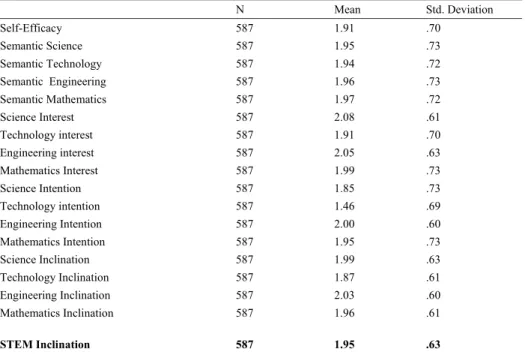
Table 1: Descriptive statistics of self-efficacy and career inclination scores of students with disabilities.
N Mean Std. Deviation Self-Efficacy 587 1.91 .70 Semantic Science 587 1.95 .73 Semantic Technology 587 1.94 .72 Semantic Engineering 587 1.96 .73 Semantic Mathematics 587 1.97 .72 Science Interest 587 2.08 .61 Technology interest 587 1.91 .70 Engineering interest 587 2.05 .63 Mathematics Interest 587 1.99 .73 Science Intention 587 1.85 .73 Technology intention 587 1.46 .69 Engineering Intention 587 2.00 .60 Mathematics Intention 587 1.95 .73 Science Inclination 587 1.99 .63 Technology Inclination 587 1.87 .61 Engineering Inclination 587 2.03 .60 Mathematics Inclination 587 1.96 .61 STEM Inclination 587 1.95 .63
Data in Table 1 show the descriptive statistics of self-efficacy and career inclination of students with disabilities. The descriptive statistics indicated
generally poor Maths and Science self-efficacy and poor inclination towards STEM careers among students with disabilities. Data in Table 1 show a low self-efficacy score (1.91±.70), as well as low semantic survey scores for science career (1.95±.73), Technology career (1.94±.72), Engineering career (1.96±.73) and Mathematics career (1.97±.72). Participants’ rating of their interests in STEM careers were also very poor for science career (2.08±.61), Technology career (1.91±.70), Engineering career (2.05±.63) and Mathematics career (1.99±.63). Also, participants’ rating of their intention to take up a science career (1.85±.73), Technology career (1.46±.69), Engineering career (2.00±.60) and Mathematics career (1.95±.73). Hence, total career inclinations for science career (1.99±.61), Technology career (1.87±.70), Engineering career (2.03±.73) and Mathematics career (1.96±.73) were low, giving a total STEM career inclination score of 1.95±.63.
Research Question 2: What is the relationship between mathematics/science self-efficacy and
STEM career inclination of students with disabilities?
Table 2: Pearson Correlation of self-efficacy and career inclination of students with disabilities
Model Variables 1 2 3 4 5 6 7 8 9 10 11 12 13 14 15 16 17 1 Self-Efficacy 1 2 Semantic Science .75** 1 3 Semantic Technology .67** .86**1 4 Semantic Engineering .74** .90**.86**1 5 Semantic Mathematics .71** .91**.79**.91** 1 6 Science Interest .59** .64**.57**.64** .60**1 7 Technology interest .99** .75**.67**.74** .71**.59**1 8 Engineering interest 72** .96**.83**.96** .88**.63**.72** 1 9 Mathematics Interest .75** .98**.86**.98** .90**.65**.75** .96** 1 10 Science Intention .73** .97**.84**.96** .89**.63**.73** .96** .96** 1 11 Technology intention .55** .73**.63**.73** .67**.54**.55** .71** .73** .72**1 12 Engineering Intention .59** .65**.59**.65** .60**.98**.59** .63** .65** .64**.55** 1 13 Mathematics Intention .75** .99**.86**.98** .91**.64**.75** .95** .98** .96**.74** .64** 1 14 Science Inclination .76** .96**.84**.96** .88**.81**.76** .94** .96** .96**.73** .81** .95** 1 15 Technology Inclination .85** .91**.89**.90** .84**.66**.85** .87** .90** .88**.84** .67** .91** .90** 1 16 Engineering Inclination .76** .96**.84**.96** .88**.80**.76** .95** .95** .95**.73** .81** .95** .99** .90**1 17 Mathematics Inclination .75** .98**.85**.98** .96**.64**.75** .95** .98** .96**.73**.651 ** .98** .95** .90**.95**1 STEM Inclination .80** .98**.88**.97** .91**.74**.80** .95** .97** .96**.77** .75** .97** .98** .94**.98**.98**
Strong positive correlations were revealed between the mathematics/ science self-efficacy score and all the three subscales scores that measured STEM career inclination of students with disabilities. Self-efficacy significantly and positively correlated with students’ semantic scores in science (r2= .76; p≤ .001), technology (r2= .67; p≤ .001), Engineering (r2= .74, p≤ .001) and
Mathematics (r2= .71; p≤ .001). This indicated that the higher the students’ maths and science
self-efficacy, the higher the likelihood of the students having STEM inclination. This implies that students with higher self-efficacy in maths and sciences are more likely to be inclined towards Science, Technology, Engineering and Mathematics careers than those with low self-efficacy maths and sciences
Considering the career interest, self-efficacy significantly and positively linked to students’ semantic scores in science (r2= .59; p≤ .001), technology (r2= .90; p≤ .001), Engineering (r2= .72;
p≤ .001) and Mathematics (r2= .75; p= .001). This indicated a high correlation between
mathematics/science self-efficacy and STEM career interests in students with disabilities. Career intentions in STEM fields correlated significantly with Science and Mathematics self-efficacy of the participants. Self-self-efficacy positively correlated with students’ career intentions in science (r2= .73, p≤ .001), technology (r2= .55; p≤ .001), Engineering (r2= .59; p≤ .001) and
Mathematics (r2= .75; p≤ .001).
Table 2 further shows that participants’ self-efficacy correlated significantly with participants’ career inclinations towards STEM. Self-efficacy positively correlated with students’ career inclination towards science (r2= .76, p≤ .001), technology (r2= .85; p= .001), Engineering
(r2= .76; p= .001) and Mathematics (r2= .74; p= .001). The total STEM inclination score was also
correlated significantly with Maths/Science self-efficacy (r2= .80; p≤ 001). This result also shows
that the level of maths and sciences self-efficacy explain students’ tendency to be inclined towards a career in STEM-related field.
Research Question 3: To what extent does mathematics self-efficacy predictive of STEM career inclination among students with disabilities?
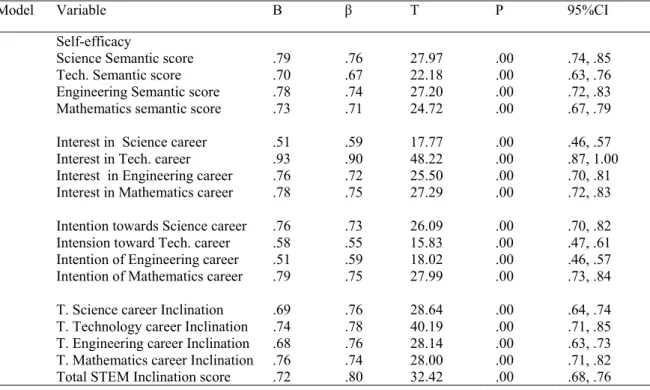
Table 1: Regression analysis showing the predictive validity of Maths and Science self-efficacy on STEM career inclination of students with disabilities.
Model Variable B β T P 95%CI
Self-efficacy
Science Semantic score .79 .76 27.97 .00 .74, .85 Tech. Semantic score .70 .67 22.18 .00 .63, .76 Engineering Semantic score .78 .74 27.20 .00 .72, .83 Mathematics semantic score .73 .71 24.72 .00 .67, .79 Interest in Science career .51 .59 17.77 .00 .46, .57 Interest in Tech. career .93 .90 48.22 .00 .87, 1.00 Interest in Engineering career .76 .72 25.50 .00 .70, .81 Interest in Mathematics career .78 .75 27.29 .00 .72, .83 Intention towards Science career .76 .73 26.09 .00 .70, .82 Intension toward Tech. career .58 .55 15.83 .00 .47, .61 Intention of Engineering career .51 .59 18.02 .00 .46, .57 Intention of Mathematics career .79 .75 27.99 .00 .73, .84 T. Science career Inclination .69 .76 28.64 .00 .64, .74 T. Technology career Inclination .74 .78 40.19 .00 .71, .85 T. Engineering career Inclination .68 .76 28.14 .00 .63, .73 T. Mathematics career Inclination .76 .74 28.00 .00 .71, .82 Total STEM Inclination score .72 .80 32.42 .00 .68, .76
Data in Table 3 show that self-efficacy significantly and positively predicted students’ semantic scores in science (B= .79, β= .76 , t=27.97 , p≤ .001), technology (B= .70, β= .67 , t=22.18, p≤ .001), Engineering (B= .78, β= .74 , t=27.20, p≤ .001) and Mathematics (B= .73, β= .71 , t= 24.72, p≤ .001). This indicated that how confident a student is about his/her capabilities in maths and sciences account for 76% of perception of science career, 67% of perception of technology, 74% of engineering perception and 71% of mathematics perception.
Considering the career interest, self-efficacy significantly and positively predicted students’ interest scores in science (B= .51, β= .59, t= 17.77, p= .001), technology (B= .93, β= .90 , t=48.22, p≤ .001), Engineering (B= .73, β= .72, t= 25.50, p= .001) and Mathematics (B= .79, β= .75 , t= 27.29, p≤ .001). This results show that maths and sciences self-efficacy explains 59% interest in science career, 90% interest technology career, 72% interest engineering careers and 75% interest in mathematics related careers.
Career intentions in STEM fields were significantly predictive of Science and Mathematics self-efficacy. Self-efficacy positively predicted students’ career intentions in science (B= .76, β= .73, t= 26.09, p≤ .001), technology (B= .58, β= .55 , t= 15.83, p= .001), Engineering (B= .51, β= .59, t= 18.02, p≤ .001) and Mathematics (B= .79, β= .75 , t= 27.29, p≤ .001). This results show that maths and sciences self-efficacy explicate 73% of students’ intention of science career, 55% technology career intention, 59% of intention towards engineering careers and 75% intention in mathematics related careers.
Table 3 further shows that participants’ career inclination scores were predictive of their self-efficacy in maths and science during secondary school. Self-efficacy positively predicted students’ career inclination towards science (B= .69, β= .76, t= 28.64, p≤ .001), technology (B= .74, β= .78 , t= 40.19, p≤ .001), Engineering (B= .68, β= .76, t= 28.14, p≤ .001) and Mathematics (B= .76, β= .74 , t= 28.00, p≤ .001). The total STEM inclination score was also predictive of Maths/Science self-efficacy (B= .72, β= .80 , t= 32.42, p≤ .001). This results indicated that maths and sciences self-efficacy explicate 72% of students’ inclination to enter a career in STEM –related field.
5. Discussion
Findings of the present study revealed a low self-efficacy and low inclination towards STEM careers among students with disabilities. This is astounding yet not unexpected given the limitations imposed on them by their disability [4], [18], and the negative perceptions of their abilities by the parents, teachers and the society at large [25], which often leave them vulnerable. Poor self-efficacy has been recorded among STEM students with disabilities [5], [25][32], [40]. Students with disabilities, apart from the incapacitation by their specific impairments, are often overwhelmed by their limitations, thereby believing that they “cannot” do well in some specific careers associated with STEM [15]. The feeling of “I cannot” (poor self-efficacy) tends to divert and control the career choices and inclination of the students [37], such that majority of them prefer to take careers in arts, humanities, and education if they must further their education to post-secondary levels [15]. Since previous studies support that self-efficacy is a product of subjective experiences [35], it is undoubtful to say their poor self-efficacy may not be due to the reality of their limitations, but a subjective feelings of inadequacies associated with negative orientation by the teachers, parents and the society [31], [32]. Also, the general beliefs and attitudes held by the society towards the disabled [31], [32], [25] could undermine their self-efficacy in STEM-related careers thereby reducing their inclination towards STEM.
The low inclination of students with disabilities revealed in this study is interesting and as well confirmatory of the state of the art in the study area and also across the globe as such students are found to be less likely to go into STEM careers than the non-disabled peers [38], 15] [28], [30], [31]. Further, research pieces of evidence indicated that the confidence gap accounts for differences in students' enrolments and inclination towards science, technology, engineering, and mathematics (STEM) classes and careers [37].
More specifically, findings of the study indicated that all the subscales of STEM career inclination (Semantics, career interest, career intention, and the total career inclination scores) were positively and significantly predictive of mathematics self-efficacy in students with disabilities. Being predictive of STEM semantic survey scores means that maths self-efficacy of students with disabilities determines how they perceive STEM careers and the associated emotional dispositions. This is in line with prior studies [44], [21], which found a link between mathematics self-efficacy and science phobia, anxiety, and interests. This also suggests that positive emotions associated with STEM could be an encouragement towards career choices in STEM and could be built through developing high self-efficacy in related subjects such as mathematics and sciences. Hence, if self-efficacy predicts STEM semantic survey scores of students with disabilities, it also influences their inclination towards STEM careers.
Huang, Zhang, and Hudson [44] found the same thing when they showed that mathematics self-efficacy mediated the relation between implicit theories of intelligence and mathematics and science career interest. Increasing pieces of research evidence also established a link between efficacy and interest in learning [33], [34]). The present study went further to show that self-efficacy is also positively linked to the career interests of students with disabilities.
The present study has also established that mathematics self-efficacy accounts for the intention to take a career in STEM. This result is revealed by a high positive relationship and the predictive power of science and mathematics self-efficacy on STEM career intention of students with disabilities. This indicates that as mathematics self-efficacy increases, the STEM career intentions also increase, and vice versa for a decrease in self-efficacy. The results of the study show that low mathematics and science self-efficacy accounts for the poor inclination of students with disabilities towards a STEM career. Another interesting finding of this study is that total inclination scores towards science, technology, engineering, and mathematics were also correlated with mathematics self-efficacy of students with disabilities. Given this relationship, it is clear that self-efficacy is among the factors responsible for the less likelihood of students with disabilities to take STEM careers. It is not necessarily that the students lack the physical ability to take such careers, but they lack the confidence that they can do well in those fields [33], [34].
A student who does not believe that he/she can carry out activities leading to success in an area would always see that area as “not for people like me”. Content-specific self-efficacy is very crucial for success in all areas of human endeavours. Self-efficacy is motivational and reinforcing, and translate to career interest, intention, and choice [35], which collectively form students career inclination at secondary schools. Apart from these, self-efficacy also modifies responses to failure and sustains persistence [35]. If this is implied, it is expected that self-efficacy can help students with disabilities to overcome the attitudinal limitations associated with being disabled, hence helping the SWDs to experience a quantum of success in mathematics, necessary for their improved self-efficacy. Such could make them understand that they could also excel in related fields thereby developing levels of interest in STEM-related activities, develop higher levels of positive perception/emotion, interest and intentions in STEM subjects[33], [34], [37] and increasing the probability of having a STEM major at post-secondary schools.
Figures must be numbered using Arabic numerals. Figure captions must be in 10 pt Regular font. Captions of a single line must be centered whereas multi-line captions must be justified (e.g. Fig. 1). Captions with figure numbers must be placed after their associated figures, as shown in Fig. 1.
6. Implications for Practitioners and Researchers
The findings may have implications for teachers and counselors, in career support for students with disabilities as well as the provision of important services for them. To increase STEM inclination among students with disabilities, there is a need to build on their mathematics self-efficacy at the secondary school level. Career counselors could use different intervention strategies to increase maths and science self-efficacy in students with disabilities. There is also a need for a better insight into other threats to STEM career inclinations of individuals with disabilities apart from self-efficacy. Science and mathematics teachers should encourage students with disabilities by helping them experience a quantum of success necessary for heightened self-efficacy in related subjects.
7. Conclusion
Based on the findings obtained in the research, it is concluded that there are poor self-efficacy and low STEM career inclination among students with disabilities. Positive significant relation exists between the mathematics self-efficacy and STEM career inclination of the participants. According to the results obtained, students with disabilities show a higher inclination towards STEM careers based on their level of self-efficacy. Correlation results are enough to find out cause and effect relations. Thus, self-efficacy is responsible for the career inclination of college students with disabilities.
CONFLICT OF INTEREST
The authors declare no existing or potential conflict of interest. Acknowledgments
We are grateful to Dr. Christian Ugwuanyi for analyzing data for this study. Our deep-seated gratitude to Dr. Chiedu Eseadi for guiding the study.
REFERENCES
1. Amoo, E.O., Adekola, P. O., and Olawole-Isaac, A. “Science, technology, engineering and mathematics: Where is the place of Demography? A Position Paper on Demography and STEM” International Journal of Mechanical Engineering and Technology (IJMET), 10.2 (2019): 187-197.
2. Marino, Matthew T., and Beecher, Constance C. “Conceptualizing RTI in 21st-century secondary science classrooms: Video games' potential to provide tiered support and progress monitoring for students with Learning Disabilities”. Learning Disability Quarterly, 33.4 (2010): 299-311.
3. Frey, C. B., and Osborne, M. A (2013). The future of unemployment: How susceptible are jobs to computerization. Retrieved on September 7, 2019, from http://www.oxfordmartin.ox.ac.uk/downloads/academic/The_Future_of_Employ ment.pdf.
4. Basham, J. D., Israel, M., and Maynard, K. “An ecological model of STEM education: Operationalizing STEM for all” Journal of Special Education Technology, 25.3(2010): 9-19
5. Jenson, R. J., Petri, A. N., Day, A. D., Truman, K. Z., and Duffy, K. “Perceptions of self-efficacy among STEM students with disabilities” Journal of Postsecondary Education and Disability, 24.4 (2011): 269-283.
6. Hwang, J., and Taylor, J. C. “Stemming on STEM: A STEM Education Framework for Students with Disabilities”. Journal of Science Education for Students with Disabilities, 19.1 (2016): 39-49.
7. Easton, Catherine. "Revisiting the law on website accessibility in the light of the UK’s Equality Act 2010 and the United Nations Convention on the Rights of Persons with Disabilities." International Journal of Law and Information Technology 20.1 (2011): 19-47. 8. Kim, E., and Aquino, K. C. “Disability as diversity in higher education: Policies and
9. Kuvalekar, K., Kamath, R., Ashok, L., Shetty, B., Mayya, S., and Chandrasekaran, V. “Quality of life among persons with physical disability in Udupi taluk: A cross-sectional study”. Journal of family medicine and primary care 4.1, (2015). 69. DOI: 10.4103/2249‐ 4863.152258
10.Levers, L. L. “Disability issues in a global context” In D.R. Maki and V.M. Tarvydas, The professional practice of rehabilitation counseling 165-190. New York, NY: Springer Publishing Company. 2015.
11.World Health Organization. “World report on disability”.(2011). Retrieved from http://www.who.int/disabilities/world_report/2011/ en/
12. Fell, E. V., Lukianova, N. A., and Kapilevich, L. V. Disability and Careers in Science, Technology, Engineering, and Mathematics. “Handbook of Research on Engineering Education in a Global Context” IGI GlobalFunk & Parker, 2018 pp. 533-543.
13.Funk, C., and Parker, K. “Women and men in STEM often at odds over workplace equity” (2018). Retrieved from https://www.pewsocialtrends.org/2018/01/09/women‐and‐men‐ in‐stem‐often‐at‐odds‐over‐workplace‐equity/
14.White, J. L. and Massiha, G. H. “Strategies to Increase Representation of Students with Disabilities in Science, Technology, Engineering and Mathematics (STEM). International Journal of Evaluation and Research in Education 4.3 (2015): 89-93.
15.Ebifa, S. E., Onuigbo, L. N., Onyechi, K. C., and Egenti, N. “Career Aspirations of Secondary School Students with Visual Impairment in Enugu State, Nigeria”. International Journal of Applied Engineering Research, 13. 21 (2018): 15090-15095.
16.Abah, J. A., Age, T. J., and Agada, G. I. “Determinants of mathematics-related career choice among senior secondary school students in Makurdi metropolis, Benue State, Nigeria”. International Journal of Social Sciences, Humanities and Education3.1 (2019). 17.Obura, C., & Ajowi, J. “Students’ perceptions of careers: The influence of academic
performance and self-efficacy in Kisumu Municipality” Modern Social Science Journal, 1.1 (2012): 56-93.
18.Eremie and Akarada “Career Aspirations of Visually Impaired Secondary School Students Rivers State”. International Journal of Innovative Psychology & Social Development 6. 2 (2018):18-32. www.seahipaj.org
19.Shin, S., Lee, J. K., and Ha, M. “Influence of career motivation on science learning in Korean high-school students” EURASIA Journal of Mathematics Science and Technology Education, 13.5 (2017): 1517-1538.
20.Wright, S. L., Jenkins-Guarnieri, M. A., and Murdock, J. L. “Career development among first-year college students: College self-efficacy, student persistence, and academic success” Journal of Career Development, 40.4 (2013): 292-310.
21.Oluwatimilehin, J. B., and JimohWale, O. Career Aspirations: An Investigation of Senior Secondary School Students Awareness of Contemporary High Profile Careers. European Scientific Journal 87 (2012).
22.Xiao, J. J., Newman, B. M., and Chu, B. S. “Career preparation of high school students: A multi-country study” Youth & Society 50.6 (2018): 818-840. doi.10.1177/0044118X16638690
23.Ogutu, J. P., Odera, P., and Maragia, S. N. Self-Efficacy as a Predictor of Career Decision Making among Secondary School Students in Busia County, Kenya. Journal of Education and Practice, 8.11 (2017): 20-29.
24.Dunn, Cari, Rabren, Karen S., Taylor, Stephanie L., and Dotson, Courtney K. “Assisting students with high-incidence disabilities to pursue careers in science, technology, engineering, and mathematics” Intervention in School and Clinic, 48. 1 (2012): 47-54. 25.Shattuck, Steinberg, Yu, Wei, Cooper, Newman, and Roux “Disability Identification and
Self-Efficacy among College Students on the Autism Spectrum” Autism Research and Treatment (2014). doi.10.1155/2014/924182
26.Izzo, M. V., Murray, A., Priest, S., and McArrell, B. “Using Student Learning Communities to Recruit STEM Students with Disabilities. Journal of Postsecondary Education and Disability, 24. 4 (2011): 301-316.
27. Martin, J. K., Stumbo, N. J., Martin, L. G., Collins, K. D., Hedrick, B. N., Nordstrom, D., and Peterson, M. “Recruitment of Students with Disabilities: Exploration of Science, Technology, Engineering, and Mathematics” Journal of Postsecondary Education and Disability 24.4 (2011) 285-299
28.The National Center for Science and Engineering Statistics (NCSES) today announced the release of 2017. Women, Minorities, and Persons with Disabilities in Science and Engineering (WMPD)
29.Thurston, L. P., Shuman, C., Middendorf, B. J., and Johnson, C. “Postsecondary STEM Education for Students with Disabilities: Lessons Learned from a Decade of NSF Funding” Journal of Postsecondary Education and Disability, 30.1 (2017) 49-60.
30.Mitra, S., Posara, A., & Vick, B. “Disability and poverty in developing countries: A snapshot from the World Health Survey” Social Protection and Labor Discussion Paper 1109 (2011).. Washington, D.C.: The World Bank
31. Gottfried, M. A., Bozick, R., Rose, E., and Moore, R. “Does career and technical education strengthen the STEM pipeline? Comparing students with and without disabilities”. Journal of Disability Policy Studies26. 4 (2016): 232-244.
32.Shifrer, D., Callahan, R. M., and Muller, C. “Equity or marginalization? The high school course-taking of students labeled with a learning disability” American Educational Research Journal, 50 (2013): 656–682.
33.Dou, R., Brewe, E., Potvin, G., Zwolak, J. P., and Hazari, Z. “Understanding the development of interest and self-efficacy in active-learning undergraduate physics courses” International Journal of Science Education, 40.13 (2018):1587-1605. DOI. 10.1080/09500693.2018.1488088
34.Isaac, V., Walters, L., & McLachlan, C. S. “Association between self-efficacy, career interest and rural career intent in Australian medical students with rural clinical school experience” BMJ Open, 5.12 (2015). e009574. doi: 10.1136/bmjopen‐2015‐009574 35.Bandura, A. “Self-efficacy: The exercise of control” Macmillan 1997.
36.Smith, C. J. “The Effects of Math Anxiety and Low Self-Efficacy on Students' Attitudes and Interest in STEM” Doctoral dissertation, University of Southern California 2016. 37. Lin L, Lee T and Snyder LA “Math Self-Efficacy and STEM Intentions: A Person-Centered
38.Bittinger, J. "STEM pipeline for students with disabilities: from high school to intentions to major in stem" Doctoral Dissertations. (2018): 1313. https://scholarworks.umass.edu/dissertations_2/1313
39.Alston, R. J., Bell, T. J., and Hampton, J. L. “Learning disability and career entry into the sciences: A critical analysis of attitudinal factors” Journal of Career Development, 28. 4 (2002): 263-275.
40.Sublett, C., and Plasman, J. S. “How Does Applied STEM Coursework Relate to Mathematics and Science Self-Efficacy Among High School Students? Evidence from a National Sample” Journal of Career and Technical Education, 32.1 (2018).
41.Charokopaki, K. A. “Working on Stories to Enhance Career Decision Making Self-Efficacy” International Journal of Psychological Studies, 11.3 (2019).
42. Patrick, L., Care, E., and Ainley, M. “The relationship between vocational interests, self-efficacy, and achievement in the prediction of educational pathways” Journal of Career Assessment 19.1 (2011):61-74. doi.org/10.1177/1069072710382615
43.Tyler-Wood, T., Knezek, G., and Christensen, R. “Instruments for assessing interest in STEM content and careers” Journal of Technology and Teacher Education 18.2 (2010): 345-368.
44.Huang, X., Zhang, J., and Hudson, L. “Impact of math self-efficacy, math anxiety, and growth mindset on math and science career interest for middle school students: the gender moderating effect”. European Journal of Psychology of Education 34.3 (2019) 621-640.