University of Twente
Positive Psychology and Technology (PPT)
Psychology
Bachelor’s thesis
The changeability of the life mindset and the
stress mindset - a three-armed randomized
controlled trial study
Author:
Pia Hülsmann
Studentnumber:
s1871439
First supervisor:
Dr. Marijke Schotanus-Dijkstra
Second supervisor: Prof. Dr. Ernst Bohlmeijer
Abstract
Background: There is some evidence that a mindset about intelligence for instance can be
changed and that viewing intelligence as malleable could have a positive influence on the individual’s health. Thus, in general, the nature of mindsets is an important topic in order to facilitate an individual’s health. However, there is to my best knowledge limited research with
regard to both the changeability of a life mindset as well as of a stress mindset.
Aim: Therefore, the present study was conducted to investigate whether individual’s mindsets
with regard to life and stress can be changed after being faced by manipulation texts about either the life mindset or the stress mindset.
Methods: A total of 155 participants (mean age = 34.43 years, 56.1% female, 43.2% male, 0.6%
made no specification) were recruited from the German society and randomly assigned to either the life mindset condition, the stress mindset condition or the control condition. The online
questionnaires were completed by the participants at baseline and one week later directly after receiving the particular manipulation text.
Results: Chi-square analysis revealed no significant effect of a change of the life mindset in
people of the life mindset condition after the manipulation compared to the people in the stress mindset condition and control condition. Further, no significant difference concerning the life
mindset change between the stress mindset condition and the control condition was found. In contrast, post-hoc ANCOVA analyses illustrate a significant effect of a change of the stress mindset in people of the stress mindset condition after the manipulation compared to individuals
in the life mindset condition and control condition. However, no significant difference was found between the life mindset condition and the control condition with regard to the change of the stress mindset.
compared to a stress mindset because results revealed that the stress mindset manipulation text had a significant influence on individual’s stress mindset. In contrast, the life mindset
manipulation text had no significant influence on people’s life mindset.
Conclusion: An individual’s stress mindset can be changed by means of a manipulative text about this specific mindset whereas it seems that an individual’s life mindset is much more
difficult to change. Further, no interchangeability effect was found because both manipulation texts, the stress mindset manipulation text as well as the life mindset manipulation text, had no
significant effect on the other mindset respectively.
Introduction
In general, individuals have different mindsets about specific things. A mindset can be defined as a mental composition which influences individual’s views and perspectives with regard to certain things, such as concerning stress and the life in general (Dweck, 2008).
Philosophers as well as psychologists believe that a mindset matters. This is due to the fact that in order to understand individual’s behaviours, one has to understand their views and how these
views are shaped (Van Tongeren, & Burnette, 2016). Around 1980, research found that mindsets could have a considerable impact concerning an individual’s thinking and behaviour
such as when individuals think that life is hard and arduous, it has an influence on people’s
thinking of what accounts for a good life. (Dweck, & Leggett, 1988; Norton, Anik, Aknin, & Dunn, 2011). According to Yeager and Dweck (2012), there are two types of mindsets: a growth mindset and a fixed mindset. A growth mindset signifies the perspective of an individual
that they have the ability to grow and be able to develop further. Therefore, they see the opportunity to change the circumstances and obstacles they encounter during their live time in
do not see the ability to change them in a way that they can learn something out of these
experiences in order to grow and to develop further (Yeager, & Dweck, 2012).
In general, several researches have shown that possessing and adopting a growth mindset
leads to greater achievement of individual’s goals through using one’s potentials, abilities and skills for the achievement process in comparison to individuals who possess the fixed mindset and therefore, do not use their resources to that extent (Howell, Passmore, & Holder, 2016).
Through the connection of possessing a growth mindset and therefore, having an open and positive attitude, an individual applies the activities which lead to the success of one’s goals
more often. This application process in turn facilitates the recognition process of which activities are useful and which not in order to achieve one’s goals. In addition to that, individuals
also recognize that their well-being increases even if they do not notice it consciously. This unconscious recognition in turn leads also to a heightened application in the future for the achievement of one’s goals through the unconscious forces. Thus, this whole process leads to
feeling good as well as being able to adapt in order to meet the demands one encounters during life time (Howell et al., 2016). With regard to this knowledge, one general question arises: can
a mindset be changed from a fixed into a growth one in order to improve and support an individual’s functioning and therefore an individual’s health? There are different types of
mindsets and the focus of this current study is on the life mindset as well as on the stress mindset
which will be discussed in the following.
Life mindset
In general, a life mindset can be defined as people’s views of their lives; how people
appraise their lives with regard to all aspects which affect their lives as for instance their
Norton et al. (2011) conducted a study with regard to people’s life philosophies; how
do people view their lives? The authors distinguished between Hobbes’s view that life is short and hard and Hobbes’s anti-view that life is long and easy. In order to get a notion of people’s
life mindsets, participants had to answer two questions in their study. First, ‘Is life short, or long?’ and second, ‘Is life easy, or hard?’. The results showed that most individuals viewed
their lives as ‘short and hard’ compared to the ‘long and easy’ philosophy (Norton et al., 2011).
In the study by Norton et al. (2011), it was further studied that individuals who view their lives as ‘short and hard’ are less happy compared to individuals who feel that their lives are ‘long
and easy’. In addition, individuals who appraise their lives as short and hard are less civic engaged like for instance charitable donations, volunteering and voting compared to individuals
who possess Hobbes’s anti-view that life is long and easy. Furthermore, individuals who experience the short-hard philosophy think about themselves that they will experience more worse and less good things in the future compared to people who possess the long-easy
perspective (Norton et al., 2011).
Due to the results by Norton et al. (2011) described above, one could infer that the
long-easy philosophy is reasonably the best comparison to a growth life mindset because both lead to better health outcomes in comparison to for instance the short-hard philosophy. Therefore, possessing a growth mindset concerning one’s life, thus the long-easy philosophy, is associated
with greater well-being (Zeng, Hou, & Peng, 2016; Howell et al., 2016; Passmore, Howell, & Holder, 2018; Van Tongeren, & Burnette, 2016), with increased feelings of happiness and with enhanced satisfaction concerning one’s relationships (Van Tongeren, & Burnette, 2016). Thus,
Stress mindset
Possessing a growth mindset of life is not the only beneficial influencing factor on one’s mental health. Instead viewing stress as positive could also have a positive influence on one’s
health (Crum, Salovey, & Achor, 2013). However, according to Blythe (1973), stress can be specified as a ‘growing plague’ and according to Wallis, Thompson and Galvin (1983), stress
can be pictured as an ‘epidemic’. Thus, stress is often defined and valued in a negative manner.
This could be due to the fact that chronic or severe stress is associated with six leading causes of death: it is known that stress could leads to heart diseases, accidents, cancer, liver diseases,
lung ailments and suicide (Schneiderman, Ironson, & Siegel, 2005). Therefore, stress can be defined as an imbalance between the demands one encounters during life time and the resources
of an individual (Heikkilä, Mattila, & Ainasoja, 2018). In addition, stress is also associated with absenteeism from work, with a loss of one’s productivity and with an increase in medical health
care. A decrease in one’s cognitive capacities, depression and other mental illnesses are further
consequences of the experience of stress (Schwabe, & Wolf, 2010).
However, even though most people view stress as a negative influencer, one can distinguish
between a growth and a fixed stress mindset: the is-enhancing mindset versus the stress-is-debilitating mindset (Crum et al., 2013). When individuals possess the stress-is-enhancing view, they value stress situations and outcomes in terms of learning something out of these
stress experiences and therefore growing further (Crum et al., 2013; Crum, & Lyddy, 2014). Crum et al. (2013) investigated inter alia the effects and the changeability of stress mindsets. In the first study, they investigated using a sample of 388 participants to what extent individuals
believe that stress is enhancing or debilitating and which effects these specific stress mindset views have. In the second study the changeability of participants stress mindsets were
nature of stress and the control condition did not receive any material to watch or to read.
Results of these studies revealed that one’s stress mindset has an impact on one’s health, performances and well-being depending on the mindset one holds. This means experiencing
chronic or severe stress or possessing the stress-is-debilitating view has a negative influence on an individual’s health whereas positive views of stress have a positive influence on one’s health
and on one’s performances. Further, after watching either the videos about stress-is-enhancing
or stress-is-debilitating, participants changed their stress mindset dependent on the manipulated direction of the videos. Additionally, individuals possessing the stress-is-enhancing view
exhibit more positive emotions during a stressful situation (Crum, Akinola, Martin, & Fath, 2017) and are less subject to suffer from depression after a stressful life event compared to
individuals who believe that stress is debilitating (Jiang, Zhang, Ming, Huang, & Lin, 2019). The stress-is-enhancing mindset is comparable to eustress. The term ‘eustress’ is used when individuals are able to anticipate a specific situation or an experience. This is useful for
the adaptation if there exists adversity between the individual’s own conceptions and the demands one encounters during life time (Jiang et al., 2019). Considering this from an
evolutionary perspective, adaptation is important in order to survive by meeting the demands one encounters. Thus, in this case, if an individual anticipated and performed correctly, the stress situation could be beneficial. This is due to a release of hormones which enhances an
individual’s cognitive capacity (Cahill, Gorski, & Le, 2003). Additionally, believing stress as positive and beneficial can boost an individual’s level of resilience, enhances the anticipatory ability and therefore increases the awareness of specific situations (Park, & Helgeson, 2006).
In contrast, chronic or severe stress or when people view stress as debilitating, they believe that stress has a negative impact on their performances, their health and their well-being
consequences with regard to an individual’s well-being depending on the mindset one holds
(Heikkilä et al., 2018).
Changeability of life mindset and stress mindset
To return to the general question mentioned in the beginning, whether an individual’s
mindset can be changed, one can conclude that on the basis of the study by Crum et al. (2013),
one can expect that a mindset change is possible even though research revealed for a long time, that possessing an implicit theory of ability is a static construct (Chen, & Pajares, 2010). This
expectation is drawn because there are several more studies showing that a mindset change is possible: According to Dweck (2012), an individual’s mindset can be manipulated and changed
through learning. For instance the study by Aronson, Fried, & Good (2001) revealed that individuals changed their mindset with regard to intelligence after receiving three sessions where they were taught about the malleability of intelligence. Further, students who were taught
that their intellectual abilities are not stable but flexible and growing traits, showed higher achievements during challenging school situations and higher rates of attendance in difficult
math courses compared to individuals who were taught that their intellectual abilities are fixed and stable over time (Yeager, & Dweck, 2012). Therefore, one might expect that a mindset can be changed through different interventions.
Present study
To date, there is limited research concerning the life mindset, especially with regard to the
changeability of the life mindset. Therefore, one of the main aims of this study is to overcome this gap by investigating whether individuals will change significantly more often their life
effects of possessing a stress-is-enhancing view and compared to the control condition who will
get information independent from this study topic. Further, to my knowledge it is unknown whether different mindsets have an influence on each other. Thus, it is questionable whether a
change in one mindset also elicits a change in another mindset. Do individuals who receive information concerning the stress mindset also change their life mindsets significantly more often compared to the control condition?
It is first hypothesized that individuals who will receive information concerning the life mindset will change their life views significantly more often into the long-easy philosophy
compared to the other two groups. Secondly, it is expected that individuals who receive information concerning the stress mindset will also change their life mindsets significantly
more often into the long-easy philosophy compared to the control condition.
With regard to the stress mindset, there is to my knowledge also limited research concerning which kind of intervention is necessary in order to trigger a change. In Crum’s et al. (2013)
study, they used video clips as manipulation methods but therefore, the question arises whether informative texts also trigger a change in one’s stress mindset. Due to the fact that it is unknown
whether being taught by videos or by informative texts has quite the same effect, the hypothesis can only be established based on my own expectation. However, due to the fact that there are only a few studies which investigated the changeability of mindsets using different
manipulations, I expect that informative manipulation texts have quite the same effect as videos. Therefore, it is first hypothesized that people in the stress mindset condition will change their stress mindset significantly more often into the stress-is-enhancing view compared to people in
the life mindset condition and the control condition. Secondly, it is hypothesized that people in the life mindset condition will change their stress mindset into the stress-is-enhancing view
Method Design
The design of the current study is a three-armed randomized controlled trial
between-group experiment with an allocation ratio of 1:1:1. Participants were randomly assigned to either the life mindset condition, the stress mindset condition or to the control group. Online questionnaires were received at baseline and directly after the intervention (one week after
baseline) in April 2019. The study was approved by the Ethics Committee BMS of the University of Twente. Before participants took part in this study, they gave their informed
consent.
Participants
The participants were selected through convenience sampling. In March 2019, each of the eight researchers recruited at least 20 participants via personal contact. The inclusion criteria
were to be at least 18 years of age, to understand and to speak German sufficiently and to be willing to participate in this study for a time span of three weeks. For the recruitment of
participants, the researchers tried to recruit participants from different areas of life such as individuals from different age groups, both males as well as females, people from varied educational backgrounds and people with diverse employment status.
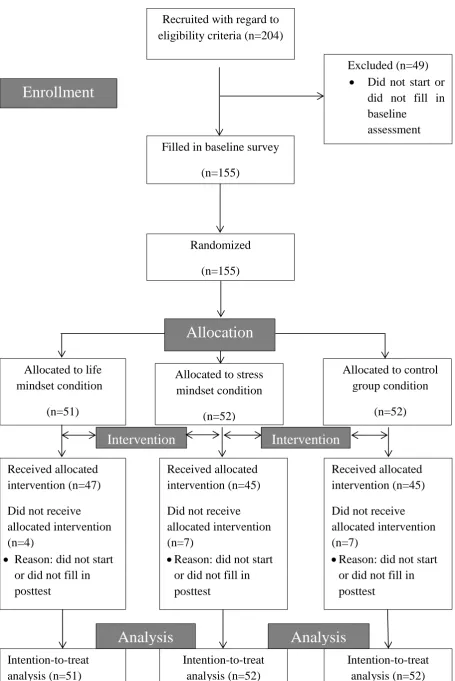
In total, 155 out of the 204 recruited individuals completed the baseline questionnaire
(Mage=34.43, SDage=16.044; 56.1% female; 43.2% male; 0.6% made no specification).
However, the dropout rate was 11.6% due to the fact that 18 participants did not finish the
Recruited with regard to eligibility criteria (n=204)
Filled in baseline survey (n=155)
Excluded (n=49)
Did not start or did not fill in baseline
assessment
Randomized (n=155)
Allocation
Allocated to life mindset condition
(n=51)
Allocated to stress mindset condition
(n=52)
Allocated to control group condition
(n=52)
Received allocated intervention (n=47) Did not receive allocated intervention (n=4)
Reason: did not start
or did not fill in posttest
(n=47)
Received allocated intervention (n=45) Did not receive allocated intervention (n=7)
Reason: did not start or did not fill in posttest
Received allocated intervention (n=45) Did not receive allocated intervention (n=7)
Reason: did not start or did not fill in posttest
Intervention
Intervention
[image:11.595.72.528.64.746.2]Intention-to-treat analysis (n=51) Intention-to-treat analysis (n=52) Intention-to-treat analysis (n=52)
Fig. 1. Flow-chart of participants in the RCT mindset study
Enrollment
Procedure
Participants from German nationality were recruited. Therefore, all relevant questionnaires were in German. After personally inviting potential participants through personal contact or
social media, participants received an invitation to the online informed consent procedure with the use of Qualtrics. If they agreed via the informed consent to take part in the online study, they were automatically redirected to the baseline questionnaire survey on Qualtrics. After the
participants filled in the baseline survey, they were randomly allocated to one of the three possible conditions by the supervisor Dr. Marijke Schotanus-Dijkstra using random numbers
from randomizer.org. After randomization and one week after filling in the baseline questionnaire the first time, each group received a text to read. Directly after reading and
internalizing the information dependent on the conditions the participants are in, they were asked to complete the posttest assessment.
To minimize the drop-out rate, the participants received a reminder email two days before
the deadline and at the day of the deadline of the particular assessment round.
Conditions
The different texts participants got within each condition for the intervention were written by some of the researchers and were also proofread by all the other researchers in order
to ensure that all texts are as equal as possible in terms of length and informational structure. Participants received the instructions to read the following text thoroughly and it was emphasized that there are no right or wrong answers with regard to the questions which
followed after reading the text.
easy have better health outcomes and that they are, in general, happier compared to people who
view their life as short and difficult (see Appendix A). The information of the text is derived from the study findings by Norton et al. (2011).
Stress mindset condition. Participants of the stress mindset condition received a text about the fact that viewing stress as positive could have beneficial outcomes in terms of one’s personal growth, performances and one’s health (Appendix B). The information of the text is
derived from the study findings by Crum et al. (2013).
Control condition. The control group received information concerning ‘The Big Five’.
They were informed that the big five do not only include the big five animals in Africa but that psychologists refer to this term with regard to the five main personality traits. These are: ‘openness to experience’, ‘conscientiousness’, ‘extraversion’, ‘agreeableness’, and ‘neuroticism’ (see Appendix C). This topic was chosen as it is likely to be informative for lay
persons, but unlikely to change any specific mindset.
Materials
Life mindset. For assessing which life mindset each participant has, two questions were asked. First, ‘Is life short, or long?’ and second, ‘Is life easy, or hard?’ (Norton et al., 2011).
The answer categories were 0 and 1 with regard to each question respectively. 0 was given in
the first answer if the participant chose the answer that life is ‘short’ whereas a 1 was given if the participant specified that life is ‘long’. The same was done with regard to the second
question. Thus, if the participant indicated that life is ‘hard’, a 0 was given. In contrast, a 1 was noted in case of the answer option ‘easy’. To integrate both questions and to sum up the results,
a 0 was noted concerning both questions if the participant indicated that life is short-hard and/or
participant had a 0 at baseline and a 0 at post-intervention, a 0 was noted whereas in contrast to
that a 1 was given in case of 1 at baseline and 1 at post-intervention and in case of 0 at baseline and 1 at post-intervention. Thus, a 0 indicated that the participant possess one of the pessimistic
life philosophies (short-hard; short-easy; long-hard) whereas a 1 meant that the participant had the long-easy philosophy both assessment time points or that the life philosophy changed from one of the pessimistic life philosophies into the long-easy one from pre-to posttest.
Stress mindset. The Stress Mindset Measure (SMM; Crum et al., 2013) is a 8-item scale which measures an individual’s mindset with regard to how one perceives stress. Thus, the
measure assessed whether an individual has the view that enhancing or that stress-is-debilitating. An example item of this scale is ‘Experiencing stress facilitates my learning and growth’. Participants had to answer each item on a 5-point Likert scale (ranging from
0=’strongly disagree’ to 4=’strongly agree’). After the four negative items (item 1, 3, 5, 7) are reversed, the mean of all eight items was calculated by summing all total scores of the eight
items and divide them by eight, a score from 0 to 4 appears, while higher scores indicate a greater stress-is enhancing view. The internal consistency of this questionnaire is high: Cronbach’s α in a study by Crum et al., (2013) was .86, whereas Cronbach’s α in the present
study was .87 at baseline.
Statistical analyses
All data was handled confidentially and the data were only be used for the necessary analyses by the researcher. All analyses were conducted using SPSS version 24 and 2-tailed
tests with a significance level of p < 0.05. The results were presented according to the Consolidated Standards of Reporting Trails (CONSORT) for randomized controlled trials. To
value analyses with the expectation-maximization method was conducted (11.6%; Little’s
MCAR test: χ2 (18) = 0.000, p = <.001).
Descriptive statistics of participant’s characteristics were calculated using their data at
baseline. The baseline characteristics and outcome measures at baseline between groups, and between drop-outs and completers were analyzed using Pearson χ2–tests for categorical outcomes, independent samples t-test and one-way analysis of variance (ANOVA) for
continuous outcomes for the comparison of two and three groups respectively. To investigate whether there is an interaction between the condition and the drop-outs, one-way analysis of
variance (ANOVA) was used. Drop-outs were defined as no participation in the post-test and/or having incomplete data at post-test.
Cohen’s d between group effect sizes at post-intervention were calculated by assessing
and subtracting the mean posttest score from each experimental group from the mean posttest score of the control group divided by the pooled standard deviation. The 95% confidence intervals (CI’s) were also computed. The following formula was used for this procedure:
For the interpretation of Cohen’s d, effect sizes up to .49 were considered as small,
whereas effect sizes from .50 to .79 were evaluated as moderate and between .80 and 1.29 or larger are interreted as large. Effect sizes above 1.30 were considered as very large.
In order to investigate whether there are significant changes with regard to individual’s
life mindset (from a short-hard and/or short-easy and/or long-hard philosophy (0) to an easy-long life philosophy (1)) and/or stress mindset (from a debilitating view to a
stress-is-enhancing view on a continuous scale) after the manipulation dependent on the three different conditions, Pearson χ2–tests and analyses of covariance (ANCOVA) at post-test with the baseline scores of stress mindset as covariate were conducted respectively. The same analyses
respectively. Thus whether the life mindset manipulation text had an influence on the stress
mindset of people who received the life mindset text (life mindset condition vs. control condition) and whether the stress mindset manipulation text had an influence on the life mindset
of people who received the stress mindset text (stress mindset condition vs. control condition).
Results Baseline characteristics
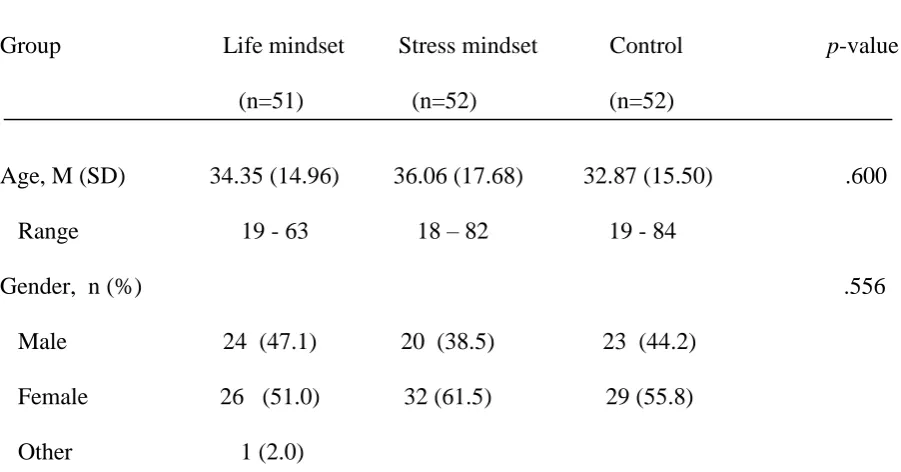
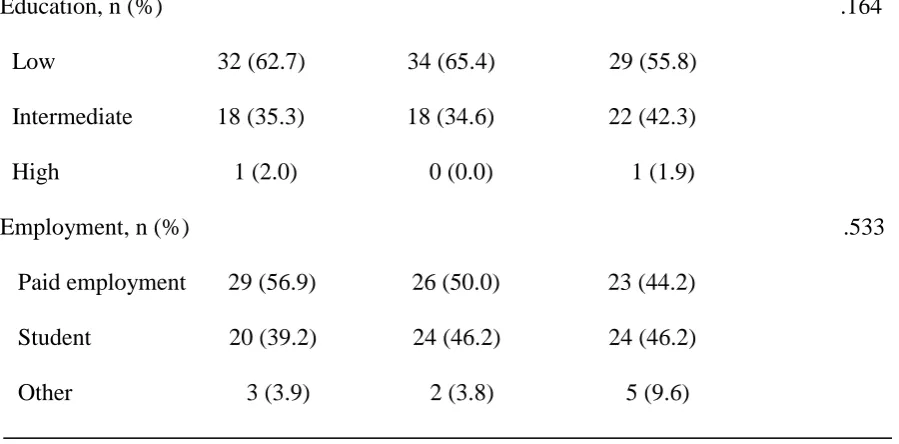
Table 1 shows the baseline characteristics of the three conditions. All three conditions
are composed to a greater extent of females. However, no significant differences between the three groups were found with regard to the age, gender, education and employment of the
[image:16.595.71.522.497.733.2]participants (p = .600; p = .556; p = .164; p = .533 respectively).
Table 1. Baselinecharacteristics of participants of the life mindset group, stress mindset group, control group
Group Life mindset Stress mindset Control p-value (n=51) (n=52) (n=52)
Age, M (SD) 34.35 (14.96) 36.06 (17.68) 32.87 (15.50) .600 Range 19 - 63 18 – 82 19 - 84
Gender, n (%) .556 Male 24 (47.1) 20 (38.5) 23 (44.2)
Female 26 (51.0) 32 (61.5) 29 (55.8)
Education, n (%) .164
Low 32 (62.7) 34 (65.4) 29 (55.8) Intermediate 18 (35.3) 18 (34.6) 22 (42.3)
High 1 (2.0) 0 (0.0) 1 (1.9)
Employment, n (%) .533 Paid employment 29 (56.9) 26 (50.0) 23 (44.2)
Student 20 (39.2) 24 (46.2) 24 (46.2) Other 3 (3.9) 2 (3.8) 5 (9.6)
Drop-out
Altogether, there were 18 participants who dropped out from the study (life mindset = 4, stress mindset = 7, control = 7). Although the drop-out rate was higher in the stress mindset
condition and in the control condition compared to the life mindset condition, the difference was not significant (p = .591). There were also no significant differences between drop-out and
completers regarding demographic characteristics and outcome measures at baseline, except for gender. Females completed the posttest survey significantly more often than men (Χ2(2) = 8.23,
p = .016).
[image:17.595.71.521.75.297.2]Effects of life mindset manipulations on people’s life mindset and mindset interchangeability
Table 2 represents the frequencies and the percentages of the three different groups with regard to the life mindset philosophy. The first aim was to identify whether people in the life
from one of the pessimistic life philosophies (from a short-hard and/or short-easy and/or
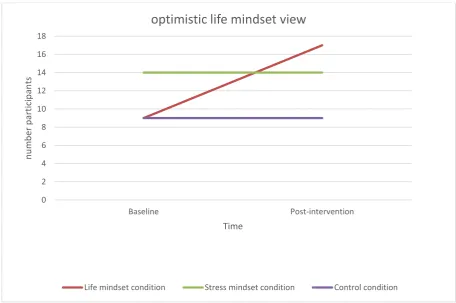
long-hard philosophy) to the long-easy life philosophy from pre-to posttest whereas no one of the other two conditions changed their life mindset into the long-easy philosophy (Figure 2).
However, the Chi-squared test revealed that there was no significant difference between the three groups on the change to a life perceived as long and easy philosophy (Χ2(2) = 3.51, p = .173).
The second aim was to test whether the stress mindset manipulation had a significantly greater influence on the life mindset of people in the stress mindset condition compared to the
control manipulation. However, the result regarding the first hypothesis led also to the rejection of the second hypothesis that the stress mindset manipulation leads to significant more long and
[image:18.595.69.526.427.730.2]easy life philosophies in people in the stress mindset condition at post-intervention compared to the individuals who received the control manipulation. This was also proved by the Chi-squared analysis (Χ2(1) = 1.40, p = .237).
Fig. 2. Number of participants with the long-easy philosophy per group at each time point
0 2 4 6 8 10 12 14 16 18 Baseline Post-intervention n u m b er p ar ticip an ts Time
optimistic life mindset view
Effects of stress mindset manipulation on people’s stress mindset and mindset interchangeability
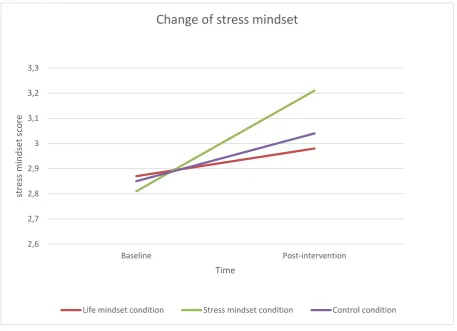
Table 2 represents means, standard deviations of the outcome measures of the three
conditions at baseline and at post-intervention. The third aim of this study was to investigate whether individuals in the stress mindset condition changed their stress mindset significantly more often from a stress-is-debilitating view to stress-is-enhancing view compared to the life
mindset condition and the control condition. ANCOVA analysis concerning the stress mindset showed that there were statistically significant differences on the level of stress mindset at
post-treatment between the three groups (F(2,151) = 4.5, p = .012). Results revealed that participants in the stress mindset condition scored significantly higher on stress mindset at post-intervention
compared to the control condition (p = .029;d = .26 [-.65-.13]) and life mindset condition (p = .008; d = .32 [-.07-.71]), indicating that the stress mindset manipulation lead to significant more stress-is-enhancing views compared to the life mindset manipulation and the control
manipulation. However, there was no significant difference between the life mindset condition and the control condition concerning the stress mindset view (p = .582; d = .09 [-.30-.48]),
Table 2. The number and percentages of holding a long-easy philosophy and means and standard deviations of stress mindset per condition.
Baseline Post-treatment p-value Long-easy life philosophy, n (%) .173
Life mindset 9 (17.6) 17 (33.3)
Stress mindset 14 (26.9) 14 (26.9) Control 9 (17.3) 9 (17.3)
Stress mindset, M (SD) .012*
Life mindset 2.87 (.81) 2.98 (.72)
Stress mindset 2.81 (.72) 3.21 (.70)
Fig. 3. Stress mindset score per group at each time point
Discussion
The main aim of this study was to investigate whether individuals are able to change their mindsets about life into a long-easy philosophy and/or their stress mindset into a stress-is-enhancing view compared to the control condition after reading either an informative text about
the life mindset or the stress mindset.
Findings with regard to the life mindset revealed that there were no significant group
differences concerning the changeability of the life mindset. Thus, individuals of the life mindset condition did not change their life mindset view significantly more often from one of the more pessimistic views into the long-easy philosophy in comparison to the stress mindset
condition and the control condition. One possible explanation for this finding might be that the manipulation text was not impressive enough to change people’s mindsets directly. This might
2,6 2,7 2,8 2,9 3 3,1 3,2 3,3
Baseline Post-intervention
stres
s
m
in
d
se
t
score
Time
Change of stress mindset
be because Crum et al. (2013) used video clips for changing people’s stress mindsets. Therefore,
it could be that a video would be more convincing than a text. Another possible explanation could be that the text was not impressive enough in general. Thus, maybe a more convincing
text is needed in order to change the life mindsets. A third possible explanation might be that a change in life mindset takes more time which would indicate that measuring the life mindset philosophies directly after reading the manipulation text might not give enough information
about the changeability. Thus, this would indicate that assessing the life mindset after a few days would lead to different results. However, there is limited research with regard to the life
mindset of individuals and to my knowledge there is no comparable study who investigated the effect of an intervention with regard to the changeability of the life mindset. Thus, it is needed
to investigate the changeability of the life mindset and the possible reasons concerning this finding further in the future.
Findings with regard to the stress mindset of individuals showed that individuals of the
stress mindset condition had a significantly higher stress-is-enhancing view at post-intervention compared to participants in the life mindset and control condition, whereas there was no
significant difference between the life mindset condition and the control condition. This finding indicates that only reading a text about the stress mindset was effective for changing the stress mindset. In contrast, reading a text about the enhancing nature of the long-easy life view does not have an influence on an individual’s stress mindset. Thus, the mindsets did not have an
influence on each other. This result of the changeability of the stress mindset is in line with the study by Crum et al. (2013) who investigated whether individuals change their stress mindset
after viewing either three video clips about the enhancing nature of stress or about the debilitating nature of stress over a period of one week. Results revealed that participants who
their stress view in that direction. Due to the fact that to my knowledge, there are no more
comparable studies about the stress mindset, results of other studies which investigated quite the same effect using other constructs will be explained further and compared with results of
this study. There is for instance one study which investigated the effect of confronting participants with information concerning an intelligence mindset. They reported one can alter participant’s mindset into the intelligence-is-malleable mindset by facing them with some facts
about the malleability over an eight week period (Chiu, Hong, & Dweck, 1997). Further, in another study researchers tested whether participants changed their beliefs after reading an
article about the incremental nature of intelligence or about the entity nature of intelligence. The results were the same as of the present study (Zhao, Wichman, & Frishberg, 2019).
Participants who read the incremental article had higher incremental belief scores compared to participants who read the article about the entity theory of intelligence. This indicates that individuals who were faced with information regarding the beneficial and growth nature of
intelligence had higher growth beliefs about intelligence compared to individuals who received information concerning the fixed nature of intelligence.
Due to the fact that results of the studies described above and results of the current study concerning the stress mindset found quite the same, namely that an individual’s stress mindset can be changed, it can be concluded that facing individuals with facts by a text or an article
about an intelligence mindset or about the stress mindset leads to a change in individual’s mindsets. Taken together, it seems that the manipulation text with regard to the stress mindset was impressive enough in order to elicit a change in the mindset of the individuals of the stress
mindset condition. However, more research is needed to examine whether this change is permanent and integrated in everyday life.
mindset and why not with regard to the life mindset, especially because the researchers tried to
structure the manipulation texts as similar as possible. Comparing the results with regard to the life mindset and regarding the stress mindset and trying to find explanations for these different
results, some further possible explanations result from the contrasting juxtaposition. Thus, one further possible explanation for not finding significant differences with regard to the change in life mindset would be that the life mindset is such an extensive construct and an umbrella of
different life domains compared to the stress mindset that is inter alia one domain of life. Consequently, individuals might be more willing to change mindsets such as the stress mindset
which is not that extensive as the life mindset is. There is one example which illustrates this point. Norton et al. (2011) reported that individuals who possess the short-hard life view are
less happier in general, are less civic engaged and believe that they will experience several bad things in the future compared to individuals who think that life is long and easy. Thus, the life view of an individual has an influence on several different areas of an individual’s life which
could make a change of one’s view more difficult.
Further, with regard to the results of the interchangeability of mindsets, there were no
indications of interchangeability effects. Thus, the manipulation text of the life mindset did not have a significant influence on the stress mindset and the stress mindset manipulation text also did not have a significant effect on the changeability of the life mindset. To my best knowledge,
there are no other comparable studies which investigated the interchangeability of manipulations concerning different mindsets. However, on the basis of the results of this study, it seems that first, only one manipulation text is not enough for the interchangeability of
mindsets. Therefore, it is questionable if there will be an interchangeability effect when one uses more manipulation texts the next time. Second, it could also be the case that texts are not
research which investigated this interchangeability of mindsets, it is unknown for now, whether
the kind of manipulation had an influence on the results and whether other manipulations would find different results.
Strength and limitations
The present study has several strengths. First, due to following CONSORT guidelines
throughout the study process, the study quality was increased and the occurrence of bias was minimized. Thus, participants were randomly allocated to one of the three possible conditions
by a researcher who was not directly involved in the recruitment process in order to prevent allocation bias. Further, the intention-to-treat analysis was conducted for the imputation of all
missing data of the post-intervention. Second, the personally recruitment process also allowed the researcher to recruit participants from different age groups, education classes and to recruit females as well as males. This diversity of participant’s demographics has a positive influence
on the generalizability and representativeness of the results for the German society. However, they are not generalizable and applicable to people from other countries since different nations
and cultures have different norms and values which probably has an influence on the results. Third, all participants were recruited personally, which implies the fact that the researchers were able to make an effort to minimize the drop-out rate as much as possible by contacting
their personally recruited participants and reminding them to fill in the questionnaires. This personal contacting method has probably another effect compared to a reminder email. One study revealed that inter alia personal contact has a positive influence on the communication
between general practitioners and community nurses because it strengthens trust between both parties (Nieuwboer et al., 2018).
the impact and the interpretation of the manipulation texts were unknown before the conduction
of this study. Second, the stress mindset measure (SMM) was not available in German. Therefore, the researchers translated the questionnaire items into German and used them without testing the psychometric properties beforehand in a pilot study. However, Cronbach’s α in this study was high (α = .87), indicating that the scale reliability is high which means that
the scale items of this measure are closely related to each other. Third, this study did not take
into account long-term effects of the intervention. Therefore, the researchers are not able to assess the impact of the intervention in the long run. Fourth, due to the self-recruitment of
participants by the researchers, most of the participants were probably motivated to take part in the present study both times which might have resulted in low drop-out rates but the
intervention might have different effects on individuals who are not motivated. Fifth, the assessments were not conducted in a standardized environment. This could have an influence on the scores if the individuals were distracted in their environment during filling in the
questionnaires. Therefore, researchers are not aware about possible confounding variables. Sixth, another consequence related to the fifth limitation is that the researchers could not be one
hundred percent sure that all participants really read the manipulation texts thoroughly. Although there was a manipulation check it is still unclear how well the manipulation texts were read. There might have been some individuals who only scanned them or did not read
them at all, but who were nonetheless included in the analyses which could falsify the results in some way.
Future research and practical implications
A recommendation for future research is to investigate whether a more extensive text
regard to the extent of change by using different manipulations. Thus, comparing manipulations
using texts, videos and teaching sessions and assessing whether the results differ in what way and to what extent. Further, it is interesting to investigate, whether there are interchangeability
effects using more extensive texts, videos or teaching sessions as manipulations due to a greater impression of the manipulation methods.
An individual’s mindset can be changed by facing them with information with regard to
either incremental theory information or entity information even though the life mindset change was not significant. The findings are relevant for the general public since everyone can benefit from the beneficial effects of possessing a growth mindset with regard to one’s life or one’s
stress view. Therefore, especially psychologists should be educated about mindsets in order to
explain this knowledge further to their clients and apply it to those who possess a fixed mindset which has a negative impact on their mental health.
Conclusion
In conclusion, people’s stress mindset can be changed by an informative text about the
Appendix A
Information regarding life mindset for the life mindset condition group
Did you know that your perspective of life influences your health and behavior? How do you
perceive life? Do you think that life is short or long? And do you think that life is easy or difficult?
Recent scientific studies have shown that most people believe that life is short and difficult. However, those people who believe that life is long and easy have better health outcomes. In
general, they do not only possess a higher level of well-being, they also feel more happy, donate more money to charity, do more often volunteer work and are more satisfied with their relationships compared to the individuals who are holding another view of life (namely, that
life is long and difficult, short and difficult or short and easy). Also, individuals who believe that life is long and easy think that they will experience less worse and more good things to
happen in the future compared to individuals who possess the short and difficult view of life.
Appendix B
The beneficial nature of stress
Did you know that stress is beneficial for your health and personal growth? Although stress is being portrayed in a negative way in the media and by the people around us, there is also a positive side of experiencing stress. For example, people who believe that stress is positive have
higher energy levels, show better workplace performance, are more satisfied with their life in general and have fewer symptoms of depression and anxiety. How do you interpret a stressful
situation? Do you find stress negative or positive?
Recent scientific studies have shown that experiencing stress puts the body and the brain in an
optimal condition to function in order to fulfill the demands and tasks asked for. Therefore, the attention is focused on the demands and this will boost memory and performance. Stress is an
essential ingredient of being able to fulfill everyday tasks as well as more difficult challenges. Thus, individuals who perceive stress as a necessary and positive aspect of life are more likely
to succeed and feel happy.
Taken together, if you believe that stress is positive, this can have a great beneficial impact on
Appendix C
The Big Five (Control Condition)
Did you know that ‘The Big Five’ are not only animals but also indicate your personality?
While the big five animals in Africa refer to the five animals most difficult to hunt on foot - the lion, leopard, rhinoceros, elephant and cape buffalo - psychologists use the term to describe the five core traits of your personality:
1. Openness to experience: curious, broad range of interests, try new things. 2. Conscientiousness: thoughtfulness and planning, organized, attention to detail. 3. Extraversion: sociable, talkative, assertive, outgoing and energized.
4. Agreeableness: trust, kindness, cooperative, care about other people. 5. Neuroticism: emotional unstable, mood swings, gets upset easily.
Recent scientific studies have shown that both biological and environmental influences play a
role in shaping our personalities. Studies also suggest that these big five personality traits tend to be relatively stable over the course of adulthood. It is important to note that each of the five
personality factors represents a range between two extremes. For example, extreme extraversion versus extreme introversion, and neuroticism (emotional instability) versus emotional stability. In the real world, most people lie somewhere in between the two polar ends
of each dimension.
References
Aronson, J., Fried, C.B., & Good, C. (2001). Reducing the Effects of Stereotype Threat on African American College Students by Shaping Theories of Intelligence. Journal of
Experimental Social Psychology, 38, 113-125. doi: 10.1006/jesp.2001.1491
Blythe, P. (1973). Stress disease: The growing plague. London, England: Barker.
Cahill, L., Gorski, L., & Le, K. (2003). Enhanced Human Memory Consolidation With
Post-Learning Stress: Interaction With the Degree of Arousal at Encoding. Learning &
Memory, 10, 270-274. doi: 10.1101/lm.62403
Chen, J.A., & Pajares, F. (2010). Implicit theories of ability of Grade 6 science students: Relation to epistemological beliefs and academic motivation and achievement in
science. Contemporary Educational Psychology, 35 (1), 75-87. doi:
10.1016/j.cedpsych.2009.10.003
Chiu, C.-y., Hong, Y.-y., & Dweck, C.S. (1997). Lay dispositionism and implicit theories of
personality. Journal of Personality and Social Psychology, 73 (1), 19-30. doi: 10.1037%2F0022-3514.73.1.19
Crum, A.J., Akinola, M., Martin, A., & Fath, S. (2017). The role of stress mindset in shaping cognitive, emotional, and physiological responses to challenging and threatening
stress. Anxiety, Stress, & Coping, 30 (4), 379-395. doi:
10.1080/10615806.2016.1275585
Crum, A., & Lyddy, C. (2014). De-Stressing Stress: The Power of Mindsets and the Art of
Crum, A.J., Salovey, P., & Achor, S. (2013). Rethinking Stress: The Role of Mindsets in
Determining the Stress Response. Journal of Personality and Social Psychology,
104 (4), 716-733. doi: 10.1037/a0031201
Dweck, C.S. (2008). Can Personality Be Changed? The Role of Beliefs in Personality and
Change . Current Directions in Psychological Science, 17 (6), 391-394.
doi: 10.1111%2Fj.1467- 8721.2008.00612.x
Dweck,C.S. (2012). Mindsets and Human Nature: Promoting Change in the Middle East, the Schoolyard, the Racial Divide, and Willpower. American Psychologist, 67 (8),
614-622. doi: 10.1037/a0029783
Dweck, C.S., & Leggett, E.L. (1988). A social-cognitive approach to motivation and
personality. Psychological Review, 95 (2), 256-273. doi:
10.1037/0033-295X.95.2.256
Heikkilä, P., Mattila, E., & Ainasoja, M. (2018). Designing a eustress toolbox: from
entrepreneur experiences to an online service. Human Technology, 14 (2),
233-257. doi: 10.17011/ht/urn.201808103818
Howell, A.J., Passmore, H.A., & Holder, M.D. (2016). Implicit Theories of Well-Being
Predict Well- Being and the Endorsement of Therapeutic Lifestyle Changes. Journal
of Happiness Studies, 17 (6), 2347-2363. doi: 10.1007/s10902-015-9697-6
Jiang, Y., Zhang, J., Ming, H., Huang, S., & Lin, D. (2019). Stressful life events and well-being among rural-to-urban migrant adolescents: The moderating role of the stress mindset and differences between genders. Journal of Adolescence, 74, 24-32. doi:
Nieuwboer, M.S., Perry, M., van der Sande, R., Maassen, I.T.H.M., Rikkert, M.G.M.O., &
van der Marck, M.A. (2018). Identification of influencing factors and strategies to improve communication between general practitioners and community nurses: a
qualitative focus group study. Family Practice, 35 (5), 619-625. doi: 10.1093/fampra/cmy009
Norton, M.I., Anik, L., Aknin, L.B., & Dunn, E.W. (2011). Is Life Nasty, Brutish, and Short?
Philosophies of Life and Well-Being. SAGE, 2 (6), 570-575. doi: 10.1177/1948550611401425
Park,C.L., & Helgeson, V.S. (2006). Introduction to the special section: Growth following
highly stressful life events—Current status and future directions. Journal of
Consulting and Clinical Psychology, 74 (5), 791-796. doi:
10.1037/0022-006X.74.5.791
Passmore, H.A., Howell, A.J., & Holder, M.D. (2018). Positioning Implicit Theories of
Well-Being Within a Positivity Framework. Journal of Happiness Studies, 19 (8),
2445-2463. doi: 10.1007/s10902-017-9934-2
Schneiderman, N., Ironson, G., & Siegel, S.D. (2005). Stress and Health: Psychological,
Behavioural, and Biological Determinants. Annual Review of Clinical Psychology, 1,
607-628. doi: 10.1146/annurev.clinpsy.1.102803.144141
Schwabe, L., & Wolf, O.T. (2010). Learning under stress impairs memory formation.
Neurobiology of Learning and Memory, 93 (2), 183-188. doi: 10.1016/j.nlm.2009.09.009
satisfaction. The Journal of Positive Psychology, 13 (2), 101-109. doi:
10.1080/17439760.2016.1257050
Wallis, C., Thompson, D., & Galvin, R. M. (1983,). Stress: Can we cope? Time Magazine,
121(21).
Yeager, D.S., & Dweck, C.S. (2012). Mindsets That Promote Resilience: When Students
Believe That Personal Characteristics Can Be Developed. Educational Psychologist,
47 (4), 302-314. doi: 10.1080/00461520.2012.722805
Zeng, G., Hou, H., & Peng, K. (2016). Effect of Growth Mindset on School Engagement and
Psychological Well-Being of Chinese Primary and Middle School Students: The
Mediating Role of Resilience. Frontiers in Psycholog. doi:
10.3389/fpsyg.2016.01873
Zhao, Q., Wichman, A., & Frishberg, E. (2019). Self-Doubt Effects Depend on Beliefs about Ability: Experimental Evidence. The Journal of General Psychology, 146 (3),