PM
Solutions
Project Management
Maturity Model
Providing
a
Proven Path t o
Project Management Excellence
J. Kent
Crawford
Project Management Solutions, Inc. Havertown, Pennsylvania
M A R C E L
MARCEL DEKKER, INC. N E W YORK BASEL
ISBN: 0-8247-0754-0
This book is printed on acid-free paper
Headquarters
Marcel Dekker, Inc.
270 Madison Avenue, New York, NY 100 16 tel: 21 2-696-9000; fax: 21 2-685-4540
Eastern Hemisphere Distribution
Marcel Dekker AG
Hutgasse 4, Postfach 812, CH-4001 Basel, Switzerland tel: 41-61-261-8482; fax: 41-61-261-8896
World Wide Web
http://www.dekker.com
The publisher offers discounts on this book when ordered in bulk quantities. For more information, write to Special Saleflrofessional Marketing at the headquarters address above.
Copyright 0 2002 by Marcel Dekker, Inc. All Rights Reserved.
Neither this book nor any part may be reproduced or transmitted in any form or by any means, electronic or mechanical, including photocopying, microfilming, and recording, or by any information storage and retrieval system, without permission in writing from the publisher.
Current printing (last digit): I 0 9 8 7 6 5 4 3 2 1
The organizational environment needed for project success is ultimately created by management. The way that the man- agers define, structure, and act toward projects is critical to the success or failure of those projects, and consequently the success or failure of the organization. An effective project management culture is essential for effective project manage- ment.
This Center for Business Practices series of books is designed to help you develop an effective project manage- ment culture in your organization. The series presents the best thinking of some of the world’s leading project management professionals, who identify a broad spectrum of best prac- tices for you to consider and then to implement in your own organizations. Written with the working practitioner in mind, the series provides ”must have” information on the knowl- edge, skills, tools, and techniques used in superior project management organizations.
Project Management Maturity Model
-
iv Having an effective project management culture in-
volves more than implementing the science of project man- agement, however
-
it involves the art of applying project management skill. It also involves the organizational changes that truly integrate this management philosophy. These changes are sometimes structural, but they always involve a new approach to managing a business: projects are a natural outgrowth of the organization’s mission. They are the way in which the organization puts in place the processes that carry out the mission. They are the way in which changes will be effected that enable the organization to effectively compete in the marketplace.We hope this Center for Business Practices series will help you and your organization excel in today’s rapidly chang- ing business world.
James S. Pennypacker
V
PROJECT MANAGEMENT SOLUTIONS, INC. is a full-service consult- ing and training organization supporting project management initiatives at Global 1000 firms. Since its founding in 1996, PM Solutions has distinguished itself by focusing on improv- ing corporate project performance through project office de- velopment, streamlining processes, just-in-time training and mentoring programs, and corporate project management implementations. The company’s holistic approach integrates critical business elements with processes, enabling sound management decision-making.
A cornerstone product of I“ Solutions has been its Project Management Maturity Model. This model has con- tributed to widespread success in assisting organizations in improving their project management processes. The model has been used to baseline project management practices in- dustry-wide (see Appendix B), becoming the industry stan- dard in measuring project management maturity. This book, the first publication of the complete I” Solutions Project Management Maturity Model, describes the model in full and provides you with a comprehensive tool to help you improve your organization’s project management practices.
PM Solutions Project Management Maturity Model provides your organization with a conceptual framework within which specific project management processes can be optimized to efficiently improve the capability of your orga- nization. The Project Management Maturity Model provides best practices to help you to:
Project Management Maturity Model
-
vi map out a logical path to improve your organization’s
processes
set priorities for short-term process improvement ac- tions
discern the need for a project office, and assess where it fits in your organizational structure
track progress against your project management im- provement plan
build a culture of project management excellence.
By focusing on specific processes, your organization can best leverage the resources for their improvement activi- ties while rallying the organization around specific goals. A
project management maturity model can be a roadmap show- ing an organization how it can systematically move to more mature levels of performance and do it in more effective and efficient ways. After an objective assessment, your organiza- tion can set its goals for increasing the capability of its pro- cesses. The ultimate goal of this book is to help you improve the capability of your organization’s project management processes.
How This Book is Organized
Chapter 1 describes project management maturity and offers
a brief description of the PM Solutions Project Management Maturity Model. The chapter also describes the process of assessing your organization using this model, and provides best practices for using an assessment.
Project Management
Scope
Management Management Management
cost Time
I
~ ~ ___-
- 1Level Scope 7 Time - cost -
Deflnitlons
L 1
I
Components Components Components
I
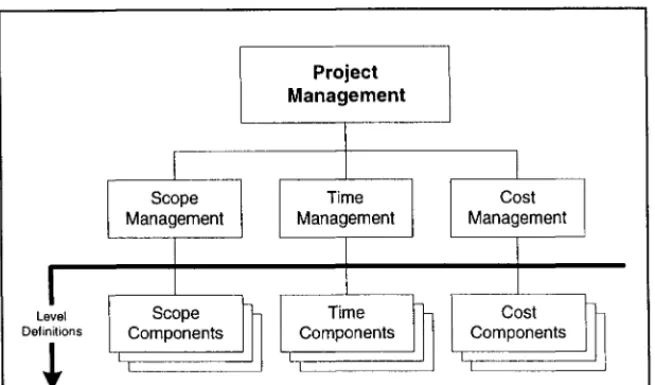
Figure 1 Project management knowledge areas and components. Body of Knowledge (PMBOKO Guide). In these chapters, each knowledge area is defined at each level of maturity. In order to provide as complete a definition as possible, these knowl- edge areas have been broken down into their specific compo- nents (along with the additional special-interest subcompo- nent areas mentioned earlier). Then progressive maturity is described, level by level, for each component (see Figure 1). So Chapters 3-11 are organized as follows:PMBOKO Guide Knowledge Area (chapter title)
General description
Components of maturity
Maturity level characteristics (for Levels 1-5)
Description of component qualities in each level
[image:8.411.33.361.52.245.2]Project Management Maturity Model
-
viii for the preceding levels for that knowledge area are being (or
have been) fulfilled. So Level 5, for example, assumes that Levels 1-4 are being fulfilled, plus Level 5.
ACKNOWLEDGMENTS
THIS BOOK IS a great example of one of project management’s
signal features: the creative team. As with any product that distills the experience and knowledge of many people work- ing together over time, it is a little hard to give all credit where it is due. I will do my best to name names here, with the un- comfortable feeling that someone is bound to be inadvert- ently left out. For any oversight, I apologize in advance.
The PM Solutions Project Management Maturity Model, while the product of the efforts of many PM Solu- tions associates over the past four years, were prepared for publication by David Yosua, PMP, Product Integration Man- ager. Also involved in our project to create a maturity model were Dianne Bridges, PMP, Managing Consultant; Eric Foss, Managing Consultant; Dave Phillips, PMP, Eastern Region Manager; Patrick Sepate, Central Region Manager; and Karen White, PMP, Managing Consultant.
Jim Pennypacker, director of the Center for Business Practices, was invaluable as a source on project management research and also kept our relationship with Marcel Dekker seamless.
Thanks to Debbie Bigelow, PMP, Executive Vice-Presi- dent, Jim Oswald, PMP, Vice-president of Professional Ser- vices, Bruce Miller, PMP, Vice-president of Business Devel- opment, and Lori Gipp, Vice-president of Marketing and Al- liances, all of PM Solutions, and Jimmie West, Ph.D., PMP, of I‘M College, who so effectively managed the ongoing opera- tions of these businesses during the writing of this book.
Project Management Maturity Model
-
x on behalf of clients in the field have helped to develop and refine our project management maturity model.
xi
Series Introduction iij Introduction v
Acknowledgments ix
1 Describing Project Management Maturity 1 2 Definitions of Maturity Levels 23
3 Project Integration Management 27
4 Project Scope Management 53 5 Project Time Management 71
6 Project Cost Management 93 7 Project Quality Management 109
8 Project Human Resource Management 129
9 Project Communications Management 153 10 Project Risk Management 167
11 Project Procurement Management 183
Appendix A: Project Management Maturity Self-Assessment Survey 201
Appendix B: Project Management Maturity Benchmark Survey Excerpt 205
1
CHAPTER 1
Describing Project
Management Maturity
U
NTIL JUST A few years ago, the concept of ”maturity”was seldom used to describe the state of an
organization’s effectiveness at performing certain tasks. Today, we find this maturity concept being used
increasingly to map out logical ways to improve an organization’s services-particularly across the software industry. Why has this evolved in this industry-why not in other areas? And why is this of interest to the project management profession? The answer to both of these questions rests in the underlying complexities that go into the successful completion of a project-software
development or otherwise.
models originated, it is easy to see that there are many ways to approach the resolution of any single software problem. Software efforts typically include many more variables, unknowns, and intangibles than we would consider ”normal” for a project in many other industries. Because of this complexity, the expected result of a
particular software project may be more dependent on the ”star” developer in a company than anything else.
Unfortunately, star developers go away, and, when they do, or the projects get so large and complex that the
Project Management Maturity Model
-
2 developer’s influence on them is no longer dominant, the
variation in project results becomes great and leads to inevitable frustration and disappointment. Obtaining predictable results becomes a real challenge. Hence the extensive, government-funded research into how to evolve and measure an organization’s effectiveness at developing software, which resulted in the Software Engineering Instit Ae’s Capability Maturity Model. However, as we have seen through repeated use of this model in
assessments, even getting organizations to the “repeatable results” level can be challenging, never mind moving toward optimization of processes.
It is logical that those of us in the project management arena learn from the efforts to improve effectiveness in the software industry. Applying project management concepts in
any organization has many similarities to the complexities and intangibles of software development. Obtaining consistent results in any project environment involves understanding and measuring as many variables as those that exist in the software development industry. We have all seen the results of heroic efforts from project managers-those that rise above the processes and systems that support them. Take this single project manager (just like the single “star” developer in the software environment) out of the picture, and there goes the ability to ensure success. Hence the need to look at an organization’s ”complete” picture of project management effectiveness, or project management maturity.
Project Management
Maturity Model
Describing Project Management Matwity
that organizations pay attention to improving the project management skills within their organization. This lack of
foresight frequently creates an environment where the project management systems and infrastructure are not in place to
support the needs of the practicing project management community. Eventually, it becomes necessary to start taking a
proactive look at the infrastructure necessary to progress in project management capability. In short, the need becomes so great that the organization must respond to growing business pressures. Often, this happens when executive management decides to take proactive action-but the question is: action in what direction, and to what end?
There are a great number of interrelated challenges to deal with in improving an organization’s infrastructure: project managers aren’t getting the information they need to manage effectively; management is not getting accurate forecasts of completion data; there is inconsistent
understanding of expectations, etc. This is often where the value of a maturity assessment comes into play. Any model selected to measure project management maturity must point out a logical path for progressive development. It may not be so important to know you are a Level 2 organization, but rather what specific actions you will be implementing to move the organization forward. What is most important is that the organization has a vision and is
moving to improve the capability of project management with very targeted efforts. Improving project management is a series of smaller steps, not giant leaps, and many
organizations will never need to realize Level 5 in maturity. Many organizations will achieve significant benefit by reaching the repeatable process level area. In effect, a good model for the measurement of project management
maturity creates a strategic plan for moving project management forward in an organization.
-
Project Management Maturity Model
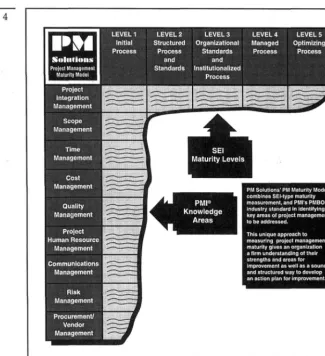
Figure 1 .I PM So1utions”Project Management Maturity Model utilizes the PMBO)$ Guide’s knowledge areas and the Software Engineering Institute’s five levels of maturity.
Model Description
Key Attributes of the Knowledge Areas
Describing Project Management Maturity
outlined in the document. Unfortunately, this is a huge mass of knowledge to deal with. Measuring an
organization’s effectiveness in any one of the areas requires that the area be broken down further into major
components that relate that area to the successful implementation of project management.
The model that I” Solutions has developed utilizes the PMBOP Guide’s nine knowledge areas and is patterned after the SEI’S CMM. The model has five distinct levels of maturity and examines an organization’s implementation across the nine project management knowledge areas (see Figure 1.1). The five levels, similar to those in the SEI CMM model, are described below. Each of the levels represents a discrete organizational capability based on the summary- level characteristics.
-
5
Levels
of
Project Management
Maturity
Level 1
Initial Process
Ad hoc processes
Management awareness
Level 2
Structure Process and Standards
Basic processes; not standard on all projects; used on
Management supports and encourages use Mix of intermediate and summary-level information Estimates, schedules based on expert knowledge and
Mostly a project-centric focus large, highly visible projects
Project Management Maturity Model
6
[image:19.411.31.356.58.396.2]k
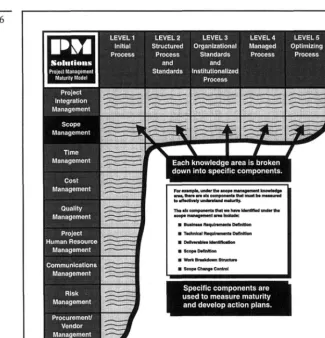
Figure 1.2 Because the knowledge requirement is very large within
each of the PMBOP Guide knowledge areas, it was necessary t o break d o w n each of the nine areas into key components.
Level 3
Organizational Standards and Institutionalized Process
All processes, standard for all projects, repeatable Management has institutionalized processes Summary and detailed information
Baseline and informal collection of actuals
Describing Project Managemetlt Maturity
More of an organizational focus
Informal analysis of project performance
Level 4
Managed Process
Processes integrated with corporate processes Management mandates compliance
Management takes an organizational entity view Solid analysis of project performance
Estimates, schedules are normally based on organization
Management uses data to make decisions specifics
Level 5
Optimizing Process
Processes to measure project effectiveness and efficiency Processes in place to improve project performance Management focuses on continuous improvement
General Component Description
As mentioned previously, because the knowledge
requirement is very large within each of the P M B O P Guide
knowledge areas, it was necessary to break down each of the nine areas into key components (see Figure 1.2). This is where the real measurement of maturity takes place. For example, under the scope management knowledge area, there are six components that must be measured to
effectively understand maturity. The six areas that we have identified within scope management include: business requirements definition, technical requirements definition, deliverables identification, scope definition, work
breakdown structure, and scope change control. These six
Project Management Maturity Model
Figure 1.3 Three areas of significance influence the adoption of
project management practices. These components are given special attention in the PM Solutions Project Management Maturity Model.
I
components are examined independently to determine the adequacy of defining and controlling the project scope.
Business requirements definition is the assessment and development of processes, procedures, and standards relating to the collection of the business-related
Describing Project Management Maturity
-
Technical requirements definition is the assessment and 9 development of processes, procedures, and standards
relating to the collection of the technical requirements of the project.
Deliverables identification is the process established to identify key items that are necessary to complete the project.
Scope definition involves the processes in place to
adequately define the scope, assumptions, and constraints of the project.
Work breakdown structure examines the formality with which an organization identifies the complete scope of work to be performed. This includes looking at the related dictionary.
Scope change controI looks at the process of incorporating additions, changes, and deletions to the project.
From a quick look at these six, it’s easy to see that
understanding the intricacies of project processes is a key element in determining project maturity. All knowledge areas must be similarly broken down.
Three Special Interest Components
Project Management Maturity Model
-
IO Project Office. The project office makes the lives of project team members easier by supporting the team in the areas of scheduling, status reporting, project tool operation, and training, among others. Some of the key items of support that the project office provides include consulting and mentoring of current staff, developing and promulgating methodologies and standards relating to project
management, and serving as the central source for help in planning and managing efforts. The project office facilitates the improvement in project management maturity by being the focal point for consistent application of processes and methodologies. Often, without a project office, the project management efforts of the organization are not consistent and are not focused toward a common vision. So, the project office serves as the proverbial glue that holds the project management efforts of the organization together.
Management Oversight. Another key component in facilitating an increase in project management maturity is the amount of management oversight and involvement that key leaders of the organization have in the project
management function. The bottom line here is that if management isn’t interested then it is unlikely that improvement will occur. If no one is holding the project manager responsible for project accomplishment and consistently measuring project performance, an unwritten signal is being sent to the project management community. Managers must make use of the data that is provided by the project management community and find ways to use this information to improve organizational performance.
Describing Project Managenlent Matnrity
naturally exhibit. Most of us require continued refinement 11 and renewal of the skills. The project management
profession also continues to broaden its knowledge base- there are always new skills to learn in the project
management profession.
-
The Five
levels
of Maturity
Why SEI CMM Is Used as the Standard
As mentioned earlier in this chapter, research into why software projects were so often completed late, over- budget, and failed to deliver what the end user really wanted resulted in the Software Engineering Capability Maturity Model (SE-CMM), a way of measuring an organization’s maturity in those software engineering
processes generally accepted as crucial to successful project completion. This Capability Maturity Model has in turn become a de facto standard for process modeling and
assessing an organization’s maturity in several process areas (i.e., personnel management, systems engineering). Since the CMM concept has received such widespread acceptance, it makes sense to develop a Project
Management Maturity Model (PMMM) that follows the same structure.
The Key Practice Areas with the SE-CMM include areas familiar to those who have read the
PMBOP
Guide:project execution and control. The PMMM takes those areas and further decomposes them into specific knowledge areas and the processes associated with those areas.
Notes in Measuring Against the Five Levels
Project Management Maturity Model
-
12 Maturity models can be misapplied the same way. First, there is the possibility of error in the performance of the assessment. Determining the correct level of maturity in an organization is something less than science but more than art. There are many factors that go into determining this level including individual interviews, as well as evaluating artifacts, processes, standards, knowledge, and company culture. So there is a subjective nature to determining the level of maturity, although it’s unlikely that a wide margin of error will occur. It is extremely important to use an assessment tool that has been tested and proven to achieve consistent and correct results.
Additionally, the results of an assessment can be misused. An assessment should really be aimed at providing a path forward for the organization in improving its project management capabilities. Typically, organizations start with a baseline assessment of their current situation. This is accomplished by performing a comprehensive assessment evaluating all areas where project management has an
influence. From here, a periodic, abbreviated assessment can indicate where progress is being made in the application of project management methodologies. The baseline assessment enables an organization to identify those areas that will
provide the greatest return on investment and will show where immediate actions will have an impact.
There is a great difference between each of the five levels; organizations should strive to fill in the pockets that are weak while advancing those that will provide benefit. Striving to increase the maturity level just for the sake of
Describing Project Management Maturity
Stralegic Level 111
Project Ofice
Depanmental Level II
Projecl Oflice
lndivldual Level I
Project Office
Meeting stakeholder expectations means establishing a project office at the correct level in an organization.
Level 1. An Individual Project Office where individual project practices and skills are developed and refined
Level II. A Departmental Project Office builds on a Level I PMO by adding multi-project capabilities such as interproject dependencies and departmental resource management
Level 111. An Enterprise Project Office further adds the dimensions of
[image:26.412.30.356.60.415.2]enterprise level integration and roll-up of data, as well as portfolio analysis and decision making
Figure 1.4 Levels of a project office.
may be erased if the other knowledge areas are all at Level
2 maturity.
So, what takes place during a maturity assessment? Any thorough assessment has the following four
ingredients (at a minimum):
Personal and/or group interviews
Artifact collection and evaluation Widespread survey input
Project Management Maturity Model
-
14 There is little substitute for the sense of discipline,
understanding, and buy-in that can be obtained from a direct personal interview with a project management practitioner. This is a necessary element of an assessment to uncover the degree to which policy is put into practice. Coupled with this is the collection of evidence (artifacts) supporting the
implementation of project management-are all the documents required by policy complete, are they of high quality, etc.? Third, are the concepts of project management understood and utilized by the major population that should have knowledge about the policies and procedures?-what is the general view of the project management requirements, etc.? Last, synthesizing the data and comparing this
information against an established standard that is logical, sound, and clear to provide a path forward is essential. Any assessment that does not consist of at least these elements may leave an organization wondering where the benefit lies with the process.
Using the Results
of an Assessment
The real value in performing an assessment comes into play across several areas. Several of these areas are listed in the paragraphs below.
Culture Change
Describing Project Management Maturity
-
opportunity to identify with the logic in the new processes 15
and gain an initial understanding of what project
management has to offer. Thus culture change starts to take place with the start of the initial assessment. Staff members begin to realize that they need to think differently than they have in the past. In many cases, individuals already know that change is necessary. They’re just not sure in what direction change should occur. During the interviews performed during an assessment some indication of that direction is given to the staff members.
the communication of a vision. The results of the
assessment provide a clear path and tangible actions that can be implemented for the company to move forward. This information can be communicated across the company in an easily understood fashion to start people thinking in new directions. By using the assessment information (which is based on information provided by all levels of employees), staff members become a part of the plan to promote change or at least feel they have an understanding of where the future for the company lies. This is one
starting point to generate interest and enthusiasm to improve project management.
Another good avenue for starting cultural change is
Project Office Implementation
The assessment can help answer another important
question: What is the appropriate level of the organization at which to implement a project office? The project office, by definition, is the center of excellence for project
management. Less clear is the level of the organization at which the center should exist. This will depend on the degree of maturity that exists within the rest of the
organization. More mature organizations typically have a
Project Management Maturity Model
-
16 that are just starting in the project management
progression. Normally, what we see is that organizations who have fairly well-established processes for project management already have competently functioning project offices at Level I (see Figure 1.4) and are working on their implementation of a Level I1 project office. Those
organizations that are very mature will likely be working on enterprise-level project offices. In each case, the
assessment will reveal the actions necessary to ensure success in the next step of the project office implementation. In all of the above cases, it will become evident that the ownership for improving project management within the organization must rest within a centralized location- usually the project office.
Repeated/Periodic Use as a Progress and Effectiveness Tool
We find many of our clients periodically ask themselves: “Are we making a difference?” or “Are we advancing the project management capability in the right areas, and in general?” Recurring use of the assessment can show the progress that the project office is making toward helping the organization reach its goals. This can become a part of the metrics that are used to measure success of a project office on a recurring basis. If the project office owns the project management capability improvement action, then the results of the assessment can be attributed to the actions taken by the project office to improve project management capability. It is possible to use these measures as the basis of incentive rewards.
Describing Project Management Maturity
the project management deployment plan that would be developed as a result of the initial assessment.
-
17
Target Six-Month Improvement Goals
We often find that organizations want to use the assessment
as a tool to identify specific areas of improvement that become goals for the next incremental period of time. They then tackle one area, one level, at a time. This allows
organizations to show improvements over a 6-12 month period so that the improvement sponsors see a solid ROI. Small victories provide an opportunity to cheer for successes and reevaluate specific direction while reenergizing staff members. These are important “peg points’’ that allow organizations to see how much they’ve learned, plan for what they didn’t know in the first
planning session, and adapt/adjust direction for the next short-term (6 months) initiative.
it provides a tool to communicate success and meeting milestones to executives and management. Leadership sometimes has a fairly short-range memory, and
commitment to change initiative budgets can waiver with time.
Another value of the short-term reassessment is that
Setting Your Maturity
Goals
Is
Level5
for Everyone?Level 5 maturity is not for everyone. Each organization needs to determine the minimum level of maturity at which the return on investment is achieved and then determine the ROI associated with achieving the next level. It is
Project Management Maturity Model
-
18 improvement program with specific focus and measurable goals that allow their organization to realize some benefits within a short period of time. We recommend 6-month increments, whenever possible.
management maturity in synch with other corporate process maturity, including financial management, software engineering, etc. For instance, implementing mature project management processes such as earned value tracking is meaningless if the organization has not
implemented time reporting processes. Experience shows that advancing project management practices far ahead of other corporate processes can cause turmoil and mistrust. We have also found it beneficial to maintain project
Assessing Your Level
So, how do you determine where you are currently? There are two kinds of assessments that can be conducted. The first assessment approach is the independent assessment.
Project management experts, possessing a strong blend of project controls, organizational structure, project
management, professional development, and management skills, plus an in-depth understanding of the PMMM, would conduct the assessment. Using a prescribed set of tools and processes (like PM Solutions’ PMMM Assessment and HealthCheckSM), these experts would determine your organization’s maturity levels in the various knowledge areas and present the results to your management team. The management team and the assessors would then work together to develop your improvement plan. This
independent approach is the preferred method when an external ”expert voice” is needed to communicate to senior executives.
Describing Project Managenlent Maturity
team with representatives from your staff to conduct a self- 19 assessment. Following the same procedures that an
independent assessment would follow, this team of
individuals would determine your organization’s maturity levels in the various knowledge areas. The team would then work with your management staff to develop an improvement plan to achieve your desired maturity level. The primary challenge in the self-assessment approach is maintaining the confidentiality of individual findings. The assessment fact-finding activities include staff interviews. The quality of the information provided in these interviews can be skewed if staff members are not comfortable sharing negative information with other staff members. The self- assessment approach can also suffer from an inherent bias towards a higher level of maturity; no one likes to hear they are at Level 1 maturity.
-
Conclusion
The benefits of a structured assessment of project
management maturity lie in setting direction, prioritizing actions, and beginning cultural change rather than in understanding the current level at which an organization is performing. The emphasis is on ”structured.” It is
important that the assessment itself be repeatable, provide consistent measurements and results, and provide for some degree of benchmarking with other organizations. This provides the basis for any assessment to be utilized as a
Project
Management
CHAPTER 2
Definitions of
Maturity
LEVELS IN the PM Solutions Project Management
Model are as follows:
Level 1: Initial Process
Although there is a recognition that there are project management processes, there are no established practices or standards, and individual project managers are not held to specific accountability by any process standards. Documentation is loose and ad hoc. Management understands the definition of a project, that there are accepted processes, and is aware of the need for project management. Metrics are informally collected on an ad hoc basis.
Level 2: Structured Process and Standards
Project Management Maturity Model
-
24 Functional management is involved in the project
management of larger, more visible projects, and these are typically executed in a systematic fashion. There are basic metrics to track project cost, schedule, and technical performance, although data may be collected/correlated manually. Information available for managing the project is often a mix between summary-level data and detail-level data.
Level 3: Organizational Standards and Institutionalized Process
All project management processes are in place and established as organizational standards. These processes involve the clients as active and integral members of the project team. Nearly all projects use these processes with minimal exception-
management has institutionalized the processes and standards with formal documentation existing on all processes and standards. Management is regularly involved in input and approval of key decisions and documents and in key project issues. The project management processes are typically automated. Each project is evaluated and managed in light of other projects.
become tailorable to the characteristics of each project. An organization cannot blindly apply all processes equally to all projects. Consideration must be given to the differences between projects. The important thing is to note how the processes are tailored-that is, is there a process to customize the implementation of applicable processes/policies to a
particular project?
Definitions ofMaturity Levels
Level 4: Managed Process 25
Projects are managed with consideration as to how the project performed in the past and what is
expected for the future. Management uses efficiency and effectiveness metrics to make decisions regarding the project and understands the impacts on other projects. All projects, changes, and issues are
evaluated based upon metrics from cost estimates, baseline estimates, and earned value calculations. Project information is integrated with other corporate systems to optimize business decisions. Processes and standards are documented and in place to support the practice of using such metrics to make project decisions. Management clearly understands its role in the project management process and executes it well, managing at the right level, and clearly differentiating management styles and project management
requirements for different sizes/complexities of projects. Project management processes, standards, and supporting systems are integrated with other corporate processes and systems.
Level 5: Optimizing Process
Processes are in place and actively used to improve project management activities. Lessons learned are regularly examined and used to improve project management processes, standards, and
CHAPTER 3
Project Integration
Management
T
HE PURPOSE OF project integration management is to (1)coordinate project activities and integrate all efforts into a project plan; (2) integrate, analyze, and report the project results in carrying out the project plan; (3) control changes to the baseline plan; and (4) collect, integrate, and organize project information in a project information system.
Components
Project Plan Development
Project plan development integrates planning information from the other knowledge areas to create a project plan. The project plan provides a
roadmap for project execution and is the integration vehicle that ensures all project management areas are addressed, developed, and managed within the context of the project. The outcome of this
component is a project plan.
Project Plan Execution
Project Management Maturity Model
-
28 execution, work progress is examined from the
perspective of each knowledge area (i.e., scope, time, cost, quality, etc.). The status and performance of the project from the perspective of each knowledge area is consolidated and integrated into progress reports. The main product of this component is information on the work results, usually depicted in project status and performance reports.
Change Control
Change control involves managing the project baseline. Change control includes implementing a
change control system (to include configuration management), identifying and assessing changes to the baseline, coordinating the changes across the knowledge areas, managing the authorized changes, informing stakeholders, and identifying corrective actions. The main products from this component include change requests, updates to the project plan, corrective actions, and lessons learned.
Project Information System
This component covers the project’s information system that collects, integrates, and organizes project-related information, tools, processes, and procedures across the knowledge areas. The main product of this component is information about the project that is readily accessible to all stakeholders. Note, this includes manual-based systems.
Special Interest Component-Project Office
The project office is an ”office” staffed by project management professionals who serve their
Project Integration Management
particular, this office provides project management 29
support services, provides project management consulting/mentoring, develops and maintains project management methodologies/standards, trains project managers within the organization, and supplies project managers for major project
initiatives.
-
The project office can make the lives of project team members easier by providing support in the areas of project scheduling, report production and distribution, operation of project management software, maintenance of the visibility room, and maintenance of the project workbook. The types of activities that can reasonably be expected from a project office include:
Consulting/Mentoring
As organizations mature in project management, the project office satisfies an increasing need for internal project management consultants. These people will provide the organization with the expert insights it needs to execute projects effectively.
Processes/Standards
The project office is the unit within the organization that develops and promulgates common
methodologies and standards relating to project management.
Training
Project Management Maturity Model
-
30 Project Management
The project office can house a group of professional project managers who can be assigned to carry out the organization’s projects.
Project Management Software Tools
Project lntegration Management
Level 1
Initial
Process
There is recognition of the need for accepted processes, but there are no established practices or standards. Individual teams or parts of the organization may have their own way of doing things in an ad hoc, informal fashion.
Documentation of the processes is loose and makes it difficult to repeat the activities elsewhere. Management is aware of the importance of project integration on an ad hoc basis and asks for information on work results.
Project Plan Development
Some project managers have developed individual versions of project plans on an ad hoc basis; thus each plan looks different with varying amounts of content and levels of detail. If a project plan exists, it may include a scope statement and work breakdown structure (WBS) that consists of a basic set of
milestones and, occasionally, deliverables. The plan may include independent milestones and key resource requirements.
Project Plan Execution
Assignment of work is informal and is typically through verbal communications. The information on work results is developed on an ad hoc basis, in response to specific requests.
Change Control
Project Management Maturity Model
-
32 involvement. The project manager sometimes documents them. There is no documented change control process and individual project teams are applying their own approach to managing and controlling change. Changes are unequally managed and, in many cases, not monitored. Functional, physical, and data configuration control is loosely managed and controlled, if at all.
Project Information System
There is no system that collects, integrates, and organizes project-related information tools,
processes, and procedures across knowledge areas. Each project manager uses whatever system she or he desires.
Project Office
An informal project office may exist that generally consists of one or two people who have an interest in bringing project management standards to the organization and are acknowledged as successful project managers. This is a very basic project office- basically in name only. More often, a project office does not exist at all.
Project Support
Assistance is available from the project office to project teams on scheduling of projects.
Consulting/Mentoring
No help is available within the organization.
Processes/Standards
Project lntegration Management
Training
No formalized training is available. If training is requested, individuals are directed to seek outside sources.
Project Management
Guidance on project management concepts may be available to individuals upon request.
Project Management Software Tools
Project Managenlent M a t w i t y Model
Level
2
Structured Process and Standards
There are basic, documented processes in place for developing project plans and integrating, analyzing, and developing the reports on work results. Summary-level information is consolidated into reports. The focus is on summary status and performance reporting for the triple constraint items (scope, time, cost). Although the processes are in place, they are not considered an organizational standard. Management supports the efforts and is involved on large, highly visible projects.
Project Plan Development
The organization has a documented process for developing a project plan. At this point, the project plan incorporates a project charter, scope statement, and top-level WBS. The plan also includes a
summary-level cost estimate and schedule with major milestones. The plan includes key resource requirements and identified risks, as well as a list of key stakeholders and a communication strategy with those key individuals. The plan includes basic staff management items such as time reporting and vacation request procedures. The project plans are updated to reflect approved scope changes from the change control process.
Project Plan Execution
Summary-level information on work results is
Project lntegration Management
is integrated with the cost and schedule information 35
to depict the project status. Basic metrics (such as
planned budget, milestone percent complete) are collected and integrated into project performance reports.
-
Change Control
There is a defined and documented change control process for scope changes. For large and highly visible projects, scope changes are identified with a
change request form, tracked on a change request log, are formally approved, and project plans are updated and corrective actions incorporated, if necessary. Cost and schedule changes are not yet controlled since baselines are not yet common practice nor established as an organizational standard. Functional, physical, and data
configuration is documented and maintained. Large, highly visible projects are required to use the
principles of change control.
Project Information System
There is a basic project system that collects,
integrates, and organizes project-related information tools, processes, and procedures across knowledge areas for large and highly visible projects. The system may be something as simple as a central file system. There are guidelines for acceptable
Project Management Maturity Model
-
36 Project Office
A basic project office is established and recognized by upper management as having the responsibility to define the processes and standards by which projects should be managed. The individuals within the project office (sometimes a part-time
responsibility) advise and offer input when asked.
Project Support
The project office assists project teams in the creation and maintenance of their project workbooks.
Assistance is offered to project teams on developing scope, project scheduling, and issue and change control, upon request.
Consulting/Mentoring
On major projects the project office is asked to provide personal consulting and mentoring to project managers on project initiation and planning processes.
Processes/Standards
The project office has put in place a basic project management process; it is not considered an organizational standard, and only large or highly visible projects are using it.
Training
Basic project management concepts training is made available to project managers.
Project Management
Project Integration Management
Project Management Software Tools
There is an accepted project management scheduling tool as a guideline; however, the responsibility for project management tool selection/deployment lies with the project managers.
-
Project Management Maturity Model
-
38
Level
3
Organizational Standards and
Institutionalized Process
Additional processes are developed and documented for creating project plans, reporting information on work results, controlling changes, and evolving the project
information system. There is a coordinated effort within the organization to have a common information system set up for individual project teams. The project management processes are considered standard practice for projects. Management supports project management and is actively involved-particularly on large, visible projects.
Management monitors status, performance, and changes and responds with corrective actions, as required. Systems are becoming more integrated: the project information systems are integrated with the project office. Management fully supports project integration efforts and has
institutionalized the procedures and standards related to integration activities.
Project Plan Development
The project plan development process is fully documented and implemented within the
organization. The organization’s process for developing project plans incorporates management plans (procedures, processes, etc.) from cost, schedule, risk, quality, procurement,
communications, and human resources (staff
Project Integration Management
charter, scope statement, and WBS (possibly down to 39
level three). The plan will also include cost estimates and schedule information at the level needed for visibility and control. The plan includes the cost and schedule baseline. The plan identifies key resource requirements from the staff management plan. The plan identifies risks and planned mitigation
strategies, as appropriate, and includes a list of key stakeholders and the communication strategy with those key individuals. The project plans are updated to reflect approved project changes from the change control process. Program plans are developed for common, related projects.
-
Project Plan Execution
Summary and detail-level information on work results is integrated and analyzed, and reports are developed. Status and performance reports are produced addressing items such as technical performance of the project, time spent on project activities, and the amount of hours or dollars spent. These reports will include informal variance and performance measurement analysis. (Note: At this point, the actuals are estimated by project teams as opposed to being extracted from corporate finance/
Project Management Maturity Model
-
40 Change Control
There is a defined and documented project change control system that incorporates the change control processes for scope, cost, and schedule. The process includes the change control form and change log. The project change control system and processes are implemented and utilized by the project teams (changes are identified, assessed, coordinated, managed, stakeholders are informed, and corrective action is taken). The process is documented,
repeatable, and project plan updates are consistently incorporated with corrective actions and approved changes. Baselines are established, adhered to, and managed.
Project Information System
There is a central project system that collects,
integrates, and organizes project-related information tools, processes, and procedures across knowledge areas. The systems are becoming standardized across projects and may encompass a central file system and project workbooks. The project office provides guidance and coordinates the selection and
implementation of project management systems.
Project Office
Functions and services of the project office are defined and communicated to the organization. The project office is considered by most project
Project lntegration Management
resources are being actively trained in its usage. The 41 project office is an accepted part of the
organizational project management landscape. It is integrally involved with the project managers in the organization.
Project Support
The project office closely monitors the issue and change control systems and is consulted on crucial change (scope) decisions on large, highly visible projects. The project office monitors risk analysis on large, highly visible projects and is involved in the risk analysis and control processes on these projects. Assistance is offered on project resource and cost estimating. The project office offers assistance to project teams in preparing project performance reports and closely monitors time reporting to projects. All support roles (schedulers, etc.) report to the line organization. The project office offers assistance to project teams upon request in preparing schedule and progress reports.
-
Consulting/Mentoring
The project office works closely with the project teams of major projects in the planning process. This assistance is also available to smaller projects upon request.
Processes/Standards
Project Management Maturity Model
-
42 provides quality standards and processes. There is a
project management guide in place that provides a reference for project managers on the entire life cycle of managing a project. It integrates with the more basic process already in place and the templates/
samples in place. The project office is involved in regular quality walk-throughs and checks
throughout the project life cycle
Training
Project management essentials training is considered mandatory for project managers and is made
available to project team members.
Project Management
The project office is consulted for the assignment of project managers to major projects. The project office works closely with the project managers on major projects. The project office has an initial, generic resource listing (labor categories) in place for the use of project teams. Resource leveling is performed at the project level.
There is concern about balancing and
scheduling key resource usage at an organizational level, but no such tools are in place, so this is done manually, if at all.
Project Management Software Tools The project office provides guidance and
coordinates the selection and implementation of project management software tools-project
Project Integration Management
Level
4
Managed
Process
All processes are in place, documented, and being utilized by all projects. Processes and standards are integrated with other corporate processes and systems. Integration includes incorporating project plans and program plans into
organization strategic plans. In addition, the reporting process and project information system are integrated with the project office, finance/accounting, strategic planning systems, and risk management process. There is a mandate to comply with the organizational project management processes and procedures. Management takes an "organizational view" of projects. Projects are managed with consideration as to how the project performed in the past and what is expected for the future. Management uses efficiency and effectiveness metrics to make decisions regarding the project. All projects, changes, and issues are evaluated based upon metrics from cost estimates, baseline estimates, and earned value calculations. The metrics are used to understand the performance of a project during execution for making management decisions for the future.
Project Plan Development
Project Management Maturity Model
-
44 Project Plan Execution
All processes are in place, documented, and being utilized. The status and performance reporting process is integrated with the project office, finance/ accounting, strategic planning systems, and risk management systems. Formal variance and performance measurement analysis is conducted and reported. (Note: At this point, the actuals are extracted from corporate finance/accounting systems.) Metrics are collected from the knowledge areas and integrated into project performance reports.
Change Control
All change control processes are in place,
documented, and being utilized. The project change control process, to include configuration
management, is integrated with the organization’s control systems, monitoring programs, and risk management process. Functional, physical, and data configuration is consistently documented,
maintained, managed, and controlled for all projects.
Project Information System
The central project system collects, integrates, and organizes project-related information tools,
Project Integration Management
Project Office
Project management best practices are collected by functional area and maintained at the project office. Realistic management-level reporting is in place. "Ego-less" reviews of major projects are regularly done against standard methodologies and processes. Realistic resource projections are done by the project office. There are few surprises on projects.
Project Support
The project office is responsible for the organizational skill inventory database, coordination of the
assignments of critical resources, organizational resource leveling, and resource projections (also involved in the requisition of additional/replacement resources). The project office provides project-level variance analyses to organizational management. They also design and produce executive dashboard management reporting on all approved projects. The project office maintains visibility rooms for all major projects, and possibly a room(s) for smaller projects to share. The project office determines the project report consolidation process for management reporting and is responsible for carrying it out on a regular cycle.
Consulting/Mentoring
Project Management Maturity Model
-
46 Processes/Standards
The project management methodology is now a
standard. All projects are expected to use these processes as their normal operating process. A central project documentation repository is in place and is actively monitored by the project office. Projects are required to utilize this repository. The project office conducts benchmarking of selected projects to ascertain estimate accuracy and improve estimating techniques.
Training
Advanced project management topics are considered mandatory for project managers-a training plan, tied into the career plan, is created for each project manager. Project management
essentials training is made available to project managers. Advanced project management topics are made available to project managers. Project
management essentials training is mandatory before a project manager manages a project and is
suggested for all team members.
Project Management
Performance reviews of project managers are done jointly by the line organization and the project office. There is an accurate resdurce repository in place; the project office is responsible for maintenance of this information, which is used for organizational
Project Integration Management
They manage the more complex, visible projects for 47
the organization. The project office provides input to the line manager for the project manager’s
performance review. The project office is responsible for the acquisition and updating of resource
information (especially for key resources), and this process has begun. The project office manually ties in resource leveling to resource availability at an organizational level. The project office is responsible for integrating project performance reports into the consolidated report, which is sent into the
management oversight process.
-
Project Management Software Tools
Since estimates are now being entered for all
Project Management Maturity Model
-
48
Level 5
Optimizing Process
Improvement procedures are in place and utilized. Lessons learned are regularly examined and used to improve
documented processes.
Project Plan Development
An improvement process is in place to continuously improve project plan development. Lessons learned are captured and used to improve the planning efforts. Project and program plans are used to support strategic organization decisions and
decisions regarding projects. A process utilizing the project and program plans for such decisions is developed, documented, and in place. The
organization has evolved to the point where the act of planning a project is clearly understood and its
consumption of resources is planned as well.
Project Plan Execution
Project lntegration Management
Change Control
-
49Project changes are included in the determination of project efficiency and effectiveness. In addition, evaluation and analysis of potential changes
includes efficiency and effectiveness considerations. A process utilizing such metrics for management decisions during project execution is developed, documented, and in place. Lessons learned are being captured in a repository.
An improvement process is in place to continuously improve the project change control process to include configuration management. Lessons learned are captured and used to improve the monitoring and control efforts. Historical changes on projects are examined to identify trends in change control actions and improve upon the initial project planning process.
Project Information System
An improvement process is in place to continuously improve the project information system. Lessons learned are captured and used to improve the project systems. The project information systems support the collection and organization of project efficiency and effectiveness metrics. In addition, the system employed to collect, integrate, and organize project information becomes more efficient and effective.
Project Office
Project Management Maturity Model
-
50 The project office is responsible for organization- wide resource leveling and assignment of critical resources. The project office has processes in place to capture lessons learned from projects completed, and modifies project management methodologies as a result. Projects are measured against best practices. Lessons learned are captured and applied. Project management is now thoroughly accepted as the standard practice throughout the organization.
Project Support
There is a project management help desk function available from the project office. The project office is involved in the closure process of every major
project (and many smaller ones). The project office provides, as part of management reporting, full-cost tracking, including what is necessary for earned value calculations by project.
Lessons learned are captured and used. Additionally, customer satisfaction surveys of project office support are conducted and improvement areas identified and acted on.
Consulting/Mentoring
The project office staff coaches project managers in the managing of smaller projects within the
organization. The project office works closely with project managers and business clients on business analysis and proposal preparation for major project initiatives.
Processes/Standards
Project lntegration Matlagenmt
-
processes, and templates/samples are available on 51 the Intranet. The project office maintains an internal web site.
Training
An evaluation is made at the end of every major project to ascertain weak skill areas. This
information is used to bolster training plans for individuals on the project and to create changes to existing training courses (and, occasionally, new courses). Full training program is available, leading to certification as a Project Management Professional (PMP). Project management essentials training is considered mandatory for project managers, and is suggested for all client personnel who will be involved in projects.
Project Management
The project manager works closely with the line organization to anticipate new programs and projects on the horizon. There is an active program for feedback from all parts of the organization for project management improvements. Many project managers in the organization report to the project office, with dotted-line responsibility to the line organization. The project office does performance reviews of project managers with input from the line organization.
Project managers are well integrated into the client organization (although they may report to the project office) and are considered part of the client management teams.
fashion at the organizational level.
Project Management Maturity Model
-
52 Project Management Software Tools
On every project, part of the closure process is to review the project management software tools and their interfaces to ascertain improvements. These lessons learned are regularly integrated back into the tools/interfaces through a standard process.
provides earned value reporting, which the project office has made a part of the executive dashboard reporting. The resource repository is now integrated with the human resource system for the
organization. The project management software tool is integrated with the corporate accounting system for budgeting and cost reporting and with the organizational procurement system for obtaining actual costs of goods and service