warwick.ac.uk/lib-publications
Original citation:Birchwood, M. J., Street, Cathy, Singh, Swaran P., Lamb, Clare, Anderson, Yvonne , Warner-Gale, Fiona , Sedgewick, Jane , Thompson, Andrew D. and Upthegrove, Rachel (2018) Impact
and process evaluation of Forward Thinking Birmingham, the 0-25 Mental Health Service : Final Report. University of Warwick ; University of Birmingham ; GIFT (Great Involvement
Future Thinking) ; CLAHRC-WM.
Permanent WRAP URL:
http://wrap.warwick.ac.uk/100545
Copyright and reuse:
The Warwick Research Archive Portal (WRAP) makes this work by researchers of the University of Warwick available open access under the following conditions. Copyright © and all moral rights to the version of the paper presented here belong to the individual author(s) and/or other copyright owners. To the extent reasonable and practicable the material made available in WRAP has been checked for eligibility before being made available.
Copies of full items can be used for personal research or study, educational, or not-for-profit purposes without prior permission or charge. Provided that the authors, title and full bibliographic details are credited, a hyperlink and/or URL is given for the original metadata page and the content is not changed in any way.
A note on versions:
The version presented in WRAP is the published version or, version of record, and may be cited as it appears here.
1 | P a g e
Impact and process evaluation of
Forward Thinking Birmingham, the 0-25
Mental Health Service:
Final Report
The Evaluation Research Team – University of Warwick and Birmingham
CLAHRC-WM / GIFT Partnership Collaboration
The Evaluation partnership comprises leading academics and service evaluators from the Universities of Warwick and Birmingham and The GIFT (Great Involvement Future Thinking) Partnership. CLAHRC-WM has a number of PPI advisors attached to the mental health theme through the CLAHRC-WM voices network http://www.clahrc--‐ wm.nihr.ac.uk/ppi/patient-public-involvement.html). GIFT Partnership works on a co-production basis with a team of around 6 young national sessional workers, experienced in research and evaluation in the mental health field as well as links into many other service user groups and projects pioneering new ways of working with children and young people with mental health problems.
The evaluation team includes:
Professor Max Birchwood: holds the chair of youth mental health at the University of Warwick and leads the youth mental health theme of CLAHRC‐WM. He leads the NIHR national evaluation of early intervention in psychosis services and works with NHS England to operationalize the new national waiting time standards for early psychosis services and children’s IAPT. He is the principal academic advisor to the BIG Lottery for the HeadStart 10-16 resilience and mental health programme (£75M). He has sat on various NICE guideline development and quality standard committees.
Dr Cathy Street: co-founder of GIFT, commissioned by NHS England 2012-2015 to support participation of children and young people in CYP IAPT. Cathy has held senior research posts at the National Children’s Bureau, Rethink Mental Illness, YoungMinds and Mental Health Foundation and is known nationally for her work on embedding Patient and Public Involvement (PPI) in mental health research. She has acted as an advisor to DH, NICE, NIHR and SCIE, was a member of the CYP Mental Health Taskforce that produced Future in Minds and has led many CAMHS capacity building projects, service evaluations and health service reviews commissioned by government departments, CCGs and local authorities.
Professor Swaran Singh: is Head of the Division of Mental Health and Wellbeing at Warwick University, consultant psychiatrist, and a Commissioner for the Equality and Human Rights Commission. He set up the first NHS funded early intervention in psychosis service in London in 2001, led the TRACK study, the first ever prospective study of transition from CAMHS to AMHS and currently leads a €6 million EU project on improving transitional care across Europe. He chairs the NICE Guidance Development Group on paediatric to adult transition. He led the NIHR ENRICH study on pathways to care among BME groups in Birmingham and the DH funded AMEND study on the impact of the 2007 amendments to the Mental Health Act 1983. As a Commissioner at EHRC, he leads the commission’s work on Disability and Mental Health.
Dr Clare Lamb: external advisor to the evaluation team, Clare worked as a Consultant Child & Adolescent Psychiatrist with the North Wales Adolescent Service and led an intensive community support team that provides a Tier 4 CAMHS alternative to hospital admission for 12 to 18 year olds from across North Wales. Clare also established the Wirral 16-19 team, a generic community youth mental health team that bridged and worked jointly with child and adult services. She has published policy guidance on workforce and capacity for CAMHS, and has written on alternatives to admission for children and young people and on models of youth mental health service at the transition from CAMHS to Adult Services.
decisions (Mind of My Own/MOMO).Yvonne was a member of the CYP Mental Health Taskforce that produced Future in Mind, working, in particular, on the sections of the report that concern provision for vulnerable groups.
Dr Fiona Warner-Gale: is a co-founder of GIFT. She has worked in the public sector and within academic institutions, as a clinician, service manager, joint commissioner, educator, author and academic. She offers expertise in service improvement and redesign and has specific research and development expertise in the stigma related to mental health in children and young people. She designed a whole systems change approach to tackling stigma across individuals, families and communities, as well as managing and delivering a large scale national evaluation programme. In this capacity, Fiona was appointed to sit on the Executive Board of the Time to Change Programme at Rethink Mental Illness.
Jane Sedgewick: is a co-founder of GIFT. Prior to GIFT, Jane was a Regional Development Worker (RDW) for the National CAMHS Support Service (NCSS) and a project manager for CAMHS workforce development. Jane’s work within the public sector, both nationally and regionally, spans planning, commissioning and the management of change within complex environments, including training and consultancy on benchmarking health service transformation activities and training on leadership within health systems.
Dr Andrew Thompson: Associate Clinical Professor in Psychiatry at the University of Warwick and Consultant Psychiatrist in Coventry and Warwickshire Partnership Trust. With a background in implementation science and extensive clinical experience in youth mental health, Andrew’s research is within the field of major mental illness, including risk factors and interventions for emerging psychotic disorders and other risk states for major mental illness in young people. Previously he worked at the internationally renowned Orygen Youth Health in Melbourne where he was Associate Medical Director and Senior Research Fellow and he was also involved in the introduction of a new Youth Mental Health Service in Sussex.
Dr Rachel Upthegrove: is a Clinical Senior Lecturer in Psychiatry at the University of Birmingham and Consultant Psychiatrist. Her research is within the field of major mental illness, publishing significant papers on the outcomes of first episode psychosis, affective disorder, self harm and suicide. Clinically she has worked for over 17 years in psychiatry, for 10 years within the field of Early Intervention in Psychosis and Youth Mental Health. She is active in teaching and training, including MBChB, and the neurobiology of mental illness and academic psychiatry.
Notes
1. All funding for this research is being absorbed by the external organisations leading the evaluation – the University of Warwick and the GIFT Partnership. FTB staff receive no financial benefit for working on the project.
2. The service outcomes data are quantitative and generated by the FTB clinical teams using standard service measures, reported using appropriate objective analytical techniques.
3. Since this a service evaluation, no interventions or variables are being compared or manipulated – the evaluation is reporting on the ‘business as usual’ outcomes and impact of services; full scientific rigour has being applied.
CONTENTS
Page
Executive Summary
5
Background, aims and methodology
8
The commissioning and procurement process
16
Initial interviews with local stakeholders
28
Impact evaluation – distilling the outcomes in relation to
the core aims of the service
34
Keys issues from the first round of stakeholder focus
groups
51
Issues from the second round of focus groups
62
Views and experiences of children, young people,
parents and carers using FTB
72
Progress in implementing the new FTB service model
82
Developing the service – evaluation conclusions and
recommendations
References
Appendix 1: further data from the impact evaluation
Appendix 2: core components for implementing CAPA
Executive Summary
Overview
This report provides the findings of a year-long evaluation of Forward Thinking Birmingham (FTB) which started just after the service went live in October 2015. Undertaken by a team from the University of Warwick and the GIFT Partnership, the purpose of the evaluation was to understand how the changes to mental health service provision for children and young people aged 0-25 and their parents and carers outlined in the new FTB model impact on key stakeholders across a range of service settings and types. The aim was to generate learning about the new model as to whether it worked/was achieving its specified objectives, what was perhaps less successful and needed amendment or further development. The evaluation would also provide an opportunity to think about the future development of the service in order to ensure a robust and sustainable model of provision.
The evaluation was comprised of three interrelated elements, a partnerships/engagement evaluation, an input evaluation and an impact evaluation. A mixed methods methodology has examined the overall evolution and impact of the new service model from the early roll-out and implementation stages capturing key individual stakeholder and organisational staff experiences of engagement, impact and response from both service user/carer and service provider perspectives. Both quantitative and qualitative data have been collected with research ethics committee approval being granted by the University of Warwick Biomedical and Scientific Research Ethics Sub-Committee on 21st December 2016 (REGO-2016-1871).
The context within which Forward Thinking Birmingam (FTB) was mobilized
The ‘Case for Change’ report, developed by the Birmingham Adult Joint Commissioning Team and the Maternity, CYP Commissioning Team in November 2013 can be seen in many ways as a key starting point for the development of the FTB model. This document noted that in Birmingham there were clear issues within the current system of care. These included a lack of seamless provision for 16-18 year olds and none existence of ASD services, high waiting lists for condition specific services for 16-18 year olds such as ADHD (in October 2013, noted to be 6 months) and high DNA rates amongst 16-18 year olds which were thought to indicate poor patient experience.
Other concerns included CAMHS and Community Paediatricians continuing to hold cases post 16 years to ensure continued medication of complex cases, an increase in inappropriate inpatient admissions within Birmingham for under 18s to mainstream adult acute beds despite having a dedicated Home Treatment service, poor patient experience and outcomes and dissatisfaction within referring agencies i.e. primary care, with senior CCGs managers being alerted as to the lack of provision, in particular for 16-18 year-olds.
The Case for Change document goes on to note that Birmingham and Solihull Mental Health NHS Foundation Trust (BSMHFT) had been involved in a CLARHC trial with Birmingham University. This had demonstrated that the transition between child/adolescent services and adult services at 16-18 years was a major weakness in service provision; many young people were described as getting ‘lost in transition’ at the very point where the age incidence of mental in health problems increases and that many young people up to 25 were not engaging in adult services. It was argued that the commissioning of a mental health service for 0-25s was a key way to address these problems.
Officer 2015 annual report and the Health Committee House of Commons 2014/15 report on CAMHS services: to develop an early intervention approach to young people’s mental health services which will improve early detection, service access and engagement. In its service specification, FTB set out to achieve a whole system change across the array of mental health services currently provided to children and young people from 0-25 years alongside their parents and carers, with an emphasis on partnership working, integrated specialist approaches and the delivery of a wide range of evidence based treatment options with emphasis on solution-focused approaches.
As a new service model, not surprisingly, the initial development, impact and outcomes of FTB attracted national and international interest as new ways are sought to improve transitions and ways of working across health and social care domains for young people, their carers and the staff that support them. Furthermore, the development and mobilization of the model has come at a time of high level interest, or rather, serious concern, about the provision of UK mental health services for children and young people, with high media coverage about budget deficits and significant geographic clinical commissioning group (CCG) spending variations, service cuts and problems accessing appropriate inpatient care. Major problems with recruitment, retention and staff shortages have been highlighted by, amongst others, the Royal College of Psychiatry and a national review by the Care Quality Council (CQC) has been called. Undoubtedly all of these have had an impact in some form or another on the mobilization and development of the FTB model.
Data collected
The evaluation team collected service activity data from FTB for the period 1st April 2015 – 30th June 2017 and this is presented in Chapter 4 of the report. Unfortunately a significant amount of missing data, including individual clinical outcomes data, limited the amount of analysis that was possible. However, what these data clearly indicate is that FTB experienced a high level of demand in its first year of operation.
With regard to stakeholder perspectives on the mobilization and early implementation of FTB, a wealth of qualitative information was generated via 53 individual baseline interviews, 10 focus groups run at two timepoints with 85 participants and interviews and 3 focus groups with 27 children and young people and 3 parents and carers from seven different settings. Follow-up interviews with a number of those interviewed at baseline and additionally 3 GPs and 4 representatives from two of Birmingham’s universities, added to these data.
Additionally, alongside the main evaluation a smaller qualitative study of the commissioning and procurement process was undertaken within the NIHR CLAHRC-West Midlands research programme as part of the ‘added value’ provided by the evaluation team. A summary is included in Chapter 2 since the learning from this study is highly relevant to the input strand of the evaluation of FTB. Data included 29 interviews with informants in all involved CCGs, Birmingham City Council, Forward Thinking Birmingham and BSMHFT; observations of 10 meetings and workshops; extensive archival data analysis.
Issues raised through the evaluation
Strong support for the model was evident from the outset of the evaluation, in particular, the extended age range and the integration of practitioners for children and young people’s mental health services and those from adult mental health services in the community hubs. The ideas for partnership working with the VCS, the provision offered by PAUSE and the referral process via the Access centre were also welcomed.
centre elements of the model. What, however, was much less clear was what happening for those requiring input from the community hubs and running through both the baseline interviews and then the various rounds of interviews and focus groups, a range of issues emerged which included:
Concerns about the level of FTB staffing and skill mix, also recruitment and retention issues. In particular, shortages of medical staff were highlighted as well as high use of locums/agency staff. Staff were worried about the impact on continuity of care (with young people noting adverse experiences of repeated changes of staff, leading to delays and also a sense of being ‘passed round’ the system).
Questions about the capacity of the service to meet demand, with concerns about long waiting times, delays in the pathway after referral to the Access centre and staff disquiet about the implementation of CAPA and caseloads that were seen as increasingly unmanageable (and jeopardizing the ability to intervene early).
Widespread views, especially from VCS interviewees, that the intended partnership working with FTB was not happening, that there had been only very limited commissioning of this sector and a general sense of these providers being left out of any planning decisions to develop the service. A missed opportunity to draw on high levels of skills and expertise in working with young people was also voiced.
Inadequate and incompatible data management systems which were impeding information sharing across the model.
Poor service infrastructure including the availability of space and essential equipment and also the provision of age-appropriate environments for both young children and older adolescents/young adults using FTB.
These and other issues are described in detail in chapters 3, 5, 6 and 7 of the report.
Key recommendations
Chapter 9 sets out a range of detailed recommendations for FTB to consider in building on the successes from the first year of operation alongside addressing the concerns raised. These cover amendments we suggest are needed to the FTB model overall, most crucially, to ensure that the ‘front doors’/referral entry points are fully aligned with all parts of the service to ensure patient flow, avoid blockages and facilitate timely access to mental health assessment and both low level and higher level interventions, treatment and care.
Other recommendations concern the FTB Partnership, the implementation of CAPA, ‘intelligent’ caseload management, building the FTB workforce and leadership. Getting these right will be crucial to the FTB model surviving in the future.
VCS participants in the evaluation focus groups put forward a series of recommendations for how FTB should develop its partnership working. Some of their proposals include: ensuring FTB establishes a data system that is compatible across all relevant agencies; that a protocol for information sharing is needed; that FTB should put in place named person arrangements for the management of referrals into FTB and that a programme of training and CPD opportunities must be developed that take in the FTB core workforce and its VCS partners.
Chapter One: Background, aims and methodology
1.1 The national context
Mental health problems can start at an early age and many persist into adult life unless properly treated. It is known that 50% of lifetime mental disorders (except dementia) first appear by age 14 2 yet the majority of this emerging illness is not appropriately identified or effectively treated at the time 3, with young people’s access to mental health services the poorest of all age groups 4 and national referral rates to child and adolescent mental health services rising5. This situation
of delayed treatment opportunities at the point where interventions could be most effective 6,7 is associated with subsequent lower quality of life; educational outcomes, employment, social life, and health related outcomes 8.
There is growing evidence that a variety of interventions are effective both clinically and financially even if current statutory service provision has been described as ‘..manifestly inadequate for the unique developmental and cultural needs of young people’.4 Converging evidence suggests that youth mental health should be prioritised for investment to improve the longer-term health outcomes of the population but there is a current lack of consensus as to the most appropriate models of service provision.
Published by the Department of Health in January 2014, “Closing the gap: priorities for essential change in mental health” set out the task of transforming the support available for children and adults with mental health problems.1 It identified specific areas within mental health services, which are now the focus of change and improvement. These included: access to services; access to psychological therapies for children, young people and young adults; support for new mothers (under 25); the relationship between mental health services and schools; and transition to adult services. Later that year, the Children and Young People’s Mental Health Taskforce was established to look at how to improve the organization, commissioning and provision of mental health services for this age group, culminating the following year with the DH/NHS England Report Future in Mind. Promoting, protecting and improving our children and young people’s mental health and wellbeing (2015).
The proposals within Future in Mind can be seen as highly significant in promoting service change and the development of models such as Forward Thinking Birmingham (FTB). For example, these include: early intervention; developing a system without tiers; developing integrated service delivery (with all services working together so that young people only have to ‘tell their story once’); single points of access; improving transitional care and where the important role of voluntary and community sector (VCS) partners is a key theme.
Crucially, following publication of the report in March 2015, the Government announced £1.25b of new funding, to be spent over 5 years, to drive forward service transformation and improvement.
The following year, in February 2016, The Five Year Forward View for Mental Health, the report from the independent Mental Health Taskforce to the NHS and commissioned by Simon Stevenson was published. Whilst focused on all ages and with an emphasis on life course and addressing inequality and parity of esteem between mental and physical health, this document can also be seen as highly relevant to FTB in that it re-emphasises the importance of prevention and reassert the commitments of Future in Mind:
1.2 The Birmingham context: demographics and diversity
It is estimated that 420,938 people aged 0-25 live in Birmingham. This was projected to increase by 6% to 445,513 by 2016, and by 8% to 453,373 people by 20219. The prevalence of mental disorder is similarly expected to rise with a 2010 CAMHS needs assessment undertaken in Birmingham by Public Health Action Support Team highlighting that growth is to be expected across the majority of the mental health spectrum from 2011 to 2021. Some of the projected increases are;
Emotional conduct and hyper-kinetic increase by 20%
Depression increase 16%
Eating Disorders increase 19%
ASD increase 20%
Learning Disabilities increase 11%.
Over 187 different nationalities live in Birmingham. In general, people from black and minority ethnic groups living in the UK are more likely to: be diagnosed with mental health problems; be diagnosed and admitted to hospital; experience a poor outcome from treatment; and disengage from mainstream mental health services. In Birmingham, a longstanding concern is that BME young people are under-represented in the population coming into mental health services for low-level problems and over-represented amongst those coming in with acute/crisis level presentations. As well as deterioration in their mental health, young people in these groups are likely to experience social exclusion and impaired functioning11. Consultation with users suggests each ethnic group may be affected by specific barriers to access, either due to the prevalent family structure, cultural norms and stigma on mental ill-health and level of knowledge of English.12
Alongside this, Birmingham is significantly poorer than the national average for ‘hospital admissions for mental health conditions’ and ‘hospital stays for self-harm’10. Accordingly, it is vital that we develop understanding of how reforms to mental health services incorporated into the FTB Model in Birmingham will impact on the city.
1.3 The Case for Change: Commissioning a 0-25 year old mental health service
across Birmingham
This document, developed by the Birmingham Adult Joint Commissioning Team and the Maternity, CYP Commissioning Team in November 2013 sets as its object
“to improve the transitions for young people when moving between CAMHS and AMHS, ensuring that all young people with mental health issues have every opportunity to continue in education, training and employment, so they have a life that is not defined or limited
unnecessarily by their condition”.
It goes on to note that in Birmingham there were clear issues within the current system of care and that these included:
A lack of seamless provision for 16-18 year olds and none existence of ASD services.
High waiting lists for condition specific services for 16-18 year olds such as ADHD (in October 2013, noted to be 6 months).
CAMHS and Community Paediatricians continuing to hold cases post 16 years to ensure continued medication of complex cases. To try and manage a backlog of such cases, some joint CAMHS and BSMHFT YSS services had been put in place but with no recurrent funding, were expected to cease in April 2014.
An increase in inappropriate inpatient admissions within Birmingham for under 18s to mainstream adult acute beds despite having a dedicated Home Treatment service.
Poor patient experience and outcomes.
Dissatisfaction within referring agencies i.e. primary care, with senior CCGs managers being alerted as to the lack of provision, in particular for 16-18 year-olds.
The Case for Change document goes on to note that Birmingham and Solihull Mental Health NHS Foundation Trust (BSMHFT) had been involved in a CLARHC trial with Birmingham University. This had demonstrated that the transition between child/adolescent services and adult services at 16-18 years was a major weakness in service provision; many young people were described as getting ‘lost in transition’ at the very point where the age incidence of mental in health problems increases and that many young people up to 25 were not engaging in adult services. It was argued that the commissioning of a mental health service for 0-25s was a key way to address these problems and had the potential to deliver the following outcomes:
Patient
Timely access and better engagement of service users; reduced DNA’s as youth focussed
Holistic provision…“You‘ve come to the Right place”…all services under one pathway
Reduction of (inappropriate) presentations at A&E for young people in distress
Improved experience and satisfaction of users, families and referrers, with less stigma involved in using services and less burden and impact on families
Reduced requirement for secondary care
Reduces impact of mental illness on society, with increased life opportunities for young people / adults with mental ill health including increase in young people remaining in education, training and employment and as a result, decreases in worklessness and presentations to criminal justice as a result of poorly managed / untreated mental ill health
Reduction of tragic events including suicide and serious self-harm as a result of poorly managed / untreated mental ill health.
System
Reduction of (inappropriate) presentations at A&E for young people in distress
Capacity to meet demand, increased flow through system
Long term reduction in adults requiring specialist mental health services
Reduction in unnecessary prescriptions
More recovery, integration and join up across strategies such as early help and intervention – wider economic gains for society
Focus on the most vulnerable e.g. children in care meaning that financial resources directed to most appropriate need.
1.4 Reports by Mental Health Strategies and by West Midlands Academic Health
Science Network
In 2017, two reports were presented to Birmingham Mental Health System Strategy Board which set out a range of issues concerning Birmingham’s services for children and young people requiring help with their emotional health and wellbeing. The report by Mental Health Strategies, whose scope did not include services for those aged under 18, presents the findings of a simulation modelling for mental health services in Birmingham and Solihull which are of obvious relevance to FT in terms of its age range going up to 25. This document notes the following local concerns:
A surge in demand, particularly for younger adults’ services
An increase in the numbers of local people being placed outside of area
The expectation that new standards in access to acute services will be met in 2017
A rise in delayed transfers of care.
Key questions, which it was hoped the modeling would answer, included, amongst others: how many inpatient beds should be commissioned/provided; the size, role and function of crisis and home treatment services and the community mental health teams (CMHTs); the size, role and function of alternatives to inpatient provision including step-down care. The impact of moving to personal health budgets, integrated personal commissioning and Individual Placement Support (IPS).
Getting it right, first time. Prevention of Mental Illness was produced by the West Midlands Academic Health Science Network in April 2017 with the support of FTB and an aim of assessing prevention priorities for Birmingham, Solihull and potentially the region and to set out next steps. Calling for the Mental Health System Strategy Board to support a ‘proof of concept’ programme, the proposed strategic approach is described as follows:
“This will encompass the Forward Thinking Birmingham (FTB) and Birmingham and Solihull Mental Health NHS Foundation Trust (BSMHFT) models, and involve partners across health and social care, education and policing….. it will collaborate with community resources to provide low-stigma, engaging support from within a community setting, and build on current partnerships for training and interventions within school settings.”
In terms of prevention, the report notes the following as key recommended areas to develop or be further built on:
Early years – perinatal, parent & child, attachment and school readiness.
Use of digital and social media tools across universal community services and groups to raise awareness, promote self-help and resilience building, reduce stigma and encourage sharing of best practice.
Establish integrated partnership approaches including development of a youth mental health service focused on prevention, education and early identification.
The report also calls for the development of a robust bespoke professional and engaging training programme to build a common understanding of the importance of prevention and early intervention:
“Having a collective understanding of the importance and potential of a prevention of mental illness model is a prerequisite for a shared vision and good quality inter-agency working.”
1.5 The Service Specification and the FTB model.
At the time of winning the tender to provide mental health services for children and young people aged 0-25, Forward Thinking Birmingham (FTB) was one of first UK service providers to meet the challenge raised by Future in Mind report (DH&NHS England 2015), the Chief medical Officer 2015 Annual Report MO’s report and the Health Committee House of Commons 2014/15 report on CAMHS services: to develop an early intervention approach to young people’s mental health services which will improve early detection, service access and engagement.
In its service specification, FTB sets out to achieve a whole system change across the array of mental health services currently provided to children and young people from 0-25 years alongside their parents and carers. High level aims of the service include:
Understanding the risk factors that may lead to potential mental health problems and mitigate these through effective early intervention and promotion of wellbeing at all ages.
Developing a specialist integrated approach: joint working and direct work within an integrated collaboration of organisations (community, voluntary sector, private and public provision).
Working in partnership with and building front line capacity with emphasis on enablement, empowerment and education, thereby ensuring that fewer children and young people have a need for long‐term mental health services.
Delivering a wide range of evidence based treatment options with emphasis on solution-focused approaches.
Recognising that working with primary care will form the basis of therapeutic and recovery options.
Offering community services for 0-25 year olds and inpatient services for 18+ yr olds.
There has been high media coverage about budget deficits and significant geographic clinical commissioning group (CCG) spending variations, service cuts and problems accessing appropriate inpatient care.
Major problems with recruitment, retention and staff shortages have been highlighted by, amongst others, the relevant Royal Colleges (in particular with regard to nurses and psychiatry).
The Children’s Commissioner for England has been highly active in raising concerns about children and young people’s mental health with the Government, including providing a briefing in October 2017 highlighting ongoing problems with children’s mental health needs going unaddressed, that NHS spending on mental health is still overwhelmingly going on those at the most severe end and that the discrepancy between spending on children’s and adult’s mental health persists.
A national review by the Care Quality Council (CQC) has been called, and a joint DH and DfE Green Paper on children and young people’s mental health is expected by the end of 2017.
Undoubtedly all of the above have had an impact in some form or another on the mobilization and development of the FTB model.
1.6 Purpose of the evaluation
The purpose of this service evaluation is to understand how the changes to mental health service provision for children and young people aged 0-25 and their parents and carers outlined in the new FTB model impact on key stakeholders across a range of service setting and types. From the outset, the aim was to generate learning about the new model as to whether it worked/was achieving its specified objectives (e.g. address the issues of concern outlined in the Case for Change document), what was perhaps less successful and needed amendment or further development. This would also provide an opportunity to think about the future development of the service in order to ensure a robust and sustainable model of provision.
The evaluation comprises three interrelated elements, a partnerships/engagement evaluation, an input evaluation and an impact evaluation. A mixed methods evaluation methodology has been used to examine the overall evolution and impact of the new service model from the early roll-out and implementation stages alongside key individual stakeholder and organisational staff experiences of engagement, impact and response from both service user/carer and service provider perspectives. Both quantitative and qualitative data have been collected and as much as possible, the evaluation aimed to complement other elements of service evaluation currently in progress. Research ethics committee approval was granted by the University of Warwick Biomedical and Scientific Research Ethics Sub-Committee on 21st December 2016 (REGO-2016-1871) and in line with this, a detailed protocol was developed which all aspects of the data gathering for the evaluation adhered to. These included requirements for the issuing of information/invitation letters and consent forms for participants in the evaluation, the collection and analysis of patient outcomes and service activity data and the recording, storage and anonymised reporting of confidential and sensitive data.
1.6.1 Partnerships and input evaluation
As much as possible, and in order to minimise any burden on evaluation participants, the evaluators also considered any secondary data collected by FTB, for example, the feedback from children, young people and families gathered via the Friends and Family Test and service satisfaction surveys that will be administered by the new service as part of the Key Performance Indicators/KPIs agreed with commissioners.
In total, this part of the evaluation aimed to gather information from 50 key local professional stakeholders and 25-30 children, young people, parents and carers and focused on exploring the changes to practice and workforce development/resourcing needed for the new model, the areas of innovative practice and the impact on staff knowledge, skills and ways of working across a large partnership of organisations.
Areas of focus were agreed via the projects’ Learning and Evaluation Collaborative Group that met on a regular basis throughout the life of the project and included:
How the new service engages with voluntary and community sector (VCS) partners – how do different stakeholder groups think that this addresses local needs, improves previous arrangements and promotes prompt access? What needs to be in place (e.g. governance, protocols, cross-agency working and staff training) to make this work? What has been commissioned and/or what is planned?
Provision for the 0-5s/new perinatal services – does the new service improve access to CAMHS for younger children and their families, how does this aspect of the service link with primary care, health visiting and other early years services?
The extended age range up to 25 years and how this may affect the style of service delivery, including the formation of new partnerships with services for adults including adult mental health services, further education providers and employer partners.
1.6.2 Impact evaluation
This arm of the evaluation involves collecting data on all cases accessing the service with monthly data examined over specified epochs in the delivery of the new service and broken down by specific age bands (e.g. 0-5, 5-12 and 12-25) and by different clinical streams. Originally the time epochs were proposed as: 0-6 months; 6-12 months; and 12‐18 months, however, given the many challenges in accessing a full data-set (see Chapter 4), this was changed to 0-6 and 6-12 months.
Data collected include mainly high-level service and routinely collected individual level data in order to understand the service as it evolves and to feedback at critical intervals. An informatics template was developed in consultation with commissioners and the provider and covered service indices such as DNA, community attendance, admission, occupied bed days, readmission rates, A&E attendance, Place of Safety, home treatment contacts and individual level data, including a clear coding of diagnosis and HoNOS care cluster and NICE approved interventions.
It was also proposed that the evaluation would explore FTB’s routinely collected data, to include embedded clinical measures such as the Warwick Edinburgh Wellbeing Scale (WEMWBS) and WHO Disability Assessment Schedule (WHO--‐DAS).
1: Is the new 0-25 model transforming access and equality of access to interventions for those that need it?
2: What are the pathways to care, patient flows and duration of untreated mental health
difficulty, including: time to first assessment following first help-seeking contact and time to first assessment following receipt of referral?
3: To what degree is 0-25 successful in maximizing engagement of individuals and their families and delivering interventions, following access to an initial assessment?
4: Is the 0-25 service transforming recovery and resilience such that further service use is reduced?
5: To what degree is 0-25 making use of established and emerging indicated prevention strategies (early identification of emerging mental health disorders), within the service and linked community settings?
It was also hoped to explore basic data from the previous service providers to allow for comparison with the new service model.
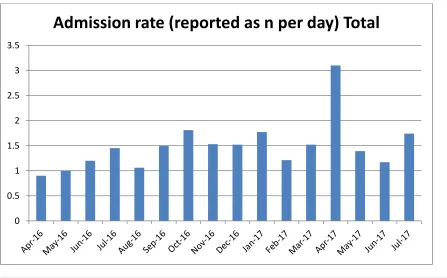
Service level data originally proposed included: demographic details by age group and service; admission rate (reported as n per day); readmission within 1 month (n per month); occupied bed days (reported per month); out of area placements (n per month): Home Treatment /Crisis activity data (face to face and telephone n per day and n per month); incidents recorded; RAID Assessment’s (n per month); referrals (n per hub per month); referral pathway (n per hub per month); assessments (n per hub per month); number of patient missed appointments (DNA) by age; postcodes of those referred; time to first assessment and DNA by time to first assessment.
With regard to individual outcomes measures, the following were proposed to FTB for routine collection: WEMWBS: Warwick-Edinburgh Mental Well-being scale 1; HoNOS: Health of the Nation Outcome Scale 2; HONOSCA: Health of the Nation Outcome Scale (Children and Adolescents) 3; PHQ9: Patient Health Questionnaire 4; SDQ: Strengths and Difficulties Questionnaire 5 ; GAD7: Generalised Anxiety Disorder 7 7 ; NOS: Nottingham Onset Schedule 9
Chapter 2: The Commissioning and Procurement Process
(Giovanni Radaelli)
2.1 Overview
The analysis is an outcome of a qualitative research conducted within the NIHR CLAHRC-West Midlands research programme; this study ran independently alongside the evaluation of FTB as part of the ‘added value’ provided by the evaluation team and a summary is included here since the learning from this study is highly relevant to the input strand of the evaluation of FTB.
Consistent with the goals and boundaries of CLAHRC Theme 5 (Implementation and Organizational Studies), this report is not an evaluation of individual decisions, competencies and efforts. Rather, it provides an overview of key feedback about the earlier stages of the commissioning of FTB received from stakeholders.
The study provides a qualitative analysis of the commissioning of the new Mental Health Service for Children and Young Adults aged 0-25 (henceforth referred to as ‘0-25 Service’) from the perspective of CLAHRC-West Midlands (Theme 5: Implementation and Organizational Studies). The report provides an overview of key feedback, received from commissioners and providers, regarding the earlier stages of the commissioning process. The report is informed by an embedded longitudinal case study asking:
(i) How did CCGs manage the relationships internally and externally to stimulate radical change in YMH services?
(ii) How did stakeholders respond to the new commissioning approach?
Data includes 29 interviews with informants in all involved CCGs, Birmingham City Council, Forward Thinking Birmingham and BSMHFT; observations of 10 meetings and workshops; extensive archival data analysis.
The study reported six main findings regarding the 0-25 commissioning.
1. Our analysis did not evaluate the ‘success’ of commissioners’ decision, i.e. if and why the commissioned 0-25 service was the “best” or “better” solution for young mental health patients, though we note informants held ambivalent views about this. Still, most informants agreed that the 0-25 commissioning did enable a radical change of services in a relatively brief period of time. Past NHS experiences highlight slow processes of change, only incremental revision or the reinforcement of the status quo. Contrary to this, the 0-25 service was radical and (relatively) rapid.
2. Informants accepted and appreciated CCG engagement, often arguing that strong leadership was necessary to overcome inertia and become ‘first movers’ in the care and cure of young mental health patients.
3. The use of a competitive tender was arguably the most controversial issue highlighted by the informants. The competitive tendering was deemed necessary to overcome inertia, but, at the same time, generated relational damage between the main mental health providers. As a result, existing collaborations (at operational levels) were interrupted. On the one hand, some informants suggested that the best solution for Birmingham would have been collaboration between the main adult and children provider; and thus CCGs should have forced the collaboration between the parties. On the other hand, several other informants suggested that the collaboration had not generated rapid outcomes before, albeit this was still possible within the competitive tender process.
4. Informants generally appreciated that CCGs did not micro-manage the service requirements, but provided only indications about expected outcomes. In doing do, providers were free to “think outside of the box” and generate a new service model. On the downside, the lack of details on service requirements and CCG preferences introduced uncertainty and risks for the providers.
5. Patient and public involvement (PPI) was overwhelmingly appreciated by CCGs and providers. PPI legitimised and informed the change, and both CCG and providers embedded patient groups in their processes of service design and/or evaluation. Overall, we suggest various factors influenced successful PPI: i.e. patients’ continuous engagement throughout the commissioning process; patients’ engagement in practical decisions and artefacts to channel their contribution (e.g. PAUSE); the formalisation of ad-hoc PPI roles (e.g. experts by experience) to give clear responsibilities; clear boundaries between PPI and professional decision-making; use of multiple channels of communications; multiple uses of PPIs (symbolic, empowering, and expert).
6. CLAHRC-based evidence contributed to stimulate the ‘case for change’ as it showed service gaps and patient disengagement. Scientific, peer-reviewed, evidence, in this regard, contributed to shift the focus of care toward a 0-25 model. At the same time, CCGs and providers were ‘first movers’ and thus could not count on operational knowledge related to the design and implementation of a 0-25 model, and could not replicate similar experiences in the UK or internationally. The 0-25 commissioning was thus understood also as a learning point for Birmingham and for the NHS, i.e. it would generate new evidence that could support the providers to fine-tune their original proposals and ‘second movers’ nationally and internationally to diffuse the 0-25 approach.
2.2. Main findings
The starting point of our analysis was that informants often disagreed on the new 0-25 service as the “best choice possible”, but they all agreed that (i) it represented a radical change for Birmingham mental health services, and an unprecedented move in the NHS and (ii) occurred in a relatively short time.
integrate two worlds (adult and youth mental healthcare) that most informants regarded as very distant from each other; as one explained:
“Adult psychiatry arose with concerns about individuals with serious mental illnesses. The diagnosis is based on understanding what the abnormal mental experiences are. So, the treatment is geared towards that individual and since the introduction of anti-psychotics it’s mostly been delivered through drugs – although you have ECT and now you have more psycho-social interventions as well. But, it is primarily a disease-based model, an individual-oriented approach. Child psychiatry started instead with concerns about orphaned children or what were called juvenile delinquents, kids who were either from broken families or were orphans who were on the street or who were in trouble with society. The services were developed to provide a parental substitute to those children, it was a social care package, wider education and training and love and caring and stability to these young people. Child psychiatry was developed from a sociological model, so its primary focus was family, interpersonal issues, attachment problems, interpersonal, conduct problems, behavioural problems, so the approach was of a child who was struggling within a system so you aim to alter the system as a way of helping the child”
Instead, the competitive tender did enable a radical change in a rather brief period of time, with a new service configuration that revised both processes and providers. While it is not purpose of this report to conclude if and how this change was ‘successful’ in terms of clinical effectiveness and organizational satisfaction, we can still observe that the commission was ‘successful’ in terms of radicalness of the solution. Hence, it became relevant for us to understand what made it possible.
Three main factors were highlighted:
First, service providers did not forcefully protect the status quo against change. On the contrary, they proved receptive to the idea that “the system needed to be redrawn”. Receptivity to change was arguably facilitated by multiple factors, namely: (i) awareness that the effectiveness of care was not as good as it could be; (ii) awareness of patient complaints about the status quo, which undermined established services; (iii) commissioning represented a possibility for clinicians (and their organizations) to address service gaps and thus to improve, rather than lose, jurisdiction.
The engagement of clinicians, in particular, seemed crucial as they command the expert knowledge required to design and implement the new services. McNulty and Ferlie (2004) in this regard observed that “we found no case study in which [business process reengineering] was successfully imposed on a clinician. While senior management could influence clinicians, they could not directly control them” (p.1408).
“The evidence that the current model was failing was quite important and that’s all very clearly laid out in the business case. The current model was definitely failing because it was under-financed, but also because there was a lot of demand that couldn’t be met. Studies have documented problems especially in the transition… The evidence of failure was very strong, the rationale was understood and it then found its way into some national documents, which I think also helped… Also, we had evidence base that young people in the Adult Service could engage better if the early detection of psychosis improved, for instance… “
could control the sustainability of the new model according to their organizational and financial parameters. In one of the observed meetings, it was noted:
“This commissioning did not demand specific requirements, for instance ‘we want this, this and that’. We demanded specific outcomes, for instance ‘we want to improve this, this and that’ – you tell us how you can achieve that. Once providers agreed on these outcomes, they were free to model the new services according to their possibilities.”
Third, the commissioning of the new 0-25 service mobilised a complex network of actors, which had different and significant motivation to support the change. These involved:
CCG groups, which operated outside of NHS trusts’ boundaries (and routines), and connected with multiple other contexts (e.g. non-mental health care, acute, primary care, social care).
NHS providers, with established processes and routines of care, but also emergent awareness of their limitations.
Patients, carers and patient groups who increasingly expressed their concerns about established services; and (iv) voluntary and private sector organizations, who brought their own distinctive understanding of and interests in change during the commissioning process.
This resonates with evidence that rapid radical changes are enabled by “institutional entrepreneurs” rather than established players in the field. It is often suggested that actors closer to operations may be too embedded in their established routines and practices to recognise or act upon the opportunity for change (Battilana et al., 2012, 2013). Radical change is often accelerated by actors who are less absorbed by current practices and/or less constrained by social influences, for example:
Influential actors in the field in terms of reputation and/or resource control, who can use their social position and influence to mandate change.
Marginalised actors who, on the contrary, are so overwhelmed by established practices and routines they are willing to “fight for” radical change
External actors coming from different industrial contexts, who can bring their “esoteric” visions to the new environment and mobilise their social network to create influence.
It was interesting to observe how the commissioning of the new 0-25 service represented a way for NHS providers to expand, share or lose their jurisdictions. A traditional barrier to change (especially in the NHS and especially when integrated care is proposed) is professional groups’ concern they will lose large chunks of decision-making to managers or other professional groups (Currie et al., 2012; Llewellyn, 2001; Radaelli et al., 2017).
Professionals also resist radical change to defend their autonomy. In this regard, the 0-25 service was an eventful change, as the two main providers – BCH and BSMHFT – faced ambivalent scenarios as they faced an opportunity to increase their jurisdictions to (respectively) adult and children mental health care, as well as the risk of “losing it all”. Noticeably, the providers were not risk averse, as they decided not to collaborate (which would have reduced the potential gains and the losses), but instead to go their separate ways.
2.2.1 Acceptance of ‘case for change’
scepticism (or outright rebellion) against the proposed change could become an important barrier to innovation, especially when the reasons for change are perceived to be unrelated to professional interests (e.g. cost saving).
Interestingly, there was no major controversy over the case for change. Informants agreed on the existence of important clinical reasons for a change, as well as on the perceived lack of patient satisfaction with existing services. Earlier CLAHRC-related research provided evidence of significant gaps in the provision of mental health services in transition ages (16-18 and 14-18), and highlighted areas in which the provision of services overlapped between CAMHS and acute services. And a noted above, the quality of service provision in the transition years (16-18) became a cause of concern for the CCGs, who highlighted the following issues:
High disengagement rate of the 16-18 year old cohort of patients leading to re-presentation at a later age with entrenched mental health problems.
Young people unable to access service after leaving CAMHS.
A lack of seamless provision for 16–18 year olds for multiple services.
High waiting lists.
CAMHS and community services holding cases beyond the commissioned age.
Reports of inappropriate admissions of 16-17 year olds into medical or adult services.
Dissatisfaction amongst referring agencies and families trying to access services.
These problems were recognised by virtually all informants. Patient disengagement in the transition ages was given as a major reason for change:
“There were several really clearly documented reasons. We’d got a gap in services for people who were transitioning out of children’s services, so 16, 17-year-olds did not become eligible for adult services until they reach 18… We tried to put bridged services into place, [but] there was still this inherent difficulty around the transition…”
Patient groups complimented the CCGs on their receptivity to patient needs in this respect:
“This is an example of CCGs listening very carefully to the feedback from service users, stakeholder groups, carers; and responding to the concerns that they’ve raised.”
This appreciation extended to the recognition that NHS trusts should engage more actors in their service provision, in order to achieve more integrated care in the community. The contribution of voluntary sector and (more cautiously) private firms was recognised as missing from the previous provision of mental health services:
“[The engagement of voluntary and private sectors] is becoming more and more relevant, I believe. They really all do bring something else [to the NHS]. Private firms bring this very commercial attitude, this attitude of “you want it, you get it”. And [voluntary firms] are great at meeting hard-to-reach groups. Very engagement focused. Very much thinking across the whole system, to the early intervention piece, not the bedded bit”
2.2.2 Acceptance of CCG Leadership
The second issue in our analysis was to understand if the stakeholders perceived CCGs as legitimate enablers of change. We asked: did stakeholders accept that CCGs should lead change, or instead did they demand a more bottom-up approach?
CCG informants agreed that a bottom-up approach could be preferable, if providers found some spontaneous or managed way to agree on a whole-system solution. CCGs reportedly tried to engage the existing providers in such conversations, asking them to propose a new ‘vision’ for the future. Earlier attempts to bring together these providers, however, were argued to be ineffective – hence the competitive tender was deemed necessary to overcome the inertia. As one informant commented:
“The service was poor and the waiting lists were long, something up to two years in some cases, and the service certainly wasn’t equipped around early intervention support at the time. It was more ‘rescue and support’ in the sense of children been identified as having serious problems before they went to do CAMHS. We worked for two or three years, worked with the existing providers struggling to get them to improve their services… It became very apparent that that wasn’t a workable solution… “
Delays and problems between providers to find a shared solution were also reported by representatives of the providers. Interestingly, several informants reported that local initiatives to address specific issues were indeed in place, and significant progresses could have been made if that route was followed. However, they did recognise two limitations, i.e. (i) solutions were local, while there was a perceived need for a more systemic solution, and (ii) progress was slow, especially since collaboration only occurred at the operational level, and not facilitated by strategic levels of collaborating organizations:
As a result, the opportunity for CCGs to introduce a tendering approach was not vilified by the providers which, on the contrary, recognised the need for a strong actor to accelerate change. This awareness often met with an appreciation for the commitment and determination of the individual commissioners.
Overall, the interviews did not reveal significant issues with “why” the service was redesigned, and “who” managed the change. Greater criticism was instead linked with “how” the commissioning was organized, i.e. with the use of competitive tendering processes.
2.2.3 Acceptance of competitive tendering
The choice of competitive tendering, in place of a more collaborative process, was arguably the key concern of informants. As noted above, the selection of a competitive tendering approach was often deemed necessary due to (i) a need for rapid and radical change in service delivery (ii) delays in earlier attempts towards collaboration between the providers. In general terms, almost everybody agreed that competitive tendering did in fact accelerate a radical change in services, and overcome inertia.
At the same time, the competitive nature raised concerns of relational damage between the providers, in terms of: interrupting established relationships between the parties which were already engaged in some service reconfiguration at local level; delays and long-term damage to future collaborations and the perception that the resulting partnerships were not the best possible as they separated (according to the informants) strong players from each other.
player represented a powerful force around which newer or smaller organizations gravitated. Most informants acknowledged that the commissioners did not antagonise possibility for such a collaboration, which broke for different strategic reasons:
“We would have perhaps preferred the providers to work together. These organizations are like chalk and cheese really, but they do not have completely different philosophies of work. So originally, we thought that they planned to put in a joint bid for this… Well we tried for about three years to get them to do it and they wouldn’t or couldn’t do it, there was no incentive for them to do it. So we, with commissioning we don’t want to be going out to tender at the drop of a hat, but if you’ve got an orphan service that nobody wants to provide, no one will provide it even when you’re giving them money you’ve got to go out to tender because it’s the only way you’re going to get somebody”
A reason for the separation was apparently the reciprocal perception that the CCGs did not appreciate the other organization, and thus that they would better work alone. This suggests that CCGs’ message of collaboration was not straightforwardly accepted by providers. More generally, some provider representatives complained that there had been no fair chance to revise the service without going straight to a competitive tender:
“We chose not to partner with the existing provider of [a service] because we had been told by a number of commissioners that [this service] was the principal cause of concern, so would you partner with the people we’re told is the greatest concern? “
Another commented:
“My understanding, having spoken to the senior officers in the trust, in the CCG, is that the trust had been told over a number of years that GPs weren’t happy and it’s well-known that there were problems with the service. But there was no opportunity [to meet and discuss]. There was no formal meeting between the CCG and us to say “we’re unhappy and therefore want to consider a service that is 0-25”. My understanding is there was no discussion with the [other provider either]. So in relation to thinking how did we suddenly get into a tender process, there had not been a formal dialogue between commissioner and provider. A meeting took place when the two chief execs of the providers met with the accountable officer for the commissioning organization and we were told we’re really unhappy and therefore we’re going to tender the service. Now that’s not giving the provider an opportunity, it’s not allowing the discussion. And I’ll be frank with you; from that point onwards there have been difficult relations between providers and commissioners….”
Along with concerns about the (lack of) communication with CCGs prior to the competitive tender – the one issue which informants really disagreed on, the informants also acknowledged problems with communication across providers. The very nature of a competitive tender is such that communication and collaboration between the providers “shut down” and resulted in a number of “missed opportunities”. Communication across the partnerships could not be mediated anymore by the CCGs, which had to remain independent. Finally, there was no possibility to improve the final solution by hybridising the different proposals:
“I think tendering can be quite good in terms of creating rapid service transformation, but it’s also a pretty blunt tool, and it can cause quite a lot of relational damage, particularly in a collaborative environment like the NHS. We had providers who had very different skill sets [so it could be anticipated that] one would be very good at doing one thing and the other [at doing] something else. [It would have been ideal to find a solution that hybridised the strengths and removed the weaknesses, but that’s not how competitive tenders work]”