Chen, Z. (2003). Attentional focus, processing load, and Stroop interference. Perception & Psychophysics, 65, 888-900.
Attentional Focus, Processing Load, and Stroop Interference Zhe Chen
University of Canterbury
Running head: ATTENTIONAL FOCUS & STROOP INTERFERENCE
Zhe Chen
Department of Psychology University of Canterbury Private Bag 4800
Christchurch New Zealand
e-mail: [email protected]
Abstract
Visual processing is often goal-directed. A central question in vision research is how attention can selectively process only relevant information among competing information. Ideally, when both are present within one’s visual field, only the relevant information is processed. However, although selective attention is effective under certain circumstances (e.g., Littman & Becklen, 1976; Neisser & Becklen, 1975; Paquet & Craig, 1997), irrelevant information is often processed, which leads to distractor interference (e.g., Eriksen & Eriksen, 1974; Eriksen & Hoffman, 1973; Miller, 1987). This is so even when stimulus configurations appear to permit optimal attentional focusing (e.g., Gatti & Egeth, 1978; Yantis & Johnston, 1990).
Several factors have been identified that influence the efficiency of attentional selection. The two classical factors include spatial proximity and perceptual grouping between the target and distractors. Many experiments have shown that distractor interference increases with spatial proximity between the target and distractors. Observers are typically slower when the distractors are spatially close to the target compared to when they are far apart (e.g., Eriksen & Eriksen, 1974; Eriksen & Hoffman, 1973; Eriksen & St. James, 1986; Gatti & Egeth, 1978; Kahneman & Chajczyk, 1983). Similarly, perceptual grouping between the target and distractors increases distractor interference. Participants’ reaction times are longer when the target and distractors are in the same perceptual group compared to when they are from different perceptual groups (e.g., Baylis & Driver, 1992; Driver, & Baylis, 1989; Harms & Bundesen, 1983; Kramer & Jacobson, 1991).
James (1986) reported that as the area of the attentional focus increased, participants’ response latencies became longer. They interpreted this result in the framework of their “zoom-lens” model. According to the model, the size of the attentional focus changes with task demands, and processing efficiency is an inverse function of the spatial extent of attentional focus. When a task requires the processing of stimuli in a restricted area, the attentional focus becomes relatively small. As the size of the attentional focus
decreases, the density of processing resources within the attended area increases, leading to more efficient processing. By contrast, when relevant stimuli occupy a broad area, the attentional focus expands. This in turn leads to a decrease in the density of processing resources, resulting in less efficient processing (e.g., Balz & Hock, 1997; Beck &
Ambler, 1973; Egeth, 1977; Eriksen & St. James, 1986; but see LaBerge & Brown, 1986; Lappin & Uttal, 1976; Shiffrin, McKay, & Shaffer, 1976).
With regard to distractor interference, narrowing attentional focus to the location of the target effectively makes distractors fall outside the boundary of attentional focus, resulting in decreased distractor interference. This positive relationship between
different paradigm, LaBerge et al. (1991) also showed that the effect of distractors could be reduced when attention was narrowed. Their participants were presented with a digit target which varied in its display duration, followed by a letter target flanked by neutral, compatible, or incompatible letters. The task was to respond to both targets. LaBerge et al. argued that the reduction in the duration of the first target would induce participants to narrow their attentional focus, which would in turn decrease the distractor interference of the second target. The results confirmed their hypothesis. These empirical findings suggest that the spatial extent of attentional focus plays an important role in selective attention.
Recently, Lavie and her colleagues have proposed a perceptual load hypothesis, which maintains that the efficiency of attentional selection is determined by the
information load of the perceptual system rather than by factors such as spatial proximity or perceptual grouping (Lavie, 1995, 2000; Lavie & Tsal, 1994). According to this view, perception is an automatic process with a limited capacity. To the extent that resources are available, perception will proceed involuntarily, from task-relevant to task-irrelevant items, until all resources are consumed. Consequently, when the processing load of a task is low, distractor processing is inevitable due to the availability of extra resources. In contrast, when processing load is high, little or no distractor processing should occur because all the resources are used up by the processing of the relevant item1.
paradigms employed by Lavie and her colleagues (e.g., Lavie, 1995; Lavie & Cox, 1997; Lavie & Fox, 2000; Rees, Frith, & Lavie, 1997). In one experiment (Lavie, 1995), participants were shown stimulus displays that consisted of a target and either one distractor (the low-load condition) or many distractors (the high-load condition). When the relationship between the target and distractors were manipulated so that the responses associated with them were either incompatible or unrelated, distractor interference was greater in the low-load condition than in the high-load condition. Similar results were found in visual search where search efficiency was impaired more severely by an incompatible distractor when the other irrelevant items in the display were homogenous rather than heterogeneous, as predicted by the perceptual load hypothesis (Lavie & Cox, 1997).
Several researchers have examined the effect of attention on distractor
interference using Stroop stimuli, perhaps the most widely used stimuli which contain the relevant and irrelevant information within the same object. So far, their results have been inconsistent (e.g., Kahneman and Henik, 1981; Shalev & Algom, 2000). Kahneman and Henik (1981, Experiment 2) showed participants stimulus displays that consisted of two shapes. Each shape contained a colored word, and the relationship between the color and the meaning of the word were congruent, neutral, or incongruent. The task was to name the color of the word in the target shape. The result most relevant here is that Stroop interference (Stroop, 1935), i.e., longer response latencies when the meaning of the stimulus is incongruent with its color compared to when the two are unrelated (see
MacLeod, 1991, for a review), was substantially greater when the incongruent color word was in the attended shape compared to when it was in the unattended shape, suggesting that attention increases Stroop interference.
However, similar results were not observed in a recent study by Shalev and Algom (2000, Experiment 2), who manipulated spatial attention via a peripheral precue. In one condition, participants saw stimulus displays that consisted of a colored stimulus at either the cued or the uncued location. The relationship between the color and the meaning was either congruent or incongruent, and participants’ task was to identify the color. Stroop interference did not differ between the valid and invalid conditions. Based on their data, Shalev and Algom concluded that spatial attention did not influence Stroop interference.
their results differed. More importantly, neither study was designed to investigate the effects of attentional focus or perceptual load on Stroop interference. The experiments reported in this paper explored these factors by manipulating participants’ attentional focus as well as their processing load directly. In four experiments, participants were shown Stroop color words or letter strings, and the task was speeded color identification. Experiment 1 manipulated the extent of attentional focus by presenting the target
stimulus at either the cued or the uncued location. The goal was to determine whether Stroop interference would be greater on valid than invalid trials. Experiment 2 was conducted to investigate whether the results obtained in Experiment 1 could be better explained in terms of an attentional focus account or in terms of a perceptual load interpretation. A dual-task paradigm was employed to test the hypothesis that when participants were induced to adopt a comparable extent of attentional focus, the differential Stroop interference observed in Experiment 1 would be eliminated.
Experiment 3 examined the effect of perceptual load on Stroop interference by requiring participants to perform the color identification task under a low-load or a high-load condition. Experiment 4 tested the effect of attentional focus directly. Participants were shown either a large or a small precue prior to target onset. Together, these experiments provided a direct assessment of the role of attentional focus and perceptual load on distractor processing when the relevant and irrelevant information pertained to the same object.
it. By this logic, participants should have a broader attentional focus on invalid than valid trials.
Because the relevant and irrelevant information pertains to the same object in Stroop stimuli, and attention selects an object as a whole regardless of behavioral relevancy (Duncan, 1984; Kahneman & Treisman, 1984), the extent of attentional focus should influence the processing of both the color and the meaning of the stimulus. Furthermore, if the stimulus is designed in such a way that changes in attentional focus affect the processing of its meaning more than that of its color, we should find greater Stroop interference when the extent of attentional focus is narrow than when it is broad. Consequently, instead of facilitating attentional selection and thereby reducing distractor interference as in displays where the target and distractors are in separate spatial locations (e.g., LaBerge et al., 1991; Yantis & Johnston, 1990), it was predicted that participants would show greater Stroop interference on valid trials rather than on invalid trials.
Method
Participants. Thirty-four undergraduate students between the ages of 18 and 25 participated in the study. All reported to have normal color vision, and normal or corrected-to-normal vision.
Each trial consisted of a fixation, a precue, and a target display presented against a gray background (see Figure 1). The fixation was presented at the center of the computer screen It consisted of a white cross subtended 0.770 of visual angle at each side. The
precue was a pair of white, vertically aligned bars located 5.30 from the center, in either
the left or the right side of the screen. Each bar was 1.30 in length and 0.290 in width, with
a separation of 1.90 between them. The target display was made of one colored stimulus.
On valid trials, it was centered between the two vertical bars. On invalid trials, it appeared at the corresponding location on the other side of the screen. Four colors were used in the experiment: red (RGB: 100, 0, 0), green (RGB: 0, 100, 0), yellow (RGB: 100, 100, 0), and blue (RGB: 0, 0, 100). The target was either a word (i.e., red, green, yellow or blue) or a corresponding string of letters (i.e., vvv, sssss, nnnnnn or oooo). Each stimulus could be displayed in three colors, excluding the color that matched the
meaning. For example, for the stimulus “red” or its corresponding string of letters “vvv”, the color could be green, yellow, or blue, but not red.
____________________________ Insert Figure 1 about here ___________________________
string of letters was at the uncued location. Three-fourths of the trials were valid trials, with the remaining one-fourth invalid ones. There were equal number of incongruent and neutral trials.
Each trial started with the presentation of the fixation cross for 1005 ms, followed immediately by cue onset, which lasted for 120 ms. Upon cue offset, the target appeared for 120 ms, either at the cued or uncued location. Participants were instructed to identify the color of the target stimulus as quickly and as accurately as possible. They used their middle and fore fingers of both hands to press one of four keys on the keyboard (each of the "Z", “X”, “>” and “?” keys had a color label for red, yellow, green, and blue,
respectively). They were informed of the proportion of valid cue trials, and were told to maintain fixation throughout the trial. The inter-trial interval was 1.5 s.
Exogenous cues are known to reach their peak effect very rapidly, typically around 50-100 ms after onset (Nakayama and Mackeben, 1989). Thus, the combination of an exogenous cue and a brief cue-target stimulus-onset-asynchrony (SOA) employed in the experiment allowed the participants to demonstrate the cue effect while preventing them to orient overtly to the location of the cue prior to its offset (Mayfrank, Kimmig, & Fischer, 1987). Consequently, any cuing effects observed in the experiment would unlikely be caused by overt eye movements.
Results and Discussion
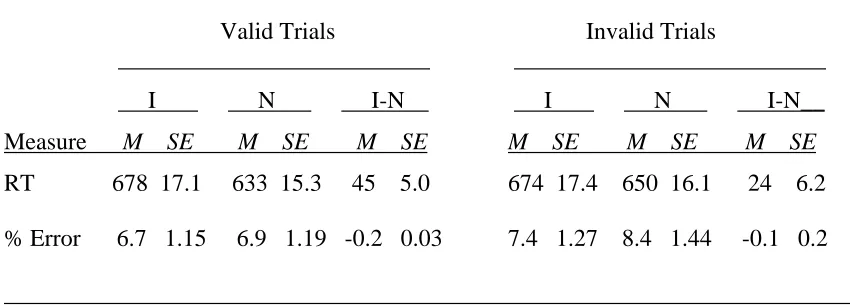
Table 1 shows the mean reaction times and accuracy data2. Repeated measures ANOVA on reaction times found two main effects and a significant interaction.
Participants were faster on valid (656 ms) than invalid (662) trials, F(1, 33) = 4.21, p < .05, suggesting that the manipulation of the cue was effective3. They also demonstrated strong Stroop interference. Color identification was faster when the stimulus was made up of a string of letters (642 ms) rather than an incongruent color word (676 ms), F(1, 33) = 58.96, p < .0001. Furthermore, Stroop interference was greater on valid (45 ms) than invalid (24 ms) trials, F(1, 33) = 9.05, p < .001. Similar analyses were performed on accuracy data, showing a significant main effect of cue. Participants made fewer mistakes on valid trials (6.8% error) than on invalid trials (7.9% error), F(1, 33) = 9.80, p < .01. No other effects reached significance.
_____________________________ Insert Table 1 about here _____________________________
One way to interpret the data is in the framework of the relative processing speed
between the color and the meaning. Although processing speed is unlikely to be the only mechanism which influences Stroop interference (e.g., Cohen, Dunbar, & McClelland, 1990; Glaser & Glaser, 1982; Schooler, Neumann, Caplan, & Roberts, 1997; see
MacLeod, 1991, for a review), as long as we assume that Stroop interference depends in part on response competition between the color and the meaning (e.g., Morton &
processing disadvantage an invalid cue provided on the neutral trials was counteracted by a decrease in interference from an incongruent meaning on the incongruent trials, leading to comparable reaction times on the latter trials. As a result, participants showed greater Stroop interference on the valid cue trials rather than the invalid cue trials.
The finding that Stroop interference differed across conditions was also consistent with the result of Kahneman and Henik (1981), whose participants showed greater Stroop interference when the incongruent color word was the attended stimulus rather than the unattended stimulus. However, as was described earlier, Shalev and Algom (2000, Experiment 2) demonstrated comparable Stroop interference between the valid and invalid trials. How can we reconcile these seemingly inconsistent results?
Among the many differences in methodology, an important factor might be the relationship between the color and the meaning. Whereas Stroop interference was measured as the difference between the incongruent and neutral conditions in both the present experiment and that of Kahneman and Henik (1981), it was calculated as the difference between the incongruent and congruent conditions in Shalev and Algom’s (2000) study. A potential problem in the latter’s approach is the inability to distinguish Stroop facilitation from Stroop interference. Prior research has shown that although Stroop interference is extremely reliable, Stroop facilitation depends on a number of factors such as the type of control used and whether the congruent and incongruent stimuli were mixed or blocked (see MacLeod, 1991, for a review). Several studies even found interference rather than facilitation when participants’ reaction times in the
congruent rather than neutral stimuli in Shalev and Algom’s study might have made their experiment insensitive to differential Stroop interference between the valid and invalid conditions. This could also contribute to a rather unusual finding in their experiment – three of the four measures of Stroop interference (i.e., RT and accuracy data in the valid and invalid conditions) did not reach significance.
The design of Experiment 1 precludes determining whether a narrow attentional focus increased distractor interference or whether a broad attentional focus decreased it. In other words, because the experiment did not employ neutral cue trials, the differential Stroop interference could be the result of an increase in interference due to the valid cue, a decrease in interference due to the invalid cue, or a combination of these factors. Nevertheless, because the goal of Experiment 1 was to investigate the role of attentional focus on distractor interference, it was the changes in distractor interference as a function of attentional focus that was most important. Thus, regardless of which interpretation is more accurate, so long as we assume that participants adopted a smaller extent of attentional focus on the valid than invalid trials, the differential Stroop interference observed in Experiment 1 supports the hypothesis that the degree of distractor processing was inversely related to the extent of attentional focus when relevant and irrelevant information were parts of the same object.
distractor processing should be greater when more attentional resources are available. By this logic, since more resources were available to process the meaning of the word on valid than invalid trials, greater Stroop interference should be observed in the valid than invalid condition.
One way to distinguish the attentional focus account from the perceptual load interpretation would be to induce participants to adopt a similar extent of attentional focus on both valid and invalid trials. The attentional focus hypothesis would predict a main effect of cue and a main effect of stimulus type. However, there would be no cue by stimulus type interaction. In other words, the magnitude of Stroop interference would be comparable in both the valid and invalid conditions due to a similar extent of attentional focus. In contrast, the perceptual load hypothesis would predict greater Stroop
interference in the valid than invalid condition, in addition to the main effects of cue and stimulus type. This is because participants should still have more attentional resources in the valid than invalid condition. Experiment 2 evaluated these competing hypotheses.
Experiment 2
attentional focus is influenced by the size of the relevant item(s) (Pan & Eriksen, 1993), the need to respond to the letteras well as to the color of the Stroop stimulus would require the participants to adjust their attentional focus so that it included both items. In other words, they could not simply have a narrow attentional focus on valid trials and expand it on invalid trials. Instead, their attentional focus would be made roughly the same in both conditions.
Method
Participants. Twenty-two new participants between the ages of 18 and 21 took part in the study. They participated in the experiment for course credit. None of them knew the purpose of the study, or took part in the previous experiment.
Apparatus and Stimuli. The apparatus was the same as that in Experiment 1. The stimuli were also the same except for the addition of a black capital letter, a T or an L (font: Geneva; size: 36 points), located above or below the colored stimulus (see Figure 2). The center-to-center separation between the two stimuli was 2.2 degrees of visual angle.
_____________________________ Insert Figure 2 about here _____________________________
experiment. After responding to the color, the participants judged whether the letter above or below the color stimulus was a T or an L. Two keys, “A” and “ ‘ “ , were labeled “T” and “L”, respectively, and the participants responded to the target letter by pressing the appropriate key with either of their ring fingers. Whereas both speed and accuracy were stressed for the color identification task, only accuracy was emphasized for the letter discrimination task. The experiment required approximately 50 minutes to complete.
Results and Discussion
Letter discrimination accuracy was high (7% error), suggesting that the
participants followed the instructions. Because the reason for including the letter task was to induce the participants to adopt a comparable attentional focus across the conditions, and an ANOVA on the accuracy data did not indicate any systematic deviation across conditions, no further analyses were conducted.
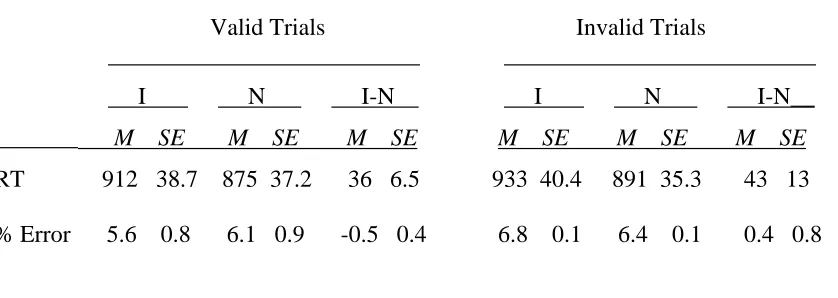
_____________________________ Insert Table 2 about here _____________________________
As was expected, participants’ reaction times were much longer in Experiment 2 than in Experiment 1. Presumably, this increase was due to the fact that the participants in Experiment 2 had to attend to two stimuli whereas the participants in Experiment 1 needed to attend to only one stimulus. What is more important is that the addition of the letter discrimination task eliminated the differential Stroop interference observed in Experiment 1. Such a result is consistent with an attentional focus account. It suggests that the results of Experiment 1 are better explained in terms of attentional focus than in terms of perceptual load.
The results of Experiment 2 were inconsistent with the perceptual load hypothesis. Nevertheless, a more direct test was desirable. In Experiment 3, half the participants performed the color identification task under a low-load condition, while the other half performed it under a high-load condition. If perceptual load influences the degree of distractor processing, there should be greater Stroop interference in the low-load compared to the high-low-load condition.
Experiment 3
Experiment 3 varied participants’ processing load by requiring them to perform the color identification task only when certain conditions were met. Similar to
Experiment 1, the target display included a colored word or a string of letters. However, unlike Experiment 1, a white or black horizontal line was placed either above or below the colored stimulus, and cue validity was not manipulated. For half the participants, the color identification task was to be performed only when the line was either black or white (the feature/low load condition). For the remaining participants, the line had to be of the right combination of color and location, either black-up/white-down, or vice versa (the conjunction/high load condition). If these conditions were not satisfied, participants pressed the space bar to initiate the next trial. Because processing isolated features
requires fewer attentional resources than processing conjunctions of features (Treisman & Gelade, 1980), more resources should be available in the feature than conjunction
Method
Participants. Sixteen new participants between the ages of 19 and 43 took part in the study. They were paid NZ$10 in compensation. All reported to have normal color vision, and normal or corrected-to-normal vision.
Apparatus and Stimuli. Except for the removal of the cue and the addition of the horizontal line, both the apparatus and stimuli were identical to Experiment 1. The line was either white or black, subtended 0.84 x 0.21 degrees of visual angle in length and width, and appeared 0.310 above or below the colored stimulus.
Design and Procedure. The experiment was a 2 x 2 mixed design, with processing load as the between-participant variable, and stimulus type as the within-participant variable. In the low-load condition, half the participants performed the color
identification task when the line was black, and the other half performed it when the line was white. In the high-load condition, the line had to be black and below the colored stimulus for half the participants, and vice versa for the rest. In all other cases, participants pressed the space bar to proceed to the next trial.
Each trial consisted of a central fixation, followed by a colored stimulus and the accompanying horizontal line at the left or right side of the screen. After 64 practice trials, each participant completed a total of 768 trials that were divided into 4 blocks of 192 each. On three-fourths of those trials, color identification was required, and these were the experimental trials. The remaining trials were catch trials on which the
Results and Discussion
In general, the participants were able to inhibit responding to the target letter on catch trials. The mean false alarm rate was less than 8%. Because the sole purpose of including the catch trials was to encourage the participants to process the cue, no further analyses were performed on these trials.
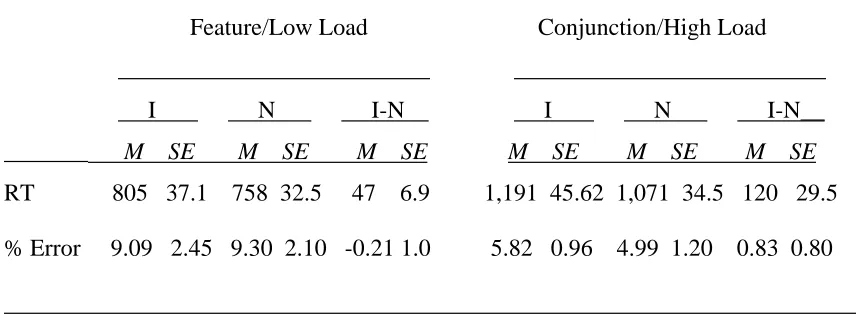
In Table 3, the RTs and accuracy data of the experimental trials are listed. As was expected, reaction times were faster in the feature condition than in the conjunction condition [782 ms vs. 1,131 ms, F(1, 14) = 46.74, p < .001]. Strong Stroop interference was again observed, replicating the earlier finding of shorter response latencies in the neutral condition than in the incongruent condition [915 ms vs. 998 ms, F(1, 14) = 30.44, p < .001 ]. Furthermore, there was a load by stimulus type interaction, F(1, 14) = 5.87, p < .05. However, contrary to the prediction of the perceptual load hypothesis, Stroop interference was greater when the load was high (120 ms) compared to when the load was low (47 ms). ANOVA on the accuracy data did not yield any significant results.
_____________________________ Insert Table 3 about here _____________________________
fact, it increased from 47 ms to 120 ms. Even if we take into account the differential reaction times between the two conditions, the Stroop interference still rose from 6.2% in the feature condition to 11.2% in the conjunction condition, although the increase was not statistically significant, t(14) = 1.81, p > .05. This result is in sharp contrast to Lavie’s finding (Lavie, 1995, Experiments 2A and 2B), who obtained greater distractor
interference in the feature condition than in the conjunction condition. However, in Lavie’s experiments, the target and the distractor were different objects in separate spatial locations. The fact that the result of Experiment 3 was inconsistent with the perceptual load hypothesis suggests that although perceptual load may influence the degree of distractor processing when the target and distractor are different objects, it did not affect the level of distractor processing when the latter was part of an attended object.
It is interesting to note that although the conclusion reached by Shalev and Algom (2000) was very different form the present series of studies, a careful comparison of their data between Experiments 1 and 3 revealed that in terms of processing load, their results were in fact consistent with the results of the present experiment. In their Experiment 3, one of the tasks participants performed was a go/no-go color identification task.
Although Shalev and Algom’s experiments were not designed to assess the role of processing load on Stroop interference, there seems little doubt that the processing load of the participants was much greater in Experiment 3 than in Experiment 1. However, like the present experiment, Shalev and Algom’s participants did not demonstrate an inverse relationship between processing load and distractor interference. The fact that Shalev and Algom’s results were also inconsistent with the prediction of the perceptual load hypothesis strengthens the present finding that a high level of perceptual load does not increase the efficiency of selective attention in Stroop stimuli.
Admittedly, although the results of Experiment 2 suggest that Stroop interference may be influenced primarily by the extent of attentional focus instead of the amount of perceptual load, this conclusion was not unequivocal because it was based on the retention of the null hypothesis. Both Experiments 2 and 3 varied the amount of attentional resources while keeping the extent of attentional focus constant. In
Experiment 4, the amount of attentional resources was kept constant while the extent of attentional focus was varied. If the magnitude of Stroop interference was indeed due to the extent of attentional focus as suggested by the result of Experiment 2, participants should demonstrate greater Stroop interference when the attentional focus was narrow compared to when it was broad.
Experiment 4
Experiment 4 manipulated participants’ attentional focus directly. This was
appear randomly on the left or the right side of the screen, it was 100% valid in that the subsequent target always occurred at its center location. As in Experiment 1, participants performed speeded color identification. If Stroop interference was affected by the extent of attentional focus, greater interference should be found when the cue was small
compared to when it was large.
Method
Participants. Twenty new participants took part in the experiment in exchange for course credit. Their ages were between 18 and 21. All reported having normal color vision, and normal or corrected-to-normal vision.
Apparatus and Stimuli. The apparatus was the same as that in the previous experiments. Except for the cue, the stimuli used in Experiment 4 were identical to those in Experiment 1 (see Figure 3). Instead of two vertical bars, the cue was either a small or a large rectangle subtended 4.210 x 2.100 and 8.210 x 7.640, respectively, or a pair of
horizontally-aligned bars made from the corresponding rectangle by removing its vertical bars. The cue appeared either on the left or right side of the fixation, and the center-to-center distance between the cue and the fixation was 5.00.
_____________________________ Insert Figure 3 about here _____________________________
To encourage participants to process the cue, they were required to make speeded color identification of the target only when the cue was a rectangle. This occurred on two-thirds of the trials. On the remaining trials, i.e., when the cue was a pair of horizontal lines, the participants were instructed to press the space bar to initiate the next trial. Speeded response was not required for these catch trials. The target always occurred at the center location indicated by the cue, regardless of whether a given trial was an experimental or a catch trial.
The entire experiment consisted of two blocks of 288 trials, one with small cues, and the other with large cues, and their presentation order was counterbalanced across the participants. Before each block, the participants did a practice session of 64 trials. All other aspects of the procedure were identical to those in Experiment 1.
Results and Discussion
The participants were generally able to inhibit responding to the target stimulus when the cue was not a rectangle. The mean false alarm rate on catch trials was less than 6%. As before, the data on these trials were not analyzed any further.
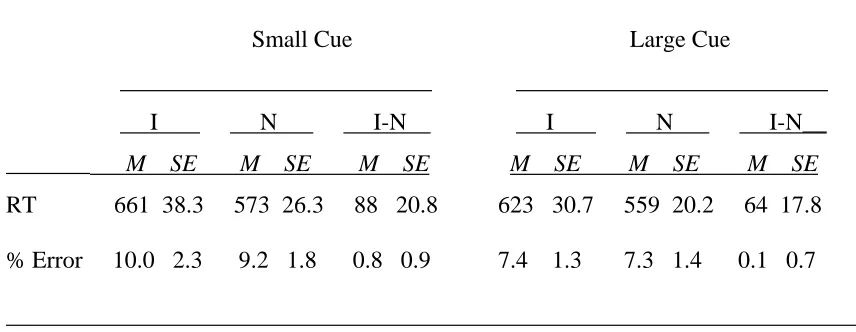
Table 4 shows the participants’ reaction times and accuracy data for the
_____________________________ Insert Table 4 about here ____________________________
The critical finding of Experiment 4 was that Stroop interference effect was greater when the cue was small compared to when it was large. This result complements the finding of Experiment 2, and is consistent with the hypothesis that the extent of attentional focus influences the magnitude of Stroop interference. Recall that in Experiment 2, participants were required to perform both a color identification and a letter discrimination task. As shown earlier, when the dual tasks induced them to adopt more or less equivalent sizes of attentional focus between the valid and invalid
conditions, comparable Stroop interference effects were found on both types of trials. However, when participants’ focus of attention was manipulated directly via different precue sizes, greater Stroop interference was observed when the cue was small compared to when it was large. These results suggest that the effect of attentional focus vary as a function of the nature of stimulus displays. When the target and distractors are in separate spatial locations, narrowing attentional focus to the target location reduces distractor interference (e.g., Eriksen & St. James, 1986; LaBerge et al., 1991; Yantis & Johnston, 1990). In contrast, when the target and distractors are parts of the same object, narrowing attention focus increases distractor interference.
General Discussion
that it promotes selective attention when the relevant and irrelevant information are parts of the same object. Second, rather than reducing the interference of an adjacent distractor, narrowing attention to the target location increases distractor interference in Stroop stimuli. This latter finding is consistent with an object-based theory of attention, which asserts that attention selects an object as a whole regardless of task relevancy (Duncan, 1984; Kahneman & Treisman, 1984).
It is possible that the role of processing load in selective attention may not be determined by whether the relevant and irrelevant information pertains to the same object, but rather by whether they occupy the same spatial location. In a recent study, de Fockert, Rees, Frith, and Lavie (2001) employed target displays that consisted of
condition because it took them longer to process the target. Because the target and
distractors were superimposed, the longer it took the participants to process the target, the more likely the distractors were processed along with the target, resulting in greater distractor interference. Distractor interference is known to be sensitive to the
manipulation of the temporal relation between the target and distractors (e.g., Eriksen & Schultz, 1979; Miller, 1991), although the exact nature of the effect may depend on whether the target and distractors are distinct objects occupying separate locations or whether they overlap in space or are parts of the same object (cf. Miller, 1991).
The attentional focus account proposed here is consistent with the “dilution effect” reported by Kahneman and Chajczyk (1983), who observed an approximate 50%
decrease in Stroop interference when an irrelevant neutral word was added to a display that consisted of a color patch and a printed word. Kahneman and Chajczyk interpreted their finding with an attention-capture hypothesis. According to their view, because of limitation in attentional resources, only the color patch and one other stimulus could be processed on any given trial. Consequently, compared to the one-word condition, the probability of selecting an incongruent color word in dual-word condition was roughly .5, leading to an average of 50% reduction in Stroop interference (but see Yee & Hunt, 1991). Alternatively, the “dilution effect” can be interpreted by an attentional focus account. Because abrupt onset captures attention (Yantis & Jonides, 1984), the
broader in the dual-word condition. If both words were processed simultaneously
(Townsend, 1971, 1974), and the participants’ performance was influenced by whichever word reached the activation threshold first (see Yee & Hunt, 1991; MacLeod & Hodder 1998, for a similar interpretation), this would lead to a smaller Stroop interference in the dual-word condition compared to the single-word condition.
The differential magnitude of Stroop interference observed in the present series of experiments may indicate a differential degree of inhibition across the conditions. Stroop interference is often taken as an example of the visual system’s inability to suppress completely irrelevant information. This is so partly because of the consistent finding that Stroop interference is greater in older than younger adults (e.g. Cohn, Dustman, & Bradford, 1984; Hartley, 1993; Panek, Rush, & Slade, 1984) and inhibitory function is known to be compromised with aging (e.g., Dempster, 1992; McDowd & Oseas-Kreger, 1991). If we believe that efficient inhibition requires attentional resources, participants should demonstrate greater Stroop interference when they have fewer resources than when they have more resources. Indeed, this is what the participants in Experiment 3 showed. Stroop interference was greater in the conjunction condition (11.2%) than in the feature condition (6.2%), although the increase was not statistically significant.
Notes:
1. In keeping with Lavie’s (1995, p. 457) usage which emphasizes the role of processing load in resource terms, “perceptual load” and “processing load” are used interchangeably in the present paper.
2. In all experiments, response latencies less than 150 ms and greater than 2500 were excluded; these constituted less than 1 % of the total data.
3. As pointed out by Tom Sanocki (personal communication, February 2003), the purest way to measure the cue validity effect in the present experiment was to use the neutral trials only. This is because whatever processing advantage a valid cue provided on the neutral trials would be counteracted to some degree by an
increase in interference from the incongruent meaning on the incongruent trials. A t test comparing participants’ reaction times between the valid and invalid
References
Balz, G., W., & Hock, H. S. (1997). The effect of attentional spread on spatial resolution. Vision Research, 37, 1499-1510.
Baylis, G. C., & Driver, J. (1992). Visual parsing and response competition: The effect of grouping factors. Perception & Psychophysics, 51, 145-162.
Beck, J., & Ambler, B. (1973). The effects of concentrated and distributed attention on peripheral acuity. Perception & Psychophysics, 14, 225-230.
Chen, Z. (2000). Spatial attention reduces response interference in low, but not in high, processing load tasks. Abstracts of the Psychonomic Society, 5, 93.
Cohen, J. D., Dunbar, K., & McClelland, J. L.(1990). On the control of automatic processes: A parallel distributed processing account of the Stroop effect. Psychological Review, 97, 332-361.
Cohn, N. B., Dustman, R. E., & Bradford, D. C. (1984). Age-related decrements in Stroop color test performance. Journal of Clinical Psychology, 40, 1244-1250.
Dempster, F. N. (1992). The rise and fall of the inhibitory mechanism: Toward a unified theory of cognitive development and aging. Developmental Review, 12, 45-75.
Driver, J., & Baylis, G. C. (1989). Movement and visual attention: The spotlight metaphor breaks down. Journal of Experimental Psychology: Human Perception & Performance, 15, 448-456.
Duncan, J. (1984). Selective attention and the organization of visual information. Journal of Experimental Psychology: General, 113, 501-517.
Eriksen, B. A., & Eriksen, C. W. (1974). Effects of noise letters upon the
identification of a target letter in a nonsearch task. Perception & Psychophysics, 16, 143-149.
Eriksen, C. W., & Hoffman, J. E. (1973). The extent of processing of noise elements during selective encoding from visual displays. Perception & Psychophysics, 14, 155-160.
Eriksen, C. W., & Shultz, D. W. (1979). Information processing in visual search: A continuous flow conception and experimental results. Perception & Psychophysics, 25, 249-263.
Eriksen, C. W., & St. James, J. (1986). Visual attention within and around the field of focal attention: A zoom lens model. Perception & Psychophysics, 40, 225-240.
de Fockert, J. W., Rees, G., Frith, C. D., & Lavie, N. (2001). The role of working memory in visual selective attention. Science, 291, 1803-1806.
Garner, W. R. (1970). The stimulus in information processing. American Psychologist, 25, 350-358.
Garner, W. R. (1974). The processing of information and structure. Hillsdale, NJ: Erlbaum.
Garner, W. R., & Felfoldy, G. L.(1970). Integrality of stimulus dimensions in various types of information processing. Cognitive Psychology, 1, 225-241.
Glaser, M. O., & Glaser, W. R. (1982). Time course analysis of the Stroop
phenomenon. Journal of Experimental Psychology: Human Perception & Performance, 8, 875-894.
Gottwald, R. L., & Garner, W. R. (1975). Filtering and condensation tasks with integral and separable dimensions. Perception & Psychophysics, 18, 26-28.
Handy, T. D., & Mangun, G. R. (2000). Attention and spatial selection: Electrophysiological evidence for modulation by perceptual load. Perception & Psychophysics, 62, 175-186.
Harms, L., & Bundesen, C. (1983). Color segregation and selective attention. Perception & Psychophysics, 33, 11-19.
Hartley, A. A. (1993). Evidence for the selective preservation of spatial selective attention in old age. Psychology and Aging, 3, 391-379.
Johnson, D. N., McGrath, A., & McNeil, C. (2002). Cuing interacts with perceptual load in visual search. Psychological Science, 13, 284-287.
Kahneman, D., & Chajczyk, D. (1983). Tests of the automaticity of reading: Dilution of Stroop effects by color-irrelevant stimuli. Journal of Experimental Psychology: Human Perception & Performance, 9, 497-509.
Kahneman, D., & Henik, A. (1981). Perceptual organization and attention. In M. Kubory & J. R. Pomerantz (Eds.), Perceptual organization (pp. 181-211). Hillsdale, NJ: Erlbaum.
Kahneman, D., & Treisman, A. (1984). Changing views of attention and
Kramer, A. F., & Jacobson, A. (1991). Perceptual organization and focused attention: The role of objects and proximity in visual processing. Perception & Psychophysics, 50, 267-284.
LaBerge, D., & Brown, V. (1986). Variations in size of the visual field in which targets are presented: An attentional range effect. Perception & Psychophysics, 40, 188-200.
LaBerge, D., Brown, V., Carter, M., Bash, D., & Hartley, A. (1991). Reducing the effects of adjacent distractors by narrowing attention. Journal of Experimental
Psychology: Human Perception & Performance, 17, 65-76.
Lappin, J. S., & Uttal, W. R. (1976). Does prior knowledge facilitate the detection of visual targets in random noise? Perception & Psychophysics, 20, 367-374.
Lavie, N. (1995). Perceptual load as a necessary condition for selective attention. Journal of Experimental Psychology: Human Perception & Performance, 21, 451-468.
Lavie, N. (2000). Selective attention and cognitive control: Dissociating attentional functions through different types of load. In S. Monsell & J. Driver (Eds.), Attention and performance XVIII (pp. 175-194). Cambridge, MA: MIT press.
Lavie, N., & Cox, S. (1997). On the efficiency of attentional selection: Efficient visual search results in inefficient distractor rejection. Psychological Science, 8, 395-398.
Lavie, N., & Fox, E. (2000). The role of perceptual load in negative priming. Journal of Experimental Psychology: Human Perception and Performance, 26, 1038-1052.
Littman, D., & Becklen, R. (1976). Selective looking with minimal eye movements. Perception & Psychophysics, 20, 77-79.
MacLeod, C. M. (1991). Half a century of research on the Stroop effect: An integrative review. Psychological Bulletin, 109, 163-203.
MacLeod, C. M., & Hodder, S. L. (1998). Presenting two incongruent color words on a single trial does not alter Stroop interference. Memory & Cognition, 26, 212-219.
Mayfrank, L., Kimmig, H., & Fischer, B. (1987). The role of attention in the preparation of visually guided saccadic eye movements in man. In J. K. O’Regon and A. Levey-Schoen (Eds.), Eye movements: From physiology to cognition (pp. 37 – 45). New York: North-Holland.
McDowd, J. M., Oseas-Kreger, D. M. (1991). Aging, inhibitory processes, and negative priming. Journal of Gerontology, 46, 340-345.
Miller, J. (1987). Priming is not necessary for selective-attention failures: Semantic effects of unattended, unprimed letters. Perception & Psychophysics, 41, 419-434.
Miller, J. (1991). The flanker compatibility effect as a function of visual angle, attentional focus, visual transients, and perceptual load: A search for boundary
conditions. Perception & Psychophysics, 49, 270-288.
Morton, J., & Chambers, S. M. (1973). Selective attention to words and colours. Quarterly Journal of Experimental Psychology, 25, 387-397.
Nealis, P. M. (1973). The Stroop phenomenon: Some critical tests of the response competition hypothesis. Perceptual & Motor Skills, 37, 147-153.
Neisser, U., & Becklen, R. (1975). Selective looking: Attending to visually specified events. Cognitive Psychology, 7, 480-494.
Pan, & Eriksen, C. W. (1993). Attentional distribution in the visual field during same-different judgments as assessed by response competition. Perception &
Psychophysics, 53, 134-144.
Panek, P. E., Rush, M. C., & Slade, L. A. (1984). Locus of the age-Stroop interference relationship. Journal of Genetic Psychology, 145, 209-216.
Paquet, L., & Craig, G. L. (1997). Evidence for selective target processing with a low perceptual load flankers task. Memory & Cognition, 25, 182-189.
Posner, M. I. (1980). Orienting of attention. Quarterly Journal of Experimental Psychology, 32, 3-25.
Posner, M. I., & Cohen, Y. (1984). Components of visual orienting. In H. Bouma and D. G. Bouwhuis (Eds.), Attention and performance X (pp. 531-556). Hillsdale, NJ: Erlbaum.
Posner, M. I., & Snyder, C. R. R. (1975). Attention and cognitive control. In R. L. Solso (Ed.), Information processing and cognition: The Loyola symposium (pp. 55-85). Hillsdale, NJ: Erlbaum.
Posner, M. I., Snyder, C. R. R., & Davidson, B. J. (1980). Attention and the detection of signals. Journal of Experimental Psychology: General, 109, 160-174.
Schooler, C., Neumann, E., Caplan, L. J., & Roberts, B. R. (1997). A time course analysis of Stroop interference and facilitation: Comparing normal and schizophrenic individuals. Journal of Experimental Psychology: General, 126, 19-36.
Schulz, T. (1979). Components of the reaction time Stroop-task. Psychological Research, 40, 377-395.
Shalev, L., & Algom, D. (2000). Stroop and garner effects in and out of Posner’s beam: Reconciling two conceptions of selective attention. Journal of Experimental psychology: Human Perception & Performance, 26, 997-1017.
Shiffrin, R. M., McKay, D. P., & Shaffer, W. D. (1976). Attending to forty-nine spatial positions at once. Journal of Experimental psychology: Human Perception & Performance, 2, 14-22.
Sichel, J., & Chandler, K. A. (1969). The color-word interference test: The effects of varied color-word combinations upon verbal response latency. Journal of Psychology, 92, 219-231.
Stroop, J. R. (1935). Studies of interference in serial verbal reactions. Journal of Experimental Psychology, 18, 643-662.
Townsend, J. T. (1971). A note on the identifiability of parallel and serial processes. Perception & Psychophysics, 10, 161-163.
Townsend, J. T. (1974). Issues and models concerning the processing of a finite number of inputs. In B. H. Kantowitz (Ed.), Human information processing: Tutorials in performance and cognition (pp. 133-185). Hillsdale, NJ: Erlbaum.
Ward, R. (2001).Visual attention moves no faster than the eyes. In K. Shapiro (Ed.), The limits of attention: Temporal constraints in human information processing (pp. 199-216). New York, NY: Oxford University Press.
Woodman, G. F., & Luck, S. J. (1999). Electrophysiological measurement of rapid shift of attention during visual search. Nature, 400, 867-869.
Yantis, S., & Jonides, J. (1984). Abrupt visual onsets and selective attention: Evidence from visual search. Journal of Experimental Psychology: Human Perception & Performance, 10, 601-620.
Yantis, S., & Jonides, J. (1990). Abrupt visual onsets and selective attention: Voluntary versus automatic allocation. Journal of Experimental Psychology: Human Perception & Performance, 16, 121-134.
Yantis, S., & Johnston, J. C. (1990). On the locus of visual selection: Evidence from focused attention tasks. Journal of Experimental Psychology: Human Perception & Performance, 16, 135-149.
Yantis, S., & Jones, E. (1991). Mechanisms of attentional selection: Temporally modulated priority tags. Perception & Psychophysics, 50, 166-178.
Acknowledgments
This study was supported in part by a research grant from the University of Canterbury. I thank Albrecht Inhoff, Tom Sanocki, Ana Vivas, and Derek Besner for their helpful comments. I also thank Randolph Grace for his careful reading of the manuscript.
Table 1
Mean Reaction Times (RTs, in Milliseconds) Plus Standard Errors and Error Rates (% incorrect) From Experiment 1
_______________________________________________________________________ Valid Trials Invalid Trials
Table 2
Mean Reaction Times (RTs, in Milliseconds) Plus Standard Errors and Error Rates (% incorrect) for the Color Identification Task of Experiment 2 _______________________________________________________________________
Valid Trials Invalid Trials
Table 3
Mean Reaction Times (RTs, in Milliseconds) Plus Standard Errors and Error Rates (% incorrect) for the Color Identification Task of Experiment 3 _______________________________________________________________________
Table 4
Mean Reaction Times (RTs, in Milliseconds) Plus Standard Errors and Error Rates (% incorrect) for the Color Identification Task of Experiment 4 _______________________________________________________________________
Small Cue Large Cue
Figure Captions
Figure 1. Examples of stimulus displays from Experiment 1. On each trial, the participants saw a fixation, a cue, and a target display with either a color word (the incongruent condition) or a string of letters (the neutral condition). The cue could be valid or invalid, and the participants’ task was speeded color identification.
Figure 2. Examples of stimulus displays from Experiment 2. The target display consisted of two stimuli: a color word or a string of letters, and a black capital letter (T or L) situated above or below the color stimulus. The Participants’ tasks were to make speeded color identification to the color stimulus, followed by an accuracy-only letter
discrimination task.
vvv
green
Neutral
Incongruent
Fixation (1005 ms)
Cue (120 ms)
Incongruent Neutral
vvv
green
Fixation (1005 ms)
Cue (120 ms)
Target Display (120 ms)
T
vvv
green
Neutral
Incongruent
Fixation (1005 ms)
Cue (120 ms)
Target Display (120 ms)
+
Incongruent
vvv
green
Neutral
Fixation (1005 ms)
Cue (120 ms)
Target Display (120 ms)