Implementing a more efficient and effective multi-channel
communications strategy at a Support department
Master thesis by: B.W. van Manen University of Twente
University supervisors: Prof Dr. C.P.M. Wilderom
University of Twente
Dr. R. Schimmel University of Twente
Company supervisor: P. Mackaaij
Page 1 of 39
Introduction
Globally more and more companies operate in the service industry. 98% of the world’s biggest companies have a service desk and this service desk carries out the most important role in determining the level of customer satisfaction (Cheong, Kim, & So, 2008). Yet contact center managers struggle to meet their clients’ expectations on response time and channel use. This research takes a first step in tackling this problem, by analyzing the communication channels used, comparing their efficiency and effectiveness, and analyzing how these might influence channel choice. The goal is to provide contact center managers with guidelines on customer satisfaction drivers and guidelines on managing efficiency and effectiveness. This is important because by keeping client contact efficient, high service levels remain affordable, and thus, available.
A question at a Support department can have several causes: the functionality of a program may be unclear, there might be a bug in the software, or new functionality may be required. These causes can be interesting to investigate, as a reduction in bugs in the software would decrease the number of questions at Support and reduces the time spent on explaining a workaround. However, this research focuses on the solution offered by Support, the communication channel chosen to convey the response, and whether clients are satisfied by the solution offered.
This research examines customer support channels at a Dutch company that produces software to help support departments with the registration of questions, problems, changes, etc. Available support channels and promising unused channels are researched and compared, clients’ perceptions of support via these channels are determined, and a literature review on efficient support is conducted. The goal is to present contact center managers with guidelines on channel use, efficiency, and effectiveness, to optimize the performance of a support department.
The company at which this research is held is in the unique position that it not only has a helpdesk, but also produces the software used to register questions at the helpdesk for thousands of companies. Many communication channels are used to test the software and support the company’s clients. This means the company influences a large part of the market because channels integrated in the product are likely to be used by clients. Insights gained by this research are likely to be shared in the field by consultants visiting clients and by sharing the results with respondents to the research.
The research starts with a general description of the company, the problem, and a literature review exploring this problem in the first chapter. Chapter two focuses on the required knowledge, describing research questions and the required sample, measurements, and research design. The next four chapters focus on the four research questions from the second chapter. In the seventh and final chapter the findings are summarized and the conclusions of the research are presented together with a reflection on the researches relevance and recommendations for future research.
Page 2 of 39
Table of contents
INTRODUCTION ... 1
TABLE OF CONTENTS ... 2
LIST OF ABBREVIATIONS ... 3
LIST OF CONCEPTS ... 3
LIST OF FIGURES ... 3
LIST OF MENTIONED COMMUNICATION CHANNELS ... 4
MANAGEMENT SUMMARY ... 5
CHAPTER 1: PROBLEM DESCRIPTION AND RELEVANT RESEARCH ... 6
COMPANY DESCRIPTION ... 6
PROBLEM DESCRIPTION ... 6
LITERATURE REVIEW... 7
CHAPTER 2: SAMPLE, MEASUREMENTS AND RESEARCH DESIGN ... 10
CHAPTER 3: CHANNEL USE AND PROMISING CHANNELS ... 12
MEASURING EFFICIENCY ... 12
SELF-REPORTED CHANNEL USE ... 13
MEASURING SATISFACTION ... 14
SATISFACTION WITH CURRENT CHANNELS ... 15
EMPLOYEES’ VIEWS ON EFFECTIVENESS AND EFFICIENCY ... 15
PROMISING OTHER CHANNELS ... 16
CHAPTER SUMMARY ... 17
CHAPTER 4: OPERATOR SKILL AND SATISFACTION WITH CURRENT CHANNELS ... 18
MEASURING SKILL ... 18
TECHNICAL AND BEHAVIOURAL SKILL ... 19
MEASURING EXPECTED EFFICIENCY ... 19
EXPECTED CHANNEL EFFICIENCY ... 20
INTERACTION BETWEEN SKILL AND SATISFACTION ... 20
CHAPTER SUMMARY ... 21
CHAPTER 5: NEEDS, WANTS, AND CONCERNS FOR EACH CHANNEL ... 22
USE OF PROMISING NEW CHANNELS ... 22
MEASURING NEEDS, WANTS AND CONCERNS ... 23
NEEDS AND CONCERNS FOR CURRENT AND PROMISING NEW CHANNELS ... 23
IMPLICATIONS OF THE NEEDS AND CONCERNS FOR CURRENT CHANNELS ... 24
WANTS FOR CURRENT CHANNELS ... 25
CHANNEL PROPERTIES AND USAGE ... 25
CHAPTER SUMMARY ... 26
CHAPTER 6: INCREASING EFFICIENCY WITHOUT REDUCING EFFECTIVENESS ... 27
CURRENT SITUATION ... 27
INCREASING EFFICIENCY ... 27
EFFICIENCY AND SATISFACTION ... 28
REQUIREMENTS FOR MORE EFFICIENT SUPPORT ... 29
BARRIERS WHEN IMPLEMENTING CHANGE ... 29
CHANGING COMMUNICATION CHANNELS ... 30
IMPLICATIONS FOR MANAGEMENT ... 32
CHAPTER 7: RESEARCH SUMMARY AND DISCUSSION ... 33
RESEARCH SUMMARY ... 33
Page 3 of 39
SUGGESTIONS FOR FUTURE RESEARCH ... 34
SUGGESTIONS FOR TOPDESK ... 35
CITED SOURCES ... 36
APPENDIX A: COMPLETE LIST OF ALL SURVEY QUESTIONS. ... I APPENDIX B: RESULTS OF THE BRAINSTORM SESSION ON EFFECTIVENESS AND EFFICIENCY. ... III APPENDIX C: PAIRED SAMPLES T-TEST SCORES FOR SKILL AND SATISFACTION ... IV APPENDIX D: INTERACTION EFFECTS BETWEEN SKILL AND SATISFACTION ... V APPENDIX E: OPEN ANSWERS FOR EACH COMMUNICATION CHANNEL. ... VI
List of abbreviations
B2B Business to business B2C Business to consumer (e)CRM (electronic) Customer relationship management FTR First Time Resolution, also known as First Time Right KPI Key Performance Indicator NPS Net Promoter Score SaaS Software as a Service SST Self-service technology SSD Self-Service Desk; the name of the SST package offered by TOPdeskList of concepts
Channel A means or agency of communication Concern To trouble, worry, or disquiet Effective Adequate to accomplish a purpose Efficient Accomplishment of a job with a minimum expenditure of time and effort Need Something deemed necessary Satisfaction Fulfilling all demands or requirements Skill The ability to do something well Want To feel a desire for; wish forList of figures
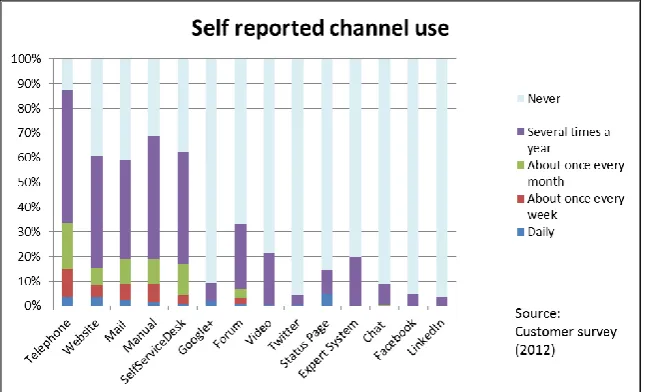
Figure 1: 2011 customer incidents, sorted by entry type. ... 12Figure 2: Channel usage frequencies (number of respondents) for questions to TOPdesk ... 13
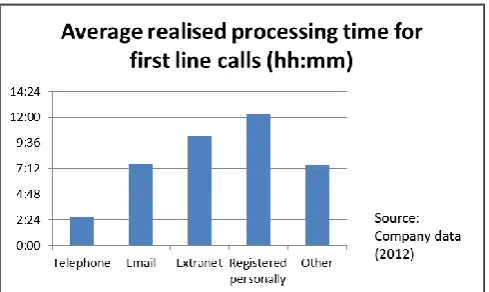
Figure 3: Average realized processing time (hours: minutes) for 2011 calls sorted by entry type ... 14
Figure 4: Satisfaction scores sorted by entry type ... 15
Figure 5: Technical and behavioral skill score sorted by entry type ... 19
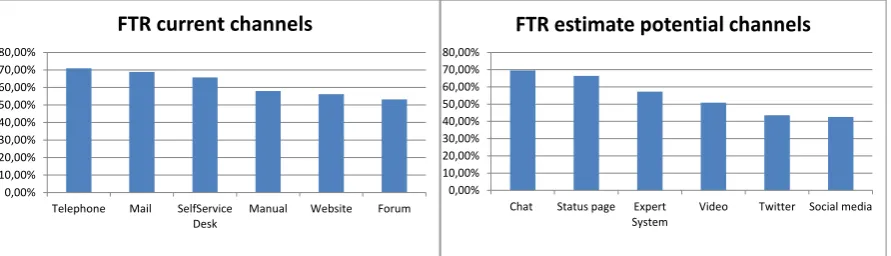
Figure 6.1 and 6.2: Average expected percentage of calls resolved in the first response for current channels (left) and potential new channels (right). Source: customer survey (2012) ... 20
Figure 7: Reported channel use for answering general questions using promising new channels ... 22
Figure 8.1 and 8.2: Needs and concerns scores from the 2012 customer survey, sorted by channel property. Higher scoring properties are more appreciated by clients. ... 24
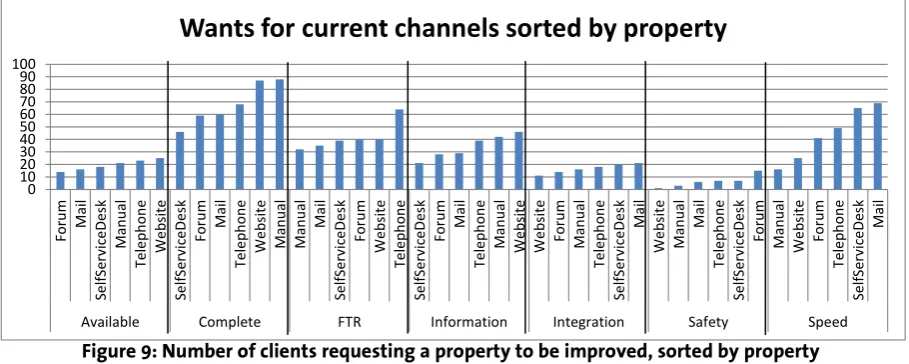
Figure 9: Number of clients requesting a property to be improved, sorted by property ... 25
Figure 10: Percentage of clients reported to use each channel ... 26
Figure 11: Representation of the current situation at Support. (Logged call statistics) ... 28
Figure 12: Representation of the most efficient situation at Support. (Employee brainstorm) ... 28
Figure 13: Representation of the most satisfying situation at Support. (Survey responses) ... 28
Page 4 of 39
List of mentioned communication channels
Channel Description
Telephone A telecommunications device that transmits and receives sounds. This can be
supplemented by software to transmit video, to see what the caller sees.
E-mail A method of exchanging digital text messages and electronic documents.
Self-Service Desk A structured form to gather information related to a question, and a possibility to
review previous questions. Replies are made using another channel. (Help & Support)
Website A set of related pages on the internet where clients can search and find manuals, quick start guides and Frequently Asked Questions.
Manual A document intended to give assistance to people using a particular system.
Forum An online discussion site where clients can hold conversations in the form of
posted messages.
Chat A real-time direct transmission of text-based messages from sender to receiver.
Status Page A website that shows information on the availability of other web services.
Google+ * A social network that allows users to share messages with groups (called circles).
Facebook * A social network that allows users to share messages with friends.
LinkedIn * A social network that allows users to share messages with working professionals.
Expert system A computer system designed to emulates the decision-making ability of a human
expert, for instance used to answer questions similar to previously answered ones.
Video A sequence of still images representing scenes in motion. In a support context,
videos are used to show a series of actions.
Twitter A service that enables its users to send and read short text-based messages.
Page 5 of 39
Management summary
This research aims to answer the question: How can the Support department at TOPdesk most efficiently answer its client’s questions without decreasing customer satisfaction?
To answer the question, the current communication channels at the Support department were analyzed on efficiency and effectiveness. Although each channel has its merits for some kind of question, in general it can be stated that the website, manual, and forum are most efficient as they require no effort from the operator. Regarding satisfaction, the Self-Service Desk (SSD) and telephone score highest. This high score for the SSD is promising, as this channel enables operators to distribute questions according to skill and preference, and allows the operator to search similar questions and copy their answer. As a link between operator skill and effectiveness was likely, the skill level of operators was determined and its relation with satisfaction was determined. It was found that for all channels skill levels of both technical and behavioral skill were high, as are satisfaction scores. There is a strong link between skill and satisfaction, showing the importance of operator training. Channels without personal contact are seen by clients as less efficient, as fewer questions are answered in the first response. As a probable cause, the difficulty of finding information is mentioned repeatedly.
The channels used by clients were analyzed, as was their motivation for using those channels. The channels offered by the company are used most by clients, and the channel use indicates a preference for personal contact and effectiveness. This suggests that if the effectiveness of efficient channels is increased, their use increases. When using a channel, clients want complete and speedy answers, indicating the use of a channel can be increased by reducing the channel’s processing time.
From the channels seen as promising additions to what is currently offered, chat and a status page are seen by clients as both quick and efficient. However, a status page is only useful for a limited number of clients and both channels are not used frequently. Adding these channels will require a campaign to make clients aware of this new possibility, preferably combined with an overview of the other channels currently offered, as clients repeatedly mention being unaware of a channel.
The addition of new channels may increase the workload of managers and negatively influence organizational performance due to possible overlap and required oversight. However, these drawbacks are mitigated when the new communication channels are integrated with current channels, as operators only need to focus on the integrating tool, instead of the different channels. If new channels are well integrated with the old, they provide an opportunity to distinguish from the competition. There are several options to increase the efficiency of a Support department, but the requirement that customer satisfaction does not decrease limits the possibilities to two options. First, the use of the SSD should be promoted. This can be done by decreasing the processing time of questions, for instance by assigning operators to this specific channel. The other option to increase efficiency is to increase the use of the website, manual, forum, and other channels where clients answer their own questions. This can be done by creating an integrated search function that presents results from all these channels. To prevent clients from having to switch to a new channel, this would initially require forwarding search queries, search results, and login credentials between channels. To make this search portal a success, it should be included in the company’s product, ensuring good design and continuous feedback and improvements.
The length of the survey, a possible selection bias, and developments during the research are determined to have little influence on the findings, confirming their validity. New developments are likely to influence a similar research in the future, so it is important that these changes are taken into account when the results of future surveys are compared to this study.
Page 6 of 39
Chapter 1: problem description and relevant research
Company description
TOPdesk is a Dutch producer of service management software, founded in 1993. Over the past years, TOPdesk has evolved into a well-known player in the service management field. Today, the company is a global organization with five international branches and more than 400 employees (Boks, 2011). As an independent and privately owned company, TOPdesk has funded its expansion by its own means and assets. TOPdesks software helps other organizations to efficiently and effectively streamline their service processes. This software is a generic, standard application that can be employed in a variety of settings including IT support, facilities management, Human Resources, Shared Service Centers, client support and call centers. The common factor in all these supporting organizations is the processing of calls and requests from clients, employees and members.
The internal working culture values initiative, ambition and diversity of opinion. Bureaucratic procedures at TOPdesk are kept at a minimum; instead employees enjoy the freedom to explore their ideas in a supportive environment. In 2009 TOPdesk was awarded the title ‘best employer for young parents’ by Intermediair, mainly because of the flexible working arrangements the company offers to all employees.
TOPdesks software is available in various versions for different organizations and as Software as a Service (SaaS), a solution where the entire service is hosted by TOPdesk. Besides its software, TOPdesk offers consultancy services, training programs, maintenance, helpdesk support and several promotional outlets like a website, a magazine and a symposium.
The company turnover of over 20 million Euros a year is almost equally distributed between income from license fees, income from consultancy, and support & maintenance contracts, of which about 80% is generated in The Netherlands (Boks, 2011). These revenue streams are typical for enterprise software vendors. (N. Ramasubbu, S. Mithas, & M. Krishnan, 2008a); (Kevin J. Delaney, 2004).
Problem description
At the TOPdesk support department over 40 support specialists strive to fulfill the company mission to ‘help our clients satisfy their clients’. The departments handles about 3500 incidents each month, answering the phone within 9 seconds and resolving 75% of all questions within a day (Boks, 2012). However, as the company grows in clients these numbers become more and more difficult to achieve. In 2008, the support department grew by 30% to decrease the number of incidents per employee. However, from 2009 until now, the department has seen an increase in incidents per employee each year. This despite the continuing growth of the department (van Manen & Boks, 2012). The increase in incidents per employee, and the resulting increase in workload may increase the response time of support employees, but may also decrease employee morale, productivity and retention rate (Swanson, 2009) a potentially crippling development for a department dependent on the knowledge of its employees.
To counter this potential threat, TOPdesk has not only increased the pace at which new support employees are hired, but also launched several initiatives aimed at decreasing the number of incidents per client: Next to the manuals that were already distributed amongst clients, TOPdesk launched a website with supporting documentation and a community for clients to discuss questions and find more information. With these measures in place, the increase in customer questions per employee slowed, but is still increasing.
Not only is there an increasing amount of questions to be handled by the support department, they also need to monitor new channels by which clients are able to communicate with the company. Many companies experiment with support via communities (50%), social media (33%) and (mobile-) apps (25%) (Bor, 2011). As the number of questions from clients and the variety of customer contact methods increases, it becomes increasingly difficult to manage a support department.
Page 7 of 39 analyzing the drivers of satisfaction with a communication channel and provides guidelines on customer experience management and service strategy design to decrease the pressure on a support department.
Literature review
The previous part of this chapter described how many support department managers struggle to keep their department efficient and effective and how communication channels are part of this problem. The next part will describe what other researchers have found about these subjects, how they are linked to a company’s performance, and what is written about the relevance of the problem. At the end of this chapter, recommendations from other research are summarized and translated into a list of required information for continuing this research.
Communication channels
In search of efficiency, Self-Service-Technologies (SSTs) are used by companies to reduce operating costs by shifting part of the service process activities to customers (Ancarani, 2005; Davis, Spohrer, & Maglio, 2011). Cheng, Tsao, Tsai, and Tu (2007) proved that the addition of an online channel improves the financial performance of a firm because of increased lifetime value from customers and enhanced competitive advantages, like higher market coverage and lower transaction costs.
Multiple channels not only present companies with the opportunity to distance themselves from competitors, they may also increase the workload of managers and negatively influence organizational performance (Valos, Polonsky, Geursen, & Zutshi, 2010) as more channels require more oversight and might overlap with existing channels.
Neslin et al. (2006) describe how the addition of a channel may lead to lower loyalty due to coordination difficulties, or channel cannibalization when different channels offer similar content. The coordination difficulties are confirmed by Wilson and Daniel (2007), who mention that the increase of digital channels increases the number of channels that need to be managed, which would lead to increased management complexity. Next to the coordination difficulties and channel cannibalization, poorly integrated multiple channels may lead to customer dissatisfaction (Rosenbloom, 2007) because they cannot find the right information on the channel they use to search for it. However, Payne and Frow (2004) have developed several strategies to manage the channel mix and integrate channels, claiming to mitigate the downsides of a multi-channel strategy.
Dixon, Dull, and Wolfe (2003) point out that service levels across channels need not be consistent, as consumers behave differently depending on what they are looking for. This statement is repeated by (Montoya-Weiss, Voss, & Grewal, 2003), who suggest varying service levels across channels to influence channel choice as the service levels on the traditional- and the online channel influence customer satisfaction separately. Though the internet as a channel can be used to increase the efficiency of services, this does require a sophisticated understanding of the way customers use the channels (Hughes, 2006). This understanding can be gained by studying the needs, wants, and concerns of customers for each channel (Payne & Frow, 2004), making these attributes important in researching multiple communication channels.
What most studies on the channel mix have in common is the realization that companies must make a choice regarding the channels they offer to clients. Payne and Frow (2004) mention this decision is dictated mostly by the customer, but there is no one approach to making channel implementation decisions (Valos et al., 2010). Many researchers offer a step-by-step channel mix selection guideline, but these differ widely. What they have in common is the notion that with channel selection, understanding customer channel use is an important step (Neslin et al., 2006); (Payne & Frow, 2004); (Band & Petouhoff, 2009).
Page 8 of 39 Efficiency, effectiveness and satisfaction
When researching efficient and effective work at support departments, it is important to find a clear definition of both terms. Efficiency is defined as the accomplishment of a job with a minimum expenditure of time and effort, while effectiveness is defined as the degree to which the intended purpose is accomplished (Dictionary.com, 2012; VanDale.nl, 2012). In this context, it is assumed that the intended purpose of a call to a customer support department is to have a question from a client answered. So, an effective and efficient support department would answer a clients’ question with a minimum expenditure of time and effort.
Effectiveness is traditionally measured in terms of precision (the percentage of retrieved documents that are relevant) and recall (the percentage of documents that are retrieved by the system); two measures that require an in-depth knowledge of the underlying system and the relevance of documents (Hull, 1993). These measures are relevant for a support department when analyzing the underlying functionality of a website, but are difficult to apply to support by telephone and other communication channels where the total available knowledge is hard to put in numbers. This makes effectiveness in this setting hard to measure.
Al-Maskari and Sanderson (2010) describe that in information retrieval, system- and user effectiveness are strong influencing factors of user satisfaction. Satisfaction with an information retrieval system decreases significantly when the right document is not the first result of a query (Huffman & Hochster, 2007) or when the amount of time required to find the information sought increases (Law, Klobučar, & Pipan, 2006; Su, 2003).
For measuring user satisfaction, many scales and questions have been developed, making satisfaction easy to measure on a user level. High user satisfaction results in higher loyalty, which in turn results in good company performance (Brown & Lam, 2008; I. L. Heskett, Iones, Loveman, & Sasser, 1994; Yee, Yeung, & Cheng, 2008), so measuring satisfaction is not only easier than measuring effectiveness, its results are also more relevant in predicting future company success.
In a Business (B2B) setting, satisfying clients is more difficult than in a Business-to-Consumer (B2C) setting, as B2B customers have higher demands (Miciak & Desmarais, 2001). The e-CRM (electronic Customer Relationship Management) industry proves even more challenging as it faces the same challenges as its customers, but has lower satisfaction ratings (Taylor & Hunter, 2002). This puts the company in a difficult position as it needs to satisfy the wishes of customers with high demands.
For this research, this means that satisfaction scores will be used when measuring the effectiveness of a communication channel. Also, because the company operates in a B2B setting and the CRM industry, the resulting satisfaction scores may not be comparable to those of other companies, as it is more difficult to achieve high scores in this setting and industry. For measuring efficiency, these satisfaction scores should be compared to the amount of time required to find the answer, and whether the answer was found in the first attempt.
Past experience
Wang, Harris, and Patterson (2012) studied self-service technologies (SST’s) in a retail environment and conclude that perceived complexity and past experience influence channel choice. Customers must think a service technology will be easy to use, to get them to use it. Also, a positive first time experience is important for customers to trust service technologies, but customers expect problems and give a SST a second chance.
The research was conducted in a retail environment, but the findings show the importance of perceived complexity and user experience in channel selection. Klaus and Maklan (2012) also acknowledge the importance of a positive experience and conclude that this has a significant impact on customer satisfaction, loyalty and word-of-mouth intentions. A customer who experienced helping himself to be easy is more likely to try it again and recommend it to others. The importance of positive experience is further confirmed by Verhoef et al. (2009), confirming that prior experiences influence the way customer experience their next service encounter.
Page 9 of 39 Relevance of the research
Research on effective and efficient support is highly relevant for TOPdesk because the number of support requests per full time employee (FTE) at the support department has increased the last four years (TOPdesk, 2012). The increasing amount of questions makes it more difficult for the support department to achieve its response time Key Performance Indicators (KPI’s) which is feared to negatively influence customer satisfaction (Ravensbergen, 2012). This relation is confirmed by Cheong et al. (2008) who find that blocked calls, answer speed and service level determine customer satisfaction.
However, branch-wide research shows clients being more interested in solutions than waiting times (Bor, 2011). Feinberg, Kim, Hokama, de Ruyter, and Keen (2000) found the relation between answer speed and caller satisfaction to be only marginally significant and research by Ramasubbu et al. (2008a) indicates customer support satisfaction is influenced in a mayor way by technical- and behavioral skills of the support staff. A KPI that has proven links to satisfaction is First Time Response (FTR), the percentage of calls that is solved in the first response. Chen, Chiang, Chong, Lin, and Chang (2011) list FTR as one of the few significant contributors to customer satisfaction.
In recent literature it is mentioned that “there is limited work that examines customer satisfaction for support services of software systems” (N. Ramasubbu, S. Mithas, & M. S. Krishnan, 2008b, p. 511). A guest editorial by Davis et al. (2011) lists providing higher levels of service to increasingly demanding customers, and establishing consistently high levels of service quality across multiple channels, as challenges for today’s service managers. Finding the right mix of customer contact channels alone is considered a challenge (Rosenbloom, 2007) and optimizing the channel portfolio is mentioned as a service science research priority (Ostrom et al., 2010).
From the previous section it can be concluded that the perceived technical- and behavioral skills of Support employees should be measured to further analyze their influence on customer satisfaction. The FTR of calls also influences satisfaction and should therefore also be included in the research. It can be concluded that a research on customer satisfaction and the optimal support channel mix will be an interesting addition to current service science literature.
When all relevant information on the communication channels used at a support department is combined, a research should include information on channel use by clients, prior channel experience, the needs, wants, and concerns of customers for each channel, FTR scores, and perceived support staff skills. This information, combined with satisfaction scores for each channel, should provide a clear overview of the channels used, customers’ satisfaction with these channels, and the reasons behind the satisfaction scores.
Implications for TOPdesk
Currently, TOPdesk does not log the use of communication channels that are not used to ask questions to Support employees in a central location. The use of communication channels for Support purposes is logged, but this could be combined with information on the use of other channels to provide a clearer overview. TOPdesk does not log whether a call is answered in the first response, as the number of responses is not logged. If the software is adapted to include this information, the company and its clients would be able to automatically measure a KPI with a significant contribution to customer satisfaction.
For some of its clients, TOPdesk has implemented a continuous way of measuring customer satisfaction by including questions regarding the satisfaction with a response for each response. With this information it would have been easier to conduct this research, and customer satisfaction can be measured in a more continuous fashion. It would also increase customers’ knowledge about this possibility, likely increasing its use.
Page 10 of 39
Chapter 2: Sample, measurements and research design
From the previous chapter it became clear there is a need for more information on the influence of communication channels on the satisfaction of call center customers. This chapter will start with the formulation of a research question and the sub-questions that need to be addressed to gather this information. Hereafter, it is described what information is required to answer these questions and how this will be attained. The chapter concludes with a list of research designs found suitable for each research question.
In the previous chapter it was concluded that research on customer satisfaction and the optimal support channel mix would be an interesting addition to current service science literature. TOPdesk, a leading international supplier of service management software, saw the importance of this research and commissioned the research to be conducted at its Support department. The company also enabled the researcher to contact its clients, offering a unique insight in the opinions of the service management professionals that are its clients. This led to the following research question:
How can the Support department at TOPdesk most efficiently answer its client’s questions without decreasing customer satisfaction?
It was described in the literature review section that, to answer this question, information is needed on the possible support channels, the current efficiency of each channel, the customer’s experience and satisfaction with each channel, the perceived support staff skills, and the customer’s needs, wants, and concerns with regard to these channels. To structure this need for information, the following sub-questions were formulated:
1. (a) What channels are currently used at TOPdesk to facilitate customer support, what is the (b) efficiency and (c) effectiveness of these channels, and (d) what channels are not currently used, but are promising in terms of customer satisfaction and efficiency?
2. What is TOPdesk’s clients’ perception of the support department’s staffs (a) technical- and (b) behavioral skill, what are TOPdesk’s clients’ expectations in terms of (c) efficiency and (d) satisfaction of the current support channels, and (e) how are these likely to influence each other?
3. (a) What communication channels do TOPdesk’s clients commonly use, what are their (b) needs, (c) wants and (d) concerns with regard to receiving support using these channels, and (e) are these channels congruent with the channels used at TOPdesk to support its clients?
4. (a) What implementation steps are needed for the support department to increase efficiency and meet its customers channel use expectations, without decreasing customer satisfaction, (b) and what are the main barriers for implementing more efficient and more effective customer support channels?
To answer the first question, customer support channels that are used at TOPdesk will be determined by examining internal documents. To determine the efficiency of current support channels at TOPdesk, internal documentation will be combined with an internal brainstorm session on perceived channel efficiency. Promising unused channels will be determined via literature on customer service and reports on customer support branch research.
The research method of a survey was chosen for its suitability to explore the communication channels used by clients. An electronic survey allows the researcher to reach a broad audience with little effort and is distributed to foreign clients with the same ease as locals, required to reach all the company’s clients. Electronic data is also analyzed faster as the information is already in a database. This was important because of the limited time available for a master thesis.
Page 11 of 39 Research question three will also be answered from the survey, asking clients about their channel use, needs, wants, and concerns per channel. The survey will contain questions found in literature describing similar studies on these topics to increase the validity and the comparability of the results. This survey is to be distributed amongst TOPdesk’s customers’ contact persons via e-mail. From a similar research in the support branch, a response percentage between 6% and 7% is to be expected.
For the fourth question, regarding the possibilities to increase efficiency, information on the organizational changes needed to achieve increased efficiency will be determined by studying literature on this topic, combined with a study of organizational change management literature and a review of the information gathered in the previous parts of the research. The research question is answered in the seventh chapter by combining the information from all previous chapters into a research summary. The thesis concludes by analyzing threats to the validity of its results and listing suggestions for future research.
The chosen method of an electronic survey is limited by the length of this survey, as respondents can be expected to answer only a number of questions before abandoning the research. This led to a focus on single item questions for the research. The questions, along with details on the selection of the question and the answers provided by respondents, are presented in the next chapters. A complete list of all survey questions is presented in appendix A, along with a table that lists the source article(s) for each survey question.
Page 12 of 39
Chapter 3: Channel use and promising channels
This chapter will discuss the first sub question of this research:
1) (a) What channels are currently used at TOPdesk to facilitate customer support, what is the (b) efficiency and (c) effectiveness of these channels, and (d) what channels are not currently used, but are promising in terms of customer satisfaction and efficiency?
The chapter starts with a description of the channels used at TOPdesk, followed by a review of ways in which efficiency and effectiveness can be measured in general, and in this specific situation. Hereafter, an overview of channel efficiency and effectiveness at TOPdesk is presented, along with an analysis of what channels have a high potential, based on the measures of effectiveness and efficiency and the opinions of experts in the field. The chapter’s conclusion summarizes these answers to the first sub question.
[image:13.595.176.423.314.482.2]TOPdesks software is a generic application that can be employed in a variety of settings including IT support, facilities management, Human Resources, Shared Service Centers, client support and call centers. The common factor in all these supporting organizations is the processing of calls and requests from clients, employees and members. TOPdesk uses its own software internally to monitor calls at the helpdesk, providing useful information to this research on, for instance, the number of calls, the channels used, and the time it took to complete a question.
Figure 1: 2011 customer incidents, sorted by entry type.
Figure 1 represents questions to the Support department in the year 2011. Entry type is logged at the first registration of the call. A question from a customer who uses the telephone to ask a question, and then sends more information using e-mail, is logged as a question by telephone. From the graph it is clear that most customers use the telephone to ask their questions (54%). Next on usage is the extranet, an online form that clients can use to submit their question to the Support department, who then can select an appropriate response. The usage of the extranet (31%) is high, as most helpdesks have e-mail as the second largest channel (Bor, 2011), tough some of these calls are automated requests to update client information.
E-mail is third on usage with about 11% of all questions. Other entry types, in order of usage, are personal registration by a consultant, the question form at online knowledge base items, instant messenger, and the TOPdesk community. This community is a website where clients can help each other. Questions that are answered at the community website by other clients are not registered as such and questions answered by support employees are too few in number to show in the chart.
Measuring efficiency
Page 13 of 39 However, at TOPdesk Support, the time spent on a call is not logged. The company bills its clients on whether they have a support contract or not, regardless of the number of questions filed, and does not log the time spent on calls or clients for internal purposes. There is other information that can be used to get an idea of the time spent on a call, as the time of registration and the time of completion of calls are logged. From this information, a general overview of the channels used and the time spent on questions through these channels can be derived.
To get a more complete picture, clients were also asked in a customer survey to report on whether they use a channel to get general questions answered, to find whether a channel is suitable for support purposes, and whether they used the communication channel to contact the company’s Support department. The questions regarding the use of a channel were:
The articles that served as a source for these questions offered no data to compare the results with, as they focus on the expected effects of several determinants on the use of (online) channels. As a comparison, the registered entry types of questions logged with the company are presented hereafter.
Self-reported channel use
[image:14.595.164.434.403.562.2]As the data from the company’s incident registration tool focuses on incidents logged with the Support department, information on the usage of channels that do not require an answer by this department is scarce. To supplement the available data, customers were asked to report on their usage of several communication channels and how often these were used to answer a TOPdesk-related question. The answers (N=264) are depicted in Figure 2.
Figure 2: Channel usage frequencies (number of respondents) for questions to TOPdesk
The data shows that telephone is not just the channel with the most registered incidents, but is also reported by clients as being used most. Looking at the number of incidents, the Self-Service Desk (SSD) is used second most, but clients don’t experience it this way as many of these are automated requests. Telephone and e-mail are reported to be used daily by some clients, putting these channels in first and second place.
Aside from the SSD, the self-reported contact is in the same order as the customer incidents by entry type. The data also shows the use of the Help & Support website, the manual, and the forum, something that is mostly invisible to operators at Support. These channels are not used as much as the telephone, but there are still several clients reporting to use the website once a week. When these clients find the information they need on the website, this reduces the amount of questions for Support.
As stated earlier, the company also logs processing time for calls. An overview of all communication channels logged in the company’s registration system is presented in Figure 3. Entry types for which the number of logged calls is less than 0.1% of all calls logged were omitted.
Have you used (the channel) to get a question answered during the past year, for business or personal use?
Page 14 of 39 Figure 3: Average realized processing time (hours: minutes) for 2011 calls sorted by entry type
From the chart, it is clear that calls with the entry type telephone are solved fastest. However, this number is probably distorted, as incidents by phone are often logged after the call is completed instead of before the operator starts working. Next, in order of duration, are calls by e-mail, extranet, and registered personally. This last category has questions registered for clients by their consultants, so it is to be expected that these questions take more time, as the consultant could have answered easy question directly. For calls represented by the entry type Other, no entry type was registerd.
Measuring satisfaction
In the first chapter, effectiveness was defined as the degree to which the intended purpose is accomplished. It was shown that measuring this intended purpose in traditional ways is difficult when the total available knowledge is unknown. To counter this, satisfaction was presented as the most suitable measure.
There has been a lot of research on customer satisfaction with services, and many questionnaires have been developed to determine this satisfaction. For face-to-face service SERVQUAL was developed. It is one of the oldest service quality scales, on which many others are based. The SERVQUAL scale measures many aspects of the service experience and is still thought of as reliable (Keiningham, Cooil, Andreassen, & Aksoy, 2007). However, in a B2B setting the SERVQUAL scale must be applied with caution (Durvasula, Lysonski, & Mehta, 1999).
It can be a lot of work to measure satisfaction using SERVQUAL. This is one of the reasons Reichheld (2003) developed a shorter measure: the Net Promoter Score (NPS). This score can be established fast, as it is determined with a single question. NPS is currently widely used and serves as a benchmark for companies (J. L. Heskett & Sasser, 2010). There is more support for using single item measures. Drolet and Morrison (2001) find that a multiple item scale aggravates responses, increasing errors and undermining reliability. Ramasubbu et al. (2008b) found that customers believe multiple items within a construct are redundant and use only one item to measure satisfaction.
As the NPS is determined with a single question, it may give information on the satisfaction level, but not on the drivers of (dis-) satisfaction. To get a complete picture, Payne and Frow (2004) recommend finding the needs, wants, and concerns for each communication channel. (Wang et al., 2012) used this to evaluate self-service at a supermarket.
As this research includes questions about many communication channels, using a lengthy scale to determine the satisfaction for each channel would be impractical as the respondents would need to answer hundreds of questions. For this reason a single item satisfaction scale from (Ramasubbu et al., 2008b) was used. Questions similar to those used by Wang et al. (2012) were included to determine the needs, wants, and concerns that drive the satisfaction score for each channel. The questions about the needs, wants and concerns are discussed in chapter 5. The following question regarding satisfaction was included for each channel:
Page 15 of 39
Satisfaction with current channels
[image:16.595.181.415.178.325.2]The satisfaction with current channels is depicted in Figure 4 and shows that customers are happy with the support they currently receive. Satisfaction scores range from 6.9 (website) to 7.8 (Self-Service Desk) on a scale of 1 (representing very dissatisfied) to 10 (representing very satisfied). The website, manual and community have a lower satisfaction rate, yet satisfaction rates are similar to those in the industry (Bor, 2011) and higher than the mean satisfaction score (6.81) mentioned in the study used as source for the question (Ramasubbu et al., 2008b). This despite it being more difficult for B2B companies to achieve these levels.
Figure 4: Satisfaction scores sorted by entry type
E-mail, telephone, and extranet all have above average satisfaction levels. These channels are praised for the quick and personalized response clients get. The little criticism in open answers focuses on answers being given on another channel than the one used to ask the question (i.e. responding to an e-mail by calling the issuer) and the wish to receive more status updates when incidents take longer to resolve. The differences between the satisfaction score means for the channels mentioned above, and the highest scoring channel (SSD), were tested on significance using a paired-samples t-test. A statistically significant (p<0.05) lower satisfaction score was found between the SSD and the Forum, Manuals, and the Help & Support website. The effect of the difference was also calculated: for each of the three mentioned channels with lower satisfaction scores, a large part of the difference in satisfaction levels can be attributed to the channel used. Details on the statistical calculations can be found in Appendix C. The recent completion of a manual that has been offered as a preliminary version for over a year illustrates the difficulty of keeping all online documentation up to date. Comments regarding the community are mixed, as commenters praise the quick responses and insights from other professionals, but criticize it being unclear whether an answer from a community member is the best answer they could get. What these channels have in common is that the answers found are not always directed at the specific question of the client. Clients also comment they are sometimes unable to find the right information by themselves. A full list of open answers can be found in appendix E.
From these satisfaction scores it is noteworthy that entry types that require more effort from TOPdesk rate higher on satisfaction. The only exception to this rule is the SSD, where clients register their own calls. Website- and manual articles require a one-time effort to write the article, but can be read by many clients. Posts on a community are directed at a specific client, but can be read and answered by others, reducing the effort for TOPdesk employees. The higher scoring channels all involve a one-on-one interaction with a TOPdesk employee, making the answer highly specific, but less usable for other clients. The SSD is interesting in this perspective, as it requires less effort and has the highest satisfaction rate. Apparently the structured way of providing information, and the possibilities to review old questions are well liked.
Employees’ views on
effectiveness and efficiency
A brainstorming session was held among Support employees, discussing the advantages and disadvantages of using different channels with regard to effectiveness and efficiency. The complete result of the brainstorm session can be found in appendix B. In this session, it became clear that all channels have their own advantages and disadvantages with regard to different questions.
Page 16 of 39 answer on a website, as code is often displayed wrong by browsers. The questions can be answered by e-mail, and sometimes by telephone after the code is sent using the SelfServiceDesk, but the use of e-mail often causes delays, as there is no direct feedback. For this kind of questions, a real-time text-based communication medium, like chat, could be beneficial.
Here, the results of the session are presented, grouped by communication channel:
Telephone is seen as very efficient for the client, as he or she is directly presented with an answer. However, telephone operators are not always available and answers via telephone cannot be repeated. As previously mentioned, questions regarding text and code can be difficult to answer, but tools like remote viewing software can mitigate this problem.
E-mail is seen by operators as useful for sending documents, and answers can be repeated easily, but exhaustive explanations are often necessary and are not always fully read. This, and the lack of direct feedback, makes e-mail less effective. E-mail also presents operators with the problem that more information can take some time to attain. This can be difficult when clients forget to include information needed to solve a problem.
When clients enter a question using the Self-Service Desk (SSD), helpdesk employees have the time to prioritize requests, research a suitable solution, and select the most suitable channel for a response. This choice does not mean the client is always happy with the selected channel. It is also mentioned that clients can’t see the work of helpdesk employees until they receive a reply, but this also holds for e-mail. The main advantages of the SSD over e-mail are that it is clearer for clients what information should be included with their question to help Support employees, and the possibility to review old questions. On a forum or community, clients are encouraged to help each other with questions. This channel is seen as very suitable for questions regarding the implementation of the software, and the surrounding systems, with which helpdesk employees have less experience. The answers, however, can be either wrong or incomplete when they are supplied by other clients. If there is little activity on the community, it may also take a long time for questions to be answered. To counter this, Support employees monitor the forum and sometimes provide answers.
Websites and manuals both have the potential to contain a lot of information, while it takes no time to answer clients’ questions, as they search for the answer themselves. The drawback is that the information need of clients must be predicted, and that there must be some kind of system to find the right information in all available information. Also, when the product changes, the information in the system must be updated, which can take a lot of time when a lot of information is available.
In general, it can be said that telephone is the medium of choice for quick answers. E-mail and a SelfServiceDesk can be used to solve text based problems and a forum is useful for questions to other users and questions regarding implementation. A Help & Support website or a manual is can be very efficient when questions can be predicted, but require good search functionality.
Promising other channels
The channels currently used are not necessarily the most effective or efficient, so in searching an effective and efficient channel mix, other channels should be considered. In the previous section, chat was suggested as a possibly beneficial addition to the channel mix. Also, recently social networks and video communities are often mentioned in a customer service or web care setting (Bugter, 2012; Charton, 2012; Kooi, 2012; Salesforce.com, 2012; van Birgelen, Dellaert, & de Ruyter, 2012; Voert, 2012), so these will be explored here. Additional channels, currently explored by the company, include videos and status pages. This section explores the possibilities of these channels for support purposes.
Recently, much attention has been paid to service on social media. As more and more people become active users of online communities (Charton, 2012) and because these communities are designed for sharing, stories online have the potential to reach millions (Steel, 2010). Companies wanting to prevent negative exposure, or in an effort to better serve their clients, have developed so called web-care teams that constantly monitor and respond to messages on these communities (Bugter, 2012). However, it is unclear whether these communities are an alternative to existing helpdesks or more of a marketing tool.
Page 17 of 39 as the researcher does not speak the language and the networks are not of interest to the company. This results in a list of four social networks; Facebook, Twitter, Google+, and LinkedIn, with a large user base in the Western world.
Next to these social networks, video websites are also used for support purposes. The most popular video website, YouTube (eBizMba, 2012), currently has over 4 billion views each day and about 18 million video’s explaining various topics, including lock picking, moonwalking, and folding laundry (YouTube.com, 2012). Clearly videos are often used to explain things and could be a useful additional communication channel for a helpdesk.
Status pages are used to show whether a service is available. These pages can be useful to show information on planned repairs and downtime, so clients can inform themselves when a service is temporarily unavailable. This does require that information on downtime is kept up to date and presented online.
Chapter summary
In this chapter, an answer was sought to the question:
1). (a) What channels are currently used at TOPdesk to facilitate customer support, what is the (b)
efficiency and (c) effectiveness of these channels, and (d) what channels are not currently used, but are promising in terms of customer satisfaction and efficiency?
It was found that (a) telephone, e-mail, Self-Service Desk, forum, manuals, and a website are currently used to answer questions from clients. The website, manual, and forum are most efficient (b), while the Self-Service Desk is most effective (c). In general, telephone is the medium of choice for quick answers. E-mail and a Self-Service Desk can be used to solve text based problems, and a forum is useful for questions to other users. A Help & Support website, or a manual, is useful when questions can be predicted, but both require good search functionality.
Page 18 of 39
Chapter 4: Operator skill and satisfaction with current channels
In the previous chapter, a list of currently used and potentially efficient or effective channels is presented. This chapter will focus on the currently used channels; analyzing clients’ expectations when using these channels in terms of the technical and behavioral skill of support employees, and the expected efficiency and satisfaction of the answer. The chapter finishes with an analysis on the possible interaction between these, exploring whether perceived employee skill influences expected satisfaction. This chapter intends to find an answer to the second research question:
2). What is TOPdesk’s clients’ perception of the support department’s staffs (a) technical- and (b)
behavioral skill, what are TOPdesk’s clients’ expectations in terms of (c) efficiency and (d) satisfaction of the current support channels, and (e) how are these likely to influence each other?
A survey was held among persons who have filed a question with the Support department in the last 12 months. The survey was available in Dutch and English and clients from all countries were invited to participate by e-mail. Despite some irregularities while sending the invitations, 10% of the invited 2468 clients responded (N= 264), which is higher than the expected 6%. The data from this customer survey will be used throughout this report and is referred to as the 2012 customer survey.
Measuring skill
Describing a nation-wide survey of occupational variables, Hirsch (2005) describes measuring skill at a 45-item scale, including items for verbal aptitude, problem solving skills, mathematical skills, technical skills, and strength. Unlike with manufactured goods, in the services context, quality is determined by the process of engaging with customers (Ramasubbu et al., 2008b), shifting importance from skills like strength to verbal aptitude. An often used measurement scale of service quality, SERVQUAL, includes several constructs that measure the interpersonal verbal skills in more detail, including assurance and empathy.
When solving problems for customers, engagements require two types of skills: (1) skills associated with technology (technical skills), leading to more effective root-cause analyses and, eventually, finding a solution that meets customers' requirements. And (2) skills associated with social interactions (behavioral skills) which help the coordination of tasks, help get the right information from the customer, and thus lead to a more customized solution (Ramasubbu et al., 2008b). This distinction is important, as customers place a different emphasis on each, affecting their perception of quality (Driver & Johnston, 2001). In the 2001 study of Driver and Johnston, 31% of the respondents in a telephone call center setting valued behavioral skill over technical skill.
To compare performance, Holzer and Neumark (1998) and Coleman (2003) describe a scale for skill that asks employers to rate their employees’ performance relative to the typical employee. This scale allows for a quick identification of over- and underperformers, and shows that a person’s skill for a specific task can be measured in a single item. A single item scale is also used by Ramasubbu et al. (2008b), asking not for a comparison, but for a satisfaction rating with the skill of the employee. This question type does not require knowledge of the average employee skill and is therefore more suitable when judging a service that is not often experienced. The questions as they appeared in the survey are as follows:
Please indicate your satisfaction with the technical skills of the TOPdesk Support employees you communicate with when using this channel (1 = very low skills, 10 = very high skills).
Page 19 of 39
Technical and behavioural skill
[image:20.595.151.449.157.337.2]Figure 5 shows the technical and behavioral skill scores customers gave for the current communication channels. The graph shows the employee’s technical skill for each channel being rated higher than the behavioral skill. Also, for both skill types the channel order; Telephone, Self-Service Desk, E-mail, and Forum, is the same. Overall, the scores differ little, with only an 8% difference between the highest (7.9 for telephone technical skill) and lowest (7.4 for forum behavioral skill) score.
Figure 5: Technical and behavioral skill score sorted by entry type
The small difference in skill type across channels found in the survey corresponds to the way the companies Support department is organized. All calls, regardless of the channel, are gathered in one pool and operators select the question they wish to answer, based on the time the question is logged, their personal skills, and preference. Exceptions are the telephone, where operators don’t know the question before answering, and the forum, where not all operators are present.
These scores are slightly lower than the mean technical skill (8.16) and behavioral skill (8.28) found by Ramasubbu et al. (2008b) when studying skill perceptions at a software vendor in the United States. However, this difference may be due to regional differences in skill appreciation. A comparison between respondent countries shows higher scores for responses from outside the Netherlands. There were only nine English responses, so no further comparison of the results was made, but the difference does mandate further study.
Comparing the results to the answers of a similar survey question from a 2008 customer satisfaction survey, a clear difference appears. In 2008 the behavioral skills were appreciated more than the technical skills of the Support employees, which now is the other way around. Though the results cannot be compared directly due to different scales, the level of behavioral skill appears consistent. This would suggest that the department has, in the eyes of the customer, made a big improvement on the technical skill of employees.
A paired-samples t-test was conducted to evaluate the difference between the current technical (T) and behavioral (B) skill for each channel. There was a statistically significant (p<0.05) difference between the technical and the behavioral skill for E-mail and the Self-Service Desk, showing the observed difference in skill level is unlikely to be coincidental. T-test scores, as well as the mean and standard deviation for each pair are shown in Appendix C.
The observed significant difference, despite the small difference in means, is not surprising due to the large sample (Pallant, 2007). However, the effect of these differences, classified according to the eta squared from Cohen (1988) is small (for telephone, mail, and forum) to moderate (for the SSD). From this, it can be concluded that there is little statistical evidence supporting a difference between the perceived technical and behavioral skill of the support staff for each of the communication channels.
Measuring expected efficiency
In chapter three it was described that in a Support context, measuring efficiency is done by measuring the time spent on solving a call. However, as no data on the actual time spent is available, more information on the expected efficiency of channels would benefit the research. The first chapter showed that in information retrieval it is important to find the right document as the first result of a query.
5 5,56 6,57 7,58 8,59 Te chn ic al Be h av iora l Te ch n ical Be h av iora l Te ch n ical Be h av iora l Te chn ic al Be h av iora l
Telephone SelfServiceDesk Mail Forum
Technical and behavioral skill sorted
by entry type
Page 20 of 39 The percentage of incidents that is solved in the first reply, also known as First Time Resolution, or FTR, is described as an indicator of efficient Support. A question solved in the first reply has to be read only once, while all subsequent communication requires the operator to review previous information, thus increasing the amount of work that needs to be done.
Many studies indicate the importance of FTR as a call center performance indicator, yet all studies found describing this indicator, used databases in which the numbers of responses needed to resolve a call were logged (Chen et al., 2011; Cheong et al., 2008; Feinberg et al., 2000). Consequently, none of these studies includes a (survey) question to determine the FTR percentage. To get an indication of the FTR percentage, the following question was included in the survey:
[image:21.595.76.522.387.515.2]Expected channel efficiency
Figure 6 represents the reported FTR for current channels and estimated FTR for the potential channels included in the survey. The results show the highest scores for channels with direct feedback; telephone (71%) and chat (70%). This means that clients expect 71% of the questions they ask using the telephone to be answered in the first response. The graph also shows expectations of potential channels dropping below the lowest scoring current channel, indicating Twitter (44%) and Social media (43%) are not deemed very efficient.
Figure 6.1 and 6.2: Average expected percentage of calls resolved in the first response for current channels (left) and potential new channels (right). Source: customer survey (2012)
The FTR score for telephone calls is at the Dutch industry average for in house call centers reported by Bor (2011), despite it being more difficult to achieve the same levels of customer satisfaction in a B2B setting. However, the results are below the mean FTR rates reported by Cheong et al. (2008) (77% to 85.2%, depending on the country) and Feinberg et al. (2000) (77%). These studies used automatic measuring of FTR rates, which may account for some difference, but even so, these results indicate there is room for improvement. For the other communication channels, no data on FTR rates could be found.
Interaction between skill and satisfaction
In chapter one it was described that research indicates customer satisfaction is influenced by technical- and behavioral skills of the support staff. The information on customer satisfaction from chapter three can be combined with the information on employee skills to verify this relation. Although the reported skill levels across channels vary little, and the satisfaction scores for the communication channels are quite similar, a correlation between skill and satisfaction can be calculated for each separate channel. The correlation is calculated for the effect of technical skill on satisfaction and behavioral skill on satisfaction, for the channels that provide direct interaction: Telephone, E-mail, Forum, and the SSD. The calculations are presented in appendix D.
0,00% 10,00% 20,00% 30,00% 40,00% 50,00% 60,00% 70,00% 80,00%
Telephone Mail SelfService Desk
Manual Website Forum
FTR current channels
0,00% 10,00% 20,00% 30,00% 40,00% 50,00% 60,00% 70,00% 80,00%
Chat Status page Expert System
Video Twitter Social media