Job Descriptions: the Heart of Every HRM System
An effective way to compose and implement job descriptions
for Lidl Nederland GmbH
Master thesis of:
Jasper M. Hiddinga
Business Administration
An effective way to compose and implement job
descriptions for Lidl Nederland GmbH
A design-oriented research for Lidl Nederland GmbH
Jasper M. Hiddinga
Business Administration Service Management University of Twente
The Netherlands
On behalf of Lidl Nederland GmbH
Supervisors
Prof. Dr. Jan C. Looise
School of Management and Governance University of Twente
The Netherlands
Dr. Ir. Jan de Leede
School of Management and Governance University of Twente
The Netherlands
Skanda Kock / Marit Heeres
Manager Education & Development / HRM Manager Lidl Nederland GmbH
Executive summary
The aim of this research is to provide Lidl Nederland GmbH (hereafter Lidl) with an advice about how to compose and implement job descriptions and the forthcoming HR practices / outcomes in a way that leads to desired employee attitudes, behaviour, and performance. The past fifteen years, Lidl has grown from zero to 360 stores in the Netherlands and hence, many new jobs arose. However, Lidl does not have job descriptions that describe what the content and responsibilities of jobs are. Hence, this study will focus on identifying the most effective way to compose and implement them in the organisation.
Since there are no job descriptions, Lidl faces some serious problems. There are ambiguities about the duties, tasks, and responsibilities employees have because they do not exactly know what to do. Besides, with a lack of job descriptions it is hard to create congruence between HR practices as recruitment and selection, reward systems, and performance appraisals. In order to develop congruence between other HR practices it is important that job descriptions will be composed and implemented. On these propositions, the following research question is developed; “What is the most effective way to compose and apply job descriptions into the organisational design of Lidl?”
A conceptual framework about job descriptions (task- and competency-based) is developed following the Harvard analytical framework. This framework showed that situational factors
and stakeholder interests are requirements that influence the way in which job descriptions
need to be composed and implemented, needed to be studied. In the retail industry, these aspects of situational factors and stakeholder interests are most influential on the process of composing job descriptions: workforce characteristics, business strategy, management philosophy, management, employees, works council, and the union. These aspects are
operationalised to identify how job descriptions need to be composed and implemented, according to department heads, (senior) managers, employees, and members of the work council.
Preface
This master thesis was the final step before graduation of my study Master of Business Administration Service Management at the University of Twente. The research project is conducted for Lidl, which is situated in Huizen, the Netherlands in cooperation with the University of Twente. I identified the most effective way to compose and implement job descriptions for Lidl.
I started this research in March 2012 and completed it in January 2013. During this period, many people helped, were involved and interested in my research project. Hence, I would like to thank several people. First, I would like to thank Skanda Kock and Marit Heeres, my supervisors at Lidl, for the feedback and input I received during my research. Next, I want to thank the department heads and (senior) managers, which helped me to collect data and gather information about the organisation and its processes.
Second, I would like to thank my supervisors Jan Kees Looise and Jan de Leede of the University of Twente. I received much valuable feedback and guidance, which helped me to complete my master thesis.
Deventer, January 2013
Contents
Executive summary ... 2
Preface ... 3
1. Introduction ... 6
1.1 Problem background ... 6
1.2 Research objectives and problem statement ... 8
1.3 Research question and sub questions ... 8
1.4 Research strategy ... 9
1.5 Relevance of this research ... 9
2. Conceptual framework ... 11
2.1 Introducing job descriptions ... 11
2.1.1 General contents of a job description and a definition ... 11
2.1.2 Task-based descriptions ... 12
2.1.3 Competency-based descriptions ... 12
2.2 The Harvard analytical framework for HRM ... 14
2.3 Types of job description systems ... 16
2.3.1 Traditional job analysis systems ... 16
2.3.2 Competency modelling ... 16
2.4. The retail industry and the situational and stakeholder requirements in job descriptions ... 18
2.4.1 The retail industry and its characteristics ... 18
2.4.2 Situational and stakeholder requirements within the retail industry ... 22
2.5 Comparison task- and competency-based job descriptions ... 25
2.5.1 A comparison between traditional job analysis systems and competency modelling ... 25
3. Methodology ... 29
3.1 Design-oriented research ... 29
3.2 Data collection methods ... 31
3.3 Reliability, internal, and external validity ... 33
4. Lidl’s situational and contextual requirements ... 35
4.1 Analysis of the results per cluster ... 35
4.1.1 Situational requirements ... 35
4.1.2 Stakeholder requirements ... 40
4.1.3 Combining situational and stakeholder requirements of Lidl ... 44
5.1 Current approach of composing job descriptions ... 51
5.2 Desired approach of composing job descriptions ... 52
5.2.1 Design job descriptions for CLA employees ... 52
5.2.2 Design job descriptions for non-CLA employees ... 53
5.3 Implications of competency- and performance area-based job descriptions ... 56
6. Conclusion ... 58
6.1 Conclusion ... 58
6.2 Limitations... 60
6.3 Recommendations ... 62
Bibliography ... 63
Appendix A Interview protocol ... 69
Appendix B Results of the structured interviews ... 71
Appendix C Visualisation of a job description based on performance areas and competences ... 71
1. Introduction
Nowadays, (retail) organisations are challenged with attracting, developing, and retaining skilled employees, wherein job analysis plays an important role (Gardner, Reithel, Foley, Cogliser, & Walumbwa, 2009). HRM departments have to focus on ensuring continuity and stability. Employee retention and development of quality, competences, and knowledge are key aspects to ensure continuity and stability (Verhulst, 2012). The nature of the retail industry is facing increased competition and workforce composition changes (Morgeson & Campion, 2003). Because of this shift in employees’ work, job descriptions have to be adjusted to these changes. What job descriptions are and how this definition will be used in this study will be defined in a later stage. Before job descriptions can be composed, it is important to recognise the importance of them in organisations. Kavanagh & Thite, (2009) argue that job descriptions are of great importance because they define the working contract between the organisation and the employee and they create structure around the jobs. In addition, job descriptions are important because they can be considered as the “heart” of a HRM system of an organisation since they are also used for recruitment, selection, training, retention, performance appraisal, and reward systems (Singh, 2008; Kavanagh & Thite, 2009).
1.1Problembackground
This study will focus on the organisation of Lidl. Lidl is founded in the 1930s under the family names “Lidl und Schwarz Lebensmittel-Sortimentsgroβhandlung”. The head office of Lidl is located in Neckarsulm, Germany. Lidl established itself by focusing on a discount strategy consistently (Andersen & Poulfelt, 2006). However, they started to upgrade their concept by adding more articles to their assortment. Today Lidl is located in 25 countries and has more than 8000 stores. Lidl is founded in 1995 in the Netherlands and their head office is located in Huizen, North-Holland. Lidl can be seen as a young and quick developing discount retail organisation.
Lidl opened their first store in the Netherlands on 23 October 1997 and within eight months; they were already able to open their eighth store. Currently, Lidl holds more than 350 stores in the Netherlands that are supplied by five distribution centres, which are located in Heerenveen, Zwaag, Etten-Leur, Tiel, and Weert. In September 2012, a new head office in Huizen is opened together with a new store that is equipped with the latest technologies in the retail industry concerning sustainability. The new head office facilitates the following departments: General Management, Sales, Finance, Purchase, and Central Services.
vegetables, and fruit. Since the repositioning and restructuring, Lidl’s customer base is growing intensively. Yearly 4.2 million households visit Lidl and this amount is growing daily (Holla, Koreman, & Beernink, 2009), whereas the customer base of Aldi, which is a competitor of Lidl, is quite stable for several years right now. In 2011, the market share of Lidl increased with 25% towards 6.7% compared to 5.3% 2010 (Distrifood, 2011). Simplicity and adding non-food products to their assortment, have led to a superior performance of €5.400 average sales per square meter in comparison to an average of €3.900 from other retail organisations (Hansen & Kliger, 2004).
All stores follow a well thought standardised strategy with the forthcoming benefit of economies of scale. Simplicity is one of the cornerstones of Lidl’s success because of the uniform layout and interior in all stores and almost all products are displayed on pallets (Iyikoey & Csurgo, 2005). Hence, the speed at which articles can be delivered from stock to store can be increased (Andersen & Poulfelt, 2006). Displaying products in this way can encourage customers to purchase larger quantities of a product, which could explain the average sale per square meter. Lidl aims to offer products to their customers following the philosophy “The Best Quality at the Lowest Prices” (Iyikoey & Csurgo, 2005).
Lidl can be distinguished in three divisions and five central departments: stores, distribution centres, and head office. The departments are sales, purchase, finance, general management, and central services. The organisational design and business strategy will be elaborated in chapter 2 and 4. The organisational design consists of two dimensions: structural and contextual. Structural dimensions provide labels to describe the internal characteristics of an organisation, whereas contextual dimensions characterise the entire organisation, including its size, technology, environment, and goals (Daft, 2007). Lidl is still kept under a tight rein with tight management control and little information is published about them (Andersen & Poulfelt, 2006).
The past decade Lidl started to grow rapidly and therefore many new jobs arose, which resulted in many new job descriptions. However, some descriptions are obsolete and some new jobs are not defined in job descriptions. The organisation and jobs are changed, which causes descriptions that are not similar to the reality. Hence, there are ambiguities about the duties, tasks, and responsibilities of the employees. Not all jobs are defined or described adequately and hence, hard to assess or measure. It is challenging to provide employees with performance management and contractual terms and conditions like an official reward system. The current system offers too few possibilities for a consistent HRM system. Consequently, Lidl has the need to develop a clear connection between the job descriptions, performance interviews, and other HR practices. These unclear defined duties, tasks, and responsibilities are the result of a lack of clear job descriptions.
retention, and commitment of employees to achieve, in the long-term, higher organisational performance/effectiveness. Therefore, it is important for Lidl that adequate and clear job descriptions will be composed since they can influence commitment, employee competence level, cost effectiveness, and the congruence between the goals of the employees and the organisation (Beer et al., 1984).
Several aspects are of great importance in the process of composing and applying job descriptions. These aspects will be identified and examined in this study to compose and apply job descriptions in the organisational design of Lidl.
1.2Researchobjectivesandproblemstatement
How job descriptions can be composed and applied that are in line with the organisational goals, strategy, and culture will be the focus of this study. Much research has been conducted towards job descriptions, though there still is no universal approach to compose job
descriptions in a specific industry that fits a certain strategy. It is important that Lidl is able to compose job descriptions that fit the organisational strategy and culture in order to form a basis for other HR practices that leads to desired employee attitudes, behaviour, and performance (Kavanagh & Thite, 2009).
A job description can consist of two aspects: job oriented and worker oriented aspects (Morgeson et al., 2004). Job oriented information of a description consists of tasks, responsibilities, and work procedures, whereas worker oriented information consists of requirements of an employee such as knowledge, skills, abilities, and competences (Morgeson et al., 2004). Job descriptions as defined above can be considered as the definition for job descriptions in this study. The definition increases construct validity because the boundaries of job descriptions are adequately defined and it helps to cope with misunderstandings (Creswell, 2009). Forthcoming the problem statement, the following research objectives can be formulated.
Use scientific literature to analyse the phenomenon job descriptions and apply it towards Lidl.
Provide an extensive overview of the importance of job descriptions for Lidl and the association with other HR practices.
Provide Lidl with a clear recommendation about an effective way to compose and apply job descriptions that fit the organisational design of Lidl.
This research will help future research within this topic and a qualitative research method can help Lidl to compose job descriptions in order to serve as a basis for recruitment, selection, development, and discharge. This can enhance several other HR practices as organisational attractiveness and an increase of satisfaction and motivation among employees.
1.3Researchquestionandsubquestions
strategy and culture of an organisation and it will examine several job analysis systems in order to compose job descriptions that are in line with the strategy and culture of Lidl. On these premises, a research question and forthcoming sub questions are developed.
What is the most effective way to compose and implement job descriptions into the organisational design of Lidl?
Sub questions
1. What are job descriptions?
2. To what extent can job descriptions contribute to retail organisations in line with their strategy?
3. Which approach to compose job descriptions is most applicable for Lidl?
4. How can job descriptions be implemented and applied in line with the organisational design of Lidl?
1.4Researchstrategy
To answer the research and sub questions, first a conceptual framework is developed. The literature for this research is selected, using a literature search process in order to select relevant academic literature and scientific articles. A wide range of sources will be studied for literature about job descriptions (in the retail and supermarket industry). Search engines like Web of Science, Scopus, and Google Scholar will be used. To retrieve relevant information in academic literature and scientific articles several keywords will be used in various combinations. The articles used are identified with backward referencing in other articles, read literature, and unstructured search using the keywords in Web of Science, Scopus, and Google Scholar.
The nature of this research is design-oriented since the process and implementation of the job descriptions is described and explained with a conceptual framework. The techniques used to collect data are structured interviews, document analysis, and semi-structured interviews. In chapter 3, the methodology behind the qualitative data collection will be elaborated and the threats on internal validity, external validity, and reliability will be discussed.
1.5Relevanceofthisresearch
This research aims to provide scholars and retail organisations with insights of the importance of job descriptions as foundation in a HR work system. Furthermore, it aims to provide Lidl with a recommendation about the process of composing and applying job descriptions in the organisation. By explaining and examining the traditional job analysis and competency modelling methods, this research will provide an understanding in the process of composing job descriptions and other HR practices.
2. Conceptual framework
2.1Introducingjobdescriptions
When scientific management (Frederick Taylor) evolved in the early part of the twentieth century, a general expectation was that by simplifying jobs, jobs could be performed more effective; less-skilled employees would be required, which would result in tighter management control; which in the long term could increase profits (Hackman & Lawler, 1971). A few decades later, research showed that unchallenging and routinised jobs, led to dissatisfaction among employees, which resulted in high absenteeism and turnover rates. The expected enhancement in profitability could not be measured, since dissatisfaction caused human problems (Hackman & Lawler, 1971). Research and practitioners started to conceptualise the restructuring of work systems and job design, to improve productivity and worker motivation. Some features that are conceptualised are job rotation, which means moving employees from job to job to give them a greater variety of tasks and job enrichment. Job enrichment can be defined as greater responsibility, recognition, and opportunities for growth and development (Daft, 2007). Many researchers and practitioners emphasise that attitudes and behaviour of employees are influenced by the amount of feedback, variety, task identity, task significance, or autonomy in a way, as employees perceive those features (Hackman & Lawler, 1971). However, too much variety in jobs can cause low job satisfaction because of a lack of skills, knowledge, and abilities. Situational factors, such as management philosophy or workforce characteristics, influence the approach in which a work system is developed (Beer et al., 1984).
Hence, it is important that jobs need to be defined in adequate, timely, and objective descriptions, in order to increase job satisfaction and performance, because they affect the perceptions and experiences of employees positively (Hackman & Lawler, 1971). Therefore, job descriptions can be seen as the “heart” of a HRM system because they form a solid basis for recruitment, selection, education, retention, a career plan, and job appraisal programs (Kavanagh & Thite, 2009). The process of analysing jobs and composing job descriptions need to be transparent, in order to help employees and employers to understand and contribute to this process and that they are able to develop themselves (Clifford, 1994).
2.1.1Generalcontentsofajobdescriptionandadefinition
Every job description has a general content, which forms the foundation for the working contract between the employee and the employer. A general content can consist of the following aspects.
Table 1: General contents of a job description (Morgeson et al., 2004)
Job title Work experience
Employment Education level requirement
As defined in the problem background, a job description consists of two distinctions: job oriented and worker oriented (Morgeson et al., 2004). Job-oriented information of a description consists of tasks, responsibilities, and work procedures. Worker oriented information consists of requirements of an employee’s competences such as knowledge, skills, and abilities (Morgeson et al., 2004). These elements will be discussed in the following sections.
2.1.2Task‐baseddescriptions
Job-oriented information or work requirements are usually defined in terms of tasks, activities, responsibilities, and work procedures that an employee needs to accomplish (Cunningham, 1996). However, employees often think that they know what they have to do, but it is too abstract and complex to be defined adequately since jobs are dynamic and constantly changing (Clifford, 1994). Other practitioners and researchers have empirical evidence that employees recognise a job description as their job within six months after the job analysis, since employees are constantly adjusting their jobs to be more efficient and systematic.
Some decades ago, researchers emphasised that specific tasks, responsibilities, activities, and work procedures are fundamental for job descriptions (Lawler, 1993). Cunningham, (1996), enhances a nomothetic approach that emphasises the development of descriptions in terms of more general measurable constructs. This construct consists of generic activity statements and human attribute-requirement statements. Hence, most organisations begin their HRM system with composing job descriptions in such a way that they can form the basis for selection, training, career development, and pay determination. In addition, these descriptions can also be used for grouping individuals into organisational units, in order to rationalise the overall structure of an organisation.
The tasks of an employee can be defined as “the smallest part of a job having a meaningful unitary goal or purpose” (Altman & Gagne, 1966). The activities can be expressed in a well-defined set of activities that can be performed and measured over a given period of time (Lawler, 1993). Generalised work activities (GWAs), a combination of task and activities, have several advantages and limitations. GWAs can be useful to make general descriptions, comparison, and classification for jobs across a broad spectrum. A limitation is that job-based approach of developing job descriptions fits the (production) economy that dominated the world in the twentieth century.
2.1.3Competency‐baseddescriptions
Worker oriented information or worker characteristics are usually conceptualised as the knowledge, skills, abilities (KSA’s), and competences that enable employees to carry out the aspects (Cunningham, 1996).
used to compare jobs with each other. A job with more KSA’s often is higher in the organisational hierarchy than jobs with less KSA’s. Cunningham, (1996), defines KSA’s in slightly different way. He divides knowledge and skills (KSs) as a generalisable content for (defined) occupational groups, which include basic education, communication, social, letter and report writing, and problem solving. These characteristics of an employee enable him to carry out activities. Examples of these aspects are planning, organising, problem analysis, and coping with conflicts. Abilities can be divided into two categories, which are physical and mental abilities. Physical abilities can be distinguished as sensory capacities, whereas basic mental abilities can be defined as established cognitive factors such as inductive reasoning and perceptual speed (Cunningham, 1996). Large organisations can develop personnel capability inventories based on the various jobs that require specific KSA’s in order to develop adequate and equal descriptions.
Due to developments in (information) technology, and the shift to a global economy (Doyle, 1990), the type of work in Europe evolved to a more knowledge- and service-based work. One of the results of this shift is a change in performance demands, since the growing competition and the shift to a global economy. This forces organisations to be able to adapt new capabilities along with rapid changes. On individual level, the knowledge, skills, and abilities of the employees become critical for organisations’ adaptability to learn and to compete with other organisations (Senge, 1990).
Competency-based job descriptions are an alternative and/or supplement for job-based descriptions, wherein the capabilities and the development of those capabilities of an employee are the primary focus of the organisation. Instead of the traditional job-based approach, organisations can develop indicators of the skills that individuals need to have to be effective in their jobs (Lawler, 1993). This approach works most effectively in situations where knowledge and service work is required (e.g., rapidly changing environments).
This approach will ask for a change in the organisational structure (e.g., work design, recruitment, selection, retention, and career development etc.). For example, tasks can be assigned to working teams instead of individuals. The working team can structure itself around a problem and needs to be given the freedom to take the responsibility for a certain area. In this team, every member can appropriate a task to develop its competences, skills, and capabilities towards an aspect of the problem. The challenge in such a process is to focus on what employees need to be able to do in order to make the work processes effective (Lawler, 1993; Sanchez & Levine, 2009).
To what extent a competency-based approach will change an organisational structure and if this approach fits the strategy and culture of an organisation are discussed in section 2.3.3. In essence, adequate descriptions of job-oriented information (e.g., competences) can provide frameworks for developing training modules, competency tests, and performance appraisal scales (Cunningham, 1996). Section 2.2 elaborates how job descriptions can be studied.
2.2TheHarvardanalyticalframeworkforHRM
Experience has shown that severe external pressures (such as increased competition, workforce changes, and rapid development) may be required for a firm to re-examine and change their HRM policies to affect organisational outcomes and certain long-term consequences (Beer et al., 1984). Work system redesign is of one those policies that is becoming increasingly important to improve the productivity and the quality of work experience of employees in an organisation (Hackman & Oldham, 1976). If senior management of an organisation wants to determine what HRM policies and practices their organisation need to employ, they need a specific way to assess the appplicability and appropriateness of those policies (Beer et al., 1984).
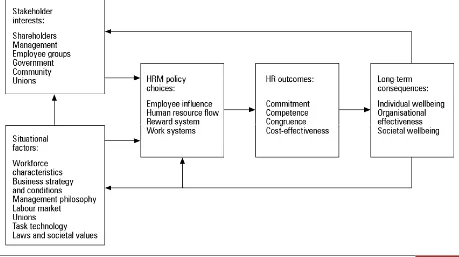
The Harvard analytical framework for HRM (Beer et al., 1984) is a model, which suggests that an organisation has to concern itself with organisational effectiveness and the promotion of individual and societal well-being (Winstanley & Woodall, 2000). The HRM model of Beer et al., (1984) suggests that HRM is concerned with management of an organisation as a whole rather than solely emphasising personnel function and it can provide a useful basis for comparative analysis of HRM (Budhwar, 2008). Beer et al., (1984) emphasises that the model can be used for organisations that want to compare HRM policy alternatives, such as a work system with narrowly defined jobs versus an approach that focuses on competences and team responsibilities.
The Harvard model (figure 1) is conceived as an analytical framework, wherein HRM policy choices affect certain immediate outcomes and have certain long-term consequences. HRM policy choices influence and be influenced by stakeholder interests and situational factors. The model stresses on the human aspect of HR and is more concerned with employer-employee relationship (Singh, 2005).
[image:15.595.68.527.487.744.2]
Figure 1: The Harvard analytical framework for HRM (Beer et al., 1984).
The model in figure 1 highlights the interests of different stakeholders in the organisation and how their interests are related to the objectives of management (Budhwar & Khatri, 2001). The aim of these outcomes is to develop and sustain mutual trust and improve individual and organisational performance, to achieve individual well-being, organisational effectiveness, and societal well-being.
Work systems can be considered as an important aspect of policy choices since it can stimulate, motivate, and satisfy employees to perform effectively on their jobs by the design of work (Hackman & Oldham, 1976). Their model consists of five core job dimensions: skill variety, task identity, task significance, autonomy, and feedback, which influence personal and work outcomes positively. An effective work system defines how work actually is done, which responsibilities employees have, and how they involve each other in their work to meet the goals and objectives (Clancey, 1998). Job design, which is an essential part of a work system, includes the assignment of goals and tasks to be accomplished by employees (Daft, 2007). Either tools for modelling work systems produce detailed descriptions or broadly defined descriptions wherein work product flows between job functions are elaborated (Clancey, 1998).
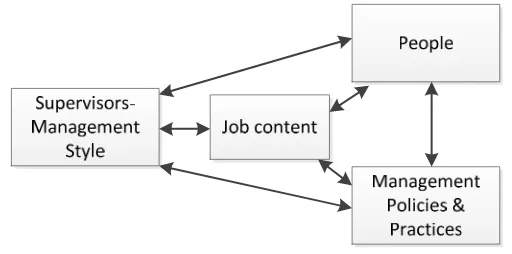
[image:16.595.169.425.575.702.2]As explained in the problem background, this research will focus on job descriptions since there is a need of composing and applying them. Job descriptions can be considered as a part of work systems (Beer et al., 1984). The term work system as it will be used in this study refers to aspects like job content, people, supervisor-management style, and management policies and practices and how they influence each other in the design of a system (figure 2). The core of a work system and this study is the design of the work itself, the tasks and requirements that jobs have to accomplish, the goals, and objectives of the organisation (Beer et al., 1984). Another aspect is the set of skills and attitudes that employees (people) have and those that are developed by work experience. The management style of supervisors can be explained as the amount of responsibilities employees get from their superiors. Management policies and practices include the amount of influence policies and practices have on the content of a job. Adequate and effective described jobs can positively affect management (basis for HRM system), employees (transparent and objective descriptions), and the works council (opportunity to influence the process of designing a work system) (HayGroup, 2011).
Following the theory of Hackman & Oldham, (1976), only employees who have the need for more responsibility, autonomy, and achievement will probably be affected by redesigning a work system. This raises the question what to do with employees that do not want to have more responsibilities. This question will be elaborated later in this study. Besides, it is of great importance that a work system is highly consistent with employee influence, human resource flow, and the reward system that will be applied. Beer et al., (1984) define two alternate types of work systems: traditional work system (e.g., narrowly defined jobs), which is focused on efficiency and control; and high-commitment work system (e.g., broadly defined jobs), which is focused on human commitment by integrating individual and organisational needs.
2.3Typesofjobdescriptionsystems
The next section will discuss ways in which job descriptions can be developed following the Harvard analytical framework for HRM.
2.3.1Traditionaljobanalysissystems
These two sections will give an overview of traditional job analysis systems, which can be considered as a part of a traditional task-based work system and competency modelling, an aspect of a high commitment competency-based work system. Hereafter, a comparison will be made to discover which model, or both, is most applicable to compose job descriptions in a specific organisation.
Job analysis can be seen as the centre of the human resource management activities, which are important for effective performance of organisations (Siddique, 2004). There is some evidence that effective job analysis can improve communication, accommodate change, contribute to improved HRM, and be cost effective (Clifford, 1994).
One of the main assumptions within traditional job analysis is that employees, jobs, and the match between them are constant over time (Singh, 2008). It refers to the tasks that an employee needs to perform, the knowledge, skills, and abilities required for job performance as it currently exists or has existed in the past. Jobs within traditional job analysis are considered stable over time and it is useful to analyse jobs that already exist. It is applicable since jobs can be analysed by observing tasks performed by incumbents or by interviewing incumbents (Singh, 2008). Job information can be acquired in two ways; First, by reading written information about the job (e.g., a job description), and second by actual contact with an incumbent of a job or by observing or interviewing an incumbent or manager (Voskuijl & van Sliedregt, 2002). Traditional job analysis is consistent with hierarchical and mechanistic organisations since they desire formally described work behaviours associated with current jobs (Stewart & Carson, 1997).
2.3.2Competencymodelling
fact, it was concerned with individual differences (KSAs) that distinguish organisations from their competitors (Schippmann, et al., 2000). Several decades later other researchers proposed a competency model, which is based on knowledge, skills, abilities, traits, or motives that are related to job or job performance (McClelland, 1973). The current approach to develop competency models involves core competences, which has been elaborated by Prahalad and Hamel, (1990). Core competences are based on organisational goals and strategy and do not involve individual-level attributes, which makes employees and an organisation able to react to changes or innovations in their environment (Draganidis & Mentzas, 2006). As Lawler, (1993) mentions, “(…) human skills that embody core competences will have a positive influence on organisational analysis and effectiveness (…)”. Techniques used for competency modelling are not radically different from traditional job analysis. There is evidence that a competency modelling approach is at its foundation also a job analysis process (Ruggeberg, 2007) that supplement each other (Sanchez & Levine, 2009). Competency modelling can reduce a large number of descriptor statements (TJA) to a small number of job performance dimensions or competences focus on organisational goals and strategy (Schippmann, et al., 2000). Competences are important in several employee HR management applications (Beer et al., 1984; Draganidis & Mentzas, 2006):
Recruitment management. Competences are useful in the process wherein capabilities
of the potential employee are compared with the capabilities required. A possible gap between these two aspects can form the basis for development/ learning objectives. Learning management. A gap between the competences required and the competences
that an employee has, can be linked to learning and performance objectives.
Performance management. Employee performance can be evaluated in comparison
with the requirements and the development/ learning objectives of the competences. Developed competences can result in higher employee satisfaction because employees experience responsibility for the outcomes of work. Besides satisfaction, can knowledge of the actual results of the work activities and fair treatment result in low absenteeism and turnover.
Career development. Competences can also be used for career development. A
comparison can be made through the required competences and potentials to develop competences. Development in competences can form the basis for career development and can lead to higher internal motivation since employees experience the meaningfulness of their job (career plan).
Competency development model
The first step is the creation of a working team, which consists of human resource staff, top executives, and job incumbents. This team will be responsible for the development of competences and will oversee the competency model development process. A second step is the identification of a performance matrix in order to define performance for the jobs included in the model. Dreyfus & Dreyfus, (1986) developed a matrix and ranked performance on a scale from novice, advanced beginner, proficient, expert, and world class. Each measure correlates with a scale from 1 till 5 in order to measure improvements with each scale and to form an official reward system. The third step in the model of Draganidis & Mentzas, (2006) is the development of five core competences that can be applied for every job within the model. These core competences need to have a shared meaning in relation to organisational goals and culture. The creation of a list of competences can be succesful by reviewing other competency models developed by (retail) organisations since organisations that operate in the same industry, usually have some similarities in their work processes (Draganidis & Mentzas, 2006). Another tool that can be used is identifying knowledge, skills, abilities, and personal characteristics needed for (all) jobs in the organisation (Marrelli, Tondora, & Hoge, 2005). This will help to working team to cluster similarities between jobs which helps to identify core competences.
Next, when five core competences are developed, interviews and focus groups with managers and employees of the specific departments need to be conducted in order to test and acquire information. Results of these meetings and interviews help the working team to perform an analysis of the competences discussed. Hereafter, the concept model of competences can be initiated and adjusted with the results of the interviews and focus groups. The working team can examine the acceptance and approval among the different stakeholders in the organisation before applying them. The application of a competency model is one of the most important steps in this process. In a fully-integrated, competency-based human resource system, the competences identified as required for effective performance are used to select, develop, manage, reward, and compensate employees of an organisation. Employees will know precisely what competences are required for success and how they will be evaluated (Marrelli et al., 2005).
Before the traditional task-based approach and the competency-based approach can be compared, the retail industry will be defined. Hereafter, requirements of the situational factors and the stakeholder interests will be elaborated. Paragraph 2.5 will compare the requirements with the task- and competency-based approach.
2.4.Theretailindustryandthesituationalandstakeholderrequirementsin jobdescriptions
2.4.1Theretailindustryanditscharacteristics
organisations, which aim on direct sales of products and services to consumers when these products and services are paid from consumers’ net income (van der Kind & Quix, 2008). Following the model of Beer et al., (1984), it is essential that organisations integrate a HRM policy that attracts and holds the right mix of employees that will complete mutual organisational goals and objectives, which simultaneously considers stakeholder interests and copes with the situational constraints (business strategy). Many supermarket retailers work with a CLA for their employees. However, they often make a distinction between employees working in stores, distribution centres and the head office. Often, employees working in stores and distribution centres are considered as CLA employees and employees working in the head office and managerial jobs in the distribution centres are considered as non-CLA employees (Hindriks, 2007). This distinction is based on the assumption that CLA employees are subordinate and responsive to traditional authority in order to cope with a gap between knowledge and skills, wherein achieving control and efficiency are the main strengths of this approach (Beer et al., 1984). This approach involves four policy areas: considering the human resource flow, a usual career track begins with lower-level positions that eventually can lead to promotion by job evaluation. Job evaluation in this approach is usually based on detailed job descriptions (reward system). In terms of work systems, retailers make jobs as simple and detailed described as possible at the bottom of their organisation with close supervision on performing these jobs. Employees can express their opinions towards their managers but do not have much influence on the work processes and the quality of work.
Since there are many different types of retail organisations, van der Kind, (2004) makes a classification between operational classification and shopping behaviour within retail organisations.
Operational classification
Retail organisations can be classified in three aspects: logistic, sales, and purchase oriented. Organisations have to pay attention to all of these aspects however; they often focus on one of these aspects. Logistic oriented organisations focus on the circulation speed of their products and services, wherein availability of them is of great importance. Besides the circulation speed products and services in these types of organisations, they are concerned with optimising external and internal logistics. Margins in logistic oriented organisations are small and consumers have to serve themselves. A typical example of such an organisation is a supermarket. Sales oriented organisations are concerned with the organisation itself and the maintaining the (return) frequency of their customers. Focus in sales oriented organisations lies on promotion of products and services (market-push) (Hindriks, 2007). However, these types of organisations are rare in the Netherlands, since many firms (e.g., factory outlet) failed to succeed this concept. Purchase oriented organisations are constantly renewing their assortment of products and services since most of these goods are time driven. Focus in purchase oriented organisations (e.g., fashion shops) lies on fashion trends and the developments of consumer behaviour.
Shopping behaviour
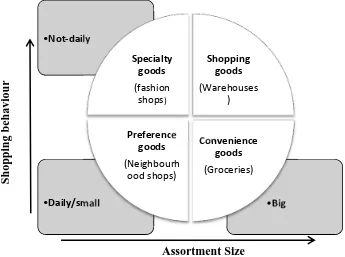
Besides operational classification, it is essential to classify retail organisations. Figure 3 distinguishes four types of goods, which retailers can sell: specialty goods, preference goods, shopping goods, and convenience goods. The vertical axis ranges from daily to non-daily shopping behaviour. The horizontal axis ranges from small to a big assortment:
Specialty goods are sold in stores with a small assortment and have a not-daily purchasing frequency.
Shopping goods are sold in stores with a big assortment and have a not-daily purchasing frequency.
Preference goods are sold in stores with a small assortment and have a daily purchasing frequency.
[image:21.595.90.435.291.548.2] Convenience goods are sold in stores with a big assortment and have a daily purchasing frequency.
Figure 3: Classification of the Dutch retail sector adapted from van der Kind & Quix, (2008)
Nowadays, intense competition in retail markets force retailers to develop a strategy focused on retaining and attracting the right customers (e.g., being profitable or being loyal) (Sirohi, McLaughlin, & Wittink, 1998). With a certain business strategy (e.g., bureaucratic way), retailers try to enhance purchases made by customers, increase the return frequency, and let customers recommend the retail shop to others. An increasing return frequency can lead to more purchases because existing customers also tend to purchase more than new customers (Rose, 1990). Much research that has been conducted, acknowledges that small changes in customer loyalty can yield disproportionately large changes in profitability although not everyone agrees with this statement (Reichfeld, 1996). Hence, customer loyalty is one of the most important aspects in retail organisations like supermarkets, because loyalty was shown to generate increased profits through enhanced revenues and reduced costs to acquire
•Daily/small •Big
•Not‐daily
Specialty
goods
(fashion shops)
Shopping
goods
(Warehouses )
Convenience
goods
(Groceries)
Preference
goods
(Neighbourh ood shops)
customers and serve customers familiar with firm’s services as well (Hallowell, 1996).
However, how customers precisely develop loyalty to a particular retail store, how that loyalty can be maintained, and even be expanded is still unanswered (Sirohi, et al., 1998; Lehew, Burgess, & Scarlett, 2002). Gaining and sustaining loyalty as a core goal, may even be more important than customer satisfaction since satisfaction is a forthcoming benefit of loyalty (Agustin & Singh, 2005). It is important that supermarkets are able to develop a strategy wherein customers are clustered in customer groups. As the founder of Wal-Mart, Sam Walton, mentioned “the secret of successful retailing is to give your customer what they want”.
From a marketing point of view Zairi, (2000) once said, “customers are the purpose of what we do and rather than depending on us, we very much depend on them. The customer is not the source of a problem, we shouldn`t perhaps make a wish that customer ‘should go away’ because our future and our security will be put in jeopardy”. This statement explains why modern organisations focus on loyalty and satisfaction.
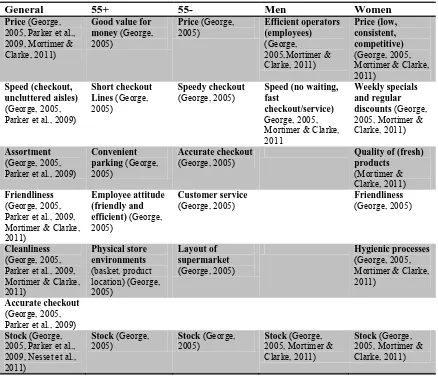
Table 2: indicators of customer requirements per customer group adapted from Gevers et al., (2011)
When a retail organisation identifies and clusters these groups, it is possible to offer the most promising opportunities to those segments, which in the long-term can be beneficial for organisational performance (Dibb, 1998). A retail organisation can segment its customer-base on variables like age and gender, which is discussed in table 3. Besides these variables, groups can also be identified as “young” or “families”. As mentioned before, an organisation needs to determine the business strategy and objectives in their policy choices before they will cluster its customer-base.
2.4.2Situationalandstakeholderrequirementswithintheretailindustry
Several stakeholder interests and situational factors (requirements) are important to consider in the retail industry during the process of composing and implementing job descriptions. To understand and evaluate these constraints in the retail industry, the most important requirements are elaborated in the sections below.
General 55+ 55- Men Women
Price (George, 2005, Parker et al., 2009, Mortimer & Clarke, 2011)
Good value for money (George, 2005)
Price (George,
2005) Efficient operators (employees)
(George, 2005,Mortimer & Clarke, 2011) Price (low, consistent, competitive) (George, 2005, Mortimer & Clarke, 2011)
Speed (checkout, uncluttered aisles) (George, 2005, Parker et al., 2009)
Short checkout Lines (George, 2005)
Speedy checkout
(George, 2005) Speed (no waiting, fast checkout/service) George, 2005, Mortimer & Clarke, 2011
Weekly specials and regular discounts (George, 2005, Mortimer & Clarke, 2011)
Assortment (George, 2005, Parker et al., 2009)
Convenient parking (George, 2005)
Accurate checkout
(George, 2005) Quality of (fresh) products
(Mortimer & Clarke, 2011) Friendliness
(George, 2005, Parker et al., 2009, Mortimer & Clarke, 2011)
Employee attitude (friendly and efficient) (George, 2005)
Customer service
(George, 2005) Friendliness (George, 2005)
Cleanliness (George, 2005, Parker et al., 2009, Mortimer & Clarke, 2011) Physical store environments (basket, product location) (George, 2005) Layout of supermarket (George, 2005) Hygienic processes (George, 2005, Mortimer & Clarke, 2011)
Accurate checkout (George, 2005, Parker et al., 2009) Stock (George, 2005, Parker et al., 2009, Nesset et al., 2011)
Stock (George,
2005) Stock2005) (George, Stock2005, Mortimer & (George, Clarke, 2011)
Stock (George, 2005, Mortimer & Clarke, 2011)
Stakeholder interests
Companies can be seen as a mini-society made up of large numbers of constituencies, each claiming an important stake in the way the company is managed and its resources are employed (Beer et al., 1984). Managers developing HRM policies need to consider and comprehend the particular interest of each stakeholder to balance the multiple interests (e.g., employee groups, management, government, unions, and employees). Since the focus of this study is on human resources and composing job descriptions, the emphasis will lie on employee groups, management, employees, and unions. These stakeholders will surely differ in their interests or perceptions about conditions of work or job design (Beer et al., 1984). Recent research indicates that these stakeholders are the most important human resources in the retail industry when an organisation wants to compose and implement job descriptions (HayGroup, 2011).
Stakeholder requirements in the retail industry
Table 3 shows that the stakeholders ‘customers or community’ are not interested in the way jobs are done in supermarkets but only in the result of supermarkets. Hence, customers indicate “price”, “stock”, and “speedy checkout” as most important aspects during shopping. The HayGroup examined and defined important stakeholders in the retail industry and indicated that adequate and effective described jobs can positively affect management (basis for HRM system), employees (transparent and objective descriptions), and the works council (opportunity to influence the process of designing and implementing a work system). In essence, the success of a retailer depends on the retailer’s stakeholder orientation and the balance between their interests (Girod, 2005).
improvement of quality in order to increase performance (Cobbaut, 2005). Employees need to have opportunities for training and development; management can assess their employees using objective measures for feedback etc. Unions can perceive such a project as an opportunity to be more influential in organisations, which can increase the relationship between the organisation and union (Cobbaut, 2005).
Situational requirements
Situational factors influence and are influenced by HRM policies that have been developed. Most factors are external to the organisation since they are part of the environment (e.g., labour market, unions, laws, and societal values). Other factors like management philosophy, workforce characteristics, and business strategy and conditions appear to be subject to more managerial control. However, external factors and societal forces (Beer et al., 1984) also influence them. Situational factors that are most important for this study are discussed below.
Workforce characteristics
During the development of a work system, it is important that organisations reflect workforce characteristics. Workforce characteristics can be described as employee motivation, capacities, attitudes, potential, and desire for personal development (e.g., career plan, competence development) (Beer et al., 1984). These characteristics need to reflect and have to be consistent with the assumptions of management in order to utilise and develop employees effective. Gaps between assumptions and the workforce may result in conflicts between management and employees. Obviously, the workforce can be broken down into several employee groups (e.g., management). These differences need to be identified by valid assumptions about the differences in background, needs, expectations, and educational qualifications that employees bring to their jobs (Beer et al., 1984).
Business Strategy and conditions
A work system, which is part of a HRM policy, must fit with its competitive strategy and the environmental conditions. Since many retail organisations focus on quality as a key success factor, their HRM policy need to encourage employee involvement, concern, and employee development (Beer et al., 1984). A business strategy needs to be carefully analysed in order to identify the tasks that a strategy needs to present to the organisation, and the competences and involvement required from (potential) employees.
Management philosophy
policy in the firm since trust is based on consistent treatment (Beer et al., 1984). Another way to emit a philosophy is by management style; the way managers behave, communicate, and interacts with employees.
Situational factors in the retail industry
Evidence exists that HRM strategies differ a lot across retail organisations (e.g., top-down or bottom-up) (Davis et al., 2005). The retail industry can be characterised by a high proportion of part-time youth employees (workforce) with irregular hours, pay for performance, upward mobility because of unionised stores, and low requirement of skills. However, few options for training and career development are offered in the retail sector (Hughes, 1999). Furthermore, turnover can be considered as high, which lowers the level of experience of the workforce (Moody, 1997). A result of high turnover is that new employees are less likely to view a retail job as a long-term career job (Hughes, 1999).
The past decades have changed job content in which workers become more autonomous and skilled (decentralisation). One of the key success factors of decentralisation is that (department) managers can operate more autonomously and are able to recruit en select their own employees (Hughes, 1999). This can enhance retention since departmental managers can train employees to be more knowledgeable and long-term. Management philosophy tries to bring employees and management together with common goals such as optimisation and efficiency (Tan, 2001).
2.5Comparisontask‐ andcompetency‐basedjobdescriptions
Paragraph 2.3 elaborated the traditional task-based approach and the competency-based approach to compose job descriptions. Afterwards, paragraph 2.4 discussed the retail industry and distinguished stakeholder and situational requirements that influence the process of composing job descriptions. After composing the conceptual framework, paragraph 2.5.1 compares the task- and competency-based approach based on the requirements elaborated in paragraph 2.4. The final section of this paragraph concludes this chapter and shows the conceptual model for the design-oriented research.
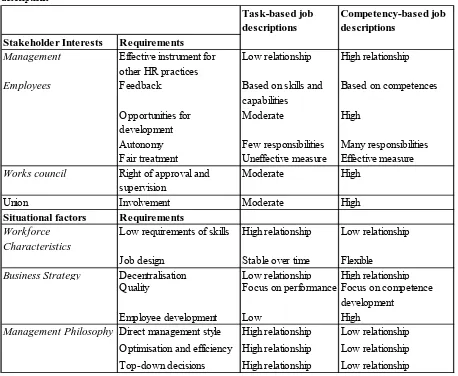
comparison between the requirements in the retail industry and task- and competency-based job descriptions. The conceptual framework identified the characteristics of task- and competency-based approaches to compose job descriptions. Section 2.4.2 showed that four stakeholders are important in the retail industry: management, employees, works council, and the union. Retailers in the supermarket industry hire employees with diverse knowledge, skills, and ambition. There are employees working in stores, distribution centres, and at the head office of a supermarket chain with different CLA’s and hence different requirements, interests, or perceptions about conditions of a task- and competency-based approach (Beer et al., 1984).
Task-based job descriptions are in line with an organisation with a tall hierarchy since decisions and the flow of information is usually top-down, wherein jobs remain stable over time (Sanchez & Levine, 2009). Management of hierarchical organisations try to send a strong signal to those below them because they want to influence their behaviour in day-to-day behaviour activities in line with the strategy. Since retailers work with many different employees, their perceptions about for example, opportunities for development also can differ. CLA employees might prefer job security instead of opportunities for development (Kanfer & Ackerman, 2004).
Another example, many retailers are decentralising their structure in order to be closer to their market (Hughes, 1999). By decentralising an organisation, which is in line with a competency-based approach to compose job descriptions, employees often are given more autonomy and responsibilities, however, not all employees have the need for more responsibilities. A final example, task-based descriptions concerned with KSA’s, are often specified towards one job; hence, they fail to define key factors that should be able to adapt developments when change occurs in the job design (Sanchez & Levine, 2009). A small number of competences or performance areas that can cut across jobs and all layers of the organisation, creates a common language wherein employees can adapt more easily to developments and changes in the market. Competency-based should, in contrast to task-based, be able to adapt to developments in technology and the changing environment since they create an occupational common language that can easily be adjusted, by developing evolutionary and dynamic competences needed to perform a job (Sanchez & Levine, 2009). However, many CLA jobs within the retail industry are considered quite stable over time, regardless of some minor changes (Hindriks, 2007).
Table 3: Comparison of stakeholder and situational requirements vs. task- and competency-based job descriptions
Within task-based descriptions, KSA’s can be seen as enablers to perform competences in an effective way (Hayton & Kelley, 2006). Knowledge, skills, and abilities can be a helpful supplement towards the behaviour that needs to be demonstrated in line with the strategy of an organisation since many competences have a complex nature (Hayton & Kelley, 2006). Competences try to help employees understand the norms, values, and goals of the organisation (common language), in order to influence employee behaviour towards a day-to-day strategic aligned behaviour (Sanchez & Levine, 2009).
Conclusion
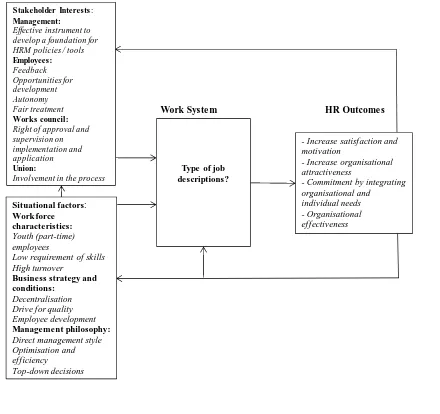
The results of the conceptual framework lead to the conceptual model depicted in figure 4. This chapter elaborated job descriptions and the way in which they can be composed (task- or competency-based). Task-based is more work- and task focused and competency modelling is worker-focused. However, these approaches can supplement each other in the development of a HRM system. Organisations are concerned with attracting, developing, and retaining skilled and motivated employees, wherein job analysis and competency-based descriptions play an important role. Evidence exists that objective and unambiguous job descriptions, are an
Task-based job descriptions
Competency-based job descriptions
Stakeholder Interests Requirements
Management Effective instrument for
other HR practices
Low relationship High relationship
Employees Feedback Based on skills and
capabilities
Based on competences
Opportunities for development
Moderate High
Autonomy Few responsibilities Many responsibilities
Fair treatment Uneffective measure Effective measure
Works council Right of approval and
supervision
Moderate High
Union Involvement Moderate High
Situational factors Requirements
Workforce Characteristics
Low requirements of skills High relationship Low relationship
Job design Stable over time Flexible
Business Strategy Decentralisation Low relationship High relationship
Quality Focus on performance Focus on competence
development
Employee development Low High
Management Philosophy Direct management style High relationship Low relationship
Optimisation and efficiency High relationship Low relationship
important component to become attractive as an organisation. The descriptions can guide and stimulate (new) employees to develop collective skills, knowledge, competences, and behaviour that are instrumental for the strategy of an organisation. Stakeholder and situational requirements play an important role in the way descriptions are composed. Theory showed that adequate and effective described jobs in the retail industry could enhance several HR outcomes such as an increase of employee motivation and satisfaction, organisational attractiveness, commitment by integrating organisational an individual needs, and organisational effectiveness. It is assumed that job descriptions enhance HR practices when the stakeholder interests of management, employees, the works council, and the union will be considered. In addition, workforce characteristics, business strategy and conditions, and management philosophy can be considered as the most important situational factors that have to be taken into account in the retail industry when composing and implementing job descriptions (figure 4). This research will identify which approach, or a balance between the two approaches of composing job descriptions will be most effective for the organisation.
Figure 4: Conceptual model of composing job descriptions (Based on Beer et al., 1984)
Work Syste m HR Outcome s
Type of job descriptions?
Stakeholder Interests:
Management:
Effective instrument to develop a foundation for HRM policies / tools
Employees: Feedback Opportunities for development Autonomy Fair treatment Works council:
Right of approval and supervision on implementation and application
Union:
Involvement in the process
Situational factors: Work force characteristics: Youth (part-time) employees
Low requirement of skills High turnover
Business strategy and conditions:
Decentralisation Drive for quality Employee development Management philosophy: Direct management style Optimisation and efficiency
Top-down decisions
- Increase satisfaction and motivation
- Increase organisational attractiveness
- Commitment by integrating organisational and
3. Methodology
This chapter will discuss the research methodology that is used to answer the sub- and research questions. The question whether interviews or a questionnaire should be administered belongs to the centre of a research (Saunders, Lewis, & Thornhill, 2009). Other authors note that both qualitative and quantitative methods may be used appropriately with any research paradigm (Guba & Lincoln, 1994).
The main objective of this research is to understand, explain, and describe the process of composing job descriptions, and to implement these in line with the strategy and culture of Lidl. Qualitative data suites this type of research since this study required in-depth information about the organisation, its situational factors, and stakeholder interests. Hence, this study can be seen as descripto-explanatory (Saunders, Lewis, & Thornhill, 2009). This research started with building a conceptual framework based on existing literature, since there is a wealth of literature (Saunders, Lewis, & Thornhill, 2009). The framework identified what job descriptions are, several processes of composing job descriptions, the contribution for retail organisations, and situational and stakeholder requirements that influence the process of composing job descriptions, which in their turn influence HR practices.
3.1Design‐orientedresearch
The objective of this study was to identify which process of composing job descriptions fits the strategy and culture, and how these descriptions can be implemented in the organisation of Lidl. Currently, jobs are not defined or described adequately and hence, hard to assess or measure. It is challenging to provide employees with performance management and contractual terms and conditions like an official reward system. The current system offers too few possibilities for a consistent HRM system. Hence, Lidl required a work system that facilitates job descriptions for all jobs within the organisation that can be matched with other HR practices. On forehand, the problem that Lidl faced and the solution required were clear. Hence, this study can be considered as a design-oriented research (Verschuren & Hartog, 2005). Examples of design-oriented research are the design of a competence management system or the redesign of an organisation. A conceptual framework is developed and used for the identification of situational and contextual constraints that influence the process of composing job descriptions and forthcoming HR practices. An important step in design-oriented research is the specification of the requirements a study has (Verschuren & Hartog, 2005). Four types of requirements can be distinguished:
Functional requirements
all jobs can help Lidl to match the descriptions to order HR practices as recruitment, training, development, assessment, and a formal reward system.
Contextual requirements
Contextual requirements are constraints formed by the social environment, believes, culture, and strategy of the organisation of Lidl, which need to be considered during the process of composing and implementing job descriptions. The design of the descriptions needs to cope with workforce characteristics in the retail industry and the demands from management philosophy and business strategy of Lidl, since the conceptual framework defined these constraints as most important in this study. For example, which business strategy and culture fits which approach to compose and implement job descriptions. A centralised structure is often more familiar with a task-based approach (Schippmann, et al., 2000), whereas a decentralised structure with a focus on employee development is often familiar with a competency-based approach (Sanchez & Levine, 2009).
User requirements
User requirements can be defined as the requirements of the future users. In this study, future users can be seen as the stakeholders concerned with job descriptions. The conceptual framework identified management, employees, works council, and the union as the most important stakeholders for the process of composing and implementing job descriptions. Besides the different interests of each stakeholder in the retail industry, are important to consider since they all have their own interests in job descriptions. For example, management requires an effective instrument to develop a foundation for other HR practices and the union of the retail industry requires involvement in the process of composing job descriptions to create understanding.
Structural requirements
Many authors ignored the importance of structural requirements in their paper, but Drejer, (2000) was one of the first authors that identified and elaborated structural requirements. These requirements can be defined as the elements of a competence and its relation with each other. During the development of a competence model, it is important to consider technology, human beings, organisation, culture, and their relation to each other. These four elements combined, will help Lidl to develop flexible and dynamic competences that can be used organisation wide. Structural requirements can be seen as an extension of the other three requirements since it covers with human beings (user), organisation, and culture (contextual and functional). Technology can be seen as a part of functional requirements, because it describes how technology helps human beings to fulfil activities (and effects) that are related to a competence.
3.2Datacollectionmethods
This study will use multiple methods to collect data: document analysis, structured interviews, and semi-structured interviews. The use of two or more independent sources of data or data collection methods helped to find patterns between research findings and literature within this study. This phenomenon is called triangulation and is often used in studies (Saunders, Lewis, & Thornhill, 2009). Use of triangulation helped to cope with the researchers’ bias since multiple sources of evidence are used (e.g., structured interviews, document analysis, and semi-structured interviews).
Document analysis
Document analysis is used in order to gain a rich understanding about the organisation and culture of Lidl. Document analysis can be source of support in a design research for findings of the (structured) interviews. Documents are obtained by asking (senior) managers for relevant documents such as organisation charts and information about the organisation and its characteristics. Organisation charts were available and helped to identify the structure of Lidl per department and as a whole.
However, documents that define a clear business strategy and its core mission and values are not available. Two aspects can explain a lack of these documents. First, data protection within the organisation of Lidl can be considered as extremely high, hence, many documents are highly confidential and these documents may not be consulted for this research. Second, the organisation developed from zero to almost 360 stores in the Netherlands within 15 years. The organisation around the stores is still developing and professionalising and the board of directors still did not define a clear business strategy.
Since a design-oriented research requires much in-depth information about the requirements to compose job descriptions, the influence of situational factors and stakeholder interests on composing job descriptions and the forthcoming HR practices, information needed to be acquired in other ways. The researcher was involved in an internal job design project next to this research in the organisation during the graduation project. During this internal project, the researcher held approximately 50 individual meetings with department heads and (senior) managers of Lidl. In these meetings, information is acquired about the business strategy and core values, the characteristics and responsibilities of the specific departments and its employees, ways in which job descriptions can be composed, and what the HR effects of these descriptions are. Unfortunately, these meetings are not recorded and hence, no transcripts are developed. However, these meetings helped the researcher to gain a rich understanding about the organisation and its situational and stakeholder characteristics, which is of great importance since multiple sources of evidence are used to identify patterns between the results and the conceptual framework.
Structured interviews