University of Warwick institutional repository: http://go.warwick.ac.uk/wrap
A Thesis Submitted for the Degree of PhD at the University of Warwick
http://go.warwick.ac.uk/wrap/2328
This thesis is made available online and is protected by original copyright. Please scroll down to view the document itself.
Applying activity theory to the
study of new public management:
An exploration of the local
implementation of Bail Support and
Supervision
by
Nathan Hughes
A thesis submitted in partial fulfilment of the requirements for a
degree of
Doctor of Philosophy in Social Policy
Table of contents
Abstract 1
Chapter 1. Introduction 2
The introduction of Bail Support and Supervision 4
The rise of the managerialist state 7
The impact on the operation of state institutions 8 ‘Street-level bureaucracy’ within a managerialist system 10
An approach to understanding policy enactment 12
Chapter 2. Tracking change in complex adaptive systems: the application of activity theory to the study of social policy development
20
A need for a new science? 23
Systems and Environment 27
Explaining change in complex systems 28
Opposing or Complementary Approaches? 35
Evaluating complexity 36
The development of activity theory 40
Activity system as the unit of analysis 49
Contradiction as the source of change 51
Expansive transformation through the resolution of contradictions
56
The application of the principles of activity theory to complex adaptive systems
60
Chapter 3. Operationalising the theoretical framework: the development of a methodological approach
67
A theoretical model for examining state managerialism 68
Towards a methodology approach 72
Conceptualising the areas for enquiry 79
The role of BSS local evaluator 84
Observations and interviews in the YOT setting 87
The development of the doctoral study through a second phase of evaluation
91
The limited involvement of young people as research participants
95
Observation within an activity theory framework 97
Relations in the field 98
Potential problems in observation 103
Observation as the basis for interview 109
The conformity of methodological approach to theoretical principles
111
Chapter 4. The youth justice policy landscape: the construction of an idealised object for bail and remand
115
The rise of performance management 116
The changing landscape of youth justice policy 121
A new mode of societalisation: a challenge to government legitimacy?
124
A new ideology of crime: convenience in amalgamation? 133
Risk management: the subjugation of professional intent and practice?
137
The development of pre-trial legislation 141
Bail Support and the shift to supervision 144
From statute to idealised object formation 149
The influence of the broader youth justice context 152
From idealised abstraction to material interaction 157
Chapter 5. Implementation within the YOT: the development of ‘new’ activity amongst established activity systems
161
BSS as an embedded system 164
Finding the ‘subjects’ of the system: the creation of the BSS team
166
Divided roles, divided focus and divided labour 170
Towards a well-functioning scheme: temporal and transitory objects of activity
174
Training and promotion 176
Developing components of provision through links with external agencies
182
Internal transformation for external interaction 185
The impact on the ideal object formation 192
From internal development to external influence 194
Chapter 6. Developing activity at the system boundary: negotiating influence within the youth court
198
Defining the boundary zones 201
The role and function of youth court liaison groups 210
Asserting BSS through formal liaison 216
Negotiating the function of BSS within an established court setting
223
Contradictory activity: the rejection of BSS approaches 231
Contradictory approaches and contradictory outcomes 241
Chapter 7. Towards expansive transformation: the emergence of new activity to resolve quaternary contradictions
246
An alternative ‘strategy’ of youth court activity 248
New modes of surveillance: from additional contact to the contested introduction of electronic monitoring
259
Repackaged provision: raising magistrate confidence in BSS 270
Expansive transformation through a challenge to the ideal object
279
The emergence of new activity 284
Chapter 8. Conclusion 288
The local implementation of BSS 288
Reflections on the theoretical approach 291
List of Abbreviations 302
List of Figures and Tables
Figure 2.1. Vygotsky’s model of basic mediation 42
Figure 2.2. Leont’ev’s hierachical structure of activity 45
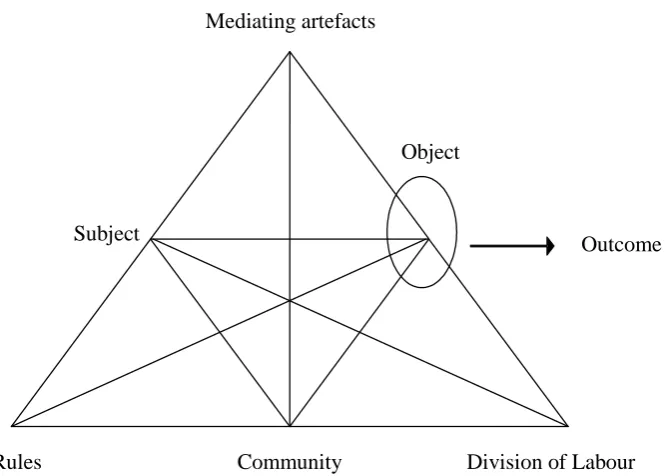
Figure 2.3. The structure of a human activity system 46
Figure 2.4. Two interacting activity systems 47
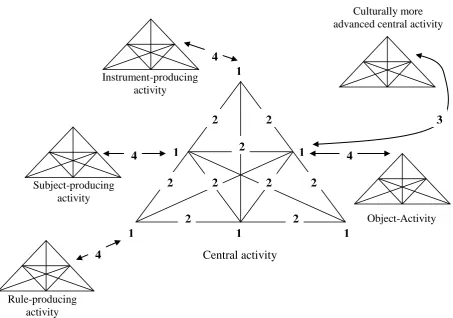
Figure 2.5. Four levels of contradictions in a network of activity systems
52
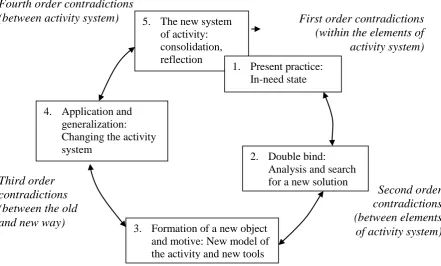
Figure 2.6. The cycle of expansive transition and learning 57
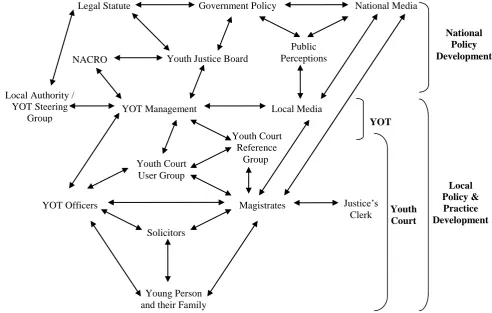
Figure 3.1. The complex interactions of youth justice policy development and delivery
81
Figure 3.2. Zones of interaction between key stakeholders 82
Figure 5.1. Primary and secondary contradictions in the early development of BSS
166
Figure 5.2. Temporal and transitory objects in the early development of BSS
175
Figure 5.3. Management Responsibilities outlined in the National Standards for BSS Schemes.
192
Figure 6.1. The youth court 202
Figure 6.2. The operation of the youth court 203
Figure 6.3. The key actors within the youth court 204
Figure 6.4. The Bail Support Referral Process 206
Figure 6.5. The youth court liaison groups as an activity system 212
Figure 6.6. Ideal representation of youth court activity 224
Figure 6.7. Secondary contradictions emergent in youth court activity
232
Table 7.1. Cases assessed as suitable for BSS in the research area by period
252
Table 7.2. Reasons for rejection of referral of cases in the research area by period
253
Table 7.3. Cases accepted by the court having been assessed as suitable for BSS in the research area by referral period
255
Table 7.4. Outcome of assessments for all cases referred to the scheme in the research area by referral period
Declaration
I declare that this thesis is entirely my own work.
I declare that no material from this thesis has been used or published before.
Abstract
This thesis draws upon three years spent evaluating the implementation of a Bail
Support and Supervision Scheme in one local authority. It describes the development
of the scheme within the locality, exploring its relation to the Youth Offending Team
and youth court, and their associated liaison groups. In doing so I offer an exploration
of theoretical considerations that explain how managerialist policies are translated
into localised practice, from which a means to learn from and develop such policy will
emerge. I develop a particular strand of activity theory, primarily from within the
tradition established by Yrjö Engeström, and demonstrate its usefulness to the
examination and understanding of nationally determined yet locally implemented
social policies. Using the notions of object trajectory and expansive transformation, I
show how local context has impacted upon the idealised object formation arising out
of the managerialist policy aims. By exploring activity in the boundary zones
between activity systems, I describe a series of material or transitory objects emerging
in order to overcome the tensions and contradictions inherent in situated practice,
culminating in a reinterpretation of the purpose of the scheme. I conclude by
addressing the extent to which local context has altered the intent of the policy in
Chapter 1. Introduction
The following thesis draws upon three years spent evaluating the implementation and
development of a Bail Support and Supervision Scheme in one local authority in the
West Midlands. The scheme to which this evaluation refers was established in May
2000 as a response to statutory requirements laid out in the Crime and Disorder Act
1998. Housed within the local Youth Offending Team (YOT) it serves a city with a
traditionally high custodial remand rate, and thus represents a key, test-bed, targeted
area for the initiative. The thesis describes the development of the scheme within the
locality, exploring its relation to the local YOT and youth court, and their associated
liaison groups. In order to do so I trace the narrative within the context of the broader
policy and practice environment in which it is embedded, both locally and nationally,
and apply this account to an investigation of the decisions made in court and the
resulting nature of bail and remand interventions, in order to understand the impact of
these developmental stages on the principal objectives of the scheme. In doing so I
show how the particular context and environment in which the scheme has had to
develop locally has facilitated or inhibited the successful realisation or achievement of
the stated intentions and government targets.
Whilst based upon a small-scale, locally funded evaluation of a particular youth
justice intervention, this thesis is informed by two broad, all-encompassing notions
regarding the study of social policy: an interest in the seemingly relentless (if
inconsistent)managerialism of state welfare institutions; and the application of
complexity theory in understanding the world at large and social systems in particular.
these notions will become clear. In turn, as my analysis evolves, the reciprocal
significance and value of an empirical application to an understanding of these ideas
will emerge. Thus, whilst the study refers to the operationalisation of a particular
youth justice intervention in a particular locality, it simultaneously serves as a study
of a complex policy intervention, typical of an increasingly managerialist system. In
tandem to an empirical study of the development and implementation of an element of
New Labour‟s new youth justice in a key target area, I therefore offer an exploration
of theoretical considerations that explain how government policies are translated into
localised practice from which a means to learn from and develop such policy will
emerge.
Given that a reduction in custodial remands is a policy of the New Labour
Government this study explores why, and how this is being implemented. The focus
of this thesis is therefore on how the Government‟s aims of and approaches to
reducing the numbers of young people remanded into custody are operationalised
through the various levels of consideration and implementation. In addition I present
an approach to local exploration that offers a means to understand managerialist
policy enactment, to learn from current attempts at implementation and to
subsequently develop responses that might more successfully work towards the
achievement of the policy goals of new public management. Given that the purpose
of such policy is to produce change it is imperative to understand why that change is
or is not occurring in order that it might be encouraged, strengthened and perhaps
reproduced elsewhere, or the barriers to its occurrence recognised and where possible
removed. With an emphasis on local enactment and implementation such learning
situated practice. To this end I develop an approach rooted in a particular strand of
activity theory, primarily from within the tradition established by Engeström,
grounded in both the theoretical literature and the experiences of others who have
utilised such an approach in empirical study.
In this introductory chapter I provide a brief narrative as to the basis for and
background to the particular intervention addressed by my study. This policy is then
placed within a broader context of state managerialism, counterbalanced by
consideration as to the importance of professional discourse and practice in
implementation, drawing explicitly on Michael Lipsky‟s (1980) theorisation of
street-level bureaucracies. I then briefly introduce the theoretical and methodological
framework, developed in response to this contextual understanding, before outlining,
chapter by chapter, how the narrative of the thesis will unfold.
The introduction of Bail Support and Supervision
Within the youth justice system the remand process should be seen to serve a dual
purpose by ensuring the minimisation of the risk to the victim and to the public in
general seen to be caused by the alleged offender, whilst at the same time protecting
the young person and respecting their rights, being unconvicted and therefore
assumed to be innocent before trial. It was the latter of these that was reiterated
within the Crime and Disorder Act 1998 which drew upon a significant body of
research and policy literature that presented the use of custody for unconvicted young
people to be potentially damaging and thus undesirable (see for example Woolf, 1991;
Liebling 1992; Cavadino and Gibson, 1993; Her Majesty‟s Chief Inspector of Prisons,
Crime and Disorder Act 1998 (Section 38) therefore emphasised a need to reduce the
„inappropriate‟ use of custodial remand for young people through the provision of a
credible community-based alternative programme that addressed the concerns
regarding the public risk. Thus the statutory duty to provide bail support (later
re-named bail support and supervision) was outlined.
Bail Support and Supervision is defined within the Youth Justice Board‟s „Guide to
the National Standards for Bail Supervision and Support Schemes‟ (YJB / Nacro
Cymru, 2001) as:
Community based activities in programmes designed to help ensure that
defendants awaiting trial or sentence successfully complete their period of bail
by returning to court on the due date, without committing offences or
interfering with the course of justice, and to assist the bailee to observe any
conditions of their bail.
The specific aims of such schemes, stated within the „National Standards for Bail
Supervision and Support Schemes‟ (YJB, 2001a) are to:
a) Prevent offending on bail
b) Ensure the appearance of the young person at court to reduce delays in the
court process
c) Ensure remands to custody and secure remands are kept to the essential
minimum
Thus the development of such schemes seeks to provide courts with the option of
granting bail with sufficient conditions for those charged with serious offences or with
of the young person during the bail period. Local schemes are therefore designed so
as to offer a programme of support and supervision to address any concerns the court
has about the young person offending on bail or not returning to court for trial,
promoting and safeguarding the public interest during the period of bail, while
enabling the young person to stay in the community.
In addition to providing the above, the supportive nature is also prominent in the
descriptions of the scheme provided by its Coordinator, as illustrated in the following
extract from a promotional document:
The Scheme acknowledges that many children in trouble face a wide range of
difficulties and problems… For those on the Scheme the staff provide
constructive help and support with issues such as accommodation, family and
social relations, pathways into education, training and employment, drug and
alcohol misuse and the provision of counselling services. (Leaflet for Youth
Court User Group, October 2000)
To serve these purposes the Coordinator designed a typical programme of provision
involving a minimum of three sessions a week with a member of the bail team, in
addition to any extra activities organised through the YOT to meet individually
identified problem areas. The bail sessions will usually include one home visit a week,
so as to support the young person‟s family and involve them in the practice of any
agreed interventions.
Chapter 4 will explore the basis for the initiative in more detail, placing it within the
will be seen to represent an example of managerialist policy development in general.
In turn understandings of managerialism are employed as the basis for the study of
this particular policy implementation.
The rise of the managerialist state
Since 1979 a wealth of reforms undertaken by successive Conservative governments,
and continued by New Labour, have questioned the nature of „organizational design,
structure, culture and coordination‟ within the welfare state (Clarke et al, 2000b).
John Clarke and Janet Newman (1997) describe the emergence of the „managerial
state‟ as a „permanent revolution‟ encompassing a broad range of attempts to control
public spending; reform the civil service; and develop new delivery systems for
welfare services; with an associated redefinition of the relationships between state and
citizen, public and private, and providers and recipients of social welfare. Premised
on a reconstruction „of political, economic and social issues as problems to be
managed, rather than necessarily resolved‟, all such reforms are seen to be driven by
„the three E‟s of economy, efficiency and effectiveness‟ (Muncie, 1999: 149). As such
managerialism represents „a distinctive set of ideologies and practices which form one
of the underpinnings of an emergent political settlement.‟ (Clarke and Newman, 1997:
ix)
Reforms of the 1980s are therefore presented as „Remaking state institutions‟ in the
image of this developing agenda (Clarke and Newman, 1997: 20). Concerns with
efficiency within existing frameworks gave way to a series of market-based reforms
through direct privatisation, the contracting out of services, and even direct charging
different inflections in each of these „stages‟ and processes.‟ (Clarke and Newman,
1997: 20). Public sector organisations are subjected to „the pattern of incentives
found within the private sector marketplace‟ regardless of any direct exposure to
market pressures (Clarke and Newman, 1997: 85). Portrayed as „New Public
Management‟, the development of functional management processes meant cost
control, transparent budgets, and decentralisation through quasi-contractual
relationships backed up with targets, line management, performance indicators by
which to measure achievements and heightened pressure to achieve such targets
through increased competition between agencies or firms for service provider roles
(Clarke and Newman, 1997, cite Pollit, 1993, and Dunleavy and Hood, 1994). In
sum, public organisations are presented as having undertaken „large scale
transformations from unresponsive paternalistic and leaden bureaucracies to the
customer-driven, flexible, quality oriented and responsive organisations of the future.‟
(Clarke and Newman, 1997: 38)
The impact on the operation of state institutions
The influence of such a prevalent ideology and policy drive on the state institutions on
which it comes to bear can be seen to be manifold and extensive. Managerialism is
seen to have „left nothing untouched in the way bureaucratic-professional regimes are
transformed‟ (Clarke and Newman, 1997: 75). In particular three modes of
transformation are discussed. Through „displacement‟ managerialism is seen to
supersede bureaucratic-professional judgement through a reshaped command structure
focusing on „efficiency and organisational performance.‟ Alternatively
„subordination‟ is presented as the framing of professional judgements by the
„managerial calculus‟ replacing need as the main priority. A more dialogical
approach is labelled as „co-option‟, where attempts to „colonise professional
discourse‟ are evident through the construction of understandings and articulations
between professional and managerial concerns. Managerialism is therefore presented
as encompassing several functions and meanings. In addition to providing a set of
„incentives and constraints‟ for an agency to act as though within the private sector,
managerialism is also seen to contribute to norms, rules of appropriate action,
typifications and regularity of thought and practice. Thus managerialism is portrayed
as „a social process in which actors make meanings and establish norms, conventions
and habitual practices.‟ (Clarke and Newman, 1997: 86)
It is this creation of norms and meanings by social actors within a specific context that
explains variations in application and experience, resulting in public service
organisations revealing a „contradictory nature of their experiences of change‟ (Clarke
and Newman, 1997: x). Such variations demand particular empirical enquiry as to the
impact of managerialism on our state institutions. It should be clear to the reader that
managerialism does not represent a set of ideologies, discourses and practices but is
instead „enacted by social actors who make sense of the world in a diversity of ways‟
(Clarke and Newman, 1997: 84). As a concept in itself managerialism offers only a
limited capacity to explain practice and change, and in particular its uneven impact.
There is therefore a need to understand the „social and cultural processes that shape
how people make sense of their worlds.‟ (Clarke and Newman, 1997: 85) In
particular such an agenda has clear potential to conflict with existing rules and
practice within an institution, as professionalism intersects with managerialism rather
goals‟ rather than organisational effectiveness. Whilst new behaviours may emerge,
old values may be retained, with „occupational knowledge‟ and „identities‟,
historically constituted and long established, remaining influential (Clarke and
Newman, 1997: 102-3). Furthermore such conflict is only heightened by the
increasing emphasis on partnership in policy development and practice and the
subsequent enactment of much reform within the „intersection of different regimes‟.
Thus „while managerial ideology has shaped the government agenda and rhetoric of
change substantially, it has not necessarily formed the central consciousness of
managers‟ (Clarke and Newman, 1997: 99), traditionally orientated around missions
and targets rather than a discourse of effectiveness. That is, consideration must be
given to the histories and cultures of the organisations to which this new approach is
applied.
‘Street-level bureaucracy’ within a managerialist system
The logical implication of such an argument is to question the extent to which such a
discourse corresponds to or conflicts with that of the practitioners charged with
delivering a service in line with changing orientations. The notion of social actors
developing meaning and norm suggests a need to focus on the frontline staff as the
interface through which managerialism is put into practice in changing relations and
interactions between providers and recipients. Such an endeavour is supported by
Micheal Lipsky‟s theorisation of street-level bureaucracies. In his seminal book
„Street –Level Bureaucracy: Dilemmas of the Individual in Public Services‟ (1980),
Lipsky explores the role of the individual in enacting law, policy and provision
through the delivery of the services of agencies such as schools, emergency services,
seen to have been frequently overlooked by dominant studies of the day. Yet, Lipsky
argues, „the actions of most public service workers actually constitute the service
“delivered” by government. Moreover, when taken together the individual decisions
of these workers become, or add up to, agency policy.‟ (1980: 3)
I argue that the decisions of street-level bureaucrats, the routines they
establish, and the decisions they invent to cope with uncertainties and work
pressures effectively become the public policies they carry out. I argue that
public policy is not best understood as made in legislatures or top-floor suites
of high-ranking administrators, because in important ways it is actually made
in crowded offices and daily encounters of street-level workers. I point out
that policy conflict is not only expressed as the contention of interest groups
but is also located in the struggles between individual workers and citizens
who challenge or submit to client-processing. (Lipsky, 1980: xii)
Street-level bureaucrats are therefore charged with the development of techniques to
deliver services within limits imposed upon them. Thus Lipsky presents the delivery
of services through „benign modes of mass processing that more or less permit them
to deal with the public fairly, appropriately, and successfully‟, or even through
„favoritism, stereotyping, and rationalizing – all of which serve private or agency
purposes.‟ (1980: xii)
The need to explore the perceptions and actions of frontline service providers is
further increased by the necessary discretion employed by many such professionals in
undertaking complex tasks. That is, much of the activity of these (necessarily trained)
professionals is „too complicated to reduce to programmatic formats‟ given the
prevalence of necessary „responses to the human dimensions of situations‟ brought
potential (even likely) variation amongst street-level bureaucrats within an agency,
caused by the potential for „personal standards‟ to influence judgments. Indeed such
variation may be legitimate and welcomed given that „society does not want
computerized public service and rigid application of standards at the expense of
responsiveness to the individual situation.‟ (1980: 23)
In addition it is common for street-level bureaucrats to enjoy „relative autonomy from
organizational authority‟. Again Lipsky argues that this is commonly overlooked
within assumptions „that the work of lower-level participants will more or less
conform to what is expected of them.‟ (1980: 16) Instead Lipsky warns us to expect
some „slippage‟ or „disagreement with organizational goals‟ given the realistic
possibility that „workers do not share the objectives of their superiors‟, and may even
hold „antagonistic‟ interests given their views, constraints and positions within
organisations (1980:16-7). Lipsky also introduces „the problem of resources‟, with
bureaucratic decision making commonly taking place „under conditions of limited
time and information… constrained by costs of obtaining information relative to their
resources, by their capacity to absorb information, and by the unavailability of
information.‟ (1980: 29) As a result „shortcuts and simplifications‟, „unsanctioned by
managers of their agencies‟, are developed „to cope with the pressure of
responsibilities.‟ (1980:18)
An approach to understanding policy enactment
It is this tension between the development of policy as occurring both in the
macro-management of government and the micro-macro-management of individual professionals
following chapter outlines the correspondingly twofold theoretical approach I have
taken, utilising the traditions of complexity theory and cultural-historical activity
theory to both reiterate the importance of an empirical understanding of
managerialism through direct observation and investigation, and to explore practical
applications of their key concepts in evaluation of complex policy interventions.
Complexity theory is seen to provide both a meta-narrative through which to describe
and understand the world in general and social policy development in particular,
through the concept of a policy landscape, and a basis for practical application to
policy evaluation, through the concept of the complex adaptive system. In particular
this framework will be seen to provide an understanding of managerialist policy
development. In „Complexity theory and the new public management‟ Tim Blackman
(2001) explores the potential of complexity theory to „inform a more realistic and
democratic approach to achieving policy goals than the audit culture of performance
management.‟ Despite a „common focus on monitoring and feedback in steering the
behaviour of organisational systems‟, complexity theory and the new public
management diverge in their approaches to local control and subsequent learning.
New public management relies heavily on the audit culture, based upon measurement
against performance objectives defined by clear responsibilities and underpinned by
cost and output indicators. Implicit in this endeavour is an assumption that
comparable standards are possible throughout the country. Performance management
targets therefore „define a future state that is expected of an organisation when its
performance is compared with other organisations.‟ (Blackman, 2001) Managerialist
attempt to control outputs or service responses by putting in place constraints and
incentives or motivations by which to govern behaviour. To this end poorly
performing authorities are „named and shamed‟ and threatened with sanctions.
In contrast complexity theory offers a „whole systems‟ approach that recognises the
influence of environment such that „organisational performance is not just as a
function of organisational capability but also of the types of environment in which
organisations work.‟ (Blackman, 2001) Such a recognition suggests the need to
understand context in measuring performance and, more importantly, in developing a
better understanding of how the policy aim might be better realised. Learning from
the development of public policy therefore requires an understanding of how a system
interacts with its environment and how key parameters within this environment might
be altered. It also implies the potential when developing such managerialist policy of
understanding, and where possible attempting to control, key contextual parameters.
The principles of complexity theory are subsequently seen to guide my use of activity
theory as a framework for empirical enquiry. By employing the notion of motivated,
object-oriented activity, activity theory provides the basis from which to explore
situated practice and policy development and to construct a meaningful and
representative unit of analysis, unrestricted by structure or institution. The object
represents the problem space, or „what is being worked on‟. As such I argue the value
of activity theory to lie in its focus on the actual endeavours of the people charged
with implementing the policy as opposed to the policy itself. By focusing on the
object we are able to track the changing conceptualisation of the problem space as it
the policy. In addition the associated framework by which to understand the activity
system provides a means to explore the range of influences on this development.
Such a focus enables a particular aim to be placed within the context in which it is
attempted to be achieved. Through this approach I argue that a seemingly simple
managerialist aim to address a particular statistic or objective, presented as though
discrete and isolated, is in fact enacted within a complex system where such an aim
cannot be disentangled from the web of other competing aims, pressures and
influences. Such a managerialist aim will be seen to represent an idealised, abstract
object, forever on the horizon, sought after but never reached, and instead replaced by
a series of material and immediate problems to be dealt with in order to work towards
this eventual goal. Whilst managerialism might provide the ultimate endpoint to
which a system might aim, the immediate environment defines the context in which
this goal is to achieved, bringing particular problems that must be overcome and
constructing the basis upon which the system must operate. Through a focus on object
as opposed to objective I therefore look beyond the formalised, officially-stated
account of the scheme towards an understanding of how this translates into day-to-day
functioning. Consideration of daily activity allows me to evidence the apparent
contradictions between this activity and the object, as provided by national policy, and
thus to understand the impact of context on intention. In doing so I will show how the
aims as given by the government and Youth Justice Board (YJB), in making such
schemes a statutory requirement and funding dependent on meeting given standards,
are necessarily morphed or circumvented in order to address the more immediate
concerns of the community of interest and its influential stakeholders. From this
towards the ultimate aim of the policy intervention and the „journey‟ in getting there
allowing for an understanding of the obstacles to enactment and the solutions sought
and found within the locality. Such an approach appears to offer much to government
policy development in exploring how aims might be better achieved, the support that
might be offered and the unanticipated difficulties that might be resolved in order to
empower local organisations. In addition activity theory offers a management tool
that can be utilised at a local level to understand the tensions and contradictions
impacting upon practice. Indeed Engeström and his colleagues at the Center for
Activity Theory and Developmental Work Research (CATDWR, website) have
applied activity theory in such a way in working with a range of businesses and
organisations by „surfacing‟ the tensions and contradictions within the system that
must be overcome if the collective object is to be realised. However such a tool has
seemingly yet to be offered to public service institutions in implementing policy.
Such an application of activity theory has beenquestioned, if not directly challenged.
In a recent seminar at Birmingham University, David Bakhurst (2004) argued that
broadening the use of activity theory beyond its more traditional functions might
provoke criticism that its framework had become too general to be useful in
application to anything specific. Activity theory might therefore be seen to be either:
„Too good to be true, or too true to be good‟. Through the focus of this thesis I seek
to challenge this (hypothesised) critique, exploring the application of activity theory
to new areas of empirical study.
Be very cautious of given, stable structural representations where there is
really flux, dynamism, reflexivity, and transformation.
Through a dual consideration of activity theory and complexity theory I am explicit in
addressing this apprehension. Such a consideration will be seen to highlight the
constant interaction of system and environment, as well as the intricacy required in
any conceptualisation of activity. Whilst both complexity theory and activity theory
are developed from a strong tradition of application, I believe the amalgamation of
these approaches to represent a new undertaking. As such chapter 2 also seeks to
ensure the compatibility and mutuality of the two theoretical frameworks and offers
points of reflection for each perspective based on the key components of the other.
The application of this theoretical framework to the study at hand is then laid out in
chapter 3, building upon principles of the empirical use of activity theory established
in the studies of others as have guided my various layers of enquiry undertaken and
the methodology used. My aims are placed within the requirements of my formal role
as the evaluator of the local BSS scheme in describing the stages undertaken in my
research and the constraints within which I was forced to operate.
Having established the basis of my approach chapter 4 then applies the concept of a
policy landscape to the managerialist pursuit of New Labour, firstly with regard to the
youth justice system in general and then to the remand process in particular. The
central activity system of the study is then introduced, with the object represented in
its idealised perception as informing the initial development of the scheme within the
locality in response to the statutory requirements laid out by the Government and
enforced by the YJB. This discussion provides the structure for the development of
places the development of the scheme in the context of the YOT in which it is based,
examining the fractal nature of the scheme embedded within a bigger and more
complex system, at times contradicting the aims and requirements of the scheme
itself, yet continuously tied in co-evolution to it. In chapter 6 the development of the
scheme is then further placed within its daily interactions with a variety of external
stakeholders and systems within the youth court and its associated formal liaison
groups, to illustrate how the focus and objectives of the scheme are necessarily shifted
in order to placate, appease or embrace the perspectives and aims of those with whom
they need to interact. Chapter 7 then describes the response of the central system,
exploring the seeming impact on the core activity of the team, through a consideration
of the assessments of the suitability of each young person for bail carried out by both
YOT officers and magistrates, and the subsequent nature of packages of support
delivered. It then concludes by once again considering the object of the central team,
summarising how it has altered, shifted, or been reconceptualised, and the seeming
impact of such a transformation on the managerialist policy objectives of central
government and the YJB. In exploring the development of the local scheme in the
contested spaces of the YOT and youth court in which it operates, within which it is
relatively powerless (at least at the outset), I am able to demonstrate the impact of
these development stages on the principal objectives of the scheme, and in particular
how the settings in which the scheme has had to develop locally have inhibited the
successful realisation or achievement of the stated intentions and government targets.
Finally chapter 8 offers some reflections on the theoretical framework, in particular on
the apparent success or otherwise of the amalgamated theoretical approach, and its
addition this approach is argued to offer a managerialist tool, providing a means to
understand local context, to surface tensions and contradictions that might hamper
development, and to consider solutions to these emergent problems in new forms of
Chapter 2. Tracking change in complex adaptive systems: the application of
activity theory to the study of social policy development
The introductory chapter presented the development of bail and remand policy within
the youth justice system as incorporating a managerialist agenda alongside
practitioner perspective and interpretation, combining idealised policy objectives and
situated contextual practice. It is this tension between the development of policy as
occurring both in the macro-management of government and the micro-management
of individual professionals that guides the construction of my theoretical framework
as I seek to trace the implementation of managerialist policy aims and intentions
within the local context. To this end I sought the development of an approach that
allowed me to understand change in terms of its cause and its effect upon the
development of policy, both in intent and practice. As such it offers opportunities to
explore how the aims of government policy are translating into activity amongst those
responsible for local implementation and service delivery, and to understand the
tensions and contradictions impacting upon practice. The following discussion
therefore outlines the correspondingly twofold theoretical approach I have taken,
utilising the traditions of complexity theory and cultural-historical activity theory to
both reiterate the importance of understanding managerialist policy intervention at the
level of local implementation, and to explore practical applications of their key
concepts in the evaluation of complex policy interventions.
Complexity theory is understood and utilised as a meta-theory or ontology through
which to make sense of the social world. In the discussion below I outline recent
developments in the social sciences that to an extent mirror those of the natural and
constitute the social world and subsequently explore the tools available to understand
such systems in terms of their inseparability from their environment, and how they
change and develop. Complexity theory offers a „whole systems‟ approach
incorporating both system and environment and recognising the influence of
environment on organisational performance and development. Such an approach
allows for an understanding of how a system interacts with its environment and is
altered accordingly. In doing so it provides the means to understand how key
parameters within this environment might themselves be altered or controlled in order
to improve the performance of the system towards the policy aim. Such a focus
enables a particular aim to be placed within the context in which it is attempted to be
achieved.
As such complexity theory is seen to establish the „rules‟ by which my study
developed, guiding my line of enquiry by highlighting the important factors in
exploring how social policy is created, developed and enacted. The basis for
investigation derived from complexity theory will be seen to permit, and indeed
require, the adoption of additional theoretical and methodological tools in order to
undertake the necessary elements of enquiry. In short complexity theory suggests the
need for pluralistic, hermeneutic approaches, able to understand change at each level
of policy development and to explain influences both within and outside of the system
under consideration. In the second section of this chapter I therefore outline the
theoretical approach I have taken in order to answer these requisites and constraints:
Harry Daniels describes activity theory as an „attempt to theorize and provide
methodological tools for investigating the processes by which social, cultural, and
historical factors shape human functioning.‟ (Daniels, 2004: 121) In the following
discussion I will develop an argument for why such a focus on the concept of activity
and the analytical tools it provides offers us a framework for understanding change
within a system by ensuring explicit consideration to individual, system and
environment. Whilst understandings of complexity will be seen to allow me to
conceptualise the frame of my study it is activity theory that provides the means to
construct, identify, and thus explore such systems. Through the concept of collective
object-oriented activity I argue that it is possible to explore the development of policy
and practice, adopting a meso level of enquiry that combines the influence of
structure, rules and law with individual disposition, attitude, experience and ultimately
action. This approach therefore provides a conceptual and methodological basis from
which to explore situated practice and policy development and to construct a
meaningful and representative unit of analysis, unrestricted by structure or institution.
As such I argue the value of activity theory to lie in its focus on the actual endeavours
of the people charged with implementing the policy as opposed to the policy itself.
By focusing on the object we are able to track the changing conceptualisation of the
problem space as it moves through the various settings and stages that influence the
operationalisation of the policy.
In addition the associated framework by which to understand the activity system
provides a means to explore the range of influences on this development. As such the
proposal of environment affecting an adaptive system is made real by a consideration
in interaction between the system and the neighbouring systems constituting its
immediate environment. The notion of contradiction in activity causing
transformations or change and development in social systems, in particular with
regard to the reconceptualisation of the object of the system, will further be seen to
provide the means to trace the development of the social system and thus the
implementation of the policy. Finally the concept of a boundary will provide a means
to understand how systems interact with their environment, and thus to link contextual
influence to the activity of street-level bureaucrats in enacting managerialist policy.
Whilst both complexity theory and activity theory are developed from a strong
tradition of theory and application I believe the amalgamation of these approaches to
represent a new undertaking. The chapter therefore concludes by explicitly
readdressing the challenges of complexity theory in relation to this proposed
framework. In order to do so I ensure the compatibility of these two theoretical
traditions through an examination of the „principles‟ of activity theory as outlined by
its current main protagonist Yrjö Engeström. Whilst detailed and extensive, this
discussion is necessary in order to both establish the appropriateness of the theory to
the endeavour and compatibility with the world view purported by the complexity
ontology, and to introduce the range of tools and concepts I employ in the empirical
enquiry to explore the system and its environment.
A need for a new science?
The application of classic mechanics to the physical world has long been seen to be
limited. Newtonian laws are known not to be universally true and furthermore to be
1998: 2). Newton‟s laws of motion indicate that the future (and by extension the past)
state of all molecules can be determined if the current state of all molecules is
understood. Of course in reality we do not and can not know the current position of
all molecules in the universe (nor indeed in a small enclosed space!), and thus are
always left with an „unknown‟, commonly constructed as „chance‟, that prevents
deterministic calculation. Whilst this does not prohibit the existence of universal laws
governing for instance the movement of particular particles (for example, Boyle‟s
law), the applicability in practice is problematic and thus any calculation (however
accurate) represents only an approximation of reality. As a result certainty, „the
foundation of linear determinism‟ (Byrne, 1997), is rejected. Furthermore, in October
2004, the Guardian newspaper reported the arrival of a „Brave new physics‟ based on
the recent building of the large hardon collider, or „atom smasher‟, beneath the Jura
Mountains. Should this experiment be successful „it is expected to provide the first
experimental evidence that the model, which has underpinned their [physicists‟] entire
subject since it was invented, is wrong.‟ (Jha, 2004) This model, derived from
post-war quantum physics, is now thought to hold for no more than 5% of the matter in the
universe. Thus, just as classical, Newtonian physics was found to represent only an
approximation to an explanation of a limited amount of the world, quantum physics
now also prepares to be re-written.
This search for a more sophisticated understanding of the physical world is paralleled
by similar advances in the social sciences. Given the false assertions of Newtonian
laws it is argued that „The social science thus pursued a vision of a „Physics that
Never Was‟‟ (Sanderson, 2002: 5) (although of course any existence of
complex structures of the social world are now seen to „defy standard positivist
canons of description, prediction and explanation‟ (Reed and Harvey, 1992: 359, cited
by Sanderson, 2002: 3). Thus we are presented with non-linear, non-simple systems,
seen to make up the majority of the social world.1
Ian Sanderson reports one response to this realisation to have been the postmodern
perception of the „messiness of the human predicament‟, as a counter to traditional
rationalist attempts to „ground policy action on evidence-based learning founded upon
theoretical knowledge‟. He then portrays a consequent rationalist response as the
„search for a middle ground between „foundationalism‟ and „anarchic relativism‟ that
provides an adequate evidential basis for action to address social problems.‟
(Sanderson, 2002: 1) To this end complexity theory developed as a meta-theory for
explaining reality, used as a basis for tools on which theories for empirical
investigation can be built. This new paradigm, as it is branded by Prigogine (1996)
amongst others, is therefore presented as more relevant to today‟s social world,
encapsulating the disorder, diversity, instability and temporality of systems, as well as
the non-linear relationships and the open nature of the boundaries between them.
Furthermore traditional notions of order and disorder as „dichotomous and opposites‟
are seen to be replaced „by a conception of them not as antagonistic and fixed states
but rather as stages in a process of dynamic and transformational becoming.‟ (Byrne,
1997)
1 In fact the neatness of such an argument should be challenged by the realisation that Newtonian
mechanics are not as linear as is popularly assumed and conveniently argued amongst social scientists. As I was brusquely reminded by former classmates with whom I endured numerous hours of
Complexity theory is presented as compatible with a realist view of the world.
Realism asserts that what we observe is real and is the product of complex causal
mechanisms. This fits neatly with the complexity theory account of nature and society
as open and historically constituted, as hierarchical yet complex, as non-reductive yet
rationally explicable. Complexity theory therefore represents a retreat from the
dominance of nature, working with the reality of nature rather than trying to „wring‟
truth from it.
Complexity/chaos offers the possibility of an engaged science not founded in
pride, in the assertion of an absolute knowledge as the basis for social
programmes, but rather in a humility about the complexity of the social world
coupled with a helpful belief in the potential of human beings for doing
something about it. (Byrne, 1998: 45)
It is seen as the potential means to „retain an optimism about our capacity to
understand and change social systems‟ (Sanderson, 2002:1), by allowing for a
portrayal of the inherent „mixture of order and disorder, regularity and irregularity‟
without resorting to analogies of „complete muddle, mayhem and madness‟ (Parker
and Stacey, 1994, cited by Owen, 1995). Complexity theory therefore provides a
challenge to traditional thinking through the notion of the „complex system‟. In
particular Sylvia Walby (2003: 6) points to „two inter-related features‟ of the
reconceptualisation of social systems brought about by complexity-based thinking:
first, the nature of a system as self-organising together with the
system/environment distinction; and secondly processes of change
adaptive systems within changing fitness landscapes, path dependency
and saltation, punctuated equilibria and waves.
It is in these two features that I derive my approach to exploring local policy
development. The following discussion begins to construct my representation of
system within environment as the basis for understanding change and therefore the
impact of context on policy implementation.
Systems and Environment
Complexity theory „encourages an outward-looking perspective. It brings into the
frame the environment as well as the system‟ (Blackman, 2001), whilst making a
distinction between the system and its environment, such that „each system takes all
other systems as its environment. This replaces the rigid notion of a hierarchy of
sub-systems by a much more fluid conception of the mutual impact of sub-systems.‟ (Walby,
2003: 7) As such systems are conceptualised as separate from their environment
„while recognising that the environment actually comprises other systems, so the
picture is one of systems immersed in each other.‟ (Blackman 2001, original
emphasis) Thus the notion of interconnectedness replaces the assumption of nested
systems within society.
Barnes et al (2003: 269) suggest that an understanding of complex systems to require
a recognition of context as „part of the system and not external to it‟, such that the
system is „subject to change as a result of actions or activities beyond the scope of its
programme‟. Citing Medd (2001) they argue that „organisations cannot be understood
in isolation from context; organisations cannot be understood in isolation from
boundaries‟. Instead they „intersect and interact‟: „the local can influence the global
rather than the global determining the local‟ (Byrne, 2001). The boundaries of a
complex system therefore connect it to its environment „rather than separate it from it‟
(Blackman, 2001, citing Blackman, 2000) with systems seen to be open and reliant on
an ongoing interaction with their environment in order to maintain their existence and
focus. Blackman (2001) among others considers the notion of the environment of a
given system as a „fitness landscape‟, providing „a set of parameters relevant to the
behaviour of the given system‟. Within this landscape there are seen to be „attractors
embodying a particular combination of parameter values‟ that describe or control the
long-term qualitative behaviour of a given system. That is, a particular context within
the landscape or environment in which a system exists is seen to lead to the system
operating in a particular way.
Explaining change in complex systems
Given this understanding of the interrelationship between internal elements of systems
and between system and environment we are able to conceptualise how change might
occur in complex systems: an endeavour of particular importance in the study of the
development of social policy in the context of attempted managerialist control over
practice. In the following discussion I highlight numerous aspects of complexity
thinking that inform my understanding of how change occurs in social systems and
are therefore prevalent in the subsequent development of a methodological approach.
The concept of complex systems borrows much from the notion of chaotic systems as
originally developed in relation to the natural sciences, as a result of discoveries in the
Nonlinear dynamics is the study of the temporal evolution of nonlinear
systems. Nonlinear systems reveal dynamical behavior such that the
relationships between variables are unstable. Furthermore, changes in these
relationships are subject to positive feedback in which changes are amplified,
breaking up existing structures and behavior. These changes may result in
new forms of equilibrium; novel forms of increasing complexity; or even
temporal behavior that appears random and devoid of order, the state of
„chaos‟ in which uncertainty dominates and predictability breaks down. (Elliot
and Kiel, 1996: 1, cited in Sanderson, 2002: 3)
Whilst notions of „chaos‟ are suited to natural systems, Marion (1999: 6-7) argues that
notions of complexity are better suited to social systems, incorporating concepts of
„adaptation, deliberative behavior, intelligent behavior, reproduction and evolution‟
implying some sort of stability and inertia to be possible. Complex systems are seen
to achieve „a special kind of balance‟ between order and chaos such that „the
components of the system never quite lock into place and yet never quite dissolve into
turbulence either.‟ (Smits, website) This state of balance is referred to as the „Edge of
Chaos‟ (Waldrop, 1992: 12).
Complex systems are therefore presented as „dissipative‟, in the same vein as is
outlined in the study of non-linear thermodynamics (Prigogine 1996). By considering
a system to be thermodynamically open, it is perceived as able to assimilate large
amounts of energy from its environment and convert this into structural complexity.
This process implies an irreversibility, or evolutionary process (Nicolis, 1995). Few
non-linear equations can be integrated. This means that differentiation (which allows
for a momentary understanding of the state of a system) cannot be reversed to give an
in this terminology as a complicated equation) at a given moment does not mean we
are able to predict how it might alter over time. Complexity theory therefore avoids
simple notions of linear determinacy (if A happens then B happens) as well as notions
of random process (where anything can happen). The dismissal of both the
randomness of mathematical stochastic modelling and the certainty of linear
determinism is central toPoincare‟s conception of deterministic chaos (Byrne, 1997).
If we consider the basis of mathematics to be axiomatic systems, able to model the
world such that variables provide adequate description of causal relationships, in
principle we are able to model forwards for prediction (through integration) and in
reverse (through differentiation). Linear laws express, through mathematical
equations, rules which enable us to predict the future state of a system given its
present state and the effects of changes in the values representing causal factors: i.e. if
x changes by a and y by b then z changes by c. More exactly we have the supposition
that effect of a and effect of b is equal to the effect of a and b.
However the reality of chaos is seen to imply that: „If we cannot measure precisely
enough in terms of the initial conditions, then in any system that is non-linear our
capacity to predict very rapidly breaks down.‟ (Bryne, 1998: 59) Similarly the notion
of systems as evolutionary, together with the recognition of the influence of initial
conditions and in particular those immeasurable and therefore labelled as „chance‟,
presents change over time as irreversible and systems as therefore „essentially
irreversible‟ (Byrne, 1997). This point is further illustrated by Henri Poincare (cited in
A very small cause which escapes our notice determines a considerable effect
that cannot fail to see, and then we say that the effect is due to chance. If we
knew exactly the laws of nature and the situation of the universe at the initial
moment, we could predict exactly the situation of that same universe at a
succeeding moment. But even if it were the case that the natural laws had no
longer any secret for us, we could still only know the initial situation
approximately. If that enabled us to predict the succeeding with the same
approximation, that is all we require, and we should say that the phenomenon
had been predicted, that it is governed by laws. But it is not always so; it may
happen that small differences in the initial conditions produce very large ones
in the final phenomena. A small error in the former will produce an enormous
error in the latter. Prediction becomes impossible, and we have the fortuitous
phenomenon.
Furthermore in non-linear systems we cannot add effects together, as a combination of
two effects may give rise to new actions through multiplicative relationships between
variables and possible higher order interactions. This is known as cooperativity – a
and b happening also causes c to happen. In short, if we miss a cause or factor its
effect is often put down to chance. Complexity theory rejects this seeing it as failed
measurement in initial conditions.
A further implication of a complexity approach to system development is that „The
whole contains things which are indeducible from a description of any part of it.‟
(Bryne, 1998: 59) Systems have properties „which are not to be accounted for either
by the elements into which they can be analysed (i.e. they are holistic), or by the
content of their precursors.‟ (Byrne, 1998: 15) Barnes et al (2003: 276) emphasise
„open systems in which different elements interact dynamically to exchange
information, self-organize and create many different feedback loops, where
whole has emergent properties that cannot be understood with reference to the
component parts.‟ Thus the theory is anti-reductionist, believing you cannot derive the
complex from the less complex and can only understand the simpler in terms of its
origins in the more complex.
The application of this abstract thinking to empirical enquiry has led to the emergence
of two interpretations, loosely defined as „schools‟ of complexity theory within the
social sciences. The divergence of these approaches is evidenced in two different
interpretations as to how change is analysed and understood, both of which will be
seen to offer insight into the potential impact of environment on system and therefore
context on local policy implementation.
The work of the Santa Fe Institute in California portrays a gradualism through the
co-evolution of complex adaptive systems, as opposed to the more „simple notion of
single directional impact‟ (Walby, 2003: 3). Given the dual understanding of
autopotetic systems within an environment, the „notion of an entity having a simple
impact of another entity‟ is replaced by the concept of mutual impact, by which
„systems co-evolve as they complexly adapt to their environment‟ (Walby, 2003: 8;
cf. Kaufmann 1993, 1995). We therefore see systems evolving so as to adapt to the
fitness landscape in which they exist. If a change occurs in the parameters of the
landscape the effect may be to shift or perturb the system such that it moves away
from its particular attractor to an alternative one. In addition the co-evolution of
system and environment means changes in the system must be seen to result in change
in environment or landscape. Given their interconnectedness, as a system evolves it
„This alters the opportunities faced by other systems, with complex consequences for
their development.‟Walby (2003: 9) Taken to its logical extreme, everything and everyone is seen to be a part of a vast non-linear web of connections. This is
popularly illustrated through the „butterfly effect‟ which proposes that the flapping of
a butterfly‟s wings in August might influence the course of a hurricane in September
on the other side of the world. Such mutuality is seen to ensure that co-evolution is
not instantaneous but takes place over a period of time as internal processes react to
the external pressures of change in the environment (Walby, 2003: 9, citing Luhmann,
1995). Again we see the social mirroring the natural as evolution and adaptability
occurs over time. Thus systems are seen to adapt to each other, rather than one
impacting on another, with this adaptation defined by the internal relations and
processes of each system, and therefore likely to be complex. In doing so systems are
assisting in the reproduction of other systems, defined as „coupling‟ by Maturana and
Varela (1980). In responding to its environment, a system changes internally, and, as
the environment is composed of other systems, this too changes in response. As
species develop so as to adapt to their environment so systems are seen to learn from
experience and change accordingly. Such an interaction and responsiveness has led to
the labelling of such systems as complex adaptive systems (Walby, 2003: 8, citing
Holland 1995, 2000 and Kaufmann 1993, 1995).
In contrast the work of academics such as Prigogine, Gould and Eldridge, collectively
referred to here as Deterministic Chaos Theory in line with David L. Harvey‟s
description (2001), highlights the possibility of sudden and dramatic change through
the „notion of saltation, of sudden, critical turning points, in which small changes, in
development that are self-sustaining.‟ (Walby, 2003: 3) Rather than a focus on
gradualism through co-evolution, there is instead a concern with change that is
„sudden and precipitous‟. A system is seen to experience „punctuated equilibria‟
(Eldridge 1985, 1986; Gould 1989, Walby, 2003:15), involving periods of little
transformation followed by abrupt or sudden changes that „may lead to different paths
of development‟ (Walby, 2003: 12). This suggests an appreciation of the various
potential paths of development and an emphasis in analysis on the point at which
these paths can be seen to diverge.
At these bifurcation points, if a happens then b or c happens depending on small
initial variations in the form and circumstance of a. Small changes in causal elements
are seen to cause potential changes in other particular aspects of the system or in the
system as a whole, with several outcomes possible. Within this evolutionary process
new systems are seen to appear rather than emerge, as it is not gradualistic, and to
have properties „which are not to be accounted for either by the elements into which
they can be analysed (i.e. they are holistic), or by the content of their precursors.‟
(Byrne, 1998: 15) Once more, therefore, there is the assertion that you cannot derive
the complex from the less complex and can only understand the simpler in terms of its
origins in the more complex. Similarly temporality must be considered, with the
possibility that change within a system may occur long after an alteration to the
environment. Thus the process of causality and change is perceived as non-linear,
implying instability in the effect of particular variables or factors over time, and