Word Ordering Without Syntax
Allen Schmaltz and Alexander M. Rush and Stuart M. Shieber
Harvard University
{schmaltz@fas,srush@seas,shieber@seas}.harvard.edu
Abstract
Recent work on word ordering has argued that syntactic structure is important, or even re-quired, for effectively recovering the order of a sentence. We find that, in fact, an n-gram language model with a simple heuristic gives strong results on this task. Furthermore, we show that a long short-term memory (LSTM) language model is even more effective at re-covering order, with our basic model outper-forming a state-of-the-art syntactic model by 11.5 BLEU points. Additional data and larger beams yield further gains, at the expense of training and search time.
1 Introduction
We address the task of recovering the original word order of a shuffled sentence, referred to as bag gen-eration (Brown et al., 1990), shake-and-bake genera-tion (Brew, 1992), or more recently, linearizagenera-tion, as standardized in a recent line of research as a method useful for isolating the performance of text-to-text generation models (Zhang and Clark, 2011; Liu et al., 2015; Liu and Zhang, 2015; Zhang and Clark, 2015). The predominant argument of the more re-cent works is that jointly recovering explicit syn-tactic structure is crucial for determining the correct word order of the original sentence. As such, these methods either generate or rely on given parse struc-ture to reproduce the order.
Independently, Elman (1990) explored lineariza-tion in his seminal work on recurrent neural net-works. Elman judged the capacity of early recurrent neural networks via, in part, the network’s ability to predict word order in simple sentences. He notes,
The order of words in sentences reflects a num-ber of constraints. . . Syntactic structure, selective restrictions, subcategorization, and discourse con-siderations are among the many factors which join together to fix the order in which words oc-cur. . . [T]here is an abstract structure which un-derlies the surface strings and it is this structure which provides a more insightful basis for under-standing the constraints on word order. . . . It is, therefore, an interesting question to ask whether a network can learn any aspects of that underlying abstract structure (Elman, 1990).
Recently, recurrent neural networks have reemerged as a powerful tool for learning the latent structure of language. In particular, work on long short-term memory (LSTM) networks for language modeling has provided improvements in perplexity.
We revisit Elman’s question by applying LSTMs to the word-ordering task, without any explicit syn-tactic modeling. We find that language models are in general effective for linearization relative to ex-isting syntactic approaches, with LSTMs in particu-lar outperforming the state-of-the-art by 11.5 BLEU points, with further gains observed when training with additional text and decoding with larger beams.
2 Background: Linearization
The task of linearization is to recover the original or-der of a shuffled sentence. We assume a vocabulary
V and are given a sequence of out-of-order phrases
x1, . . . , xN, withxn ∈ V+for1 ≤n≤N. Define
Mas the total number of tokens (i.e., the sum of the lengths of the phrases). We consider two varieties of the task: (1) WORDS, where eachxnconsists of a single word andM = N, and (2) WORDS+BNPS,
where base noun phrases (noun phrases not con-taining inner noun phrases) are also provided and
M ≥ N. The second has become a standard
for-mulation in recent literature.
Given input x, we define the output set Y to be all possible permutations over theN elements ofx,
whereyˆ∈ Y is the permutation generating the true order. We aim to findyˆ, or a permutation close to it. We produce a linearization by (approximately) optimizing a learned scoring functionf over the set of permutations,y∗ = arg maxy∈Yf(x, y).
3 Related Work: Syntactic Linearization
Recent approaches to linearization have been based on reconstructing the syntactic structure to produce the word order. Let Z represent all projective
de-pendency parse trees overM words. The objective is to findy∗, z∗= arg maxy∈Y,z∈Zf(x, y, z)where
fis now over both the syntactic structure and the
lin-earization. The current state of the art on the Penn Treebank (PTB) (Marcus et al., 1993), without ex-ternal data, of Liu et al. (2015) uses a transition-based parser with beam search to construct a sen-tence and a parse tree. The scoring function is a linear modelf(x, y) = θ>Φ(x, y, z)and is trained with an early update structured perceptron to match both a given order and syntactic tree. The feature function Φ includes features on the syntactic tree. This work improves upon past work which used best-first search over a similar objective (Zhang and Clark, 2011).
In follow-up work, Liu and Zhang (2015) argue that syntactic models yield improvements over pure surface n-gram models for the WORDS+BNPScase. This result holds particularly on longer sentences and even when the syntactic trees used in training are of low quality. The n-gram decoder of this work utilizes a single beam, discarding the probabilities of internal, non-boundary words in the BNPs when comparing hypotheses. We revisit this comparison between syntactic models and surface-level models, utilizing a surface-level decoder with heuristic fu-ture costs and an alternative approach for scoring partial hypotheses for the WORDS+BNPScase.
Additional previous work has also explored n-gram models for the word ordering task. The work of de Gispert et al. (2014) demonstrates
improve-ments over the earlier syntactic model of Zhang et al. (2012) by applying an n-gram language model over the space of word permutations restricted to concate-nations of phrases seen in a large corpus. Horvat and Byrne (2014) models the search for the highest prob-ability permutation of words under an n-gram model as a Travelling Salesman Problem; however, direct comparisons to existing works are not provided.
4 LM-Based Linearization
In contrast to the recent syntax-based approaches, we use an LM directly for word ordering. We consider two types of language models: an n-gram model and a long short-term memory network (Hochreiter and Schmidhuber, 1997). For the pur-pose of this work, we define a common abstraction for both models. Leth ∈ Hbe the current state of the model, withh0 as the initial state. Upon seeing
a word wi ∈ V, the LM advances to a new state hi = δ(wi,hi−1). At any time, the LM can be
queried to produce an estimate of the probability of the next wordq(wi,hi−1) ≈p(wi |w1, . . . , wi−1).
For n-gram language models,H,δ, and qcan
natu-rally be defined respectively as the state space, tran-sition model, and edge costs of a finite-state ma-chine.
LSTMs are a type of recurrent neural network (RNN) that are conducive to learning long-distance dependencies through the use of an internal memory cell. Existing work with LSTMs has generated state-of-the-art results in language modeling (Zaremba et al., 2014), along with a variety of other NLP tasks.
In our notation we define Has the hidden states and cell states of a multi-layer LSTM, δ as the
LSTM update function, andqas a final affine
trans-formation and softmax given as q(∗,hi−1;θq) = softmax(W h(i−L)1 +b) where h(iL−)1 is the top hid-den layer andθq = (W,b)are parameters. We di-rect readers to the work of Graves (2013) for a full description of the LSTM update.
For both models, we simply define the scoring function as
f(x, y) = N
X
n=1
logp(xy(n)|xy(1), . . . , xy(n−1))
Algorithm 1 LM beam-search word ordering 1: procedureORDER(x1. . . xN,K,g)
2: B0← h(hi,{1, . . . , N},0,h0)i
3: form= 0, . . . , M−1 do 4: fork= 1, . . . ,|Bm|do 5: (y,R, s,h)←Bm(k) 6: fori∈ Rdo
7: (s0,h0)←(s,h)
8: forwordwin phrasexido 9: s0←s0+ logq(w,h0) 10: h0←δ(w,h0) 11: j←m+|xi|
12: Bj←Bj+ (y+xi,R −i, s0,h0) 13: keep top-KofBjbyf(x, y) +g(R) 14: returnBM
Searching over all permutationsY is intractable,
so we instead follow past work on linearization (Liu et al., 2015) and LSTM generation (Sutskever et al., 2014) in adapting beam search for our genera-tion step. Our work differs from the beam search approach for the WORDS+BNPS case of previ-ous work in that we maintain multiple beams, as in stack decoding for phrase-based machine trans-lation (Koehn, 2010), allowing us to incorporate the probabilities of internal, non-boundary words in the BNPs. Additionally, for both WORDS and WORDS+BNPS, we also include an estimate of fu-ture cost in order to improve search accuracy.
Beam search maintains M + 1 beams,
B0, . . . , BM, each containing at most the
top-K partial hypotheses of that length. A partial
hypothesis is a 4-tuple (y,R, s,h), where y is a
partial ordering,Ris the set of remaining indices to be ordered,sis the score of the partial linearization f(x, y), and h is the current LM state. Each step consists of expanding all next possible phrases and adding the next hypothesis to a later beam. The full beam search is given in Algorithm 1.
As part of the beam search scoring function we also include a future costg, an estimate of the score
contribution of the remaining elements in R. To-gether,f(x, y) +g(R)gives a noisy estimate of the total score, which is used to determine the K best elements in the beam. In our experiments we use a very simple unigram future cost estimate, g(R) =
P
i∈R P
w∈xilogp(w).
Model WORDS WORDS+BNPS
ZGEN-64 30.9 49.4
ZGEN-64+POS – 50.8
NGRAM-64 (NOg) 32.0 51.3
NGRAM-64 37.0 54.3
NGRAM-512 38.6 55.6
LSTM-64 40.5 60.9
LSTM-512 42.7 63.2
ZGEN-64+LM+GW+POS – 52.4
LSTM-64+GW 41.1 63.1
[image:3.612.74.300.65.248.2]LSTM-512+GW 44.5 65.8
Table 1: BLEU score comparison on the PTB test set. Results from previous works (for ZGEN) are those provided by the respective authors, except for the WORDS task. The final number in the model identifier is the beam size, +GWindicates additional Gigaword data. Models marked with +POSare pro-vided with a POS dictionary derived from the PTB training set.
5 Experiments
Setup Experiments are on PTB with sections 2-21 as training, 22 as validation, and 23 as test1.
We utilize two UNK types, one for initial upper-case tokens and one for all other low-frequency to-kens; end sentence toto-kens; and start/end tokens, which are treated as words, to mark BNPs for the WORDS+BNPStask. We also use a special symbol to replace tokens that contain at least one numeric character. We otherwise train with punctuation and the original case of each token, resulting in a vocab-ulary containing around 16K types from around 1M training tokens.
For experiments marked GW we augment the PTB with a subset of the Annotated Gigaword cor-pus (Napoles et al., 2012). We follow Liu and Zhang (2015) and train on a sample of 900k Agence France-Presse sentences combined with the full PTB training set. TheGW models benefit from both ad-ditional data and a larger vocabulary of around 25K types, which reduces unknowns in the validation and test sets.
We compare the models of Liu et al. (2015)
1In practice, the results in Liu et al. (2015) and Liu and
BNP g GW 1 10 64 128 256 512 LSTM
• 41.7 53.6 58.0 59.1 60.0 60.6
• • 47.6 59.4 62.2 62.9 63.6 64.3 • • • 48.4 60.1 64.2 64.9 65.6 66.2 15.4 26.8 33.8 35.3 36.5 38.0 • 25.0 36.8 40.7 41.7 42.0 42.5 • • 23.8 35.5 40.7 41.7 42.9 43.7
NGRAM
• 40.6 49.7 52.6 53.2 54.0 54.7
• • 45.7 53.6 55.6 56.2 56.6 56.6 14.6 27.1 32.6 33.8 35.1 35.8 • 27.1 34.6 37.5 38.1 38.4 38.7 Table 2: BLEU results on the validation set for the LSTM and NGRAM model with varying beam sizes, future costs, additional data, and use of base noun phrases.
(known as ZGEN), a 5-gram LM using Kneser-Ney smoothing (NGRAM)2, and an LSTM. We experi-ment on the WORDSand WORDS+BNPStasks, and we also experiment with including future costs (g),
the Gigaword data (GW), and varying beam size. We retrain ZGEN using publicly available code3to replicate published results.
The LSTM model is similar in size and architec-ture to the medium LSTM setup of Zaremba et al. (2014)4. Our implementation uses the Torch5
frame-work and is publicly available6.
We compare the performance of the models using the BLEU metric (Papineni et al., 2002). In gener-ation if there are multiple tokens of identical UNK type, we randomly replace each with possible un-used tokens in the original source before calculating BLEU. For comparison purposes, we use the BLEU script distributed with the publicly available ZGEN code.
Results Our main results are shown in Table 1. On the WORDS+BNPStask the NGRAM-64 model scores nearly 5 points higher than the syntax-based model ZGEN-64. The LSTM-64 then surpasses
2We use the KenLM Language Model Toolkit (https://
kheafield.com/code/kenlm/).
3https://github.com/SUTDNLP/ZGen
4We hypothesize that additional gains are possible via a
larger model and model averaging, ceteris paribus.
5http://torch.ch
6https://github.com/allenschmaltz/word_
ordering
5 10 15 20 25 30 35 40
Sentence length 30
50 70 90
B
L
E
U
(%
)
LSTM-512 LSTM-64 ZGen-64 LSTM-1
0.0 0.2 0.4 0.6 0.8 1.0
Distortion rate 0
4000 8000 12000
T
ok
en
s
[image:4.612.73.305.56.217.2]ZGen-64 LSTM-64
Figure 1: Experiments on the PTB validation on the WORDS+BNPSmodels: (a) Performance on the set by length on sentences from length 2 to length 40. (b) The distribution of token distortion, binned at 0.1 intervals.
NGRAM-64 by more than 5 BLEU points. Differ-ences on the WORDS task are smaller, but show a similar pattern. Incorporating Gigaword further in-creases the result another 2 points. Notably, the NGRAM model outperforms the combined result of ZGEN-64+LM+GW+POS from Liu and Zhang (2015), which uses a 4-gram model trained on Gi-gaword. We believe this is because the combined ZGENmodel incorporates the n-gram scores as dis-cretized indicator features instead of using the prob-ability directly.7 A beam of 512 yields a further
im-provement at the cost of search time.
To further explore the impact of search accuracy, Table 2 shows the results of various models with beam widths ranging from 1 (greedy search) to 512, and also with and without future costsg. We see that
for the better models there is a steady increase in ac-curacy even with large beams, indicating that search errors are made even with relatively large beams.
7In work of Liu and Zhang (2015), with the given decoder,
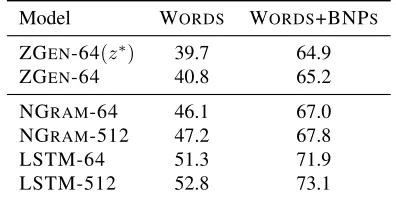
[image:4.612.318.534.60.293.2]Model WORDS WORDS+BNPS
ZGEN-64(z∗) 39.7 64.9
ZGEN-64 40.8 65.2
NGRAM-64 46.1 67.0
NGRAM-512 47.2 67.8
LSTM-64 51.3 71.9
LSTM-512 52.8 73.1
Table 3: Unlabeled attachment scores (UAS) on the PTB validation set after parsing and aligning the output. For ZGEN we also include a result us-ing the tree z∗ produced directly by the system.
For WORDS+BNPS, internal BNP arcs are always counted as correct.
One proposed advantage of syntax in lineariza-tion models is that it can better capture long-distance relationships. Figure 1 shows results by sentence length and distortion, which is defined as the abso-lute difference between a token’s index position in
y∗ andyˆ, normalized byM. The LSTM model
ex-hibits consistently better performance than existing syntax models across sentence lengths and generates fewer long-range distortions than the ZGENmodel.
Finally, Table 3 compares the syntactic fluency of the output. As a lightweight test, we parse the output with the Yara Parser (Rasooli and Tetreault, 2015) and compare the unlabeled attachment scores (UAS) to the trees produced by the syntactic system. We first align the gold head to each output token. (In cases where the alignment is not one-to-one, we ran-domly sample among the possibilities.) The models with no knowledge of syntax are able to recover a higher proportion of gold arcs.
6 Conclusion
Strong surface-level language models recover word order more accurately than the models trained with explicit syntactic annotations appearing in a recent series of papers. This has implications for the utility of costly syntactic annotations in generation mod-els, for both high- and low- resource languages and domains.
Acknowledgments
We thank Yue Zhang and Jiangming Liu for assis-tance in using ZGen, as well as verification of the
task setup for a valid comparison. Jiangming Liu also assisted in pointing out a discrepancy in the im-plementation of an earlier version of our NGRAM decoder, the resolution of which improved BLEU performance.
References
[Brew1992] Chris Brew. 1992. Letting the cat out of the bag: Generation for shake-and-bake MT. In Proceed-ings of the 14th Conference on Computational Lin-guistics - Volume 2, COLING ’92, pages 610–616, Stroudsburg, PA, USA. Association for Computational Linguistics.
[Brown et al.1990] Peter F Brown, John Cocke, Stephen A Della Pietra, Vincent J Della Pietra, Fredrick Je-linek, John D Lafferty, Robert L Mercer, and Paul S Roossin. 1990. A statistical approach to machine translation.Computational linguistics, 16(2):79–85. [de Gispert et al.2014] Adri`a de Gispert, Marcus Tomalin,
[image:5.612.86.284.58.157.2]and Bill Byrne. 2014. Word ordering with phrase-based grammars. InProceedings of the 14th Confer-ence of the European Chapter of the Association for Computational Linguistics, pages 259–268, Gothen-burg, Sweden, April. Association for Computational Linguistics.
[Elman1990] Jeffrey L. Elman. 1990. Finding structure in time.Cognitive Science, 14(2):179 – 211.
[Graves2013] Alex Graves. 2013. Generating se-quences with recurrent neural networks. CoRR, abs/1308.0850.
[Hochreiter and Schmidhuber1997] Sepp Hochreiter and J¨urgen Schmidhuber. 1997. Long short-term memory. Neural Comput., 9(8):1735–1780, November.
[Horvat and Byrne2014] Matic Horvat and William Byrne. 2014. A graph-based approach to string regeneration. InProceedings of the Student Research Workshop at the 14th Conference of the European Chapter of the Association for Computational Lin-guistics, pages 85–95, Gothenburg, Sweden, April. Association for Computational Linguistics.
[Koehn2010] Philipp Koehn. 2010. Statistical Machine Translation. Cambridge University Press, New York, NY, USA, 1st edition.
[Liu et al.2015] Yijia Liu, Yue Zhang, Wanxiang Che, and Bing Qin. 2015. Transition-based syntactic lineariza-tion. In Proceedings of the 2015 Conference of the North American Chapter of the Association for Com-putational Linguistics: Human Language Technolo-gies, pages 113–122, Denver, Colorado, May–June. Association for Computational Linguistics.
[Marcus et al.1993] Mitchell P. Marcus, Beatrice San-torini, and Mary Ann Marcinkiewicz. 1993. Building a large annotated corpus of english: The penn tree-bank. Computational Linguistics, 19(2):313–330. [Napoles et al.2012] Courtney Napoles, Matthew
Gorm-ley, and Benjamin Van Durme. 2012. Annotated gi-gaword. InProceedings of the Joint Workshop on Au-tomatic Knowledge Base Construction and Web-scale Knowledge Extraction, AKBC-WEKEX ’12, pages 95–100, Stroudsburg, PA, USA. Association for Com-putational Linguistics.
[Papineni et al.2002] Kishore Papineni, Salim Roukos, Todd Ward, and Wei-Jing Zhu. 2002. Bleu: A method for automatic evaluation of machine transla-tion. InProceedings of the 40th Annual Meeting on Association for Computational Linguistics, ACL ’02, pages 311–318, Stroudsburg, PA, USA. Association for Computational Linguistics.
[Rasooli and Tetreault2015] Mohammad Sadegh Rasooli and Joel R. Tetreault. 2015. Yara parser: A fast and accurate dependency parser. CoRR, abs/1503.06733.
[Sutskever et al.2014] Ilya Sutskever, Oriol Vinyals, and Quoc VV Le. 2014. Sequence to sequence learning with neural networks. InAdvances in Neural Informa-tion Processing Systems, pages 3104–3112.
[Zaremba et al.2014] Wojciech Zaremba, Ilya Sutskever, and Oriol Vinyals. 2014. Recurrent neural network regularization.CoRR, abs/1409.2329.
[Zhang and Clark2011] Yue Zhang and Stephen Clark. 2011. Syntax-based grammaticality improvement us-ing ccg and guided search. InProceedings of the Con-ference on Empirical Methods in Natural Language Processing, EMNLP ’11, pages 1147–1157, Strouds-burg, PA, USA. Association for Computational Lin-guistics.
[Zhang and Clark2015] Yue Zhang and Stephen Clark. 2015. Discriminative syntax-based word ordering for text generation. Comput. Linguist., 41(3):503–538, September.