Original Article
Study of cytokine as a predictor of antidepressant
effects of physical exercise in depression
Fangkun Shi1, Runfeng Miao2
1Department of Neurology, Cangzhou Central Hospital, Cangzhou 061000, China; 2Department of Emergency, The
First People’s Hospital of Yangzhou, Yangzhou 22500, China
Received June 13, 2016; Accepted July 10, 2016; Epub February 15, 2017; Published February 28, 2017
Abstract: Background and aims: Exercise is an effective therapy for major depressive disorder (MDD) and has been demonstrated to have anti-inflammatory effects in non depressed subjects. In this study, we tested the extent to which inflammatory markers interleukin 1-β (IL-1β), interleukin-6 (IL-6), and tumor necrosis factor-α (TNF-α) can be used to predict response to exercise treatment after an incomplete response to an serotonin reuptake inhibitor (SSRI). Methods: MDD patients who partial responders to a selective SSRI were randomized to receive one of two doses of exercise: 20 kilocalories per kilogram of body weight (KKW), or 5 KKW for 15 weeks were enrolled in this study from cangzhou central hospital. Blood samples were collected before initiation and again at the end of the 15-week exercise intervention. The serum samples were analyzed using a multiplexed ELISA for IL-1β, IL-6, TNF-α. Results: A significant positive correlation between change in IL-1β and depression symptom scores was observed (P = 0.044). There was no significant change in the level of any cytokine following the 15-week intervention, and no significant relationship between exercise dose and change in mean cytokine level. Conclusions: Our results confirm antidepressant medications that the decreasing IL-1β to positive depression treatment outcomes.
Keywords: Physical exercise, cytokines, major depressive disorder
Introduction
Major depressive disorder (MDD) is a mental disorder characterized by a pervasive and per-sistent low mood that is accompanied by low self-esteem and by a loss of interest or plea-sure in normally enjoyable activities [1]. MDD
significantly affects a person’s family and per -sonal relationships, work or school life, sleep-ing and eatsleep-ing habits, and general health.
According to the World Health Organization (WHO), it is predicted to be the second-leading
cause of disease burden worldwide after HIV in
2030 [2]. The prevalence of depressive disor -ders and their associated socioeconomic bur-den are of growing concern. Evibur-dence suggests that of those receiving adequate medication trials, most will not achieve remission following initial treatment and nearly one-third will not achieve remission even following several
treat-ment steps [3]. The identification of modera -tors of treatment response is a critical step in the pursuit of developing methods to better
match patients with treatments. These moder -ators could be used to develop new diagnostic methods that subtype patients into groups with differences in underlying pathophysiology as well as for personalizing treatment [4].
Physical exercise has been shown to be effec-tive as a independent and as an augmentation treatment for MDD [5-8]. Madhukar et al. recent work suggested gender and family history as
significant regulators of treatment response for
exercise management [9]. In addition, they ex- amined changes in Brain-Derived Neurotrophic Factor (BDNF) associated with exercise treat-ment and found higher levels of BDNF at
base-line predicted a significantly greater decrease
in depressive symptoms following exercise
and support the further verification of biologi -cal biomarkers associated with treatment response of exercise [10-14].
Cytokines have potential for biomarker devel-opment in MDD [15-18]. Recent studies have shown that these markers are high in depressed patients when compared to healthy controls.
Elevations of interleukin-6 (IL-6) and tumor necrosis factor α (TNF-α) have been affirmed in
a meta-analysis [19]. Additionally, antidepres-sant treatment has been shown to decrease levels of cytokine in MDD. In a recent
meta-analysis findings confirmed that cytokines are
reduced following treatment with SSRIs. Studies have also demonstrated that elevated
baseline TNF-α and IL-6 relate to treatment fail
-ure for SSRIs [20-22]. To our knowledge, few
studies have determined the relationship between physical exercise and cytokine mark-ers in a depressed sample.
This report tests the extent to which inflamma
-tory markers (IL-1β, IL-6, TNF-α) can be used to
predict response to exercise treatment after an incomplete response to an SSRI. It also
exam-ines how the inflammatory markers change
with exercise.
Patients and methods
Subjects
In the treatment with exercise augmentation
for depression (TREAD) study, adults with MDD
who failed to remit with an adequate trial of a single SSRI were recruited with an exercise augmentation regimen at the Department of Nursing, Cangzhou Central Hospital between January 2010 and December 2014. Blood sam-ples were collected from these subjects for analysis of the cytokine markers at both before
(baseline) and at the end of treatment. TREAD
recruited adults, age 18-60, with MDD, who were currently taking an adequate dose of a
single SSRI but were non-responders as defined by a score of ≥ 14 on the 17-Hamilton Rating
Scale of Depression (HRSD17), following > 6 weeks and < 6 months treatment. Participants were excluded for presence of psychosis or if they regularly engaged in physical activity. Written informed consents conforming to the tenets of the Declaration of Helsinki were obtained from each participant prior to the
study. The Medical Ethics Committee of the department of neurosurgery, the first affiliated
hospital of Henan university, approved this study.
Interventional treatment
Participants were randomly divided into two groups: the low dose group with a target energy expenditure of 5 kilocalories per kilogram of body weight per week (KKW) and the high dose group with 20 KKW over 15 weeks. Subjects engaged in aerobic exercise (treadmill, cycle ergometers or a combination) at self-selected
exercise intensity. The exercise dose was com -pleted in a combination of supervised and home-based sessions, and participants logged actual activity using a web based system. Diagnosis
Self-report and clinician-rated measures were
collected prior to the first exercise session of each week. Trained personnel blinded to group
assignment completed clinician-rated
assess-ments. The primary outcome assessment was
the 30-item clinician-rated Inventory of Depre- ssive Symptomatology (IDS-C30); additional assessments of depressive symptoms includ-ed the 30-item self-ratinclud-ed Inventory of Depre- ssive Symptomatology (IDS-SR30) and the (HRSD17).
Sample collection and analysis
Of the 121 randomized TREAD participants,
100 signed additional consent for blood analy-sis at baseline (95 samples were available); 63 of these completed the study and provided week 15 samples. Resting blood samples were collected at baseline and following the 15-week intervention. All samples were drawn in the morning; participants fasted a minimum of 3 hours prior to blood draw, and were at least 24
hours from the last exercise session. Ten ml of
peripheral venous blood was drawn and centri-fuged at 900 rpm for ten minutes at room tem-perature to separate the blood components. Serum was subsequently frozen at -80°C until the time of analysis. We analyzed samples in duplicate using a multiplexed
chemo-ilumi-nesce ELISA method (MesoScale Discovery, Gaithersburg, MD) for IL-1β, IL-6, and TNF-α. All
Statistical analysis
Data were initially assessed for normality and log-transformed where appropriate. Baseline descriptive data were expressed as mean ± standard deviation (SD) for continuous vari-ables and as frequencies and percentages for categorical variables. Differences between groups were assessed using unpaired t-test or Mann-Whitney test for continuous variables, and by Chi squared test for categorical vari-ables. We performed an Analysis of Covariance
A total of 121 baseline samples were collected
and analyzed by using cytokine assay. One baseline value for TNF-α was greater than five
standard deviations above the sample mean
and thus excluded from further analysis. Two
participants had missing baseline values for
IL-1β and were also excluded. An additional par
-ticipant sample had no value for 15 week IL-1β
[image:3.612.95.523.84.281.2]this participant was included in the mixed model but excluded from the correlation analy-sis. Tables 1 and 2 show the number of partici-pants who were included in each analysis.
Table 1. The demographic, clinical and laboratory characteristics of tested samples
Parameter Total (n) Mean ± SD 20 KKW (n) Mean ± SD 5 KKW (n) Mean ± SD X2/t P value&
Age 95 46.15±9.23 50 44.83±8.65 45 49.32±9.34 1.78 0.07
Male (%) 95 20 50 15.19 45 25 1.16 0.21
IDS-C 95 34.41±7.12 50 33.51±5.94 45 35.16±8.77 1.21 0.16
IDS-SR 91 32.51±9.76 47 31.86±4.87 44 33.26±1.76 1.50 0.39
HSRD 95 18.10±6.83 50 17.97±2.81 45 18.26±4.93 0.83 0.41
IL-1β 93 0.10±0.03 49 0.09±0.07 44 0.10±0.03 0.69 0.49
IL-6 95 0.87±0.54 50 0.98±0.76 45 0.81±0.69 0.03 0.95
TNF-α 94 5.45±1.76 50 5.32±1.58 44 5.54±1.7 2.76 0.07
BMI 95 30.89±3.61 50 30.36±7.01 45 31.44±4.13 0.87 0.39
SF-36 91 80.11±8.97 47 80.68±9.83 44 79.77±8.72 0.2 0.84
RE (%) 95 67.63 50 67.89 45 67.35 0.13 0.71
FH (%) 95 67.63 50 67.98 45 67.31 0.03 0,94
Duration 94 20.18±8.12 49 18.31±8.25 45 22.07±9.19 1.5 0.12
&Tested for differences between 20 KKW and 5 KKW exercise groups on each demorgraphic/clinical characteristic in a
separate model. Note: SD = standard deviation; KKW = Kilocalories per kilogram per week; IDS-C = Inventory of Depressive symptoms-Clinician Rated; HRSD = Hamiliton Rating Scale for Depression; SF-36 = SF-36 Physical Health; RE = Recurrent of MDD; FH = Family History of MDD. N = Number of patients involved in the investigation.
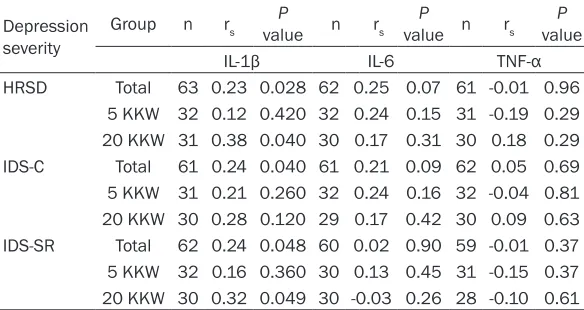
Table 2. Spearman correlation coefficients between the change in
each cytokine level and the change in depression severity for all completers and within each dose group
Depression severity
Group n rs valueP n rs value nP rs valueP
IL-1β IL-6 TNF-α
HRSD Total 63 0.23 0.028 62 0.25 0.07 61 -0.01 0.96 5 KKW 32 0.12 0.420 32 0.24 0.15 31 -0.19 0.29 20 KKW 31 0.38 0.040 30 0.17 0.31 30 0.18 0.29 IDS-C Total 61 0.24 0.040 61 0.21 0.09 62 0.05 0.69 5 KKW 31 0.21 0.260 32 0.24 0.16 32 -0.04 0.81 20 KKW 30 0.28 0.120 29 0.17 0.42 30 0.09 0.63 IDS-SR Total 62 0.24 0.048 60 0.02 0.90 59 -0.01 0.37 5 KKW 32 0.16 0.360 30 0.13 0.45 31 -0.15 0.37 20 KKW 30 0.32 0.049 30 -0.03 0.26 28 -0.10 0.61
Note: Change was operationally defined as week 15 cytokine level minus baseline
cytokine level. Note: KKW = Kilocalories per kilogram per week; IDS-C = Inventory of Depressive symptoms-Clinician Rated; HRSD = Hamiliton Rating Scale for Depression.
(ANCOVA) on each cytokine
level at week 15, while con-trolling for baseline cyto-kine level, BMI, and the physical subscale of the SF-36. Multivariate analysis using stepwise logistic re- gression was completed for
all significant variables in
univariate analysis. All anal-yses were performed using
SPSS 18.0. Two-tailed tests with a 5% level of signifi -cance were used through- out.
Results
[image:3.612.91.383.380.535.2]Participants’ baseline demographic and clinical
characteristics as well as mean baseline cyto-kine levels for all participants and for each exercise dose group are reported in Table 1. Correlation analysis between the cytokine level and depression symptoms
Spearman correlation coefficients between the
change in each cytokine level and the change in depression severity for all completers and with-in each dose group are shown with-in Table 2. The
analysisi of Spearman correlations for all
com-larger drops in IL-1β level also had com-larger decreases in symptom scores. This relationship maintained significance in the higher dose 20
KKW subgroup, but not in the lower dose 5 KKW subgroup, demonstrating a dose response relationship. Contrary to Madhukar H results,
we did not find that exercise augmentation
treatment lowered mean cytokine levels or that a higher dose of exercise had a stronger effect on mean cytokine levels.
Our results that a change in IL-1β associates
[image:4.612.88.323.96.278.2]with change in symptom severity, on the other
Table 3. Effect of physical exercises on change of cytokine levels from baseline to week 15
n Baseline Week 15 ΔM valueP &
Groups IL-1β
Total 63 0.10±0.07 0.13±0.28 0.03±0.27 0.38 5 KKW 32 0.10±0.06 0.11±0.05 0.01±0.07 0.77 20 KKW 31 0.09±0.05 0.16±0.45 0.07±0.43 0.21
Groups IL-6
Total 62 0.89±0.77 0.77±0.25 -0.12±0.97 0.58 5 KKW 32 0.87±0.57 0.79±0.65 -0.08±0.97 0.87 20 KKW 30 0.91±0.79 0.74±0.46 -0.17±0.82 0.56
Groups TNF-α
Total 63 5.77±1.74 5.60±1.76 -0.18±0.79 0.18 5 KKW 32 6.18±1.57 5.68±1.67 -0.32±1.08 0.41 20 KKW 31 5.28±1.62 5.29±1.64 0.01±0.83 0.91
Note: ΔM = Mean change in cytokine levels; KKW = Kilocalories per kilogram per week; Each cytokine was measured in pg/ml. &From
Wilcoxon signed rank test (two-tailed) for mean change.
Table 4. ANCOVA results for effect of different exercise
groupson cytokine at week 15 IL-1β
Exercise Groups n M SE 95% CI F P value 5 KKW 32 0.11 0.05 0.02-0.21 0.87 0.38 20 KKW 31 0.18 0.04 0.07-0.28
IL-6
Exercise Groups n M SE 95% CI F P value 5 KKW 32 0.76 0.08 0.65-0.89 0.21 0.68 20 KKW 30 0.79 0.08 0.62-0.91
TNF-α
Exercise Groups n M SE 95% CI F P value 5 KKW 32 5.52 0.16 5.21-5.91 0.71 0.41 20 KKW 31 5.79 0.18 5.32-6.05
Note: M = Least Squares Mean; SE = Standard Error; 95% CI = 95% Confidence Interval for the expected mean value; KKW = Kilocalo -ries per kilogram per week.
pleters revealed a significant positive rela
-tionship between change in IL-1β and
change in IDS-C30 (rs = 0.24, P = 0.040), change in HRSD17 (rs = 0.23, P = 0.028), and change in IDS-SR30 (rs = 0.24, P =
0.048). Significant associations were also
observed in the high dose exercise group,
with significant positive relationships between change in IL-1β and change in
HRSD17 (rs = 0.38, P < 0.05) as well as change in IDS-SR (rs = 0.32, P < 0.05), respectively. Correlations between change in depression severity and change in other
cytokines were not significant.
Association between change in cytokine level and physical exercise therapy
Mean cytokine levels at baseline and week 15, as well as change in the means for all completers and by dose group, are report-ed in Table 3. There was no significant
change in any of the mean cytokine levels over the study period in the entire sample or within either exercise-dose group. Further, we assessed exercise group effect
on cytokine level. The ANCOVA of each inflammatory cytokine outcome, control -ling for baseline cytokine level, BMI, and
SF-36 physical health, revealed no signifi -cant effect of any exercise group in any of the individual cytokine mean values at
week 15 (p’s > 0.35) (Table 4).
Discussion
Our results suggest that cytokines may be
useful biomarkers of the antidepressant
effect of exercise. We found a significant
positive correlation between changes in
IL-1β and depressive symptoms on all three symptom measures used in TREAD,
[image:4.612.92.323.357.517.2]hand, is similar with a growing body of research on cytokines and SSRI treatment [23]. For instance, Song et al. [24] found that respond-ers to SSRI treatment had lower end treatment
IL-1β than non-responders. The recent
meta-analysis by Hannestad et al. [25] also
suggest-ed rsuggest-eductions in IL-1β associate with better consequence with SSRIs. Our finding is signifi
-cant, however, in that it is the first replication of
this relationship in a sample treated with
exer-cise. We also found significant correlations between alteration of IL-1β and change in
depressive symptom severity in the 20 KKW
group but not in the 5 KKW group. This sug
-gests a dose-response effect on IL-1β might
have been found in a larger or better character-ized sample.
We did not find that exercise augmentation
treatment lowered mean cytokine levels or that a higher dose of exercise had a stronger effect
on mean cytokine levels. This finding is in dis -agreement with both studies of exercise in healthy and medically ill samples, and with studies of SSRI treatment in depressed
sam-ples [26]. Similarly, we failed to find a dose
effect on cytokine change. It is probable that pretreatment with SSRIs in this sample obscured our ability to detect change in cyto-kine levels, since SSRIs are known to lower cytokines. Similarly, SSRI pretreatment likely reduced baseline depressive symptoms in our sample. Future research examining the effect
of exercise on inflammatory cytokines in treat -ment MDD patients would provide the informa-tion necessary for comparison to previous SSRI trials.
While it is clear that there is a substantial
rela-tionship between inflammation and depres -sion, several mechanisms appear to be in- volved and may play key roles across patients. Indeed, subsets of MDD patients have an altered peripheral immune system, which includes both impaired cellular immunity, and
an increase in the levels of proinflammatory
cytokines. Furthermore, studies indicate that
innate immune cytokines can influence patho -physiological domains, such as neurotransmit-ter metabolism, neuroendocrine function and regional brain activity, all of which are relevant to depression. Moreover, administration of high
levels of proinflammatory cytokines has been
shown to cause changes in behaviour, such as
low mood, fatigue, anxiety, sleep disturbances, anhedonia and cognitive dysfunction, all of which closely resemble symptoms observed in MDD [27-31]. Not only has exercise been shown
to be broadly anti-inflammatory, but it has been specifically demonstrated to act on these path -ways such as disruption of synthesis, reuptake and metabolism of neurotransmitters, altera-tion of hypothalamic-pituitary-adrenal (HPA)
axis function to reverse the effects of inflam -mation [32-34]. Any or all of these mechanisms
could be involved in the efficacy of exercise as
a treatment of MDD, and future studies better depicting baseline cytokine and its change among the period of exercise therapy may clar-ify which hypothesis are most important in clini-cal recovery.
In summary, our results demonstrate that exer-cise may play a crucial role in effective
treat-ment of MDD within specific subpopulations. For instance, chronic increased levels of inflam -matory cytokine is closely related to metabolic syndrome and insulin resistance, in turn, of these syndrome may be accompanied with treatment-resistant depression [35]. Consi- dering exercise generally decrease cytokine levels, counterpoise insulin resistance, and improves several feature of metabolic
syn-drome [36, 37]. Thus, it is reasonable that exer -cise may be extremely effective as a single-handed or combined therapy for MDD in
patients with inflammatory conditions.
Acknowledgements
We thank all the people who participant this
study. This study was partly supported by grant
from the Cangzhou central hospital.
Disclosure of conflict of interest
None.
Address correspondence to: Dr. Fangkun Shi, De- partment of Nursing, Cangzhou Central Hospital, No. 201, Xinhua Road, China. Tel: +86-317-2075627; Fax: +86-317-2075627; E-mail: shifangkucz@sina. com
References
fetal alcohol spectrum disorders: Protective effects of voluntary physical exercise. Neuropharmacology 2012; 62: 1607-18. [2] Wolff E and Strohle A. Causal associations of
physical activity/exercise and symptoms of de-pression and anxiety. Arch Gen Psychiatry 2010; 67: 540-1.
[3] Peterson JC, Charlson ME, Wells MT and Altemus M. Depression, coronary artery dis-ease, and physical activity: how much exercise is enough? Clin Ther 2014; 36: 1518-30. [4] Iglesias Martinez B, Olaya Velazquez I and
Gomez Castro MJ. [Prevalence of performing and prescribing physical exercise in patients diagnosed with anxiety and depression]. Aten Primaria 2015; 47: 428-37.
[5] Haslacher H, Michlmayr M, Batmyagmar D, Perkmann T, Ponocny-Seliger E, Scheichen- berger V, Pilger A, Dal-Bianco P, Lehrner J, Pezawas L, Wagner O and Winker R. Physical exercise counteracts genetic susceptibility to depression. Neuropsychobiology 2015; 71: 168-75.
[6] Hallgren M, Kraepelien M, Ojehagen A, Lindefors N, Zeebari Z, Kaldo V and Forsell Y. Physical exercise and internet-based cognitive-behavioural therapy in the treatment of de-pression: randomised controlled trial. Br J Psychiatry 2015; 207: 227-34.
[7] Battle CL, Abrantes AM, Schofield CA and Kraines MA. Physical Activity as an Intervention for Antenatal Depression: Rationale for Developing Tailored Exercise Programs for Pregnant Women with Depression. J Midwifery Womens Health 2015; 60: 479-82.
[8] Sun YL, Wang J, Yao JX, Ji CS, Dai Q and Jin YH. [Physical exercise and mental health: cogni-tion, anxiety, depression and self-concept]. Sheng Li Ke Xue Jin Zhan 2014; 45: 337-42. [9] Rethorst CD, Toups MS, Greer TL, Nakonezny
PA, Carmody TJ, Grannemann BD, Huebinger RM, Barber RC and Trivedi MH. Pro-infla- mmatory cytokines as predictors of antide-pressant effects of exercise in major depres-sive disorder. Mol Psychiatry 2013; 18: 1119-24.
[10] aan het Rot M, Collins KA and Fitterling HL. Physical exercise and depression. Mt Sinai J Med 2009; 76: 204-14.
[11] Strohle A. Physical activity, exercise, depres-sion and anxiety disorders. J Neural Transm 2009; 116: 777-84.
[12] Ko JK. [Comparing the effects of drug therapy, physical therapy, and exercise on pain, disabil-ity, and depression in patients with chronic low back pain]. Taehan Kanho Hakhoe Chi 2007; 37: 645-54.
[13] Martiny K, Bengtsson P and Lund V. [Physical therapies for depression-light, exercise, TMS
and sleep deprivation]. Ugeskr Laeger 2007; 169: 1450-2.
[14] Harris AH, Cronkite R and Moos R. Physical ac-tivity, exercise coping, and depression in a 10-year cohort study of depressed patients. J Affect Disord 2006; 93: 79-85.
[15] Kang HJ, Kim JM, Kim SW, Shin IS, Park SW, Kim YH and Yoon JS. Associations of cytokine genes with Alzheimer’s disease and depres-sion in an elderly Korean population. J Neurol Neurosurg Psychiatry 2015; 86: 1002-7. [16] Doong SH, Dhruva A, Dunn LB, West C, Paul
SM, Cooper BA, Elboim C, Abrams G, Merriman JD, Langford DJ, Leutwyler H, Baggott C, Kober K, Aouizerat BE and Miaskowski C. Associations between cytokine genes and a symptom clus-ter of pain, fatigue, sleep disturbance, and de-pression in patients prior to breast cancer sur-gery. Biol Res Nurs 2015; 17: 237-47.
[17] Wilkowska A, Pikula M, Rynkiewicz A, Wdowczyk-Szulc J, Trzonkowski P and Lando- wski J. Increased plasma pro-inflammatory cy-tokine concentrations after myocardial infarc-tion and the presence of depression during next 6-months. Psychiatr Pol 2015; 49: 455-64.
[18] Noto C, Ota VK, Santoro ML, Ortiz BB, Rizzo LB, Higuchi CH, Cordeiro Q, Belangero SI, Bressan RA, Gadelha A, Maes M and Brietzke E. Effects of depression on the cytokine profile in drug naive first-episode psychosis. Schizophr Res 2015; 164: 53-8.
[19] Miller BJ, Buckley P, Seabolt W, Mellor A and Kirkpatrick B. Meta-analysis of cytokine altera-tions in schizophrenia: clinical status and anti-psychotic effects. Biol Psychiatry 2011; 70: 663-71.
[20] Pasco JA, Jacka FN, Williams LJ, Henry MJ, Nicholson GC, Kotowicz MA and Berk M. Clinical implications of the cytokine hypothesis of depression: the association between use of statins and aspirin and the risk of major de-pression. Psychother Psychosom 2010; 79: 323-5.
[21] Sims OT, Whalen CC, Nackerud LG and Bride BE. Longitudinal effects of selective serotonin reuptake inhibitor therapy and cytokine-relat-ed depression on hepatitis C viral logs during antiviral therapy. J Clin Psychopharmacol 2014; 34: 80-4.
[22] Bai YM, Chiou WF, Su TP, Li CT and Chen MH. Pro-inflammatory cytokine associated with so-matic and pain symptoms in depression. J Affect Disord 2014; 155: 28-34.
human hippocampal neurogenesis. Neuropsy- chopharmacology 2012; 37: 939-49.
[24] Song C, Halbreich U, Han C, Leonard BE and Luo H. Imbalance between pro- and anti-in-flammatory cytokines, and between Th1 and Th2 cytokines in depressed patients: the effect of electroacupuncture or fluoxetine treatment. Pharmacopsychiatry 2009; 42: 182-8. [25] Hannestad J, DellaGioia N and Bloch M. The
effect of antidepressant medication treat- ment on serum levels of inflammatory cyto-kines: a meta-analysis. Neuropsychophar- macology 2011; 36: 2452-9.
[26] Ross R, Janssen I, Dawson J, Kungl AM, Kuk JL, Wong SL, Nguyen-Duy TB, Lee S, Kilpatrick K and Hudson R. Exercise-induced reduction in obesity and insulin resistance in women: a ran-domized controlled trial. Obes Res 2004; 12: 789-98.
[27] Pessoa Rocha N, Reis HJ, Vanden Berghe P and Cirillo C. Depression and cognitive impair-ment in Parkinson’s disease: a role for inflam-mation and immunomodulation? Neuroim- munomodulation 2014; 21: 88-94.
[28] O’Donovan A. Inflammation and depression: unraveling the complex interplay in inflamma-tory bowel disease. J Pediatr Gastroenterol Nutr 2014; 58: 541-2.
[29] Mazo GE, Dibinina EE and Krizhanovsky AS. [Inflammation and depression: the role of oxi-dative stress, hormonal and cellular factors]. Zh Nevrol Psikhiatr Im S S Korsakova 2014; 114: 80-4.
[30] Lu M, Yang JZ, Geng F, Ding JH and Hu G. Iptakalim confers an antidepressant effect in a chronic mild stress model of depression through regulating neuro-inflammation and neurogenesis. Int J Neuropsychopharmacol 2014; 17: 1501-10.
[31] Ma K, Zhang H and Baloch Z. Pathogenetic and Therapeutic Applications of Tumor Necrosis Factor-alpha (TNF-alpha) in Major Depressive Disorder: A Systematic Review. Int J Mol Sci 2016; 17.
[32] Xu Y, Sheng H, Tang Z, Lu J and Ni X. Inflammation and increased IDO in hippocam-pus contribute to depression-like behavior in-duced by estrogen deficiency. Behav Brain Res 2015; 288: 71-8.
[33] Xiong GL, Prybol K, Boyle SH, Hall R, Streilein RD, Steffens DC, Krishnan R, Rogers JG, O’Connor CM, Jiang W; SADHART-CHF Inve- stigators. Inflammation Markers and Major Depressive Disorder in Patients With Chronic Heart Failure: Results From the Sertraline Against Depression and Heart Disease in Chronic Heart Failure Study. Psychosom Med 2015; 77: 808-15.
[34] Weinberger JF, Raison CL, Rye DB, Montague AR, Woolwine BJ, Felger JC, Haroon E and Miller AH. Inhibition of tumor necrosis factor improves sleep continuity in patients with treatment resistant depression and high in-flammation. Brain Behav Immun 2015; 47: 193-200.
[35] Dantzer R. Cytokine, sickness behavior, and depression. Immunol Allergy Clin North Am 2009; 29: 247-64.
[36] Stewart LK, Earnest CP, Blair SN and Church TS. Effects of different doses of physical activ-ity on C-reactive protein among women. Med Sci Sports Exerc 2010; 42: 701-7.