© 2015, IRJET ISO 9001:2008 Certified Journal
Page
457
Analysis and Design of Controllers for AQM Routers Supporting TCP
Flows in Wireless Network
1
Aarti Kashyap ,
2Dr.K.P.Tiwari
1
Research Scholar, Government E.R.R.P.G Science College, Chhattisgarh, India
2
Assistant Professor, Govt. Girls Bilasa (Autonomous) P.G College Bilapur, Chhattisgarh, India
---***---Abstract
ultimately a true time drawback is taken into
account, at the start it absolutely was in continuous time
domain for getting used for Analysis and style of
Controllers for AQM Routers supporting estimation it's
reborn to separate time domain. conjointly variance of
estimation error within the estimation of true state is
studied. Active Queue Management could be a technique
that consists in dropping or specific Congestion
Notification marking packets before a router's. an online
router generally maintains a group of queues, one per
interface, that hold packets scheduled to travel out on it
interface. traditionally, such queues use a drop-tail
discipline: a packet is place onto the queue if the queue is
shorter than its most size (measured in packets square
measure
in
bytes),
and
born
otherwise.
Active queue disciplines drop or mark packets before the
queue is full. Typically, they operate by maintaining one
or
additional
drop/mark
possibilities,
and
probabilistically dropping or marking packets even once
the queue is brief. the distinctiveness of our approach
comes from the utilization of a recently developed
dynamic model of the transmission management
protocol that permits application of management
principles to handle the fundamental feedback nature of
AQM .Under TCP. a sender probes the network’s on the
market information measure by linearly increasing its
rate till knowledge packets square measure lost. Upon
packet loss, the receiver signals the sender to cut back its
rate. this packet- dropping theme embrace flow
synchronization and performance degradation thanks to
excessive time outs and restarts.
Key Words:
wireless networks. Packets, Routing
Protocol, TCP source, controller model, wireless
links.
1 INTRODUCTION
Computer networks have augmented congestion collapse issues in keeping with growth of wired or wireless network. This results in network congestion and involves additional vital problems for top packet loss rate thanks to buffer overflow. Also, it's more durable to notice if there square measure wireless links within the network Atmosphere.
planned the end-to-end congestion management formula that forms the idea for the communications protocol
(Transmission management Protocol) Congestion
management. Floyd and Jacobson given the Random Early Detection. Its mechanism is that packets square measure willy-nilly born before the buffer of queue overflows [1]. In general Active Queue Management schemes enhance the performance of transmission management protocol TCP protocol communications protocol and therefore the feedback management theory is ready to assist to resolve congestion control drawback. Misra, et al., developed a strategy to model and procure expected transient behavior of networks with AQM supporting communications protocol flows. Hollot, et al., approximated its liberalized model mistreatment small-signal linearization so as to convert to management|to regulate|to manage} drawback supported feedback control theory, and designed the PI controller [2]. More recently, principle and Suh planned the sturdy PID (Proportional-Integral-Derivative) controller supported Linear Quadratic approach for AQM system. And Lee and principle [3] planned the LQ-Servo controller structure, and so principle, et al., [8] developed the standardisation technique of controller parameter supported Loop-Shaping [4]. But, they didn't apply the wireless networks atmosphere. For applying TCP/AQM in wireless networks atmosphere, it ought to be considering the dynamics of wireless links, then the TCP/AQM wireless networks system is sculpturesque mistreatment TCP/AQM management for Wireless Networks In wireless networks atmosphere, it ought to be noted that system parameter square measure sensitive to varied channel conditions and knowledge rates[5].this implies that AN adapting congestion controller is a crucial issue within the given varied wireless link like node, capability and round-trip time. For this, the TCP/AQM wireless networks system is sculpturesque mistreatment 3 states as shown in Figure three. State transitions would occur thanks to wireless channel variations, and so the wireless networks atmosphere may be outlined by these transitions during analysis[6].
© 2015, IRJET ISO 9001:2008 Certified Journal
Page
458
Figure1.1 State transition diagram for wireless networks atmosphere.
Active Queue Management (AQM) could be a terribly active analysis space in networking. Specifically, the RED [8] variant of AQM has generated lots of analysis and interest within the community. Understanding the behavior of RED has for the most part remained a “simulate and observe” exercise, and standardization of RED has tested to be a troublesome job. varied variants of RED are planned to figure around a number of the performance issues determined with RED. In [9], we tend to performed an impact metaphysical analysis of a linearized model of communications protocol and RED. The analysis enabled United States of America to gift style tips for RED, that we tend to verified via simulations mistreatment ns-2. Our investigations disclosed 2 limitations of RED [10]. the primary limitation deals with the exchange between speed of response and stability. A style that's quick in its time interval, was found to own comparatively low stability margins, whereas a style that's stable exhibits sluggish responses. the opposite limitation of RED is that the direct coupling between queue length and loss chance. The steady state queue length in RED relies on the load level. Hence, for AN full system, the flows pay a double penalty of upper delay likewise as higher loss. the 2 may be simply decoupled. during this rrsearch we tend to apply classical system techniques to style controllers that square measure higher fitted to AQM than RED[11] . we tend to come back up with 2 straightforward styles, specifically the Proportional and therefore the Proportional-Integral (PI) controller. we tend to gift tips to style these stable linear controllers. We verify our tips through non-linear simulations mistreatment ns. we tend to conjointly gift tips for a straightforward implementation of the PI filter in an exceedingly RED capable router or machine. The PI controller is shown via sim- This work is supported partially by the National Science Foundation beneath Grants ulations to be a strong controller that outperforms the RED controller beneath the majority eventualities thought of. the matter of coming up with controllers for AQM has conjointly been approached from AN optimization point of view in an exceedingly framework outlined by Kelly et al. [12]. The
matter is developed as a broken-backed program, with the combination supply utility being maximized subject to capability constraint. within the primal version of the matter, controllers square measure designed taking a penalty perform approach to get optimum supply rates.
Figure1.2: diagram of multilayer network and routed access network
Whereas in an exceedingly twin formulation [13] controllers square measure designed to get optimum congestion measures (the twin variables). A virtual buffer technique towards the look of controllers is taken within the primal approach, with the fundamental plan being to mark packets once a virtual buffer (smaller in capability and repair rate than the particular buffer) overflows. Gibbens and Kelly propose a static virtual buffer configuration [14], whereas use an accommodative virtual buffer, adapting the dimensions and capability of the virtual buffer as a perform of the incoming rate to each minimize delay and maximize utilization [15] style controllers from the duality point of view, and that we note that one version of their REM controller is incredibly similar in flavor to the PI controller we've planned. The optimization based mostly approaches for the most part result in steady state equilibrium, and don’t concentrate an excessive amount of on the transient performance of the controllers.
2. PREVIOUS WORK
[image:2.595.37.289.116.260.2]© 2015, IRJET ISO 9001:2008 Certified Journal
Page
459
simulation results. The on top of mentioned square measure the speculation of congestion its goals and deserves and therefore the most typical factors for the incidence of congestion and therefore the ways to beat the congestion collapse. This paper in short discusses the congestion management formulas supported the network awareness and varied common congestion management algorithm used and its protocols. The paper conjointly discusses the communications protocol- friendliness and therefore and conjointly the} characteristics of the TCP and non-TCP flows and also the mentioned problems that stay to be resolved.
CATEGORIZATION OF CONGESTION CONTROL
PROTOCOLS
Congestion management protocols were classified as four main teams in keeping with AN quantity of characteristics in their technique of labor [16]. the next shows the applicable
class of arrangement.
Window based mostly Congestion management
The window based primarily based mostly protocols square measure build supported the technique of mechanism associated with congestion window based, and it's used at the dispatcher or recipient aspect [13]. The gap to facilitate window is control in reserve for each packet as presently because the sent packet is acknowledged to be inbound the slot becomes free and permits transmission only if free slots square measure valid. In absence of congestion the dimensions of window will increase and reduces once
congestion happens within the network [14].
Rate-Based Congestion management
Rate-Based protocols square measure designed supported the difference of their speed of transmission following to many incorporated recommendation formula that intimates relating to congestion once it exists. the speed based mostly algorithms is separated in to simple mechanisms and congestion management. The marks of saw tooth outturn kind square measure used and this sort of theme oft isn't utterly compatible with the streaming media applications on that the easy schemes square measure based mostly. the present analysis tends to make the modification rate mechanisms making certain the evenhanded antagonism among communications protocol and non communications
protocol flows equally within the network.
Single Rate Congestion management
Single rate congestion management mechanisms square measure typically nonheritable by each unicast congestion management protocols. Transmissions in unicast have single one receiver, therefore transfer rate is customized in accordance to the receiver position. Multicast broadcast will assume the one rate approach conjointly, all over the sender streams the info among similar rate to everybody recipients
of the multicast cluster within the network.
Multi Rate Congestion management
The coated multicast move towards in multi rate congestion management, as a result of multi-layering permits to separate knowledge of the sender into dissimilar layers to be sent to various multicast teams. All receivers be a part of the
most important possible quantity of teams allowed by the traffic congestion within the mode to dispatcher. whereas knowledge worth to be send to the receiver becomes high whereas union extra multicast teams. because the characteristic is especially evident in multicast video periods wherever additional the category that the recipient settle for in, is extra layers that the recipient encounter, and conjointly additional improved feature of video is briefly, designed for previous mass knowledge, the transmit time is shrivelled by extra layers [11]. By the usage of this mechanism, congestion management is earned fully through the cluster managing and routing mechanisms of the first multicast procedure.
Communications protocol Friendliness
The unicast protocol that is connection-oriented yield consistent knowledge transfer with congestion management and flow. As transmission management protocol maintain a congestion window that control the number of remarkable unidentified knowledge packets within the network. The sender will send packets solely as long as free slots square measure on the market as a result of the info send can consume slots of the window. As presently as AN acceptance supposed for exceptional packets is inbound, the window is deviated so the acknowledged packets will depart the window and therefore the identical range of free slots becomes accessible for the approaching knowledge. communications protocol performs slow begin, and therefore the rate roughly doubles every round-trip time (RTT) to quickly increase its justifiable share of information measure. In its steady state, communications protocol uses AN additive increase, increasing decrease mechanism to react to congestion by the detection of extra information measure. communications protocol will increase the congestion window by one slot per round-trip time once
there's no sign of loss.
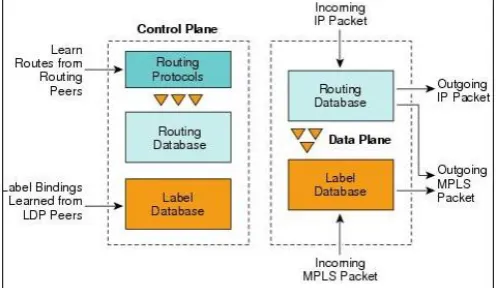
Figure1.3: Packet Flow Interface
© 2015, IRJET ISO 9001:2008 Certified Journal
Page
460
throughout the consequence of a non communications protocol flow occurring difficult TCP flows below the similar circumstances regarding outturn and former parameter. The non transmission management protocol communications protocol uncast stream may be communications protocol friendly however it don't control the intensive term outturn for any of the synchronous communications protocol flows by a issue that's additional than that ready by a
communications protocol flow beneath identical
circumstances. A multicast flow is assumed to be communications protocol friendly if it severally views for each sender receiver combine of the multicast flow
TCP-friendly [4].
3. OBJECTIVE
Analysis and style of Controllers for AQM Routers Supporting communications protocol Flows in Wireless Network
4. PLANNED APPROACH
A state area model could be a mathematical model of a method, wherever the method state x is drawn by a numerical vector. A state area model really consists of 2 separate models: the method model, that describes however the state propagates in time supported external influences, like input and noise; and therefore the measurements y square measure taken from the method, generally simulating creaky and/or inaccurate measurements. a numerical technique accustomed track a time-varying signal within the presence of noise. it's the matter of estimating the instant state of a linear system from a activity of outputs that square measure linear mixtures of the states however corrupted with Gaussian racket. The ensuing computer is statically optimum with relation to a quadratic perform of estimation error.
From the mathematical purpose read, the KF could be a set of equations that gives AN economical algorithmic procedure resolution of the linear estimation drawback. The filter is incredibly powerful in many aspects. It may be appropriately accustomed either of smoothening, estimating or predicting severally the past, this and therefore the future states. This could be achieved even once precise characteristics of the sculpturesque system square measure unknown, i.e., the case of unsure systems. The KF is a particularly effective and versatile procedure for combining creaky sensing element outputs to estimate the state of the system with unsure dynamics.
When applied to a physical system, the observer or filter are going to be beneath the influence of 2 noise sources: (i) Process noise
(ii) Measurement noise.
The estimate of the state is nominative by its chance density perform. the aim of a filter is to reason the state estimate, whereas AN optimum filter minimizes the unfold of the
estimation error chance density. A algorithmic optimum filter propagates the chance density perform from one sampling instant to following, keeping seeable the system dynamics and inputs, and it incorporates activities and measurement error statistics within the estimate [1]. Therefore,
the algorithmic generation of the mean and variance in finite time may be expressed because the following 5 steps:
(i) State estimate extrapolation (Propagation)
(ii) Covariance estimation extrapolation (Propagation), (iii) Filter gain computation,
(iv) State estimate update (v) variance estimate update.
© 2015, IRJET ISO 9001:2008 Certified Journal
Page
461
5. RESULT
the process that we tend to square measure measure should be ready to be delineate by a linear system. Filtering is fascinating in several things in engineering and embedded systems. An honest filtering formula will take away the noise from magnetism signals whereas retentive the helpful info. one in every of the basic issues on top of things and signal process is that the estimation of the state variables of a dynamic system through on the market creaky measurements. Essentially the KF is AN computer that estimates the long run state of a linear dynamic system from series of creaky activity. it's the matter of estimating the instant state of a linear system from a activity of outputs that square measure linear mixtures of the states however
corrupted with Gaussian racket [1].
[image:5.595.311.533.94.329.2] [image:5.595.39.272.348.552.2]1)
Verification on MATLAB.
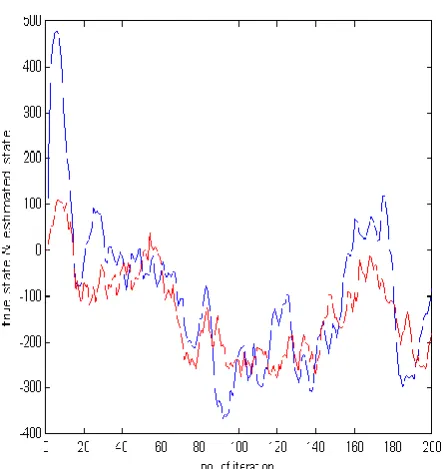
Fig.1.5 shows that the graph between no. of iteration Vs. true
state and calculable state once Delta =0,
FIGURE.1.5:No. of Iteration vs. True State and Estimated
State
2)
AQM Implementation
Here the worth of calculable state is sort of capable true state.
When Delta =0.3 the KF offer poor result.
FIGURE 1.6 No. of Iteration vs. True state and calculable state.
This has actuated several studies on sturdy Kalman Filter style, which can in all probability yield a suboptimal resolution with relation to the nominal system. Our interest during this paper is to tackle the filtering drawback for a category of separate time-delay unsure systems. Necessary and ample conditions for the look of such a strong filter with an optimized bound for the error variance got.
6. CONCLUSION
KF is powerful tool to estimate states of a system beneath creaky output measurements. During this chapter, a formulation has been given for the look of KF for linear system while not considering the time delay and a few basic ideas on KF. For estimation, prediction & reduction of error the KF performance is satisfactory. The KF is that the most generally used filter for its batter performance. It’s a really straightforward and intuitive thought with smart procedure potency. However once uncertainty and time delay is enclosed then the performance of KF could degraded, thus RKF is taken into account that is powerful against giant
parameter uncertainty and time delay.
Secondary, a true time drawback that's AQM is taken into account. At the start the system was in continuous time domain then it's reborn to separate time domain. And therefore the main kind is remodeled to a different model for straightforward implementation of KF. From the fig.1.5 and 1.6 we tend to see that the calculable state is approximate to truth state and with the rise of no of iteration the error are going to be scale back.
7. APPLICATIONS OF MOBILE UNINTENDED
NETWORK
© 2015, IRJET ISO 9001:2008 Certified Journal
Page
462
user to manage home devices regionally and remotely. Atmosphere application includes pursuit the movements of
Animals chemical/biological detection, exactness
agriculture. Pursuit date extremely connected in time and respiratory area e.g. secluded sensors for weather, earth
behavior [1].
(2) Military science networks: Military communication,
operations, auto-mated battlefields [2].
(3) Home and analysis networking: residence/workplace wireless network e.g. shared application creates use of organizer to issue anyplace traffic shows non-public space network[2].
(4) Emergency services: search and rescue operations, likewise as disaster recovery e.g. close to the start recovery and communication of unprotesting knowledge (record, status, diagnosis) from the hospital. Substitution of a set communications just in case of earthquake, hurricanes
hearth etc.
(5) conveyance services: Transmission of stories, road condition, weather, melody native unintended network with
near vehicle for road/calamity steerage [12].
(6) Academic applications: Setup virtual school rooms or conference rooms and unintended communication throughout conferences, meetings, or lectures [13]. (7) Entertainment: several user’s games, automatic pets,
outdoors web right of entry.[1]
(8) setting aware air force: automating telephony, trans-mission of the particular space info services like advertise location specific, location dependent travel guide services like printer, fax, phone, and server [2].
8. Future Work
The Delay info has not employed in the computer. The plan of the computer utilizing the on the market delay info is also Future work
.
REFERENCES
1.Tarun Dhar Diwan, Durga Chandrakar, implementation of android based mobile phone search engine and live image sender, international research journal of engineering and technology (irjet), volume: 02 issue: 03, june-2015, e-issn: 2395-0056.
2.Z. WANG, J. LAM, AND X. LIU, “Nonlinear filtering for state delayed systems with MARKOVIAN switching,” IEEE Trans. Signal Processing, vol. 51, pp. 2321–2328, Sept. 2003.
3. P. SHI, E. K. BOUKAS, AND R. K. AGARWAL,“KALMAN filtering for continuous-time uncertain systems with MARKOVIAN jumping parameters, ”IEEE Trans. Automat. Contr., vol. 44, pp. 1592–1597, Aug. 2005.
4.Tarun Dhar Diwan,Vikas Dubey, Performance Measurement of Various Routing Protocols in Wireless Sensor Network Services.International Research Journal of
Engineering and Technology (IRJET), Volume: 02 Issue: 03 | June-2015
5. R. PETERSEN, A. V. SAVKIN, “Robust KALMAN Filtering for Signaling and System with Large uncertainties”, BIRKHAUSER Boston, New York, (2007).
6.Yun, Y. and Y. Xia, 2010. “Maximizing the lifetime of wireless sensor networks with mobile sink indelay-tolerant applications,” Mobile Computing,IEEE Transactions On, 9(9): 1308-1318.
7Liang, W., J. Luo and X. Xu, 2010. “Prolonging network lifetime via acontrolled mobile sink in wireless sensor networks,” in Global TelecommunicationsConference (GLOBECOM 2010), 2010 IEEE, pp: 1-6.
8.Sen, F., Q. Bing and T. Liangrui, 2011. “An improved energy-efficient pegasisbased protocol in wireless sensor networks,” in Fuzzy Systems and Knowledge Discovery (FSKD), 2011 Eighth International Conference On, 4: 2230-2233.
9.Meelu, R. and R. Anand, 2011. “Performance evaluation of cluster-based routing protocols used in heterogeneous wireless sensor networks,” International Journal of In-formation Technology and Decision Making, 4(1): 227-231. 10..Haibo, Z., W. Yuanming and X. Guangzhong, 2009. “Edfm: a stable election protocol based on energy dissipation forecast method for clustered heterogeneous wireless sensor networks,” in Wireless Communications, Networking and Mobile Computing, 2009. WiCom’
11. 5th International Conference On, pp: 1-4. Ali Ghaffari, D.K. and H. Bannaeian, 2011. 13. Caione, C., D. Brunelli and L. Benini, 2012.“EER: Energy-efficient and real time routing protocol “Distributed compressive sampling for lifetime for wireless sensor networks,” World Applied optimization in dense wireless sensor networks,” Sciences Journal, 14(2): 356-362. Industrial Informatics, IEEE Transactions On, 12. Soleimani, M., M. Ghasemzadeh and M. Agha Sarram, 8(1): 30-40. 2011. “A new cluster based routing protocol for 14. Ghaffari, A. and V. Takanloo, 2011. “Qos-based prolonging network lifetime in wireless sensor routing protocol with load balancing for wireless networks,” Middle-East Journal of Scientific multimedia sensor networks using genetic algorithm,” esearch, 7(6): 884-890. World Applied Sciences Journal, 15(12): 1659-1666.
13. Lindsey, S. and C. Raghavendra, 2002. 15. Yueyang, L., J. Hong and Y. Guangxin, 2006.“Pegasis: Power-efficient gathering in sensor “An energy-efficient pegasisbased enhanced
14. information systems,” in Aerospace conference algorithm in wireless sensor networks,” China proceedings, 2002. IEEE, 3: 3-1125. Communications, pp:91.
© 2015, IRJET ISO 9001:2008 Certified Journal
Page
463
IEEE/ACM Transactions on Networking (TON),56(10): 2381-2389. 18(3): 871-884.