ScholarWorks @ Georgia State University
ScholarWorks @ Georgia State University
Nursing Dissertations (PhD) School of Nursing
Spring 2-14-2012
Accuracy of Emergency Department Nurse Triage Level
Accuracy of Emergency Department Nurse Triage Level
Designation and Delay in Care of Patients with Symptoms
Designation and Delay in Care of Patients with Symptoms
Suggestive of Acute Myocardial Infarction
Suggestive of Acute Myocardial Infarction
Susan S. Sammons Georgia State University
Follow this and additional works at: https://scholarworks.gsu.edu/nursing_diss
Recommended Citation Recommended Citation
Sammons, Susan S., "Accuracy of Emergency Department Nurse Triage Level Designation and Delay in Care of Patients with Symptoms Suggestive of Acute Myocardial Infarction." Dissertation, Georgia State University, 2012.
https://scholarworks.gsu.edu/nursing_diss/27
ACCEPTANCE
This dissertation, ACCURACY OF EMERGENCY DEPARTMENT NURSE TRIAGE LEVEL DESIGNATION AND DELAY IN CARE OF PATIENTS WITH SYMPTOMS SUGGESTIVE OF ACUTE MYOCARDIAL INFARCTION by Susan
Sanders Sammons was prepared under the direction of the candidate’s dissertation
committee. It is accepted by the committee members in partial fulfillment of the
requirements for the degree of Doctor of Philosophy in Nursing by the Byrdine F. Lewis School of Nursing and Health Professions, Georgia State University.
____________________________________ Cecelia M. G. Grindel, PhD, RN, FAAN Committee Chairperson
____________________________________ Ptlene Minick, PhD, RN
Committee Member
____________________________________ Holli DeVon, PhD, RN
Committee Member
____________________________________ Date
This dissertation meets the format and style requirements established by Byrdine F. Lewis School of Nursing and Health Professions. It is acceptable for binding, for placement in the University Library and Archives, and for reproduction and distribution to the scholarly and lay community by University Microfilms International.
_________________________________ Joan Cranford, EdD, RN
Assistant Dean for Nursing
Byrdine F. Lewis School of Nursing and Health Professions
_________________________________ Cecelia M. G. Grindel, PhD, RN, FAAN Professor & Interim Dean
ii
AUTHOR’S STATEMENT
In presenting this dissertation as a partial fulfillment of the requirements for an advanced degree from Georgia State University, I agree that the Library of the University shall make it available for inspection and circulation in accordance with its regulations governing materials of this type. I agree that permission to quote from, to copy from, or to publish this dissertation may be granted by the author or, in his/her absence, by the professor under whose direction it was written, or in his/her absence, by the Assistant Dean for Nursing, Byrdine F. Lewis School of Nursing and Health Professions. Such quoting, copying, or publishing must be solely for scholarly purposes and will not involve potential financial gain. It is understood that any copying from or publishing of this dissertation which involves potential financial gain will not be allowed without written permission from the author.
iii
NOTICE TO BORROWERS
All dissertations deposited in the Georgia State University Library must be used in accordance with the stipulations prescribed by the author in the preceding statement.
The author of this dissertation is:
Susan Sanders Sammons
The director of this dissertation is:
Dr. Cecelia M. G. Grindel Professor
Byrdine F. Lewis School of Nursing and Health Profession Georgia State University
P.O. Box 3995
Atlanta, GA 30302-4019
Users of this dissertation not regularly enrolled as students at Georgia State University are required to attest acceptance of the preceding stipulations by signing below. Libraries borrowing this dissertation for the use of their patrons are required to see that each user records here the information requested.
NAME OF USER ADDRESS DATE TYPE OF USE
(EXAMINATION ONLY
iv VITA
Susan S. Sammons
ADDRESS: 1417 Dale Drive
Savannah, GA 31406
EDUCATION:
PhD 2012 Georgia State University
Atlanta, Georgia
MSN 2005 Armstrong Atlantic State University
Savannah, Georgia
BSN 2005 Armstrong Atlantic State University
Savannah, Georgia
ADN 1984 Florida State College
Jacksonville, Florida
PROFESSIONAL EXPERIENCE:
2011 - Present Emergency Services Clinical Nurse Specialist, St. Joseph’s Candler Health System
2007 – 2011 Assistant Professor, Armstrong Atlantic State University
2001 – 2011 Staff Nurse, Senior Nurse, Clinical Nurse Specialist, Emergency Department, Memorial University Medical Center
1996 – 2001 Staff Nurse, Compliance Manager, Hospice
Savannah
1994 – 1996 Staff Nurse, Oncology Unit, Candler General
Hospital
1989 – 1994 Charge Nurse, Medical/Surgical Unit, Memorial
University Medical Center
1986 – 1989 Director of Nursing, Helping Hands Home Care
1985 – 1986 Staff Nurse, Candler Home Health Services
PROFESSIONAL ORGANIZATIONS AND CERTIFICATIONS:
2007 – Present Certification in Emergency Nursing (CEN) 2002 – Present Emergency Nurses Association (ENA) 2012 – Present President, ENA Coastal Empire Chapter
2001 - Present Sigma Theta Tau International, Rho Psi Chapter 2005 – Present Georgia Nurses Association (GNA)
HONORS:
2010 Kaiser-Permanente Evidence-Based Practice
Research Award
2011 Armstrong Atlantic State University, Brockmeier
i ABSTRACT
ACCURACY OF EMERGENCY DEPARTMENT REGISTERED NURSE TRIAGE
LEVEL DESIGNATION AND DELAY IN CARE OF PATIENTS WITH SYMPTOMS
SUGGESTIVE OF ACUTE MYOCARDIAL INFARCTION
by
SUSAN S. SAMMONS
More than 6 million people present to emergency departments (EDs) across the
US annually with chief complaints of chest pain or other symptoms suggestive of acute
myocardial infarction (AMI). Of the million who are diagnosed with AMI, 350,000 die
during the acute phase. Accurate triage in the ED can reduce mortality and morbidity, yet
accuracy rates are low and delays in patient care are high. The purpose of this study was
to explore the relationship between (a) patient characteristics, registered nurse (RN)
characteristics, symptom presentation, and accuracy of ED RN triage level designations
and (b) delay of care of patients with symptoms suggestive of AMI. Constructs from
Donabedian’s Structure-Process-Outcome model were used to guide this study.
Descriptive correlational analyses were performed using retrospective triage data
from electronic medical records. The sample of 286 patients with symptoms suggestive
of AMI comprised primarily Caucasian, married, non-smokers, of mean age of 61 with
no prior history of heart disease. The sample of triage nurses primarily comprised
Caucasian females of mean age of 45 years with an associate’s degree in nursing and 11
ii
RNs in the study had an accuracy rate of 54% in triage of patients with symptoms
suggestive of AMI. The older RN was more accurate in triage level designation.
Accuracy in triage level designations was significantly related to patient race/ethnicity.
Logistic regression results suggested that accuracy of triage level designation was twice
as likely (OR 2.07) to be accurate when the patient was non-Caucasian. The patient with
chest pain reported at triage was also twice as likely (OR 2.55) to have an accurate triage
than the patient with no chest pain reported at triage. Electrocardiogram (ECG) delay was
significantly greater in the patient without chest pain and when the RN had more
experience in ED nursing. Triage delay was significantly related to patient gender and
race/ethnicity, with female patients and non-Caucasian patients experiencing greater
delay. An increase in RN years of experience predicted greater delay in triage. Further
studies are necessary to understand decisions at triage, expedite care, improve outcomes,
iii
ACCURACY OF EMERGENCY DEPARTMENT REGISTERED NURSE TRIAGE
LEVEL DESIGNATION AND DELAY IN CARE OF PATIENTS WITH SYMPTOMS
SUGGESTIVE OF ACUTE MYOCARDIAL INFARCTION
by
SUSAN S. SAMMONS
A DISSERTATION
Presented in Partial Fulfillment of Requirements for the Degree of Doctor of Philosophy in Nursing in the Byrdine F. Lewis
School of Nursing and Health Professions Georgia State University
Atlanta, Georgia
iv Copyright by
Susan S. Sammons
v
ACKNOWLEDGMENTS
This dissertation is the culmination of years of hard work and perseverance both
from my family, my committee, and myself. I must thank first Dr. Laura Kimble who
planted the seed of what could be. She gave me direction in the very early stages of my
research in emergency cardiac care and allowed me to pursue my passion. Each of my
committee members, Drs. Grindel, Minick, and DeVon, have given of their time and
expertise to guide me, and for that I am grateful. A sincere thank you to my friends and
colleagues who have watched me each step of the way, class after class after class. You
have asked, and truly seemed to care, about my topics and homework all along the way.
You emergency nurses are my inspiration—I watch you work magic daily, and I am
proud to be among you. A cohort of doctoral students traveled this path with me, driving
mile after mile, reading and having philosophical discussions at every turn. The road less
traveled was made less lonely because of them. To Dee Tanner, Jean Pawl, and Janeen
Amason, I am thankful for each of you. My family has been there for me, faithfully
vi
TABLE OF CONTENTS
Section Page
List of Tables...x
List of Figures ... xi
List of Abbreviations ... xii
I. INTRODUCTION ...1
Statement of Problem ...1
Purpose and Aims ...2
Significance ...2
Standards of Emergency Cardiac Care ...2
Standards of ED RN Triage ...3
Importance Of Accurate Triage Level Designation ...6
Theoretical Framework ...7
Selection of a Theoretical Framework ...7
Overview of Donabedian’s Model ...8
Use of Donabedian’s Model in Studies ... 10
Strengths of Donabedian’s Model ... 12
Summary ... 14
II. REVIEW OF LITERATURE ... 15
Accuracy Rates in Triage ... 15
Delay in Emergency Care ... 18
Patient Characteristics ... 21
vii
Symptom Presentation ... 26
Summary ... 28
III. METHODOLOGY ... 30
Research Design ... 30
Setting 30 Sample31 Measures and Instruments... 32
Variables of Interest ... 33
Accuracy ... 33
Symptoms Suggestive of AMI ... 33
Triage Level Designation ... 35
Patient Characteristics ... 35
RN Characteristics ... 36
Delay ... 36
Data Collection ... 36
Data Analysis ... 38
Protection of Human Subjects ... 38
Summary ... 39
IV. RESULTS ... 40
Preliminary Screening Procedures ... 41
Descriptive Statistics ... 45
Description of the Sample of Patients ... 45
viii
Statistical Analysis ... 49
Predictors of Accuracy of Triage Level Designation ... 49
Predictors of Delay of ECG ... 50
Predictors of Amount of Delay of Care ... 52
Summary ... 54
V. DISCUSSION AND CONCLUSION ... 57
Accuracy ... 57
Accuracy and Patient Characteristics ... 58
Accuracy and RN characteristics ... 59
Triage Delay ... 61
Triage Delay and Patient Characteristics ... 62
Triage Delay and RN Characteristics ... 63
ECG Delay ... 63
ECG Delay and Patient Characteristics ... 64
ECG Delay and RN Characteristics ... 65
Accuracy and Delay... 65
Conclusions ... 67
Limitations ... 68
Implications for Nursing Practice... 69
Future Research ... 70
REFERENCES ... 72
APPENDICES ... 88
ix
Appendix B: Selection of Electronic Medical Records ... 90
Appendix C: Informed Consent ... 92
x
LIST OF TABLES
Table Page
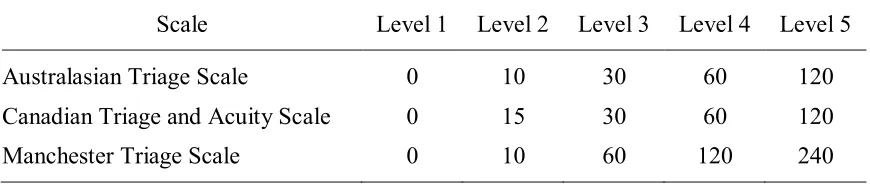
1. Triage Scale and Maximum Wait Times in Minutes ...5
2. Data List ... 34
3. Skewness and Kurtosis Statistics ... 43
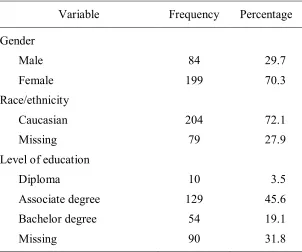
4. Patient Demographics ... 46
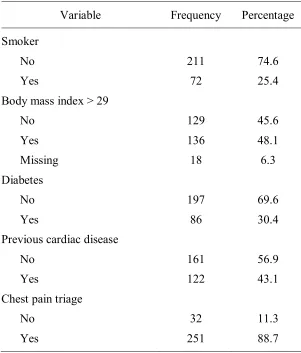
5. Patient Medical History ... 47
6. Characteristics of Registered Nurses ... 48
7. Electronic Medical Record Matched Registered Nurse Demographics ... 48
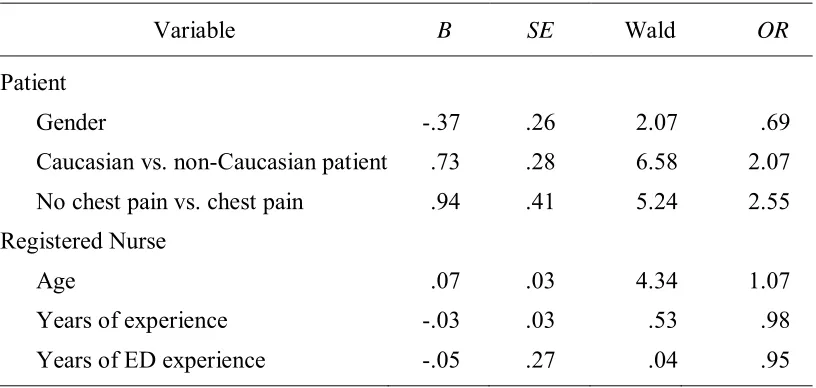
8. Accuracy of Triage Level Designation Model ... 50
9. Delay of Electrocardiogram Model ... 51
10. Minutes of Delay in Care ... 52
11. Correlation of Registered Nurse Age and Experience ... 53
xi
LIST OF FIGURES
Figure Page
1. Donabedian’s model. ...9
2. Model of emergency department registered nurse triage of patients with symptoms suggestive of acute myocardial infarction. ...9
3. Histogram for minutes to triage. ... 43
4. Histogram for minutes to triage (transformed). ... 44
5. Registered nurse years of experience in emergency department. ... 44
xii
LIST OF ABBREVIATIONS
ACC American College of Cardiology
ACS Acute Coronary Syndrome
ADN Associate Degree in Nursing
AHA American Heart Association
AMI Acute Myocardial Infarction
ATS Australasian Triage Score
BMI Body Mass Index
BSN Bachelor of Science in Nursing
CABG Coronary Artery Bypass Graft
CHD Coronary Heart Disease
CPR Cardiopulmonary Resuscitation
CTAS Canadian Triage and Acuity Scale
DTN Door-to-Needle
DTB Door-to-Balloon
ECG Electrocardiogram
ED Emergency Department
EMR Electronic Medical Record
ENA Emergency Nurses Association
ESI Emergency Severity index
xiii
IRB Institutional Review Board
LPN Licensed Practical Nurse
MCAR Little’s Missing Completely at Random
MTS Manchester Triage Scale
NCHS National Center for Health Statistics
NHAMES National Hospital Ambulatory Medical Care Survey
NHLBI National Heart Lung and Blood Institute
NSTEMI Non-ST segment Elevation
PAWS Predictive Analytics Software
PCI Percutaneous Coronary Intervention
RN Registered Nurse
RNDT Registered Nurse Demographic Tool
SES Socioeconomic Status
STEMI ST-segment Elevation Myocardial Infarction
1 CHAPTER I
INTRODUCTION
This chapter provides an overview of the significance of rapid cardiac care in the
emergency department (ED). The standards of emergency cardiac care are identified as
well as the standards of ED triage and the importance of accurate triage and rapid cardiac
care. The aims of this study are identified. Donabedian’s Structure-Process-Outcome
model (Donebedian’s model; Donabedian, 1966) is presented as a theoretical framework
to investigate accuracy and delay in triage of patients with symptoms suggestive of acute
myocardial infarction (AMI).
Statement of Problem
Coronary heart disease (CHD) is the leading cause of death in the US (Murphy,
Xu, & Kochanek, 2012). More than 6 million patients present to EDs across the US every
year with a chief complaint of chest pain; 6 million more present with possible symptoms
of CHD such as dizziness, nausea, or shortness of breath (National Center for Health
Statistics [NCHS], 2008). Annually in the US, 1 million patients are diagnosed with
AMI, and 350,000 of those die during the acute phase (Institute for Healthcare
Improvement [IHI], 2009). Accurate and timely triage level designation in the ED can
reduce mortality and morbidity, yet data indicate that accuracy rates are low and delays in
patient care are high. The current economic downturn is associated with more people
seeking primary care from EDs than ever before, leading to overcrowding. ED
who need urgent care and those who can wait is more pressing than ever before.
Therefore, there is a need to investigate conditions involved in ED RN triage level
designations.
Purpose and Aims
The purpose of this study was to explore the relationship between (a) patient
characteristics (gender, age, race/ethnicity, symptom presentation), (b) RN characteristics
(age, years of experience, years of ED experience, and education), (c) accuracy of ED RN
triage level designations, and (d) delay of care of patients with symptoms suggestive of
AMI. Specifically, the aims of this study were
1. to determine if patient characteristics (gender, age, race/ethnicity) and RN
characteristics (age, years of experience, years of ED experience, and education)
predict accuracy of ED RN triage level designation of patients with symptoms
suggestive of AMI, and
2. to determine if patient characteristics (gender, age, race/ethnicity, symptom
presentation), RN characteristics (age, years of experience, years of ED
experience, and education), and triage level designation predict delay of care of
patients with symptoms suggestive of AMI.
Significance
Standards of Emergency Cardiac Care
AMI is defined as a sudden lack of oxygen to the cardiac muscle due to a clot or
atherosclerotic changes that occlude a coronary artery. Cardiac cell death is not
immediate but can occur within 20 minutes and up to 2 hours after the initial occlusion
American Heart Association (AHA) recommend in national guidelines that health care
providers meet certain emergency cardiac care goals: obtain an electrocardiogram (ECG)
within 10 minutes of arrival, have a patient evaluated by a physician within 10 minutes,
and initiate thrombolytic medications within 30 minutes or provide percutaneous
coronary intervention (PCI) within 90 minutes of point of entry into the ED with
symptoms of AMI (Krumholz et al., 2008). The initiation of intravenous thrombolytic
medications is also called door-to-needle (DTN), and the provision of PCI is designated
as door-to-balloon (DTB). Rapid assessment and treatment are crucial to restoring blood
flow to the heart, preserving cardiac function, and saving lives. Because of their ability to
recognize the AMI patient and take quick action, ED triage RNs are in the best position
to directly affect early intervention and care.
Standards of ED RN Triage
ED administrators, RNs, and physicians struggle with how to handle the volume
of patients arriving for healthcare (Derlet & Richards, 2000). Determining the severity of
illness and urgency of care required are the main functions of the triage RN. Triage RNs
in the ED have a responsibility to identify patients with cardiac emergencies who need
prompt care. However, triage is not straightforward and few, if any, diagnostic tests are
conducted in triage to aid in that decision. Triage level designation is a subjective
decision based on input from several directions. Along with observational data collected
during a brief nursing assessment, numerous pieces of information, such as previous
medical history and symptoms, are elicited from the patient, and sometimes family,
before the triage level designation is decided. A decision is made to assign the patient to
established time parameters to complete the triage process itself, the goal during triage is
to assess the patient and make a triage level designation indicating urgency of symptoms
within 2 to 5 minutes (Travers, 1999).
In the US, there is no standard set of triage guidelines; however, most hospitals in
the US have adopted a three or five level system for triage. Many hospitals use the
Emergency Severity Index (ESI; Gilboy, Tanabe, Travers, Rosenau, & Eitel, 2005), a five
level system. The Emergency Nurses Association (ENA; 2010) supports the use of this
five level triage system. In the ESI, patients are assigned a triage level based on the
following scale: Level 1-resuscitation needed, Level 2-emergent, Level 3-urgent but
stable and can safely wait in the waiting room, Level 4-nonurgent, and Level 5-referable
to another provider of care such as a clinic setting. The triage RN must first assess
whether the patient has a life-threatening issue, noted as a high triage level designation
(ESI Level 1 or 2). Level 1 asks the question: Is this patient dying (i.e., not breathing and
in need of cardiopulmonary resuscitation [CPR])? Level 2 asks the question: Is this a
patient who should not wait? If the patient can wait without harm, then the triage RN
moves to a decision regarding estimation of number of resources needed for the physician
to determine a diagnosis or disposition (Level 3, 4 or 5). The ESI system does not
mandate specific time frames (i.e., how long a patient can wait to see a physician).
However, symptoms of AMI must always be considered a Level 2-emergent in the ESI
system so that national guidelines for cardiac emergencies can be met and prompt care
can begin.
Hospitals in other countries use five level triage systems, including the Canadian
(ATS; Australasian College for Emergency Medicine [ACEM], 2000), or the Manchester
Triage Scale (MTS; Manchester Triage Group, 1997). All three scales use a numbering
system with Level 1 designating the most critical patient situation. The ATS, the CTAS,
[image:24.612.107.542.265.357.2]and the MTS set maximum wait times for patients in each level (see Table 1).
Table 1
Triage Scale and Maximum Wait Times in Minutes
Scale Level 1 Level 2 Level 3 Level 4 Level 5
Australasian Triage Scale 0 10 30 60 120
Canadian Triage and Acuity Scale 0 15 30 60 120
Manchester Triage Scale 0 10 60 120 240
In synthesizing the current research of accuracy in ED RN triage level
designations, an emerging issue is inconsistency in the type of triage scales used. Portions
of the EDs in the US do not use the ESI scale but instead use a three-level system: Level
1-emergent, Level 2-urgent, and Level 3-non-urgent. Both three-level and five-level
systems are in use in the United Kingdom, Canada, Australia, and other countries.
Comparing the accuracy of assessments in triage systems is problematic because of the
inconsistency in the number of triage levels in the differing systems (three versus five).
Travers, Waller, Bowling, Flowers, and Tintinalli (2002) compared the five-level
and the three-level systems. A triage level designation assigned a lesser urgency than
needed was denoted as under-triage in the study and a triage level designation assigned
higher than the necessary urgency was denoted over-triage. The under-triage rate for the
ability to correctly identify those patients who required urgent care was 23% in the
three-level systems, but 75% in the three-level ESI. Travers et al. (2002) concluded that the
five-level ESI was superior for triage of patients in the ED.
Importance Of Accurate Triage Level Designation
A growing body of evidence points to the association between early intervention
and decreased mortality in patients with AMI. Studies have demonstrated associations
between time to PCI and mortality risk. In a study reviewing the medical records of
27,080 patients with AMI and PCI at 661 hospitals, Cannon et al. (2000) found a median
DTB time of 116 minutes. An increase in DTB time increased in-hospital mortality by
40-60%, with an increase in mortality higher with DTBs greater than 120 minutes.
In a study of 1,791 patients with ST-segment elevation myocardial infarction
(STEMI) treated with angioplasty, DeLuca, Suryapranata, Ottervanger, and Antman
(2004) found risk of dying within 1 year of AMI increased by 7.5% for every 30 minutes
of delay. More importantly, any increase in DTB time equaled an increase in 1-year
mortality, and the longer the duration of the occlusion, the larger the degree of infarct.
In a retrospective database analysis, McNamara et al. (2006) found increased
DTB times that were associated with increase in hospital mortality in patients (N =
29,222) with STEMI and PCI. As DTB time increased so did in-hospital mortality. In a
study investigating DTB times and mortality in STEMI patients (N = 43,801), 42.1% of
patients were delayed past the 90-minute mark, with 18.8% being delayed greater than 2
hours (Rathore et al., 2009). The overall mortality rate for the study cohort was 4.6%. A
significant trend was noted in mortality in that the longer the DTB time, the higher the
As demonstrated in the literature, time to initiation of PCI or fibrinolytic
medication administration is critical. Any action that increases that time is potentially
harmful. Accurate triage level designation is one tool ED RNs can use to facilitate early
intervention and affect patient outcomes.
Theoretical Framework
The individual ED triage process involves a patient presenting to an ED for
medical care. Thus, the patient presenting already has decided that a healthcare need
exists based on symptoms. Once the patient and the triage RN interact, data gathering by
the RN begins. This may be (a) physical evidence such as pale skin, diaphoresis, active
bleeding, or labored breathing or (b) symptoms the patients report, such as pain,
weakness, or fatigue. In either instance, a degree of uncertainty exists. The unknown in
this situation is the seriousness and urgency of the underlying condition responsible for
causing the signs and symptoms. Obtaining symptom progression information and a
health history are part of the triage process for the purpose of data gathering. Initial
diagnostics, such as obtaining a blood pressure, heart rate, respiratory rate, temperature,
and oxygen saturation level, begin in triage. It is unknown whether the patient’s gender,
age, and race/ethnicity or RN experience and education affect this process. For this study,
understanding what happens during the process of ED triage required a framework that
speaks to the processes involved. Donabedian’s model (Donabedian, 1966) was used to
address this process.
Selection of a Theoretical Framework
The Donabedian model is useful in framing studies examining ED RN triage of
of care. The use of this framework in this study was appropriate because the framework
mirrors ED triage in that it has a data input point of multiple factors possibly affecting a
process, which in turn affects the output or outcome.
Overview of Donabedian’s Model
Donabedian’s model evolved from Donabedian’s work in health services quality
and patient outcomes. The primary goal of quality assurance processes is improvement in
outcomes directly related to patient care. The key concepts in the model are structure,
process, and outcome. As demonstrated in Figure 1, Donabedian’s model proposes that
each component has an effect or direct influence on the next (Donabedian, 1980).
Characteristics of the healthcare setting, the healthcare provider, or the healthcare
encounter have the potential to influence both process and outcome. Donabedian’s model
provides a way of understanding the ED RN-patient encounter at triage and the effect of
accuracy of triage level designation and delay in treatment of AMI.
Figure 2 demonstrates the application of Donebedian’s model in this study. The
concept of structure refers to attributes of the healthcare setting, the healthcare provider,
or the healthcare encounter in which care is delivered and may include (a) patient
characteristics and RN characteristics; (b) environmental factors that compose the setting
(e.g., day of the week and time of day), and (c) extrinsic factors (e.g., staffing levels, unit
patient volume, overcrowding, and boarding of admitted patients). Measurement of
extrinsic factors was beyond the scope of this project. Factors that compose the attributes
of the setting in ED RN triage were defined in this study as (a) the patient characteristics
of gender, age, race/ethnicity, and symptom presentation and (b) the RN characteristics of
Figure 1. Donabedian’s model.
Figure 2. Model of emergency department registered nurse triage of patients with symptoms suggestive of acute myocardial infarction.
Structure
Process
Outcomes
Structure
Patient characteristics gender
age
race/ethnicity
symptom presentation RN characteristics age
race/ethnicity
symptom presentation
Process
Triage level designation decisions of patients presenting with symptoms suggestive of AMI
Outcomes
Process refers to the interpersonal aspects of activities between service providers
and their clients. In ED triage, process is the action that is occurring on the patient’s
behalf and involves the interaction between the ED triage RN and the patient presenting
for care. In this study, process was defined as the triage interaction between patient and
RN and the resulting triage level designation.
In Donabedian’s model, the outcome is the result of the structure and process.
Outcomes in most quality assurance programs are generally described in terms of better
survival rates, lower infection rates, quality of life indicators, or some measure of benefit
to the recipient of care, the patient. In this study, the outcome, or measure of benefit to
the recipient of care, was defined as accuracy of ED RN triage level designation of
patients with symptoms suggestive of AMI and delay or no delay in care as measured by
triage and obtainment of ECG within 10 minutes of arrival.
Use of Donabedian’s Model in Studies
Donabedian’s model has been used extensively to frame studies examining (a) the
performance of community organizations (Chen, Hong, & Hsu, 2007), (b) radiation
oncology services (Christian, Adamietz, Willich, Schafer, & Micke, 2008), (c) AMI
treatment in Germany (Wubker, 2007), (d) compliance with infection control strategies
(Chou, Yano, McCoy, Willis, & Doebbeling, 2008), and (e) medical care for depressed
elders (Hong, Morrow-Howell, Proctor, Wentz, & Rubin, 2008). Using a sample of 195
community organizations in Taiwan, Chen et al. (2007) conducted a correlational study
examining relationships between community organization capacity characteristics and
performance scores validating the theoretical relationships among concepts identified in
outcome. The performance outcomes were directly influenced by structure factors such as
funding type, designated department, full-time worker, funding linkage, partnership
score, multiple committee use, attitude toward participation, number of volunteers,
education level of volunteers, and position and age of administrator.
Using the Donabedian model in a study of continuing after-hours emergency
radiation therapy services in Germany, Christian et al. (2008) described outcomes which
were based on the characteristics of each institution providing services (N = 140), reasons
for treatment (structure), day and time treatment occurred, dosage delivered, and
equipment used (process). Outcomes were reported in percentages of improvement in
patient indicators. No relationship was identified between structure variables, process
variables, and outcomes leading the authors to re-evaluate continuation of emergency
radiation services. Donabedian’s model also helped the researchers identify the need to
begin formation of national benchmarks.
Wubker (2007) used the Donabedian model to assess outcomes associated with
diagnostics and treatment of AMI patients in 16 German federal states. Structure was
defined as the number of cardiologists and the number of catheterization facilities;
process was defined as the number of coronary angiography and coronary artery bypass
grafts (CABG) in a 10 year period and adherence to medical standards of care; and
outcomes were mortality rates and potential years of life lost. The study hypothesis was
based on the premise that the better the structure and process, the better the outcome.
However, data revealed only the structure variable of the number of catheterization
facilities was significantly related to better outcomes. Other factors, mainly
Using Donabedian’s model as a guide in a study of antimicrobial resistance (Chou
et al., 2008), infection control professionals (N = 448) were surveyed about structural
factors such as hand washing policies, operating room procedures, and administrator
support, along with process factors such as the culture of the hospital and
communication. The outcome was the degree of adherence to national guidelines to
optimize antimicrobial use as well as strategies to detect, report, and prevent
antimicrobial resistance. Researchers found numerous structural and process factors
(administrator support, feedback systems, forms, formal processes, policy distribution,
formularies, and computer support) significantly related to the outcome of adherence to
national guidelines to optimize antimicrobial use.
Hong et al. (2008) used Donabedian’s model to assess medical care for depressed
elders (N = 110) and found that only about 70% of patients received the minimum needed
medical care for co-morbidities with 22% of depressed elders receiving less than half of
care needed. Significant correlations were noted between insurance coverage, marital
status, income (structure factors) and medical services provided (process factor)
indicating that quality outcomes were related to the functions of structure and process.
In these studies, Donabedian’s model allowed for evaluation of the effectiveness
of a current process or the consideration of a new process based on expected outcomes.
Donabedian’s model also allowed for the identification of factors not initially included as
structure or process variables to be considered or reconsidered for further studies.
Strengths of Donabedian’s Model
Using a systematic approach for assessing the usefulness of a model, as defined
determine the usefulness of Donabedian’s model in examining ED triage of the patient
with symptoms suggestive of AMI. First noted is the widespread familiarity with the
Donabedian’s structure-process-outcome model and its simple structure. The diagram
itself is simplistic. Secondly, diagrams illustrating structure-process-outcome are used
effectively to demonstrate links between concepts. The model allows for the
identification of independent variables that can be included. Possible independent
variables that can be investigated include (a) the patient characteristics of gender, age,
race/ethnicity, socioeconomic status (SES), marital status, symptom presentation, and
medical history, (b) the RN characteristics of knowledge, years of experience, years of
ED experience, gender, age, degree, and clinical experience, and (c) the unit
environmental factors of crowded waiting rooms, staffing pattern, acuity of patients, time
of day, available beds, RN/physician communication patterns, culture of the unit,
autonomy of the RN, and protocol use.
Many identified research studies investigating ED triage accuracy and delay lack
a conceptual or theoretical framework. This theory gives direction to begin to understand
the relationships and connections of concepts vital to understanding triage, such as
decision-making, delay, accuracy, symptom presentation, and patient and RN
demographic factors. Donabedian’s model focuses on structure and process with an
overall goal of achieving a positive outcome. Donabedian’s model can be used to identify
possible factors affecting ED RN triage level designation. The model can be linked to
empirical indicators testing theoretical relationships and can be used to identify gaps in
the literature. The model can also be used as an organizing framework for ED RN triage
According to Donabedian (1980), structural characteristics of the setting in which care
takes place have a propensity to influence the process. Similarly, changes in the process
of care will influence outcome. This sets the stage for correlational studies that examine
the relationship of structure and process factors and the rapid treatment of patients with
possible AMI.
There are limitations to the use of Donabedian’s framework for the study of ED
RN triage level designations for patients with symptoms suggestive of AMI. While
Donabedian’s model can identify relationships and associations between structure,
process, and outcomes, it is not helpful in determining causality. However, understanding
how structure and process affect delay in treatment of AMI patients has important
implications that may affect policy, education, and training of staff in the ED.
Summary
In this chapter, the standards of emergency cardiac care were identified, and the
significance of rapid cardiac care was discussed. The aims of the study were identified
and a theoretical model proposed as a framework to study accuracy and delay in the ED.
The Donabedian model has been presented, and its usefulness to examine healthcare
work processes, specifically ED RN triage of the patient with symptoms suggestive of
AMI, has been discussed. Key concepts have been identified and strengths and
limitations analyzed. The theoretical framework of structure-process-outcome
(Donabedian, 1980) was used to investigate ED RN triage accuracy and delay and the
15 CHAPTER II
REVIEW OF LITERATURE
This review of the literature includes a discussion of previous research
investigating accuracy of ED RN triage level designations and delay in ED care. Patient
characteristics as well as RN characteristics in relation to patient care have been
identified in studies and are discussed in this literature review. A discussion of symptom
presentation differences addressed in nursing research studies is included in this review.
Accuracy Rates in Triage
Kosowsky, Shindel, Liu, Hamilton, and Pancioli (2001) hypothesized that ED
triage RNs would be able to identify patients whose condition was serious enough to
warrant hospital admission. Triage RNs were asked to predict during the triage process
which patients would be admitted. RNs (N = 39) in the study had a 62% accuracy rate in
predicting general hospital admission. The researchers found that RNs were only able to
identify patients who were ill enough to need a critical care bed admission 50% of the
time. Arslanian-Engoran (2004) also examined accuracy of the ED triage RN in a study
predicting hospital admission. Registered Nurses (N = 13) in the study exhibited poor
accuracy with a 58% sensitivity and failed to identify acute coronary syndrome (ACS) in
44% during triage of patients who were admitted with a diagnosis of ACS. Holdgate,
Morris, Fry, and Zecevic (2007) examined accuracy of triage RNs in predicting hospital
admission in 1,342 triages. RNs in the study had a 76% accuracy rate, but in 36% of the
RN was unsure. The accuracy rate for patients in the study with cardiovascular disease
was only 59%.
In a study of US trends and predictors of wait times, Wilper et al. (2008) found
that 30% of patients with a diagnosis of AMI had an incorrect triage level designation.
The study retrospectively analyzed National Hospital Ambulatory Medical Care Survey
(NHAMES) data pertaining to 92,173 adult visits to EDs from 1997-2004. Considine,
Ung, and Thomas (2000) in a study of RN (N = 31) consistency in triage level
designation noted a 58% accuracy rate when scoring 10 written vignettes. In a study
comparing paper versus computer vignettes to test ED triage RN performance, Considine,
LeVasseur, and Villanueva (2004) found an overall accuracy rate of 61% when RNs (N =
322) scored written vignettes (N = 4,614) depicting all types of illnesses in adult and
pediatric cases. Atzema, Schull, and Tu (2011) identified an accuracy rate at triage of
67.6% in patients (N = 680) with AMI who also happened to have a charted history of
depression.
In a study of ED RN accuracy in triage level designation, Goransson, Ehrenberg,
Marklund, and Ehnfors (2005) noted a mean accuracy rate of 57.6%, with a range of
22-89% accuracy per RN (N = 423) in responding to written vignettes (N = 7,550) using
CTAS. In a retrospective review of electronic medical records (EMRs), Atzema, Austin,
Tu, and Schull (2009) investigated triage accuracy in the care of patients with AMI (N =
3,088) and identified a 50% accuracy rate.
In a study of 55 RNs and emergency medical technicians (EMT), Wuerz,
Fernandes, and Alarcon (1998) found poor interrater agreement (k = 0.347) in deciding
participants scored five vignettes initially and the same five vignettes 4 to 6 weeks later
with only 24% of the participants assigning the same triage level at time 2. In studies
testing the reliability, validity, and inter-observer agreement of specific triage scales,
researchers found inaccuracies and inconsistencies. In a study testing agreement using the
CTAS, Manos, Petrie, Beveridge, Walter, and Ducharme (2002) noted a good inter-rater
agreement (k = 0.77). In the study, five RNs, five physicians, five EMTs, and five
paramedics scored 41 vignettes with an accuracy rate of 63.4%.
In a study testing reliability of triage using CTAS (Worster, Sardo, Eva,
Fernandes, & Upadhye, 2007), researchers compared written vignettes versus direct
observation of triage. RNs (N = 9) triaged a total of 90 patients while being observed
(Time 1) and triaged the exact scenario 6 months later (Time 2) by written vignette.
Triage level assignment was found to be significantly different from Time 1 to Time 2
with a higher triage level scored on the written vignette. It is possible that RNs assign a
higher ED triage level score when there is more time to make a decision than during live
triage of actual patients.
Numerous studies have identified inaccuracies in triage level designations and an
inability of the ED triage RN to consistently identify patients with emergent symptoms.
Accurate triage level designations by the ED triage RN determine how rapidly a patient
receives medical care in the ED, that is, whether or not the patient is taken straight to a
treatment area or sent back to the waiting room. However, current nursing research has
continued to identify inaccuracies in triage RN decisions. Urgent cases assigned
non-urgent status put patients at risk for delayed treatment and poor outcomes. In the field of
muscle damage and even death. Patients are sometimes judged not to have a medical
emergency when one exists. When this occurs, the patient is said to be under-triaged,
meaning the patient was assigned a lower triage level than is actually warranted. Patients
are also over-triaged, assigned a triage level higher than necessary, which may cause a
stable patient to be seen ahead of a patient with a medical emergency and fill treatment
areas needed for those emergent patients.
A large portion of these studies identified a descriptive method of exploration to
identify the degree of accuracy at triage without an attempt to investigate the source of
inaccuracies. Atzema et al. (2009), however, used a correlational design investigating a
possible association between inaccurate triage and delay in care of patients with AMI.
Atzema et al. investigated the accuracy of triage as a possible factor in delay of care for
patients with AMI (N = 3088) in a total of 87 EDs. Of the patients, 50% were assigned a
lower triage score of Level 3, 4 or 5. Median door-to-ECG time was 12 minutes, with
only 45.9% of patients having an ECG within 10 minutes. Time from arrival to
thrombolytic medication administration, also called DTN time, was 40 minutes with only
35.6% of patients’ care meeting the DTN goal time of 30 minutes. Incorrect triage level
designation was found to be significantly associated with delay in door-to-ECG and DTN
time.
Delay in Emergency Care
Delay in care of patients with cardiac symptoms is determined by assessing the
time of arrival, the time of triage, the time of ECG completion, and the time of
assessment by a physician or other healthcare provider.The standard for emergency
arrival to an ED. In a study of adherence to ACC/AHA guidelines for AMI care, ED RNs
were asked if they initiated specific steps in the rapid care of patients with symptoms
suggestive of AMI (Arslanian-Engoren, Eagle, Hagerty, & Reits, 2011). The participants
(N = 158) were specifically asked about nine steps that together make up the ACC/AHA
AMI guidelines. Questions about the guidelines included items such as rapid ECG,
intravenous (IV) access, lab work, minutes to cardiac catheterization, oxygen and aspirin
administration. Only 27% of the participants stated they initiate all nine steps every time.
O’Donnell, Condell, Begley, and Fitzgerald (2005) investigated delays in ED care
of patients with AMI (N = 890). Several points of care were assessed and times
identified: door to triage, 6-7 minutes; triage to first medical assessment, 10-19 minutes;
door to first medical assessment, 20-30 minutes; first medical assessment to thrombolytic
medication administration, 31-45 minutes; and DTB, 103-148 minutes. There are no
specific time frames for the first four steps identified; however, the DTB guideline is < 90
minutes. Delays of even a few minutes at the first points of care will generate an overall
delay in DTN and DTB and must be avoided. Weber, McAlpine, and Grimes (2011)
noted unsafe delays in high-acuity patients (N = 3,932) who were assigned a Level 1 or
Level 2 triage designation. Less than half completed the triage process in an appropriate
time frame of 10 minutes or less and 35% spent >20 minutes in the overall triage process,
both waiting to be triaged and during the triage process itself.
Venkat et al. (2003) investigated delay in handling a patient with a chief
complaint of chest pain when presenting to an ED. A registry of patients (N = 7,935) with
chest pain was used to generate the sample. ECG within 10 minutes of ED presentation
approximately 33% of patients with unstable angina or non-STEMI. In a study of 63,478
patients (Diercks, Peacock, et al., 2006) found ECG delay in 65.2% of the sample with a
median delay of 25 minutes. Pearlman, Tanabe, Mycyk, Zull, and Stone (2008)
conducted a study of patients presenting to an ED with a chief complaint of chest pain (N
= 214). Median ECG time was noted to be 29 minutes (intra-quartile range 17-52
minutes). In a secondary analysis of 425 patients (Zegre-Hemsey, Sommargren, & Drew,
2011), researchers reported that only 41% of patients with ischemic symptoms received
an ECG within 10 minutes.
Delays other than the ECG window are important to investigate as the factors
influencing each point of care may differ. These points of time are minutes waiting to be
seen by the triage RN, triage to first physician assessment, and time to aspirin
administration. Few researchers have conducted studies in these areas. Only O’Donnell,
et al. (2005) investigated some of these specific times in delay of ED care in the triage of
patents with AMI. In this study, at several points of care, gender-based delays were
identified; however, triage levels were not identified nor were possible inaccuracies
leading to these delays addressed. Atzema et al. (2009) did specifically investigate the
association between inaccuracy and delay at two specific time points in a secondary
analysis. The odds of achieving the goal of less than 10 minutes to ECG and less than 90
minutes to PCI were 0.54 and 0.44, respectively, and were independently associated with
an inaccurate triage level assignment. These odds are troubling in the care of patients
with AMI and require further research into the contributing factors.
Wilper et al. (2008) conducted a secondary analysis of NHAMCS data, which
was 27 minutes for patients with AMI and 23 minutes for overall Level 2 patients. In a
study investigating wait times to see a physician in over 151,000 patients (Horwitz &
Bradley, 2009), the median wait time to see a physician for Level 1 and Level 2 patients
combined was 15 minutes. Only 48% of patients in this combined emergent category
were seen in the appropriate amount of time.
Patient Characteristics
Patients with symptoms suggestive of AMI are experiencing delays in treatment
in EDs (O’Donnell et al., 2005). Factors including gender, age, race/ethnicity,
socioeconomic status (SES), and other factors have been reported in the literature. In a
study by Diercks, Peacock, et al. (2006), the sole predictor of delay in obtaining an ECG
in the ED in patients with non-ST-elevation ACS was female gender. African American
patients of both genders and Caucasian women experience greater delays in ECG
obtainment (Blomkalns et al., 2005; Diercks, Kirk, et al., 2006;; O’Donnell et al., 2005;;
Pearlman et al., 2008; Takakuwa, Shofer, & Hollander, 2006; Zegre-Hemsey et al.,
2011), aspirin administration (Blomkalns et al., 2005; Enriquez, Pratap, Zbilut, Calvin, &
Volgman, 2008;; O’Donnell et al., 2005), initiation of PCI (Kaul, Chang, Westerhout,
Graham, & Armstrong, 2007; O’Donnell et al., 2005;; Roger et al., 2000), thrombolytic
therapy (Blomkalns et al., 2005; Roger et al., 2000), hospital admission
(Arslanian-Engoran, 2001; Kaul et al., 2007; O’Donnell et al., 2005;; Pope et al., 2000), and
administration of beta blockers and statin drugs (Blomkalns et al., 2005; Enriquez et al.,
2008). The possibility that RNs include patient characteristics during the assignment of
triage level designations was not examined in these studies for a possible relationship to
Investigation of accuracy and delay related specifically to ED RN triage level
designations based on patient characteristics are minimal, with only two studies
addressing these issues. In the first regarding delay in the ED, O’Donnell et al. (2005)
reported a significant difference in length of time spent by the RN in triage based on
patient gender with ED RN triage taking twice as long for women. In the second,
Arslanian-Engoran (2001) investigated accuracy using written vignettes and found a
significant difference based on gender and age. The 43 year old female patient vignette
was less likely to be given an urgent triage level designation compared to the 43 year old
male patient vignette or the 66 year old patient vignette of either gender despite evidence
of the same symptoms suggestive of AMI.
Studies were identified that investigated age as a possible factor in ED RN triage
accuracy and delay. Arslanian-Engoren (2000) conducted focus group sessions with ED
RNs and found that RNs held different perceptions based on the age of the patient. Age
biases were identified ranging from considering the patient over 70 years old to be more
believable to being more skeptical of symptoms in a younger patient. RNs in these focus
groups admittedly did not consider AMI as a first diagnosis in middle-aged women
despite presenting symptoms. In a study attempting to identify predictive factors
influencing triage level designationduring RN-patient triage interactions (N = 334),
Garbez, Carrieri-Kohlman, Stotts, Chan, and Neighbor (2011) found age of the patient
was a significant factor (p = 0.013) influencing triage level designations. Participants (N
= 18) in that study completed a survey immediately after each triage selecting factors
used in the triage decision. No data is given as to which age group influenced the nurses
inaccuracies in a study of triage accuracy in the elderly population, defined as the > 65
age group, with only 57.7% of those needing immediate lifesaving measures being
assigned a Level 1. Platts-Mills et al. cited high rates of comorbidities and triage by
proxy, i.e., obtaining information from a family member instead of the patient, as reasons
for possible incorrect triages of the elderly.
Pope et al. (2000) found patients were less likely to be hospitalized if they were
less than 55 years old and nonwhite. In fact, the risk of being sent home despite an AMI
was 4 times higher for nonwhite patients. Pearlman et al. (2008) investigated gender, age,
and race/ethnicity in door-to-ECG times for patients with chest pain and found a median
delay of 29 minutes overall. No significant difference was found in gender and
race/ethnicity, but door-to-ECG time was significantly greater (p = .002) for patients in
age categories of 18-39 and 40-59. This might be expected in the younger age group but
not in the 40-59 age category, as the incidence of AMI is greater in this age group.
In a recent study of cardiac triage decision-making (Arslanian-Engoren, 2009),
RNs were found to hold cultural biases and stereotypes. Specific cues utilized in triage
decision-making included past medical history, patient demographics, attitudes,
perceptions, cultural beliefs, and the specific complaint of chest pain. Using focus group
methodology, the researcher reported that statements elicited from RNs (N = 12) reflected
a lack of believing the patient and doubting what the patient told the triage RN. Also
reported was the notion that females who took time to apply makeup prior to the ED visit
caused the RN not to consider the symptoms as being serious in nature. This suggests that
the RN does not trust the female patient to be truthful in reporting symptoms or that the
RN Education, Experience, and Triage
Studies investigating the RN role in patient care outcomes identify RN education
level and years of experience as two main variables of interest. Benner and Tanner (1987)
hypothesized that the novice RN is hesitant and slow in assessment of patients in their
care, and the experienced RN is rapid and fluid in problem solving in patient situations.
Although Benner’s work (Benner, 1984) emphasized stages of knowledge from novice to
expert, it is unclear whether these stages influence ED triage accuracy.
In a study of RN staffing models in Canada, researchers found that the less
experienced the RN, the higher the number of wound infections (McGillis-Hall, Doran, &
Pink, 2004). In examining structures and processes of patient care for 46,993 patients in
Canada, Tourangeau et al. (2007) found a higher percentage of bachelor of science in
nursing (BSN) staff associated with lower 30-day mortality rates. The correlations
between increased RN education and decreased mortality rates were also noted in an
analysis of Canadian hospital outcome data for 18,142 patients (Estabrooks, Midodzi,
Cummings, Ricker, & Giovannetti, 2005). Aiken, Clarke, Cheung, Sloane, and Silber
(2003) investigated the association between RN educational preparation and patient
outcomes in a study of 168 U.S. hospitals. Data indicated that as the percentage of nurses
with BSN degrees increased, patient mortality decreased; however, years of experience in
nursing was not found to be associated with decreased mortality.
In a study of ED RN triage decisions, Arslanian-Engoran (2004) found no
association between years of experience and triage accuracy. Registered Nurses in the
study were said to be at the expert level with a mean 12 years of experience. As this was
Studies testing experience level and the possible association to accuracy with a larger
participant sample are warranted.
In a national survey of 69 EDs in Sweden, Goransson, Ehrenberg, and Ehnfors
(2005) found that qualifications to perform in the triage role varied greatly from basic
nursing training to special education sessions about triage. In fact, 87.5% of the EDs
surveyed had no special requirement or training when assigning RNs in the triage role for
the shift. These researchers reported that only 3 (4.3%) of the 69 EDs in their study
reported criteria limiting new graduate RNs from being in the triage role. Once the degree
of training was surveyed, the authors attempted to identify a relationship between
accuracy of ED triage and RN characteristics of education, age, and experience.
Goransson, Ehrenberg, Marklund, and Ehnfors (2006) noted an accuracy rate of 57.6%,
with a range of 22-89% accuracy per RN (N = 423) responding to written vignettes using
CTAS. The researchers were unable to identify a relationship between RN age, triage
education, years of experience in general nursing or emergency nursing, and accuracy of
ED triage. A limitation of the study was that CTAS was not part of the daily practice of
the RNs in this Swedish study.
Worster et al. (2004) found experience was not related to consistency in triage
level designations in a study of 10 Canadian RNs who scored 400 scenarios, half using
the ESI scale and half using the CTAS scale. The ESI group had more years of
experience (M = 25.2 v. 14.4) but triaged with the same degree of consistency as the
CTAS group (kappa = .91 and .89 respectively). A limitation of this study was that none
their daily practice. Actual accuracy of triage level designation decisions was not
identified, only consistency.
Considine et al. (2000) hypothesized that if a triage scale is valid, a patient should
be triaged to the same level designation regardless of which RN is assigning the triage
level. The researchers found a 58% accuracy rate among 31 RNs in two Australian EDs
using the National Triage Scale. Despite 35.5% of the participants being either an ED
CNS or ED manager, no correlation was identified between accuracy and years of
experience. Educational preparation was also assessed in a secondary analysis
(Considine, Ung, & Thomas, 2001) and the researchers noted a positive correlation
between BSN-degreed RNs and accuracy; however, no significant relationship was found
between accuracy and ED training or critical care training. The sample size was small (N
= 31). Correlations between educational preparation and triage accuracy need to be tested
in larger samples of participants.
Symptom Presentation
The AHA and the National Heart, Lung, and Blood Institute (NHLBI) provide a
description of a classic AMI as central chest discomfort that may be described as
pressure, fullness, squeezing, or pain with radiation to the arms, neck, jaw, back, and
abdomen. These symptoms may be accompanied by shortness of breath, nausea,
lightheadedness, and sweating (AHA, 2010; NHLBI, 2010). The ED triage decision is
made more difficult because patients present with varying symptoms, some considered to
be typical of AMI and some atypical. The patient that presents with a classic set of signs
and symptoms suggestive of a heart attack (i.e., clutching the chest, short of breath, pale,
recognition of an AMI will generally result in an accurate triage level assignment and a
rapid ECG, a cardiac monitor, and evaluation by an emergency physician. As previously
noted, not all patients present with easily recognizable symptoms and are seen so rapidly.
Previous studies have found the incidence of a classic set of symptoms during an AMI to
be as low as 67% (Canto et al., 2000; Gupta, Tabas, & Kohn, 2002; Horne, James, Petrie,
Weinman & Vincent, 2000). It is concerning that patients without classic symptoms may
be inaccurately triaged.
A recent study of symptoms of AMI found shortness of breath, weakness, and
fatigue as the most frequently occurring acute symptoms in women (McSweeney et al.,
2010). Also identified were racial differences, with 15 symptoms differing significantly
(p = .001) by race/ethnicity after adjustment for cardiovascular risk factors. The
symptoms were unusual fatigue, dizzy or faint, flushed, indigestion, heart racing,
numbness in hands, vomiting, loss of appetite, new vision problems, headache, coughing,
choking sensation, and pain in 10 specific sites. African American women reported more
flushing and indigestion. Hispanic women had the highest rates of pain in all body
locations.
Studies identifying gender-specific symptoms in ACS are noted in the literature
(DeVon, Ryan, Ochs, & Shapiro, 2008; McSweeney, Cody, & Crane, 2001; McSweeney,
et al. 2003). Further studies included (a) differences in the symptoms between unstable
angina (UA) and AMI (DeVon, & Zerwic, 2004), (b) symptom differences in patients
with and without diabetes in UA and ACS (DeVon, Penckofer & Larimer, 2008; DeVon,
Penckofer, & Zerwic, 2005), and (c) symptom clusters in AMI (Ryan et al., 2007).
reported weakness, nausea, shortness of breath, anorexia, and upper back pain. Patients
with UA and diabetes were noted to have less nausea, less squeezing, and less aching
pain (DeVon et al., 2005). Older diabetics reported less pain and more fatigue (DeVon,
Penckofer, et al., 2008).
Atypical (or less typical) symptoms may impact triage decisions (Albarran,
Clarke, & Crawford, 2007; Arslanian-Engoran et al., 2006; Carmin, Ownby, Wiegartz, &
Kondos, 2008; Dorsch et al., 2001) highlighting the complexity of patient assessment and
the variations in individuals. Symptoms are frequently attributed to another less serious
cause such as the presence of neck and back pain as reported by women in a study by
McSweeney et al. (2001). In studies about unstable angina and acute myocardial
infarction, DeVon and Zerwic (2003, 2004) identified symptoms of ACS which were
used in this study: chest pressure, chest discomfort, chest pain, shoulder pain, arm pain,
upper back pain, lightheadedness, shortness of breath, sweating, unusual fatigue, nausea,
palpitations, and indigestion. Patients frequently present with symptoms that are not
classic, potentially making triage level designations more complex and prone to
inaccuracies.
Summary
Disparities in emergency cardiac care and diagnostic treatments related to gender,
age, and race/ethnicity exist but have not been investigated thoroughly in relation to ED
RN triage level designations. Studies identify limited accuracy in triage level
designations and the inability of the ED triage RN to consistently identify the patient with
symptoms of possible AMI. Studies thus far have not examined the relationships between
Further studies investigating RN education, experience, and accuracy of triage level
designations are needed. Numerous studies exist that examine differences in rapid cardiac
care from time to ECG to the administration of aspirin to cardiac interventional
procedures. However, few studies were identified that included inaccurate RN triage
level designations as a contributor to delay. The rapid, accurate triage of patients with
symptoms suggestive of AMI remains a challenge in emergency care. There is a need to
investigate delay and inaccuracy of triage decisions to decrease patient wait time for
urgent symptoms, improve morbidity and mortality of patients with AMI, and possibly
30 CHAPTER III
METHODOLOGY
This chapter introduces the research design and methodology. The study setting
and sample are described. Measures, instruments, and variables are identified. Procedures
used to collect data and methods used to protect human subjects are addressed.
Research Design
This study of ED RN triage was a correlational study using retrospective data
from EMRs. The relationships between (a) patient characteristics (gender, age,
race/ethnicity, symptom presentation), RN characteristics (age, years of experience, years
of ED experience, and education), and (b) delay in ECG obtainment and accuracy in
triage level designations made by ED triage RNs were examined. The dependent
variables were accuracy of triage level designations, time to triage, and time to
obtainment of ECG. The independent variables were patient characteristics (gender, age,
race/ethnicity, symptom presentation), RN characteristics (age, years of experience in
nursing, years of experience in ED nursing, and education level).
Setting
EMRs from a regional healthcare system in the southeast were used to generate
the data needed for this study. The study was conducted at a 660-bed general acute care
not-for-profit health system operating EDs at two separate geographical locations,
employed 55 ED RNs and logged approximately 50,000 ED visits a year. Site 1 is only
blocks away from a Level 1 trauma center ED reporting a high volume of uninsured
patients. At the time of this study, Site 2 employed 37 ED RNs and logged about 32,000
ED visits a year. Site 2 advertised heavily as a heart hospital and boasted of delivering
rapid cardiac care. Combined, the two sites averaged approximately 2,200 AMI/ruled out
AMI patients per year. Protocol at the sites dictated that the charge RN at the start of the
shift assigns RNs to the triage role, with both sites generally assigning the same RN each
shift. New RN graduates are not assigned to the triage role until each has gained 1 year of
experience. Before they are assigned triage roles, new graduates receive triage training
from an ED educator as well as hands-on experience with their preceptor. Licensed
practical nurses (LPNs) were not employed in either ED. Paramedics, who were
employed in one of the two EDs, did not perform in the triage role. Both facilities had a
line of patients waiting to be triaged at most times of the day and night.
Sample
Inclusion criteria for the selected medical records included (a) patients with
symptoms suggestive of AMI and (b) patients ages 21 years of age and older. Exclusion
criteria include (a) patients who were in critical condition, required immediate intubation,
or had a severely altered level of consciousness; (b) patient records indicating triage by
an RN orienting in the role; (c) patients arriving via ambulance; and (d) patients with a
documented traumatic event.
Some patients were excluded from this study. Patients in critical condition,
requiring immediate intubation, or those with a severely altered level of consciousness