Business Administration Dissertations Programs in Business Administration
5-7-2017
Women in Entrepreneurship and Corporate
Business: A Qualitative Study of First Generation
Businesswomen
Margaret McAlister
Follow this and additional works at:https://scholarworks.gsu.edu/bus_admin_diss
This Dissertation is brought to you for free and open access by the Programs in Business Administration at ScholarWorks @ Georgia State University. It has been accepted for inclusion in Business Administration Dissertations by an authorized administrator of ScholarWorks @ Georgia State University. For more information, please [email protected].
Recommended Citation
McAlister, Margaret, "Women in Entrepreneurship and Corporate Business: A Qualitative Study of First Generation Businesswomen." Dissertation, Georgia State University, 2017.
PERMISSION TO BORROW
In presenting this dissertation as a partial fulfillment of the requirements for an advanced degree from Georgia State University, I agree that the Library of the University shall make it available for inspection and circulation in accordance with its regulations governing materials of this type. I agree that permission to quote from, copy from, or publish this dissertation may be granted by the author or, in her absence, the professor under whose direction it was written or, in his absence, by the Dean of the Robinson College of Business. Such quoting, copying, or publishing must be solely for scholarly purposes and must not involve potential financial gain. It is understood that any copying from or publication of this dissertation that involves potential gain will not be allowed without written permission of the author.
NOTICE TO BORROWERS
All dissertations deposited in the Georgia State University Library must be used only in accordance with the stipulations prescribed by the author in the preceding statement.
The author of this dissertation is: Margaret McAlister
221 Northwest Drive Davidson, NC 28036
The director of this dissertation is:
Danny Bellinger
J. Mack Robinson College of Business Georgia State University
Women in Entrepreneurship and Corporate Business: A Qualitative Study of First Generation Businesswomen
by
Margaret McAlister
A Dissertation Submitted in Partial Fulfillment of the Requirements for the Degree
Of
Executive Doctorate in Business
In the Robinson College of Business
Of
Georgia State University
GEORGIA STATE UNIVERSITY
ROBINSON COLLEGE OF BUSINESS
Copyright by Margaret McAlister
ACCEPTANCE
This dissertation was prepared under the direction of the MARGARET MCALISTER Dissertation Committee. It has been approved and accepted by all members of that committee, and it has been accepted in partial fulfillment of the requirements for the degree of Doctor of Philosophy in Business Administration in the J. Mack Robinson College of Business of Georgia State University.
Richard Phillips, Dean
DISSERTATION COMMITTEE Dr. Danny Bellenger (Chair)
Dr. Karen Loch
ACKNOWLEDGEMENTS
The past three years would not be possible without the support of my mother, daughter and friends. Their daily understanding and encouragement carried me through my most challenging times.
My enrollment in the EDB program was influenced by my6 dear friend and mentor, Suzanne Cromlish who for the past eight years has encouraged me to pursue teaching as a profession. With her belief in me and direction I am where I am today. I am deeply grateful to her.
TABLE OF CONTENTS
ACKNOWLEDGEMENTS ... iv
LIST OF TABLES ... viii
LIST OF FIGURES ... ix
I CHAPTER 1: INTRODUCTION TO THE STUDY ... 1
I.1 Introduction ...1
I.2 Background of the Study ...1
I.3 Problem Statement...2
I.4 Purpose of the Study ...4
I.5 Research Questions ...4
I.6 Advancing Scientific Knowledge ...4
I.7 Significance of the Study ...5
I.8 Rationale for Methodology...6
I.9 Nature of the Research Design for the Study ...6
I.10 Definition of Terms ...8
I.11 Assumptions, Limitations, and Delimitations ...9
I.12 Summary and Organization of the Remainder of the Study ...10
II CHAPTER 2: LITERATURE REVIEW ... 12
II.1 Literature Search strategy ...12
II.2 Theoretical Framework ...14
II.3 Review of Literature Related to Women in Business ...16
II.4 Summary and Conclusion ...31
III CHAPTER 3: RESEARCH METHODOLOGY ... 33
III.1 Introduction ...33
III.3 Research Design ...35
III.4 Population and Sample Size ...38
III.5 Sampling Technique ...39
III.6 Data Collection ...39
III.7 Data Analysis ...40
III.8 Assumptions, Limitations, and Delimitations ...41
III.9 Conclusion ...43
IV CHAPTER 4: RESULTS ... 44
IV.1 Setting ...44
IV.2 Demographics ...44
IV.3 Data Collection ...45
IV.4 Data Analysis ...45
IV.5 Evidence of Trustworthiness ...46
IV.5.1 Credibility ...46
IV.5.2 Transferability ...46
IV.5.3 Dependability ...46
IV.5.4 Confirmability ...46
IV.6 Results ...47
IV.7 Summary ...75
V CHAPTER 5: DISCUSSION ... 77
V.1 Interpretation of the Findings ...78
V.1.1 Entrepreneurs...79
V.1.2 Corporate Field ...81
V.3 Recommendations ...82
V.4 Implications ...83
V.5 Conclusion ...84
APPENDIX: INTERVIEW GUIDE ... 85
REFERENCES ... 88
LIST OF TABLES
Table 1 Corporate Sample ... 45
Table 2 Entrepreneur Sample... 45
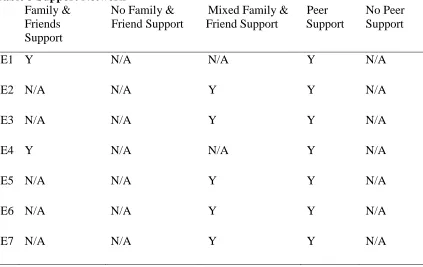
Table 3 Support Network ... 51
LIST OF FIGURES
Figure 1 Social Role Theory ... 15
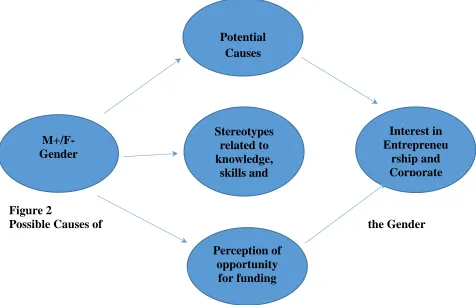
Figure 2 Possible Causes of the Gender ... 32
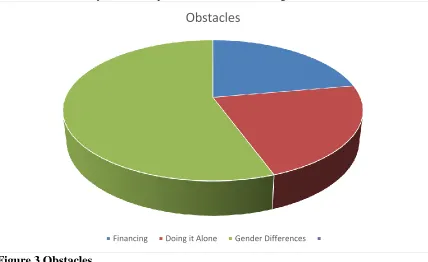
Figure 3 Obstacles ... 54
Figure 4 Peer and Family Support ... 65
ABSTRACT
Women in Entrepreneurship and Corporate Business: A Qualitative Study of First
Generation Businesswomen
by
Margaret McAlister May 2017
Chair: Danny Bellenger
Major Academic Unit: Executive Doctorate in Business
Recent studies have revealed that students are ambivalent about contemplating entrepreneurship as a career, and that only a few anticipate following a career in
entrepreneurship after graduation. Moreover, within the start-up industry, the gender gap is still evident. The purpose of this multiple case study was to explore how and why women choose to pursue a career in either entrepreneurship or the corporate world, through the framing theory of Eagly’s Social Role Theory of Gender Difference. The researcher explored this phenomenon through a qualitative research method and a multiple case study design. The target population for this study was composed of first generation female entrepreneurs and corporate employees. The study sample consisted of 18 women; nine of these participants were first generation female entrepreneurs and nine participants were first generation corporate businesswomen. The key instrument of data collection in the study was open-ended interviews, with the collection of field notes during the interviews for triangulation purposes. The researcher subsequently analyzed the collected data with the help of Nvivo software.
I CHAPTER 1: INTRODUCTION TO THE STUDY
I.1 Introduction
According to the Global Entrepreneurship Monitor (2013), the United States unfailingly has one of the highest entrepreneurship percentages between developed countries, including Asia, Europe, and North America. Within the United States, 51 percent of employees have declared that they would choose to work alone, while 58 percent of Europeans disagreed, saying they would rather work as an employee rather than risk starting their own business. Moreover, 60 percent of 18- to 29-year-olds in the U.S. say that they want to have their own businesses (Kuratko, 2007). According to 2015
Kauffman Index of Startup Activity, startup activity in the United States increased in 2015, overturning a 5-year downward trend. The report also noted that the return is still tepid and remains below historical trends.
Regardless of these high numbers, certain researchers have revealed that students are ambivalent about contemplating entrepreneurship as a career, and that only a few anticipate following a career in entrepreneurship after graduation (Bae et al., 2014). Indeed, only a small percentage of the working population normally participates in entrepreneurship (Bosma et al., 2008). There are many different reasons why people decide to become entrepreneurs versus the established path of becoming employees. Although greater freedom and accountability comes with entrepreneurship, uncertainty plays into it also. High performers may seek entrepreneurship when they are blocked from advancing in their careers, not only with their current employer, but also with another employer that would be better than their current one (Snyder, 2014).
The Kauffman Index (2015) also found that a significant driver of the 2015 uptick is the growth of male opportunity entrepreneurship, accompanied by the continued strength of immigrant entrepreneurship. Most new entrepreneurs were male in the 2015 Index, with male entrepreneurs making up 63.2 percent of all new entrepreneurs (Fairlie et al., 2015). In addition, since 1997, the share of new entrepreneurs who were females fell from 43.7 percent to 36.8 percent, which is close to the 2-decade low of 36.3 percent female entrepreneurs in 2008 (Fairlie et al., 2015).
Similarly, women are a minority within the corporate business world. Women make up 49% of the U.S. workforce, but they account for only 4% of corporate chief executive officers (CEOs), 14% of executive officers, and 20% of government officials (Galagan, 2013). Integration of work and life is challenging for individual women in an executive capacity because the responsibilities of full-time jobs conflict with the conventional roles of family life (Tajlili, 2014). One of the most cited reasons for women’s reduced
participation in executive and positions is the intense pressure to balance family roles and work demands (Johnsrud, 1995; Setiadarma, 1993).
I.2 Background of the Study
willingness to accept risk tends to lower a person’s interest in becoming an entrepreneur. The cognitive methods of risk perception that leads to taking a chance differs in
individuals. Entrepreneurs are required to make risky decisions in incalculable
environments and hence, the highly risk-adverse individuals are not as likely to become entrepreneurs (Fourati & Affes, 2014). The second type of risk is missing out on a good opportunity, which focuses on the potential gains driving the entrepreneurs to act (Fourati & Affes 2014). High-risk takers put more focus on the opportunity and they play down possible loss financially or personally. Risk perception has a significant impact on the decision of creating a new business (Keh, Foo, and Lim 2002).
Yet, at the same time, female entrepreneurs have been identified as the new instruments of growth and the new luminaries of developing countries’ economies, promising affluence and well-being. An assortment of stakeholders has recognized women as an imperative ‘untapped source’ of economic growth and development (Minniti & Naudé, 2010). The World Economic Forum identified women entrepreneurs as “the way forward” at their annual meeting in 2012 (WEF, 2012). Others have referred to women entrepreneurs as the New Women’s Movement, asserting, “Forget aid, focus on foreign investment in women entrepreneurs as key drivers for growth and development” (Forbes, 2011, p. 208).
The same gender disparities exist within the corporate business arena. Globally, only 24% of senior management positions are held by women, a figure that has not improved at all from 2007 to 2014 (Grant Thornton International, 2014). In the United States, 23% of C-suite leaders are women (Grant Thornton International, 2014).Within the United States, Barta et al. (2012) found that women still struggle to climb the career ladder. While women make up 37% of the workforce but constitute 22% of middle managers, 14% of senior managers and vice presidents, 9% of executive committee members, and 2% of CEOs.
Despite these inequalities, female executives are important for business for several reasons. Companies with diverse senior leadership have better financial results than those with less diverse senior teams (Barta, Kleiner, & Neumann, 2012); women’s experiences and perspectives are often different from those of men, which can lead to higher levels of innovation in companies. A recent McKinsey study of 366 publicly traded companies in the United States, Canada, United Kingdom, Mexico, Brazil, and Chile “found a
statistically significant relationship between companies with women and minorities in the upper ranks and better financial performance as measured by earnings before interest and tax, or [earnings before interest and taxes]” (Lublin, 2015).
I.3 Problem Statement
Gender disparities are rampant within the arena of entrepreneurship and corporate business, including inequities in entrepreneurial intention (Haus et al., 2013; Lindsay et al., 2014), inequalities in funding for and investment (Marom, Robb, & Sade, 2015; Thébaud & Sharkey, 2016), lack of females in leadership positions (Artigas, Callegaro, & Novales-Flamarique, 2013; Barta et al., 2013) and stereotypes that persist within the industry (Balachandra, Briggs, Eddleston, & Brush, 2013; Fuentes-Fuentes, Bojica, Ruiz-Arroyo, & Welter, 2013). The problem to be studied is the dearth of women in both entrepreneurship and the corporate business world. These gender biases can
effectiveness of female leadership (Patterson, Mavin, & Turner, 2012), the performance of businesses (Lublin, 2015; Thébaud, 2015), and bolster patriarchal, gender-biased economies and societies (Vossenberg, 2013).
The researcher will use Social Role Theory (Eagly & Wood, 2010; 2012), which
recognizes the historical division in labor between the sexes, leading to a divergence in
the social and cultural expectations of men and women (Eagly, 1987). These expectancies
are transmitted to future generations and, in turn, impinge on the social behavior of each
gender (Eagly, 1987, 1997 & Eagly, Wood, & Diekman, 2000) and represent sexual
stereotypes (Williams & Best, 1982). Consequently, the behavior of men and women is
governed by the stereotypes of their social roles. There are two processes that fortify the
connection between expectations and behavior. First is the socialization processes,
whereby each gender learns different skills or acquires disparate qualities through
socialization processes. Second, gender roles might more directly affect the courses of
action that individuals choose in a specific setting. This theory is an appropriate lens for
this study as it offers a nuanced and comprehensive way to evaluate why women choose
either entrepreneurship or the corporate business world. This study will examine the way
in which gender roles and expectations, as described by Social Role Theory, affects women’s decisions and experiences in either the corporate business field or
entrepreneurship. While researchers have examined the gender gap within certain
industries (Reimer, 2016; Santero-Sanchez et al., 2015), there are no such studies that
explore how those gaps formulated. Researchers have called for a systematic analysis of
the motivations, constraints, and issues that affect female entrepreneurs and
businesswomen (Minniti & Naudé, 2010; Nicolás & Rubio, 2016; Vossenberg, 2013).
The goal of this study is to explore how and why women choose to enter either the
I.4 Purpose of the Study
The purpose of this exploratory multi-case study is to explore how gender roles and expectations influence the choice of women to enter certain sectors of business..
Researchers have been inconsistent in their definitions of entrepreneurship (Brockhaus & Horwitz, 1986, Gartner, 1988). Definitions have emphasized a broad range of activities including the creation of organizations (Gartner, 1988), the carrying out of new
combinations (Schumpeter, 1934), the exploration of opportunities (Kirzner, 1973), the bearing of uncertainty (Knight 1921), and the bringing together of factors of production (Say, 1803). Therefore, entrepreneurship can be understood as the process of finding and evaluating opportunities and risks, and developing and executing plans for translating those opportunities into financial self-sufficiency. Using a multiple case study
methodology, the researcher used semi-structured interviews of 18 first generation businesswomen (nine entrepreneurs and nine corporate employees).
I.5 Research Questions
Based on the problem and the purpose of the study, the researcher developed the
following research questions:
RQ1. How do gender roles and expectations influence a woman’s choice to become an entrepreneur?
RQ2. How do gender roles and expectations influence a woman’s choice to enter the corporate arena
1. What are the gender roles and expectations for women?
2. How do these gender roles and expectations affect personal attitudes?
Perceived behavioral control? Personal, demographic,
and environmental factors?
I.6 Advancing Scientific Knowledge
There are several ways that the results of this paper will contribute to the literature. First is the understanding of what factors influence female entrepreneurs and corporate businesswomen. Second is the significance of how societal perceptions affect women’s decisions to start their own company or enter the corporate arena. Previous scholars have not discussed these specific factors and the strong influence societal perceptions affect women becoming entrepreneurs or entering the corporate world. Women must overcome significant obstacles created by societal perceptions if they aspire to certain positions. Eagly (2002) stated that males have traditionally been more generally accepted in leadership roles within the corporate, political, and military societal sectors. This study will add to the literature on gender expectations, business career paths, and the
I.7 Significance of the Study
Based on the problem identified, this study is significant because the researcher
aims to identify and understand [perceived ] gender disparities that exist in certain areas
of the business world. Such a study is important given the inequalities that exist within
entrepreneurship and corporate business (Fairlie et al., 2015; Hughes et al., 2012;
Minniti, 2010). The results of the study may provide a more comprehensive
understanding of what difficulties or barriers women face in entering specific sectors of
business. This study may also offer insight into if and how specific types of business
arenas are gendered according to societal constructions of gender roles and expectations.
The results of the study are significant for business schools. Identifying the
specific gendered expectations and barriers to specific realms within the business world
may help formulate the best practices of and for business students of both genders,
including training and education. By pinpointing and recognizing the specific set of
gendered variables within business arenapreference , professors and administrators may
be able to develop a critical set of skills for both genders to not only be competent, but to
also flourish personally and professionally in any area of business.
Finally, this study is significant for businesswomen themselves. While startup
activity in the United States increased in 2015 (Fairlie et al., 2015) there is still a wide
gender gap; moreover, women still constitute a reduced share of key leadership roles in
business and government compared with their male counterparts. These women may not
be aware of the unconscious or societally-constructed and internalized gender
expectations that influence their choices. By raising awareness of how choices to enter
future female business leaders can make better informed and mindful decisions. This may
ultimately lead to a more gender balanced business field within a multitude of industries.
I.8 Rationale for Methodology
The researcher used qualitative methods for the study, which provided a more complete and manifold approach, principally by permitting for the understandings, perceptions, and subjective, contextualized lived experiences of the participants in the study (Tracy, 2013). When topics happen in a specific context, such as the role and behaviors of individuals, qualitative research methods are the best choice (Lodico et al., 2010). As a subject-oriented approach, a qualitative study was valuable in examining the distinctions and details of how gender affects women’s choices to enter certain areas of the business world.
Furthermore, qualitative research was more suitable for this study than a quantitative method. By focusing on a smaller qualitative case study, the researcher could amass direct accounts and descriptions, which helped in clarifying and explicating the larger context in which this study was entrenched (Carreiras & Castro, 2012). Moreover, a qualitative research method allowed the researcher to concentrate on implications and significances that are not easy to recognize with mere mathematical data (Hancock & Algozzine, 2006; Merriam, 2009).
I.9 Nature of the Research Design for the Study
More specifically, the researcher used a case study method, which allowed her to investigate the typical setting and circumstances of gender and business career choices, which helped to provide a deeper understanding of the phenomenon (Yin, 2014). Moreover, the case study methodology is best when used to probe questions of “how” and “why” related to research (Rowley, 2002), which researchers ask in descriptive, explanatory, or exploratory research. This method is useful for contemporary events when manipulation of variables is not a viable option to study relevant behaviors; the advantage of using case study methodology is to add detail that has otherwise not been revealed within previous research studies on similar topics in the literature (Yin, 2014). The ability to use multiple sources of information such as interviews, observations, documents, artifacts, and/or other sources relevant data allowed for the researcher to develop themes that can contribute to the lack of research studies reflecting the voice of concerns of nurse educators in their natural environment (Yin, 2014). The case study methodology also allowed the researcher to determine meaning through description and the experiences and views of the participants, which is particularly useful in research with social and cultural dimensions (Al-Busaidi, 2008).
Case study was the best choice of methodology for the current study, as it allowed for a focused sampling of a specific population (i.e., first generation female entrepreneurs and corporate businesswomen). Moreover, case study allowed for a greater in-depth analysis than an ethnography, which would focus on the rituals and ideas of a broader, cultural group. Case studies provided a more comprehensive, adaptable, and flexible
This study sample included 18 entrepreneurs. Nine of these participants were first generation female entrepreneurs and nine participants were first generation female corporate businesswomen. . The participants were of any age, race, or ethnicity. The inclusion criterion for selection was that these participants are female, first generation entrepreneurs or corporate businesswomen, and have between 5 to 10 years if experience. The 18 participants for this study corresponded to the average number of participants that researchers in the social sciences have suggested (Bernard, 2000; Charmaz, 2006; Morse, 1994), as well as the mean sample sizes in qualitative studies in dissertations (Mason, 2010). Eighteen participants similarly offered saturation in sampling (Guest, 2006; Green & Thorogood, 2009). Moreover, the researcher performed purposive sampling, which limited the sample to individuals who have directly experienced the phenomenon under examination (Groenwald, 2004).
The researcher used open-ended interviews as the primary source of data collection. The researcher created a generalized interview guide, with the essential questions and/or themes that will help answer the research questions. This interview guide served as a benchmark to assure consistency in the phrasing of questions and consequent credibility of the interview and its questions. Questions were culled from the literature review, as with as the theoretical framework. For a full list of questions, see Appendix A. In addition, the researcher used field notes in order to chronicle and describe remarks and observations during participant interviews (Mruck & Breuer, 2003; Ortlipp, 2008). The researcher also used the questions to ask the same information in different ways to achieve triangulation, depth, and completeness. Follow-up questions were included to allow the researcher to probe deeper into the experiences of the participants. The main purpose of using these sources of data was for triangulation purposes, as this is one of the greatest strengths of case studies (Rowley, 2002).
Data collection involved IRB-approved, individual interviews which were approximately 45-60 minutes in length.. Interviews are one of the most important sources of data for a case study (Yin, 2014). Prior to the interview sessions, participants signed informed consent forms to delineate the scope of their participation and to apprise them of the study’s goals. In order to protect the researcher’s subjects, they were required to fill out a consent form; in addition, subjects were identified in the dissertation by pseudonyms, allowing for anonymity. Participants were free to end the interviews at any time, or to rescind their offer of consent as they saw fit. The researcher recorded interviews using a tape recorder to maintain the accuracy of their words and preserve their anonymity. The researcher transcribed the interviews verbatim for accuracy. The participants received monetary incentives for participation. After the interview, the researcher provided an email address and telephone number to the participants to reach the researcher in instances where questions or concerns arise. Interviewees were also asked if they are willing to participate in a shorter, follow up interview at a future date.
store all data in one area, giving the researcher easy access to all available data. The software also helped in the organization of data because the researcher can highlight certain texts, compare the responses of one participant to another, compile texts that are thematically similar, and organize data based on emergent themes. The data analysis was performed by the researcher; however, the Nvivo software increased proper and accurate handling of data.
The researcher analzyed data using a constant comparative analysis method, which was consistent with a case study methodology. The researcher determined emergent themes from the data through the use of codes (Kolb, 2012). The first step in the constant
comparative method was to reduce excess data (Kolb, 2012). Data reduction involved the selection, simplification, abstraction, and transformation of raw data gathered (Kolb, 2012). The next step after reduction was to code the data. Hewitt-Taylor (2001) proposed that in the coding process, a code will be attributed to sentences, paragraphs or sections while the researcher reads the documents of the data gathered. In order to gain
consistency, each code must have a definition and an abbreviation (Kolb, 2012). For this study, the researcher generated codes from the data instead of conceived since pre-determined outcomes are not present based on literature. These codes were assigned to the data gathered, or to the answers of the respondents in the questionnaire that will be administered. Strauss and Corbin (2008) mentioned three phases of coding: (a) open coding, (b) axial coding, and (c) selective coding. Open coding involves comparison of data and filtering out information that are clear and unclear; the researcher then tags codes for relevant information and determine emerging categories (Strauss & Corbin, 2008).
The next phase was where the researcher combines the data and groups emerging categories together (Kolb, 2012). Sub-categories were further determined through this phase (Strauss & Corbin, 2008). The final phase involved identification and selection of the core categories and these core categories were systematically connected to related core categories. The researcher related core themes, and their relationships to each other, to each research question (Hewitt-Taylor, 2001).
I.10 Definition of Terms
Based on the problem and purpose of the study, the researcher defined the
following key terms:
Entrepreneurship. Entrepreneurship is the pursuit of opportunity beyond
resources controlled; in this way, entrepreneurship is a distinctive approach to managing
rather than a specific stage in an organization’s life cycle, a specific role for an
Perceived behavioral control. Perceived behavioral control refers to an
individual’s belief and confidence in his/her capability in performing as an entrepreneur
and realizing control and success in entrepreneurial activity (Ajzen, 2002).
Perceived desirability. Perceived desirability is described by as “the degree to which one finds the prospects of starting a business to be attractive; in essence, it reflects one’s affection toward entrepreneurship” (Krueger, 1993).
Perceived feasibility. This term defines the degree to which individuals consider themselves personally capable of performing entrepreneurial activity, perceived feasibility can be influenced by the presence of role models or partners, obstacles, financial and social support, education, confidence in one’s ability to perform
entrepreneurial tasks, or perceived availability of resources needed to create a business (Gasse & Tremblay, 2011).
Social roles. Social roles as norms of behavior that a special social group has to
follow. Norms of behavior are a set of behaviors that have become typical among group
members; in case of deviance, negative sanctions follow (Popitz, 1972).
Subjective norms. As it relates to entrepreneurial intentions, subjective norms
refer to the perception of what a person’s family, friends or significant others would think
about performing entrepreneurial behavior, or whether they approve or disapprove of the
entrepreneurial decision (Armitage & Conner, 2001).
I.11 Assumptions, Limitations, and Delimitations
The researcher based the present study on the following assumptions:
1. The researcher assumed that participants will be honest about their responses
to the interview questions. The researcher emphasized confidentiality of all
the information divulged.
2. The researcher assumed Social Role Theory (Eagly, 2010; 2012) provided a
dynamics and social expectations that influence women’s choices in entering
certain areas in business.
Certain limitations and delimitations were also identified for the study. The limitations were as follows:
1. For the purposes of the type of business choice by women, the researcher
based the results of the analysis on the actual words and ideas that the
participants used in the interviews. As such, the results may not identify terms
as used in academic and research literature; rather, results may be versed in
the vernacular or using ordinary terms. Provided this limitation, the researcher
may not be able to directly link the results of the study to theory.
2. Due to the use of a small sample size, the results may not be generalized to all
entrepreneurs in all industries or to all entrepreneurs in the same industry as
those represented in the interviews. Case studies, however, do not aim at
statistical generalization where results are generalizable to populations; rather,
they represent an example of analytic generalization (Yin, 2009).
The following delimitations were identified:
1. This study will be delimited to first generation female businesswomen who are
either entrepreneurs or in the corporate arena with 5-10 years’ experience.
2. This study will be delimited to the experiences of the subjects. No experiments
will be done in acquiring data. Methods of the research will be gathering data
through interviews and analyzing through comparative case study.
I.12 Summary and Organization of the Remainder of the Study
et al., 2013) and stereotypes that persist within the industry (Balachandra, Briggs, Eddleston, & Brush, 2013; Fuentes-Fuentes, Bojica, Ruiz-Arroyo, & Welter, 2013). The purpose of these multiple case studies is to explore how and why women choose to enter either the corporate business or entrepreneurship realm. . The researcher will use open-ended interviews as the primary source of data collection. Data collection for
entrepreneurs and corporate businesswomen will involve IRB-approved, individual interviews, which will be approximately 45-60 minutes in length. The researcher will analyze data using a constant comparative analysis method, which is consistent with a case study methodology.
In the second chapter, the researcher will provide a discussion of recent
peer-reviewed articles on studies related to the identified problem. The third chapter will
involve the methodological plan of the study, including the research methods and design,
sampling procedure, data collection, data analysis, ethical considerations, and validity
II CHAPTER 2: LITERATURE REVIEW
In terms of potential and abilities, both men and women have the same levels of capabilities to contribute to generation of wealth employment through the
conceptualization, development, and implementation of their own businesses (Sospeter, Rwelamila, Nchimbi, & Masoud, 2014). Gender disparities are rampant within
entrepreneurship and the corporate world , including inequities in entrepreneurial intention (Haus et al., 2013; Lindsay et al., 2014), inequalities in funding for and
investment (Marom, Robb, & Sade, 2015; Thébaud & Sharkey, 2016), lack of females in leadership positions (Artigas, Callegaro, & Novales-Flamarique, 2013; Barta et al., 2013) and stereotypes that persist within the industry (Balachandra, Briggs, Eddleston, & Brush, 2013; Fuentes-Fuentes, Bojica, Ruiz-Arroyo, & Welter, 2013). The purpose of this qualitative case study is to explore how and why women choose to enter either the corporate business or entrepreneurship realm. Researchers have shown that gender biases can have systematic effects to social interactions, which ultimately affect the perceived effectiveness of female leadership (Patterson, Mavin, & Turner, 2012), the overall performance of businesses, especially small ones (Thébaud, 2015), and promote patriarchal values in different economies and societies (Vossenberg, 2013). While researchers have examined the gender gap within certain industries (Reimer, 2016; Santero-Sanchez et al., 2015), there are no such studies that explore how those gaps formulated. Researchers have called for a systematic analysis of the motivations, constraints, and issues that affect female entrepreneurs and businesswomen (Minniti & Naudé, 2010; Nicolás & Rubio, 2016; Vossenberg, 2013). In line with the problem, the purpose of this qualitative case study is to explore how and why women choose to enter either the corporate business or entrepreneurship realm.
II.1 Literature Search strategy
Based on the purpose and objectives of the study, the researcher conducted a
comprehensive literature review in order to (a) facilitate the exploration of existing
academic evidence related to the topic of the study, (b) help in the development of
different methodological strategies for the study, and (c) identify the existing gap in the
literature. The researcher performed an electronic search of the literature. The literatures
that the researcher included in this review are primarily from the following EBSCO
databases: Academic Search Premier, MasterFILE Premier, PsycINFO, and
PsycARTICLES. Aside from EBSCO, the researcher also used JSTOR and ProQuest
Dissertations and Thesis Global for searching relevant literature to be included in this
and magazines, but deemed research reports to be valuable sources of information as
well.
Keywords used either individually or in conjunction include: entrepreneurial
intention, entrepreneurship, corporate, women, female, gender, funding, industry,
business, stereotypes, leadership, and performance. As the researcher performed the
literature reviewed, it became evident that despite having the main focus of this study on
gender-based entrepreneurial intention, the multifaceted nature of gender and
entrepreneurship cannot be understood without examining a theoretical basis for the
study.
Using the relevant keywords in various combinations, significant studies were
generated from database searches. Those that the researcher deemed relevant to this study
were included in the literature review. The inclusion or exclusion of the literature to this
review was based on the criteria that: (a) is related to the topic of the study, (b) provides
support for the claims related to the development of the problem and its background, (c)
from recognized academic journals, proceedings from respected associations and
organizations, be originally published in English to avoid potential translation errors, and
(d) 85% must be published from 2012 to 2016. In summary, 95% of sources from
2012-2016, and 5% vary in years from 2002-2012.
Organization of the chapter. As previously mentioned, this chapter includes the discussion of relevant literature that is needed to establish the research gap and problem to be addressed in this study. To develop this chapter, the researcher will first discuss the theoretical framework. The theory to be used as the analytical lens for the study is
Gender and Leadership/Management, and (f) Gender and Business Performance. Finally, the researcher will provide a conclusion and discuss where research gaps still exist.
II.2 Theoretical Framework
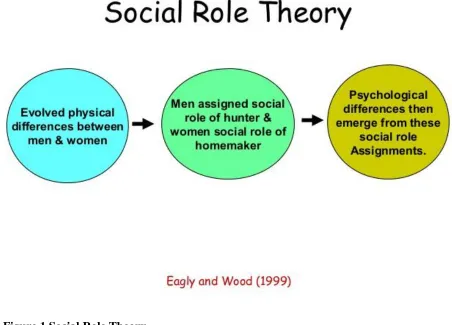
The theory framing this study is Social Role Theory (Eagly & Wood, 2010; 2012), which recognizes the historical division in labor between the sexes, leading to a divergence in the social and cultural expectations of men and women (Eagly, 1987). These expectancies are transmitted to future generations and, in turn, impinge on the social behavior of each gender (Eagly, 1987, 1997 & Eagly, Wood, & Diekman, 2000) and represent sexual stereotypes (Williams & Best, 1982). Consequently, the behavior of men and women is governed by the stereotypes of their social roles. There are two processes that fortify the connection between expectations and behavior. First is the socialization processes, whereby each gender learns different skills or acquires disparate qualities through socialization processes. Second, gender roles might more directly affect the courses of action that individuals choose in a specific setting.
Social Role Theory uses a structural approach to sex differences, rather than a
cultural approach, in that structural pressures (family, organizations, and communities)
have caused men and women to behave in different ways. The perception is that people
have a social role based solely on their gender. These stereotypic gender roles are formed
by social norms that apply to people of a certain category or social position. See Figure 1
Figure 1 Social Role Theory
This theory does imply, however, that gender differences are flexible, because they are dependent on the immediate social role of individuals. For example, individuals occupy many roles simultaneously, all of which impinge on their behavior. Work roles, such as leadership positions for instance, might override their gender roles and reduce gender differences (Eagly & Johnson, 1990).Eagly proposed that division of labor designated the differences between males and females. Division of labor induces gender role
since the 1970s and the feminist movement, it is surprising that studies continue to show that there is a tendency to view women with communal qualities and males with agentic qualities (Eagly & Steffen, 1984).
Social requirements and characteristics of certain social roles and specific characteristics of social group members can lead to prejudiced perceptions. Views of gender roles, especially widely shared beliefs about the actual and ideal characteristics of women, produce prejudice toward female leaders because women are considered to have less leadership ability than men and their leadership is evaluated less favorably (Eagly & Karau, 2002). Moreover, the perceived incongruity between the female gender role and the typical leader role is likely to create prejudice toward female leaders and potential leaders in two significant ways: (a) less favorable assessment of women’s potential for leadership, as leadership ability is more stereotypically assigned to men than women; and (b) less favorable assessment of the actual leadership of women and men because
behavior commonly associated with leadership is perceived as less desirable in women than men.
Contrary to social role theory, gender differences in personality, self-construal,
values, and emotions is more pronounced in North American or European nations relative
to Asian and African countries (Guimond, 2008). Furthermore, social role theory cannot
explain all gender differences, especially in relation to mate choice and sexual jealousy.
For example, unlike men, women tend to prefer mates who demonstrate the potential to
earn an considerable money (Wiederman & Allgeier, 1992). Social role theory might
predict that women who assume a low status role might exhibit this preference, perhaps
to overcome her own limitations in power. However this preference persists even when
the women themselves earn hefty wages (Wiederman & Allgeier, 1992)
Through the use of the theory, the researcher may gain a better understanding of the how socially constructed expectations of womanhood influenced the choice of business career for women. Moreover, this theory was essential in formulating the interview questions, as well as acting as a benchmark to evaluate the results and implications of this study.
II.3 Review of Literature Related to Women in Business
2013). In this section, the researcher will discuss the relevant literature about the topic of women entrepreneurial intentions and leadership. The relevant themes in the discussion are: (a) gender and entrepreneurship intention, (b) gender investment/funding in
entrepreneurship, (c) gender and industries of business, (d) gender stereotypes and entrepreneurship, (e) gender and leadership/management, and (f) gender and business performance.
Gender and entrepreneurship intention. Although the percentage of female
entrepreneurs has increased over the past several years, it is far below the level of males (Haus et al., 2013). Different researchers have aimed to show that there is indeed a gender gap in the entrepreneurial intentions of different individuals (Haus et al., 2013; Hisrich & Peters, 2002; Lindsay, Lindsay, Balan, & Balan-Vnuk, 2014; Santos, Roomi, & Liñan, 2016). Entrepreneurs, both men and women, usually exist in an environment with patriarchal societies and economies, which favor men and are biased against women (Kaushal, Negi, & Singhal, 2014). The existence of such gender bias may be either subtle or explicit, depending on the situation or context. In most cases, these biases tend to result in a situation wherein society values men over women, which may be evident in the privileges and oppression, and which people may attribute to either of the two genders (Kaushal et al., 2014).
Haus et al. (2013) reinforced the gender gap in entrepreneurial intentions through the exploration and critical analysis of 30 relevant articles, based on the theory of planned behavior and role congruity theory. Haus et al. (2013) explored how the relationship between gender and entrepreneurial intention is mediated by motivational constructs. These motivational constructs include: attitude toward starting a business, subjective norm, and perceived behavioral control (Fini, Grimaldi, Marzocchi, & Sobrero, 2009; Haus et al., 2013). Haus et al (2013) learned that there are indeed higher levels of intent to enter entrepreneurial ventures among men as compared to women. The mediating impact of the three motivational constructs between the two genders were not strong enough to provide evidence of difference in the motivation of actually starting a business between men and women.
Similarly, Maes, Leroy, and Sels (2014) established the existence of gender gap in entrepreneurial intentions. Unlike Haus et al. (2013), Maes et al. (2014) established perceived behavioral control as a significant mediator for the gender gap in
entrepreneurial intentions. Perceived behavioral control refers to an individual’s
perception of ease or difficulty of a specific behavior (Maes et al., 2014). The findings of Maes et al. (2014) implied that women are less driven toward entrepreneurship as
compared to their male counterparts in their light of beliefs of internal control, which are more dominant in predicting perceived behavioral control. In the light of this study, Maes et al. (2014) and Haus et al. (2013) provided evidence for the existence of a gender gap in entrepreneurial intentions. These researchers, however, have not explored how or why these gender gaps exist.
Lindsay et al. (2014) explored the unique nature of entrepreneurship. Lindsay et al. (2014) claimed that the need for venture creation, which refers to the generation of value that may exist in different forms, to benefit an entrepreneur and the venture's stakeholders (Williams & Shepherd, 2016). Such need for venture creation is innate in the
associated with the accrual of the relevant resources to begin their business ventures. Such nature of entrepreneurship can lead to poor well-being, which may adversely affect their entrepreneurial intention and start-up behavior (Lindsay et al., 2014). In a related study, Dawson and Henley (2015) claimed that males are more likely to prefer high-risk and high-return ventures, as compared to their female counterparts. Because of the uncertain nature of entrepreneurship, male novice entrepreneurs are more likely to become actual entrepreneurs as compared to their female counterparts, who are risk-averse or less likely to side with uncertainty (Dawnson & Henley, 2015).
Nascent entrepreneurs face even greater stress and poorer well-being levels, because starting a business may be an imperative (Lindsay et al., 2014). Living under the circumstance wherein a meaningful employment is not available, entrepreneurship may be the only legal means for elevating one’s standard of living, which will translate to the possible elevation of the lifestyle of their families beyond their poverty-related
circumstances (Lindsay et al., 2014). In such situations, women often face additional pressures, particularly where their entrepreneurial exploits may be linked to survival of the family unit. Lindsay et al. examined the extent to which there are subjective well-being differences in women versus men nascent entrepreneurs, and whether changes in well-being are associated with changes in entrepreneurial intention.
In a related study, Yang and Aldrich (2014) have claimed that gender-based biases of leadership are commonly referred to when considering women’s access to power
positions, which are constrained because of stereotypes. The constraints against women’s access to leadership roles are intensified when the family and spousal relationships are involved, which is the case for the findings of Lindsay et al. (2014). Yang and Aldrich (2014) claimed that women have lower chances to be in charge if their husbands co-found a business with them, or when family conditions restrict women’s chances of leading, venturing, and succeeding in the field of entrepreneurship, even when their initial intent to do so is present. Yang and Aldrich (2014) further claimed that the normative expectations of family roles include having the male/husband as the breadwinner while the female/wife remains as the supportive arm to the career of the husband through the household management needs and hands-on childcare. Because of these social expectations that are present in most families, women tend to be less aggressive in entertaining pursuing entrepreneurial intentions, especially when these intentions may be a hindrance to the fulfillment of their primary responsibility of taking care of the household.
intentions to better understand the manner and justification of arriving at possible gender-based decisions related to pursuing entrepreneurship.
Family businesses also reflect the gender gap, wherein men are favored to lead over women (Al-Dajani, Bika, Collins, & Swail, 2012; Gherardi & Perrotta, 2016; Gundry, Kickul, Iakovleva, & Carsrud, 2014). In most family businesses, women family members are also underrepresented in leadership positions (Gundry et al., 2014). Byrne and
Fattoum (2014) claimed that women do not usually assume high managerial positions in family businesses because of the priority given to male members of the family to assume leadership positions. Women or daughters in a family-owned business usually assume subordinate organizational roles to the men in the family (Gherardi & Perrotta, 2016; Gundry et al., 2014). Such bias against women in leadership of family businesses have existed despite the usual need for family businesses to consider and make use of contribution and assistance of all members of the family members, including women members (Gundry et al., 2014). Women family members are often given roles that are non-managerial and non-strategic in nature (Byrne & Fattoum, 2014; Gherardi & Perrotta, 2016). The distinct roles in family businesses that women members usually assume include: invisibles, anchors, and professionals. Invisible female family members are often found in families wherein the sons significantly outnumber the daughters (Barrett & Moores, 2009). These distinct roles of women in family businesses imply that there are boundaries that limit women’s abilities to contribution to the organization through leadership positions (Al-Dajani et al., 2012; Gundry et al., 2014; Gupta & Levenburg, 2013).
Entrepreneurship may be a venue for developing women leaders in an organization in order to balance the representation of men and women in leadership positions in different industries (Bullough, de Luque, Abdelzaher, & Heim, 2015). Despite the growing
number of businesses with women leaders or owners, together with a significant increase of initiatives, policies, and resources designed to promote and develop women’s
entrepreneurship, the gender gap in entrepreneurship persists (Vossenberg, 2013). Based on a feminist perspective, Vossenberg contended that current women entrepreneurship promotion policies undoubtedly benefit individual women, but when the gender bias in the context in which entrepreneurship is embedded is left intact, efforts may remain in vain and without any significant macroeconomic or social impact.
Scholars have claimed that there are several important aspects of entrepreneurship promotion that has to be pushed in order to increase intentions of women toward entrepreneurship (Kaushal et al., 2014). Kaushal et al. (2014) claimed that
entrepreneurship among women may be promoted through the advocacy for improving the position of women in society. Moreover, policies that are centered on promoting the growth of women entrepreneur networks is also a positive move that may be developed and implemented in order to empower women in becoming open to entrepreneurial tendencies (Kaushal et al., 2014). With the right network of experts, contemporaries, and partners, women may experience ease and efficiency in choosing and pushing for creative ventures for entrepreneurship. Kaushal et al. (2014) and Vossenberg (2013) both focused on policy interventions as recommendation to address gender gap in entrepreneurial intentions. These researchers did not include the exploration of the actual implementation of these policies or the justification of the existence of a gender gap within the
However, it is important to note that entrepreneurial intent differs between the United States and other countries. While this study did not take a global approach to gender choices, exploring how women from other countries make the decision to enter specific business fields offers context for the decisions of first-generation American
businesswomen. The decision or intent to go into entrepreneurship for women is said to differ from those from developing and developed countries (Kaushal et al., 2014). In developing countries, majority of the women are engaged in entrepreneurial activities are motivated to do so because of survival, rather than a choice after a formal education (Kaushal et al., 2014). Rather than applying for a job, which is difficult in their countries with high unemployment rates, they are forced to be self-employed and consider
themselves as entrepreneurs (Kaushal et al., 2014). Because the lack of jobs available or there are no other options for income generation, women start up their own businesses (Kaushal et al., 2014). Therefore, women dominate the informal economy of
self-employment in developing countries, but only less than 25% of formal sector businesses are owned and run by women (Kaushal et al., 2014). In the contrary, majority (at least 65%) of women entrepreneurs in developed and high-income countries go into business because of seeing better financial opportunities in the sector or wanting to be independent in earning for a living (Kaushal et al., 2014). In relation to the difference in women entrepreneurs in developing and developed countries, Adkins and Samaras (2013) claimed that women business owners from developing countries tend to perceive themselves as exposed to greater challenges as compared to their developed country counterparts. Such perceived discrepancy in difficulty of running a business has been found true when factors such as the size of the business and the owner’s age and education were statistically controlled (Adkins & Samaras, 2013). Adkins and Samaras focused on race of women and access to business funding instead of gender-based gap in access to financial resource from possible investors.
Women entrepreneurship promotion undoubtedly benefits individual women (Kaushal et al., 2014; Vossenberg, 2013), while leaving the main problem, the persistence of the gender gap, unchallenged. In more specific terms, entrepreneurs of both genders operate in patriarchal and gender biased societies; therefore, efforts remain in vain and without any significant macroeconomic and social change (Kaushal et al., 2014). Having a better understanding the factors that inhibit or enhance entrepreneurial intention and venture start-up behavior in necessity contexts is an essential step toward alleviating poverty. Women are often subjugated to lower societal positions in developing economies. Hence, understanding gender-related differences as they pertain to creating new ventures can help to facilitate the success of women and men necessity nascent entrepreneurs. Aside from entrepreneurial intentions, looking into and exploring existing literature about the tendencies for investing and funding a business across different genders may also provide a better understanding of intentions of individuals to venture into entrepreneurship.
accessing funds from investors, whether they be business entities as well or individuals (Alsos & Ljunggren, 2016; Jayawarna, Woodhams, & Jones, 2012; Marom et al., 2015; Welsh, Kaciak, & Minialai, 2015). Jayawarna et al. (2012) provided evidence that women entrepreneurs tend to experience significant disadvantages in their acquiring resources from orthodox funding channels (e.g., banks and financial institutions), as compared to their male counterparts in the field of entrepreneurship. There is gender skewness related to risk capital investments, and this skewness is a result of a combination of demand and supply side issues (Alsos & Ljunggren, 2016).
The low chances of women for acquiring funding from external financers can lead to consequence that may be detrimental to the survival of the business, especially during the start-up phase, which may leader to underperformance or failure of the business
(Jayawarna et al., 2012). Alsos and Ljunggren (2016) took a gender-based perspective in analyzing the decisions of funding for a venture capital fund. By applying a signaling theory approach, Alsos and Ljunggren looked at the interface between demand and supply side to understand gender biases related to risk capital investments for venture capitalists. Using decision documents from a regional investment fund in Norway, specifically four investment cases, the authors showed that gender plays a role in the signals that is communicated in an investor-entrepreneur relationship prior to funding, and that this may influence the investment decision (Alsos & Ljunggren, 2016). Women are said to be associated with traits of weakness and lack in terms of leading a business; hence, investors tend to have reservations when granting financial help to women-led businesses (Marlow & Swail, 2014; Welsh et al., 2015). Moreover, investors perceive women to have poor management skills, which is the main source of bias against women when it comes to obtaining funding for business start-up or expansion (Welsh et al., 2015). Finding for a businesses’ start-up phase is one the biggest monetary resource that an entrepreneur needs (Alonso-Almeda, 2013). For women, the financial source for the initial or start-up fund is one the biggest hurdles that must be faced when beginning a business (Alonso-Almeda, 2013). In a different perspective, women have high chances of acquiring wide networks of support when pursuing venture creation and new business concepts (Little, 2016). A wide network for support, however, may not always translate to productivity in accessing business funding or advice for these well-connected women (Little, 2016).
Aside from external business funding from institutions or separate individuals, Marom et al. (2015) investigated on a new form of venture financing: crowdfunding. Crowdfunding is a kind of external business funding wherein consumers directly invest in a proposed undertaking (e.g., women-owned and women-run businesses) (Kaplan, 2013; Marom et al., 2015). Marom et al. (2015) explored crowdfunding through social media, wherein the authors have found that such kind of funding reduces the barriers of women
Marom et al. (2015) investigated gender dynamics and biases in the process of raising funding to new projects via the leading crowdfunding platform – Kickstarter. Women made up about 35% of the project leaders and 44% of the investors on the platform. In relation to men, women are less likely to ask for significantly high levels of capital as compared to men, who most likely would seek for significantly higher levels of funding for their entrepreneurial projects (Marom et al., 2015). Moreover, not only are men more likely to ask for higher funding, but they are also ore likely to raise more funds when compared to their women counterparts (Marom et al., 2015). Nevertheless, women enjoy higher rates of success in funding their projects, even after controlling for category and goal amount (Marom et al., 2015).
Aside from crowdfunding, microcredit or microfinancing is another means of sourcing funds for businesses (Brana, 2013). According to Brana (2013), the total amount of project of women that are financed through microcredit are lower than that of men. Hence, women tend to obtain multiple microcredits to finance the needed funds for a specific businesses endeavor. Nevertheless, women can obtain these multiple credits because women are generally evaluated to be of better credit risks in microfinancing than men (Brana, 2013). Obtaining microcredit does not come easy for women, as they tend to have a higher interest rate than men, who benefit from interest-free loans (Brana, 2013). Moreover, microfinancing institutions also have more sophisticated screening process for women than men. This procedure for screening has its benefits because women have high repayment rates than men; hence they are given higher preference for the loans they request. Nevertheless, it is also important to note that, because of the lower amount of loans that they get, women can also more likely to repay the loan as compared to men, who have higher loan amounts. Brana provided a detailed explanation for microcredit as an alternative for women to obtain the funding necessary for their business projects. However, researchers have not explained the justification of the different rates, policies, and the nature of such loans.
In terms of gender-based intention to invest in businesses, Marom et al. (2015) compared male investors with female investors. Only about 23% of projects that men invested in had female project leads (Marom et al., 2015). On the other hand, more than 40% of projects that women invested in had female project leads. Hansen and Kosiara-Pedersen (2015) found that female evaluators tend to report more positive perceptions of female applicants, while male evaluators reported more positive perceptions of male applicants. Therefore, Marom et al. (2015) claimed that the gender of the project leader and the percentage of the same gender investors are positively and significantly related to each other (Marom et al., 2015). A limitation of the study of Marom et al. was the lack of detailed justification to explain the fact that women investors predominantly choose to finance female-led projects.
implications on the gender gap when it comes entrepreneurs’ access to funding or monetary sources. As expected from forecasts, Thébaud and Sharkey found that women-owned and women-run businesses firms were significantly more likely to encounter challenges when obtaining funding as compared to men-owned and men-run businesses during 2009 and 2010, which was characterized as part of the peak of the impact of the financial crisis.
Simialr to Thébaud and Sharkey (2016), Tinkler, Whittington, Ku, and Davies (2015) explored the funding supply side of the decision-making process related to gender and workplace, with focus on the gender-based disparities between men’s and women’s human and social capital. Moreover, Tinkler et al. assessed demand-side differences in the status expectations of women and men workers. Tinkler et al. showed that educational attainment and work history credentials of investors, together with gender-related cultural beliefs, are all influential when evaluating a possible request for financial support or when making decisions related to venture capitalization within the context of
entrepreneurship. One unique aspect of the investigation of Tinkler et al. was that they used experimental designs to simulate venture capitalists’ decision process when evaluating funding requests from men and women entrepreneurs. Investors tend to look into the technical background and the presence of important social ties of the
entrepreneurs. Moreover, there are two distinct aspects that venture capitalists look into or consider evaluation for funding a project: the evaluation of the project or business entity and the evaluation of the entrepreneur.
The main discovery of Thébaud and Sharkey (2016), as well as Tinkler et al. (2015), was that the gender of the entrepreneur has a significant influence on the evaluations. Tinkler et al. added that technical background qualifications are significant moderators to the influence of gender-based expectations of investors to their decisions. Unlike Thébaud and Sharkey (2016), Tinkler et al. (2015) found that female received more positive and higher payoff as compared to male counterparts when there is a close interaction with the venture capitalist that is evaluating their request. In relation to Little (2016), the findings of Tinkler et al. (2015) may show how women’s advantage of forming good and wide networks may be beneficial to generating funds for an entrepreneurial venture through the creation of close contact with venture capitalists or investors. Nicolás and Rubio (2016) claimed that having greater involvement in social activities with different networks can lead women to become a significant part in promoting needed initiatives that aims to minimize the problems encountered in public institutions.
Thébaud and Sharkey (2016) and Tinkler et al. (2015) have provided enlightenment and clarity about the disadvantages for women entrepreneurs within the context of the effects of status characteristics (e.g., gender) on investors’ decision-making. The existence of the gender gap in entrepreneurial decisions and undertakings, however, was not the focus of either study. Instead, Thébaud and Sharkey (2016) focused on the intentions and
decisions of investors in relation to the gender of the business or entity owner.
Nevertheless, the findings can be used as guide or basis for understanding the challenges that women face in relation to their gender when it comes to entrepreneurial
undertakings.
beginning of the feminist movement in the US, women make up 49% of the U.S. workforce, but they account for only 4% of corporate chief executive officers (CEOs), 14% of executive officers, and 20% of government officials (Galagan, 2013).
C-suite leadership has traditionally been a masculine activity (Gedney, 1999). Views of gender roles, especially widely shared beliefs about the actual and ideal characteristics of women, have led to prejudice against female leaders because women are viewed as having less leadership capabilities than men and their leadership is evaluated less favorably (Eagly & Karau, 2002) . Although evidence suggests that the proportion of women in management is increasing, doubts remain about women’s C-suite leadership skills (Still, 1997), and male managers continue to define management in masculine terms (Brenner, Tomkiewicz, & Schein, 1989; Schein & Mueller, 1992).
Eagly and Karau (2007) use the word “labyrinth” to describe the difficult paths that women have traveled to reach executive and C-suite positions. She argues that many women have been able to overcome the challenges and reach the top positions. On the flip side, this means that the path to senior positions does exist; however, it is difficult to achieve for most women. A recent study shows that the persistent gender domination of men in C-suite positions can be partly attributed to discrimination (Reuben, Rey-Biel, Sapienza, Zingales, & McCormack, 2011). According to Reuben et al. (2011), the
different ways that men and women think of themselves and act with regard to incentives may create gender differences that lead to leadership disparity between the sexes, rather than a disparity caused by discrimination alone during the selection process. Reuben et al. also state that the tendency of men to exhibit overconfidence in their past achievements may lead to a reduced number of female representation in executive and C-suite
positions. The question is, why is diversity necessary in the workforce? According to a report by Russell Reynolds Associates (2009), demographic attributes such as gender, race, generation cohort, and region are important for achieving success in boardrooms. Several internal limitations were found in studies on women’s career/professional
advancement in higher education worldwide. Most women do not attain higher executive C-suite positions because they lack self-confidence both in themselves (i.e., the ability to maintain a professional image; (Lam, 2006; Luke, 1997) and in their ability to lead (Lam, 2006; Omar, 1993; Setiadarma, 1993). Setiadarma (1993) argues that these types of internal limitations have an adverse effect on women’s career/professional advancement aspirations. Women who do not show a high level of self-confidence or self-esteem have a lesser chance of overcoming these limitations and challenges.
Integration of work and life is challenging for individual women in an executive capacity because the responsibilities of full-time jobs conflict with the conventional roles of family life (Tajlili, 2014). One of the most cited reasons for women’s reduced participation in executive and C-suite positions is the intense pressure to balance
academic roles, if any, family roles, and work demands. For example, prior research has found that the pressure to balance academic work and family roles dominates as the main limiting factor for career/professional advancement (Johnsrud, 1995; Setiadarma, 1993).