Georgia State University
ScholarWorks @ Georgia State University
Public Health Theses School of Public Health
Spring 5-11-2018
The Association of Female Genital Mutilation in
Sexual Behaviors and Marriageability, Ethiopia
DHS 2016
Lemlem Eyob Mehari
Follow this and additional works at:https://scholarworks.gsu.edu/iph_theses
This Thesis is brought to you for free and open access by the School of Public Health at ScholarWorks @ Georgia State University. It has been accepted for inclusion in Public Health Theses by an authorized administrator of ScholarWorks @ Georgia State University. For more information, please contact
Recommended Citation
Mehari, Lemlem Eyob, "The Association of Female Genital Mutilation in Sexual Behaviors and Marriageability, Ethiopia DHS 2016." Thesis, Georgia State University, 2018.
ABSTRACT
The Association of Female Genital Mutilation in Sexual Behaviors and Marriageability, Ethiopia DHS 2016
By
Lemlem Eyob Mehari
INTRODUCTION: Female genital mutilation (FGM) is a public health issue affecting girls and women worldwide. FGM is practiced in many countries primarily in Africa. In Ethiopia, the prevalence of FGM has been decreasing nationally over the years. However, among different regions and ethnic groups the prevalence varies greatly. FGM is used as a tool to control female sexuality and believed to make girls and women more marriageable. There is limited research studying the relationship of FGM in sexual behaviors and marriageability in Ethiopia.
AIM: The purpose of this study is to determine the relationship of FGM in sexual behaviors and
marriageability.
METHODS: This study used secondary data from the 2016 Ethiopia Demographic and Health Survey (EDHS). In this study the sample size of the study’s population included 7,151 women between the ages of 15 to 49 who have heard of female genital mutilation/cutting (FGM/C). Multiple lifetime number of sexual partners and early sexual debut were the dependent variables used to measure sexual behaviors. Premarital sex was another dependent variable created to evaluate marriageability since female virginity is considered a prerequisite for marriage. SAS 9.4 was used to run chi-square tests and logistic regressions. Chi-square tests were used to examine associations for categorical variables to compare background characteristics by circumcision status and the dependent variables. Bivariate and multivariate logistic regression were used to analyze the association of FGM to sexual behaviors and marriageability. Sociodemographic characteristics were controlled for during analysis.
RESULTS: In this study, the proportion of the women who knew about FGM and were circumcised was 71%. After controlling for sociodemographic characteristics, a multivariable logistic regression model showed that circumcised women were less likely to have multiple lifetime number of sexual partners (OR = .748; 95% CI = .566, .988). Although nonsignificant, FGM was protective against early sexual debut and premarital sex. The odds of multiple lifetime number of sexual partners increased among ages 24 to 49, non-educated women, Amhara
ethnicity, Tigray ethnicity, urban, and in the regions of Tigray, Afar, Amhara, Oromia,
Benishangula, Gambela, Addis Ababa, and Dira Dawa. Women who were circumcised, ages 15 to 19, Orthodox, Amhara ethnicity and Sidama ethnicity were more likely to have an early sexual debut. The chances of premarital sex increased among women who were circumcised, ages 20 to 49, Orthodox, and in the region Addis Ababa.
The Association of Female Genital Mutilation in Sexual Behaviors and Marriageability
By
Lemlem Eyob Mehari
B.S. Biological Science, UNIVERSITY OF GEORGIA
A Thesis Submitted to the Graduate Faculty
of Georgia State University in Partial Fulfillment
of the
Requirements for the Degree
MASTER OF PUBLIC HEALTH
ATLANTA, GEORGIA
APPROVAL PAGE
The Association of Female Genital Mutilation in Sexual Behaviors and Marriageability
By
Lemlem Eyob Mehari
Approved:
Dr. Richard Rothenberg Committee Chair
Dr. Ike Okosun Committee Member
Acknowledgments
I would like to thank my thesis committee, Dr. Rothenberg and Dr. Okosun for providing their knowledge and guidance throughout this process. I would also like to thank my family for their
Author’s Statement Page
In presenting this thesis as a partial fulfillment of the requirements for an advanced degree from Georgia State University, I agree that the Library of the University shall make it available for inspection and circulation in accordance with its regulations governing materials of this type. I agree that permission to quote from, to copy from, or to publish this thesis may be granted by the author or, in his/her absence, by the professor under whose direction it was written, or in his/her absence, by the Associate Dean, School of Public Health. Such quoting, copying, or publishing must be solely for scholarly purposes and will not involve potential financial gain. It is understood that any copying from or publication of this dissertation which involves potential financial gain will not be allowed without written permission of the author.
Table of Contents
Abstract ... i
Acknowledgments... v
List of Tables ... viii
CHAPTER I Introduction ... 1
1.1. Background ... 1
1.2. Purpose of the Study ... 3
1.3. Hypothesis... 3
CHAPTER II Review of Literature ... 4
2.1 Sociocultural factors for performing FGM ... 4
2.1.1. Prevents sexual promiscuity ... 4
2.1.2. Enhances marriageability ... 5
2.1.3. Prevents premarital sex ... 5
2.1.4. Religious requirement ... 6
CHAPTER III Manuscript ... 7
1.Introduction ... 7
2. Methods and Procedures ... 7
2.1. Data Source ... 7
2.3. Variables of Interest ... 9
2.4. Data analysis ... 10
3. Results ... 10
3.1 Characteristics and Distribution of the Study Sample ... 10
3.2. Descriptive analysis ... 11
3.3 Bivariate logistic analyses... 13
3.4 Multivariate logistic analyses ... 15
4. Discussion and Conclusion ... 16
4.1. Discussion ... 16
4.2. Study limitations ... 18
4.3. Implication of Findings ... 18
4.4. Conclusion ... 19
References ... 20
List of Tables
Table 1: Distribution of women who “heard of female circumcision” by background characteristics
Table 2: Distribution of uncircumcised and circumcised women by background characteristics
Table 3: Percentage distribution of women who ‘’heard of female circumcision” by sexual behaviors
Table 4: Percentage distribution of married/once married women who ‘’heard of female circumcision” by premarital sex
Table 5: Bivariate analysis for FGM and sociodemographic characteristics associated with sexual behaviors
Table 6: Bivariate analysis for FGM and sociodemographic characteristics associated with premarital sex
Table 7: Multivariate analysis for FGM and sociodemographic characteristics associated with sexual behaviors
CHAPTER I
INTRODUCTION
1.1. Background
Female genital mutilation (FGM), also known as female circumcision or female genital
cutting, is the partial or total removal of external female genitalia or injury to the female genital
organs for non-medical purposes (WHO, 2008). FGM violates human rights and is a widespread
public health issue. The prevalence of FGM varies from different cultures and nations. The
practice is common among 30 countries primarily in Africa, the Middle East, and Asia
(UNICEF, 2013). Although, there has been a decline in the prevalence of FGM for the last three
decades, an estimated 100 to 140 million girls and women worldwide have been subjected to this
practice and an estimated 3 million girls are at risk each year (UNICEF, 2016). However,
prevalence in many areas of Africa, where it is predominately practiced, still remains high. In
Africa, it is estimated that 91.5 million girls and women above the age of 9 have been affected by
FGM (Yoder and Khan, 2008). FGM has no health benefits and can be harmful to girls and
women. According to the World Health Organization (WHO, 2008), FGM can cause immediate
complications such as severe bleeding and problems urinating and long-term complication with
childbirth.
The age in which FGM is performed varies across cultures but the procedure is generally
done when girls are between the ages of 0 and 15 years (WHO, 2008). The type of procedure
performed differs mainly among ethnicities within a country. WHO classified these procedures
into four main types:
• Type II (excision): Partial or total removal of the clitoris and the labia minora, with or
without the excision of the labia.
• Type III (infibulation): Narrowing the vaginal opening by cutting and repositioning the
labia minora, or labia through stitching.
• Type IV: This includes all other harmful female genital procedures for non-medical
purposes, such as pricking, piercing, incising, scraping and cauterizing.
Current estimates from national surveys show that Types I, II, or IV are most commonly
performed (UNICEF, 2013). Type III is the most severe form and is practiced predominantly
among Northern Sudanese and Djibouti women (Nour, 2008). Midwives or trained circumcisers
from the communities perform the practice and sometimes without proper medical instruments,
anesthesia, antibiotics, or sterile techniques (Nour, 2008). The reasons for continuing the practice
differ among cultures and ethnicities, however the commonly cited reasons include “rite of
passage, preserving chastity, ensuring marriageability, religion, hygiene, improving fertility, and
enhancing sexual pleasure for men” (Nour, 2008).
The origin and historical background of female genital mutilation remains unknown. It is
believed that FGM began in Africa during the fifth century B.C and was practiced in ancient
Egypt, ancient Rome, Arabia, and Tsarist Russia (Little, 2003). In present times, FGM has
become a worldwide public health issue due to being popular in 28 countries in Africa, some
countries in Asia and the Middle East, and immigrant communities in North America and Europe
1.2. Purpose of the Study
Studies have documented the physiological complications associated with FGM,
however there is a lack of substantive scientific data that describes the effects of FGM on sexual
behavior and marriageability. FGM is used as tool to control female sexuality, therefore, one
would expect a significant difference in sexual behavior between women who are circumcised or
not. This study seeks to investigate if FGM is significantly associated with sexual behaviors and
marriageability in Ethiopia. The data would be useful to plan appropriate interventions to further
reduce the practice of FGM in all regions of the country.
1.3. Hypotheses
Hypothesis 1
After adjusting for sociodemographic factors, women have been circumcised are less
likely to have more than 1 lifetime sexual partner than uncircumcised women.
Hypothesis 2
After adjusting for sociodemographic factors, women who have been circumcised are less
likely to have an early sexual debut before age 15 than uncircumcised women.
Hypothesis 3
After adjusting for sociodemographic factors, women who have been circumcised are less
CHAPTER II
REVIEW OF THE LITERATURE
The literature review examined social and cultural factors for performing FGM. The
reasoning for the continuation of FGM among cultures varies however these factors include that
the practice is a rite of passage, a religious requirement, increases marriageability, prevents
sexual promiscuity, and preserves virginity (Okonofua et al., 2002). Even though this argument
infringes upon the rights of women, these beliefs are held by traditional defenders to continue
and promote the practice throughout communities.
2.1 Sociocultural factors for performing FGM
2.1.1. Prevents sexual promiscuity
It is believed that FGM prevents sexual promiscuity until marriage which thereby
enhances marriageability. Mpofu et. al studied the association between FGM and sexual behavior
in Kenya and Nigeria using the 2008 to 2009 Kenya Demographic and Health Survey and the
2008 Nigeria Demographic Health Survey. This study measured sexual behavior by age at first
intercourse and total lifetime number of sexual partners. In Kenya and Nigeria, the multivariate
analyses showed that circumcision was not significantly related to sexual initiation or the total
number of lifetime partners. If the notion that circumcised women practice sexual restraint in
comparison to uncircumcised women results would have shown that circumcised women waited
to engage in sexual activity and had fewer number of sexual partners. However, FGM did not
2.1.2. Enhances marriageability
In some societies FGM is used to define a woman’s identity and social status which
affects a woman’s marriageability. The belief is that a woman’s marriage chances are determined
by one’s behavior such has “upholding strict modesty and chastity codes” which is thought to
ensure marriageability of girls (Rossem et.al., 2009). A circumcised woman is considered in
“good standing” within her community while uncircumcised woman have a lower status
(Rossem et.al., 2009). Therefore, a woman’s social status and circumcision status determines her
marriageability. Roosem et al. found that the belief that FGM helps with marriageability was
more widely shared among men and a minority of women at 41.3% and 27.5%, respectively.
These findings suggest that control over a female sexuality may not be the only reason for
continuing FGM in different communities. After controlling for sociodemographic factors the
hazard rate for first marriage was not statistically different among those who were not
circumcised in comparison to FGM types (I, II, III, IV). If the idea that FGM controls the sexual
desire and pleasure of women, one would expect circumcised women to marry earlier than
uncircumcised women. However, this study did not show that FGM in Guinea did not affect the
marriageability of women.
2.1.3. Prevents premarital sex
A claim often made in support of FGM is that it protects virginity until marriage. A
family’s status is judged based on members behaviors. Inappropriate sexual behavior by women
in communities can damage a family status, therefore one strategy to control female sexuality is
through the practice of FGM (Rossem et al., 2009). Rossem et al. examined such claims, as the
effects of FGM on the onset of sexual activity and marriage in Guinea using the 1999 Guinea
15.9%, respectively, believed that FGM reduces the risk of premarital sex. After controlling for
the sociodemographic characteristics, the effect of FGM on premarital sex was not statistically
significant.
2.1.4. Religious requirement
FGM is often assumed to be associated Islam given the number of Muslim women in
Africa subjected to this practice (UNICEF, 2013). However, FGM is also practiced among
groups of Christians and Ethiopian Jews (El-Damanhoury, 2013). There are countries such as
Niger, Nigeria, and Tanzania where the prevalence of FGM is greater among Christian groups
(UNICEF, 2013). The practice of FGM predates both Islam and Christianity and cannot be found
or justified in any of the religious texts among the three monotheistic religions (El-Damanhoury,
2013). Nonetheless, the belief that FGM is a religious requirement is often connected to social
norms and tradition giving women a sense of ethnic and Islamic identity (UNICEF, 2013).
According to the 2016 Ethiopian Demographic and Health Survey (EDHS), 24% of women who
have heard of female circumcision believe that it is a requirement by their religion. However,
this opinion varies among different parts of Ethiopia, with 62% of women in the Affar and 6% in
CHAPTER III
MANUSCRIPT
1. Introduction
Although, the prevalence of FGM is decreasing across national levels, the regional
numbers show that prevalence is still high and has not changed. Ethiopia was selected for this
study due to the high prevalence numbers of female genital mutilation at the national level and
regional levels. In Ethiopia, according to the 2016 Demographic and Health Survey, the
prevalence of women and girls, aged 15-49, have experienced FGM 65.2% which has decreased
from 74.3% in 2005. However, across regions in Ethiopia FGM ranges from 24.2% in the Tigray
region to 98.5% in the Somali region (2016 EDHS). The practice still persists even though
Ethiopia passed legislation criminalizing the practice and banning the medicalization of FGM.
The practice is used to control female sexuality to increase the chances of marriage. (Okonofua
et al., 2002). In Ethiopia, FGM is used to maintain female virginity and sexual chastity which are
prerequisite for marriage (Missailidis et al., 2000). Therefore, this study assessed the association
of FGM on sexual behaviors and marriageability in Ethiopia.
2. Methods and Procedures
2.1. Data Source
This study used secondary data from the 2016 Ethiopia Demographic and Health Survey
(2016 EDHS). The survey was conducted by the Central Statistical Agency (CSA) along with the
Federal Ministry of Health (FMoH) and the Ethiopian Public Health Institute (EPHI) from
International Development (USAID) funded DHS program, website which granted access after
the purpose of the study was explained. The survey is a nationally representative sample that
randomly selects households in Ethiopia and provides detailed information and estimates on the
following: “background characteristics of respondents, fertility, marriage, fertility preferences,
awareness and the use of family planning methods, child feeding practices, nutritional status of
women and children, adult and childhood mortality, awareness and attitudes of HIV/AIDS,
female genital mutilation and domestic violence” (2016 EDHS).
The 2016 EDHS was designed to provide estimates at the national, regional, and district
levels. The 2007 Ethiopia Population and Housing was used as a sampling frame. The sample
was selected using a stratified two-stage cluster design. The first stage selected 202 urban and
443 rural clusters. The second stage selected 28 household per cluster. The number of eligible
participants interviewed in the survey were 15,683 women age 15 to 49 and 12,688 men age
15-59 from 16,650 households.
2.2. Study Design and study sample
A cross-sectional study design was used to examine the association with sexual behaviors
and marriageability in Ethiopia that interviewed 15,683 women. The sample size of the study’s
population included 7,151 women between the ages of 15 to 49 who responded “yes” when
asked if they ever heard of female genital mutilation/cutting during the survey were included in
the study. Those responding yes were then asked if they had been circumcised. Participants who
had missing information for the following variables were excluded: education level, place of
residence, wealth index, age, region, religion, ethnicity, religion, circumcision status, age at first
intercourse, age at first sexual intercourse, age at first marriage or union and total lifetime
2.3. Variables of Interest
Dependent Variables: Sexual behavior and marriageability were measured using these
dependent variables: multiple lifetime number of sexual partners, early sexual debut and
premarital sex. Multiple lifetime number of sexual partners was dichotomized as “more than 1”
being “yes” and “less than or equal to 1” being “no.” According to WHO (2004), sexual
initiation before age 15 is considered early sexual debut. Therefore early sexual debut was
dichotomized as sexual debut before age 15 being “yes” and sexual debut at or after age 15 as
“no”. Marriageability was measured by premarital sex which is based on previous literature
stating that in Ethiopia female virginity is a prerequisite for marriage and FGM ensures this
(Missailidis et al. 2000). In this study premarital sex was defined as participant’s whose age at
first intercourse was lower than the age at first marriage/union. Therefore, if age of first
intercourse was the same as age at first marriage the participant was defined as not having
premarital sex. All categorical variables whether independent or dependent were coded as “0” for
no and “1” for yes.
Independent Variables: The main independent variable for this study was FGM. The
control variables included sociodemographic characteristics that were known to have been
associated with FGM, sexual behavior, and marriageability of women (UNICEF 2013; Rossem
et al., 2009; Mpofu et al., 2016). The following variables were included in the analyses to assess
unbiased associations:
AGE: Participants’ age were reported in years at the time of the interview. Based on previous
studies, age was recoded and categorized into these ages groups 15-19, 20-24, 25-29, 30-34,
EDUCATION: Highest level of education attained was categorized as no education, primary,
secondary, or more than secondary.
RELIGION: Religion was self-reported and categorized, for this study, as Orthodox, Catholic,
Protestant, Muslim, Traditional, or other.
ETHNICITY: Self-reported ethnic groups, for this study, were categorized as Affar, Amhara,
Guragie, Hadiya, Oromo, Sidama, Somali, Tigray, Welaita, and others
RESIDENCE: The type of place of residence refers to where the participant was interviewed as
urban or rural.
REGION: Region of residence refers to where the participant was interviewed. The nine regions
and 2 administrative cities include: Tigray, Affar, Amhara, Oromiya, Somali,
Benishangul-Gumuz, SNNPR, Gambela, Harari, Addis Ababa, and Dire Dawa.
WEALTH INDEX: Wealth is determined by scoring a household’s cumulative living standard
and various assets such as televisions and types of water access. First, households are ranked
from lowest to highest and then separated into these quintiles.
2.4. Data analysis
Statistical Analysis System (SAS) version 9.4 was used to analyze the data. Descriptive
statistics were obtained for the independent and dependent variables. Bivariate and multivariate
analysis were performed to examine association between independent and dependent variables.
Logistic regression was used to analyze multiple lifetime sexual partners, early sexual debut, and
premarital sex to determine odds ratios (OR) and 95% confidence intervals (CI).
3. Results
After excluding respondents who did not meet the inclusion criteria, the study sample
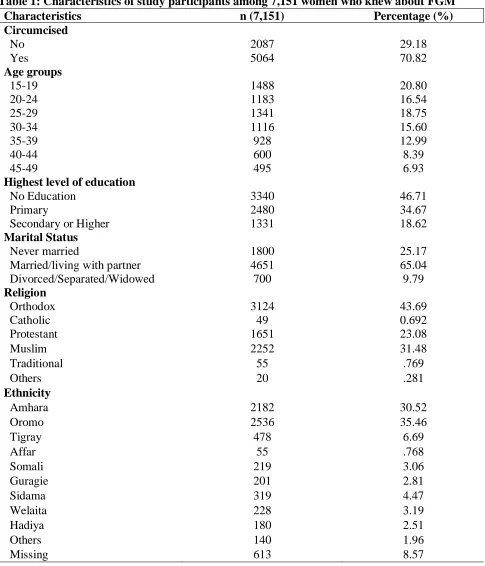
size included 7,151 women between the ages of 15 and 49. Table 1 shows the distribution of the
respondents by the selected demographic characteristics. Women between 15 to 19 years old
represented 20.8 percent of the sample, while those in the 45 to 49 age group were only 6.9
percent. The majority of the study participants had either no education (46.7%) or primary
schooling (34.7%). Over half (65%) of the women were married or living with a partner while
25% were never married. Most of the respondents belonged to the Christian denomination
groups, Orthodox (43.7%) and Protestant (23.1%), while the remaining were Muslim (31.5%),
Catholic (0.7%), Traditional (.8%), and other religions (.3%) practiced in Ethiopia. As for ethnic
groups, 35.5% of respondents identified as Oromo and 30.5 % were Amhara. Many of the
respondents lived in rural areas (77%). Regions with the highest proportion of participants
included: Oromia (37.7%), Amhara (23.5%), and SNPR (19.9%). In this study, most of the
women were in the rich quintile (47.3%). As for the prevalence of circumcision, 70.8% of
women responded yes to being circumcised. In this study, majority of the women had less than
or only 1 lifetime number of sexual partners (59%) whereas 18.4% had multiple sexual partners
As for early sexual debut, 39.8% of respondents reported that their sexual debut was not before
age 15 and 54.9% did not have premarital sex.
3.2. Descriptive analysis
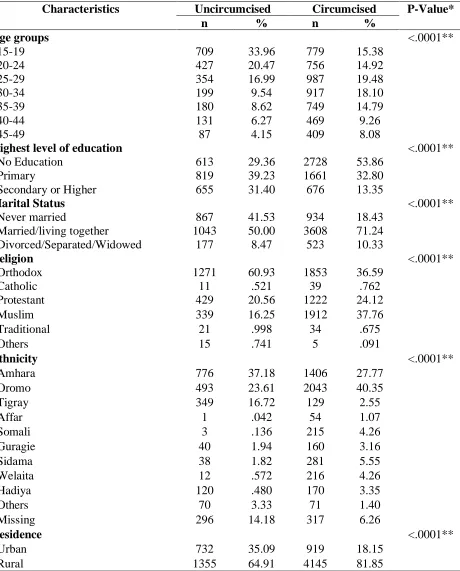
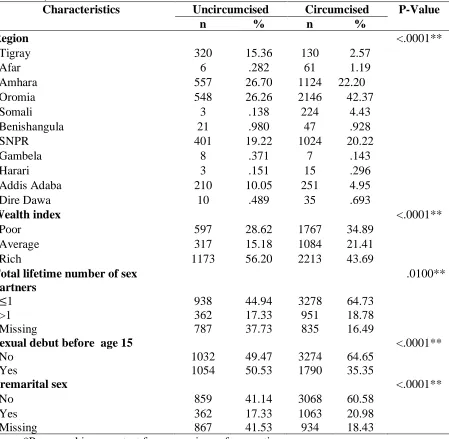
Table 2 shows results of the chi-square test to determine the association of uncircumcised
and circumcised women by background characteristics. There was a statistically significant
greater proportion of circumcised women who did not have multiple lifetime number of partners,
premarital sex, or a sexual debut before age 15. Also, there was a significant difference between
ethnicity, place of residence, region of residence, and wealth index. Majority of uncircumcised
women were 15 to 19 years old, educated, rich, married/living with a partner, Orthodox,
Amhara, live in rural areas, and in the Amhara region. However many circumcised women were
rich, 25 to 29 years old, non-educated, married/living with a partner, Muslim, Oromo, live in
rural areas, and in the Oromia region.
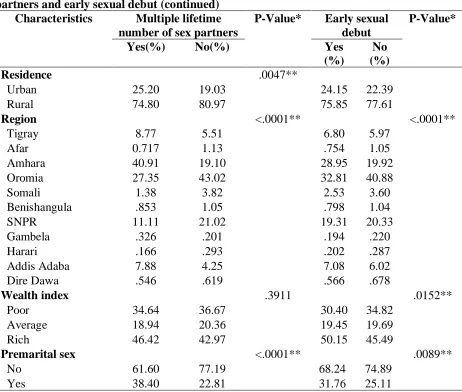
The sexual behaviors of study subjects included whether they had multiple lifetime
number of sexual partners and if they had an early sexual debut. In Table 3, the chi-square test
showed that age groups, education, marital status, religion, ethnicity, residence, region,
circumcision status, and premarital sex were significantly different among lifetime number of
partners and age at sexual debut. Women who had multiple lifetime number of sexual partners
were circumcised (72%), 35 to 39 years old (21%), rich (46%), non-educated (65%),
married/living with a partner (75%), Orthodox Christian (60%), Amhara (55%), lived in rural
areas (75%), and in the Amhara region (41%), and did not have premarital sex (62%). Women
who had an early sexual debut were mostly circumcised (63%), did not engage in premarital sex
(68%), rich (50%), 15 to 19 years old (43%), primary educated (41%), never married (57%),
Orthodox Christian (49%), Amhara (39%), live in rural areas (76%), and in the Oromia region
(33%). However, wealth index did not show a significant difference by lifetime number of sexual
partners while comparing age at sexual debut did show a significant difference. In Table 4, the
chi-square test showed that age, education, religion, ethnicity, residence, region, wealth index,
multiple lifetime number of sexual partners, and early sexual debut were significantly different
among those who did or did not have premarital sex. Study subjects who did have premarital sex
were mainly circumcised (74%), did not have multiple lifetime number of sexual partners (66%),
married/ living with a partner (87%), Orthodox Christian (49%), Amhara (38%), live in rural
areas (76%) and in the Oromia region (38%).
3.3 Bivariate logistic analyses
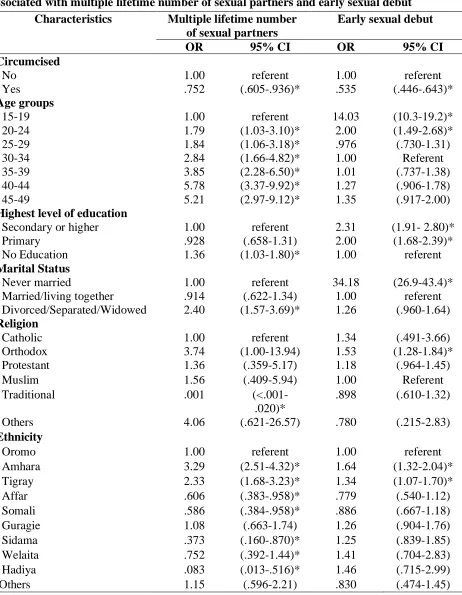
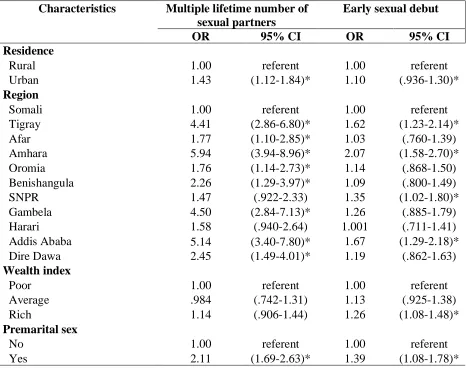
Tables 5 and 6 show the results of the unadjusted odds ratio between the independent
variables and the main outcome variables. In Table 5, the results from the bivariate logistic
regression showed significant associations between multiple lifetime number of sexual partners
and the following background characteristics: age, education, marital status, religion, ethnicity,
place of residence, place of region, circumcision status, and premarital sex to be significant. All
age groups had a significantly higher risk of having multiple lifetime number of sexual partners.
Non-educated women had an increased risk (OR=1.36, 95% CI: 1.03-1.80) of having multiple
lifetime number of sexual partners. When examining marital status, women who were
divorced/separated/widowed were found to be more likely to have multiple lifetime number of
sexual partners(OR=2.40, 95% CI: 1.57-3.69). Women who practiced traditional religions were
found to have a decreased risk (OR=.001, 95% CI: <.001-.020) of multiple lifetime number of
sexual partners. Among ethnic groups, Amhara, Tigray, and Guragie were more likely to have
multiple lifetime number of sexual partners in comparison to Affar and Somali groups. Women
who live in rural areas had an increased risk (OR=1.43, 95% CI: 1.12-1.84) in comparison to
those living in rural areas. Also, women from the regions of Tigray, Afar, Amhara, Oromia,
Benishangula, Gambela, Addis Ababa, and Dire Dawa had a greater likelihood of having
multiple lifetime number of sexual partners. The odds of multiple lifetime number of sexual
partners among circumcised women was .752 times the odds of hypertension among
In Table 5, results showed that there were significant associations between early sexual
debut and the following background characteristics: age, education, marital status, religion,
ethnicity, residence, region, wealth index, circumcised, and premarital sex. Women with multiple
lifetime number of sexual partners were significantly more likely to be 40 to 44 years old
(OR=5.78, 95% CI: 3.37-9.92), no education (OR=1.36, 95% CI: 1.03-1.80) ,
divorced/separated/widowed (OR=2.4 , 95% CI: 1.57-3.69), Amhara (OR= 3.29 ,95% CI:
2.51-4.32), live in rural areas (OR= 1.43 ,95% CI: 1.12-1.84), and in the Amhara region (OR= 5.94,
95% CI: 3.94-8.96). However, women who have multiple lifetime number of women were less
likely to be circumcised (OR=.752, 95% CI: .605-936). Women with an early sexual debut were
significantly more likely to be between the ages 15 to 24. Having an education, being never
married, and practicing Orthodox Christianity had an increased risk of sexual debut before age
15. Among ethnic groups, women belonging to either Amhara or Tigray were significantly more
likely to have an early sexual debut. Among circumcised women, sexual debut significantly
decreased (OR=.54, 95% CI: .446-.643).
Table 6 shows the results of the bivariate logistic regression that was conducted to
analyze the relationship for FGM and background characteristics associated with premarital sex.
In this study, women of all age groups were significantly more likely to have premarital sex. The
risk of premarital sex significantly increased among women having a secondary or higher
education level, being Orthodox Christian, living in urban areas, or in the regions of Tigray,
Amhara, Gambela, Harari, and Addis Ababa, and being average or rich. However, among
circumcised women there was a significant decrease in risk (OR=.822, 95% CI: .659-1.03) of
3.4 Multivariate logistic analyses
In Tables 7 and 8, three multivariable logistic regression models were used to
assess the independent relationship between the independent variables and the dependent
variables. The first model was measuring the relationship of the covariates and FGM on multiple
lifetime number of sexual partners. After adjusting for covariates the odds of multiple lifetime
numbers of sexual partners among circumcised women was .75 times the odds of multiple
lifetime number of sexual partners among uncircumcised women. Women with no education
were significantly more likely (OR=1.36, 95% CI: 1.03-1.80) to have multiple number of
lifetime sexual partners. In terms of ethnic groups, Amhara and Tigray are significantly more
likely to have multiple lifetime sexual partners in comparison to Somali, Sidama, and Hadiya
which were significantly less likely. Though nonsignificant married women were less likely to
have multiple lifetime number of partners than married women. Also, average or rich women
were less likely to have multiple lifetime number of sexual partners than poor women
(nonsignificant).
Another multivariable logistic model was created to examine the independent
effects of the covariates and FGM on early sexual debut. Although nonsignificant circumcised
women were less likely to have an early sexual debut. The findings suggests that FGM is
protective for multiple partners (significant) and also for early sexual debut (nonsignificant).
Also, the results showed that women with an early sexual debut were significantly more likely to
be ages 15 to 19, Orthodox Christian, Amhara or Sidama, live in the regions of Tigray, Afar,
Amhara, Benishangula, SNPR, and Gambela. However, women with an education or living in
urban areas were less likely to have an early sexual debut.
the relationship of covariates and FGM on premarital sex among married women. FGM is
protective against premarital sex among married women but again, nonsignificant. After
adjusting for the covariates, the results reveal that age, practicing Orthodox Christianity and
living in Addis Ababa were significantly associated with premarital sex.
4. Discussion and Conclusion
4.1. Discussion
FGM has become a global issue with the practice violating the rights of girls and
women. The practice is used as a tool to control female sexuality with the belief that it will make
them more marriageable. As with many countries in Africa, FGM is commonly practiced in
Ethiopia. The purpose of this study was to examine the relationship between FGM in sexual
behaviors and marriageability in Ethiopia. This is based on the belief that FGM controls a
woman’s sexual desire which will preserve virginity before marriage. The hypotheses reflect
common beliefs among cultures that practice FGM and in general were not borne out of this
study. The sexual behaviors assessed in this study were lifetime number of sexual partners and
age at sexual initiation. Based on previous literature, marriageability was measured by premarital
sex stating that in Ethiopia female virginity is a prerequisite for marriage and FGM ensures this
(Missailidis et al. 2000). If this belief were true, one would expect to find that circumcised
women were significantly more likely to have fewer number of sexual partners, a delay in sexual
debut, and not to engage in premarital sex.
In this study, the prevalence of circumcised women in Ethiopia was 71%. The results
revealed after adjusting for age, education level, wealth index, religion, marital status, ethnicity,
sexual debut and premarital sex. However, in every model, FGM was protective against multiple
lifetime number of sexual partners, early sexual debut, and premarital sex but only significant for
multiple lifetime number of sexual partners. Although, FGM was shown to be protective of a
women’s sexual behavior, depending on the type of circumcision done such as Type III which is
infibulation, are less likely to engage in sexual intercourse often which may have an effect on the
results. (Yount & Abraham, 2007). Since sexual behavior is a sensitive topic, women may
under-report their sexual activities based on social norms.
However, previous studies have found that FGM had no effect on sexual behaviors or
marriageability. Mpofu et al. (2016) found that circumcision was not related to the age at sexual
initiation or the number of lifetime sexual partners in both Kenya and Nigeria. Circumcision did
not make a significant difference on the sexual behaviors of women from both countries. In
another study by Rossem and Gage (2009) who studied the effects of FGM age at sexual
initiation and marriage in Guinea. After adjusting for sociodemographic characteristics the
results had similar findings, no significant relationship could be found between the type of FGM
that was done, and age at first marriage and risk of premarital sex. Similar to the previous study,
any findings that showed a relationship between FGM and sexual behaviors and premarital sex
were due to sociodemographic factors.
When examining the role sociodemographic variables had on this study, results showed
that age, education, religion, ethnicity, place of residence, and region were associated with the
sexual behaviors. Because, more women in rural areas were circumcised, one would expect to
see a later sexual debut based on the belief that FGM controls sexual behavior. However, women
before age 15. This can possibly be attributed to girls who have no education, live in rural areas,
and poor tend marry significantly earlier (CSA and ICF International,2012).
4.2. Study limitations
Limitations within this study need to be considered when interpreting the results. One
limitation of this study is that the data from DHS is self-reported which can lead to the
possibility of recall bias. For example, in rural areas of Ethiopia, many do not know their exact
age or birthdate leading them to guess or estimate their age. Another limitation to consider is that
when discussing sexual behavior, which is a sensitive topic, participants mainly women may
under-report the number of sexual partners, age at sexual debut, and if they had premarital sex
due to social stigma. Some communities do not openly talk about sexual activity, especially,
areas with a high prevalence of FGM where discussing such topics are considered out of the
norm for women.
4.3. Implication of Findings
Although, the results showed that FGM decreased the risk of having multiple number of
sexual partners, early sexual debut and premarital sex these findings suggest that these women
may be following gender roles and social norms that may be decreasing their likelihood of
having multiple number of sexual partners, early sexual debut and premarital sex. The
prevalence of FGM has been declining at a national level but regional levels have remained high.
Using these results, more programs and strategies need to be specific to regions and ethnicities
with a high prevalence of FGM instead of applying national strategies to every region. Rossem
and Gage (2009) explained that rather than challenging existing traditions to instead “build upon
without completely getting rid of the whole structure to provide a culturally acceptable
alternative that will not cause physical harm to women.
4.4. Conclusion
This study showed that FGM did not control all sexual behaviors or marriageability.
Therefore, refuting the argument and foundation of the practice of FGM being effective at
controlling female sexuality. Although, the hypothesis that circumcised women were less likely
to have more than 1 sexual partner was supported in the results, the other hypotheses were not.
There was no significant difference based on early sexual debut and premarital sex. The results
of this study suggest a need at having specific interventions and education on FGM for younger
women, women living in rural areas, and poor women.. The study shows that further research is
needed to show the effects of the different types of circumcision has on controlling female
References
Abdulcadir, J., Rodriguez, M., & Say, L. (2015). Research gaps in the care of women with female
genital mutilation: an analysis. BJOG: An International Journal of Obstetrics & Gynaecology,
122(3), 294–303. https://doi.org/10.1111/1471-0528.13217
Canada, P. H. A. of, & Canada, P. H. A. of. (2015, January 14). Chapter 2: Population-Specific
HIV/AIDS Status Report: People living with HIV/AIDS - Epidemiological Profile of HIV and
AIDS in Canada [research]. Retrieved February 16, 2018, from
https://www.canada.ca/en/public-
health/services/hiv-aids/publications/population-specific-hiv-aids-status-reports/people-living-hiv-aids/chapter-2-epidemiological-profile-hiv-aids-canada.html
Ejigu, Y., Tiruneh, G., Mekonnen, M., & Kibret, G. D. (2014). Prevalence and Contributing Factors
of Female Genital Cutting in Debaytilatgin District, Northwest Ethiopia. Clinics in Mother and
Child Health, 11(2), 1–6. https://doi.org/10.4172/2090-7214.1000167
El-Damanhoury, I. (2013). The Jewish and Christian view on female genital mutilation. African
Journal of Urology, 19(3), 127–129. https://doi.org/10.1016/j.afju.2013.01.004
Hayford, S. R., & Trinitapoli, J. (2011). Religious Differences in Female Genital Cutting: A Case
Study from Burkina Faso. Journal for the Scientific Study of Religion, 50(2), 252–271.
Little, C. M. (2003). Female genital circumcision: medical and cultural considerations. Journal Of
Cultural Diversity, 10(1), 30–34.
Missailidis, K., & Gebre-Medhin, M. (2000). Female genital mutilation in eastern Ethiopia. The
Mpofu, S., Odimegwu, C., De Wet, N., Adedini, S., & Akinyemi, J. (2017). The relation of female
circumcision to sexual behavior in Kenya and Nigeria. Women & Health, 57(7), 757–774.
https://doi.org/10.1080/03630242.2016.1206054
Nour, N. M. (2008). Female Genital Cutting: A Persisting Practice. Reviews in Obstetrics and
Gynecology, 1(3), 135–139.
Okonofua, F. E., Larsen, U., Oronsaye, F., Snow, R. c., & Slanger, T. e. (2002). The association
between female genital cutting and correlates of sexual and gynaecological morbidity in Edo
State, Nigeria. BJOG: An International Journal of Obstetrics & Gynaecology, 109(10), 1089–
1096. https://doi.org/10.1111/j.1471-0528.2002.01550.x
Pashaei, T., Ponnet, K., Moeeni, M., Khazaee-pool, M., & Majlessi, F. (2016). Daughters at Risk of
Female Genital Mutilation: Examining the Determinants of Mothers’ Intentions to Allow Their
Daughters to Undergo Female Genital Mutilation. PLoS ONE, 11(3).
https://doi.org/10.1371/journal.pone.0151630
Rossem, R. V., & Gage, A. J. (2009). The Effects of Female Genital Mutilation on the Onset of
Sexual Activity and Marriage in Guinea. Archives of Sexual Behavior, 38(2), 178–185.
https://doi.org/10.1007/s10508-007-9237-5
Setegn, T., Lakew, Y., & Deribe, K. (2016). Geographic Variation and Factors Associated with
Female Genital Mutilation among Reproductive Age Women in Ethiopia: A National Population
Based Survey. PLOS ONE, 11(1), e0145329. https://doi.org/10.1371/journal.pone.0145329
Toubia, N. (1994). Female Circumcision as a Public Health Issue. New England Journal of Medicine,
UNICEF. (2013). United Nations Children’s Fund. Female Genital Mutilation/Cutting: A statistical
overview and exploration of the dynamics of change.
http://data.unicef.org/wp-content/uploads/2015/12/FGMC_Lo_res_Final_26.pdf
UNICEF. (2016). United Nations Children’s Fund. Child marriage in Ethiopia: A review of the
evidence and anlaysis of the prevalence of child marriage in hotspot districts.
https://www.unicef.org/ethiopia/Evidence_Review.pdf
UNICEF. (2016). United Nations Children’s Fund. Female Genital Mutilation/Cutting: A global
concern. https://www.unicef.org/ia/files/FGMC_2016_brochure_final_UNICEF_SPREAD.pdf
WHO. (2008). Eliminating female genital mutilation: an interagency statement.
http://www.unifem.org/attachments/products/fgm_statement_2008_eng.pdf
WHO. (2011). WHO | Female genital cutting: current practices and beliefs in western Africa.
Retrieved January 31, 2018, from http://www.who.int/bulletin/volumes/90/2/11-090886/en/
Yoder, P. Stanley and Shane Khan. (2008). Numbers of Women Circumcised in Africa: The
Production of a Total. DHS Working Papers No. 39. Calverton, Maryland, USA: Macro
International
Yount, K. M. and Abraham, B. K. (2007), Female Genital Cutting and HIV/AIDS Among Kenyan
Appendices
Table 1: Characteristics of study participants among 7,151 women who knew about FGM Characteristics n (7,151) Percentage (%) Circumcised
No 2087 29.18
Yes 5064 70.82
Age groups
15-19 1488 20.80
20-24 1183 16.54
25-29 1341 18.75
30-34 1116 15.60
35-39 928 12.99
40-44 600 8.39
45-49 495 6.93
Highest level of education
No Education 3340 46.71
Primary 2480 34.67
Secondary or Higher 1331 18.62
Marital Status
Never married 1800 25.17
Married/living with partner 4651 65.04
Divorced/Separated/Widowed 700 9.79
Religion
Orthodox 3124 43.69
Catholic 49 0.692
Protestant 1651 23.08
Muslim 2252 31.48
Traditional 55 .769
Others 20 .281
Ethnicity
Amhara 2182 30.52
Oromo 2536 35.46
Tigray 478 6.69
Affar 55 .768
Somali 219 3.06
Guragie 201 2.81
Sidama 319 4.47
Welaita 228 3.19
Hadiya 180 2.51
Others 140 1.96
Table 1: Characteristics of study participants among 7,151 women who knew about FGM (continued)
Characteristics n (7,151) Percentage (%) Residence
Urban 1651 23.09
Rural 5500 76.91
Region
Tigray 451 6.30
Afar 67 .930
Amhara 1682 23.52
Oromia 2694 37.67
Somali 227 3.18
Benishangula 67 0.943
SNPR 1425 19.93
Gambela 15 0.209
Harari 18 .253
Addis Adaba 460 6.44
Dire Dawa 45 .634
Wealth Index
Poor 2364 33.06
Average 1401 19.59
Rich 3386 47.34
Total lifetime number of sex partners
≤1 4216 58.95
>1 1313 18.36
Missing 1622 22.69
Sexual debut before 15
No Yes
4306 60.22
2845 39.78
Premarital sex
No 3927 54.91
Yes 1424 19.92
Table 2: Characteristics of study participants according to circumcision status
Characteristics Uncircumcised Circumcised P-Value*
n % n %
Age groups <.0001**
15-19 709 33.96 779 15.38
20-24 427 20.47 756 14.92
25-29 354 16.99 987 19.48
30-34 199 9.54 917 18.10
35-39 180 8.62 749 14.79
40-44 131 6.27 469 9.26
45-49 87 4.15 409 8.08
Highest level of education <.0001**
No Education 613 29.36 2728 53.86
Primary 819 39.23 1661 32.80
Secondary or Higher 655 31.40 676 13.35
Marital Status <.0001**
Never married 867 41.53 934 18.43
Married/living together 1043 50.00 3608 71.24
Divorced/Separated/Widowed 177 8.47 523 10.33
Religion <.0001**
Orthodox 1271 60.93 1853 36.59
Catholic 11 .521 39 .762
Protestant 429 20.56 1222 24.12
Muslim 339 16.25 1912 37.76
Traditional 21 .998 34 .675
Others 15 .741 5 .091
Ethnicity <.0001**
Amhara 776 37.18 1406 27.77
Oromo 493 23.61 2043 40.35
Tigray 349 16.72 129 2.55
Affar 1 .042 54 1.07
Somali 3 .136 215 4.26
Guragie 40 1.94 160 3.16
Sidama 38 1.82 281 5.55
Welaita 12 .572 216 4.26
Hadiya 120 .480 170 3.35
Others 70 3.33 71 1.40
Missing 296 14.18 317 6.26
Residence <.0001**
Urban 732 35.09 919 18.15
Table 2: Table 2: Characteristics of study participants according to circumcision status (continued)
Characteristics Uncircumcised Circumcised P-Value
n % n %
Region <.0001**
Tigray 320 15.36 130 2.57
Afar 6 .282 61 1.19
Amhara 557 26.70 1124 22.20
Oromia 548 26.26 2146 42.37
Somali 3 .138 224 4.43
Benishangula 21 .980 47 .928
SNPR 401 19.22 1024 20.22
Gambela 8 .371 7 .143
Harari 3 .151 15 .296
Addis Adaba 210 10.05 251 4.95
Dire Dawa 10 .489 35 .693
Wealth index <.0001**
Poor 597 28.62 1767 34.89
Average 317 15.18 1084 21.41
Rich 1173 56.20 2213 43.69
Total lifetime number of sex partners
.0100**
≤1 938 44.94 3278 64.73
>1 362 17.33 951 18.78
Missing 787 37.73 835 16.49
Sexual debut before age 15
No Yes
<.0001**
1032 49.47 3274 64.65
1054 50.53 1790 35.35
Premarital sex <.0001**
No 859 41.14 3068 60.58
Yes 362 17.33 1063 20.98
Missing 867 41.53 934 18.43
*Pearson chi-square test for comparison of proportion
Table 3: Characteristics of study participants by multiple lifetime number of sexual partners and early sexual debut
Characteristics Multiple lifetime number of sex
partners
P-Value* Early sexual debut P-Value*
Yes(%) No(%) Yes (%) No (%) Circumcised No Yes 27.55 72.45 22.24 77.76 .0100** 37.06 62.94 23.97 76.03 <.0001**
Age groups <.0001** <.0001**
15-19 2.71 7.74 42.92 6.19
20-24 10.52 16.82 16.40 16.63
25-29 15.70 24.41 11.40 23.61
30-34 19.50 19.71 9.66 19.53
35-39 20.48 15.21 8.10 16.22
40-44 17.48 8.64 6.18 9.85
45-49 13.61 7.47 5.34 7.98
Highest level of education .002** <.0001**
No Education 64.58 56.02 35.74 53.96
Primary 24.09 30.61 40.72 30.68
Secondary or Higher 11.33 13.37 23.54 15.36
Marital Status <.0001** <.0001**
Never married 3.26 3.46 57.37 3.90
Married/living together 74.89 86.90 36.16 84.12
Divorced/Separated/Widowed 21.85 9.64 6.47 11.98
Religion <.0001** <.0001**
Orthodox 60.34 37.28 48.97 40.20
Catholic .322 .744 .719 .674
Protestant 14.02 23.77 22.23 23.65
Muslim 24.81 36.74 27.25 34.28
Traditional .0007 1.18 .620 .868
Others .510 .290 .205 .331
Ethnicity <.0001** <.0001**
Amhara 54.90 26.94 38.91 29.65
Oromo 27.22 43.93 33.78 42.16
Tigray 9.43 6.52 7.64 7.10
Affar .415 1.11 .618 .990
Somali 1.45 3.99 2.69 3.79
Guragie 1.92 2.88 3.09 3.06
Sidama 1.41 6.11 4.88 4.89
Welaita 1.53 3.29 3.74 3.31
Hadiya .154 3.00 3.02 2.57
Table 3: Characteristics of study participants by multiple lifetime number of sexual partners and early sexual debut (continued)
Characteristics Multiple lifetime number of sex partners
P-Value* Early sexual debut
P-Value*
Yes(%) No(%) Yes (%)
No (%)
Residence .0047**
Urban 25.20 19.03 24.15 22.39
Rural 74.80 80.97 75.85 77.61
Region <.0001** <.0001**
Tigray 8.77 5.51 6.80 5.97
Afar 0.717 1.13 .754 1.05
Amhara 40.91 19.10 28.95 19.92
Oromia 27.35 43.02 32.81 40.88
Somali 1.38 3.82 2.53 3.60
Benishangula .853 1.05 .798 1.04
SNPR 11.11 21.02 19.31 20.33
Gambela .326 .201 .194 .220
Harari .166 .293 .202 .287
Addis Adaba 7.88 4.25 7.08 6.02
Dire Dawa .546 .619 .566 .678
Wealth index .3911 .0152**
Poor 34.64 36.67 30.40 34.82
Average 18.94 20.36 19.45 19.69
Rich 46.42 42.97 50.15 45.49
Premarital sex <.0001** .0089**
No 61.60 77.19 68.24 74.89
Yes 38.40 22.81 31.76 25.11
*Pearson chi-square test for comparison of proportion
Table 4: Characteristics of study participants by premarital sex
Characteristics Premarital sex P-Value* Yes(%) No(%)
Circumcised .0822
No 25.39 21.87
Yes 74.61 78.13
Age groups <.0001**
15-19 2.91 7.40
20-24 13.52 15.23
25-29 21.39 22.32
30-34 20.99 19.73
35-39 20.53 15.39
40-44 9.56 11.43
45-49 11.10 8.49
Highest level of education .0319**
No Education 58.16 60.40
Primary 27.26 29.08
Secondary or Higher 14.59 10.52
Marital Status .8018
Never married NA NA
Married/living together 86.63 87.03
Divorced/Separated/Widowed 13.37 12.97
Religion .0001**
Orthodox 49.27 39.04
Catholic .964 .554
Protestant 17.28 23.08
Muslim 31.84 35.81
Traditional .514 1.08
Others .135 .433
Ethnicity .0006**
Amhara 38.42 31.42
Oromo 38.75 41.03
Tigray 7.87 6.69
Affar .423 1.17
Somali 2.77 3.75
Guragie 2.53 2.35
Sidama 2.45 6.03
Welaita 2.71 2.91
Hadiya 2.38 2.39
Others 1.70 2.26
Residence .0004**
Urban 24.01 17.14
Table 4: Characteristics of study participants by premarital sex (continued) Characteristics Premarital Sex P-Value*
Yes(%) No(%)
Region <.0001**
Tigray 7.00 5.99
Afar .588 1.21
Amhara 27.50 23.30
Oromia 37.60 40.83
Somali 2.80 3.53
Benishangula .976 1.01
SNPR 14.92 20.41
Gambela .260 .206
Harari .321 .241
Addis Adaba 7.45 2.71
Dire Dawa .601 .566
Wealth index .0076**
Poor 32.89 38,33
Average 18.92 21.22
Rich 48.19 40.45
Multiple lifetime sex partners
No Yes
<.0001**
65.56 80.06
34.44 19.94
Early sexual debut .0089**
No 72.96 78.92
Yes 27.04 21.08
*Pearson chi-square test for comparison of proportion
Table 5: Bivariate analysis for circumcision and sociodemographic characteristics associated with multiple lifetime number of sexual partners and early sexual debut
Characteristics Multiple lifetime number of sexual partners
Early sexual debut
OR 95% CI OR 95% CI Circumcised No Yes 1.00 .752 referent (.605-.936)* 1.00 .535 referent (.446-.643)* Age groups
15-19 1.00 referent 14.03 (10.3-19.2)*
20-24 1.79 (1.03-3.10)* 2.00 (1.49-2.68)*
25-29 1.84 (1.06-3.18)* .976 (.730-1.31)
30-34 2.84 (1.66-4.82)* 1.00 Referent
35-39 3.85 (2.28-6.50)* 1.01 (.737-1.38)
40-44 5.78 (3.37-9.92)* 1.27 (.906-1.78)
45-49 5.21 (2.97-9.12)* 1.35 (.917-2.00)
Highest level of education
Secondary or higher 1.00 referent 2.31 (1.91- 2.80)*
Primary .928 (.658-1.31) 2.00 (1.68-2.39)*
No Education 1.36 (1.03-1.80)* 1.00 referent
Marital Status
Never married 1.00 referent 34.18 (26.9-43.4)*
Married/living together .914 (.622-1.34) 1.00 referent
Divorced/Separated/Widowed 2.40 (1.57-3.69)* 1.26 (.960-1.64)
Religion
Catholic 1.00 referent 1.34 (.491-3.66)
Orthodox 3.74 (1.00-13.94) 1.53 (1.28-1.84)*
Protestant 1.36 (.359-5.17) 1.18 (.964-1.45)
Muslim 1.56 (.409-5.94) 1.00 Referent
Traditional .001
(<.001-.020)*
.898 (.610-1.32)
Others 4.06 (.621-26.57) .780 (.215-2.83)
Ethnicity
Oromo 1.00 referent 1.00 referent
Amhara 3.29 (2.51-4.32)* 1.64 (1.32-2.04)*
Tigray 2.33 (1.68-3.23)* 1.34 (1.07-1.70)*
Affar .606 (.383-.958)* .779 (.540-1.12)
Somali .586 (.384-.958)* .886 (.667-1.18)
Guragie 1.08 (.663-1.74) 1.26 (.904-1.76)
Sidama .373 (.160-.870)* 1.25 (.839-1.85)
Welaita .752 (.392-1.44)* 1.41 (.704-2.83)
Hadiya .083 (.013-.516)* 1.46 (.715-2.99)
Table 5: Bivariate analysis for circumcision and sociodemographic characteristics associated with multiple lifetime number of sexual partners and early sexual debut (continued)
Characteristics Multiple lifetime number of sexual partners
Early sexual debut
OR 95% CI OR 95% CI Residence
Rural 1.00 referent 1.00 referent
Urban 1.43 (1.12-1.84)* 1.10 (.936-1.30)*
Region
Somali 1.00 referent 1.00 referent
Tigray 4.41 (2.86-6.80)* 1.62 (1.23-2.14)*
Afar 1.77 (1.10-2.85)* 1.03 (.760-1.39)
Amhara 5.94 (3.94-8.96)* 2.07 (1.58-2.70)*
Oromia 1.76 (1.14-2.73)* 1.14 (.868-1.50)
Benishangula 2.26 (1.29-3.97)* 1.09 (.800-1.49)
SNPR 1.47 (.922-2.33) 1.35 (1.02-1.80)*
Gambela 4.50 (2.84-7.13)* 1.26 (.885-1.79)
Harari 1.58 (.940-2.64) 1.001 (.711-1.41)
Addis Ababa 5.14 (3.40-7.80)* 1.67 (1.29-2.18)*
Dire Dawa 2.45 (1.49-4.01)* 1.19 (.862-1.63)
Wealth index
Poor 1.00 referent 1.00 referent
Average .984 (.742-1.31) 1.13 (.925-1.38)
Rich 1.14 (.906-1.44) 1.26 (1.08-1.48)*
Premarital sex
No 1.00 referent 1.00 referent
Yes 2.11 (1.69-2.63)* 1.39 (1.08-1.78)*
Table 6: Bivariate analysis for circumcision and sociodemographic characteristics associated with premarital sex
Characteristics Premarital sex
OR 95% CI
Circumcised No Yes 1.00 .822 referent (.659-1.03) Age groups
15-19 1.00 referent
20-24 2.26 (1.33-3.83)*
25-29 2.44 (1.46-4.06)*
30-34 2.71 (1.59-4.61)*
35-39 3.39 (1.99-5.79)*
40-44 2.13 (1.23-3.69)*
45-49 3.33 (1.96-5.65)*
Highest level of education
Secondary or higher 1.44 (1.07-1.94)*
Primary .974 (.791-1.20)
No Education 1.00 referent
Marital Status
Never married NA NA
Married/living together .965 (.733-1.27)
Divorced/Separated/Widowed 1.00 referent
Religion
Catholic 2.33 (.777-6.96)
Orthodox 1.69 (1.29-2.20)*
Protestant 1.00 referent
Muslim 1.19 (.870-1.62)
Traditional .636 (.301-1.35)
Others .417 (.061-2.84)
Ethnicity
Oromo 1.00 referent
Amhara 1.29 (.990-1.69)
Tigray 1.25 (.913-1.70)
Affar .382 (.248-.590)*
Somali .783 (.553-1.11)
Guragie 1.14 (.657-1.98)
Sidama .430 (.250-.738)*
Welaita .984 (.527-1.84)
Hadiya 1.06 (.570-1.95)
Table 6: Bivariate analysis for circumcision and sociodemographic characteristics associated with premarital sex (continued)
Characteristics Premarital sex
OR 95% CI
Residence
Rural 1.00 referent
Urban 1.53 (1.21-1.92)*
Region
Somali 1.00 referent
Tigray 1.48 (1.01-2.15)*
Afar .615 (.411-.920)*
Amhara 1.49 (1.06-2.10)*
Oromia 1.16 (.827-1.64)
Benishangula 1.22 (.853-1.74)
SNPR .924 (.649-1.32)
Gambela 1.59 (1.04-2.44)*
Harari 1.68 (1.11-2.55)*
Addis Ababa 3.48 (2.47-4.89)*
Dire Dawa 1.34 (.920-1.95)
Wealth index
Poor 1.00 referent
Average 1.04 (.811-1.33)*
Rich 1.39 (1.09-1.77)*
Early sexual debut
No 1.00 referent
Yes 1.39 (1.08-1.78)*
Multiple lifetime sex partners
No 1.00 referent
Yes 2.11 (1.69-2.63)*
Table 7: Multivariate analysis for circumcision and sociodemographic characteristics associated with sexual behaviors
Characteristics Multiple lifetime number of sexual partners
Early sexual debut
OR 95% CI OR 95% CI Circumcised No Yes 1.00 .748 referent (.566-.988)* 1.00 .949 referent (.709-1.27) Age groups
15-19 1.00 referent 1.84 (1.12-3.00)*
20-24 1.92 (1.08-3.39)* .866 (.571-1.31)
25-29 1.99 (1.15-3.46)* .961 (.686-1.35)
30-34 2.81 (1.62-4.90)* 1.00 referent
35-39 3.62 (2.07-6.31)* 1.01 (.697-1.46)
40-44 5.67 (3.20-10.04)* 1.34 (.924-1.94)
45-49 3.96 (2.12-7.41)* 1.30 (.839-2.01)
Highest level of education
Secondary or higher 1.00 referent .643 (.490-.844)*
Primary 1.40 (.886-2.21) .248 (.148-.415)*
No Education 1.62 (1.01-2.60)* 1.00 referent
Marital Status
Never married 1.00 referent .818 (.419-1.60)
Married/living together .669 (.439-1.02) 1.00 referent
Divorced/Separated/Widowed 1.47 (.940-2.30) 1.07 (.792-1.45)
Religion
Catholic 1.00 referent 1.29 (.300-5.54)
Orthodox 3.92 (.702-21.92) 1.43 (1.06-1.95)*
Protestant 1.65 (.292-9.35) .889 (.645-1.22)
Muslim 1.92 (.338-10.90) 1.00 referent
Traditional .002 (<.001-.023)* 1.33 (.743-2.37)
Others 7.38 (.720-75.70) 2.80 (.254-30.83)
Ethnicity
Oromo 1.00 referent 1.00 referent
Amhara 3.17 (2.32-4.35)* 2.11 (1.58-2.83)*
Tigray 2.30 (1.44-3.67)* 1.36 (.916-2.03)
Affar .675 (.412-.1.11) .759 (.480-1.20)
Somali .516 (.324-.821)* .647 (.393-1.06)
Guragie .774 (.459-1.31) .917 (.383-2.20)
Sidama .388 (.164-.919)* 1.78 (1.06-3.01)*
Welaita .882 (.432-1.80) 1.04 (.350-3.06)
Hadiya .076 (.012-.495)* .948 (.311-2.90)
Table 7: Multivariate analysis for circumcision and sociodemographic characteristics associated with sexual behaviors (continued)
Characteristics Multiple lifetime number of sexual partners
Early sexual debut
OR 95% CI OR 95% CI Residence
Rural 1.00 referent 1.00 referent
Urban 1.71 (1.17-2.50)* .940 (.683-1.29)
Region
Somali 1.00 referent 1.00 referent
Tigray 3.97 (2.39-6.60)* 2.77 (1.63-4.73)*
Afar 1.82 (1.06-3.13)* 1.73 (1.02-2.95)*
Amhara 5.94 (3.72-9.49)* 3.73 (2.27-6.12)*
Oromia 1.88 (1.16-3.02)* 1.65 (1.00-2.72)
Benishangula 4.34 (2.30-8.18)* 2.25 (1.21-4.20)*
SNPR 1.31 (.741-2.32) 2.15 (1.21-3.81)*
Gambela 4.74 (2.47-9.08)* 3.76 (1.68-8.44)*
Harari 1.60 (.894-2.87) 1.51 (.742-3.07)
Addis Ababa 4.52 (2.50-8.18)* 1.05 (.561-1.97)
Dire Dawa 2.26 (1.23-4.13)* 1.27 (.740-2.19)
Wealth index
Poor 1.00 referent 1.00 referent
Average .990 (.722-1.36) .926 (.686-1.25)
Rich .982 (.728-1.33) .963 (.735-1.26)
Premarital sex
No 1.00 referent 1.00 referent
Yes 1.92 (1.49-2.48)* 1.27 (.961-1.68)
Table 8: Multivariate analysis for circumcision and sociodemographic characteristics associated with premarital sex among married women
Characteristics Premarital sex
OR 95% CI
Circumcised
No 1.00 referent
Yes .892 (.693-1.15)
Age groups
15-19 1.00 referent
20-24 2.34 (1.32-4.13)*
25-29 2.45 (1.39-4.32)*
30-34 2.88 (1.59-5.20)*
35-39 3.43 (1.91-6.18)*
40-44 1.98 (1.06-3.72)*
45-49 3.40 (1.89-6.13)*
Highest level of education
Secondary or higher 1.23 (.815-1.85)
Primary 1.06 (.828-1.37)
No Education 1.00 referent
Marital Status
Never married NA NA
Married/living together 1.27 (.922-1.74)
Divorced/Separated/Widowed 1.00 referent
Religion
Catholic 2.38 (.598-9.46)
Orthodox 1.60 (1.18-2.17)*
Protestant 1.00 referent
Muslim 1.37 (.960-1.95)
Traditional .892 (.432-1.85)
Others .056 (.007-.423)*
Ethnicity
Oromo 1.00 referent
Amhara .940 (.677-1.31)
Tigray 1.11 (.705-1.75)
Affar .529 (.325-.860)*
Somali .844 (.567-1.26)
Guragie .771 (.440-1.35)
Sidama .374 (.214-.652)*
Welaita .789 (.423-1.47)
Hadiya .983 (.554-1.75)
Table 8: Multivariate analysis for circumcision and sociodemographic characteristics associated with premarital sex among married women (continued)
Characteristics Premarital sex
OR 95% CI
Residence
Rural 1.00 referent
Urban 1.29 (.938-1.79)
Region
Somali 1.00 referent
Tigray .976 (.598-1.59)
Afar .562 (.371-.851)*
Amhara .946 (.618-1.45)
Oromia .978 (.665-1.40)
Benishangula 1.05 (.660-1.66)
SNPR .800 (.512-1.25)
Gambela 1.18 (.740-1.88)
Harari 1.41 (.887-2.23)
Addis Ababa 1.97 (1.23-3.15)*
Dire Dawa 1.01 (.660-1.66)
Wealth index
Poor 1.00 referent
Average 1.04 (.793-1.36)
Rich 1.10 (.808-1.49)
Early sexual debut
No 1.00 referent
Yes 1.25 (.942-1.66)
Multiple lifetime sex partners
No 1.00 referent
Yes 1.87 (1.45-2.41)*