Georgia State University
ScholarWorks @ Georgia State University
Public Health Theses School of Public Health
Spring 5-13-2016
Gender Discrimination Effects on Health
Outcomes and Behaviors among African-American
Transgender Women in Atlanta
Megan Smallwood Early
Georgia State University
Follow this and additional works at:https://scholarworks.gsu.edu/iph_theses
This Thesis is brought to you for free and open access by the School of Public Health at ScholarWorks @ Georgia State University. It has been accepted for inclusion in Public Health Theses by an authorized administrator of ScholarWorks @ Georgia State University. For more information, please contact [email protected].
Recommended Citation
Early, Megan Smallwood, "Gender Discrimination Effects on Health Outcomes and Behaviors among African-American Transgender Women in Atlanta." Thesis, Georgia State University, 2016.
ABSTRACT
Gender Discrimination Effects on Health Outcomes and Behaviors among African-American Transgender Women in Atlanta
By
Megan Smallwood Early April 20, 2016
INTRODUCTION: Transgender women’s experiences of violence and transphobia can negatively affect health outcomes and influence health behavior. Transgender women and especially African-American transgender women suffer a disproportionate burden of HIV and may have unique experiences around both race and gender, which involves an added layer of discrimination. According to the gender affirmation framework, the stigma associated with being a transwoman of color could be a primary driver for engaging in high-risk behavior.
AIM: The present study aims to determine how gender discrimination relates to HIV status, affects quality of life, and influences engaging in risky sexual behaviors or substance use. Additionally, the link between gender discrimination and gender affirmation was assessed and whether gender affirmation moderated the relationships between gender discrimination and HIV or quality of life.
METHODS: African-American transgender women were recruited with the assistance of transgender advocates and local community organizations. Face-to-face interviews with participants were conducted and their responses were recorded on a tablet. Data were collected from October 2014 to June 2015.
RESULTS: The sample consisted of 77 women with a mean age of 35 years old; approximately 40% of the sample was currently unemployed with an average annual income of less than $10,000. Additionally, 67% of the sample reported being HIV-positive. There was a significant interaction effect of gender affirmation and gender discrimination (i.e., ever being hit or beaten after disclosing) on quality of life (p < .001). A linear regression analysis revealed three gender discrimination items influenced quality of life: experiencing verbal abuse or harassment by a stranger (β = -.327, p <.01), ever being in situations where not disclosing put them in physical danger or harm (β = -.305, p < .05), and having problems getting health or medical services (β = .268, p < .05). A binary logistic regression analysis revealed a significant relationship between HIV status and experiencing verbal abuse or harassment by a family member or friend (AOR = .103, p < .05).
Gender Discrimination Effects on Health Outcomes and Behaviors among African-American Transgender Women in Atlanta
by
Megan S. Early
B.A., B.S., GEORGIA STATE UNIVERSITY
A Thesis Submitted to the Graduate Faculty of Georgia State University in Partial Fulfillment
of the
Requirements for the Degree
MASTER OF PUBLIC HEALTH
APPROVAL PAGE
Gender Discrimination Effects on Health Outcomes and Behaviors among African-American Transgender Women in Atlanta
by
Megan S. Early
Approved:
Dr. Laura F. Salazar Committee Chair
Dr. Eric R. Wright Committee Member
Acknowledgements
First, I would like to thank my thesis advisor and chair, Dr. Laura Salazar for all of her guidance and encouragement throughout this process. She is much more than my thesis chair and I am so grateful for being able to work with her since my first semester in the program. I have learned so much and will certainly miss working with her.
I would also like to thank Dr. Eric Wright for serving on my thesis committee and for all of his valuable insight and feedback.
Author’s Statement Page
In presenting this thesis as a partial fulfillment of the requirements for an advanced degree from Georgia State University, I agree that the Library of the University shall make it available for inspection and circulation in accordance with its regulations governing materials of this type. I agree that permission to quote from, to copy from, or to publish this thesis may be granted by the author or, in his/her absence, by the professor under whose direction it was written, or in his/her absence, by the Associate Dean, School of Public Health. Such quoting, copying, or publishing must be solely for scholarly purposes and will not involve potential financial gain. It is understood that any copying from or publication of this dissertation which involves potential financial gain will not be allowed without written permission of the author.
TABLE OF CONTENTS
ACKNOWLEDGMENTS ……….……iv
LIST OF TABLES ……….……vii
LIST OF FIGURES ………viii
INTRODUCTION………..1
REVIEW OF THE LITERATURE ………...5
Gender Identity………5
Experiences of Transgender Women of Color….………..………….5
Health Outcomes……….6
Risk Factors……….8
Protective Factors………10
METHODS AND PROCEDURES ……….13
Measures……….……….13
Analytic Strategy……….16
RESULTS ………...17
DISCUSSION AND CONCLUSION ………22
REFERENCES ………...26
List of Tables
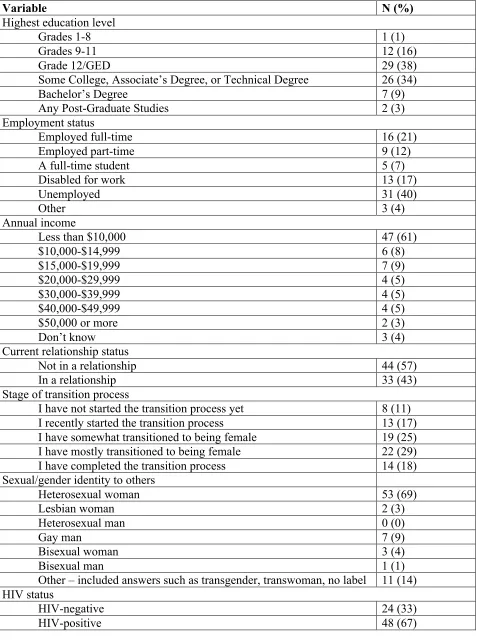
Table 1. Participant characteristics
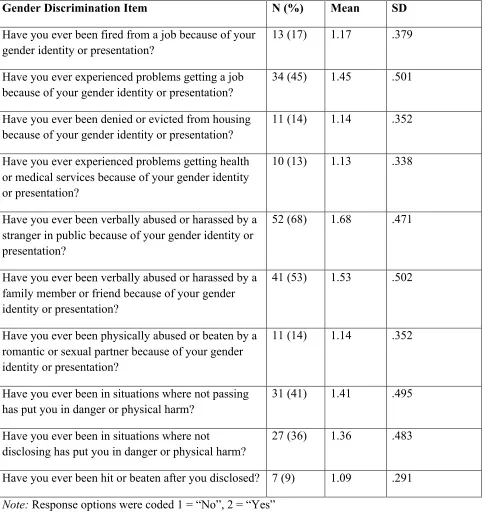
Table 2. Descriptive Statistics for Gender Discrimination Items
List of Figures
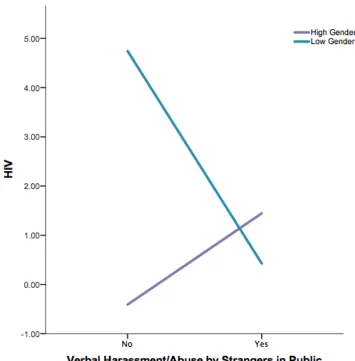
Figure 1. Interaction of verbal harassment by strangers, gender affirmation, and HIV status
Chapter I: Introduction
Transgender women’s (i.e., persons assigned “male” sex at birth, but identify as female)
experiences of violence and transphobia (i.e., prejudice toward transgender individuals) can
negatively affect health outcomes and influence health behavior. Transgender women are at
higher risk of substance use and of developing mental health issues such as depression, anxiety,
and low self-esteem (Clements-Noelle et al., 2001; Benotsch et al., 2013; Bockting, Miner,
Swinburne, Hamilton, & Coleman, 2013; Budge, Adelson, & Howard, 2013). Specifically,
Goldblum et al. (2012) found that 30% of transgender women had attempted suicide in the past,
and almost 40% within that group had made three or more attempts in their lifetime.
Additionally, transgender individuals are more likely to smoke than cisgender persons (i.e., those
whose gender identity matches their sex assigned at birth) (Grant et al., 2011; Conron, Scott,
Stowell, & Landers, 2011), and among older transgender adults, Fredriksen-Goldsen et al. (2013)
reported poorer physical health (e.g., limited physical activity, higher obesity) than cisgender
older adults.
There is extensive evidence in the literature on the experiences of violence and/or
traumatic events among transgender women. Among a sample of transgender individuals in New
York, almost 60% had experienced some form of violence or harassment, with economic
discrimination based on gender identity being the strongest predictor of experiencing violence
(Lombardi, Wilchins, Priesing, & Malouf, 2001). When examining experiences of violence and
health outcomes, Nemoto, Bodeker, and Iwamoto (2011) found that, among transgender women
who engage in sex work, more than 30% reported being verbally harassed daily and more than
violence and/or transphobia were associated with negative mental health outcomes, particularly
depression. However, institutional discrimination is also an issue faced by transwomen.
Documented experiences of transgender individuals with the health system have included
discrimination by providers (Richmond, Burnes, and Carroll, 2012) and harassment in medical
settings (Grant et al., 2011). Additionally, transpersons have limited access to care, specifically
because health insurance companies will not cover the medical costs associated with
transitioning (e.g., hormone therapy, sex reassignment surgery) or other health issues related to
their transition (Roller, Sedlak, & Draucker, 2015).
Transgender women are also disproportionately affected by HIV. Several studies using
self-report data indicate the high prevalence of HIV among transgender women, ranging from
22% (Baral et al., 2013) to 35% (Clements-Noelle, Marx, Guzman, & Katz, 2001). Furthermore,
African American transgender women suffer disproportionately, with HIV rates ranging from
47% (Clements-Noelle et al., 2001) to 56% (Herbst et al., 2008). Among African American
transgender women who are HIV positive, gender stigma, peer distrust, and institutional distrust
were all reported barriers to care. Gender stigma emerged from narratives of women who said
they were afraid to go out in public due to the stigma surrounding their gender identity, which
often led to violence towards them. Additionally, transwomen of color may have unique
experiences due to the intersectionality of their racial, gender, and sexual identities. Jefferson,
Neilands, and Sevelius (2013) found that while experiences of racism and transphobia
independently related to increased odds of developing depression, the combination of both led to
even greater odds of depression. These findings indicate the multiple health disparities among
transwomen of color, which may be attributed to the multitude of experiences with racism and
The complexity around gender identity and not conforming to traditional gender norms
may lead to traumatic experiences for trans-identified persons. In particular, transwomen of color
may have unique experiences around both race and gender, which involves an added layer of
discrimination. Sevelius (2013) proposed a framework on gender affirmation (i.e., when a
person’s gender identity is supported through social interactions), and suggests the stigma around
being a transwoman of color was the primary driver for engaging in high-risk behavior.
However, if transwomen’s gender identity is recognized and supported by their social networks
and everyday interactions, they are less likely to report engaging in risky health behaviors such
as unprotected sex, unsafe hormone/silicone injections, and substance use. This framework is
based on several theories, but is heavily influenced by intersectionality theory. Individuals have
multiple identities that intersect to become who they are and, ultimately, how they behave. These
behaviors are often influenced by life experiences, and if these experiences are not positive (e.g.,
racism, sexism, transphobia), it can often have detrimental effects. Using the gender affirmation
framework proposed by Sevelius (2013), the present study aims to address the following research
questions:
1. Do those who have experienced gender discrimination report higher rates of HIV?
2. To what degree does exposure to gender discrimination affect quality of life?
3. To what degree does exposure to gender discrimination affect the following health
behaviors?
a. Substance use: tobacco, alcohol, injection drugs, non-injection drugs
b. Sexual behaviors: number of partners, condom use
4. Do those who report a higher degree of gender affirmation report less experiences of
5. To what degree does gender affirmation affect HIV status and/or quality of life?
6. Does gender affirmation moderate the relationship between gender discrimination and
Chapter II: Review of Literature
Gender Identity
Transgender, transsexual, gender nonconforming, gender queer, two-spirit, are some
examples of identities that trans people use to describe their gender identity. Trans persons are
individuals whose gender identity differs from the sex they were assigned at birth. People often
refer to transmen as individuals who were assigned “female” sex at birth, but now identify as a
man, and transwomen as individuals who were assigned “male” sex at birth, but now identify as
a woman. However, these categories may not reflect actual experiences of trans people. For
instance, Dargie, Blair, Pukall, and Coyle (2014) asked trans-identified participants to describe
their levels of conforming to the gender they identify with and found varied responses. This
indicates that gender is more fluid than generally thought, and the current binary definition of
gender is not applicable. Even so, societal norms dictate that people in our culture conform to
being men or women, not both/neither. Although, some trans people prefer to conform to this
either/or notion in order to fit in (Roen, 2002).
This sort of confusion and complexity around gender identity can lead to traumatic
experiences for trans-identified persons. In particular, transwomen of color may have unique
experiences due to the intersection of race, gender, and sexuality.
Experiences of Transgender Women of Color
Graham (2014) conducted a qualitative study to explore young black transgender
women’s (i.e., between ages 18-24) experiences with various social institutions. They found that
in a school setting, young, Black transwomen were often sent home for not conforming to
heterosexist norms, experienced bullying and violence from their peers and had difficulty with
of school and/or developing a tough facade of violence and “no tolerance attitudes for
disrespect” in order to counter the violence and discrimination they experienced. Those who had
been through the criminal justice system, usually due to being involved in sex work, had
narratives of physical and sexual attacks, others not understanding or being supportive of their
gender identity which led to forcing them to conform, and isolating them from others for their
own “protection.” These experiences ultimately led to a lack of trust of police and not wanting to
call them for help. In the institution of church, there were mixed experiences. Some found the
church as a place of refuge where it provided them strength and the ability to carry on. Others
found it as another institution where they were not accepted for their true self, leading to a fear of
revealing their true gender identities.
Additionally, transwomen of color may also experience multiple forms of discrimination
based on race and gender identity. Jefferson, Neilands, and Sevelius (2013) found that while
experiences of racism and transphobia independently related to increased odds of developing
depression, the combination of the two was synergistic and led to even greater odds of
depression. This indicates that there are multiple health disparities among transwomen of color,
and more research is needed in this area. While transwomen have to deal with transphobia and
all of the discrimination associated with their gender identity, transwomen of color have unique
experiences where they have to deal with both racism and transphobia.
Health Outcomes
HIV
Transgender women, particularly African American transwomen, are at heightened risk
of developing various negative health outcomes. There is a high prevalence of HIV in the
(Clements-Noelle, Marx, Guzman, & Katz, 2001) affected, compared to less than 1% of all adults (Baral et
al., 2013). The numbers are even bleaker for African American transgender women: ranging
from 47% (Clements-Noelle et al., 2001) to 56% (Herbst et al., 2008). The data are inconsistent
as there are currently no national studies to reflect an accurate representation of HIV status in the
transgender population.
Mental Health
Additionally, transgender women are at higher risk of developing mental health issues,
principally substance use, attempted suicide, depression, anxiety, and low self-esteem
(Clements-Noelle et al., 2001; Benotsch et al., 2013; Bockting, Miner, Swinburne, Hamilton, & Coleman,
2013; Budge, Adelson, & Howard, 2013; Goldblum et al., 2012). Goldblum et al. (2012) found
that 30% of transgender women had attempted suicide in the past, and almost 40% within that
group had made three or more attempts in their lifetime. Between 44% and 51% of transgender
women have a history of depression (Bockting et al., 2013; Budge et al., 2013), with a positive
correlation between depression and discrimination among African American transwomen
(Jefferson et al., 2013). Discrimination is also positively correlated with smoking and failed
attempts to quit smoking among transwomen (Gamarel et al., 2015), which is important as
previous findings reveal that transwomen may be more likely to smoke than cisgender
individuals (Conron, Scott, Stowell, & Landers, 2011).
Physical Health
There is a gap in the current literature on physical health outcomes and transgender
women. Most of the published research is focused on mental and sexual health outcomes, and
risky sexual and drug behaviors. However, one study focused on older transgender adults found
obesity) than cisgender older adults (Fredriksen-Goldsen et al., 2013). There are currently no
studies assessing general health indicators, such as heart disease, diabetes, and poor nutrition.
Risk Factors
Violence and Discrimination
There is extensive evidence in the literature on the experiences of violence and/or
traumatic events among transgender women. Among a sample of transgender individuals in New
York, almost 60% had experienced some form of violence or harassment, and verbal harassment
due to being transgender was most reported. Additionally, economic discrimination based on
gender identity was the strongest predictor of experiencing violence (Lombardi, Wilchins,
Priesing, & Malouf, 2001). In a sample of transgender persons in Los Angeles, Stotzer (2008)
found that physical violence was most reported, and that the motivation was often a combination
of race, gender, and sexuality. When examining experiences of violence and health outcomes,
Nemoto, Bodeker, and Iwamoto (2011) found that, among transgender women who engage in
sex work, more than 30% reported being verbally harassed daily and more than one third
reported being raped or sexually assaulted before the age of 18. Additionally, these experiences
of violence and/or transphobia led to negative mental health outcomes, particularly depression.
Exposure to violence and traumatic experiences can also affect HIV transmission risk and
antiretroviral failure. A recent study found that among HIV positive transgender and cisgender
women, those who reported a recent trauma (i.e., abused, threatened, or the victim of violence in
the past 30 days) were four times more likely to experience antiretroviral failure and also an
increased risk of transmitting HIV to a negative or unknown status partner (Machtinger et al.,
Sex Work
Transgender women who engage in sex work tend to have high rates of HIV
(Clements-Noelle et al., 2001). When examining sex work as a risk factor, it is helpful to understand why
transwomen may engage in sex work in order to mitigate the risk. Sausa, Keatley, and Operario
(2007) interviewed transwomen of color in San Francisco to examine their experiences in sex
work. They found that the women often got started in sex work as a way to emerge themselves in
the trans community and find a network of social support. Oftentimes, the community they found
with other transwomen involved in sex work became their source of family. Additionally, the
women had a hard time finding well-paying jobs and an even harder time of keeping them due to
discrimination in the workplace. Sex work was a means to pay the bills, but also to have a sense
of autonomy. An interesting finding was that the women who were less able to “pass” (i.e.,
looking like the gender they identify with) turned to sex work as a form of employment. Those
who felt they were better able to pass said they could find legal employment. Additionally,
race/ethnicity was a major factor for these women turning to sex work. The women noted that
the multiple oppressions they experienced based on race and gender identity made employment
very difficult, and oftentimes it was hard to distinguish whether they were being discriminated
against based on race or gender. Nuttbrock et al. (2009) also found that transgender women used
sex work as a means of affirming their gender identity.
Homelessness
It is estimated that approximately 20% of transgender individuals experience
homelessness or unstable housing (Minter & Daley, 2003), with Black transwomen being 3 times
more likely to experience homelessness because of discrimination related to their gender identity
were homeless or “marginally housed” (i.e., staying with friends/family, living in hotel/motel, or
in a recovery or sober livinghouse) were more likely to engage in substance use, but the
“marginally housed” were most likely to use illegal hormone injections. Additionally, those who
were homeless were more likely to be HIV-positive and report engaging in unprotected sex.
(Fletcher, Kisler, & Reback, 2014). Homelessness also puts transwomen at risk of violence. One
national report found that among those with a history of homelessness, 66% had experienced
physical assault (Grant et al., 2011).
Protective Factors
Social Support
Social support definitions vary depending on the theoretical perspective and health outcome
of interest. However, generally, social support is the idea that trusted family members and
friends are encouraging healthy behaviors in order to achieve healthy outcomes, and it is
typically viewed as a protective factor for a variety of health outcomes (Lakey & Cohen, 2000).
The amount of social support transgender individuals receive has been related to health
behaviors and health outcomes. For example, a lack of social support can negatively impact
mental health, specifically depression (Nemoto, Bodeker, & Iwamoto, 2011) whereas the
presence of social support can be protective against engaging in risky sexual behaviors. Golub et
al. (2010) found that those with higher levels of social support were less likely to engage in
high-risk sexual behaviors. Social support is highly needed for trans people. When comparing
transgender adults to their cisgender siblings, Factor and Rothblum (2008) found transgender
individuals reported less support from their family than their siblings. Additionally, peer support
potential protective factor. For instance, Bockting et al. (2013) found that peer support
moderated the relationship between social stigma and mental health. Those who reported having
more peer support reported less mental health issues.
Resiliency
Resiliency is the “ability to recover from or adjust easily to misfortune or change”
(Merriam-Webster, 2015). This ability to recover could potentially be a protective factor
regarding health status. If one is able to recover or adjust to a traumatic event or circumstance,
then resiliency could potentially serve as a buffer to engaging in risky health behaviors. Singh
and McKleroy (2011) conducted interviews with transwomen of color who had experienced a
traumatic event in order to examine the resiliency strategies they used to recover from the event.
They found that having pride in their multiple identities (i.e., race and gender), while also being
able to recognize gender and racial oppression, helped them overcome difficult barriers or
circumstances. Those whose family of origin accepted their trans identity reported that the
acceptance was a great influence in their ability to deal with difficult circumstances. In another
study, black transwomen sex workers reported higher levels of social support than their white
counterparts. However, the reports of social support often referred to their friends, both
transgender and cisgender, and not their families of origin (Nemoto et al., 2011). Another major
resiliency strategy was the ability to afford and have access to “transgender-positive” health care.
Finally, being part of a transgender community of color was another important contributor to
their resiliency. Feeling part of something and connecting with other trans individuals gave them
sense of purpose as they became more involved in transgender activism to create a better world
for the trans community.
Gender Affirmation
Gender affirmation is the idea that a person’s gender identity is supported through social
interactions. Although this is a fairly new concept, it could be a promising protective factor
against negative health outcomes for the transgender population, particularly transwomen of
color. Sevelius (2013) proposed a framework on gender affirmation, and suggested the stigma of
being a transwoman of color was the primary driver for engaging in high-risk behavior.
However, if transwomen’s gender identity is recognized and supported by their social networks
and everyday interactions, they are less likely to report engaging in risky health behaviors such
as unprotected sex, unsafe hormone/silicone injections, and substance use. Gender affirmation
can come from a variety of social interactions, including medical professionals and intimate
partners (Levitt & Ippolito, 2014), as well as access to hormone therapy (White Hughto &
Chapter III: Methods and Procedures
African-American/Black transwomen were recruited using venue-based and snowball
sampling methods with the assistance of transgender advocates and local community
organizations serving transgender women. In order to participate, participants had to meet the
following requirements: 1) 18 to 65 years of age, 2) assigned male sex at birth and self-identify
as female, transgender, or other, and 3) reporting anal sex with a cisgender or non-transgender
male within the past 6 months. After providing written informed consent, trained graduate
research assistants conducted face-to-face interviews with participants and recorded their
responses on a tablet using Qualtrics software. Data were collected from October 2014 to June
2015. The Institutional Review Board of Georgia State University approved the study.
Measures
Demographics
Participants reported their age, self-identified race/ethnicity, education status,
employment status, annual income, current relationship status, point of transition, and
their sexual/gender identity.
Gender Discrimination
Gender discrimination was measured using seven items from Clements-Nolle,
Marx, and Katz (2006) study on attempted suicide among transgender persons. Questions
ranged from ever being fired from a job because of gender identity/presentation to ever
being physically abused or beaten by a romantic or sexual partner because of gender
three items assessing if participants had ever been in danger of physical violence or been
hit or beaten due to not passing or disclosing their gender status, with response options of
yes or no.
Gender Affirmation
Gender affirmation was measured using 18 items from the Transgender Role
Scale (Docter & Fleming, 2001). Examples of questions included ability to pass in public
places, men buying them drinks, having a driver’s license with feminine picture.
Response options were measured on a 5-point Likert scale, with 1 being “Strongly
Disagree” to 5 “Strongly Agree.” The 18 items from the Transgender Role Scale were
added to create one variable to measure the construct of gender affirmation, with possible
scores ranging from 18 to 90 (Chronbach’s alpha = .923)
Quality of Life
Five items from the Satisfaction with Life Scale (Diener, Emmons, Larsen, &
Griffin, 1985) were used to measure participants’ quality of life. Responses were
measured on a 5-point Likert scale ranging from “Strongly Disagree” to “Strongly
Agree,” and examples of questions included “In most ways I feel my life is close to
ideal” and “I am satisfied with my life.” Quality of Life (QOL) was measured by adding
the five items from the Satisfaction of Life Scale, with possible scores ranging from 5 to
HIV Status
HIV status was measured with a single item question “What is your current
status?” with options of “Negative” and “Positive.” The question was presented after
asking participants if they knew their current HIV status.
Health Behaviors
Substance use was measured with five separate items assessing tobacco use (“Do
you smoke tobacco products on a daily basis?,” Yes/No), binge drinking (“In the past 30
days, how many times did you have 5 or more alcoholic drinks in one sitting?,” open
ended), injection drug use (“Have you ever in your life shot up or injected any drugs
other than those prescribed for you?,” Yes/No), and non-injection drug use (“In the past
12 months, have you used any non-injection drugs, other than those prescribed for you?,”
Yes/No).
Sexual behavior was measured using two items: one open-ended item assessing
the number of male partners they had anal sex with in the past 6 months, and one item
assessing how often they used a condom while being the receptive partner during anal
intercourse within the past 6 months, measured using a scale from 1 (“Never”) to 4 (“All
of the time”).
Analytic Strategy
All data were analyzed using IBM SPSS Statistics 22. To determine the
sociodemographic variables to control for in an adjusted model, bivariate correlations were used
status, QOL) at p < .20. Logistic and linear regression analyses were run to determine the
relationship between predictor and outcome variables. Finally, to determine if any interaction
effects of gender discrimination and gender affirmation exist, the PROCESS macro for SPSS
was used to run moderation analyses for the outcomes of HIV status and Quality of Life, testing
Chapter IV: Results
Participant characteristics
Seventy-seven African-American/Black male-to-female transgender women participated
in the study. The mean age was 35 years (SD=10.65, range 18-65 years) and mean education
level was high school. 40% of the sample was currently unemployed, and 61% reported an
annual income of less than $10,000. Table 1 presents additional participant demographics.
Research question 1: Gender discrimination and HIV status
67% of the sample reported being HIV-positive and 87% have experienced some form of
gender discrimination in their lifetime. See Table 2 for additional descriptive statistics for gender
discrimination items. A logistic regression was performed to determine the effect of gender
discrimination on HIV status, while controlling for age, employment status, and point of
transition. One gender discrimination item significantly predicted HIV status. Participants who
had ever been verbally abused or harassed by a family member or friend because of their gender
identity or presentation were significantly less likely to have HIV than transwomen who were not
verbally abused or harassed by a family member or friend (AOR=.103, 95% CI [.017, .640], p <
.05).
Research question 2: Gender discrimination and Quality of Life
The mean QOL score for the sample was 24 (SD = 7.78, Range = 6-35) A simple linear
regression was calculated to predict Quality of Life based on Gender Discrimination, while
discrimination items significantly predicted levels of Quality of Life. Quality of Life was
negatively associated with verbal abuse or harassment by a stranger in public due to gender
identity or presentation (β = -.327, 95% CI [-9.63, -1.41], p < .01) and ever being in situations
where not disclosing has put them in physical danger or harm (β= -.305, 95% CI [-8.95, -.862],
p < .05). Additionally, Quality of Life was positively associated with having problems getting
health or medical services due to gender identity or presentation (β = .268,95% CI [.139, 11.9],
p < .05).
Research question 3a: Gender discrimination and substance use
48% of the sample reported using tobacco products on a daily basis, 12% have used
non-prescribed injection drugs in their lifetime, 29% have used non-non-prescribed non-injection drugs in
the preceding 12 months, and 26% reported binge drinking at least once in the past 30 days.
Three binary logistic regressions were calculated to assess the effect of gender discrimination on
tobacco, injection drug, and non-injection drug use, respectively. Education, employment status,
point in transition, sexual/gender identity, and current relationship status were controlled for
when examining tobacco use. Age, education, employment, and current relationship status were
controlled for when examining injection drug use, and age and current relationship status were
controlled for when examining non-injection drug use. A simple linear regression was calculated
to predict binge drinking based on gender discrimination, while controlling for employment
status. Transwomen who reported ever being verbally abused or harassed by a stranger in public
due to gender identity or presentation were more likely to engage in non-injection drug use than
those who had not experienced verbal harassment by strangers in public (AOR = 6.50, 95% CI
Research question 3b: Gender discrimination and sexual behavior
Participants reported an average of four male partners with whom they have had anal
intercourse with in the past 6 months (SD = 8.12, Range = 0-50). A simple linear regression was
calculated to predict number of male partners based on gender discrimination, while controlling
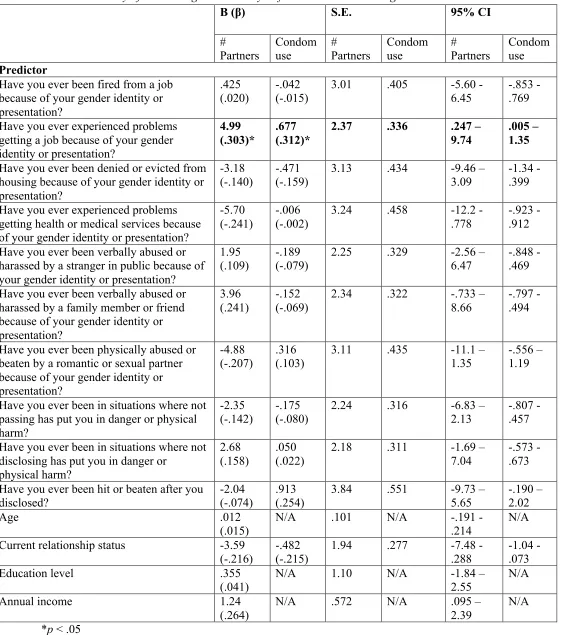
for age, income, education, and current relationship status. Number of partners was positively
associated with experiencing problems getting a job because of gender identity or presentation (β
= .303, 95% CI [.247, 9.74], p < .05).
On average, participants reported using a condom most of the time as the receptive
partner during anal intercourse in the past 6 months. A simple linear regression was calculated to
assess the effect of gender discrimination on condom use as the receptive partner during anal
intercourse with a male partner, while controlling for current relationship status. Condom use
was positively associated with ever experiencing problems getting a job because of gender
identity or presentation (β = .312, 95% CI [.005, 1.35], p < .05).
Research question 4: Gender affirmation and gender discrimination
The mean level of gender affirmation reported was 74 (SD = 12.9, Range = 30-90). Ten
binary logistic regressions were calculated to assess the effect of gender affirmation on gender
discrimination. Each gender discrimination item was assessed as a separate dependent variable,
while controlling for the covariates for each item. There was a positive association between
gender affirmation and ever being in situations where not disclosing put them in danger or
physical harm (AOR = 1.06, 95% CI [1.006, 1.108], p < .05).
A logistic regression was performed to ascertain the effect of gender affirmation on HIV
status, while controlling for age, employment status, and point in transition. Gender affirmation
did not predict HIV status.
Research question 5b: Gender affirmation and Quality of Life
A simple linear regression was calculated to predict Quality of Life based on gender
affirmation, while controlling for current relationship status, point in transition, and education
level, and no significant results were found.
Research question 6: Interactions of gender affirmation and gender discrimination
Moderation Analysis: HIV
There was a significant interaction effect of gender affirmation and ever been verbally
abused or harassed by a stranger in public because of gender identity or presentation (b = .235,
95% CI [.006, .464], p < .05), indicating the relationship between verbal harassment by strangers
and HIV status is moderated by gender affirmation. A simple slopes analysis revealed no
significant relationships when gender affirmation is low, high, or at the mean level (see Figure
1).
Moderation Analysis: Quality of Life
There was a significant interaction effect of gender affirmation and ever being hit or
beaten after disclosing (b = .695, 95% CI [.394, .997], p < .001). This indicates the relationship
between physical violence after disclosing gender status and quality of life is moderated by
A simple slopes analysis revealed when gender affirmation is low, there is a significant
negative relationship between physical violence after disclosing and quality of life (b = -7.05,
95% CI [-12.3, -1.77], p < .01). However, when gender affirmation is high, there is a significant
positive relationship between physical violence after disclosing and quality of life (b = 11.0, 95%
Chapter V: Discussion and Conclusion
The goal of the present study was to determine how gender discrimination relates to HIV
status, affects quality of life, and influences engaging in risky sexual behaviors or substance use.
Additionally, the link between gender discrimination and gender affirmation was assessed and
whether gender affirmation moderated the relationships between gender discrimination and HIV
or quality of life.
Consistent with previous findings (Lombardi et al., 2001), verbal abuse or harassment
was the most reported form of gender discrimination (see Table 2). Verbal abuse or harassment
by strangers in public seems to influence health outcomes and behaviors of African American
transwomen the most. Those who reported experiencing this type of discrimination reported
lower quality of life and higher rates of non-injection drug use. Additionally, there was a
significant interaction effect of HIV status, gender affirmation, and verbal abuse or harassment
by strangers in public, indicating the relationship between HIV status and verbal
abuse/harassment by strangers is moderated by gender affirmation.
Experiencing problems when getting a job due to gender discrimination was the only
item that predicted sexual behavior. Those who reported experiencing discrimination when
getting a job reported more male partners, but also higher rates of condom use. As indicated
previously, sex work is one mechanism transgender women use to survive (Sausa et al., 2007).
The increased number of partners could potentially be due to turning to sex work when they are
Gender discrimination seemed to have the largest effect on quality of life, compared to
other outcomes examined. Those who reported experiencing verbal abuse or harassment by a
stranger in public or being in situations where non-disclosure put them in danger or physical
harm, reported lower levels of quality of life. Surprisingly, however, those who experienced
discrimination when accessing health or medical services reported higher levels of quality of life.
Additionally, it was discovered that gender affirmation moderates the relationship between
physical violence after disclosing and quality of life. Among those who had been hit or beaten
after disclosing, those with higher levels of gender affirmation had significantly higher levels of
quality of life than those who reported low levels of gender affirmation. This indicates that
gender affirmation could be a protective factor for quality of life when experiencing physical
violence after disclosing.
Another surprising result is that transwomen who reported ever being verbally abused or
harassed by a family member or friend were less likely to report having HIV than those who had
not. However, HIV-positive transwomen may have access to more resources and support than
HIV-negative transwomen, which could explain this result. Because there are limited services
available for HIV-negative transwomen, this could make them more susceptible to
discrimination. However, it is not clear why discrimination by family and friends would be
inversely associated with HIV status, so future research could examine transwomen’s
relationships with family and friends, and how HIV status influences that relationship.
Although gender affirmation did not predict HIV status or quality of life, there was a positive
association between gender affirmation and ever being in situations where not disclosing put
society. For instance, if a transwoman does not disclose her gender status before a sexual
encounter, her sexual partner may get angry, which would put her at risk of being harmed.
Limitations
The biggest limitation of the study is it is cross-sectional, meaning that we cannot
determine temporality. For instance, we do not know when the women became HIV positive and
when they experienced discrimination, and may have contracted HIV before experiencing
discrimination. Additionally, the data were collected via self-report, which could potentially
introduce self-report bias. The sample was a convenience sample and relatively small, so our
findings may not generalizable to other transgender populations. Finally, gender affirmation was
measured using the summed items from the Transgender Role Scale (Docter & Fleming, 2001).
This scale is not considered a “gender affirmation” scale, but currently there is no standardized
scale to measure gender affirmation. If gender affirmation had been measured differently, the
results could potentially be different.
Future Research
A standardized measure for gender affirmation needs to be developed in order to
understand if in fact it could be a protective measure. Based on the results of the present study,
gender affirmation may not be as much of a protective factor as previously suggested (Sevelius,
2013). Once a reliable and valid measure for gender affirmation is developed and tested in
transgender populations across the nation, it can be determined what effect, if any, it has on
Additionally, more resources should be made available to transgender women, regardless
of HIV status. There are more resources available to transgender women who are HIV-positive
than for those who are HIV-negative. HIV-positive transwomen have access to a social network,
a source of support, housing programs, job opportunities, and healthcare that HIV-negative
transwomen do not have access to. Very few (if any) resources are available for HIV-negative
transwomen. It should be easier for transwomen to attain gender affirmation, which could be
achieved through legal processes (e.g., name change, driver’s license sex change) and through
increased transgender-positive healthcare (e.g., trans-friendly doctors, safe hormone injections).
Finally, the ultimate goal should be to eliminate transphobia in our society. Transphobia
could be decreased through changing traditional gender norms and increase awareness and
knowledge about transgender women. We are currently moving in a better direction as more
gender-neutral clothing, toys, and home décor are being introduced (Leinbach-Reyhle, 2016),
parents begin choosing gender-neutral names (Robertson, 2015), and younger generations begin
References
Baral, S. D., Poteat, T., Strömdahl, S., Wirtz, A. L., Guadamuz, T. E., & Beyrer, C. (2013).
Worldwide burden of HIV in transgender women: a systematic review and meta-analysis.
The Lancet Infectious Diseases, 13(3), 214-222.
Benotsch, E. G., Zimmerman, R., Cathers, L., McNulty, S., Pierce, J., Heck, T., & Snipes, D.
(2013). Non-medical use of prescription drugs, polysubstance use, and mental health in
transgender adults. Drug and Alcohol Dependence, 132(1-2), 391-394.
Bockting, W. O., Miner, M. H., Swinburne Romine, R. E., Hamilton, A., & Coleman, E. (2013).
Stigma, mental health, and resilience in an online sample of the US transgender
population. American Journal of Public Health, 103(5), 943-951.
Budge, S. L., Adelson, J. L., & Howard, K. A. S. (2013). Anxiety and depression in transgender
individuals: The roles of transition status, loss, social support, and coping. Journal of
Consulting and Clinical Psychology, 81(3), 545-557.
Clements-Noelle, K., Marx, R., & Katz, M. (2001). HIV prevalence, risk behaviors, health care
use, and mental health status of transgender persons: Implications for public health
intervention. American Journal of Public Health, 91(6), 915-921.
Clements-Noelle, K., Marx, R., & Katz, M. (2006). Attempted suicide among transgender
persons: The influence of gender-based discrimination and victimization. Journal of
Homosexuality, 51(3), 53-69.
Conron, K. J., Scott, G., Stowell, G. S., & Landers, S. J. (2011). Transgender health in
Massachusetts: Results from a household probability sample of adults. American Journal
of Public Health, 102(1), 118-122.
the identities and experiences of trans persons. Canadian Journal of Human Sexuality, 23(2),
60-74.
Diener, E., Emmons, R.A., Larsen, R.J., & Griffin, S. (1985). The satisfaction with life scale. Journal of
Personality Assessment, 49(1), 71-75.
Docter, R.F. & Fleming, J.S. (2001). Measures of transgender behavior. Archives of Sexual Behavior,
30(3), 255-271.
Factor, R.J. & Rothblum, E.D. (2008). A study of transgender adults and their non-transgender siblings
on demographic characteristics, social support, and experiences of violence. Journal of LGBT
Health Research, 3(3), 11-30.
Fletcher, J.B., Kisler, K.A., & Reback, C.J. (2014). Housing status and HIV risk behaviors among
transgender women in Los Angeles. Archives of Sexual Behavior, 43(8), 1651-1661.
Fredriksen-Goldsen, K.I., Cook-Daniels, L., Kim, H.J., Erosheva, E.A., Emlet, C.A., Hoy-Ellis, C.P.,
Goldsen, J., & Muraco, A. (2014). Physical and mental health of transgender older adults: An
at-risk and underserved population. The Gerontologist, 54(3), 488-500.
Gamarel, K. E., Mereish, E. E., Manning, D., Iwamoto, M., Operario, D., & Nemoto, T. (2016).
Minority stress, smoking patterns, and cessation attempts: Findings from a
community-sample of transgender women in the San Francisco Bay Area. Nicotine & Tobacco
Research, 18(3), 306-313.
Goldblum, P., Testa, R. J., Pflum, S., Hendricks, M. L., Bradford, J., & Bongar, B. (2012). The
relationship between gender-based victimization and suicide attempts in transgender
Golub, S.A., Walker, J.J., Longmire-Avital, B., Bimbi, D.S., & Parsons, J.T. (2010). The role of
religiosity, social support, and stress-related growth in protecting against HIV risk among
transgender women. Journal of Health Psychology, 15(8), 1135-1144.
Graham, L. F. (2014). Navigating community institutions: Black transgender women’s experiences in
schools, the criminal justice system, and churches. Sexuality Research & Social Policy: A
Journal of the NSRC, 11(4), 274-287.
Grant, J.M., Mottet L.A, Tanis, J. Harrison, J., Herman, J.L., & Keisling, M. (2011) Injustice at Every
Turn: A Report of the National Transgender Discrimination Survey. Washington: National
Center for Transgender Equality and National Gay and Lesbian Task Force.
Herbst, J. H., Jacobs, E. D., Finlayson, T. J., McKleroy, V. S., Neumann, M. S., & Crepaz, N.
(2008). Estimating HIV prevalence and risk behaviors of transgender persons in the
United States: A systematic review. AIDS and Behavior, 12(1), 1-17.
Jefferson, K., Neilands, T. B., & Sevelius, J. (2013). Transgender women of color:
Discrimination and depression symptoms. Ethnicity & Inequalities in Health & Social
Care, 6(4), 121-136.
Lakey, B. & Cohen, S. (2000). Social support theory and measurement. In Social Support
Measures (pp. 29-52).
Laughlin, S. (2016, March 11). Gen Z goes beyond gender binaries in new Innovation Group
data. J. Walter Thompson Intelligence. Retrieved from
https://www.jwtintelligence.com/2016/03/gen-z-goes-beyond-gender-binaries-in-new-innovation-group-data/
Leinbach-Reyhle, N. (2016, February 9). Target to Roll Out More Gender Neutral Products.
http://www.forbes.com/sites/nicoleleinbachreyhle/2016/02/09/target-to-roll-out-more-gender-neutral-products-blurring-the-line-between-boys-and-girls/#36acd7fc5b6f
Levitt, H.M. & Ippolito, M.R. (2014). Being transgender: The experience of transgender identity
development. Journal of Homosexuality, 61(12), 1727-1758.
Lombardi, E. L., Wilchins, R. A., Priesing, D., & Malouf, D. (2001). Gender violence: Transgender
experiences with violence and discrimination. Journal of Homosexuality, 42(1), 89-101.
Machtinger, E.L., Haberer, J.E., Wilson, T.C., Weiss, D.S. (2012). Recent trauma is associated with
antiretroviral failure and HIV transmission risk behavior among HIV-positive women and
female-identified transgenders. AIDS and Behavior, 16(8), 2160-2170.
Resilience [Def. 1]. (n.d.) Merriam-Webster Online. In Merriam-Webster. Retrieved February 2016
from http://www.merriam-webster.com/dictionary/resilience.
Minter, S., & Daley, C. (2003). TransRealities: A legal needs assessment of San Francisco’s
transgender communities . San Francisco: National Center for Lesbian Rights; The Transgender
Law Center.
Nemoto, T., Bödeker, B., & Iwamoto, M. (2011). Social Support, Exposure to Violence and
Transphobia, and Correlates of Depression Among Male-to-Female Transgender Women With a
History of Sex Work. American Journal of Public Health, 101(10), 1980-1988.
Nuttbrock, L., Bockting, W., Hwahng, S., Rosenblum, A., Mason, M., Macri, M., & Becker, J. (2009).
Gender identity affirmation among male-to-female transgender persons: A life course analysis
across types of relationships and cultural/lifestyle factors. Sexual and Relationship Therapy, 24,
108–125.
Richmond, K.A., Burnes, T., & Carroll, K. (2012). Lost in trans-lation: Interpreting systems of trauma
Robertson, C. (2015, June 22). Proof that 2015 is the year of the “gender-neutral baby”. Retrieved from
http://blogs.babycenter.com/mom_stories/proof-that-2015-is-20150622the-year-of-the-gender-neutral-baby/
Roen, K. (2002). 'Either/or' and 'both/neither': Discursive tensions in transgender politics. Signs, 27(2),
501-522.
Roller, C.G., Sedlak, C., & Draucker, C.B. (2015). Navigating the system: How transgender individuals
engage in health care services. Journal of Nursing Scholarship, 47(5), 417-424.
Sausa, L. A., Keatley, J., & Operario, D. (2007). Perceived risks and benefits of sex work among
transgender women of color in San Francisco. Archives of Sexual Behavior, 36(6),
768-777.
Sevelius, J.M. (2013). Gender affirmation: A framework for conceptualizing risk behavior
among transgender women of color. Sex Roles, 68(11-12), 675-689.
Singh, A. A., & McKleroy, V. S. (2011). “Just getting out of bed is a revolutionary act”: The
resilience of transgender people of color who have survived traumatic life events.
Traumatology, 17(2), 34-44.
Stotzer, R.L. (2008). Gender identity and hate crimes: Violence against transgender people in
Los Angeles County. Sexuality Research and Social Policy, 5(1), 43-52.
White Hughto, J.M. & Reisner, S.L. (2016). A systematic review of the effects of hormone
therapy on psychological functioning and quality of life in transgender individuals.
Table 1. Participant characteristics
Variable N (%)
Highest education level
Grades 1-8 1 (1)
Grades 9-11 12 (16)
Grade 12/GED 29 (38)
Some College, Associate’s Degree, or Technical Degree 26 (34)
Bachelor’s Degree 7 (9)
Any Post-Graduate Studies 2 (3) Employment status
Employed full-time 16 (21)
Employed part-time 9 (12)
A full-time student 5 (7)
Disabled for work 13 (17)
Unemployed 31 (40)
Other 3 (4)
Annual income
Less than $10,000 47 (61)
$10,000-$14,999 6 (8)
$15,000-$19,999 7 (9)
$20,000-$29,999 4 (5)
$30,000-$39,999 4 (5)
$40,000-$49,999 4 (5)
$50,000 or more 2 (3)
Don’t know 3 (4)
Current relationship status
Not in a relationship 44 (57)
In a relationship 33 (43)
Stage of transition process
I have not started the transition process yet 8 (11) I recently started the transition process 13 (17) I have somewhat transitioned to being female 19 (25) I have mostly transitioned to being female 22 (29) I have completed the transition process 14 (18) Sexual/gender identity to others
Heterosexual woman 53 (69)
Lesbian woman 2 (3)
Heterosexual man 0 (0)
Gay man 7 (9)
Bisexual woman 3 (4)
Bisexual man 1 (1)
Other – included answers such as transgender, transwoman, no label 11 (14) HIV status
HIV-negative 24 (33)
Table 2. Descriptive Statistics for Gender Discrimination Items
Gender Discrimination Item N (%) Mean SD
Have you ever been fired from a job because of your gender identity or presentation?
13 (17) 1.17 .379
Have you ever experienced problems getting a job because of your gender identity or presentation?
34 (45) 1.45 .501
Have you ever been denied or evicted from housing because of your gender identity or presentation?
11 (14) 1.14 .352
Have you ever experienced problems getting health or medical services because of your gender identity or presentation?
10 (13) 1.13 .338
Have you ever been verbally abused or harassed by a stranger in public because of your gender identity or presentation?
52 (68) 1.68 .471
Have you ever been verbally abused or harassed by a family member or friend because of your gender identity or presentation?
41 (53) 1.53 .502
Have you ever been physically abused or beaten by a romantic or sexual partner because of your gender identity or presentation?
11 (14) 1.14 .352
Have you ever been in situations where not passing has put you in danger or physical harm?
31 (41) 1.41 .495
Have you ever been in situations where not
disclosing has put you in danger or physical harm?
27 (36) 1.36 .483
Have you ever been hit or beaten after you disclosed? 7 (9) 1.09 .291
Table 3. Summary of Logistic Regression Analysis for Variables Predicting HIV Status
Predictor B S.E. AOR 95% CI
Have you ever been fired from a job because of your gender identity or presentation?
.958 1.17 2.61 .264 - 25.7
Have you ever experienced problems getting a job
because of your gender identity or presentation? -1.48 .897 .228 .039 - 1.32 Have you ever been denied or evicted from housing
because of your gender identity or presentation? .049 1.086 1.05 .125 - 8.83 Have you ever experienced problems getting health or
medical services because of your gender identity or presentation?
.579 1.504 1.79 .094 - 34.0
Have you ever been verbally abused or harassed by a stranger in public because of your gender identity or presentation?
.926 .921 2.52 .415 - 15.3
Have you ever been verbally abused or harassed by a family member or friend because of your gender identity or presentation?
-2.273 .932 .103* .017 - .640
Have you ever been physically abused or beaten by a romantic or sexual partner because of your gender identity or presentation?
-.120 1.05 .887 .114 - 6.88
Have you ever been in situations where not passing has
put you in danger or physical harm? 1.534 .897 4.638 .799 - 26.9 Have you ever been in situations where not disclosing
has put you in danger or physical harm? .171 .820 1.186 .238 - 5.92 Have you ever been hit or beaten after you disclosed? -1.642 1.431 .194 .012 - 3.20
Age .097 .045 1.10 1.01 – 1.20
Table 4.Summary of Linear Regression Analysis for Variables Predicting Quality of Life
Predictor B β S.E. 95% CI
Have you ever been fired from a job because of your gender identity or presentation?
2.33 .115 2.66 -2.99 – 7.65
Have you ever experienced problems getting a job
because of your gender identity or presentation? -.332 -.021 2.13 -4.59 – 3.93 Have you ever been denied or evicted from housing
because of your gender identity or presentation? 1.80 .083 2.80 -3.80 – 7.40 Have you ever experienced problems getting health or
medical services because of your gender identity or presentation?
6.04 .268* 2.95 .139 – 11.9
Have you ever been verbally abused or harassed by a stranger in public because of your gender identity or presentation?
-5.52 -.327** 2.05 -9.63 – -1.41
Have you ever been verbally abused or harassed by a family member or friend because of your gender identity or presentation?
-.507 -.033 1.98 -4.47 – 3.46
Have you ever been physically abused or beaten by a romantic or sexual partner because of your gender identity or presentation?
-1.36 -.060 2.78 -6.91 – 4.18
Have you ever been in situations where not passing has
put you in danger or physical harm? -1.69 -.108 1.92 -5.53 – 2.15 Have you ever been in situations where not disclosing
Table 5. Summary of Linear Regression Analysis for Variables Predicting Sexual Behavior
B (β) S.E. 95% CI
#
Partners Condom use # Partners Condom use # Partners Condom use
Predictor
Have you ever been fired from a job because of your gender identity or presentation?
.425 (.020)
-.042 (-.015)
3.01 .405 -5.60 - 6.45
-.853 - .769
Have you ever experienced problems getting a job because of your gender identity or presentation?
4.99 (.303)*
.677 (.312)*
2.37 .336 .247 –
9.74
.005 – 1.35
Have you ever been denied or evicted from housing because of your gender identity or presentation?
-3.18
(-.140) -.471 (-.159) 3.13 .434 -9.46 – 3.09 -1.34 - .399
Have you ever experienced problems getting health or medical services because of your gender identity or presentation?
-5.70
(-.241) -.006 (-.002) 3.24 .458 -12.2 - .778 -.923 - .912
Have you ever been verbally abused or harassed by a stranger in public because of your gender identity or presentation?
1.95
(.109) -.189 (-.079) 2.25 .329 -2.56 – 6.47 -.848 - .469
Have you ever been verbally abused or harassed by a family member or friend because of your gender identity or presentation?
3.96 (.241)
-.152 (-.069)
2.34 .322 -.733 – 8.66
-.797 - .494
Have you ever been physically abused or beaten by a romantic or sexual partner because of your gender identity or presentation?
-4.88 (-.207)
.316 (.103)
3.11 .435 -11.1 – 1.35
-.556 – 1.19
Have you ever been in situations where not passing has put you in danger or physical harm?
-2.35
(-.142) -.175 (-.080) 2.24 .316 -6.83 – 2.13 -.807 - .457
Have you ever been in situations where not disclosing has put you in danger or
physical harm?
2.68 (.158)
.050 (.022)
2.18 .311 -1.69 – 7.04
-.573 - .673
Have you ever been hit or beaten after you disclosed?
-2.04 (-.074)
.913 (.254)
3.84 .551 -9.73 – 5.65
-.190 – 2.02
Age .012
(.015)
N/A .101 N/A -.191 - .214
N/A
Current relationship status -3.59 (-.216)
-.482 (-.215)
1.94 .277 -7.48 - .288
-1.04 - .073 Education level .355
(.041) N/A 1.10 N/A -1.84 – 2.55 N/A
Annual income 1.24
(.264)
N/A .572 N/A .095 – 2.39
N/A