Georgia State University
ScholarWorks @ Georgia State University
Public Health Theses School of Public Health
Fall 1-8-2016
An analysis of micronutrient consumption of
mothers using the Demographic and Health
Surveys of the Dominican Republic
Genevieve N. Prieur Keys
Georgia State University
Follow this and additional works at:https://scholarworks.gsu.edu/iph_theses
This Thesis is brought to you for free and open access by the School of Public Health at ScholarWorks @ Georgia State University. It has been accepted for inclusion in Public Health Theses by an authorized administrator of ScholarWorks @ Georgia State University. For more information, please contact [email protected].
Recommended Citation
Prieur Keys, Genevieve N., "An analysis of micronutrient consumption of mothers using the Demographic and Health Surveys of the Dominican Republic." Thesis, Georgia State University, 2016.
An analysis of micronutrient consumption of mothers using the Demographic and Health
Surveys of the Dominican Republic
by
Genevieve Natalie Prieur Keys M.P.H., Georgia State University
B.A., Mercer University 12-7-15
A Thesis Submitted to the Graduate Faculty of Georgia State University in Partial Fulfillment
of the
Requirements for the Degree MASTER OF PUBLIC HEALTH
ATLANTA, GEORGIA 30303
An analysis of micronutrient consumption of mothers using the Demographic and Health Surveys of the Dominican Republic
by
Genevieve Natalie Prieur Keys
Approved:
Solomon Ike Okosun, PhD Committee Chair
Kim Renee Ramsey-White, PhD Committee Member
12/7/2015 Date
Acknowledgments
I extend a great thank you to my friends and family who supported me through this process. I realize I am truly blessed to have you in my life during these times. A very special thank you to my husband Shane Keys for his unwavering support of me though this journey.
I thank Dr. Solomon Okosun, my committee chair and my professor who inspired me to pursue my passion for chronic disease and nutrition. It was through his guidance and immense patience I was able to complete this work. And I thank Dr. Kim White, my professor and committee member, who inspired my interest in global health, and
without her support and her knowledge I would not have gained the professional successes I experience today.
Author’s Statement Page
In presenting this thesis as a partial fulfillment of the requirements for an advanced degree from Georgia State University, I agree that the Library of the University shall make it available for inspection and circulation in accordance with its regulations governing materials of this type. I agree that permission to quote from, to copy from, or to publish this thesis may be granted by the author or, in his/her absence, by the professor under whose direction it was written, or in his/her absence, by the Associate Dean, School of Public Health. Such quoting, copying, or publishing must be solely for scholarly purposes and will not involve potential financial gain. It is understood that any copying from or publication of this dissertation which involves potential financial gain will not be allowed without written permission of the author.
Genevieve Natalie Prieur Keys Signature of Author
TABLE OF CONTENTS
ACKNOWLEDGMENTS...iv
LIST OF TABLES………...vi
LIST OF FIGURES………...vii
INTRODUCTION...4
METHODS ………...8
Data Source ……….8
Study Population………..………...8
Design and Procedure...9
Recodes...…………...9
Dependent Variables...10
Main Independent Variables...11
Other Independent Variables...11
Statistical Analysis...11
RESULTS...12
Descriptive Analysis………..………...12
Logistic Regression ………..………...15
DISCUSSION………….……….………..22
REFERENCES...27
List of Tables
Table 1. Socio-demographic characteristics of mothers stratified by type of prenatal care. Table 2. Nutrient dense food consumption by prenatal care type.
Table 3. Nutrient dense food consumption by prenatal care type.
Table 4. Multiple logistic regression analysis of the association between prenatal care type and consumption of vitamin A rich foods.
Table 5. Multiple logistic regression analysis of the association between prenatal care type and consumption of iodine rich foods.
Table 6. Multiple logistic regression analysis between prenatal care type and consumption of iron rich foods.
Table 7. Multiple logistic regression analysis of association between prenatal care type and consumption of any one-micronutrient rich food.
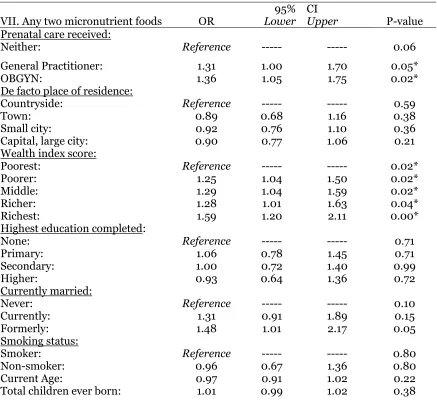
Table 8. Multiple logistic regression analysis of association between prenatal care type and consumption of any two-micronutrient rich foods.
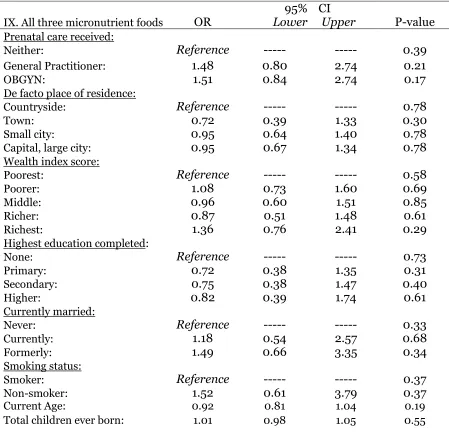
Table 9. Multiple logistic regression on association of prenatal care type and consumption of all three micronutrient rich foods.
List of Figures
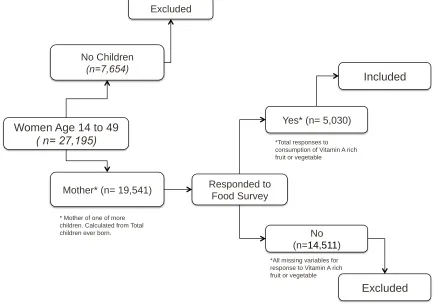
Figure 1. Sample selection flow chart for women of the Dominican Republic who were
mothers and participated in the 24-hour food recall section of the 2007 DHS survey.
Running Head: PRENATAL CARE AND MICRONUTRIENT DENSE FOODS 1
An analysis of micronutrient consumption of mothers using the Demographic and Health Surveys of the Dominican Republic
Prenatal Care and Micronutrient Dense Foods 2 ABSTRACT
BACKGROUND: Micronutrient deficiency (vitamin A, iron, and iodine) is highly
prevalent in the Dominican Republic as indicated by food consumption patterns, which are not reflective of consumption of micronutrient dense foods. Previous studies (Neves, Ramalho, Padilha, & Saunders, 2014) have shown that nutrition education offered by prenatal providers has a positive impact on nutrition outcomes in mothers and children. Little research exists which examines the difference in micronutrient consumption among mothers in the Dominican Republic. The aim of this study was to determine differences in micronutrient rich food consumption of mothers in the Dominican Republic based on type of prenatal provider (General practitioner,
Obstetrics/gynecology (OBGYN) or no Provider).
METHODS: The 2007 Dominican Republic DHS dataset was employed for this study.
Odds ratios from multivariate logistic regression analyses were used to determine association between sources of prenatal service and micronutrient food intake.
Statistical adjustments were made for residence, wealth index, education, marital status, smoking age and number children ever had.
RESULTS: Compared with mothers who did not utilize any of the prenatal services,
mothers who sought care from General practitioners and OBGYN had increased odds of consuming vitamin A, iodine and iron micronutrient rich foods, adjusting for residence, wealth index, education, marital status, smoking age and mother’s total number of children. However, the associations were not statistically significant. Compared to mothers who did not use prenatal care, mothers who used the services of General practitioners and OB/GYNs had greater odds, (OR=1.09; 95% CI:0.85-1.41) and
Prenatal Care and Micronutrient Dense Foods 3
DISCUSSION: Improvements and access to programs providing nutrition education
for prenatal care providers, and medical and nutrition assistance to poor mothers may help to increase micronutrient rich food consumption in the Dominican Republic.
Prenatal Care and Micronutrient Dense Foods 4
An analysis of micronutrient consumption of mothers using the Demographic and Health Surveys of the Dominican Republic
According to the World Health Organization, 45% of all child deaths worldwide are linked to malnutrition (WHO, n.d), a condition that occurs as a result of deficit of nutrients such as calories, protein, vitamins or minerals. When malnutrition occurs during pregnancy or during the first years of life, it can result in stunting, underweight, wasting, lifelong developmental delays, disability or death (Caulfield et al., 2006). In addition, it puts children at a higher risk of experiencing infectious illnesses like diarrhea, pneumonia and malaria (WHO, n.d.). Additional studies on the long-term effects of stunting have shown associated negative effects on school achievement, economic productivity and maternal reproductive outcomes into adulthood (Dewey & Begum, 2011).
The type of malnutrition that is specific to nutrients only found in food is called micronutrient deficiency, and it can have a lifelong negative impact on an individual’s overall health. On a global scale the three most common types of micronutrient
deficiencies are vitamin A, iodine, and iron. Because micronutrients are obtained only through diet, these deficiencies tend to disproportionately affect those who are food insecure. The first most prevalent is Vitamin A deficiency (VAD) which increases the risk of disease and death from severe infections, can result in anemia in women and children, it is the leading cause of preventable blindness in children, and causes night blindness in pregnant women (WHO, 2009). The other leading micronutrient
Prenatal Care and Micronutrient Dense Foods 5
deficiency is linked to decreased work performance, negative pregnancy outcomes, and cognitive impairments (National Research Council, 2001). All three of these
micronutrient deficiencies are prevalent in the Dominican Republic. According to The Food and Agriculture Organization, rates of micronutrient deficiency in the Dominican Republic were still high in the year 2003. At the national level, 19% of all school age children suffered from stunting, 5% suffered from the micronutrient deficiency goiter (due to iodine deficiency), 23% suffered from low serum retinol (low level of vitamin A), and 31% of children aged 1-14 years suffered from anemia (due to iron deficiency) with a higher prevalence seen in urban areas (FAO, 2003).
Consumption of certain foods is necessary to maintain adequate levels of micronutrients in the body however the pattern of consumption in the Dominican Republic suggests a lack of micronutrient rich food intake. According to FAO (2003) the consumption of cereals and fats (animal and vegetable) has increased, and starchy tubers, fruits and vegetables have decreased. Specifically, rice and sugar were listed as the top two most available foods for consumption in 2011 (FAOSTATS, 2014) and following that were vegetable oils and wheat products. At the bottom of the list was chicken followed by fruits and then milk. This data indicates that the food available to the population tends to be shelf-stable carbohydrate and fat dense foods.
The introduction of nutrition education for patients during prenatal visits and the education of prenatal healthcare providers could be an effective approach to decrease micronutrient deficiencies in mothers and their children. In a study on prenatal
nutritional care and the occurrence of night blindness, Neves et al (2014) conducted two separate cross sectional studies of postpartum and pregnant women in a public
Prenatal Care and Micronutrient Dense Foods
treatment group with a nutritionist when compared to the control group which did not receive any nutrition education. Given the success of education with mothers, a
healthcare worker’s involvement in nutrition education may also improve health
outcomes of their children. Another review by Sunguya et al (2013) examined nutrition
training of healthcare workers and its effects on child feeding frequency, caloric intake,
and dietary diversity for children between the ages of six months and two years. Results
of the study showed that nutrition training of healthcare workers improved daily caloric
intake, and frequency of feeding of children in their care. Additional improvements in
dietary diversity, an indicator of micronutrient adequacy in pregnant women (Ali, Thaver & Khan, 2014), were seen in trials which took place in India, Brazil, Pakistan, Peru and China. These studies show that given the proper information healthcare workers can influence the diets of new or expectant mothers resulting in improved health outcomes in their children.
According to the CDC’s Global Health Initiative (GHI) for the Dominican Republic (2015), the Dominican Republic has a wide-ranging infrastructure with extensive access to antenatal care, which is able to reach even very isolated areas of the country. The Dominican Republic has the lowest rate of absence of prenatal care use (1.5%) when compared to other Latin American countries (Souza et al, 2007). It
possesses over 1,100 primary health care centers, 200 hospitals, and a workforce of over 14,00 physicians for a population of 10.4 million. In addition there is a subsidized
Prenatal Care and Micronutrient Dense Foods 7
poor quality of health care, the benefits of the framework are almost entirely mitigated. The results of poor quality of care can be seen in the high mortality rate among mothers and children (92 maternal deaths per 100,000 live births in the Dominican Republic from 2011 to 2015). Because of the high maternal mortality and because of women’s central role to the health of families and communities, it is a core objective of the GHI to improve the health of women and girls. It is a specific concern to address the quality of services that women and girls are receiving by focusing on building and strengthening integrated health services and encouraging the utilization of healthy behaviors among the population. In order to accomplish improved quality of care for women and girls, health care providers must have the necessary tools and training. It is possible that implementation of an intervention similar to Sunguya et al (2014), in which healthcare providers were trained on nutrition education for pregnant mothers, could cause a
significant decrease in micronutrient deficiencies in both mothers and their children.
Given the existing healthcare framework in the Dominican Republic nutrition education interventions could provide an enormous opportunity for improvement in nutrition and general health outcomes for mothers and their children. The purpose of this study was to compare self-reported micronutrient rich food consumption of women in the Dominican Republic who received (1) prenatal care with a general practitioner (2) prenatal care with an OBGYN or (3) care from anyone other than an OBGYN or general practitioners (from here on called “neither”). Through this analysis of DHS data, the aim was to identify differences in micronutrient rich food consumption by healthcare
delivery and maternal behaviors. It was believed that mothers who received prenatal care through an OBGYN or general practitioner would show increased odds of
Prenatal Care and Micronutrient Dense Foods 8
METHODS
Data Source
The 2007 Dominican Republic Demographic and Health Survey (DHS) dataset was used for this study. Authorization to use the dataset was obtained from the Georgia State University Institutional Review Board. DHS is completed every five years with a sample size ranging from five thousand to thirty thousand households. The DHS uses a two-stage probability sample design where 300 to 500 clusters are selected and then 20 to 30 households in each cluster are randomly selected for interviews. Once households are identified, the local data collection staffs are trained on data collection procedures. The DHS maintains high data quality through out the survey process, for example field editors verifies responses on the questionnaires and assists collectors in returning to the interviewee to gain clarification or corrections. Interviews are also observed throughout the survey process by senior survey staff to ensure data quality.
Study Population
[image:17.612.71.507.74.381.2]
Prenatal Care and Micronutrient Dense Foods 9
Figure 1. Sample selection flow chart for women of the Dominican Republic who were mothers and participated in the 24-hour food recall section of the 2007 DHS survey.
Design and Procedure
Recodes
Current age (V012) was recorded in years and was not recoded for this analysis. Defacto place of residence (V134) is the type of place in which the respondent completed the interview. Defacto place of residence had four possible responses: urban
areas/capital cities (population > 1 million), small cities (population > 50,000), towns (other urban areas), and countryside (all rural areas), and it was not recoded. Wealth index (V190) is an alternate to household income and did not undergo any recoding. Highest education level attended (V106) was divided into the following categories: no education, primary, secondary and higher. Currently married was renamed from variable V502 in which respondents had three options, currently, never or formerly married. The variable “Does not smoke (V463Z” was renamed “Non-
Women Age 14 to 49 ( n= 27,195)
No Children
(n=7,654)
Mother* (n= 19,541)
Excluded
Responded to Food Survey
No (n=14,511)
Excluded
Yes* (n= 5,030)
Included
* Mother of one of more children. Calculated from Total children ever born.
*Total responses to consumption of Vitamin A rich fruit or vegetable
Prenatal Care and Micronutrient Dense Foods 10
smoker” and did not under go any recoding. Total number of children ever born (V201) did not get recoded for this analysis.
The following variables came from the DHS twenty-four hour food recall portion of the DHS. A new variable, Consumption of vitamin A rich foods, was recoded into yes or no from the two variables Mother had pumpkin, carrots, squash (yellow or orange inside)(V472I) and/or Mother had mangoes, papaya, other vitamin A fruits (V472K). For the purpose of this study the focus was on vitamin A carotenoids in order to avoid confounding with consumption of meat products which both contain lesser amounts of iron and iodine. Consumption of iodine rich foods was renamed from the variable Mother had fish or shellfish (V472N). Marine fish, shellfish and foods which are grown in iodide-rich soils are food sources with high levels of iodine (National Research Council, 2001), however for the purposes of this study only marine fish and shellfish were considered a source of consumption due to possible confounding with
consumption of fruits and vegetables which are considered vitamin A and iron rich. The new variable named Consumption of iron rich foods was recoded into yes or no from the two variables Mother had meat (beef, pork, lamb, chicken, etc) (V472H) and/or
Mother had liver, heart, other organs (V472M). For the purpose of this study this variable concentrated on heme-iron sources (animal) because they are more
bioavailable than plant based non-heme iron (National Research Council, 2001). Although seafood is considered a source of iron, it is not included in this study to
decrease confounding results with consumption of iodine dense foods.
Dependent Variables
Prenatal Care and Micronutrient Dense Foods 11
micronutrient rich food, (e) 2 or more micronutrient rich foods and (f) consumption of all 3 micronutrient rich foods.
Main Independent Variables
The main independent variable for this study was maternal source of prenatal care. Sources of prenatal care were based on the most recent birth as reported by mothers. From the household data set the variable M2A-N (type of person who gave prenatal care to respondent before the birth of their youngest child) was recoded into the three categories: General Practitioner, OBGYN and Neither. Neither category
included other sources of prenatal care such as nurse/midwife, doctor of other specialty, doctor respondent does not know, traditional birth attendant, other response, and no one.
Other Independent Variables
The following independent variables were included in this study: maternal current age, defacto place of residence, wealth index score, highest level of education attended, birth, total number of children ever born.
Statistical Analysis
Version 20 of IBM's Statistical Package for the Social Sciences (SPSS) was
utilized to complete the analysis. One-Way Analysis of Variance (ANOVA) and Pearson’s Chi-square tests were used to compare continuous and categorical variables
Prenatal Care and Micronutrient Dense Foods 12
than these sources. In all analyses, statistical adjustments were made for defacto place of residence, wealth index, highest education level, marriage status, smoking, current age and total children ever born.
RESULTS
Descriptive Analysis
[image:20.612.79.554.329.695.2]The following tables give an overview of socio-demographics and maternal characteristics of all mothers that have a response for the recoded variable, consumed vitamin A rich food.
Table 1. Socio-demographic characteristics of mothers stratified by type of prenatal
care.
I. Socio- demographic Total Neither GP OBGYN P-value
Sample size (n%) 5030 446 (8.4) (25.2) 1336 3248 (61.2)
Current Age in years(SD) 25.6 (6.1) 25.5 (6.6) 25.0 (6.3) 25.9 (6.0) <.001*
De facto place of residence (n%) <.001*
Capital, Large city: 383 23 (6.0) 63 (16.4) 297 (77.5)
Small city: 1016 70 (6.9) 163 (16.0) 783 (77.1)
Town: 1428 95 (6.7) (28.0) 400 933 (65.3)
Countryside: 2203 258 (11.7) 710 (32.2) 1235 (56.1)
Wealth index (n%) <.001*
Poorest: 1843 279 (15.1) 713 (38.7) 851 (46.2)
Poorer: 1151 86 (7.5) 324 (28.1) 741 (64.4)
Middle: 888 44 (5.0) 162 (18.2) 682 (76.8)
Richer: 697 24 (3.4) 105 (15.1) 568 (81.5)
Richest: 451 13 (2.9) 32 (7.1) 406 (90.0)
Highest education level (n%) <.001*
None: 289 67 (23.2) 119 (41.2) 103 (35.6)
Primary: 2116 261 (12.3) 727 (34.4) 1128 (53.3)
Secondary: 1855 97 (5.2) 404 (21.8) 1354 (73.0)
Prenatal Care and Micronutrient Dense Foods 13
As shown in Table 1, the current age of mothers differed significantly by type of prenatal care F (2, 5030) =10.23, p <. 001). Mean age for all mothers included in the analysis was 25.6 years (SD= 6.11). Mothers who received prenatal care with OBGYNs were older (M=25.9, SD= 6.0) than those who used a general practitioner (M=25.0, SD=6.3), or neither (M=25.5, SD=6.6). For all Defacto place of residence prenatal care with an OBGYN was reported more frequently than from a general practitioner, or
neither. Prenatal care differed significantly by de facto place of residence with a X2 (6, N = 5030) = 180.3, p < .001. For all wealth index groups prenatal care with an OBGYN was reported more frequently than general practitioner, and neither. A comparison of
prenatal care type by wealth index showed significant difference between the groups, X2 (8, N = 5030) = 559.5, p < .001. The number of participants that received prenatal care from an OBGYN, general practitioner or neither differed significantly across education
[image:21.612.72.530.528.644.2]groups [X2 (6, N = 5030) = 466.9, p < .001]. The majority of the respondents completed primary school, followed by secondary, higher, and no education respectively.
Table 2. Maternal health characteristics of mothers stratified by type of prenatal care
II. Maternal health Total Neither GP OBGYN P-value
Sample size (n%) 5030 (100) 446 (8.4) 1336 (25.2) 3248 (61.2)
Age in years at first
birth (SD) 19.4 (4.1) 18.6 (4.0) 18.5 (3.5) 19.9 (4.3) <.001* Total number of
children (SD) 2.5 (1.6) 2.9 (1.8) 2.7 (1.8) 2.4 (1.5) <.001*
Prenatal Care and Micronutrient Dense Foods 14
birth and prenatal care type [F (2, 5030) =64.29, p <.001]. Mothers who received prenatal care by an OBGYN (M=19.9, SD =4.3) were older at first birth than those who saw a general practitioner (M=18.5, SD=3.5) and those in the neither group (M=18.6, SD=4.0). The average number of children ever born for all respondents was 2.5 (SD=1.6). There was a significant effect for type of prenatal care and total number of children ever born [F (2, 5030) =34.41 , p<.001]. Women in the neither group had the most children ever born (M=2.9, SD=1.8), followed by those who saw a general
[image:22.612.73.524.343.564.2]practitioner (M=2.7, SD= 1.8), and then those who saw an OBGYN (M=2.4, SD= 1.5) for prenatal care.
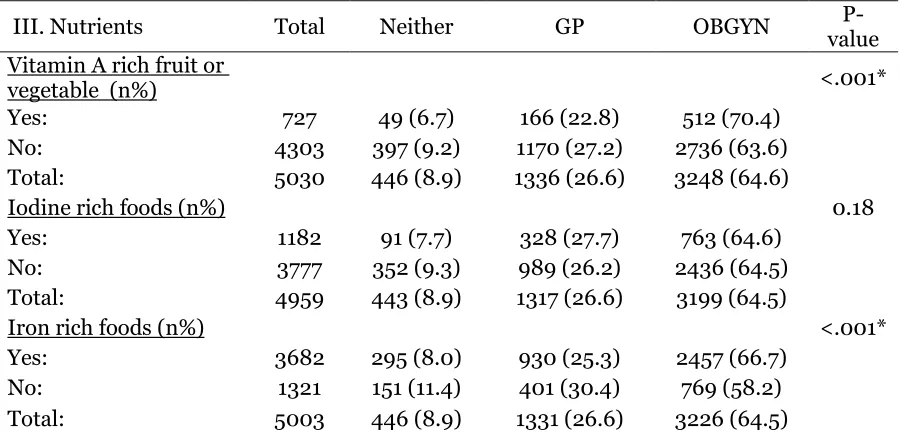
Table 3. Nutrient dense food consumption by prenatal care type
III. Nutrients Total Neither GP OBGYN value
P-Vitamin A rich fruit or
vegetable (n%) <.001*
Yes: 727 49 (6.7) 166 (22.8) 512 (70.4)
No: 4303 397 (9.2) 1170 (27.2) 2736 (63.6)
Total: 5030 446 (8.9) 1336 (26.6) 3248 (64.6)
Iodine rich foods (n%) 0.18
Yes: 1182 91 (7.7) 328 (27.7) 763 (64.6)
No: 3777 352 (9.3) 989 (26.2) 2436 (64.5)
Total: 4959 443 (8.9) 1317 (26.6) 3199 (64.5)
Iron rich foods (n%) <.001*
Yes: 3682 295 (8.0) 930 (25.3) 2457 (66.7)
No: 1321 151 (11.4) 401 (30.4) 769 (58.2)
Total: 5003 446 (8.9) 1331 (26.6) 3226 (64.5)
Table 3 compares micronutrient food consumption across types of prenatal care. As shown, there was a significant difference between groups with respect to reporting
Prenatal Care and Micronutrient Dense Foods 15
foods in the last 24 hours and a significant difference was shown between prenatal care
groups [X 2
(2, N = 5003) = 33.18, p < .001].
Logistic regression
[image:23.612.83.509.365.758.2]Logistic regression analysis was used to determine the association between micronutrient rich food consumption and sources of prenatal care. The dependent variables were vitamin A rich food, iodine rich foods, iron rich foods consumption, consuming any one micronutrient rich food, consuming any two micronutrient rich foods and consuming all three micronutrient rich foods. Having received neither prenatal care type was used as the reference group for these analyses.
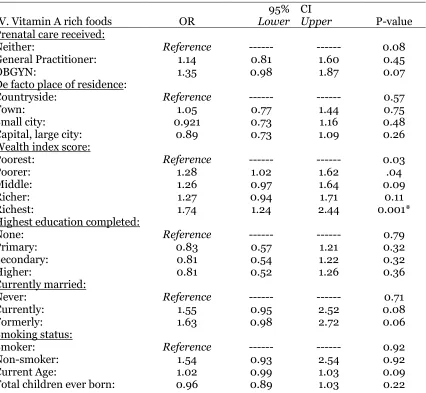
Table 4. Multiple logistic regression analysis of the association between prenatal care
type and consumption of vitamin A rich foods
IV. Vitamin A rich foods OR Lower 95% CI Upper P-value Prenatal care received:
Neither: Reference --- --- 0.08
General Practitioner: 1.14 0.81 1.60 0.45
OBGYN: 1.35 0.98 1.87 0.07
De facto place of residence:
Countryside: Reference --- --- 0.57
Town: 1.05 0.77 1.44 0.75
Small city: 0.921 0.73 1.16 0.48
Capital, large city: 0.89 0.73 1.09 0.26
Wealth index score:
Poorest: Reference --- --- 0.03
Poorer: 1.28 1.02 1.62 .04
Middle: 1.26 0.97 1.64 0.09
Richer: 1.27 0.94 1.71 0.11
Richest: 1.74 1.24 2.44 0.001*
Highest education completed:
None: Reference --- --- 0.79
Primary: 0.83 0.57 1.21 0.32
Secondary: 0.81 0.54 1.22 0.32
Higher: 0.81 0.52 1.26 0.36
Currently married:
Never: Reference --- --- 0.71
Currently: 1.55 0.95 2.52 0.08
Formerly: 1.63 0.98 2.72 0.06
Smoking status:
Smoker: Reference --- --- 0.92
Non-smoker: 1.54 0.93 2.54 0.92
Current Age: 1.02 0.99 1.03 0.09
Prenatal Care and Micronutrient Dense Foods 16
As shown in Table 4, mothers who received prenatal care from General
[image:24.612.78.507.356.756.2]Practitioners had 14% increased odds of Vitamin A rich food intake compared to women receiving care form other sources (Neither), adjustments were made for defacto place of residence, wealth index, highest education level, marriage status, smoking, current age and total children ever born. Also, mothers who received prenatal care from OBGYN had 35% increased odds of Vitamin A rich food intake compared to women receiving care form other sources (Neither), adjusting for other independent variables. A significant difference was detected for Wealth, 74% significantly increased odds of consuming vitamin A rich foods for those mothers scoring in the highest wealth index. Table 5. Multiple logistic regression analysis of the association between prenatal care
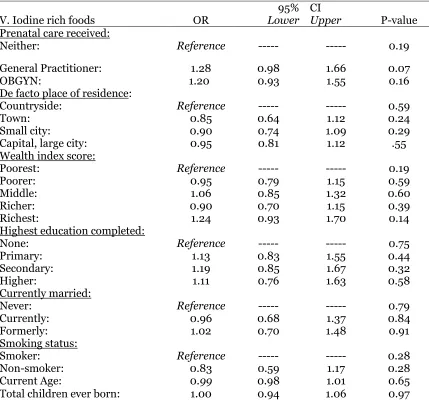
type and consumption of iodine rich foods
V. Iodine rich foods OR Lower 95% CI Upper P-value
Prenatal care received:
Neither: Reference --- --- 0.19
General Practitioner: 1.28 0.98 1.66 0.07
OBGYN: 1.20 0.93 1.55 0.16
De facto place of residence:
Countryside: Reference --- --- 0.59
Town: 0.85 0.64 1.12 0.24
Small city: 0.90 0.74 1.09 0.29
Capital, large city: 0.95 0.81 1.12 .55
Wealth index score:
Poorest: Reference --- --- 0.19
Poorer: 0.95 0.79 1.15 0.59
Middle: 1.06 0.85 1.32 0.60
Richer: 0.90 0.70 1.15 0.39
Richest: 1.24 0.93 1.70 0.14
Highest education completed:
None: Reference --- --- 0.75
Primary: 1.13 0.83 1.55 0.44
Secondary: 1.19 0.85 1.67 0.32
Higher: 1.11 0.76 1.63 0.58
Currently married:
Never: Reference --- --- 0.79
Currently: 0.96 0.68 1.37 0.84
Formerly: 1.02 0.70 1.48 0.91
Smoking status:
Smoker: Reference --- --- 0.28
Non-smoker: 0.83 0.59 1.17 0.28
Current Age: 0.99 0.98 1.01 0.65
Prenatal Care and Micronutrient Dense Foods 17
As shown in Table 5, mothers who received prenatal care from General
[image:25.612.86.506.304.703.2]Practitioners had 28% increased odds of iodine rich food intake compared to women receiving care from other sources (Neither). Also, mothers who received prenatal care from OBGYN had 20% increased odds of iodine rich food intake compared to women receiving care form other sources (Neither), adjusting for other independent variables. Adjustments were made for defacto place of residence, wealth index, highest education level, marriage status, smoking, current age and total children ever born.
Table 6. Multiple logistic regression analysis between prenatal care type and
consumption of iron rich foods
VI. Iron rich foods OR Lower 95% CI Upper P-value
Prenatal care received:
Neither: Reference --- --- 0.09
General Practitioner: 1.10 0.87 1.39 0.43
OBGYN: 1.24 0.99 1.55 0.06
De facto place of residence:
Countryside: Reference --- --- 0.69
Town: 0.89 0.68 1.17 0.41
Small city: 0.98 0.81 1.19 0.82
Capital, large city: 0.92 0.78 1.08 0.31
Wealth index score:
Poorest: Reference --- --- 0.00
Poorer: 1.72 1.43 2.06 0.00*
Middle: 1.86 1.50 2.30 0.00*
Richer: 1.85 1.45 2.37 0.00*
Richest: 1.65 1.22 2.22 0.00*
Highest education completed:
None: Reference --- --- 0.08
Primary: 1.38 1.06 1.81 0.02*
Secondary: 1.35 1.00 1.80 0.05*
Higher: 1.51 1.07 2.13 0.02*
Currently married:
Never: Reference --- --- 0.76
Currently: 1.07 0.76 1.52 0.69
Formerly: 1.13 0.78 1.63 0.53
Smoking status:
Smoker: Reference --- --- 0.72
Non-smoker: 1.06 0.76 1.48 0.72
Current Age: 0.95 0.90 1.00 0.07
Prenatal Care and Micronutrient Dense Foods 18
Prenatal Care and Micronutrient Dense Foods 19
Table 7. Multiple logistic regression analysis of association between prenatal care type
and consumption of any one-micronutrient rich food
VII. Any one micronutrient food OR Lower 95% CI Upper P-value Prenatal care received:
Neither: Reference --- --- 0.05*
General Practitioner: 1.09 0.85 1.41 0.49
OBGYN: 1.29 1.01 1.65 0.04*
De facto place of residence:
Countryside: Reference --- --- 0.71
Town: 0.95 0.68 1.32 0.76
Small city: 0.93 0.75 1.16 0.52
Capital, large city: 0.90 0.75 1.08 0.25
Wealth index score:
Poorest: Reference --- --- 0.00*
Poorer: 1.67 1.36 2.05 0.00*
Middle: 2.10 1.63 2.70 0.00*
Richer: 1.77 1.34 2.35 0.00*
Richest: 2.08 1.44 3.00 0.00*
Highest education completed:
None: Reference --- --- 0.03*
Primary: 1.43 1.07 1.90 0.02*
Secondary: 1.56 1.13 2.15 0.01*
Higher: 1.80 1.22 2.65 0.00*
Currently married:
Never: Reference --- --- 0.95
Currently: 1.01 0.67 1.52 0.96
Formerly: 0.98 0.64 1.51 0.93
Smoking status:
Smoker: Reference --- --- 0.59
Non-smoker: 1.10 0.77 1.59 0.59
Current Age: 0.97 0.91 1.03 0.33
Total children ever born: 1.00 0.99 1.02 0.53
A multiple logistic regression analysis was also conducted to evaluate the association of prenatal care type and consumption of any one of three micronutrient rich foods (Table 7). Results indicated that women who received prenatal care from OBGYN were significantly more likely to report eating any one of the
three-micronutrient rich foods (OR= 1.29, p=0.04). A significant association was detected for all wealth index scores (p<0.001) with all women outside of the poorest quintile
Prenatal Care and Micronutrient Dense Foods 20
[image:28.612.77.514.164.568.2]completed any level of education and women with the highest education completed showed the largest increase in odds (OR=1.80, p =0.03).
Table 8. Multiple logistic regression analysis of association between prenatal care type
and consumption of any two-micronutrient rich foods
VII. Any two micronutrient foods OR Lower 95% CI Upper P-value Prenatal care received:
Neither: Reference --- --- 0.06
General Practitioner: 1.31 1.00 1.70 0.05*
OBGYN: 1.36 1.05 1.75 0.02*
De facto place of residence:
Countryside: Reference --- --- 0.59
Town: 0.89 0.68 1.16 0.38
Small city: 0.92 0.76 1.10 0.36
Capital, large city: 0.90 0.77 1.06 0.21
Wealth index score:
Poorest: Reference --- --- 0.02*
Poorer: 1.25 1.04 1.50 0.02*
Middle: 1.29 1.04 1.59 0.02*
Richer: 1.28 1.01 1.63 0.04*
Richest: 1.59 1.20 2.11 0.00*
Highest education completed:
None: Reference --- --- 0.71
Primary: 1.06 0.78 1.45 0.71
Secondary: 1.00 0.72 1.40 0.99
Higher: 0.93 0.64 1.36 0.72
Currently married:
Never: Reference --- --- 0.10
Currently: 1.31 0.91 1.89 0.15
Formerly: 1.48 1.01 2.17 0.05
Smoking status:
Smoker: Reference --- --- 0.80
Non-smoker: 0.96 0.67 1.36 0.80
Current Age: 0.97 0.91 1.02 0.22
Total children ever born: 1.01 0.99 1.02 0.38
The results of a multiple logistic regression of prenatal care type and
consumption of any two-micronutrient rich foods (see Table 8) indicated that both groups of women who saw either type of healthcare practitioner (general practitioner or OBGYN) were more likely to report eating any two of the micronutrient rich foods (p=0.05 and p=0.02 respectively) than those in the neither group. A significant
Prenatal Care and Micronutrient Dense Foods 21
[image:29.612.74.523.165.600.2]poorest quintile showing increased odds of eating any two of three micronutrient rich foods.
Table 9. Multiple logistic regression on association of prenatal care type and
consumption of all three micronutrient rich foods
IX. All three micronutrient foods OR
95%
Lower
CI
Upper P-value
Prenatal care received:
Neither: Reference --- --- 0.39
General Practitioner: 1.48 0.80 2.74 0.21
OBGYN: 1.51 0.84 2.74 0.17
De facto place of residence:
Countryside: Reference --- --- 0.78
Town: 0.72 0.39 1.33 0.30
Small city: 0.95 0.64 1.40 0.78
Capital, large city: 0.95 0.67 1.34 0.78
Wealth index score:
Poorest: Reference --- --- 0.58
Poorer: 1.08 0.73 1.60 0.69
Middle: 0.96 0.60 1.51 0.85
Richer: 0.87 0.51 1.48 0.61
Richest: 1.36 0.76 2.41 0.29
Highest education completed:
None: Reference --- --- 0.73
Primary: 0.72 0.38 1.35 0.31
Secondary: 0.75 0.38 1.47 0.40
Higher: 0.82 0.39 1.74 0.61
Currently married:
Never: Reference --- --- 0.33
Currently: 1.18 0.54 2.57 0.68
Formerly: 1.49 0.66 3.35 0.34
Smoking status:
Smoker: Reference --- --- 0.37
Non-smoker: 1.52 0.61 3.79 0.37
Current Age: 0.92 0.81 1.04 0.19
Total children ever born: 1.01 0.98 1.05 0.55
Prenatal Care and Micronutrient Dense Foods 22
DISCUSSION
The first part of this study aimed to explore current prenatal healthcare utilization, demographics, health behaviors and reproductive history of mothers
between the ages of 14 and 49 in the Dominican Republic. The second part of this study aimed to determine association between sources of prenatal care and micronutrient food consumption among mothers using a logistic regression analysis.
The average age of mothers of this sample was 25.6 years old, and the mean age of women at their first birth was 19.4 years. Results also indicated that OBGYNs were utilized for prenatal care more often than general practitioners followed by the neither group. This is in agreement with the numbers from Global Health Initiative, which indicates a wide-ranging healthcare infrastructure and availability of healthcare providers. Significant differences were detected between prenatal care type and the variables highest education level completed, place of residence, wealth index score, and age at first birth.
Prenatal Care and Micronutrient Dense Foods 23
over two-thirds reporting having not eaten a vitamin A rich fruit or vegetable in 24 hours.
No significant factor was found to be associated with consumption of iodine rich foods across prenatal care type. This could be due to the existing low levels of
consumption across the sample. No significant prenatal care factor was found to be associated with consumption of iron rich foods. However, all groups with wealth index higher than the poorest quintile were significantly more likely to eat iron rich foods with those in the richest quintile showing a 65% increased odds. Additionally, a significant association between consumption of iron rich foods was observed in women who
completed the highest level of education with 51% increased odds. This may also be due to emphasis on agricultural production and not consumption among those who are least educated and poorest. Another possible reason may be related to the prohibitive high cost of meat for those who are the poorest and least educated.
Women who reported using an OBGYN for prenatal care were 29% more likely to report consumption of any one of three micronutrient foods. For the variable
Prenatal Care and Micronutrient Dense Foods 24
most helpful among mothers who do not see general practitioners or OBGYNs. The driver of micronutrient rich consumption among mothers proved to be wealth and education. Increased wealth index was associated with vitamin A
consumption, iron consumption, consumption of any one micronutrient rich food and any two micronutrient rich foods. Education level was associated with increased iron consumption, consumption of any one and consumption of any two micronutrient rich foods.
The analysis of micronutrient rich food consumption across education and wealth index score showed significant results between the groups. A focused
intervention providing education on sources of vitamin A rich foods, iodine rich foods and iron rich foods delivered to prenatal care providers who serve the poorest
communities would provide the greatest benefit. Overall there is a low consumption of iodine rich foods and no significant differences between the groups suggesting that all three prenatal care provider groups require an intervention for this food type.
This study has several advantages. The data used for this study was obtained from the DHS, which goes through many quality control measures and provides a large sample size for thorough analysis. This is the first study which ventures to examine the differences in micronutrient dense food consumption based on prenatal care type in the Dominican Republic. In addition it provides a descriptive statistics on demographic, behavioral and maternal characteristics of the sample.
The study was limited by using the 24 hour food recall survey to measure
Prenatal Care and Micronutrient Dense Foods 25
patterns of the sample. Previous studies have focused on addressing micronutrient deficiencies of pregnant women and mothers through interventions using supplements, which may not provide a long term or sustainable solution for women in the poor and remote communities.
Further studies of this type should utilize biometric markers for anemia, vitamin A levels and iodine levels in the population to measure micronutrient deficiencies and food consumption patterns more accurately. In addition, there is abundant research linking diet during pregnancy with fetal and infant health, but there is little research linking maternal diet to child diet or micronutrient dense food consumption. So, additional studies should be completed to identify if a mother’s diet is significantly different from a child’s diet and at what age these may diverge.
Possible interventions for micronutrient rich food consumption would include education programs for prenatal healthcare providers, which target those in
agricultural, poor and rural communities. This education should focus on increasing maternal dietary diversity and consumption of vitamin A rich fruits or vegetables and iodine rich seafood products. In order to improve the overall nutrition status of the population, the interventions should also include provision of micronutrient rich foods. Encouraging home gardening or local cooperatives to grow such foods may be necessary in regions where they are not locally available or are too expensive (WHO, 2009). There are currently many programs in the Dominican Republic that provide food
Prenatal Care and Micronutrient Dense Foods 26
Prenatal Care and Micronutrient Dense Foods 27
References
Ali, F., Thaver, I., & Khan, S. A. (2014). Assessment of dietary diversity and
nutritional status of pregnant women in Islamabad, Pakistan. Journal of Ayub
Medical College, Abbottabad: JAMC, 26(4), 506–509.
Caulfield, L. E., Richard, S. A., Rivera, J. A., Musgrove, P., & Black, R. E.
(2006). Stunting, Wasting, and Micronutrient Deficiency Disorders. In D. T. Jamison, J. G. Breman, A. R. Measham, G. Alleyne, M. Claeson, D. B. Evans, P. Musgrove (Eds.), Disease Control Priorities in Developing Countries (2nd ed.). Washington (DC): World Bank. Retrieved from
http://www.ncbi.nlm.nih.gov/books/NBK11761/
Center for Disease Control. (2015). Dominican Republic Global Health
Initiative Strategy (p.36).
Christian, P., West, K. P., Khatry, S. K., LeClerq, S. C., Kimbrough-Pradhan,
E., Katz, J., & Shrestha, S. R. (2001). Maternal night blindness increases risk of mortality in the first 6 months of life among infants in Nepal. The Journal of
Nutrition, 131(5), 1510–1512.
Dewey, K.G., & Begum, K. (2011). Long-term consequences of stunting in early life.
Maternal &Child Nutrition, 7(s3), 5-18.
Food and Agriculture Organization of the United Nations, (2003). Perfiles
Nutricionales por Países – LA REPÚBLICA DOMINICANA Retrieved from:
www.fao.org/ag/agn/nutrition/ncp/dommap.pdf
Food and Agriculture Organization of the United Nations. (n.d.). FAOSTAT-
Dominican Republic. Retrieved from http://faostat3.fao.org/home/E
Jiménez, C. (2015). A legion of “ghosts” of Haitian descent in the Dominican
Prenatal Care and Micronutrient Dense Foods 28
h ttp://latino.foxnews.com/latino/opinion/2015/11/20/opinion-legion-ghosts-haitian-descent-striving-to-survive-in-dominican-republic/
Mills, J. P., Mills, T. A., & Reicks, M. (2007). Caregiver knowledge, attitudes
and practices regarding vitamin A intake by Dominican children. Maternal &
Child Nutrition, 3(1), 58–68. http://doi.org/10.1111/j.1740-8709.2007.00066.x
National Research Council. (2001). Dietary Reference Intakes for Vitamin A,
Vitamin K, Arsenic, Boron, Chromium, Copper, Iodine, Iron, Manganese,
Molybdenum, Nickel, Silicon, Vanadium, and Zinc. Washington, DC: The
National Academies Press. Retrieved from
http://www.nap.edu/catalog/10026/dietary-reference-intakes-for-vitamin-a-
vitamin-k-arsenic-boron-chromium-copper-iodine-iron-manganese-molybdenum-nickel-silicon-vanadium-and-zinc
Requejo, J., Bryce, J., & Victora, C. (2012). Countdown to 2015: Maternal,
Newborn and Child Survival. Building a Future for Women and Children. The
2012 Report. Washington DC: World Health Organization. Retrieved
fromhttp://www.unicef.org/eapro/Countdown_to_2015.pdf
Ribeiro Neves, P. A., Ramalho, A., De Carvalho Padilha, P., & Saunders, C.
(2014). The role of prenatal nutrition assistance on the prevalence of night blindness in pregnant adults. Nutrición Hospitalaria, 29(5), 1132–1140.
Souza, J. P., Parpinelli, M. A., Amaral, E., & Cecatti, J. G. (2007). [Obstetric
care and severe pregnancy complications in Latin America and the Caribbean:
ananalysis of information from demographic health surveys]. Revista
Panamericana De Salud Pública = Pan American Journal of Public
Health, 21(6), 396–401.
Prenatal Care and Micronutrient Dense Foods 29
Jimba, M., & Yasuoka, J. (2013). Effectiveness of nutrition training of health
workers toward improving caregivers’ feeding practices for children aged six
months to two years: a systematic review.Nutrition Journal, 12, 66.
http://doi.org/10.1186/1475-2891-12-66
WHO. (2009). Global prevalence of vitamin A deficiency in populations at
risk 1995–2005. Geneva: World Health Organization. Retrieved from
http://whqlibdoc.who.int/publications/2009/9789241598019_eng.pdf?ua=1 World Health Organization. (n.d.). Micronutrient deficiencies: Iron deficiency