Munich Personal RePEc Archive
Effectiveness of foreign aid in
sub-Saharan Africa: Does disaggregating
aid into bilateral and multilateral
components make a difference?
Wako, Hassen
Jimma University
22 December 2011
1
Journal of Economics and International Finance Vol. 3(16), pp. 801–817, 22 December, 2011
Available online at http://www.academicjournals.org/JEIF DOI: 10.5897/JEIF11.126 ISSN 2006-9812 ©2011 Academic Journals
Full Length Research Paper
Author’s Final (Pre-publication) Version
Effectiveness of Foreign Aid in Sub-Saharan Africa: Does
Disaggregating Aid into Bilateral and Multilateral Components
Make a Difference?
Hassen Abda Wako
Department of Economics, College of Business and Economics, Jimma University, P. O. Box 378, Jimma, Ethiopia. Email: [email protected], [email protected]. Tel:
+251911083176, +251922876002.
ABSTRACT
Inspired by the contradicting findings of studies on aid effectiveness and the recently emerging dissatisfaction of scholars with the methodologies of earlier works, this study took up the examination of the effectiveness of bilateral and multilateral aids on economic growth. To this end, the study applied the estimation technique of system-GMM (system - generalized method of moments) to panel data of 42 Sub-Saharan African countries collected from secondary sources for the years 1980 through 2007. For the data at hand, there was no evidence for the (conditional or unconditional) effectiveness of both kinds of aid. This result was robust to the use of alternative growth models. Bilateral aid on its own, or in an interaction with policy, is ineffective at enhancing economic growth, regardless of whether one measures it relative to the recipients' gross domestic product or in per capita terms. The same holds for multilateral aid. This conclusion confines itself to the data at hand and thus gives no evidence about the effectiveness of the recently emerging aid modalities, which are argued to possess elements of better government accountability, better transparency and better recipient-ownership.
Key Words: Foreign Aid, Aid Effectiveness, Sub-Saharan Africa, Economic Growth, System-GMM
1. INTRODUCTION
2
developing world. The concessionality of the transfer is reflected in that a transfer is considered as foreign aid if it has a grant element of 25 percent or more (Sharma, 1997; Radelet, 2006). This definition of foreign aid more accurately reflects development aid, commonly known as Official Development Assistance (ODA hereafter). However, as (for instance) Tarnoff and Nowels (2004) discuss, the term foreign aid also includes such other resource transfers as humanitarian aid and military aid.
One way to classify aid is to distinguish between aid from bilateral and multilateral sources. Bilateral aid is administered by agencies of donor governments such as USAID or JOECF. In contrast to this, multilateral assistance, while funded by contributions from wealthy countries is administered by international agencies such as UNDP and the World Bank (Boone, 1995; World Bank, 1998).
The total ODA to developing countries experienced changing trends over time. In particular, it experienced a large fall in the 1990s – after the Cold War ended (Boschini and Olófsgard, 2005; Radelet, 2006). Recently, the volume of ODA has been rising though with an enlarged number of constituents and though “the lion‟s share of the increase came from debt relief grants (particularly to Iraq and Nigeria), which more than tripled, and from humanitarian aid, which rose by 15.8 %” (OECD, 2007:1).
3
works of Sharma (1997), Dollar and Easterly (1999), Harms and Lutz (2004), and Easterly (2005).
Although all the above arguments in favor of foreign aid are made in relation to the economic bottlenecks of the recipients, scholars witness that, in practice, aid is provided for a variety of reasons. The literature on the determinants of aid allocation identifies a multitude of factors that actually drive the aid provision and allocation decision of donors. In words of Radelet (2006: 6), “Donors have a variety of motivations for providing aid, only some of which are related to economic development”. Tarp (2006) discusses that the ways in which the allocations of aid have been justified include pure altruism (needs of poor countries), shared benefits of economic development in poor countries, political ideology, foreign policy and commercial interests of the donor country. Economic performance of the recipient countries has also joined these justifications as a late comer. The literature generally puts these motives under three broad categories: donor-interest, recipient-need and recipient‟s performance variables (Cooray and Shahiduzzaman, 2004).
Quite a large number of studies find that, contrary to what donors‟ policy documents state and what many people might perceive, the rationale for aid is explained more by donor-interest variables than by fighting poverty (Alesina and Dollar, 1998; Neumayer, 2003; Cooray and Shahiduzzaman, 2004; Radelet, 2006; Berthèlemy, 2006). Although it seems that there is no disagreement on the dominance of donor-interest in explaining aid provision, there are differences among donor countries as well as between bilateral and multilateral donors. Alesina and Dollar (1998: 1) come up with the following evidence on what dictates aid giving: "An inefficient, economically closed, mismanaged non-democratic former colony politically friendly to its former colonizer, receives more foreign aid than another country with similar level of poverty, a superior policy stance, but without a past as a colony". Berthèlemy (2006) points out that, even multilateral donors are not immune from the influence of donor self-interests. However, the recipient-need variables play the primary role for most multilaterals. Similarly, Harrigan et al. (2004) and Fleck and Kilby (2005) affirm that the shareholders of multilateral donors influence their aid allocation behavior.
The above arguments for continued aid flows have usually been associated with the conditions prevailing in Sub-Saharan Africa (SSA henceforth). Whether none, one, or more of the above arguments are the real causes of African poverty and whether or not the aid to the region has served the intended purpose, are areas of severe controversy as the next paragraph reveals. In fact, the effectiveness of foreign aid is one of the issues on which economists seldom agree. Even using the same data set and comparable econometric techniques of estimation, different researchers have come up with different and contrasting findings and conclusions.
4
(2000), CFA (2005), Reddy and Minoiu (2006) and Tarp (2006), argue that aid is generally effective at meeting the objectives it has been intended for. Others like Kanbur (2000), Easterly (2003), Easterly et al. (2003), Ranis (2006), Murphy and Tresp (2006), strongly stress the complete failure of foreign aid. They argue that aid has failed to meet what it was aimed at. Still others inhabited the middle position: aid has been effective in some cases and has failed in some others – the triumph of aid is conditional on other factors. Included in this group are World Bank (1998), Burnside and Dollar (2000), Denkabe (2003), and Collier (2006). Yet, for Moss et al. (2006), Fielding (2007) and Killick and Foster (2007), aid has not only failed but also has negatively affected the developing world via real appreciation of domestic currency and the resulting loss of competitiveness, encouraging corruption and harming institutional development, etc.
Thus, it deserves enormous attention and endeavor to join this debate on the effectiveness of foreign aid in this era of massive aid flows to developing countries in general and to SSA in particular. A point justifying such an endeavor is the existence of emerging and hot criticisms on the studies in the area of aid effectiveness regardless of whether the findings reflected aid-pessimism or aid-optimism. The majority of these criticisms call attention to the weaknesses in the methodology used in the past. For instance, Harms and Lutz (2004) – after summarizing the literature on the contradicting findings of the effectiveness of foreign aid – emphasize the need for a new approach. The approach they proposed entailed taking a more disaggregated view with regard to both the different components of aid and the various aspects of policies/institutions. Clemens et al. (2004) also come up with a similar proposal – disaggregating aid to different components, and testing a relationship between the correct component of aid and economic growth, rather than arguing that aid is effective or ineffective with analysis based on a wrong variable (usually, total ODA).
The sensitivity of the measures of aid effectiveness to changing data sets is another important problem that has motivated researchers in the area to question the techniques of analysis. An important evidence revolves around the pitfalls of drawing strong conclusions from cross-country regressions using interaction variables. After critically scrutinizing three papers1, Pattillo et al. (2007:11) conclude that “Where the impact on the dependent variable of one of the components of the IAV [interacting variable] is statistically dominant, the IAV may do little else than duplicate that variable, providing little or no information on the influence of the other component.”
The above points of criticism call for works along new lines of research. Thus, it would be vital to assess the effectiveness of foreign aid by incorporating such criticisms and proposals. Hence, this study was carried out in light of this argument.
1
5
It approached the aid effectiveness question by disaggregating aid into bilateral and multilateral components in the context of SSA. Specifically, the study took up the objective of evaluating the unconditional and conditional (on the macroeconomic policy stance) of bilateral and multilateral development aids at fostering economic growth. Given the current state of literature in the area, this study is believed to call forth such disaggregated level researches with more human and financial resources, and aiming at policy measures.
This study considered the effectiveness of only one type of aid – development aid. Besides, it study used the growth in per capita real GDP (among various measures of economic development) for testing the effectiveness of foreign aid. Moreover, the econometric analysis utilized bilateral and multilateral net aid transfers among the alternative measures of aid flows. The study covered forty-two countries in SSA for the period 1980 to 2007. The unavailability of data for some of the countries in the region has limited the number of SSA countries in the study. The questionable reliability of the data used here (mainly because of missing observations and because the data sources compile data from different ultimate sources) presented a limitation to be unveiled.
The rest of this paper is organized as follows. Section 2 discloses the sources and a brief description of the data used, imparts the specification of econometric models, and finally offers the techniques of estimation. Section 3 begins with depicting the profile of aid flow to SSA and goes on to the descriptive andeconometric analyses of aid effectiveness. Section 4 summarizes the main findings and concludes the paper.
2. METHODS AND MATERIALS
2.1 Sample Selection and Data
6
demonstrate that SSA deserves to be a focus for future studies on aid-related issues. The specific countries included in the sample for this particular study were chosen based solely on availability of data.
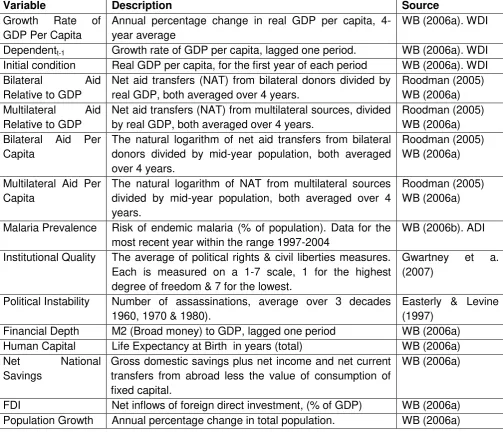
The data utilized in this study were mainly from the World Development Indicators (WDI) and the Global Development Finance (GDF) of the World Bank (2006a), African Development Bank (2002, 2006), reports and online database of OECD, Freedom House, reports of the Commission for Africa and some articles especially those from the Center for Global Development. (The sources of data for each variable – along with short descriptions of the variables – appear in the appendix.)
At this point, it is worthwhile to elaborate the data on focus variables a little bit further. The data on gross official development assistance (GODA), net official development assistance (NODA) and net aid transfer (NAT) are calculated from the comma-delimited files of Roodman (2005). This source provides data by donors and recipients. Hence, the aid figures for each recipient country were aggregated over the set of donors. In addition, the data for total bilateral and multilateral aids to the sample of countries were generated by summing the figures for the individual sources. Then these data on bilateral and multilateral receipts, like the data on all other time-varying variables, were averaged over four-year periods: 1980-83, 1984-87, 1988-91, 1992-95, 1996-99, 2000-03 and 2004-20072. The conversion of these aid data into per capita terms and into percentages of GDP was undertaken by dividing the aid data by mid-year population and real GDP, respectively. The data on the latter two variables were obtained from World Bank (2006a), and were averaged over four-year periods.
2.2 Model Specification
Examining the effectiveness of foreign aid (or of its components) at enhancing economic growth requires a theoretical link between the two variables – economic growth and aid. Gwartney et al. (2004) give details on the three categories of explanations that the economics literature has offered for analyzing income and growth disparities among countries. These are the production-function-based approach, the institutions approach, and the geography and location approach.
The first approach, as Gwartney et al. (2004) discuss, underscores that increasing the amount of inputs into the production process (such as labor, and physical and human capital) and shifting the production function (via technological improvements) are the means to generate higher income and growth. These scholars characterize this approach – based on the work of Solow (1956) – as the most well established explanation in the literature. This line of explanation corresponds to what Hansen
2
7
and Tarp (2000) termed the „Second-Generation Studies‟ of aid-effectiveness. These second-generation studies are based on growth regressions that include different components of investment financing (domestic savings, aid and other foreign capital inflows) as explanatory variables. These studies emphasize the aid-investment and investment-growth links, or the direct inclusion of aid in growth regressions. Like the „First-Generation Studies‟ which consider aid-savings-growth linkages, the second generation studies consider aid as exogenous variable and most of them predict that aid is effective (ibid).
Works on economic growth (for instance Jones (2002), Arnold et al. (2007) and Fingleton and Fischer (2008)) confer that the neoclassical growth model – based on two basic equations, one describing production and the other capital accumulation – characterizes economic growth by the following general function:
) , , , , ( conditions initial growth population progress cal technologi capital of on depreciati on accumulati capital f growth economic
One extension of the neoclassical model is through incorporating the role of human capital. In accordance with such a consideration, capital accumulation or investment in the equation above is interpreted to include investments in both physical and human capital. Splitting investment into investment from domestic sources (domestic savings) and investment from foreign sources, the latter largely comprising of aid and FDI yields:
....(1) )... conditions initial growth, population progress, cal -technologi capital, of on depreciati FDI, aid, savings, f(domestic growth economic .
Hence, one possible way to analyze the effectiveness of foreign aid is to regress a variant of the general function in equation (1). Such a framework was particularly dominant before the 1990s. Other lines of explaining cross-country income and growth differences have emerged since 1990s (Hansen and Tarp, 2000; Gwartney et al., 2004).
8
Studies in line with this second approach went beyond the explanatory variables derived from the Solow type models and looked for variables influencing such items as domestic saving and investment, FDI (and along with it, technological transfer), and resource accumulation and productivity in general. The explanatory variables in this approach included policy variables like macroeconomic stability, institutional factors comprising of such components as property rights and the rule of law, financial deepening, and political instability. Burnside and Dollar (1997, 2000), Daglaard and Hansen (2000), Easterly (2003), and Fielding and Knowles (2007) represent some of the studies along such lines.
The third approach focused on the importance of „geographic-locational factors‟ – the term used by Gwartney et al. (2004) – as the main determinants of variations in income and growth across economies. These factors, Gwartney et al. (2004) discuss, include such variables as tropical climate, access to an ocean port, and distance from the world‟s major trading centers. A tropical climate is associated with diseases such as malaria and the negative impact of hot-and-humid climate on labor productivity. The lack of access to an ocean port results in higher transaction costs and less international trade. Finally, reduced trade characterizes locations that are distant from the world‟s major trading centers. According to Gwartney et al. (2004), less trade in turn has the implication of reduced gains from division of labor, specialization and economies of scale. Besides, location in the tropics, landlockedness and longer distance from the world‟s major trade centers could all retard the attractiveness of a nation as a base for production and consequently retard the inflow of FDI.
While Gwartney et al. (2004) have tested the explanatory power of the three categories of variables separately, they have also enlightened that there is no inconsistency among these approaches and that the models could be reinforcing each other. Particularly, the second and the third classes of variables are the deep parameters of economic growth as they affect variables claimed to be determinants of growth in usual growth theories. Aid was included to the set of these explanatory variables following the justification for aid flow as a means to tackle the institutional and infrastructural bottlenecks of LDCs. The inclusion of initial conditions and aid into growth regressions along with the combination of the above two sets of variables gives the general function below:
...(2) )... conditions initial location, geographic aid, , stability political policy, quality, nal institutio deepening, l f(financia growth economic .
9
such GODA and NODA drew from the extensive criticism of these alternative measures notably by Roodman (2006a).
According to Roodman (2006a), GODA, which treats all grants and ODA loans extended as aid, includes such items as debt forgiveness grants (cancellations of non-ODA loans called “Other Official Finance” loans). These items, Roodman (2006a) argues, either lack enough concessionality or are originally provided to assist a non-developmental purpose. In addition, as “the capitalization of interest arrears” accompanying debt rescheduling does not imply any actual movement of money, its treatment as a new aid flow overstates the true value of development aid. Netting the (principal and net interest) repayments on ODA in addition to rescheduled debts and debt forgiveness grants out of GODA, gives NAT. The other alternative – NODA – which nets out principal repayments out of GODA is criticized for neglecting the netting out of interest repayments. In words of Roodman (2006a), “To the extent that donors are lending to cover interest payments they receive on concessional loans, net ODA counts makes the circulation of money on paper look like an aid increase.”
In order to check the robustness of the coefficients of the two aid types to alternative definitions, (multilateral and bilateral) aid per capita were used as alternatives to aid-to-GDP ratios. This consideration of alternative measures was motivated by the work of Fielding and Knowles (2007: 5) which – after discussing the plausibility of using both measures – asserts that, “the sign and significance of coefficients on foreign aid variables in cross-country panel growth regressions is very sensitive to the way that aid is measured.”
10
Tuning to the empirical specification of a model matching up equation (2), a short explanation of the variables follows. The ratio of broad money to GDP, M2/GDP, was used as a proxy for the economy‟s level of financial development. Following the literature (for instance, Denkabe, 2003; Easterly, 2003; Clemens et al., 2004; Murphy and Tresp, 2006), this proxy was used as its value lagged one period.
Secondly, the simple average of the political rights and the civil liberties components of country rating from the Economic Freedom of the World (EFW) were used as indicators of institutional quality. This rating of the Freedom House is based on five areas and is indexed from 1 (the best) to 7 (the worst). The areas are government size; legal structure and security of property rights; access to sound money; freedom to trade internationally; and regulation of credit, labor, and business (Gwartney et al., 2007). An alternative measure of institutional quality based on hundreds of individual indicator variables and a variety of sources is provided by the Worldwide Governance Indicators (WGI) research project (Kaufmann et al., 2007). The former index was used because WGI is available only since 1996 while the first is there since 1972.
Thirdly, following the works of Burnside and Dollar (1997, 2000) and most subsequent studies on foreign aid such as Daglaard and Hansen (2000), Easterly (2003) and Roodman (2005), the policy index was constructed from measures of budget surplus (for fiscal policy), inflation (for monetary policy) and openness (for external policy). Budget surplus was measured as a percentage of GDP, and inflation as the percentage change in GDP deflator. Openness was measured as the share of trade (exports plus imports) in GDP.
Compared to the variables seen so far, it seems that geographical factors appear less frequently in growth regressions. In cases where such factors have been explicitly considered, their impacts on economic growth have been found crucial. For instance, Gallup et al. (1998), McCarthy et al. (2000), Sachs (2003), and Gwartney et al. (2004) all witness the vital role such variables play. In addition to location in the tropics and access to oceanic ports, malaria prevalence (which is associated with tropical location) has been claimed to have a negative and robust effect on economic growth. Particularly, McCarthy et al. (2000) and Sachs (2003) present two empirical works which detect such a robust impact of malaria on economic growth. This study used the prevalence of malaria to proxy the growth impacts of geographical factors.
Summing up the discussion of model specification so far yields an empirical model in equation (3) below, which encompasses the earlier models in equations (1) and (2):
11
In order to account for the possibility of diminishing returns to an explanatory variable in general and aid in particular, and to allow for non-linear relationship between economic growth and the explanatory variables, polynomials such as aid-squared, policy-squared, and interaction variables like (aid)x(policy) are included in most of the empirical works described above. Therefore, such variables were also incorporated into the models of this study.
2.3 Estimation Technique
The model specification being done with, the estimation techniques used come next. The advantages of using panel data over the usage of time-series and cross-sectional data have been covered in a number of recent works. Some of the major advantages data are the possibility of parameter identification in the presence of endogenous regressors or measurement error, the robustness of panel data based models to omitted variables, and the efficiency of parameter estimates because of the larger sample size with explanatory variables changing over two dimensions (Verbeek, 2000). In line with these advantages of panel data over the other types, this study chose to rely on panel data in examining aid effectiveness.
Works on the econometric techniques of estimation largely criticize the adoption of OLS in panel data analysis – particularly where the lagged dependent variable enters the set of explanatory variables. For instance, Bond et al. (2001), Bond (2002) and Roodman (2006b) discuss that the correlation between the lagged value of the dependent variable or any endogenous explanatory variable and the individual-specific, time-invariant effect(s) makes the OLS estimates biased and inconsistent. It is also pointed out that this inconsistency of pooled OLS persists even if serial correlation of the error term is assumed away (Bond, 2002). To allow for country-specific heterogeneity and considering the potential gain in efficiency, many research works employ the fixed effects, the between effects and the random effects models. However, while the transforming techniques of these static panel data techniques could provide lags of the variables as their instruments and imply the consistency of such estimates, such a consistency is not applicable to short panels – panels with many individuals (large N) observed over short periods (small T) (Bond, 2002; Buhai, 2003). Besides, while the use of the Within Groups estimation eliminates individual heterogeneity, it does not account for the issue of dynamism/persistency of the dependent variable (growth rate of GDP per capita in this case) (ibid).
12
analysis under such conditions. System-GMM is argued, for instance, in Bond et al. (2001), Bond (2002) and Roodman (2006b), to fit growth regressions better than the differenced-GMM, particularly with near unit-root series. Hence, this study applied the estimation technique of system-GMM to variants of the above model. Estimation of the models were handled using the statistical software STATA version 11.
3. RESULTS AND DISCUSSION
This section first sketches out the aid profile of SSA in the past touching up on issues of inflow trends, shares of aid from bilateral and multilateral sources, major bilateral and multilateral donors, major recipients. It then presents the descriptive analysis of the relationship between aid flow and economic performance of the sample countries and finally tests for the effectiveness of foreign aid at enhancing economic growth of these countries.
3.1 Profile of Aid Flow to Sub-Saharan Africa
The flow of development aid to SSA experienced a fluctuating trend over time; and, the exact pattern of this fluctuation itself depends on the specific measure of aid flow adopted. In terms of the amount of aid in constant US dollars, aggregate aid to the sample of forty-two the region rose steadily from 1960 to 1990, followed by a considerable drop beginning from 1991 (Figure 1 (A)). The recovery in aid volume started only in 2001, with a sharp rise in 2005.
14
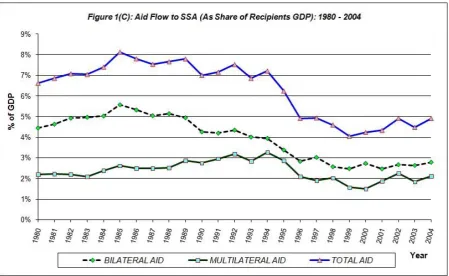
[image:15.595.74.524.70.346.2]Source: Constructed Based on Data from Roodman (2005) and WB (2006a)
Figure 1: Profile of Aid Flow to SSA Using Alternative Measures
Contrary to the rise in volume of aid in dollar amounts (Figure 1 (A)), aid per capita generally followed a downward trend (Figure 1 (B)). Common to these two measures is the sign of slight recovery towards the end of the period (after 2000). The third alternative way of measuring aid entails the use of aid-to-GDP ratio. Regarding the pattern of NAT relative to recipient‟s GDP, bilateral NAT and total NAT experienced more or less declining trends – particularly after 1994. Multilateral NAT followed a slightly rising trend between 1980 and 1994, then a slighter drop until 2000 and leveling off at about two percent of GDP. It seems that the tendency of bilateral and multilateral aids relative to GDP to converge, observed between the years 1980 and 1994, disappeared since then.
15
[image:16.595.75.526.69.334.2]Source: Constructed Based on Data from Roodman (2005)
Figure 2: Shares of Bilateral and Multilateral Aids in Total NAT to SSA
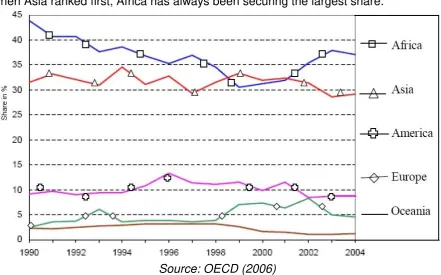
Whatever the trend of aid to the region (or to the sample of countries under consideration) might look like in terms of the alternative measures, the region has usually been receiving the largest share in the total aid to all developing countries. As Figure 3 portrays, with the exception of the period 1998-2001 (approximately) when Asia ranked first, Africa has always been securing the largest share.
Source: OECD (2006)
[image:16.595.80.522.454.729.2]16
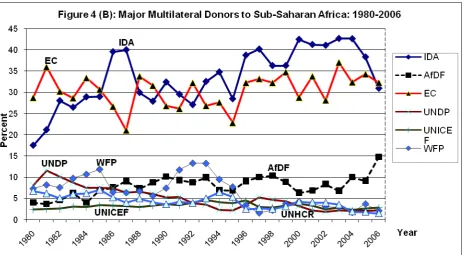
Figure 4 shows the major bilateral and multilateral donors to the region, in terms of total dollar NODA disbursements. For the most part of the period under investigation (1980-2001), France was by far the leading bilateral donor. After 2001, USA has taken over this position. By 2006, France was in the third position preceded by USA and UK. Most recently, Germany, Japan, the Netherlands, Italy, Belgium and Arab countries joined the group of major bilateral donors in that order (Figure 4 (A)).
17
[image:18.595.78.543.70.325.2]Source: Constructed Based on Data from Roodman (2005)
Figure 4: Major Bilateral and Multilateral Donors to the Region
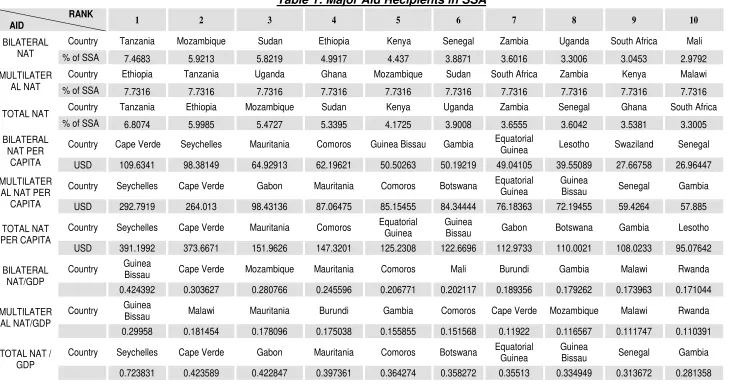
The allocation of aid among recipients in the region could be determined by various factors. This was, however, beyond the scope of this paper, and the discussion below was just meant to give a picture of the distribution of aid within the region. The messages conveyed by alternative measures of aid – dollar amounts, aid/GDP and aid per capita – were compared and contrasted. Table 1 gives lists of top ten aid receivers along with their shares in the bilateral, multilateral and total NAT to SSA. The average share in the total NAT reveals that Tanzania and Ethiopia took the first and second places, respectively. Nevertheless, this list of top ten recipients could not withstand the change of the measure of aid flows used. When this list of major aid recipients in SSA was drawn based on either aid-to-GDP ratio or aid per capita, the above image changed radically. Evident from the table, no single country considered as a major recipient in terms of the percentage share out of total NAT to SSA appeared in the list of top ten recipients with the use of aid in per capita terms. Applying the criterion of aid-to-GDP ratio, only a single country (i.e., Senegal) stayed in the list of top ten recipients.
18
Table 1: Major Aid Recipients in SSA RANK
AID 1 2 3 4 5 6 7 8 9 10
Country Tanzania Mozambique Sudan Ethiopia Kenya Senegal Zambia Uganda South Africa Mali BILATERAL
NAT % of SSA
7.4683 5.9213 5.8219 4.9917 4.437 3.8871 3.6016 3.3006 3.0453 2.9792 Country Ethiopia Tanzania Uganda Ghana Mozambique Sudan South Africa Zambia Kenya Malawi MULTILATER
AL NAT % of SSA
7.7316 7.7316 7.7316 7.7316 7.7316 7.7316 7.7316 7.7316 7.7316 7.7316 Country Tanzania Ethiopia Mozambique Sudan Kenya Uganda Zambia Senegal Ghana South Africa TOTAL NAT
% of SSA 6.8074 5.9985 5.4727 5.3395 4.1725 3.9008 3.6555 3.6042 3.5381 3.3005
Country Cape Verde Seychelles Mauritania Comoros Guinea Bissau Gambia Equatorial
Guinea Lesotho Swaziland Senegal BILATERAL
NAT PER
CAPITA USD 109.6341 98.38149 64.92913 62.19621 50.50263 50.19219 49.04105 39.55089 27.66758 26.96447
Country Seychelles Cape Verde Gabon Mauritania Comoros Botswana Equatorial Guinea
Guinea
Bissau Senegal Gambia MULTILATER
AL NAT PER
CAPITA USD 292.7919 264.013 98.43136 87.06475 85.15455 84.34444 76.18363 72.19455 59.4264 57.885
Country Seychelles Cape Verde Mauritania Comoros Equatorial Guinea
Guinea
Bissau Gabon Botswana Gambia Lesotho TOTAL NAT
PER CAPITA
USD 391.1992 373.6671 151.9626 147.3201 125.2308 122.6696 112.9733 110.0021 108.0233 95.07642
Country Guinea
Bissau Cape Verde Mozambique Mauritania Comoros Mali Burundi Gambia Malawi Rwanda BILATERAL
NAT/GDP
0.424392 0.303627 0.280766 0.245596 0.206771 0.202117 0.189356 0.179262 0.173963 0.171044
Country Guinea
Bissau Malawi Mauritania Burundi Gambia Comoros Cape Verde Mozambique Malawi Rwanda MULTILATER
AL NAT/GDP
0.29958 0.181454 0.178096 0.175038 0.155855 0.151568 0.11922 0.116567 0.111747 0.110391
Country Seychelles Cape Verde Gabon Mauritania Comoros Botswana Equatorial Guinea
Guinea
Bissau Senegal Gambia TOTAL NAT /
GDP
0.723831 0.423589 0.422847 0.397361 0.364274 0.358272 0.35513 0.334949 0.313672 0.281358
19
3.2 Aid Inflows vis-à-vis Growth Performance in Sub-Saharan Africa
[image:20.595.65.535.262.436.2]Prior to the econometric analysis, two (descriptive analysis) approaches were adopted in dealing with the connection between (bilateral and multilateral) aid receipts and economic performance of the forty-two countries in the sample. The first involved the comparison of the average growth in per capita GDP of those countries receiving above-average aid to the average growth in per capita GDP of those countries characterized by below-average aid. Table 2 summarizes the information for the average bilateral and multilateral aids (both relative to GDP and in per capita terms) and the average growth rates for the two groups of countries.
Table 2:Aid Flows vis-à-vis Economic Growth: Country Averages
Type of Aid (with Measurement)
Group with Aid Which is:
Number of Countries
Average Aid
Average Growth Rate of GDP Per Capita 1. Bilateral NAT
(Share of GDP)
Below Average 24 0.0594 0.8082
Above Average 18 0.1968 0.1341
2. Multilateral NAT (Share of GDP)
Below Average 22 0.0325 0.7614
Above Average 20 0.1287 0.2531
3. Bilateral NAT (Per Capita)
Below Average 29 25.9605 0.0156 Above Average 13 102.9801 1.6430 4. Multilateral NAT
(Per Capita)
Below Average 31 16.3572 0.1333 Above Average 11 55.3654 1.6072 Source: Constructed Based on Data from Roodman (2005) and WB (2006a)
The relationship between average aid receipts (bilateral or multilateral) and the growth rate of per capita GDP was a mixed one. On the one hand, it seems that both bilateral and multilateral aids measured relative to recipient‟s GDP exhibited a negative relationship with economic growth (the first two rows of Table 2). However, these differences in growth rate were not statistically significant. On the other hand, both above-average bilateral and above-average multilateral aids in per capita terms were associated with greater growth rates (the third and fourth rows). These differences in mean growth rates were significant at the 10% level of significance.
The second approach was the comparison of the average economic growth rates of the entire set of countries for periods with relatively higher aid receipts to the economic growth rates for periods with relatively lower aid receipts. The controversy on the relationship between aid receipts and economic growth revealed above (based on the comparison of country averages) disappeared when the comparison is made among period averages. The two panels of Figure 5 represent such a comparison for the seven four-year averages.
20
of per capita GDP (for the sample of countries) had shown an upward move though with irregularities. Figure 5(B) depicts a similar relationship between the period-average bilateral and multilateral aid receipts, this time in per capita terms, on the one hand and economic growth on the other.
[image:21.595.73.522.136.633.2]Source: Constructed Based on Data from Roodman (2005) and WB (2006a) Figure 5: Aid Flow vis-à-vis Economic Growth: Period Averages (1980-2004)
21
An inverse association between aid receipts and economic growth could possibly mean that slower economic growth has attracted more bilateral and/or multilateral aids to the region, or could equally possibly mean that lowering the aid receipts has enhanced economic growth. Given the possibility of reverse causality – aid flow influencing economic performance or vice versa – one could not and should not take the analysis so far as establishing any causal relationship. It, however, serves as a frame of reference for the results of the econometric analysis below.
Before running an econometric model of ultimate goal (i.e., equation (3)), the policy index needs to be constructed. In line with the discussion in Section 2, this index was constructed from three variables: fiscal balance (budget surplus), inflation and openness. To this end, the partial correlation coefficients of the growth rate of real GDP per capita with fiscal balance (= 0.2413), with inflation (= – 0.1403) and with openness (= 0.3176) were used. Each of these coefficients was divided by the sum of the absolute value of the coefficients (= 0.6992). Accordingly, the policy index is:
(openness) 0.45423341
) (Inflation 0.20065789
balance) Fiscal
0.3451087(
policy .
The policy index constructed in this way was then used in the regressions of ultimate objective.
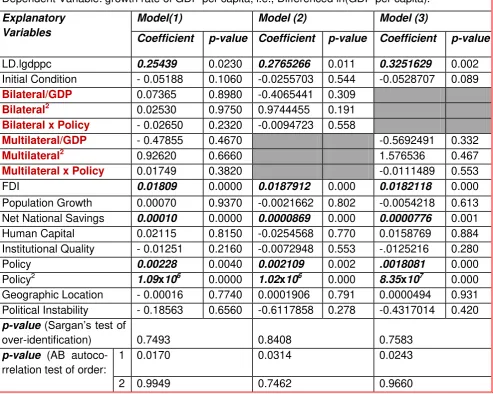
Table 3 summarizes the results of applying system-GMM technique to variants of equation (3). According to the GMM technique, net national savings, foreign direct investment, past performance, and policy stance were the significant determinants of variations in economic growth. Besides, (policy)2 was highly significant, signifying that the effects of good policy increases at an increasing rate.
22
Table 3: Results of System-GMM Applied to Variants of Equation (3)
Dependent Variable: growth rate of GDP per capita, i.e., Differenced ln(GDP per capita).
Explanatory Variables
Model(1) Model (2) Model (3)
Coefficient p-value Coefficient p-value Coefficient p-value
LD.lgdppc 0.25439 0.0230 0.2765266 0.011 0.3251629 0.002
Initial Condition - 0.05188 0.1060 -0.0255703 0.544 -0.0528707 0.089
Bilateral/GDP 0.07365 0.8980 -0.4065441 0.309
Bilateral2 0.02530 0.9750 0.9744455 0.191
Bilateral x Policy - 0.02650 0.2320 -0.0094723 0.558
Multilateral/GDP - 0.47855 0.4670 -0.5692491 0.332
Multilateral2 0.92620 0.6660 1.576536 0.467
Multilateral x Policy 0.01749 0.3820 -0.0111489 0.553
FDI 0.01809 0.0000 0.0187912 0.000 0.0182118 0.000
Population Growth 0.00070 0.9370 -0.0021662 0.802 -0.0054218 0.613 Net National Savings 0.00010 0.0000 0.0000869 0.000 0.0000776 0.001 Human Capital 0.02115 0.8150 -0.0254568 0.770 0.0158769 0.884 Institutional Quality - 0.01251 0.2160 -0.0072948 0.553 -.0125216 0.280
Policy 0.00228 0.0040 0.002109 0.002 .0018081 0.000
Policy2 1.09x10⁶ 0.0000 1.02x10⁶ 0.000 8.35x10⁷ 0.000 Geographic Location - 0.00016 0.7740 0.0001906 0.791 0.0000494 0.931 Political Instability - 0.18563 0.6560 -0.6117858 0.278 -0.4317014 0.420
p-value (Sargan‟s test of
over-identification) 0.7493 0.8408 0.7583
p-value (AB autoco-rrelation test of order:
1 0.0170 0.0314 0.0243
2 0.9949 0.7462 0.9660
However, this should not be taken seriously and as an irrefutable result. Robustness checks should be made. One check involves experimenting by avoiding the simultaneous use of both aid types and dealing with only one of the two types at a time. This was initiated by the fact that bilateral and multilateral aids were highly correlated – manifested in the highly significant (at 5%) pair-wise correlation coefficient of 0.8105. The results of this verification were presented in the second and third columns of Table 3. This action raised Sargan‟s test statistic for over -identifying restrictions. The significance of both types of aid was still rejected without introducing any significant change to the above analysis. There were indeed some changes in the signs of some coefficients but all the insignificant variables remained insignificant, and so were the significant ones.
23
aid per capita and multilateral aid per capita had positive coefficients, the coefficients of their squares as well as their interactions with the policy index were all negative. However, consistent with the results from Table 3, none of these variables involving aid was significant. This shows that, for the sample at hand, the effectiveness of aid does not depend on whether aid relative to GDP or aid per capita was used in the growth regressions. This contrasted with the conclusion of Fielding and Knowles (2007) which claims that the effectiveness of aid is „definition-dependent‟.
In each of the three cases shown in Table 3, the Sargan test shows that the null hypothesis of over-identification cannot be rejected at any reasonable level of significance. The Arellano-Bond tests for autocovariances in residuals of orders one and two were also compatible with the application of the technique in all the three models. F-tests were applied to the encompassing models (in Table 3) to see if they could discriminate between the Solow-type model and the model based on the deep parameters of growth/development. In all cases, neither of these two models was capable of standing alone: each model had some role (not played by the rival model) in explaining growth differences among the economies in SSA.
There were considerable changes in the coefficients and significance levels of the variables involving aid terms in some alternative specifications (tried through the inclusion and exclusion of some variables to Models (2) and (3) of Table 3). In particular, while the aid and aid squared terms were insignificant for both bilateral and multilateral types, the coefficients of aid-policy interactions were significantly different from zero.
However, at this point, it was very crucial to revisit the work of Pattilo et al. (2007) which criticizes the practice of relying on fragile interaction variables for drawing strong conclusions. This made me suspicious about the significance of the aid-policy interactions, and I consequently checked if these interactive terms were really correlated with both terms. For both bilateral and multilateral aid types, the interaction terms were highly correlated with the policy variable but not with the aid variable. To be concrete, the regression of the interaction term – (Bilateral aid) x (Policy) – on the policy variable gave a coefficient highly significant (at 1% level of significance). On the other hand, the significance of the aid coefficient in an equivalent regression of (Bilateral aid) x (Policy) on bilateral aid required a significance level as high as 51%. Similarly, the interaction term involving multilateral aid was highly correlated with the policy variable (a coefficient significant at the 1% level) but not with the aid variable. Thus, the significance of the interaction terms has less to do with the contribution of the aid components.
24
separately. Rather, the economic performance of the countries under consideration (and for the time covered) was explained by the accumulation of physical capital, past performance (history), initial conditions, good policy (as manifested in higher budget surplus (or lower fiscal deficit), low inflation rates and more openness to the rest of the world), and the net inflow of FDI (which might also reflect the prevalence of good institutions and political stability). The importance of these factors found here is in harmony with the findings of previous studies like that of Sachs and Warner (1997) and Dollar and Easterly (1999). However, this point was not taken forward, say, to explaining the relative importance of these factors as the objective was to examine the effectiveness of bilateral and multilateral aid.
4. SUMMARY AND CONCLUSION
The flow of foreign aid to the developing world has been justified on a number of grounds. The arguments range from bridging the financing gap and giving a big push for taking these countries out of poverty trap to inducing better policy and institutional environments. Whether one or more of these objectives have been met is highly controversial. Generally, studies on aid effectiveness find themselves in one or the other of the following categories: (i) aid promotes economic growth, (ii) aid spurs growth in the presence of good policy and/or institutional environments, (iii) aid does not have any significant impact on growth, and (iv) aid affects growth negatively. The majority of these works on aid effectiveness are criticized on some grounds. Besides relying on the results of OLS techniques of estimation, the use of fragile (mainly, aid-policy) interacting variables has captured attention. Moreover, the argument that not all aid is alike and that different aid types should be seen differently is generally becoming common. This paper examined the effectiveness of aid by disaggregating it into bilateral and multilateral components. With its leading share in total aid to LDCs and with the largely supported prediction that other regions are graduating from the aid industry, SSA turned out to be the concern of this study.
25
In general, disaggregating aid into bilateral and multilateral components did not show a difference between the effectiveness of these two types. The effectiveness of aid from bilateral and multilateral sources was the same: both types were insignificant determinants of economic growth.
However, this did not put the debate on aid effectiveness to an end. In the literature, there is an indication that the behavior of donor countries vary significantly. For instance, Roodman (2005, 2006a) gives rankings of donors according to their commitment to development. Hence, research on aid effectiveness remains to be extended along such high level of disaggregating. In addition, new approaches for delivering aid, which (as some argue) possess elements of better government accountability, better transparency and better recipient-ownership, have been designed.3 Whether such attempts make any difference or not is yet to be tested. The concluding point of this study, that both bilateral and multilateral aids were ineffective at influencing economic growth, was confined to the data at hand and thus gave no evidence about the effectiveness of the recently emerging aid modalities.
REFERENCES
African Development Bank (2002). Selected Statistics on African Countries. Volume XXI. Statistics Division. Tunis: Development Research Department.
___________________ (2006). Selected Statistics on African Countries. Statistics Division. Tunis: Development Research Department. Volume XXV.
Alesina A and Dollar D (1998). Who Gives Foreign Aid to Whom and Why? Cambridge. NBER Working Paper No. 6612.
Arnold J, Bassanini A, and Scarpetta S (2007). Solow or Lucas?: Testing Growth Models Using Panel Data from OECD Countries. OECD Economics Department Working Papers, No. 592. Paris: OECD Publishing.
Berthélemy J (2006, October 22). Aid Allocation: Comparing Donors‟ Behaviour. University Paris 1 Panthéon Sorbonne. EUDN/WP 2006 –14.
Bond S (2002, April 3). Dynamic Panel Data Models: A Guide to Micro Data Methods and Practice. Cemmap Working Paper, CWP 09/02.
Bond S, Hoeffler A and Temple J (2001). GMM Estimation of Empirical Growth Models.
Boone P (1995). Politics and the Effectiveness of Foreign Aid. NBER Working Paper Series, Working Paper 5308. Cambridge.
Boschini A and Olofsgard A (2005). Foreign Aid: An Instrument for Fighting Communism?
Buhai S (2003, August). Note on Panel Data Econometrics. Retrieved from: http://www.tinbergen.nl/~buhai/papers/publications/panel_data_econometrics.pdf
3
26
Burnside C and Dollar D (1997). Aid, Policies and Growth. Policy Research Working Paper 1777. Washington, D. C.: The WB Development Research Group.
_________________. (2000). Aid, Policies, and Growth. The American Economic Review, Vol. 90, No. 4, pp. 847–68.
CFA (Commission for Africa). (2005). Our Common Interest. Report of the Commission for Africa. Policy Review: 13,169-197.
Clemens M, Radelet S and Bhavnani R (2004). Counting Chickens When They Hatch: the Short Term Effect of Aid on Growth. Centre for Global Development. Working Paper Number 44.
Collier P (2006). Assisting Africa to Achieve Decisive Change. Swedish Economic Policy Review: 13,169-197.
Cooray N and Shahiduzzaman M (2004). Determinants of Japanese Aid Allocation: An Econometric Analysis. IUJ Research Institute. Working Paper 2004-4.
Crosswell M (1998). The Development Record and the Effectiveness of Foreign Aid. USAID, Bureau for Policy and Program Coordination, Staff Discussion Paper No. 1.
Daglaard C and Hansen H (2000). On Aid, Growth, and Good Policies. CREDIT Research Paper, No. 00/17.
Denkabe P (2003, December 3rd). Policy, Aid and Growth: A Threshold Hypothesis. New York University, Department of Economics.
Dollar D and Easterly W (1999). The Search for the Key: Aid, Investment, and Policies in Africa. Policy Research Working Paper 2070. Washington, D. C.: The World Bank Development Research Group.
Easterly W (2003). Can Foreign Aid Buy Growth? Journal of Economic Perspectives, Volume 17, No 3, pp 23-48.
_______. (2005). Can Aid Save Africa? Clemens Lecture Series 17. Saint John‟s University.
Easterly W and Levine R (1997). Africa‟s Growth Tragedy: Policies and Ethnic Divisions.
Easterly W, Levine R and Roodman D (2003). New Data, New Doubts: Revisiting “Aid, Policies, and Growth” (2000). Working Paper Number 26.
Fielding D (2007, February). Aid and Dutch Disease in the South Pacific. New Zealand: University of Otago. Economics Discussion Papers No. 0703.
Fielding D and Knowles S (2007, March). Measuring Aid Effectively in Tests of Aid Effectiveness. New Zealand: University of Otago, Economics Discussion Paper, No. 0704.
Fingleton B and Fischer M (2008). Neoclassical Theory versus New Economic Geography. Competing Explanations of Cross-Regional Variation in Economic Development. Retrieved from: http://ssrn.com/abstract=1111590.
Fleck R and Kilby C (2005). World Bank Independence: A Model and Statistical Analysis of U.S. Influence. Vecas College Economics Working Paper # 53.
27
Gwartney J, Holcombe R and Lawson R (2004, Fall). Economic Freedom, Institutional Quality, and Cross-Country Differences in Income and Growth. Cato Institute. Cato Journal, vol. 24, No.3.
Gwartney J and Lawson R with the assistance of J. Hall with R. Sobel and P. Leeson (2007). Economic Freedom of the World 2007 Annual Report
Hansen H and Tarp F (2000). Aid Effectiveness Disputed. Journal of International Development, Vol.12, pp.375-398.
Harrigan J, Wang C and El-Said H (2004). The Economic and Political Determinants of IMF and World Bank Lending in the Middle East and North Africa. School of Economics, The University of Manchester. Discussion Paper 0411.
Harms P and Lutz M (2004). The Macroeconomic Effects of Foreign Aid: A Survey. University of St. Gallen, Department of Economics. Discussion Paper No. 2004-11.
Jones C (2002). Introduction to Economic Growth. Second edition. New York, London: WW Norton.
Kanbur R (2000). Aid, Conditionality and Debt in Africa. In F. Tarp (Ed), Foreign Aid and Development: Lessons Learnt and Directions for the Future. Routledge. Kaufmann D, Kraay A and Mastruzzi M (2007, July). Governance Matters VI:
Aggregate and Individual Governance Indicators 1996-2006. Washington D.C.: The World Bank. World Policy Research Working Paper. WPS4280.
Killick T and Foster M (2007). The Macroeconomics of Doubling Aid to Africa and the Centrality of the Supply Side. Development Policy Review, vol. 25 no. 2: 167-192 Cambridge. NBER Working Paper 9490.
McCarthy F, Wolf H and Wu Y (2000). The Growth Costs of Malaria. Cambridge. NBER Working Paper Series Working Paper 7541.
Moss T, Pettersson G and Walle N (2006, January). An Aid-Institutions Paradox? A Review Essay on Aid Dependency and State Building in Sub Saharan Africa. Centre for Global Development. Working Paper No. 74.
Murphy R and Tresp N (2006). Government Policy and the Effectiveness of Foreign Aid. Working Papers in Economics. Boston College, Department of Economics. Neumayer E (2003). The Determinants of Aid Allocation by Regional Multilateral
Development Banks and United Nations Agencies. London: LSE Research Online. Retrieved from: http://eprints.lse.ac.uk/archive/00000579
OECD (Organization for Economic Cooperation and Development) (2006). Development Aid at a Glance: Statistics by Region. Paris.
______ (2007, February). Development Co-operation Report 2006: Summary. Retrieved from: http://www.sourceoecd.org/develpomentreport
Pattillo C, Polak J and Joydeep R (2007). Measuring the Effects of Foreign Aid on Growth and Poverty Reduction or the Pitfalls of Interaction Variables. IMF Working Paper, WP/07/145.
Radelet S (2006). A Primer on Foreign Aid. Centre for Global Development. Working Paper No. 92.
28
Reddy S and Minoiu C (2006). Development Aid and Economic Growth: A Positive Long-Run Relation.
Riddell R (1999). The End of Foreign Aid to Africa? Concerns about Donor Policies. African Affairs, Vol. 98, No. 392. pp. 309-335.
Roodman D (2005, August). An Index of Donor Performance. Center for Global Development. Working Paper 67.
________ (2006a, November). An Index of Donor Performance. 2006 Edition. Working Paper Number 67.
________ (2006b, December). How to Do xtabond2: An Introduction to “Difference” and “System” GMM in Stata. Center for Global Development Working Paper Number 103.
Sachs J (2003). Institutions Don‟t Rule: Direct Effects of Geography on Per Capita Income.
Sachs J and Warner A (1997). Sources of Slow Growth in African Economies. Published in Journal of African Economies, Volume 6, Number 3, pp. 335-376. Sharma S (1997). Changing Pattern of External Resource Flows. Social Scientist,
Vol. 25, No. 11/12. (Nov. - Dec., 1997), pp. 48-63.
Tarnoff C and Nowels L (2004). Foreign Aid: An Introductory Overview of U.S. Programs and Policy. Congressional Research Services (CRS) Report for Congress.
Tarp F (2006). Aid and Development. University of Copenhagen, Department of Economics. Discussion Papers 06-12.
Verbeek M (2000). A Guide to Modern Econometrics. Wiley & Sons, Ltd.
WB (World Bank) (1998). Assessing Aid: What Works, What Doesn't and Why. Washington D.C.: The World Bank.
_____ (2006a). World Development Indicators (WDI) on CD-Rom. Washington D.C.: The World Bank.
_____ (2006b). African Development Indicators. Washington D.C.: The World Bank. Yamada K (2002, March). Issues and Prospects of Aid Modalities in Africa.
29
[image:30.595.48.550.127.290.2]APPENDIX
Table A1: List of Countries in the Sample of Study
Table A2: Short Description of the Variables Used in the Econometric Analysis 1. Angola
2. Benin 3. Botswana 4. Burkina Faso 5. Burundi 6. Cameroon 7. Cape Verde
8. Central African Rep. 9. Chad
10. Comoros
11. Congo, Dem. Rep.
12. Congo, Rep. 13. Cote d'Ivoire 14. Equatorial Guinea 15. Ethiopia
16. Gabon 17. Gambia, The 18. Ghana 19. Guinea
20. Guinea-Bissau 21. Kenya
22. Lesotho
23. Madagascar 24. Malawi 25. Mali 26. Mauritania 27. Mauritius 28. Mozambique 29. Niger
30. Nigeria 31. Rwanda 32. Senegal 33. Seychelles
34. Sierra Leone 35. South Africa 36. Sudan 37. Swaziland 38. Tanzania 39. Togo 40. Uganda 41. Zambia 42. Zimbabwe
Variable Description Source
Growth Rate of GDP Per Capita
Annual percentage change in real GDP per capita, 4-year average
WB (2006a). WDI
Dependentt-1 Growth rate of GDP per capita, lagged one period. WB (2006a). WDI
Initial condition Real GDP per capita, for the first year of each period WB (2006a). WDI Bilateral Aid
Relative to GDP
Net aid transfers (NAT) from bilateral donors divided by real GDP, both averaged over 4 years.
Roodman (2005) WB (2006a) Multilateral Aid
Relative to GDP
Net aid transfers (NAT) from multilateral sources, divided by real GDP, both averaged over 4 years.
Roodman (2005) WB (2006a) Bilateral Aid Per
Capita
The natural logarithm of net aid transfers from bilateral donors divided by mid-year population, both averaged over 4 years.
Roodman (2005) WB (2006a)
Multilateral Aid Per Capita
The natural logarithm of NAT from multilateral sources divided by mid-year population, both averaged over 4 years.
Roodman (2005) WB (2006a)
Malaria Prevalence Risk of endemic malaria (% of population). Data for the most recent year within the range 1997-2004
WB (2006b). ADI
Institutional Quality The average of political rights & civil liberties measures. Each is measured on a 1-7 scale, 1 for the highest degree of freedom & 7 for the lowest.
Gwartney et a. (2007)
Political Instability Number of assassinations, average over 3 decades 1960, 1970 & 1980).
Easterly & Levine (1997)
Financial Depth M2 (Broad money) to GDP, lagged one period WB (2006a) Human Capital Life Expectancy at Birth in years (total) WB (2006a) Net National
Savings
Gross domestic savings plus net income and net current transfers from abroad less the value of consumption of fixed capital.
WB (2006a)
[image:30.595.51.555.338.770.2]30
Inflation The annual growth rate of the implicit GDP deflator. WB (2006a) Openness to the
Rest of the World
Trade (the sum of exports and imports of goods and services) measured as a percentage share of gross domestic product.
WB (2006a)
Fiscal Balance (Budget Surplus)
Total revenue and grants received less total expenditure and net lending as a percentage share of gross domestic product.