ISSN: www.jatit.org E-ISSN:
DATA COLLECTION USING MOBILE ROBOT IN WSN:A
REVIEW
1
RAJARAM.P, 2PRAKASAM.P
1
Department of Computer Science and Engineering, Tagore Institute of Engineering and Technology, Attur, TamilNadu, India
2
Department of Electronics and Communication Engineering, United Institute of Technology, Coimbatore, TamilNadu, India
E-mail: [email protected] , [email protected]
ABSTRACT
Development of mass construction, the charge of sensor nodes has reduced significantly and resource-rich sensor nodes are organized with high-technology events, for example GPS. However energy is used to measure the capability of the battery for all sensor nodes, the energy attenuation of sensor node fallout in a dull mode that is not able to communicate with other nodes, this regulates a bottleneck in a WSN. To conquer the issue, a new data collection algorithm using a mobile robot from a wireless sensor networks, this is used to collect the sensed data. It observes the present sensed data collection techniques and provides a summary of the using mobile robot in wireless sensor networks and associated research work on this area. Also comparisons are done between the various schemes to explain the advantages and restrictions. The experimental evaluation is conducted with various aspects to show the enhancement and deployment of the sensed data collecting process in wireless sensor networks.
Keywords: Data Aggregation, Data Collection, Mobile Computing, Mobile Robot, Wireless Sensor
Networks, Sensor Network, Target Model.
1. INTRODUCTION
Sensor networks have emerged as a practical solution for many detection and surveillance applications [1] [2]. The idea presented in [2] [5] distribute the sensors based on the region of interest and with the help of these sensors detect targets. Remedial actions were according to the target/phenomena. But the detection performance of such sensor networks strongly depended on several factors such as the availability of number of sensors, the environment factors, and the sensor deployment [2]-[5] strategy, which increases the communication overhead.
During the communication process, the energy reduction of a sensor node results in a dead mode
and does not efficiently communicate with other nodes and result in bottleneck in a WSN.As a result, the sensed data collected by the partitioned WSNs will be discarded. Therefore, the base station collects only part of the sensed data. To provide solution to this, a mobile robot (MR) is employed to support data collection in partitionedWSNs and to bring collected sensed data back to the sink and reducing the hop count. But as presented in [3], the partitioned/islanded WSNs need to be spotted in advance [3].
Autonomous robots have broad range of applications including security guards and museum management to house cleaning. The main issue for autonomous robots is the exactness of their
navigation systems
[1], in which configuration errors will predictably accumulate due to factors such as autonomous units which act independently without the consent of the other sensors increasing the communication overhead. One feasible solution for autonomous robots is to design a network of localization sensors, such as Cricket devices as presented in [4], that provided location references but the scalability issues were not provided.
Most of the researches on sensor deployment have considered only sensor and environment
ISSN: www.jatit.org E-ISSN: data collection [1] toward the sink, nodes round the
sink still need to consume far more energy than others owing to denser volumes of traffic transmitted by them that affects overall network lifetime. Alleviation has appeared in the literature however the intrinsic high and unbalanced energy consumption still remains as a main challenge.
2. LITERATURE REVIEW
Wireless Sensor Network (WSN) which possesses sensor nodes and a base station (sink) is frequently established in unreachable regions. In [1], a data-collecting algorithm by means of a mobile robot to obtain intellect data from a wireless sensor network (WSN) that possesses separated/islanded WSNs was presented. But the communication cost involved in the designing of data-collection algorithm was high. In [4], intent models for robot steering for self-governing was designed.The steering system was a fabrication of behaviour-based and form behaviour-based routing systems. In this hybrid system, a behaviour-based subsystem used low-level rash procedures, and as a result model-based subsystem was suggested for high-level deliberated actions. The time paradigm to shift from low-level to high-level rash procedures was high and an optimized measure was not provided. The chief objective of optimization in this situation is to moderate the roving frostiness by the robot which was presented in [5].
Allowing for a working meadow with several obstructions, all credible agenda points, sensors were structured in an incremental method supported by two operation purposes: The method supported on Delaunay triangulation (DT) [6] considered incremental method that supported scalability. The other approach presented in [7] a rational model acquired the feasible exposure for the capricious operation of camera sensors, and the demonstration was employed in an anticipated adaptive operation approach for decisive number of sensors. The authors in [8] used a probabilistic illustration to obtain prediction of the sensors, where a coverage medium is defined and optimized with a heritable algorithm but addressed for a specific range.Sensor device energy consumption [9] ought to be arbitrary, where the later decides the network topology and the sensor connectivity.
In [10], a hexagon based model is used to construct the patterns. Since the sensor network exacts the steering system of the robot, the most considerable feature of the routing system was presented [11, 12]. But the model was restricted only to hexagon.The major centre of other
previouswork [13, 14] was on calculating the lowest amount of sensors necessary to be present in the network whereas the increase in the size of network remains unaddressed.
The application of tree structure is capable for data collection as it reduces the number of associations in the network [15]. But the data collection effectiveness was repeatedly compromised when adopted for longer network lifetime.
Many research efforts have appeared in the literature to explore various methods with varying mobility in sensor networks to collect data from sensor nodes [16]. WSN uses huge numbers of sensor nodes to collect information from their sensing series and moreover energy reduction is the major problem that remains unaddressed.The mobility stratagem following network coverage is found to be best possible solution in terms of balancing the communication loads among sensor nodes in [17]. However, the optimal tour assortment concerning to minimizing the data collection latency is still an open problem.
. Thus the mobile elements how they navigate during the noticing field and when they gather data from which sensor was addressed in [19].The prologue of mobile elements [18] has created a novel aspect to minimize energy consumption in wireless sensor networks, but the data compilation latency might turn into higher with increasing nodes. In [20], using TSPN the continuous disk neighbourhoods and possible intersection with of sensor nodes was provided and obtain good approximation results, but on the other hand, they also provides several opportunities to optimize the data collection tour but made difficult to.
The author [21] recommended factual time sporadic query arrangements for data collection in multi hop Wireless WSNs. set of heterogeneous data collection queries in WSNs, all the query requires the data from the source sensor nodes to be composed to the control hub within a certain end-to-end interruption. But it resulted in highest schedulable load with increase in the number of sensor nodes.
ISSN: www.jatit.org E-ISSN: collection latency in CDC-DSA remains
unaddressed. Combine-skip-substitute (CSS) scheme was introduced by the author in [23] to reduce the latency of data collection.
Necessary to study the capacity in arbitrary networks and to provide the deployment in sensor nodes a novel scheme was presented in [24]. But the collection of sensing data was very critical in WSNs, theoretically achieved the highest capacity but in practical sensor networks exploitation is not regular manner.
For human mobility sensor nodes need to be extremely duty cycled for durability as presented in [25] a scheme called data pre-forwarding (DPF). The sensor reports were passed to sensor nodes which were visited by people more repeatedly even though they were not presently being visited that minimized the performance of throughput.
By introducing density of nodes, speeds of mobile element and range of sensors in Transmit-only sensor this work together with the mobile robots is made practical in [26] where Mobile Robots were used to overcome the scalability issues in WSNs.Though data collection in sensor networks are a crucial problem but with the help of Tree-Based Sensor [27] is used to overcome the problem of fast data collection. Sensor networks are used in health monitoring system. New Elevator-Assisted Sensor as designed in [28] is used for data collection regarding the health monitoring system. But this method cannot be used as a basis for measuring the intensity of other types of diseases.
Data collection in WSNs using static sensor networks was presented in [29] that concentrated on the scenarios where many nodes, both data sources and sinks, move along a definite track but the Packet Delivery Ratio was low.
The blueprint is to hand out sensors as designed in [30] provide certain intellect objectives elevated suitability. But the method was only suitable for structured and where the sensors were available in prior.In [31], the authors presented the current improvement towards the systemized robotic method. This method was addressed using three changeable robots: two clone crawlers that gatherthe information based on their background, and that will move toward the area and which will also take the two crawlers. But the systemized robotic methods did not worked well with the other types.The author in [32] suggested the solution for data collection according to the Modern study that discloses that massive advantage can be attained for datacongregation wireless sensor netwo rk using mobile antennas that meet data by means of short-range transportations. But with the
introduction of long-range networks and again data collection for long-range applications solutions remains unaddressed. In [33], the reproduction probable meadow method was introduced based on the configuration administration and on the basis of
path arrangement.But thewith the
background for mobile robots in the related time,
the authors only determined a
technique for common cooperation among the robots.
However a major tackle here is to utilize the intelligence reporting in an unrevealed and excitedly varying environment with nodes containing scarce sensing and power. To articulate to these confronts, the author in [34] proposed a novel detached algorithm, Causataxis, which allows the MSN to shift in the direction of the striking areas and normalize its shape and location as the intellection environment varies. But with the rapid shift in the shape and location changes, the algorithm provided only sporadic improvement.The paper [35] presented wireless revelation-based stabilization of an internal micro aircraft by means of graph synchronized localization and preparation. But the process worked well with localized features and if the nodes were spread in the network, the synchronized mode does not provide higher communication latency. In [36, 37] the author proposed an adaptive data acquiescent
technique for
mobile-negotiator-assisted data anthology in wireless sensor networks (WSNs). The author established how to achieve intention replicas for robot steering and then evaluated that least cost utilization of a sensor system.
The deterministic type of to universal step preparation for humanoid robots, which not only judged the locomotion but also the observed Kino dynamics and steadiness restraint. But the method was only applied in convinced environments with less suitability towards the mobile robot in WSN.
ISSN: www.jatit.org E-ISSN:
3. STUDYOF DATA COLLECTION USING
MOBILE ROBOT IN WIRELESS SENSOR NETWORKS
3.1 Study Process of Data Collection in WSN
For the principle of encompassing the life span of a WSN, collecting more sensed data, and keeping away from the conflicts of data routing, data aggregation, topology organization, energy-aware steering, and other clarifications have been restrained delightedly to make certain that the specialty is observed and accounted for by the controlled WSN. The evidences of applying a MR in a WSN are three folds: discounting energy, data conflict (i.e., checking data routing of the sensor nodes), and dropping computational load of the base station. Consequently, in particular, meditation will be compensated to leading steering vagueness caused by partitioned/islanded WSNs with a MR.
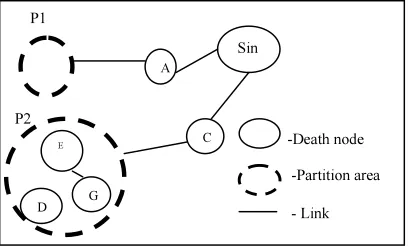
[image:4.595.306.508.265.379.2]The author Tzung-Cheng Chen et. al. [1], offered a new data collection algorithm using a mobile robot from a wireless sensor networks. Contemplate nodes A, C, J, are designated as dead nodes, which fallout in seven apportioned WSNs, P1 = {B}, P2 = {D,E,G}, harmoniously, where Pn is the nth separated WSN, n is the number, and curly braces, “{}”, suggest the position of the sensor nodes in separated WSNs. Every root of the segregated WSN will turn into a constrained sink for every sub-WSN, as their parents occur to dead nodes. These sinks will nearby contain the sensed data on warded from their sub-trees, for occurrence nodes B, D, E, D, G shown in Figure 1, for the partitioned WSNs P1, P2, correspondingly.
Figure 1: Example of partitioned WSN
Further, each sensor node covers two thresholds specified as: the values of the durable energy of near death and death, denoted as End and Ed, correspondingly. These two thresholds has a facility of 0 < Ed<End< E, where E is the consumed energy of a sensor node. The position of a sensor node is determined on the outstanding energy Es.
Two situations are considered,
If the energy of a sensor node lies among End and Ed, (i.e., 0 < Ed<Es ≤ End), then it is specified as Near-death node (Nnd).
If the energy of a sensor node lies less than Ed (i.e., 0 <Es ≤ Ed), then it is specified as Death node (Nd).
In this paper, the author Tzung-Cheng Chen et. al. [1], reflected two issues to accomplish an efficient data collection algorithm.
[image:4.595.88.292.516.639.2]Recognizing the locations of partitioned WSNs. Investigating the directional strategies of mobile robot.
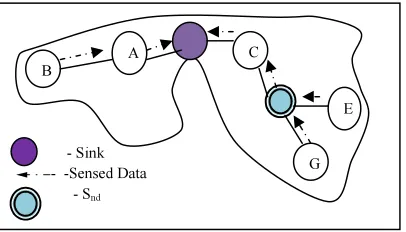
Figure 2: Relay conditions of sensed data
Generally, in Figure 2, sensor nodes are characterized into different set of roles in the wireless sensor networks. They are specified as, Nnd: Near-Death node (Nnd): stops identifying the environment.
Nd: Death node (Nd): Death packet is triggered. Snd: stop accelerating sensed data to its parent and store sensed data in the data table locally.
Sd: stop furthering any data, including control packets.
3.1.1 Identifying the locations of partitioned WSN
Two basic approaches are used for identifying the locations of subdivided wireless sensor networks. They are, Global-based approach (GBA) and Local-based approach (LBA).
The major notion of these two methodologies is to define the energy thresholds of the sensor node. The deviation among these two control approaches is the task of the near-death/dead node. For GBA, the near-death/dead node forwards the straight packet to its parent, but ends progressing the intellect data from its sub-trees. However, for LBA, the near-death/dead node is in snooze mode.
Global-Based Approach
To recognize the GBA, first, the roles of the nodes are defined. Second, the data steering is
P1
P2 -Death node
-Partition area
- Link
S
nd
Sensed data
Si B
A
E D
G C
J
N
J
Sin k
A
C
E
ISSN: www.jatit.org E-ISSN: programmed based on the role of each node. For
node setting, when the position of a node is Nnd, a Ndeath packet is stimulated by itself and then communicate to its parent and juvenile nodes. The position of the parent of the Nnd also is reformed. As Nnd ends recognizing the atmosphere and sends only Ndeath/Death packets to the parent node, the parent of the Nnd sends only those intellect data recognized from the sensor nodes. For example, in Fig. 3 when the function of node M becomes Nnd, node M will be straightforward from the child board of node J. Therefore, node J gathers sensed data from nodes L and K.
As shown in Figure 3, the WSN is divided into three partitioned WSNs as P1, P2, and P3. Actually, the intellect data is stockpiled nearby in the Snd for P2 and P3, but not for P1. As a result, the data aggregation and grouping desires to be re-programmed vigorously to contain the position of the cardinal node that guides to the partition.
[image:5.595.310.516.74.242.2]Local-Based Approach
Figure 3: Global based approach
The LBA stores the intellect data and inaugurate packets nearby when the power of a sensor node is devoted to Ed, the sensor node acts as Nd and forwards a Death packet to notify the parent and children nodes in the network. Then Nd ends observing the environment and sending recognized data and Death packets to the parent node (i.e., the Nd in sleep mode). This Nd guide to abundant sub-WSNs, depend on the MR to transmit sensed data and consolidate packets rear to the sink.
Figure 4: Local-based approach
Meanwhile, Nd’s children nodes turn into Sd, once the Death packet is acknowledged from Nd. Sd plays the role of a local sink of the islanded WSN, and the control packets and sensed data are deposited locally. Likewise, the Death packet is also received by Nd’s parent node. The Death packet is accelerated to Nd’s parent node to the sink or other Sd. As shown in Figure 4, the aggregation for the LBA. Deceptively, node M, which is an Nd, has been unconcerned from the child table of node J. As a result, nodes J collects and forwards control packets and sensed data only from nodes L and K.
3.1.2 Analyzing The Navigational Strategies Of Mobile Robot
With the control approaches, the author Tzung-Cheng Chen etl. [1], collected the sensed data of the sensor nodes in the network. Before proceeding to mobile robot for collecting the data in WSN, three phases of MR have been used. They are, the intial phase, the collection phase and the return phase.
In the initial phase, the MR decide which sensor node will be called first whether Nd and Nnd, and obvious to all sensed data that have been sent to the sink. In the collection phase, the MR will gather the sensed data and manage packets, as desired, from the restricted sinks. The return phase specifies that the sink has composed adequately sensed data and manage packets for recurring to the sink. Navigation strategies act as a significant role in obtaining the information of the Nd and Nnd. But to receive the condition of WSN both locally and globally, the author introduced three scheduling strategies. They are, time-based scheduling, location-based scheduling and dynamic-moving- based scheduling.
Time-based scheduling
Time-based scheduling (TBS) is based on the time a node determines the position of Nnd and Nd, which is specified as Ndtime and Dtime,
- Sink - -Sensed Data
- S
nd
B
A
E
D
C
[image:5.595.89.292.387.503.2]ISSN: www.jatit.org E-ISSN: correspondingly. When the position of Nnd and Nd
happens earlier, the value of Ndtime and Dtime is small. If the position of Nnd and Nd happens later, the value of Ndtime and Dtime is large. For the lesser value of Ndtime and Dtime, Nnd and Nd contain a higher precedence for a call by the mobile robot.
Location-based scheduling
For most part of the situations, the distance among the Nnd or Nd and the sink of the WSN is a main concern, particularly when the nodes next to the sink with the high routing load has their energy earlier than the other nodes. Therefore, location-based scheduling (LBS), location-based on the distance among the sink and the Nnd and Nd, is necessary. LBS are located to control the MR to stay the adjacent Nnd and Nd to gather essential information. The Euclidean distance formula estimates the distance among the sink and the position of Nnd and Nd.
Dynamic-Moving-Based Scheduling
For effectiveness deliberation, tentatively, the finest presentation of data-collecting forecasting can be attained by dynamic-moving-based scheduling (DBS) presented in this section, which is supported on the algorithm of the travelling salesman problem. DBS computes the distances with a greedy algorithm vigorously; the distances are among the current position of MR and Nnd/Nd, which have yet to be called by the MR.
3.1.3 Enhance the mobile robot navigation of WSN
The operation procedure takes two inputs that are identical to the crisis definition: the graph and the error bound. The graph signifies the working field and gives out as the atmosphere model. The option of position points on the working field to deliver location alignments to the robots ought to trust not only the apexes but also the edges on the graph. For illustration, edges awarding very long aisles may lead to pattern errors of the robots affecting beside the aisles that go beyond the error bound. We then have to put some complaint points on the aisles to capture the pattern errors—the crisis is where to set them.
The aim of the initial creation is to obtain a major explanation to the deployment-set crisis. To make certain that a position of orientation points
satisfies the requirements of the deployment-set crisis, the author Ahmad Ababnahet. al. [30], only require promising that the pattern error among any neighbouring orientation points in the position does not exceed the error hurdle. It follows that a quick method of getting a crucial answer is to employ the distinctive vertex set and to append acceptable points next to every edge to detain the configuration error. The initial construction algorithm thus consists of two steps:
Probing every edge and offering how many location points to put on the edge so that the form error does not go over the error bound.
Choosing the positions of these location points. Given the whole number of sensors K, and the B matrix, the algorithm estimates the criticism gain matrix (i.e., Gk, k =K − 1 : −1 : 0) employing the sweep method. Sensors are organized successively until all accessible sensors have been organized or when recognition necessities at all tips on the grid have been pleased (i.e., effective SE equals 0). In the iteration process, the set of points for which the recognition/miss necessities are contented is dogged and the accesses in the vector xk−1 equivalent to these points are set to 0. Consequently, the kth operation vector is considered. Nevertheless, as the operation vector can only contain {0, 1} entries, the entry in the operation vector u equivalent to the largest entry (with index jmax) in the kth operation vector (i.e., uk) is set to 1. After informing the operation vector, the subsequent overall logarithmic can be deliberate. It is also feasible to compute the achieved recognition prospect vector as pkd = 1 − exp (mk), where exp (mk) signifies the exponential of every entry of mk.
Assume that given K sensors, the author Ahmad Ababnahet. al. [30], organizing them successively, until all sensors have been prepared or the recognition necessities have been assembled at all the grid points. In the kth iteration, the Max_Deficiency algorithm determines the difference pδ among the essential detection requirements and achieved detection probabilities of available sensors and then deploys the kth sensor to the point jmax on the grid where pδ is maximum. The deployment vector u is updated by placing a 1 instead of 0 at its jmax entry. The resulting discovery possibility vector recognition requirements is calculated as pkd = 1 − exp (mk). In other words, at each step in the arrangement algorithm,
We identify the point on the grid that is most deficient in terms of meeting the recognition requirements and we place a sensor in that position,
ISSN: www.jatit.org E-ISSN: the grid that will have the extreme impact on the
cost function J.
The important notion of the detection requirements is to scrutinize the position points in the original resolution in a confident order and reduce those that are unneeded in terms of delaying the pattern error. Instead of increasing all combinations of the position points for the best solution, one analyzing series decides one path for cleansing the original solution, which has polynomial time difficulty. Given the scanning approach, the author Ahmad Ababnahet.Al., then visits the location points in the primary solution in order. For every called point, the author checks its region to observe whether it is probable to eliminate other contiguous points as keeping the pattern error beneath the error bound. The vicinity of a position point within which the pattern error is restricted inside the error bound is termed as the error-confinement region of that reference point. The error-confinement section of a position point can be resulted by investigative all the paths beginning from that position point. The checking process basically builds a spanning tree rooted at that tip in the input planar graph demonstrating the working field efficiently.
4. EXPERIMENTAL EVALUATION
The simulation environment of the area of the geographical region is 500 m × 500 m. The energy model for the sensor nodes is 0.35 W (where W denotes watt), 0.14 W, and 0.00000175 W for transmitting power, receiving power, and idling power, respectively, and the initial battery energy is 10 J, where J denotes joule. The radio coverage region of each sensor node, sink, and the MR is assumed to be a circular area 50 m in diameter. The MAC layer is the IEEE802.11 standard with distribution coordination function (DCF). In this simulation, the two-ray ground radio propagation and an Omni-directional antenna with unity gain are adopted.
To observe the effectiveness of the control approaches and navigation strategies, first, the impact of navigation strategies versus control approaches will be studied to have an overall understanding of the performance of the proposed data collection method. The performance index based on the delivery rate, distance travelled by the MR, overhead (in terms of control packet transmitted), and sensed data transmitted will be conducted. Next, the execution time will be studied for the effectiveness of the delivery rate of the GBA
and the LBA for the three proposed navigation strategies, comparing with MR assistance and without MR assistance. Meanwhile, the mobility and speed of the MR are of importance when the MR is introduced in a WSN to assist in collecting sensed data. Thus, the various speeds of the MR will be conducted and analyzed. In addition, the thresholds of the sensor nodes will be studied. Finally, the simulation results of the impact of the density of the sensor node will be presented. For the comparison of the impact of different navigation strategies, the general configuration of the setting is as follow:
The simulation time is set to be 3000 s.
The number of nodes is set to be 250, distributed randomly in a pre-defined sensor field.
The near-death energy, End, and the dead energy, Ed, are set to be 3 J and 1 J, respectively.
The speed of MRis set to be 5 m/s for general application.
5. RESULTS AND DISCUSSION
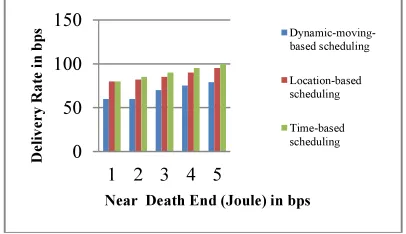
[image:7.595.304.507.497.614.2]To notice the effectiveness of the control methods and route finding strategies, first, the impression of steering strategies versus control methodologies will be studied to have an overall understanding of the performance of the offered data collection method. The below graph describes the performance and analysis of the different procedures applied for data collection process in wireless sensor networks.
Figure 5: Near death vs. Delivery rate
As declared above, the energy threshold is a major focus when bearing in mind the control technique of the GBA; therefore, it is of devotion to examine lengthily the significance of the diverse thresholds in a WSN. In this fragment, thresholds End and Ed are measured. The recreation demonstration is put to be the common pattern, but with different thresholds disseminated. For the direct approach of the GBA, the End under
0 50 100 150
1 2 3 4 5
De
li
v
e
r
y
Ra
te
i
n
b
p
s
Near Death End (Joule) in bps Dynamic-moving-based scheduling
Location-based scheduling
ISSN: www.jatit.org E-ISSN: examination is put to be 1 J, 1.5 J, 2 J, and 2.5 J,
[image:8.595.89.291.273.406.2]and the Ed is set to be a constant, 1 J. The results are shown in Figure 5, which demonstrates that the delivery time of a WSN is enhanced when End is large. It is intelligible that since of the large difference among End and Ed, more direct packets can be generated by the sink. Therefore, the MR obtains more Nnd/Nd’s from the sink and consequently, the delivery rate will be enhanced. In count, as the contradiction among the thresholds End and Ed is huge enough, the MR will used as a mobile sink.
Figure 6: No. of models vs. deployment complexity
Figure 6 designates the arrangement complexity of the models demonstrated in the wireless sensor networks. For the different types of model presents, the arrangement complexity is determined through the process of the mobile robot navigation. Compared to the optimal deployment strategy, the complexity in usage is less in the simple deployment approaches in the wireless sensor networks.
[image:8.595.98.294.589.717.2]Figure 7 describes the usefulness of the arrangement of mobile robot steering procedure to recover the data collected with respect to the set of mobile nodes in it.
Figure 7: No. of sensors vs. Effectiveness
In order to promote the demonstration of the analysis of three techniques, we present the progression of effectiveness of the collection of data in the wireless sensor networks among completed and essential recognition prospect profiles as sensors get organized in the grid. We particularly scrutinize the SE for the points that are yet to be pleased in terms of the recognition/miss necessities, which call the efficient process.
6. CONCLUSION
In conclusion, to diagnose the positions of segregated WSNs, it has examined two control approaches, the GBA and the LBA, which are maintained on diverse multiple thresholds. With the assist of three scheduling methodologies, TBS, LBS and DBS, the directory of evaluating the demonstration of the suggested approaches, is discovered to have enhanced consuming a MR in a WSN. Predominantly, it specified a constrained number of sensors for endeavour to develop the positions that the sensors need to be structured at in order to satisfy the recognition requirements in a adjusted error sense. It articulates the operation crisis as a dynamical scheme and devises the sensor operation trouble as a best control problem (linear quadratic regulator). Nevertheless, the best control-based approach is computationally challenging owing to the use of the sweep method. The experimental results showed that the analysed algorithms outperformed those WSNs that simply employed fixed sensor nodes.
REFERENCES:
[1]Tzung-Cheng Chen, Tzung-Shi Chen, Ping-Wen Wu “On Data Collection Using Mobile Robot in Wireless Sensor Networks”, IEEE Transactions on Systems, Man and Cybernetics—Part A: Systems and Humans, Vol. 41, No. 6,Nov. 2011,pp.1213-1224.
[2]Ababnah A, Natarajan B “Optimal Control-Based Strategy for Sensor Deployment”, IEEE Transactions on Systems, man and Cybernetics— Part A: Systems and Humans, Vol. 41, No. 1, Jan.2011, pp.97-104.
[3]J.-P. Sheu C.-C, Chang K.-W. Lo, and C.-W. Deng, “Design and Implementation of a Navigation System for Autonomous Mobile Robots,” International Journal of Ad Hoc Ubiquitous Computing, Vol. 6, No. 3, Aug. 2010.
[4]Chun-Han Lin, Chung-Ta King “Sensor-Deployment Strategies for Indoor Robot 0
5 10 15 20 25 30 35 40
1 2 3 4 5
De
p
lo
y
m
e
n
t
Co
m
p
le
x
it
y
No of Models
optimal control based strategy
Deployment strategy for robot navigation
0 10 20 30 40 50 60 70
1 2 3 4 5
E
ffe
c
ti
v
e
n
ess
%
No . of Sensor Nodes
Deployment Strategies for Robot Navigation
ISSN: www.jatit.org E-ISSN: Navigation”, IEEE Transactions on Systems,
Man and Cybernetics—Part A: Systems and Humans, Vol. 40, No. 2, March 2010, pp.388-398.
[5]B. Yuan, M. Orlowska, and S. Sadiq, “On the Optimal Robot Routing Problem in Wireless Sensor Networks,” IEEE Transactions of Knowledge Data Engineering, Vol. 19, No. 9, Sep. 2007,pp. 1252–1261.
[6]C.-H. Wu, K.-C. Lee, and Y.-C. Chung, “A Delaunay triangulation based method for wireless sensor network deployment,”Comput. Commun., Vol. 30, No. 14, Oct. 2007, pp. 2744– 2752.
[7]B. Carter and R. Ragade, “A probabilistic model for the deployment of sensors,” Proc. IEEE SAS, 2009, pp. 7–12.
[8]X. Bai, D. Xuan, Z. Yun, T. H. Lai, and W. Jia, “Complete optimal deployment patterns for full-coverage and k-connectivity wireless sensor networks,” Proc. 9th ACM Int. Symp. Mobile Ad Hoc Netw. Comput., Hong Kong, 2008, pp. 401– 410.
[9]F. Zhang, Y. Xi, Z. Lin, and W. Chen, “Constrained motion model of mobile robots and its applications,” IEEE Transactions on Systems, Man and Cybernetics—Part B: Cybernetics, Vol. 39, No. 3, Jun. 2009, pp. 773– 787.
[10]F. Bourgault, A. Chokshi, J. Wang, D. Shah, J. Schoenberg, R. Iyer, F. Cedano, and M. Campbell, “Scalable Bayesian human-robot cooperation in mobile sensor networks,” Proc. IEEE/RSJ Int. Conf. IROS, Sept.2008, pp. 2342– 2349.
[11]O. Rahman, A. Razzaque, and C. S. Hong, “Probabilistic sensor deployment in wireless sensor network: A new approach,” Proc. 9th Int. Conf. Adv. Commun. Technol., Vol. 2, No. 12, Feb. 2007, pp. 1419–1422.
[12]H. Liu, P. Wan, and X. Jia, “Maximal lifetime scheduling for sensor surveillance systems with K sensors to one target,” IEEE Trans. Parallel Distrib. Syst., Vol. 17, No. 12, Dec. 2006, pp. 1526–1536.
[13]Cibi Castro &Dr.R.Rajesh “A Delay Aware Tree Based Technique in Wireless Sensor Network”, Proc. International Conference on Computing and Control Engineering(ICCCE 2012), 12 & 13 April, 2012.
[14]Tekdas et al., “Using Mobile Robots to Harvest Data from Sensor Fields,” IEEE Wireless Comm., Vol. 16, No. 1,Feb. 2009, pp. 22-28. [15]Luo and Hubaux, “Joint Mobility and Routing
for Lifetime Elongation in Wireless Sensor
Networks,” Proc. IEEE INFOCOM, Vol.3,Mar.2005.pp. 1735-1746.
[16]Liang He et. Al., “Reducing data collection latency in Wireless sensor networks with mobileelements”, IEEE Conference on Computer Communications Workshops (INFOCOM WKSHPS), 2011, pp.572-577. [17]Zhanshan Wang et. Al., “LMI-Based Approach
for Global Asymptotic Stability Analysis of Recurrent Neural Networks with Various Delays and Structures”, IEEE Transactions on Neural Networks, Vol. 22, No. 7, 2011, pp.1032-1045. [18]Sugihara and. Gupta, “Speed Control and
Scheduling of Data Mules in Sensor Networks,” ACM Trans. Sensor Networks, Vol. 7, No. 1, Aug. 2010, article 4.
[19]XiaohuaXu et. Al., “Real-time Data Collection Scheduling in Multi-hop Wireless Sensor Networks”, ACM Trans, Aug 2013, pp. 1-6. [20]Mahdi Lotfinezhadet. al., “Adaptive
Cluster-Based Data Collection in Sensor Networks with Direct Sink Access”, IEEE Transactions on Mobile Computing, 2012, pp 1-15.
[21]Liang He et. Al., “Reducing Data Collection Latency in Wireless Sensor Networks with Mobile Element”, Proc. the third International workshops on Wireless Sensor, Actuator and Robot Networks, 2011, pp 578-583.
[22]Siyuan Chen et. Al., “Capacity of Data Collection in Arbitrary Wireless Sensor Networks” IEEE Trans. Parallel Distrib. Syst., Vol.23, No.1, 2012, pp.52-60.
[23]Xiuchao Wu et. Al., “Data Pre-Forwarding for Opportunistic Data Collection in Wireless Sensor Networks” IEEE Transactions on Wireless Sensor Networks, 2012, pp.1-8. [24]BarisTas and Ali S¸amanTosun , “Data
Collection using Transmit-Only Sensors and a Mobile Robot in Wireless Sensor Networks”, IEEE Transactions on Mobile Robots in Wireless Sensor Networks, Aug. 2012, pp.1-9. [25]O¨ zlemDurmazet. Al., “Fast Data Collection
in Tree-Based Wireless Sensor Networks” IEEE Transactions on Mobile Computing, Vol.11, No.1, 2012, pp. 86-99.
[26]Tao Zhang et. Al., “Elevator-Assisted Sensor Data Collection for Structural Health Monitoring”, IEEE Transactions on Mobile Computing, Vol.10,No.10, 2011, pp. 1-14. [27]NavidHassanzadehet. Al., “Efficient Mobile
Data Collection with Mobile Collect”, ACM Trans on Wireless Sensor Networks, 2011, pp.25-32.
ISSN: www.jatit.org E-ISSN:
Transactions on Systems, Man andCybernetics—Part A: Systems and Humans, Vol. 41, No. 1,Jan.2011, pp. 97-104
[29]Seokhoon Yoon et. Al., “Coordinated Locomotion and Monitoring Using Autonomous Mobile Sensor Nodes”, IEEE Transactions on Parallel and Distributed Systems, Vol.22, No.10, 2011.
[30]Tanaka, K. et. Al., “Wireless Vision-Based Stabilization of Indoor Micro helicopter”, IEEE/ASME Transactions on Mechatronics, Vol.17, No.3, 2012, pp.519-524.
[31]Fan Bai et. Al., “A Novel Information Acquisition Technique for Mobile-Assisted Wireless Sensor Networks”, IEEE Transactions on Vehicular Technology, Vol.61, No.4, 2012, pp. 1752-1761.
[32]Chun-Han Linet. Al., “Sensor-Deployment Strategies for Indoor Robot Navigation”, IEEE Transactions on Systems, Man and Cybernetics, Part A: Systems and Humans, Vol.40, No.2, 2010, pp.388-398.
[33]Jun Luoet. Al., “Joint mobility and routing for lifetime elongation in wireless sensor networks”, Proc. 24th Annual Joint Conference of the IEEE Computer and Communications Societies. Proceedings IEEE INFOCOM , Vol.3, 2005, pp. 1735-1746.
[34]Bo Yuanet. Al., “On the Optimal Robot Routing Problem in Wireless Sensor Networks”, IEEE Transactions on Knowledge and Data Engineering, Vol.19, No.9, 2007, pp.1252-1261.
[35]Mora Vargas, A.E.et. Al., “Development of a Networked Robotic System for Disaster Mitigation, -Navigation System based on 3D Geometry Acquisition”, IEEE/RSJ International Conference on Intelligent Robots and Systems, 2006, pp.4821 – 4826.
[36]Miao Zhao et. Al., “Bounded Relay Hop Mobile Data Gathering in Wireless Sensor Networks”, IEEE Transactions on Computers, Vol.61, No.2,2012, pp.265-277.