Citation:
Gammon, C and Morton, K and Atkin, A and Corder, K and Daly-Smith, A and Quarmby, T and Suhrcke, M and Turner, D and van Sluijs, E (2019) Introducing physically active lessons in UK secondary schools: feasibility study and pilot cluster-randomised controlled trial. BMJ Open, 9. ISSN 2044-6055 DOI: https://doi.org/10.1136/bmjopen-2018-025080
Link to Leeds Beckett Repository record: http://eprints.leedsbeckett.ac.uk/5784/
Document Version: Article
The aim of the Leeds Beckett Repository is to provide open access to our research, as required by funder policies and permitted by publishers and copyright law.
The Leeds Beckett repository holds a wide range of publications, each of which has been checked for copyright and the relevant embargo period has been applied by the Research Services team.
We operate on a standard take-down policy. If you are the author or publisher of an output and you would like it removed from the repository, please contact us and we will investigate on a case-by-case basis.
1
Introducing physically active lessons in UK secondary schools: feasibility study and
1pilot cluster-randomised controlled trial
2Catherine Gammon
1, Katie Morton
1, Andrew J Atkin
1,2, Kirsten Corder
1, Andy Daly-Smith
3,
3Thomas Quarmby
3, Marc Suhrcke, David Turner
2, Esther van Sluijs
1* 41 MRC Epidemiology Unit and UKCRC Centre for Diet and Activity Research (CEDAR), University of 5
Cambridge, Cambridge, UK 6
2 School of Health Sciences, University of East Anglia, Norwich, UK 7
3 Carnegie School of Sport, Leeds Beckett University, Leeds, UK 8
4 Centre for Health Economics, University of York, York, UK 9
10
* Corresponding author: Dr Esther van Sluijs ([email protected]; 01223 769189) 11
Address: UKCRC Centre for Diet and Activity Research (CEDAR), MRC Epidemiology Unit, University of 12
Cambridge School of Clinical Medicine, Box 285 Institute of Metabolic Science, Cambridge Biomedical 13
Campus, Cambridge, CB2 0QQ, UK 14
Keywords: Active lessons, movement integration, physical activity, sedentary time, school health 15
2 Abstract
17
Objectives: Assess feasibility, acceptability and costs of delivering a physically active lessons (PAL) 18
training programme to secondary school teachers and explore preliminary effectiveness for reducing 19
pupils’ sedentary time. 20
Design and setting: Secondary schools in East England; one school participated in a pre-post feasibility 21
study, two in a pilot cluster-randomised controlled trial. In the pilot trial, blinding to group assignment 22
was not possible. 23
Participants: Across studies, 321 randomly selected students (51% male; mean age: 12.9 years), 78 24
teachers (35% male) and two assistant head-teachers enrolled; 296(92%) students, 69(88%) teachers 25
and two assistant head teachers completed the studies. 26
Intervention: PAL training was delivered to teachers over two after-school sessions. Teachers were 27
made aware of how to integrate movement into lessons; strategies included students collecting data 28
from the environment for class activities, and completing activities posted on classroom walls, instead 29
of sitting at desks. 30
Primary and secondary outcomes: Quantitative and qualitative data were collected to assess feasibility 31
and acceptability of PAL training and delivery. Outcomes were assessed at baseline and ~8 weeks post-32
training; measures included accelerometer-assessed activity, self-reported well-being, and 33
observations of time-on-task. Process evaluation was conducted at follow-up. 34
Results: In the feasibility study, teachers reported good acceptability of PAL training and mixed 35
experiences of delivering PAL. In the pilot study, teachers’ acceptability of training was lower and 36
teachers identified aspects of the training in need of review, including the outdoor PAL training and 37
learning challenge of PAL strategies. In both studies, students and assistant head-teachers reported 38
good acceptability of the intervention. Preliminary effectiveness for reducing students’ sedentary time 39
3 Conclusions: No evidence of preliminary effectiveness on the primary outcome and mixed reports of 41
teachers’ acceptability of PAL training suggest the need to review the training. The results do not 42
support continuation of research with the current intervention. 43
Trial registration: ISRCTN registry; ISRCTN38409550. 44
Funding: Department of Health Policy Research Programme (PR-R5-0213-25001). 45
46
Article Summary 47
Strength and limitations of this study 48
We completed thorough feasibility and pilot testing work to inform the decision of whether to 49
progress with the current intervention and its evaluation. 50
We collected quantitative and qualitative data which provided valuable information on contextual 51
influences and allowed us to address research questions more comprehensively. 52
We were unable to collect all planned follow-up measures from teachers and students in feasibility 53
study, including teacher follow-up questionnaires and class observations of time-on-task. 54
We did not carry out longer-term follow-up measures of teacher acceptability and physically active 55
lesson delivery (i.e., beyond ~8 weeks post-training); longer follow-up would have provided an 56
4 INTRODUCTION
58
Globally, most adolescents (~80%) do not achieve government-recommended physical activity 59
guidelines[1] and engage in high levels of sedentary behaviour[2]. As such, interventions are needed to 60
support youth in achieving a healthy activity profile. Secondary/high schools present an opportunity for 61
the implementation of activity interventions, as during school hours activity is lower and sedentary time 62
is higher than during other segments of an adolescent’s week[3, 4]. 63
The Creating Active School Environments (CASE) project is a three-year research programme funded by 64
the UK Department of Health Policy Research Programme. CASE aims to identify environmental 65
strategies to help adolescents move more and sit less during school hours. Initial phases of CASE 66
involved a systematic literature review[5] and secondary data analysis[6] to identify promising 67
secondary school-based activity interventions. Morton and colleagues (2017) subsequently completed 68
a Delphi study, involving stakeholders in the prioritisation of interventions. Physically active lessons 69
(PAL) were perceived to be the most feasible, acceptable and cost-effective intervention for secondary 70
school settings[7]; these results informed the final, feasibility and pilot-testing phase of CASE. 71
PAL are a pedagogical approach whereby activity supports the delivery of academic material[8]. During 72
PAL, movement is integrated into teaching and as such, PAL are distinct from ‘brain/movement breaks’, 73
when activity is separate from learning. Evidence from primary schools indicates that PAL can improve 74
physical activity, academic achievement and lesson enjoyment[9-12]. To our knowledge, only two 75
studies have trialled the use of PAL among adolescents[13, 14]. Helgeson (2013) reported no influence 76
of the ‘Energizers’ PAL programme on reading comprehension scores among junior high school 77
students and did not explore activity levels as a primary outcome[13]. Cothran and colleagues (2010) 78
reported on primary and secondary/high school teachers’ experiences of a one-year movement 79
integration intervention. Compared to primary school teachers, secondary teachers faced different 80
challenges when attempting to integrate activity into lessons, in particular standardised testing 81
5 schools)[14]. Cothran and colleagues did not measure student activity behaviours as an intervention 83
outcome[14]. The positive effects of PAL reported for primary students suggest there is value in 84
exploring if secondary students can experience similar benefits. Given the organisational and 85
environmental differences between primary and secondary schools, it is important to conduct high 86
quality feasibility and pilot testing of secondary school PAL interventions. 87
A PAL training programme for secondary school teachers was tested in a feasibility study and a cluster-88
randomised controlled pilot study. The studies aimed to explore the feasibility, acceptability, costs, and 89
preliminary effectiveness of a PAL training programme for secondary teachers. Acceptability of study 90
processes was also examined, in anticipation of conducting a subsequent full trial. The feasibility study 91
tested the intervention among maths and English teachers at one school, the pilot study tested the 92
intervention among all-subject teachers and as part of a controlled trial. This paper presents the 93
feasibility study and pilot study followed by an overall discussion and conclusion (ISRCTN38409550). 94
1. FEASIBILITY STUDY 95
Ethical approval for both studies was granted by the University of Cambridge’s School of the Humanities 96
and Social Sciences. The aim of the feasibility study was to assess (i) the feasibility, acceptability, costs, 97
and preliminary effectiveness (for reducing sedentary time and improving wellbeing and time-on-task 98
among students) of a PAL training programme for secondary school teachers, and (ii) the feasibility and 99
acceptability of study procedures. 100
101
Feasibility Study - Methods 102
Recruitment 103
Potential schools were identified from previous local research and approached with study information 104
(n=2). One mixed-sex, non fee-paying secondary school participated. The head teacher provided 105
6 trialled with maths and English teachers, and chose years 7 and 9 to participate in study evaluation 107
measures. The school were told they would be able to keep the PAL training resources. 108
Parents of all Year 7 and 9 students (11-14 years) received study information and students were invited 109
to participate in evaluation measures. Parents were given two weeks to opt out (passive parental 110
consent) via email, freephone, or freepost. From the students who had not been opted out, 120 (sixty 111
Year-7 and sixty Year-9 students; 50% male) were randomly selected for evaluation measures (using 112
class lists and random number generating software). The study’s feasibility focus meant that a formal 113
power calculation was not necessary to inform sample size; a sample of 60 participants per year is 114
consistent with samples of similar studies[15]. Students provided written assent for evaluation 115
measures. 116
Maths and English teachers (n=15) received study information two weeks before the PAL training. The 117
senior leadership team requested that all maths and English teachers attend the training. Teachers 118
could choose to participate in the evaluation measures, those agreeing provided written consent. Over 119
five school days students received approximately five maths lessons and four English lessons. 120
Intervention 121
The PAL training was developed by a team with teacher training qualifications and experience in indoor 122
(two trainers) and outdoor active learning (one trainer). The training was delivered at the intervention 123
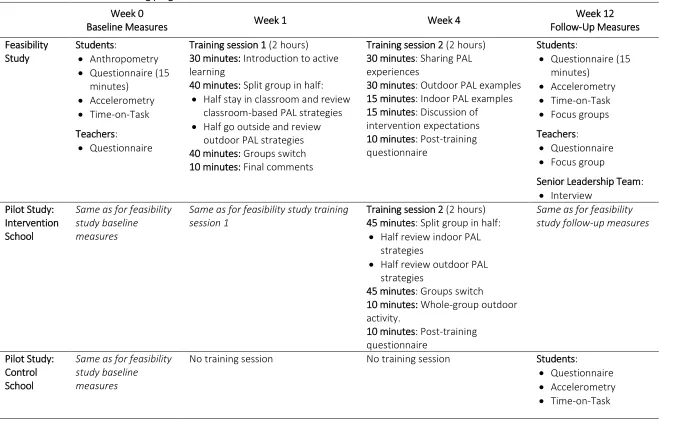
school between March and April, during pre-scheduled after-school teacher-training time. Table 1 124
outlines the training programme and example active lessons are published as supplementary material. 125
The focus was on supporting teachers to adopt active pedagogical approaches (teaching strategies that 126
incorporate activity), rather than providing new, PAL plans. The training was underpinned by aspects of 127
social cognitive theory and aimed to enhance teachers’ self-efficacy in relation to PAL[16]. As such it 128
drew from two prominent behaviour change techniques: barrier identification and 129
modelling/demonstrating behaviour[17]. With the former, teachers were encouraged to identify 130
7 latter, the trainers demonstrated a plethora of PAL teaching strategies that teachers could employ in 132
their lessons. Figure 1 outlines the preliminary logic model of how the teacher-focused intervention 133
could lead to changes in students’ activity. Prior to the training, the research team visited the 134
participating school and ascertained the availability of indoor and outdoor spaces and equipment that 135
could be used for PAL. Syllabi for maths and English were requested to allow trainers to prepare 136
relevant examples for the training. 137
Measurements 138
Table 1 outlines the timeline of study measures. Feasibility and acceptability were assessed using 139
questionnaires and focus groups. Three focus groups (with five teachers, eight Year-7 and four Year-9 140
students) and an interview with the assistant head teacher were completed using a semi-structured 141
interview. 142
i. Evaluation of Intervention and Study 143
Feasibility/acceptability of the intervention: Questionnaire items and focus group questions asked 144
about teachers’ perceptions of the utility, value and relevance of the training (adapted from[18, 19]). 145
Questionnaires asked if teachers would recommend the training to other teachers and provided free-146
text boxes for teachers to suggest improvements. Training session attendance rates were recorded. 147
Feasibility/acceptability of PAL delivery: Questionnaire items and focus group questions asked teachers 148
about classroom management during PAL, enjoyment of teaching PAL, time needed to prepare and 149
deliver PAL, and barriers to PAL delivery (items from[20]). 150
Acceptability of PAL participation: Questionnaire items and focus group questions asked students about 151
their experience of PAL participation, enjoyment of PAL, their preference for active vs. desk-based 152
8 Costs: Teachers and students reported resources purchased to deliver/participate in PAL. The research 154
team recorded time and costs associated with the training team’s development and delivery of the 155
intervention. 156
Study processes: The research team made field notes on study processes that proved to be challenging 157
or ineffective, for example, students struggling to understand a questionnaire item. 158
ii. Intervention Outcomes 159
Student anthropometry: Anthropometric measures were completed by trained staff using standard 160
procedures. Height was measured using a stadiometer (Leicester height measure, Chasmors, Leiceter, 161
UK) to the nearest 0.1 cm, and weight was measured to the nearest 0.1 kg (Tanita, type TBF-300A, 162
Tokyo, Japan). The measurement stations were set up so that results were not visible to anyone except 163
the measurement staff. Height, weight, sex, birthdate and measurement date were used to calculate 164
participants’ body mass index (BMI; kg/m2) and BMI percentile. 165
Activity intensity: Axivity AX3 triaxial wrist-worn accelerometers (non-dominant wrist) were used to 166
measure activity behaviours. These devices have been used among a larger sample of Year-9 167
participants in the GoActive study[21] and the UK Biobank Cohort Study[22]. Wrist-worn monitors are 168
validated for the assessment of energy expenditure in pediatric populations[23] with higher participant 169
compliance when compared to waist-worn accelerometers[24]. Participants were given verbal and 170
written instructions on monitor wear, including that the monitor was waterproof and could be worn 171
continuously for the next seven days (Monday to Monday). 172
The first day of monitor wear was dropped[25]; included participants provided valid data for ≥80% of 173
school hours for ≥two school days, at baseline and follow-up[26-28]. Acceleration was recorded at 174
100Hz with a dynamic range of ±8g. Data from the monitors was downloaded in continuous waveform. 175
Euclidean Norm Minus One (ENMO) represents acceleration magnitude at each measurement, 176
9 spent at 0-30 ENMO was classified as sedentary activity (equivalent to 1-1.5 METs); 30-210 ENMO as 178
light-intensity activity (1.5-4 METs); 210-500 ENMO as moderate-intensity activity (4-7 METs), and 179
above 500 ENMO as vigorous-intensity activity[29, 30]. 180
Mental Health and Wellbeing: Students completed questionnaire measures of positive and negative 181
affect[31], academic efficacy, disruptive behaviour[32], enjoyment of school classes[33] and health 182
related quality of life[34-39] at baseline and follow-up. All questionnaires are validated for use with 183
adolescents and were analysed according to published instructions[31, 32, 39]. 184
Time-on-task: Students’ time-on-task was assessed during three lessons by one member of the research 185
team using a momentary time-sampling procedure (which incurs less bias than other sampling 186
procedures[40, 41]). At the start of each observed class, the teacher asked all students participating in 187
the study to raise their hands. From the students that raised their hands, the researcher identified two 188
boys and two girls (when possible) to observe. The researcher chose students sitting in different areas 189
of the classroom. Each student was observed once per minute, in a consistent order, for the duration 190
of the lesson. Students’ behaviour was coded as: (i) on-task, (ii) off-task-passive, (iii) off-task-motor, or 191
(iv) off-task-noise[42]. The mean percentage of intervals recorded as ‘on task’ for observed students 192
and classes was calculated and used as the outcome measure. 193
Prior to classroom observations, a validation activity was completed where two researchers discussed 194
definitions and concurrently coded student behaviour using four online videos. Observers’ codes 195
matched for 95% of observation intervals. 196
Descriptive Statistics 197
Descriptive statistics of the sample, primary and secondary outcomes, and quantitative measures of 198
feasibility and acceptability are summarised. Focus group transcripts were reviewed; recurring 199
comments and themes relevant to the research questions were identified. 200
10 Feasibility Study - Results
202
Recruitment and sample characteristics 203
Student and teacher recruitment and characteristics are summarised in supplementary tables 1 and 2. 204
Of 120 students invited to participate in the evaluation measures, 99 were recruited, with 91 (92%) 205
providing data at baseline and follow-up. Students had a mean age of 13.0 (±1.1) years, 52% were male 206
and 27% were classified as overweight/obese. Teachers were predominantly female (67%) and below 207
the age of 45 (83%). 208
Feasibility and Acceptability 209
Training session one was attended by 14 (out of 15) teachers (7 maths, 7 English), training session two 210
was attended by 12 teachers (7 maths, 5 English), 11 teachers attended both sessions. Teacher 211
feedback demonstrated acceptability of the training, with 100% recommending the training to other 212
teachers (supplementary table 3). Individual and collective efficacy for delivering PAL improved from 213
2.7 to 3.2, and 2.4 to 3 (out of 4), respectively. At follow-up, ≥eight teachers had attempted to deliver 214
PAL. Teacher’s goals for PAL delivery averaged 2.1 (SD=1.0) lessons per week, with an average targeted 215
reduction in sitting time of 15.8 (SD=8.0) minutes. Some teachers reported positive experiences of 216
delivering PAL, while others reported challenges (Text box 1). 217
Teacher-reported barriers included disruptive behaviour, lethargy and off-topic chatting, challenges re-218
focusing students after an active portion of class, and limited classroom space. Teachers identified 219
facilitators of PAL delivery as theirs and the students’ enjoyment of PAL, good weather allowing them 220
to go outside, more classroom space and a more diligent group of students. Teachers reported ≤15 221
extra minutes were required to plan PAL, and a few extra minutes were needed to prepare students 222
for PAL participation. 223
Of the students who recalled participating in an active lesson (47%), most preferred PAL to desk-based 224
11 Students reported enjoying going outside and moving around (30%), that PAL were less boring/more 226
fun than desk-based lessons (26%) and that they could concentrate better (14%). Negative comments 227
about PAL included lethargy (12%), more disruptive behaviour (9%), and less work achieved (12%; text 228
box 1). 229
The assistant head teacher felt the training was well-received and high-quality professional 230
development. The school’s reasons for participating in the project included the potential for improving 231
students’ mental health and the motivation to be innovative in the classroom. The assistant head 232
teacher commented that teaching staff had enjoyed taking students outside for lessons and the project 233
had involved a low level of commitment from the school. 234
Costs 235
Training delivery costed £910, comprised of £410 staff costs and £500 for training equipment. 236
Participants reported purchasing sticky tape (teacher, ~£2) and shoes and tights (student, ~£30). 237
Study Processes 238
The majority of study procedures were completed successfully. Challenges encountered included that 239
students struggled to complete a blank timetable indicating when their Maths and English lessons were, 240
and despite efforts, we were unable to schedule follow-up classroom observations. Teacher baseline 241
questionnaire return was low and the follow-up focus group was conducted in a 15-minute timeslot 242
due to late changes. 243
Preliminary effectiveness 244
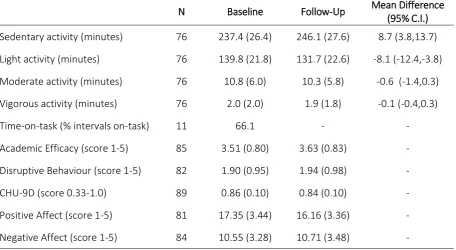
Table 2 summarises baseline and follow-up data for all student measures. Sedentary time increased by 245
8.7 minutes and time spent in light-intensity activity decreased by 8.1 minutes. Minimal changes were 246
observed in the mental health and wellbeing scores between baseline and follow-up. 247
12 The findings suggest it is feasible and acceptable to deliver a PAL training program to secondary school 249
maths and English teachers. Importantly, the senior leadership representative was supportive of the 250
training[43]. Secondary school teachers had mixed reports of delivering PAL, the identified barriers and 251
facilitators were consistent with those previously reported[43]. It was noted that teacher acceptability 252
of PAL delivery should be explored further in the next phase of intervention evaluation. The positive 253
student response to PAL indicates acceptability and is consistent with results from PAL interventions in 254
primary schools[44]. 255
We were successful in recruiting and consenting participants, and the majority of evaluation measures 256
were completed without problems. The retention of >90% of participants from baseline to follow-up 257
suggests evaluation measures were acceptable. Suggested changes included scheduling all research 258
activities at the start of the project and acquiring student timetables from the school’s administration 259
team. 260
Limitations of this feasibility study include the small sample size and the lack of control group, making 261
it not possible to draw conclusions about the contribution of the intervention to the observed changes. 262
The change in sedentary activity levels is inconsistent with previous research reporting that younger 263
children’s sedentary time on weekdays decreases between spring and summer[45]. Increased negative 264
feelings and lower wellbeing among students between March and June is consistent with typical 265
changes observed in students’ wellbeing over a school term[46, 47]. 266
267
2. PILOT STUDY 268
Following successful implementation of the intervention in the feasibility study, we sought to extend 269
our previous work and explore the potential value of conducting a full-scale randomised controlled trial. 270
The aims of the pilot cluster-randomised controlled trial were (i) to assess the feasibility, acceptability, 271
preliminary effectiveness and costs of delivering a PAL intervention at a whole-school level (to all 272
13 274
Pilot Study - Methods 275
Recruitment and Randomisation 276
Schools: We aimed to recruit three schools - two intervention (to test whole-school delivery of the 277
intervention in different settings) and one control (to test the acceptability of school-level 278
randomisation). In June-July 2017, 26 non fee-paying, mixed gender, secondary schools in the East of 279
England were emailed study information and invited to participate (the school that took part in the 280
feasibility study was not invited to participate in the pilot study). The first three schools to agree were 281
recruited; one school withdrew prior to student recruitment (and randomisation). We were unable to 282
replace the school within an appropriate timeframe. After baseline measures, individuals separate from 283
the research team performed a coin-toss to assign intervention and control schools. The nature of the 284
intervention and goals of the evaluation measures meant it was not possible to blind participants. Due 285
to differences in follow-up measures between control and intervention schools, it was not possible to 286
blind measurement staff at follow-up. 287
Students: Recruitment proceeded as outlined for the feasibility study. Schools were asked to choose 288
one younger year (7 or 8) and one older year (9 or 10) group to participate in evaluation measures. This 289
would allow assessment of differential responses to the intervention by age. The intervention school 290
selected Years 7 and 9 and the control school selected Years 8 and 9. Following feasibility study 291
procedures, we randomly selected 130 students (50% male, 50% from each year) from each school for 292
evaluation measures (based on feasibility study retention rates), with the aim of obtaining full data on 293
100 participants. 294
Teachers: A teacher information and recruitment meeting was scheduled at both schools, during which 295
14 leadership team that they would be required to attend the PAL training if allocated as the intervention 297
school; all teachers were free to decide on participation in evaluation measures. 298
Intervention 299
Extending the feasibility study, the intervention was delivered to all subject teachers. Training all subject 300
teachers is consistent with the whole-school approach recommended for activity promotion and 301
obesity prevention among youth[48, 49]. Given the acceptability of the training demonstrated in the 302
feasibility study, the structure and goals of the training for the pilot study were similar. Minimal changes 303
were made to the indoor training component, which focused on generic active learning strategies, 304
applicable to any subject (e.g., different workstations around the classroom). In the feasibility study, 305
the outdoor training component provided multiple subject- and topic-specific lesson ideas; the 306
inclusion of all subject teachers meant fewer subject-specific examples could be actively worked 307
through during the pilot study training. One additional outdoor lessons trainer was involved to train the 308
larger group of teachers. 309
Measurements 310
Table 1 outlines the timeline of study measures; all data were collected at schools, during school hours. 311
To increase teacher baseline questionnaire return, questionnaires were distributed during the pre-312
training teacher information meeting, and completed following consent. Data collection followed the 313
same procedures as described for the feasibility study, except for the assessment of PAL dose and time 314
on task. 315
PAL Dose: A teacher timetable was created using school-provided student timetables, detailing their 316
Year 7 and 9 lessons. During the student accelerometer assessment at follow-up, teachers were given 317
their personalised timetable and asked ‘please circle which of the listed Year 7 and/or 9 classes were 318
(or will be) delivered as an active lesson.’ Teachers responses were used to calculate PAL dose. Time on 319
15 delivery of PAL training) the research team observed typical desk-based lessons. At follow-up, the 321
research team asked to observe physically active lessons. 322
Patient and Public Involvement 323
In an earlier phase of CASE, opinions of key stakeholders regarding (i) suitable PA interventions for 324
secondary schools and (ii) salient outcomes, were explored in a Delphi study ([7]). The decision to trial 325
a PAL intervention and inclusion of mental health and time-on-task measures were informed by the 326
Delphi study. While stakeholders were not involved in study design, conduct or recruitment, they 327
reviewed questionnaires and provided feedback on qualitative findings. Student participants received 328
a personal PA report and participating schools will be provided with a summary of the findings. Assistant 329
head teachers commented on the time commitment of the intervention and teacher participants 330
reported on time spent implementing intervention components. 331
Descriptive statistics 332
Descriptive statistics and focus group analysis proceeded as outlined for the feasibility study. 333
Pilot Study - Results 334
Figure 2 shows the flow of participants, with further information on student and teacher recruitment 335
and sample characteristics in supplementary tables 1 and 2. Of the assenting students (n=222) 92% 336
provided data at two time points. Half of the students were male and 24% were classified as 337
overweight/obese. The majority of teachers were female and >50% of staff reported delivering at least 338
one PAL a week at baseline. At the intervention school, 30 and 33 teachers attended training session 339
one and two, respectively (29 teachers attended both). 340
Feasibility and Acceptability 341
Average scores regarding teachers’ acceptability of the training fell below 4 (the ‘neutral’ value) 342
indicating negative feelings towards the training (supplementary table 3). Teachers reported training 343
16 One teacher commented: “they were more bonus activities, like extra treat things… you couldn’t get 345
much learning done through them” (Science teacher, female). Teachers felt it was assumed they 346
weren’t delivering PALs prior to the training and this created resistance towards the training effort. 347
Teachers reported that the PAL ideas were not novel and repetitive, the focus on outdoor learning was 348
distracting, and the value of outdoor activities wasn’t clear. 349
More than half of teachers reported delivering at least one PAL a week at baseline. PAL delivery 350
decreased for four teachers (11%), was maintained by six teachers (17%), and increased for 13 teachers 351
(36%) (excluding P.E. and drama teachers). At follow-up, teachers indicated they were likely to continue 352
teaching PAL, although they reported concerns about students not learning as much during PAL. Some 353
teachers felt older students could be more lethargic and resistant: “the younger ones love getting up 354
and interacting with each other. I think the older ones do, it just takes… more effort to get them going” 355
(History teacher, female). 356
The majority of teachers reported ≤15 minutes for planning, ≤5 minutes for classroom preparation, and 357
≤5 minutes for student preparation. The time needed to deliver an outdoor activity – in particular the 358
transition between indoors and outdoors - was identified as a barrier to implementation. The assistant 359
head teacher also commented about the pitch of the training and poor use of learning time due to 360
transitioning. They felt the indoor component of the training had been more informative and 361
appropriate, and commented staff had used active learning strategies indoors, but not outdoors. 362
Finally, they commented that PAL implementation had declined with time. 363
Of the students who recalled participating in a PAL (58%), >90% wanted teachers to continue teaching 364
PAL, with no evidence of differences in intervention acceptability by sex or weight status. Students 365
commented that PAL were fun and helped learning, and they liked moving more: “I really enjoyed it. It 366
gave me more of an understanding… because when you’re just copying off the board some writing I 367
17 Students however also commented that during PAL some students messed around more and didn’t 369
focus on work, and work was easier to do when sitting down. 370
Student PAL dose 371
In one week, 62/175 lessons (35%) to Year 7 and 9 students were active (31 lessons each). Each teacher 372
delivered an average of 2.2 PALs (range = 0-9). Year-7 students received an average of 6.9 PAL (range: 373
5-10; 28% of one week’s lessons) and Year-9 students 6.9 (range: 2-13; 28%). This represents the 374
contribution across all subjects. 375
Costs 376
The cost of delivering the training was £901, comprised of £451 staff time and £450 equipment. Session 377
one was delivered by three trainers, while session two was delivered by four trainers. Four teachers 378
purchased resources to support PAL delivery, including science equipment, textiles equipment, post-it 379
notes and whiteboard pens, and printed resources. Four students reported purchasing resources to 380
support PAL participation – three purchased sports shoes (~£30 per pair) and one a mouth guard (~£7). 381
Preliminary Effectiveness 382
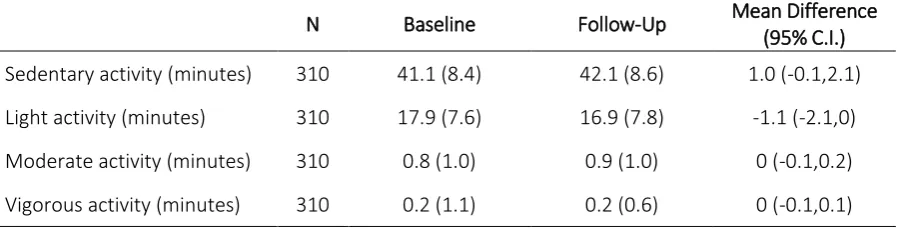
Table 3 presents activity intensity during PAL at follow-up and the equivalent lesson at baseline 383
(excluding P.E. and drama lessons). There was no evidence of changes in sedentary activity or time 384
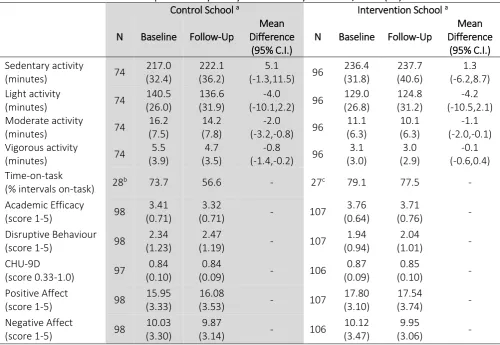
spent in light, moderate and vigorous activity intensities. Table 4 summarises baseline and follow-up 385
values for all outcome measures for intervention and control participants. There was no evidence of 386
preliminary effectiveness on sedentary time or light activity, or on indicators of mental health and 387
wellbeing (including academic efficacy, positive & negative affect, and disruptive behaviour). 388
Pilot Study - Reflections 389
Extending the work conducted in the feasibility study, this pilot study demonstrates the feasibility of 390
whole-school intervention delivery. However, teachers expressed numerous concerns about the PAL 391
18 the outdoor component, and potential loss of valuable learning time. These examples are consistent 393
with previous research reporting that time and standardised testing pressures are barriers to PAL 394
implementation, particularly for secondary school teachers[14]. The feedback suggests a need to 395
review the content of the training, particularly the outdoor component. 396
Teachers comments indicated acceptability of delivering PAL and there was a measurable increase in 397
PAL delivery. Feedback suggests teachers’ acceptability may reflect prior knowledge and experience of 398
PAL. In addition, students reported enjoying PAL. Support for the intervention by multiple stakeholders 399
is an important facilitator of successful implementation[43]; as such, the feedback received here is 400
encouraging. 401
Some students reported purchasing sports shoes and mouthguards for PAL; none of the strategies 402
introduced in the PAL training involved students changing clothing/shoes or using mouthguards. It is 403
conceivable that when completing the follow-up questionnaire some students considered P.E. lessons 404
in their appraisal of PAL and reported shoes and mouthguards purchased for this. 405
We successfully tested study procedures and intervention delivery at a whole-school level, with 406
adequate recruitment and retention rates and continued control school involvement indicating 407
acceptability of randomisation. Efforts made to improve data collection processes from the feasibility 408
study, e.g., of student timetables and teacher questionnaires, were successful. 409
The assessment of PAL dose showed that students received an average of 6-7 x 60-minute PAL a week, 410
which has the potential to make a valuable contribution to reducing sedentary time among adolescents. 411
Despite a measured increase in PAL delivery, there was no evidence of reduced sedentary time, 412
suggesting a need to review the PAL strategies that were shared with teachers, with a focus on the 413
amount of activity introduced. It is also possible that teachers over-reported PAL delivery out of concern 414
for being judged by the researchers and/or their senior leadership team. 415
19 OVERALL DISCUSSION
417
In this project, we aimed to assess the feasibility, acceptability, preliminary effectiveness and costs of a 418
teacher-training programme for integrating activity into secondary school lessons. We also sought to 419
understand the feasibility and acceptability of study procedures, including repeated accelerometer 420
wear and school-level randomisation. The intervention was delivered in two schools and quantitative 421
and qualitative data were successfully collected from multiple stakeholders, enabling us to address all 422
research questions. The majority of PAL evaluations have been carried out in primary schools[9] and as 423
such, this study makes a valuable contribution to the literature. 424
Feasibility/acceptability of PAL training 425
Consistent with previous research, it was feasible to deliver PAL training to secondary school teachers 426
over two, 2-hour, after-school sessions[50]. Schools scheduled the PAL training during pre-scheduled 427
after-school teacher-training slots, as such, the intervention did not require teachers to attend any 428
more after-school training than they typically would within a school term. In both studies, a small 429
number of teachers were unable to attend both training sessions which may have influenced 430
intervention outcomes. It is realistic that at any school receiving the intervention, a proportion of staff 431
would be unable to attend both training sessions. As such the external validity of the findings is 432
supported. 433
While acceptability of the training was demonstrated in the feasibility study and is reported 434
elsewhere[18, 44, 50], feedback from teachers in the pilot study was less positive. Delivery to teachers 435
of two subjects in the feasibility study meant a smaller training group and a smaller trainer:staff ratio 436
than in the pilot study. This allowed more subject-specific discussion and more time to address 437
teachers’ personal questions. Teacher feedback suggests that training acceptability is related to 438
teachers’ experience delivering PAL. In the pilot study, teachers delivering PAL more regularly rated the 439
intervention more poorly than less experienced teachers. A PAL intervention targeting teachers not 440
20 study (involving teachers reporting low levels of PAL delivery) support this suggestion. Teacher’s 442
concerns regarding the lack of learning associated with PAL strategies must be an important 443
consideration in the design of future PAL interventions. Student learning is the core focus of schools 444
and implementation of PAL is likely to be contingent on teachers perceiving that PAL supports this goal. 445
Feasibility/acceptability of delivering/participating in PAL 446
In the feasibility study, teachers had mixed reviews of delivering PAL, whereas in the pilot study, 447
teachers reported acceptability of delivering PAL. Pilot study teachers were more likely to report regular 448
PAL delivery at baseline than feasibility teachers and to have had previous exposure to PAL during their 449
initial teacher training and/or career. A longer trial period and increased support may have allowed 450
teachers in the feasibility study to become more confident and accrue more positive PAL experiences. 451
Overall, the data suggest that PAL delivery can be acceptable to secondary school teachers. 452
While teachers were the direct intervention recipients and their acceptability is crucial for successful 453
implementation, it is important to consider acceptability for other stakeholders, who also influence 454
implementation. Across both studies students responded positively to PAL, and senior leadership 455
representatives reported satisfaction with the intervention (in the pilot study, satisfaction with the 456
indoor component). Both senior leadership representatives commented that reasons for study 457
participation included the potential positive influence on students’ mental health. This observation is 458
consistent with previous findings[7] and indicates potentially effective strategies for promotion of the 459
intervention to schools. 460
Preliminary Effectiveness 461
Despite a measured increase in PAL delivery, no changes in activity were observed. The findings are 462
consistent with a systematic review and meta-analysis of secondary school classroom-based physical 463
activity interventions, which reported no significant influence on activity behviours[51]. Although, other 464
21 study, early implementation efforts of Maths and English teachers may not have been sufficient to 466
translate to changes in activity. It’s possible that more or longer training sessions could increase 467
teacher’s confidence and competency for delivering PAL, however, initial discussions with the feasibility 468
study school suggested that a 2-hour after-school training session would be acceptable while a 3-hour 469
session would be too long. Across both studies, teachers were advised that any non-seated activity was 470
considered an ‘active lesson’ - as such, the intervention may be too dilute for measurable impact using 471
wrist-worn accelerometers; classroom observations of PAL (beyond assessing time on task) may have 472
aided our interpretation of the findings. Overall, the results suggest the need to review the amount of 473
activity the PAL strategies introduce. 474
Students received an encouraging dose of PAL (6-7 x 60-minute lessons per week). This dose is 475
consistent with previous studies, for example, 10-30 minutes of activity, daily[42, 53-56] and 3 x 60-476
minute PAL per week[57]. It is worth noting that teachers in the current pilot study chose how many 477
PAL they delivered, rather than being prescribed a weekly target; as such the dose indicates what is 478
naturally achievable by secondary school teachers. A weekly dose of 6-7 PAL has the potential to 479
substantially reduce adolescents’ sedentary time during school hours, providing sufficient activity is 480
introduced as part of the PAL. 481
Costs 482
Training delivery costs (independent of travel and planning time) was estimated around £900 ($1,187) 483
in both studies. Strategies to reduce costs could include reducing the number of staff delivering the 484
sessions or hiring staff with a mixture of training levels, rather than the highly experienced staff in the 485
current studies. Approximately 25% of the cost was spent on equipment, primarily for outdoor-based 486
subject-specific examples; reviewing the equipment purchases may identify cost saving opportunities. 487
Research reports that small grants (~$2,000) to schools can lead to increased implementation of 488
22 budgets are stretched; it was suggested that school funds set aside for (for example) mental health 490
services might represent an avenue of funding for the programme for some schools. 491
Strengths and Limitations 492
High quality formative work for interventions is necessary to ensure appropriate allocation of research 493
efforts and funding, and the publication of feasibility and pilot research is important to support other 494
researchers and interventionists[59]. Limitations of this work include that samples were predominantly 495
white; consequently, we are unable to explore differential responses to PAL by ethnicity. Moreover, 496
parental opt out consent procedures limited the ability to obtain information on participants’ 497
socioeconomic position. The issue of lack of diversity among samples in PAL studies has been previously 498
raised[60]; future research should seek to explore feasibility, acceptability and effectiveness among 499
different racial/ethnic and socio-economic groups. Estimated training delivery costs are based on wage 500
rates, national insurance and superannuation costs but don’t include overhead costs such as costs of 501
employing individuals and providing building space. As such, training delivery costs may be 502
underestimated. In addition, we did not carry out longer-term follow-up assessments so we do not 503
know if teachers continued to deliver PAL beyond eight weeks after the training. Finally, we do not 504
believe that lack of blinding of measurement staff has impacted the conclusions drawn from these 505
studies, but acknowledge that a potential fully-powered trial would benefit from efforts to blind 506
measurement staff. 507
CONCLUSION 508
We successfully demonstrated the feasibility and acceptability of introducing and evaluating a PAL 509
teacher-training programme in secondary schools. Across feasibility and pilot studies, teachers’ 510
acceptability of the intervention and of delivering PAL was demonstrated, although aspects of the 511
training programme, particularly the outdoor component, require review. The intervention was 512
acceptable to students and senior leadership representatives, and the dose of PAL received by students 513
23 sedentary time during school hours. However, we did not observe preliminary effectiveness on 515
students’ activity behaviours or wellbeing indicators. Taken together, the findings do not support 516
continuation with the current PAL training programme, though its acceptability does highlight the need 517
24 ACKNOWLEDGEMENTS
519
The Creating Active School Environments (CASE) project is a three-year programme of research funded 520
by the Department of Health Policy Research Programme (PR-R5-0213-25001). This report is based on 521
independent research commissioned and funded by the NIHR Policy Research Programme 522
(Opportunities within the school environment to shift the distribution of activity intensity in 523
adolescents; PR-R5-0213-25001). The views expressed in the publication are those of the author(s) and 524
not necessarily those of the NHS, the NIHR, the Department of Health, ‘arms’ length bodies or other 525
government departments. 526
The authors would like to thank the schools, students, teachers, senior leadership representatives and 527
secondary school stakeholders for their participation in, and contributions to, the feasibility and pilot 528
studies. In addition, the authors would like to thank everyone who supported data collection, as well as 529
Colin Farr, Beth Haines and Gwen Brierley for their study co-ordination support, and Antonia Smith and 530
Kate Westgate for their assistance in preparing and processing the accelerometer data. 531
532
Data sharing 533
The datasets are not available for download. The study’s participant information sheets and ethics 534
applications stipulated that the data would not be shared outside of the research team. The data are 535
held at the MRC Epidemiology Unit at the University of Cambridge. 536
537
Competing interests 538
The authors declare that they have no competing interests. 539
540
541
542
25 Author contributions
544
All authors (Catherine Gammon, Katie Morton, Andrew Atkin, Kirsten Corder, Andy Daly-Smith, Thomas 545
Quarmby, Marc Suhrcke, David Turner and Esther van Sluijs) contributed to the conceptualisation and 546
design of the work, and reviewed and approved the final manuscript. Catherine Gammon, David Turner, 547
and Esther van Sluijs contributed to the acquisition, analysis and interpretation of data. Catherine 548
Gammon drafted the manuscript. 549
550
I, the Submitting Author has the right to grant and does grant on behalf of all authors of the Work (as
551
defined in the below author licence), an exclusive licence and/or a non-exclusive licence for
552
contributions from authors who are: i) UK Crown employees; ii) where BMJ has agreed a CC-BY licence
553
shall apply, and/or iii) in accordance with the terms applicable for US Federal Government officers or
554
employees acting as part of their official duties; on a worldwide, perpetual, irrevocable, royalty-free
555
basis to BMJ Publishing Group Ltd (“BMJ”) its licensees and where the relevant Journal is co-owned by
556
BMJ to the co-owners of the Journal, to publish the Work in BMJ Open and any other BMJ products and
557
to exploit all rights, as set out in our licence.
558
The Submitting Author accepts and understands that any supply made under these terms is made by
559
BMJ to the Submitting Author unless you are acting as an employee on behalf of your employer or a
560
postgraduate student of an affiliated institution which is paying any applicable article publishing charge
561
(“APC”) for Open Access articles. Where the Submitting Author wishes to make the Work available on
562
an Open Access basis (and intends to pay the relevant APC), the terms of reuse of such Open Access
563
shall be governed by a Creative Commons licence – details of these licences and which Creative
564
Commons licence will apply to this Work are set out in our licence referred to above.
26 REFERENCES
1. Hallal, P.C., et al., Global physical activity levels: surveillance progress, pitfalls, and prospects. The Lancet, 2012. 380(9838): p. 247-257.
2. Matthews, C.E., et al., Amount of time spent in sedentary behaviors in the United States,
2003-2004. Am J Epidemiol, 2008. 167(7): p. 875-81.
3. Brooke, H.L., et al., Changes in time-segment specific physical activity between ages 10 and 14
years: A longitudinal observational study. J Sci Med Sport, 2016. 19(1): p. 29-34.
4. Steele, R.M., et al., An investigation of patterns of children's sedentary and vigorous physical
activity throughout the week. Int J Behav Nutr Phys Act, 2010. 7: p. 88.
5. Morton, K.L., et al., The school environment and adolescent physical activity and sedentary
behaviour: a mixed-studies systematic review. Obes Rev, 2016. 17(2): p. 142-58.
6. Morton, K.L., et al., School polices, programmes and facilities, and objectively measured
sedentary time, LPA and MVPA: associations in secondary school and over the transition from primary to secondary school. Int J Behav Nutr Phys Act, 2016. 13: p. 54.
7. Morton, K.L., et al., Engaging stakeholders and target groups in prioritising a public health
intervention: the Creating Active School Environments (CASE) online Delphi study. BMJ Open,
2017. 7(1): p. e013340.
8. Bartholomew, J.B. and E.M. Jowers, Physically active academic lessons in elementary children. Prev Med, 2011. 52 Suppl 1: p. S51-4.
9. Martin, R. and E.M. Murtagh, Effect of Active Lessons on Physical Activity, Academic, and
Health Outcomes: A Systematic Review. Res Q Exerc Sport, 2017. 88(2): p. 149-168.
10. Norris, E., et al., Physically active lessons as physical activity and educational interventions: a
systematic review of methods and results. Prev Med, 2015. 72: p. 116-25.
11. Howie, E.K., R.D. Newman-Norlund, and R.R. Pate, Smiles count but minutes matter: responses
to classroom exercise breaks. Am J Health Behav, 2014. 38(5): p. 681-9.
12. Daly-Smith, A.J., et al., Systematic review of acute physically active learning and classroom
movement breaks on children's physical activity, cognition, academic performance and classroom behaviour: understanding critical design features. BMJ Open Sport Exerc Med,
2018. 4(1): p. e000341.
13. Helgeson, J., The impact of physical activity on academics in English classes at the junior high
school level. 2013, Northcentral University: ProQuest LLC. p. 188.
14. Cothran, D.J., P.H. Kulinna, and A.C. Garn, Classroom teachers and physical activity integration. Teaching and Teacher Education, 2010. 26(7): p. 1381-1388.
15. Mullender-Wijnsma, M.J., et al., Improving academic performance of school-age children by
physical activity in the classroom: 1-year program evaluation. J Sch Health, 2015. 85(6): p.
365-71.
16. Bandura, A., Social foundations of thought and action: a social-cognitive theory. 1986, Englewood Cliffs, NJ: Prentice-Hall
17. Abraham, C. and S. Michie, A taxonomy of behavior change techniques used in interventions. Health Psychol, 2008. 27(3): p. 379-87.
18. Gibson, C.A., et al., Physical activity across the curriculum: year one process evaluation results. Int J Behav Nutr Phys Act, 2008. 5: p. 36.
19. Edmundson, E.W., et al., CATCH: classroom process evaluation in a multicenter trial. Health Educ Q, 1994. Suppl 2: p. S27-s50.
20. Webster, C.A., H. Erwin, and M. Parks, Relationships Between and Changes in Preservice
Classroom Teachers' Efficacy Beliefs, Willingness to Integrate Movement, and Perceived Barriers to Movement Integration. Physical Educator, 2013. 70(3): p. 314-335.
21. Brown, H.E., et al., A cluster randomised controlled trial to evaluate the effectiveness and
27 22. Sudlow, C., et al., UK biobank: an open access resource for identifying the causes of a wide
range of complex diseases of middle and old age. PLoS Med, 2015. 12(3): p. e1001779.
23. Phillips, L.R., G. Parfitt, and A.V. Rowlands, Calibration of the GENEA accelerometer for
assessment of physical activity intensity in children. J Sci Med Sport, 2013. 16(2): p. 124-8.
24. Rosenberger, M.E., et al., Estimating activity and sedentary behavior from an accelerometer
on the hip or wrist. Med Sci Sports Exerc, 2013. 45(5): p. 964-75.
25. Dossegger, A., et al., Reactivity to accelerometer measurement of children and adolescents. Med Sci Sports Exerc, 2014. 46(6): p. 1140-6.
26. Haapala, H.L., et al., Changes in physical activity and sedentary time in the Finnish Schools on
the Move program: a quasi-experimental study. Scand J Med Sci Sports, 2017. 27(11): p.
1442-1453.
27. Yli-Piipari, S., et al., Objectively Measured School Day Physical Activity Among Elementary
Students in the United States and Finland. J Phys Act Health, 2016. 13(4): p. 440-6.
28. Lau, E.Y., et al., Changes in Physical Activity in the School, Afterschool, and Evening Periods
During the Transition From Elementary to Middle School. J Sch Health, 2017. 87(7): p. 531-537.
29. White, T., et al., Estimation of Physical Activity Energy Expenditure during Free-Living from
Wrist Accelerometry in UK Adults. PLoS One, 2016. 11(12): p. e0167472.
30. Janssen, I. and A.G. Leblanc, Systematic review of the health benefits of physical activity and
fitness in school-aged children and youth. Int J Behav Nutr Phys Act, 2010. 7: p. 40.
31. Thompson, E.R., Development and Validation of an Internationally Reliable Short-Form of the
Positive and Negative Affect Schedule (PANAS). Journal of Cross-Cultural Psychology, 2016.
38(2): p. 227-242.
32. Midgly, C., et al., Manual for the patterns of adaptive learning scales. 2000, University of Michigan: Michigan, US.
33. Jones, R.D., Student engagement. Teacher handbook. 2009, Center for Leadership in Education: New York.
34. Furber, G. and L. Segal, The validity of the Child Health Utility instrument (CHU9D) as a routine
outcome measure for use in child and adolescent mental health services. Health Qual Life
Outcomes, 2015. 13: p. 22.
35. Stevens, K., Developing a descriptive system for a new preference-based measure of
health-related quality of life for children. Qual Life Res, 2009. 18(8): p. 1105-13.
36. Stevens, K., Assessing the performance of a new generic measure of health-related quality of
life for children and refining it for use in health state valuation. Appl Health Econ Health Policy,
2011. 9(3): p. 157-69.
37. Stevens, K., The Child Health Utility 9D (CHU9D) – A New Paediatric Preference Based Measure
of Health Related Quality of Life, in PRO Newsletter. 2010.
38. Stevens, K.J., Working with children to develop dimensions for a preference-based, generic,
pediatric, health-related quality-of-life measure. Qual Health Res, 2010. 20(3): p. 340-51.
39. Stevens, K., The development of a preference based paediatric health related quality of life
measure for use in economic evaluation. 2008, The University of Sheffield: Sheffield.
40. Hintze, J.M., V.R. J., and E.S. Shapiro, Best practices in the systematic direct observation of
student behaviour. 2002. IV(4): p. 993-1006.
41. Johnson, A.H., S.M. Chafouleas, and A.M. Briesch, Dependability of data derived from time
sampling methods with multiple observation targets. Sch Psychol Q, 2017. 32(1): p. 22-34.
42. Mahar, M.T., et al., Effects of a classroom-based program on physical activity and on-task
behavior. Med Sci Sports Exerc, 2006. 38(12): p. 2086-94.
43. Nathan, N., et al., Barriers and facilitators to the implementation of physical activity policies in
schools: A systematic review. Prev Med, 2018. 107: p. 45-53.
44. Dyrstad, S.M., et al., Physically active academic lessons: acceptance, barriers and facilitators
28 45. Atkin, A.J., et al., Seasonal Variation in Children's Physical Activity and Sedentary Time. Med
Sci Sports Exerc, 2016. 48(3): p. 449-56.
46. Verma, S., et al., Highs and lows: Naturalistic changes in mood and everyday hassles over
school and vacation periods in adolescents. J Adolesc, 2017. 61: p. 17-21.
47. Eminson, K., et al., How does age affect the relationship between weight and health utility
during the middle years of childhood? Qual Life Res, 2018.
48. Lee, A., Health-promoting schools: evidence for a holistic approach to promoting health and
improving health literacy. Appl Health Econ Health Policy, 2009. 7(1): p. 11-7.
49. Committee on Physical Activity Physical Education in the School. Educating the Student Body: Taking Physical Activity and Physical Education to School, ed. H.W. Kohl, III and H.D. Cook. 2013, Washington (DC): National Academies Press (US).
50. Hankonen, N., et al., Randomised controlled feasibility study of a school-based multi-level
intervention to increase physical activity and decrease sedentary behaviour among vocational school students. Int J Behav Nutr Phys Act, 2017. 14(1): p. 37.
51. McMichan, L., A.M. Gibson, and D.A. Rowe, Classroom-Based Physical Activity and Sedentary
Behavior Interventions in Adolescents: A Systematic Review and Meta-Analysis. J Phys Act
Health, 2018. 15(5): p. 383-393.
52. Oliver, M., G. Schofield, and E. McEvoy, An integrated curriculum approach to increasing
habitual physical activity in children: a feasibility study. J Sch Health, 2006. 76(2): p. 74-9.
53. Erwin, H.E., et al., Promoting children's health through physically active math classes: a pilot
study. Health Promot Pract, 2011. 12(2): p. 244-51.
54. Reznik, M., et al., A classroom-based physical activity intervention for urban kindergarten and
first-grade students: a feasibility study. Child Obes, 2015. 11(3): p. 314-24.
55. Li, Y.P., et al., Report on childhood obesity in China (8): effects and sustainability of physical
activity intervention on body composition of Chinese youth. Biomed Environ Sci, 2010. 23(3):
p. 180-7.
56. Donnelly, J.E., et al., Physical Activity Across the Curriculum (PAAC): a randomized controlled
trial to promote physical activity and diminish overweight and obesity in elementary school children. Prev Med, 2009. 49(4): p. 336-41.
57. Riley, N., et al., Outcomes and process evaluation of a programme integrating physical activity
into the primary school mathematics curriculum: The EASY Minds pilot randomised controlled trial. J Sci Med Sport, 2015. 18(6): p. 656-61.
58. Miller, G.F., et al., Evaluation of Let's Move! active schools activation grants. Prev Med, 2018. 108: p. 36-40.
59. Jago, R. and S.J. Sebire, Publishing pilot and feasibility evaluations of behavioural
interventions: implications for preventive medicine. Prev Med, 2012. 55(6): p. 548-9.
60. Benjamin Neelon, S.E., K.R. Hesketh, and E.M. van Sluijs, Will Physically Active Lessons Improve
Academic Achievement for All or Widen the Achievement Gap? Pediatrics, 2016. 137(3): p.
29 Figure legends:
Figure 1. Logic model of how a PAL intervention may result in changes in student’s sedentary activity (SED).
30 Table 1. Outline of the PAL training programme and timeline of evaluation measures.
Week 0
Baseline Measures Week 1 Week 4
Week 12 Follow-Up Measures Feasibility
Study
Students:
Anthropometry Questionnaire (15
minutes) Accelerometry Time-on-Task
Teachers:
Questionnaire
Training session 1 (2 hours) 30 minutes: Introduction to active learning
40 minutes: Split group in half: Half stay in classroom and review
classroom-based PAL strategies Half go outside and review
outdoor PAL strategies 40 minutes: Groups switch 10 minutes: Final comments
Training session 2 (2 hours) 30 minutes: Sharing PAL experiences
30 minutes: Outdoor PAL examples 15 minutes: Indoor PAL examples 15 minutes: Discussion of
intervention expectations 10 minutes: Post-training questionnaire
Students:
Questionnaire (15 minutes)
Accelerometry Time-on-Task Focus groups
Teachers: Questionnaire Focus group
Senior Leadership Team: Interview
Pilot Study: Intervention School
Same as for feasibility study baseline measures
Same as for feasibility study training session 1
Training session 2 (2 hours) 45 minutes: Split group in half:
Half review indoor PAL strategies
Half review outdoor PAL strategies
45 minutes: Groups switch
10 minutes: Whole-group outdoor activity.
10 minutes: Post-training questionnaire
Same as for feasibility study follow-up measures
Pilot Study: Control School
Same as for feasibility study baseline measures
No training session No training session Students:
31 Table 2. Baseline and follow-up values for primary and secondary outcomes; mean (SD).
N Baseline Follow-Up Mean Difference (95% C.I.) Sedentary activity (minutes) 76 237.4 (26.4) 246.1 (27.6) 8.7 (3.8,13.7)
Light activity (minutes) 76 139.8 (21.8) 131.7 (22.6) -8.1 (-12.4,-3.8)
Moderate activity (minutes) 76 10.8 (6.0) 10.3 (5.8) -0.6 (-1.4,0.3)
Vigorous activity (minutes) 76 2.0 (2.0) 1.9 (1.8) -0.1 (-0.4,0.3)
Time-on-task (% intervals on-task) 11 66.1 - -
Academic Efficacy (score 1-5) 85 3.51 (0.80) 3.63 (0.83) -
Disruptive Behaviour (score 1-5) 82 1.90 (0.95) 1.94 (0.98) -
CHU-9D (score 0.33-1.0) 89 0.86 (0.10) 0.84 (0.10) -
Positive Affect (score 1-5) 81 17.35 (3.44) 16.16 (3.36) -
32 Table 3. Activity intensity during 60-minute PAL at follow-up and the equivalent lesson at baseline (excluding P.E. and drama); mean (SD).
N Baseline Follow-Up Mean Difference (95% C.I.) Sedentary activity (minutes) 310 41.1 (8.4) 42.1 (8.6) 1.0 (-0.1,2.1)
Light activity (minutes) 310 17.9 (7.6) 16.9 (7.8) -1.1 (-2.1,0)
Moderate activity (minutes) 310 0.8 (1.0) 0.9 (1.0) 0 (-0.1,0.2)
33 Table 4. Baseline and follow-up values for primary and secondary outcomes; mean (SD).
Control School a Intervention School a N Baseline Follow-Up
Mean Difference
(95% C.I.)
N Baseline Follow-Up
Mean Difference
(95% C.I.) Sedentary activity
(minutes) 74
217.0 (32.4)
222.1 (36.2)
5.1
(-1.3,11.5) 96
236.4 (31.8) 237.7 (40.6) 1.3 (-6.2,8.7) Light activity
(minutes) 74
140.5 (26.0)
136.6 (31.9)
-4.0
(-10.1,2.2) 96
129.0 (26.8) 124.8 (31.2) -4.2 (-10.5,2.1) Moderate activity
(minutes) 74
16.2 (7.5)
14.2 (7.8)
-2.0
(-3.2,-0.8) 96
11.1 (6.3) 10.1 (6.3) -1.1 (-2.0,-0.1) Vigorous activity
(minutes) 74
5.5 (3.9)
4.7 (3.5)
-0.8
(-1.4,-0.2) 96
3.1 (3.0) 3.0 (2.9) -0.1 (-0.6,0.4) Time-on-task
(% intervals on-task) 28
b 73.7 56.6 - 27c 79.1 77.5 -
Academic Efficacy
(score 1-5) 98
3.41 (0.71)
3.32
(0.71) - 107
3.76 (0.64)
3.71
(0.76) -
Disruptive Behaviour
(score 1-5) 98
2.34 (1.23)
2.47
(1.19) - 107
1.94 (0.94)
2.04
(1.01) -
CHU-9D
(score 0.33-1.0) 97
0.84 (0.10)
0.84
(0.09) - 106
0.87 (0.09)
0.85
(0.10) -
Positive Affect
(score 1-5) 98
15.95 (3.33)
16.08
(3.53) - 107
17.80 (3.10)
17.54
(3.74) -
Negative Affect
(score 1-5) 98
10.03 (3.30)
9.87
(3.14) - 106
10.12 (3.47)
9.95
(3.06) -
a Length of school day varies: control school = 380 minutes, intervention school = 400 minutes
b 14 students observed at baseline across 4 classes (all non-active lessons) and 14 students observed at follow-up across 4 classes (all non-active lessons). Students observed at baseline were different from students observed at follow-up.
34 Text Box 1.
“I really enjoyed them (active lessons), they (the students) enjoyed them as well, they seemed to get a lot out of them…it was good fun, it was nothing really any different to what I was normally doing, just with a few added extras” (Maths teacher, female).
“I thought they (the students) would enjoy going outside… I had high hopes for that but it was a Friday afternoon and I don’t think they were ready for it… they were causing disruption, they tried to walk off” (English teacher, female).