University of South Carolina
Scholar Commons
Senior Theses Honors College
Spring 5-5-2016
Implementation and Evaluation of a Social Media
Campaign to Promote Cervical Cancer Prevention
and Control
Kelsie Nicole Dirksing
University of South Carolina - Columbia
Follow this and additional works at:https://scholarcommons.sc.edu/senior_theses
Part of thePublic Health Commons
This Thesis is brought to you by the Honors College at Scholar Commons. It has been accepted for inclusion in Senior Theses by an authorized administrator of Scholar Commons. For more information, please [email protected].
Recommended Citation
Dirksing, Kelsie Nicole, "Implementation and Evaluation of a Social Media Campaign to Promote Cervical Cancer Prevention and Control" (2016).Senior Theses. 120.
Table of Contents
Thesis Summary
3-4
Abstract
5-6
Thesis Paper
7-42
A.
Introduction & Background
7-15
B.
Methods
15-19
C.
Results
20-28
D.
Discussion
29-40
E.
Conclusion
40-42
References
43-46
Appendix
47-89
A.
Figure A1
47-80
B.
Figure A2
81-89
Thesis Summary
Despite the fact that cervical cancer rates have decreased in the past 60 years due to the introduction of the Pap test, human papillomavirus (HPV) testing, and HPV vaccination, the burden of cervical cancer in South Carolina remains a point of concern. Currently, South
Carolina ranks 14th in both cervical cancer incidence and cervical cancer mortality in the United States. Fortunately, cervical cancer is now a disease that is almost entirely preventable if women are screened and utilize HPV vaccination as recommended. HPV plays a key role in the development of cervical cancer, but HPV vaccination has shown to be effective at preventing most cases. One organization, Cervical Cancer-Free South Carolina (CCFSC), has recognized the importance in reducing the number of women affected by cervical cancer through promotion of preventive practices. CCFSC’s efforts focus on increasing participation in cervical cancer
screening, increasing adherence to follow-up care of abnormal screening results, increasing rates of HPV vaccination, and seeking additional funding to support cervical cancer screening and HPV vaccination.
To disseminate cervical cancer awareness and educational information about prevention tools, CCFSC posts daily messages with tailored content on social media sites, specifically on Facebook and Twitter. For Cervical Health Awareness Month in January 2016, a special social media campaign was developed and implemented to increase CCFSC’s social media presence and draw attention to the organization’s goal of eliminating cervical cancer in South Carolina. At the end of the month, an evaluation of the campaign was performed to determine followers’ engagement with the posts and the overall effectiveness. Facebook
Insights and Twitter Analytics were used to examine engagement rates with the various posts, along with metrics such as comments, likes, retweets, and shares. In accordance with the Centers for Disease Control and Prevention’s (CDC) social media toolkits, followers found narrative messages, posts that included links to other cervical cancer-related sites and information, and messages that encouraged followers to get involved in preventive practices themselves to be particularly engaging. The results of this thesis project highlight this campaign as a strong model for future cervical cancer social media campaigns. Additionally, this
evaluation confirms that social media is a cost-effective, easy way to reach a large audience to raise awareness about a health issue.
Abstract
Background: Cervical Cancer-Free South Carolina (CCFSC) is a member state of the Cervical Cancer-Free Coalition focused on eliminating cervical cancer through screening, follow-up care, HPV vaccination, and education. CCFSC utilizes social media to help spread awareness about cervical cancer prevention and control.
Purpose: The purpose of this thesis was to develop, implement, and evaluate a social media campaign for CCFSC during Cervical Health Awareness Month in January 2016.
Methods: Two social media plans – one for CCFSC use and another for CCFSC partner use – were developed for use during Cervical Health Awareness Month in January 2016. The CCFSC posts were entered into Buffer, an online social media posting system that automatically shares the posts daily. CCFSC partners were instructed to copy posts from the partner social media plan to their own social media accounts, in addition to liking, sharing, and retweeting CCFSC’s posts. Evaluation of the social media plans was performed using Facebook Insights and Twitter Analytics to determine most and least engaging posts, along with other metrics.
Results: Analysis of social media posts determined “most engaging” and “least engaging” Facebook and Twitter posts, according to the number of engagements (clicks, comments, retweets, replies, follows, likes, and/or shares) and impressions (number of times posts were seen). The average number of link clicks, retweets, likes, and replies were noted for Twitter; the
highest number of retweets and likes on a single tweet was recorded. Data by week for both Facebook and Twitter – including number of posts, impressions, engagements/engaged users, retweets, replies, shares, and likes – were analyzed and compiled into tables.
Conclusion: The social media plan evaluation provides useful information regarding which posts are most effective in increasing cervical cancer, HPV, and HPV vaccine awareness and
knowledge. The most popular posts will be used as models for future social media posts on these topics throughout the year.
A.
INTRODUCTION & BACKGROUND
Cervical cancer is a type of cancer that starts in the cervix, which is the lower, narrow end of the uterus.1 The American Cancer Society (ACS) projects that there will be approximately 12,990 new cases of invasive cervical cancer diagnosed in the United States in 2016, and about 4,120 of these women will die from this largely preventable disease.1 Almost all cervical cancers are caused by HPV, a common virus that can be sexually transmitted.2 In fact, two HPV types (16 and 18) are responsible for 70 percent of all cervical cancer cases.2 HPV is the most common sexually transmitted infection in the United States, and it can cause other health issues, too, such as genital warts and a variety of cancers in both males and females.3 Anyone who is or has been sexually active is at risk for getting HPV.3 Its presence is so prominent that nearly 80 million people are currently infected in the United States; approximately 14 million people, including teens, become infected with HPV every year.4 Fortunately, HPV goes away on its own and does not cause health problems in most cases.3
Once a common cause of cancer death among American women, the cervical cancer death rate has declined by more than 50% over the last 30 years.1 The decline in death rate is mainly due to the increased use of the Pap test, which looks for cell changes on the cervix that hold the potential to become cervical cancer if not treated appropriately.5 The Pap test is
recommended for women between the ages of 20 and 65.5 The first Pap test should be received at age 21; if test results are normal, women can wait three years for the next Pap test.5 At age 30, if test results are normal, women can get a Pap test every three years or they can get both a Pap test and a human papillomavirus (HPV) test every five years.5 Women can stop getting
For the HPV types that do not go away on their own and tend to cause cervical cancer, genital warts, and other cancers, there are HPV vaccines that offer protection. In the United States, the HPV vaccine series requires three shots given over six months.6 The Advisory Committee on Immunization Practices (ACIP) recommends that the second shot should be given one to two months after the first, and the third dose should be given six months after the first dose.6 HPV vaccination is also recommended for both boys and girls at age 11 or 12, with the goal of protecting adolescents from an array of health issues before initiation of sexual activity and exposure to the virus.4 It is suggested by the ACIP that females through age 26 and males through age 21 who have not been previously vaccinated should receive the vaccine.6 HPV vaccination is effective at protecting females against cervical cancer caused by HPV when administered at these recommended ages.3
Despite proven protection against cervical cancer and other HPV-related diseases, HPV vaccination rates are still suboptimal.7 The Healthy People 2020 national target for HPV
vaccination is to increase coverage level of three doses to 80% of males and females aged 13 to 15; in 2012, only 16.6% of females and 6.9% of males had received the three doses of HPV vaccine.5 Rates of vaccination have been steadily increasing in the United States, but a national survey in 2014 found that 60% of 13- to 17-year-old females had received 1 dose of the vaccine and only 39.7% had received 3 doses.6 In South Carolina, 52.1% of 13- to 17-year-old females had received 1 dose of the vaccine, while only 35.9% had received 3 doses.6 In 2014, the South Carolina Children’s Health Assessment Survey (CHAS) reported that 14% of its survey
respondents had never even heard of the HPV vaccine.2 The majority of respondents (62.3%) did not specify the reason why their children had not received the HPV vaccination.2 However,
about 20% of respondents did not know or believe that the child needed to be vaccinated, and about 17.7% thought their children were too young to receive the vaccine.2 Finally,
approximately 52.1% said that they would not get their children vaccinated against HPV in the next 12 months.2
When focusing in on South Carolina, it becomes clear that there is a need to increase awareness about cervical cancer and its preventive measures, such as Pap tests and the HPV vaccine. The Healthy People 2020 national target for cervical cancer incidence is 7.1 cases per 100,000 and for cervical cancer mortality is 2.2 deaths per 100,000.5 Based on 2010 data for South Carolina, the state ranked 14th in the United States in cervical cancer incidence and 7th in cervical cancer mortality.8 In 2012, the cervical cancer incidence in South Carolina was slightly lower than the target, at 6.9 cases per 100,000; however, the mortality of cervical cancer was slightly higher than the target, with 2.7 deaths per 100,000 in 2013.8 For cervical cancer
screening, or Pap tests, the Healthy People 2020 national target is 93% of females aged 21 to 65 years based on the most recent guidelines.5 South Carolina and the United States as a whole both fall short with respect to screening; according to the Centers for Disease Control and Prevention (CDC), only 73.5% of all women in South Carolina and 83% of all women in the United States had been screened in 2012.9
Cervical cancer is highly preventable in most Western countries due to screening and the HPV vaccine; it is also treatable and associated with long survival if found early enough through utilization of these preventive measures.10 In order to maximize screening and uptake of the HPV vaccine among women throughout South Carolina and the United States overall,
encourage cervical cancer prevention and control. In one article, the CDC highlights some of the strategies that have been identified as effective at increasing receipt of the HPV vaccine
specifically. Establishing links between cancer organizations and immunization organizations to emphasize HPV vaccination as cancer prevention, health care provider education initiatives, reminder-recall interventions, and public communication campaigns are a few of the strategies listed.11 In another report, the CDC also recognizes social media tools as an effective way to expand reach, foster engagement, and increase access to science-based health messages, such as those needed to educate individuals about the HPV vaccine and cervical cancer screening.12 In their overview of social media, the CDC notes that use of Facebook, Twitter, and other social media tools to disseminate health messages has continued to grow significantly in recent years.12
Susannah Fox’s article, The Social Life of Health Information, 2011, begins by stating that although data has shown that doctors, nurses, and other health professionals are the first choice for most people seeking information about health concerns, online resources, such as social media, are also a significant source of health information.3 In a telephone survey conducted in 2010 among 3,000 adults in the United States, 62% of adult internet users and 46% of all adults said they use social network sites.3 15% of the social network site users, or 7% of adults, have gotten some type of health information on these sites.3 The CDC’s Social Media Toolkit offers several reasons as to why social media is an effective avenue for circulating health information to this population of adults who turns to these sites for assistance with health-related issues. The toolkit explains that social media has the potential to connect a huge audience of health information-seeking individuals to increase timely dissemination of health
information, expand reach among diverse populations, personalize health messages that can be easily tailored and targeted, facilitate communication and connection, and empower individuals to make healthier decisions.13
CDC’s Guide to Writing for Social Media aims to assist organizations in optimally utilizing social media as a route to reach target audiences and develop effective health messages that engage individuals and encourage them to take action. The guide says: “When integrated into health communication campaigns and activities, social media can encourage participation, conversation, and community – all of which can help spread key messages, influence decision making, and promote behavior change.”14 One article on the use of social media in public health outlines five more specific purposes for the use of social media in health and health promotion efforts. Among the purposes mentioned is “expand reach to include broader, more diverse audiences.”14 Social media sites have the capacity to provide crucial health-related information to disproportionately affected populations and hopefully increase awareness surrounding appropriate health services.14 Aside from its efforts to eliminate health disparities by
disseminating information to communities affected by them, social media also has the potential to reach adolescents and teenagers. According to this same article, 73% of online American teenagers in 2010 used social networking websites; this was a significant increase from the 55% of teenagers who used the sites in 200614, indicating the ever-increasing presence of social media in teens’ lives. The ability of social media to provide a voice to these target audiences, who might be prime candidates for preventive screenings and vaccines, is promising. Health promotion efforts should continue to use these outlets to engage adolescent and other target
populations in discussions about health and the prevention of disease, keeping in mind that they might not have direct access to or be utilizing alternative health communication routes.
Health care providers, physicians, medical staff, and other health organizations are facing the reality that individuals are increasingly relying on Internet sources and social media to obtain health information to assist them in making their own health care decisions.15 Often, many of these Facebook and Twitter accounts are created and run by hospitals and health care organizations themselves, with the goal of promoting their health services, highlighting their physicians and research, and disseminating information about various diseases and preventive measures. In 2014, the Mayo Clinic compiled a list of health-related organizations in the United States who actively use social media sites for these purposes. They found that 1,500 U.S. hospitals managed 6,500 social media accounts to provide a platform for interaction with other organizations and with patients.15 According to the Mayo Clinic’s research, there are 27
hospitals throughout the state of South Carolina that run 24 Facebook and 18 Twitter sites.15 These numbers do not even take into account the several other health-related organizations that take to social media sites to promote health and encourage active disease prevention within the state.
As mentioned previously, the CDC and other well-known sources have identified the strong potential for social media and public communication campaigns to effectively propagate health information. The lack of education surrounding the HPV vaccine12 – a major contributor to subpar vaccination rates – and the need to increase uptake of the Pap test for prevention of cervical cancer11, implicate the importance of employing social media avenues for cervical cancer education and raising awareness about prevention and control of the disease. The CDC
runs its own Facebook and Twitter accounts, where they post multiple times daily with health and safety information. They have several Twitter accounts – @CDCgov, @CDC_Cancer, and @CDCSTD – through which they disseminate ample information specifically regarding cervical cancer and HPV. Moreover, they have even developed a “Cervical Cancer Awareness” page on their website where they post cervical cancer and HPV fact sheets, infographics, podcasts, personal narratives, and brochures that they also feature on their social media sites. In January 2016, the GW Cancer Institute published their own Cervical Cancer Social Media Toolkit that featured messages designed to increase knowledge and awareness of cervical cancer and prompt individuals to speak with their health care providers about prevention methods.16 The efforts of these health organizations to promote cervical cancer prevention in the social media realm are a positive example for health-related establishments throughout the country and beyond.
The Cervical Cancer-Free Coalition (CCFC) is producing similar work with its aim to eliminate cervical cancer by advocating for reliable cervical cancer screening methods, safe and effective vaccines, and efficacious treatment.17 The coalition has established goals to increase HPV vaccination among adolescents aged 11-18 and to increase cervical cancer screening among women aged 25-65.17 With state partners in Alabama, California, Indiana, Kentucky, North Carolina, South Carolina, Tennessee, and Texas, the coalition also focuses strongly on encouraging the development of state-level programs to implement research and policy
surrounding cervical cancer prevention throughout the country.17 In South Carolina, a statewide non-profit organization called the South Carolina Cancer Alliance (SCCA) serves as the home
(CCFSC). CCFSC’s efforts have focused on increasing participation in cervical cancer screening, increasing adherence to follow-up care of abnormal screening results, increasing HPV
vaccination rates, and seeking additional funding to support these preventive measures for the women throughout the state.18
In January 2013, CCFSC launched its first cervical cancer social media campaign to promote awareness as part of Cervical Health Awareness Month.18 The campaign’s social media plan included one Facebook post and two tweets for six different days in January, plus five additional tweets for those who wanted to post more often. The CCFSC co-chairs, Heather Brandt, PhD, CHES and Jennifer Young Pierce, MD, MPH, used these posts for the organization’s own social media sites, in addition to encouraging individuals and partner organizations to use the posts for their own sites. The January 2013 social media campaign went smoothly and is believed to have had a positive effect, although no official evaluation of the campaign was ever completed. CCFSC has continued to disseminate cervical health-related information through its Facebook and Twitter outlets over the past few years, and as the use of social media has continued to increase among both adolescents and adults, it was determined that another, more extensive social media campaign would be appropriate for January 2016. Rather than simply posting two times per day on Facebook and three times on Twitter, the campaign strengthened CCFSC’s social media presence by increasing Facebook posts to three times daily and tweets to five times daily throughout January. This particular campaign, delivered via social media, aimed to encompass the full definition of a public communication campaign: a
purposive attempt to inform or influence behaviors in a large audience within a specified time period using an organized set of communication activities and featuring an array of mediated
messages in multiple channels generally to produce noncommercial benefits to individuals and society.19 The overall goal of this thesis was to develop, implement, and evaluate a social media campaign for CCFSC during Cervical Health Awareness Month in January 2016.
B.
METHODS
B.1 Development
To achieve the overall goal of this thesis project, there were three aims addressed: 1) to develop social media plans, 2) to implement social media plans for CCFSC, and 3) to evaluate social media plans for CCFSC. During October and November of 2015, two social media plans were developed for use during Cervical Health Awareness Month in January 2016. The purpose of these social media plans was to spread awareness about cervical cancer prevention and control. The first plan was created for CCFSC’s own use; it included five tweets and three Facebook posts for each day in January. The second plan was created for use by partners of CCFSC; it included one tweet and one Facebook post for each day in January. Figures A1 and A2 in the appendix present the social media plans for CCFSC and CCFSC partners. In the process of creating messages for the social media plans, CCFSC social media sites were reviewed to gather examples of Facebook posts and tweets used by the organization in the past. Some of these messages were gathered in a Microsoft Word document and recycled for inclusion in the social media plans. Additionally, Google searches were performed to explore current news stories from major media outlets surrounding cervical cancer and HPV. A major topic area was
cancer screening, the HPV vaccine, cervical cancer facts, and cervical cancer in South Carolina. For each day, three Facebook posts were created, according to the major topic area for that week; then, five tweets were written to correlate with the content in the Facebook messages.
The content included in the Facebook posts and tweets for the social media plans varied. For the first few days of January, the social media topic was “Cervical Health Awareness Month.” The purpose of these initial posts was to draw attention to Cervical Health Awareness Month itself and to encourage individuals to follow the CCFSC social media campaign
throughout the month. “Pap tests and cervical cancer screening” was the topic of the first full week of January. Direct quotes from cervical cancer survivors urged followers to get screened appropriately and regularly; plus, statistics were stated regarding uptake of Pap tests by women in South Carolina and throughout the country. The official screening guidelines were also
included in these posts to serve as a reminder of the recommended Pap test ages and intervals for women. The second week of posts fell under the topic “HPV vaccine.” These posts
illustrated the importance of the HPV vaccine for females in cervical cancer prevention; online tools and resources to improve vaccination rates, along with facts and inspirational quotes underlining the proven benefits of the vaccine were included as well. “Cervical cancer facts” were the feature of the third week in the social media campaign. Several fact sheets, morbidity and mortality statistics, and risk factors were stated to reiterate the impact of cervical cancer and HPV among a range of adolescents and women. Finally, the last full week of January concentrated on “cervical cancer in South Carolina.” To remind followers of the importance of CCFSC’s mission to make South Carolina a cervical cancer-free state, incidence and mortality rates for the disease in South Carolina were posted. Individuals and organizations fighting
cervical cancer throughout the state were also featured in this last week’s messages to raise awareness about these efforts and offer support.
Many of the messages highlighted cervical cancer and HPV-related information from sources such as the CDC, the ACS, and the National Cancer Institute (NCI). These organizations each have social media sites of their own, through which they often educate followers on cervical cancer-related topics. With appropriate recognition of the sources, some of these exact posts were incorporated into the CCFSC social media campaign. Not only was information gathered from several different sources for the messages, however; it was also presented in an assorted manner. Direct professional quotes from cervical cancer experts and physicians, facts and statistics, podcasts, infographics, and personal testimonies from cervical cancer survivors and women who have had Pap tests and HPV vaccines were all dispersed throughout the campaign’s plan. The goal was to disseminate the information in varied ways in hopes that followers of the social media messages would understand and/or relate to them somehow, encouraging them to take action to prevent cervical cancer. Following the development of the content, the messages were compiled into tables in Word documents. The CCFSC social media plan’s Facebook posts were set for 8:00 am, 12:00 pm, and 7:00 pm each day in January; tweets were set for 7:00 am, 10:00 am, 1:00 pm, 4:00 pm, and 7:00 pm each day. The partner’s posts were not given set times; this was to be determined by the users themselves.
B.2 Implementation
social media plan through the organization’s listserv; the instructions were for them to copy the posts from their plan into their own social media accounts, in addition to liking, sharing, and retweeting CCFSC’s posts throughout January. The social media plan was implemented in January 2016 as planned, and evaluation of the plan then took place February through March 2016.
B.3 Evaluation
Evaluation of the tweets for demographic information of followers and engagement rates, along with average retweets, likes, and replies on posts was obtained through Twitter’s “analytics” tab. Within the analytics tab under the main menu for the account, the “view All Tweet activity” option was selected. Tweet activity for January 2016 was then located and examined. Top and bottom tweets were determined by the “engagement rate” given in the analytics. Engagement rate is defined as the number of engagements (clicks, retweets, replies, follows, and likes) divided by the total number of impressions (number of times users saw the Tweet on Twitter). Upon review of the engagement rates of tweets throughout the month, it was decided that top tweets (most engaging) would be those with an engagement rate of 5% or higher. Bottom tweets (least engaging) were those that had an engagement rate of 0%. The complete set of data for the January tweets was exported to an Excel document, which was used to calculate average impressions, engagements, retweets, replies, and likes per each of the four full (7-day) weeks of the campaign. Averages were calculated by adding the total number of impressions, engagements, retweets, replies, or likes and dividing by the total number of weeks (4).
Evaluation of the Facebook posts for the campaign was completed in a similar manner through Facebook’s “insights” tab, which is comparable to Twitter’s “analytics” tab. Within CCFSC’s Facebook account and under the main menu, “Manage Page” was selected, the CCFSC page was chosen, and then the “insights” tab was finally located. Facebook activity for January 2016 was then located and examined. The number of followers, follower age and sex, in addition to post clicks, likes, reactions, comments, and shares were recorded. Top and bottom Facebook posts were also determined by the engagement rate given in the insights. Upon review of the engagement rates of Facebook posts throughout the month, it was determined that top Facebook posts (most engaging) would be those with an engagement rate of 10% or higher. Bottom Facebook posts (least engaging) were those that had an engagement rate of 0%. The complete set of data for the January Facebook posts was also exported to an Excel
document, which was used to calculate average impressions, engagements, comments, likes, and shares per each of the four full (7-day) weeks of the campaign. Averages were calculated by adding the total number of impressions, engagements, comments, likes, or shares and dividing by the total number of weeks (4).
The top and bottom tweets and Facebook posts were reviewed and examined following all data collection. A qualitative analysis was performed with these posts to determine common themes and stylistic components of the messages that were most and least engaging. All data, findings, and observations were ultimately compiled for inclusion in this thesis paper for submission and presentation at the Honors College thesis defense in April 2016. Implications and suggestions for the future of social media in assisting with cervical cancer prevention and
C.
RESULTS
C.1 Summary of Results
Followers of the CCFSC social media campaign on Twitter increased throughout January 2016; n=155 on January 1, which increased to n=180 by January 31. 79% of followers were female and 21% were male. There was an average engagement rate of 1.6% for the month. Followers performed link clicks a total of 26 times, averaging 1 link click per day. By the end of January, there were 75 total retweets (average 2 retweets per day), 92 likes (average 3 likes per day), and 4 replies (average 0 replies per day).
Figure 1. January Link Clicks, Retweets, Likes, and Replies
The highest number of retweets on one tweet was 5; the tweet read:
“Routine use of Pap test to screen for cervical cancer has reduced deaths from the
disease by more than 70%. http://buff.ly/20bj1xa”
The highest number of likes on one tweet was also 5; this tweet read:
“Cervivor works to prevent #CervicalCancer through patient edu & survivor
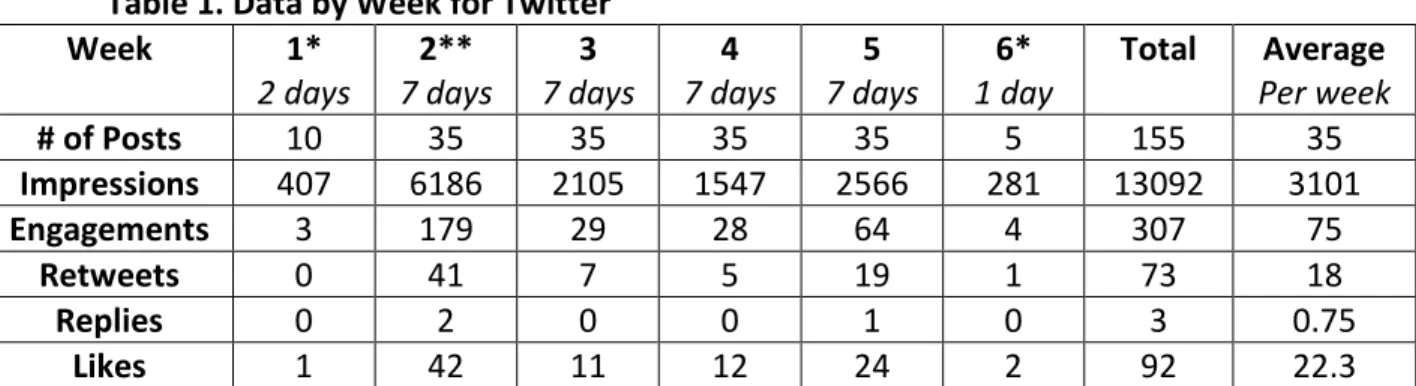
The average number of tweets per week during the campaign was 35. Table 1 highlights the average number of impressions, engagements, retweets, replies, and links per week in January 2016.
Table 1. Data by Week for Twitter
Week 1* 2 days 2** 7 days 3 7 days 4 7 days 5 7 days 6* 1 day Total Average Per week # of Posts 10 35 35 35 35 5 155 35 Impressions 407 6186 2105 1547 2566 281 13092 3101 Engagements 3 179 29 28 64 4 307 75 Retweets 0 41 7 5 19 1 73 18 Replies 0 2 0 0 1 0 3 0.75 Likes 1 42 11 12 24 2 92 22.3
*Posts from January 1, 2, and 31 regarding Cervical Health Awareness Month were not included in calculating averages. These posts did not take place during one of the four full (7-day) weeks in the campaign.
**5 extra tweets (1/7) and 16 extra tweets (1/8) were posted during the Second Summit of CCFSC. These tweets were not included in number of posts for each week, but they were included for all other data in this table.
Followers of the CCFSC social media campaign on Facebook also increased throughout January 2016; n=194 on January 1, which increased to n=228 by January 31. 89% of these followers were female and 11% were male. 29% were aged 35-44, and 25% were aged 25-34. Average reach of the posts was 118 followers, while average impressions per post was 224. Followers performed post clicks a total of 357 times; there were a total of 276 reactions, comments, and shares throughout January.
Figure 2. January Likes, Comments, and Shares
The post with the highest number of likes, comments, and shares combined (30) was:
“Dr. Jennifer Young-Pierce is one of our Cervical Cancer-Free South Carolina Co-Chairs!
She is an Assistant Professor of Gynecologic Oncology at the Medical University of South Carolina, where she is also an OB/GYN. Dr. Pierce has research interests in health
disparities, HPV, and cervical cancer treatment and prevention. She dedicates much of her time to fighting cervical cancer in South Carolina, and she hopes that you will continue to get HPV-vaccinated and screened for cervical cancer.
http://buff.ly/1MVYrP4”
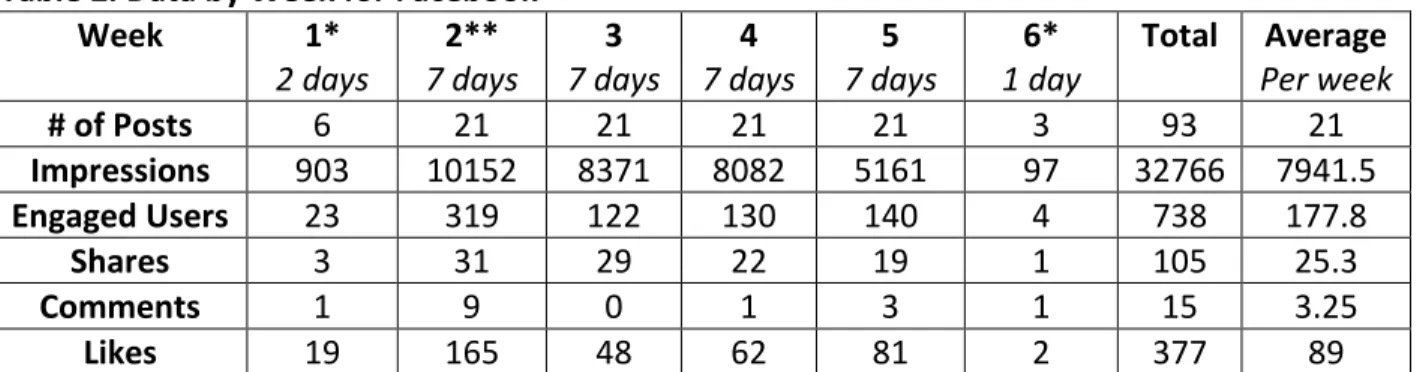
The average number of Facebook posts per week during the campaign was 21. Table 2 highlights the average number of impressions, engaged users, shares, comments, and links per week in January 2016.
Table 2. Data by Week for Facebook Week 1* 2 days 2** 7 days 3 7 days 4 7 days 5 7 days 6* 1 day Total Average Per week # of Posts 6 21 21 21 21 3 93 21 Impressions 903 10152 8371 8082 5161 97 32766 7941.5 Engaged Users 23 319 122 130 140 4 738 177.8 Shares 3 31 29 22 19 1 105 25.3 Comments 1 9 0 1 3 1 15 3.25 Likes 19 165 48 62 81 2 377 89
*Posts from January 1,2, and 31 regarding Cervical Health Awareness Month were not included in calculating averages. These posts did not take place during one of the four full (7-day) weeks in the campaign.
**10 extra Facebook posts (1/8) and 7 extra Facebook posts (1/7) were posted during the Second Summit of CCFSC. These posts were not included in number of posts for each week, but they were included for all other data in the table.
C.2 Engagement & Content Twitter
Top tweets. Top tweets were determined by tweets with high engagement rates
among followers over the 4-week social media campaign. The following tweets were found to be the most engaging, with engagement rates of 5% or higher:
1. 01/27/16 1:00 pm (9.8% Engagement Rate) – @JYoungPierce & @tamikafelder share #CervicalCancer advice and stories in this article: http://buff.ly/1XjMJ1f
2. 01/12/16 4:00 pm (8.9% Engagement Rate) – HPV vaccination today is cancer prevention for the future. Get vaccinated! Vaccinate your children! #hpv #cervicalcancer #preventcancer
3. 01/03/16 4:00 pm (8.3% Engagement Rate) – With the right test at the right time, you can prevent cervical cancer! http://buff.ly/1Yhotx1 4. 01/05/16 4:00 pm (7.5% Engagement Rate) – No woman should die of
cervical cancer! Screening leads to fewer deaths. http://buff.ly/1MVZeiY 5. 01/28/16 7:00 am (7.3% Engagement Rate) – Cervivor works to prevent
#CervicalCancer through patient edu & survivor empowerment. Founded by SC native @tamikafelder! @iamcervivor
6. 01/05/16 7:00 pm (7.1% Engagement Rate) – CDC’s vaccination and screening recommendations for #CervicalCancer: http://buff.ly/1MVZleH 7. 01/19/16 7:00 pm (7.1% Engagement Rate) – More than 4,000 women
die of #CervicalCancer each year, but you CAN prevent it w/ screening & HPV vax!
8. 01/18/16 1:00 pm (6.5% Engagement Rate) – No woman should die of #CervicalCancer. Most cases are preventable! http://buff.ly/1WftOGu 9. 01/15/16 7:00 pm (6.2% Engagement Rate) – Today, there is a strong
weapon to prevent several types of cancer in kids: the #HPV vaccine. http://buff.ly/20bjEHb
10.01/27/16 7:00 pm (5.4% Engagement Rate) – There is only one National Cancer Institute-designated cancer center in SC & it’s @muschollings. They encourage others to get #HPV vaccine.
Bottom tweets. Bottom tweets were determined by tweets with low
engagement rates among followers over the 4-week social media campaign. 92 of 155 tweets (59%) were found to be the least engaging, with engagement rates of 0%. The following tweets were some of the least engaging:
1. 01/02/16 7:00 am – It’s Cervical Health Awareness Month. Start off the New Year by getting screened for #CervicalCancer. http://buff.ly/20bjLlZ 2. 01/09/16 7:00 pm – #CervicalCancer usually doesn’t have symptoms, so
it’s critical to get screened regularly. http://buff.ly/1MVZWga
3. 01/14/16 1:00 pm – The CDC #HPV Portal has information you need about #cancer, #vaccine, & #STD aspects of HPV! http://buff.ly/1SD2NHr 4. 01/23/16 1:00 pm – A diagnosis of #CervicalCancer was once a death
sentence, but now it’s a preventable & treatable illness! #ccfsc http://buff.ly/1YhoGAj
5. 01/30/16 1:00 pm – @scdhec says #HPVvax should be given to children at 11 or 12 years old. Talk to their doctor about getting the series now! Facebook
Top Facebook posts. Top Facebook posts were determined by posts with high
engagement rates among followers over the 4-week social media campaign. The following posts were found to be the most engaging, with engagement rates of
10% or higher:
1. 01/21/16 8:00 am (14% Engagement Rate) – What do you need to know about cervical cancer? Check out the National Cancer Institute’s booklet about cervical cancer risk factors, symptoms, prevention methods, and treatment. Remember: no woman should die of cervical cancer. We can prevent! http://buff.ly/1MW0aUM
2. 01/26/16 8:00 am (13% Engagement Rate) – Have you heard about the Best Chance Network (BCN)? BCN is the South Carolina Breast and
Cervical Cancer Early Detection Program. Their goal is to reduce mortality from breast and cervical cancer among medically underserved women in South Carolina. Do you qualify to receive services through BCN? Find out here: http://buff.ly/1MW0hQb
3. 01/23/16 12:00 pm (12% Engagement Rate) – “Cervical cancer usually develops slowly over time. Before cancer appears in the cervix, the cells of the cervix go through a series of changes in which cells that are not normal begin to appear in the cervical tissue. When cells change from being normal cells to abnormal cells, it is called dysplasia. Depending on the number of abnormal cells, dysplasia may go away without treatment. The more abnormal cells there are, the less likely they are to go away. Over time, dysplasia that is not treated may turn into cancer.” –National Cancer Institute http://buff.ly/1YhoK36
4. 01/24/16 8:00 am (12% Engagement Rate) – For the last week of Cervical Health Awareness month, we want to highlight the burden of cervical cancer in South Carolina, along with the individuals and organizations who are working hard to make our state FREE of this disease!
5. 01/01/16 8:00 am (11% Engagement Rate) – Happy New Year! January is Cervical Health Awareness Month! Cervical Health Awareness Month is a chance to raise awareness about how women can protect themselves from human papillomavirus (HPV) and cervical cancer. HPV is the most common sexually transmitted disease. It’s also a major cause of cervical cancer. Spread information, not HPV. http://buff.ly/1YhoLE8
6. 01/08/16 8:00 am (11% Engagement Rate) – “I’m living proof that screening can find cervical cancer at an early stage, when treatment works best.” –Tamika F., Cervical Cancer Survivor http://buff.ly/1Wfu9ci
They are finding fun and effective ways to spread the word about the HPV vaccine and preventing cervical cancer. http://buff.ly/1Wfu7RD 8. 01/12/16 7:00 pm (10% Engagement Rate) – Do you want to know more
about the HPV policies in the United States? http://buff.ly/1Wfub46 9. 01/29/16 8:00 am (10% Engagement Rate) – The South Carolina
Coalition for Healthy Families is a network of organizations and individual experts that advocate, educate, and collaborate in support of
comprehensive sexual and reproductive health policies in South Carolina. They support the HPV vaccine and encourage you to get your adolescents and children vaccinated today! http://buff.ly/1XjNkju
Bottom Facebook posts. Bottom Facebook posts were determined by posts with
low engagement rates among followers over the 4-week social media campaign. The following posts were found to be the least engaging, with engagement rates of 0%:
1. 01/06/16 8:00 am – In honor of Cervical Health Awareness Month, let the American Cancer Society educate you about how the Pap test is done. The Pap test is the main screening rest for cervical cancer. http://buff.ly/1SD33Gz
2. 01/07/16 8:00 am – “Two years ago, when Brenda was 50 years old, she didn’t have health insurance, and was going to a free clinic in
Schenectady, New York. That’s where she met Sandy, a women’s health advocate. ‘Whenever I saw Sandy, she asked whether I’d had my Pap test,’ Brenda says. ‘She kept nagging me. So I finally did go.’”
http://buff.ly/1YhoUY5
3. 01/12/16 12:00 pm – About 14 million people, including teens, become infected with HPV each year. The good news is that you can get
vaccinated against HPV and prevent. Vaccines work!
4. 01/15/16 12:00 pm – In this video, Dr. Sholom Wacholder discusses his HPV vaccine trial work. Take a look: http://buff.ly/1MW1tTx
5. 01/16/16 7:00 pm – What are the 3 things parents should know about preventing cancer? Take a look at this CDC infographic to find out! http://buff.ly/20bl4kR
6. 01/17/16 8:00 am – What are the risk factors for cervical cancer? There are many: http://buff.ly/1SD3ssp
7. 01/18/16 8:00 am – About 528,000 women are diagnosed with cervical cancer every year, mostly in less developed regions. Worldwide, cervical cancer is the 4th most common cause of cancer death in women.
http://buff.ly/1SD3sZs
8. 01/19/16 8:00 am – Each year, more than 12,000 women in the United States get cervical cancer, but it can be prevented by getting an HPV vaccine, visiting your doctor for a Pap test when recommended and not smoking. Find out more: http://buff.ly/1SD3vEE
9. 01/19/16 12:00 pm – The National Cervical Cancer Coalition offers a free ebook of essays from cervical cancer survivors and family members, providing personal perspectives on the physical and emotional impact of cervical cancer. Read their stories here: http://buff.ly/1qwrEGw
10.01/22/16 12:00 pm – Some of the risk factors for cervical cancer include: increased number of sexual partners, young age at time of first sexual intercourse, low socioeconomic status, and history of smoking. 11.01/25/16 8:00 am – Cervical Cancer-Free South Carolina is a member
state of the Cervical Cancer-Free Coalition focused on eliminating cervical cancer through screening, follow-up care, vaccination, and education. Cervical Cancer-Free South Carolina consists of individual and
organizational partners committed to increasing participation in cervical cancer screening; increasing adherence to follow-up care of abnormal screening results; increasing rates of HPV vaccination; and seeking additional funding to support cervical cancer screening and HPV vaccination in South Carolina.
12.01/27/16 8:00 am – This year, Cervical Cancer-Free South Carolina held its second summit – “Improved Health through Education and
Innovation.” The summit focused on providing background information about cervical cancer and HPV, programmatic updates, and featured research in South Carolina. The summit welcomed anyone interested in eliminating cervical cancer. Stay in touch with us and look for
announcements about next year’s summit!
13.01/28/16 8:00 am – Cervivor is a project of Tamika & Friends, an organization working to prevent cervical cancer through patient education and survivor empowerment. Tamika & Friends provides
support to women with a cervical cancer diagnosis and strives to create a global network of cervical cancer survivors. What’s even better? The
diagnosed with HPV and cervical cancer experience. To find out more about Tamika and her organization, click here: http://buff.ly/1MW24Ve 14.01/28/16 12:00 pm – The South Carolina Cancer Alliance (SCCA) is a
statewide non-profit organization dedicated to reducing the impact of cancer on ALL people in South Carolina. The SCCA serves as the home organization for Cervical Cancer-Free South Carolina (CCFSC). The Cervical Cancer Subcommittee of the Breast and Female Cancer
Workgroup within the SCCA provides support for CCFSC activities with a focus on addressing cervical cancer objectives in the South Carolina Cancer Control Plan 2011-2015. You can volunteer to help!
http://buff.ly/20blmZ1
15.01/28/16 7:00 pm – In South Carolina, approximately 190 women are diagnosed with cervical cancer and 70 die from the disease each year. However, the South Carolina Cancer Control Plan 2011-2015 developed strategies to help eliminate cervical cancer: 1) make routine screening available for all, 2) promote adherence to follow-up care, and 3) promote use of HPV vaccines among those eligible.
16.01/29/16 7:00 pm – The South Carolina Cervical Cancer Awareness Initiative is another awesome organization that promotes statewide education and public awareness regarding cervical cancer screening and the HPV vaccine. Add them on Facebook & follow them on Twitter to keep up with their efforts! http://buff.ly/1XjO4Fh
17.01/30/16 7:00 pm – Thank you to all of the individuals and organizations in South Carolina who are working hard to increase HPV vaccination and cervical cancer screening rates. Your work is crucial to the lives of those all around our state. Let’s continue to spread the word about how to prevent cervical cancer amongst our women! No woman should die of this disease.
18.01/31/16 12:00 pm – Do you want to keep up with cervical cancer in the news, or find out what’s new in cervical cancer research? The American Cancer Society has a collection of the latest developments in cervical cancer on their website. We encourage you to take a look so you can stay up to date with your cervical cancer prevention! http://buff.ly/1MW2viq
D.
DISCUSSION
In this thesis project, followers and overall engagement rates were higher for the Facebook component of the social media campaign in comparison to the Twitter component. Engagement rates for the top Facebook posts ranged from 14% (highest) to 10% (lowest), while engagement rates for top tweets went from 9.8% (highest) to 5.4% (lowest). In this particular campaign, higher engagement on Facebook could be as a result of greater follower volume (n=228) by the end of the month than on Twitter (n=180). However, according to a survey conducted by the Pew Research Center in September 2014, not only is Facebook the most popular social media site, but engagement of Facebook users also continues to grow.6 A large portion (70%) of Facebook users engage with the site daily6, indicating that followers of the CCFSC social media campaign might have been more inclined to engage with (comment on, like, or share) these posts than with the tweets.
Demographic information for followers of the social media campaign on Facebook generally correlated with data collected by the Pew Research Center in their article,
Demographics of Key Social Networking Platforms (2014). According to Pew, 77% of Facebook
users in 2014 were female and 66% were male14; in this evaluation, 89% of followers were female and only 11% were male. Although the proportion of women to male users was greater for this social media campaign, as in the Pew data, there was a much greater difference in numbers for this evaluation. This is likely due to the fact that this social media campaign targets a particular women’s health issue and disseminated information solely applicable to cervical health awareness and prevention measures. Additionally, the majority of the social media
data: 87% of Facebook users were aged 18-29 and 73% were aged 30-49 in 2014.14 Again, this campaign might have drawn in a particular age group, due to its relevance among women at risk for cervical cancer, women at optimal age ranges for Pap tests and wellness visits, and women in need of cervical health-related information. With regard to Twitter, Pew data shows that more men (24%) than women (21%) utilize this social media site.14 The fact that 79% of this social media campaign’s followers were female demonstrates the increased usage of the site when its focus is on women and women’s health issues.
Upon analysis of tweets with the highest engagement, the tweet with the highest number of retweets (5) read: “Routine use of Pap test to screen for cervical cancer has reduced deaths from the disease by more than 70%.” It also included a trusted link to the Foundation for Women’s Cancer website, where followers could find more information about cervical cancer screening and learn about the organization’s awareness, research, and education efforts. In alignment with the CDC’s social media guide, this tweet highlights the positive by telling the audience what they should do rather than what they should not do.20 It also encourages
readers through emphasis on practical steps that will promote health, and it gives a specific link to a health-related service.20 Overall, this tweet is relevant to the audience, easy to understand and share, and engages followers with a reassuring fact regarding the positive outcomes of routine Pap tests.
The highest number of likes on one tweet was also five; it read: “Cervivor works to prevent #CervicalCancer through patient edu & survivor empowerment. Founded by SC native @tamikafelder! @iamcervivor.” This particular message follows CDC’s best practices for writing tweets in several aspects. First, it includes a hashtag (#CervicalCancer) so followers can see
what others are tweeting on the topic of cervical cancer.21 It also tags a specific individual’s Twitter account (@tamikafelder) and her organization (@iamcervivor), which created an opportunity for users to engage by clicking on these tags and visiting these accounts that
disseminate cervical health-related information themselves. Tamika Felder and her organization would have received a notification that they were tagged in these tweets as well, which might have prompted them to retweet the messages, therefore drawing more attention to them among an expanded audience. Moreover, the tweet was effective in its address of “survivor empowerment” and its recognition of Cervivor, an organization that brings cervical cancer survivors together to create a community of advocates. The Witness Project, a similar program, allows female breast cancer survivors to teach their African-American peers about early
detection of breast cancer through giving their testimonies.22 This is one of the most significant applications of survivor empowerment and narrative health communications, and the extensive background on the effectiveness of the Witness Project in educating women about cancer prevention and control has definite implications for the success of other programs, like
Cervivor. Finally, the tweet is largely audience-relevant21, as it brings attention to Tamika, who is a South Carolina native like many of this campaign’s followers.
Table 1, the data by week for Twitter, suggests content and cervical cancer-related topics that were most and least popular, along with engagement trends, throughout the January social media campaign. The table highlights four full (7-day) weeks, where the second week has the highest number of impressions (407), overall engagements (179), retweets (41), replies (2), and likes (42) for a single week. There are several reasons that might explain why
week of the campaign. Cervical Health Awareness Month was just beginning, so engagement in the social media campaign was high; followers were just starting to learn more about the campaign as a whole, in addition to learning about cervical cancer and prevention of the disease. The topic for this week of posts was Pap tests and cervical cancer screening, with a strong emphasis on motivating followers to get screened, educating about appropriate ages and intervals for screening, and sharing personal experiences with Pap tests and their benefits. Because lack of cervical cancer screening knowledge is often cited as a barrier to Pap test uptake, followers might have been more engaged in this material because there was a need to learn about it. Finally, however, the Second Summit of CCFSC took place on January 7 and 8 during the first full week of social media posts. The summit focused on providing background information, programmatic updates, and feature cervical cancer-related research in South Carolina. At the summit, 21 additional tweets and 17 additional Facebook messages were posted, highlighting activities taking place at the event. These posts were included in the data totals by week for both Facebook and Twitter, and the increased engagement is thought to be a result of not only the increased post volume, but also the in-person promotion of the social media campaign by leaders at the summit.
Upon analysis of Facebook posts with the highest engagement, the post with the highest number of comments, likes, and shares combined (30) was:
“Dr. Jennifer Young-Pierce is one of our Cervical Cancer-Free South Carolina Co-Chairs! She is an Assistant Professor of Gynecologic Oncology at the Medical University of South Carolina, where she is also an OB/GYN. Dr. Pierce has research interests in health
her time to fighting cervical cancer in South Carolina, and she hopes that you will continue to get HPV-vaccinated and screened for cervical cancer.”
The post also included a link to Dr. Young-Pierce’s provider page, where followers could learn more about her background and services. According to the CDC, all posts written for Facebook should be “consumer-friendly, action-oriented messaging,”20 both characteristic of this
particular post. The post opens with a positive tone and punctuation,20 inviting followers to read more; it also begins by introducing one of the CCFSC co-chairs and following up by offering more details about her life. The post ends by calling readers to action through emphasizing that Dr. Young-Pierce herself hopes that everyone will get vaccinated and screened for cervical cancer. It also tags a specific public health partner,20 which creates the opportunity for followers to click on Dr. Young-Pierce’s name and visit her Facebook page, where she might offer more cervical health-related information. Overall, this specific post highlighted cervical cancer prevention and women’s health efforts led by a South Carolina native, which could have been extremely helpful in engaging followers with the post and motivating them to find out more about these health topics.
Table 2, the data by week for Facebook, also suggests content and cervical cancer-related topics that were least and most popular, along with engagement trends, throughout the January social media campaign. Like the Twitter data table, this Facebook table highlights the four full (7-day) weeks of the campaign; the second week of posts had the highest number of total impressions (10152), engaged users (319), shares (31), comments (9), and likes (165) for a single week in January. There are several reasons why these numbers could have increased
January 7 and 8, so there were were a total of 17 extra Facebook messages posted between these two days that week. The additional posts would have engaged more users and caused these posts from the summit to gain comments, likes, and shares, but the summit likely also brought attention to the other posts about cervical cancer screening that had been built into the plan prior to the event. Other reasons for increased engagement during this week are similar to those mentioned for the tweets: it was the first week of Cervical Health Awareness Month, and followers might have needed additional information about Pap tests and cervical cancer screening.
Further evaluation of the Facebook and Twitter data was done through Twitter Analytics and Facebook Insights, the metric components of these social media sites. As a part of its Social
Media Guidelines and Best Practices for Facebook and Twitter, the CDC recognizes evaluation as
an integral part of measuring the success of these social media activities.20,21 CDC recommends regularly reviewing Facebook Insights for “page-specific metrics”and monitoring Twitter Analytics to gauge number of followers, updates, retweets, and mentions.23 Evaluation of the Facebook and Twitter data collected from the sites’ metrics allowed for determination of top and bottom Facebook posts and tweets, according to engagement rates. To calculate the engagement rate, the number of total engagements (clicks, retweets, replies, follows, likes, and/or shares) for each post is divided by the total number of impressions (number of times users saw the tweet on Twitter). It is important to note that engagement rates might have been skewed; although there could have been many impressions (views) on any one post – acquired through the original post itself, along with the retweets and shares of the posts by followers – the number of actual engagements on the post probably paled in comparison.
There were ten tweets selected as “top tweets” (most engaging) that had engagement rates of 5% or higher. Analysis of this group of tweets revealed that three of them mentioned specific public health partners who focus on raising cervical cancer awareness and promote prevention of the disease. This is a recommended practice by the CDC and offers followers of the tweets access to these partners’ Twitter pages, where they can learn more about cervical health-related topics. Further, two of these most engaging tweets made some kind of reference or included a link to personal narratives or experiences by survivors of cervical cancer and individuals who have had Pap tests and HPV vaccines in the past and are encouraging others to utilize these resources as well. In the paper Using Narrative Communication as a Tool for Health
Behavior Change: A Conceptual, Theoretical, and Empirical Overview, authors Leslie Hinyard
and Matthew Kreuter explain that health communication developers are increasingly turning to narrative forms of communication, such as entertainment education, storytelling, and
testimonials to persuade and motivate people to adopt behavioral changes.24 The high
engagement rates for tweets with links or references to narratives implies that this method of communication the information intrigued followers and left them wanting to know more.
Four of the top tweets included infographics or PDF fact sheets provided by the CDC and other resources. An infographic is a visual representation of data, information, or knowledge that tells a story through visual communication.25 The CDC has an entire infographic library that provides links for users to copy the visuals into their own websites or social network profiles. In a study conducted in 2013 by Columbia University, researchers found that carefully designed infographics are useful tools to support comprehension, therefore helping patients to engage
infographics might suggest that they attracted followers and motivated cervical health promotion behaviors. Finally, it was observed that half of the tweets categorized as “most engaging” included or had links to CDC resources. As one of the most well-known and trusted public health organizations in the world, tweets associated with the CDC could have been viewed as having more credibility by followers. In its own social media guide, the CDC even encourages the use of links to their site so followers have access to their health awareness and disease prevention information.20
There were nine top Facebook posts considered to be most engaging, with engagement rates of 10% or higher. Seven of the nine top messages were posted at 8:00 am, indicating the possibility that followers were more likely to engage in the posts earlier in the day rather than later. Worth noting is the fact that all nine of these posts contained a link to another cervical cancer-related site. The CDC social media guide suggests: “Give specific directions or links to services that allow people to personalize their search or get information that will be useful for them.”20 This idea could have resonated with the followers of this particular social media campaign; it is possible that they found these links useful and chose to pursue them for more information about cervical cancer screening and the HPV vaccine, among many other topics. The included links were also helpful in the sense that they provided additional information for readers while also allowing the posts themselves to follow the CDC’s recommendation that Facebook posts should be short enough to be viewed completely in the newsfeed.20 Similar to the top tweets, these posts drew attention to specific public health partners, such as the
American Cancer Society (ACS) and the National Cancer Institute (NCI), which allowed followers to navigate to the organizations’ pages and gain exposure to additional educational materials
and facts. The Best Chance Network (BCN) of the South Carolina Breast and Cervical Cancer Early Detection Program and the South Carolina Coalition for Healthy Families were the other organizations mentioned in these top Facebook posts. The aim of mentioning these South Carolina-based organizations in the campaign was to highlight the impact of cervical cancer in South Carolina and promote the local efforts being put forth to prevent the disease. It appears that followers identified with these posts and demonstrated increased engagement with them because the message “hit close to home.” These organizations most likely retweeted or shared these posts as well once they received notification that they had been mentioned in them, therefore increasing reach, impressions, and possibly even engagements on the posts.
92 of the 155 (59%) of the tweets in the campaign had a 0% engagement rate, making them the least engaging messages on Twitter. After careful evaluation, it became clear that there was no distinct aspect of these tweets that made them less engaging. Each day of the campaign had at least one tweet with a 0% engagement rate; these tweets included links, infographics, narratives, and several of the other components included in the top tweets for the month. However, there were only 18 Facebook posts with 0% engagement rates and these displayed more of a pattern. 10 of the 18 bottom messages were posted at either 12:00 pm or 7:00 pm – evidence that followers might not have been active on their social media sites during peak work hours or at night. Furthermore, 14 of the 18 least engaging messages on Facebook were posted in the second half of the month (January 15-31); this suggests that the campaign might have lost the followers’ interest as it progressed. Finally, five of these posts did not include links to an additional source, a best practice for social media according to the CDC.20
The lack of additional information and resources in these posts could have left followers with little interest in engaging with them.
Although there have been evaluations of both the National Breast Cancer Awareness Month campaign and the Movember campaign for men’s health issues, along with analyses of breast and cervical cancer screening dialogue on social media sites, there has not been a full evaluation of a social media campaign during Cervical Health Awareness Month. Several of this project’s results do correlate with aspects of these previous evaluations, however. In one qualitative analysis of cervical and breast cancer screening dialogue on Twitter, researchers found that a large number of top tweets consisted of messages relating to personal experiences with Pap smear and mammogram procedures, demonstrating that this social media outlet can be an important source of “real-life health experiences.”27 Additionally, this analysis noted immediate reaction from followers about cancer screening guidelines and Pap smear
recommendations.27 Due to the thorough examination of discussions surrounding social media posts on Twitter in this particular study, the authors were able to gain a better understanding of the types of messages that sparked discussion and encouraged followers to engage in the health conversation. Because it was found that narrative style tweets and posts that highlighted cervical cancer screening guidelines were popular, this provides validation for the similar results of this thesis project.
In A 10-Year Retrospective of Research in Health Mass Media Campaigns, author Seth Noar cites evidence that individuals might be more changed by discussions of health campaign messages than by the direct effects of viewing the messages.28 He writes, “…campaign
increase both the reach and impact of a campaign.”28 Keeping Noar’s findings and suggestions based on his own studies of health communication campaigns in mind, social media health awareness campaigns, such as this one, could be improved by incorporating messages that encourage dialogue about specific health issues among members of the target audience. Supporting this idea is the dialogic communication theory, which is based on the principles of reciprocity, mutuality, involvement, and openness.28 Scholars Michael Kent and Maureen Taylor built upon this theory and compiled five principles of dialogic communication; among these principles is “dialogic loop.”29 A dialogic loop, according to Kent and Taylor, is facilitated when one party involved in the communication invites the other(s) to engage, interact, act, or reply.29 This theory and its principles have vital implications for future social media campaigns;
messages should always aim to engage followers and to promote interaction with both the organization itself and other individuals following the campaign. This could prompt valuable conversations surrounding cervical health among women, along with creating a comfortable environment in which women can ask questions and seek additional advice and information from peers.
Overall, the evaluation of the CCFSC social media campaign for January 2016 indicated that social media can be an effective method for health promotion interventions among women regarding cervical cancer and health. Understanding how social media sites can be tailored and used to increase uptake of Pap tests and HPV vaccination is beneficial in cervical cancer prevention in South Carolina. The results of this campaign and its evaluation will be used to enhance CCFSC’s social media content to ensure optimal health outcomes for women and to
serve as a model for other organizations who wish to develop appropriate messages about cervical health awareness.
E.
CONCLUSION
Overall, this social media campaign was effective in raising awareness about Cervical Health Awareness Month and its goal of highlighting issues related to cervical cancer, HPV, and the importance of early detection. Although engagement rates and metrics for tweets and Facebook posts varied throughout the month, there were significant numbers of impressions logged for all messages distributed; this demonstrated that, although followers might not have necessarily engaged with the posts every day, they still saw and read the content to some extent. The engagements by followers were a definite plus, however, and suggest that users found the material informative and worthy of additional attention. The campaign served as a cost- and time-efficient route of disseminating cervical health-related information during January 2016, and it will surely be used as a model for future social media campaigns to raise awareness regarding cervical cancer and other important health topics.
There are several recommendations for improving upon this social media campaign for the future. In order to increase overall impressions, or the number of times posts are seen, it will be crucial to encourage individuals to follow, like, and add the sites on their own social media accounts. In order to do this, the CCFSC Twitter and Facebook pages should be promoted at any CCFSC-related events and through the organization’s email updates. In addition, it will be important to actively prompt followers to engage with the posts by adding specific directions in the messages to comment, like, retweet, share, etc. It would also be valuable to include in the
messages that, by engaging with these posts and sharing them, the followers of their own social media sites – who might be colleagues, family, and/or friends – would benefit from the health information and could then act as well.
It would be useful to expand upon the evaluation of any future CCFSC social media campaigns. In its toolkit for social media, the CDC suggests that – in addition to simple metrics – social media be evaluated by measuring the use of information and the health impact that it had on followers. This particular kind of evaluation could be completed through a survey following the campaign; this survey could collect more information regarding the effects of the social media messages on followers’ knowledge and the health-related actions they took after reading the posts. A more in-depth evaluation would help to better understand interest and knowledge levels, along with potential misunderstandings and perceptions about the health topic. Finally, any future social media campaigns would immensely benefit from following the CDC’s social media guidelines and toolkits more thoroughly throughout the development and evaluation processes. The CDC’s resources provide a plethora of recommendations for social media content and how to craft appropriate messages for specific audiences. They also provide strategy and evaluation worksheets that might assist with planning posts accordingly and improving upon potential future campaigns.
The CCFSC social media Facebook and Twitter sites will continue to disseminate cervical health- and HPV-related information throughout 2016 and beyond. The sites will be monitored; content and posts that appear to be most and least popular will be reused and additional similar resources will be incorporated. The results from this thesis project will inform the
development of new social media posts as well, keeping in mind metrics from January 2016 and referring to the CDC’s social media guides for assistance.
REFERENCES
1. Centers for Disease Control and Prevention. (2015). Cervical Cancer. Retrieved from http://www.cdc.gov/cancer/cervical/
2. South Carolina Department of Health and Environmental Control. (2014). 2014 South Carolina Statewide CHAS Survey Results. Retrieved from
http://www.scdhec.gov/Health/docs/CHAS/2014/Q6%20Immunizations%20Tables.pdf 3. Pew Research Center. (2011). The Social Life of Health Information, 2011. Retrieved from