THE KNOWLEDGE AND COMPETENCIES OF EFFECTIVE SCHOOL COUNSELOR SUPERVISION
DISSERTATION
Presented in Partial Fulfillment of the Requirements for the Degree of Doctor of Philosophy in the Graduate
School of The Ohio State University
By
Rochelle L. Dunn, M.A. *****
The Ohio State University 2004
Dissertation Committee:
Approved by
Professor Susan J. Sears, Adviser Professor R. Michael Casto
______________________________
Professor James L. Moore III Adviser
ABSTRACT
The purpose of this study was to answer the following research questions: What are the knowledge and competencies of effective school counselor supervision? Can the knowledge and competencies of school counselor supervision be measured in a valid and reliable manner? Three stages were utilized to address these two questions.
Phase One involved both a thorough review of the literature surrounding school counselor supervision and a focus group with practicing school counselors. Both the review and the focus group generated content areas for items to be included in the instrument. Phase Two involved establishing content and face validity by a panel of experts (N=6), including four counselor educators and two practicing school counselor supervisors. A Likert scale was utilized for construction of the instrument. Items were separated into following dimensions of school counselor supervision: counseling supervision, 23 items; program management and professional development supervision, 11 items; administrative supervision, 9 items. Phase Three involved a pilot study (N=70) with practicing school counselors.
Analysis of the demographic information revealed that a majority were not receiving supervision. When asked, the sample indicated a preference for counseling
supervision. However a comparison of means indicated that respondents had the most favorable attitude toward program management and professional development
supervision.
Cronbach’s alpha was utilized to establish internal consistency reliability of the instrument. Reliability was high for the overall instrument (alpha=0.94) and was high for the three dimensions as well: counseling supervision alpha=0.91, program management and professional development supervision alpha=0.85, and administrative supervision alpha=0.87.
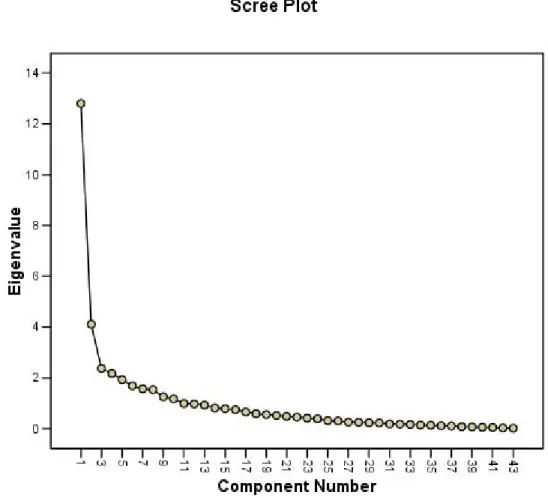
An exploratory factor analysis was conducted to determine if the three dimensions emerged as latent variables. Principal components analysis revealed eight components. This suggests that perhaps these areas may not be as clearly defined as previously reported in the literature.
Dedicated to the memory of my father, Don F. Christman
ACKNOWLEDGMENTS
I wish to thank my husband, Tim, who has been supportive and patient throughout this entire process. This truly is a shared accomplishment. Without you, I would not have had such a wonderful journey. To my sons, Frank and Sam, my hope is that you also will value lifelong learning and realize that the journey is more important than the destination.
Thank you to my beloved parents, Don and Carolyn Christman, who taught me everything about life, love, and learning. My father who always pushed me and never let me accept less than my best and my mother who always supports me and loves me unconditionally. Mom, your support has meant more than I can say. You believe in me more than I do myself, and you have always taught me about being determined and persistent.
To Rick, Randy, and Rhonda, thank you for letting me vent throughout this entire process. Rick, you always pushed me by helping me set goals. Randy, you made me laugh when all I wanted to do was cry. Rhonda, you supported and listened to me.
To Kathy, my partner in reaching this goal, thank you for always being supportive. It was wonderful having someone go through the process with me, and several children later we have done it!
To my adviser, Dr. Susan Sears, thank you for all of your hard work and dedication to this project. You are an inspiration to me and an excellent role model for being a leader in counselor education. To my committee, Dr. Michael Casto, and Dr. James L. Moore III, thank you for your time and support.
To my mother, Carolyn, and mother-in-law, Josephine Dunn, thank you for the innumerable hours you spent watching our children as I worked on this dissertation. Knowing that Frank and Sam were being cared for by their grandmas who love them made this much easier.
VITA
July 18, 1972………...Born-Summerfield, Ohio
1995……….Bachelor of Science, The Ohio State University
Major: Psychology
1999……….Master of Arts, The Ohio State University
Major: Counselor Education
1999……….Professional Counselor, State of Ohio
2000-2003………Counselor,
Magellan Program
2003……….Professional Clinical Counselor, State of Ohio
2003-2004………Visiting Assistant Instructor/Assistant Professor Counselor Education, The Ohio State University
2004……….School Counselor Certificate
2004……….Supervision Endorsement, State of Ohio
PUBLICATION
Christman-Dunn, R. (1999). The necessity of providing clinical supervision to school counselors. ERIC/CASS: ED426320
FIELD OF STUDY Major Field: Education
TABLE OF CONTENTS Page Abstract………ii Dedication………...iv Acknowledgments………v Vita………..vi List of Figures……….xi Chapters: 1. INTRODUCTION.………..1 1.1 Introduction………1
1.2 Supervision of School Counselors……….2
1.2.1 Administrative Supervision………3 1.2.2 Developmental Supervision………3 1.2.3 Clinical Supervision………4 1.3 Statement of Problem……….6 1.4 Purpose of Study………7 1.5 Rationale of Study………..8 1.6 Research Questions………9 1.7 Definitions………10 1.8 Limitations………...…11 1.9 Organization of Study………..12 2. LITERATURE REVIEW………...13 2.1 Introduction………..13 2.2 Supervision Defined……….14
2.2.1 Supervision in the School Environment………...…15
2.3 Benefits of Supervision………19
2.3.1 Benefits for Novice Counselors………22
2.4 Current Status of Supervision in School Counseling………...23
2.4.1 Do School Counselors Recognize the Need?...23
2.5 Models of Supervision……….27
2.5.1 Models with Trained Supervisors……….27
2.5.2 Peer Models………..28
2.6 Texts for Training School Counselors….………32
2.7 Standards………..32
2.8 Ethical Guidelines………34
2.9 Related Supervision Instruments……….35
2.9.1 Supervision Utilization Rating Form………35
2.92. Counseling Self-Estimate Inventory……….36
2.10 Attitude Measures………..37
2.11 Conclusion……….41
3. RESEARCH METHODOLOGY………...42
3.1 Research Purpose and Questions ………42
3.2 Instrumentation………42
3.2.1 Phase One-Original Instrument Construction………...43
3.2.2 Summary of Suggestions Derived from the Literature Review……47
3.2.3 Focus Group………..48
3.2.4 Phase Two-Draft Instrument……….51
3.2.5 Phase Three-Pilot Study Instrument………...………..56
3.3 Data Analysis………...59
4. RESULTS OF DATA ANALYSIS………...61
4.1 Descriptive Statistics………61
4.2 Descriptive Statistics of Experience in Counseling and Supervision………..65
4.3 Means of Respondents……….72
4.4 Reliability Statistics……….78
4.5 Factor Analysis………....81
4.6 Conclusion………...91
5. SUMMARY OF STUDY………..92
5.1 Summary, Conclusions, and Future Research...………92
5.1.1 Phase One: Original Instrument Construction....………..92
5.1.2 Phase Two: Draft Instrument...……….93
5.1.3 Phase Three: Pilot Study Instrument…….………94
5.1.3.1 Description of Sample………95
5.2 Factor Analysis……….……….96
5.3 Limitations……….………....97
5.4 Conclusions……….………...98
5.5 Implications of the Current Research Study………..99
5.6 Future Research………...……...…….100
5.7 Summary………...………...…………101
REFERENCES………102
APPENDICES Appendix A Internal Review Board Exemption Form………110
Appendix B Standards for Counseling Supervisors……….112
Appendix C ASCA Ethical Standards……….118
Appendix D Original Items and Origination of Items……….129
Appendix E Content Validity Panel Members……….132
Appendix F Content Validity Packet for Expert Panel………134
Appendix G Dunn Supervision Scale………..148
Appendix H Correlation Matrix for Components…………...……….163
LIST OF FIGURES
Figure Page(s)
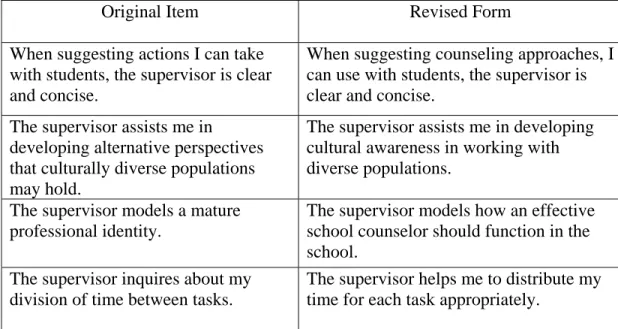
Figure 3.1 Original and Revised Forms of Instrument Items………53
Figure 3.2 Technology Items……….……54
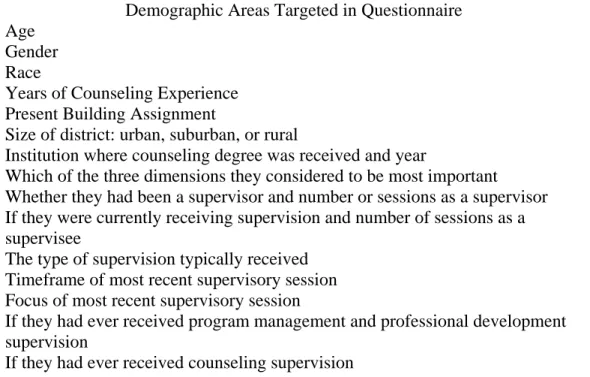
Figure 3.3 Demographic Areas Targeted in Questionnaire………...56
Figure 4.1 Number of Respondents by Method of Response………….………...61
Figure 4.2 Demographic Information of Sample………...62
Figure 4.3 Background Information Presented for Elementary, Middle, and Secondary..63
Figure 4.4 Respondents by District Classification……….64
Figure 4.5 Institution Attended and Year of Graduation………...65
Figure 4.6 Years of Counseling Experience at Elementary, Middle and Secondary…….67
Figure 4.7 Number Receiving Supervision and Number of Sessions as Supervisee….…68 Figure 4.8 Typical Supervision, Focus and Time of Supervision Sessions………...70
Figure 4.9 Number of Sessions in which Respondents Reported Being Supervisor…….71
Figure 4.10 Supervision Preference ………..72
Figure 4.11 Supervision Preference by Method of Assignment………73
Figure 4.12 Supervision Preference by Level Assignment………….………...74
Figure 4.13 Supervision Preference by Race, Gender, and District Classification…...…77
Figure 4.14 Supervision Preference by Supervision Status………...…77 xii
Figure 4.15 Cronbach’s Alpha and Number of Items for Supervision Dimensions……..78
Figure 4.16 Reliability Statistics for Counseling Items……….79
Figure 4.17 Reliability Statistics for Program Management and Professional Development Items………80
Figure 4.18 Reliability Statistics for Administrative Items………...81
Figure 4.19 Scree Plot from Principal Components Factor Analysis…...……….83
Figure 4.20 Components Retained with Eigenvalues and Variance………..84
Figure 4.21 Items that Load on Component One………...85
Figure 4.22 Items that Load on Component Two………..86
Figure 4.23 Items that Load on Component Three………87
Figure 4.24 Items that Load on Component Four………..88
Figure 4.25 Items that Load on Component Five………..88
Figure 4.26 Items that Load on Component Six………89
Figure 4.27 Items that Load on Component Seven………90
Figure 4.28 Item that Loads on Component Eight……….90
CHAPTER 1 1.1 INTRODUCTION
To call attention to the importance of supervision, Boyd and Walter (1975) used an analogy of a cactus. They compared the career of a school counselor to that of a cactus plant and asserted that both the school counselor and the cactus, “survive on a minimum of nutrients from the environment” (p.103). The authors proposed supervision as a viable method for increasing the “nutrients” or professional support given to school counselors. Supervision was promoted as a way of helping school counselors refine their counseling skills, increase their ability to work with difficult students, and assist in performing the wide variety of tasks required of them. In fact, the authors suggested that supervision could assist school counselors in becoming “master practitioners” and warned that the absence of supervision could result in “a stunted specimen” (p. 103).
Three years later, Aubrey (1978) maintained that, “Not only is supervision of practicing school counselors unrecorded, it is empirically devoid of research and any empirically derived body of knowledge” (p. 293). Other studies also have noted the absence of supervision (Borders & Usher, 1992; Page, Pietrzak, & Sutton, 2001; Roberts & Borders, 1994; Sutton & Page, 1994). Thus, it would seem that progress has been slow. The lack of progress is unfortunate because supervision can provide the professional support that school counselors need (Barrett & Schmidt, 1986; Corey, Corey, & Callanan, 1998; Davis & Mickelson, 1994; Henderson, 1994; Herlihy & Corey, 1996) and can help
counselors comply with their ethical responsibility of maintaining and increasing counselor competence (American Counselor Association [ACA], 1995, Section C.2.).
While research into the provision of supervision is sparse, the topic of supervision continues to be addressed by numerous authors (Barrett & Schmidt, 1986; Borders, 1991a; Borders & Usher, 1992; Cashwell & Dooley, 2001; Henderson & Gysbers, 1988; Henderson & Lampe, 1992; Kahn, 1999; Page, et al., 2001; Sutton & Page, 1994; Usher & Borders, 1993). The authors have essentially explored three areas: proposing and researching supervision models, conducting and analyzing surveys, and detailing the application of supervision to the school environment.
1.2 Supervision of School Counselors Supervision is defined by Bernard and Goodyear (1992) as
An intervention that is provided by a senior member of the profession to a junior member of the same profession. This relationship is evaluative, extends over time, and has the simultaneous purposes of enhancing professional functioning of the junior member(s), monitoring the quality of professional services offered to the clients she, he, or they see(s), and serving as a gatekeeper for those who are to enter the particular profession (p. 4).
Appropriate supervision of school counselors involves three dimensions: clinical, developmental (program), and administrative (Barrett & Schmidt, 1986). These three dimensions are necessary because they comprehensively address the nature of the school counselor’s job. Thus the need for supervision must be examined in the context of each of these three dimensions.
1.2.1 Administrative Supervision
The administrative dimension of supervision is concerned with the counselor’s work ethic and habits, effectiveness in building professional relationships with others,
adherence to rules and standards, and appropriate use of time (Henderson & Gysbers, 1998; Henderson & Lampe, 1992). Administrative supervision is important because the school counselor has been required to perform various administrative functions (Nelson & Johnson, 1999) as well as “other duties assigned by their evaluator. These “other duties” must be examined to determine which are necessary for the maintenance and management of a school’s comprehensive program (Sink, 2005). The supervisor can help the supervisee critically examine which tasks appropriately utilize the expertise of the school counselor (Gysbers & Henderson, 2000).
1.2.2 Developmental Supervision
Developmental supervision is the dimension of supervision that addresses the school counselor’s role in program development, implementation, and coordination as well as their efforts to continue their own professional development (Roberts & Borders, 1994). Thus, the importance of developmental supervision must be examined on two levels: importance to the school counseling program, and importance to the continued professional development of the school counselor.
A current trend in school counseling focuses on the need for comprehensive school counseling programs that are proactive, prevention-oriented, and developmental in focus (Gysbers & Henderson, 2001). In line with this trend, the American School
Counselor Association (ASCA) published a national model that emphasizes the
importance of having a comprehensive program and that delineates the role of the school counselor in developing and implementing the counseling program (ASCA, 2003). This national trend toward comprehensive school counseling programs increases the
importance of developmental supervision because of its focus on school counseling programs.
Developmental supervision also addresses the continued professional development of the school counselor. This dimension of supervision “targets the cognitive and affective growth and development of school counselors as professionals” by helping supervisees set goals and by monitoring implementation of the goals
(Henderson & Gysbers, 1998, p. 205). Developmental supervision helps supervisees focus on improving their commitment to the profession, on directing their efforts appropriately, on enriching their levels of competence, and on increasing their sense of professional identity and affiliation (Henderson & Gysbers, 1998).
1.2.3 Clinical Supervision
Clinical supervision is, “a powerful and personalized means of nurturing professional development” (Henderson & Lampe, 1992, p. 151). This aspect of supervision is concerned with the observation of and feedback regarding school counselors’ counseling skills (Henderson & Lampe, 1992). The task of clinical supervision is to evaluate and improve the competencies of the counselor involved in guidance, counseling, consultation, and referral (Henderson & Gysbers, 1998).
The changing nature of the school environment has increased the need for clinical supervision. School counselors are faced with increasingly difficult cases and issues on a regular basis (Borders & Drury, 1992; Henderson & Gysbers, 1998). Contributing to the increase in mental health problems are poverty, homelessness, substance abuse, and domestic and community violence (Lockhart & Keys, 1998). In fact, students with acute counseling needs are no longer an exception for school counselors (Borders & Drury,
1992). Instead, school counselors are faced with students with intensive counseling needs on a regular basis. Issues being addressed by school counselors include: anxiety and depression, bullying, crime, eating disorders, family problems, post-traumatic stress disorder, poverty, school violence, substance abuse, suicide, and teen pregnancy (Sink, 2005). All of these issues are brought into the school environment and affect the
achievement of the student. The reality is that learning oftentimes takes a “back seat” to simply dealing with these issues (Sink, 2005).
The following statistics clearly illustrate the severity and breadth of issues children face in today’s society (Children’s Defense Fund, 2001, 2002). For children in the United States, the following events occur every day:
• Five children under 20 years old commit suicide. • Nine children under 20 years old are murdered. • Nine children under 20 years old die from firearms. • 180 youth are arrested for violent crimes.
• 367 youth are arrested for drug abuse.
• 2,861 high school students drop out of school. • 4,248 youth are arrested for various crimes. • 7,883 youth are reported abused or neglected. • 17,297 public school students are suspended
The repercussions of these events vary in severity from school suspension to death, and many of these events have lifelong repercussions for children and their families.
The increasing issues are important to school counselors for two reasons. First, all children spend some time in the school system and thus are exposed to school counselors
who could help address some of the risk factors that lead to more serious events. Second, the diminished presence and impact of community mental health has limited the ability of the school counselor to make outside referrals (Wylie, 1992). Therefore, the school counselor may represent the child’s only opportunity to receive counseling although even this is threatened by a shortage of qualified school counselors (Schwab, 2001).
A majority of writing and research has examined the need for clinical supervision of school counselors while the developmental and administrative dimensions of
supervision have been neglected in the literature (Benshoff & Paisley, 1996; Crutchfield & Borders, 1997; Sutton & Page, 1994). There is a need for current research to
incorporate all three dimensions of supervision (Barrett & Schmidt, 1986).
Because supervision can help school counselors become more effective, the profession needs to know what knowledge and competencies are required to facilitate an effective supervisory relationship. To date, no research has addressed this area. One way to address this gap in the literature is to delineate the behaviors that encompass successful supervision of school counselors and to develop an instrument that examines these
competencies.
1.3 Statement of the Problem
Most school counselors are not receiving supervision upon leaving their training program (Portman, 2002; Borders & Usher, 1992; Henderson & Gysbers, 1998; Kahn, 1999; Page et al., 2001; Roberts & Borders, 1994; Sutton & Page, 1994). In 1989, the American Association of Counseling and Development (AACD) acknowledged this reality by stating, “Essentially, proper supervision of school counselors is lacking at best, non-existent at its worst” (p.20). The absence of supervision places school counselors at
risk for experiencing problems in their continued growth as counselors. Without
supervision, school counselors become less sure of their skills (Peace, 1995; Spooner & Stone, 1977; Wiley & Ray, 1986) and their skill level declines (Peace, 1995; Spooner & Stone, 1977). These findings combined with the increasing needs of students illustrate why, “supervision….is as important an issue today as it was twenty years ago.” (Cashwell & Dooley, 2001, p.39).
Research in school counseling has focused on demonstrating the effectiveness of supervision models (Benshoff & Paisley, 1996; Crutchfield & Border, 1997; Crutchfield et al., 1997), but has neglected to investigate the effectiveness of the supervisor. This reflects a significant gap in the literature. To date, no assessment tool exists to measure the effectiveness of the supervisor in the supervisory relationship. Because the benefits of supervision are numerous, there is a need for a tool to assess the supervisory relationship and to help ensure that quality supervisory relationships are being fostered.
1.4 Purpose of the Study
The purpose of this study is to identify the characteristics of effective supervisors and to develop an instrument that can assess the effectiveness of the supervisory
relationship. Such an instrument would be completed by supervisees to provide an assessment of the supervision they are being provided. The instrument would inform supervisors about their role in the supervisory relationship and would help identify strengths and weaknesses.
1.5 Rationale of the Study
The rationale of this study is based on the benefits that supervision can provide to practicing school counselors. Supervision is recognized as an integral part of promoting
the development of counselors (Gysbers & Henderson, 2000; Larson et al., 1992).
Further, supervision has been recognized as additive regardless of the experience level of the school counselor (Henderson, 1994). Supervision is valued in the literature for several reasons.
• Supervision helps school counselors manage the increasing number of tasks and responsibilities that are expected of school counseling professionals (ASCA, 1993; Herlihy et al., 2002).
• Supervision increases feelings of collegial support and interaction (Peace, 1995; Sutton, 1988).
• Supervision increases effectiveness in service delivery to students (Borders, 1991b; Cashwell & Dooley, 2001; Henderson & Lampe, 1992).
• Supervision provides a way of remaining current with innovative counseling practices (Portman, 2002; Shechtman & Wirzberger, 1999).
• Supervision promotes increased self-efficacy (Borders, Rainey, Crutchfield, & Martin, 1996; Cashwell & Dooley, 2001).
• Supervision allows time for evaluation of counseling performance (Borders, 1991a; Bernard & Goodyear, 1992).
There are some benefits of supervision that are particularly important for novice school counselors.
• Supervision addresses any gaps that may exist between the training program and the reality of the school counselor’s job (Sutton & Page, 1994; VanZandt & Perry, 1992).
• Supervision provides time to address feelings that evolve from performance expectations that do not allow for the novice status of the school counselor (Matthes, 1992; Portman, 2002).
Even though the benefits proposed for supervision are well documented, most school counselors are not receiving supervision (Borders & Usher, 1992; Sutton & Page, 1994). Clearly, it is important to continue pursuing supervision for school counselors, as the absence of any of these benefits would diminish the profession and the individual professional.
1.6 Research Questions
The proposed study seeks to expand on previous studies by developing an assessment tool for supervisors of school counselors.
Research Question 1. What are the knowledge and competencies that characterize effective school counseling supervision?
Research Question 2. Can the knowledge and competencies of school counselor supervision be measured in a valid and reliable manner?
1.7 Definitions
For the purpose of the study, the following definitions apply.
1. Administrative supervision: Supervision concerned with the counselor’s work ethic and habits, effectiveness in building professional relationships with others, and appropriate use of time (Henderson & Lampe, 1992).
2. Clinical supervision: Supervision concerned with the observation of and feedback regarding the school counselor’s counseling skills (Henderson & Lampe, 1992).
3. Content Validity: The representativeness or sampling adequacy of the content of a measuring instrument (Kerlinger & Lee, 2000).
4. Developmental supervision: Supervision concerned with the school counselor’s role in program development, implementation, and coordination as well as their efforts to continue their own professional development (Roberts & Borders, 1994).
5. Focus Group: A carefully planned discussion designed to obtain perceptions on a defined area of interest in a permissive, non-threatening environment (Krueger & Casey, 2000).
6. Reliability: the degree to which measurement reveals consistent results after repeated measurements with either the same or comparable measuring instruments (Kerlinger & Lee, 2000).
7. School Counselor: The professional school counselor is a certified/licensed educator trained in school counseling (ASCA, 1999).Further, as defined by the Ohio Revised Code for School Counselor Licensure (3301-24-65), a school counselor is a professional who has completed a master’s degree with two years teaching experience and a 600 hour internship, or a master’s degree with a 600 hour internship and an induction year under the supervision of a licensed school counselor, or a master’s degree with three years experience as a licensed school counselor in another state.
8. Supervision: An intervention that is provided by a senior member of a profession to a junior member or members of that same profession. This relationship is evaluative, extends over time, and has the simultaneous purposes of enhancing the professional functioning of the junior member(s), monitoring the quality of professional services
offered to the clients she, he, or they see(s), and serving as a gatekeeper for those who are to enter the particular profession (Bernard & Goodyear, 1992. p.4).
9. Validity: a concept that refers to the accuracy and trustworthiness of instruments, data, and findings in research (Bernard, 2000).
1.8 Limitations
Limitations that will be expected to affect the conclusions of this study include the following:
1. Procedures related to the construction of the instrument utilized a convenience sample of practicing school counselors from urban, suburban, and rural school districts in a large Midwestern state. Therefore, the validity and reliability of the data will not be
generalizable beyond the school districts from which the sample was selected.
2. Similarly, when investigating internal consistency, the assessments were completed outside of any controlled testing condition. Accurate and unbiased responses will depend upon the respondent’s ability to read and understand the directions stated in the
assessment.
3. Responses may indicate a desire by the school counselor to respond in a socially acceptable manner.
4. The proposed study only provides support for content validity and for initial internal consistency estimates of reliability. Therefore, the resulting instrument will require further development. Generally, it is believed that “developing your own instrument is generally not a good idea” (Rudestam & Newton, 1992, p.69). However, the proposed study focuses on instrument design because no such instrument currently exists for school counselor supervisors.
1.9 Organization of the Study
Chapter one has introduced the issue of supervision as it applies to school counseling. The research questions have been introduced and a rationale of the study provided. Chapter two will present a review of the literature surrounding school
counseling. Chapter three will present the methodology of the study and the data analysis techniques. Chapter four will present the results of the study. Chapter five will discuss the results and make conclusions and present suggestions for future research.
CHAPTER 2 2.1 INTRODUCTION
In the late 1960s and early 1970s, school counselor researchers and authors first began to advocate for the supervision of school counseling (Boyd & Walter, 1975; Hays, 1971; O’Hara, 1968). This advocacy suggested that school counselors be given the same professional support that is provided in other counseling environments. Additionally, the call for supervision sought to ease the transition from counselor intern to professional school counselor, recognizing that no professional training program could equip an individual with all the skills necessary to perform the school counselor’s job competently (Barrett & Schmidt, 1986; Sutton & Page, 1994).
The call for school counselor supervision led to a body of literature investigating the nature of and need for supervision of school counselors. This chapter reviews the literature in the following areas: the definition of supervision and application to the school environment, benefits of supervision, current status of supervision in school counseling, models for supervision of school counselors, current texts used in school counselor preparatory programs, standards of supervision, ethical guidelines, and current supervision instruments. The chapter concludes by examining the options for an
2.2 Supervision Defined
Bernard and Goodyear (1992) offer a widely accepted and comprehensive definition of supervision:
An intervention that is provided by a senior member of a profession to a junior member or members of that same profession. This relationship is evaluative, extends over time, and has the simultaneous purposes of enhancing the professional functioning of the junior member(s), monitoring the quality of professional services offered to the clients she, he, or they see(s), and serving as a gatekeeper for those who are to enter the particular profession (p. 4).
This definition proposes several elements to the supervisory relationship. First, the relationship is intraprofessional as opposed to interprofessional. The authors warned that interprofessional supervision could hinder the professional identity development of the school counselor. Instead of promoting the identity development of the counselor, the supervisor would inherently bring their differing professional identity into the
supervisory relationship. Second, the definition highlights the centrality of evaluation, an essential component of supervision (Borders, 1991a). Further, the definition notes a gatekeeper function, which suggests that the supervisor can either prevent inappropriate counselors from continuing in the profession of counseling or can foster more effective and ethical counseling through supervision. Finally, the definition notes the importance of supervision in advancing the professional development of the supervisee.
Bernard and Goodyear’s definition is specific in many ways. It specifies who engages in supervision, the general goals (work to enhance professional functioning) and the supervisory tasks (evaluate, oversee professional development, serve as gatekeeper) (Watkins, 1997). This specific characterization of supervision provides a starting point for understanding the supervision needs of school counselors.
2.2.1 Supervision in the School Environment
The school counselor’s job is not unidimensional. Unlike their mental health counterparts, school counselors are charged with a variety of tasks aimed at improving the learning environments in schools. In order to address the various aspects of the school counselor’s job, Barrett and Schmidt (1986) proposed that the school counselor should receive supervision that addresses clinical, developmental (program), and administrative dimensions of the job. Several authors have maintained the need for three dimensions of supervision for school counselors (Barrett & Schmidt, 1986; Benshoff & Paisley, 1996; Gysbers & Henderson, 2000; Henderson, 1994; Henderson & Gysbers, 1998; Henderson & Lampe, 1992; Roberts & Borders, 1994).
The most comprehensive delineation of the three dimensions of supervision was presented by Henderson and Gysbers (1998). In their text, a chapter is devoted to the supervision of school counselors. Their chapter expands on the three dimensions by discussing the tasks and the mode of delivery for each dimension.
Administrative Supervision
The administrative dimension of supervision is concerned with the counselor’s work ethic and habits, the soundness of professional judgments, effectiveness in building professional relationships with others, adherence to rules and standards, and appropriate use of time (Henderson & Gysbers, 1998; Henderson & Lampe, 1992). The purpose of administrative supervision is to ensure that school counselors are fulfilling their job description and are working effectively with other professionals. A focus of
administrative supervision is on effective utilization of time. Effective utilization of time is important as school counselors attempt to eliminate those tasks that do not further the
maintenance and management of the school’s comprehensive program. One aspect of this dimension is to help the counselor decide which activities should be delegated to other school personnel.
Administrative supervision is the form of supervision most often provided to school counselors (Page, et al., 2001). School administrators usually provide this supervision through a yearly evaluation (Borders, 1991a; Henderson, 1994). This has resulted in confusion because this type of supervision is often evaluation. Often, school counselors who do report supervision are actually referring to a yearly evaluation
conducted by a school administrator. The administrator may not be familiar with the role of the school counselor and may not be equipped with knowledge to provide
comprehensive supervision to school counselors.
Developmental Supervision
The developmental dimension of supervision is concerned with the school counselor’s role in program development, implementation, and coordination as well as their efforts to continue their own professional development (Roberts & Borders, 1994). This form of supervision focuses on, “assisting them [to] implement their goals for program improvement and professionalism enhancement and monitoring their levels of goal attainment” (Henderson & Gysbers, 1998, p. 199). Thus, the focus of developmental supervision is on both a program and an individual level.
Supervision on a program level targets activities that promote the school’s
comprehensive guidance program. The American School Counselor Association (ASCA) recently developed a national Model: A Framework for School Counseling Programs (ASCA, 2003). This model emphasized the importance of having a comprehensive
program and delineated what should be included in the program. The keys in their framework are to 1) assist school counselors and school counseling teams to design, coordinate, implement, manage, and evaluate their programs for students’ success; 2) clarify the school counselor’s role in implementation using leadership, advocacy, and systemic change; 3) help school counselors redirect their emphasis from a service-centered approach to a program-service-centered approach serving all students; and 4) and answer the questions: “What do school counselors do?” and “How are students different as a result of what we do?” (Sink, 2005).
Developmental supervision on an individual level focuses on the establishment of meaningful goals to encourage growth in new competency areas such as gaining
competencies with new populations and furthering use of effective techniques and strategies (Henderson & Lampe, 1992). Further, developmental supervision addresses the counselor’s commitment to the job, school, district, and profession (Henderson & Gysbers, 1998).
Five strategies are appropriate in developmental supervision (Henderson & Gysbers, 1998).
• The developmental supervisor assists in setting annual goals for the program and for professional development. An action plan and periodic monitoring of the goals is suggested.
• The developmental supervisors help school counselors to improve in their
conceptualization of cases by exploring the issues, conceptualizing the issues and strengths of the student, developing hypothesis and selecting appropriate
• The developmental supervisor operates in the role of mentor by providing support, knowledge and expertise, and assistance in adapting to the environment (Brinson & Kottler, 1993).
• The developmental supervisor helps identify in-service education opportunities that will facilitate progress toward the personal and program goals established by the supervisee.
• The developmental supervisor provides support for professional association affiliation by both modeling appropriate membership and leadership activities and by supporting time to attend professional conferences.
Past literature has suggested that developmental supervision is “best provided” by school counselors within the same system (Henderson, 1994). This suggestion is based on the premise that counselors within the same system share a common school counseling program and so a common foundation for developmental supervision.
Clinical Supervision
Clinical supervision, “a powerful and personalized means of nurturing
professional development (Henderson & Lampe, 1992, p. 151). Clinical supervision, in the school setting, is concerned with observation and feedback of counseling activities (Henderson & Lampe, 1992). As such, the purpose is to increase professional and ethical functioning of the supervisee (Henderson, 1994). The task of clinical supervision is to rate the competencies of the counselor involved in guidance, counseling, consultation, and referral (Henderson & Gysbers, 1998). This form of supervision entails observation of the counselor’s performance followed by in-depth feedback. While observation can occur either in person or via multimedia, Henderson and Gysbers (1998) note that live
supervision is preferred. They suggest that detailed self-reports of sessions by counselors is a “poor choice” to the options of live or recorded sessions. In order to be effective, clinical supervision should be provided by supervisors with a school counseling
background as well as experience in the practices of clinical supervision (Henderson & Gysbers, 1998).
Clinical supervision is the most noted form of supervision in the literature (Benshoff & Paisley, 1996; Crutchfield & Borders, 1997; Sutton & Page, 1994). In fact, although Barrett and Schmidt (1986) called for research into all three types of
supervision, clinical supervision continues to be the focus of the literature. Ideal supervision for school counselors integrates all three areas: administrative,
developmental, and clinical (Barrett & Schmidt, 1986). However, no published studies have investigated an integrated focus (Roberts & Borders, 1994). The first
acknowledgement of the need for an integrated approach to supervision came when Barrett & Schmidt wrote an article which noted the focus on clinical supervision of school counselors. They described the absence of developmental and administrative supervision as an “overlooked professional issue” (Barrett & Schmidt, 1986). From this point forward, other authors have continued to discuss the need for supervision that addresses all dimensions of the school counselor’s job (Barrett & Schmidt, 1986;
Benshoff & Paisley, 1996; Gysbers & Henderson, 2000; Henderson, 1994; Henderson & Gysbers, 1998; Roberts & Borders, 1994).
2.3 Benefits of Supervision
Supervision is recognized as an integral part of promoting the development of counselors (Gysbers & Henderson, 2000; Larson et al., 1992). Further, supervision has
been recognized as additive regardless of the experience level of the school counselor (Henderson, 1994). The value of supervision is addressed in several articles.
The ASCA points out the increasing number of tasks and responsibilities that are expected of school counseling professionals (American School Counselor Association, 1993). The proliferation of tasks often leaves the school counselor “…so burdened with…tasks that they are unable to adequately address the counseling needs of the students they serve” (Herlihy, Gray, & McCollum, 2002, p.55). Supervision allows time for the supervisee to examine their tasks, and to prioritize them. The wide range of tasks may result in counselors feeling stressed, and overworked, and may lead to counselor burnout (Herlihy, et al., 2002). Supervision provides time for school counselors to address these feelings (Sutton & Page, 1994).
Supervision allows for an increase in collegial support and interaction
(Crutchfield & Borders, 1997; Peace, 1995; Sutton, 1988). This is especially true for those school counselors who work in isolated settings. In situations where the school counselor is alone in the building, supervision allows for interaction with others who share a common perspective on students. In fact, school counselors reported that
professional support was the most important benefit from supervision (Borders & Usher, 1992)
Supervision provides a way of remaining current with innovative counseling practices (Portman, 2002; Shechtman & Wirzberger, 1999) and as a way of furthering counselor development (Henderson, 1994; Herlihy, et al., 2002). Research shows that counselor development increases with supervised experience (Wiley & Ray, 1986). Conversely, unsupervised experience results in declining counselor skills (Crutchfield &
Borders, 1997; Wiley & Ray, 1986). Thus, supervision is a key element to improving counselor development.
Another benefit of supervision is increased self-efficacy (Borders, Rainey, Crutchfield, & Martin, 1996; Cashwell & Dooley, 2001). Self-efficacy is the level of perceived confidence that emerges from skill development and practice of skills (Bandura, 1982). In a small study utilizing 33 participants, Cashwell and Dooley administered the COSE. They found significant differences in self-efficacy for those students who were receiving supervision versus those who were not. They concluded that supervision promotes a level of confidence that the task of counseling is manageable and helps the counselor feel as if he/she has been prepared to be successful.
An increase in effectiveness of service delivery is another benefit of supervision (Borders, 1991a; Cashwell & Dooley, 2001; Henderson & Lampe, 1992; Peace, 1995). This benefit is connected to the increase in self-efficacy. Self-efficacy is an important part of continued acceptable counseling performance (Bandura, 1982). The study conducted by Cashwell and Dooley (2001) provided indirect support for the increase in effectiveness by demonstrating that supervision resulted in increase self-efficacy. The current mental health of students highlights the need for continuously improving service delivery.
The provision of feedback and evaluation are important benefits of supervision (Bernard & Goodyear, 1992; Borders, 1991a). This author terms supervision a, “cycle” of feedback and evaluation and suggested that the benefits of supervision are directly related to the quality of feedback and evaluation. The provision of feedback is directly related to the relationship between the supervisee and supervisor. An accepting, open relationship
that includes warm communication, respect, genuineness, and positive regard is critical (Borders & Leddick, 1987).
2.3.1 Benefits for Novice Counselors
Some benefits from supervision are unique to novice school counselors. Oftentimes, novice counselors are expected to exit a training program and enter into employment with all of the skills necessary to be successful. In reality, no training program is able to fully prepare a student for the reality of the school counselor’s job (Sutton & Page, 1994; VanZandt & Perry, 1992). The difficulties faced by new school counselors was expressed by the following statement: “I would say my first year I just kind of jumped in the water with both flippers and tried to hold my head above water.” (Portman, 2002, p.68). Supervision, by providing additional training, affords assistance in addressing situations that were unable to be anticipated or addressed in training
programs.
Further, novice school counselors are frequently expected to perform the same duties as more experienced counselors. As one author stated, “we expect novice counselors to assume the same responsibilities as experienced counselors” (Matthes, 1992, p. 245). Unfortunately for the novice, there may not be a consideration for experience. The novice counselor is expected to assume the same responsibilities at the same level of expertise.
The expectation of experienced competence combined with the unanticipated gaps in education may combine to overwhelm the novice school counselor (Portman, 2002). In fact, new school counselors describe their positions as “disconcerting and/or disappointing” when the realities of the position do not support their aspirations (Good,
1992, p.85). These feelings can be addressed and processed in the context of the supervisory relationship.
Even though the benefits proposed for supervision are well documented, most school counselors are not receiving supervision (Borders & Usher, 1992; Sutton & Page, 1994). Importantly, this lack of supervision represents an inconsistency between work environments for counselors. In contrast, a majority of counselors in mental health settings are receiving supervision (American Association of Counseling and
Development, 1989; Borders & Usher, 1992; Page et al., 2001; Roberts & Borders, 1994; Sutton & Page, 1994; Usher & Borders, 1993). The disparity between settings is
unfortunate because there is no longer a difference in the severity of issues seen by mental health and school counselors (Crutchfield & Borders, 1997).
2.4 Current Status of Supervision in School Counseling
One of the first calls for supervision of school counselors used the analogy of the cactus to note the need for supervision (Boyd & Walter, 1975). This analogy is cited numerous times throughout the literature. In this analogy, the authors assert that both the school counselor and the cactus, “survive on a minimum of nutrients from the
environment” (p.103). Supervision is proposed as a method for increasing the “nutrients” or professional support given to the school counselor. In fact, the authors suggest that supervision can help school counselors to become “master practitioners”.
2.4.1 Do School Counselors Recognize the Need?
In 1989, the American Association of Counseling and Development reported that, “Essentially, proper supervision of school counselors is lack at best, non-existent at its
worst” (AACD, 1989, p. 20). This quotation propelled researchers to conduct surveys to ascertain the current state of supervision in the school environment.
Surveys have been conducted to ascertain the current status of clinical supervision and school counselors (Borders & Usher, 1992; Page et al., 2001; Roberts & Borders, 1994; Sutton & Page, 1994; Usher & Borders, 1993). The trends found in these surveys include:
• Many school counselors are not receiving supervision. • School counselors desire supervision.
• School counselors who are receiving supervision are typically receiving administrative supervision by someone who does not have a counseling background.
Sutton and Page (1994) conducted a survey of Maine counselors and obtained 493 respondents. Their survey addressed clinical supervision and contained four sections: demographic questions, current supervision and interest in future supervision, factors that facilitate or hinder supervision, and attitudes about the importance of supervision. Their results indicated that 20% of the respondents were receiving clinical supervision, with elementary counselors reporting the most supervision followed by middle school counselors and then secondary counselors. 63% either wanted to continue with their supervision or desired to receive supervision. Factors that hindered supervision included: funding, release time, and “not sure how to obtain clinical supervision”. The goals rated most important by these respondents included: taking appropriate action with client problems, developing skills and techniques, and formulating a treatment plan with long and short term goals (Sutton & Page, 1994).
Borders and Usher conducted a survey with National Certified Counselors and obtained a sample of 357 respondents, which reflected a 51.4% response rate. 39% of the sample was school counselors. The questionnaire addressed: demographic information, description of current supervision, and preferences for supervision. School counselors reported less supervision than counselors in other settings with 45% reporting no supervision after receiving their degree (Borders & Usher, 1992). Of those school counselors receiving supervision, many were receiving supervision from administrators who had no counseling background (Borders & Usher, 1992).
As compared to counselors in other settings, school counselors are less likely to desire supervision than counselors in other settings (Borders & Usher, 1992). This result supports the finding that counselors who receive supervision desire more frequent supervision than those counselors who do not. The implication is that school counselors underestimate the benefits of supervision due to their diminished exposure. Additionally, the decreased desire for supervision may stem from a desire for supervision that
integrates all functions and duties of school counselors (Roberts & Borders, 1994). Usher and Borders (1993) also published results from the above survey. They investigated school counselors’ preference for supervisory style and emphasis. The school counselors included in the sample preferred a task-oriented style of supervision. Further, they preferred the supervisory relationship to focus on acquisition and
improvement of specific skills and techniques.
Roberts and Borders (1994) conducted a survey of a random sample of the membership of the North Carolina School Counselors’ Association. A sample of 168 school counselors, 37% response rate, completed a three-part survey. The survey asked
for demographic information, asked respondents to describe their current supervision and inquired about supervision preferences of respondents. This study was the first to
distinguish between clinical, developmental, and administrative dimensions of supervision.
This survey revealed that school counselors desired developmental supervision more than administrative or clinical. Most counselors (85%) were receiving
administrative supervision, followed by developmental supervision (70%) and clinical supervision (37%). Further, the counselors reported needing less administrative supervision but more clinical and developmental supervision.
One national study focused on school counselors and sought to determine the current supervision received as well as the perceived importance of supervision goals (Page et al., 2001). While the researchers experienced a 62% non-response rate, the information gathered represents the first attempt at national data gathered solely from school counselors. Counselors reported being supervised by: principal (50%), guidance director (13%), or assistant principal (10%). School counselors rated the administrative supervision as being slightly above adequate. Individual clinical supervision was reported by 13% of the counselors with another 11% reporting group clinical supervision. Fifty-seven percent of the counselors wanted to receive clinical supervision in the future, and 33% reported that they had no need for supervision.
Counselors in the above study were also asked to rank the importance of several goals for supervision. The highest rated goals included: taking appropriate action with client problems, developing skills and techniques, and improving skills in diagnosis. The perceived importance of these goals reinforced findings by Sutton and Page (1994).
2.5 Models of Supervision
Various models have been suggested as templates for providing supervision to school counselors (Benshoff & Paisley, 1996; Borders, 1991a; Boyd & Walter, 1975; Crutchfield et al., 1997; Henderson & Lampe, 1992; Peace, 1995; Peace & Sprinthall, 1998; VanZandt & Perry, 1992). The different models utilize mentors, peers, or formal supervisors. These models vary between individual or group modalities. More recently, the focus in the literature has shifted to a group approach as authors have noted,
“providing individual clinical supervision…may be an inappropriate goal” (Crutchfield et al., 1997, p.43).
2.5.1 Models with Trained Supervisors
Boyd and Walter (1975) suggested the utilization of head counselors. This approach requires that head counselors be designated within the school system. Subsequently, the head counselors are trained to provide supervision to counselors in supervisory dyads.
A similar approach utilizes mentors to provide supervision (VanZandt & Perry, 1992). In this approach, experienced counselors are trained to act as mentors to novice counselors. Evaluations have documented the value of mentors in providing support, providing knowledge of resources, and providing and understanding that others have experienced similar difficulties.
Another dyadic approach utilizes training sessions to develop supervisory skills (Henderson & Lampe, 1992). The supervisor is trained in four sessions and is then assigned to a novice school counselor. This supervision model focuses on live observation of counseling sessions. Both the supervisor and supervisee are trained to
evaluate the counseling session and both share their observations in the post-observation conference. The shared evaluations result in goals for the supervisee. Importantly, this model includes continued training for the supervisor.
2.5.2 Peer Models
Peer supervision is defined as a process through which counselors use their professional skills to further each other’s professional effectiveness (Wagner & Smith, 1979). Peer models have gained popularity, and peer supervision is promoted as a “minimally threatening approach” (Crutchfield et al., 1997. p. 44). While peer
supervision can occur in dyads or in groups, peer group supervision is viewed as a non-threatening manner of providing quality supervision to large numbers of school
counselors in a time efficient manner.
Group Model
A peer group model suggested by Borders (1991a) is the Systematic Peer Group Supervision Model (SPGS). This model was developed for internship supervision but has been applied to experienced counselors as well (Crutchfield et al., 1997). The SPGS provides a structured format and seeks to promote skill development as well as
conceptual growth. Participants in these supervisory sessions include a peer group and a supervisor.
The supervisory sessions consist of oral case presentations, and each group member is assigned a role relevant to the student. For example, the roles may include the student’s teacher, parent, peer or others. After the presentation, feedback is solicited from the perspective of the participants. The supervisor has the task of asking specific
structured format helps the dyads to remain focused and shifts the session content from advice giving to a more critical feedback orientation.
Dyadic Models
Another peer model spans two-semesters. The first semester focuses on theory and practice while the second semester focuses on application of skills (Peace, 1995; Peace & Sprinthall, 1998) Participants include a supervisor and counselor dyad. The training of the supervisor continues as well in a group format. A combination of
quantitative and qualitative data from this model demonstrated an increase in conceptual complexity and skill development (Peace, 1995). This format is time intensive. Other authors have recognized the importance of the increased time frame in helping to demonstrate measurable results (Benshoff & Paisley, 1996).
The Structured Peer Consultation Model for School Counselors (SPCM-SC) is another peer dyadic model (Benshoff & Paisley, 1996). The SPCM-SC provides a framework to address the propensity of school counselors to stray from task and also to facilitate the use of critical feedback. The model involves nine, 90-minute sessions. The assumption is that “counselors can use their basic helping skills effectively to provide each other with meaningful feedback on counseling skills regardless of level of experience or training” (Benshoff & Paisley, 1996, p. 314). The model provides structured activities to promote egalitarian support and professional growth and development (Crutchfield & Borders, 1997). Supervision begins with relationship
building and with goal setting for the relationship in the first session. The second meeting acknowledges programmatic aspects of the job by asking participants to select a goal for change in their counseling program. Three of the subsequent sessions are utilized for oral
case presentations, and three are utilized for tape presentations. The final meeting is designated for evaluation and termination of the process.
There is a paucity of research on the proposed models of supervision. The research that has been conducted has yielded mixed results (Benshoff & Paisley, 1996; Crutchfield & Borders, 1997; Crutchfield et al., 1997).
Crutchfield and Borders (1997) sought to examine both the SPGS and the SPCM-SC. The study involved both quantitative and qualitative measures and was conducted over 2.5 months. For both models, quantitative data found no statistically significant impact on job satisfaction, self-efficacy, or counseling effectiveness. While the results were not statistically significant, further analysis demonstrated that when an impact was made, the gains were in a positive direction. The qualitative data overwhelmingly supported both supervision treatments. Two identified themes emerged from the qualitative data. The participants noted gains from collegial/professional support and from concrete feedback on counseling skills, approaches, and perspective taking.
The study identified a contrast between the SPGS and the SPCM-SC. The authors suggested that the presence of a supervisor in the SPGS appeared to facilitate skill
development and skill enhancement (Crutchfield & Borders, 1997; Crutchfield et al., 1997). Counselors who participate in the SPCM-SC, which utilizes peer consultation dyads, note that support is the most helpful aspect to the supervision. These authors conclude, “in the absence of a trained supervisor, the focus is on collegial support” (Crutchfield & Borders, 1997, p. 229).
Benshoff and Paisley (1996) sought to provide evidence supporting the effectiveness of the SPCM-SC. A Likert scale and small group interview revealed a
general consensus that the supervision had been additive to the professional lives of school counselors. Both the tape and oral case presentations were noted as important aspects of supervision, but the tape presentations were noted as being more additive.
The structure of the model was noted as helpful in maintaining focus and purpose in the sessions. Benshoff and Paisley (1996) noted that participants “felt good” after the sessions and looked forward to subsequent sessions. However, evaluations did not link the “good feelings” to an increase in job performance or effectiveness. The authors noted that the framework did not address all three categories of the school counselor’s job and suggested that an expansion of this model could allow for a more well-rounded approach. Further, the authors asserted that future research should incorporate clinical,
developmental, and administrative supervision.
None of the research conducted on the supervision of school counselors has focused on training the supervisor. A minimal amount of time (half a day) was spent training the supervisors for the study. Interestingly, authors have noted that “training is required to provide supervisors with the background they need to make professionally appropriate judgments of the quality of an individual’s performance, and to provide meaningful feedback to the practitioners” (Henderson & Gysbers, 1998, p.238). While no time period was suggested as a minimum for training supervisors, a few hours could not be expected to produce quality supervisors. This is especially true when one realizes that, “Counseling supervision is a distinct field of preparation and practice.” (SINACES, 1990, p.32).
2.6 Texts for Training School Counselors
The author reviewed current texts utilized in the preparation of school counselors have not focused on the topic of school counselor supervision. Ten current textbooks were reviewed and the topic of supervision was conspicuously absent in seven of ten books (Allen, 1998; Baker, 2000; Cobia & Henderson, 2003; Gibson & Mitchell, 2003; Rye & Sparks, 1999; Sandhu, 2001; Sink, 2005). Two texts addressed the supervision of school counselors (Gysbers & Henderson, 2000; Henderson & Gysbers, 1998). These authors focused on expanding the activities that are encompassed in each of the three dimensions of supervision. Further, they expanded on the behaviors of the supervisor and discussed the most productive activities for each dimension. One general supervision text addressed the supervision of school counselors (Bradley & Ladany, 2001). This text was not directed to school counselors but contained a chapter reviewing the literature
surrounding school counselor supervision. Further, this text discussed the training of supervisors by discussing competencies that should be fostered.
2.7 Standards
In 1990, standards were proposed for counseling supervisors (Dye and Borders, 1990; See Appendix B). These standards were proposed to guide the provision of supervision by outlining the personal traits, knowledge and competencies of effective supervisors. This set of competencies represents one of the rare attempts to delineate the behaviors of a successful clinical supervisor (Dye and Borders, 1990). These
competencies were not directed toward school counselor supervisors but some personal traits, knowledge and competencies transcend work setting.
Competencies were initially developed through a comprehensive literature review and through a Delphi survey. The competencies were then reviewed by members of the Association of Counselor Educator and Supervisors (ACES), and were rated in terms of importance. Further competencies were added by Dye and Borders (1990) so “that the standards represented a comprehensive definition of the counseling supervisor role” (p.68-69). The standards were then reviewed by supervision practitioners from school, agency, and university settings along with researchers and counselor educators. The review resulted in “a number of changes” to the standards. The resulting eleven core areas included areas of knowledge, competencies, and personal traits that “characterize effective supervisors” and that were “consistently identified in supervision research” and “judged to have face validity” (SINACES, 1990, p. 30) . The core areas require that supervisors demonstrate knowledge and competency in the following areas:
• Counseling
• Personal traits and characteristics consistent with the supervisory role • Ethical and legal aspects of the counseling profession
• Personal and professional nature of the supervisory relationship • Supervision techniques and methods
• Counselor developmental process • Case conceptualization and management • Client assessment and evaluation
• Oral and written reporting and recording • Evaluation of counseling performance
Under each of the eleven core areas, several competencies were delineated for that area. Further, the standards suggested the training and experiences that would help a counselor acquire the knowledge and competencies necessary for effective supervision. These included graduate training in counseling, supervised employment as a counselor, appropriate counselor credentialing, graduate training in supervision, continuing
education in supervision theory and practice, and research activities related to supervision theory and practice (SINACES, 1990).
These standards were to be applicable to counselors in all settings, but did not contain any standards directed toward the administrative dimension of school counseling supervision. However, several of the competencies were applicable to school counseling supervision in both the clinical supervision area and the developmental supervision area.
2.8 Ethical Guidelines
Supervision guided by the ethical standards of the profession can help promote good ethical practice both in the supervisory relationship and in the supervisee’s work with clients/students (Bradley & Whiting, 2001). Thus, it is important to consider the ethical guidelines proposed by the American School Counselor Association (ASCA; 1998). These guidelines are included in Appendix C.
The ethical standards point to areas that needed to be addressed by the instrument, most importantly the discussion of ethical issues, as well as state and national laws. Further, the ethical guidelines clearly underscored the importance of diversity issues being addressed in supervision as well as the continued professional development of the school counseling supervisees. Further, the ethical standards provide a more holistic perspective on the functioning of the school counselor that filled a gap in the literature
since much of the supervision literature has not comprehensively examined the tasks of school counselors (Barrett & Schmidt, 1986). These gaps included the maintenance of records, as well as the development of consultative skills with parents and coordination functions (ASCA, 1998).
2.9 Related Supervision Instruments
Importantly, the task of constructing an instrument should not begin until a literature review determines that a suitable instrument does not already exist (Aiken, 1992).A review of the literature by the author determined that no instrument existed that was designed to measure the effectiveness of school counselor supervision. The current literature review found two surveys that were not designed for the supervision of school counselors but that could be helpful in this research study: Supervisor Utilization Rating Form (SURF; Vespia, Heckman-Stone, & Delworth, 2002), and Counseling
Self-Estimate Inventory (COSE; Larson et al., 1998).
2.9.1 Supervisor Utilization Rating Form
Vespia et al. (2002) developed the SURF to guide the behavior of supervisees in the supervision process. The authors developed the instrument after a need was identified. This authors cite a quote by Gould and Bradley (2001) which stated, “there is virtually no empirical research to determine what is essential for supervisees to learn and/or be
evaluated on in the supervision process” (p. 271) succinctly stated the lack of an instrument.
Through a literature review and consultation with supervisors and supervisees, fifty-two items were constructed, that were determined to conceptually fall into eight different subscales. The subscales are: complies with expectations, shows responsibility,
demonstrates initiative and independent thinking, exhibits openness and
nondefensiveness, demonstrates self-insight, uses effective relationship/interpersonal skills, demonstrates growth and risk-taking behaviors, and exhibits positive personal characteristics. The authors presented few statistical findings to support the instrument and stated that “the psychometric properties of the SURF are likely the greatest weakness of this study” (Vespia et al., 2002).
Despite the lack of statistical support for the SURF, the instrument filled a need in the research by attempting to delineate the activities of a successful supervisee. This made the instrument relevant to the current study. By examining the SURF, which delineates the behaviors of successful supervisees, then the current author could determine the requisite supervision behavior. For example, if an effective supervisee behavior is to “attempt new behaviors or interventions in counseling sessions” (Vespia et al., 2002, p.60), then the supervisor’s behavior would be to “provide a safe environment for developing new skills and techniques”. This instrument was important to consider because it supplied additional insight into what should be occurring in the supervisory relationship. Because it delineated the behaviors that supervisees should engage in, this instrument indirectly informed the author about the behaviors of the supervisor.
2.9.2 Counseling Self-Estimate Inventory
Larson et al. (1992) developed the COSE, which examines the counselor’s concept of their own counseling skills. This highly reliable instrument (a=.93) is more clinical as evidenced by two factors. First, the instrument used the term client instead of student. Secondly, the foundation, of some items, was based on