A Lightweight, Low-Cost ADS-B System for UAS
Applications
Robert C. Strain, Matthew T. DeGarmo and J. Chris Moody The MITRE Corporation, McLean, VA 22102, USA
[Abstract] Unmanned Aircraft Systems (UAS) are proliferating in the military. At the same time, civil government, commercial entities and research organizations are looking into unmanned aircraft for a variety of applications in domestic airspace. Despite the growing demand and many advantages offered by the portability, low cost, and sophistication of these systems, their use in the National Airspace System (NAS) remains limited. Safety of other airspace users is the primary concern. Small UAS are difficult to see visually and sense electronically (e.g., radar). The Federal Aviation Administration (FAA) and the aviation community must ensure that the operation of small UAS in the NAS will not pose an undue risk that degrades safety. Making small UAS more conspicuous to other aircraft would reduce the risk of collision and facilitate their integration into the NAS. One means of making an aircraft more “visible” is through the electronic broadcast of the aircraft’s state vector data (i.e., position and velocity). For many years, FAA surveillance radars and radar-based technologies, such as Traffic Alert and Collision Avoidance System (TCAS), have relied on the active interrogation of aircraft transponders to determine position and velocity. With the advent of Automated Dependent Surveillance-Broadcast (ADS-B) and its adoption by the FAA and other civil aviation authorities around the world, aircraft will begin broadcasting their state vector to Air Traffic Control (ATC) and other ADS-B equipped aircraft independent of transponder interrogators. Since many small UAS will likely operate in airspace not covered by radar, the use of ADS-B for these operations seems to be a promising opportunity. However, the limited payload and power generation capabilities of small UAS make it impractical for them to equip with existing ADS-B units, not to mention the transponder-based system available today. Without an ADS-B or transponder system, it is difficult to imagine the widespread applications envisioned for small UAS in the NAS. In October 2006, The MITRE Corporation began researching the use of a lightweight, low-cost, and low-power version of ADS-B for small UAS. This system will employ the Universal Access Transceiver (UAT) datalink and will be interoperable with existing FAA certified UAT-based ADS-B systems operating in the NAS. A modular architecture enables the device to be either stand-alone or integrated with other electronics or sensors. Using ADS-B requirements as a base will enable conformance to the planned FAA system. This paper presents progress on the feasibility of the UAT Beacon radio for small UAS having limited power, weight, and space.
The views, opinions, and/or findings contained in this paper are those of the authors and The MITRE Corporation and should not be construed as an official Government position, policy, or decision, unless designated by other documentation.
© 2007 by The MITRE Corporation. All Rights Reserved. Published by the American Institute of Aeronautics and Astronautics, Inc., with permission.
Approved for Public Release; Distribution Unlimited Case Number: 07-0634 Approved for Public Release; Distribution Unlimited
I. Background
Unmanned Aircraft Systems (UAS) are proliferating in the military. Small UAS in particular have become an indispensable tool in military tactical and perimeter security operations.1 Despite their size, these small aircraft offer several advantages over their larger counterparts, most notably operational flexibility, portability, low-cost, minimal training, and relative ease of use. These unique attributes have not gone unnoticed in civilian world. Considerable interest has been generated among civil government, research, and commercial entities. Police departments, atmospheric researchers, fire fighters, fish spotters, and mining exploration companies, among others, have already acquired, tested, operated, or intend to operate small UAS in the National Airspace System (NAS). These civil-operated flights, however, are currently flown under very restrictive conditions. These limitations, imposed by the Federal Aviation Administration (FAA), are necessary given the numerous unresolved issues associated with unmanned aircraft—large and small—and their associated systems and operations. Until these issues are resolved and proven acceptable to the FAA, UAS operations will remain bounded and their market and potential benefits curtailed.
A key issue to overcome with the introduction of UAS into domestic airspace involves the risks of a collision with a manned aircraft. In accordance with FAA regulation, all pilots are responsible for seeing and avoiding other aircraft, whether flying a manned or unmanned aircraft.2 This is the basis for the requirement commonly referred to in the UAS community as detect, sense, and avoid (DSA). Meeting the DSA requirement is a difficult and multi-faceted challenge. Creating a solution capable of, in essence, replicating human vision, judgment and reaction involves a detailed understanding of human capabilities relative to operational environments and translating those into effective procedures, sensory systems, algorithms and actions. This is a significant challenge even for moderately sized aircraft, but for small UAS the solution space is even more confined due to significant weight, cost, and power constraints.
Automated Dependent Surveillance – Broadcast (ADS-B) is a surveillance service that uses accurate navigation sources on aircraft coupled with digital communications to broadcast the aircraft or vehicle identification and state vector (position and velocity) to other proximate aircraft or ground stations equipped with an ADS-B receiver. ADS-B offers a cooperative surveillance solution that has performance and cost benefits compared to traditional radar-based surveillance approaches used throughout the NAS today. The MITRE Corporation has been researching ADS-B technologies for many years and introduced the Universal Access Transceiver (UAT), an ADS-B system adopted by the FAA for use in the NAS. Recent efforts by MITRE have focused on reducing the size, power consumption and cost of UAT ADS-B radios. This could lead to broader ADS-B application on a wide array of aircraft and other airborne platforms. Furthermore, utilizing ADS-B for UAS may simplify the DSA problem, facilitate the introduction of UAS into the NAS, and contribute to establishing a solid foundation for a relatively simple and affordable cooperative surveillance system from which all airspace users will benefit.
II. Emerging Requirements for NAS Access and the DSA Challenge
Before UAS operations become routine in the NAS, assurances must be made that they can operate safely. Numerous research efforts and standards initiatives are underway to help the FAA define the safety threshold and develop the policies, procedures and systems that would make routine access a reality. With respect to the DSA requirement, it is clear that any solution must address the risk posed by UAS to all airspace users, ranging from commercial and business aircraft to private aircraft and individuals (e.g., skydivers, balloons and ultra-lights).
Existing FAA regulations require the use of a transponder in certain airspace and when operating under instrument flight rules. This airspace is generally at higher altitudes (above 10,000 feet) where high-performance or commercial aircraft fly or around densely populated cities with relatively large airports. By exception, certain aircraft can operate in this airspace with permission, but these are rare. There is, however, a tremendous amount of national airspace where transponders are not required for operations.
There are many U.S.-registered aircraft without a transponder or an altitude reporting transponder (about 46,000 or 21% of the active general aviation fleet3) either because their aircraft cannot support them or their owners elected not to equip. About half of these aircraft do not have electrical systems (e.g., some gliders, balloons and classic
1
Though no official definition exists, small UAS are generally understood to be model-like in size. The most prevalent small UAS in current use range from hand-launched, 5 lbs, aircraft having limited endurance to aircraft weighing close to 100 lbs aircraft launched by catapult and capable of traveling great distances with endurances in excess of 24 hours.
2
14 CFR Part 91.113, Right-of-way rules 3
aircraft). The aircraft without transponders are considered non-cooperative in the Air Traffic Control (ATC) context. Furthermore, transponders are expensive relative to the cost of some aircraft. The acquisitions cost, added to the expense of retrofitting, testing, and maintaining the equipment, make it difficult to justify economically unless the aircraft regularly flies in airspace requiring a transponder or flies in instrument meteorological conditions. The non-cooperative aircraft are relegated to flying under visual flight rules and in lower altitude airspace, where many small UAS will likely want to fly.
The resulting situation is that non-cooperative and cooperative aircraft, when outside of ATC control, must rely on procedural separation and vision as the primary means to avoid one another. While this procedural and vision-based system has been around from the earliest days of aviation, it is an imperfect system. Furthermore, it is extremely challenging with aircraft closure rates between small aircraft in excess of 150 nautical miles per hour. Numerous factors can influence the effectiveness of human vision in a cockpit including glare, atmospheric obscurants, background contrast, degree of sunlight, scanning techniques, eyesight acuity, field of view, aircraft paint scheme/conspicuity, converging speeds, converging angles, and perhaps most importantly, distractions and duties that keep the pilot’s eyes and minds busy within the cockpit. The shortcoming of human vision is apparent in mid-air collision data. Virtually all mid-airs occur in near-perfect visual conditions: daylight and clear skies. More confounding is that many collisions involve relatively slow convergence rates which should have allowed adequate time detect and avert a collision.4
To date, research efforts into developing a collision avoidance capability for UAS have been aimed at meeting, and preferably exceeding, an equivalency standard to human vision and judgment. The focus has been on finding a technology, or suite of technologies, that can detect potential targets, assess the threat, and take the necessary action to avoid a collision. It is the first element—the detection/sensing of potential collision threats—that creates the greatest challenge and is therefore the almost singular focus of most research in this area today. Though a range of time-tested and promising sensing technologies exist, none appear to address all the varied physical and performance characteristics that may be encountered. In any case, these technologies tend to be expensive, complex and large, at least relative to small UAS.
Additionally, small UAS are potentially problematic because the aircraft’s small visual signature may cause pilots of manned aircraft to miss or misperceive visual cues associated with the UAS. What a pilot may perceive as a light manned aircraft a mile away may in fact be a small UAS several hundred feet away. While it is possible to make aircraft more conspicuous by, for instance, the use of high-contrast paint schemes, it is unlikely that such measures would be sufficient to overcome the difficulty of seeing and adequately judging the size and distance of a small object. For this reason, some researchers have concluded that small UAS must therefore have full responsibility for seeing and avoiding, leaving pilots of manned aircraft oblivious of their presence. But this approach makes the DSA requirement for small UAS even a greater challenge. To meet these additional requirements, the overall size, sensor package, processing and power requirements, not to mention cost, will likely accommodate only the larger, high-end UAS. It seems unlikely that any single non-cooperative technology will work in all conditions.
Another and perhaps more practical approach to “see and avoid” aircraft is through the proven use of an electronic beacon, analogous to the rotating beacon or strobe light on aircraft. Manned aircraft have relied on radar-based transponders for years to provide position and altitude information to ATC. Other aircraft can also detect transponding aircraft, if so equipped. However, radar transponders need to be in sight of a radar or alternative interrogating source in order to broadcast. A lightweight, low-power electronic beacon would transmit automatically and independently. The detection of an electronic beacon has several advantages over vision-based approaches, including greater acquisition range, rapid information update and additional information, such as speed, ground track and intent/trajectory. With the advent of ADS-B, the approach becomes particularly attractive.
III. The Advent of ADS-B
Much has been said about the Global Navigation Satellite System (GNSS) and its transformation of the navigation landscape. For aviation, the Global Positioning System (GPS) has enabled precision navigation without reliance on traditional ground-based navigation aides. Additionally, the Wide Area Augmentation System (WAAS) has added additional accuracy, integrity and availability to aviation applications using GPS in the U.S., and similar augmentation systems are being developed worldwide. In addition to its navigational benefits, GNSS is also changing the future of surveillance in the form of ADS-B. ADS-B involves broadcasting an aircraft’s GNSS-derived state vector to ATC and other airspace users within transmission range, in effect creating a common traffic
4
picture for both controllers and pilots.5 It is considered a linchpin in the FAA’s plans for a Next Generation Air Transportation system, a system concept to improve capacity and efficiency of the NAS over the next 25 years.
While radar-based systems will not entirely disappear, it appears that ADS-B will play a more significant role in cooperative surveillance between aircraft and for ATC. This is because ADS-B has several distinct benefits relative to the radar/transponder scheme:
• greater position accuracy with integrity; • higher information update rates;
• increased situational awareness to those who equip (assuming others also equip);
• availability of radar-based traffic information through the Traffic information Service – Broadcast (TIS-B), which is coupled with the ground system component of the ADS-B service;
• potentially more coverage in areas where radar is absent;
• reduced ground station installation, operation and maintenance costs; • reduced voice communications and dependency on ATC for flight following; • reduced search and rescue period in areas of ground station coverage.
ADS-B has been successfully demonstrated for seven years in the FAA’s Alaska Capstone program, and a developmental system is currently deployed in limited areas of the Conterminous United States (CONUS). The FAA is planning to implement ADS-B nationally beginning in 2008. This will promulgate the use of ADS-B in the NAS and begin to formalize its role as the FAA’s primary cooperative surveillance technology. The implication to airspace users, including UAS and small general aviation aircraft, is that by around 2018 access to certain controlled airspace may require the transmission of ADS-B messages (“ADS-B Out”). The airspace being considered for this requirement is consistent with the airspace within which transponders are currently required, namely: Class A, Class B, and Class C airspace; airspace within 30 nautical miles of a Class B airport (i.e., the Mode C veil); and airspace above 10,000 feet above mean sea level (with some exceptions). The early segments of the FAA’s ADS-B program are focused on supporting ATC separation assurance services, which depend on aircraft transmitting ADS-B but do not require aircraft to receive ADS-B. Advisory services available aircraft-to-aircraft are also supported in the program, but it is left up to the individual aircraft owner/operators to decide whether to equip with the ability to receive ADS-B (“ADS-B In”), TIS-B and Flight Information Service – Broadcast (FIS-B) services.
Coverage from ADS-B ground stations is anticipated where radar surveillance is currently available throughout the CONUS, Hawaii, and Southern Alaska. Additional coverage is expected where radar surveillance is not available in some areas throughout Alaska and the Gulf of Mexico.
While there are numerous proponents in the aviation community who advocate the transition to ADS-B, some concerns and impediments remain. First and foremost is the cost to the airspace users to equip and this will be a major factor that limits the implementation time line. This cost is not only in the form of the equipment itself but also in the installation and integration into the aircraft along with the associated aircraft downtime. Transitions of this magnitude in aviation have taken 20 years or more in the past, even with an equipage mandate.
Second, there are multiple ADS-B data link systems. Based on an internationally coordinated decision on ADS-B datalink technology, the FAA has decided aircraft operators in the NAS have the option to equip with either or both of two ADS-B radios. The 1090 MHz Extended Squitter (1090ES) was selected for world-wide interoperability given its lineage to Mode Select (Mode-S) transponders carried on all commercial airline aircraft and on many business and charter aircraft. These aircraft and any other aircraft that fly in high altitude airspace (Class A) will be expected to install at least a 1090ES transmitter. If these users want to receive ADS-B or radar-derived traffic information, they will need additional avionics.
General aviation aircraft and all aircraft flying at lower altitudes in the NAS (below Class A) are expected to equip with the Universal Access Transceiver (UAT). The UAT is attractive to this community of aircraft operators because, in addition to ADS-B, the UAT is also capable of providing radar-derived traffic information (TIS-B), and weather and aeronautical information (FIS-B). This multi-purpose data link architecture provides users with: 1) services they are interested in, 2) an integrated system and FAA-provided TIS-B and FIS-B services that could reduce operating costs while increasing the utility of the aircraft, and 3) the potential to enhance flight safety. Even with these capabilities and user benefits, not all aircraft operators will equip with ADS-B. If equipage rates are expected to be equivalent to or better than that of transponders in the fleet today and do so in short time period, we
5
ADS-B can use any navigation source that meets the ADS-B performance and report-content requirements. GPS-based systems, however, are likely to be the dominant source due to their availability on many aircraft.
must strive to reduce the unit cost, provide flexible packaging for a fairly wide range of installations, and address what, if any, certification requirements apply to portable ADS-B units.
In low-altitude airspace, the ADS-B ground infrastructure will enable aircraft operating with dissimilar data links to interoperate by retransmitting ADS-B messages on the alternate link. For advisory traffic services, this can be part of the TIS-B Service provided on each data link.
ADS-B as embodied in FAA’s long-term plans for surveillance would seem to offer a very attractive basis for DSA by the UAS. The DSA concept could work in both directions—just as “see and avoid” works today for manned aircraft. An ADS-B transmitter on the UAS will greatly aid visual acquisition by manned aircraft via an ADS-B receiver and cockpit display on the manned aircraft. Likewise, an ADS-B transmitter on the manned aircraft can enable an autonomous avoidance maneuver by the UAS when an ADS-B receiver is coupled to the flight control system with the appropriate algorithms. In this case the avoidance, or perhaps better termed clearing, maneuver would be performed when the aircraft are many miles apart, before visual acquisition is even likely to occur. Thus, it is not a last-minute collision avoidance system such as TCAS.
Both the FAA’s expected ADS-B rulemaking and the recent investment decisions set important policy direction for a new cooperative surveillance method for civil aviation. While the FAA’s time horizon for the full ground and air equipage with ADS-B does not help the UAS community in the near term, it does establish a clear direction for a relatively simple cooperative-based system.
How could such a system increase NAS access for the UAS in the near term, assuming little or no general aviation equipage? UAS access for flight testing is one possibility. These flights could occur in designated airspace with the test UAS equipped with an ADS-B transmitter. Depending on the airspace size and RF coverage requirements, the UAS operator could either add an ADS-B receiver and algorithms for autonomous avoidance of other equipped aircraft or use one or more ADS-B ground receivers to provide the UAS operator with traffic situation awareness. In either case, any ADS-B equipped manned aircraft could be readily detected and avoided by the UAS. The designated range area could have a Notice to Airmen (NOTAM) issued or possibly charted with active times and could be treated much like Military Operations Area (MOA) is currently. The range airspace would be either below or outside controlled airspace used by IFR aircraft. Aircraft flying under visual flight rules (VFR) would clearly know the time and location of testing. Much like a MOA, entrance into the airspace by the VFR aircraft (when the airspace is active) would entail additional risk, but would not be prohibited. However, unlike MOA airspace, the pilot could significantly reduce the risk through carriage of an ADS-B transmitter. In the near term, aircraft based in the local range area might even be loaned a unit or receive a subsidy to purchase their own by the local UAS interest. Being portable, local flight schools could carry the unit between aircraft to reduce the number of units needed.
IV. UAT Beacon Radio
MITRE began researching the feasibility of a lightweight, low-cost and low-power ADS-B beacon radio. This research was aimed at demonstrating a transmitter suitable for less-maneuverable or special-use aircraft operating in the NAS to improve visibility to proximate aircraft. The beacon uses the UAT waveform and complies with ADS-B performance requirements. It has a modular architecture enabling either stand-alone packaging as a portable device or a device that could be permanently installed in the aircraft—with interface for power and antennas. Using ADS-B requirements as a base ensures conformance to the FAA system even though the system being proposed is not necessarily intended for ATC surveillance applications.
The data link waveform and message contents are consistent and interoperable with existing Minimum Operating Performance Standards for UAT (RTCA document DO-282A). The unit produces sufficient transmit power to exceed the project
objective aircraft-to-aircraft range of 5 nautical miles (NM), which is adequate for small UAS DSA. It is also sufficient to serve as an electronic beacon for aircraft without electrical systems. Five miles is greater than the range at which small manned aircraft can be visually acquired.
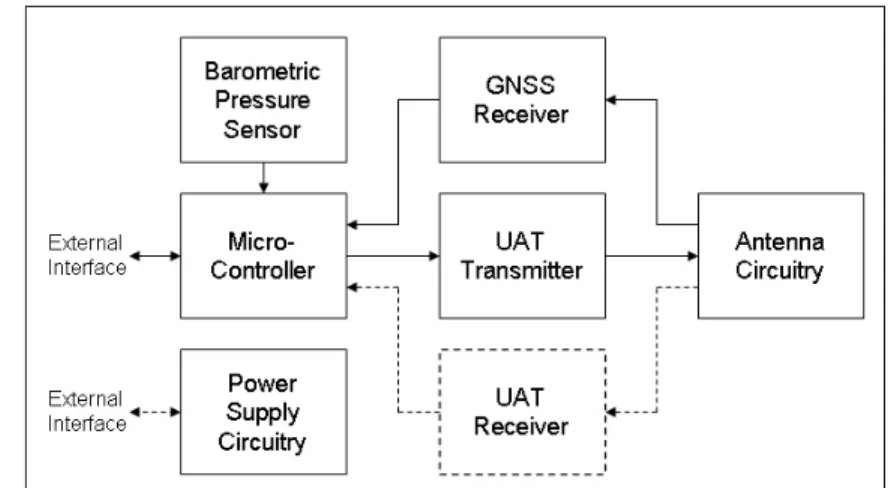
Figure 1 illustrates the functional architecture for the
UAT Beacon radio, showing the major system components. The radio functions are managed by a microcontroller taking input from a GNSS receiver and a barometric pressure sensor. The microcontroller creates the ADS-B message, performs the modulation and provides the waveform to the transmitter for amplification. The UAT and GNSS antenna interfaces are standard 50 Ohm connectors to enable alternative installations, either stand-alone or aircraft integrated. There is an external data interface to exchange configuration and operational data with the radio. The initial system does not contain a receiver or the option for external power, but these capabilities are envisioned in the next version.
As a stand-alone unit, the UAT Beacon radio is self-contained with its own battery power source running off of standard AA batteries. As shown in Figure 2 and Figure 3, it is small enough to be carried on small UAS or be placed on an aircraft glare shield during operation.
Figure 2. UAT Beacon radio. Figure 3. UAT Beacon radio on aircraft glare
shield.
V. Findings
A. RF Power
The UAT operates on a frequency of 978 MHz, which makes the use of hybrid power devices for the Global System for Mobile telecommunications (GSM) cellular phone market viable. These devices are attractive due to their low cost, high gain, and the consistent performance. Also in the UAT Beacon radio application, these devices can operate at higher than rated peak power due to the extremely low transmit duty factor of a UAT transmitter (~0.04%). The power output achieved with a combination of two devices comes close to meeting the minimum power level required in the RTCA standards6.
B. GNSS Sensor
The use of a GNSS receiver certified for aviation use is not practical for a low-cost device at this time. Based on a MITRE market survey done in late 2006, there is a significant cost, size and power consumption gap between sensors certified for aviation applications versus those developed for the consumer market. A limitation of the consumer receivers is their inability to directly provide an integrity indication in the event of a GPS satellite failure. This is not a significant void at this time, as the advisory-use ADS-B applications (e.g., “Enhanced Visual Acquisition”) are not expected to require this integrity indication. More advanced applications involving aircraft-to-aircraft self-separation in controlled airspace will need additional capabilities, but this is not the proposed use of a device like this.
C. Pressure Altitude
Use of barometric pressure altitude is firmly entrenched in aviation. Alternatively, use of geometric altitude— derived from the GNSS sensor—would have many advantages in this application, including the fact that it is available from the GNSS sensor. However, the legacy of pressure altitude use in aviation makes any clean transition
6
Minimum RTCA power level for airborne equipment supports air-air ranges of greater than 5 NM. Also, the RTCA power levels account for temperature variation and cable loss.
to geometric altitude unlikely. Therefore we have pursued a path to include a pressure altitude sensor in the package. All existing aviation-certified pressure altitude sensors rely on a connection to the aircraft’s static port on the fuselage to ensure the pressure reading is minimally influenced by airflow over the aircraft. A stand-alone UAT Beacon radio wouldn’t have access to this external static port available. However, venting the pressure sensor to the cabin of small aircraft flying at low altitude and low airspeeds (i.e., below 10,000 feet and less than 150 knots) we believe will not incur a significant error. However, the magnitude of this error—and the possibility to calibrate it out--will be examined as part of the research effort.
D. Power Source
The system design of the transmitter-only device can be supported by four AA batteries with an expected endurance of about 12 hours depending on the ambient temperature and battery technology used. This is possible through the low duty cycle of the transmitter, techniques for storing energy from the battery for each transmission, and through conservation of power during the considerable off period of the transmitter each second.
E. Initial Flight Testing
Initial flight tests have been conducted to: 1) prove the basic concept, and 2) investigate alternative antenna options. The proof of concept test emulated the potential performance of the UAT Beacon radio to determine if the objective range performance of 5 NM air-air range could be achieved. Since UAT Beacon radio units were not available yet, they were emulated using commercially available UAT radios. The test configuration comprised a stationary radio on the ground and a test
aircraft that flew an inbound/outbound radial from the stationary radio of about 25 miles. Half-way along each flight leg, the test aircraft performed a high-bank 360 degree turn. The ground radio emulated the UAT Beacon radio by inserting signal attenuation and using a single UAT antenna (λ/4, 0 dBi, rod, grounded monopole) mounted on a tripod. The test aircraft used a standard, unmodified UAT installation including both top and bottom UAT antennas. Several signal levels were tested ranging from 1-10 Watts. This test demonstrated that with as little as ~1 Watt of power and using UAT antennas with good ground planes, a range of about 20 miles is achievable. Figure 4 shows some results from this test. The upper graph shows the bearing and altitude of the test aircraft relative to the emulated UAT Beacon radio. The lower graph in the figure shows both range and message success rate (MSR) versus time. MSR is calculated in ten
second epochs. An MSR of nearly 100 percent was achieved except where the test aircraft performed the mid-leg turns and went beyond 20 miles range (mid-graph). Though the antenna configuration used is likely better than will exist with a portable UAT Beacon radio, the amount of radiated power is significantly less than anticipated.
The second flight test focused on assessing alternative antennas for the UAT Beacon radio since the UAT aircraft antenna used in the first test is not appropriate. Three antennas were tested; they included two commercially available antennas and one custom-built antenna. The commercial antennas were a seven-inch dipole and a two-inch monopole tuned for 800-960 MHz. The custom-built antenna was a two-two-inch dipole tuned to the UAT frequency of 978 MHz. The same flight test configuration used for the proof of concept test was used for this test except the ground radio used one of the three antennas connected to a small metal box. The metal box is about the size the UAT Beacon radio is expected to be and provided a representative ground plane. Figure 5 shows the dipole
antenna and metal box while Figure 6 shows the antenna and tripod arrangements used to emulate the airborne UAT Beacon radio.
Figure 5. Antenna under test connected to small metal box.
Figure 6. Emulate UAT Beacon radio on tripod.
Figure 7 shows test results for a configuration using an ungrounded monopole on the emulated UAT Beacon radio. This configuration had attenuation added to simulate a 2W transmit power level for both directions of the link (actual aircraft/UATÆsimulated aircraft/UAT and vice versa). Other than for the mid-leg turns at about 12 NM, it can be seen that message loss is not significant until the range exceeds 20 NM. Given the operational goal of 5 NM air-air range, this initial testing is very promising given a higher power than the 2W emulated here will be achievable for the UAT Beacon radio.
The results of this test indicated that all three antennas showed comparable performance and would likely be suitable for the UAT Beacon radio. Therefore a commercially available
antenna would suffice avoiding the need for a new antenna. The choice of using the seven-inch dipole or the two-inch monopole is more dependent on the space available in the aircraft for radio placement.
VI. Summary and Future Work
There are numerous operating concepts and proposed business models for small UAS that are all predicated on their acceptance into the NAS. In order for small UAS to operate in the NAS with manned aircraft, we submit that a cooperative DSA approach based on ADS-B is very promising. This assertion is based on the following assumptions about small UAS operations in the NAS:
1. A low cost portable ADS-B beacon concept is technically viable. This could significantly increase ADS-B equipage into the GA fleet, particularly to those aircraft that are not subject to any airspace requirements to equip with ADS-B. This broad ADS-B equipage for GA in turn makes cooperative DSA more viable for UAS
2. Small UAS are expected to operate in predominantly visual meteorological conditions. The small aircraft are extremely difficult to visually acquire by human pilots and small UAS will be equally, if not more difficult to see.
3. Small UAS are expected to operate in airspace where ATC doesn’t generally provide separation services; low altitude, where radar surveillance is limited. Radar transponders will be of little use in these areas. UAS operations in controlled airspace are also likely, but other than Class E/G airspace, ADS-B Out will likely be required by the FAA anyway.
4. Small UAS are at a disadvantage when applying aviation right-of-way-rules (FAR Part 91.113) as they are generally slower, the pilot is limited in their ability to visually acquire proximate traffic due to their remoteness from the aircraft, and arguably these aircraft may be less maneuverable than other fixed-wing or rotor aircraft depending on the model and their mission.
5. The physics of autonomous DSA may prevent small UAS from being able to autonomously identify and maneuver to avoid other aircraft. Additionally, the cost, weight and power of DSA sensor systems may prove too burdensome to small UAS.
MITRE’s initial research has focused on demonstrating an affordable ADS-B transmitter using the UAT waveform and pursuing an operating concept whereby such a device is technically, operationally and economically viable to the degree that it makes sense to carry it on all small UAS. The UAT technology is mature, standardized and has been demonstrated for ADS-B in the NAS for over seven years. The MITRE UAT Beacon radio demonstrates that a small, lightweight device can efficiently produce sufficient transmission power to achieve air-air range objectives, complies with aviation standards and is expected to achieve the operating requirements for the ADS-B Enhanced Visual Acquisition application. Coupled with a receiver, this device has the potential to simplify the DSA equation and provide operators of small UAS with a means to facilitate integration of their unmanned assets in civil airspace. If these research objects translate into products in the marketplace, operators of general aviation aircraft without electrical systems or transponders may find the UAT Beacon radio equally attractive. Finally, this concept will enhance general aviation safety by providing shared situational awareness among pilots and accelerate implementation of the ADS-B system in the NAS.
The research will continue through 2007 and potentially 2008. First and foremost, MITRE will be conducting additional flight tests of the UAT Beacon radio to verify initial aircraft-to-aircraft performance. Second, MITRE will investigate the feasibility of including a receiver within the same package. Third, additional research is needed on pressure sensor performance and determining the integrity of the position data from commercial GNSS sensors. These issues could have implications on certifying the radio, if that is desirable or necessary.
Finally, a device like the portable UAT Beacon radio poses some dilemma for FAA. Since it would not be a required piece of equipment on aircraft for which it is intended, or be permanently attached to the aircraft, FAA currently has no regulatory mechanism to ensure it meets any basic requirements. Some certification of such devices might be desirable to—at a minimum—have the manufacturer demonstrate its conformance to data link waveform standards and provide reasonable assurance the unit will not transmit misleading information. A new regulatory mechanism to cover devices such as this may be needed.