UNIVERSITY OF TAMPERE
Faculty of Management
SMALL FIRM PERSPECTIVE IN
CUSTOMER RELATIONSHIP MANAGEMENT
IMPLEMENTATION
Business Competence
Master’s thesis
November 2017
Supervisor: Hannu Saarijärvi
Soo Yee Teh
1
ABSTRACT
University of Tampere: Faculty of Management, Business Competence
Author: SOO YEE TEH
Title: SMALL FIRM PERSPECTIVE IN CUSTOMER
RELATIONSHIP MANAGEMENT IMPLEMENTATION
Master’s Thesis: 70 pages
Date: November 2017
Key words: Small firm, customer relationship management (CRM), CRM
process
CRM has been a popular topic since the 90s and several of studies have been conducted by academic scholars from diverse multidisciplinary fields of study. CRM implementation have always been focused in large organizations and not that much attention given has been to smaller size organization. However, with the emerging small size firms in the market CRM software providers shifted the attention from larger firms to smaller size firms. The ready to use software, lower cost and features functions attract small size firms to implement CRM for their business. Furthermore, the demand to implement CRM in firms is to achieve competitive advantage and survival in the global market.
The objective of this study is to gain an understanding from a small firm perspective in implementing CRM. To achieve this, both benefits and challenges related to CRM framework processes were identified and discussed. The study also aims to identify the challenges as well as the benefits encounter during the implementation process. Customer Relationship Management (CRM) term have been around since 1990s. Many CRM implementation studies have been conducted in a large organization however there is limited study conducted from a small firm perspective.
The studies begin with exploring CRM definitions. However, there is no one define definition found in literature. CRM concepts: process, data, customer knowledge and technology are being introduced. Next, concept of small firm being introduced. The connection between small firm and CRM are being explored in three perspectives: drivers to implement CRM, potential benefits and challenges of CRM. Those perspectives are based on previous studies found in existing literature reviews.
The empirical study is based on qualitative methodology and conducted as a single case study. The single case is built on a small firm operating in Finland. The research data was gathered as a combination of semi-structured interviews and author’s observations. The findings verified the importance of having a similar CRM definition among the employees in order to achieve a successful CRM implementation. Based on the result of the study, challenges and benefits of CRM have been identified, reflected and discussed related to previous academic studies. The result showed that CRM is commonly viewed as a technological tool or project rather than cross-functional long-term business process. The finding of this thesis may assist future small firms in having more effective strategy and less frustration during the implementation process.
2
Contents
ABSTRACT ... 1 1. INTRODUCTION ... 4 1.1BACKGROUND ... 4 1.2RESEARCH PURPOSE ... 62. CUSTOMER RELATIONSHIP MANAGEMENT ... 8
2.1APPROACHING THE DEFINITION OF CRM ... 8
2.2CRMIMPLEMENTATION AND PROCESS ... 10
2.2.1 CRM implementation...10
2.2.2 CRM process ...14
2.3DATA IN CRM ... 18
2.3.1 Data warehouse ...18
2.3.2 Data mining...19
2.3.3 Impact of data’s quality ...20
2.4CUSTOMER KNOWLEDGE ... 20
2.5TECHNOLOGY AND CRM ... 21
2.6SUMMARY ON CRM ... 22
3. SMALL FIRM AND CRM ... 24
3.1DEFINING SMALL FIRM ... 24
3.2SMALL FIRMS POTENTIAL CRM BENEFITS ... 25
3.3DRIVERS TO IMPLEMENT CRM ... 27
3.4CHALLENGES IN CRM IMPLEMENTATION IN SMALL FIRM ... 29
3.5THEORETICAL SYNTHESIS ... 30 4. RESEARCH METHODOLOGY ... 32 4.1QUALITATIVE METHODOLOGY ... 32 4.1.1 Action research ...32 4.1.2 Semi-structured interview ...34 4.1.3 Participant observation ...35 4.2ARCH RED OY ... 36 4.3DATA GENERATION ... 38 4.3.1 Choosing interviewee ...38 4.3.2 Conducting interviews ...38 4.3.3 Author’s observation ...39 4.4ETHICAL CONSIDERATION... 39 4.5DATA ANALYSIS ... 40
5. CRM IMPLEMENTATION IN A SMALL FIRM ... 42
5.1CRM DEFINITION ... 42 5.2DRIVERS FOR CRM ... 43 5.3CRM IMPLEMENTATION PROCESS ... 46 5.4BENEFITS OF CRM IMPLEMENTATION ... 48 5.4.1 The CRM software ...48 5.4.2 Data ...49 5.4.3 Other’s benefits...50
5.5CHALLENGES DURING IMPLEMENTATION ... 52
5.5.1 The CRM software ...52
5.5.2 Data ...53
5.5.3 Other’s challenges...54
5.6SUMMARY OF CRM IMPLEMENTATION IN A SMALL FIRM ... 59
5.7RE-EVALUATION OF THE THEORETICAL SYNTHESIS ... 60
3
6.1RESULTS AND FINDINGS... 64
6.2LIMITATION OF THE RESEARCH ... 67
6.3MANAGERIAL IMPLICATIONS... 68
REFERENCES ... 70
FIGURES: Figure 1: Synthesis of the theoretical framework………31
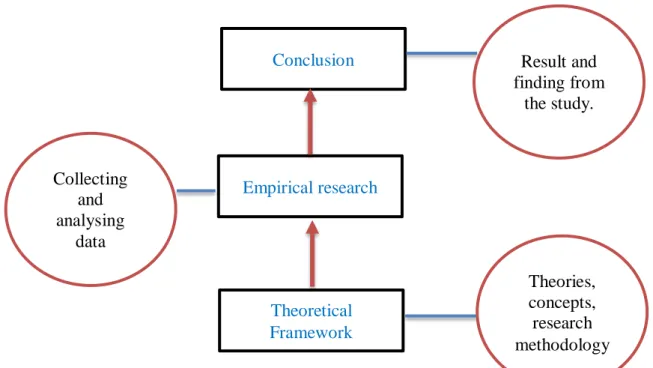
Figure 2: Illustration of the research process………..40
Figure 3: Home-grown system CRM Process……….47
Figure 4: Illustration of the implementation time frame ………59
Figure 5: Synthesis of the result with the theoretical framework …..……….60
TABLES: Table 1: The CRM Process……….15
Table 2: The CRM Processes………..16
Table 3: Criteria of SME……….24
Table 4: eCRM benefits………...26
Table 5: Three major factors influencing CRM in SME……….28
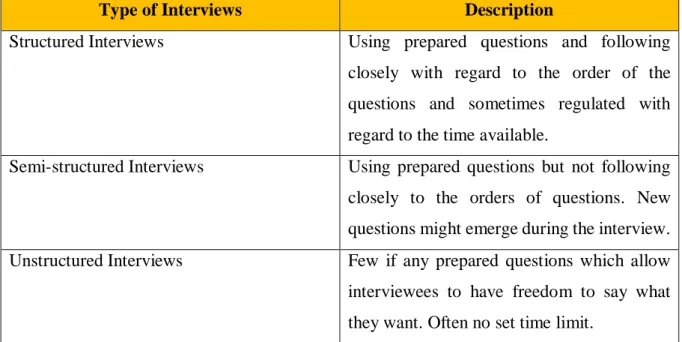
Table 6: Types of Interviews………...35
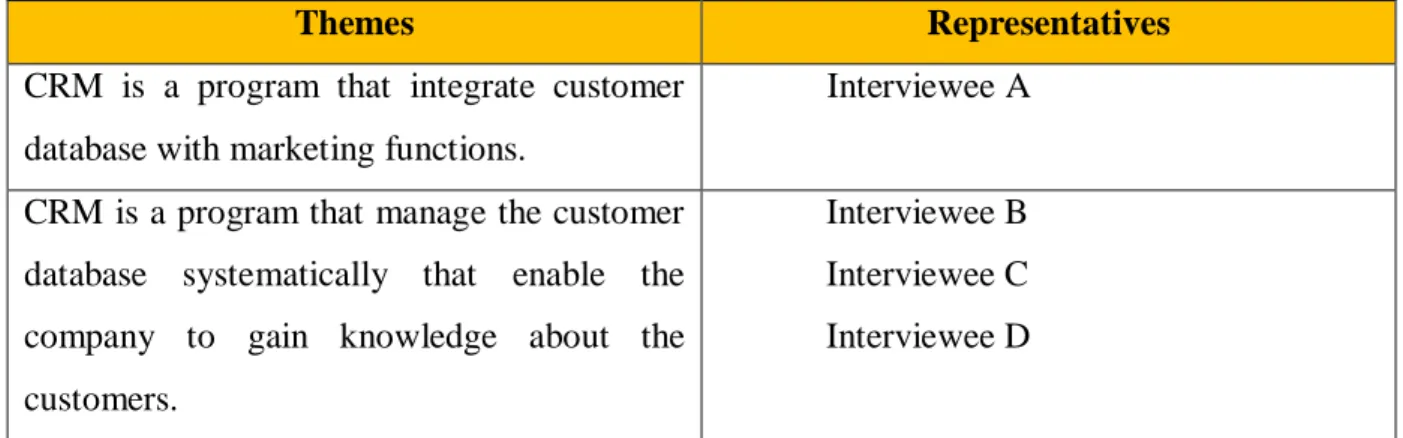
Table 7: Summary of CRM definitions………...43
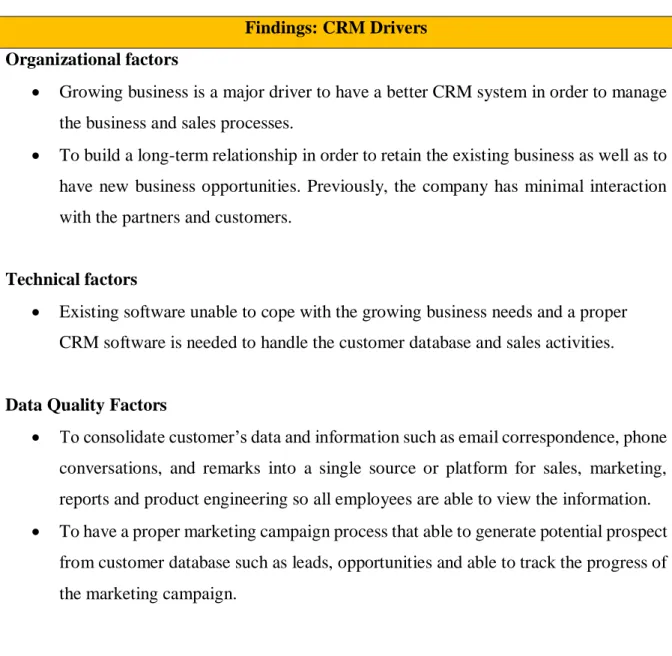
Table 8: Summary of CRM drivers’ findings……….45
Table 9: Summary of CRM Benefits………...51
4
1.
INTRODUCTION
1.1 Background
During the manufacturing era, the business paradigm used to be product-centric. However, as customers are getting more knowledgeable and educated on the products, along with a rapid increase from competitors in the market, companies realized that they need to change their business operation mode. Thus in the 1970’s, a new direction has emerged emphasizing the interaction between the buyer and seller (Grönroos, 2000, p. 21). According to Sheth, Sisodia and Sharma (2000, p. 58) that companies start to evolve toward a customer focus rather than a product-focused or segment-focused strategy due to the emergence of customer-centric marketing. At the same time, Nordic School emerged focusing on service in its marketing context that later on shape the marketing literature into a new direction (Gummesson & Grönroos, 2012). It forces firms to change the way of doing business to be more service-oriented direction (Boulding, Staelin, Ehret, & Johnston, 2005). Hence, studies of services and customer relationships in the academic fields emerged in a rapid speed.
Then in the early 1990’s, along with the development of technology has enable more
opportunities for the customer and companies to interact, gaining more information about the customers, creating databases to analyze customer information and creating value between company and customers. Many firms believe that this is the beginning of the development of Customer Relationship Management (CRM) theory. CRM provides large organizations with opportunities to explore the unseen potential of customer satisfaction and market opportunities. The drive to attract existing and acquire new customers and expand their market shares have motivated small firms to follow the step of large organization to invest in CRM itself. In many cases, the purposes of implementing CRM in the organization are driven by the need to track and pull information of customers through a platform and building a long-term relationship with existing and new customers.
Researchers and scholars have since begun to study the CRM concept, nature and scope from various field of study; marketing, services, technology and software system. Few authors have mentioned that successful CRM was considered as one of the criteria for a firm’s competitive
5
advantage (Nykamp, 2001; Parvatiyar & Sheth, 2001). Back then in the 90s, most of the CRM implementation is associated with major organizations. This is particularly related to the availability of new technology, cost of implementation and vendor’s market target in trying to sell their companies' customized CRM program to big companies or organizations. However, the focus of attention slowly widens to include small and medium-sized enterprise happened approximately more than a decade later.
In Finland, due to the downfall of Nokia has led to increasing number of small firms. There are few small firms that have well known successful stories such as Rovio and SuperCell indicating a promising growth of small firms around the country. Most of the customers are not based in Finland thus, strong commitment to engage with the customers around the world. One of the important factor that drive the small firm in Finland to be actively engaging with the customer is the competitiveness in the market. According to the Organization for Economic Cooperation and Development (OECD), Small and Medium Enterprises (SME) represent more than 95% of enterprises and ensure sixty to seventy percent of the jobs (Robu, 2013). With the emergence and reputation of several CRM software packages such as SalesForce.com, Base CRM, Zoho CRM and Pipedrive these customized software packages has encouraged small firms to consider implementing CRM as part of their business process.
CRM adoption by the small firms is different from large organizations due to the organization structure and financial capability. Generally, small firms are owned by the owner who also working in the firm themselves and the hierarchy structure is not as complex as large organization. With the ready-to-use software package offered by the CRM vendors, the cost of implementation is not as expensive as previous due to the competitive offers by the CRM software provider. Comparing with large organization, small firms prefer to employ simple CRM functions and tools rather than a complex system. However, benefits of CRM are still broadly undiscovered even by the larger organization and those opportunities able to contribute to the competitiveness of small firms in the global market (Alshawi, Missi, & Irani, 2011, p. 376).
After a thorough reading, research studies primarily focus on implementation of CRM in large organizations. Several studies suggested different approaches in implementing a successful CRM (Goodhue, Wixom, & Watson, 2002; Wilson, Daniel, & McDonald, 2002). Few studies have been conducted on quality factors, knowledge management approaches and information
6
technology strategies in adoption of CRM in SMEs (Alshawi et al., 2011; Koh & Maguire, 2004; Mazurencu, Mihaescu, & Niculescu- Aron, 2007). However, many studies by academic scholars and industry experts analyze key reason for CRM failure are due to poor planning and lack of clear objectives (Foss, Stone, & Ekinci, 2008; Kale, 2004; Missi, Alshawi, & Fitzgerald, 2005), while support from management and proper strategies are few of the key CRM success factors (Q. Chen & Chen, 2004; Croteau & Li, 2003; Nelson & Hagemeyer, 2003).
Apart from CRM failure or success, research identifies other strategic issues such as data, technology and knowledge management influencing CRM in implementation (Baumeister, 2002; Bull, 2003; Campbell, 2003). In addition, most studies conducted on CRM strategies focus on the implementation of CRM in large organization (Alok Mishra & Deepti Mishra, 2009; Finnegan & Currie, 2010; Lambert, 2009; Özgener & İraz, 2006; Piskar & Faganel, 2009). However, there is not many studies conducted in CRM implementation process in small firm. Thus, this thesis aims to fill this research gap by further studying the benefits and challenges faced by small companies when implementing CRM.
1.2 Research purpose
The overall aim of this research is to build and understand small firms’ perspective into CRM implementation. This paper will be achieved through the research questions by answering the two following research questions:
1. What are the challenges related to small firm CRM implementation? 2. What are the small firms’ CRM benefits?
This paper will address the research questions as follows:
The thesis first starts by exploring customer relationship management in a small firm as a research phenomenon and identifying the current research gap to position the research topic. The second chapter takes a review of existing insight and knowledge of the customer relationship management, the processes, data, customer knowledge and, technology through few sub-chapters. Chapter three discusses small firm concept and relationship between CRM and small firm. Then, chapter four will explain on the methodology being used in this thesis.
7
The fifth chapter presents the key findings of the benefits and challenges from the data analysis.
The final chapter presents the conclusion of the study and the research limitation. The benefits
and challenges encountered during the implementation period will provide a solid proposition comparing to the existing academic literature.
8
2.
CUSTOMER RELATIONSHIP MANAGEMENT
The objective of this chapter is to review the theory of customer relationship management (CRM) in order to have a better understanding of it from different perspectives e.g. as process, and technology in the business and literature point of view. The chapter will begin by exploring the definition of CRM as an overview. Next, an overview of CRM as a process itself, follow by Data in CRM, Customer Knowledge, and relation between Technology and CRM. The following sub-chapters are the potentials and failures of CRM and lastly, the summary of the CRM.
2.1 Approaching the definition of CRM
Literature research on the term CRM search, consist of multiple definitions. Based on
Saarijärvi, Karjaluoto, & Kuusela (2013, p. 142) study, there are more than 2,500 scientific
articles suggested in the search to articles that consist of the search term in the article title, keywords, or abstract. The popular term has become a buzzword (Luck & Lancaster, 2003, p. 214) that appears to be inconsistent and highly fragmented with unclear definition of itself as it lacks of common conceptualization from academicians in the growing academic CRM literature (Zablah, Bellenger, & Johnston, 2004, p. 476) and according to Winer (2001, p. 91), the concept is poorly defined as he stated:
“A problem is that CRM means different things to different people. For some, CRM means direct e-mails. For others, it is mass customization or developing products that fit individual customers' needs. For IT consultants, CRM translates into complicated technical jargon related to terms such as OLAP (on-line analytical processing) and CICs (customer interaction centers).”
It is generally believed that CRM term become popular in the 1990s due to technology advancement in technology based solution (SFA) and the growth of customer base (I. Chen & Popovich, 2003, p. 675; Garrido-Moreno & Padilla-Meléndez, 2011, p. 438; Payne & Frow, 2005, p. 167). The term is also being associated as part of marketing sub-discipline (Roberts, Liu, & Hazard, 2005) as some academician indicated CRM is about co-value creation between
9
firm and customer (Payne & Frow, 2005, p. 170; Vargo & Lusch, 2004, p. 10). According to
Zablah et al. (2004, p. 478), the collective goal is to enable firms to build and maintain a profit-maximizing portfolio of customer relationships. Few suggested that CRM and relationship marketing are not distinguished from each other in the marketing literature (Parvatiyar & Sheth, 2001, p. 3; Payne & Frow, 2006; Zablah et al., 2004, p. 480).
Meanwhile, several studies from other fields such as by Xu and Walton (2005), Nguyen, Sherif, and Newby (2007), and Bose (2002) describe CRM as “integration using technology and process developing and retaining customers through information's stored in data warehouse website and staff knowledge towards their customers to achieve, aimed at retaining customers and to gain a strategic advantage.” CRM tools companies to collect customer data, identify the most valuable customers over time, and increase customer loyalty by providing customized products and services (Rigby, Reichheld, & Schefter, 2002).
CRM term can be seen an outcome of the continuing evolution and integration of marketing ideas and newly available data, technologies and organizational forms (I. Chen & Popovich, 2003, p. 156) and according Payne and Frow (2005, p. 168), their definition of CRM layout various point of views related to CRM’s definition:
“CRM is a strategic approach that is concerned with creating improved shareholder value through the development of appropriate relationships with key customers and customer segments. CRM unites the potential of relationship marketing strategies and IT to create profitable, long-term relationships with customers and other key stakeholders. CRM provides enhanced opportunities to use data and information to both understand customers and co-create value with them. This requires a cross functional integration of processes, people, operations, and marketing capabilities that is enabled through information, technology and applications.”
Despitedifferent interpretation by academicians from various disciplines of studies, it generally
has similar perspective about the description of CRM. Phrases such as “mutual benefits” (Parvatiyar & Sheth, 2001), “customer relationship” (Nguyen & Waring, 2013; Xu & Walton, 2005), “strategy” (Reinartz, Krafft, & Hoyer, 2004; Rigby et al., 2002) and “technology” (Bose, 2002) appear with a high result when searching the definitions of CRM. As mentioned earlier
10
by Winer that CRM definition means differently depending on the perspective of individual, thus in this thesis, above mentioned are consider as part of CRM characteristics in the emerging study of the multi-disciplinary field. The CRM definition for this thesis will be based on Payne and Frow’s CRM definition as their CRM concept integrated with combination of strategy, customer relationship, customer and technology. Rather than limiting CRM on certain subject such as technology or relation marketing, CRM should also incorporate business strategy, goal, and customer knowledge as part of the definition.
2.2 CRM implementation and process
2.2.1 CRM implementation
There are many factors contributing to the success of CRM implementation. However, the most crucial step is the perception towards CRM as a strategy rather than as a solution. First of all, CRM project must be considered as comprehensive project throughout the company and not being regarded as departmental project. Secondly, commitment and involvement from the top management and senior managerial level is important in order to have successful CRM implementation (Kotorov, 2003).
According to Piskar and Faganel (2009, p. 201), CRM implementation starts with a strategic decision to change or improve the business process in the firm, and to invest into a better technological system. In the initial stage of implementation, support from top management plays a major role in the firm as a sign of change. Smith (2006, p. 88) mentions that lesson from past failure project need to be learnt in order to understand CRM better. These past failures include: over stressing the functionality of CRM; not having a front-to-back CRM solution for customer service (this includes employee education on the benefits of CRM solutions and procedures on front line follow-up); and not having the corporate culture to support the implementation of CRM (Smith, 2006, p. 88).
Study conducted by Xu and Walton (2005) in implementation of CRM system in practice, focusing on strategic application i.e. to gain customer knowledge, and to explore the ways of embracing CRM technology for strategic customer information provision. In their study,
11
organizations have been using CRM systems in operational applications e.g. contact centres, sales and marketing solutions with limited customer knowledge gained thru the CRM system. Xu and Walton (2005) suggested that CRM implementation should enhance organization’s ability to interact, attract, building relationships and the ability to gain customer knowledge. In their study, top management support plays a crucial role for a successful CRM implementation.
Meanwhile, Chen and Popovich (2003, p. 675) propose a CRM implementation model that integrates the three key dimensions of people, process, and technology within the context of an enterprise-wide customer-driven, technology-integrated, cross-functional organization. According to Chen and Popovich (2003), as the trend shift from product oriented to people oriented era, firms need to rebuild the business around customers, employees need to accept the changing business process, organizational culture and, the ways they view their customers and how they treat them.
2.2.1.1 Challenges of CRM implementation
Although there are many literature articles and companies CRM success stories being published, there are also increasingly significant number of articles and reports documenting the failure of CRM found. According to Bligh and Turk (2004), the common reason of CRM failures are categorize based on the following:
Poor objective setting,
Lack of senior leadership,
Inadequate planning and scope setting,
Implementation missteps,
Lack of change management and,
Inadequate post-implementation operation.
Firstly, it is important to set an objective prior the CRM implementation and CRM should not be misunderstood to a software solution implementation project (Parvatiyar & Sheth, 2001, p. 28). This was complied with CRM often incorrectly equated as CRM technology (Reinartz et al., 2004; Rigby et al., 2002) for the firm’s marketing strategies and goals. According to Rigby
12
et al. (2002, p. 102), their ten years of research identified one of the biggest failure of CRM implementation is that most executives doesn’t not understand what they are implementing, the cost of implementation and the time needed. Rigby et al. (2002) and Kale (2004, p. 44) both disagree that CRM has to be technology intensive as CRM objective can be achieved by trying to understand the customer needs. Therefore, many CRM projects are stalled, failed and even being scrapped off (Reinartz et al., 2004) as the result of failure to understand the CRM initiatives entail (I. Chen & Popovich, 2003, p. 675). With technology assistance, firms are able to capture and analyze customer data however for the long run, firm need to depend more on strategy rather than rely 100% on technology to retain existing customers and capture new customers. According to Garner report, there is a large proportion of CRM technology deployments that do not perform up to expectations (Reinartz et al., 2004, p. 9).
Besides, Kale (2004) research suggested that another reason for CRM to fail is lack of adequate change management. The issue with changes resistance arise from the employee’s lack of understanding and training, existing firm’s culture, business process and company’s direction in the CRM implementation (Koh & Maguire, 2004). Besides, support and commitment from the top management is needed in order for CRM to be successful (Kale, 2004, p, 45; Rigby et al., 2002). The initiative should be driven by the top management in the company as the guidance of change and showing involvement during the process. In an executive survey conducted by Gartner, more than 55% of all CRM projects have difficulties to achieve the desired expectation. Freeland (2003) suggested two main reasons for the failure:
1) The disconnection of CRM vision and execution. Common mistake done by most
companies focusing on technology area such as tools and systems rather than business strategy to increase value of the customer relationship.
2) The rising standard for CRM excellence. Business environment changes rapidly due to
the technology advancement resulting customers to be more knowledgeable. In order to compete in the market, firms need to be equipped and outdo each other more than relying on CRM programs.
13
In summary, the issue of CRM failures appeared mostly to be in people’s perspective toward CRM. While the technology plays an important role in the CRM process but this led to one of the major issues based on assumption that CRM is technology driven. The assumption has leads many firms to forget that customer strategy and business process are vital for the longer run alongside with the technology. In addition, the failure to connect the objective between CRM capabilities causing the change management from the top to bottom level of employees being affected in a negative direction.
2.2.1.2 Criteria for successful CRM implementation
In Mitussis, O’Malley and Patterson (2006) study, they found that CRM implementation has not been unproblematic. In order to have a successful and effective CRM implementation, Nguyen et al. (2007) discuss several approaches for successful CRM implementation. They suggested that organization should evaluate how CRM fits into their overall business strategy, current CRM capabilities and a reason for implementing CRM. In Nguyen et al. (2007) study, they have given suggestion that CRM implementation is a mandatory step in consumer goods industry because the industry has a closer connection with end customers but lesser value to industries that are further away from the end customers. Meanwhile for financial services and telecommunication industry that have major customer contact, CRM implementation is highly recommended step. However, possibility of lack of knowledge and research, lack of project management skills, and lack of commitment from the executive management could result a failure in the implementation (Nguyen et al., 2007, p. 113).
Meanwhile, according to Xu and Walton (2005) in order to have a success CRM implementation, organization need to change to create a knowledge centric organization in addition with support and awareness from top management and solution provided by IT industry. Bohling et al. (2006, p. 193) surveyed 101 U.S.A firms' experiences on CRM implementation to identify the successful factors associated with the implementation. According to their finding, they suggested that by linking CRM strategy and implementation more tightly with the overall marketing strategy of a business will lead to greater CRM implementation effectiveness. In Goodhue, Wixom and Watson (2002, p. 93) finding, a successful CRM implementation require implementing strategically beneficial applications, improving the underlying data infrastructure, and changing the way the business is run. In
14
addition, committed support from top management is needed in order for change in business culture. Crocket and Reed (2003) suggested that firm should be able to recognize how CRM adjust into the overall business strategy by assessing capability of the CRM. Rather than viewing CRM as another new technology system, firm need to rationalize the purpose of having a CRM in the business and prepare a proper plan of implementation in order to achieve the main objectives.
2.2.2 CRM process
To describe business process, Hammer (1996, p. 12) said that “the essence of a process is its input and it outputs, what it starts with and what it ends with. Everything else is details”. It is difficult to identify the input and output of CRM process as it is different from manufacturing or physical development of products as most of the time CRM process involves intangible asset (Zablah et al., 2004, p. 479). Thus, CRM is described as a macro-level process (Lambert, 2009, p. 5) is highly aggregated which comprised of numerous sub-processes that can be separated into micro-level processes (Srivastava, Shervani, & Fahey, 1999, p. 169).
Marketing scholars have long believed that the main objective of marketing is to attract and retain customer and to achieve that objective, organizations must implement business plan or process (Srivastava et al., 1999, p. 168). In the first part of Parvatiyar and Sheth (2001, p. 5) definition, it is stated that “CRM is an overall strategy and process of acquiring, retaining, and partnering with selective customers to create superior value for the company and the customer” in line with Swift (2000, p. 36) description that CRM provides enhanced opportunities to use data and information to both understand customers and co-create value with them. Zablah et al. (2004, p. 480) developed a concept to define CRM process as “an ongoing process that involves the development and leveraging of market intelligence for the purpose of building and maintaining a profit-maximizing portfolio of customer relationships”. Hammer (1996, p. 12) indicated that the most important word in the definition of process is “customer” fit perfectly based on the above three journals' description of CRM process.
In Reinartz et al. (2004) study, there are three different possible levels of CRM: the functional level, the customer-facing level, and the company-wide level. CRM has become an important business measurement as an outcome of aggressive competition based from the need to achieve
15
cost efficiency with high-quality supplier and a recognition of the fact that customers are not equal in terms of their profitability; and, knowledge that customer retention can significantly affect profitability (Lambert, 2009, p. 5).
There are various perspectives of CRM implementations and processes. However, for the purpose of this paper, Payne and Frow’s CRM process will be use as a guideline for implementation process. The cross functional processes identified by them are more comprehensive with more details explaining the nature of the processes and how each process interacts with each other. In addition, both CRM implementation and success criteria highlighted the importance of identifying and aligning the CRM strategy into the business strategy.
2.2.2.1 CRM process according to Payne and Frow (2005, 2006)
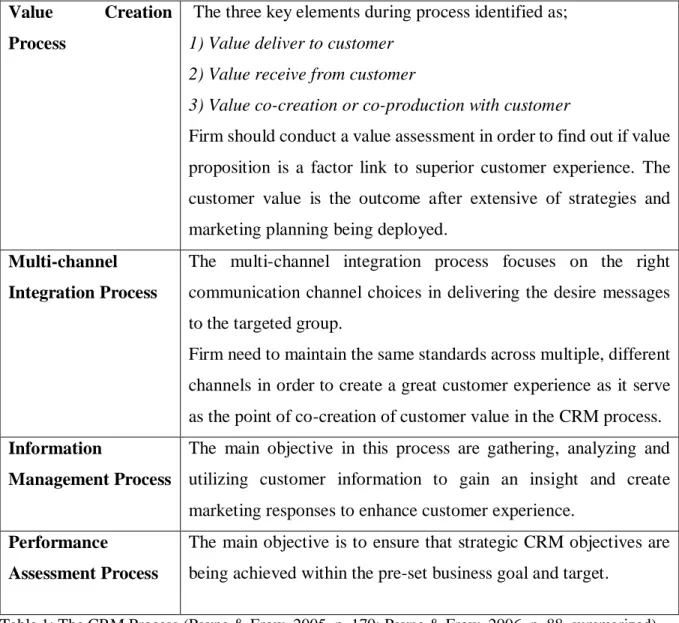
In the previous discussion, it is important to understand CRM and its related aspects such as the definition, objective, aim and strategy before implementing the CRM. Payne and Frow (2005, p. 86) used an expert panel of executives with extensive experience within the CRM and IT sectors to develop and identify five CRM processes including: (1) strategy development, (2) value creation, (3) multi-channel integration, (4) information management and, (5) performance assessment. These five CRM processes are known as cross functional processes in the framework. Table 1 below summarized the descriptions for each process.
Process Description Strategy
Development Process
There are dual focus in this process: 1) Organization’s business strategy:
Business strategy need to be developed and objective of the customer strategy and CRM activities be defined.
2) Customer strategy
An appropriate customer strategy need to be planned starting with examine and then analyzing customer base in order to be able to form customer segmentation
16
Value Creation Process
The three key elements during process identified as; 1) Value deliver to customer
2) Value receive from customer
3) Value co-creation or co-production with customer
Firm should conduct a value assessment in order to find out if value proposition is a factor link to superior customer experience. The customer value is the outcome after extensive of strategies and marketing planning being deployed.
Multi-channel Integration Process
The multi-channel integration process focuses on the right communication channel choices in delivering the desire messages to the targeted group.
Firm need to maintain the same standards across multiple, different channels in order to create a great customer experience as it serve as the point of co-creation of customer value in the CRM process.
Information
Management Process
The main objective in this process are gathering, analyzing and utilizing customer information to gain an insight and create marketing responses to enhance customer experience.
Performance Assessment Process
The main objective is to ensure that strategic CRM objectives are being achieved within the pre-set business goal and target.
Table 1: The CRM Process (Payne & Frow, 2005, p. 170; Payne & Frow, 2006, p. 88, summarized).
2.2.2.2 Other CRM processes
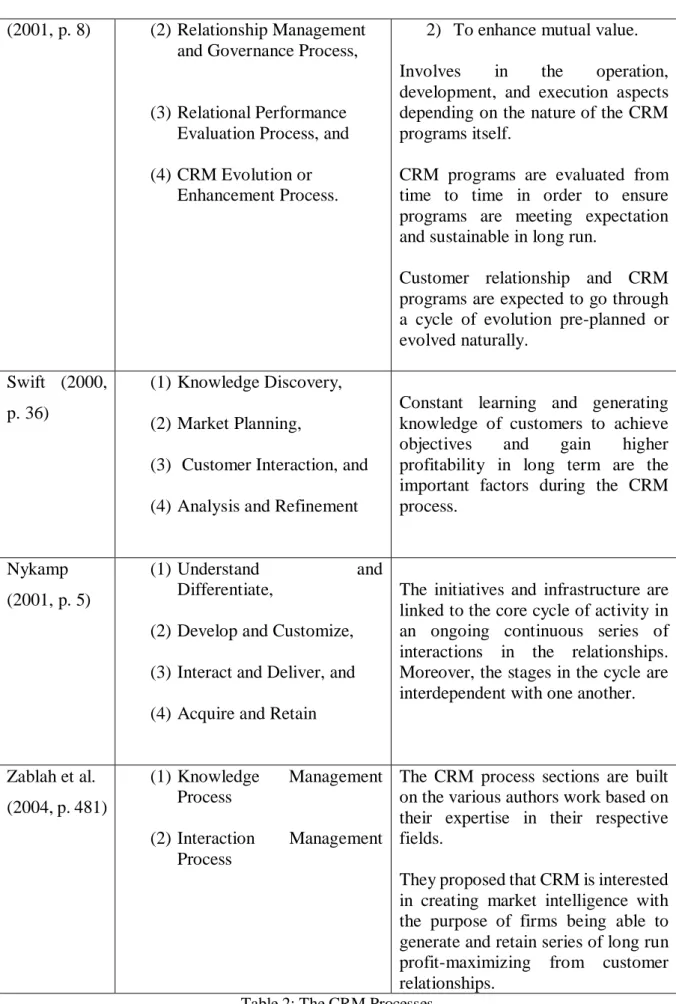
Besides Payne and Frow’s CRM process model, the author also selected four other CRM processes, shown in Table 2 that are commonly being used as references in the academic literature. The four CRM processes reflected another perspective in term of the process flow itself and the main purpose of CRM in the context.
Author(s) CRM Process Short Descriptions
Parvatiyar and Sheth
(1) Customer Relationship
Formation Process,
The objectives of engaging in CRM;
1) To increase marketing
17
(2001, p. 8) (2) Relationship Management
and Governance Process,
(3) Relational Performance
Evaluation Process, and
(4) CRM Evolution or
Enhancement Process.
2) To enhance mutual value.
Involves in the operation,
development, and execution aspects depending on the nature of the CRM programs itself.
CRM programs are evaluated from time to time in order to ensure programs are meeting expectation and sustainable in long run.
Customer relationship and CRM programs are expected to go through a cycle of evolution pre-planned or evolved naturally.
Swift (2000, p. 36)
(1) Knowledge Discovery,
(2) Market Planning,
(3) Customer Interaction, and
(4) Analysis and Refinement
Constant learning and generating knowledge of customers to achieve
objectives and gain higher
profitability in long term are the important factors during the CRM process.
Nykamp (2001, p. 5)
(1) Understand and
Differentiate,
(2) Develop and Customize,
(3) Interact and Deliver, and
(4) Acquire and Retain
The initiatives and infrastructure are linked to the core cycle of activity in an ongoing continuous series of interactions in the relationships. Moreover, the stages in the cycle are interdependent with one another.
Zablah et al. (2004, p. 481) (1) Knowledge Management Process (2) Interaction Management Process
The CRM process sections are built on the various authors work based on their expertise in their respective fields.
They proposed that CRM is interested in creating market intelligence with the purpose of firms being able to generate and retain series of long run profit-maximizing from customer relationships.
18
2.3 Data in CRM
Referring to the previous sub-topic of CRM Process, phrases such as "customer information", "data", "target group", "database" and "segmentation" are linked to the information collected from customer, either from existing or potential customer of the firm. In recent years, the increasing interaction between customer and firms have generated a lot of information with one another creating opportunities and challenges for firm to understand the customer’s need and pattern. As a result, many firms invested in technologies to collect, store and analyze these information in a database. The database of the customers discloses information such as what kind of product that have been purchased and through that information, company able to forecast the next purchase directly acknowledge the importance of the database which capture customer information (Winer, 2001, p. 102). Acknowledging the importance on how powerful customer information can aid the firm, most of firms established a place to organize the data by creating databases, commonly referring as data warehouse.
2.3.1 Data warehouse
Data warehouse term might differ from one organization to another as it is commonly customized to suit the need of each firm. In general, Inmon (1995) describes data warehouse as a subject oriented, integrated, time variant, non-volatile collection of data in support of
management's decision needs which is similar with Hüsemann, Lechtenbörger, and Vossen
(2000, p. 1)’s explanation of data warehouse that “it is an integrated and time-varying collection of data primarily used in strategic decision making”. Data warehouse is considered as an important part in analytical CRM due to the capability to track customer behavior from over period of time (Berry & Linoff, 1997, p. 5) with database storing data from multiple information sources such as historical to present information which can be segregated into categories and summarized to be circulate for marketing purposes (Hüsemann et al., 2000, p. 1; Inmon, 1995, p. 18). Chen and Popovich (2003, p. 678) provided a brief summary of the data warehouse’s benefit in the bullet point below:
“accurate and faster access to information to facilitate responses to customer
19
“data quality and filtering to eliminate bad and duplicate data;”
“extract, manipulate and drill-down data quickly for profitability analysis, customer
profiling, and retention modeling;”
“advanced data consolidation and data analysis tools for higher level summary as well
as detailed reports; and”
“calculate total present value and estimate future value of each and every customer.”
2.3.2 Data mining
The term data mining (DM) has appeared as a result to the growth of database, technology advancement and to achieve competitive advantage. According to Fayyad, Piatetsky-Shapiro and Smyth (1996, p. 39), the term has been used mostly by statisticians, data analysts, and the management information systems (MIS) communities. DM is part of the process in discovering pattern, trend or relationship thru exploring and analyzing data to gain new perspective towards customer behavior (Berry & Linoff, 1997; Fayyad et al., 1996; Rygielski, Wang, & Yen, 2002).
The key objective of data mining is to identify valid, novel and useful patterns, and associations in existing data in order to gain insights that add to organizational knowledge (Spiegler, 2003, p. 536). Thus, Berry and Linoff (1997, p. 19) defined six common data mining tasks: classification, estimation, prediction, affinity grouping, clustering, and profiling. The benefits from the DM tasks includes identification of potential customers, gain new information e.g. customer life cycle, credit history, cross-selling and creating the suitable communication channel to specific target group. To outline Swift (2000, p. 98) summary on roles of data mining, firstly data need to be converted into information and knowledge for the right decision to be made and secondly, providing right mechanisms to deploy knowledge into operational for right action to be occurred.
20
2.3.3 Impact of data’s quality
Recognize as the foundation of CRM process, customer data plays an important role for the business (Alshawi et al., 2011, p. 377; Even, Shankaranarayanan, & Berger, 2010; Zahay, Peltier, & Krishen, 2012, p. 6). Hence, a poor data quality can cause a firm to invest more extra time and human resources as not all customers in the list are active or still exist in the market (Mulhern, 1999, p. 28). Based on Gartner study (2003), 75% of organizations surveyed admitted that flawed data contributed to negative financial impact on their business and 50% incurred extra cost to reconcile data. According to The Data Warehousing Institute report, data quality issues cost U.S. businesses approximately more than $600 billion a year (Eckerson, 2002). Marsh (2005, p. 106-107) summarized the finding based from research and reports by industry experts in the following bullet points:
“88 per cent of all data integration projects either fail completely or significantly
over-run their budgets;”
“33 per cent of organizations have delayed or cancelled new IT systems because of
poor data;”
“$611bn per year is lost in the US in poorly targeted mailings and staff overheads
alone;”
“According to Gartner, bad data is the number one cause of CRM system failure;”
“Business processes, customer expectations, source systems and compliance rules are
constantly changing. Data quality management systems must reflect this;”
“Vast amounts of time and money are spent on custom coding and traditional methods
usually firefighting to dampen an immediate crisis rather than dealing with the long-term problem”.
2.4 Customer knowledge
As customer data are being collected and analyzed through marketing platforms, it indirectly creates opportunity for firms to learn about the customer. According to Sheth, Sisodia, and Sharma (2000, p. 62), customer knowledge is capable to help firm to improve in product creation, pricing, distribution and fulfillment, and communication while enhancing customer
21
loyalty. Rowley (2002, p. 501) defines customer knowledge as knowledge about customers and knowledge possessed by customers. It is further elaborated by Dous, Salamann, Kolbe, and Brenner (2005, p. 167) papers as part of the three knowledge flows identified in addition with knowledge for customers. Firstly, knowledge about the customer is obtained thru customer’s data and past transaction that enable firm to identify the preference and future purchase activity. For example, firm have information on customer service interaction such as account status, frequent purchase products and feedback that can help them to understand better of the customer purchase’s pattern. Secondly, knowledge possessed by customer involving information provided by customer about products, services, pricing, and current trend of the company’s product and services as well as competitors information. Lastly, knowledge for the customer is shown and distribute through product information, marketing communication, services based from the customer research conducted by the firm internally in order to achieve customer retention and attracting new customers.
2.5 Technology and CRM
The development of technology has encouraged many companies to adapt CRM into their companies as business need to accommodate to the changes of customer’s habit and behaviour. In the Information Technology industry, CRM is incorporated with technology, database and a tool while in business context, CRM usually associated as a tool or system that contains customer database. The technology and system solution are often combined with other support systems such as enterprise resource planning system, executive information systems, supply chain management system, and product life-cycle management systems (Nguyen et al., 2007,
p. 103). According to Chen and Popovich (2003, p. 673) few companies view CRM as a
technology solution that separate databases and sales force automation tools to bridge sales and marketing functions. This akin to view CRM as “technological perspective” (Santouridis & Tsachtani, 2015, p. 306). For this section, technology term in CRM will be focused as Enterprise Resource Planning (ERP) system.
ERP system have experienced a phenomenal growth (Mabert, Soni, & Venkataramanan, 2003) as it increases operational efficiency by integrating the different activities across the organization thus streamlining the flow of information (Ali & Cullinane, 2014, p. 542). This
22
have lead dominant ERP system vendors such as Oracle, SalesForce.com, SAP and Passport Software to form alliance with smaller software companies to meet and capture the growing demand of CRM market (I. Chen & Popovich, 2003, p. 679). For example Salesforce.com (2014) form a strategic alliance with Philips to deliver a cloud-based healthcare platform.
2.6 Summary on CRM
The CRM term has several of meaning from different perspectives and aspects; economic approach, business context, technology perspective and marketing viewpoint. It appears to be unpractical to narrow down the concept into specific form for this thesis. In a broader angle,
from the strategic point of view, CRM is stated as “a comprehensive strategy and process of
acquiring, retaining, and partnering with selective customers to create superior value for the company and the customer” (Parvatiyar & Sheth, 2001, p. 5) which Payne and Frow (2005, p. 168) also consider CRM as strategic view in their statement, “CRM is a strategic approach that is concerned with creating improved shareholder value through the development of appropriate relationships with key customers and customer segments”. Lack of strategic framework is one of the reasons causing disappointing result in CRM initiatives (Grabner-Kraeuter & Moedritscher, 2002, p. 1).
There is also no common unified CRM process found in the literatures. Most of the processes are written and developed based on the phases and different approach for specific case study. Based on Goodhue et al. (2002) findings, there are mixed outcome on success factors in CRM implementation because starting with a complete solution requires a clear vision is hard to begin with. The CRM implementation and successful factors are highly depending on fitting CRM strategy into the business, support from top management and change in firm’s culture. The implementation is in line with Payne and Frow’s CRM process framework which also known as cross functional processes, highlighting the importance of setting business strategy in the start of the process. In addition to Payne and Frow’s CRM process, four other CRM processes are presented as well and overall, the most common points are about the purpose of engaging CRM, importance of understanding customers including gathering and analyzing data gained through interaction, customer knowledge and fostering the relationship.
23
As customer data is recognized being part of the important resources, companies need to sort the data into relevant information based on requirement and segmentation. Subsequently, data warehouse is created to store database of the past, current and relevant customer’s information. As technology advance, huge load of database need to be sorted and analyze in order to identify similar pattern and trend among the customers for marketing purposes (Spiegler, 2003). However, not all data are useful and relevant. Bad data quality has been proven to cause a big impact in term of cost, human resources and time delay for companies. From the customer data, companies are learning and gaining additional information from the database. This have been elaborated by scholars such as Sheth et al. (2000), Rowley (2002) and Dous et al. (2005) in their respective articles, categorizing customer knowledge from three perspectives: 1)
knowledge about customers, 2) knowledge possessed by customers, and 3) knowledge for
customers. CRM implementation does not rely solely on technology to make it successful but it is a cross function process involving human resources (employees), commitment, business process, training and ability to accept changes.
To sum up, the overall objective to implement CRM is not limited to achieve competitive advantage in the industry. Firm need to have a long-term relationship with the customers in order for both parties being able to create value with each other. This enable firms to acquire and retain customers based from the knowledge collected from customers and customers achieve high level of satisfaction. However, it is important to have a strategy and aim before implementing CRM into the business.
24
3.
SMALL FIRM AND CRM
The chapter will begin with justifying ‘small firm’ context as an overview. Companies in different sizes have their own way of defining an implementing CRM into their business. The differences include (1) the driver to adopt CRM, (2) the challenges in the implementation and lastly, (3) the potential benefits and failures from the CRM implementation. These perspectives' will be discussed in the following sub-chapters associating the relationship between Small Firm and CRM. The chapter will conclude with a theoretical synthesis design for this thesis.
3.1 Defining small firm
Defining small firm is not easy as it is consistently tied up with medium firm/enterprise in most of the economic, marketing or business terminology forming the international abbreviation: SME (Small and Medium Enterprise). In Osteryoung and Newman (1992)’s paper, they explained a chronological order from 19th centuries to 1990s on the historical definition of small firm being defined. It is important for the researchers and government entities to have definition scope for research purposes and same interpretation.
Company Category Staff headcount Turnover (or) Balance sheet total
Medium-sized < 250 ≤ € 50 m ≤ € 43 m
Small <50 ≤ € 10 m ≤ € 10 m
Micro <10 ≤ € 2 m ≤ € 2 m
Table 3: Criteria of SME (EUR-Lax)
According to Ward and Rhodes (2014), the usual definition of SME is any business with fewer than 250 employees. Based from Union Commission, mostly companies are being classified based on the number of employees, the annual turnover and the active balance. Table 3 shows the criteria of small firm defined by European Union (EU) Commission. Number of employees in a small firm should not be more than 50 employees with annual turnover or balance sheet
25
not more than 10 million euro. This definition became effective on 1 January 2005 (EUR-Lax). The small firm definition falls under the Small and Medium Enterprise (SME) category.
These variables are commonly used by government entities to categorize firm; large, medium or small firm. Regularly these variables are also used to indicate on the monetary fund support e.g. loan or funding and to measure company growth in the country. According to Eurostat, SME often referred to as the backbone of the European economy (Eurostat, 2017). These companies are essential for the growth of the countries as it provides job opportunities, competitiveness in the industry, promoting creatives and developing a new working nature (Robu, 2013, p. 86). For the study of this paper, the focus of SME’s country will be in Finland.
In Finland, small firm’s criteria provided by Statistic Finland is similar to the criteria's set by EU Commission; total number of employees not more than 50 with either annual turnover or balance sheet not more than 10 million euro (Statistics Finland). However, there is some additional criteria under the Finnish Law that differentiate small firm and medium sized firm; independent enterprises are enterprises of whose equity or voting stock 25 per cent or more are not held by one enterprise (Statistics Finland). SME plays an important role towards the Finnish employment and its economy as the sector generate about 50% of the combined turnover of all Finnish businesses (Federation of Finnish Enterprises, 2012).
3.2 Small firms potential CRM benefits
The acceptance and scope of benefits achieved from CRM implementation varies between firms depending on the firm’s objective and aim of the CRM activities. Numerous articles and journals have been written about CRM as a potential opportunity to increase the customer acquisition and achieving competitive advantage (Rigby et al., 2002; Tinnsten, 2014; Zineldin, 2006) in the company over its competitors. For example, using different set of activities which have not been used or implement by competitors is able to deliver unique mix of value to the customers (Sahaf, Qureshi, & Khan, 2011, p. 5061).
26
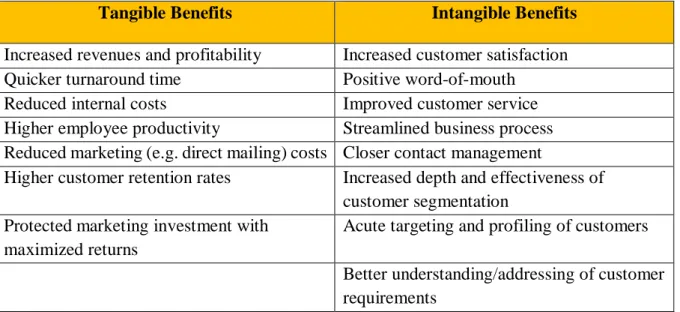
By implementing a successful CRM, it enhances cross selling/up-selling (I. Chen & Popovich, 2003; Parvatiyar & Sheth, 2001), improvement in customer attraction, customer conversion, and customer retention (Winer, 2001, p. 91). This is further supported by Swift (2000, p. 42) that categorizes the benefits of CRM into three groups: customer acquisition, customer retention and customer profitability. Chen and Chen (2004, p. 338) categorized electronic customer relationship Management (eCRM) benefits into tangible and intangible benefits based from their surveys on 180 companies in 12 industries during the eCRM implementation as shown in Table 4. Although Chen and Chen (2004) research focused on benefits from eCRM, the findings can also be regarded as general view of CRM benefits.
Tangible Benefits Intangible Benefits
Increased revenues and profitability Increased customer satisfaction
Quicker turnaround time Positive word-of-mouth
Reduced internal costs Improved customer service
Higher employee productivity Streamlined business process
Reduced marketing (e.g. direct mailing) costs Closer contact management
Higher customer retention rates Increased depth and effectiveness of
customer segmentation Protected marketing investment with
maximized returns
Acute targeting and profiling of customers Better understanding/addressing of customer requirements
Table 4: eCRM benefits (Q. Chen & Chen, 2004, p. 338).
The growth of small firms has influenced the swift of attention that used to be heavily focused on large organization by software providers. Existing articles and academic research papers written on the CRM benefits mostly were based on large organizations and not many on small firms. According to Ko, Kim, Kim and Woo (2008) study, they highlighted that organizations size played an important factor in benefits of CRM. Yet, Peltier, Schibrowsky and Zhao (2009) proposed that the size of organizations does not have influence in increasing CRM perceived benefits. However, both authors findings were based on different industries; Korean fashion industry and hardware retailers. Reijonen and Laukkanen (2010) mentioned that due to the different requirement of industries, the perceived benefits also vary depending on the business
27
strategies. Even though Ko et al. (2008) highlighted CRM benefits that have been analyzed in others' academic studies, there is not much focus on small firms' perspective.
CRM helps small firms to understand their customer’s needs better while improving their business process as they have superior knowledge about their customers from the information sharing across the company (Nguyen et al., 2007, p. 103). In small firms, there is a higher possibility in knowing the customer better in term of products purchase and previous interaction compare to bigger firm (Baumeister, 2002). With the knowledge of the existing customer, company able to meet the growing demands and at the same time draw the attention of new customer through the upfront knowledge of the customer satisfaction data (Sahaf et al., 2011, p. 5063). CRM is also reported to give an impact on the customer satisfaction (Boulding et al., 2005). Therefore, CRM benefits from existing literature studies mentioned above can be applied in small firms' perspective.
3.3 Drivers to implement CRM
For many small firms, implementing CRM has been viewed as a strategy to enhance their business, gain stronger customer base and able to compete with bigger player in the market. The rapid growth of technology advancement and internet has enabled the small firm to be able to reach and approach wider range of customers and networks. For the purpose of this paper, CRM implementation will be focused as ERP system implementation.
The rapid changing business environment in the present day has been pushing organization in adopting a holistic approach towards their customer (Finnegan & Currie, 2010, p. 154). In Özgener and Iraz (2006, p. 1362) research on SME tourism enterprise in Cappadocia, major factors influencing CRM in those enterprises were communication-distribution infrastructure, business dynamics, customer relations and innovation quality. To improve companies' performance and efficiency, many companies' business strategy started to incorporate technology tools and programs such as ERP system into their business (Ali & Cullinane, 2014). According to Koh and Maguire (2004, p. 339), one of the main drivers for SME to implement CRM in their business is due to the pressure from business competitors. Many big firms have
28
implemented ERP system into the business strategy using various module provided by vendors in the market.
Many ERP vendors are supporting and targeting big firms for their ERP products and services as the system have become more multifunction but less attention is given towards small firms and SMEs (Özgener & İraz, 2006, p. 1358). This is mainly due to the expensive price of the ERP products and system itself. As most small firms have limitation on their financial and budget, they are incline to spend huge amount on technology tools and system. However Koh and Maguire (2004, p. 339), argued that in current business environment there are many leading ERP vendors have penetrated the SMEs market with the development of mid-range ERP systems. For example, Salesforce.com's CRM Sales Cloud software is according to the firm size, scopes of software and functions with different pricing scale (Salesforce.com Inc., 2014). Alshawi et al. (2011, p. 378) categorize factors influencing CRM in SME into three major groups in Table 5:
Factor (s)
Organizational factors Relate directly or indirectly to the structural, operational,
human, and managerial sides of the business entity of the SME
Technical factors Relate to the soft and hard aspects of the ICT/CRM
technology being adopted
Data quality factors Relate directly to the concept of data quality and how it is
being conducted in the context of CRM adoption
Table 5: Three major factors influencing CRM in SME (Alshawi et al., 2011, p. 378).
In most countries such as Ireland, funding and support from the government towards small firm seem to be a barrier to implement CRM as the firms do not have sufficient resources and fund (Harrigan, Ramsey, & Ibbotson, 2009, p. 448). Based on Alshawi et al. (2011, p. 380) study, government support and initiatives play an indirect role of CRM system implementation. However small and medium size firms in Finland, EIB Group (European Investment Bank and European Investment Fund) has concluded an agreement with the Government of the Republic of Finland and the European Commission for the implementation of the SME Initiative in
29
Finland (Finnish Government). The initiative is to boost the competitiveness of Finland's micro, small and medium-sized businesses through increased access to finance (Finnish Government).
3.4 Challenges in CRM implementation in small firm
Several studies have shown that many small firms lack understanding, knowledge, capabilities in CRM process (Özgener & İraz, 2006; Reijonen & Laukkanen, 2010). This is due to the size difference between small and large companies, contributing to limitation on certain areas such as resources, time, finance, marketing knowledge and expertise when comparing to bigger firm (Gilmore, Carson, & Grant, 2001). For example, Özgener and Iraz (2006, p. 1362) stated in their finding that the most crucial challenges to CRM for SMEs in the tourism sector were inadequate supporting budgets, lack of senior management commitment to CRM, and poor communication.
Technology is able to assist firm in managing business’s operation. However, small firms lack in term of IT abilities when implementing CRM process. This is the most common issue for most SME (Nguyen & Waring, 2013, p. 828). The IT issues includes the lack of ICT-based knowledge, shortage of resources in finances, lack of necessary operating skill and lack of management support (Alshawi et al., 2011, p. 377). Some firms find it hard to adjust financial commitment in certain area that is not recognized as the core element of the business (Koh & Maguire, 2004, p. 341).
With lacking of in-house specialist for the CRM implementation, small firms tend to rely on external expertise such as consultants or vendors that provide consultancy services (Thong, Yap, & Raman, 1994). Ramsey (2003, p. 14) cited that insufficient help from vendors that only provided specific challenges involving highlighting specific aspects of their products and challenges neglecting to outline the bigger perspective of the implication for many areas of the business. Mazurencu, Mihaescu and Niculescu- Aron (2007) suggest that firm should ensure selection of vendors and partners are based on CRM form that is appropriate with the business strategy and future goal.
30
Dixit and Yadav (2011, p. 59) listed few challenges faced by SMEs when implementing CRM;
lack of awareness in term of the CRM capabilities,
perception that CRM is not suitable due to high cost of implementation and complexity,
CRM is waste of time and money due to much-publicized failures in CRM
implementation,
unsuitable business process approach provided by vendor and,
inability to view CRM as change management but an automation project.
3.5 Theoretical synthesis
Based on the literature study above, the following theoretical synthesis is created in order to reflect between the empirical part of study and the theories. The two-main focuses of this study are CRM and small firm. First of all, CRM definition is discussed in the beginning of the thesis before expanding to smaller sub-topics. The related sub-topics in CRM is categorized based on the theme: implementation and processes, data, knowledge and, technology in CRM. Next focus of the study is about small firm, potential benefits of CRM in a small firm, the driver to have CRM and lastly, challenges encountered during the process.
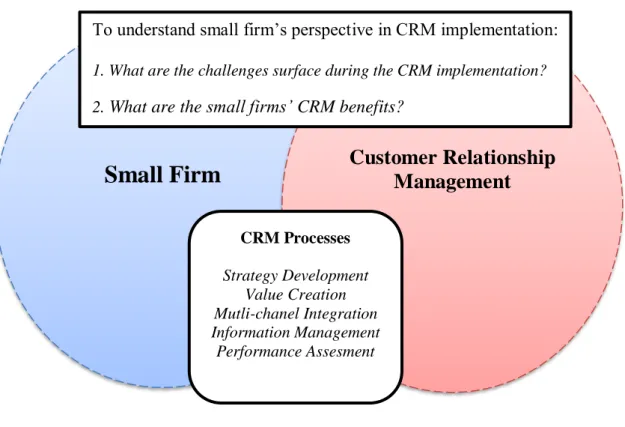
Again, the purpose of the thesis is to build and understand small firms’ perspective in CRM implementation as it has not been studied much. The discussed literature reviews above can be used as reference to understand the topic of this study. Thus, the following findings are considered relevant and consistent for the research purposes of this thesis and will be used as the approach for this thesis. The theoretical framework of this study is illustrated on Figure 1.
31
Figure 1: Synthesis of the theoretical framework
The framework is built upon two main focus of this thesis and integrating Payne and Frow’s CRM framework and other CRM process based on sub-chapter 2.1.3.2. This framework is able to show the co-relation of the CRM Process with the combination of the two-main focus of the study, directly or indirectly studies related to them. As most previous studies focusing on big companies, there is little attention given to small size companies. According to Rigby et al. (2002, p. 102) research, the main reason of CRM implementation failure is the lack of understanding the objectives and strategies in implementation. The first research question is on the challenges related during the implementation. The challenges were observed throughout the entire implementation process which will be categorized based on the previous studies. Then, the second research question is the benefits related by having CRM. By using Payne and Frow’s framework: strategy development, value creation, multi-channel integration, information management and performance assessment will be applied in small firm’s point of view, in order to understand and answer the two research questions.
Small Firm
Customer Relationship
Management
CRM Processes Strategy Development Value Creation Mutli-chanel Integration Information Management Performance AssesmentTo understand small firm’s perspective in CRM implementation: 1. What are the challenges surface during the CRM implementation?
32
4.
RESEARCH METHODOLOGY
Each study has its own objectives and research questions to drive the selection of appropriate research methodologies to be applied into the study (Crotty, 1998; Kothari, 2004). For this paper, a qualitative research has been conducted in order to gain data for this empirical study to understand the CRM implementation process in a small firm perspective. In the first section 4.1 Qualitative Methodology, three chosen methods will be introduced. Further on, section 4.2 the company for this study will be introduced. In section 4.3, the tools to gather data will be described. For section 4.4, Ethical Consideration will be discussed. Finally, in section 4.5 Data Analysis is the summary of the research process for this study.
4.1 Qualitative methodology
In the beginning of the research for this paper, the author chose qualitative method over quantitative method as the focus of this study is on data collection, observation and analysis. Qualitative method is often used particularly for case studies that involves process, data collection for business research (Eriksson & Kovalainen, 2008; Gummesson, 2000). The main reason in choosing qualitative method is due to qualitative methodologies can be divided into several approaches that allow researcher to understand more of the issues compare to quantitative method that focus on structured and standardized result with less interpretation approach (Eriksson & Kovalainen, 2008, p. 5).
4.1.1 Action research
Action research is different from other research methods as it involves with participants in term of collaboration together to solve problem, rather than to study the situation without any interference (Myers, 2009). The main objective in active research methodology is about developing knowledge that occurred during the process with the people who have experienced it and utilizing the information as a references, knowledge or guideline along the process and also for the future references (Somekh, 2006). According to Myers (2009, p. 61), there are several types of approach in action research that can be associated with depending on the author or research theoretical perspective and the research’s aim. Schmuck (2006, p. 29) suggested
33
that action research required an outline of a continuous plan of queries for information, observation, and knowledge to find and develop a better result.
Much of the action research approaches focus in education and socio-psychology, less being practice in business and management. One of the reason is that business school often practiced positivist survey methodology in conducting research and obtaining overall results emphasizing in theory testing rather than trying to improve situation in a particular environment (Perry & Gummesson, 2004, p. 313). The common characteristic of action research is that researchers involve directly in the same period of time of the research or study as collaboration, partnership
or participation with participants (Myers, 2009, p. 57). Gummesson (2000)identified four types
of action research for management which he terms it as action science: societal action science, management action science, real-time action science and retrospective action science. Societal action science is considered as classical action research form whereby researcher is trying to improve the social system normally in third world country that may lead to changes in value and pattern during the process. Management action science focus on company in which researcher cooperate with employees in solving problems, learning and developing competences from each other. Real-time action science requires researcher to involve in project precisely for action research study and retrospective action science is living through the processes that will be reflected in the future as data and information for research project based on the experience and action (Gummesson, 2000, p. 116-122).
However, there are three different levels of researcher's participation in a project: technical, practical and emancipatory (Carr & Kemmis, 1986, p. 202-203). Technical action research level requires researcher to provide advice and suggestion with less participation, for example as a role of consultant providing assistance to the firm in a project when needed. Practical action research level involves researcher as Socratic role as to guide participant involving into the project and learn more through self-reflection rather than merely doing it. Lastly, emancipatory research action level involves both researcher and participant in the development of their project and taking responsibility together with the aim of changing the situation into a better progress (Carr & Kemmis, 1986, p. 202-204).
The author focuses on the management action science approach due to three reasons. Firstly, the approach itself reflects the nature of the study in which the author is involved in the processes with the employees to study and solve problems arising from the project and