Modeling Student Affective State Patterns during Self-Regulated Learning in Physics Playground
Shiming Kai
Submitted in partial fulfillment of the requirements for the degree of
Doctor of Philosophy under the Executive Committee of the Graduate School of Arts and Sciences
COLUMBIA UNIVERSITY 2019
© 2019 Shiming Kai All rights reserved
ABSTRACT
Modeling of Affective State Patterns during Self-Regulated Learning in Physics Playground Shiming Kai
This dissertation research focuses on investigating the incidence of student self-regulated learning behavior, and examines patterns in student affective states that accompany such self-regulated behavior. This dissertation leverages prediction models of student affective states in the Physics Playground educational game platform to identify common patterns in student affective states during use of self-regulated learning behavior. In Study 1, prediction models of student affective states are developed in the context of the educational game environment Physics Playground, using affective state observations and computer log data that had already been collected as part of a larger project. The performances of student affective state prediction models generated using a combination of the computer log and observational data are then compared against those of similar prediction models generated using video data collected at the same time. In Study 2, I apply these affective state prediction models to generate predictions of student affective states on a broader set of data collected from students participants playing Physics Playground. In parallel, I define aggregated behavioral features that represent the self-observation and strategic planning components of self-regulated learning. Affective state predictions are then mapped to playground level attempts that contain these self-regulated learning behavioral features, and sequential pattern mining is applied to the affective state predictions to identify the most common patterns in student emotions.
Findings from Study 1 demonstrate that both video data and interaction log data can be used to predict student affective states with significant accuracy. Since the video data is a direct
measure of student emotions, it shows better performance across most affective states. However, the interaction log data can be collected natively by Physics Playground and is able to be
generalized more easily to other learning environments. Findings from Study 2 suggest that self-regulatory behavior is closely associated with sustained periods of engaged concentration and .self-regulated learning behaviors are associated with transitions from negative affective states (confusion, frustration, and boredom) to the positive engaged concentration state.
The results of this dissertation project demonstrate the power of measuring student affective states in real time and examining the temporal relationship to self-regulated learning behavior within an unstructured educational game platform. These results thus provide a building block for future research on the real-time assessment of student emotions and its relationship with regulated learning behaviors, particularly within online student-centered and self-directed learning contexts.
i
TABLE OF CONTENTS
LIST OF TABLES ... iv
LIST OF FIGURES ... vii
CHAPTER I. INTRODUCTION ... 1
Background ... 1
Problem Statement ... 8
Research Objectives ... 10
Significance ... 11
CHAPTER II. LITERATURE REVIEW ... 13
Self-Regulated Learning ... 13
Theoretical Frameworks of SRL ... 17
Assessment of Self-Regulated Learning ... 21
Development of Affective State Models ... 26
CHAPTER III. METHODOLOGY ... 30
Physics Playground ... 31
Data Collection ... 33
Data Analyses ... 39
CHAPTER IV. STUDY 1: COMPARING PREDICTION MODELS FOR STUDENT AFFECTIVE STATES USING COMPUTER LOG DATA WITH MODELS BUILT USING VIDEO DATA ... 43
ii
Prediction models for student affective states using computer log data ... 43
Prediction models for student affective states using video data... 51
Results ... 54
Comparison with video-based affective state models ... 59
Discussion ... 61
CHAPTER V. STUDY 2: STUDENT AFFECTIVE STATE PATTERNS THAT ACCOMPANY SELF-REGULATED LEARNING BEHAVIOR ... 64
Generating feature indicators of SRL behavior in Physics Playground ... 65
Affective State Predictions ... 69
Sequential Pattern Mining of Affective States ... 71
Results ... 76
Sequential Pattern Mining (SPM) using video-based affective state predictions ... 84
Sequential Pattern Mining (SPM) using interaction-based affective state predictions ... 93
Discussion ... 98
CHAPTER VI. GENERAL DISCUSSION ... 102
Implications ... 105
Theoretical Implications ... 105
Practical Implications ... 106
Limitations and Future Research... 107
iii
APPENDIX I. ... 117 APPENDIX II. ... 120
iv
LIST OF TABLES
Table 1. Segment of raw computer log data recording details and position of ball within a playground level in summary data logs ...34 Table 2. Segment of raw computer log data recording details and position of freeform objects drawn within a playground level ...35 Table 3. List of possible events recorded in the raw computer data logs of Physics Playground, during student gameplay ...36 Table 4. Segment of raw computer log data recording details and position of ball within a playground level in summary data logs ...44 Table 5. Segment of raw computer log data recording details and position of ball within a playground level in summary data logs ...45 Table 6. Interaction-based prediction models generated using a selection of classifiers, and their respective AUC performance values for the five affective states ...54 Table 7. AUC performance values for affective states using interaction-based detectors ...57 Table 8. Features selected in the final interaction-based detectors of each affective state ...58 Table 9. Comparing the AUC performance values for affective states using interaction-based and video-based detectors. * denotes z-score significance at p ≤ 0.05 ...60 Table 10. List of 8 behavioral features generated that indicate self-observation behavior among students attempting Physics Playground, within a single level (within-level), and strategic planning behavior within a subsequent attempt on a given playground level (subsequent-level) ...68 Table 11. An example of an affective state sequence that co-occurs with a sequence of behaviors within Physics Playground ...70
v
Table 12. Behavioral features created across student action sequences to capture self-observation and strategic planning behavior during gameplay ...78 Table 13. Instances of behavioral features that capture self-observation and strategic planning behavior during gameplay and co-occur with an interaction-based affective state prediction ...81 Table 14. Affective state patterns observed with support > 0.1 for level attempts with self-observation behavior based on self-self-observation behavioral indicators, compared with supports for same patterns generated for level attempts with no self-observation behavior. The t-statistic represents paired t-test results between level attempts with and without self-observation behavior, with significance based on Benjamini-Hochberg post-hoc corrections ...86 Table 15. Affective state patterns observed with support > 0.1 for level attempts with strategic planning behavior based on strategic planning behavioral indicators, compared with supports for same patterns generated for level attempts with no strategic planning behavior. The t-statistic represents paired t-test results between level attempts with and without strategic planning behavior, with significance based on Benjamini-Hochberg post-hoc corrections ...92 Table 16. Interaction-based affective state patterns observed with support > 0.1 for level attempts with self-observation behavior, compared with supports for same patterns generated for level attempts with no self-observation behavior. The t-statistic represents paired t-test results between level attempts with and without self-observation behavior, with significance based on Benjamini-Hochberg post-hoc corrections ...95 Table 17. Interaction-based affective state patterns observed with support > 0.1 for level attempts with strategic planning behavior based on strategic planning behavioral indicators, compared with supports for same patterns generated for level attempts with no strategic planning behavior. The
t-vi
statistic represents paired t-test results between level attempts with and without strategic planning behavior, with significance based on Benjamini-Hochberg post-hoc corrections ...96 Table 18. Results of computations of precision, recall and AUC values of the student persistence identifier based on the aggregated SRL behavioral predictors as ground truth ...98
vii
LIST OF FIGURES
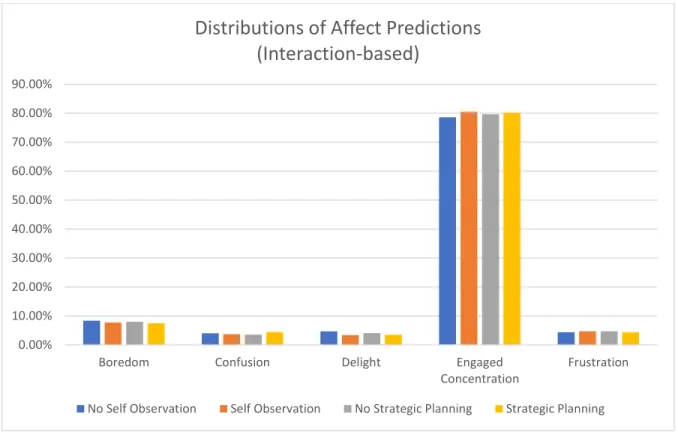
Figure 1. Socio-cognitive framework for self-regulated learning (Zimmerman & Campillo, 2003). ... 15 Figure 2. Framework for self-regulated learning based on informational processing theories (Winne & Hadwin, 1998). ... 16 Figure 3. Screenshots of Physics Playground ... 32 Figure 4. Graph showing the relative frequencies at which each affective state that was observed during data collection. ... 47 Figure 5. An example of the 2-class approach for each affective state model: An example of the model of engaged concentration. ... 48 Figure 6. Screenshot of FACET program interface taken from an earlier study. ... 52 Figure 7. The socio-cognitive framework of self-regulated learning behavior (Zimmerman & Campillo, 2003) ... 65 Figure 8. Cumulative distribution function showing the percentage of playground levels and corresponding level attempts made over a cumulative log of total time spent on each playground level, by student. ... 76 Figure 9. Clustered graph showing the relative distributions of video-based predictions of each affective state across the four data subsets. ... 83 Figure 10. Clustered graph showing the relative distributions of interaction-based predictions of each affective state across the four data subsets. ... 84
viii
ACKNOWLEDGEMENTS
I would like to express my deepest gratitude to my advisor, Professor Ryan Baker, for his unwavering sponsorship and mentorship throughout my doctoral study. Not only did he guide me through the field of learning analytics and educational data mining, he had encouraged my
curiosity as a scholar, and challenged me in different ways to think more critically and creatively about the work I am doing. The quantitative and analytic rigor he brings to every discussion has been one of his greatest gifts, that I can only hope to emulate as a researcher. This dissertation would not have been possible if not for his constant guidance, deep insights and assistance through the whole process.
I would also like to extend my sincere appreciation to my dissertation committee members for their invaluable feedback and questions throughout the different phases of the process. In particular, I would like to thank Professor John Black, for being the first professor who believed in my potential and sponsored my transfer to the PhD program in Cognitive Studies. He has lent many a listening ear and provided much guidance and feedback through my years in the PhD program. To Professor Corter, who has displayed a genuine interest in my dissertation work, thank you for your support in helping me get through the dissertation process, and the insightful feedback that challenged me to think more deeply about my work. To
Professor Holbart, for sharing his knowledge and passion in the area of educational games, that has inspired me in new ways. Special thanks also to Professor Luc Paquette, who has been the invaluable advisor throughout my years in the doctoral program, even now when he has moved on to better things. You have been the ultimate mentor and team-mate, with your expertise and willingness to guide me through managing the data I have been working on, tirelessly fielding
ix
my questions from the mundane to the most challenging. My dissertation project and related analyses would not have been possible without your assistance and advice throughout the whole process.
I would also like to thank Dr. Nigel Bosch, whose research had played a big part in my work, and who was always quick to lend a hand with his knowledge and expertise. Special thanks also to Professors Valerie Shute and Sidney D’Mello, whose amazing intellect, energy and passion about the Physics Playground project have inspired me to strive to be a better researcher and scholar. To Dr. Jaclyn Ocumpaugh, who has been a constant source of emotional and mental support, especially through the rough patches in my dissertation journey. To current and alumni members of the EDM Lab – Dr. Sweet San Pedro, Dr. Jeanine deFalco, Dr. Elle Yuan Wang, Dr. Mia Almeda, Dr. Aaron Hawn, Miggy Andres, Stefan Slater, Shamya Karumbaiah, Alexis Andres and Chad Coleman – thank you for all the encouragement and friendship, and for always being ready to help. I have sorely missed the camaraderie and bonds we shared in that tiny office here in Teachers College.
A special thank you to the Gates Foundation for the support and funding of the Physics Playground project that this dissertation was based upon. I am honored to have been a part of this remarkable collaborative effort.
Last but not least, I would like to express my heartfelt gratitude to my parents and family. To my mother, Ahmui Chin, and my father, Gungchew Kai, thank you for your unyielding support and unconditional love throughout this journey, particularly during the difficult times. Special thanks to my husband Howard Wu, who has been my counsellor, my personal assistant, my backup nanny, and most of all, my rock throughout this journey. Without him, this project would never have been completed.
x
DEDICATION
To the past and the future.
In memory of my cranky aunt Kimchin Chen, who would have loved to brag about my accomplishments,
and to my babies Nami and Garen,
1 CHAPTER I. INTRODUCTION
Background
Self-regulated learning is an essential aspect of the learning process and has received much attention from researchers since the 1980s. While there are several theoretical models for the concept of self-regulation, self-regulated learning (SRL) generally can be defined as an iterative and internally driven process where learners construct their own learning goals and then monitor, regulate and control their cognition and behavior towards the accomplishment of these goals (Pintrich & Zusho, 2002). The capability to self-regulate is thus a process that plays a mediating role between cognitive and motivational factors as well as learner characteristics (Pintrich, 2003; Pintrich, 2000) to influence the learning process and in turn, learning outcomes. The emerging ability to monitor one’s own behavior and self-regulate is an important
developmental task starting in early childhood (Kopp, 1982). Studies on individuals’ cognitive and emotional development have shown that the ability to regulate cognition and affect are necessary for success in school and academic achievement (Pintrich & de Groot, 1990; Zimmerman, 1998).
While self-regulated learning is important in traditional education settings, it may be even more vital within online and informal learning contexts (Jonassen, 1995) where learning is more student-centered (Artino, 2008; Williams & Hellman, 2004). Multiple studies have demonstrated that the use of self-regulated learning strategies within learner-controlled online learning
environments are correlated with achievement outcomes (Joo, Bong & Choi, 2000; Young, 1996; Land & Greene, 2000). Another study found evidence that suggests that higher levels of learner-choice allowed within an online learning environment benefits students with high self-regulated
2
learning strategy use (McManus, 2000). Further studies have shown that students who
demonstrate self-regulated behavior have a stronger a sense of connectedness and self-efficacy and a better student experience overall (Cho, Demei, & Laffey, 2010; Turker & Zingel, 2008).
Given the far-reaching implications of SRL behavior and the increasing popularity of online and informal learning platforms, the ability to self-regulate has only become more critical as increasing numbers of students are learning in student-centered settings. As a result, the development of more accurate and reliable measures of student emotions and SRL behaviors will be critical for improving the student learning experience. Specifically, the proliferation of
technology-based platforms that implement student-centered learning opportunities has created an urgent need to develop more technology-friendly methods to evaluate and identify student emotions and use of self-regulated learning within these platforms.
Theoretical frameworks of self-regulated learning
Multiple frameworks for self-regulated learning exist, but in general, frameworks for these strategies consist of a few chronological phases. One set of theoretical frameworks maps the various components of student SRL behavior or strategies during learning, based on the diversity of perspectives towards student learning. For example, the SRL framework based on the operant perspective (Mace, Belfiore & Hutchinson, 2001) emphasizes the students’ choices in alternative actions during the learning process. In comparison, the socio-cognitive perspective of SRL (Zimmerman, 2000) focuses more on the idea that each component of student self-regulated learning behavior is situationally specific, such that students may engage in some of the components of SRL more in certain contexts than in others. Similarly, Winne & Hadwin's model framework (1998) based on the information processing perspective emphasizes the internal and external cognitive conditions that affect student use of SRL strategies, such as the
3
schemas available to the student, as well as her memory capacity during learning.
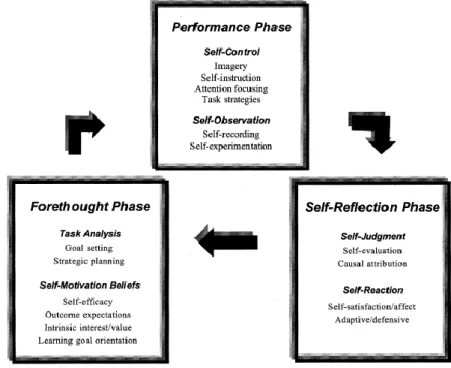
While each of these theoretical frameworks emphasizes a different aspect of student SRL, they generally house SRL components within three main phases of learning:
1) Forethought Phase - the planning phase before the start of a task 2) Performance Phase – the phase when the student engages in the task
3) Reflection Phase - the post-performance phase when the student evaluates her performance
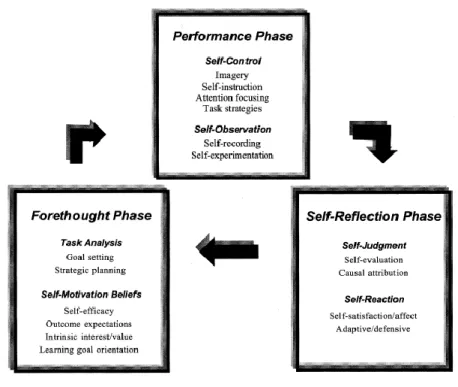
Strategic planning and goal setting occurs during the forethought phase (Zimmerman, 2002) before the learning process begins, when the student analyzes the task and plans how she would go about achieving the learning objectives. The performance phase of learning follows the forethought phase, and consists of the observation and control components. Lastly, self-reflection and evaluation may occur immediately after learning during the self-self-reflection phase, which involves students' reactions and feelings towards their performance as they review it in comparison to various sets of standards.
Assessment of Self-Regulated Learning (SRL)
Detection and assessment of specific emotions, strategies, and behavior related to self-regulated learning (SRL) have been mostly limited to self-report questionnaires and interviews, or observational reports (Schmitz & Wiese, 2006; Zimmerman, 2008). Common questionnaires that were created to assess self-regulated learning strategies and behavior include the Learning and Study Strategies Inventory (LASSI, Weinstein, Schulte & Palmer, 1987), and the Motivated Strategies for Learning Questionnaire (MSLQ; Pintrich, Smith, Garcia, & McKeachie, 1993). These examples of extensive questionnaires assess the individual components of self-regulated learning across multiple sections. However, these questionnaires could be further classified as
4
“aptitude” measures of regulated learning since they are designed to aggregate self-regulatory behavior over time (Winne & Perry, 2000).
In recent years, there has been a push to assess SRL more as a temporal “event”. One area of research is the development of phase models of SRL that separates students’ SRL process into different learning phases before, during and after the students’ learning attempts (Boekaerts & Corno, 2005; Pintrich, 2000). Researchers have thus shifted towards alternative measures of SRL to capture instances of SRL temporally, such as think-aloud protocols, observations, and using online tools such as structured diaries, computer interaction logs and microanalytic measures in online learning environments (Zimmerman, 2008).
One area of research that has received much attention in recent years has focused on identifying and evaluating student use of self-regulated learning using computer interaction logs from various technology-based learning platforms (Aleven, McLaren, Roll, & Koedinger, 2004; Azevedo, 2005; Roll, Aleven, McLaren, & Koedinger, 2011). In these studies, fine-grained data logs are available that allow researchers to identify specific student affect and behavior patterns within these technology-based learning platforms that constitute self-regulated learning. Aleven and colleagues (2006) identified and developed models of students' help-seeking behavior by capturing computational features that constituted effective versus ineffective help-seeking behavior during their interactions with the Cognitive Tutor in geometry.
Past studies have compared the accuracy of technologically enabled methods against traditional methods for assessing SRL strategies. One study found that student self-reports were generally less effective than computer interaction logs at accurately identifying various
components of student self-regulated behavior (Winne & Perry, 2000). While another study showed that questionnaires were less accurate than structured diaries in assessing students’ use
5
of self-regulated learning strategies (Schmitz & Wiese, 2006). Assessment of student affective states
Several past studies have demonstrated that student affective states directly impact learning experiences, and in turn, their learning outcomes (Bower, 1992; Goetz, Pekrun, Hall, & Haag, 2006; Shutz & Pekrun, 2007). Additionally, emotional control is implicitly present within most self-regulated learning frameworks, often within the components of motivational or
metacognitive control (Zimmerman & Schunk, 2001). Several studies have also shown that emotions are an important factor in students' use of SRL strategies during learning (Blair & Diamond, 2008; Mega, Ronconi, & De Beni, 2014; Reschly, Huebner, Appleton, & Antaramian, 2008; Pekrun, Goetz, Titz, & Perry, 2002; Wolters, 1998). In particular, Pekrun and colleagues (2002) were able to identify positive correlations between positive student emotions and
students’ ability to make use of various self-regulated learning strategies during learning, using the Academic Emotions Questionnaire (AEQ). Similarly, Mega and colleagues (2014) were able to identify a positive relationship between student emotions, self-regulated learning and
academic achievements, using a battery of self-report measures. In this study, they found that student emotions influence their use of self-regulated learning strategies, which in turn affects academic achievement. Furthermore, positive emotions were associated with academic
achievement only if they were mediated by self-regulated learning and motivation (Mega, Ronconi & de Beni, 2014).
However, while measures of SRL have taken advantage of technological advancements, measures of student emotions have been less common. The assessment of emotions in
educational psychology has been mostly limited to the use of traditional aggregated self-report questionnaires, expert coding, and field observations. Some examples of questionnaires include
6
the 27-item Positive and Negative Affect Schedule (PANAS), which assesses how frequently an individual feels certain emotions (Reschly et al., 2008), the Academic Emotions Questionnaire (AEQ; Pekrun et al., 2002), and the Self-regulated Learning, Emotions and Motivation
Computerized Battery (LEM-B; Mega et al, 2014), which comprise three separate self-report questionnaires on student self-regulated learning, emotions and motivation. More recent research in intelligent tutoring systems has investigated other methods of identifying student emotions and affective states during learning such as expert coding of video data and field observations (Craig, Graesser, Sullins, & Gholson, 2004; Dragon et al., 2008; Ocumpaugh, Baker, Gaudino, Labrum, & Dezendorf, 2013; Woolf et al., 2009). Despite being labor-intensive and time-consuming, observational measures provide some advantages in identifying high-level student learning behaviors and emotions (Winne & Perry, 2000).
With the recent advancements in technology-based learning systems, native tools are now available to assess students’ emotions and affective states during learning. These tools include computer interaction logs, dialogue cues, as well as physiological sensors (Arroyo et al., 2009; Baker, Gowda, & Wixon, 2012; D’Mello et al., 2008). Past studies that have identified student emotions and affective states using such methods have found relationships with student learning outcomes and achievement (Pardos, Baker, San Pedro, Gowda, & Gowda, 2014), as well as future college enrollment (San Pedro, Baker, Bowers & Heffernan, 2013).
Advantages and limitations of fine-grained measures
Self-report measures have been shown to hold certain advantages such as being an efficient and practical method of obtaining information about a study participant, as well as providing informational richness to the researcher (Paulhus & Vazire, 2005), with its potential to provide contextual clues and data. However, the use of self-reports also suffers from various
7
disadvantages, such as being subject to issues of credibility and accuracy due to inaccuracies in memory or self-deception (Paulhus & Vazire, 2005). Self-report items and questions may also be interpreted differently from intended by study participants, which could affect the cognitive validity of the report measure (Karabenick et al., 2007). Comparisons made between self-report and fine-grained trace measures have found differences in their correlation with student learning outcomes. One study, compared students’ level of bias and accuracy in self-reporting their achievement judgments and self-regulatory strategies to the trace computer logs that were collected throughout the study (Winne & Jamieson-Noel, 2002).found that while the students’ judgments of achievement was significantly correlated to their actual scores. However, the self-reported self-regulated learning strategies were incongruent with trace computer logs and were not correlated to the actual strategies used. These results indicate that student self-reports of study tactics and strategies are often not congruent with actual test scores and thus tend to be fallible (Winne & Jamieson-Noel, 2002; Winne & Perry, 2000).
Given the shortcomings of self-report measures, it would thus be more useful for
researchers to use these measures in conjunction with more fine-grained trace measures, such as behavior and affective state models built through computer log data, which can provide a more balanced perspective to the researcher and practitioner. With the increasing use of technology-based learning, it is now more possible than before to obtain such fine-grained measures of student SRL behavior, strategy use, and affective states through computer log data. Such
measures would provide much-needed support to bolster and balance other self-report measures of SRL to provide researchers with a more accurate and reliable assessment of student self-regulated learning.
8
measures of SRL, there are various limitations. Behavior and affect models are built based on the computer log data specific to a technology-based learning platform. As such, issues arise with generalizing these models across populations (Jaclyn Ocumpaugh, Baker, Gowda, Heffernan, & Heffernan, 2014) and learning systems, despite a few exceptions (Paquette et al., 2013). Because behavior and affect models built based on computer log data are highly dependent on the
computation of features that captures the students’ interactions with the specific learning platform, the type of features generated is contingent on the learning system itself, making it difficult to apply the same sets of features across different systems.
Trace measures of SRL behavior have been constructed with some success within several online tutoring systems, such as the Cognitive Tutor in Geometry and Algebra (Aleven, Mclaren, Roll, & Koedinger, 2006; Roll et al., 2011), Betty's Brain (Biswas, Jeong, Kinnebrew, Sulcer & Roscoe, 2010), and several others (Greene, Azevedo, 2010; Lee, Lim & Grabowski, 2010). In the study by Aleven and colleagues (2006), features were created from computer log data to identify sequential patterns in student help-seeking behavior and their relationships with learning outcomes.
Problem Statement
Several model frameworks have been proposed to describe the different components of self-regulated learning (SRL) and its influence on the learning process. Some recent theoretical frameworks have emphasized distinct components of SRL that occur during different phases of learning. The growing popularity of frameworks that involve multiple components of self-regulated learning has led to an increasing need for real-time assessments of different types of student SRL behavior within authentic contexts. To address this need, methods have been
9
developed to assess the sequential patterns of student behavior, allowing practitioners and researchers to make better inferences about student SRL behavior over time. (Zimmerman, 2008). While various measures have been successfully implemented within technology-based learning platforms, most still involve post-hoc student self-reports in the form of think-aloud protocols, structured diaries and microanalytic surveys (Winne & Hadwin, 1998; Zimmerman, 2008). As discussed above, student emotions have also been shown to impact SRL behaviors during learning (Blair & Diamond, 2008; Reschly, et al, 2008; Pekrun, et al, 2002; Wolters, 1998). While research on the assessment of student emotions and affective states within different learning contexts have grown steadily in recent years (Ai et al., 2006; Calvo & D’Mello, 2010; Picard, 1997; Rodrigo & Baker, 2009; J. Sabourin, Mott, & Lester, 2011), few studies have looked at how to quantitatively measure the relationship between student emotions and SRL behavior, especially within self-directed learning environments. Established methods that do assess both SRL behaviors and student emotions are still largely confined to post-hoc self-report measures, rather than the application of fine-grained observational measures of student behavior and affect that can be assessed in real-time. These self-report measures have been shown to be less accurate than fine-grain measurements and cannot capture the temporal patterns of student emotions relative to SRL behaviors.
This dissertation project thus aims to present a novel method to quantitatively assess the relationship between student emotions and aspects of self-regulated learning within a learning environment. Additionally, in order to fully realize the potential of the new technology-enabled learning platforms, educators will need to develop automated methods for tailoring educational experiences to students when live human intervention is not possible. In traditional settings, educators can observe cues for when students are struggling and not utilizing SRL behaviors,
10
then intervene to help support the student. In comparison, self-directed learning platforms need to detect and pre-empt the occurrence of student struggles to adapt its programming to ensure continued student learning.
Recent efforts have used a variety of increasingly sophisticated methods to assess various cognitive components of SRL as temporal “events”, as well as student emotions during learning. However, much less work has been done to quantify the mediating relationship between student emotions and self-regulated learning within the same learning context. Evaluating the temporal patterns of emotion associated with SRL will thus improve the understanding of the relationship between student emotions and self-regulated learning behavior in real-time. Furthermore, incorporating both cognitive and emotional features may improve the accuracy of SRL measurement and prediction.
Many studies have examined the relationship between self-regulated learning and achievement, while others have investigated the relationship between student emotions and achievement in an open-ended educational game context. However, far fewer studies have examined the relationship between student emotions and student self-regulated learning
behavior. Consequently, part of the analyses in this dissertation attempts to identify components of student self-regulated learning behavior (Study 2), and student affective states as they occur in conjunction with behavioral indicators of student self-regulated learning. From there, I will attempt to isolate specific patterns in affective states that could be indicative of the specific components of SRL, as well as various cognitive components of SRL.
Research Objectives
11
context of an open-ended educational game platform, and using these predictions, identify patterns in student affective states that indicate specific components of SRL, as explained in detail below.
Research Questions
The research questions for this dissertation are:
1. Which machine learning models best predict student affective states in the context of an open-ended learning platform?
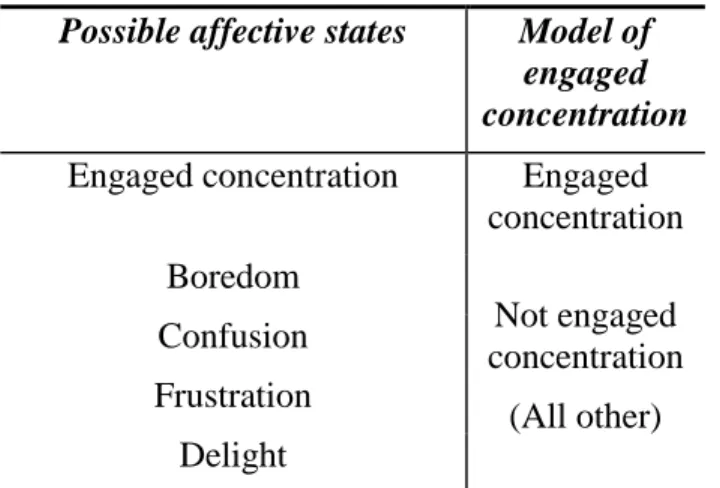
2. What are the most common patterns in student affective states (engaged concentration, boredom, confusion, frustration, and delight) that co-occur with self-regulated learning behaviors within an open-ended learning platform?
Significance
The measures of various aspects of SRL in intelligent tutoring systems and online learning platforms have evolved from trait-based formats (in the form of questionnaires and observations) to temporal-based formats (through think-aloud protocols and trace computer logs). While some studies have evaluated various aspects of student SRL behavior and strategies, such research has focused mainly on intelligent tutoring systems. To be able to identify student SRL behavior and strategies in a less structured learning environment would provide a look at how spontaneous use of various SRL strategies and behavior may occur in such environments.
The ability to identify student affective states during the learning process within online learning environments has allowed teachers and facilitators to provide timely interventions to students at risk of becoming disengaged within these learning platforms. Additionally,
12
identifying the temporal patterns of students’ affective states and their relationship to SRL could provide facilitators with a better understanding of how to encourage student SRL during learning in less structured learning environments.
This dissertation project provides a new methodological approach to identify self-regulated learning behavior among students by identifying patterns in student emotions. In addition, the project aims to demonstrate a strong relationship between student emotions and self-regulated learning behavior, thus furthering the research in this field on the role of student emotions within self-regulated learning.
13 CHAPTER II. LITERATURE REVIEW
This literature review section will discuss and compare the methodologies used to assess self-regulated learning (SRL). It will focus on identifying student engagement in SRL within an exploratory educational game platform. First, this section will discuss the cognitive science research around theoretical frameworks and measurement methods of student engagement in self-regulated learning strategies. Then, this section will explore existing research on automated behavior and affect models which have been successfully built into technology-based software., These systems allow the evaluation and assessment of student engagement during self-regulated learning behaviors and strategies through the analysis of fine-grained measures.
Self-Regulated Learning
While there are several theoretical definitions of self-regulated learning, the common feature among these definitions is that self-regulated learners are active learners who manage their learning through monitoring of their strategy use (Boekaerts, Pintrich, & Zeidner, 2000; Paris & Paris, 2001; Pintrich, 2000; Winne & Hadwin, 1998; Winne & Perry, 2000; Zimmerman & Schunk, 2001). This process is mainly affected by the learners' characteristics as well as the contextual situations that students are learning in (Pintrich, 2000). Within these definitions lies the assumption that SRL involves processes and responses that students must proactively initiate, which imply that students may choose not to self-regulate during learning when they could (Zimmerman & Campillo, 2003). This creates an issue that researchers try to address with various cognitive models for SRL. These models have been posited to provide researchers with theoretical frameworks through which to examine how students evaluate and adapt their
14
learning. In this way, these models seek to explain how and when students choose to self-regulate during learning, as opposed to when they do not. This project will focus on the SRL models and frameworks that have been applied to learning with hypermedia and technology-based software.
Several models of self-regulated learning have been developed by different groups of researchers over the last two decades, based on a diverse set of theories such as operant and phenomenological perspectives, as well as social-cognitive and information processing theories. Most of these theoretical model frameworks involve three or four main phases: the phase
involving goal setting or task definition, followed by the phases involving the selection and monitoring of learning strategies and tactics, and lastly the phase of reflection and evaluation of learning (Pintrich & Zusho, 2002; Zimmerman, Bonner & Kovach, 1996; Zimmerman &
Schunk, 2003). Within each phase, there are also various aspects of learning that the student may try to control or regulate, including internal conditions such as cognitive, affective (motivational) and behavioral aspects of the individual student, as well as the external context or environment that may be modified to improve the student's learning process (Pintrich & Zusho, 2002).
One example of the theoretical frameworks that have tried to address the various theories definitions around SRL was proposed by Zimmerman (2000), based on the social-cognitive perspective and consists of three main phases of the SRL process: Forethought, Performance, and Self-reflection. Processes in the forethought phase occur before actual learning takes place, and influences the learning context that follows. Performance phase processes occur during learning and influence both student actions and attention, as well as the self-reflection phase afterward. The self-reflection phase occurs after the learning actions have taken place, and
15
influence the student's forethought process relevant to subsequent learning efforts, thus completing an SRL cycle (see Figure 1; Zimmerman & Campillo, 2003).
Figure 1. Socio-cognitive framework for self-regulated learning (Zimmerman & Campillo, 2003).
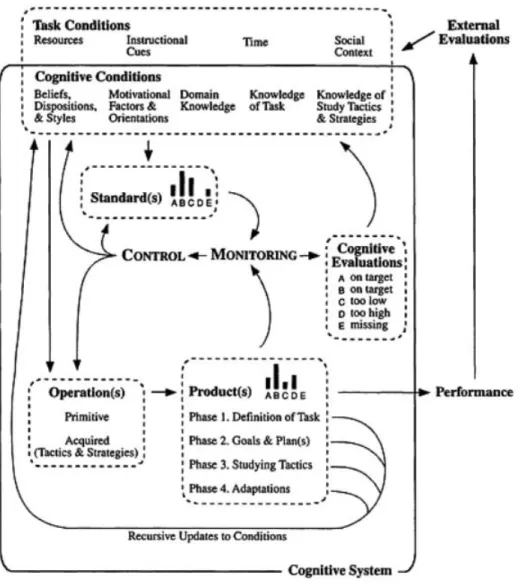
Another theoretical framework was proposed by Winne & Hadwin (1998; see Figure 2), and based on the information processing perspectives. This theoretical framework is made up of 4 phases of a student's learning, involving task definition, goal setting and planning, enactment and lastly, adaptation (Winne & Hadwin, 1998). According to Winne & Hadwin (1998), these phases of learning may be affected by various task and cognitive conditions, which may be transformed through cognitive operations and strategies. This interchange of operations and strategies that affect the students' learning conditions would, in turn, lead to re-evaluations of the different phases of learning, which may result in metacognitive monitoring and updates to the learning products within each phase.
16
Figure 2. Framework for self-regulated learning based on informational processing theories (Winne & Hadwin, 1998).
Based on the various model frameworks within SRL, interventions targeting the development of self-regulated learning among students have focused largely on the sub-processes within each phase or stage of a model framework. For example, interventions to improve students' use of goal-setting and task definition skills have been implemented to help students better understand their learning tasks and progress (Kitsantas, Robert & Doster, 2004;
17
Latham, 2004; Latham & Locke, 2007; Locke & Latham, 1990; Manderlink & Harackiewicz, 1984; Zimmerman & Kitsantas, 1999). Other interventions have targeted the metacognitive monitoring sub-process in learning with a selection of strategies such as thinking aloud and help-seeking strategies. Various research studies have also been conducted on the effects of holistic combinations of several self-regulated learning strategies (Cleary & Zimmerman, 2004; Winne, Nesbit, Kumar, Hadwin, Lajoie, Azevedo, & Perry, 2006). In Cleary & Zimmerman (2004), for instance, a school-based holistic program called the Self-Regulation Empowerment Program (SREP) was implemented within middle and high school classroom environments and was found to have positive effects on student achievement and motivation.
Theoretical Frameworks of SRL Forethought Phase
Most theoretical frameworks for the SRL process include a phase before the actual
learning phase. During this phase, students define the task and plan their actions during learning. Research on various interventions that encourage students to engage in setting goals or plan their activities towards the learning objectives has been shown to improve academic outcomes
(Fireman & Solomon, 2003; Graham & Harris, 1989). Researchers studying goal-setting in learning contexts found that the impact of goals on behavior depends largely on the specificity, proximity and difficulty of the goals (Bandura, 1988; Locke & Latham, 1990; Latham & Locke, 2007). For example, specific goals and proximal goals have been found to lead to better self-efficacy because progress is more easily tracked (Schunk, 1983; Maderlink & Harackiewicz, 1984; Locke & Latham, 1990). As a result, students show an improvement in the ability to self-regulate during learning. In the subject of reading and writing, for example, interventions that
18
introduce explicit instruction in pre-reading and pre-writing strategies have shown to be beneficial for elementary school students (Pressley, Johnson, Symons, McGoldrick & Kurita, 1989). Research on goal-setting found ample evidence showing that self-set goals improve not only students' achievement outcomes, but also their metacognitive abilities and self-efficacy (Latham & Locke, 2007), thus constituting a key component within self-regulated learning (Latham, 2004).
In addition to goal-setting, explicit instruction in strategic planning activities prior to the learning task has also been found to yield benefits to students learning outcomes. For instance, explicitly teaching 6th-grade students with learning disabilities a planning strategy for writing
opinion essays was found to improve students' ability to address the topic in their writing (De La Paz & Graham, 1997; Graham & Harris, 1989).
Performance Phase
The performance phase of learning, as defined by Zimmerman (2000), occurs when the student begins interacting with the learning task or content. There are two categorizations of self-regulated learning behavior during this phase: self-control and self-observations (Zimmerman, 2002). Several components of the SRL process occur during this period, as the student controls her behavior, emotions and attention during the learning process. It is also during this period of learning that students engage in self-observations, as they experiment with the task strategies employed and their effectiveness throughout the learning process, which help to inform their future attitudes and emotions towards the learning within the domain.
Methods that encourage students’ self-awareness through self-observational techniques have been found to isolate “the source of error, confusion, or inefficiency” during learning (Zimmerman & Paulsen, 1995, p. 15), and increase their deliberate use of self-regulation
19
(Ferrari, 1996). Such techniques were thought to empower students by allowing them to make more accurate attributions for poor learning performance (Zimmerman, 1989), and enhance access to cognitive processes as well as other internal states (Gibbons, 1990). For instance, a study involving a form of self-observation on the speech fluency of college students found positive effects with the implementation of self-observational techniques. Specifically, the implementation of self-observational strategies resulted in reductions of self-recorded verbal non-fluencies (e.g. "um," "uh," "er," etc.) (Mace & Kratochwill, 1985). Student groups that made use of this self-observational technique experienced a decrease in the use of verbal non-fluencies as compared to groups that did not employ this self-observation method. Other studies have also found that self-observational techniques can highlight a student's attention to her actions during learning, thus facilitating problem-solving performance (Fosnot, Forman, Edwards & Goldhaber, 1988; Welsch, 1991). An example of such a study is one by Fireman, Kose & Solomon (2003), where elementary school students were shown video recordings of their spontaneous
performance during a problem-solving Tower of Hanoi task, and their problem-solving performance was compared with students who watched video-recordings of other students' performance at the task. Results from the study showed that video self-observation significantly enhanced the acquisition and transfer knowledge required to complete a more difficult problem-solving task (Fireman, Kose & Solomon, 2003). On the flip side, however, such self-observation may also have detrimental effects on student learning. Reid & Harris (1993), for instance, found that, although monitoring of off-task behavior reduced the occurrence of student off-task
behavior, it also seemed to result in poorer learning, as students became overly focused on their behavior during the learning tasks.
20 Self-Reflection Phase
After the learning phase, there is often a post-learning phase where students reflect on their performance and strategies and modify their behavior or learning strategies in future learning cycles. There are two main classes of self-reflection: self-evaluation and self-reaction. Self-evaluation refers to the comparisons of self-observed performance to other standards of performance (Zimmerman, 2002), such as previous standards or other external standards of performance. Self-evaluation or judgment may also involve causal attribution, where students attribute the causes behind their performance to internal or external factors. In turn, certain forms of causal attribution may affect students' motivation and beliefs about their learning and are hence very important as well to the learning process (Cleary & Zimmerman, 2004; Zimmerman & Kitsantas, 1999). To date, multiple types of studies have been conducted to assess the effects of different types of causal attribution to students’ motivation and beliefs, as well as the effects of different forms of interventions within this phase on student learning outcomes. In Schunk’s studies (1996) on elementary school students, for example, implementing self-evaluation strategies in combination with learning goals was found to increase student task orientation and lowered ego orientation, as well as improving self-efficacy and motivation. Among
undergraduate students, frequent self-evaluation was shown to produce positive results in student achievement as compared to infrequent self-evaluation (Schunk & Ertmer, 1999). More recent studies such as one conducted on middle school students also showed that the implementation of self-evaluative strategies during learning positively affected student skill acquisition (Kitsantas, Reiser & Doster, 2004).
In addition to self-evaluation, self-reaction also occurs during this phase of learning. Self-reaction refers to the wide variety of students’ Self-reactions to their performance after the learning
21
process, which ranges from strategy persistence to change as well as from greater goal commitment and goal adjustment (Zimmerman & Martinez-Pons, 1992). This process is also known as adaptive or defensive inferences, which refer to conclusions drawn by students on whether or not to modify their learning strategies during future learning attempts (Zimmerman, 2000). From the socio-cognitive perspective, self-reactions may involve environmental, personal and behavioral self-reactions, as students make adaptive or defensive inferences based on their learning performance. Recent studies in these areas have also found correlations between students' use of self-regulated learning strategies and their affective states as well as levels of self-satisfaction. For instance, Zimmerman & Bandura (1994) found that students who displayed some level of satisfaction and who attributed poor performance outcomes to their choice of learning strategy were more likely to make adaptive inferences. In comparison, students who were dissatisfied with this performance and attributed poor performance to uncontrollable factors tended to make defensive inferences. In addition, adaptive inferences were found to lead to improvised strategic planning and shifts in goals that benefited future performance (Cleary & Zimmerman, 2001).
Assessment of Self-Regulated Learning
Self-regulated learning is generally measured in two ways: as an aptitude, and an event, with a variety of measurement protocols being commonly used. In this section, I will discuss the use of several protocols that have become increasingly popular in the measurement of self-regulated learning as a temporal "event," focusing in particular on measurement protocols that are more commonly used in online learning environments. These measurement protocols include think-aloud protocols, error detection tasks, trace computer logs and expert observations of
22
performance. In particular, I will focus my discussion on the use of trace measures, which are unique to online learning environments and other learning systems where the use of a computer is integral to learning.
Think-aloud measures
Think-aloud protocols involve students reporting about thoughts and cognitive processes while performing a task, and provide richer information to researchers on how students engage in SRL behavior throughout an entire learning task. It is thus thought to be more appropriately aligned to the dynamic, event-based definition of SRL (Greene, Robertson & Costa, 2011). Learning tasks in which think-aloud protocols have been employed include complex science topics, as well as history and math (Greene et al., 2011). While think-aloud measures have been employed across a wide range subjects and grade levels (Winne & Perry, 2000), few standard procedures exist for this measure. A large section of self-regulated learning research with think-aloud protocols involve the identification of cognitive and metacognitive processes students undergo when learning from text materials (Fox, 2009). Other studies are focused on
relationships between student use of SRL strategies and the development of mental models in online learning platforms (Azevedo & Cromley, 2004; Greene & Azevedo, 2007), as well as relationships between the types of SRL strategies used when students fail to learn (Azevedo, Winters & Moos, 2004)
Error detection tasks
To trigger student use of SRL, error detection tasks have been used to allow researchers to observe whether students detect errors in their tasks and what they do upon detection (Perry & Winne, 2000; Pintrich, Wolters & Baxter, 2000). Within online learning systems, eye-tracking has been used as a fine-grained indicator for student monitoring learning materials for errors.
23 Observations of Performance
Recent research in SRL has expanded to include the contextual relationships in student self-regulated learning. The advantages of observational measures are thus to provide contextual information about learners’ behaviors, hence addressing the limitations of self-report measures. Studies that employ the use of observational measures, such as the Child Independent Learning Development (CHILD) (Bryce & Whitebread, 2012; Whitebread et al., 2009), are mostly
targeted for younger children in the 3-5 year age range, for whom self-report measures would not be appropriate.
Trace computer logs
Trace methods provide observable fine-grained indicators about students’ cognitive processes as they engage with a task. Recent studies that directly measure student engagement in self-regulated learning behavior and affective states employ a variety of analyses methods with the available computer data logs to explore different aspects of student self-regulated learning. Furthermore, the types of online learning systems through which student engagement in self-regulated learning is being evaluated are varied, ranging from online software aiming to improve student studying techniques (Winne & Jamieson-Noel, 2002), to intelligent tutoring systems with teachable agents (Biswas, Roscoe, Jeong & Sulcer, 2009; Bouchet, Azevedo, Kinnebrew & Biswas, 2012).
One example of an online software used in such studies is the gStudy program, which is a shell program that provides students with a learning kit to study about any given topic in any verbal, visual or written format (Winne, Nesbit, Kumar, Hadwin, Lajoie, Azevedo & Perry, 2006). The gStudy program provides cognitive tools that students can use to engage with the different forms of multimedia information, such as analyzing, annotating, classifying, organizing
24
and cross-referencing. These cognitive tools were designed based on cognitive research that encourages the development and engagement of solo/collaborative learning as well as problem-solving skills with student use. Research studies that examined students' engagement in SRL strategies using gStudy as a platform makes use of computer trace logs to identify instances where students make use of certain cognitive tools provided during learning, which may indicate various aspects of engagement in SRL strategies (Winne & Jamieson-Noel, 2006; Hadwin, Oshige, Gress & Winne, 2010). Student interactions with the gStudy tools that indicate
engagement in certain types of SRL strategies are coded and recorded. For example, student use of the setting goals strategy in the forethought phase of learning was coded as such when
students click on the Objectives button to view objectives right at the beginning of the learning session. Similarly, student use of a planning strategy in the forethought phase of SRL may be inferred if students scrolled through the information first before using the annotation or notes tools. Frequencies of these actions are matched to equivalent self-report items on the
Motivational Strategies and Learning Questionnaire (MSLQ) developed by Pintrich et al. (1991) calculated to determine the level of student engagement in the respective SRL strategies.
The investigation of computer trace data in other technology-based learning platforms differs in various ways both in part because of the differing structures of these platforms. For instance, the MetaTutor (Bouchet, Azevedo, Kinnebrew, & Biswas, 2012) and Betty’s Brain (Biswas, Roscoe, Jeong, & Sulcer, 2009) are adaptive tutoring systems with multiple agents, while platforms like gStudy and ASSISTments (Feng, Heffernan, & Koedinger, 2009) are adaptive online tools that facilitate students’ learning as they practice and learn new content through texts and practice problems respectively. Still others, such as Physics Playground, provide open exploratory environments that help students apply academic content to the learning environment.
25
MetaTutor is an adaptive tutoring system that teaches biological science content (Bouchet et al., 2012). MetaTutor is a system that is grounded in a theory of SRL and thus contains a combination of features that encourage student engagement in various SRL strategies and
process, including four pedagogical agents that function as embodiments of the four main phases of SRL based on Winne & Hadwin's (2009) theoretical model framework. These pedagogical agents guide students through the learning process, prompt them to engage in the various self-regulated learning strategies, and provided adaptive feedback on their actions within the tutoring system. To measure students' overall progress in SRL strategies, Bouchet et al. (2012) employed the use of multiple measures to track and code students' use of cognitive, affective and
metacognitive processes at different points during learning. They then made use of clustering and pattern mining analyses techniques to identify distinct patterns of student actions and behavior within the tutoring system that could allow researchers to help facilitate real-time adaptation of the system to cater to different types of student learning. The pattern mining technique and clustering allowed the researchers to identify specific student actions that could differentiate between the various types of student learning.
The Betty's Brain program (Biswas et al., 2009) is an adaptive tutoring program and is similar to the MetaTutor program in that it also involved intervention elements in the form of multiple online agents that help to promote students' use of metacognitive strategies during learning. Instead of the four pedagogical agents present in the MetaTutor, however, Betty's Brain program consisted of two: a mentor agent Mr. Davis, as well as a teachable agent named Betty. This learning platform detects instances during learning when the students' behavioral patterns indicate that metacognitive feedback may be useful. One example of such metacognitive
26
concept maps, to assess the computer agent's learning progress but does not make improvements to her concept maps.
In studies involving other intelligent tutoring systems, Roll, and colleagues (2006, 2007) examined students' help-seeking behaviors within the Cognitive Tutor in Geometry learning platform, through their behavioral patterns before and after asking for hints within the tutoring platform. They then created a model framework to differentiate between groups of students who differ in their seeking behaviors when using the Cognitive Tutor platform and built a help-seeking detector based on this framework.
On the other hand, computer logs of student actions within the learning platform were used in a slightly different manner in Winne & Jamieson-Noel's (2002) cross-platform
researching system called gStudy. Timestamped log data of students' actions within the platform were logged and the frequencies of the selected student studying actions calculated at the end of the study session. These study actions were created based on items in the traditional MSLQ questionnaire, including student behaviors such as making up questions, outlining goals and summarizing ideas.
Development of Affective State Models
While research in the field of psychology has found relationships between student self-reaction and the future use of self-regulated learning strategies and learning outcomes, there is a limited range of methods that could be used to identify what student behaviors and affect would manifest as a result of specific self-reactions or self-satisfaction. With new affordances in technology, however, improved methods have been created to detect user affect and behavior through the users' interactions with technology-based platforms.
27
The development of models that can automatically detect student affect now constitutes a considerable body of research (Calvo & D’Mello, 2010; Picard, 1997). Research in this area is particularly focused on computerized learning contexts (Ai et al., 2006; Rodrigo & Baker, 2009; Sabourin, Mott, & Lester, 2011), where researchers have successfully built affect-sensitive learning systems that aim to enhance learning outcomes (Arroyo et al., 2009; Dragon et al., 2008; Graesser & McNamara, 2010). The definitions of affect and affective states in this study are based on affective phenomena covered in the field of affective computing and include emotions, feelings, moods, attitudes, and temperaments. Such affective states and phenomena may also be evaluated via several perspectives that have been derived from traditional theories of emotion. Some of these perspectives include expressions, embodiments, cognitive appraisal, as well as social constructs (Calvo & D’Mello, 2010). Human emotions and affect have
traditionally been evaluated through several perspectives, including expressions, embodiments and cognitive appraisals. Emotional expressions refer to various facial expressions of basic emotions that have been universally recognized, such as anger, happiness, and disgust (Darwin, 2002; Russell, 1994). Embodiments of emotion, on the other hand, refer to the physiological changes that an individual's body undergoes when he or she experiences an emotion (James, 1884). Lastly, cognitive appraisals of emotion refer to emotions that are produced as outcomes of an unconscious process of evaluating an event or situation based on some factors such as
urgency, novelty, etc. (Arnold, 1960; Dalgleish, Dunn & Mobbs, 2009). Many of the affect models built in the field of affective computing are hence mostly built based on the various traditional theories of emotions posited in research.
In general, researchers attempting to develop affect models have developed systems falling into two categories: interaction-based models (Baker & Ocumpaugh, 2015) and physical
28
sensor-based models (Calvo & D’Mello, 2010). Many successful efforts to detect student affect in intelligent tutoring systems have used visual, audio or physiological sensors, such as
webcams, pressure sensitive seat or back pads, and pressure-sensing keyboards and mice (AlZoubi, Calvo, & Stevens, 2009; Pantic, Pantic, Rothkrantz, & Rothkrantz, 2003; Sebe, Cohen, Gevers, & Huang, 2005; Zeng, Pantic, Roisman, & Huang, 2009).
Interaction-based detection, too, (Baker & Ocumpaugh, 2015) has improved over the last decade. These models infer affective states from students’ interactions with computerized learning systems (Baker, Gowda, & Wixon, 2012; Baker, Ocumpaugh, Gowda, Kamarainen, & Metcalf, 2014; Baker & Ocumpaugh, 2015; D’Mello et al., 2008; Paquette et al., 2014; Pardos et al., 2014). The fact that interaction-based affect models rely on student interactions makes it possible for them to run in the background in real time at no extra cost to a school that is using the learning system. Their unobtrusive and cost-efficient nature also makes it feasible to apply interaction-based models at scale, contributing to the growing field of research in the
measurement of student academic emotions in the classroom (Baker & Yacef, 2009). For example, interaction-based affect detection has been useful in predicting long-term student outcomes, including standardized exam scores (Pardos et al., 2014) and college attendance (San Pedro et al., 2013). Basing affect detection on student interactions with the system, however, give rise to issues with generalizing such models across populations (Jaclyn Ocumpaugh et al., 2014) and learning systems. Because interaction-based models are highly dependent on the computation of features that captures the student’s interactions with the specific learning platform, the type of features generated is contingent on the learning system itself, making it difficult to apply the same sets of features across different systems.
29
classroom settings to predict patterns in student affective states that are associated with students' behavioral indicators of specific SRL strategies, in the context of 8th and 9th-grade students using the Physics Playground exploratory game platform
30
CHAPTER III. METHODOLOGY
In this dissertation project, I make use of computer interaction data from students participating in the Physics Playground platform (Shute, Ventura, & Kim, 2013). As part of a larger collaborative project, a team of researchers from Florida State University collected data from 137 students from the same school, who played Physics Playground for two hour-long sessions, two days in a row. Various forms of data was collected for this larger project, namely:
1) pre- and post- tests examining students’ knowledge of simple machines
2) computer interaction log data recording students’ actions within the game environment 3) video camera data recording students’ facial expressions as they navigate the game
environment
4) observational data of student affective states during gameplay
For this dissertation, I conducted analyses using the computer interaction log data collected for both Studies 1 and 2. In Study 1, I developed prediction models for students’ affective states based on the computer log and observational data obtained from the data collection phase. In Study 2, I made use of this computer log data as well to generate feature indicators of specific types of student self-regulated learning behavior.
In addition to computer log data, video of student facial expressions during gameplay was collected to build detectors that could predict student affective states during learning. In the following sections, I describe how the data was collected for the studies. Following this, I discuss how the various affective states were modelled separately using computer log interaction data, such that predictions of these affective states may be made based on interaction data available. I then compare the resulting prediction models with similar detectors that were developed by
31
Bosch and colleagues (2014) using video data in the same learning environment. Finally, I applied these affective state detectors to predict the affective states accompanying student self-regulated learning behavior within the Physics Playground environment, and study the affective state patterns that co-occur with such behavior.
Physics Playground
Physics Playground, formerly known as Newton’s Playground, (Shute & Ventura, 2013) is a 2-dimensional physics game where students apply various Newtonian principles as they create and guide a ball to a red balloon placed on screen (Shute et al., 2013). It offers an
exploratory and open-ended game-like interface that allows students to move at their own pace. Thus, Physics Playground encourages conceptual learning of the relevant physics concepts through experimentation and exploration. All objects in the game obey the basic laws of physics, (i.e., gravity and Newton’s basic laws of motion). Students can choose to enter one of seven different playgrounds, and then play any of the approximately 10 levels within that playground. Each level consists of various obstacles scattered around the space, as well as a balloon
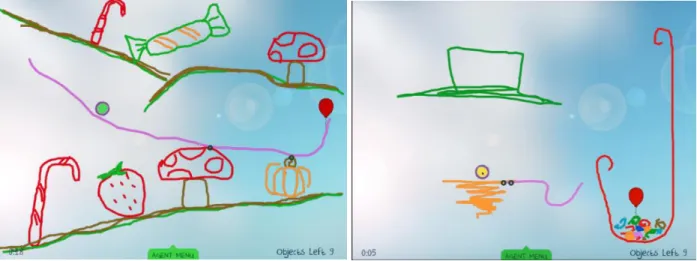
positioned at different locations within the space (see Figure 3). Students can nudge the ball left and right but will need to create simple machines (called "agents of force and motion" in the game) on-screen to solve the problems presented in the playgrounds. There are four possible agents that may be created: ramps, pendulums, levers, and springboards. Students can also create fixed points (called ‘pins’) along a line drawing to create pivots for the agents they create.
32
Figure 3. Screenshots of Physics Playground
Students use the mouse to draw agents that ‘come to life’ after being drawn, and use these agents to propel the ball to the red balloon. In other words, these agents or objects would behave as they would in a real-world context, such as responding to gravity, forces from other objects, etc. Students control the weight and density of objects through their drawings, making an object denser, for example, by filling it with more lines. Each level allows multiple solutions, encouraging students to experiment with various methods to achieve the goal and guide the ball towards the balloon. Silver trophies are awarded for achieving the goal objective while gold trophies are awarded for solutions deemed particularly efficient or creative (that perhaps includes fewer objects created), encouraging students to attempt each playground more than once. This unstructured game-like environment provides a rich setting in which to examine the patterns of students' affect and self-regulated learning as they interact with the game platform.
33
Data Collection
The dataset used in these analyses is obtained from 137 students as they engaged in the Physics Playground platform for a total of approximately 2 hours each, over 4 days in groups of 20-25. Students in the 8th and 9th grade were selected as participants for this due to the alignment
of the curriculum in Physics Playground to the state standards at those grade levels. The study began with pre-tests of student content knowledge, followed by two sessions of actual gameplay with Physics Playground. Upon conclusion of the gameplay, students completed a post-test. Student learning outcomes were measured in the form of online pre- and post-tests on the first and last days of the study, that assessed their content knowledge and skills related to Newtonian physics.
The data collection phase lasted two days (days 2 and 3), during which multiple classes of students worked with Physics Playground in a computer lab. Class periods were 55 minutes in length and class sizes were about 20 students each. Both video data and computer data logs were collected simultaneously during this time over two full sessions of game play. Computer data logs were taken directly from the Physics Playground application, while video camera data recorded students’ facial features throughout their interactions with the game platform.
The interaction log files contain all detailed data on students' attempts to complete each playground level and the time taken for each action. Segments of the raw interaction log files are shown below in Tables 1 and 2. Table 1 shows a segment of the raw computer log data that records the summary data of the ball attributes present in the game environment every second, while Table 2 shows a segment of the raw computer log data that records the positional and movement attributes of other objects and machines created in the game environment. A full list