of the Trade-off and Pecking Order Theories of
Capital Structure
By Adrian Jardine 300889
A research report submitted in partial fulfilment of the requirements for the degree M.Com (Finance)
in the
SCHOOL OF ECONOMIC AND BUSINESS SCIENCES at the
UNIVERSITY OF THE WITWATERSRAND
Supervisor: Mr. J. Britten Date of submission: 28/02/2014
1 DATE OF SUBMISSION: 28 FEBRUARY 2014
SCHOOL OF ECONOMIC AND BUSINESS SCIENCES
Declaration Regarding Plagiarism
I (full names &
surname): Adrian Jardine
Student number: 300889
Declare the following:
1. I understand what plagiarism entails and am aware of the University’s policy in this regard.
2. I declare that this assignment is my own, original work. Where someone else’s work was used (whether from a printed source, the Internet or any other source) due acknowledgement was given and reference was made according to departmental requirements.
3. I did not copy and paste any information directly from an electronic source (e.g., a web page, electronic journal article or CD ROM) into this document.
4. I did not make use of another student’s previous work and submitted it as my own. 5. I did not allow and will not allow anyone to copy my work with the intention of
presenting it as his/her own work.
2
Abstract
This study offers an empirical test of the trade-off and pecking order theories of capital structure by examining the financing practices of a panel of 104 non-financial JSE-listed companies observed over the 1999-2011 period.
At its core, the trade-off theory predicts that firms will balance the marginal benefits of additional leverage against the marginal costs, such that achieving an optimal, value-maximising, target debt-to-equity ratio becomes the focal point of the capital structure decision. On the other hand, the pecking order theory rejects the notion that firms focus on a target debt-to-equity ratio and instead make the financing decision based on a hierarchy of preference derived from the relative informational costs of internal and external financing (in the form of debt and equity issuances).
Although the two theories have classically been viewed as mutually exclusive characterisations of the capital structure decision, an examination of the available empirical evidence reveals that it is difficult, if not impossible, to clearly reject any one theory in favour of another. Indeed, Myers (1984) famously speaks of the ‘capital structure puzzle’. This study will argue and attempt to demonstrate that in a dynamic sense, it is likely that firms apply aspects of each theory when making the capital structure decision, and the relevance of each is context-dependent and time-varying. In other words, these theories are not applied with mutual exclusivity through time, and thus one should find that aspects of each appear to hold a degree of explanatory power in an empirical capital structure model. Although beyond the scope of this study, it is likely that dynamic market-timing, industry and macroeconomic conditions play an important role too.
Against this backdrop, it is unsurprising that this study finds varying levels of support for both the trade-off and pecking order theories. Examining the relationship between leverage and firm-specific factors, there is evidence of a negative relationship between profitability and leverage; a positive relationship between size and leverage; a positive relationship between asset tangibility and leverage; a positive relationship between the industry median debt ratio and leverage; and a positive (but insignificant) relationship between perceived growth opportunities and leverage. This suggests that larger firms and firms with a higher degree of asset tangibility tend to carry greater levels of debt in their capital structures, while firms experiencing greater profitability tend to carry less leverage. The positive coefficient on industry median leverage suggests a significant role played by industry-specific factors.
3 A test of Frank and Goyal’s (2003) pecking order model shows that decreases in both sales/turnover and profitability are associated with increases in leverage; and a financing deficit (surplus) is associated with an increase (decrease) in leverage. This is notably consistent with the pecking order model, in which declining sales and profitability puts pressure on the ability of the company to generate sufficient internal funds to meet investment and payout demands (thus creating a possible financing deficit), which shows up as an increased demand for external funds (with debt as the first choice) and consequently higher leverage.
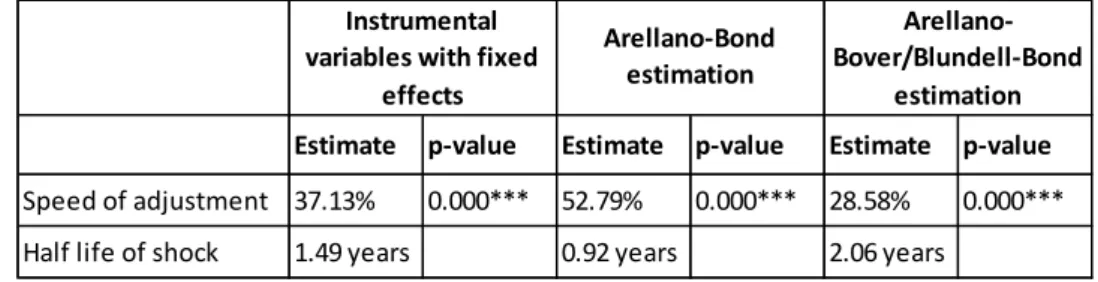
Finally, the speed of adjustment for JSE-listed firms is estimated to lie in the 30-50% range (i.e. a half-life for capital structure shocks of between 1 – 2 years), slightly higher than US-based estimates, and suggesting that achieving and maintaining an optimal leverage outcome may be an important aspect of the capital structure decision (as per the trade-off model). It must be noted, however, that methodological drawbacks make it difficult to effectively disentangle true adjustment (as per the trade-off model)from mean reversion.
Overall, these results suggest that the predictions of the trade-off and pecking order theories each seem to play a role in the capital structure decision of JSE-listed companies, which is consistent with the idea that they are not applied with mutual exclusivity in practice. An accurate characterisation of financing practices in this context should thus incorporate aspects of both theories. Further studies in this area should look into the role played by capital market, macroeconomic and industry conditions in the capital structure decision of JSE-listed companies.
4 Contents
List of Tables and Figures... 6
1. Introduction ... 7
a. Background and overview ... 7
b. Objectives and hypotheses ... 12
c. Motivation and contribution ... 13
d. Structure of the study ... 13
2. Capital structure irrelevance under perfect markets ... 15
a. A description of Modigliani and Miller’s (1958) irrelevance theorem ... 15
b. Is the theory of capital structure irrelevance descriptive of the reality? ... 17
3. The trade-off theory ... 19
a. The role of taxes... 19
b. The role of bankruptcy and costs of financial distress ... 21
c. The trade-off between tax benefits and costs of financial distress ... 23
d. Static vs. dynamic trade-off and adjustment ... 26
4. The pecking order theory ... 26
5. Agency cost theories of capital structure ... 29
6. The market-timing theory ... 31
7. Determinants of leverage: stylised facts regarding the predictions of the trade-off and pecking order theories ... 33
a. The trade-off theory ... 33
b. The pecking order theory ... 34
c. The role of industry factors ... 35
8. Capital structure research: the empirical evidence ... 36
a. Evidence on the trade-off and pecking order hypotheses ... 36
i. Evidence from the USA ... 36
5
b. Evidence on the market-timing hypothesis ... 39
c. Survey evidence ... 40
d. Evidence from Africa ... 41
9. Integrating the theory: a unified view ... 42
10. Research methodology and sample construction ... 45
a. A comment on econometric methodology in capital structure research ... 45
i. Panel data ... 45
ii. Endogeneity ... 46
iii. Dynamic adjustment ... 47
b. Model construction and hypotheses ... 48
i. Determinants of leverage: the role of classic factors ... 48
ii. Changes in leverage and the role of the financing deficit ... 49
iii. Measuring the speed of adjustment ... 50
c. Sample construction and data collection... 50
11. Results and discussion ... 52
a. Summary statistics and industry leverage ... 52
b. Leverage and the role of classic factors ... 57
c. The role of the financing deficit – a test of the pecking order ... 60
d. Speed of adjustment ... 63
12. Conclusion ... 65
13. Delimitations and directions for future research ... 67
References ... 69
6
List of Tables and Figures
Table 1: Summary statistics (pg. 53)
Table 2: Analysis of industry leverage and gearing (pg. 56) Table 3: Determinants of leverage (pg. 59)
Table 4: Analysis of changes in leverage (pg. 61) Table 5: Estimation of the speed of adjustment (pg. 64)
Figure 1: The relationship between Ke, Kd and WACC for varying D/E under Modigliani and
Miller (1958) (pg. 17)
Figure 2: The trade-off theory of capital structure (source: Myers, 1984) (pg. 25) Figure 3: The relationship between Ke, Kd and WACC under trade-off theory (pg. 25)
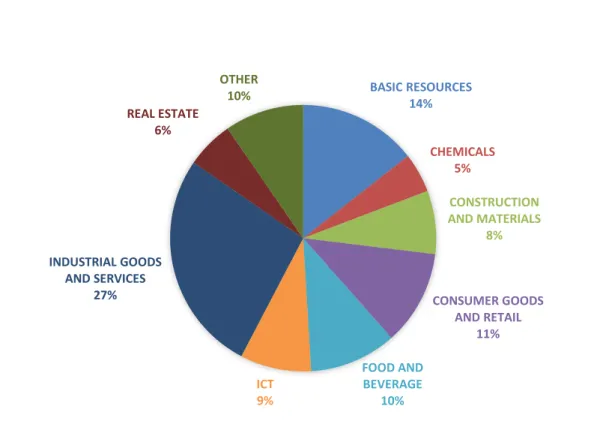
Figure 4: Breakdown of sample by industry (pg. 53)
Figure 5: Trends in industry median debt ratios (1999-2011) (pg. 55)
7
1.
Introduction
a. Background and overview
The objective of this study is to analyse the capital structure practices of a sample of 104 JSE-listed companies over the 1999-2011 period by empirically examining the core predictions of the trade-off and pecking order theories of capital structure. This will allow for a characterisation of the capital structure decision-making process for South African companies, thereby contributing to the body of empirical research in corporate finance in this country.
What is termed the ‘capital structure’ or ‘financing’ decision traditionally refers to the decision-making process surrounding the choice of what mix of debt versus equity a company should use when looking to finance its underlying investments and strategic and operational activities. Although not limited to debt and equity – other forms of funding may include preferred stock, convertible bonds and other hybrids – the capital structure decision typically focuses on the leverage outcome (that is, the ratio of debt-to-equity [D/E] or debt-to-total assets [D/D+E]), and the impact of alternative outcomes on the cost of capital and firm value.
An important aspect of corporate finance, the capital structure decision is considered to be highly complex and has challenged researchers for a long time. Myers (1984) famously describes it as a “puzzle”; and indeed, Frank and Goyal (2008, pg. 137) suggest that “ . . . the complexity of the problem of financing was at one point considered so great as to defy the development of reasonable theories”. At the simplest level, increasing the use of debt relative to equity provides a means to enhance return on equity (ROE) through the leverage effect, but at the cost of greater financial risk. On this basis, the financing decision becomes a classic risk-return analysis. But more broadly, the study of capital structure seeks to create an optimal decision-making framework for the capitalisation process that is consistent with the goal of maximising shareholder wealth. As will be seen, there is a complex web of firm-specific, industry and macroeconomic factors that may play a role in this decision. Nonetheless, substantial progress has been made in producing a number of decision-making frameworks and a set of testable theories.
In coming to grips with the problem, it is best to first understand the defining characteristics and idiosyncrasies of both debt and equity.
Debt represents a legally-binding contractual agreement between the borrower and lender: the lender agrees to lend a certain amount under a promise from the borrower to make interest
8 payments and a repayment of principal over an agreed and defined time horizon (with debt-holders generally protected by a range of legally-binding protective covenants). If the borrower fails to meet these conditions and defaults on its obligations, it may be forced into a position of bankruptcy, where the company’s assets may be liquidated to pay off its debt-holders according to the seniority and collateral structure. Interest payments on debt are usually considered a tax-deductible expense.
Equity, on the other hand, has an indefinite horizon. Unlike debt-holders, equity-holders control the company (with an individual shareholder’s degree of voting power dependent on what class and percentage of the company’s shares they own). An advantage of the use of equity is that it gives the owners of the company (i.e. shareholders) limited liability; but as the residual owners of the company, such equity-holders receive their claim on the firm’s income only after interest payments to debt-holders have been made. In the event of bankruptcy and liquidation, debt-holders are paid off before anything goes to equity-holders. This makes an equity investment in a company relatively more risky than a debt investment; accordingly, the cost of equity is generally higher than the cost of debt. Unlike interest payments to debt-holders, dividends paid to shareholders are considered a distribution of profits and are accordingly non-tax deductible.
The basis for the formal analysis of the capital structure decision was arguably laid by the highly influential paper of Miller and Modigliani (1958), who showed that under conditions of perfect, frictionless capital markets, the proportion of debt versus equity used in the capitalisation of the balance sheet will not affect the overall cost of capital, and thus carries no impact on the value of the firm or shareholder wealth. In other words, the capital structure decision is irrelevant.
However, the assumptions made by Miller and Modigliani (1958) are not necessarily descriptive of the reality: things like taxes, costs of bankruptcy and financial distress, information asymmetries (and the costs thereof) and other market frictions most certainly do exist – rendering the conclusion of the paper somewhat tenuous in a real-world setting. But essentially, what Miller and Modigliani are able to achieve is to create a baseline world in which the capital structure does not matter under a set of specified conditions. The question then becomes, if these conditions are relaxed and a more realistic setting is assumed, how can capital structure affect firm value? And what framework should an optimal, value-maximising
9 capital structure policy follow? In response, three competing hypotheses have been generated in the literature: the trade-off, pecking order and market-timing theories.
In the trade-off theory, the optimal capital structure policy entails a trade-off of the marginal benefits of a higher level of leverage – including the value-enhancing effects of the interest tax-shield and the disciplinary role that debt carries on managerial control over free cash flows, as per Jensen (1986) – against the marginal costs of additional leverage (most notably the costs of financial distress, i.e. the value destruction arising from the consequences of excessively high debt levels). At the level of leverage where the marginal benefits of additional debt are equal to its marginal costs, the cost of capital will be minimised and firm value maximised. Achieving and maintaining this level of debt-to-equity, known as the ‘target’ capital structure, becomes the focal point of the financing policy. Following any shocks to the capital structure that cause a deviation from the target, appropriate adjustments must take place (by substituting debt for equity or vice-versa) in order to return to the target. The speed of this adjustment will depend on a trade-off of the importance of being at the target against the costs of adjustment (including transaction and informational costs).
The pecking order theory rejects the notion that firms have some target, optimal and value-maximising leverage ratio in mind, but still views the capital structure decision as highly relevant and dominated by information costs. Developed by the insights of Myers (1984), and Myers and Majluf (1984), the theory suggests that companies maximize value by systematically choosing to finance new investments with the informationally cheapest available source of funds, without any explicit leverage target. When raising external capital, the general rule should be to issue safe and informationally ‘cheap’ securities before risky ones (namely debt before equity), because of the lower information costs associated with debt issues. Equity issues will occur only when debt becomes excessively costly, when, for example, the firm is already at a dangerously high debt ratio and the costs of financial distress become severe. Consequently, if a firm does seek external funds in order to finance some investment opportunity (for which retained earnings – carrying practically zero information costs – are insufficient as a funding source), it is better off issuing debt rather than equity.
The trade-off and pecking order theories are considered the primary frameworks for the capital structure decision. But a third hypothesis, the market-timing theory, is also influential. Formalised in the seminal work of Baker and Wurgler (2002), it views the capital structure decision as primarily shaped by conditions in external capital markets. The theory predicts that
10 managers will attempt to time the market and issue equity when their market values are high, relative to book and past market values, and to repurchase equity when their market values are low. Similarly, conditions of high liquidity and low interest rates in the debt capital market will create conditions in which debt issues may be preferred. At any point in time then, a firm’s capital structure is largely the cumulative outcome of past attempts to time capital markets.
Although somewhat difficult to reduce to a direct and econometrically testable framework, these theories have been subject to extensive empirical examination – internationally by Rajan and Zingales (1995), Shyam-Sunder and Myers (1999), Fama and French (2002) and Frank and Goyal (2009), among others; and to a lesser extent in South Africa, by the likes of Ramjee and Gwatidzo (2012) and Moyo, Wolmarans and Brümmer (2013).
But what becomes apparent in the existing literature is that researchers appear unable to decisively reject any one theory in favour of another. Aspects of each theory appear to carry empirical and practical relevance in varying degrees. In explaining the continued existence of the capital structure puzzle, Barclay and Smith (1999) suggest that:
i. Models of capital structure are far less precise than asset pricing models, for example, and at best only provide qualitative or directional predictions.
ii. The competing theories are not entirely mutually exclusive. Evidence in favour of one theory does not necessarily render the others invalid.
iii. Many of the variables hypothesised to affect capital structure are difficult to measure (often, at best, only a proxy can be used).
Overall, a key idea that this study will attempt to demonstrate is that it is likely that a dynamic capital structure policy will consider and apply aspects of each of the trade-off, pecking order and market-timing theories. That is, in a dynamic sense, these theories are not applied with mutual exclusivity – and the relevance, importance and applicability of each theory is likely to be context-dependent and time-varying. At a given point in time and depending on the perceived and context-dependent hierarchy of importance of the range of factors in the capital structure decision (namely taxes, costs of financial distress, agency costs, macroeconomic and capital market factors, information asymmetries and industry conditions), a given company should follow a particular financing pattern based on what its managers believe to be optimal at that point in time. As conditions and the relative importance of these factors change through time, financing patterns may accordingly change. For example, an optimal leverage ratio might be the focal target of a given company’s capital structure policy and thus deviations should be
11 eliminated under ‘typical’ conditions (as per trade-off theory); but if typical conditions do not hold, if informational asymmetries or capital market conditions become such that the elimination of deviations is not aligned with value-maximisation or not even possible, the company may be better off ignoring the trade-off framework and following the tenets of a possible pecking order or market-timing framework, as appropriate. It is also likely that the outcome of the financing decision made today will have some impact on the nature and process of the financing decision in the future, as suggested by Denis (2012). In such a dynamic and intertemporal decision-making framework, where many iterations of the capital structure decision-making process are possible, it would be difficult to decisively reject any one theory in favour of another.
Apart from a focus on the dynamics of the D/E–firm value relationship as outlined in the preceding discussions, other practical factors and outcomes considered in the capital structure decision will include, among others, the maturity, seniority and collateralisation structure of debt; the voting and control structure for different classes of shareholder; control of the firm’s credit rating; the currency denomination of different tranches of debt (and potential exchange rate risk); the basis of interest payments – that is, whether tied to a fixed or floating (market) rate – and thus the implicit market risk of debt; hedging of financing risk; the structure of embedded optionality or hybridisation of capital (if any), for instance with convertible debt; anticipation of the ability to refinance debt obligations; the use of preference share capital; the relevant institutional and legal framework; and in the case of equity issues, the impact on earnings dilution. There is also a substantial level of interaction between capital structure and payout policy. Nonetheless, these factors are for the most part incorporated into aspects of parts of the trade-off, pecking order and market-timing theories; and their roles in the capital structure decision will be introduced and discussed where appropriate. If they are not explicitly discussed in this study, it is safe to assume that they are second-order concerns in the financing decision and have been excluded for the sake of brevity.
With this background in mind, this research aims to provide a characterisation of the capital structure practices of JSE-listed firms by focussing on the dynamics of the financing decision and the debt/equity (leverage) outcome in the style of the trade-off and pecking order hypotheses. The implicit underlying hypothesis to be tested is that it will be difficult to clearly reject any one theory in favour of another – that is, mixed levels of support will be found for each – since the capital structure decision for a firm is context-dependent and time-varying. This analysis will be achieved through a comprehensive examination of the underlying theory
12 and empirical evidence, and an application of key empirical models and econometric methodology. Although some comment will be made on the role of macroeconomic and market-based factors in the capital structure decision, the focus will lie on the role of firm-specific (fundamental) factors in the leverage outcome. It is hoped that this research will be able to confirm and extend the results of existing work on South African capital structure practices, and lay a foundation for further extensions and refinements in this area.
b. Objectives and hypotheses
The main objective of this study is to characterise the capital structure decision for JSE-listed companies by empirically examining the predictions of the trade-off and pecking order theories of capital structure. To achieve this overall goal, specific research objectives are as follows:
i. To investigate patterns in industry leverage and gearing over the 1999-2011 period ii. To investigate the role played by classic firm-specific determinants of leverage (namely
size, profitability, growth opportunities and asset tangibility) in capital structure outcomes
iii. To investigate the role played by changes in fundamentals and the financing deficit in leverage adjustments, using Frank and Goyal’s (2003) model
iv. To estimate the average speed of adjustment towards an underlying leverage target
The broad null hypothesis being tested is that there is no significant association between leverage outcomes and the posited drivers thereof, rendering the capital structure decision unclear and perhaps irrelevant. But a finding of significant and logical trends or relationships would lead to an apparent rejection of the null, with the conclusion that there is relevance to the capital structure decision and perhaps support of aspects of the trade-off and/or pecking order theories.
An over-riding hypothesis that this study will posit and attempt to demonstrate is that the capital structure decision is indeed relevant, but due to a lack of complete mutual exclusivity between the trade-off and pecking order theories, it will be difficult to reject one in favour of the other. That is, aspects of both theories are expected to play a role in the capital structure decision for JSE-listed firms.
13
c. Motivation and contribution
This study is primarily motivated by a desire to understand the fundamentals and dynamics of the capital structure decision (and more broadly, the corporate finance practices) of JSE-listed companies.
But more pragmatically, it is hoped that this study will contribute to the growing body of empirical corporate finance research in South Africa. As was touched upon earlier, by comprehensively examining the predictions of the trade-off and pecking order theories a foundation will be laid for refinements and further research into the capital structure decision in this country – viz. a formal investigation into the market-timing hypothesis and the role of debt and equity capital market conditions, in the style of Baker and Wurgler (2002) and DeAngelo, DeAngelo and Stulz (2010); an examination of the role of local macroeconomic factors on the financing decision and speeds of adjustment, in the style of Cook and Tang (2010) and others; a formal investigation into the role of industry factors in financing practices, in the style of Leary and Roberts (2010a); and an examination of the impact of South Africa’s particular legal and institutional environment on the financing decision.
d. Structure of the study
The rest of the study is organised as follows.
A background and review of the seminal literature and empirical evidence in the field of capital structure will be presented in the first part of the study, covering Sections 2-9. The theoretical background is first presented, entailing discussions of Miller and Modigliani’s (1958) capital structure irrelevance theory (Section 2); the trade-off theory (Section 3); the picking order theory (Section 4); the role of agency costs (Section 5); and the market-timing theory (Section 6). With a view to refining the theory into a testable empirical model, Section 7 summarises the measurable determinants of leverage as espoused in the trade-off and pecking theories (and their hypothesised roles). Section 8 provides an outline of the available empirical evidence in capital structure research, taking both an international and South African perspective. Section 9 will then attempt to reconcile the empirical evidence with the underlying seminal theory by constructing a unified view of the capital structure decision.
An analysis of the capital structure practices of firms listed on the JSE over the period 1999-2011 is presented in the second part, covering Sections 10-13. A discussion of the selected
14 empirical models, econometric methodology, sample construction and data collection is contained in Section 10. In Section 11, the results of this analysis are presented, interpreted and discussed at length. Section 12 summarises the core findings of this study and concludes, whereafter Section 13 will provide a brief outline of the potential delimitations concerning these results and some directions for further research.
15
Theoretical background and empirical evidence on
the capital structure puzzle
2.
Capital structure irrelevance under perfect markets
a. A description of Modigliani and Miller’s (1958) irrelevance theorem
In their seminal work on capital structure, Modigliani and Miller (1958) assume a world with perfect and frictionless markets: no taxes; no transaction costs; no costs associated with bankruptcy or financial distress; no agency costs; perfect information (i.e. no information asymmetries between market participants); and efficient capital markets. The key implication of these assumptions is that the sum of all future cash flows available for distribution to the firm’s debt and equity holders will not be affected by how it is financed. Accordingly, in the presence of these assumptions, the capital structure decision – being the decision of what proportion of debt versus equity (and other sources of capital, such as preference shares or hybrid securities) should be used to finance a firm’s operating and investment activities – does not affect firm value and is thus irrelevant. Further, the nature of the debt structure – the degree to which debt is secured or unsecured, senior or subordinated, and so on – will carry no impact either. Instead, firm value is determined purely by the performance and risk characteristics of its underlying real assets: indeed, Modigliani (1980, pg. 13) explains that the theory predicts that “the market value of the firm – debt plus equity – depends only on the income stream generated by its assets. It follows, in particular, that the value of the firm should not be affected by the share of debt in its financial structure . . .”
More formally, Modigliani and Miller (1958) suggest three propositions:
Proposition I
The market value of any firm is independent of its capital structure and is given by capitalising its expected return (operating profit) at the class-appropriate rate. Equivalently, the average cost of capital is completely independent of the firm’s capital structure and is equal to the capitalisation rate of a pure equity stream of its class. In other words, for two otherwise identical firms, the overall value of each is not affected by the relative proportions of debt and equity in its capital structure. The value of the all equity-financed (unlevered) firm (VU) would be
16 The authors show that should two firms, identical except for their capital structures, differ in terms of total value, the opportunity for arbitrage would arise and necessarily force the restoration of the equality between total firm values.
Proposition II
Following on directly from Proposition I, the expected yield of a share of equity is equal to the appropriate capitalisation rate for a pure equity stream in its class, plus a premium related to financial risk equal to the D/E ratio times the spread between the unlevered cost of equity and the cost of debt. Formally, this can be stated as:
𝑘𝑒 = 𝑘𝑜+ 𝐷
𝐸(𝑘𝑜− 𝑘𝑑) . . . (1)
where 𝑘𝑒is the required rate of return on equity (the cost of equity)
𝑘𝑜is the unlevered cost of capital (the cost of capital under all-equity financing) 𝑘𝑑 is the required rate of return on borrowing (the cost of debt)
𝐷
𝐸 is the ratio of debt (D) to equity (E) in the firm’s capital structure
For a given firm, its overall weighted average cost of capital (WACC) is defined as:
𝑘𝑎 = ( 𝐸
𝐷+𝐸) 𝑘𝑒 + ( 𝐷
𝐷+𝐸) 𝑘𝑑 . . . (2)
where the other variables are defined as before, and 𝑘𝑎 is the WACC.
The idea presented by Equation 1 is that a higher D/E ratio (an increase in a firm’s use of leverage) leads to a higher cost of equity, as compensation for the higher level of financial risk borne by equity-holders in a leveraged firm. Additionally, high levels of leverage can increase the inherent riskiness of its debt, and would lead to an increase in the cost of debt as compensation for this risk. But the implication arising from Propositions I and II is that any increase in the risk and cost of the two sources of capital (from higher debt levels) will be exactly offset by shifts in their relative weights in the WACC formula (Equation 2), leaving the overall average cost of capital unchanged, and thus firm value unaffected, for varying levels of debt (Hillier, Grinblatt and Titman, 2008). This idea is graphically presented in Figure 1.
17
Proposition III
The cut-off point for investments undertaken by the firm is the average cost of capital in all cases and will be unaffected by the type of security used to finance the investment. The interpretation of this is that the type of instrument used to finance an investment is irrelevant to the question of whether or not the investment is worthwhile. In other words, the firm’s financing decision will not affect its investment decision.
b. Is the theory of capital structure irrelevance descriptive of the reality?
How does the strict interpretation of this theory stand up to empirical tests? Myers (2001) observes that the theory is exceptionally difficult to test directly, and Mahagaonkar and Qiu (2008) suggest that it is difficult, if not impossible, to effectively disentangle the impact of capital structure on firm value from the effects of other more fundamental changes. Frank and
Figure 1: The relationship between Ke, Kd and WACC for varying D/E under Modigliani and Miller (1958)
18 Goyal (2008) further highlight that with debt and firm value being both plausibly endogenous and driven by other factors such as profits, collateral, and growth opportunities, it is not possible establish an accurate structural test of the theory by regressing value on leverage.
Nonetheless, Elsas and Florysiak (2008) suggest that because the theory predicts that one should not observe systematic patterns of within-group (i.e. intra-industry) homogeneity and between-group (i.e. inter-industry) heterogeneity in capital structures, anecdotal evidence, such as the existence of industry-specific leverage ratios that persist within and across financial systems, would imply the relevance of the capital structure decision. Additionally, the Graham and Harvey (2001) survey of US CFOs strongly illustrates that the majority of firm managers consider the capital structure decision important for firm value.
The key point to note here is that although Modigliani and Miller’s (1958) theorem would appear to strongly suggest the irrelevance of the capital structure decision, it is subject to strict, and in many ways unrealistic, simplifying assumptions. Of course, the reality is very different from the perfect, frictionless capital markets model used in the development of the theory. But indeed, the authors explicitly state (pg. 296) that “these and other drastic simplifications have been necessary in order to come to grips with the problem at all. Having served their purpose they can now be relaxed in the direction of greater realism and relevance, a task in which we hope others interested in this area will wish to share”. A popular defence of the theorem, according to Frank and Goyal (2008), is that “while the Modigliani–Miller theorem does not provide a realistic description of how firms finance their operations, it provides a means of finding reasons why financing does matter”.
Thus, when one adopts a more realistic view - and allows for the existence of capital market imperfections in the form of taxes, costs of bankruptcy and financial distress, agency costs and information asymmetries between market participants - the capital structure decision may indeed affect firm value and become highly relevant. This idea gives rise to several branches of the theory of capital structure that incorporate capital market imperfections: most importantly the trade-off and pecking order theories (the focus of this study), as well as the market-timing hypothesis and theories incorporating the role of agency costs theories. The discussion will now turn to these theories.
19
3.
The trade-off theory
Overall, the trade-off theory effectively describes a family of related theories. Under this broad hypothesis, a decision-maker running a firm evaluates the various costs and benefits of alternative leverage plans. An optimal, firm value-maximising target D/E ratio is obtained where the marginal costs and marginal benefits of debt are balanced (Frank and Goyal, 2008). Identifying, achieving and maintaining this D/E target then becomes the focal point of the capital structure decision.
At this point, the discussion will primarily focus on the static trade-off between the tax benefits of debt versus the costs of financial distress associated with higher debt levels, but agency costs may too play an important role (discussed under Section 5), and the trade-off target may be time-varying/dynamic (discussed under Section 3.d).
a. The role of taxes
Following on from their earlier work, Modigliani and Miller (1963) consider the role of taxes in a firm’s capital structure decision. Because of the tax-deductibility of interest payments on debt financing (under most corporate tax systems, including that of South Africa), they suggest that increasing the relative amount of debt adds value to the firm by effectively shielding earnings from taxes. They show that, in the presence of corporate taxes (and assuming a static and perpetual level of debt), the value of a levered firm is given by:
𝑉𝐿 = 𝑉𝑈 + 𝜏𝐷 . . . (3) where 𝑉𝐿is the value of the levered firm
𝑉𝑈is the value of the unlevered firm 𝜏 is the statutory corporate tax rate
𝐷 is the permanent debt level in the firm’s capital structure
Equation 3 shows that 𝜏𝐷 is the amount of value that would be added to the firm through the interest tax-shield arising from the use of leverage. But as Myers (2001) points out, this can only be considered a remote upper bound: firstly, the firm may not always be profitable, so the average ‘effective’ future tax rate would be less than the statutory rate; secondly, the level of debt D is not permanent and fixed – that is, the level of debt in a firm may be adjusted depending on changes in profitability and industry conditions, among others (making the value of future
20 interest tax-shields to investors somewhat risky); and thirdly, as Barclay and Smith (1999) note, it overstates the tax advantage of debt by only considering corporate taxation – the corporate-level tax advantage of debt may be partly offset by the tax advantage of equity to individual investors (namely, the ability to defer capital gains on equity claims and pay taxes at the generally lower capital gains rate). This makes it unlikely that the incremental tax advantage of debt on firm value (and thus to investors) is fully 𝜏𝐷.
Nonetheless, empirical and anecdotal evidence does exist to suggest that, to some extent, the tax advantage of debt plays a role in the capital structure decision, especially when focusing on incremental financing decisions. For example, MacKie-Mason (1990) finds that publicly traded US firms are more likely to issue debt when faced with a high marginal tax rate, and to issue equity when faced with a low marginal tax rate.
An analogous interpretation of the tax benefit of debt can be made in light of the cost of equity (Equation 1) and WACC (Equation 2). In the presence of corporate taxes, the cost of equity becomes:
𝑘𝑒 = 𝑘𝑜+ 𝐷
𝐸(𝑘𝑜− 𝑘𝑑)(1 − 𝑇𝑐) . . . (4)
and WACC becomes:
𝑘𝑎 = ( 𝐸
𝐷+𝐸) 𝑘𝑒 + ( 𝐷
𝐷+𝐸) (1 − 𝑇𝑐)𝑘𝑑 . . . (5)
This can be restated as:
𝑘𝑎 = 𝑘𝑜 − ( 𝐷
𝐷+𝐸) 𝑇𝑐𝑘𝑑 . . . (6)
where the other variables are defined as before, and 𝑇𝑐 is the corporate tax rate. As is clear from Equation 6, when interest on debt is tax deductible, WACC will decline as leverage ( 𝐷
𝐷+𝐸) increases, and thus firm value will increase with leverage (Hillier, Grinblatt and Titman, 2008).
The tax benefits hypothesis suggests that consistently highly profitable firms with a high tax burden would benefit most from the interest tax shield, and should thus favour higher leverage. Nonetheless, since no offsetting cost of debt is offered, Modigliani and Miller’s (1963) result would seem to imply that a capital structure made up completely of debt, that would maximise the value-enhancing impact of the interest tax-shield, is the optimal result. To avoid this
21 extreme (and anecdotally unrealistic) prediction, there needs to exist some offsetting cost of debt.
b. The role of bankruptcy and costs of financial distress
Kraus and Litzenberger (1973) were the first to suggest that the tax advantage of debt needs to be traded off against the potential deadweight costs of bankruptcy, which will generally arise when debt levels become excessive relative to the firm’s asset value – typically when the value of outstanding debt is greater than total asset value. But Warner (1977) and others suggest that the direct costs of bankruptcy (including lawyers’ and accountants’ fees, and the value of managerial time spent administering the bankruptcy) are small relative to the market value of the firm.
It is likely that the indirect costs of bankruptcy play a greater role. Although difficult to observe and quantify in a direct manner, these indirect costs may take the form of lost sales, lost profits and the inability of the firm to raise capital except under onerous terms when the firm is merely threatened by bankruptcy (Warner, 1977). In other words, indirect costs of bankruptcy are not related to the direct reorganisation of the firm when in an actual position of bankruptcy; but rather, they arise among financially distressed firms, or firms with high debt levels that are somewhat close to bankruptcy but never actually go bankrupt (Hillier, Grinblatt and Titman, 2008). Because of this, they are referred to as the costs of financial distress.
The costs of financial distress can arise and adversely affect firm value in a number of ways. A particularly strong effect comes from distortions in the firm’s investment policy that arise from excessively high debt levels: specifically, they arise from attempts by equity-holders to extract wealth from debt-holders through the conduct of the investment decision, and can essentially be seen as an agency cost arising from conflicts of interest in the equity-holder/debt-holder relationship. Generally, one will find that debt-equity-holder/debt-holders respond to such concerns by charging higher interest rates and demanding (sometimes restrictive) protective covenants, among other measures. Four distortions will be described in this study.
First, Myers (1977) describes the underinvestment (or debt overhang) problem: a firm with a high level of risky debt outstanding and which acts in shareholder’s interests will follow a different investment decision rule than one with risk-free or no debt. The firm financed with high levels of risky debt will, in some states of nature, pass up valuable, positive NPV projects.
22 In other words, high levels of risky debt can weaken the firm’s incentive to undertake good future investments, which will adversely affect firm value. High-growth companies which derive most of their value from intangible investment opportunities (‘growth options’) are most likely to choose low levels of debt in their capital structures, since the underinvestment/debt overhang problem is likely to cause a greater loss in value in these types of firms. On the other hand, mature companies with few investment opportunities, that derive most of their value from assets-in-place, are likely to be less vulnerable to the underinvestment problem, and thus should choose higher relative debt levels (Barclay and Smith, 1999).
A second distortion in investment policy is known as the asset substitution effect. Originally postulated by Jensen and Meckling (1976) and Galai and Masulis (1976), firms financed with debt have the incentive to take on unnecessary risk, possibly being driven to the point of substituting positive-NPV, less risky investment projects for riskier, possibly negative-NPV ones. This is since equity-holders tend to gain at the expense of debt-holders when business risk increases (through operating and financial leverage effects). Clearly, this sort of investment policy is sub-optimal and will adversely affect firm value.
A third distortion may be a reluctance to liquidate. As suggested by Titman (1984), the management of a firm, acting in the interest of equity-holders, may be reluctant to liquidate the firm when its liquidation value exceeds its going concern value. Because debt-holders have priority in the event of liquidation, equity-holders mostly lose out under liquidation and would thus capture any potential upside benefits should the firm continue to operate. Accordingly, managers may attempt to delay liquidation as long as possible. This may be done, for example, by cutting corners on maintenance, research and development; through accounting changes designed to conceal the true extent of trouble; and encouraging false optimism concerning firm affairs, in order to make current operating performance appear better than it actually is (Brealey, Myers and Allen, 2008). Such delaying tactics are not aligned with maximising firm value.
A final investment distortion may come through short-sightedness in the investment decision. A company carrying an excessive debt burden (where refinancing may be difficult) may find itself rejecting high-NPV investment opportunities that pay off over a long time horizon in favour of low-NPV opportunities that pay off over a shorter time period. This is due to the need for cash to be generated quickly in order to service the debt burden; and clearly, if such a debt burden did not exist, the long-term high-NPV project would be selected – in line with a
value-23 maximising investment decision. Once again one observes a sub-optimal investment decision being induced by excessive levels of debt.
An additional category of costs of financial distress may arise and adversely affect firm value through reputational concerns among non-financial firm stakeholders. Titman and Parsons (2009) define non-financial stakeholdersas parties that have either a direct or indirect interest in the firm’s long-term viability, but are not investors in the company – such as employees, customers and suppliers. Known as the stakeholder theory, a firm’s financial condition affects how it is perceived as a reliable supplier, customer and employer, and thus affects the terms and conditions under which it operates with such stakeholders. A firm perceived to be under financial distress would likely be subject to onerous contracting relationships with such stakeholders, and may find its competitive position weakened. Firm value would clearly be adversely affected by such conditions. In particular, this type of financial distress is especially costly for firms with products involving quality that is important yet unobservable; for firms with products that require future servicing; and for firms engaged with employees and suppliers that require specialised capital or training (Hillier, Grinblatt and Titman, 2008). These types of firms should have relatively lower levels of debt in their capital structures.
To summarise the role of the costs of financial distress, Myers (1984) suggests that, in general, financially risky firms should borrow less, all else equal. Here, risk is defined as the variance rate of the market value of the firm’s assets. The higher the variance rate, the greater the probability of default on any given package of debt claims, and thus the higher will be the costs of financial distress. That is, financial distress can be directly tied to credit risk. And although difficult to quantify precisely, the costs of financial distress to a firm operating under excessively high debt levels are likely to significantly affect firm value. For example, using risk-adjusted default probabilities derived from corporate bond spreads, Almeida and Philippon (2007) suggest that the present value of financial distress is substantial: for a BBB-rated firm, the NPV of financial distress is 4.5% of pre-distress firm value.
c. The trade-off between tax benefits and costs of financial distress
Myers (1984) defines the outcome of the trade-off hypothesis as the focus by the firm on an optimal debt ratio that is usually viewed as determined by a trade-off of the costs and benefits of borrowing, holding the firm's assets and investment plans constant. More formally, the trade-off theory predicts that firms target an optimal, value-maximising D/E ratio that balances the
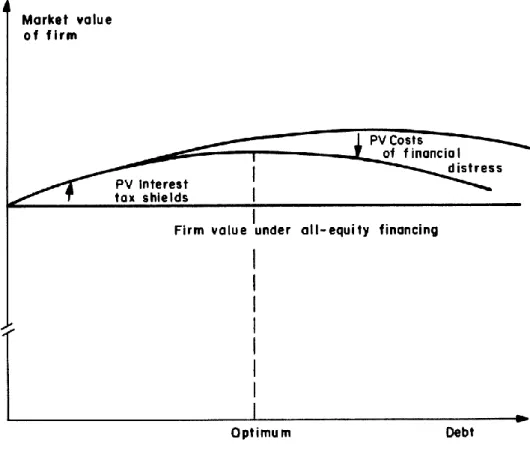
24 marginal benefits of debt financing (such as the interest tax-shield) with the marginal costs of additional debt (such as the costs of financial distress). This idea is graphically presented in Figure 2: as the firm takes on more debt, the value of the firm will rise with increasing interest tax-shields. But eventually, as debt levels become excessively high, the costs of financial distress begin to have a significant adverse effect on firm value. The optimal, value-maximising capital structure is reached where these marginal benefits and costs of additional debt perfectly offset each other.
An analogous interpretation of the trade-off theory can be made in terms of firm WACC. Brealey, Myers and Allen (2008) suggest that although on the one hand increasing leverage will lower WACC to some extent because of the tax benefit of debt (see Equation 6), firms that borrow excessively and begin to incur costs of financial distress will be subject to significantly higher costs of equity and debt as compensation for this higher level of business and financial risk (which in turn would begin to increase WACC). Thus, at some level of leverage WACC will be minimised, and this will indicate the optimal D/E ratio for the firm. This idea is graphically presented in Figure 3.
As has been indicated, the relative costs and benefits of debt are likely to vary firm-to-firm. Under the trade-off theory, consistently highly profitable, low-risk firms with a high tax burden, few investment opportunities and which derive most of their value from tangible assets-in-place should take on relatively more debt financing. Conversely, high-risk firms with inconsistent profitability, an abundance of investment opportunities and which derive much of their value from growth prospects should be subject to relatively lower levels of debt financing.
25 Figure 2: The trade-off theory of capital structure (source: Myers, 1984)
Figure 3: The relationship between Ke, Kd and WACC under trade-off theory
26
d. Static vs. dynamic trade-off and adjustment
A firm is said to follow the static trade-off theory if the firm’s leverage target is determined by a single period trade-off between the tax benefits of debt and the deadweight costs of bankruptcy/financial distress (Frank and Goyal, 2008). On the other hand, it may be that the determinants of capital structure (namely, the perceived marginal benefits and costs of debt) vary over time as firm circumstances and fundamental characteristics change. If the optimal target leverage ratio varies over time, this is labelled dynamic trade-off theory (Elsas and Florysiak, 2008).
Fundamental or market-based shocks may move the firm away from its optimal D/E ratio. The firm is supposed to substitute debt for equity, or equity for debt, until the firm returns to its D/E target and value of the firm is once again maximized. The pace at which the firm adjusts back towards its optimal capital structure target will depend, among other things, on the costs of adjustment (incorporating the role of transaction and information costs). Hovakimian and Li (2011) thus suggest that firms may adjust toward target debt ratios only occasionally, when the benefits of adjusting exceed adjustment costs (including transaction and information costs).
Thus a key to testing the validity of the trade-off theory is to determine whether or not firms adjust towards a target following shocks to leverage, and to measure the speed of this adjustment (Myers, 1984). The methodology used to measure the speed of adjustment is a vital and somewhat contentious aspect of capital structure research, and is discussed at length in Section 10.
4.
The pecking order theory
The pecking order theory of capital structure rejects the notion that firms have some target, optimal and value-maximising leverage ratio in mind, but still views the capital structure decision as highly relevant and dominated by information costs.
First suggested by Donaldson (1961), the contemporary interpretation is in large part based on Myers and Majluf’s (1984) adverse selection model: management is assumed to know more about the firm’s value and prospects than investors (in other words, there exists a degree of information asymmetry between managers and investors), and investors interpret the firm’s actions accordingly. For a firm with assets-in-place and an investment opportunity requiring funding, the firm may choose to finance it with an equity issue. But management, acting in the
27 interest of existing shareholders, will refuse to issue equity if it believes the shares are
undervalued (issuing shares at too low a price transfers value from existing shareholders to new investors) - even if it means passing up the investment opportunity - unless the transfer from existing to new stockholders is more than offset by the net present value of the growth opportunity (Myers, 2001). Investors, aware of this information asymmetry, will reason that a decision not to issue shares signals ‘good news’. The news conveyed by an equity issue is ‘bad’, signalling that the shares are overvalued. This affects the price investors are willing to pay for the issue. Further, the potential dilutionary impact that an issue of equity would carry may also convey a negative signal.
The widely observed significant drop in share prices on average upon announcement of an equity issue is consistent with this hypothesis - see, for example, the seminal work of Asquith and Mullins (1986) - and the negative impact is likely to be greater the larger are perceived information asymmetries between shareholders and managers.
In contrast, the use of debt may, in some circumstances, be seen as conveying a positive signal – perhaps because of a signal of management being confident enough in the investment opportunity to take on additional financial leverage (and thus be willing to take on additional financial risk); because of the potential ROE-enhancing effect of increased financial leverage combined with a profitable, value-enhancing opportunity; or because of the disciplinary role that debt carries on management control over free cash flows, as per Jensen (1986). At the very least, however, debt issues carry a lower informational cost than equity issues, according to this hypothesis. Seminal work by Mikkelson and Partch (1986) demonstrated a statistically insignificant impact on share prices upon announcement of a debt issue, in contrast to the significant negative impact of equity issues.
At this point it is important to consider the role of retained earnings as a funding source. In the pecking order framework, internal funds (that is, retained earnings) are generally considered to carry zero informational costs by definition – only externally raised capital carries an informational signal. The implication is that retained earnings would be the first choice source of funding in a financing model based on informational costs. But an argument can be made that internal funds are not immune from informational costs: the level of retained earnings is a function of payout policy (such that dividend cuts will increase the level of retained earnings,
ceteris paribus, and vice-versa), and there exists the widely observed empirical pattern that dividend cuts carry a substantial and significant negative impact on share prices - most recently
28 discussed by Jensen, Lundstrum and Miller (2010). Thus, in the pecking order model, dividend cuts are not used as a mechanism to fund capital expenditure because of high informational costs. That is, retained earnings will not be explicitly tailored to meet capital expenditure requirements through dividend cuts.
All considered, the pecking order theory suggests that companies maximize value by systematically choosing to finance new investments with the informationally cheapest available source of funds, without any explicit leverage target (Barclay and Smith, 1999). If a firm does seek external funds in order to finance some investment opportunity (for which retained earnings – carrying practically zero information costs – are insufficient as a funding source), it is better off issuing debt rather than equity. When raising external capital, the general rule should be to issue safe and informationally ‘cheap’ securities before risky ones (namely debt before equity), because of the lower information costs associated with debt issues. Equity issues will occur only when debt becomes excessively costly, when, for example, the firm is already at a dangerously high debt ratio and the costs of financial distress become severe. Overall then, information costs dominate all other considerations in the context of the capital structure decision (Myers, 1984).
Myers (2001) formally states the pecking order as follows:
i. Firms prefer internal funds (such as retained earnings) to external capital (information asymmetries are assumed relevant only for external financing).
ii. Dividends are ‘sticky’, such that dividend cuts are not used to finance capital expenditure. Thus, changes in cash requirements are not soaked up in short-run dividend changes, such that changes in net cash will show up as changes in external financing.
iii. If internally generated cash flow exceeds capital investment, the surplus is used to pay down debt rather than repurchasing and retiring equity. If external funds are required for capital investment, firms will issue the safest security first; that is, debt before equity. As the requirement for external financing increases, the firm will work down the pecking order, from safe to riskier debt, perhaps then to preferred stock or hybrid securities (such as convertible bonds), and finally to equity as a last resort.
iv. At any point in time, a firm's debt ratio therefore reflects its cumulative requirement for external financing.
29 The pecking order theory predicts that low-growth firms with few investment opportunities, that are highly profitable and generate substantial cash flow, have a lower need for external financing and thus would have lower debt ratios. Conversely, high-growth firms facing an abundance of investment opportunities, which already use up most internally generated cash flow in the pursuit of growth, are likely to have a greater need for external financing and thus have higher debt ratios. Note that this prediction is exactly opposite to that of the trade-off theory.
5.
Agency cost theories of capital structure
Although aspects of agency theory are implicit in aspects of the trade-off and pecking order theories (some of which have been discussed in previous sections), their impact on the capital structure decision is deserving of a more thorough discussion.
In their seminal work on agency theory, Jensen and Meckling (1976) argue that while Modigliani and Miller (1958) assume that the probability distribution of future cash flows to the firm is independent of the capital structure decision, agency costs – arising from conflicts of interest between shareholders and firm management – provide a strong reason that the probability distribution of future cash flows is not independent of capital or ownership structure. Correspondingly, the respective agency costs of debt and equity may be an important determinant of a firm’s optimal capital structure. Specifically, from the owner-manager’s standpoint, the optimal proportion of new funds to be obtained from equity versus debt, for a given level of internal equity, is that resultant D/E level which results in minimum total agency costs.
A particular way in which agency costs may influence the capital structure decision is outlined in Jensen’s (1986) free cash flow hypothesis. It is suggested that one of the symptoms of the agency problem is that managers have an incentive to cause their firms to grow beyond the optimal size. Growth increases managers’ power by increasing the resources under their control, and it is also associated with increases in managers’ compensation (as well as satisfying managers’ desire for prestige and status). The extraction of excessive ‘perks’ is also an important concern. These sorts of ‘managerial inefficiencies’ will be a particular problem for firms that generate substantial free cash flow, defined as cash flow in excess of that required to fund all projects that have positive NPV. Monitoring by the firm’s internal control systems
30 (such as the board of directors) and the market for corporate control are important disciplinary tools for firm management, but the problem may remain of how to motivate managers to disgorge excess cash to investors rather than investing at below the cost of capital or wasting it on organisational inefficiencies, in an effort to sub-optimally grow the firm.
Paying dividends is one way, but such promises are weak because dividends can be reduced. But debt creation, without retention of the proceeds of the issue, enables managers to effectively bond their promise to pay out future cash flows. The legally-binding contractual nature of debt and the threat of bankruptcy makes this a firm commitment, and may impose an effective motivating force on management to make their organisation more efficient. Thus debt can reduce the agency costs of free cash flow by reducing the cash flow available for spending at the discretion of managers, and in this regard contributes to maximising firm value. The control function of debt would be more important in organisations that generate large cash flows but have low growth prospects, and these types of firms should be subject to greater levels of relative debt financing.
Of course, as was discussed earlier, value-destroying distortions in investment policy (namely the underinvestment/debt overhang, asset substitution and short-sightedness effects), that arise from increasing the relative level of debt in the capital structure, can be viewed as agency costs arising from conflicts of interest between equity- and debt-holders. They represent attempts by managers (acting in the interest of shareholders) to expropriate wealth/value from debt-holders, who respond by demanding higher interest rates and stronger convenants. Ultimately this particular agency cost will be reflected in reduced firm value. Firms most at risk of this problem are those that are presented with an array of investment/growth opportunities and derive most of their value from such intangible growth prospects, and thus should favour lower levels of debt financing (Barclay and Smith, 1999).
Overall then, in the context of agency costs, the use of debt financing can be seen as offering two opposing influences on firm value:
i. Benefitting the firm by controlling managerial discretion over free cash flow (i.e. controlling the agency problem between firm managers and shareholders).
ii. Adversely affecting the firm by encouraging a sub-optimal investment policy and restrictive borrowing conditions under excessive debt levels (i.e. creating agency costs arising from the relationship between equity- and debt-holders).
31 This idea fits in well with trade-off theory. In the presence of these agency issues, the optimal, value-maximising capital structure will involve a trade-off of the marginal benefits of increased debt financing (including the tax benefit and agency control function of debt) with its marginal costs (including the costs of financial distress, which can be substantially made up of the costs of the ‘agency’ relationship between debt- and equity-holders).
6.
The market-timing theory
Although not to be empirically examined in this particular study, the market-timing theory is nonetheless an important piece of the capital structure puzzle, and as such a comprehensive review of the literature would be incomplete without a discussion of this hypothesis. According to the market-timing theory, companies are not particularly concerned with whether they are financed by debt or equity, but rather choose the form of financing which, at that point in time, seems to be most valued by capital markets. In other words, market conditions are a key determinant of the capital structure decision.
In their seminal work on market-timing, Baker and Wurgler (2002) consider this hypothesis in detail: subject to the effect of transaction costs, managers will attempt to time the market and issue equity when their market values are high, relative to book and past market values, and to repurchase equity when their market values are relatively low. In this theory, there is no optimal capital structure, so market-timing financing decisions just accumulate over time into the capital structure outcome. A firm’s capital structure at any point in time, then, is largely the
cumulative outcome of past attempts to time the capital market.
Although the market-timing literature usually focuses on the equity market, a similar case can be made for timing the debt market. For instance, a low interest rate environment may make debt a relatively cheap source of capital, thus encouraging a preference for debt over equity and possibly a tolerance for higher leverage. In a related context, liquidity in capital markets is another vital concern. As a consequence of vigorous and extensive global monetary easing by central banks in recent years, conditions of unprecedented high liquidity (and a corresponding environment of exceptionally low interest rates) have arguably played a key role in shaping global capital markets in the aftermath of the financial crisis of 2007/2008. Although beyond the scope of this study, the link between market liquidity and leverage is a fascinating aspect
32 of the study of capital structure. It is explored in detail by Ivashina and Scharfstein (2010) and Adrian and Shin (2010), among others.
On a related note, several recent papers – for example, Korajczyk and Levy (2003) – suggest that the interaction of broader macroeconomic and capital market conditions offer an important factor in analysing firm leverage. Looking specifically at the adjustment to target leverage under the trade-off theory, Cook and Tang (2010) provide evidence that during the recent financial crisis, firms' ability to raise capital in either the debt or equity markets (in order to adjust capital structure) has been substantially hampered. For example, in the U.S. only 624 debt and equity issues worth $301.8 billion came to market in the fourth quarter of 2008 compared to 2343 issues worth $718.9 billion in the final quarter of 2007. On this issue they quote Alan Greenspan (pg. 74): “Banks, fearful of their own solvency, all but stopped lending. Issuance of corporate bonds, commercial paper and a wide variety of other financial products largely ceased.” Consistent with this anecdotal evidence, the authors use two dynamic partial adjustment capital structure models to estimate the impact of several macroeconomic factors on the speed of capital structure adjustment toward target leverage, and find evidence that firms adjust their leverage towards a target faster in ‘good’ macroeconomic states relative to ‘bad’ states. This is an intriguing line of research, but suffice it to say once again that it lies somewhat beyond the scope of this study, which largely focuses on firm-specific ‘micro’ determinants of leverage practices.
Finally, Frank and Goyal (2009) suggest that if managers strictly follow market-timing behaviour, it can lead to situations where the raising of external funds becomes somewhat unrelated to the actual current need for capital: for example, if the debt and/or equity capital market is looking particularly favourable at a given point in time, funds may be raised from either source (or both) even if new capital is not needed in the business – rather than run the risk of tighter capital market conditions in the future. In contrast, even if there is a clear need for external capital, adverse conditions in the debt/equity capital market can cause funding to be deferred. This is clearly in contrast to the predictions of the pecking order hypothesis, where accessing external funds is driven purely by the needs of the cash flow deficit as the first-order concern.

![Figure 6: Trends in industry median gearing [Net Debt/Assets]](https://thumb-us.123doks.com/thumbv2/123dok_us/9961119.2488578/56.892.133.777.114.557/figure-trends-industry-median-gearing-net-debt-assets.webp)