R E S E A R C H A R T I C L E
Open Access
Appropriate complementary feeding
practices and associated factors among
mothers of children age 6
–
23 months in
Southern Ethiopia, 2015
Tigist Kassa
1, Berhan Meshesha
2, Yusuf Haji
2*and Jemal Ebrahim
2Abstract
Background:Poor complementary feeding of children aged 6–23 months contributes to the characteristics negative growth trends and deaths observed in developing countries. Evidences have shown that promotion of appropriate complementary feeding practices reduces the incidence of stunting and leads to better health and growth outcome. This study was aimed at assessing practices of complementary feeding and associated factors among mothers of children aged 6–23 months.
Methods:A community-based cross sectional study design was conducted among 611 mothers who had children with 6–23 months of age in the ten randomly selected Kebeles (smallest administrative unit). A multistage sampling technique was used to identify study subjects. Data were collected using pre-tested structured questionnaire. Data were entered in to Epi info version 3.5.1. Data cleaning and analysis were done using SPSS version 16. Odds ratios (ORs) with 95 % confidence interval (CI) were computed to measure the strength of association.
Results:The response rate was 97.6 % (611/626). The practices of timely initiation of complementary feeding, minimum meal frequency and minimum dietary diversity were 72.5, 67.3 and 18.8 % among mothers of 6–23 months aged children, respectively. The practice of appropriate complementary feeding was 9.5 %. Child’s age (12–17 and 18–23 months) [Adjusted OR: 2.75 (95 % CI: 1.07 7.03), 2.64 (95 % CI: 1.06 6.74)], educational level of mother (primary and secondary and above schools) [AOR: 3.24 (1.28 8.20), 3.21 (1.1.07 9.70)], and smaller family size [AOR: 12.10 (95 % CI: 1.10 139.7)] were found to be independent predictors of appropriate complementary feeding practice of 6–23 months old children.
Conclusion: Low appropriate complementary feeding of children aged 6–23 months was observed. Mothers who are illiterate, children age 6–11 months and families with large size were associated factors for
inappropriate feeding practices. Therefore, nutritional counseling on child feeding practices were recommended.
Keywords: Appropriate complementary feeding, Associated factors, Children, Ethiopia
Abbreviations: ANC, Ante natal care; AOR, Adjusted odds ratio; CI, Confidence interval; COR, Crude odds ratio; EDHS, Ethiopian Demographic and Health Survey; WHO, World Health Organization
* Correspondence:[email protected]
2School of Public & Environmental Health, College of Medicine and Health Science, Hawassa University, Hawassa, Ethiopia
Full list of author information is available at the end of the article
Background
Malnutrition remains a major health problem that in 2011, globally, 165 million children younger than 5 years were stunted, more than 100 million were underweight and 52 million were wasted [1]. A recent analysis of Demographic and Health surveys (DHS) data from twenty-one countries revealed that poor complementary feeding of children aged 6–23 months contributes to the characteristics negative growth trends observed in devel-oping countries [2]. In sub-Saharan African Regions, for example, suboptimal infant feeding practices, poor qual-ity of complementary foods, micronutrient deficiencies and frequent infections have mainly contributed to the high mortality among infants and young children [3].
Similarly, malnutrition is a significant health problem for infants and young children in Ethiopia. The Ethiopian DHS, 2011 show that national rates of stunting, under-weight and wasting among under 5 years children were 44.4, 28.7, and 9.7 % respectively, and have declined only slightly in the past 5 years [4, 5].
Understanding the effect of infant and young child feeding (IYCF) practices on improving the nutritional status of children under two years of age, the World Health Organization (WHO) developed a set of core in-dicators to assess IYCF practices [6]. These inin-dicators incorporated both breast-feeding and complementary feeding linked practices. Appropriate feeding practices, therefore, include timely initiation of feeding of solid and semi-solid foods from age 6 months and to improve the quantity and quality of foods children consume, while maintaining breastfeeding [6, 7].
There is strong evidence that the promotion of appro-priate complementary feeding practices reduces the inci-dence of stunting and leads to better health and growth outcome [1, 7]. Therefore, as an effective intervention strategy for malnutrition, WHO and United Nation for Child Fund (UNICEF) recommended introduction of adequate complementary foods at 6 months with contin-ued breastfeeding for 2 years of age or beyond [6]. And this will have a potential to improve the nutritional status of children in developing countries [8]. However, in Ethiopia, the prevalence of appropriate complemen-tary feeding practices among children aged 6–23 months was very low (4.8 %) [4].
Previous studies conducted elsewhere on factors asso-ciated with appropriate complementary feeding practices
of children aged 6–23 months show higher maternal and
paternal education, better household wealth, exposure to media, adequate antenatal and post-natal contacts, child’s sex and age, institutional delivery, low parity, maternal occupation, urban residence, knowledge & frequency of complementary feeding and receiving feeding advice in immunization as determinant factors
for appropriate complementary feeding [9–25].
These evidences strongly call for the need to improve-ment of compleimprove-mentary feeding practices but there is a scarce evidences for overall complementary feeding practices and associated factors in the region, especially, in the study area. To improve complementary feeding practice through this essential time of growth and devel-opment of the child, assessment of complementary feed-ing practices and its factors are vital [6, 7, 26].
The current study was aimed at determining the prevalence of appropriate complementary feeding prac-tices and its associated factors among children aged 6–23 months residing in the rural area of Southern Ethiopia. And the findings of this study will provide some critical insights for further research and interventions.
Methods
Study setting and sample
The community based cross sectional survey was
con-ducted from February 10–25, 2015 in rural community
of Arsi Negele Woreda (District). The woreda has a total population of 257,428 residing in 43 kebeles (smallest administrative unit) with 127,470 (49.5 %) male and 129,950 (50.5 %) female as projected for 2014 from 2007
national Census. Children aged 6–23 months of age in
the district constituted 6 % (14,702) of the population. The livelihood of more than 65 % of the district popula-tion is based on farming. The main crops grown in the area are wheat, maize and teff (a species of Eragrostis native to Ethiopia). The source population was all
mothers having children 6–23 months of age and
resid-ing in the study area. The study population was selected
mothers with children aged 6–23 months and resided in
the study area for more than 6 months. Sample size was determined using a single population proportion at 95 % CI level (Z (1-ά/2) = 1.96), 44.7 % prevalence of mini-mum meal frequency from previous survey [23], 5 % margin of error, and 5 % level of significance. Design
effect for cluster surveys, DEFF of 1.5, was used as a
multiplier to increase the sample size to account for the effect of the cluster sampling method. After considering 10 % non-responses and refusals, the total sample size
required for the study was 626 of mothers with 6–23
months of age children.
Sampling procedure
A multistage sampling technique was used to select the study subjects. Ten kebeles were randomly selected using simple random sampling method from 43 kebeles. The total population size in the ten selected kebeles was
52,934 of which 2941 was children 6–23 months of age.
(a documented list of all target group of the kebele) has been used from the health post to get list of target group. Using systematic random sampling a child was selected in each kebele and his/her mother was interviewed accord-ingly. From each household one eligible child with mother at the time of survey was selected and the process had been continuing until nextKin the same direction.
Methods of data collection
A pre-tested structured questionnaire initially developed in English and then back translated into local language (Afan Oromo) was used for data collection (feeding practices and 24 h dietary recall parts of the questionnaire was adopted from WHO/UNICEF tool). The main sections of the questionnaire comprised of socio-demographic characteristics, maternal health care related information, feeding practices, and dietary assessment using 24 h recall. Data were collected by ten diploma nurses after receiving an intensive training on the aim of the study, procedures to be followed, as well as approach of client during interview for 2 days. The technique for data collection was a face-to-face interview method and
from each household one eligible child age 6–23 with
mother at the time of survey had been selected. Appropri-ate supervision had been conducted by the investigators at each respective kebeles during data collection.
Complementary feeding indicators
Complementary feeding practices were assessed using the key indicators recommended by the WHO/UNICEF in 2008 which include introduction of solid, semi-solid or soft foods, minimum dietary diversity, minimum meal frequency and minimum acceptable diet calculated for the age ranges 6–11, 12–17 and 18–23 months of age, and based on a 24-h recall of the child’s dietary intake. These indicators include:
Timely introduction of solid, semi-solid or soft foods: the proportion of infants 6–23 months of age who starts complementary foods (solid, semi-solid or soft) at 6 month [6].
Minimum dietary diversity: the proportion of children 6–23 months of age who receive foods from four or more food groups during the previous day. The seven food groups used for tabulation of this indicator were: grains, roots and tubers; legumes and nuts; dairy products (milk, yoghurt and cheese); flesh foods (meat, fish, poultry and liver/organ meats); eggs; vitamin A-rich fruits and vegetables; and other fruits and vegetables [6].
Minimum meal frequency: the proportion of breastfed and non-breastfed children 6–23 months of age who receive solid, semi-solid or soft foods the minimum number of times or more (minimum is defined as: two
times for breastfed infants 6–8 months; three times for breastfed children 9–23 months; and four times for non-breastfed children 6–23 months) in the previous day [6].
Minimum acceptable diet: the proportion of breastfed children 6–12 months of age who had at least the minimum dietary diversity and the minimum meal frequency during the previous day, and non-breastfed children 6–23 months of age who received at least two milk feedings and had at least the minimum dietary diversity not including milk feeds and the minimum meal frequency during the previous day [6].
Complementary feeding practices
Appropriate complementary feeding quantified using a composite indicator comprising three of the WHO core IYCF indicators that relate closely to complementary feeding. These are timely introduction of solid, comple-mentary feeding, and minimum dietary diversity and minimum meal frequency. If a child fulfilled the above three criteria, we classified as having received appropri-ate complementary feeding.
Data analysis
Before analyses, data were checked for completeness, in-consistencies and entered using Epi info version 3.5.1 statistical software. Then the data were exported to SPSS for windows version 16.0 (SPSS Inc. version 16.1, Chicago, Illinois) and coded, cleaned and analyzed. Descriptive sta-tistics was used to show socio demographic characteristics and prevalence of complementary feeding practices. To verify the variables associated with appropriate comple-mentary feeding practices, variables that show aP. value < 0.1 in the bivariate analyses were re-entered into multivar-iable logistic regression models to control for potential confounders. Apvalue < 0.05 was considered statistically significant. Adjusted Odds Ratios and their 95 % Confi-dence Intervals were reported.
Results
Socio-demographic characteristics of respondent
In this study, out of 626 eligible mothers of 6–23
months aged children 611 (97.6 %) were provided the data. Briefly, of 611 mothers 224 (36.7 %) were in the age group of 25–29 followed by age group < = 24 years (21.3 %) with mean age of 27.54 years. Regarding marital
status of respondents, almost all (96 %). Respondents’
educational status showed that most (42 %) of them were primary school followed by illiterate ones (25 %). Most (465, 76.1 %) of participants were housewife, and
358 (58.6 %) of husbands’ occupation was farmer
Maternal healthcare related variables
Maternal characteristics and healthcare utilization was assessed. Accordingly, more than half (56.8 %) of the re-spondents were multipara (2–5 births), about two third of them gave birth at home and majority (90.5 % and 88 %) of mothers were attended ANC and PNC respect-ively (Table 2).
Child characteristics, feeding practices and dietary assessment
Table 3 presents child characteristics such as age, gender, feeding practice of mothers/caregivers and dietary as-sessment using 24 h recall. Of 611 children enrolled in the study 331 (54 %) were males and 280 (46 %) were
fe-males. of 611 children 43 % of them were 18–23 months
of age, 32 % were aged 12–17 months and the rest
quar-ter were aged 6–11 months with mean age of
18.7 months. The commonest (95 %) dietary recall was grain, roots and tubers that 95.4 % while, the least (11 %) one was flesh foods.
Indicators for Complementary feeding
Indicators of complementary feeding was assessed and only 115 (19 %) mothers offered four or more food groups to their child meeting the minimum dietary di-versity criteria on the day preceding the study. Majority (72.5 %) of the mothers initiated complementary feeding at 6 months (timely initiated complementary feeding). About two third (67.3 %) mothers fed their children more than two times a day, the day preceding the survey. From the three combining indicators, overall prevalence of appropriate complementary feeding practices was 9.5 % (95 % CI = 7.0-12.0, 57/611). The minimum acceptable diet of the studied children was 12.3 % (75/611).
Factors associated with Complementary Feeding Practices, bivariate and multivariable analyses
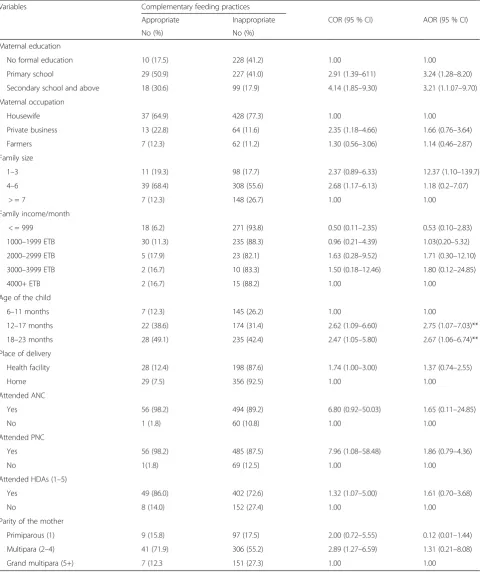
Table 4 shows factors associated with appropriate
com-plementary feeding practices of children aged 6–23
months: a bivariate and multivariate analyses. Variables
having P.value less than 0.1 in bivariate analyses were
re-entered in to binary logistic regression to control for possible potential confounders. These variables were ma-ternal education, occupation and parity, family size, household income, child age, place of delivery and ma-ternal ANC, PNC and HDAs follow up. Accordingly, of
Table 1Sociodemographic characteristics of respondents, Arsi Negele, Southern Ethiopia, 2015
Characteristics Frequency Percent
Age of mothers/caretakers
< =24 years 173 28.3
25–29 years 224 36.7
30–34 years 130 21.3
> = 35 years 84 13.7
Mean age: 27.54
Educational status of mother/caretaker
Illiterate 151 24.7
Read and write only 86 14.1
Primary school 256 41.9
Secondary school 105 17.2
College/university 13 2.1
Mothers/caretakers occupation
Housewife 465 76.1
Farmer 69 11.3
Housemaid 33 5.4
Merchant 30 4.9
Daily laborer 3 0.5
Others 11 1.8
Educational status of husband
Illiterate 67 11.0
Read and write only 59 9.7
Primary school 233 38.1
Secondary school 215 35.2
College/university 37 6.1
Husband’s occupation
Farmer 358 58.6
Private employee 158 25.9
Government employee 31 5.1
Merchant 28 4.6
Daily laborer 23 3.8
Others 13 2.1
Family income per month
< =999 ETB 289 47.3
1000–1999 ETB 265 43.4
2000–2999 ETB 28 4.6
3000–3999 ETB 12 2.0
> =4000 ETB 17 2.8
Ethnicity
Oromo 504 82.5
Kanbata 59 9.7
Others 48 7.9
Table 1Sociodemographic characteristics of respondents, Arsi
Negele, Southern Ethiopia, 2015(Continued)
Family size
1–3 109 17.8
4–6 347 56.8
total entered variables only maternal education, family size and child age were found to be associated with ap-propriate complementary feeding while the rest variables were not associated or lost association after controlling for potential confounders though associated in bivariate analyses. Maternal education found to be statistically sig-nificantly associated with complementary feeding that those mothers who were secondary school and above and primary school were about three times more likely to practice appropriate complementary feeding than those who had no formal education, AOR = 3.24 and 3.21, respectively. Another predictor’s variable showing association was family size that those households’having
1–3 persons were more likely to practice appropriate
complementary feeding compared with those
house-holds’ having > =7 family (AOR = 12.37, 95 % CI:
1.10–139.7) while, family size of 4–6 persons lost
association after adjustment. Finally, the odds of appropriate complementary feeding practices among
older children (12–17 months and 18–23 months)
was nearly three times compared with younger (6–11
months) ones with AOR = 2.75 (95%CI: 1.07–7.03);
2.64 (95 % CI: 1.06–6.74) respectively.
Discussions
A study conducted on prevalence of appropriate com-plementary feeding practices and associated factors had a response rate of 97.6 % and identified the overall prevalence of appropriate complementary feeding prac-tices as 9.5 % (95 % CI:7.0–12.0, 57/611). Minimum ac-ceptable diet in this study is 12.3 %; minimum dietary diversity is 18.8 %; minimum feeding frequency is 67.3 % and timely initiation of complementary feeding at 6 months is 72.5 %. Maternal education, household fam-ily size and child’s age are the variables found to be asso-ciated with appropriate complementary feeding practices
among children aged 6–23 months.
In this study appropriate complementary feeding prac-tices is very low compared with other similar studies conducted in five Asian counties and Tanzania reporting higher figures [9, 15]. This might be due to poor SES ob-served in the current study that results in low accessibil-ity to food and high illiteracy rate compared to other study sites. However, the current findings is relatively higher to the National figures (5 %) (9). the reasons for the discrepancy might be our study site being adjacent to urban areas while, the National (EDHS, 2011) encom-passes different communities, mainly from rural with vari-ous complementary feeding practices. This is the first study assessed appropriate complementary feeding prac-tices among mothers of children aged 6–23 months using a three combined indicators in the study area. Therefore, our findings has an implication for improving the prac-tices of appropriate complementary feeding as per recom-mendation by WHO that influencing appropriate feeding practices is as critical as influencing availability and use of adequate foods (8). In addition, the Ethiopian National strategy for IYCF and WHO recommends an accurate in-formation and skilled support from the family, community and health system to scale up the optimal complementary feeding practices to children age 6–23 months (5, 8).
The prevalence of minimum acceptable diet in this study is only 12.3 %. This is almost coincides with the findings of India [12] but higher to the national preva-lence (4.2 %) report of EDHS, 2011 [4]. A relatively higher findings observed in our study may be due to educational differences in that relatively lower illiteracy rate observed in this study and being adjacent to urban area where there is an access to better maternal and child healthcare, high antenatal follow up.
However, this finding is lower to other similar studies conducted in Sri Lanka (68 %), Bangladesh (40 %) and Nepal (32 %), [10, 11, 13]. This might be associated with poor socioeconomic status observed in the current study that most of the caregivers earn lower monthly salary (<=50USD) and low literacy rate of mothers compared with other studies reported higher minimum acceptable diet prevalence.
Table 2Maternal obstetric related characteristics Arsi Negele, Southern Ethiopia, 2015
Characteristics Frequency Percent
Parity of mothers
Primiparous (1) 106 17.3
Multiparous (2–4) 347 56.8
Grand multipara (5+) 158 25.9
Place of delivery
Home 385 63.0
Public hospital 119 19.5
Primary health center 93 15.2
Private clinic 14 2.3
Attend ANC
Yes 553 90.5
No 58 9.5
Attend PNC
Yes 541 88.5
No 70 11.5
Attended Health Development Army
Yes 451 73.8
No 160 26.2
Radio possession
Yes 364 59.6
The prevalence of minimum dietary diversity in the current study was 18.8 %. Our finding is consistent with the Nigerian study of 10 years trend analysis of com-plementary feeding indicators (26). However, the current findings is lower to other similar studies
else-where reporting minimum dietary frequency of 38–71 %
[10, 11, 13, 15]. This might be due to the fact that there are educational, socioeconomic and cultural differences.
However, this finding is higher to similar studies con-ducted in other parts of Ethiopia reporting 8.5–10.8 % [21, 23]. This is due to the fact that the current study conducted in semi-urban area where there is better access to healthcare services than other studies and better maternal literacy than other studies in the current study area.
The current study determined that the minimum feed-ing frequency was 67.3 %. Nevertheless, this findfeed-ing is lower to studies conducted in Sri Lanka (88.3 %), Bangladesh (81 %), Nepal (82 %), coastal South India (77.5 %) and Derashe, Southern Ethiopia (95 %) [10, 11, 13, 20, 27]. This might be as a result of social, cultural and educational differences existed between the current study and others.
This is however, higher to national prevalence of 51 % (9) and other studies conducted elsewhere reporting
minimum feeding frequency of 18–61 % [13, 16, 18, 22,
25, 28]. Higher minimum feeding frequency figure ob-served in this study as compared to the National figure (51 %) might be because EDHS, 2011 was a nationally representative survey with a wide range of child feeding styles in different regions of Ethiopia. Furthermore, the higher figure observed in our study may be due to current expansion of HEWs in the study area that fo-cused on antenatal, postnatal and child care education which in turn increases maternal exposure to healthcare workers so that increases their practices.
Table 3Feeding practice of mothers for their children, Arsi Negele, Southern Ethiopia, 2014/15
Characteristics Frequency Percent
Sex of the child
Male 331 54.2
Female 280 45.8
Age of the child
6–11 months 152 24.9
12–17 months 196 32.1
18–23 months 263 43.0
Mean 18.7
Ever breast fed your child
Yes 605 99.0
No 6 1.0
Still breast feeding your child?
Yes 500 81.8
No 111 18.2
Age at which the child stop breast feeding
< 6 months 6 5.4
6–12 months 3 2.7
> 12 months 102 91.9
Ever started complementary feeding for your child
Yes 610 99.8
No 1 0.2
When you started complementary feeding for your child
Less than 6 months 82 13.4
At 6 months 443 72.5
Greater than 6 months 86 14.1
Did you use separate container to feed your child?
Yes 586 95.9
No 24 4.1
Type of separate container use
Bottle 201 32.9
Cup with spoon 311 50.9
Others (specify) 99 16.2
Number of times you fed your child per day
Once only 31 5.1
2–3 times 211 34.5
3–4 times 311 50.9
4+ times 58 9.5
Did you include snacks between foods
Yes 461 75.5
No 149 24.5
Table 3Feeding practice of mothers for their children, Arsi Negele, Southern Ethiopia, 2014/15(Continued)
Type of food or fluid mostly provided to your child?
Porridge 334 56.1
Adult types 139 22.7
Gruel 226 37.0
Dietary assessment using 24 h recall
Grain, roots and tubers 583 95.4
Legumes and nuts 172 28.2
Diary product 320 52.4
Flesh foods 69 11.3
Eggs 136 22.3
VA rich fruits and vegetables 171 28.0
Table 4Factors associated with complementary feeding of child age 6–23 months, Arsi Negele, Southern Ethiopia, 2015
Variables Complementary feeding practices
Appropriate Inappropriate COR (95 % CI) AOR (95 % CI)
No (%) No (%)
Maternal education
No formal education 10 (17.5) 228 (41.2) 1.00 1.00
Primary school 29 (50.9) 227 (41.0) 2.91 (1.39–611) 3.24 (1.28–8.20)
Secondary school and above 18 (30.6) 99 (17.9) 4.14 (1.85–9.30) 3.21 (1.1.07–9.70)
Maternal occupation
Housewife 37 (64.9) 428 (77.3) 1.00 1.00
Private business 13 (22.8) 64 (11.6) 2.35 (1.18–4.66) 1.66 (0.76–3.64)
Farmers 7 (12.3) 62 (11.2) 1.30 (0.56–3.06) 1.14 (0.46–2.87)
Family size
1–3 11 (19.3) 98 (17.7) 2.37 (0.89–6.33) 12.37 (1.10–139.7)
4–6 39 (68.4) 308 (55.6) 2.68 (1.17–6.13) 1.18 (0.2–7.07)
> = 7 7 (12.3) 148 (26.7) 1.00 1.00
Family income/month
< = 999 18 (6.2) 271 (93.8) 0.50 (0.11–2.35) 0.53 (0.10–2.83)
1000–1999 ETB 30 (11.3) 235 (88.3) 0.96 (0.21–4.39) 1.03(0.20–5.32)
2000–2999 ETB 5 (17.9) 23 (82.1) 1.63 (0.28–9.52) 1.71 (0.30–12.10)
3000–3999 ETB 2 (16.7) 10 (83.3) 1.50 (0.18–12.46) 1.80 (0.12–24.85)
4000+ ETB 2 (16.7) 15 (88.2) 1.00 1.00
Age of the child
6–11 months 7 (12.3) 145 (26.2) 1.00 1.00
12–17 months 22 (38.6) 174 (31.4) 2.62 (1.09–6.60) 2.75 (1.07–7.03)**
18–23 months 28 (49.1) 235 (42.4) 2.47 (1.05–5.80) 2.67 (1.06–6.74)**
Place of delivery
Health facility 28 (12.4) 198 (87.6) 1.74 (1.00–3.00) 1.37 (0.74–2.55)
Home 29 (7.5) 356 (92.5) 1.00 1.00
Attended ANC
Yes 56 (98.2) 494 (89.2) 6.80 (0.92–50.03) 1.65 (0.11–24.85)
No 1 (1.8) 60 (10.8) 1.00 1.00
Attended PNC
Yes 56 (98.2) 485 (87.5) 7.96 (1.08–58.48) 1.86 (0.79–4.36)
No 1(1.8) 69 (12.5) 1.00 1.00
Attended HDAs (1–5)
Yes 49 (86.0) 402 (72.6) 1.32 (1.07–5.00) 1.61 (0.70–3.68)
No 8 (14.0) 152 (27.4) 1.00 1.00
Parity of the mother
Primiparous (1) 9 (15.8) 97 (17.5) 2.00 (0.72–5.55) 0.12 (0.01–1.44)
Multipara (2–4) 41 (71.9) 306 (55.2) 2.89 (1.27–6.59) 1.31 (0.21–8.08)
Grand multipara (5+) 7 (12.3 151 (27.3) 1.00 1.00
In the current study about 72.5 % of mothers/care-takers started complementary feeding at 6 months of age of their child which is similar with Bangladesh and Nepal studies reported 70–71 % [11, 13]. However, about three-forth prevalence we detected is higher than the na-tional prevalence (51 %) (4). This figure is still lower to
WHO recommendation of more than 80 % of 6–8
months children should initiate complementary feeding at 6 months of age [26].
However, in the current findings, the correct time of introduction of complementary feeding is better than other similar studies conducted elsewhere [12, 22, 23, 29, 30]. Healthcare access such as antenatal care, postna-tal care and institutional delivery were better in the current study area so that better awareness and practices on correct time of complementary feeding introduction compared with other studies could be the reasons for the discrepancy.
Of factors associated with appropriate complementary feeding practice, maternal education shows strong asso-ciation that mothers who are at primary and secondary schools and above are more likely to practice
appropri-ate complementary feeding compared with those
mothers who have no formal education which is consist-ent with similar studies conducted elsewhere [9, 12, 17, 18, 24, 25]. To improve complementary feeding prac-tices, there is a need to target the communities with low level of maternal education. In addition, there is strong evidences that maternal education is associated with im-proved child-care practices related to health and nutri-tion and reduced odds of stunting, and better ability to access and benefit from interventions [1]. But, there is a need to conduct a further follow up study to validate our findings.
Child age is also found to be predictor variables as
older children (12–17 and 18–23 months) are about
three times more likely to feed appropriately compared with younger children (6–11 months). Similarly, studies conducted in five Asian countries and Tanzania, and Northern part of Ethiopia reported child age as a pre-dictor variable [9, 15, 28]. This might give an opportun-ities for the health progamme planners to pay more attention to the feeding of younger children. Because of the fact that, the problem of appropriate feeding of 6–8 months age children is supported by the findings from previous study conducted in South Ethiopia, a neighbor-ing woreda to our study area, showed high prevalence of
stunting (43 %) among 6–8 months children, there is a
need to give more emphasis to feeding of 6–8 months
children [22].
Another important determinant factor associated with appropriate complementary feeding practices is family size in that those mothers having lower family size (1–3 persons/head) are more practicing it as compared to
those mothers having higher family size (> = 7 persons/ head). This may be due to inadequacy of food (insecur-ity) in those households having more family size; and mothers having too little time to prepare food or to feed their children. However, our findings should be sup-ported by community based follow up study to elicit the true association between the variables.
Similarly, maternal occupation, postnatal care follow up, place of delivery and maternal parity were all associ-ated with complementary feeding practices in bivariate analyses but lost associations after adjusted for potential confounders.
On the other hand, this study revealed that there is no association between antenatal care visit and appropriate complementary feeding practice and it disagrees with the studies conducted in Nigeria and five Asian coun-tries [9, 25] where inadequate antenatal care was associ-ated with inappropriate complementary feeding. This might be due to more attention of healthcare workers on pregnancy and related factor during antenatal visit rather than child feeding practices in the current setting. Our study is not free from limitations. The study being cross sectional, temporality is a problem that we cannot ascribe the causality to those factors found to be associ-ated with appropriate complementary feeding. Recall and social desirability bias may be introduced as fquency, types of foods and time of initial depends on re-spondents own memory. The 24 h dietary diversity recall may show only the current feeding and needs re-peated measures. Another limitation of our study may be generalizability, as we sampled only the population from a single woreda that may not be representative of the region.
Conclusions
The prevalence of timely initiation of complementary feeding at 6 months, minimum dietary diversity, mini-mum feeding frequency and minimini-mum acceptable diet were low. The overall prevalence of appropriate comple-mentary feeding practices was also very low which have impact on the health of infants and young children and indicated the importance of immediate action to pro-mote appropriate complementary feeding. Educated
mothers, older children aged 12–23 months and smaller
family size were factors that can increase appropriate complementary feeding practice.
are essential for improving infant and young child feeding practices with special emphases given to poorly educated mothers, younger children (6–8 months) and households with high number of families.
Acknowledgments
We are grateful for Hawassa University, College of Medicine and Health Science, School of Public and Environmental Health for supporting this study. We are grateful to Arsi Negele woreda & West Arsi Zone Health Offices for their support in facilitating the research process by timely approving and writing support letters. Finally, our special thanks go to data collectors and study participants who contributed to this study.
Authors’contributions
TK was involved in proposal writing, designed the study and participated in coordination, supervision and the overall implementation of the project, analyzed the data and finalized the MS. BM, YH and JE conceived the study and participated in all stages of the study and revision of the manuscript. YH checked the statistical analyses of the MS. All authors read and approved the final manuscript.
Authors’information
Tigist Kassa: BSc, MPH, Affiliate of School of Public & Environmental Health, Hawassa University.
Berhan Meshesha: BSc, MPH in H/E, Assist. Prof. of Health Education, School of Public & Environmental Health, Hawassa University
Yusuf Haji: BSc, MPH in Epidemiology, School of Public & Environmental Health, Hawassa University
Jemal Ebrahim: BSc, MS in Psychiatry, School of Nursing & Midwifery, Hawassa University
Competing interests
The authors declare that they have no competing interests.
Ethics approval and consent to participate
An ethical clearance was obtained from Institutional Review Board of College of Medicine and Health science of Hawassa University. An official letter was also obtained for West Arsi Zone Health Offices and Arsi Negele wereda Health Department. Then, permission and support letter were written to each respective Kebeles. Informed verbal consent was obtained from study participants by their own languages explaining the purpose of the study, potential risk and benefits and the right to refuse or withdraw from the study prior to the commencement of data collection. Furthermore, the confidentiality of the information collected was assured to each participant.
Author details
1Affiliate of School of Public & Environmental Health, College of Medicine and Health Science, Hawassa University, Hawassa, Ethiopia.2School of Public & Environmental Health, College of Medicine and Health Science, Hawassa University, Hawassa, Ethiopia.
Received: 30 December 2015 Accepted: 12 August 2016
References
1. Black RE, Victora CG, Walker SP, Bhutta ZA, et al, for the Maternal and Child. Undernutrition Group. Maternal and child undernutrition: maternal and child undernutrition and overweight in low-income and middle-income countries. Lancet. 2013; http://dx.doi.org/10.1016/S0140-6736(13)60937-X. 2. Onyango AW, Borghi E, Onis Md, Casanovas MC, Garza C. Complementary
feeding and attained linear growth among 6–23-month-old children. Public Health Nutr.;17(9): 1975–83 doi: 10.1017/S1368980013002401.
3. Lartey A. Maternal and child nutrition in Sub-Saharan Africa: challenges and interventions. Proc Nutr Soc. 2008;67:105–8.
4. Central Statistical Agency. Ethiopia Demographic and Health Survey, D.a. Health, Editor 2011, ORC Macro Calverton, Maryland, USA: Addis Ababa, Ethiopia
5. Federal Ministry of Health, Family Health Department Ethiopia. National strategy for infant and young child feeding. Addis Ababa: Federal Ministry of Health, Family Health Department Ethiopia; 2004.
6. WHO, UNICEF, USAID, FANTA, AED, UC DAVIS, and IFPRI. Indicators for assessing infant and young child feeding practices part 2: measurement. Geneva: The World Health Organization; 2010.
7. UNICEF. Programming Guide for Infant and Young Child Feeding, Nutrition Section Programmes. New York: UNICEF; 2011.
8. Lassi ZS, Das JK, Zahid G, Imdad ABhutta ZA. Impact of education and provision of complementary feeding on growth and morbidity in children less than 2 years of age in developing countries: a systematic review. BMC Public Health. 2013;13 Suppl 3:S13. doi:10.1186/1471-2458-13-S3-S13. 9. Senarath U, et al. Comparisons of complementary feeding indicators and
associated factors in children aged 6–23 months across five South Asian countries. Matern Child Nutr. 2012;8(Suppl1):89–106.
10. Senarath U, Godakandage S, Jayawickrama H, Siriwardena I, Dibley M. Determinants of inappropriate complementary feeding practices in young children in Sri lanka: secondary data analysis of demographic and health survey 2006–2007. Matern Child Nutr. 2012;8 Suppl 1:60–77.
11. Iqbal K, Mansura K, Kingsley EA, Seema M, Michael JD, Swapan KR. Determinants of inappropriate complementary feeding practices in young children in Bangladesh: secondary data analysis of demographic and health survey 2006–2007. Matern Child Nutr. 2012;8 Suppl 1:11–27.
12. Archana P, Yamini P, Neetu B, Jitesh B, Kingsley EA, Michael JD. Determinants of inappropriate complementary feeding practices in young children in India: secondary data analysis of demographic and health survey 2006–2007. Matern Child Nutr. 2012;8 Suppl 1:28–44.
13. Nira J, Kingsley EA, Michael JD, Upul S, Kalpana T. Determinants of inappropriate complementary feeding practices in young children in Nepal: secondary data analysis of demographic and health survey 2006–2007. Matern Child Nutr. 2012;8 Suppl 1:45–59.
14. Tabish H, Upul S, Kingsley A, Dure-Samin A, Narjis K, Saleem A, Michael JD. Determinants of inappropriate timing of introducing solid, semi-solid and soft food to infants in Pakistan: secondary data analysis of demographic and health survey 2006–2007. Matern Child Nutr. 2012;8 Suppl 1:78–88. 15. Victor R, Baines SK, Agho KE, Dibley MJ. Factors associated with
inappropriate complementary feeding practices among children aged 6-23 months in Tanzania. Matern Child Nutr. 2012;10(4):545–61.
16. Kimani-Murage EW, Madise NJ, Fotso JC, Kyobutungi C, Mutua MK, Gitau TM, Yatich N. Patterns and determinants of breastfeeding and complementary feeding practices in urban informal settlements, Nairobi Kenya. Kimani-murage et al. BMC Public Health. 2011;11:396.
17. Chapagain RH. Factors affecting complementary feeding practices of Nepali mothers for 6 months to 24 months children. J Nepal Health Res Counc. 2013;11(24):205–7.
18. Aggrawal A, Verma S, Feridi MMA, Chand D. Complementary Feeding– Reasons for Inappropritateness in Timing, Quality and consistency. Indian J Pediatr. 2008;75:49–56.
19. Ashmika M, Deerajen R, Prity PG, Rajesh J. An Assessment of the Breastfeeding Practices and Infant Feeding Pattern among Mothers in Mauritius. J Nutr Metab. 2013, Article ID 243852: 8 pages.
20. Rao S, Swathi PM, Unnikrishan B, Hegre A. Study of complementary feeding practices among mothers of child aged six months to two years- A study from coastal south India. Australasian Med J. 2011;4(5):252–7.
21. Gessese D, Alemu A, Tegabu D. The practice of complementary feeding and associated factors among mothers of children 6-23 months of age in Enemay district, Northwest Ethiopia. Nutr Food Sci. 2014;44(Iss: 3):230–40. 22. Tessema M, Belachew T, Ersino G. Feeding patterns and stunting during
early childhood in rural communities of Sidama, South Ethiopia.Pan Afr Med J. 2013; 14
23. Melkam A, Molla M, Zelalem B, Azeb A. Dietary Diversity and Meal Frequency Practices among Infant and Young Children Aged 6–23 Months in Ethiopia: A Secondary Analysis of Ethiopian Demographic and Health Survey 2011. J Nutr Metab. 2013;Volume (2013):8.
24. Vishnu K, Kay S, Yun Z. Determinants of complementary feeding practices among Nepalese children aged 6–23 months: Findings from demographic and health survey 2011. BMC Pediatr. 2013;13:131.
25. Ogbo FA, Page A, Idoko J, Claudio F, Agho KE. Trends in complementary feeding indicators in Nigeria, 2003-2013. BMJ Open. 2015;5:e008467. doi:10. 1136/bmjopen-2015-008467.
27. Wondafrash M, Amsalu T, Woldie M. Feeding styles of caregivers of children 6-23 months of age in Derashe special district, Southern Ethiopia. BMC Public Health. 2012;12:235.
28. Mekbib E, Shumey A, Ferede S, Haile F. Magnitude and factors associated with appropriate complementary feeding among mothers having children 6–23 months-of-age in Northern Ethiopia; A Community-Based Cross-Sectional Study. J Food Nutr Sci. 2014;2(2):36.
29. Issaka AI, Agho KE, Page AN, Burns PN, Stevens GJ, Dibley MJ. The problem of suboptimal complementary feeding practices in West Africa: what is the way forward? Matern Child Nutr. 2015;11 Suppl 1:53–60.
30. Shumey A, Demissie M, Berhane Y. Timely initiation of complementary feeding and associated factors among children aged 6 to 12 months in Mekele Towen Northern Ethiopia. BMC Public Health. 2013;13:1050.
• We accept pre-submission inquiries
• Our selector tool helps you to find the most relevant journal
• We provide round the clock customer support
• Convenient online submission
• Thorough peer review
• Inclusion in PubMed and all major indexing services
• Maximum visibility for your research Submit your manuscript at
www.biomedcentral.com/submit