Cooperative Multi-Simplex Algorithm: An Innovation from Localization to Globalization Javaid Ali
Department of Mathematics, University of Management and Technology, Lahore, Pakistan [email protected]
Abstract
This study suggests a novel cooperative multi-simplex algorithm that generalizes a local search optimizer to design a novel global search heuristic algorithm. The proposed algorithm exploits the vertex sharing strategy to enhance the search abilities of the working simplexes. The vertex sharing among the simplexes is carried out through cooperative step that is based on fitness of the underlying simplex. The proposed algorithm is applied to solve some systems of nonlinear equations by transforming them to optimization problems. Comparative analysis of results shows that the proposed method is practical and effective.
Keywords: Nelder-Mead algorithm; cooperative multi-simplex algorithm; simplex-fitness; system of nonlinear equations
1. Introduction
Nelder-Mead Simplex (NMS) algorithm [1] is a classical method for numerical optimization of unconstrained problems. If 𝑛 ∈ ℤ+ then for solving 𝑛 dimensional problem NMS method uses a convex hull of 𝑛 + 1 points, usually called a simplex. The method involves four steps, namely, (i) reflection (ii) expansion (iii) contraction and (iv) shrinkage with the help of scalars 𝛼 = 1, 𝛽 = 2, 𝛾 = 0.5 and 𝛿 = −0.5 [1, 2, 3].
Consider 𝑽𝑗 ∈ ℝ𝑛; 1 ≤ 𝑗 ≤ 𝑛 + 1 be the vertices of the Polytopes with corresponding function
values 𝑓𝑗 arranged in ascending order 𝑓𝑗 ≤ 𝑓𝑙 ∀𝑗 ≤ 𝑙. The NMS method calculates the centroid 𝑮
by relation (4) and then uses (5)-(8) to improve 𝑽𝑛+1 by generating points 𝑹, 𝑬, 𝑪𝑜𝑢𝑡 or 𝑪𝑖𝑛.
𝑮 = 1
𝑛∑ 𝑽𝑗 𝑛
𝑗=1 (4)
𝑹 = 𝑮 + 1 × (𝑮 − 𝑽𝑛+1) (5) 𝑬 = 𝑮 + 2 × (𝑮 − 𝑽𝑛+1) (6) 𝑪𝑜𝑢𝑡 = 𝑮 + 0.5 × (𝑮 − 𝑽𝑛+1) (7) 𝑪𝑖𝑛 = 𝑮 − 0.5 × (𝑮 − 𝑽
𝑛+1) (8)
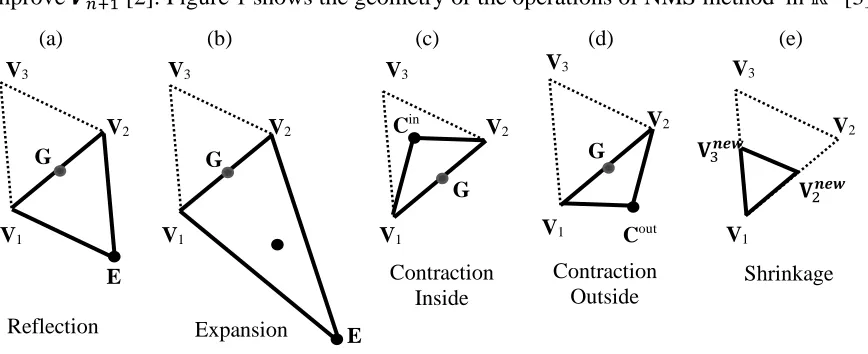
The fifth operation is the shrink step that comes into action when points generated by (5)-(8) fail to improve 𝑽𝑛+1 [2]. Figure 1 shows the geometry of the operations of NMS method in ℝ2 [3].
Figure 1. Operations on a simplex in ℝ2
A general iteration of original NMS method in ℝ𝑛 is restated as under [1, 2, 4]. An Iteration of NMS method:
1. Ordering: Arrange vertices as 𝑓𝑗 ≤ 𝑓𝑙 ∀ 𝑗 ≤ 𝑙.
2. Reflection: Compute 𝑹, if 𝑓(𝑹) ∈ [𝑓1, 𝑓𝑛+1), save 𝑹 as 𝑽𝑛𝑒𝑤. 3. Expansion: If 𝑓(𝑹) < 𝑓1 compute 𝑬, if 𝑓(𝑬) < 𝑓(𝑹) save 𝑬 as 𝑽𝑛𝑒𝑤.
4. Contraction Outside: If 𝑓(𝑹) ∈ [𝑓𝑛, 𝑓𝑛+1) find 𝑪𝑜𝑢𝑡, if 𝑓(𝑪𝑜𝑢𝑡) ≤ 𝑓(𝑹) save 𝑪𝑜𝑢𝑡 as 𝑽𝑛𝑒𝑤. 5. Contraction Inside: If 𝑓(𝑹) ≥ 𝑓𝑛+1 determine 𝑪𝑖𝑛, if 𝑓(𝑪𝑖𝑛) < 𝑓
𝑛+1 store 𝑪𝑖𝑛 as 𝑽𝑛𝑒𝑤. 6. Shrinkage: If 𝑓(𝑽𝑛𝑒𝑤 ) < 𝑓
𝑛+1 then set 𝑽𝑛𝑒𝑤 to 𝑽𝑛+1 otherwise execute shrinkage step: 𝑽𝑗 ← 𝑽𝑗 + 0.5 × (𝑽1− 𝑽𝑗) ∀ 𝑗 ∈ {2, 3, 4, . . . , 𝑛 + 1}.
2. Related works on the proposed Cooperative Multi-Simplex (CMS) algorithm
The proposed cooperative multi-simplex algorithm (CMS) algorithm starts by randomly generating 𝑁𝑠, 𝑁𝑠∈ ℤ+, simplexes in the search space. The iterative process of the proposed CMS algorithm is comprised of a cooperative step and a rotational shrinkage based modified iteration of NMS method. The cooperative step establishes a probability based sharing among the vertices of various simplexes. Based upon a user-defined cooperative sharing probability 𝑝 ∈ [0, 1], the vertex sharing is divided in to mixed sharing and ascent sharing.
To elaborate more clearly, suppose 𝑆(𝑖,𝑘) is the set of vertices belonging to 𝑖𝑡ℎ simplex 𝑖 ∈ [1, 𝑁𝑠] at 𝑘𝑡ℎ iteration, the centroid 𝑮(𝑖,𝑘), calculated by relation (4) relates to 𝑆(𝑖,𝑘) and let
G
E V1
V2 V3
(a)
Reflection
V1
V2 V3
𝐕2𝒏𝒆𝒘 𝐕3𝒏𝒆𝒘
(e)
Shrinkage
G
V1
V2 V3
(b)
Expansion E
G V1
V2 V3
(c)
Contraction Inside
Cin
G
V1
V2 V3
(d)
Contraction Outside
𝑓𝑗(𝑖,𝑘) = 𝑓(𝑽𝑗(𝑖,𝑘)) ; 1 ≤ 𝑗 ≤ 𝑛 + 1. With these notations, the main steps of CMS algorithm are
summarized as under. 3.1. Initialization
Generate 𝑁𝑠 simplexes 𝑆(𝑖,𝑘): 1 ≤ 𝑖 ≤ 𝑁𝑠 , choose a suitable value of 𝑝 and set an integer 𝐹𝐸𝑚𝑎𝑥 as maximum number of function evaluations allowed.
3.2. Ordering
Sort all the vertices of the each simplex:
𝑓1(𝑖,𝑘) ≤ 𝑓2(𝑖,𝑘) ≤ 𝑓3(𝑖,𝑘) ≤ ⋯ ≤ 𝑓𝑛+1(𝑖,𝑘) (9)
3.3. Cooperative step
The attribute of cooperative sharing and exploiting the information composed from the entire population are crucial tools of population based heuristic algorithms [5, 6, 7] which empower them to perform balanced exploration and exploitation in optimization process. In CMS algorithm, the cooperative step handles the sharing of vertices based on the fitness of the simplexes. It not only alters orientations of the corresponding simplexes but also enforces them to cluster around the promising locations in the search space. The fitness of a simplex is calculated by using Equations (10) and (11) in turn.
𝐹𝑖𝑡(𝑖,𝑘) = 1
1+𝑓(𝑖,𝑘) (10)
𝑓(𝑖,𝑘) = 1
(𝑛+1)∑ ( 1 1+𝑓𝑗(𝑖,𝑘)) 𝑛+1
𝑗=1 (11)
Two real numbers 𝜇 and 𝜆 ∈ [0, 1] are generated randomly. The sharing of a vertex of some
𝑖𝑡ℎ simplex with another simplex takes place if 𝜆 > 𝐹𝑖𝑡(𝑖,𝑘), otherwise letting the simplexes proceed independently. If 𝜇 < 𝑝, the mixed sharing exchanges the non-best vertex of a randomly simplex with some non-best vertex of the current simplex whereas the ascent sharing replaces the worst vertex of the current simplex by the worst vertex of some other simplex otherwise.
3.4. Rotational shrinkage based iteration of NMS method
the exploration chances without utilizing additional computational cost. The rotational shrinkage generates new vertices as follows.
𝑽𝑗𝑛𝑒𝑤 = 𝑽1(𝑖,𝑘)+ 𝛿(𝑽1(𝑖,𝑘)− 𝑽𝑗(𝑖,𝑘)) for 𝑗 = 2, 3, 4, … , 𝑛 + 1 (12)
The new simplex for the (𝑘 + 1)𝑡ℎ iteration is constructed using the following conditions.
𝑆(𝑖,𝑘+1) = { (𝑆
(𝑖,𝑘)\{𝑽 𝑛+1 (𝑖,𝑘)
}) ∪ {𝑽𝑛𝑒𝑤} if no shrinkage occurs
{𝑽𝑗𝑛𝑒𝑤: 2 ≤ 𝑗 ≤ 𝑛 + 1} ∪ {𝑽 1 (𝑖,𝑘)
} if shrinkage takes place (13) During the iterative process, the best of all of the vertices of 𝑁𝑠 simplexes is retained and is updated at each function evaluation. The iterative process of CMS method continues up to a predefined budget (𝐹𝐸𝑚𝑎𝑥) of function evaluations. The Algorithm 2 presents the pseudo code of the proposed CMS method.
Algorithm 2: Pseudo code of the proposed CMS algorithm
INITIALIZE: Generate 𝑁𝑠 simplexes; define cooperative probability p
and the budget FEmax; set the function evaluations counter: NFEs = 0; set
k = 1. Retain the best of N(n+1) vertices as the current best solution. {WHILE (NFEs< FEmax)
{FOR i = 1, 2, 3,…, 𝑁𝑠
Order𝑆(𝑖,𝑘) to satisfy Equation (9), calculate 𝐹(𝑖,𝑘) using Equations (10) and (11). Choose 𝜆 ∈ [0,1] randomly.
{IF 𝜆 > 𝐹(𝑖,𝑘) choose 𝜇 ∈ [0,1] randomly {IF𝜇 < 𝑝apply mixed sharing on𝑆(𝑖,𝑘) ELSEapply ascent sharing on𝑆(𝑖,𝑘) ENDIF}
Order𝑆(𝑖,𝑘) to satisfy sequence (9). ENDIF}
Apply rotational shrinkage based NMS-iteration on 𝑆(𝑖,𝑘). ENDFOR}
Update NFEs and the best solution. Set k = k +1. ENDWHILE}
Particle Swarm Optimization (PSO) [5], Differential Evolution (DE) [6], Artificial Bee Colony (ABC) [8] and Teaching Learning Based Optimization (TLBO) [9] are considered for the performance comparisons.
4.1. Mathematical test problem 1
The first test problem has been taken from [10-13]. This problem is described by the system (14) of non-linear equations.
{
𝐸1(𝒙) = 𝑥1 𝑥2+ 𝑥
2
𝑥1− 5 𝑥
1𝑥2− 85 = 0, 𝐸2(𝒙) = 𝑥13− 𝑥
2 𝑥3 − 𝑥
3
𝑥2− 60 = 0,
𝐸3(𝒙) = 𝑥13+ 𝑥 3 𝑥1− 𝑥
2− 62 = 0, 3 ≤ 𝑥1 ≤ 5, 2 ≤ 𝑥2 ≤ 4, 0.5 ≤ 𝑥3 ≤ 2.
(14)
The exact solution to the system reported is (4, 3, 1).
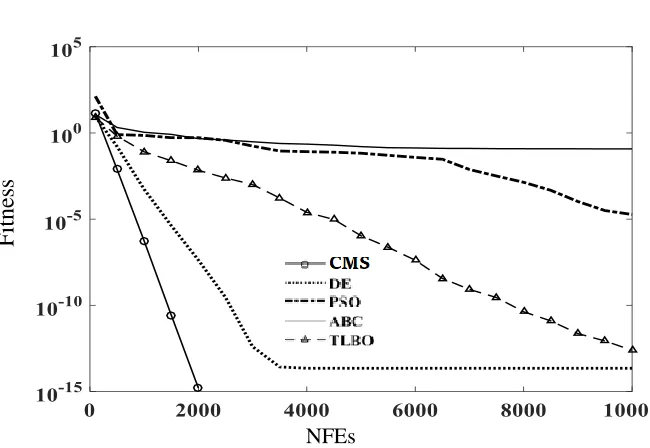
Figure 2. Convergence curves for mathematical test problem 1.
Table 1. Numerical results on mathematical test problem 1.
Proposed CMS DE PSO ABC TLBO
x1
x2
x3
B Md Mn
4 3 1 0 0 9.2E-16
4 3 1 0 3.34E-14 7.36 E-03
4 3 0.999999 1.42E-06 1.71E-05 1.39 E-01
4.000526 3.000485 1.002746 1.32E-02 1.71E-01 1.97E-01
4 3 1.000001 1.28E-14 2.57E-13 8.83E-13
NFEs
F
it
ne
4.2. Mathematical test problem 2
The second problem has been extracted from [14] and involves following four equations:
{
𝐸1(𝒙) = 𝑥2𝑥3+ (𝑥2+ 𝑥3)𝑥4= 0, 𝐸2(𝒙) = 𝑥1𝑥3+ ( 𝑥1+ 𝑥3)𝑥4 = 0, 𝐸3(𝒙) = 𝑥1𝑥2+ ( 𝑥1+ 𝑥2)𝑥4 = 0, 𝐸4(𝒙) = 𝑥1𝑥2+ 𝑥1𝑥3+ 𝑥2𝑥3− 1 = 0,
−1 ≤ 𝑥1, 𝑥2, 𝑥3, 𝑥4≤ 1
(15)
Table 2. Numerical results on mathematical test problem 2.
Proposed CMS DE PSO ABC TLBO
x1
x2
x3
x4
B Md Mn
0.5773502692 0.5773502692 0.5773502692 -0.28867513459
0 0 5.44E-18
-0.5773502692 -0.5773502692 -0.5773502692 0.28867513459
0 0
2.71E-08
0.57736 0.57734 0.577348 -0.288675 1.27E-06 2.41E-05 4.95E-03
0.554 0.582 0.598 -0.2887 2.37E-03 5.73E-03 5.77E-03
-0.5773502691 -0.57735027 -0.577350268 0.28867513452
1.86E-19 1.09E-08 7.09E-06
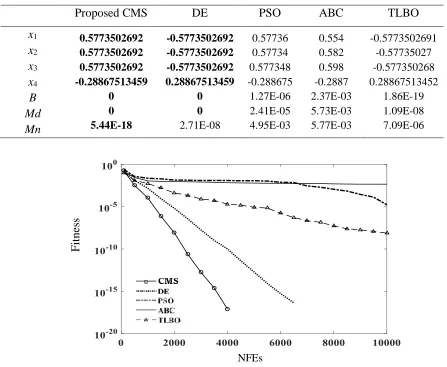
Figure 3. Convergence curves for mathematical test problem 2
4.3. Thin wall rectangle girder section problem
Geometry size of thin wall rectangle girder section problem involves following system of equations [10, 12, 15, 16].
NFEs
F
it
ne
{
𝐸1(𝒙) = 𝑥1𝑥2− (𝑥2− 2𝑥3)(𝑥1− 2𝑥3) − 165 = 0,
𝐸2(𝒙) =𝑥13𝑥2
12 −
(𝑥2−2𝑥3)(𝑥1−2𝑥3)3
12 − 9369 = 0, 𝐸3(𝒙) = 2𝑥3(𝑥1− 𝑥3)2(𝑥
2− 𝑥3)2/(𝑥1+ 𝑥2− 2𝑥3) − 6835 = 0. (16)
Where 𝑥1, 𝑥2 and 𝑥3 are height, width and thickness of the section respectively. The physical constraints on the system are:
𝑔1(𝒙) = 𝑥3> 0; 𝑔2(𝒙) = 𝑥2− 𝑥3 > 0; 𝑔2(𝒙) = 𝑥1− 𝑥2 > 0. (17)
Table 3. Numerical results on girder section problem.
Proposed CMS DE PSO ABC TLBO
x1
x2
x3
B Md Mn
22.89494 12.25652 2.789818 3.79E-22 3.03E-13 12.321
22.892 12.2564
2.7916 3.87E-02
13.50 14.46
22.95 12.258
2.76 4.40E-02
10.00 13.85
23.29 12.28 2.57 3.18 14.72 16.28
22.89622 12.25653 2.78904 1.69E-02
5.05 9.72
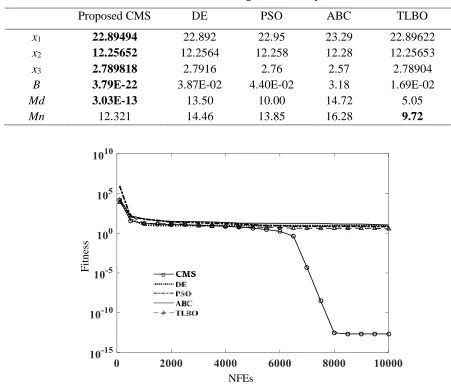
Figure 4. Convergence curves for mathematical test thin wall girder section problem.
4. Conclusion
This study presents a novel approach for solving a system of nonlinear equations as an optimization problem. The proposed method neither requires initial guess nor derivative information. The
NFEs
F
it
ne
analysis has been conducted through detailed and logical comparisons based on statistical measures the Best values (B), Median values (Md) and Mean values (Mn). It can be observed from Tables 1-3 that the solutions produced by the proposed CMS algorithm are more accurate solutions (B, Md, Mn). The convergence graphs shown in Figures 2-4 evidently demonstrates that the developed CMS algorithm significantly outperforms DE, PSO, ABC and TLBO in terms of solution quality and convergence speed.
The proposed work can be extended to several disciplines of numerical optimization in collaboration with general purpose global search optimization algorithms.
References
[1] Nelder, J. A., and R. Mead. 1965. “A Simplex Method for Function Minimization.” The Computer Journal 7(4): 308-313. doi: 10.1093/comjnl/7.4.308.
[2] Price, C. J., I. D. Coope, and D. Byatt. 2002. “A Convergent Variant of the Nelder-Mead Algorith.” Journal of Optimization Thoery and Application 113 (1): 5-19. doi: 10.1023/A:1014849028575.
[3] Lagarias, J. C., B. Poonen, and M. H. Wright. 2012. “Convergence of the Restricted Nelder– Mead Algorithm in Two Dimensions.” SIAM Journal of Optimization 22(2):501–532. doi: 10.1103/PhysRevLett.81.1195.
[4] Ali, J., M. Saeed, N. A. Chaudhry, M. F. Tabassum, and M. Luqman. 2017. “Low Cost Efficient Remedial Strategy for Stagnated Nelder-Mead Simplex Method.” Pakistan Journal of Science 69(1): 119–126.
[5] Kennedy, J., and R. C. Eberhart. 1995. “Particle Swarm Optimization.” Proceedings of the IEEE International Conference on Neural Networks, Perth, WA, Australia, 27 Nov. - 1 Dec. 1995: 1942–1948. New York: IEEE.
[6] Storn, R., and K. Price. 1997. “Differential Evolution: A Simple and Efficient Heuristic for Global Optimization over Continuous Spaces.” Journal of Global Optimization 11(4):341-359. doi: 10.1023/A:1008202821328.
[7] Ali, J., M. Saeed, M. F. Tabassam, and S. Iqbal. 2019. “Controlled Showering Optimization Algorithm: An Intelligent Tool for Decision Making in Global Optimization.” Computational Mathematical Organizational Theory 25, 132–164. doi: https://doi.org/10.1007/s10588-019-09293-6
[8] Karaboga, D., and B. Basturk. 2007. “A Powerful and Efficient Algorithm for Numerical Function Optimization: Artificial Bee Colony Algorithm.” Journal of Global Optimization
[9] Rao, R. V., V. J. Savsani, and D. P. Vakharia. 2011. “Teaching Learning Based Optimization: A Novel Method for Constrained Mechanical Design Optimization Problems.” Computer-aided Design 43 (3): 303-315. doi: 10.1016/j.cad.2010.12.015.
[10] Abdollahi, M., A. Isazadeh, and D. Abdollahi. 2013. “Imperialist Competitive Algorithm for Solving Systems of Nonlinear Equations.” Computers and Mathematics with Applications
65(12): 1894–1908. doi: 10.1016/j.camwa.2013.04.018.
[11] Jaberipour, M., E. Khorram, and B. Karimi. 2011. “Particle Swarm Algorithm for Solving Systems of Nonlinear Equations.” Computers and Mathematics with Applications 62(2): 566–576. doi: 10.1016/j.camwa.2011.05.031.
[12] Mo, Y., H. Liu, and Q. Wang. 2009. “Conjugate Direction Particle Swarm Optimization Solving Systems of Nonlinear Equations.” Computers and Mathematics with Applications
57(11-12): 1877–1882. doi: 10.1016/j.camwa.2008.10.005.
[13] Luo, Y. Z., G. J. Tang, and L. N. Zhou. 2008. “Hybrid Approach for Solving Systems of Nonlinear Equations Using Chaos Optimization and Quasi-Newton Method.” Applied Soft Computing 8(2): 1068–1073. doi: 10.1016/j.asoc.2007.05.013.
[14] Ahmad, F., E. Tohidi, M. Z. Ullah, and J. A. Carrasco. 2015. “Higher Order Multi-Step Jarratt-Like Method for Solving Systems of Nonlinear Equations: Application to PDEs and ODEs.”
Computers & Mathematics with Applications 70(4): 624-636. doi: 10.1016/j.camwa.2015.05.012.
[15] Morgan, A. P. 1987. “Computing All Solutions to Polynomial Systems Using Homotopy Continuation.” Applied Mathematics and Computation 24(2): 115–138. doi: 10.1016/0096-3003%2887%2990064-6.
[16] Luqman, M., M. Saeed, and J. Ali. 2017. “On Solution of Nonlinear Models: A Hybrid Algorithm of Artificial Bee Colony Algorithm and Artificial Showering Algorithm.”