University of Pennsylvania
ScholarlyCommons
Publicly Accessible Penn Dissertations
1-1-2015
Engineering a Library of Anisotropic Building
Blocks for DNA-Programmed Colloidal
Self-Assembly
James Thomas Mcginley
University of Pennsylvania, [email protected]
Follow this and additional works at:http://repository.upenn.edu/edissertations
Part of theChemical Engineering Commons,Mechanics of Materials Commons, and the
Nanoscience and Nanotechnology Commons
This paper is posted at ScholarlyCommons.http://repository.upenn.edu/edissertations/1889
Recommended Citation
Mcginley, James Thomas, "Engineering a Library of Anisotropic Building Blocks for DNA-Programmed Colloidal Self-Assembly" (2015).Publicly Accessible Penn Dissertations. 1889.
Engineering a Library of Anisotropic Building Blocks for
DNA-Programmed Colloidal Self-Assembly
Abstract
Programmable DNA interactions are an effective and versatile tool in the field of colloidal directed self-assembly. Colloidal systems are programmed by manipulating a variety of tunable parameters, such as particle sizes and DNA interaction strengths, and can self-assemble into a large and growing variety of colloidal crystal and gel structures. Since isotropically-interacting spherical particles generally form close-packed structures, the production and use of building blocks with anisotropic interactions, such as polyhedral particles, colloidal clusters, and patchy colloids, has been a rich research area in recent years.
This work represents a true expansion of the capabilities of DNA-directed colloidal assemblies, and presents scalable and facile processes for the high-yield generation of stable colloidal clusters and patchy particles with targeted symmetries. We have developed, in Colloidal Crystal Templating and Reprogrammable DNA Interactions, highly tunable tools for the synthesis of such anisotropic building blocks for DNA-directed assembly applications. Notably, these processes are scalable both in batch size and in the size of the resulting building blocks due to the three-dimensional nature of the templates. More notably, these systems are highly tunable and expandable. The templates are only limited by the ever-expanding library of colloidal crystals generated using DNA interactions. The tunability of DNA interactions is virtually unlimited due to DNA's ability to be reprogrammed and edited by enzymes. Finally, the constituent particles are not limited to polystyrene and gold, but can be of any material that can be synthesized into colloids on the micro- and nano-scales and subsequently functionalized with DNA.
Degree Type
Dissertation
Degree Name
Doctor of Philosophy (PhD)
Graduate Group
Chemical and Biomolecular Engineering
First Advisor
John C. Crocker
Keywords
Colloidal Clusters, Crystal Templates, DNA-Directed Self-Assembly, Nanoscience, Patchy Particles, Reprogrammable Interactions
Subject Categories
ENGINEERING A LIBRARY OF ANISOTROPIC BUILDING BLOCKS FOR DNA-PROGRAMMED COLLOIDAL SELF-ASSEMBLY
James T. McGinley, III
A DISSERTATION
in
Chemical and Biomolecular Engineering
Presented to the Faculties of the University of Pennsylvania in Partial Fulfillment of the Requirements for the Degree of Doctor of Philosophy
2015
Supervisor of Dissertation
Dr. John C. Crocker
Professor, Chemical and Biomolecular Engineering
Graduate Group Chairperson
Dr. Raymond J. Gorte
Russel Pearce and Elizabeth Crimian Heuer Professor, Chemical and Biomolecular Engineering
Dissertation Committee:
Dr. Talid R. Sinno, Professor, Chemical and Biomolecular Engineering
Dr. Daniel Hammer, Alfred G. and Meta A. Ennis Professor, Chemical and Biomolecular Engineering
ENGINEERING A LIBRARY OF ANISOTROPIC BUILDING BLOCKS FOR DNA-PROGRAMMED COLLOIDAL SELF-ASSEMBLY
COPYRIGHT 2015
Acknowledgments
I would like to thank my advisor, John Crocker, for his guidance and support over the past five years. He has been a wonderful mentor, and his passion for scientific research has been a huge inspiration. He provided me with invaluable insights into not only science, but also politics, the economy and life. I am truly grateful for the education and new perspectives that I have gained under his mentorship.
I would also like to thank Dr. So-Jung Park, whose technical advice regarding ligase made this work possible, Dr. Talid Sinno and Ian Jenkins, who have proven to be exceptional collaborators that have helped to advance this work in meaningful ways, and Dr. Dan Hammer and Eric Wang, who have provided a great deal of technical assistance regarding sample preparation. I would further like to thank Dr Valeria Milam at Georgia Tech and Dr. Vinny Manoharan at Harvard for useful technical conversations. The Yodh Group, and in particular Zoey Davidson, Tim Still, and Matthew Lohr, are thanked for their help with the confocal microscope.
Ben Rogers for training me when I arrived in the Crocker Lab, and for the additional advice he has provided over the years, and Marie Casey, whose research laid much of the groundwork for my own. I would also like to thank Dr. Zaki Estephan, Dr. Steven Henry, and Dr. Tae Soup Shim, who have been a pleasure to work with, and have provided a great deal of technical expertise. I am also grateful for the support of Jennifer Hwang, Tianyu Liu, Gregory Cordina-McSweeney, Christopher Porter, Sashikumar Ramamirtham, Ramnath Easwar, and Yue Xu. I would like to give a special thanks to Yifan Wang, who has been a great friend, an exceptional collaborator, and wonderful lab mate over the past several years.
ABSTRACT
ENGINEERING A LIBRARY OF ANISOTROPIC BUILDING BLOCKS FOR DNA-PROGRAMMED COLLOIDAL SELF-ASSEMBLY
James T. McGinley, III Dr. John C. Crocker
Programmable DNA interactions are an effective and versatile tool in the field of colloidal directed self-assembly. Colloidal systems are programmed by manipu-lating a variety of tunable parameters, such as particle sizes and DNA interaction strengths, and can self-assemble into a large and growing variety of colloidal crystal and gel structures. Since isotropically-interacting spherical particles generally form close-packed structures, the production and use of building blocks with anisotropic interactions, such as polyhedral particles, colloidal clusters, and patchy colloids, has been a rich research area in recent years.
Contents
Acknowledgments iii
Abstract v
List of Tables xii
List of Figures xiii
1 Introduction 1
1.1 Self-Assembling Systems . . . 1
1.2 DNA-Directed Self-Assembly . . . 2
1.3 Expanding the variety of realizable structures . . . 6
1.3.1 Reprogrammable DNA Interactions . . . 7
1.3.2 Anisotropic Building Blocks . . . 8
1.4 Thesis Overview . . . 10
References . . . 12
2.1 DNA Design . . . 20
2.2 DNA Design Validation using Gel Tms and a Thermodynamic Model 21 2.3 Synthesizing DNA-Coated Microspheres . . . 22
2.4 Colloidal Crystallization . . . 22
2.5 Purification by Sedimentation Velocity . . . 23
2.6 Imaging and Characterization . . . 24
2.6.1 Confocal Imaging . . . 25
2.6.2 Confocal Image Analysis . . . 26
2.6.3 SEM Imaging . . . 26
2.6.4 APTES-Treated Positively Charged Glass . . . 27
2.6.5 Methanol Washing . . . 28
2.6.6 Ethane Vitrification . . . 29
2.6.7 Sample Mounting for SEM . . . 30
References . . . 31
3 Assembling Colloidal Clusters Using Crystalline Templates and Reprogrammable DNA Interactions 33 3.1 Abstract . . . 34
3.2 Introduction . . . 34
3.3 Materials and Methods . . . 38
3.3.1 Particle Preparation and Conjugation . . . 38
3.3.3 FCC Crystal Formation . . . 39
3.3.4 BCC Crystal Formation . . . 40
3.3.5 Cluster Formation from FCC crystals . . . 41
3.3.6 Cluster Formation from BCC crystals . . . 42
3.3.7 Imaging Crystals and Clusters . . . 42
3.3.8 Cluster Simulation and Mode Analysis . . . 43
3.4 Results and Discussion . . . 45
3.4.1 DNA Design Approach and Findings . . . 45
3.4.2 FCC System . . . 48
3.4.3 BCC System . . . 50
3.4.4 Co-crystallization of Host/Impurity Crystals . . . 51
3.4.5 Cluster Formation and Transformation . . . 57
3.4.6 ‘1+12’ Cluster Results . . . 60
3.4.7 ‘1+8’ Cluster Results . . . 65
3.5 Conclusions . . . 66
References . . . 68
4 Crystal Templated Colloidal Clusters Exhibit Directional DNA In-teractions 72 4.1 Abstract . . . 72
4.2 Introduction . . . 74
4.3.1 Particle Preparation . . . 77
4.3.2 Cluster Formation . . . 78
4.3.3 Purification . . . 78
4.3.4 Confocal Microscopy . . . 79
4.3.5 SEM Imaging and Cluster Analysis . . . 79
4.4 Results and Discussion . . . 81
4.4.1 DNA Design for Ligatable System . . . 81
4.4.2 Colloidal Crystals as Cluster Templates . . . 84
4.4.3 Clusters Display Directional Interactions . . . 91
4.5 Conclusions . . . 95
References . . . 96
5 Generation of Patchy Particles via Point-of-Contact Templating 101 5.1 Abstract . . . 101
5.2 Introduction . . . 102
5.3 Materials and Methods . . . 104
5.3.1 Particle Synthesis . . . 104
5.3.2 Homogeneous Colloidal Crystallization . . . 106
5.3.3 Extending Bridges using Ligation . . . 106
5.3.4 Purification by Particle Size via Sedimentation Velocity . . . 107
5.3.5 Patch Hybridization with Gold Nanoparticles . . . 107
5.4 Results and Discussion . . . 109
5.4.1 DNA Design and Validation . . . 109
5.4.2 Patchy Particles from Binary Crystals and Gels . . . 112
5.4.3 Patch Size Estimation and Control . . . 113
5.5 Conclusions . . . 117
References . . . 119
6 Conclusions and Future Directions 122 6.1 Conclusions . . . 123
6.2 Future Directions . . . 125
List of Tables
3.1 B Kickoff Strand for Modulating A−B Melting Temperatures at
150mM NaCl, assuming 1000 DNA strands perB particle . . . 52
3.2 P P0 Sedimentation System: Cluster Statistics . . . 56
3.3 AB0 Sedimentation System: Cluster Statistics . . . 57
List of Figures
1.1 Hydrodynamic Radii and Interaction Range . . . 5 1.2 Tunable Parameters for Binary System. . . 6
2.1 Traditional DNA Design Method . . . 19
3.1 Schematic for Colloidal Crystal Tempting of ‘1+12 Clusters using Competitive DNA Strands . . . 36 3.2 DNA Strand Architecture for Reprogrammable Palindromic System 45 3.3 DNA Strand Architecture for Reprogrammable Binary System . . . 46 3.4 Impurity Particle Incorporation into FCC and BCC Host Crystals . 53 3.5 ‘1+12’ Clusters Templated from Sedimented Host Crystals using
150mM NaCl and Palindromic Sequences . . . 55 3.6 ‘1+12’ and ‘1+10’ Clusters Templated from Sedimented Host
3.8 Diagram of Cluster Formations Resulting from the Reprogrammed FCC and BCC Systems . . . 67
4.1 Schematic for Colloidal Crystal Tempting of ‘1+4’ Clusters using Ligatable DNA Strands . . . 76 4.2 DNA Strand Architecture for Ligatable Binary Sustem . . . 82 4.3 SEM Images of Clusters of Cuboctahedra, Triangular Orthobicupola,
and Icosahedra from Sedimented Host Crystals . . . 85 4.4 Density Gradient Fractionation of Icosahedral Cluster System . . . 87 4.5 SEM Images of Pure Tetrahedral, Octahedral, and Icosahedral
Col-loidal Clusters from Sedimented Crystal Template . . . 89 4.6 Heat-Map of Particle-Cluster Interaction Strength, Illustrating
Di-rectional Binding Potential . . . 92 4.7 Second Order Clusters from Icosahedral Seeds, Demonstrating
Di-rectional Bonding . . . 93
5.1 Schematic for Patchy Particle GenerationviaPoint-of-Contact Tem-plating . . . 105 5.2 DNA Architecture for Binary Patchy System . . . 111 5.3 Crystallization of Binary System of Two Sizes Using Patchy DNA
Chapter 1
Introduction
1.1
Self-Assembling Systems
Self-assembly occurs frequently in nature, both through living organisms and through geological and other natural processes. In either case, self-assembly only arises when proper conditions are met. Viral capsids, complex proteins, and other intricate three-dimensional cellular structures are routinely and robustly synthesized in a cellular environment on short timescales. This is a fascinating ability, and the ultimate goal of the field of self-assembly is to emulate biology’s ability to repro-ducibly generate highly complex three-dimensional structures from the ‘bottom-up’ in an efficient manner. Bottom-up assembly offers a good many advantages over the more traditional ‘top-down’ assembly and manufacturing processes, which gen-erally rely on tools like microfabrication, lithography, and two-dimensional assem-bly lines. Bottom-up assemassem-bly would allow us to eschew those limitations, and to spontaneously generate highly ordered three-dimensional structures and patterns without outside intervention in a cheap, scalable, and robust way.
The ultimate goal of this field is to be able todirectthe self-assembly of materi-als. By controlling all variables involved in self-assembly, we will be able to define previously inaccessible structures, and build them from the bottom up, reliably and reproducibly.
1.2
DNA-Directed Self-Assembly
and reversibly interact with one another in very specific and thermodynamically understood ways via Watson-Crick base-pairings [4]. By carefully designing DNA sequences with targeted interaction energies, we have a high level of control over the assembly of DNA-based systems. DNA interactions are so specific and controllable, in fact, that DNA has been used to assemble three-dimensional building blocks, mechanically active boxes, and even DNA origami [5–7]. While DNA is a versatile and powerful molecule, its uses in materials science are limited by its mechanical properties. One could not assemble a viable microchip out of DNA, for example.
It is for this reason that DNA-coated nanoparticles and polymer spheres have been a large research focus within the field of directed assembly. By functionalizing specifically designed DNA strands to the surface of gold nanoparticles or polystyrene microspheres, we can drive the assembly of these particles via DNA interactions.
The Mirkin Group, at Northwestern University, found success in generating nine distinct crystal structures using DNA-coated gold nanoparticles in 2011 [8, 9], and generated a list of six design rules which govern the final crystal structure. While the crystals developed using this system are impressive, the particles within these crystals are packed fairly close together (based on hydrodynamic radii), since spheres generally form close-packed structures.
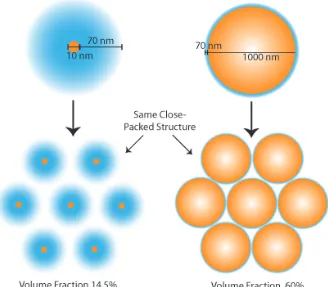
unit cell volume. This is achieved by using exceptionally long DNA strands in re-lation to the particle size, such that the hydrodynamic radius is much greater than the particle radius. If we include the hydrodynamic radius instead of the particle radius, however, the volume fraction of this crystal is comparable to those of the Mirkin Group described previously, as well as those crystals formed from colloidal microspheres, whose hydrodynamic radii are at most 10% greater than the particle radii. A graphical explanation is provided in Figure 1.1.
The production of crystals using micron-scale colloidal particles is more chal-lenging, with most structures forming amorphous assemblies despite the fact that their minimum energy structures should be crystalline [11]. Despite this, the first DNA-directed colloidal crystallization was performed in the Crocker Group in 2005 using such a system [12–14]. Furthermore, in 2012, the group synthesized the first DNA-directed colloidal crystal structure to undergo a phase-transition from one crystal structure into another [15], demonstrating that the DNA bonds linking the particles within the crystal are dynamic, and allow for structural transformations.
Figure 1.2: Tunable Parameters for Binary System.
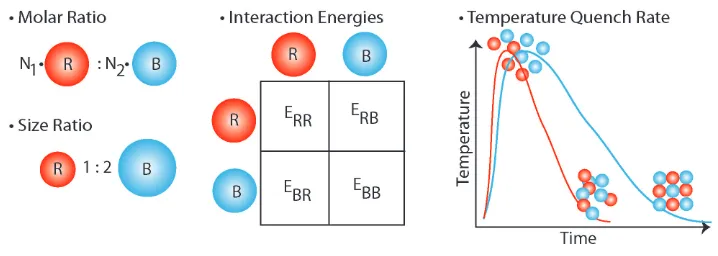
While the diversity of crystals formed using these methods is great, it does appear to be limited to close-packed or nearly close-packed crystal structures, all of which have analogs in naturally formed binary opals or molecular crystals. To expand the variety of attainable structures, more tunable parameters must be in-troduced. This thesis will focus on adding Reprogrammable DNA Interactions and Anisotropic Interactions as viable tunable parameters.
1.3
Expanding the variety of realizable structures
implementa-tion of Colloidal Crystal Templating, which will ensure that the building blocks are reliably synthesized with targeted symmetries.
1.3.1
Reprogrammable DNA Interactions
DNA is an exceptionally versatile molecule for directed self-assembly not only be-cause of its highly specific, reversible, and thermodynamically understood interac-tions, but also because DNA interactions can be easily modulated. DNA strands can compete with one another at room temperature, and their structure and inter-actions can be modified by a large number of enzymes.
The first tool within Reprogrammable DNA Interactions that will be explored is competitive DNA interactions. Valeria Milam’s research group at Georgia Tech has shown that competing strands of DNA can effectively drive bridge-melting at room temperature [16–18]. It was found, through her work as well as through work in the Crocker Lab [19], that adding non-tethered, soluble DNA strands to an aggregated binary system of DNA-coated colloids in which the interactions between the soluble strand and one of the system’s two particle species is greater in magnitude than the interactions between the original two particle species, the system will melt as the Particle-Particle bonds are displaced by the soluble strand-Particle bonds.
exhibits reentrant melting, and can transition between two crystal structures [20]. The second tool within Reprogrammable DNA Interactions which will be ex-plored is the enzymatic modification of DNA-colloid systems. Several enzymes have been shown to be effective at modifying such systems, such as T4 DNA Lig-ase, which is explored in this thesis, as well as restriction enzymes, which are not. Chad Mirkin’s group and others have demonstrated that T4 DNA Ligase is effective at forging covalent bonds between two DNA strands in DNA-colloid systems [21, 22]. The Keating Group at Penn State and the Bates group at the University of Liv-erpool have shown that other enzymes, like restriction enzymes, are reliably active in DNA-colloid systems [23–25] as well. These enzymes have been used both to forge covalent bridges between colloidal particles, and to destroy bridges between particles.
1.3.2
Anisotropic Building Blocks
Few groups have studied DNA-coated polyhedral particles. A noteworthy excep-tion is the recent work by Oleg Gang’s group. Polyhedral nanoparticles (cubes and octahedra) were functionalized with DNA strands and were interacted with com-plementary spheres to drive crystalline assemblies with long-range order [26]. This marks the first time that large well-ordered three-dimensional crystal structures have been grown using a combination of directional and DNA-induced interactions. This work further validates the utility in exploring shape-induced directional inter-actions, though polyhedral particles will not be a focus in this thesis.
This work will focus on the development of scalable processes for the generation of rigid colloidal clusters and patchy particles for use as anisotropic building blocks. These processes require Reprogrammable DNA Interactions as outlined above, as well as three-dimensional Colloidal Crystal Templates, which are highly controllable and much more scalable than two-dimensional templates typically used in particle fabrication.
tar-get a specified structure, and they require complex protocols. Nicholas Schade in the Manoharan Group, however, took a different approach, and formed clusters by varying the size ratios of DNA-coated particles in solution to target clusters with tetrahedral symmetry [44]. By using colloidal crystals as templates, however, we show in this work that we are able to easily target a wide range of specific cluster symmetries and generate high yields of uniformly-coated colloidal clusters with an exceptionally straightforward and scalable protocol.
Next we will focus on the generation of patchy particles. While simulations have shown that patchy particles can vastly increase the number and type of struc-tures generated [49–55], and phase diagrams of such systems have also been cre-ated [52, 56–58], no experimental realizations of crystals formed using patchy DNA-coated particles have been published, though particles with hydrophobic patches were assembled into a colloidal kagome lattice by the Granick group in 2011 [59]. Nonetheless, groups have been working to engineer methods of patchy particle pro-duction [39, 45, 47, 48, 60–62]. The method presented in this thesis utilizes colloidal crystals and gels as templates, and generates high yields of purified patchy particles with symmetries that are defined by the host template.
1.4
Thesis Overview
References
[1] Mark P. Stoykovich, Marcus M¨uller, Sang Ouk Kim, Harun H. Solak, Erik W. Edwards, Juan J. de Pablo, and Paul F. Nealey. Directed assembly of block copolymer blends into nonregular device-oriented structures. Science, 308(5727):1442–1446, 2005.
[2] Ricardo Ruiz, Huiman Kang, Fran¸cois A. Detcheverry, Elizabeth Dobisz, Dan S. Kercher, Thomas R. Albrecht, Juan J. de Pablo, and Paul F. Nealey. Density multiplication and improved lithography by directed block copolymer assembly. Science, 321(5891):936–939, 2008.
[3] Shawn M Douglas, Ido Bachelet, and George M Church. A logic-gated nanorobot for targeted transport of molecular payloads. Science, 335(6070):831–834, 2012.
[4] J SantaLucia and D Hicks. The thermodynamics of DNA structural motifs.
Annual Review of Biophysics and Biomolecular Structure, 33:415–440, 2004. [5] John P. Sadowski, Colby R. Calvert, David Yu Zhang, Niles A. Pierce, and
Peng Yin. Developmental self-assembly of a dna tetrahedron. ACS Nano, 8(4):3251–3259, 2014. PMID: 24720462.
[6] Paul W. K. Rothemund. Folding dna to create nanoscale shapes and patterns.
Nature, 440(7082):297–302, 03 2006.
[7] Ebbe S. Andersen, Mingdong Dong, Morten M. Nielsen, Kasper Jahn, Ramesh Subramani, Wael Mamdouh, Monika M. Golas, Bjoern Sander, Holger Stark, Cristiano L. P. Oliveira, Jan Skov Pedersen, Victoria Birkedal, Flemming Be-senbacher, Kurt V. Gothelf, and Jorgen Kjems. Self-assembly of a nanoscale dna box with a controllable lid. Nature, 459(7243):73–76, 05 2009.
[8] Robert J. Macfarlane, Byeongdu Lee, Matthew R. Jones, Nadine Harris, George C. Schatz, and Chad A. Mirkin. Nanoparticle superlattice engineering with dna. Science, 334(6053):204–208, 2011.
[9] Sung Yong Park, Abigail K. R. Lytton-Jean, Byeongdu Lee, Steven Weigand, George C. Schatz, and Chad A. Mirkin. Dna-programmable nanoparticle crys-tallization. Nature, 451(7178):553–556, 01 2008.
[11] Lorenzo Di Michele and Erika Eiser. Developments in understanding and con-trolling self assembly of dna-functionalized colloids. Phys. Chem. Chem. Phys., 15:3115–3129, 2013.
[12] Paul L. Biancaniello, Anthony J. Kim, and John C. Crocker. Colloidal interac-tions and self-assembly using dna hybridization. Phys. Rev. Lett., 94:058302, Feb 2005.
[13] Anthony J. Kim, Paul L. Biancaniello, and John C. Crocker. Engineering dna-mediated colloidal crystallization. Langmuir, 22(5):1991–2001, 2006. [14] Anthony J. Kim, Raynaldo Scarlett, Paul L. Biancaniello, Talid Sinno, and
John C. Crocker. Probing interfacial equilibration in microsphere crystals formed by dna-directed assembly. Nat Mater, 8(1):52–55, 01 2009.
[15] Marie T. Casey, Raynaldo T. Scarlett, W. Benjamin Rogers, Ian Jenkins, Talid Sinno, and John C. Crocker. Driving diffusionless transformations in colloidal crystals using DNA handshaking. Nature Communications, 3, November 2012. [16] Bryan A. Baker and Valeria T. Milam. Dna density-dependent assembly behav-ior of colloidal micelles. Langmuir, 26(12):9818–9826, 2010. PMID: 20349914. [17] Christopher K. Tison and Valeria T. Milam. Reversing dna-mediated adhesion
at a fixed temperature. Langmuir, 23(19):9728–9736, 2007.
[18] Christopher Kirby Tison and Valeria Tohver Milam. Programming the kinetics and extent of colloidal disassembly using a dna trigger. Soft Matter, 6:4446– 4453, 2010.
[19] James T. McGinley, Ian Jenkins, Talid Sinno, and John C. Crocker. Assem-bling colloidal clusters using crystalline templates and reprogrammable DNA interactions. Soft Matter, 9(38):9119–9128, 2013.
[20] W. Benjamin Rogers and Vinothan N. Manoharan. Programming colloidal phase transitions with DNA strand displacement. SCIENCE, 347(6222):639– 642, FEB 6 2015.
[21] Xiaoyang Xu, Nathaniel L. Rosi, Yuhuang Wang, Fengwei Huo, and Chad A. Mirkin. Asymmetric functionalization of gold nanoparticles with oligonu-cleotides. Journal of the American Chemical Society, 128(29):9286–9287, JUL 26 2006.
[23] AntoniosG. Kanaras, Zhenxin Wang, Mathias Brust, Richard Cosstick, and AndrewD. Bates. Enzymatic disassembly of dna–gold nanostructures. Small, 3(4):590–594, 2007.
[24] AntoniosG. Kanaras, Zhenxin Wang, Irshad Hussain, Mathias Brust, Richard Cosstick, and Andrew D. Bates. Site-specific ligation of dna-modified gold nanoparticles activated by the restriction enzyme styi. Small, 3(1):67–70, 2007. [25] Sheila R. Nicewarner Pe˜na, Surabhi Raina, Glenn P. Goodrich, Nina V. Fe-doroff, and Christine D. Keating. Hybridization and enzymatic extension of au nanoparticle-bound oligonucleotides. Journal of the American Chemical Society, 124(25):7314–7323, 2002. PMID: 12071740.
[26] Fang Lu, Kevin G. Yager, Yugang Zhang, Huolin Xin, and Oleg Gang. Super-lattices assembled through shape-induced directional binding. Nat Commun, 6, 04 2015.
[27] Greg van Anders, N. Khalid Ahmed, Ross Smith, Michael Engel, and Sharon C. Glotzer. Entropically patchy particles: Engineering valence through shape entropy. ACS Nano, 8(1):931–940, 2014. PMID: 24359081.
[28] Greg van Anders, Daphne Klotsa, N. Khalid Ahmed, Michael Engel, and Sharon C. Glotzer. Understanding shape entropy through local dense pack-ing. Proceedings of the National Academy of Sciences, 111(45):E4812–E4821, 11 2014.
[29] Pablo F Damasceno, Michael Engel, and Sharon C Glotzer. Predictive self-assembly of polyhedra into complex structures. Science, 337(6093):453–457, Jul 2012.
[30] Sharon C. Glotzer and Michael J. Solomon. Anisotropy of building blocks and their assembly into complex structures. Nat Mater, 6(7):557–562, 08 2007. [31] Cristina Paun, Olga V. Safonova, Jakub Szlachetko, Paula M. Abdala, Maarten
Nachtegaal, Jacinto Sa, Evgeny Kleymenov, Antonio Cervellino, Frank Krume-ich, and Jeroen A. van Bokhoven. Polyhedral ceo2 nanoparticles: Size-dependent geometrical and electronic structure. The Journal of Physical Chem-istry C, 116(13):7312–7317, 2012.
[32] Zhong Lin Wang and Xiangdong Feng. Polyhedral shapes of ceo2 nanoparticles.
The Journal of Physical Chemistry B, 107(49):13563–13566, 2003.
[33] Xingchen Ye, Joshua E. Collins, Yijin Kang, Jun Chen, Daniel T. N. Chen, Ar-jun G. Yodh, and Christopher B. Murray. Morphologically controlled synthesis of colloidal upconversion nanophosphors and their shape-directed self-assembly.
[34] Tie Wang, Xirui Wang, Derek LaMontagne, Zhongliang Wang, Zhongwu Wang, and Y. Charles Cao. Shape-controlled synthesis of colloidal superparticles from nanocubes. Journal of the American Chemical Society, 134(44):18225–18228, 2012.
[35] Weigang Lu, Qingsheng Liu, Zhaoyong Sun, Jibao He, Chidi Ezeolu, and Jiye Fang. Super crystal structures of octahedral c-in2o3 nanocrystals. Journal of the American Chemical Society, 130(22):6983–6991, 2008.
[36] Shuifen Xie, Xi Zhou, Xiguang Han, Qin Kuang, Mingshang Jin, Yaqi Jiang, Zhaoxiong Xie, and Lansun Zheng. Supercrystals from crystallization of octa-hedral mno nanocrystals.The Journal of Physical Chemistry C, 113(44):19107– 19111, 2009.
[37] Weon-kyu Koh, Sangameshwar R. Saudari, Aaron T. Fafarman, Cherie R. Kagan, and Christopher B. Murray. Thiocyanate-capped pbs nanocubes: Am-bipolar transport enables quantum dot based circuits on a flexible substrate.
Nano Letters, 11(11):4764–4767, 2011.
[38] Laura Rossi, Stefano Sacanna, William T. M. Irvine, Paul M. Chaikin, David J. Pine, and Albert P. Philipse. Cubic crystals from cubic colloids. Soft Matter, 7:4139–4142, 2011.
[39] Stefano Sacanna and David J. Pine. Shape-anisotropic colloids: Building blocks for complex assemblies. Current Opinion in Colloid and Interface Science, 16(2):96 – 105, 2011.
[40] Natalie Arkus, Vinothan N. Manoharan, and Michael P. Brenner. Minimal energy clusters of hard spheres with short range attractions. Phys. Rev. Lett., 103:118303, Sep 2009.
[41] Vinothan N. Manoharan, Mark T. Elsesser, and David J. Pine. Dense packing and symmetry in small clusters of microspheres. Science, 301(5632):483–487, 2003.
[42] Rebecca W. Perry, Guangnan Meng, Thomas G. Dimiduk, Jerome Fung, and Vinothan N. Manoharan. Real-space studies of the structure and dynamics of self-assembled colloidal clusters. Faraday Discuss., 159:211–234, 2012.
[43] Carolyn L. Phillips, Eric Jankowski, Michelle Marval, and Sharon C. Glotzer. Self-assembled clusters of spheres related to spherical codes. Physical Review E, 86(4, 1), OCT 15 2012.
Manoharan. Tetrahedral Colloidal Clusters from Random Parking of Bidis-perse Spheres. Physical Review Letters, 110(14), APR 4 2013.
[45] Lang Feng, R´emi Dreyfus, Ruojie Sha, Nadrian C. Seeman, and Paul M. Chaikin. Dna patchy particles. Advanced Materials, 25(20):2779–2783, 2013. [46] Flavio Romano and Francesco Sciortino. Colloidal self-assembly: Patchy from
the bottom up. Nat Mater, 10(3):171–173, 03 2011.
[47] Yufeng Wang, Andrew D. Hollingsworth, Si Kyung Yang, Sonal Patel, David J. Pine, and Marcus Weck. Patchy particle self-assembly via metal coordination.
Journal of the American Chemical Society, 135(38):14064–14067, 2013.
[48] Yufeng Wang, Yu Wang, Dana R. Breed, Vinothan N. Manoharan, Lang Feng, Andrew D. Hollingsworth, Marcus Weck, and David J. Pine. Colloids with valence and specific directional bonding. Nature, 491(7422):51–55, 11 2012. [49] Cristiano De Michele, Piero Tartaglia, and Francesco Sciortino. Slow dynamics
in a primitive tetrahedral network model. The Journal of Chemical Physics, 125(20):–, 2006.
[50] Nicoletta Gnan, Daniel de las Heras, Jos´e Maria Tavares, Margarida M. Telo da Gama, and Francesco Sciortino. Properties of patchy colloidal particles close to a surface: A monte carlo and density functional study. The Journal of Chemical Physics, 137(8):–, 2012.
[51] Flavio Romano and Francesco Sciortino. Patterning symmetry in the rational design of colloidal crystals. Nat Commun, 3:975, 07 2012.
[52] Flavio Romano, Eduardo Sanz, and Francesco Sciortino. Phase diagram of a tetrahedral patchy particle model for different interaction ranges. The Journal of Chemical Physics, 132(18):–, 2010.
[53] Lorenzo Rovigatti, Daniel de las Heras, Jos´e Maria Tavares, Margarida M. Telo da Gama, and Francesco Sciortino. Computing the phase diagram of bi-nary mixtures: A patchy particle case study. The Journal of Chemical Physics, 138(16):–, 2013.
[54] John Russo, Piero Tartaglia, and Francesco Sciortino. Reversible gels of patchy particles: Role of the valence. The Journal of Chemical Physics, 131(1):–, 2009. [55] Frank Smallenburg and Francesco Sciortino. Liquids more stable than crystals in particles with limited valence and flexible bonds. Nat Phys, 9(9):554–558, 09 2013.
[57] Eric Jankowski and Sharon C. Glotzer. Calculation of partition functions for the self-assembly of patchy particles. The Journal of Physical Chemistry B, 115(48):14321–14326, 2011. PMID: 22004443.
[58] G. Munao, D. Costa, F. Sciortino, and C. Caccamo. Simulation and theory of a model for tetrahedral colloidal particles. Journal of Chemical Physics, 134(19), May 21 2011.
[59] Qian Chen, Sung Chul Bae, and Steve Granick. Directed self-assembly of a colloidal kagome lattice. Nature, 469(7330):381–384, 01 2011.
[60] Stefano Sacanna, David J. Pine, and Gi-Ra Yi. Engineering shape: the novel geometries of colloidal self-assembly. Soft Matter, 9:8096–8106, 2013.
[61] Stefano Sacanna, Mark Korpics, Kelvin Rodriguez, Laura Col ˜An-Mel ˜A cndez, Seung-Hyun Kim, David J. Pine, and Gi-Ra Yi. Shaping colloids for self-assembly. Nat Commun, 4:1688, 04 2013.
Chapter 2
System Design, Synthesis, and
Characterization
2.1
DNA Design
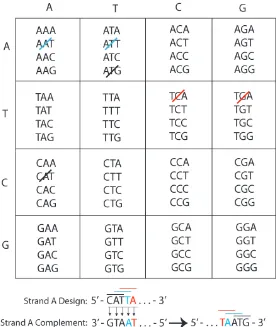
The colloidal systems described in this work rely on relatively complex DNA ar-chitectures. In general, a simple design technique developed by Nadrian Seeman, shown in Figure 5.2, is utilized in the generation of DNA sequences for binary sys-tems, and works well when the targeted interaction regimes ranging from eight to twenty bases. The technique works by defining all possible 64 three-base combi-nations, known as ‘codons.’ First, a codon is arbitrarily chosen from the list, and that codon and it’s reverse-complement (shown at the bottom-right of Figure 5.2) are crossed off of the list. The sequence is then grown by a single base, by choos-ing a codon whose first two bases are equal to the last two of the previous codon. Both this codon and its reverse compliment are then removed from the list. In the example provided here, the original codon chosen is CAT, so CAT and ATG are crossed off of the list. The second codon chosen is ATT, growing the sequence by a single T base to CATT. ATT and AAT are then crossed off of the list as well. The sequence is grown in this manner until the desired number of bases has been reached, or until you run out of available codons. The AAA, TTT, CCC, and GGG sequences should be avoided if possible. Because the reverse codons are removed, the sequences designed using this method have minimal unwanted interactions, and strongly favor hybridization with their complements.
long. The entire sequence is then analyzed using IDTDNA.com’s OligoAnalyzer tool, and the sequence is screened for hairpins, other unwanted interactions, and for a reasonable Gibbs free energy (which varies by application, but is usually between -9 and -12 kcal/mol).
2.2
DNA Design Validation using Gel Tms and a
Thermodynamic Model
Melting Temperature analyses of aggregates are performed by mixing colloidal so-lutions of various interacting particle species at a given salt concentration. Their melting temperatures are estimated by enclosing samples in microscopy chambers formed of two coverslips sealed with vacuum grease, and viewing it on an inverted Leica DM IRB microscope as the temperature is slowly increased at a rate of less than 1 degree per minute via an objective heating unit (Bioptechs). This analysis typically starts 5 degrees below the expected Tm (which is estimated as described
below), and concludes when the aggregates are mostly a dynamic cloud of weakly interacting particles, with a few small dynamic clusters remaining. Melting tem-peratures are reproducible to better than 0.5 degrees.
1000 and 2000 strands/particle (depending on the system we are assessing). This ability to predict melting temperatures a priori is key to designing the complex DNA architectures we require.
2.3
Synthesizing DNA-Coated Microspheres
DNA-coated polymer microspheres of varying sizes were synthesized using a pre-viously reported technique [3–9]. Carboxylate-modified polystyrene microspheres of varying sizes were obtained from Seradyn Inc. DNA strands, obtained from IDT DNA, were then covalently coupled to Pluronic F108, obtained from BASF. The DNAylated Pluronic was then physically grafted to the surfaces of the mi-crospheres by a swelling/deswelling technique previously developed in this lab [8]. Particles were dyed with green Bodipy(R) Dye [4,4-difluoro-1,3,5,7,8-pentamethyl-4-bora-3a,4a-diaza-s-indacene ] or Red Bodipy(R) [4,4-Difluoro-5-(2-Thienyl)-4-Bora-3a,4a-Diaza-s-Indacene-3-Dodecanoic Acid] during the swelling/deswelling step. Bod-ipy Dyes were obtained from Invitrogen, and were used in confocal imaging of the clusters.
2.4
Colloidal Crystallization
tubes, brought to 70◦C and mixed vigorously, and immediately submerged in a wa-ter bath in an insulated cooler. The initial temperature of the bath is 50◦C and it cools to room temperature at a rate of roughly 0.3 degrees per hour.
In other experiments, crystals are formed by simple sedimentation in a bench-top centrifuge. Particles are prepared at 1% volume fraction in pH=8 1xTE buffer without added NaCl salt (turning off the DNA interactions) and centrifuged in a low speed bench-top centrifuge at room temperature overnight. Salt is then added in five stages to a final concentration of between 100 and 300 mM, to turn the DNA interactions on.
2.5
Purification by Sedimentation Velocity
though these do not provide stable enough gradients for our purposes.
The first step is to choose a polymer from above, and make two solutions with different densities. Make sure the viscosity is sufficiently low so that it can flow through the gradient maker (SG 15 Gradient Maker, 15ml total Volume, in our case). The mixtures will vary based on your solute, but for Ficoll gradients in particular, we make one solution of high density Ficoll solutions in DI water at either 9% w/w or 6% w/w, and a low density solution at either 3% w/w or 1% w/w. Be sure to de-gas the mixtures, to improve the resulting gradient stability. The solutions are added to the gradient maker, which is used according to the manufacturer’s instructions, and empties into a washed and dried glass centrifuge tube in the form of a linear density gradient.
A 10−4 volume fraction solution of clusters was made by diluting the ligated
system with deionized water. 400 µL of this solution was then placed atop the density gradient. Centrifugation at 3150 RCF for 25-75 minutes (depending on the size of the clusters) separates clusters into distinct purified bands. [10]. Each band is removed separately.
2.6
Imaging and Characterization
analysis techniques and programs that were used to assess the data.
2.6.1
Confocal Imaging
Non-ligated clusters and crystals were diluted with 1xTE buffer at pH=8 with a concentration of 150mM NaCl for crystals and 500mM NaCl for clusters, to en-sure strong binding and to reduce the risk of melting clusters under confocal laser scanning. DNAylated particles rapidly and irreversibly bind to the surface of un-treated glass coverslips, a feature which we use to immobilize clusters for confocal microscopy. Ligated clusters and crystals can be reliably imaged outside of aqueous environments, minimizing differences between the refractive indices of the particles and the solution, and hence vastly improving image quality. Glycerol has been used effectively as a mounting solution in this work, though various other index-matched mounting solutions will work as well.
2.6.2
Confocal Image Analysis
Due to the small size of the 381 nm particles used in confocal images, automated centroiding and analysis is not feasible. Therefore, in order to determine the struc-tures of the clusters that were assessed using this method, manual centroiding of the constituent spheres was necessary. By going through the Z-stack captures of clusters, the centroids of each constituent particle can be determined. The centroids are then used to render the three dimensional structure using either MATLAB or POVray. The rendered images are then easily studied to determine their structure. Images of crystals have too many particles, and are generally a bit too fuzzy, to re-liably assess via manual centroiding. Therefore, in the case of crystals, the particle spacings and angles between particles are determined and used to ascertain which crystal structure has been synthesized.
2.6.3
SEM Imaging
the care taken in preparation, approximately 50% of the clusters imaged were broken in some manner, though in most cases a starting structure could be determined. If a starting structure could not be determined, the cluster was excluded from the analysis.
2.6.4
APTES-Treated Positively Charged Glass
2.6.5
Methanol Washing
Methanol washing is a facile method for drying fragile colloidal samples prior to SEM sample preparation. In order to prepare a sample using this method, a fume hood, vacuum dessicator filled with dessicant, and a beaker for waste are required. Also needed are APTES-treated positively charged cover slips, a dilute cluster or sample solution, a washing solution, and anhydrous methanol (10 mL).
sample is ready for SEM prep.
The clusters imaged using this method appear to be slightly squished, and have been a little deformed by the drying process. However, the structures are largely representative of the starting structures, as has been validated by comparing images taken from samples prepared using this method to samples prepared using the more complicated Ethane Vitrification method, outlined below.
2.6.6
Ethane Vitrification
Ethane vitrification is a highly reliable way to completely freeze and preserve the structure of the fragile colloidal clusters. In order to vitrify a sample in ethane, liquid ethane, an ethane plunger or plunging apparatus, and a freeze dryer or lyophilizer are required. Ideally the temperature in the freeze-dryer should be below the Tg of
water, −80◦C, but we have had reasonable results at−40◦C (Above theTg of water,
the vitrified water will begin to reassemble into crystalline ice, which could tear the sample up). Also needed are APTES-treated positively charged cover slips, a dilute cluster (or other sample) solution, preferably with ligated DNA bridges, and 10 mL of DI Water or other washing solution.
of the clusters) for them to sediment and stick, then gently wash the droplet with approximately 10mL of washing solution from a pipet (continuously wash the glass, gently). For ligated systems, the washing solution should be DI water (For tran-siently hybridized systems which are not ligated, this process is not advisable, but a solution of 150mM NaCl or Ammonium Acetate could potentially be used effec-tively.). Try to ensure that only a thin film of water remains on the glass surface, then, rapidly plunge the sample into liquid ethane. After vitrification, the sample can be stored in liquid nitrogen until ready to freeze-dry. The vitrified sample is placed in the prepared freeze dryer / lyophilizer, and the water then completely sublimate from the sample over time. When dry, the sample is ready for SEM prep.
2.6.7
Sample Mounting for SEM
present even after using the copper tape, re-coat the taped sample at a 45 degree angle to ensure that a seamless metal coating exists between the surface of your sample to the metal stub. Consult with the SEM operators for the specific systems you will be working with, as some larger systems will require special treatment.
References
[1] John SantaLucia, Hatim T. Allawi, and P. Ananda Seneviratne. Improved nearest-neighbor parameters for predicting dna duplex stability. Biochemistry, 35(11):3555–3562, 1996.
[2] J SantaLucia and D Hicks. The thermodynamics of DNA structural motifs.
Annual Review of Biophysics and Biomolecular Structure, 33:415–440, 2004. [3] W. Benjamin Rogers and John C. Crocker. Direct measurements of
DNA-mediated colloidal interactions and their quantitative modeling. Proceed-ings of the National Academy of Sciences of the United States of America, 108(38):15687–15692, SEP 20 2011.
[4] Paul L. Biancaniello, Anthony J. Kim, and John C. Crocker. Colloidal interac-tions and self-assembly using dna hybridization. Phys. Rev. Lett., 94:058302, Feb 2005.
[5] Marie T. Casey, Raynaldo T. Scarlett, W. Benjamin Rogers, Ian Jenkins, Talid Sinno, and John C. Crocker. Driving diffusionless transformations in colloidal crystals using DNA handshaking. Nature Communications, 3, November 2012. [6] James T. McGinley, Ian Jenkins, Talid Sinno, and John C. Crocker. Assem-bling colloidal clusters using crystalline templates and reprogrammable DNA interactions. Soft Matter, 9(38):9119–9128, 2013.
[7] W. Benjamin Rogers, Talid Sinno, and John C. Crocker. Kinetics and non-exponential binding of DNA-coated colloids. Soft Matter, 9(28):6412–6417, 2013.
[8] A.J. Kim, V.N. Manoharan, and J.C. Crocker. Swelling-based method for preparing stable, functionalized polymer colloids. Journal of the American Chemical Society, 127(6):1592–1593, 2005.
Chapter 3
Assembling Colloidal Clusters
Using Crystalline Templates and
Reprogrammable DNA
Interactions
James T. McGinley, Ian Jenkins, Talid Sinno, and John C. Crocker. “Assembling colloidal clusters using crystalline templates and reprogrammable DNA
3.1
Abstract
Transient bridges of DNA have been used to direct the self assembly of micro-scopic spherical particles into a variety of crystal structures. Here, by selectively reprogramming the strength of the DNA interactions within such crystals we form colloidal clusters with well-defined valence and symmetry at high yield. We first form ‘host’ crystals containing a small proportion of ‘impurity’ particles bearing a unique DNA sequence, and then add soluble DNA strands that cause the host crystal to melt while preserving the nearest neighbor bonds around each impurity particle. This yields clusters with cubical and cuboctahedral symmetry from host crystals having BCC and FCC structures, respectively. Annealing of these clusters leads them to transform into lower free energy, but still highly symmetric forms, sometimes accompanied by the ejection of particles. The interactions between such clusters in principle could be further reprogrammed to allow hierarchical assembly processes.
3.2
Introduction
clusters by self-assembly is that the same attractive interactions that drive cluster assembly will in general also drive the formation of larger assemblies such as colloidal gels or crystals. In one approach, the assembly of clusters is limited by directional bonding, binding kinetics or limited bond valency [1, 2], while in the other approach, only a finite number of particles with spherically symmetric interactions are present in a microvolume (e.g. an emulsion droplet or microfabricated cavity) [2–7]. The various methods in use vary greatly in their scalability, both in terms of sample size and particle size, the ordering of the resulting assemblies and the fractional yield of clusters having a desired structure.
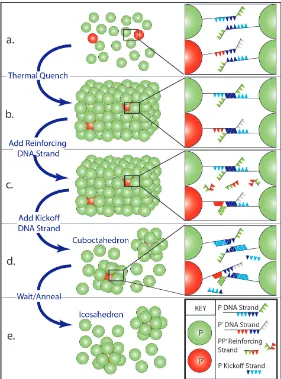
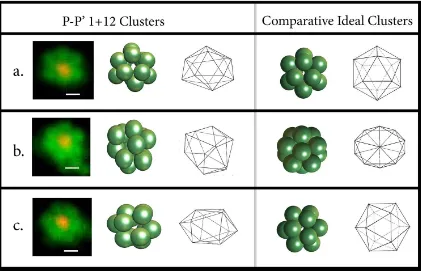
Figure 3.1: A system of two particle species (P,P0) is thermally quenched (a) to form large crystals with an FCC structure due to identically attractive P −P,
P0−P0, and P−P0 interactions (b). A pair of DNA strands are sequentially added (c,d) which compete with the P −P bonds. Assuming ”impurity” P0−P0 bonds are rare, the corresponding P−P bond melting temperature Tm drops below room
temperature, releasing ”1 + 12 clusters” formed of single P0 particles and their 12
these various capabilities in two different experimental systems, one of which forms BCC crystals and yields cubical clusters, and another which forms FCC crystals and cuboctahedral clusters. As neither of these cluster symmetries are the lowest free energy structure and the DNA interactions are dynamic, these clusters transform into skew cubes and icosahedra, respectively. We modulate the rate of transfor-mation by adding salt, which has the effect of slowing particle rearrangements by slowing the kinetics of the DNA bridges holding the particles together.
The clusters formed by our crystal templating approach consist of a central impurity particle surrounded by nidentical host particles, which we will generically term ‘1 +n’ clusters. Note that while the outer particles in these clusters have a strong attraction to the central particle, they are not attracted to each other, as was the case in some previous studies [5–7], but instead merely have a short ranged repulsion with each other. In this way, our clusters are a physical realization of a classical packing problem in applied mathematics, called the Tammes or spherical code problem. The minimum free energy Tammes clusters have been computed for differentnvalues [23], and neither the cube nor the cuboctahedron correspond to the
forms?
3.3
Materials and Methods
3.3.1
Particle Preparation and Conjugation
Caboxylate modified polystyrene spheres of 381nm diameter [12] were purchased from Seradyn Inc, and were physically grafted with DNA strands, purchased from IDT DNA, using a technique we have previously reported based on covalent coupling to a triblock copolymer, Pluronic F108 [8, 12, 14, 19, 24]. Five types of particles, each bearing DNA strand having unique sequences, were prepared. Three of these particles, types A, B, andB0, form two-component BCC lattices when crystallized. The last two, P and P0, form one component FCC crystals. Under our nominal reaction conditions [8, 12, 24], DNA yields of 1000±150 strands per particle are obtained. The particles of A and P0 were dyed with green Bodipy(R) Dye [4,4-difluoro-1,3,5,7,8-pentamethyl-4-bora-3a,4a-diaza-s-indacene ], those of B0 and P
3.3.2
T
mAnalyses
Melting Temperature analyses of aggregates were performed by mixing colloidal solutions of various interacting particle species with modifying strands in 150mM NaCl 1xTE buffer (10 mM Tris + 1mM EDTA) at pH=8. Their melting temper-atures are estimated by simply enclosing samples in microscopy chambers formed of two coverslips sealed with silicone vacuum grease, and viewing it on an inverted Leica DM IRB microscope as the temperature is slowly increased at a rate of less than 1 degree per minute via an objective heating unit (Bioptechs). This analysis typically starts 5 degrees below the expected Tm, and concludes when the
aggre-gates are mostly a dynamic cloud of weakly interacting particles, with a few small dynamic clusters remaining. Melting temperatures are reproducible to better than 0.5 degrees. Using the known thermodynamic quantities associated with the inter-acting DNA sequences [25, 26], a recently published model [8] was modified and used to estimate the melting temperature of particle aggregates using a nominal DNA grafting density of 1000 strands/particle. This ability to predict melting tem-peratures a priori is key to designing the complex DNA architectures we require.
3.3.3
FCC Crystal Formation
nearest-neighbor model [26]. Crystals of P with P0 impurities are formed by ho-mogeneous nucleation at 20% total particle volume fraction in 150mM pH=8 1xTE buffer. 5 µl samples are sealed in 300 µl microcentrifuge tubes and submerged in a water bath in an insulated cooler. The initial temperature of the bath is 50◦C and cools to room temperature at a rate of 0.3 degrees per hour. In other experiments, either P andP0 or Aand B0 particles are prepared at 1% volume fraction in pH=8 1xTE buffer without added NaCl salt (turning off the DNA interactions) and cen-trifuged in a low speed benchtop centrifuge at room temperature overnight. Salt is then added in five stages to a final concentration of 150 mM, to turn the DNA interactions back on. In the P P0 case, the result is solid colloidal crystals that can be imaged, or melted into clusters using added DNA strands (described below). For the AB0 system, the resulting crystalline pellet is not crosslinked by DNA, and can be gently resuspended, releasing the clusters within.
3.3.4
BCC Crystal Formation
150mM pH=8 1xTE buffer (10 mM Tris + 1mM EDTA). 5 µl samples are sealed in 300 µl microcentrifuge tubes and submerged in a water bath in an insulated cooler. The initial temperature of the bath is 50◦C and cools to room temperature at a rate of 0.3 degrees per hour.
3.3.5
Cluster Formation from FCC crystals
A strand called the P0−P Reinforcer, which has an energy of reaction of ∆G =
−7.20kcalmol with strandP0 and an energy of ∆G=−5.89kcalmol withP, is added to the solution to link together and reinforce all P −P0 bonds. It is added to the system at a stoichiometric ratio with all P and P0 strands in the system, and the system is quenched overnight from between 23 and 29 degrees celsius, which removes any negative effects of the reinforcer’s 23◦C hairpin, and yet is not hot enough to anneal the crystal structure. This ensures a near complete hybridization reaction. A P
Kickoff strand (∆G = −11.597kcalmol) is then added in excess, which eliminates all
P −P bonds, and weakens allP0−P0 andP0−P bonds. TheP0−P0 bonds should be relatively rare, andP0−P bonds, since they were reinforced, only weaken to aTm
3.3.6
Cluster Formation from BCC crystals
A strand called B0 Protector is introduced into the crystallized system in slight excess of the total number of B0 strands present, assuming 1000 DNA strands per bead. The energy governing the reaction (∆G=−8.58kcalmol) is experimentally shown to be sufficient to ensure that the reaction approaches completion relatively fast. Just to be sure, the system is left to sit for at least 30 minutes. A strand ofB Kickoff (∆G=−13.17kcalmol) is then added in excess of the total number ofB strands in the solution. This excess ensures a near instant and complete reaction, that destroys allA−B bonds, and leaves only the protected A−B0 bonds unaffected. Therefore, based on the structure of the BCC system, each well-incorporated B0 particle will be left with eight A particles still attached, thus producing 1 + 8 clusters.
3.3.7
Imaging Crystals and Clusters
are permanent (i.e. they do not roll).
High resolution imaging of the fluorescently dyed particles was performed on an inverted Leica DM-IRB microscope with a 100x oil immersion lens equipped with a VTEye confocal, by Visitech. Z stack scans were taken of the samples, averaging 25 frames per slice to reduce noise. The red and green slices are then merged to form a single image showing both the green- and red-dyed particles, after manually correcting for minor optical offsets, validated by control runs performed with beads dyed with both the red and green Bodipy(R) dyes.
3.3.8
Cluster Simulation and Mode Analysis
Langevin Dynamics (LD) simulations were performed within the NVT ensemble using the LAMMPS software package [27]. A time step of 10−12s and a damping
time of 10−5s were used. The damping time, which corresponds to under-damped
different processes to occur.
For all runs the system was initiated with 13 particles placed in a cuboctahedron configuration. Particle interactions were modeled according to the DNA mediated potential derived in ref. [ [8]]. The centerhalo particle interactions were attractive, with a maximum well-depth of 10kBT. Interactions between halo particles were
purely repulsive. Simulations were performed in which varying numbers of particles were held fixed. In the first type of constrained simulation a set of three particles from a single triangular face of the cuboctahedron were kept fixed, while in the second type a set of four particles from a single square face of the cuboctahedron were kept fixed. Simulations were also performed with no constrained particles. The particle energies were monitored and a particle ejection event was recorded each time a particle exhibited zero energy.
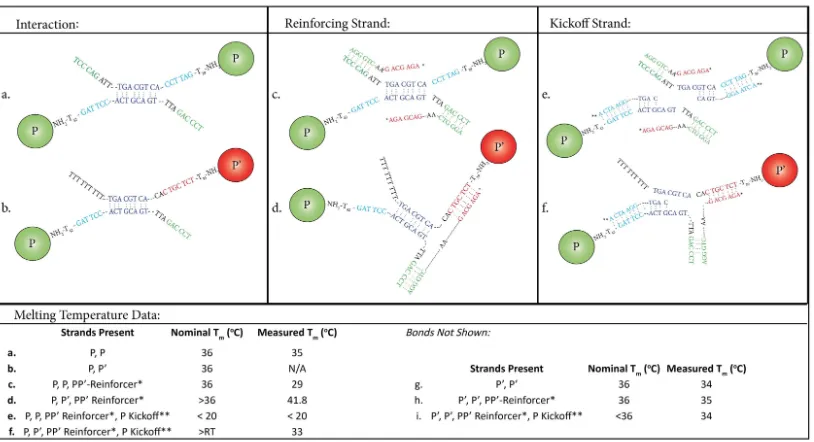
Figure 3.2: DNA strand architectures and Particle Melting Temperatures for the
P −P0 system. Melting temperatures, both nominal and experimentally measured, for P−P (a,c,e) and P−P0 (b,d,f) particle bonds with relevant competing strands are provided in the corresponding table, as are the three bonds, (g,h,i), not illus-trated, from P0−P0 particle and competing strand interactions.
3.4
Results and Discussion
3.4.1
DNA Design Approach and Findings
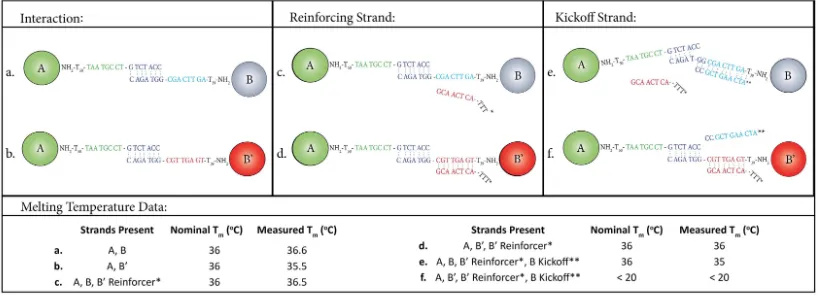
Figure 3.3: DNA strand architectures and Particle Melting Temperatures for the A−B−B0 system. Melting temperatures, both nominal and experimentally measured, forA−B(a,c,e) andA−B0(b,d,f) particle bonds with relevant competing strands are provided in the corresponding table.
closely to the host particles that it replaces [30]. This was achieved by the addition of a small amount of a ‘modulating’ strand which complexes with DNA strands on either the host or impurity particle, slightly reducing its interaction strength with-out modifying that of the other particles significantly. Once crystallized, the system is melted by adding DNA ‘kickoff’ strands that hybridize with the host particles’ spacer DNA sequences but which also extend into the interaction domain, destabi-lizing the DNA bridges between host particles. If needed, additional ‘reinforcing’ strands can be added to selectively strengthen the intracluster bonds by hybridizing across the appropriate particle bridges.
generated were screened individually to be free of stable hairpins and against each other for unintentional hybridization at relevant temperatures using standard tools based on the nearest neighbor model [25, 26] for DNA thermodynamics. For situa-tions involving bridge formation between particle-grafted DNA strands, the spatial distribution of interacting DNA strands around the particles must be explicitly taken into account when computing the bridge thermodynamics and melting tem-perature. We rely upon a recently published model [8] for such bridge formation to compute the effective melting temperature of the particle-bridge-particle complexes. During the design phase, these models assume a nominal DNA grafting density of 1000 DNA molecules per microparticle, typical for our bioconjugation protocol (see Materials and Methods). In general the overlap length of designed complexes were made long enough to be stable at room temperature, corresponding to a melting temperature >32◦C. The DNA sequence design for reinforcing strands and kickoffs was done by ensuring that there were sufficient ∆Gdifferences to quickly drive de-sired reactions to completion. By assuming that all soluble strands were in excess and completely reacted, the number of remaining reactive bridges and their overlap domains were used to estimate a nominal meting temperature Tm.
which colloidal crystals form from the same samples. In general, the predicted and measured melting temperatures, reported below, are in excellent systematic agree-ment with roughly ±1.6◦C random error, consistent with the expected uncertainty of the NNM [26] and 15% batch to batch variations in DNA density on the particles.
3.4.2
FCC System
The simplest possible system is one containing a single particle species, where each particle is attracted to every other particle. Such self interacting particles, species
P, require an interaction domain having a palindromic DNA sequence, Fig. 2a. Spacer domains consisting of 39 and 42 base long poly-dT for P0 and P, respec-tively, provide a comparatively long-ranged interaction. We find that our 380 nm diameter particles readily nucleate and grow large crystals near the bridge melt-ing temperature, 36◦C. The resulting crystals have a face centered cubic (FCC) structure, with a low density of stacking faults, resembling crystals formed by other short-ranged attractive interactions such as the depletion interaction [31, 32].
the next section.
To form clusters, we clearly need to form a P host lattice with a low density of impurity P0 particles as substitutions. We then need to reprogram the inter-action matrix of these two particle species such that P −P bonds melt at room temperature, while the P −P0 bonds remain stable. Since any added DNA strand that competitively binds the P −P interaction domain will also bind the P −P0
interaction domain, it is necessary to first add a reinforcing strand to selectively stabilize the P −P0 bonds. A 15 bp strand that binds facing recognition domains of the P and P0 particles forms a highly stable complex, Fig. 1d. While the same reinforcement strand will also complex with P −P bridges, Fig. 1c, it does not physically link the two particles together.
Melting experiments with co-aggregated P P0 gels reveals complex formation associated with the reinforcing strand. The reinforcing strands form hairpins at temperatures < 23◦C, so strands and particle assemblies must be incubated to-gether near or just above that temperature overnight to allow complex formation. Moreover, an unidentified interaction associated with the reinforcing strands, ap-pears to slightly weaken the host lattice, reducing its melting temperature, but only to a still acceptable 29◦C when the reinforcing strands are added 1:1 mole ratio to their target strands. Higher concentrations of the reinforcing strands, that would melt the host crystal at room temperature, were avoided.
weakened with a kick-off strand, Fig. 2e,f, that hybridizes with the free recognition domain on the P particles, and extends into the interaction domain displacing the strand from the other particle. While this process also occurs inP−P0 bridge com-plexes, the reinforcing strands maintains the particle connection, up to its melting temperature of 33◦C.
3.4.3
BCC System
To create clusters having a different network of nearest neighbors, we direct the assembly of particles having a different symmetry, body centered cubic (BCC). As in a recent paper [12], here we create a binary suspension of two particle species, A
and B whose interaction matrix is such that onlyA−B bridges are thermodynam-ically favored. Specifthermodynam-ically, such a binary system forms a CsCl-type superlattice of BCC, with A and B particles in alternating locations. We designed the A and B
DNA sequences to bear complimentary interaction domain sequences on the end of long poly-dT spacers, and the strands on both the A and B particles have unique recognition domains adjacent to their interaction domains, Fig. 3a.
To reprogram the interaction matrix of this ABB0 system, we can add a kickoff strand that hybridizes to the B recognition domain as well as part of the adjacent interaction domain, destabilizing any A−B bonds, Fig. 3d.
In practice, since four bases of the kickoff strands are necessarily complementary to theB0 particle strand as well (since they share an interaction and buffer domain), kickoff strands also weakenA−B0 bonds, reducing the melting temperature by 2◦C at the required concentration. To avoid this effect, we add a reinforcing strand, Fig. 3c, which hybridizes with the B0 recognition and buffer domains after the crystals have been formed, but before the kickoff strands are added.
3.4.4
Co-crystallization of Host/Impurity Crystals
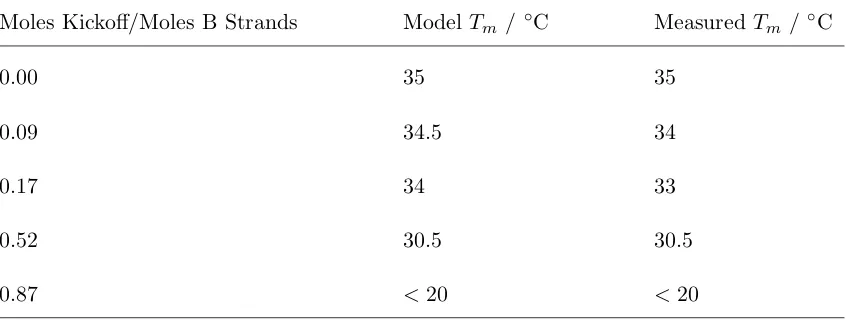
Table 3.1: B Kickoff Strand for Modulating A−B Melting Temperatures at 150mM NaCl, assuming 1000 DNA strands per B particle
Moles Kickoff/Moles B Strands ModelTm / ◦C MeasuredTm /◦C
0.00 35 35
0.09 34.5 34
0.17 34 33
0.52 30.5 30.5
0.87 <20 <20
melting temperatures of ∼2◦C. Since crystal nucleation and growth typically occur over a range of a few degree Centigrade [12], such large variations in DNA den-sity could easily lead to nearly complete exclusion of the impurity species from the growing crystals, as in Figure 3.4a. Achieving effective co-crystallization is thus a non-trivial technical challenge to realize the crystal templating approach. We used multiple strategies to drive effective co-crystallization in our different DNA-particle systems.
FCC crystals were formed by homogeneous nucleation from a 20% volume frac-tion suspension during a slow thermal quench, as described in Materials and Meth-ods. The stoichiometry was chosen to be 399:1 P : P0 particles, to minimize the number of times twoP0 particles were next nearest neighbors, which form ‘conjoined’ and defective clusters. Multiple bioconjugation trials were executed, resulting in P
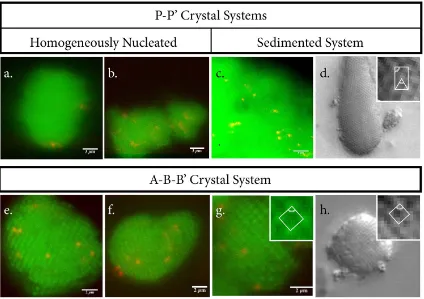
Figure 3.4: Red impurity species were effectively incorporated into host crystals, in green. P P0 close-packed crystals were formed via two methods: homogeneous nu-cleation with a temperature difference of 0.5◦C, in which some crystals were highly segregated (a) while others exhibited exceptional incorporation(b), and sedimen-tation, which provides a well incorporated sample(c) within a close-packed crystal lattice (d). ABB0 crystals were formed with an approximate temperature differ-ence of 0.5◦C via homogeneous nucleation, with well incorporated impurities (a-c) within a well-defined BCC lattice structure (c-d). Focus scans of the crystals in panels (a,b,c,e) are available as Supplementary Movies 1-4, respectively, found
system yields crystals, shown in Figure 3.4a,b displaying various degrees of co-crystallization. In a small number of crystals, it appears that the impurity particles are concentrated near the exterior of the crystal, as if they only could be incor-porated during the later stages of growth, Figure 3.4a. While other crystals in the same sample show excellent incorporation, Figure 3.4b, the excess of surface segregated particles in homogeneously nucleated FCC crystals would introduce an undesirable number of defective clusters.
A simple and effective method of circumventing the segregation issue is to com-pletely eliminate all DNA interactions during crystallization, and to drive crystal formation by other means, such as sedimentation. In this experiment, a mixture of P and P0 particles, with the ratio used above, is first prepared in a buffer with no added salt, which effectively turns off all attractive DNA interactions at room temperature. Due to the small size of our particles, sedimentation is performed in a low-speed benchtop centrifuge overnight, forming a dense pellet of particles. The salt concentration in the supernatant is then increased from 0mM to 150mM NaCl in multiple addition steps consisting of gentle pipette mixing and further centrifuga-tion, turning on all attractive interactions and stabilizing the assembled structure at room temperature. The resultant pellet has large crystalline domains having a close packed structure, which can be broken apart manually and visualized by microscopy, Figure 3.4c,d. As expected, the impurity particles are well dispersed.
rela-Figure 3.5: Representative Clusters formed via P P0 Sedimentation. The clusters are shown as bound to the glass by the prevalent three-particle equilateral triangle (a,c), and by a single particle vertex (b). Scale bars correspond to 0.5µm. A focus scan of the cluster in (a) is available as Supplementary Movie 5, found here.
tively straightforward. The same kickoff strand that is used to melt theABcrystals can be used to modulate the strength of theAB interaction until it matches that of
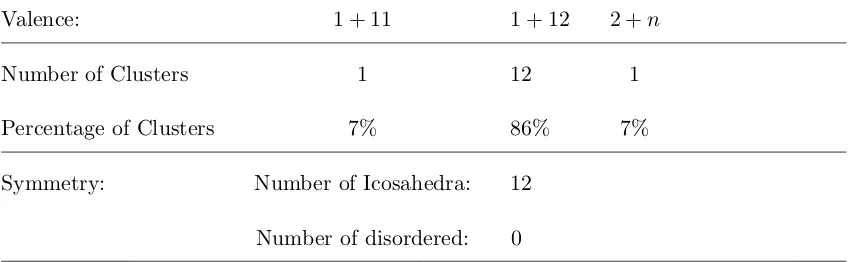
Table 3.2: P P0 Sedimentation System: Cluster Statistics. Note: non-‘1+12’ clusters were not extensively sampled, and may be underrepresented in total.
Valence: 1 + 11 1 + 12 2 +n
Number of Clusters 1 12 1
Percentage of Clusters 7% 86% 7%
Symmetry: Number of Icosahedra: 12
Number of disordered: 0
By using modulating strands, the difference in melting temperature between
AB and AB0 was reduced to < 0.5◦C, and BCC crystals formed by homogeneous nucleation at 20% total particle volume fraction, during a slow thermal quench, see Materials and Methods for details. To avoid conjoined clusters, a low proportion of impurity was used, namely a 1:1 ratio of A : (B +B0) and a 1:199 ratio of
B0 : B. The resulting crystals, shown in Figure 3.4e-h, show excellent impurity incorporation. Control experiments were performed without modulating strands, using particles whose AB and AB0 melting temperatures differed by about 2◦C. The resulting crystals, not shown, displayed a high degree of segregation, with all the impurity particles binding the crystals’ surfaces. Were the B0 more weakly interacting than theB particles, this would make intuitive sense, as they would only bind the host crystals at the end of the crystal growth cycle when the temperature was lowest. In the control experiments, however, the B0 particles were the more strongly interacting. We conjecture that each B0 gathers a disordered halo of A
Table 3.3: AB0 Sedimentation System: Cluster Statistics
Valence: 1+7 1+8 1+9 1+10 1+11 1+12 2+n
Number of Clusters 1 1 2 8 1 15 1
Percentage of Clusters 3% 3% 7% 28% 3% 52% 3%
Symmetry: Num. Icosohedra 15
Num. Tammes n=10 4 Num. disordered 4
incorporate into growing AB crystals.