223
Industry practitioners’ perceptions of
embedded CCNA: A comparative study
Dileep Rajendran
Waikato Institute of Technology.
Gate 5 Tristram Ave. Hamilton, New Zealand [email protected]
Scott Morton
Southern Institute of Technology
133 Tay Street
Invercargill, New Zealand [email protected]
Abstract
This paper studies workplace perceptions of the Cisco Certified Network Associate (CCNA) courses by people who studied CCNA. It also presents different views on whether industry certifications, academic qualifications and work experience are complementary. The paper analyses data from the Waikato Institute of Technology (Wintec) and the Southern Institute of Technology (SIT) as a case study of how well the courses meet the needs of the Information and Communications Technology (ICT) industry in Hamilton and Invercargill. Conclusions are drawn about the effectiveness of embedding CCNA in these regions and course topics found to be most useful in the workplace are compared and highlighted. It is found that CCNA course topics are being used to varying extents in the ICT industry in both regions and these results are examined along with the perceived value of the courses for participants, new employees and employers. The research also reveals possible reasons for people who complete the four CCNA modules but do not sit the external exam to obtain the CCNA qualification.
Keywords
Industry Alignment, Embedding Industry Certifications, Networking, CCNA, Cisco
This quality assured paper appeared at the 2nd annual conference of Computing and Information Technology Research and Education New Zealand (CITRENZ2011) incorporating the 24th Annual Conference of the National Advisory Committee on Computing Qualifications, Rotorua, New Zealand, July 6-8. Samuel Mann and
224
Introduction
The Cisco Networking Academy has been active in New Zealand since the year 2000 and has been embraced by many tertiary institutes and high schools. This paper concentrates on one of the courses offered, namely CCNA, an industry certification that has been noted to be a requirement in many networking related job advertisements in New Zealand (Rajendran, 2007). This paper extends a previous study by Rajendran & Corbett (2010) by comparing the data collected from two Institutes of Technology in New Zealand, Wintec and SIT.
It was observed at both institutes that a number of students enrolling in CCNA courses were also employed in the ICT field. Industry-employed students were surveyed or interviewed and the data analysed and compared. Conclusions are drawn about CCNA course topics found to be most used in the workplace. There is also an analysis of perceptions relating to the value of the courses for participants, new employees seeking to work in the participant’s role and the requirements of employers.
This paper contributes to research relating to embedding ICT certifications in tertiary programs and courses. It also relates to the efforts in aligning Institutes of Technology and Polytechnic (ITP) courses with the constantly evolving ICT industry. The results in this paper are from the Waikato and Southland and conclusions pertain to these two regions only.
Industry certifications, academic qualifications and work experience
As the global market for ICT continues to grow, industry certifications are becoming more valuable for
employees and employers. Industry certifications have become a multi-billion dollar business (Cosgrove, 2004) and have also changed the way educational institutes teach ICT. Some employers not only require ICT graduates to have a good foundational knowledge of technology but to also possess industry certifications along with their academic qualifications. Nelson and Rice, (2001) say “employers often desire and may even require certain computer certifications as a condition of employment”. Roberton and Corbett (2004), following a review of IT job vacancies, claim that there is a clear preference for certified applicants.
Many industry certifications have a short life span (Hitchcock, 2006). A sample of current certifications from different vendors suggests that an average life is between two and three years before an individual has to retake the qualification (Cisco, 2011; HP, 2011; Microsoft, 2011). This is because many of vendors have produced upgrades of their curricula or have created new hardware/software packages within that time frame.
225
that industry certification is regarded as ‘training’where degrees are regarded as ‘education’ and are therefore quite different. Nevertheless Clear, McHaney & Gotterbarn (2004) believe that collaborative partnerships between academic institutions and the private training sector are important for the future.
Manecksha (2002), as cited by Hitchcock (2006), says that just having a bachelor’s degree is no longer considered the minimum requirement, but only one criterion for getting a job in the IT sector. Certifications have become a vital and important indicator of performance and are another criterion for appointment. With the evidence collected, Hitchcock (2007) contends that industry certification can be successfully integrated into academic curricula.
There is more emphasis for industry certifications to be more robust, reliable and pedagogically sound (Hitchcock 2006). In the past two decades ICT certifications have evolved from simple multi-choice questions to include a variety of assessment techniques such as; multi-choice questions with multiple answers, scenarios, simulations, practical exams and case studies to help meet the criteria outlined by Hitchcock (2006). This shows that people who hold the certification have a consistent level of expertise, knowledge and skill in the relevant field.
Alexander (1998b) says that for a graduate starting out in the IT sector, certification will not guarantee a job but will help them get a ‘foot in the door’. Having certifications along with a degree gives the holder credibility and a possible advantage over other potential employees (Robertson, 2003). Even though the short life span of the certification can be a
drawback they should be seen as a catalyst for the holder obtaining that first job, a key to career advancement and new employment opportunities (Alexander, 1998a). For new employees starting out in the IT sector.
Once a person has found employment within a company the emphasis changes from getting the job to moving up the corporate ladder. Some experienced IT people feel that certifications imply that the holder has theoretical knowledge but this does not necessarily indicate experience in the domain to support that knowledge. Hitchcock (2005) investigates this debate further, pointing out that some people believe having an industry certification becomes invalid when one has work experience. On the other side of the argument he says that there have been cases where people with only industry experience have lacked areas of knowledge and others may have learned bad practices. Through interviews with people who have both certification and extensive experience he concludes that the debate between experience and industry certification is flawed. He says industry certification and experience are complementary to each other. Certifications also encourage self-development and continuing education (Hitchcock, 2006).
The Cisco Networking Academy
226
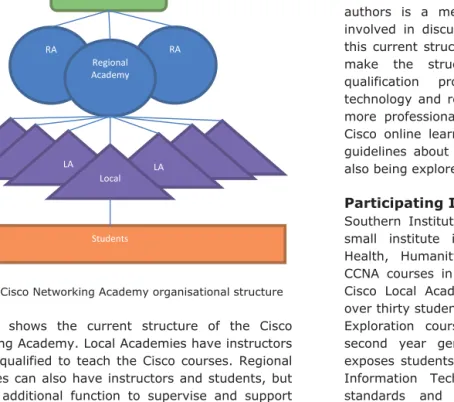
Figure 1. Cisco Networking Academy organisational structure
Figure 1 shows the current structure of the Cisco Networking Academy. Local Academies have instructors that are qualified to teach the Cisco courses. Regional Academies can also have instructors and students, but have an additional function to supervise and support Local Academies that are assigned to them, usually in the nearby geographical region. At present there is a presence in 165 countries, with over 9000 Local Academies (Wikipedia, 2011). Christchurch Polytechnic is the Cisco Academy Training Centre (CATC) for New Zealand. The Academy database indicates that there are 3 Regional Academies and 30 active Local Academies for CCNA in New Zealand.
In 2010 an Advisory Board was created for Australia, New Zealand and the Pacific Islands to contribute to the future direction of the CNA, communicate information and support academies in these countries. One of the
authors is a member of this board and has been involved in discussions regarding possible changes to this current structure shown in figure 1. The aim is to make the structure less hierarchical, implement qualification processes and standards, dissolve technology and relationship boundaries and encourage more professional development of instructors. A new Cisco online learning management system (LMS) and guidelines about instructor training and retraining are also being explored.
Participating Institutes
Southern Institute of Technology (SIT) is a relatively small institute in Invercargill. The Department of Health, Humanity and Computing started teaching CCNA courses in 2010 and has been a fully certified Cisco Local Academy since 2010. This year SIT has over thirty students enrolled in Semester 2 of the CCNA Exploration course. This course complements the second year general networking module. It also exposes students, at the initial stages of the Business Information Technology (BIT) degree, to industry standards and qualifications. There are eighteen students in the third year of this degree completing the final two semesters of the CCNA Exploration course. Cisco courses are embedded in the second and third year networking modules of the BIT degree. This allows students to finish the degree with a tangible knowledge of networking that is useful for gaining employment within this field of expertise. In the last four years the networking courses in the degree program have evolved dramatically, from only using simulated networks to using a dedicated network room with Cisco equipment, a server and a well-designed network infrastructure.
RA RA
CATC
Regional Academy
LA LA
Local
227
Wintec is larger and has been an established CiscoRegional Academy since 2001, with Cisco equipped network laboratories. In semester 1 of 2011, the school had around 95 students doing CCNA courses that are embedded in degree and diploma programs. More details about the Wintec School of IT network and program can be found in Rajendran (2010).
Both institutes are near larger cities (Auckland and Christchurch) with larger tertiary institutes, Regional Academies and Cisco testing centres. Hamilton is considered to be an urban city, where Invercargill is in the rural region of Southland. Toland (2006) indicates that Southland has a reputation for being an innovative adopter of ICT networks in New Zealand and has shown a huge growth in telecommunications services. The Southland region can be said to have some similar characteristics to the Waikato.
Data collection
Interviews and surveys were used to obtain data. At both institutes, participants were identified from past and current students who had completed the CCNA module three or CCNA module four courses (CCNA3 or CCNA4) and who were currently working in the ICT industry with networking or telecommunications related roles. The students were then invited to participate. Two pilot interviews were conducted to ensure questions were relevant and useful. More details of this process are outlined by Rajendran & Corbett (2010). However it should be re-iterated that if a participant changed roles between the time of studying CCNA and that of the interview, two sets of data (data samples) were collected, one for each role.
Results
Participant details
At Wintec there were 18 participants and 22 data samples in total. Seventeen (94%) participants had completed all four CCNA modules. There were 4 (22%) participants that worked in more than one role between the time of CCNA study and their interview. There were no participants who moved out of the network/telecommunications field at any time. One person gained employment after completing the course, another part way through the course and one was working part-time. Everyone else was working full-time while simultaneously studying the course.
There were ten participants at SIT and all participants remained in the same role from the time of study to the time of their interview. All SIT participants had completed all four CCNA modules and were working full time while studying. This is a small sample but participants were employed in a variety of roles and organisations, which is helpful in identifying the effectiveness of CCNA.
228
Role
Numberof
DataSamples
fromWintec
Number
ofData
samples
fromSIT
Total
number
ofData
samples
Network
HelpdeskOfficer
5
7
12
Networksupport
Engineer
4
(2Incident
Management
Specialists)
0
4
SystemsEngineer
3
6
9
ITTechnician
3
3
6
Systems/Network
Administrator
2
0
2
ServiceEngineers
0
4
4
Other
5
2
7
Table 1. Number of data samples for each role
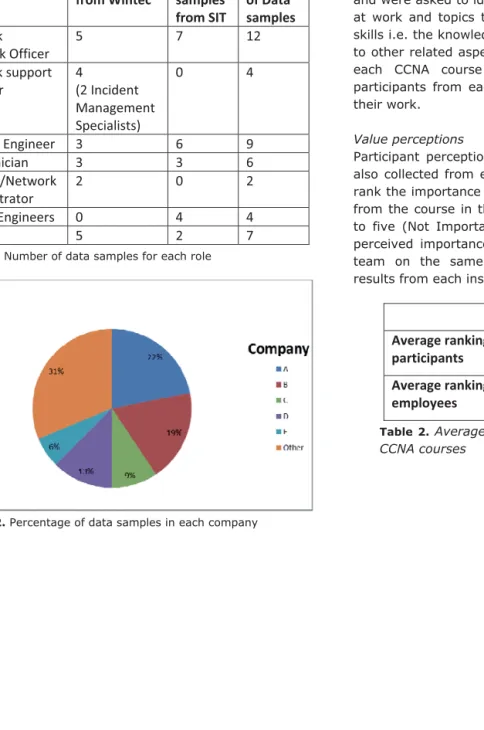
Figure 2. Percentage of data samples in each company
CCNA course topics
Participants were given a list of CCNA course topics, and were asked to identify those that they directly used at work and topics they considered to be transferable skills i.e. the knowledge and skills that could be applied to other related aspects of their work. Table 3 displays each CCNA course topic, with the percentage of participants from each institute that used the topic in their work.
Value perceptions
Participant perceptions about the value of CCNA were also collected from each institute. They were asked to rank the importance of the knowledge and skills gained from the course in their current role on a scale of one to five (Not Important – Vital). They also ranked the perceived importance for new employees joining their team on the same scale. Table 2 compares these results from each institute.
SIT
Wintec
Averagerankingfor
participants
2.65
3.4
Averagerankingfornew
employees
3.1
3.6
229
CCNACourseTopic DirectlyUsed (SIT)
Transferable (SIT)
DirectlyUsed (Wintec)
Transferable (Wintec)
NetworkCommunicationPrinciples 70% 70% 86% 86%
CablingaNetwork 70% 50% 64% 86%
DesignNetwork:Subnetting 80% 50% 23% 45%
DesignNetwork:PhysicalLayout 0% 10% 23% 32%
RoutingProtocols 0% 0% 18% 23%
RoutingTableAnalysis 0% 0% 14% 27%
AccessControlLists(ACLs) 10% 0% 18% 45%
SimilarCommandswithother router
40% 30% 0%
56%
NetworkSwitchPrinciples: 10% 30% 41% 32%
VirtualLocalAreaNetworks (VLANs)
20% 10% 36% 36%
WirelessLocalAreaNetworks (WLANs)
100% 40% 32% 36%
WideAreaNetworks(ISDN) 0% 0% 14% 18%
WideAreaNetworks(FrameRelay) 0% 0% 9% 9%
WideAreaNetworks (PointtoPointProtocol)
0% 0% 14% 18%
Troubleshooting 100% 100% 0% 45%
Table 3. Data samples from participants in CCNA course topics
Results analysis
On the outset it should also be highlighted that all participants had studied CCNA and so there will be a sampling bias in these perceptions and results.
The results from Table 3 show a number of differences between the percentages of course topics from the two sets of participants. At Wintec, the course topics considered to be the most directly used in industry were; Network Communication Principles and Cabling a Network. Network Switch Principles, VLANs, WLANs also scored highly. The most relevant transferable skills
were; Network Communication Principles and Cabling a Network.
230
Forty-five per-cent of participants at Wintec added ‘Troubleshooting’ as another transferable skill. As suspected by Rajendran & Corbett (2010), Troubleshooting did have a higher score when formally included in the questionnaire as shown in the results from SIT. Aside from this, the most notable difference between the two sets of data was for WLANs, where all SIT participants felt it was a directly used topic, but there was only 32% from the Wintec group. One possibility for this is that in 2003 Southland made a decision to implement a wireless broadband network throughout the region (Toland 2006).
Both Wintec scores in Table 2 were higher than those of SIT, indicating that the courses were considered to be of more value to the Wintec participants as well as for new employees. However both cases show that the average ranking by respondents for new employees is higher than for themselves. The majority of participants from both institutes (90% of SIT participants and 86.4% of Wintec) ranked the value for new employees to be greater than or equal to themselves. This variance was more pronounced for SIT.
When asked about the value of CCNA for career progression, 56% of Wintec participants believed it was useful in their personal career, i.e. if they were to apply for another role in their organisation or elsewhere in the future. 78% indicated that the qualification itself was not a management requirement, but stated there was a strong recommendation by their managers for staff to study CCNA.
At SIT, 80% believed it would be helpful in their personal career progression. Three participants felt it was directly required for a promotion from a junior to a
senior management position in their organisation, one indicated that it was required for a promotion for a junior to senior technical position in their organisation, and two (one of which was self-employed) felt it would not help in their personal career or in their organisation.
Rajendran & Corbett (2010) found that only a small number (28%) of participants from Wintec who had completed all four CCNA modules went further to sit the external CCNA examination. This was also the case at SIT where none of the students had sat this exam. One participant from SIT, and all those at Wintec who offered a reason, indicated that they enrolled just to learn or refresh knowledge and skills from the courses and would only take the external exam if they were applying for another job. Forty per-cent of SIT participants mentioned that the travel and cost to go to the CCNA testing centre located in Christchurch was another factor for not sitting the exam. It can be noted that at the nearest CCNA testing centre to Wintec is also in a different city, Auckland.
Fifty per-cent of SIT participants and 33% of Wintec participants were planning to sit the exam in the following year. That means 57% of all participants had either completed the exam or were planning to sit the exam in the near future, indicating there is a desire to obtain the CCNA certification.
231
study interpretation. In future the authors wish tosurvey a larger sample size, with data collected from more institutes around New Zealand, giving a national perspective. It would also be useful to survey employers to get their perceptions of CCNA directly.
Conclusions
There are a number of similarities and differences between the most directly used CCNA course topics by participants in the two regions. Network Communications Principles and Cabling a Network were the most directly used topics at Wintec and they also scored well at SIT. The largest discrepancy was WLANs, which was used to a much greater extent by the SIT participants. Troubleshooting techniques were not specifically included in the Wintec interviews, but was mentioned by 45% of participants and it was suspected that this would be higher if it had been included in the questionnaire. This was certainly the case in the responses from SIT, where troubleshooting was included in the survey and every participant felt it was directly used in their work. CCNA course topics are being used to varying extents in the ICT industry in both regions.
CCNA was considered to be more valuable to Wintec participants. However both sets of data indicate that it was considered more valuable for new employees rather than for themselves. Many participants felt CCNA was beneficial in their personal career, and was directly required for promotion by four out of nine (44%) SIT participant employers. This gives further indication that having CCNA knowledge and skills can be useful for career progression and is recognised by some employers.
There is still an indication that obtaining the CCNA certification by way of an external exam is desirable for participants, however the percentage that actually go and sit the exam still appears to be small. Some new deterrents were identified from SIT, namely travel and costs to go to a testing centre that is located in another city. The authors wish to survey a larger sample size with data collected from more institutes around New Zealand and a diverse set of participants.
References and Citations
Alexander, S. (1998a). Certification begins to take hold. InfoWorld, 20(9), 103. Retrieved 19th April, from
http://books.google.co.nz/
Alexander, S. (1998b). Web Certification abound. InfoWorld, 20(15), 91. Retrieved 19th April, from
http://books.google.co.nz/
Clear, T., McHaney, R. & Gotterbarn, D. (2004). SoDIS SEPIA - Collaborative partnerships in software engineering research, NZ Journal of Applied Computing and IT, 8, pp. 2-7.
Cisco System: Training and Events. (2011). Retrieved April 11, 2011, from
http://www.cisco.com/web/learning/le3/le2/le0/le9/le arning_certification_type_home.html
Cosgrove, S. (2004). Academic qualification & industry certification: Integrating education with practice. In S. Mann & T. Clear (Eds.), Proceedings of the 17th Annual Conference of the National Advisory Committee on Computing Qualifications (pp. 486). Christchurch, New Zealand: NACCQ
232
Computing Machinery Special Interest Group on Computer Science Education Bulletin, 37(4), 59-63
Hitchcock, L. (2006). Methodology in computing education: a focus on experience. In S. Mann & N. Bridgeman (Eds.), Proceedings of the 19th Annual Conference of the National Advisory Committee on Computing Qualifications (pp. 109-114). Wellington, New Zealand: NACCQ
Hitchcock, L. (2007). Industry Certification and Academic Degrees: Complementary or Poles apart?. In D. Lending & C. Vician (Eds.), Proceedings of the 2007 Association for Computing Machinery Special Interest Group on Management Information Systems Conference on Computer Personnel Research (pp.95-100). Missouri, USA: ACM SIGMIS.
HP Certification: (Hewlett Packard). (2011). Retrieved April 15, 2011, from http://www.hp.com/certification/
Microsoft Learning. (2011). Retrieved April 15, 2011, from
http://www.microsoft.com/nz/train_cert/default.mspx
Nelson, M., & Rice, D. (2001). Journal of Circuits, Systems and Computers, 17 (2), 280-375: JCSC
Ortiz, A. (2003). Preparing undergraduate students for java certification. In G. Steele (Ed.), Proceedings of the 18th annual Association for Computing Machinery Special Interest Group on Programming Languages conference on Object-oriented programming, systems, languages, and applications (OOPSLA) (pp 178-183) Anaheim, California, USA: ACM SIGPLAN
Rajendran, D. & Corbett, E. (2010) Relevance of CCNA for Industry Students at Wintec. In S. Mann & M. Verhaart (Eds.), Proceedings of the First Annual
Conference of Computing and Information Technology Research and Education New Zealand incorporating the 23rd annual conference of the National Advisory Committee on Computing Qualifications (pp. 227-234). Dunedin, New Zealand: NACCQ.
Rajendran, D. (2007) Linux networking in NZ industry and ITP education. In: NACCQ07: Proceedings of the 20th Annual Conference of the National Advisory Committee on Computing Qualifications (pp. 223-227). Nelson, New Zealand: NACCQ
Roberton, G., & Corbett, E. (2004). Creating intriguing synergies with course offerings: Integrating industry qualifications – An ITP prospective. In S. Mann & T. Clear (Eds.), Proceedings of the 17th Annual Conference of the National Advisory Committee on Computing Qualifications (pp. 431-434). Christchurch, New Zealand: NACCQ
Robertson, K. (2003). Certification for the support professional: Do they make cent$? Retrieved April 19, 2011, from
http://www.krconsulting.com/news_detail.aspx?news _id=6
Toland, J. (2006) Telecommunications Infrastructure in regional New Zealand: A case History. New Zealand Institute for the Study of Competition and Regulation (ISCR). Retrieved April 15, 2011, from
http://www.iscr.co.nz/f555,17809/17809_Toland_Tel ecommunications_infrsastructure_.pdf
Wikipedia (2011) Cisco Networking Academy, Retrieved April 15, 2011, from