REASONING PRO C ESSES IN D EPRESSIO N
A thesis submitted for the degree o f Doctor of Philosophy
by
Jane Elizabeth Baker
Department o f Psychology University College London July, 1999
ProQuest Number: 10609350
All rights reserved
INFORMATION TO ALL USERS
The qu ality of this repro d u ctio n is d e p e n d e n t upon the q u ality of the copy subm itted.
In the unlikely e v e n t that the a u th o r did not send a c o m p le te m anuscript and there are missing pages, these will be note d . Also, if m aterial had to be rem oved,
a n o te will in d ica te the deletion.
uest
ProQuest 10609350
Published by ProQuest LLC(2017). C op yrig ht of the Dissertation is held by the Author.
All rights reserved.
This work is protected against unauthorized copying under Title 17, United States C o d e M icroform Edition © ProQuest LLC.
ProQuest LLC.
789 East Eisenhower Parkway P.O. Box 1346
ACKNOWLEGEMENTS
The research reported in this thesis would not have been possible without the help and assistance of a number of people. I would therefore like to take this opportunity to thank them.
I am very grateful to Dr. Shelley Channon for supervising this project. I learnt a great many valuable lessons whilst working with her.
I would like to thank all the students who participated in the studies described in this thesis. The time and trouble they took was greatly appreciated.
ABSTRACT
Clinical accounts of depression suggest that it is associated with cognitive deficits in concentration, memory and ’thinking'. From a cognitive therapy perspective, it has been postulated that depression may be maintained by 'thinking errors' characterised by negative and biased interpretations of events. Research carried out to investigate cognitive function in depression has used both emotional and neutral stimuli, and has predominantly focused on memory and learning. With regard to neutral stimuli, a range of memory and learning tasks has been used, and depression has often, but not always, been associated with deficits. Current models suggest that the pattern o f findings is consistent with a reduction
a v o ila b f< 2 .
in the cognitive capacity • ^ to perform the tasks. In the light of these models it can be predicted that reasoning ability may also be affected.
In comparison to the large volume of research on memory for neutral materials, only a small body of work exists on reasoning processes in depression. It is difficult to draw any conclusions as to the likely nature and extent of any deficits on the basis o f the existing work. Assessing reasoning in depression using neutral tasks is of interest from a clinical perspective since it can be established whether the 'thinking errors' which have been observed in clinical situations in relation to the personal concerns of the patient reflect more widespread difficulties with logical thought.
PUBLICATIONS
The experiments described in chapter IV and chapter VIII have been published. The reference is Baker, J.E. & Channon, S. (1995). Reasoning in depression: impairment on a concept discrimination learning task. Cognition and Emotion, 9, 579-97.
The experiment described in chapter VI has been published. The reference is Channon, S. & Baker, J.E. (1996). Depression and problem-solving performance on a fault diagnosis task. Applied Cognitive Psychology, 10, 327-36.
The studies described in this thesis, including any published work, were designed and analysed by Jane Baker, in collaboration with myself as supervisor. Jane Baker was solely responsible for all the recruitment and data collection.
Shelley Channon
CONTENTS
TITLE PAGE 1
ACKNOWLEDGEMENTS 2
ABSTRACT 3
PUBLICATIONS 4
CONTENTS 5
I INTRODUCTION 19
1.1 DEPRESSION 19
1.2 COGNITIVE FUNCTION IN DEPRESSION 20
1.3 THE AIMS OF THIS STUDY 22
II LITERATURE REVIEW 23
2.1 DEPRESSION 23
2.1.1 Diagnostic Issues 23
2.1.1.1 The Boundaries of Depression 25
2.1.1.2 Ways of Classifying Depression 26
2.1.2 Epidemiology of Depression 28
2.1.3 Theories of Depression 30
2.1.3.1 Psychological Theories of Depression 30
2.1.3.1.1 Psychoanalytic theories of depression 31
2.1.3.1.2 Behavioural theories of depression 32
2.1.3.2 Other Theories of Depression 33
2.1.3.2.1 Social theories o f depression 33
2.1.3.2.2 Biological theories of depression 34
2.1.3.3 Cognitive Theories of Depression 36
2.1.3.3.3 The Reformulated Learned Helplessness Model
of depression 42
2.1.3.3.4 Evaluation of the Reformulated Learned Helplessness
Model 43
2.1.3.3.5 Depressive realism 46
2.1.3.3.6 Cognitive theories of depression since 1980 49 2.1.3.3.6.1 Bower's Associative Network Theory 49 2.1.3.3.6.2 An information-processing model:
Williams et al., 1988 51
2.1.3.3.6.3 A problem-solving formulation o f depression 54 2.1.3.3.6.4 The Interacting Cognitive Subsystem approach 57 2.1.3.3.7 Implications of Cognitive Models of depression 58
2.2 REASONING 59
2.2.1 The Relationship Between Reasoning, Problem-solving
and Intelligence 59
2.2.2 The Cognitive Psychology Approach to Reasoning 61
2.2.2.1 Deductive Reasoning 61
2.2.2.2 Inductive Reasoning 62
2.2.2.3 Models of Reasoning 64
2.2.2.3.1 Formal rule theories 64
2.2.2.3.2 Mental models theory 65
2.2.2.3.3 The componential approach 65
2.2.2.3.4 Domain-sensitive rules or schemata 66
2.2.2.3.5 Heuristics and biases 67
2.2.2.3.6 Summary of cognitive psychology models of reasoning 69 2.2.3 Neuropsychological Models of Reasoning/Problem-solving 69
2.2.3.1 Performance of Frontal Lobe Patients on Reasoning
and Problem-solving Tasks 69
2.2.3.2 Theories of Frontal Lobe Deficits 72
2.2.4 Models of Reasoning in Relation to Depression 76
2.2.5 Models of Attention and Working Memory 78
2.2.5.1 Attention 78
2.2.5.1.1 The concept of attention 78
2.2.5.1.3 Models of attention 80 2.2.5.1.4 Central versus multiple resources 81
2.2.5.2 Working Memory 83
2.2.5.2.1 Early models of short-term memory 83
2.2.5.2.2 The concept of working memory 83
2.2.6 The Relationship Between Attention, Working Memory
and Reasoning 84
2.3 COGNITIVE FUNCTION IN DEPRESSION 90
2.3.1 Methodological Issues 90
2.3.2 Subjective Reports of Cognitive Deficits 92
2.3.2.1 Clinical Samples 93
2.3.3 Psychomotor Speed 94
2.3.3.1 Clinical Samples 94
2.3.3.2 Nonclinical Samples 95
2.3.4 Memory and Learning in Depression 96
2.3.4.1 Learning 96
2.3.4.1.1 Clinical samples 96
2.3.4.2 Free Recall Versus Recognition Memory 97
2.3.4.2.1 Clinical samples 97
2.3.4.3 Response Bias 98
2.3.4.3.1 Clinical samples 99
2.3.4.3.2 Nonclinical samples 100
2.3.5 Effortful Encoding 100
2.3.5.1 Clinical Samples 101
2.3.5.2 Nonclinical Samples 104
2.3.6 Automatic Processing 104
2.3.6.1 Frequency Encoding and Spatial Location Encoding 104
2.3.6.1.1 Clinical and nonclinical samples 104
2.3.6.2 Priming 105
2.3.6.2.1 Clinical samples 105
2.3.6.2.2 Nonclinical samples 106
2.3.7 Attention and Working Memory 108
2.3.7.1 Sustained Attention 108
2.3.7.2 Selective Attention 108
2.3.7.2.1 Clinical samples 108
2.3.7.3 Secondary Tasks 110
2.3.7.3.1 Clinical samples 111
2.3.7.4 Working memory - the Phonological Loop
and Visuospatial Sketchpad 113
2.3.7.4.1 Clinical samples 113
2.3.7.4.2 Nonclinical samples 113
2.3.7.5 Working Memory - the Central Executive 114
2.3.7.5.1 Clinical samples 114
2.3.8 Reasoning/Problem-solving 116
2.3.8.1 Deductive Reasoning 116
2.3.8.2 Inductive Reasoning 117
2.3.8.2.1 Rule-learning 117
2.3.8.2.1.1 Clinical samples 117
2.3.8.2.2 Hypothesis-testing 118
2.3.8.2.2.1 Clinical samples 118
2.3.8.2.2.2 Nonclinical samples 118
2.3.8.2.3 Abstracting ability 119
2.3.8.2.3.1 Clinical samples 119
2.3.8.2.3.2 Nonclinical samples 120
2.3.8.2.4 Problem-solving 120
2.3.8.2.4.1 Clinical samples 121
2.3.8.2.4.2 Nonclinical samples 121
2.3.9 Models of Cognitive Function in Depression 123
2.3.9.1 Reduced Capacity 124
2.3.9.2 Response Style 126
2.4 SUMMARY OF LITERATURE REVIEW 129
m METHODOLOGY 130
3.1 AIMS OF THE CURRENT STUDY 130
3.2 METHODOLOGICAL ISSUES 130
3.2.1 Experimental Design 130
3.2.1.2 The Beck Depression Inventory 3.2.1.3 Other Clinical Measures
3.2.2 Statistical Approach and Analysis
132 133 134
IV EXPERIM ENT 1 141
4.1 INTRODUCTION 141
4.2 EXPERIMENTAL HYPOTHESES 143
4.3 METHOD 143
4.3.1 Experimental Measures 143
4.3.1.1 Experimental Stimuli 143
4.3.1.2 One- and Two-dimensional Problems 144
4.3.1.3 Four-dimensional Problems 145
4.3.1.4 Experimental Manipulations 147
4.3.2 Clinical Measures 148
4.3.3 Subject Selection 148
4.3.3.1 Selection Criteria 148
4.3.3.2 Selection Procedure 148
4.3.3.3 Subjects 149
4.3.4 Procedure 150
4.4 RESULTS 151
4.4.1 One- and Two-dimensional Problems 151
4.4.2 Four-dimensional Problems 152
4.4.2.1 Correct Responding on Non-feedback Trials 152
4.4.2.2 Incorrect Responding on Non-feedback Trials 154 4.4.2.3 Indeterminate Responses on Non-feedback Trials 155
4.4.2.4 Correct Solutions 156
4.4.2.5 Correct Responding on Non-feedback Trials After Positive and
Negative Feedback 156
4.4.2.6 Consistency of Non-feedback Trials with Earlier Feedback 157 4.4.2.7 Correlation of Performance with Severity of Depressive
Symptomatology 158
4.5 SUMMARY OF RESULTS 161
V EXPERIMENT 2 171
5.1 INTRODUCTION 171
5.2 EXPERIMENTAL HYPOTHESES 174
5.3 METHOD 175
5.3.1 Experimental Measures 175
5.3.1.1 Experimental Stimuli 175
5.3.1.2 Experimental Manipulations 177
5.3.1.3 Practice Trials 177
5.3.1.3.1 Standard condition 177
5.3.1.3.2 Memory-aid condition 178
5.3.1.4 Experimental Problems 179
5.3.1.4.1 Standard condition 179
5.3.1.4.2 Memory-aid condition 179
5.3.2 Clinical Measures 179
5.3.3 Subject Selection 179
5.3.3.1 Selection Criteria and Procedure 179
5.3.3.2 Subjects 180
5.3.4 Procedure 180
5.3.5 Data Scoring 180
5.4 RESULTS 181
5.4.1 Number of Premises 181
5.4.1.1 Decision Accuracy 181
5.4.1.2 Response Time 183
5.4.1.3 Correlation of Performance with Severity of
Depressive Symptomatology 185
5.4.2 Number of Relevant Premises 186
5.4.2.1 Decision Accuracy 186
5.4.2.2 Response Time 187
5.4.2.3 Correlation of Performance with Severity of
Depressive Symptomatology 188
5.5 SUMMARY OF RESULTS 189
VI EXPERIMENT 3 199
6.1 INTRODUCTION 199
6.2 EXPERIMENTAL HYPOTHESES 201
6.3 METHOD 202
6.3.1 Experimental Measures 202
6.3.1.1 Experimental Stimuli 202
6.3.1.2 Pre-training Problems 203
6.3.1.3 Experimental Conditions 204
6.3.1.4 Experimental Problems 204
6.3.2 Clinical Measures 205
6.3.3 Subject Selection 205
6.3.3.1 Selection Criteria and Procedure 205
6.3.3.2 Subjects 205
6.3.4 Procedure 206
6.4 RESULTS 206
6.4.1 Pre-training Problems 206
6.4.2 Experimental Conditions 208
6.4.2.1 Reception Conditon 208
6.4.2.2 Selection Condition 211
6.4.3 Correlation of Performance with Severity of
Depressive Symptomatology 215
6.5 SUMMARY OF RESULTS 215
6.6 DISCUSSION 215
V n EXPERIMENT 4 224
7.1 INTRODUCTION 224
7.2 EXPERIMENTAL HYPOTHESES 227
7.3 METHOD 228
7.3.1 Experimental Measures 228
7.3.1.1 Experimental Stimuli 228
7.3.1.1.1 Learning trials 228
7.3.1.1.2 Recognition test 229
7.3.1.1.3 Final recall test 230
7.3.2 Clinical Measures 230
7.3.3 Subject Selection 230
7.3.31 Selection Criteria and Procedure 230
7.3.3.2 Subjects 231
7.3.4 Procedure 232
7.4 RESULTS 232
7.4.1 Learning and Retention of the Studied Sentences 232
7.4.2 Fan Effect in Recognition 234
7.4.3 Correlation of Performance with Severity of Depressive
Symptomatology 235
7.5 SUMMARY OF RESULTS 238
7.6 DISCUSSION 238
V m EXPERIMENT 5 243
8.1 INTRODUCTION 243
8.2 EXPERIMENTAL HYPOTHESES 245
8.3 METHOD 245
8.3.1 Experimental Measures 245
8.3.1.1 Experimental Stimuli 245
8.3.1.2 One- and Two-dimensional Problems 246
8.3.1.3 Four-dimensional Problems 246
8.3.1.4 Experimental Manipulations 246
8.3.2 Clinical Measures 246
8.3.3 Subject Selection 247
8.3.3.1 Selection Criteria and Procedure 247
8.3.3.2 Subjects 247
8.3.4 Procedure 247
8.4 RESULTS 248
8.4.1 One- and Two-dimensional Problems 248
8.4.2 Four-dimensional Problems 248
8.4.2.1 Correct Responding on Non-feedback Trials 249 8.4.2.2 Incorrect Responding on Non-feedback Trials 251 8.4.2.3 Indeterminate Responses on Non-feedback Trials 251
8.4.2.5 Correct Responding on Non-feedback Trials After Positive and
Negative Feedback 252
8.4.2.6 Consistency of Non-feedback Trials with Earlier Feedback 253
8.4.2.7 Hypothesis-listing 256
8.4.2.8 Correlation of Performance with Severity of Depressive
Symptomatology 258
8.5 SUMMARY OF RESULTS 260
8.6 DISCUSSION 261
IX GENERAL DISCUSSION & CONCLUSIONS 270
9.1 CRITIQUE OF METHODOLOGY 270
9.2 SUMMARY OF FINDINGS 273
9.2.1 Do Dysphoric Subjects Show Deficits on Reasoning Tasks? 274
9.2.2 Storage of Information 275
9.2.3. Strategy Use 275
9.3 RELATIONSHIP TO MODELS 276
9.3.1 Reduced Capacity 276
9.3.2 Response Style 280
9.4 IMPLICATIONS 282
9.5 CONCLUSIONS 286
9.6 RECOMMENDATIONS FOR FURTHER WORK 287
X REFERENCES 289
APPENDIX 1 The Beck Depression Inventory (BDI) 322
APPENDIX 2 Subject Initial Selection Information Sheet 326
APPENDIX 3 Information Sheet for Ss Participating in Study 327
APPENDIX 4 Consent Form 328
APPENDIX 5 Scoring Protocol for Response Patterns on Each Set of Four
Non-feedback Trials of the Discrimination Learning Task 329
APPENDIX 6 Solutions After Feedback Trials on the Discrimination
Learning Task 331
APPENDIX 7 Integrative Reasoning Test Materials 333
LIST OF TABLES
Table 2.1 Table 4.1
Table 4.2
Table 4.3
Table 4.4
Table 5.1
Table 5.2
Table 5.3
Table 5.4
Table 5.5
Table 6.1
Table 6.2
Table 6.3
Table 6.4
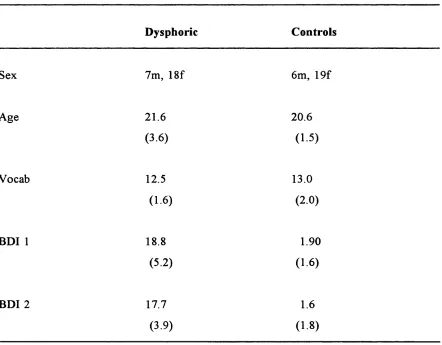
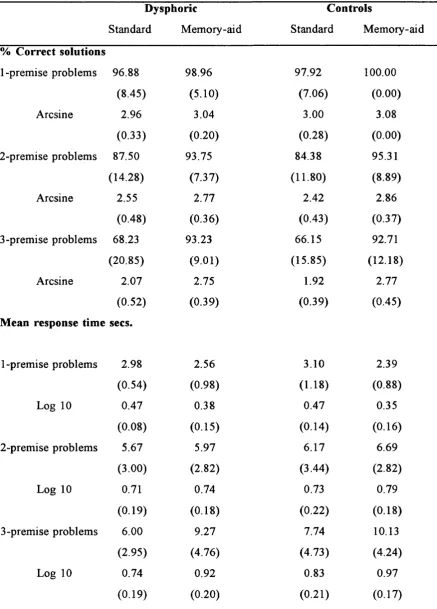
DSM-III-R Diagnostic Criteria for Major Depressive Episode 24 Means (and standard deviations) for age, vocabulary and BDI scores, and information on sex in the two groups 150 Means (and standard deviations) for performance measures
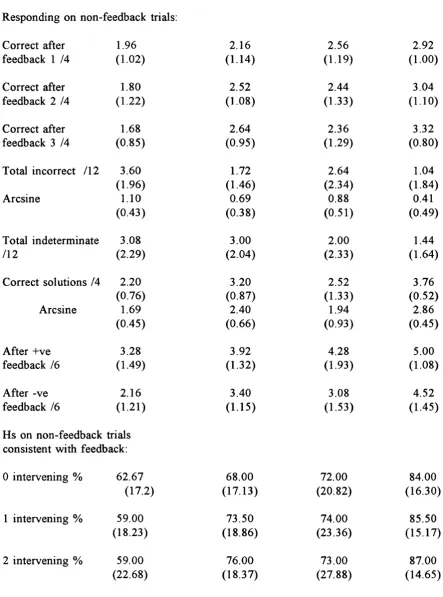
on the one- and two-dimensional problems for both groups 152 Means (and standard deviations) for performance measures in the standard and memory-aid conditions on the four-dimensional problems 159 Correlation of BDI2+with performance measures in the standard and memory-aid conditions on the four-dimensional problems 160 Means (and standard deviations) for age, vocabulary and BDI scores, and information on sex in the two groups 180 Means (and standard deviations) for number of premises in the standard and memory-aid conditions on the Integrative Reasoning
problems 184
Correlation of BDI2+ with number of premises in the standard and memory-aid conditions on the Integrative Reasoning
problems 185
Means (and standard deviations) for number of relevant premises in the standard and memory-aid conditions on the
Integrative Reasoning problems 188
Correlation of BDI2+ with number of relevant premises in the standard and memory-aid conditions on the Integrative Reasoning
problems 189
Means (and standard deviations) for age, vocabulary and BDI scores, and information on sex in the two groups 206 Means (and standard deviations) for the number of trials needed to reach criterion on the four levels of the pre-training trials in the two groups
(optimal = 4) 208
Table 6.5
Table 7.1
Table 7.2
Table 7.3
Table 7.4
Table 8.1
Table 8.2
Table 8.3
Table 8.4
Table 8.5
Correlation of BDI2+ with performance measures on the
Fault Diagnosis problems 214
Means (and standard deviations) for age, vocabulary and
BDI scores, and information on sex in the two groups 231 Means (and standard deviations) for performance measures
on the learning trials of the Fan Effect task 233 Means (and standard deviations) for performance measures on the recognition test of the Fan Effect task 236 Correlation of BDI2+ with performance measures on the Fan Effect
problems 237
Means (and standard deviations) for age, vocabulary and BDI scores, and information on sex in the two groups 247 Means (and standard deviations) for performance measures on the one- and two-dimensional problems for both groups 248 Means (and standard deviations) for performance measures in the report and report-aid conditions on the four-dimensional
problems 255
Means (and standard deviations) for performance on hypothesis listing ii the report and report-aid conditions on the four-dimensional
problems 258
Correlation of BDI2+ with performance measures on the
LIST OF FIGURES
Figure 4.1
Figure 4.2
Figure 4.3
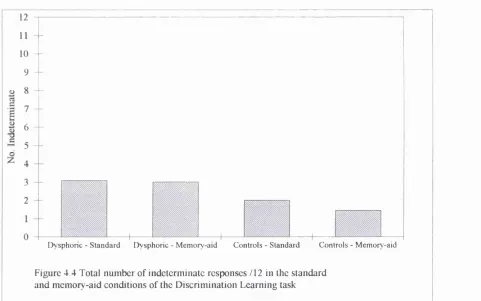
Figure 4.4
Figure 4.5
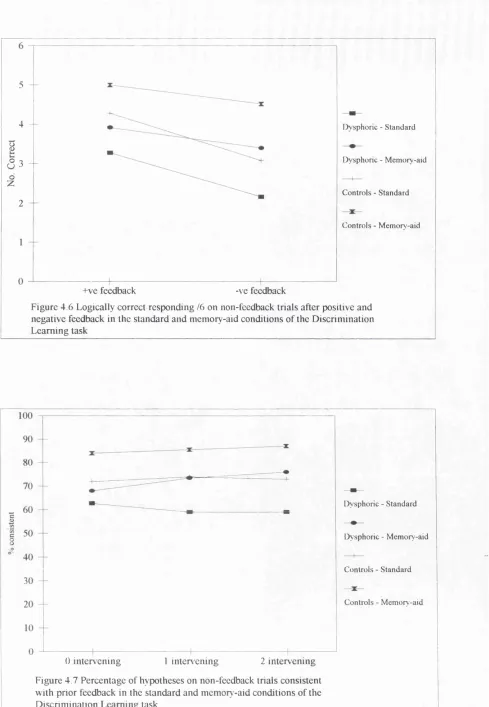
Figure 4.6
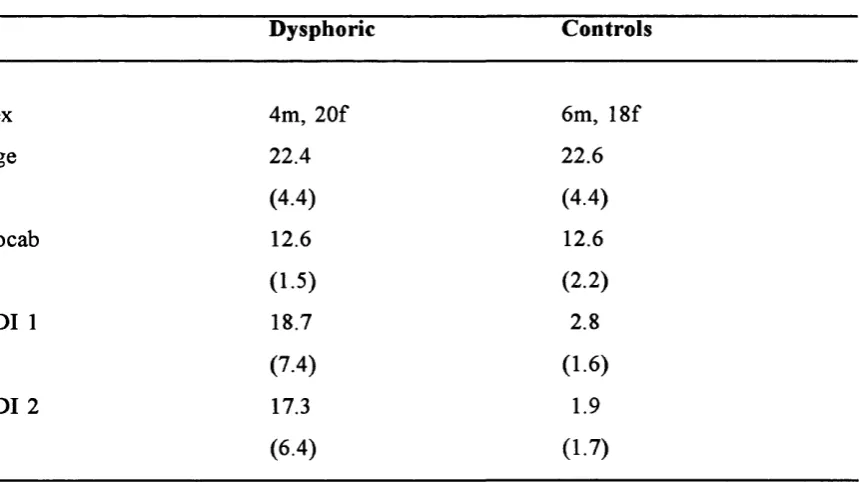
Figure 4.7
Figure 5.1
Figure 5.2
Figure 5.3
Figure 5.4
Figure 6.1 Figure 6.2
Figure 6.3
Figure 6.4
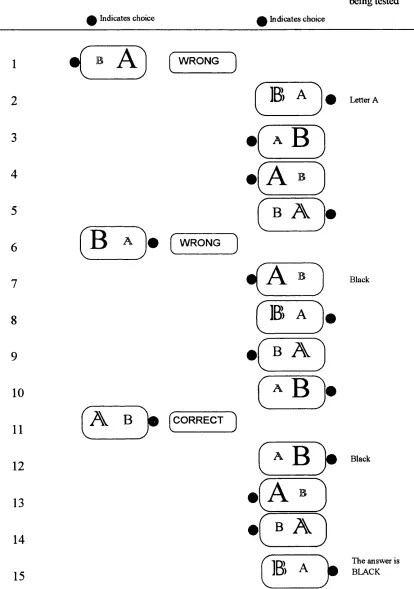
An example of a four-dimensional Discrimination Learning problem showing optimal performance in the memory-aid condition 167 Responding on non-feedback trials - number correct /4 after feedback 1-3 in the standard and memory-aid conditions of the
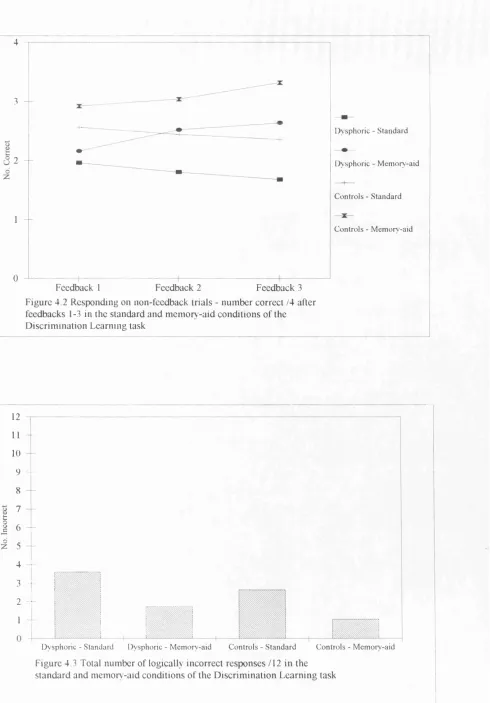
Discrimination Learning task 168
Total number of logically incorrect responses /12 in the standard and memory-aid conditions of the Discrimination Learning task 168 Total number of indeterminate responses /12 in the standard and memory-aid conditions of the Discrimination Learning task 169 Total number of correct solutions /4 in the standard and
memory-aid conditions of the Discrimination Learning task 169 Logically correct responding /6 on non-feedback trials after positive and negative feedback in the standard and memory-aid conditions
of the Discrimination Learning task 170
Percentage of hypotheses on non-feedback trials consistent with prior feedback in the standard and memory-aid conditions of
the Discrimination Learning task 170
Percentage correct solutions on 1-. 2- and 3-premise problems
of the Integrative Reasoning task 197
Mean response time (secs.) on 1-, 2- and 3-premise problems
of the Integrative Reasoning task 197
Percentage correct solutions on One- and All-relevant premise problems
of the Integrative Reasoning task 198
Mean response time (secs.) on One- and All-relevant premise problems
of the Integrative Reasoning task 198
Fault Diagnosis problem 220
Number of trials to criterion on the pretraining trials of the
Fault Diagnosis task 221
Correct solutions /3 in the reception condition of the Fault Diagnosis
task 221
Total omission and false positive errors in the reception condition of the
Figure 6.5
Figure 6.6
Figure 6.7
Figure 7.1
Figure 7.2
Figure 8.1
Figure 8.2
Figure 8.3
Figure 8.4
Figure 8.5
Figure 8.6
Figure 8.7
Figure 8.8
Figure 8.9
Number o f false positive errors connected to 'Yes' and 'No' indicators and to 'No' indicators only in the reception condition
of the Fault Diagnosis task 222
Number o f false positive, omitted, repetition and redundant
test errors in the selection condition of the Fault Diagnosis task 223 Number of error free and correct solutions /3 in the
selection condition o f the Fault Diagnosis task 223 Total omission and false positive errors on the learning trials
of the Fan Effect task 242
Percentage errors on the study and foil sentences of the
recognition test - Fan Effect task 242
Responding on Non-feedback trials - No. correct /4 after feedbacks 1-3 in the report and report-aid conditions of
the Discrimination Learning task 265
Total number of logically incorrect responses /12 in the report and report-aid conditions of the Discrimination Learning task 265 Total number of indeterminate responses /12 in the report and report-aid conditions of the Discrimination Learning task 266 Total number of correct solutions 14 in the report and report-aid conditions of the Discrimination Learning task 266 Logically correct responding /6 on non-feedback trials after
postive and negative feedback in the report and report-aid
conditions o f the Discrimination Learning task 267 Percentage o f hypotheses on non-feedback trials consistent with prior feedback in the report and report-aid conditions
o f Discrimination Learning task 267
CHAPTER I INTRODUCTION 1.1 DEPRESSION
Depression has been labelled as the common cold of psychiatry, suggesting a widespread and relatively trivial disorder. This description does capture one of the essential elements of depression. Depression is common, and everyone is likely to experience a feeling they will label as depression at some time in their lives, although, at its shortest, it may last only minutes or hours. However, depression also has a number of other characteristics that make it far from trivial. Depression, unlike the common cold, has a high human cost. This can be measured in terms of the number of suicides carried out as a result of depression; the reduction in quality of life for both sufferers and their families; and the economic costs in terms of lost working days and expenditure on treatment.
As a first step in trying to increase understanding of a concept such as depression, it is important to establish a definition. As a term, 'depression* has come to be used in a number of different ways, and it is essential to avoid the resulting ambiguities. In lay- terms, 'depression' refers to feeling 'fed up', a feeling that is often short-lived. In medical terms 'depression' may be used at a symptom level to describe feelings of sadness, or it may be used to refer to a syndrome or a nosologic disorder. A depressive syndrome goes beyond the 'normal' experience of just feeling low or sad. It refers to a depressed mood, accompanied by a cluster of symptoms, that persists over time, and causes disruption and impairment of functioning. For depression to be a nosologic category then diagnostic procedures are required to exclude other diagnostic categories. For example, it is possible for two individuals to present with very similar syndromal depressive features, but for one also to meet diagnostic criteria for schizophrenia, while the other does not.
During an episode of clinically significant depression the mood component may be predominantly one of sadness, or it may be a diminished ability to experience pleasure, termed anhedonia. The mood symptoms are accompanied by symptoms in the domains of bodily functioning, behaviour and cognition. The depressed person may experience certain physical changes, such as feelings of listlessness or fatigue. There are often
changes in sleeping and eating patterns, and the latter may manifest themselves in weight changes and constipation. Changes in mood and physical well-being often lead to a loss of motivation and changes in behaviour, such as a withdrawal from normal activities. Depression is also evident in certain cognitive changes. The depressed person is more likely to report thoughts associated with self-doubt, self-blame, guilt and a belief in their own worthlessness. Depression may also impair intellectual functioning, with patients frequently reporting difficulties with concentration, memory and 'thinking'.
The different symptoms of depression may interact with each other in ways that perpetuate the disorder. For example, the belief that intellectual functioning is impaired may cause great distress to the individual, who may interpret their symptoms as evidence of a dementing process. It seems likely that perceived inadequacies in cognitive function are likely to increase feelings of worthlessness. If cognitive deficits actually exist, then they may exacerbate the individual's problems by causing difficulties in performing tasks necessary for everyday functioning. This may result in negative feedback about performance from others, and thereby give evidence to support the depressed person's negative view of themselves.
1.2 COGNITIVE FUNCTION IN DEPRESSION
The role of cognitive function in depression has been the subject of a large body of work. The negative cognitive content frequently reported by depressed patients has led many researchers to an interest in the processing of emotionally-salient or personally-relevant material by depressed individuals. This work has resulted in a number of theories concerned with the way depressive processing of emotional material might play a role in causing and/or maintaining a depressive episode, which in turn has led to the development of treatment strategies. This work is outlined in section 2.1.3.3 of the current thesis. In contrast, the difficulties with concentration, memory and 'thinking' often reported by depressed patients has led other researchers to explore depressive processing of neutral materials, with the aim of identifying the nature and extent of any depressive deficits so that methods for remediation can be developed. This work has used standard measures of cognitive function taken from the fields of cognitive psychology and neuropsychology and is reviewed in section 2.3.
and learning, with other cognitive abilities receiving little attention. One ability that seems under-researched in comparison with memory and learning is reasoning. Reasoning refers to the ability to draw inferences, which is the means by which humans apply their knowledge and experience to specific situations. For example, if it is known it only snows when it is cold outside, then on seeing it is snowing the inference "it must be cold outside today" can be drawn. While reasoning has long been a subject of concern to philosophers, it has only expanded as a topic of interest in the field of psychology during the past thirty years, where it has been studied from both cognitive and neuropsychological perspectives. Only a small body of work exists on reasoning processes in depression, and it is difficult to draw any conclusions as to the likely nature and extent of any deficits on the basis of the existing work (see section 2.3.8).
While few studies have assessed reasoning processes in depression by examining performance on neutral tasks taken from the fields of cognitive psychology and neuropsychology, the work on processing emotionally-salient or personally-relevant stimuli has been concerned with reasoning in depression, although it has not usually been labelled as such. For example, the highly influential cognitive model of depression put forward by A.T. Beck (e.g. 1967; 1976; Beck, Rush, Shaw & Emery, 1979; see section 2.1.3.3.1) postulates depression is associated with systematic errors in thinking that help to maintain negative beliefs in the face of contradictory evidence. These 'thinking errors' can be interpreted as reasoning deficits in the sense that they are concerned with the processes by which individuals evaluate evidence and draw inferences. Similarly, the reformulated learned helplessness model of depression (Abramson, Seligman & Teasdale, 1978; see section 2.1.3.3.3) is concerned with the attributions depressed individuals make. An 'attribution' is the causal explanation an individual gives for an event. For example, an exam failure might be attributed to personal stupidity, lack of preparation, bad luck, etc. Because attributions require the individual to weigh up evidence and draw inferences, they are closely linked to the individual's capacity to reason.
characterise depressive processing of emotionally-salient and personally-relevant stimuli reflect more widespread depressive difficulties with logical thought. Understanding the effect of depression on reasoning with neutral materials has implications for both models of emotional processing in depression and models developed to account for patterns of depressive performance on neutral tasks. By providing a cross-over between these fields, it should also act to strengthen the links between these two bodies of work which may in future prove beneficial in increasing our understanding of cognitive function in depression, and in developing ways to remediate any deficits.
1.3 TH E AIMS OF THIS STUDY
CHAPTER H LITERATURE REVIEW
2.1 DEPRESSION
In section 1.1, it was noted depression is a widespread disorder, with serious implications in terms of cost for sufferers, their families, and society as a whole. It was also noted that the term 'depression' has a variety of meanings, and the importance of using stringent definitions that permit discrimination between these was highlighted. An outline was given of the symptoms associated with clinically relevant depression. In this section other aspects of depression relevant to the current thesis will be explored, including issues relating to the diagnosis, classification, epidemiology and aetiology of depression.
2.1.1 DIAGNOSTIC ISSUES
In section 1.1 syndromal depression was defined as a depressed mood accompanied by a cluster of symptoms, that persists over time, and causes disruption and impairment of functioning. Section 1.1 included a list of symptoms relating to the physical, behavioural and cognitive changes associated with a clinically relevant depressive syndrome. However, these symptoms may appear in almost any combination, often making diagnosis a highly subjective process. In section 1.1 it was noted that there is a crucial difference between diagnosing syndromal depression and establishing a nosologic category, the difference being the exclusion of other diagnostic categories in the latter. However, in practice this is often difficult to do, and may be subject to inconsistency.
Table 2.1 DSM-III-R Diagnostic Criteria for Major Depressive Episode
A. At least five of the following symptoms have been present during the same two-week period and represent a change from previous functioning; at least one of the symptoms is either (1) depressed mood, or (2) loss of interest or pleasure. (Do not include symptoms that are clearly due to a physical condition, mood-incongruent delusions or hallucinations, incoherence, or marked loosening of associations).
(1) Depressed mood (or can be irritable mood in children and adolescents) most of the day, nearly every day, as indicated either by subjective account or observation by others.
(2) Markedly diminished interest or pleasure in all, or almost all, activities most of the day, nearly every day (as indicated either by subjective account or observation by others of apathy most of the time).
(3) Significant weight loss or weight gain when not dieting (e.g. more than 5% of body weight in a month), or decrease or increase in appetite nearly every day (in children, consider failure to make expected weight gains).
(4) Insomnia or hypersomnia nearly every day.
(5) Psychomotor agitation or retardation nearly every day (observable by others, not merely subjective feelings of restlessness or being slowed down).
(6) Fatigue or loss of energy nearly every day.
(7) Feelings of worthlessness or excessive or inappropriate guilt (which may be delusional) nearly every day (not merely self-reproach or guilt about being sick). (8) Diminished ability to think or concentrate, or indecisiveness, nearly every day (either by subjective account or as observed by others).
(9) Recurrent thoughts of death (not just fear of dying), recurrent suicidal ideation without a specific plan, or a suicide attempt or a specific plan for committing suicide. B. (1) It cannot be established that an organic factor initiated and maintained the
disturbance.
(2) The disturbance is not a normal reaction to the death of a loved one (Uncomplicated Bereavement).
C. At no time during the disturbance have there been delusions or hallucinations for as long as two weeks in the absence of prominent mood symptoms (i.e., before the mood symptoms developed or after they have remitted).
-The concept of depression is associated with several long-standing controversies which remain unresolved. These fall loosely into two categories (Grove & Andreasen, 1992). The first includes issues relating to the boundaries of depression, both with regard to 'normality', and with regard to other psychiatric disorders. The second includes issues associated with the way in which depression may be classified into sub-types. These issues are considered in sections 2.1.1.1 and 2.1.1.2 below.
2.1.1.1 The Boundaries of Depression
The relationship between depression and normality has provoked a great deal of debate, and theorists remain divided. There are several intertwining and complex issues at stake in this debate. One issue is whether the depressive syndrome lies on a continuum with normal experience, or whether it represents a distinct illness. A related debate is whether mild, transient or situational depressive symptoms should be labelled as depression, or whether the term 'depression' should be reserved for disorders that meet diagnostic criteria of the type outlined above, with milder forms of symptomatology given another label (e.g. 'unhappiness'). The position adopted by individual theorists is likely both to reflect and inform their theoretical stance. For example, theorists interested in delineating the prognosis, course or aetiology of the disorder are likely to adopt a relatively narrow conceptualisation of depression as a means of identifying a homogeneous group for study. In contrast, those who conceptualise depression as being on a continuum with normal experience (e.g. Beck, 1976) may use models o f normal function to inform models of depression, and vice versa. As noted above, this issue remains unresolved, but it influences other issues relating to depression, such as the diagnostic issues discussed above, and issues relating to classification and epidemiology discussed below.
heterogeneous syndromes associated because of shared sub-types; d) that they are separate phenomena, each of which may develop into the other over the course of time, and e) that they are conceptually and empirically distinct phenomena. They also suggested a sixth possibility, that depression and anxiety have both common and specific features (Clark & Watson, 1991). Clark, Beck and Beck (1994) suggest difficulties in distinguishing between depression and anxiety have arisen because they share symptoms, have high co- morbidity rates, and there is item overlap on some standard depression and anxiety scales. It is not clear how the debate is likely to be resolved in the long-term, with evidence availabe to support all the alternative hypotheses.
2.1.1.2 Ways of Classifying Depression
As noted above, there is controversy regarding the way depression is classified into sub- types. This is related to the question of whether depression is a single, normally distributed dimension or whether it consists of discrete categories. Attempts to classify depression have often resulted in dichotomies, the most notable being neurotic versus psychotic, primary versus secondary, unipolar versus bipolar, and endogenous versus reactive.
The neurotic-psychotic distinction is an old one, but in general it denotes severity. The presence of delusional thinking, which may be either mood-congruent or non-congruent, triggers the diagnosis of psychotic. With regard to the primary-secondary distinction, primary depression refers to a first episode o f depression not preceded by any other psychiatric or physical disorder. All remaining depressions that are preceded by, or accompany, other psychiatric or physical disorders are labelled as secondary depression. While this seems relatively clear, Grove and Andreasen (1992 p. 33) note that several problems have emerged regarding the identification of what should be included as a relevant antecedent diagnosis. They conclude that these problems have resulted in a decrease in the popularity of this distinction.
evidence of differences between bipolar and unipolar depressive disorders in their course and epidemiology supports the distinction (e.g. Hirschfeld & Cross, 1982; Perris, 1992). The bipolar versus unipolar distinction is now incorporated in all the major classificatory systems (e.g. DSM-III-R, APA, 1987).
Unipolar depression subsumes a heterogeneous collection of disorders, and it is generally accepted there are likely to be one or more sub-types within this. The endogenous- reactive distinction has received most attention, but this concept remains controversial. This is due to confusion regarding the meanings of the terms which have changed over time. Originally the distinction was concerned with the aetiology of the disorder, with reactive depression thought to result from a life event, while endogenous depression was thought to result from biological processes, without an obvious external precipitant. There has been little support for a distinction based on these premises. Depressions which seem to follow life events do not necessarily differ in symptoms from those that do not, while depressions with 'endogenous' symptoms have often been found to follow stressful life events (e.g. Hirschfeld, 1981).
Over time the endogenous-reactive distinction has become associated with sub-types defined by symptom profiles. Endogenous depression, or melancholic depression as it is called in DSM-III-R (APA, 1987), is associated with the presence of symptoms thought of as predominantly biological. For example, the melancholic sub-type of depression in DSM-III-R is diagnosed if at least five of the following are present: loss of interest or pleasure in all, or almost all, activities; lack of reactivity to usually pleasurable stimuli; depression regularly worse in the morning; early morning awakening; psychomotor retardation or agitation; significant anorexia or weight loss; no significant personality disturbance before the first major depression; one or more previous major depressive episodes followed by complete, or nearly complete, recovery; previous good response to specific and adequate somatic anti-depressant therapy (DSM-III-R, APA, 1987). The remaining, and probably heterogeneous, depressions are subsumed by the reactive label. Gotlib and Hammen (1992) note that more work needs to be done to delineate meaningful sub-types in this residual (reactive) group, and that establishing the existence of any sub- types is only the first step in reaching an understanding of their meaning and implications.
developed. These take into account a range of symptoms commonly associated with depression, with each symptom given a score relating to its severity, and a total score calculated. The measures vary as to whether symptoms are rated by a clinician (e.g Hamilton Depression Rating Scale, Hamilton, 1967), or self-reported (e.g. Beck Depression Inventory [BDI], Beck, Ward, Mendelson, Mock, & Erbaugh, 1961), but they have in common the notion that cut-off scores can be used to distinguish between different levels of symptomatology.
2.1.2 EPIDEMIOLOGY OF DEPRESSION
Information about the epidemiology of a disorder is important both in terms of informing theories of aetiology, and in terms of planning and targeting treatment resources. Researchers have used several ways of estimating the frequency of disorders. Point or period prevalence refers to the proportion of the population who have the disorder at a given time. Incidence refers to the number of new cases which emerge during a time period. Life-time risk refers to the likelihood an individual will develop the disorder at some time during their life, and can be calculated in different ways.
A large number of studies have been carried out to investigate the epidemiology of depression. Before considering some of these, it is worth quoting the very neat summary relating to the situation in this country provided by Paykel (1989a) who concluded:
"About 1 per 1000 of the general population are admitted to hospital annually with depression; about 3 per 1000 are referred to psychiatrists, of whom two are treated as out patients. However, around 3 percent of the general population are treated in this country by general practitioners and an equal number probably consult and are not recognised. The prevalence rate in the population is about 5 percent although estimates vary considerably. The frequencies of the disorder will depend very much on how one defines it and where one studies it." (Paykel, 1989a, p.3).
more methodologically sound. However, the lack o f standardised diagnostic criteria in the very early studies made them difficult to interpret. Boyd and Weissman (1981) reviewed the findings of community studies that had used standard diagnostic techniques. They concluded that the point prevalence of depressive symptoms ranges between nine and twenty cases per 100 and that the point prevalence of unipolar depression is 3% for men and 4-9% for women. The lifetime risk of unipolar depression showed greater variation, and ranged from 2-12% for men and 5-26% for women (Boyd & Weissman, 1981).
More recently, the findings o f large-scale community studies using standardised diagnostic techniques have become available, such as the Epidemiologic Catchment Area (ECA) research programme. This is a multi-centred programme carried out in the USA, with the results reported by a number of authors. For example, Myers, Weissman, Tischler, Holzer, Leaf et al. (1984) found the six-month prevalence of major depression at three of the sites was 2% to 3.5%, with the figure generally higher for women than for men, and for those under 65 years old. Surtees and Sashidaran (1986) compared a sample from Edinburgh with one of the ECA community samples, and found comparable rates for one- month prevalence. Kamo, Hough, Burnam, Escobar, Timbers et al. (1987) calculated the lifetime prevalence of major depression at four of the ECA sites as ranging from 4% to 8.4%. However, it is important to note that while studies using the same methodology in different geographical areas may produce very similar estimates of depression rates, findings can differ when studies using different methodologies are compared. For example, Bebbington, Katz, McGuffin, Tennant and Hurry (1989) estimated lifetime (before age 65) risk of a minor depressive episode in Camberwell, London as 62%. The differences in chosen methodology are likely to reflect the many unresolved questions regarding the nature of depression, as discussed in section 2.1.1. For example, the selection of a cut-off point for caseness clearly has strong implications for the number of cases that will be subsequently identified, and this is likely to be influenced by whether clinical depression is perceived as on a continuum with 'normal' feelings of depression, or whether it is conceptualised as one or more discrete disorders.
carried out by Nolen-Hoeksema (1987), with both reviews concluding that women suffer depression at a ratio of approximately 2:1 compared to men. Hirschfeld and Cross (1982) also identified other consistent findings. Depression was more prevalent in younger (aged 18-40 years) than older adults; in unmarried relative to married people; and depressive symptoms were more prevalent in those of lower socio-economic status (SES) compared to those of higher SES. For other factors the findings were not so clear. There was no conclusive evidence on urban versus rural areas, and any differences in terms of race seemed to be mediated by differences in SES.
This brief review indicates how problematic it has been to establish an estimate of the rate of depression which is universally applicable and acceptable. While the availability of standard diagnostic criteria has improved the reliability and validity of many studies, the ongoing debates about the nature and classification of depression, as outlined in section 2.1.1, still create difficulties when interpreting the findings of this research. Nevertheless, it can be seen that even the most conservative of estimates indicate depression is a widespread problem, and this is particularly true for certain sections of the population, such as women, the young, and those of lower SES.
2.1.3 THEORIES OF DEPRESSION
As a prevalent, distressing, potentially life-threatening disorder, many attempts have been made to establish the causal and maintaining mechanisms of depression, and the most effective methods of treatment. While later theories, such as Gilbert's (1992) biopsychosocial model, bridge theoretical boundaries, early theories focused on one aspect of the individual or environment. Constraints of space mean it is not possible to give an exhaustive review of all existing theories of depression. Instead, a brief outline will be given of the main theories, with more detail on those most pertinent to the current thesis.
2.1.3.1 Psychological Theories of Depression
2.1.3.1.1 Psychoanalytic theories of depression
In his classic paper "Mourning and Melancholia", Freud (1917/1965) compared depression with grief. He suggested the symptoms of depression and mourning differ only in the absence of lowered self-esteem in mourning. They are both reactions to the loss of a loved object. However, Freud argued, while mourning clearly follows a death, melancholia may follow losses where the true nature or meaning of the loss are unavailable even to the depressed individual. Freud suggested unconscious rather than conscious processes underlie melancholia, and argued that it is the combination of lowered self-esteem, expressed through self-reproaches, with the apparent obscurity of the source of the depression which make the condition inexplicable to others. Freud suggested depression arises when the individual forms an attachment to another person, but then receives a rejection, real or imagined, which shakes this attachment. Instead of withdrawing the attachment and forming a new one, the depressed individual identifies the lost attachment with a part of their own self. Therefore all the negative symptoms of depression, including suicidal impulses, are directed against the internalised object (Freud, 1917/1965). Thus, Freud (1917/1965) conceptualised depression as an unconscious process of 'giving up1 the internalised attachment akin to the process in mourning of 'giving up' the person who is mourned .
Following on from Freud's theory of depression (1917/1965), there have been further contributions from writers within the psychoanalytic school (for a collection of the most important papers in this field see Gaylin, 1968). Many of these have focused on the role of the early mother-child relationship in the later development o f depression (e.g. Klein, 1934/1968). The influential work of John Bowlby on attachment (e.g. 1978; 1981) draws on many of the ideas expressed in earlier psychoanalytic writings. He has argued that depression in adulthood is related to the failure of the child to form a stable, secure attachment with the parents, or the experience of an actual loss of a parent. These experiences are associated with feelings of helplessness, and colour the individual's internal representations of self and others.
2.1.3.1.2 Behavioural theories of depression
Behavioural approaches have tried to understand depression in terms of specific learning histories and the environmental responses or stimuli which act to maintain maladaptive behaviours. The social reinforcement theory put forward by Lewinsohn and his colleagues (e.g. Lewinsohn, 1974; 1975; Lewinsohn, Youngren & Grosscup, 1979) and a complementary theory put forward by Coyne (1976) will be considered in this section, while for broader reviews of behavioural theories of depression see Gilbert (1992, pp.413- 433) and Gotlib and Hammen (1992, pp.71-74).
Lewinsohn (1974; 1975) relates depression to a low rate of response-contingent positive reinforcement (RCPR). He notes that it is the lack of contingency on the behaviour rather than the lack of positive reinforcement per se which is the crucial factor. Thus, giving positive reinforcement that is non-contingent does not reduce depression. The total amount of RCPR received by an individual is presumed to be a function of three sets of variables: a) the number of events that are potentially reinforcing for the individual; b) the number of potentially reinforcing events that can be provided by the environment; c) the extent to which the individual possesses the skills and emits the behaviours that will elicit reinforcement from the environment. In particular, deficits in social skills, defined as the emission of behaviours which are positively reinforced by others, are seen as important in the development and maintenance of depression.
This brief description of two behavioural theories of depression illustrates the contrast between psychoanalytic theories, with their emphasis on early experiences of attachment and loss, and behavioural theories, which focus on the influence of the reinforcers in the individual's current environment. However, it should be noted that while these theories may differ in emphasis, there are common themes, with both acknowledging the importance of interpersonal interaction in depression While the psychoanalytic theories focus on the intrapersonal conflicts that arise as a result of dysfunctional interpersonal interactions, behavioural theories are concerned with the impact o f social reinforcement on the behaviour of the depressed individual.
2.1.3.2 Other Theories of Depression
Psychoanalytic and behavioural theories of depression postulate a primary role for psychological processes in the aetiology of depression, but other theories have placed a different emphasis. As noted above, both psychoanalytic and behavioural theories acknowledge the importance of interpersonal interactions in the development and maintenance of depression, but some theorists have gone further, giving the social environment a primary role. In contrast, other theories of depression have sought physical causes within the individual to explain the disorder. Both social and physical theories of depression are considered in brief in this section.
2.1.3.2.1 Social theories of depression
bring about the onset of a depressive episode, although they do determine when an episode will occur. The influence of provoking agents is thought to be mediated by vulnerability factors (Brown & Harris, 1978). These are aspects of the individual's social situation, such as the presence or absence o f a confiding relationship, that can either buffer the individual from the impact of the provoking agent, or exacerbate its effect. Brown and Harris (1978) also examined factors which influenced depressive symptoms after the onset of a depressive episode. With regard to severity, they reported severe events occurring after onset, past bereavements, and a previous episode of depression were all associated with increased severity of symptoms. Thus, Brown and Harris (1978) assume complex interactions between aspects of the individual's social environment can explain the onset and nature of a depressive episode.
2.1.3.2.2 Biological theories of depression
Following the development of successful drug treatments for depression, research into physical changes in depression initially focused on biochemical systems (for reviews see Delgado, Price, Heninger & Chamey, 1992; Paykel, 1989b; Tucker & Liotti, 1989). Much of this work may have implications for understanding cognitive function in depression, but at present the overall picture is still very unclear and a full review is beyond the scope of this thesis. The current review will be confined to a brief outline of the work done using modem imaging techniques, and the implications o f this work for understanding cognitive function in depression.
Investigations of depression using CT and MRI have been less informative than anticipated, but these techniques have played an important role in increasing our understanding of depression. Important structural clues about the neuroanatomy of depression have come from CT and MRI studies of patients with depression secondary to other brain disorders, such as strokes and tumours. These have generally been consistent in finding left anterior lesions are associated with an increased likelihood of developing a secondary depression (e.g. Robinson, Kubos, Starr, Rao & Price, 1984; for a review see Cummings, 1993).
While CT and MRI permit detailed examination of the structure of the brain, other imaging techniques allow visualisation and measurement of brain function. Two techniques of this kind are used most often: single photon emission computed tomography (SPECT) and positron emission tomography (PET). These can be used to measure regional cerebral blood flow and cerebral metabolic rate, both of which are indicators of brain activity. Studies carried out using these techniques with depressed subjects (Ss) have found evidence of abnormal function in several brain regions, with the frontal lobes of the brain implicated most consistently (e.g. Bench, Friston, Brown, Scott, Frackowiak & Dolan, 1992; Sackeim, Prohovnik, Moeller, Brown, Apter et al., 1990).
2.1.3.3 Cognitive Theories of Depression
In section 1.2 it was noted that cognitive theories o f depression may offer important insights into reasoning processes in depression, and these are considered in this section. Two early models of cognitive function in depression will be considered in detail: Beck's cognitive model (e.g. Beck, 1967); and the reformulated learned helplessness model (e.g. Abramson, Seligman & Teasdale, 1978). Both models incorporate hypotheses regarding the nature of depressive thought, and are therefore of direct relevance to the current thesis. Following consideration of these two theories, subsequent cognitive theories o f depression will be reviewed. A large number of studies have been carried out to test the predictions of the cognitive theories of depression reviewed in this thesis. Due to considerations of space, it will not be possible to review this literature in its entirety, but work relevant to the question of reasoning in depression will be assessed.
At this point, it is important to address a methodological issue which is pertinent to the work carried out to assess cognitive theories of depression. Two populations have been utilised to study cognitive processes in depression: (a) clinical populations of individuals who have a diagnosis of depression; (b) nonclinical populations of individuals. When using the latter group, the experimenter may either induce a manifest emotional state using standard mood induction procedures (e.g. Velten, 1968), or evaluate current mood state and allocate Ss on this basis. The implications of these different approaches will be considered in section 2.3.1 with regard to measuring cognitive function in depression in relation to neutral stimuli. For the following review of depressive processing of emotional stimuli, relevant studies using all these methodological approaches will be considered.
2.1.3.3.1 Beck's cognitive model of depression
The work of A.T. Beck (e.g. Beck, 1967; Beck, 1976; Beck, Rush, Shaw & Emery, 1979; Kovacs & Beck, 1978) is a major influence in the field of depression, and has attracted a great deal of interest and research. Although there has been some variation in the details of Beck's theory over time, the basic principles have remained generally intact, and these are outlined below.
Beck's theory. These are defined as follows (Beck, Rush, Shaw & Emery, 1979): 1) they are automatic in that they habitually appear without 'reasoning' thought processes taking place; 2) they are involuntary, and the individual may have great difficulty in inhibiting them; 3) they are irrational and dysfunctional; 4) they are accepted as the truth by the individual and it is only on reflection that their irrational nature can be perceived.
The cognitive theory of depression consists of three concepts which explain how automatic thoughts are formed, and their role in depression. These are schemata, the cognitive triad, and cognitive errors. Beck (1967) used the term 'schemata' to refer to stable cognitive structures which are the basic components of cognitive organisation. Schemata actively interpret incoming information to make sense of and encode it. Dysfunctional schemata are thought to develop as a result of early life experiences, and take the form of excessively rigid and inappropriate beliefs about the self and the world (Beck, Rush Shaw & Emery, 1979). Beck (1967) postulated dysfunctional schemata may lie dormant in people vulnerable to depression, but once triggered they may override more appropriate schemata, and, as their activity level increases, may be activated by increasingly inappropriate stimuli.
When depressogenic schemata are activated, negative thoughts characterised by a negative view of the self, the world, and the future are produced: the cognitive triad. Beck, Rush, Shaw and Emery (1979) suggest the depressed person perceives himself as "defective, inadequate, diseased or deprived", and therefore worthless. He interprets his experiences as examples of his inability to achieve anything or perform in an adequate manner, and sees his environment as difficult and full of problems. With regard to the future, the depressed individual believes it will be unpleasant and full of failure.
associated with depression:
1. Arbitrary inference - drawing a negative conclusion in the absence of supporting data. 2. Selective abstraction - focusing on a detail out of context, often at the expense of
more salient information.
3. Overgeneralisation - drawing a conclusion that relates to a wide variety of things on the basis of a single event.
4. Magnification and minimisation - making errors in evaluating the importance and implications of events.
5. Personalisation - relating external (often negative) events to the self when there is little reason for doing so.
6. Absolutistic, dichotomous thinking - thinking in polar opposites (black and white). Something is all good, or totally bad and a disaster.
Both Beck and other theorists have added to this list over time. For example, 'catastrophising' is the belief that one should always expect the worst since this is the most likely outcome. However, the basic principle of the concept of thinking errors has remained relatively unchanged. Thus, Beck's theory of depression (e.g. 1967; 1976; Beck, Rush, Shaw & Emery, 1979) clearly postulates that depression is associated with faulty reasoning processes which may play a role in causing and/or maintaining depression.
2.1.3.3.2 Evaluation of Beck's cognitive model of depression
Beck's cognitive model of depression has been the subject of a large volume of research. This has focused on several hypotheses associated with the model: whether dysfunctional schemata can be identified in individuals who are vulnerable to depression at times when they are not depressed; the efficacy of cognitive therapy in relation to other treatments; and whether thinking errors can be identified and measured in depressed individuals. Constraints of space mean it is not possible to evaluate all this research. Therefore this review will be limited to work relevant to the issue of reasoning processes, or 'thinking errors', in depression, and this is considered below.
the main character in the vignette. The response options reflect two dichotomous and crossed dimensions in terms of logical inference based on the information provided in the story: depressed versus nondepressed; and distorted versus non-distorted. Several studies have been able to distinguish depressed and nondepressed Ss on the basis o f the depressed-distorted responses in both clinical (Krantz & Gallagher-Thompson, 1990; Krantz & Hammen, 1979) and nonclinical samples (Blaney, Behar & Head, 1980; Hammen, 1978; Hammen and Krantz, 1976; Krantz & Hammen, 1979).
Lefebvre (1981) described the Cognitive Error Questionnaire (CEQ). This consists of 24 vignettes followed by a statement relating to the vignette and designed to represent one of the cognitive errors posited by Beck (see section 2.1.3.3.1). Ss were asked to rate how similar the statement was to the thought they would have themselves in response to the situation described in the vignette. Lefebvre (1981) compared clinically depressed patients with chronic pain patients who were assigned to depressed or nondepressed groups on the basis of their score on the BDI, and a normal control group. He reported that depressed Ss with and without chronic pain showed similar levels of cognitive distortion, and significantly more than nondepressed Ss.
The Cognitive Response Test (CRT; Watkins & Rush, 1983) is a less structured measure of cognitive distortion in depression. The items are presented in an open-ended, sentence completion format, and responses are scored on the basis of standardised rules as rational, irrational-depressed, irrational-other, or unscorable. Watkins and Rush (1983) found the CRT distinguished depressed patients from three nondepressed control groups (nondepressed psychiatric patients; nondepressed medical patients; normal controls), with depressed Ss making a significantly greater number of irrational-depressed responses, and significantly fewer rational responses. The groups did not differ on the other two response types. Wilkinson and Blackburn (1981) also found currently depressed patients made more irrational-depressed responses on the CRT than recovered depressed patients, patients who had recovered from psychiatric disorders other than depression, and normal controls. The recovered depressed Ss did not differ significantly from the other two control groups.
five questions designed to assess five response dimensions: emotional impact, attribution o f causality, generalisation across time (implications for the future), generalisation across situations (how far events were seen as typical), and perceived uncontrollability (what could be done about the situation). Fennell and Campbell (1984) reported on the performance of currently depressed and previously depressed Ss drawn from patient and community populations, depressed patients with a diagnosis other than depression, nondepressed psychiatric patients, and nondepressed community-living Ss. The CQ was found to discriminate between currently depressed and nondepressed Ss, with depressed Ss showing greater distortion. Generalisation was the most powerful discriminator between the groups. Distortion did not characterise all psychiatric patients, but was specific to those with depressed mood. Previously depressed Ss did not differ significantly from nondepressed Ss, except on generalisation from negative scenarios.
In summary, several measures designed to measure thinking errors in depression have been found to discriminate between depressed and nondepressed Ss. However, these findings are not entirely consistent with Beck's notion o f a range of different thinking errors (see section 2.1.3.3.1). It was reported that during the development o f three of the measures described above (CBQ; CEQ; and CRT), independent judges had difficulty in reliably separating one type of thinking error from another (Krantz & Hammen, 1979; Lefebvre, 1981; Watkins & Rush, 1983). As a result, two of the measures (CBQ; Krantz & Hammen, 1979; CRT; Watkins & Rush, 1983) used a single category of 'distorted' responses, while Lefebvre (1981) reported the initial seven cognitive errors had to be condensed into four, and the final analysis found little difference in Ss' endorsement of the different error types. Watkins and Rush (1983) commented that the common denominator in responses which judges identified as 'distorted' appeared to be the process of exaggeration in which Ss drew conclusions unwarranted by the premises or facts presented. Perhaps as a result of these problems, interest in measuring cognitive thinking errors in this way seems to have declined during the last ten years, although some of these measures have been adapted to investigate the effects of information valence on depressive cognition (e.g. Krantz & Gallagher-Thompson, 1990) .