Delving The Sentiments To Track Emotions In
Gender Issues: A Plutchik-Based Sentiment
Analysis In Students’ Learning Diaries
Jasten Keneth D. TreceñeAbstract: Several emotional obstacles are known to obstruct learner’s academic development, however, learners will be able to accomplish well if they feel positive emotions towards a lesson. This research aimed to explore the views of students towards gender issues based on the learning diaries of the students. The students are required to write their reactions to the topics discussed, their feelings and other thoughts that relate to the topic. This study used the sequential exploratory design utilizing content and sentiment analysis. The use of sentiment analysis was to extract emotions from the students’ learning diaries based on Plutchik’s eight-wheel of emotions. Fifteen diaries selected based on the contents that fit on the rubrics. The results revealed various emotions expressed in the students’ learning diaries over time such as joy, trust, anger, sadness, and fear. There has been a major shift of emotions throughout the the period, from positive to negative emotions. It was found out that the emotions of the students expressed during classroom discussions were influenced by the topic and will depend on the teaching strategy. Overall, this study will improve the teaching and learning in the classroom by analyzing the sentiments, emotions in students’ learning diaries to help administrators especially teachers address problems and take corrective actions.
Index Terms: Discrimination, Gender, Learning, Sentiment Analysis, Sex, Social Studies, Teaching,Text Mining, Violence
—————————— ——————————
1.
INTRODUCTION
CLASSROOM teachers are continually looking for ways to address their student’s challenges during the learning process. Several emotive challenges can obstruct the learnings of the students [20]. Classroom teachers can integrate learning diaries as a method of students learning assessment, this will also help the teachers record the learning journey and the emotional well-being of students throughout the course. Understanding the student’s diaries to discover their emotions towards the learning experience as a whole may provide enhancements in the quality of the teacher-student relationship and the teaching [6]. Recently, there has been increased interest in developing sentiment analysis programs to determine the sentiment content of the texts in numerous fields, like in news headings, movie reviews and in Twitter posts for emotions [29]. However, little empirical studies have been done applying sentiment analysis to academic situations, particularly to the analysis of students' learning diaries. There are various possibilities for the improvement in the communication between teachers and students with the application of sentiment analysis. It was based on several studies that the students’ emotions towards the learning experience have a significant influence on learning outcomes [14], and was documented that those learners who have positive feelings towards the classroom discussion are generally more motivated to finish the goals throughout the course [20]. A study conducted by [16], who presented an application for exploring, analyzing, and visualizing students’ sentiments expressed in learning diaries, they used the Plutchik’s eight emotion categories to extract the sentiment by the system. The outcome of the study can contribute for improving the teacher – student relationship and enhancing the learning experience of the students. However, the paper did not delve on the themes that will emerge from the corpus of students’ diaries.
[1] stressed that knowing the emotions of students can be beneficial to the teachers such as helping the students understand their students’ learning behavior and to address challenges like misperception and boredom, which weaken students’ engagement in the classroom. One way to distinguish the feelings of the students is through feedback after the lecture [1]. This study will also use feedbacks specifically students’ learning diaries to track the emotion of the learners in every learning competency. Another study of Altrabsheh, [2] presented that understanding the learning emotions of students can enhance the education and the performance of the students. They took response from the students at the end of the semester. It would enable students and lecturers to address teaching and learning issues in the most beneficial way for the students. Examining the response of the students using sentiment analysis techniques can distinguish the polarity of the feelings of the students. However, the teaching and learning issues would be more beneficial if feedbacks are collected by the end of every lecture or classroom discussions. It will help the teacher track the emotions of the students and will help identify the feelings of the student towards the topic.
Another study who classified the sentiments of students’ e-learning blogs and forums. An experiment was performed using the three feature-selection methods, mutual information, information gain, and chi-statistics. The study focused only on the e-learning, with some exceptions looking at classroom learning [16]. Some of the current works in SA focused only whether the statement is positive, negative or neutral. They collected students’ feedbacks from the e-learning sites or blogs and feedbacks at the end of the semester. In this paper, we go beyond polarity and will identify expressions of emotions such as anger, anticipation, disgust, fear, joy, sadness, surprise, and trust, and how these emotions evolve throughout the diary, for a richer understanding of the student’s texts, since texts are collected every after the learning competency has been taught. This study can be of help to improve the teaching and learning in the classroom by analyzing the sentiments and emotions in students’ learning diaries to support the administrators especially the teachers know the challenging part of the students’ learning journey and ————————————————
1135 provide possible solution to the problem. Moreover, knowing
the emotions and sentiments of students through learning diaries will improve communication between the teacher and the students allowing the teacher to have an overall summary of the students' opinion.
2 STATEMENT
OF
THE
PROBLEM
Since then, classroom teachers are continually finding various methods to solve problems experienced by the students during the learning process. They are also looking for means to understand the emotions and sentiments of learners about a particular lesson. This research will delve into the sentiments of students from their learning diaries towards a specific lesson in Social Studies 10 using the Sentiment Analysis.
Furthermore, this study sought answers to the following research questions;
1. What are the words associated and the emerging themes from the term document matrix based on the learning diaries of the students?
2. What are the most prominent keywords in the term document matrix derived from the students’ learning diaries?
3. What are the emotions of students towards each learning competency for the 3rd quarter in Social Studies 10 (Gender Issues and Challenges)?
4. What are the sentiments of students towards gender issues based on their learning diaries?
3
METHODOLOGY
3.1 Research Design
This study used the sequential exploratory design utilizing content analysis. The initial phase is the qualitative data collection and analysis followed by quantitative data generation and analysis [9]. The results from both methods were integrated together at the end of the study during the interpretation phase [10].
3.2 Participants of the Study
The participants of the study were the Grade 10 – Zircon learners of Calunangan National High School for the School Year 2018 – 2019 who were enrolled in Social Studies 10. The learners are required to write their reactions to the topics discussed, their feelings during the session and other thoughts that are related to the topic. The researcher read the diaries thoroughly and chose only those diaries with entries that fit on the rubrics for the assessment of their diaries. Fifteen (15) diaries selected for the analysis of the study.
2.3 Data Gathering Procedure
The data collected through the learning diaries of the Grade 10 – Zircon students enrolled in Social Studies 10. Learning diaries are progressively included in academic settings used for facilitating or assessing the knowledge of the students (Moon, 2003). It offers meaningful ideas as to what the learners think and feel during classroom sessions and if they encounter challenges during the discussion. The students are required to write their reactions to the topics discussed, their feelings and other thoughts that relate to the subject for each of the learning competencies from the curriculum guide of Social Studies 10.
Since ―Gender‖ is considered as one of the pressing
issues in our time, the researcher chose the 3rd quarter topic in Social Studies 10, Gender issues and challenges. The subject is using the Filipino language; however, the students are required to write their learning diaries in English for convenience during data analysis and to preserve the rawness of the data. End of the quarter is the submission of their learning diaries. The researcher thoroughly read the entries of the diaries and chose those diaries that the researcher thinks will contribute much for the study and met the criteria of the rubric used to assess the diaries. The rubric used to assess the learning diaries of the students was adopted from mycourse.aalto.fi (2018) and evaluated by licensed professional teachers.
2.4 Data Analysis Tools
The process of data analysis was based on the design used in the study. The first part is on the framing of themes from word association based on the term-document matrix generated from the learning diaries of the students. The second phase is on the interpretations of the qualitative data using graphs, document matrix, polarity, and other quantitative results. During the sentiment analysis, the unstructured dataset was analyzed using R programming. R is a programming language and environment used for statistical computing and graphing. R provides a highly extensible and wide variety of statistical and graphical techniques, such as linear and non-linear modeling, classical statistical tests, time-series analysis, classification, clustering, association, and text mining particularly sentiment analysis [26]. Sentiment Analysis (SA), is a natural language process that creates meaningful information out of the textual data [2]. The technique was used to examine the learners’ diaries and will help the classroom teachers understand the academic performance of the learners. The content from the learning diaries of the students were encoded in Microsoft Excel and saved in CSV format. Each competency were encoded in a separate Excel file, this was used for the analysis of emotions for each competency. Afterwards, the texts were pre-processed and cleaned using R programming language.
Text pre-processing and Cleaning
The pre-processing of data was done through removing stop words, removing unnecessary punctuation, words in upper case, correcting spellings, and finding exclamation marks or question marks. This stage will help increase the accuracy and to decrease error in the data.
Sentiment Analysis using Plutchik’s Eight-Wheel of Emotions
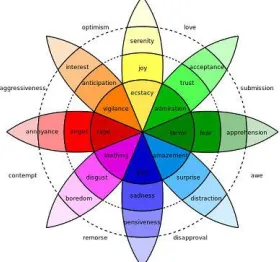
Figure 1. Plutchik’s Wheel of Emotion Model (Image from
Researcgate.net)
The model above was developed by Robert Plutchik [25]. The eight primary emotions are joy, sadness, anger, fear, trust, disgust, surprise and anticipation [25].
2.5 Research Reflexivity
The author of the study was the classroom teacher of the subject for the school year 2018 - 2019. The students are required to submit the entry of their learning diaries on the next day before the following discussion started so that students can still remember what happened during the session. The grammar of the content of the diaries was not corrected to preserve the rawness of the data. The study will help the teacher improve the teaching practice, thus enhance the learning of the students. It will also apply to all teachers.
2.6 Ethical Considerations
The goal of the research is to explore and track the emotions of students on gender issues and challenges which is a topic during the 3rd quarter of Social Studies 10. Before the data gathering started, the participants were informed on the purpose of the study. Furthermore, to remain the anonymity of the data, the names of the students remain hidden.
4 RESULTS
AND
DISCUSSIONS
TABLE1
TOP 3 TERMS APPEARED IN TERM – DOCUMENT MATRIX Terms
Gender People Discrimination
Top 3 Keywords based on the result from the term-document matrix
The prominent terms appeared was analyzed using R programming in R studio. Based on the term-document matrix, gender, people, and discrimination was the top 3 words based on the corpus of sentiments from the learning diaries of the students. To better understand the meaning of the prominent words that appeared in the corpus, this research further expands and dig into the meaning of the words, and to determine the connections between words using word associations. Word association is also used in psycholinguistics in finding correlation between ideas, concepts, or words. It established a presumption that one word entails the existence of the other one [31].
TABLE 2
WORD ASSOCIATION OF THE WORD “GENDER”
Category A Category B Category C
Words C Words C Words C
Diverse 0.61 Equality 0.25 Spirit 0.61 Roles 0.29 Countries 0.24 Concepts 0.23
Two 0.31 Accepting 0.40 Expressio ns
0.23
Sex 0.33 Identity 0.22 Meaning 0.21 Gender Bias Being Sensitive Vital Views
Words associated with the term gender with the correlation (C) of 0.2.Table 2. shows the words associated with ―Gender‖ with a correlation limit of 0.2. The associated words were categorized according to a unifying context. The observation indicates that students view gender bias with diversity, gender roles, and the classification of sex. Students said that despite gender biases, other countries are already accepting gender diversity. ―Today, other countries are already accepting other kinds of gender, such as androgynous, bi-gender, cisgender, and queer.‖ According to [24], our society has a set of ideas on how we think of both sexes to dress, behave, and present themselves. However, based on the learning diaries of the students, they defined and learned that gender roles are already changing over time. ―Our teacher discussed what gender roles are, and he said that it is a social role that is encompassing a range of behavior and attitude that are generally accepted by the society. ‖. ―Today, gender roles are already different.‖ Another student also said that ―Gender roles before are not equal, if you are a woman, act like a woman, unlike today, women are already working to earn money, they do not stay home.‖ Another theme that emerged was being sensitive; the concept of gender sensitivity has been established to minimize obstacles about personal and economic enlargement made by sexism [33]. They also stressed that gender sensitivity is not only about pitting women against men. UNESCO believed that gender awareness in the form of education would enable the students understand in matters of gender are acceptable or not. Thus, it is essential that gender sensitivity is included in the curriculum to make the students appreciate gender diversity. One student said, ―For me, the topic is essential for us students because for us to be aware of the reality and in accepting and respecting other genders.‖ As part of the awareness, knowing the concepts, meanings, and different expressions of genders are vital for the students. ―I am happy while our teacher is discussing because I was able to know and appreciate different gender expressions.‖ Students associate ―gender‖ on the concepts, meanings, and expressions.
TABLE3
WORD ASSOCIATION OF THE WORD “PEOPLE”
Themes Word Association
Words Correlation Sentiments reflecting
peoples’ awareness discrimination Involve 0.30 0.27
Bad Many Cause
0.25 0.20 0.20
Solving issues of violence and discrimination
Organize 0.27
World Organizations
1137 Solve violence 0.20
Words associated with the term people with the correlation (C) of 0.2.The table above shows the words associated with the term ―People‖, based on the corpus from the students’ learning diaries. The term ―people‖ are associated with discrimination, involve, bad, many, cause, organize. The terms were categorized into two (2), and come up with two themes. The interpretation of the themes was based on the content from the learning diaries of the students. Students expressed their sentiments towards discrimination among genders, ―I felt sad because these LGBT members are experiencing extreme discrimination from the people.‖. However, students are grateful because different organizations are responding in solving the issue of violence and discriminations. ―I am happy because the world association is active in solving the issues of violence and discrimination.‖. Moreover, students appreciated that gender issues, specifically discrimination among genders was part of the topic since it gave them a better understanding of the issue. One student said, ―I feel happy when gender issues, specifically discrimination were discussed on our class because it gave us more understanding about the issue and our limitations‖. Another student expressed interest on the issue, ―For me, this is (topic) is more interesting because I am really curious about the discriminations that the members of LGBT experience. ‖. According to [12], if students are interested in the topic can mean that they care about it, that it is important to them, and they have positive feelings about it.
TABLE4
WORD ASSOCIATION OF THE WORD “DISCRIMINATION”
Themes Word Association
Words Correlation Contextual concerns especially 0.29
remember 0.29
Violence words
0.27 0.21
Dynamic society people 0.30
LGBT 0.29
The table above presents the words associated with the term ―discrimination‖. From the learning diaries of students, especially, remember, violence, words, people, and LGBT were associated of the word ―discrimination‖. The terms were again categorized based on their merging meaning. The researcher comes up with two (2) underlying themes from the categories, (a) Contextual Concerns, and (b) Dynamic Society. Gender discrimination has been an important topic to the students wherein they freely expressed their sentiments towards the pressing issue. They stressed that people should accept gender diversity and be accepted in society. ―Discrimination to genders especially to the members of the LGBT are difficult for them, other people do not respect and accept them.‖ Below is the visualization of emotions of the students as it move over time as detected in the student’s diaries.
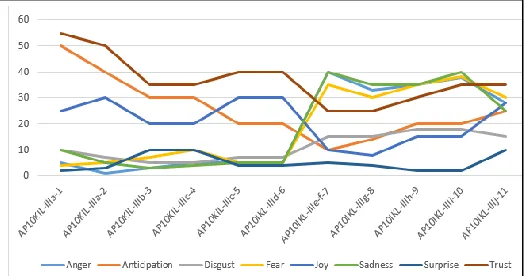
Fig. 2. How the emotions of the students evolve over time
based on the eight wheel of emotions
From the graph above, students feel, low anger from the first six (6) learning competency and immensely increased in the 7th learning competency, this can been seen also with fear and sadness. On the first competency, students has high anticipation, and it decreased until the 11th competency, however, the feeling of disgust remains on the low level of expressed emotions by the students. Moreover, students felt trust during the first competency and gradually decreasing over time. The lesson on gender issues and challenges were divided into three (3) content standards. Content Standard 1: Gender diversity in every society and the concept of gender and sexThe first standard revolves on the topics with regards on the meaning of gender and sex, different kinds of genders, and gender roles. As seen in the figure above, the students felt joy, gave anticipation and trust during the classroom discussions throughout the sessions. The highest percentage of emotions were trust. Based on the corpus, respect showed a significant contribution to the emotion of students on trust. Students trust the teacher that they will learn more. Trust is the essential component of a meaningful relationship [8]. According to [4], if students trust the teacher, there is willingness to participate during classroom discussions. Providing positive emotions to the students are very valuable to the learning of students, these will provide positive social behavior in the classroom such as being cooperative, sharing, and engaging in optimistic collaboration with others. According to [8], the role of the teacher is to support the students, and if they needed something to be better, it is the job of the teacher to figure out how to get that for them. Alliance for Excellent Education [4], also emphasized that if the students feel that the teachers cares about them and feel support, they are more likely to listen to the teacher. It will produce an engaging classroom climate which will help them to learn more.Deductively, the students showed a positive emotion towards the whole duration of classroom discussion, activities and others. They also expressed the feeling of joy, based on the analysis of their learning diaries, students said that they love how the classroom teacher delivers the topic.
Content Standard 2: Issues relating to gender and in the society
the learning competency number 7 (AP10KIL-IIIf-7) from positive to negative emotions wherein anger and sadness has 40.0% and fear with 35.0%. Based on the sentiment analysis of corpus, the students were moved by the topic especially on gender discriminations and abuses. ―People have no right to judge or discriminate others especially the members of the LGBT‖, ―Women should not suffer from any form of abuse!‖. The students’ initial viewpoint regarding gender discrimination and abuse is a manifestation that the classroom teacher was able to deliver the lesson effectively since their emotions were influenced by the topic. These studies have found out that the ability to impact the social and emotional development of the students will depend on the delivery and strategies of the teachers of a certain topic [5], [11], [13], [15], [18], [19], [21], [27]. How the topic influences the emotion of the students should be considered in the educational setting to make the most of learners participation in the classroom [30]. It was also supported on the review article of [32].
Content Standard 3: Response to issues relating to gender and in the society
The results revealed negative emotions, sadness, anger, and fear was the prominent emotions from the eight (8) emotions presented. Gender discrimination and abuse was also the factor why the analysis revealed negative emotions. Moreover, the competency also made emphasis on the response of global organizations towards gender discrimination and violence. Based on the sentiment scores, students feel anger, disgust, fear, and sadness regarding gender discrimination and violence. ―I feel sadness and pity for the victims of discrimination and violence‖. However, they are thankful because the government are making ways to stop gender discrimination and violence. ― I know that our government are responding to stop discrimination and violence among genders.‖. From the analysis of the corpus of sentiments, fear is present because of recitations, one of the students said that she feel nervous during discussions because she might be called for a recitation. ―Our teacher discussed to us the discriminations among genders, and I was nervous that time because my teacher might call me for a recitation.‖. According to Baskin and Scott (2015), the fear that the students feel during classroom discussions may affect their ability to learn in the classroom from week to week. [7] suggested that teachers should create a nurturing environment for the students. Learner-centered activities such as small group activities and provide multiple means of student engagement can be a strategy to help students with classroom fear.
4 CONCLUSION
This study aimed to track the emotions of students throughout the quarter using their learning diaries and to understand the factors of the expressed emotions. Also, this study wanted to explore the views of students towards gender issues. The results showed a significant shift of emotions throughout the 3rd quarter topic of Social Studies 10. They expressed positive emotions such as trust, and joy during the first content standard that includes five (5) learning competencies. They trust that they will learn more from the teacher. Thus, providing positive emotions to the students will help them learn more and will also provide positive social behavior in the classroom. Therefore, it will help students of being cooperative, sharing and engaging constructive social exchanges with others. However, there is a major shift of negative emotions for the
succeeding learning competencies. Based on the sentiment analysis, topics with regards to gender discrimination and violence has the major contribution on the negative emotions expressed such as anger, disgust, fear, and sadness. The viewpoint of the students towards the topic is a good indication that the teacher was able to deliver the lesson suitably. This was supported by previous studies.
4
RECOMMENDATIONS
1. It is empirical that teachers should know and understand the emotional well-being of the students during the course of the classroom discussions. This will help enhance the teaching and learning.
2. Teachers should provide a calm and positive classroom climate, and make the students feel that the teacher cares and supports them to build trust. In this sense, the students will learn more and will help of being cooperative, sharing, and engage in a positive social exchanges with others.
3. As supported by the previous studies, the ability to affect the social and emotional development of the students will depend on the delivery and strategies of the teachers of a certain topic. Teachers should consider various teaching strategies that will influence the emotions of the students.
4. Teachers should create a nurturing environment for students who feel nervous during discussions such as learner-centered activities like small group activities, and provide multiple means of student engagement can be a strategy to help students with classroom fear.
5. Develop an application software that will analyze the emotions of the students during classroom discussions in real-time.
ACKNOWLEDGMENT
The author would like to acknowledge Calunangan National High School for allowing the author to conduct the study in the school.
REFERENCES
[1] Altrabsheh N., Cocea M., Fallahkhair S. (2015) Predicting Students’ Emotions Using Machine Learning Techniques. In: Conati C., Heffernan N., Mitrovic A., Verdejo M. (eds) Artificial Intelligence in Education. AIED 2015. Lecture Notes in Computer Science, vol 9112. Springer, Cham
[2] Altrabsheh, N., Gaber, M. M., and Cocea, M. 2013. SA-E: sentiment analysis for education. In 5th KES International Conference on Intelligent Decision Technologies, (Sesimbra, Portugal, June 26-28 2013).
[3] Altrabsheh, N., Cocea, M., & Fallahkhair, S. (2014, September). Learning sentiment from students’ feedback for real-time interventions in classrooms. In International Conference on Adaptive and Intelligent Systems (pp. 40-49). Springer, Cham.
[4] How Student-Teacher Relationships Impact Student Engagement and Learning (2018). Alliance for Excellent Education Retrieved on May 16, 2019 from https://all4ed.org/when-students-trust-their-teachers/ [5] Backes B, Hansen M. Working Paper 146. Washington, D
1139 http://www.caldercenter.org/sites/default/files/WP&%2014
6.pdf.
[6] Bergström, P. 2010. Process-Based Assessment for Professional Learning in Higher Education: Perspectives on the Student-Teacher Relationship. International Review of Research in Open and Distance Learning. 11, 2. [7] Bledsoe. T.S., & Baskin, J.J. (2014). Recognizing student
fear: The elephant in the classroom. College Teaching, 62(1). 32-41.
[8] Brown, L. (2014, February 28). The Importance of Trust.
Retrieved on May 16, 2019 form
https://teachforall.org/news/importance-trust
[9] Las Johansen, B. C. (2016). Understanding the Influence of Mosston’s Spectrum of Teaching Styles Using Sentiment Analysis.
[10]Las Johansen, B. C. (2018). deciphering west philippine sea: a plutchik and vader algorithm sentiment analysis. Indian Journal of Science and Technology, 1-12.
[11]Gershenson, S. (2016). Linking teacher quality, student attendance, and student achievement. Education Finance and Policy, 11(2), 125-149.
[12]Harackiewicz, J. M., & Hulleman, C. S. (2010). The importance of interest: The role of achievement goals and task values in promoting the development of interest. Social and Personality Psychology Compass, 4(1), 42-52. [13]Jackson CK. NBER Working Paper No. 18624. Cambridge,
MA: National Bureau for Economic Research; 2012. Non-cognitive ability, test scores, and teacher quality: Evidence from ninth grade teachers in North Carolina.
[14]Järvenoja , H., and Järvelä, S. 2005. How students describe the sources of their emotional and motivational experiences during the learning process: A qualitative approach. Learning and Instruction, 15, 5, 465-480. [15]Jennings JL, DiPrete TA. Teacher effects on social and
behavioral skills in early elementary school. Sociology of Education. 2010;83(2):135–159.
[16]Kechaou, Z., Ammar, M. B., & Alimi, A. M. (2011, April). Improving e-learning with sentiment analysis of users' opinions. In 2011 IEEE Global Engineering Education Conference (EDUCON) (pp. 1032-1038). IEEE.
[17]Kort , B., Reilly, R. and Picard, R. 2001. An affective model of interplay between emotions and learning: Reengineering educational pedagogy-building a learning companion. In Proceedings of the IEEE International Conference on Advanced Learning Technology: Issues, Achievements and Challenges, Madison, Wisconsin: IEEE Computer Society, 43-48.
[18]Koedel C. Teacher quality and dropout outcomes in a large, urban school district. Journal of Urban Economics. 2008;64(3):560–572.
[19]Kraft MA, Grace S. Working Paper. Providence, RI: Brown University; 2016. Teaching for tomorrow’s economy? Teacher effects on complex cognitive skills and social-emotional
competencies. Retrieved from
http://scholar.harvard.edu/files/mkraft/files/teaching_for_tomorr ows_economy_-_final_public.pdf.
[20]Lawson, C. 2005. The connections between emotions and learning. Center for Development and Learning. Available at http://www. cdl. org/resourcelibrary/articles/connect_emotions. php. [Retrieved on 3, 4, 2013].
[21]Ladd HF, Sorensen LC. Working Paper No. 112. Washington, D C: National Center for Analysis of Longitudinal in Education Research; 2015. Returns to teacher experience: Student
achievement and motivation in middle school. Retrieved from http://www.caldercenter.org/sites/default/files/WP%20112%20 Update_0.pdf.
[22]Moon, J. 2003. Learning journals and logs, Reflective Diaries. Centre for Teaching and Learning Good Practice in Teaching and Learning. University of Exeter.
[23]Moon, J. 2003. Learning journals and logs, Reflective Diaries. Centre for Teaching and Learning Good Practice in Teaching and Learning. University of Exeter.
[24]Plannedparenthood.org (ND). What are gender roles and stereotypes?. Planned Parenthood Federation of America Inc.
Retrieved on May 15, 2019 from
https://www.plannedparenthood.org/learn/sexual-orientation- gender/gender-gender-identity/what-are-gender-roles-and-stereotypes
[25]Plutchik, R. (2001). The nature of emotions: Human emotions have deep evolutionary roots, a fact that may explain their complexity and provide tools for clinical practice. American scientist, 89(4), 344-350.
[26]Introduction to R. (ND). Retrieved from r-project.org: https://www.r-project.org/about.html
[27]Ruzek EA, Domina T, Conley AM, Duncan GJ, Karabenick SA. Using value-added models to measure teacher effects on students’ motivation and achievement. The Journal of Early Adolescence. 2015;35(5–6):852–882.
[28]Rodriguez, P., Ortigosa, A., and Carro, R. M. 2012. Extracting emotions from texts in e-learning environments. Sixth International Conference on Complex, Intelligent, and Software Intensive Systems, 887-892.
[29]Strapparava, C., and Mihalcea, R. 2007. SemEval-2007 Task 14: Affective Text. In Proceedings of SemEval-2007, Prague, 70-74.
[30]Shen, L., Wang, M., and Shen, R. (2009). Affective e-learning: using‖ Emotional‖ data to improve learning in pervasive learning environment. Educ. Technol. Soc. 12, 176–189. [31]Sinopalnikova, A. (2003). Word Association Thesaurus as a
Resource for Huilding WordNet. In P.Sojka, K. Pala, P. Smrz, C. Fellbaum, P. Vossen (Eds.): GWC 2004, Proceedings, pp. 199-205.
[32]Tyng, C. M., Amin, H. U., Saad, M. N., & Malik, A. S. (2017). The influences of emotion on learning and memory. Frontiers
in psychology, 8, 1454. DOI
https://doi.org/10.3389/fpsyg.2017.01454