A COGNITIVE APPROACH TO
UNDERSTANDING THE BEHAVIOUR
,~ \' ,
,
OF MUSEUM VISITORS
,
L
M. B. ALT
University of London Institute of Education Thesis submitted for the Degree of PhD 1982
ACKNOWLEDGEMENTS
I am grateful to Dr. R. S. Miles, Head of the Department of Public Services, at the British r~useum (Naturai History) for his
encouragement throughout and to Dr. Michael Hills and Ms. Kay Shaw of the Biometrics section at the Museum for their helpful advice on statistical matters and methodology.
Thanks are also due to Mr. Alex Gray in the Museum!s electronic workshop for translating my ideas about methods of studying
visitors' behaviour into a working system, to the assistan~s who helped me collect the data and to all the other members of the Museum1s staff who helped in one way or another to make the project possible in the hurly-burly of an institution that receives three million visitors a year.
Special thanks are offered to Dr. Norman Worrall at the Institute of Education who pinned down my more fanciful ideas and who has tried his best to turn my abstruse prose-style into a clear exposition.
Needless to say, I am grateful to the thousands of unsuspecting visitors who generously gave their time over to interviews when they came to look at exhibits.
Last but by no means least I should like to thank my wife Lesley who took over all the duties of looking after a young family to allow me to write this thesis. Without her help and insistence it would never have been written.
ABSTRACT
Previous studies of the behaviour of museum visitors and the theories of exhibit effectiveness that have stemmed from them are reviewed and criticised on a number of grounds. The principle criticism is directed at the prevailing notion of the Museum
Visitor as a passive being whose actions are determined by
internal or external forces over which he or she has no control. A new theory of exhibit effectiveness is presented that accepts the visitor as an active agent who acts in accordance with his or her perceptions of individual displays. Real-world exhibits are conceptualised in terms of their proximity to a putative
'ideal' exhibit as measured by their and the ideal's perceived characteristics; the more characteristics a real-world exhibit
shares with the ideal, the more visitors it will attract. The theory seeks to provide an explanation as to why certain exhibits
attract visitors and why others fail to do so.
A novel system of recording the behaviour of visitors to the Hall of Human Biology at the Natural History Museum using closed-circuit television and a real-time event recorder is described; and a study of inter-observer reliability is reported. A
large prospective study of visitors to the Hall of Human Biology is reported in which the 'attracting power' of exhibits are defined and measured. In addition new statistics pertinent to the behaviour of individual visitors are defined and related to individuals' interest in the topics covered in the exhibition.
the theory.
The implications of the theory for designers of exhibitions are discussed and further avenues for research are suggested.
CHAPTER 3 A THEORY OF EXHIBIT EFFECTIVENESS 39
CHAPTER 4 METHODOLOGICAL APPROACH TO MEASURING VISITORS' BEHAVIOUR
IN THE HALL OF HUMAN BIOLOGY 50
PILOT STUDIES OF SYSTEM RELIABILITY 71
CHAPTER 5
CHAPTER 6 INVESTIGATING THE BEHAVIOUR OF'VISITORS TO THE HALL OF
HUMAN BIOLOGY B8
133 165 184 195 199 209
CHAPTER 7
CHAPTER 8
APPENDIX
APPENDIX II
APPENDIX II I
CHARACTERISTICS OF IDEAL EXHIBITS
OVERVIEW
BIBLIOGRAPHY
LIST OF TABLES
Table 1 Agreements/Disagreemehts about Stopping Behaviour between Observers in Visitors' Stopping Behaviour
Table2 Inter-observer Agreement Per-centages in Visitors' Stopping Behaviour
Table 3 Interquartile ranges of dis-tributions of d.s for each observation in 50th reliability studies
Table 4 Estimates of inter-observer bias for each observation
Table 5 Average magnitude of observer differences for each observation
Table 6 Comparison between Sample of Subjects and Visitors interviewed
in 1979 Survey
Table 7 Expressed Interest in the Exhibitions/Galleries
Table 8 Plan of Data Presentation
Table 9 Time spent in the Hall of Human Biology 79 81 82 84 85 98 100 105 108
Table 10 Average measures of prior interest
for each assembly 111
Table 11 Attracting powers of assemblies in the Hall of Human Biology 112
Table 12 Holding Powers of Assemblies in the Hall of Human Biology 115
Table 13 Summary of Behavioural Data:
Assemblies and Exhibits 118
Table 14 Correlations between attractiveness and individual difference variables 121
Table 15 Correlations between arrestment
and individual difference variables 122
Table 16 Movements from assemb ly to assemb ly 126
Table 17 DepartUre Probabilities 128
Table 18 Exhibits selected from the Hall of Human Biology for studies of
exhibit characteristics 136
LIST OF FIGURES
Figure 1 Axonometric projectio~ showing the ten major sections in the Hall of Human Biology
Figure 2 The components and process of
11
scientific sociology 31
Figure 3 Diagramatic representation of close-circuit television controls and television monitors 56
Figure 4 Layout of control panel A of the closed-circuit television system 57
Figure 5 Functional layout of real-time recording system
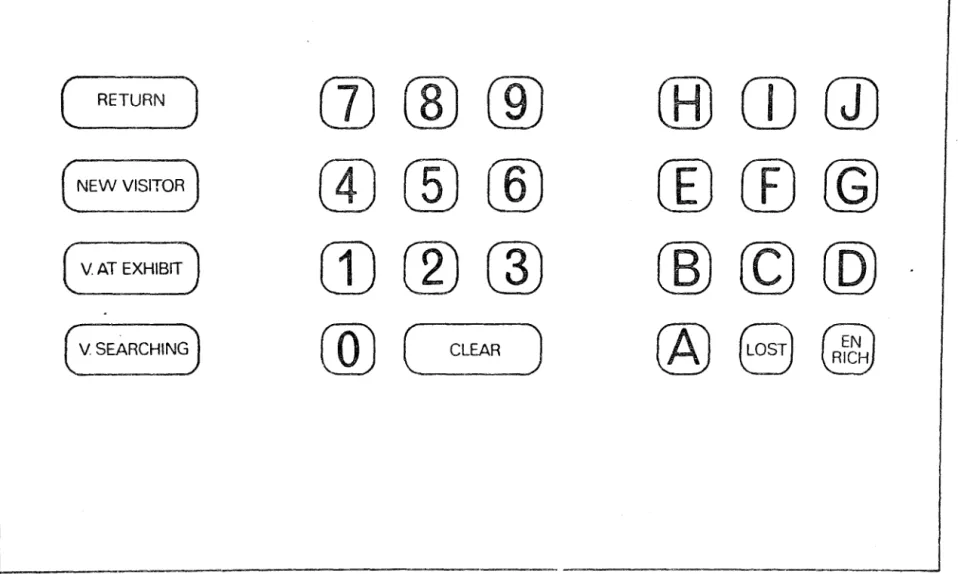
Figure 6 Layout of auxiliary keyboard used 60
for logging visitors' behaviour 65
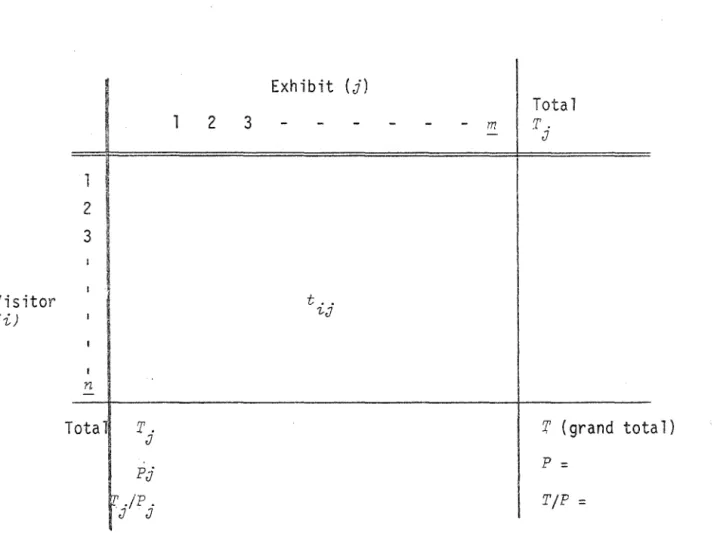
Figure 7 Matrix for visitor/exhibit
inter-action 89
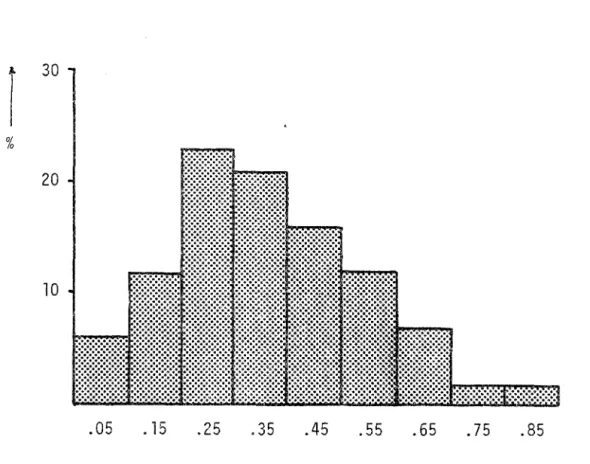
Figure 8 Prior interest in the Hall of Human Biology
Figure 9 Distribution of times spent by subjects in the Hall of Human Biology
106
107
Figure 10 Distribution of Attractiveness of the Hall of Human Biology 109
Figure 11 Distribution of Arrestment in the Hall of Human Biology lTO
Figure 12 Distribution of exhibit attracting powers in the Hall of Human
Biology 116
Figure 13 Distributions of exhibit holding powers in the Hall of Human
Biology 117
Figure 14 Routes through the Hall of Human
Biology 124
Figure 15 Diagramatic representation of
movements from assemb ly to assemb ly 127
Figure 16 Biplot of 46 exhibits and 53
attributes in the HalT of Human
Biology 152
Figure 17 Factorisation
53 items
~f exhibits across
157
Biology 140
Table 20 Randomised list of items used in
Study II 147
Table 21 The percentage endorsement of items for ideal exhibit and five exhibits 'close' to the ideal and five distant to the ideal 151
Table 22 Relationship of items of Ideal
Exhibit 153
CHAPTER 1
INTRODUCTION
On May 24th 1977, the Hall of Hunlan Biology opened at the Natural History Museum in South Kensington. The exhibition, occupying 1,200 square metres of the west wing on the ground floor of the Museum, is the largest to be opened this century; and since 1977 a number of other new permanent exhibitions have also been
opened, namely Introducing Ecology (1978), Dinosaurs and their living relatives (1979), Manis Place in Evolution (1980), and most recently of all Origin of Species (1981). All these
exhibitions are the fruits of a new exhibition scheme whose seed was sown early in the 1970's.
The Hall of Human Biology is of particu1ar interest to psychologists because a large part of it included exhibits on psychology and
members of both the British Psychological Society and the
Experimental Psychology Society were consulted during its design and construction. Furthermore, for the first time in a museum
in Britain, psychologists were employed to advise on the
app1ication of psychological principles thought to be relevant to the design of exhibitions, and to evaluate the visitors' responses to it. In fact, this thesis has arisen as a direct result of the research into visitorsl behaviour and cognition in
the Hall of Human Biology.
In this chapter I shall describe firstly the background to the project, followed by a description of the Human Biology exhibition and the approach to its design, and conc1ude with a few words on
the way in which the present research developed.
Background to the Exhibition Project
The Natural History collections of the British Museum were housed in Bloomsbury until 1882. The chief instigator and moving spirit behind the foundation of the new Museum in South Kensington,
built between 1873 and 1881, was the great Victorian palaeoanatomist and advisor to Bishop Wilberforce, Sir Richard Owen (1804 - 1892). He was responsible for both the existence and policy of the Museum as it is known today (Miles and Tout, 1978). The policy may be stated briefly as having the twin aims of "diffusing and advancirig knowledge about the natural world." To this end, the collections were initial1y arranged in three distinct series, each with a
specific purpose. The first was an Introductory Series "by which the study of every group should commencell
; the second was an
Exhibited Systematic Series "in which the more important types are shown"; and the third a Study Systematic Series IIrequired for enlarging the boundaries of knowledge." The galleries were laid out according to the plan of the Creator; all living fauna, the birds of the air and the fishes of the sea being placed to the
left of the entrance way (the Hall of Human Biology has replaced the original fish collections); while to the right are the
fossils buried deep, as it were, in the bowels of the earth, above them the minerals and, as in God's P1an, the plants above these on the third floor. Vestiges of this arrangement can be seen to this day. Owen quite explicitly it seems, acknowledged that natural laws and processes could not be demonstrated
However, over the years, scientific enquiry has turned increasingly to less tangible subject matter such as the study of genetics and behaviour. Accordingly, the restriction not to show laws and processes has resulted in the Museum being less and less the display of modern biology it is intended to be and once was.
Spasmodic modernisation has led to considerable change in the public galleries, and the study collections have been considerably enlarged by the fruit of numerous scientific expeditions.
However, by 1970 it became clear that change in the galleries was necessary and an Exhibition Scheme was begun. This scheme
is described in detail by Miles and Tout (1978) and Miles and Alt (1979). For present purposes, it is important to note that the scheme is new in both the scope of the content and the manner of its presentation.
The scope of the new exhibitions covers all forms of life -including Man who was largely excluded from the subject matter of the original displays. However, the intention is to do more than just demonstrate the diversity of the living world, to
include such topics as ecology, psychology and anthropology. Four main themes will be covered in the exhibitions as a whole: Man, Ecology, Evolution and Diversity and Life Processes and Behaviour. Although rumours have spread that the Museum intends to do away with many of its more famous exhibits, this is not so. However, such has been the outcry among academics about the approach and content of the new exhibitions, that in response the Museum felt
it necessary to restate its policy in May 1981. Human Biology now represents the comp1ete Man theme; and in future the Museum will concentrate on displaying it traditional subject matter -the diversity of nature. The o-ther -themes will now be subsumed
to mount a separate exhibitio~ on genetics at a later date.
The Human Biology Exhibition
The development of Human Biology owes a lot to the approach fostered by North American "science centresll (Kimche, 1978).
The Exploratorium in San Francisco built by Frank Oppenheimer (Oppenheimer 1968) and the Ontario Science Centre in Toronto (Wilson 1976) have shown convincingly that it is possible to display the principles as well as the paraphernalia of science. In line with these institutions, in the Hall of Human Biology, the old, formal rows of dusty cases have been banished; there are many large models which visitors can touch and explore, but few glass cases. There are slide shows about prenatal development, about aspects of neuro-endocrinology, about language acquisition and several other topics. Games display the control of
behaviour by the brain, learning and the problems of 1ogica1 reasoning. Such untraditional exhibits are not to everyone's taste but they are an honest attempt to show that what matters
is, for example, not just what a brain looks like, but what it does; or more genera 11y, an effort to go beyond the mere
appearances of things scientific.
Much thought was given to the subject matter to be included in Human Biology for clearly there is much more to be said on the topic than can be covered in the space available. The
exhibition includes the minimum number of concepts consistent
with the overall story which traces the development of a fertilised ovum to a fully mature human adu1t. All the concepts were
form the building blocks for more complex concepts. Technical language is avoided except where absolutely necessary; and the sheer amount of text is kept to a minimum.
The exhibition is divided into physically independent sections, each one dealing with a set of re1ated concepts that are part of the learning hierarchy. The ten major sections shown in
Figure 1 are as follows:
A. Living Cells B. Growing C. Movement
D. Controlling your actions
E. Homeostasis - Your life in the ba1ance F. Hormones
G. Hormones and Nerves
H. Experience of a lifetime - Learning and Memory I. Percep~ion - Understanding the world about us J. How do we corne to understand the world about us.
In addition, further material relating specifically to particu1ar sections is presented in spearate side assemblies - "More about Chromosomes" (BE), I\~lore about controlling your actions" (DE), "More about Sex Hormones" (FE), and "More about Memory" (HE). These areas are equivalent to the "enrichment" booklets of some modern shcool courses in the United Kingdom~ and they are designed to provide the visitor with a deeper' understanding of certain of the topics
covered in the major sections.
The organisation and presentation of the subject matter of the exhibition has drawn heavily on a number of principles developed in the field of educational technology. These have been summarised by Miles and Alt (1979) as
1. the educational purpose is sp~lt out in the form of unambiguous objectives. These provide the basis for the acquisition of objective knowledge about fvluseum communications:
2. the subject is carefully arranged so as to present the under-lying ideas in a logical sequence;
3. the interaction between the learner and the learning:nraterial is carefully controlled by:
(a) arranging the material in digestible steps,
(b) making provision for different capacities to learn and various levels of knowedge and interest, e.g. by including
lIenr ichment" mater"ial,
(c) making provision for participation or active responding, though not necessarily through overt responses,
(d) making arrangements for immediate feedback, i.e. for the learner to discover at once whether or not his response has provided an acceptable answer to the question or solution to the problem,
4. the educational medium (audiovisual, diagram, three-dimensional object and so on) is chosen because of its appropriateness both to the message to be conveyed and to the intended recipient;
5. the educational materials are tested to see whether they produce the results specified in the objectives. These materials are the physical entities which correspond to the testab1e hypotheses of scientific research. If a test is properly designed, the results
will show whether or not the ~aterials are suitable for their purpose. More importantly, it will provide information of more general value for later use.
Human Biology set out to involve visitors actively, making a striking break with the traditional natural history museum. The exhibition contains a considerable number of "interactive"
exhibits. Such exhibits are not simply those where the visitor is expected to press a proverbial button; they are exhibits with which the visitor is encouraged to participate - cognitively.
In short, the exhibition aims at presenting scientific information in exciting and stimulating exhibits, avoiding the traditional unsympathetic juxtaposition of visitors and facts (Wittlin, 1971). A passive role is no longer imposed on visitors; they are
encouraged to seek new information by exercising their own
judgement in answering questions, by operating various interactive devices, and by playing games designed to model various scientific phenomena.
Research among visitors to the Hall of Human Biology
Perhaps the most interesting aspect of the Human Biology
exhibition is that from the outset it has been thought of as a pilot exhibition in which exhibits and their effects on visitors were to be assessed. In fact, it is confidently expected that within fifteen years from its opening date, half of all exhibits
in Human Biology will have been replaced by "better" exhibits. For example, as a result of criticism (Gregory 1978), the
"Perception" section was completely redesigned and a new version opened early in 1982, and the "Homeostasis" area was redesigned
in 1980 as a consequence of an unreported observational study of visitors to the area.
The majority of this thesis is devoted to reporting the major findings of a number of studies carried out during the period July 1977 - April 1981 among casual visitors above the age of sixteen years to the exhibition.
The prospect of carrying out research among visitors to the Natural History r~useum is interesting to psychologists for a
number of reasons. Policy at the Museum precludes the possibility of adopting an experimental approach. The only interventions a researcher is permitted to make in the natural course of an individualls visit to the exhibition is to question him at the beginning, during or at the end of his visit; no experimental manipulations of the exhibits looked at or the routes taken through the exhibition are possible. Therefore, by necessity, the research reported is essentially "naturalistic" and not experimental; although in certain instances experimental procedures were possible.
Although there is a large number of reported studies of museum visitors, the overwhelming majority of them have been carried out without reference to current psychological theories; they resemb -I e "market research" in the sense that the data co 11 ected
are atheoretica1. It is a considerab1e challenge to incorporate museum research into mainstream theoretical psychology.
Finally, in reporting the research, a narrative structure has been used. This is not meant to imply that the ideas developed in quite the same orderly fashion in which they have been
presented. As Harr~ (1972) has pointed out, most research is a leap-frog process of fact accumulation and theory generation. This research is no exception but in the interests of the reader. studies which led nowhere or up blind alleys have been omitted as they are irrelevant to the main story.
CHAPTER 2
LITERATURE REVIEW
There has now been an enormous amount of published research on museum visitors. For convenience, the methods used can be described under three broad headings
-(1) large-scale sample survey~
(2) studies of behaviour, and
(3) educational evaluation of museum exhibits using paper and pencil tests of knowledge
(Alt and Morris, 1979)
-although, in practice, a combination of methods has sometimes been employed. In this chapter research in each of the three categories will be described, followed by a critical discussion.
Surveys
It has been estimated that approximately two-thirds of all
published research fall into this category (Loomis, 1973 a), and the majority are carried out to provide museum planners with detailed demographic information about their visitors and their reasons for visiting. A bibliography compiled by Elliot and Loomis (1975) gives numerous references to visitor surveys, the majority of which tell us that visitors come to museums out of general interest, are such and such an age, social class and distance from the museum; that they heard about the place from
friends, radio or television in varying proportions; and that they 'enjoyed' their visit, and so forth. At the Natural
History Museum a series of annual visitor surveys was initiated to monitor the success of the exhibition scheme. Some measure of the success of new exhibitions can be gauged by the number of people who mention them as a reason for visiting the museum, or as exhibitions they particularly enjoyed, or can remember most about. This sort of information can be best collected by repeated study over time. The first five annual surveys have been reported (Alt, 1980) and a copy of this paper is included in Appendix 1, primarily as it describes in detail a systematic samp1ing method that has been used throughout the present research project for selecting subjects. However, in general, surveys are of little interest to psycho1ogy as they are atheoretical in their approach.
Behavioural observation
Systematic observations of the behaviour of museum visitors apparently began during the 1920's in American art galleries and these studies have been reported by Robinson (1928, 1930, 1931 a, 1931b, 1933 a, 1933 b, 1933 c). It was found feasible for
looking at each individual piCture; and, in large museums, the likelihood that a visitor will observe any given picture is less than in smaller museums. Robinson's work in art galleries was followed-up in the 1930's by his student Arthur Melton who 1ater became better known in mainstream psychology through his work on human memory (see Melton 1933 a, 1933 b, 1935, 1936, 1972; and Melton, Goldberg and Mason, 1936) and similar work was conducted
in the Peabody natural history museum by Porter (1938).
Consolidating and building upon Robinson's work, Melton discovered the pronounced 'right-turning tendency' prevalent it seems from
later studies in all American museums. He also described a so-called 'exit-gradient', whereby time allotted to a painting seems to be directly re1ated to its physical proximity to the exit door. He found a close relationship between, on the other hand, attractiveness (defined as the probability of stopping at a painting) and density of paintings on the wall (which seems to obey a kind of Weber-Fechner law); and on the other hand, the
independence of 'holding-power' (defined as the time spent at a painting given that the visitor has stopped moving) and display density. Melton also described results showing that 'museum fatigue' affects attractiveness while leaving 'holding power' unaffected, and that such fatigue is almost certainly a kind of object fatigue termed 'ennui' by Melton - rather than sheer phYSical fatigue, because the steady decline in attractiveness from the time of entry sets in immediately and can be quite pronounced, even in visits as short as five minutes.
There was something of a hiatus in visitor research of any kind until the 1960ls when a new interest burgeoned; and this was
manifested by the emergence of a large number of published papers. During this period a number of studies were reported that were
firmly within the paradigm established by Robinson (for example, Abler 1968; MacBrier 1964; Munyer 1969; Parsons 1968; Parsons and Loomis 1973; Weiss and Boutour1ine 1963) but it was not until the work of Winke1 and Sassanof (1970) and Lakota (1975) that any new developments emerged. Winke1 and Sassanof built a simulation-system which adequately modelled the behaviour of museum visitors in a real gallery while subjects sat watching a triple slide-screen depicting the view to the left, straight ahead, and to the right, respectively. Through instructions to the slide-machine, subjects could 'move' through the gallery. Perhaps somewhat surprisingly, the routes taken mapped onto the observed routes in the real gallery well. Lakota has described a very detailed behavioural analysis in the natural history section of the Smithsonian Museum in Washington. Although the procedures he employed are extremely comp1ex to understand, he appears to have built a quite sophisticated regression model of attractiveness, holding power and effectiveness (a kind of composite of holding-power and amount learned at the display.) Other equations involve different factors, one of which indicated that the Beta coefficient for modern display methods has a high negative value on holding-power!
Educational Evaluation
Historically, the educational evaluation of museum exhibits is rooted in the work on curriculum development in America which gained momentum during the 1960's. During this time, which saw the rise of programmed learning, a considerable amount of
attention was given by educators to 'instructional objectives' which became widely known as behavioural objectives. These described explicitly what it was hoped learners could do after
instruction that they could riot do before, and they were
contrasted with the loose statements of objectives that had been previously used in education.
Shettel (1968) suggested that instructional objectives of the sort outlined for use in mainstream education by Bloom et al
(1956), Krathwohl et al (1964) and Mager (1962) should collective1y form the basis for exhibition design and evaluation. His
prescription is that 'exhibition objectives! should be fixed in advance and design should then proceed accordingly. Data are then to be collected from samples of visitors to estimate the extent to which these objectives have been met and exhibitions redesigned in the light of the findings. In the field of
curriculum evaluation, Scriven (1967) drew a distinction between formative and summative evaluation. These terms refer to when rather than how evaluation is carried out and both are relevant to Shettel's idea of the value of exhibition objectives. Screven
{1976}, adopting the curriculum evaluation terminology, has recommended that exhibits should be developed by a process of
formative evaluation and he has provided a prescriptive process for doing so; and a number of exhibits developed along these
lines have been reported in the literature (for example, Eason and Linn 1976; and Screven and Brown 1978).
The contribution of Shettel
The most ambitious project strictly along the lines laid down by
educational evaluators has been reported by Shettel et a1 (1968) in which the resu1ts of an eighteen-month investigation of liThe Vision of Man" exhibit, sponsored by the U. S. Office of
Education are described. The exhibit covered non-military
federal government, sometimes'in conjunction with private
industry; it also outlined the accomplishments of these programmes. Although designed to appeal to a wide audience, it was aimed at secondary-school children in particu1ar, who might be influenced in choosing a science career with the federal government. The exhibit employed a wide variety of different design techniques using modern exhibition technology. As such Shettel considered it representative of a modern, sophisticated state-of-the-art display, and thus an appropriate medium in which to test the potency of a variety of effectiveness measures.
In the 1968 report it was emphasised that the purpose of the research programme was not to evaluate "The Vision of ~1an", per se, but to evaluate the methods used to perform the evaluation.
The exhibit was conceptualised as consisting of three sets of variables:
(1) exhibit design variables, (2) exhibit viewer variables, and (3) exhibit effectiveness variables.
The first were considered as independent or experimental variables, the second as control variables, and the third as dependent
variables. The investigation set out to identify the important variables within each set of variab1es, their relationship with each other, and the best ways to measure them.
The exhibit design variables that were evaluated were physical characteristics of the exhibit itself, such as the readability
observations of viewers in or'der to arrive at measures of attracting and holding power, and various tests designed to measure knowledge, attitude, interests, etc.
The project involved two major stages - the exhibit-testing stage and the mock-up-testing stage. The exhibit-testing stage was used to devise, use, and revise the measures of empirical
effectiveness as well as to collect data regarding the re1ation-ships between the different types of variables. During this stage no experimental variations were made in the exhibit design variables but they were made in some of the exhibit viewer
variables. Specifically the variables 'manipulated ' were age,
education, socioeconomic status, sex, amount of science background, the extent to which exhibit viewing was voluntary, and viewing time.
The exhibit mock-up stage was used to manipulate several of the exhibit design variables - the simplification of text, the amount of visual illustration, and the use of audio devices to replace text portions of the exhibit.
Each of the two testing stages comprised two phases, separated in time. The primary objectives of exhibit-testing phase 1 were developing the initial versions of the effectiveness measures, collecting data on the usefulness of these measures and revising the measures. During phase 2, data were collected on the revised measures of effectiveness and these data were used to generate hypotheses about the relationship between the three sets of variables referred to earlier. The first phase of the mock-up testing stage was concerned with va1idating the mock-up exhibit and with collecting data on experimental variations for several design variables. Phase 2 was devoted to collecting data on
experimental variations in several exhibit design variables such as the amount and readability of text, the amount of visual illustration, and the use of audiovisual textual communication.
Shettel's first task was to translate the origina1 objectives of liThe Vision of Man" into measurable objectives prior to any test development - they were not originally stated in terms that readily lent themselves to measurement. The form these translations took was almost exclusively knoweldge-oriented because, according to Shettel, " ... this "is the only feasible \'/ay of measuring such objectives short of long-term follow-up studies of viewer behaviour (and even this approach would be subject to gross contamination).11
A post hoc analysis of the exhibit content was then carried out. This entailed numbering and locating all the parts of the exhibit, performing a readabi1ity analysis of all text and labels, noting type size, colour, etc. At the same time colour photographs were taken of all static models and motion pictures were taken of all moving parts. The information collected at this stage was used to construct the simu1ation of the exhibit for the
mock-up-testing stage as well as to provide measures of certain independent or experimental variables.
The next stage was devoted to developing background, interest, and attitude measures. The background questionnaire contained
particu1ar area or topic, they would be able to remember something about it. A small questionnaire was administered to measure
reported interest. The attitude measurements were also collected; the items in the questionnaire were based wholly on the original objectives. Each item was devised to reflect viewer opinions and attitudes towards one objective.
Developing the knowledge measures received the most attention. Four individua.l questionnaires were designed to measure the amount of information visitors retained after viewing the exhibit.
These measures were based on the assumption that there are various levels at which learning can be measured. Two recall methods were used to identify a high level of learning on open-ended
questionnaires. Two recognition tests were used to measure lower levels of learning on multiple-choice questionnaires. One of the open-ended questionnaires asked about open-ended concepts and the other about open-ended knowledge; the recognition tests were split in a similar manner. As the names imply, the concept questionnaires were designed to measure the visitor's ability to recall and recognise scientific concepts or principles, and the knowledge tests were designed to measure the specific learned information that could be recalled and recognised.
As mentioned earlier, the exhibit effectiveness variables included observing visitors to arrive at measures of attractiveness and holding power. A number of approaches were adopted in !IThe Vision of Man" study to answer the question: "ls there a correlation between the number of static and dynamic modesl and the attracting power of the exhibit." Visitors were followed (unobtrusively), and a videotape recording system was also employed to monitor behaviour at individual displays. These methods were felt to be best in meeting the requirements of unobtrusive observation.
The survey design incorporated four groups of subjects,
(1) a max. group (2) a min. group
(3) a control group, and (4) a casual visitor group.
The first three groups comprised volunteer subjects who were paid for participating in the project, and the fourth group was made up of museum visitors who came to the exhibit of their own volition. The max. group subjects were given instructions to spend as much time as they wished in the exhibit with instructions to learn as much as possible because they would be tested at the end of their visit. The underlying aim in instructing this group was to discover how much could be learned from an exhibit given maximum amount of time and motivation. Conversely, the min.
group, designed to establish a nl1nimum index of learning, spent only half an hour in the exhibit; they were also given instructions to learn as much as possible. The control group subjects,
comprising people who had not seen the exhibit, were also tested to establish baseline scores on all the test measures. The members of these three groups were matched on age, sex, education, and science/non-science background, and different subgroups within these categories were represented. The casual visitor group subjects were invited to participate in the testing procedures; some were interviewed before they commenced their visit and others were interviewed at the end of their visit. All four groups were given the batteries of tests described earlier but, obviously, only the casual visitor group was used to establish the exhibit effectiveness variables.
of the actual exhibit. On t~e panels were mounted colour photo-graphs of the exhibit sub-areas with associated text. The
introductory panels of the mock-up were hung together in one room; all other mock-up panels were hung consecutively along the main corridor walls. Subjects were randomly assigned to max., min., and control groups similar to those previously described.
Not surprisingly, the results of the investigations showed that the amount of viewing time and motivation1 influenced the amount of knowledge gained from the exhibit, as reflected by subjects' scores on the various test items. Thus, max. group subjects always achieved higher test scores than min. group subjects, who,
in turn, always scored higher on the test items than did control group subjects. The actual museum visitors, who came to the exhibit on their own accord, scored lower on the test items than did control group subjects! In Shettel's opinion, these results show that "The casual visitor group, as a whole learned very
little from the exhibit as measured by the tests used." Generally, college students scored higher than either high-school children or adults; subjects with a science background scored consistently higher than subjects without one.
Results on the interest measures showed that viewing the exhibit did influence the level of interest in the subject matter, although no consistent patterns emerged. Results from the attitude measures vere largely inconclusive; all the experimental groups obtained scores relatively similar to the casual visitor group.
1.Motivation was never explicitly defined or varied. It is presumed to refer to the experimental subjects I assumed desire
to do well on the tests they knew they would take at the end of their visit.
Unobtrusive observations of Gasual viewers showed that the average amount of time spent at an individual display was twenty seconds, and the total time spent in the whole exhibit area was fourteen minutes. A technique for measuring attracting power involved the use of a multiple-regression equation based on:
( 1 ) the number of subjects actually stopping at
each display,
(2) the number of static parts, and
(3) the number of moving parts.
This equation resulted in an attractiveness rating for each display. The results indicated that the number of static and moving parts in a display accounted for twenty-seven per cent of the variance in viewer stopping behaviour; however, the number of moving parts in a display was a much better predictor of viewer stopping behaviour than the number of static ones.
Analysis of the videotape recordings of casual visitor behaviour at individual display permitted the calculation of relative
attracting power among them. In general, dynamic parts and their associated text were looked at by casual viewers much more
frequently than static pictures and their text.
Attempts at relating the reading difficulty of text to the amount of knowledge gained were inconclusive. Thus, the results did not
indicate that simple text facilitate any more learning than did more difficult text.
min. exhibit subjects were similar to min. mock-up subjects, and so on. These results were taken to indicate the validity of the simulation technique as a means of judging actual exhibits. The experimental variation in the mock-up design (phase 2) indicated a significant difference favouring the group reading the text but no difference between the other experimental variations.
In the discussion section of Shettel's report, much space is devoted to reiterating previously stated views, such as the need for unambiguously stated exhibit objectives, the appropriateness of various evaluation tests~ the use of mock-up exhibits in developing didactic exhibits, etc. The penultimate section
presents what is grandly termed a "three-factor theory of exhibit effectiveness," suggesting that an exhibit must fulfill three purposes in order to be educationally effective:
(1) it must initially attract viewers to the exhibit,
(2) it must maintain their attraction throughout the exhibit, and
(3) it must maximise the amount of relevant learning or influence what is achieved on the part of the viewer.
Finally, Shette1 suggests that results of his study indicate
several hypotheses regarding the effective organisation of didactic exhibits that could be explored in future projects.
learning to museum education.' Visitors were given booklets of questions to look at as they went through an exhibition, or a cassette tape recorder, together with electronic response cards with which to answer the questions. Visitors successfully finishing the course were then rewarded with a badge developing their status as 'museum experts'.
Critique
Criticism of museum research may be raised on three broad fronts;
(i) methodological, (ii) philosophical, and
(iii) the utility value, or usefulness, of the research to designers of exhibitions.
(i) Methodological Critique
In a critical discussion of visitor surveys, Loomis (1973 b) complained that they ~aried from very bad (e.g. poor sampling, badly worded questions, etc.) to excellent (e.g. good survey practice in every sense, a "model" of visitor attendance guiding question design, etc.). In surveying the literature on
observational research and educational evaluation with particular reference to the studies in the bibliography compiled by Elliot and Loomis (1975), there is no estimation of the reliability of the various measurements taken and an inadequate consideration of their validity irrespective of whether the research is
observational or pencil and paper tests.
will be discussed in detail in Chaoter 5.
Robinson and subsequent researches focusing on the behaviour of museum visitors have argued that attractiveness and holding power are valid measures of exhibit effectiveness. An effective
-exhibit must first of all attract visitors and then hold their attention for a sufficient time to impart information. Miles and Tout (1979) have suggested that holding power can be extended to
include an index of required viewing time. They recommend an index they call 'holding power ratio', i.e. the actual viewing time divided by the required minimum viewing time. Thus a score of less than one would mean that vis~tors were spending less time than is necessary to receive the exhibit's message. Educational eva'luators (e.g. Lakota 1975; Lakota and Kanter 1976; Screven 1976; Shettel 1968 a, 1968 b, 1973), while accepting that high
attractiveness and high holding power are necessary for an exhibit to be effective, claim that they are not sufficient by themselves. For an exhibit to be truly effective it must communicate the
message/s intended by the designer. Hence their interest in measuring the knowledge and understanding imparted by exhibits. Educational effectiveness is measured by pencil and paper tests and judged by the extent to which certain external criteria (e.g. a prestated percentage of visitors achieving a preset percentage score on the tests) are met. In these circumstances it is usual for validity to be considered in terms of criterion-related validity. Presumably, the higher the correlation between attractiveness, holding power and the scores on the tests, the better the validity of the tests. Nowhere in the studies reported in the literature has validity been considered in this way and in view of the fact all show that casual visitors learn nothing, as measured on the various tests, it fo11ows that the validity of the tests must be ca11ed into question.
It is self-evident that attractiveness is a valid measure of
effectiveness; if a visitor does not look at an exhibit the exhibit cannot be effective. The issue with holding power is only a little more complicated. As Miles and Tout (1979) have pointed out, it seems reasonable to suppose that holding power is related to the characteristics of the exhibit such as length of text, and it was for this reason that they formulated 'holding power ratio' as an alternative but related measure.
There is another way, however, in which the validity of attractiveness and holding power may be considered and this is in terms of their validity as theoretical constructs in a theory of exhibit
effectiveness; this is known as construct validity. As an approach to the question of their validity, it will be taken up in the
following section.
(ii) Philosophical Critique
The research workers whose studies have been described earlier in this chapter all set out to evaluate the effectiveness of museum exhibits in a self-consciously scientific manner; that is, they claimed to have used the methods 'characteristic' of scientific enquiry. Essentially, the reported studies all follow the same set of procedures. Firstly, they begin by observing and collecting certain 'facts' about exhibits and visitors. For example,
Robinson and Melton were interested only in whether visitors
stopped at an exhibit or not, and if so, for how long. As described earlier,Shettel collected a large number of facts about exhibits and visitors. After the facts have been collected they are analysed and classified; and then, by a process of induction, generalisations are made. In certain cases, (e.g. Melton's work) the
generalisations are tested by. further experimentation or observation. In fact, the studies follow the prescriptions of correct method
given in many social science textbooks. For example, figure 2 is taken from Wal1ace (1969). Its components are four stages linked
by four methods in a clockwise process.
Simple though the diagram is, it represents the approach to visitor research very accurately. In the philosophy of science this
characterisation of the scientific process is known as Positivism.
Epistemologically, the positivist conception of the nature of
scientific investigation will not stand serious criticism. Firstly, the notion that scientific knowledge about effective exhibits is advanced by the accumulation of facts independently of specific
prior hypotheses about their relationships is simply untenable.
By way of analogy,the work of Gregory (1966) has shown that visual perception is not determined simply by the stimulus pattern on the retina but that it involves actively searching for the best interpretation of the sensory data. This hypothesis formation - to use Gregory's terminology - involves not only the sensory information but also knowledge and experience. Gregory (1980) has drawn a deep parallel between the nature of perception and the nature of hypotheses in science. Hypotheses in science give direction to scientific investigation just as prior knowledge and experience direct the perceptual process. The way to ensure that the meaning of a fact advances our knowledge is to place it in the context of an antecendent hypothesis. The alternative is often to create confusion by collecting a jumble of unrelated bits of information with unfathomable meanings. Shettel's work is a good example; he collected numerous 'facts ' without any clear-cut hypotheses about their relationships; and very little by way of substantive
knowledge resulted.
The problems with induction as a form of reasoning are very familiar (see for example, Harre 1972), and are glaringly illustrated in visitor research by the conspicuous absence in all so-called theories of exhibit effectiveness of any explanation of what
makes for an effective exhibit. A theory of exhibit effectiveness should at least explain how exhibits differ in terms of their effectiveness and should make an attempt to explain how the
holding power between exhibits? No satisfactory explanation, or answer to this question, can be given in the absence of a theory of exhibit effectiveness to underpin the measurements that are supposed to indicate effectiveness. Of course, the operationist view which accompanies the prescription epitomised in Figure 2 holds that measurement can proceed independently of theory; and, if we follow the methods laid out in Figure 2, it should precede theory.
But, as Hu11 (1968) argued, and has been suggested here, it is necessary that theory precedes measurement for satisfactory explanations of empirical1y derived results to be forthcoming.
In environmental psychology Proshansky et al (1970) have
characterised examples of two different approaches as the 'physical' approach and the 'phenomenological'. The physical approach. it
is c1aimed, is the objective one whereby attempts are made in any given environment to relate man's behaviour to discrete and quantifiab1e stimuli present in that environment. Deutsch and Krauss (1965) have described the same general approach in social
psychology as fol1ows:
"Just as the animal psychologist i'Jho is studying the behaviour of a rat in learning a maze must know the relevant physical properties of the maze to understand or predict the behaviour of the rat in it, so too the social psychologist must be able to characterise the relevant features of the social environment in order to understand or predict human interaction".
The phenomenol~gical approach; on the other hand, has sought to account for man's behavioural relationships with the environment
in terms of the interpretations and cognitive constructions by which he or she organises his or her experiences of that
environment.
Behavioural studies of museum visitors fall clearly within the physical approach; and those studies concerned with educational evaluation, while not 'physical ' in Proshansky's sense, are
still mechanistic in conception. For example, Shettel has argued that educational exhibits satisfy the 'need ' to learn. This is an organismic view of man in which cognitive functioning is conceptualised in terms of biological needs similar to the needs for food and water, for example. Presumably, visitors are
thought of as arriving at exhibitions in a state of ignorance and upon being confronted by didactic exhibits their 'need' to learn operates as a drive and is reduced by the consumption of the knowledge on display.
All theories of exhibit effectiveness attribute to the visitor an essentially passive nature and the mark of them is to treat visitor action as a natural and determined phenomenon. Apart from any random factors (giving rise to probabilistic laws) the visitor accordingly behaves predictably in given conditions and he can be manipulated by engineering appropriate conditions
(that is, effective exhibits). Thus, the individual visitor is not causa sui in the explanation of his own behaviour. Exhibit learning, the routes taken through exhibitions, exhibit interest, and so on, are dependent variables, functions of 'drive statesl
or exhibit design.
Compton (1935) pointed out, if completely determined laws are
applied to man's actions, he ts himself an automaton; and Gauld and Shatter (1979) have suggested that if ,a deterministic view
is upheld, then the possibility of a scientific or experimental study of man's behaviour is logically questionable.
"If a scientist is himse1f no more than an arena within which inevitable causes product their inevitable effects,
how could he have discovered the causal laws which his own behaviour is supposed to instantiate? A scientist practising his craft must assume himself to be a free agent, a being capable of manipulating his corner of the universe. The effect of his manipulations must be to destroy any chance regularities among phenomena leaving the real, i.e. causa1 regularities to show themselves. But if the scientist's intervention is itself causally determined the possibility must remain that his
intervention did not destroy a fortuitous regularity but was the upshot of an antecedent state of affairs which also caused the disruption of the regularity."
Miles and Tout (1979) have argued that the issue of whether or not man's action can be regarded in a deterministic manner is surely of theoretical and not practical interest. Their view misses the important point that practical issues are underpinned by theoretical standpoints. Accepting that museum visitors actively select the exhibits they look at, rather than being jerked into 1ife by them, can have a fundamental impact on how one judges the existing indices of exhibit effectiveness.
that hold visitors ' attention ~ong enough to get across their
messages. It is proposed that if an exhibit is designed effectively, visitors will remain at it for as long as the designer intended. If visitors do not stay the required time the exhibit has been by definition, badly designed. No mention is made of whether
visitors are willing to invest the necessary time to receive the message at a given exhibit; it is assumed that their passive nature can be manipulated by effective exhibits which generate the required holding power. Apparently there is no upper limit to the amount of time visitors can be made to remain if the exhibit
is effective. And yet, all the research that has been published to date has shown that visitors, on average, spend less than a minute at individual displays; and this finding is upheld in different exhibitions and different museums. If one upholds an active conception of the nature of the museum visitor, one wou1d argue in the face of such overwhelming evidence that perhaps
visitors are not prepared to spend longer than thirty or so seconds of their time at an individual display; and that seen from the visitor's point of view rather than the designer's an effective exhibit is necessarily one that gets its message over very quickly. Thus, holding power when considered within a phenomenological
framework becomes a suspect empirical concept.
Utility Value
The utility value of visitor research can be measured, in theory, by the extent to which the findings can be applied to the solution of practical problems in designing exhibits. The application of research findings to improve the effectiveness of museum exhibits has been termed museum technology by Melton (1935). More
recently it has been resurrected by Oppenheimer (1968), Miles and Alt (1978) and Miles and Tout (1978, 1979). However, in the
latter case it has been suggested that this technology should
include any objective knowledge from appropriate fields such as educational research and educational technology.
The information from large-scale sample surveys is similar to many market research investigations where data are collected about the characteristics of consumers of particular products, their attitudes towards them, their preferences, etc. with a
view to modifying the products to match the needs of the consumers; and basic market research of this nature would be extremely useful to museum planners if they were prepared to act upon the results.
In the absence of any such intent, visitor surveys have no
utility value.
The results from behavioural studies have led Lakota and Kanter (1976) to recommend simple precepts concerning exhibition
architecture which they claimhavea profound effect on visitor behaviour. These recommendations have also been summarised by Miles and Tout (1979), as follows:
1. the exhibition space should be partitioned into smaller areas with chambers or alcoves large enough for groups of about ten to observe some aspect of the exhibition,
2. the organisational structure of the exhibition should be clear to visitors, and
3. island display units should be avoided or sited off the main routes through the gallery.
The results from educational evaluations have not by themselves given rise to any guidelines concerning the sesign of effective exhibits. Although a number of authors have suggested that
educational technology can be'successfully incorporated in a museum technology (see Miles and Tout 1979 for a summary of the relevant principles that have been proposed) there is little or no empirical evidence to suggest that casual visitors learn more from exhibits incorporating these principles in their design from those that do not. It is taken as axiomatic, as part of the prevailing ideology, that these principles are applicable in the museum setting. By adopting the curriculum development model uncritically, there is an implicit assumption that visitors will want to learn from exhibits rather as they might from textbooks;· and that visitors to exhibits will remain for a predetermined time rather like pupils in a lesson at school.
The major conclusions to be drawn from this chapter are that the studies reviewed have been carried out within a tradition of naive empiricism. IFactsl
about exhibits and visitors have been collected in the hope that patterns may be discerned within the data that arise from their categorisation and analysis; it is hoped that these patterns will in turn give rise to theories of exhibit effectiveness.
It has also been assumed that visitors have an essentially passive nature which can be directed and controlled by effective exhibits. Furthermore, related to the idea of a manipulable passive visitor, the underlying metaphYSic or ideology in designing educational exhibits is that the prinCiples developed within the disciplines of education and educational technology are directly applicable to the design of educational exhibits.
CH~PTER 3
A THEORY OF EXHIBIT EFFECTIVENESS
Background
The natural history of a visit to an exhibition may be thought of as a series of interactions between the visitor and the
individual displays he encounters during the course of his visit. A visitor's time is clearly limited and, therefore, it is
unreasonable to suppose that he or she will be able to look at everything on display in the museum. An analogy may be drawn here between biological competition among individuals for any limited environmental resource and the competition between individual displays in their call on a visitor's attention.
Successful displays are those that compete and attract the visitor; and unsuccessful ones are those that fail to do so. However, to resolve the tautology inherent in the analogy, a theory of exhibit effectiveness must offer an explanation as to the reasons why different displays are more or less attractive as well as making predictions about successful and unsuccessful displays.
The philosophical standpoint underlying the theory is that a visitor to an exhibition acts in accordance with his or her
perceptions of the exhibition. In other words, from the visitor's point of view an exhibition is not simply a collection of
'objective' physical entities but a perceived environment,
self-conscious subject, nor, from objects already constituted (from point of view of subject) which would impress themselves on him; it arises from interactions which take place midway between the two and thus involve both at the same time."
This standpoint contrasts markedly with those of the earlier researchers, whose work was reported in the previous chapter.
In Part I of his 1935 report, Melton included a section entitled The intrinsic attractiveness of the Art Object as a Determinant of Interest. In it, he claimed that the attitude of those
concerned with the display of art objects could be epitomised in the assertion that lIa painting will find its own level when it is displayed in a gallery along with other paintings." This, he asserted, is tantamount to saying that a painting will attract an amount of attention that is appropriate to its intrinsic worth. He suggested that the assertion was at best a pious hope and furthermore was based on assumptions of dubious validity. He contended that the attractiveness of a painting had nothing to do with its lIaesthetic quality" as judged by experts.
Paintings judged by experts to be of outstanding quality failed miserably in competition with other paintings. He went on to
say that while he accepted that factors such as the subject matter, the size and the colouring of a painting appeared to be
important in determining its attractiveness, they were not of primary importance. According to Melton, location and mode of display were of far greater importance. Indeed, Melton1s work was concerned solely with these latter factors and, in particular, how they affected attractiveness and hOlding power.
considered to be in competitiQn with each other and the result of this competition is that each display wil1 find its own level vis ~ vis the others. However, an acceptance of this does not amount to the same thing as claiming that a display will attract attention in proportion to its intrinsic worth or aesthetic
qua1ities; and in suggesting that it does Melton was putting up an Aunt Sally. Characteristics or attributes of displays (what
Melton called factors) do not inhere in the displays, as it were, but they are perceived by visitors interacting with the displays. Factors such as mode of display and location are only important
in so far as they are perceived by visitors to be characteristics of a display; a display will attract attention in proportion to
its perceived worth not its intrinsic worth. Of course, Melton is correct in stating that the attractiveness of a display does not necessarily have anything to do with the judgements of experts but in context this is a red herring.
Similar objections can be raised concerning the work of Lakota and Shettel. Unlike Melton, Lakota made an attempt to relate attractiveness and holding power to the characteristics or
attributes of displays. Unfortunately, it is the most depressing section in his report. Hoting the thousands of words written on the subject - IImost of it inconclusive" - Lakota adopted a very down to earth pose. As an objective (my emphasis) scale of
exhibit design, he suggested that the year in which an exhibition was designed is at least one unambiguous variable that can be
inserted into the regression equations! Galleries designed in 1954 received a scale value of
l
while more recent galleries received higher values culminating in ~ for galleries designedin 1964. He also obtained ratings from three "museum professionals" with respect to 'conceptual organisation', 'spaciousness',
'extensiveness'; 'new display' and 'instructional quality' derived
by factor analysis of a long 1ist of defining features of the hal1s. Lakota claimed that these measures reflected the interests and wishes of the visitors and represented some basic design
dimensions. As pointed out in the previous chapter, the exhibit design variables investigated by Shettel were the physical
characteristics of the displays themselves, characteristics such as the readability level of labels, location of various
displays and whether the displays contained moving parts. Neither Lakota nor Shettel were concerned with perceived exhibits.
Theoretical Outline
Conceptually, the present theory owes much to the ideas of the Gestalt psychologist Kurt Lewin (1890 - 1947) and, in particular, his notions of life space and valence.
A museum may be conceptualised psychologically as well as
physically as the space in which a visitor moves. As a visitor moves physically through a museum he is also moving psychologically through his life space. Thus, his physical movements represent acts of psychological significance to him. According to Lewin, when a person is attracted by an object that object is said to
have positive valence, an analogy he drew with the valence between atoms in chemistry. By contrast, negative valence refers to an object, or region in life space from which the person is repelled. Life space may contain regions with several valences active at once and these may give rise to conflict.