Original Research Article
Myths and unhealthy wound practices regarding animal bite among
subjects attending anti rabies clinic in a South Delhi municipal
corporation polyclinic in Mehrauli, Delhi
Shweta Arora
1, T. K. Ray
1*
, Ekta Gupta
2, Blessy Joseph
1, Arunraj K.
1, S. K. Rasania
1INTRODUCTION
Rabies is a highly fatal disease, currently present in 150 countries with nearly 90% cases from Asia and Africa.1 It is one of the neglected tropical diseases which mainly affect poor and vulnerable population due to poor health seeking behaviour and inaccessibility to the vaccination following animal bite. Higher rate of exposure are also observed due to the freely roaming stray dogs within the poor communities like urban slums.
Rabies is basically a zoonotic disease. Humans are the incidental host, domestic dog being the primary reservoir of the infection.2 Globally, rabies deaths are rarely reported and children between the ages of 5-14 years are frequent victims. Every year, more than 15 million people worldwide receive a post-bite vaccination.3 This is estimated to prevent hundreds of thousands of rabies deaths annually.
Out of total 59000 annual deaths due to rabies globally, nearly 18000-20000 are from India.4,5 National incidence
ABSTRACT
Background: Rabies is one of the highly fatal diseases, with nearly fifty nine thousand deaths annually globally and almost one third of these are in India. Higher rates of dog bites are common in our country, due to large stray dog population. Despite a preventable disease, unhealthy wound practices are still prevailing in the community due to lot of myths related to the disease. The objectives of the study were to assess the magnitude of unhealthy wound practices and to assess the knowledge regarding health seeking behaviour following animal bite.
Methods: The present study was a cross sectional study conducted at SDMC Polyclinic, Mehrauli, Delhi from January to December 2015. A total of 160 cases of animal bite that attended OPD and consented were analysed for knowledge, practices and health seeking behaviour towards animal bite.
Results: Out of total 160 respondents almost all were bitten by dogs of which 2/3rd was stray dogs and most common site of bite was lower limb. 55% of the subjects did not wash or clean the wounds after bite. 27% of subjects applied chilli powder or its paste with oil and 2.5% used oil and turmeric paste and 1.9% oil on the wound. Only 41.9% of the subjects believed that vaccination is the treatment of the choice following animal bite.
Conclusions: Intensive health education through mass media and mid media can be used to create awareness about the disease transmission and preventive measures like wound management and post-exposure prophylaxis. Also, pet vaccination should be made mandatory for all those who keep pets.
Keywords: Rabies, Animal bite, Dog bite, Wound practices, Delhi, India 1
Department of Community Medicine, Lady Hardinge Medical College, New Delhi 2
Department of Community Medicine, Hamdard Institute of Medical Sciences and Research, Jamia Hamdard, New Delhi
Received: 25 August 2019
Revised: 05 October 2019
Accepted: 07 October 2019
*Correspondence:
Dr. T. K. Ray,
E-mail: [email protected]
Copyright: © the author(s), publisher and licensee Medip Academy. This is an open-access article distributed under the terms of the Creative Commons Attribution Non-Commercial License, which permits unrestricted non-commercial use, distribution, and reproduction in any medium, provided the original work is properly cited.
of animal bites as per study is 17.4/1000 population.6 Only 20% of the animal bites in the SEAR receive one or two doses of anti-rabies vaccine.4
Rabies deaths are preventable if appropriate and timely prophylaxis is done. Despite its availability, lot of myths and misconceptions prevail among individuals that further affects its management. This study was done to find out the magnitude of unhealthy wound practices and to assess knowledge regarding health seeking behaviour following animal bite.
METHODS
The present study was a hospital based cross sectional study conducted at South Delhi Municipal Corporation (SDMC) Polyclinic in Mehrauli, Delhi from January 2015 to December 2015. Polyclinic has the facility for vaccination against animal bite and it caters to nearly 1 lakh population. A total of 160 cases of animal bite who attended the outpatient department (OPD) from January 2015 to December 2015 were studied for their knowledge, practices and health seeking behaviour towards animal bite with the help of a pretested, semi structured interview schedule. All the patients with the history of animal bite attending the OPD who consented for the study were included.
The interview schedule contained the information on sociodemographic profile of the subject and details of bite, wound care at home, health seeking behaviour, vaccination status of animal (if pet) s. Verbal informed consent was obtained from all the subjects.
Data was entered and analysed using SPSS version 12.0. All observations were in terms of mean/percentages/ proportions and standard deviation.
RESULTS
Out of total 160 individuals interviewed 122 were males and 38 females. Nearly half (60) of the males and 42% (16) of the females were less than 20 years old. Predominant religion to which subjects belonged was Hindu 136 (85%), followed by Muslim 22 (13.8%). Eighty eight percent of the subjects (140) belonged to upper lower and lower middle and 5 subjects to lower socio economic status by modified Kuppuswamy scale (Table 1).
Almost all of the subjects (98%) were bitten by dogs, out of which 1/3rd were pets and rest were stray dogs. 3 subjects were bitten by cats. As reported by the subjects only 34% of pets were immunized, of which 15% were vaccinated during preceding 6 months from time of interview (Table 2).
73% bites were non provocative, 113 subjects had single and 47 subjects (29%) had multiple wounds. Most common site of the bite was lower limb (75%) followed
by upper limb (15%) and 6 subjects were bitten at multiple sites on the body. Out of total bites 37 (23%) were scratches, 110 (68%) tooth bite, while rest had both scratches and tooth bite. None of the wounds was stitched while bandage was done in wounds of 7 cases (Table 3).
Table 1: Distribution of study subjects according to age and sex (n=160).
Age (in years)
Male Male Female Female
N % N %
<10 28 22.9 10 26.3
11-20 32 26.2 6 15.8
21-30 19 15.6 10 26.3
31-40 27 22.1 5 13.2
41-50 11 9.0 5 13.2
>50 5 4.0 2 2.6
Total 122 100.0 38 100.0
Table 2: Distribution of study subjects according to animal bite type.
Animal type Number %
Dog 157 98.1
Pet 38 (24.2)
Immunized 13 (34.2)
Unimmunized 25 (65.8)
Stray 119 (75.8)
Cat 3 1.9
Pet 3 (100.0)
Total 160 100.0
Table 3: Distribution of study subjects according to type of wound.
Number %
No. of wounds
Single 113 70.6
Multiple 47 29.4
Nature of bite
Provocative 43 26.9
Non provocative 116 73.1
Site of wound
Face 5 3.1
Upper limb 25 15.6
Lower limb 121 75.6
Back 3 1.9
Multiple sites 6 3.7
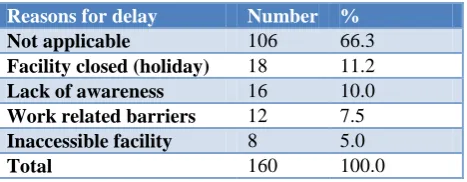
Table 4: Distribution of study subjects according to reasons for delay in seeking medical care.
Reasons for delay Number %
Not applicable 106 66.3
Facility closed (holiday) 18 11.2
Lack of awareness 16 10.0
Work related barriers 12 7.5
Inaccessible facility 8 5.0
Total 160 100.0
Following animal bite only 45% of the subjects washed the wound either with soap and water or with antiseptic solution at home. 55% of the subjects did not wash or clean the wounds after bite. 27% of subjects applied chilli powder or its paste with oil and 2.5% used oil and turmeric paste and 1.9% oil on the wound (Table 5 and 6).
Table 5: Distribution of study subjects according to first aid following animal bite.
First aid following bite Number %
Not washed 57 35.6
Washed with water only 31 19.4
Washed with soap and water 65 40.6
Washed with anti-septic 7 4.4
Total 160 100.0
Table 6: Distribution of study subjects according to application of substances on the wound.
Application of substance on the
wound Number %
Not applied anything 84 52.5
Chilli powder 34 21.3
Chilli powder and oil 10 6.2
Oil 3 1.9
Oil and turmeric 4 2.5
Antiseptic 20 12.5
Ointment 2 1.2
Others 3 1.9
Total 160 100.0
128 subjects have never heard of rabies (jalatank). Out of those who knew about rabies, 13.8% said it can be transmitted by other animals like cat, monkey, rat etc. Only 41.9% of the subjects believed that vaccination is the treatment of the choice following animal bite and 79% of the subjects didn’t know about the treatment of rabies and 3 subjects believed that it can be treated by traditional healers (jhadphoonk). When asked about what should be done following animal bite, 12% of subjects mentioned about vaccination, 7.5% both vaccination and washing and 10% said only washing was sufficient. Most of the subjects (93%) had no knowledge of common don’ts following animal bite. Only 2% of subjects said wound should not be bandaged. Of total subjects 124 did
not had any idea about cut off time for vaccination for the animal bite (Table 7).
Table 7: Distribution of study subjects as per knowledge about rabies.
Knowledge Number %
Not known 138 86.2
Rabies/jaltank 32 20.0
Animals other than dog causing rabies
Cat 3 1.9
Monkey 4 2.5
Cat or rat 2 1.3
Cat or monkey 11 6.9
Others 2 1.3
Symptoms of rabies
Not known 127 79.4
Mad like dog 9 5.6
Becomes dog 6 3.75
Death 6 3.75
Poisoning 6 3.75
Fear of water 5 3.1
Others 1 0.6
Treatment of animal bite
Not known 89 55.6
Jhadphoonk (traditional healing) 3 1.9
Vaccination 67 41.9
Chilli powder 1 0.6
Total 160 100.0
DISCUSSION
Ours was a hospital based cross sectional study conducted at SDMC Polyclinic, Mehrauli Delhi, to find out the magnitude of unhealthy wound practices after animal bite and to assess the knowledge regarding health seeking behaviour following animal bite.
Our study found that almost all the animal bites (98%) were dog bite, of whom 76% by stray dogs and 24% by pets, 34% of whom were immunized. 80% subjects lacked the knowledge of rabies, 66% of the subjects reported within 24 hours of animal bite, out of total 40% washed the wound with soap and water and 35% of subjects applied substances like chilli powder, turmeric, oil etc., on the wound.
We observed that most of the animal bites were dogbite (98%), 2/3rd of those were by stray dogs. To get rid of this stray dog menace South Delhi Municipal Corporation started sterilising stray dogs in the consecutive year of our study.7
Dog vaccination reduces deaths attributable to rabies and the need for PEP as a part of dog bite patient care.3 Only 34% of the pet dogs were found to be vaccinated. Beyene et al studied the barriers in the pet vaccination and mentioned that owners' intention to vaccinate their dogs were positively associated with the dog owners' knowledge of rabies, perceived benefits, threat, readiness to action, self-efficacy and trust in the vaccination. However, it was found to be inversely related to perceived barriers such as the distance of the owners' residence from vaccination centre and ease of dog transportation.8 WHO mentions that vaccinating 70% of the dog population is sufficient to eliminate canine rabies.9
PEP prevents virus entry into the central nervous system, which results in imminent death.3 It includes flushing and washing of the wound for a minimum of 15 minutes with soap and water, detergent, povidone iodine or other substances; a course of potent and effective rabies
vaccine that meets WHO standards; and the
administration of rabies immunoglobulin, if indicated. There is provision of anti-rabies vaccine at our health facility, while the cases that required anti-rabies serum for post exposure prophylaxis were referred to the higher centre.
Before coming to the health facility only 45% of the subjects washed the wound with soap and water which was less (71%) as seen by Sharma et al.10 After the bite, only 63.5% washed their wound/s with water/water and soap and 17.2% had applied local antiseptics; whereas 23.5% had applied irritants to the bite wound as per reported in the Association for Prevention and Control of Rabies in India and World Health Organization. Washing the wound following animal bite mechanically removes the virus. All the health education activities through mass media and mid media have focused on this. But myths in the community like after putting some white and black powder on the wound which forms smoke will kill germs still prevails.11
Liu et al mentions that males are more likely to treat wounds improperly or do nothing after exposure which might involve several indicators in men’s decisions, comprising biological, psychological and sociological considerations.12 Due to the small sample size and unequal distribution of gender among the subjects this can’t be commented upon.Our findings were comparable to that reported by Joseph et al where reasons for delay in initiating PEP given by respondents were the inability to come early for vaccination included work related barriers (42.68%), anti-rabies clinic being closed on Sundays or
national holidays (36.59%) and unawareness about timely PEP (31.71%).13
A significant finding which was observed in our study that 27% of subjects used chilli powder or its paste with oil and 2.5% used oil and turmeric paste and 1.9% only oil for application on the wound. Jain et al mentioned 80% of the subjects applied chilli and oil paste on the wound.14 Umrigar et al found 22% of the subjects used one or the other home treatments like chilli, turmeric, snuff, bitter leaves, lime and salt etc.15 The reason for this may be due to the past experience that many dog bites do not result in rabies and usually rabies are rare in domestic dogs.16 Since home remedies are easily available, hassle free and cost effective, therefore they are still in use by the subjects, despite their unproven benefits. Studies have mentionedabout beliefs regarding treatment of rabies where individuals seek care through traditional medicine (35%).17 In our study only 3 patients had taken treatment through such traditional healers.
Only 20% of the subjects have ever heard of rabies, and same number of subjects knew that vaccination was the treatment of the choice following dog bite, as compared to 71% among residents Pentonville, Haiti 80% of the subjects lacked knowledge of symptoms of rabies, as compared to Tschhop et al (38%).18,19 This clearly highlights poor knowledge of rabies, its transmission and PEP among the study subjects.It was seen that friends and family members (28%) played an important role in advising the subjects for vaccination; therefore, health education through focus group discussion, mass media will definitely have an impact changing attitudes of people and providing them knowledge of rabies. Parents, teachers, local leaders and inclusion of rabies as part of curriculum in the school can also play major role in creating awareness about the disease its transmission and
prevention within the community.20 Though control
measures for rabies like pre and post exposure prophylaxis, dog vaccination is available, but due to religious and socio-cultural barriers, and poor availability of data and lack of political advocacy, disease has not been able to be controlled.
Also, people beliefs in traditional healers and poor community awareness regarding its control measures have played significant role in its control.
CONCLUSION
Recommendation
Also, pet vaccination should be made mandatory for all those who keep pets. Methods like sterilization of stray dog to keep a check on their rising numbers should also be done wherever necessary. Timely reporting of all the animal bite cases to the concerned authority needs to be emphasized. Lesson learnt from success stories like
elimination of canine rabies through intensive
surveillance, mass dog vaccination, human vaccination, and health education training should be incorporated as a part of planning of activities.
Funding: No funding sources Conflict of interest: None declared
Ethical approval: The study was approved by the Institutional Ethics Committee
REFERENCES
1. Fooks AR, Banyard AC, Horton DL, Johnson N,
Mc Elhinney LM, Jackson AC. Current status of rabies and prospects for elimination. Lancet. 2014;384:1389-99.
2. World Health Organization, 2011. Rabies in the
South-East Asia Region. World Health
Organization.
3. World Health Organization. Rabies. Geneva: WHO;
2013; Available at: http://www.who.int/media centre/factsheets/fs099/en/. Accessed on 20 August 2019.
4. Gongal G, Wright AE, Human rabies in the WHO
Southeast Asia region: forward steps for
elimination. Adv Prev Med. 2011;383870.
5. Fahrion A, Mikhailov A, Abela-Ridder B, Giacinti J, Harries J. Human rabies transmitted by dogs: current status of global data, 2015. Wkly Epidemiol Rec. 2016;91:13-20.
6. Sudarshan MK. Assessing burden of rabies in India.
WHO sponsored national multi‑centric rabies survey. Assoc Prev Control Rabies India J. 2004;6:44-5.
7. Adak B. What is SDMC doing about stray menace
in South Delhi? Sterilizing to nip it by 2023. India Today. Available at: http:// www.indiatoday.in/mail -today/story/stray-dogs-street-dogs-south-delhi-sdmc-sterilising-street-dogs-1097163-2017-11-30. Accessed on 18 September 2018.
8. Beyene TJ, Mindaye B, Leta S, Cernicchiaro N,
Revie CW. Understanding Factors Influencing Dog Owners’ Intention to Vaccinate Against Rabies Evaluated Using Health Belief Model Constructs. Front Vet Sci. 2018;5:159.
9. World Health Organization. WHO Expert
Consultation on Rabies. Second Report. Geneva: World Health Organization; 2013: 932.
10. Sharma S, Agarwal A, Khan AM, Ingle GK.
Prevalence of dog bites in rural and urban slums of Delhi: A community based study. Ann Med Health Sci Res. 2016;6:115-9.
11. Varsharani KV, Chinte LT, Jadhav YU. Cultural
practices among animal bite cases of Government Medical College, Latur. Med Pulse-Int Med J. 2014;1(2):61-4.
12. Liu Q, Wang X, Liu B, Gong Y, Mkandawire N, Li
W, et al. Improper wound treatment and delay of rabies post-exposure prophylaxis of animal bite victims in China: Prevalence and determinants. Plos Negl Trop Dis. 2017;11(7):e0005663.
13. Joseph J, Khan AM, Rajoura OP. Determinants of delay in initiating post-exposure prophylaxis for rabies prevention among animal bite cases: hospital based study. Vaccine. 2013;32:74-7.
14. Jain P, Jain G. Study of general awareness, attitude, behavior, and practice study on dog bites and its management in the context of prevention of rabies among the victims of dog bite attending the OPD services of CHC Muradnagar. J Fam Med Prim Care. 2014;3(4):355-9.
15. Umrigar P, Parmar GB, Patel PB, Bansal RK.
Epidemiology of animal bite cases attending municipal tertiary care centres in surat city: a
cross-sectional study. Nat J Community Med.
2013;4(1):153-7.
16. Agarvval N, Reddaiah VP. Knowledge, attitude and
practice following dog Bite: a community-based epidemiological study. Health and Population-Perspectives and Issues. 2003;26(4):154-61.
17. Digafe RT, Legesse GK, Mechesso A. Knowledge,
attitudes and practices towards rabies: questionnaire survey in rural household heads of Gondar Zuria District, Ethiopia. BMC Res Notes. 2015;8:400. 18. Fenelon N, Dely P, Katz MA, Schaad ND, Dismer
A, Moran D, Laraque F, et al. Knowledge, attitudes and practices regarding rabies risk in community members and healthcare professionals: Petionville, Haiti, 2013. Epidemiol Infect. 2017;145:1624-34.
19. Tschopp R, Bekele S, Aseffa A. Dog Demography,
Animal Bite Management and Rabies Knowledge-Attitude and Practices in the Awash Basin, Eastern Ethiopia. Plos Negl Trop Dis. 2016;10(2):e0004471.
20. Education programmes save lives from rabies in
India. Available at: https://www.who.int/news- room/feature-stories/detail/education-programmes-save-lives-from-rabies-in-india. Accessed on 18 January 2018.
Cite this article as: Arora S, Ray TK, Gupta E, Joseph
B, Arunraj K, Rasania SK.Myths and unhealthy wound