Original Research Article
The unmet needs for family planning and its associated factors among
ever married women in selected villages of Anekal taluk, Karnataka:
a community based cross sectional study
Neethu George
1*, Sulekha T
2, Adithya Ramachandran
2, Andrean Peters
2,
Pretesh Rohan Kiran
2INTRODUCTION
Family planning defined by World Health Organization (WHO) is as follows- a way of thinking and living that is adopted voluntarily, upon the basis of knowledge, attitudes and responsible decisions by individuals and couples, in order to promote the health and welfare of the
family group and thus contribute effectively to the social
development of a country.1 Family planning can be
defined as the term which refers to use of modern contraceptives or natural techniques for either limiting or spacing pregnancies. Pills, male and female sterilization, intrauterine device (IUDs), injectables, implants, male and female condoms, diaphragm and emergency
ABSTRACT
Background: According to the United Nations, India will become the most populated country by 2050.This will lead
to further strain in social and economic life. Family planning plays a major role in bridging this rapid population growth. But unmet needs for family planning prevent women from availing this benefit. Aims of the study were to determine the prevalence of unmet needs for family planning and its associated factors among ever married women in selected villages of Anekal taluk, Karnataka.
Methods: This was a cross sectional study conducted during a period of two months among ever married women in
selected villages of Anekal. A structured interview schedule consisting of questions about unmet needs for family planning and its determinants was administered to 133 ever married women.
Results: Of the 133 study participants 127 (95.5%) were aware of at least one contraceptive method. The prevalence
of unmet needs for family planning was 11.3%. Younger age (18-24 years), <5 years active years of married life, women having a single live child and who were a sole decision maker had higher unmet needs for family planning. Among the women who had unmet needs for family planning, the major reason reported was family and cultural problems.
Conclusions: The unmet need for family planning was found to be 11.3% which is more than the state value of 8.8%
(rural Karnataka NFHS 4). So there is a need to create increased awareness among the women in the study area regarding the importance of contraceptive measures in the family and the society.
Keywords: Contraception, Ever married women, Family planning, Unmet needs
1
Department of Community Medicine, Chennai Medical College Hospital and Research Centre, Trichy, Tamil Nadu,
India
2Department of Community Health, St John’s Medical College, Bangalore, Karnataka, India
Received: 02 March 2018
Revised: 28 March 2018
Accepted: 29 March 2018
*Correspondence:
Dr. Neethu George,
E-mail: [email protected]
Copyright: © the author(s), publisher and licensee Medip Academy. This is an open-access article distributed under
the terms of the Creative Commons Attribution Non-Commercial License, which permits unrestricted non-commercial use, distribution, and reproduction in any medium, provided the original work is properly cited.
contraception are modern methods of contraception.
Similarly, traditional methods include periodic
abstinence, withdrawal and “folk” methods such as herbs.2 It is required for individuals and couples to anticipate and attain their desired number of children and also for the spacing and timing of their births. This has direct impact on women’s health and well-being as well as on the outcome of each pregnancy.3
Benefits of family planning
Family planning services can bring a wide range of benefit to women, their families and the society as a whole. This allows spacing of pregnancies and can delay pregnancies in high risk women, thus, reducing maternal deaths, can reduce infant mortality by preventing closely spaced and ill timed pregnancies which are termed as the contributor for infant mortality. It can also help in reducing unsafe abortion which accounts for 67,000 deaths annually and can also reduce adolescent pregnancies and slows population growth as well. Thus, family planning is essential in reducing poverty and achieving United Nations’ Millennium Development Goal.4
It also helps in empowerment of people (viz. having smaller families allows parents to invest more in each child and also increases the duration of schooling);
prevention of transmission of HIV/AIDS (viz. consistent use of family planning measure minimizes the risk of unintended pregnancies among women living with HIV, resulting in fewer infected babies; it also aids in preventing acquisition of other sexually transmitted infections and vice-versa.5, 6
While real progress has been made in improving access to family planning globally, the unmet needs for family planning– women who are currently married, sexually active, not pregnant and do not want children but are not using any method of contraception are considered to have an unmet need for family planning continue to grow. In Africa, 53% of married women of reproductive age have unmet needs for modern contraception i.e. modern methods for family planning. In Asia and the Latin America and the Caribbean- regions with high contraceptive prevalence, the unmet needs for family
planning are 21% and 22% respectively.6
There are various reasons responsible for unmet needs for
family planning. According to World Health
Organization (WHO), the reasons are: 6 limited choice of
family planning methods, limited access to contraception mainly among young people, poor people or unmarried
people,fear or experience of having side-effects, cultural
or religious opposition, poor quality of available family planning services, gender based barriers.
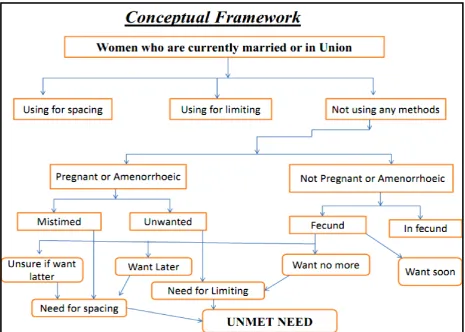
Figure 1: Shows the origin of unmet needs for family planning.
Figure 1 shows the origin of unmet needs for family planning.7 Unmet needs can be of two types (Figure 1)- unmet need for spacing and unmet need for limiting. The sum of the unmet need for limiting and the unmet need for spacing is the total unmet need for family planning. The total demand for family planning is the sum of unmet need and met need. Excluded from the unmet need categories are pregnant and amenorrhoeic women who became pregnant while using a method (these women are in need of a of a better method of contraception).7
Unmet need for family planning
=
( ) ( )
Aims and objectives
To determine the unmet needs for family planning
among married women in aged 18-49 years in select villages in Anekal taluk, Karnataka.
To study the various factors associated with unmet
needs for family planning among these women.
METHODS
This was a cross sectional study done during the period of two months (August – September 2016). Institutional Ethics Review Board consented for the study. The study population includes married women among reproductive age group (18-49 yrs) from villages of Anekal taluk which was selected purposively. Women who were widows, separated, divorced pregnant and postpartum amenorrhoeic women were excluded. According to
District Level Household Survey (DLHS) 7 Karnataka
2007-2008, the unmet needs for family planning is 15.8%. The sample size was calculated using the formula
z2pq/d2 where, Z=1.96, p=0.158, q=1-0.158=0.842
d=absolute precision=7%. The sample size is 104 subjects. Anticipating a non-response rate of 20%, the total sample size was 125. Informed consent is taken from each subject before the start of the study. The interview schedule was divided into socio-demographic details of the subjects and questions regarding unmet needs for family planning and its determinants. The data was entered in Microsoft Excel and analyzed using Statistical Package for Social Sciences (SSPSS 16). Socio-demographic details and frequencies of each were
done by descriptive analysis. Association between socio-demographic details and outcome variables were done using chi-square test.
RESULTS
In this study we interviewed 133 females who fulfilled eligibility criteria. The mean age of the population was 30.8±7.74 (standard deviation) with a minimum age of 18 and maximum of 48 years. More than half 79 (59.4%) of the women belonged to nuclear family and most of them 61 (45.9%) had high school education. In the study population 23 (17.3%) were salaried and 86 (64.7%) were homemakers. Majority 122 (91.7%) belonged to Hindu religion.
In the study population mean age of marriage was 17.51±2.90 years with a minimum age of marriage of 13 and maximum of 26 respectively. More than half 93 (69.9%) of the study population married at an age less than 18 years. More than half 74 (55.64%) of them have 10 or more years of active married life, with a minimum of 1 and maximum of 32 years respectively. Women who had at least two live children were 96 (72.18%) and 51.1% had female child as the last child. Health worker in the area contacted only 64 (48.1%) women on regards of family planning.
In the 133 women studied 127 (95.49%) had awareness about at least one method of contraception, among
them103 (81.1%) used some method of contraception.In
103 women who used contraceptive methods 84 (81.6%) were tubectomized and 11 (10.7%) used other methods like pills, condom and Cu-T before undergoing tubectomy. Information regarding contraception was reported to be gained through doctors (37%), family
members (23.7%) and health workers (22.9%)
respectively.
In the spouses of 127 women who were aware of contraception, 108 (85%) discussed with husband about the issue, 100 (78.7%) of the spouses helped in choosing contraceptive methods and 15 (11.8%) had opposition against any contraceptive methods.
Among the 33 subjects who were not using contraceptives (Table 1), 18 (13.5%) were eager to conceive and the rest 15 (11.3%) did not want a child, sexually active but not using any method of contraception i.e. had unmet needs for family planning.
Table 1: Met needs for family planning (n=133).
Variable Category Frequency (%)
Women who were currently using contraceptives
(met need for family planning)
Yes 100(75.2%) Limiting – 97 (97%)
Spacing – 3 (3%)
No 33(24.8%)
Figure 2: Pie chart showing unmet needs for family planning (n=133).
Table 2 shows the different reasons reported for unmet needs for family planning.
Multivariate analysis (Table 3 and Table 4) was done of factors associated with unmet needs for family planning. It was found that women who didn’t discuss about contraceptive methods have 6 times chance of unmet needs for family planning compared to those who discussed.
In our study we didn’t find any significant association with unmet needs for family planning and occupation, education, religion, number of children, type of family, contact by health worker, age at marriage and sex of last child.
Table 2: Reported reasons for unmet needs for family planning (n=15).
Category No (%)
Provider related-facility/staff 0 (0)
Client related - health concerns, fertility related 5 (33.3)
Contraceptive related - side effects 1 (6.7)
Environment related - family, cultural, religious 9 (60)
Table 3: Associations of unmet needs for family planning (n=133).
Variables Categories Unmet needs (%) Met needs (%) Chi-square value P value
Age group ( years)
18-24 9 (31) 20 (69)
13.01 0.001*
25-34 5 (8.3) 55 (91.7)
≥35 1 (2.3) 43 (97.7)
Active married life in years
Up to 5 8 (30.8) 18 (69.2)
12.11 0.001*
6-10 4 (12.1) 29 (87.9)
>10 3 (4.1) 71 (95.9)
Discussion with husband
No 9 (36) 16 (64)
18.804 <0.001*
Yes 6 (5.6) 102 (94.4)
Fisher’s exact test, *- significant p value.
Table 4: Multivariate logistic regression factors associated with unmet needs for family planning.
Variables Categories Odds ratio 95% CI for odds ratio P value
Lower Upper
Age group ( years)
18-24 8.39 0.38 186.46 0.18
25-34 3.02 0.25 36.65 0.39
≥35 1 - - -
Active married life in years
Up to 5 1.59 0.14 8.05 0.71
6-10 1.43 0.2 10.21 0.72
>10 1 - - -
Discussion with husband No 6.61 1.87 23.36 0.003*
Yes 1 - -
*p<0.05 significant.
DISCUSSION
The present study calculated the unmet needs for family planning as 11.3 % which is more compared to the present unmet needs for Karnataka according to National Family Health Survey (NFHS 4) i.e., 10.4% and more compared to that of rural Karnataka 8.8%. 9 In a study
done in Udupi district, Karnataka the unmet needs was 41% and in a study done in urban slums of Davangere,
Karnataka the unmet needs was 16 %.10,11
In our study we found that the unmet needs for family planning was more among the age group of 18-24years. This finding is similar to many studies where lesser the
100 (75.2%)
15(11.3%)
18(13.5%)
Contraceptive user
Unmet needs
age group more unmet needs for family planning was
present.12-14 Also in our study we found that unmet needs
were more among the females who was married for less than 5 years. This can be attributed to the fact that the young couples do not have sufficient knowledge of various contraceptive methods available or they have fear of the side effects of the contraceptive methods and about the availability of family planning services. Also in our study unmet needs were more among women who were not in the habit of discussing about family planning with husband. This is similar to a study done in Gwalior and Trivandrum India were unmet needs was more among women who were a sole decision maker about family planning.15,16
In our study we found that the most 9 (60%) common reason for unmet needs were family and cultural reasons (Table 2). These findings were not similar to other studies where the most common reasons were fear of side effects, lack of awareness and fertility reasons.17,18 This can be attributed to the fact that most of the study subjects had high school education.
CONCLUSION
The present study concluded that the percentage of unmet need for family planning is more in the young sexually active women below the age of 24 years residing in rural Karnataka and those who had less years of active married life. Family planning measures should be specifically directed toward this group of women if India has to make any progress in controlling its population. There is an increased need to scale up health education among adolescent population about family planning methods and to meet user perspectives about methods. The study also concludes that increased awareness had to be created about spacing methods and vasectomy. Also increase awareness programme should conduct among partner men as they still persist to be the decision maker in the families. The limitation of this study was that information from the male partners was not collected and a qualitative view would have added upon a detailed view.
Funding: No funding sources Conflict of interest: None declared
Ethical approval: The study was approved by the Institutional Ethics Committee
REFERENCES
1. WHO. Technical Report .Series. No.483.1970.
2. Measure DHS. Family Planning. 2005. Available at:
http://www.measuredhs.com/topics/Family-Planning.cfm.
3. World Health Organization. Family Planning. 2012
Available at: http://www.who.int/topics/family_
planning/en. Accessed 12 January 2018.
4. Bill and Melinda Gates Foundation. Family
Planning Overview. Available at:
http://www.gatesfoundation.org/familyplanning/Pag es/overview.aspx. Accessed 12 January 2018.
5. Withers M, Kano M, Pinatih GN. Desire for more
children, contraceptive use and unmet need for family planning in a remote area of Bali, Indonesia. J Biosoc Sci. 2010;42(4):549-62.
6. World Health Organization. Family Planning. 2012
July. Available at: http://www.who.int/mediacentre/
factsheets/fs351/en/index.html. Accessed 12
January 2018.
7. International Institute for Population Sciences (IIPS)
and Macro Inter-national (2007). National Family Health Survey (NFHS-III) 2005-2006. Mumbai: IIPS.
8. Family planning method Report 2013-2014.Chap
9:111-130. Available at: www.jsk.gov.in. Accessed 12 January 2018.
9. National Family Health Survey – 4; Available at:
rchiips.org/nfhs/pdf/NFHS4/KA_FactSheet.pdf. Accessed 12 January 2018.
10. Lekshmi AR. A study to assess the factors
influencing unmet need of family planning among married women in selected villages of udupi district, karnataka. Nitte University. J Health Sci 2014;4(1).
11. Hamsa L, Rajashri SP, Vijayanath V, Mahesh DK,
Sandhyalakshmi BN, Pragati VC, et al. Study of Unmet Need for Family Planning in Urban Slum Population of Davangere A Cross Sectional Study. Indian J Pub Health Res Dev. 2013;4(4):20.
12. Kumari C. Contraceptive practices of women living
in rural areas of Bihar. Br J Fam Plann. 1998;24:75-7.
13. Chandhick N, Dhillon BS, Kambo I, Saxena NC.
Contraceptive knowledge, practices and utilization of services in the rural areas of India (an ICMR task force study). Indian J Med Sci. 2003;57:303-10.
14. Yerpude PN, Jogdand KS, Jogdand MS. A study on
determinants of unmet need for family planning among married women in urban slum area. Int J Recent Trends Sci Tech. 2013;1(8):122-4.
15. Kumar SD, Pramod G, Roli G, Neeraj G, Manoj B.
A study to assess the unmet needs of family planning in Gwalior district and to study the factors that helps in determining it. NJCM. 2011;2(1):28. 16. Indu D. Unmet needs for family planning in urban
slums of Trivandrum corporation area. Calicut Med J. 2011;9:5.
17. Lata K, Barman SK, Ram R, Mukherjee S, Ram
AK. Prevalence and determinants of unmet need for family planning in Kishanganj district, Bihar. India. Glob J Med and Pub Health. 2012;1(4):29-33.
18. Patil SS, Rashid AK, Narayan KA. Unmet needs for
contraception in married women in a tribal area of India. Malaysian J Publ Health Med. 2010;10(2):44-51.
Cite this article as: George N, Sulekha T,
Ramachandran A, Peters A, Kiran PR.The unmet needs