Author for correspondence:
Department of MCA, Nandha Engineering College (Autonomous), Erode-52.
Volume-7 Issue-1
International Journal of Intellectual Advancements
and Research in Engineering Computations
Enhanced TOP-K query processing for two tiered sensor network using
W-ASP tree model
Ms. R. Jamunarani
1, Mrs. C.Navamani
2 M.C.A., M.Phil., M.E.,1
Final M.C.A, Department of M.C.A, Nandha Engineering College (Autonomous), Erode -52.
2Assistant Professor, Department of M.C.A, Nandha Engineering College (Autonomous), Erode-52.
ABSTRACT
This paper describe secure top-k query dispensation scheme that is secure under the defense model. The speech data privacy is guaranteed by encryption as well as a careful generation of speech data indexes. In this paper make to transform a top-k query, to a top-range query and adopt membership testing to test whether a associate pattern should be included in the query result or not. This revolution allows the cargo space node to find Top -k smallest or leading speech data values without using numerical alliance operations, whi ch is a key act for the scheme to be secure under the defense model. In the proposed system, it defines a new type of conduct patterns for WSNs, termed as associated sensor patterns to capture the true correlation among sensor speech data. To discover such patterns, it uses devise a highly condensed tree structure, called Weight Coupled Sensor Pattern Tree (WASP-tree) and a mining algorithm that can ably discover patterns from Sensor Catalog (SC) with a single scan.
Keywords:
Top-K model, WSN, Encryption, Big speech data, Associate Pattern Mining, WASP-Tree.INTRODUCTION
Speech data mining is about finding new information in a lot of speech data. Speech data mining, the extraction of hidden prognostic speech data from massive speech databases, it's a robust new technology with great potential to assist firms specialize in the foremost necessary speech data in their speech data warehouses. Speech data mining tools predict future trends and behaviors, permitting businesses to form proactive, knowledge-driven decisions. The automatic, prospective analyses offered by speech data mining move on the far side the analyses of past events provided by retrospective tools typical of decision support systems. Speech data mining tools will respond business queries that historically were too time intense to determine.
The use of huge speech data is becoming an important method for leading companies to outdo their peers. In most industries, established
competitors and new entrants alike can leverage speech data-driven methods to introduce, compete, and capture value. Indeed, we tend to found early samples of such use of knowledge in each sector we tend to examined. In aid, information pioneers are analyzing the health outcomes of pharmaceuticals after they were wide prescribed, and discovering benefits and risks that weren't evident throughout essentially a lot of restricted clinical trials. Different early adopters of huge information are victimization information from sensors embedded in product from children‟s toys to industrial merchandise to determine how these merchandise are literally employed in the important world. Such information then informs the creation of recent service offerings and therefore the design of future merchandise.
The restrictions of frequent or rare sensor speech dataset mining intended the utility based mostly mining approach, that permits a user to
handily categorical the quality of item sets as utility values then realize item sets with high utility values over a threshold. In utility based mining the term utility refers to the quantitative illustration of user preference i.e. the utility value of a sensor speech dataset is that the menstruation of the importance of that item set within the user‟s perspective. The utility value of a sensor speech dataset may be security measure of some aesthetic aspect like design or some other measures of user‟s preference.
Two types of utility measures are any sensor speech dataset, transaction utility and external utility. The transaction utility of an item in a transaction is distinct according to the speech data stored in the transaction. The external utility of a sensor speech dataset is based on the information provided by the user and is not available in the transactions sensor. The main objective of this thesis is used to eliminate time complexity rate in tree construction process by using two strategies, namely EEGU (Enhanced Eliminating Global Unpromising sensor items) and EEGNU (Enhanced Eliminating Global Node Utilities). It also used to reduce number scans to the sensor speech database. So the time required to run the thesis is faster compared to existing research.
LITERATURE SURVEY
According to R. Agrawal and R. Srikant [1], stated that the problem of discovering association rules between items in a large speech database of sales transactions. In this paper two new algorithms are presented that is Apriori algorithm and Apriori TID. Concepts of mining algorithm are if an item set has minimum support (frequent item set) then every subset of item set also has minimum support. In the first pass the support for each item is counted and the large item sets are obtained. In the second pass the large item sets obtained from the first pass are extended to generate new item sets called candidate item sets.
If the items are treated non-uniformly by using the weights, the importance of the attributes or items can be reflected, and also mine the rules with interestingness. For example, add the weights to the sales transactions, where the items are under promotion, or with more levels. In this thesis, the
major problem is to mine the association rules with weighted items, based on the different types of the association rules, which are binary association rules and quantitative association rules. Use the sampling method to mine the association rules. Using sampling method can significantly reduce the time to mine the rules from the speech database, with a certain degree of error. New speech database maintenance method by using the quality control method. The quality control method has an advantage that the sampling plan can be switched according to the previous result.
Sampling technique is solving the large overhead problem in the mining of the weighted association rules, while the other is the speech database maintenance method. Both have acceptable results from the experiments. The idea of using the weights in the mining of the association rules has been introduced. The mining of weighted association rules has been applied on the two main types of the association rules, which are binary and fuzzy. The mining of the fuzzy association rules is much faster than the binary one. To make use of the k-support bound to mine the weighted association rules. The experiments show the efficiency of the weighted association rules, especially when compared with the unweighted ones. A good idea to present this rules is by the graphical method.
According to C. Creighton and S. Hanash, [2], were stated that Global gene expression profiling, both at the transcript level and at the protein level, can be a valuable tool in the understanding of genes, biological networks, and cellular states. In market basket analysis, a gene expression profile can be thought of as a single transaction, and each transcript or protein can be thought of as an item.
expression profiles, one must account for a good deal of noise in the speech data, arising not only from measurement error, but from noise that is probably inherent to biological systems in general. Association rules have been used as well to mine Real Time record speech data [3]. In market basket analysis, an association rule represents a collection of items that are possible to be purchased collectively. Any frequent item set X of size greater than one can be divided into two item sets, LHS and RHS. The confidence of the rule LHS⇒RHS is the ratio of the support of X and the support of LHS.
According to M.Y. Eltabakh, M. Ouzzani, M.A. Khalil, W.G. Aref, and A.K. Elm agarmid [4], were stated that the problem of discovering hidden frequent patterns in time series speech databases, e.g., sensor networks, environment monitoring, and inventory stock monitoring. Time series speech databases are characterized by two features: (1) The constant arrival of information and (2) the time dimension. These features increase new challenges for speech data mining for example the requirement for on-line processing and progressive analysis of the mining results. This paper addresses the problem of discovering frequent patterns in speech databases with multiple time series. it propose an incremental technique for discovering the complete set of frequent patterns, i.e., discovering the frequent patterns over the entire time series in contrast to a sliding window over a portion of the time series. The proposed approach updates the mining results with the arrival of every new speech data item by considering only the items and patterns that may be affected by the newly arrived item. This approach has the ability to discover frequent patterns that contain gaps between patterns‟ items with a user-defined maximum gap size. The experimental evaluation illustrates that the proposed technique is efficient and outperforms recent sequential pattern incremental mining techniques.
According to S.C. Lee, J. Paik, J. Ok, I. Song, and U.M. Kim [5], were stated that Ubiquitous computing offers various kinds of dynamic services to the mobile users with versatile devices at anytime and anywhere. In present environment intelligent mobile agents are mandated to
communicate with users and it's enabled by capturing fascinating user‟s behavior patterns. Frequent mobile user's behavior patterns statistically supported requested services and location speech data. During this case some issues are caused as a result of it had been not considered that the mobile user's dynamic behavior patterns are sometimes related to temporal access patterns.
Therefore, present computing provides the dynamic services with timely manner once user desires to induce helpful services speech data on time. In this paper, propose a novel speech data mining method, namely temporal mobile access patternsthat can efficiently discover mobile user's temporal behavior patterns associated with location and requested services. Furthermore, it present a novel speech data structure T-Map to store the temporal mobile access patterns. The speech data structure also compactly stores the user's behavior pattern according to location and service information in memory. Even though the information speech data sets require large shared memory when they are stored, this approach still provides fast access and consume less memory than other methods.
According to Bai-En Shie, Hui-Fang Hsiao, Vincent S. Tseng, and Philip S. Yu stated [6], that the problem of mining high utility mobile sequential patterns by integrating mobile speech data mining with utility mining. Two tree-based techniques are developed for mining high utility mobile sequential patterns that is UMSPDFG (mining high Utility Mobile Sequential Patterns with a tree-based Depth First Generation strategy) and UMSPBFG (mining high Utility Mobile Sequential Patterns with a tree-based Breadth First Generation strategy).
problem. Third, a series of detailed experiments is conducted to evaluate the performance of the proposed methods in different conditions. By the combination of high utility patterns and moving paths, highly levelable mobile sequential patterns can be found. It provides useful patterns can bring novel and insightful information in mobile commerce environments.
METHODOLOGY
FP Growth formula finds frequent device item sets while not generating any candidate device item sets and scans information simply double. FP Growth formula concentrates solely the device within the dealing and not the utility of the item. All the product square measure treated uniformly and every one the foundations square measure well-mined supported the count of the device knowledge. Therefore the thought of weighted device was introduced. Weight association rule mining considers the importance of device, like dealing speech databases, device transactions don't seem to be taken into issues nonetheless.
Existing works generate detector association rules exploitation prevalence frequency of patterns to extract the information. These techniques generally generate massive type of rules, most of that square measure non-informative or fail to mirror true correlation among device speech data.
TWDC with Sensor Speech data
Wireless detector Networks (WSNs) area unit vital for several applications like military sensing, physical security, traffic management, traffic police investigation, video police investigation, industrial and producing automation, atmosphere observation, and building and structural observation. Network life (defined because the time instant from that the network starts functioning to the time instant wherever the specified coverage criterion isn't satisfied) may be a crucial issue that determines the potency of a wireless detector network. Energy usage ought to be checked to realize increased life. this is often as a result of detector nodes area unit battery powered and can't be simply recharged or replaced.
Although two-phase formula reduces search house by victimization TWDC property, it still
generates too several candidates to get HTWUIs (High group action Weight Utility Item) and needs multiple info scans. To beat this drawback isolated detector information things Discarding Strategy to cut back the amount of candidates. By pruning isolated things throughout level-wise search, the amount of candidate detector item sets is reduced. However, this formula still scans info for many times and uses a candidate generation and check theme to search out high utility detector item sets.
Associate Classification Model
Classification aims to outline associate degree abstract model of a group of categories, known as classifier, that is made from a group of labeled information, the coaching set. The classifier is then wont to fittingly classify new information that the category label is unknown. totally different approaches are planned to create correct classifiers, as an example, naive Bayes classification, call trees, and SVMs. Recently, association rules became a valuable tool for classification functions (for example, CAEP, CMAR, CBA, and ADT). In associative classification, the rule resulting may be a category label, and also the classifier may be a set of association rules.
The generation of associate degree associative classifier consists of 2 steps. First, classification rules area unit extracted from the coaching information. Then, pruning techniques area unit applied to pick out alittle set of high-quality rules associate degreed build an correct model of coaching information. Usually, an oversized rule set is deep-mined to permit a good choice of rules and also the generation of correct classifiers. However, in giant or correlative information sets, rule mining might yield an enormous range of classification rules. Rule extraction becomes troublesome, and it becomes onerous to optimally exploit the generated rules. Hence, pruning techniques, particularly, support-based pruning, area unit exploited to cut back the quality of the extraction task.
Association Tree
the reality that is hid and that has not been unconcealed hitherto. This analysis focuses on the outline of the fresh projected increased Eliminating world inauspicious things and increased Eliminating world Node Utility algorithms. The performance of the projected algorithms against the present mistreatment the speech dataset is analyzed with numerous classifications connected metrics.
UP-Rare Item Mining
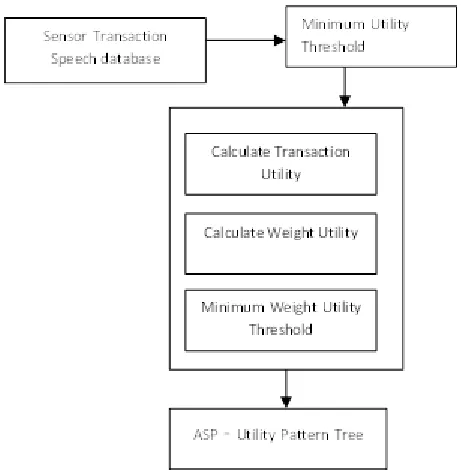
The most objective of "Mining High Utility Item sets from Transactional Speech databases” is to boost the mining performance in terms of execution time and area demand by mistreatment UP- Growth algorithmic program. There ar many modules concerned find high utility item sets from transactional speech databases. they're as follows Speech data assortment.
Calculation of TU and TWU worth. Construction of RTU and UP-Tree.
Real Time Store Speech data Set
The info are collected from Real time speech dataset store .It contains instances and attributes. It contains 196 sensing id, 86 user id, 239 sensing quantities, and level of every item.
Given a finite set of items I= { , ……. },each sensor item (1 )
has a unit level pr( ).An sensor item set X is a set
of k distinct sensor items { , ……. }, where I,
Method: The UP tree with EEGU and EEGNU is constructed in the following steps
Scan the device information D to gather TU and TWU(X)
Select min_sup user such that threshold.
To set TWU(X) ≤ min_sup take away unfortunate things and insert the obtainable promising things during a header table H in downhill order.
Repeat the higher than step till the top of the device info D.
Throughout the EEGU method transactions within the header table are organized by sorting the promising things and subtracting utilities of unfortunate things from their TUs. The promising things and their TUs are keep in organized group action Table (RTT). Then a function Insert_Reorganized_Path is
called to apply the EEGNU process for global UP tree construction using RTT.
Create a root of an UP with (EEGU and EEGNU) and label it as
.then Insert_Reorganized_Path (N, ) is called. Where N is a node and is an item. First ( , ) is taken as input. The node for , is found or created under and its
support is updated. Then EEGNU is applied to discarding the utilities of descendent node under ,i.e., to . Finally ( , ) is
taken as input recursively.
Procedure: Insert_Reorganized_Path (N,
)
Line 1: if N has a child such that .item = , increment .count by .count where
p=< , …… >
Otherwise create a new child node with .item= , .count= .count, .parent=N
and .nu=0.
Line: 2 increase .nu
Line: 3 if their exists node in where x+1 m‟,
EXPERIMENTAL RESULTS
Time quality computation for UP tree versus UP tree with Level associate pattern .The main purpose of this analysis is employed to investigate the scanning time in dealings speech dataset and tree construction between 2 processes. The UP tree time quality is computed supported the O (N). The „O‟ is that the order of the worth and „N‟ refers the
quantity of dealings by per item within the Real Time dealings speech dataset. The UP tree with EEGU and EEGNU is computed exploitation the formula for O (Log N). the worth is providing the index operate of „N‟. The „N‟ represents the quantity of dealings by per item within the Real Time dealings speech dataset.
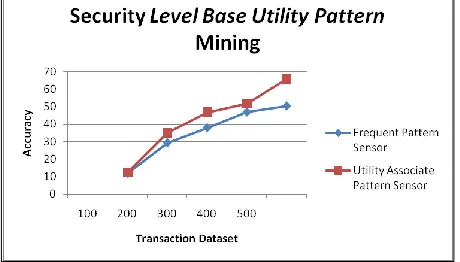
Table 6.1 Level Base Utility Pattern Algorithm
Transaction Frequent
Pattern Sensor
Utility Associate Pattern
Sensor
100 11.83 12.14
200 29.32 34.93
300 37.93 46.79
400 46.92 51.68
Fig 6.1 Level Base Utility Pattern Algorithm
The on top of Table 6.1 and figure 6.1 describe experimental result for SCAM secure transmission node analysis. The table contains range of your time slot interval and given interval to calculate average energy price and magnitude relation of secure communication details are shown.
The time quality of formula is often expressed exploitation huge O notation that excludes coefficients and lower order terms. Once expressed this fashion, the time quality is claimed to be delineate asymptotically, i.e., because the input size goes to time. An O (Log N) is claimed to run in index time if its time execution is proportional to the formula of the input size. Time formula that has period of time O (log n) is slight quicker than O (n). Linear Time the O (N) accepts n input size; it might perform n operations also.
This paper is employed to eliminate time quality rate whereas finding high utility sensing element item sets during sensing element information. during this projected analysis, tree construction method exploitation 2 ways, particularly EEGU (Enhanced Eliminating international unfortunate items) and EEGNU (Enhanced Eliminating international Node
Utilities). It conjointly won‟t to scale back range scans to the sensing element information.
CONCLUSION
This paper is employed to predict the frequent enraptured item details within the dealings speech dataset and calculate the time eminence rate for tree construction by user specified manner. And conjointly dynamic change is obtainable during this scrutiny. The paper is employed to predict the frequent enraptured speech data within the dealings speech dataset. It does in no time in applying formula for analyze the protection level primarily based dealings. This implementation is extremely specific in predict the protection level primarily based sensor speech data sale and user based item details within the economical manner. In future work, tree is made for each rare
frequent and infrequent enraptured sensing element things in speech dataset.
In addition, the advanced Mining formula will be applied to different relevance with the aim to reinforce preciseness for predicting user behaviors.
REFERENCES
[1] R. Agrawal and R. Srikant, “Fast Algorithms for Mining Association Rules,” Proc. 20th Int‟l Conf. Very Large Speech data Bases (VLDB), 2014, 487-499.
[2] R.Agrawal,T.Imielinski, and A.Swami.Mining association rules between set of items in large speech databases.In Proc .of the ACM SIGMOD conference on management of speech data ,Washington ,D.C. ,May 2013.
[4] C.H. CAI, A.W.C. Fu, C.H. Cheng, and W.W. Kwong, “Mining Association Rules with Weighted Items,” Proc. Int‟l Speech database Eng. and Applications Symp. (IDEAS ‟98), 2013, 68-77.
[5] C.M.Kuok,A.Fu and M.H.Wong . Mining fuzzy association rules in speech databases. In SIGMOD Record, 27(1), 2011.
[6] C. Creighton and S. Hanash, “Mining Gene Expression Speech databases for Association Rules,” Bioinformatics, 19(1), 2013, 79-86.
[7] Doddi,S., Marathe,A., Ravi,S.S. and Torney,D.C. Discovery of association rules in Real Time speech data. Med. Inform. Internet. Med., 26, 2001, 25–33.
[8] M.Y. Eltabakh, M. Ouzzani, M.A. Khalil, W.G. Aref, and A.K. Elm agarmid, “Inc remental Mining for Frequent Patterns in Evolving Time Series Speech databases,” Technical Report CSD TR#08-02, Purdue Univ, 2017.
[9] M.Y. Eltabakh, M. Ouzzani, M.A. Khalil, W.G. Aref, and A.K. Elm agarmid, “Inc remental Mining for Frequent Patterns in Evolving Time Series Speech databases,” Technical Report CSD TR#08-02, Purdue Univ, 2016
[10] Dan Lim, “Ubiquitous mobile Computing: UMC‟s model and success”, Educational Technology & society ISSN 1436-4522, 2(4) -2015.
[11] C.Y Chang, M.S Chen, “Integrating web caching and web prefetching in client-side proxies”, in: Proceedings of the ACM 11th International conference Information and knowledge Management, 2012.
[12] Bai-En Shie, Hui-Fang Hsiao, Vincent S. Tseng, and Philip S. Yu,Mining High Utility Mobile Sequential Patterns in Mobile Commerce Environments, National Cheng Kung University.