ROMANIAN JOURNAL
OF PSYCHOLOGICAL STUDIES
HYPERION UNIVERSITY
www.hyperion.ro
28
RELATIONSHIP BETWEEN THE STRUCTURING
LEVEL OF THE PSYCHICAL FUNCTIONS, THE
SELF-ACCEPTANCE AND THE WELL-BEING
MARIA TĂNASE MÂNZATa
a
Hyperion University of Bucharest, Faculty of Psychology and Educational Sciences Department of Psychology
Abstract
The main objective of this research is to study the relationship between the structuring level of the psychical functions, the self-acceptance and the well-being. This research is part of a larger study that consisted of making a synthesis between two directions of the psychology, the analytical, Jungian psychology and the humanist
psychology and also to study the effectiveness of Jungian psychoanalysis.The main matters
predominantly studied from the analytical psychology were the personality profile, i.e. the temperament and the structuring level of the four psychical functions, determined by the ego’s capacity of using them in a conscious and autonomous manner, with a low
consumption of energy and in the long run.The four psychical functions described by Jung
and researched in this thesis are: the thought, the feeling, the sensation and the intuition. During this research, 150 participants were tested among which 83 (55%) are females and 67 (45%) are males. They were between 35 and 65 years old.
Keywords: psychic functions, self-acceptance, well-being
1. INTRODUCTION
The main theoretical objective of this research consists of making a synthesis between two directions of the psychology, the analytical, Jungian psychology and the humanist psychology. Jung considers that the analytical psychology: “researches the causes of the pathogen diminution of the accommodation and it follows the tortuous tracks of the neurotic thought and feeling in order to examine the route from the alienation again to life. This is why our psychology is a practical science. We do not research for the sake of the research, but with the direct purpose of helping” (Jung apud Jacobi, 2012, page 16). The main matters predominantly studied from the analytical psychology were the personality profile, i.e. the temperament and the structuring level of the four psychical functions, determined by the ego’s capacity of using them in a conscious and autonomous manner, with a
Maria Tănase Mânzat – Romanian Journal of Psychological Studies, Hyperion University
29
low consumption of energy and in the long run. The four psychical functions described by Jung and researched in this thesis are: the thought, the feeling, the sensation and the intuition. The influence of the structuring level of these functions on certain features of personality were analyzed (Beebe, 2006). The following assumption was formulated: it is supposed there is a positive connection between the structuring of the psychical functions and the self-acceptance and the well-being in the following meaning: the more structured the psychical functions are, the more the self-acceptance and the well-being are.
His long drawn up theory is clinically substantiated, starting from the premise that the people are fundamentally good and healthy.
The unique „force of life” postulated by Rogers is the tendency of accomplishment/achievement of the Self - the actualizing tendency – seen as a specific motivation determining any lively being to develop itself plenarily, i.e. to achieve the largest possible extension. The peculiarity of the Rogersian view on the tendency of the Self achievement is provided by its generalization to any lively being, from plants to animals and to the human being, the algae being one of the first used examples. From the individuals, Rogers extended the presence of this tendency to ecosystems and he postulated the direct relationship between the ecosystem complexity and the efficacy of the tendency. Thus, due to its complexity, the forest has a much higher potential of achievement than a corn field. The most complex being, the human being, has the highest potential of achievement. “The experience gradually made me conclude that the individual has in himself the capacity and the tendency, latent, if not obvious, of forwarding to maturity. It is the impulse, visible in all forms of organic life and in the human life, of extending, amplifying, acquiring autonomy, developing itself, the tendency of expressing and activating all the capacities of the organism or of the Self” (Rogers, 2008, pages 72-73). The optimism by which he relates to the human being is also present in his vision about this process of the Self’s achievement. “This tendency may be so deeply buried under the numerous hardened layers of the psychical defense mechanisms; it may be hidden behind some complex screens denying its existence; but I have the conviction that it exists in any individual only awaiting for the appropriate conditions to be released and expressed” (Rogers, 2008, page 73). An important part of his therapeutic work consisted precisely of the separation, dissolution of these defense mechanisms layers.
Within the Self’s becoming process, deployed during the therapeutic process, Rogers identified several stages (Rogers, 2008). These stages are as follows:
Maria Tănase Mânzat – Romanian Journal of Psychological Studies, Hyperion University
30
people build up a kind of social masks (Jungian person). These masks are aimed to offer to the other ones which they wish.
2. The alienation from “you must” — together with the appearances, “show them what they wish to see”, the children also learn the behaviour “act as you have to”, “you must be only like that, do everything like that”. This way, the degree of personal autonomy is lower and lower, the life satisfaction is minimal, the feeling that “it is never enough” is constantly present in the background.
3. The alienation from the realization of other people’s expectations – in other people, Rogers includes the cultural limitations too. “In our current industrial culture, for example, as Whyte vigorously showed in her recent book, there is an enormous pressure of acquiring the features expected from the ˂person of the corporation˃. Thus, the individual must be a full member of the group, subordinate his individuality in order to comply with the group’s needs, he must become the ˂multilateral man able to work with multilateral people˃”(Rogers, 2008, page 243). Doing constantly and mostly which the society expects increase the level of alienation towards our own person. However, the alienation is experienced together with several negative emotions, like the frustration, the fury, the aggressiveness, the depression.
4. The alienation from indulging other people — it often represents the unique motivation of most people’s actions. It is usually deployed with a higher level of autonomy, like a reflex, built in childhood and adolescence. Even the teenagers seeming rebellious act so that to indulge their friends. Rogers balances against this motivation the Shakespearean exhortation “to thine own self be true”. Thus, the first important stage in the process of the Self’s achievement, in Rogers’ vision, is rather negative. The people discover how they do not want to be, what not to do any longer.
5. Towards the autonomy — after discovering the “No” and of the capacity of renouncing the automatisms and inferences, the autonomy follows. Rogers asserts about this autonomy: “I would not like to give the impression that my clients drive in a reckless or fortitudinous manner to this direction. On the contrary. The freedom of being oneself is a freedom presuming a tremendous responsibility and the individual goes to it cautiously, fearfully, almost without any confidence” (Rogers, 2008, page 245).
Maria Tănase Mânzat – Romanian Journal of Psychological Studies, Hyperion University
31
something we have not scheduled. In other words, there is insecurity, lack of self-confidence and anxiety in the background.
7. To the existence as a complexity — ”I acknowledge that this wish of being what one is in each moment – the entire richness and complexity, without hiding anything of oneself and without having fear of anything in oneself – is a common wish of those who showed a big progress in the therapy. It is no need to say that this goal is difficult and, in an absolute meaning, impossible to achieve. Notwithstanding, one of the most visible trends in the customers is to succeed either in being the same with the entire complexity of their changing Self, in each moment” (Rogers, 2008, page 247). Rogers’ words show that this stage does not suppose walking naked in the street, of course from psychological point of view, i.e. to express as often as possible everything we experience, but enlarging the field of our own consciousness so that we should become aware of as much as possible of our inner experiences and, besides that, being able to encompass them even if they are sometimes deeply contradictory. In other words, the less appearances are in front of our own person the more we are more honest to ourselves and, with the time, the anxiety and insecurity diminish.
8. To the openness towards the experience – it supposes openness, confidence and conscious contact with our own experience. The reception, acceptance, nomination and expression of our experiences require much courage and determination, the more so as in many societies the expression of the emotions is considered a lack of courtesy.
9. To the acceptance of other persons – the next stage is represented by the degree of the acceptance level, from the self to the other persons. It is possible to tell that learning and practicing the openness to the own person represents a training for the authentic openness towards other people, the enrichment of the inner world determines the enrichment of the exterior world, as well as the enrichment of each relationship taken individually. As a matter of fact, which is thus developed is the openness and the warm acceptance of the other people.
10. To the self-confidence — it represents a last stage but, at the same time, a condition more and more developed during the process of personal improvement described by Rogers. Without being arrogance or sufficiency, the self-confidence represents a keystone of the process. Rogers considers that, without self-confidence, El Greco or Hemingway would not have created anything. The self-confidence in itself also involves a kind of fidelity to oneself. In Jungian terms, it represents the confidence and the adoption of one’s own myth. It is this confidence that guarantees the possibility of developing the personal unicity (Rogers, 1951, 1980, 2008).
Maria Tănase Mânzat – Romanian Journal of Psychological Studies, Hyperion University
32
2. OBJECTIVE AND HYPOTHESES
2.1.OBJECTIVE
The main objective of this research is to study the relationship between the structuring level of the psychical functions, the self-acceptance and the well-being. The objective is to study the relationship between the structuring level of the psychical functions, the self-acceptance and the well-being.
2.2.HYPOTHESES
It is assumed that there is a positive link between the structuring of psychic functions and self-acceptance and well-being in the following sense: the more psychic functions are structured, the more self-acceptance and well-being are.
3. METHOD
3.1 PARTICIPANTS
Participants: 150 people were tested among which 83 (55%) are females and 67 (45%) are males. They were between 35 and 65 years old. All the participants have university degrees and they come from urban environments.
3.2 INSTRUMENTS
The psychological instruments used for the research are two personality questionnaires: MBTI (Myers Briggs Type Inventory) and CPI (California Psychological Inventory).
MBTI is one of the most famous personality questionnaire built based on the Jungian theory of the psychological types. It was built by Katharine Cook Briggs and her daughter, Isabel Briggs Myers. The instrument was drawn up during the Second World War. Its first purpose was to help the women, obliged to work during the second world war, to be hired in the industrial fields which they were fitter for and, this way, to alleviate their integration in the activity.
Maria Tănase Mânzat – Romanian Journal of Psychological Studies, Hyperion University
33
instrument MMTIC (Murphy — Meisgeier Type Indicator Children) aimed to the children.
The MBTI, whichever might be its format, assesses 4 dichotomous pairs (extraversion/introversion, thought/feeling, sensation/intuition, judicative/perceptive) and the 16 potential juxtapositions representing 16 types of personality.
C.P.I. is one of the most famous personality questionnaire. It was elaborated by Harrison Gough and it is published by Consulting Psychologists Press (like MBTI). Harrison Gough considers that the structural elements of the personality are the features. In their identification and description, he starts from the study of the language, i.e. of the descriptions already existing in the vocabulary of a commonly used language. This was the starting point in the construction of the CPI.
It was thought and built as a correspondent of MMPI (Minnesota Multiphasic Personality Inventory). But, unlike the MMPI which is a clinical test, the CPI assesses the normal people, the interpersonal behaviour and their social interactions, being frequently used in the staff selection, vocational counseling, team building, personal development, research.
The initial test contained 480 items, questions with dichotomous answers. It was published in 1957, like C. P. I. ― 480. The latest revision was performed in 1996 and, in 2002, a scale was published with 260 items, CPI ― 260, which is a shorter version of the original scale. The known variants are: CPI ― 480, published in 1957, CPI―462, published in 1987, CPI-434, published in 1996 and CPI-260, published in 2002 (Gough, 1987, 2009; Meyer, Davis, 1992).
3.3 STATISTICAL ANALYSIS OF THE RESULTS
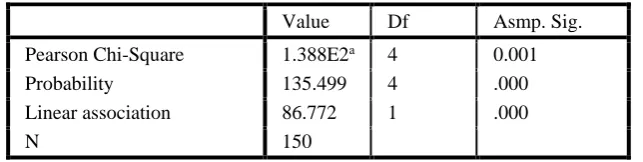
Table 1. The group tendency for the Self-Acceptance and Well-being and the Number of structured functions
Value Df Asmp. Sig.
Pearson Chi-Square 1.388E2a 4 0.001
Probability 135.499 4 .000
Linear association 86.772 1 .000
N 150
a For 0 cel. (.0%) frequencies lower than 5
the minimum expected frequency is 14.41.
According to the coefficient χ2
Maria Tănase Mânzat – Romanian Journal of Psychological Studies, Hyperion University
34
view between the frequency distributions of the levels of the self-acceptance depending on the number of structured functions.
Table 2. Coefficients for the Self-Acceptance and Well-being and the Number of structured functions
Value Std Errora
Aprox. Tb
Aprox. Sig.
Ordinal D coeficient Simetric 0.727 0.049 14.808 0.001
ASelf-Acceptance and
.727 .049 14.808 .000
Number of structured
functions Well-being .728 .050 14.08 .000
a Null hypothesis.
The use of the standard asymptotic error for the null hypothesis.
Table 3. The correlation between the number of structured functions and the well-being
Valoare
Std.
Error Aprox. Tb Aprox. Sig.
Ordinal Kendall's tau-b .727 .049 14.808 .000
Kendall's tau-c
.727 .049 14.808 .000
Gamma 0.886 0.040 14.808 0.001
N 150
The gamma coefficient of Goodman-Kruskal equal to 0.886 shows a positive very strong correlation between the number of structured functions and the well-being at a significance threshold p=0.001.
Maria Tănase Mânzat – Romanian Journal of Psychological Studies, Hyperion University
35
CONCLUSIONS
The research achieved its goal, demonstration that the structuring level of the psychical functions determines an increase of the self-acceptance and of the well-being. This relationship is important particularly in the analytical psychotherapeutic process because one of its purposes consists precisely in improving the structuring level of the psychical functions, this real tool of personality. This improvement leads to improvement an important part of that person’s life, by increasing the well-being and the self-acceptance.
Received at: 06.09.2018, Accepted for publication on: 19.09.2018
REFERENCES
Beebe, J. (2006). Evolving the eight-function model. Australian Psychological Type Review, vol. 8, No. 1, March.
Bess, T. L. Harvey R. J. Swartz D. (2003). Hierarchical Confirmatory Factor Analysis of the Myers-Briggs Type Indicator. Orlando, Annual Conference of the Society for Industrial and Organizational Psychology.
DesJardins, C. (2009). A Phenomenological Study of Business Leaders’ Selfactualization Experience in Business since Participating in Meta – Coach Training, doctoral program Capella University.
Gough, G. H. (1987). The California Psychological InventoryAdministrator’s Guide. Palo Alto: CPP
Gough, G. H. (2009). The California Psychological Inventory. In Testing and Assessment in Counseling Practice (second edition) edited by Watkins E. jr. & Cambell Vicki. Lawrence Erlbaum Associates. Inc. Publishers, Mahwah.
Jacobi, J. (2012). The psychology of C.G.Jung. București: Trei.
Jung, C. G. (1978). Psychological Reflections, A New Anthology of His Writings 1905 – 1961. (Edited by J. Jacobi & R.F.C. Hull). Bollingen Series XXXI, Princeton University Press.
Jung, C. G. (2004). Psychological types. București: Trei.
Kay, W. & Francis, L. (2008). Psychological type preferences of female Bible College students in England. In Journal of Beliefs &Valoares, Vol. 29, pp. 101-105.
Meyer, P., Davis, S. (1992). The CPI Applications Guide. Palo Alto: CA Consulting Psychologists Press
Ragozzino, R. & Kelly, W. (2011). Typing the worrier: relationship between worry
and Jung's personality types. CBS – Interactive Business Network Resource Library
Rogers, C. (1951). Client – Centred Therapy: Current Practice, Implications and
Theory. Boston: Houghton Mifflin.
Rogers, C. (1980). A Way of Being. Boston: Houghton Mifflin.
Maria Tănase Mânzat – Romanian Journal of Psychological Studies, Hyperion University
36