REVIEW
Systematic review and meta-analysis
of public hospital efficiency studies in Gulf
region and selected countries in similar settings
Ahmed Alatawi
1,2*, Sayem Ahmed
1,3,4, Louis Niessen
1,5,6and Jahangir Khan
1,3,4Abstract
Background: The assessment of hospital efficiency is attracting interest worldwide, particularly in Gulf Coopera-tion Council (GCC) countries. The objective of this study was to review the literature on public hospital efficiency and synthesise the findings in GCC countries and comparable settings.
Methods: We systematically searched six scientific databases, references and grey literature for studies that measured the efficiency of public hospitals in appropriate countries, and followed PRISMA guidelines to present the results. We summarised the included studies in terms of samples, methods/technologies and findings, then assessed their qual-ity. We meta-analysed the efficiency estimates using Spearman’s rank correlations and logistic regression, to examine the internal validity of the findings.
Results: We identified and meta-analysed 22 of 1128 studies. Four studies were conducted in GCC nations, 18 came from Iran and Turkey. The pooled technical-efficiency (TE) was 0.792 (SE ± 0.03). There were considerable variations in model specification, analysis orientation and variables used in the studies, which influenced efficiency estimates. The studies lacked some elements required in quality appraisal, achieving an average of 73%. Meta-analysis showed nega-tive correlations between sample size and efficiency scores; the odd ratio was 0.081 (CI 0.005: 1.300; P value = 0.07) at 10% risk level. The choice of model orientation was significantly influenced (82%) by the studied countries’ income categories, which was compatible with the strategic plans of these countries.
Conclusions: The studies showed methodological and qualitative deficiencies that limited their credibility. Our review suggested that methodology and assumption choices have a substantial impact on efficiency measurements. Given the GCC countries’ strategic plans and resource allocations, these nations need further efficiency research using high-quality data, different orientations and developed models. This will establish an evidence-based knowledge base appropriate for use in public hospital assessments, policy- and decision-making and the assurance of value for money. Keywords: Gulf countries, Systematic review, Technical efficiency, Public hospitals, Data envelopment analysis, Stochastic frontier analysis
© The Author(s) 2019. This article is distributed under the terms of the Creative Commons Attribution 4.0 International License (http://creat iveco mmons .org/licen ses/by/4.0/), which permits unrestricted use, distribution, and reproduction in any medium, provided you give appropriate credit to the original author(s) and the source, provide a link to the Creative Commons license, and indicate if changes were made. The Creative Commons Public Domain Dedication waiver (http://creativecommons.org/ publicdomain/zero/1.0/) applies to the data made available in this article, unless otherwise stated.
Open Access
*Correspondence: [email protected]
1 Health Economics Group, Department of Clinical Sciences, Liverpool School of Tropical Medicine, LSTM, Room 1966-215-206, Pembroke Place, Liverpool L3 5QA, UK
Introduction
Many nations seek to provide their population with an efficient, equitable and effective healthcare system. This is certainly true of the Gulf Cooperation Council (GCC) countries, which have experienced substantial population growth and increased life expectancy in recent decades. These have, in turn, increased demand
for healthcare services [1, 2]. In these countries, average
government healthcare spending is 73%, corresponding
to 3.2% of GDP in 2013 [3, 4]. Yet while public spending
on health is remarkably high in GCC nations, in com-parison with many high-income countries, it is rather
low as a share of GDP [5]. It has been observed that in
Gulf countries, a mere 2.0 hospital beds are allocated per 1000 of population; in contrast, the corresponding figure in other high-income countries is on average 9.0
[6, 7].
Although GCC states spend more than twice as much on health than upper-middle income countries (USD 1100–2000 per capita for GCCs versus USD 505 per capita), the number of hospital beds per 1000 people is fewer, at around 2.0 versus 3.4 hospital beds per 1000 of
population [7]. These statistics indicate a potential
inef-ficiency in resource utilization within GCC countries. The healthcare expenditure in GCC nations was expected to rise from USD 55 billion to USD 69.4 billion between
2014 and 2018 [1, 2]. Moreover, demand for healthcare
services is expected to increase by 240%, and thus to require many more hospital beds, with a total of almost
162,000 to be provided by 2025 in the GCC [8].
Con-sidering the observed imbalance between health service availability and health spending across countries, better use of resources is fundamental to the achievement of
efficiency in health systems [9].
Many national governments worldwide must assess the efficiency of their health sectors, to ensure that public
money is used to best effect [10]. A diverse collection of
efficiency-related notions and concepts have been used in such efficiency analysis, including theories of techni-cal, allocative, cost and overall efficiency. Of these effi-ciency concepts, the technical effieffi-ciency approach is the most commonly used. It is based on Farrell’s concept that “a hospital that produces the maximum amount of out-put from a given inout-put, or produces a given outout-put with least quantities of inputs, can be recognised as
techni-cally efficient” [11, 12].
Hospital efficiency is crucial for the efficiency of the health system overall, as hospitals are primary
consum-ers of health resources [12, 13]. For instance, Hanson
et al. [13] stated, in 2002, that public hospitals consumed
a large proportion (around 40%) of the total public health budget in many sub-Saharan African countries. Oth-ers have found that public hospitals shared 44% of all
national health services’ spending in the United Kingdom
in 2012/13 [14].
Globally, the measurement of hospital efficiency has been achieved using various techniques, mainly through frontier analysis methods either as “non-parametric” data envelopment analysis (DEA) or as “parametric” stochas-tic frontier analysis (SFA). These methods compare hos-pitals’ actual performance against an estimated efficient frontier, which is deemed to be achieved by the
best-performing hospitals [15, 16]. The selection of input and
output variables is an essential step in the measurement of such comparative performance, because the results of any efficiency assessment depend significantly on the
var-iables used in the estimation models [17]. To date, the
lit-erature has focused on labour (e.g. health professionals) and capital (e.g. number of beds) as the input variables, while few studies have included consumable resources,
such as pharmaceuticals [10, 17]. The main categories
of output used in efficiency studies comprise healthcare activities, for instance the number of outpatient visits, inpatient services, number of surgeries and health
out-comes (e.g. mortality rate) [10].
Despite global interest by researchers and policy-makers, considerable uncertainty exists as to whether the methods frequently applied in efficiency analysis are sufficiently well developed to be useful. There is lit-tle consensus regarding the appropriateness of the effi-ciency measurement and estimation techniques that policy-makers lean on to make decisions about efficient
resource allocation [15]. However, while recent decades
have seen a growth in research of the supply-side of hospital efficiency, the demand-side (e.g. health policy)
remains under-researched [18]. Many in the public health
area have maintained a focus on the efficiency of primary health services, neglecting secondary-level hospital
ser-vices in the process [19]. In general, there is scarcity of
scientific studies and empirical works on the efficiency of public hospitals, and such scarcity is particularly pro-nounced in GCC countries.
To our knowledge, there is no extant systematic review of studies that examines the efficiency of public hospitals in Gulf countries. This study aims to review the existing literature systematically, and to synthesise the findings on public hospital efficiency studies in the GCC region and in countries that are comparable in terms of income level, demographic characteristics and health provision. Specifically, we intend to summarise the included studies regarding their characteristics and capacity to describe health care performance and explain differences in effi-ciency estimates.
enhance our understanding of how efficiency studies have been performed there. Such understanding could helpfully influence policy decisions in the GCC countries. Moreover, we perform a meta-analysis of the efficiency estimates reported in the reviewed studies, to analyse the stability of the efficiency findings.
Methods
Search strategy
In July and August 2017, we searched for relevant stud-ies in six indexed scientific databases, namely PUB-MED, CINAHL, ECONLIT, MEDLINE, EMBASE and Cochrane, to identify relevant English-language stud-ies indexed at any time. To ensure a broad range of rel-evant studies, we used an appropriate combination of medical subject heading (MeSH) terms and text words
(ti, ab, kw) to search the databases [20]. We also
acti-vated the notification alert that registered in the rel-evant databases for any potential papers that met our search words. The following search algorithm was used: (“efficiency” OR “efficienc*” OR “productiv*” OR “inef-ficien*” OR “performance” OR “data envelopment analy-sis” OR “DEA” OR “stochastic frontier” OR “SFA” OR “parametric” OR “non-parametric” OR “nonparametric” OR “healthcare efficiency”) AND (“Hospital*” OR “Pub-lic Hospitals” OR “Secondary Care” OR “Pub“Pub-lic Health Centre” OR “Government* Hospitals”) AND (“High Income” OR “Upper-Middle” OR “Middle Income” OR “Gulf Countr*” OR “GCC” OR “Middle East” OR “Islamic Countries” OR “Single Payer Health System” OR “Saudi Arabia” OR “Iran” OR “Turkey”). The search
process complied with PRISMA guidelines [21]. The
study protocol was approved by PROSPERO (Protocol ID: CRD42017074582). We identified studies that exam-ined healthcare efficiency measurements and production assessments of public health facilities, both in the GCC countries and in similar settings. All of the studied coun-tries have a high or upper-middle income as defined by the World Bank, a single-payer health system and shared
demographic characteristics [22]. We subsequently
extended our search by looking through the reference sections of the studies identified in the databases. Moreo-ver, we manually searched the grey literature for poten-tially relevant articles, because some efficiency measures relevant to GCC states may not have been included in the published literature.
Inclusion criteria
For a study to be included in the review, it had to sat-isfy the following inclusion criteria: (1) a study ought to empirically estimate efficiency and report technical effi-ciency scores. (2) a study must have public hospitals as the unit of analysis. (3) a study must have been conducted
in Gulf region (GCC) or similar countries. We excluded studies that failed to empirically assess the efficiency of healthcare centres; for instance, some studies explained efficiency techniques and described methods but did not include empirical data. Studies that focused solely on the private sector were excluded, as were studies that used measures other than efficiency estimates, for example productivity change.
Region selection
We sought relevant literature that studied GCC countries (Saudi Arabia, United Arab Emirates, Oman, Kuwait, Qatar and Bahrain). We found that Iran and Turkey share relevant characteristics with GCC states, in that both have an upper-middle income, are located in the Mid-dle East and have a public health system funded mainly by the government (i.e. a single-payer system). Like the GCC nations, Iran and Turkey have Islamic cultures and they experience levels and patterns of demand for health activities and services that resemble those of the GCC countries.
Selection of studies
The author (AA) performed the database search for potential articles, using our search terms and work-ing closely with librarians to refine the search strategy. Two authors (AA and SA) independently screened the titles and the abstracts of all resulting articles, to ascer-tain whether they met the eligibility criteria and thus reduce the possibility of selection bias. The full texts of all included articles were examined in parallel and separately by the two authors, to determine whether they met all inclusion criteria. Disagreements were resolved by peer discussion, and any differences that could not be resolved were referred to a third member of the review team.
Data extraction
Two reviewers (AA and SA) performed the data extrac-tion independently. Data extracted for each study com-prised: year of publication, number of hospitals included in the study, the studied country, income category of that country, percentage of non-public hospitals in the sam-ple, type of hospital (general and/or specialized), data sources and collection year, estimation methods, input and output variables, technology orientation, model specification, second-stage analysis, sensitivity analysis, and all estimated efficiency scores.
Quality assessment
We evaluated the quality of the reviewed studies accord-ing to four dimensions that were developed by Varabyova
and Müller in 2016 [23], based on the quality appraisals
studies [24, 25]. These dimensions address reporting, external validity, bias and power. The reporting dimen-sion ensured that the study provides sufficient infor-mation to permit a dispassionate evaluation of the outcomes. The external validity element addressed the inclusiveness of the sample. The bias dimension interro-gated data accuracy, appropriateness of used techniques, the presence of outliers, and potential bias in the second-stage analysis. The power dimension assessed whether the authors provided evidence to support the study
find-ings [23].
Meta‑analysis
To evaluate the consistency of technical efficiency esti-mates from different studies, we performed a meta-analysis of the reported findings. For all studies that used panel data and reported a separate score for each year, we calculated the weighted average of these estimates and calculated a pooled technical efficiency (TE) score. The estimated mean of the TE was compared using an
inde-pendent-samples T Test based on different features (such
as methods of estimations like DEA, SFA; income levels of the countries) of the included studies. To test the inter-nal validity of the findings, we estimated bivariate Spear-man’s rank correlations between efficiency scores and related variables in the reviewed studies, e.g. methods, income levels, number of hospitals. In the logistic regres-sion model, we categorized the TE scores into two levels:
‘0.8 and above’ and ‘less than 0.8′ for use as the
depend-ent variable. Furthermore, we used number of inputs and outputs variables, income-levels of the country (high or upper-middle), number of hospitals, estimation method (DEA or SFA), the orientation of the technology (Input or output), the specification of the model, and quality assessment scores as explanatory variables. We included these characteristics because the literature indicates that heterogeneity across the sample could affect estimated
efficiency scores [16]. Data was analysed using IBM SPSS
statistic, version 24 as well as STATA version 13.
Results
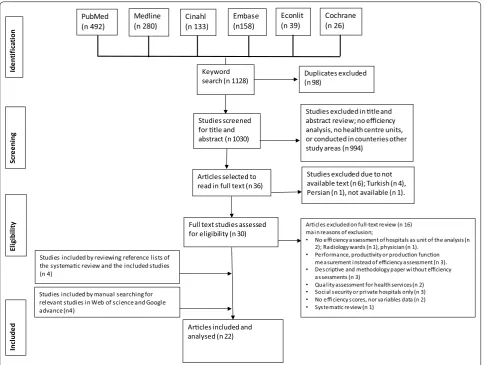
Our search of the databases yielded 1128 titles/abstracts. We deleted 98 duplicate records and excluded 994 irrel-evant records through title and abstract screening. We also eliminated six records because there was no English-language version available. Thereafter we assessed 30 full-text articles for eligibility and excluded a further 16 because they did not satisfy our inclusion/exclusion crite-ria. Through reference tracking, we identified four more records and another four publications were identified by manual search of the relevant grey literature. Finally, 22 studies that satisfied our inclusion/exclusion criteria were
included in the meta-analysis. Figure 1 summarises the
four phases of our systematic literature search following PRISMA guidance.
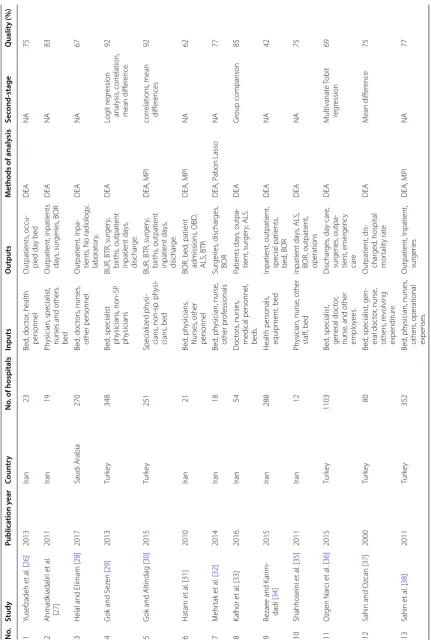
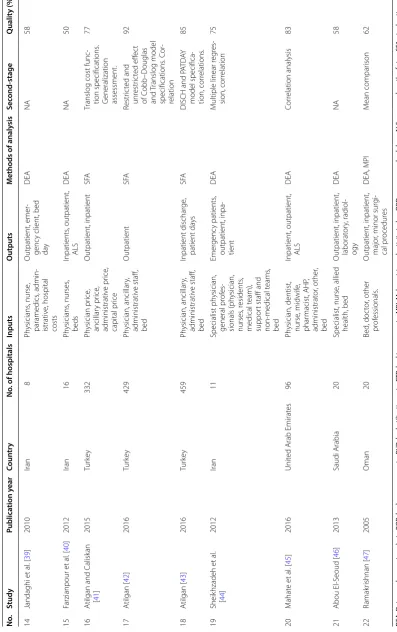
Table 1 summarises the most prominent characteristics
of the 22 studies reviewed. Their publication dates ranged from 2000 to 2017. Of all studies, only four were con-ducted in high-income Gulf countries: two from Saudi Arabia, one from the United Arab Emirates and one from
Oman [28, 45–47]. The remaining 18 studies were
con-ducted in upper-middle income countries: 10 studies were conducted in Iranian hospitals and the remaining eight in Turkish hospitals. The number of sample hospi-tals per study varied from eight to 1103.
Fifteen studies used cross-sectional data, seven used panel data. The health reports, hospital records or annual statistical records were the sources of data in these ies. Regarding methodology, 19 of the 22 reviewed stud-ies used nonparametric methods and the rest applied parametric approaches. Among nonparametric meth-ods, data envelopment analysis (DEA) was predomi-nantly used in 19 studies. Other nonparametric methods included Malmquist Productivity Index (MPI) in four
studies [30, 31, 38, 47] and Pabon lasso analysis in one
study [32]: both of these methods were used along with
the DEA in these cases. Stochastic frontier analysis (SFA) was the exclusive parametric application and used in
three studies from Turkish hospitals [41–43]. Efficiency
had been assessed in light of various concepts includ-ing technical-, scale-, and pure-efficiency with a primary focus on technical efficiency (TE) in the reviewed studies.
The reviewed studies varied in the model specifica-tions they used to estimate the technical efficiency of public hospitals. Among the studies that applied DEA applications, 12 used both constant and variable return to the efficiency scale (CRS and VRS), whereas four studies applied variable return to scale (VRS) and three used constant return to scale (CRS). The three SFA stud-ies used two model specifications in each case to assess efficiency scores, including Cobb–Douglas and translog models. In respect to the orientation of the technology, most (82%) of the studies relied on input orientation, aiming at minimisation of health resources (inputs) for a fixed level of output. In contrast, four studies conducted in GCC countries aimed to enhance the provision of
health service by applying output orientation [28, 45–47].
The inputs used in the efficiency analysis of the
included studies are presented in Table 1, with a median
of four input variables per study with a mean of 3.9 (range: 2–6). Predominant inputs were the capital (num-ber of beds) and labour (num(num-ber of health workers with different professional categories) variables. Three
stud-ies [37–39] used capital expenses in the inputs, and one
study [41] included prices of capital and labour.
models: the mean was 3.7 (range: 1–7) and the median was 3.5 variables. Output variables focused on health care activities and direct patient services. Seven studies used bed turnover (BTR), utilization (BUR) and occu-pancy (BOR) rates, and five studies used average length
of stay (ALS), while one study [37] used mortality rate in
its hospitals as output variable.
The last column in Table 1 shows the quality
assess-ment scores of the four dimensions: reporting, exter-nal validity, bias, and power. The median quality score was 75% and the mean was 73%; scores ranged from 41 to 92%. The reviewed studies frequently missed points on various dimensions. In the reporting dimension, five studies lacked description of the underlying economic theory and seven studies failed to address the limita-tions of the study in discussions. In the external validity dimension, the model assumption and appropriateness of the benchmarks was missing in eight studies. In the bias dimension, we found that 14 of the studies (64%) neither addressed nor discussed the potential presence of outliers
and data accuracy. In addition, only half of the studies
(n = 11) conducted second stage analysis. Nineteen of 22
studies reviewed did not generate confidence intervals for efficiency estimates to reveal statistical power, while just 10 of the studies conducted sensitivity analysis.
Technical efficiency (TE) estimates of the reviewed studies varied from 0.47 to 0.98 with a total average of
0.792, standard error (SE:0.03) (Table 2). The average
technical efficiency score was 0.778 (SE: 0.104) in the GCC, where the corresponding score of upper-middle countries was 0.796 (SE: 0.031).
Moreover, the mean estimate of pure/managerial TE score was 0.875 (SE: 0.035), while scale efficiency was 0.892 (SE:0.027). To examine the consistency of efficiency assessments, we conducted a meta-analysis of the esti-mated 25 TE scores reported in the reviewed studies.
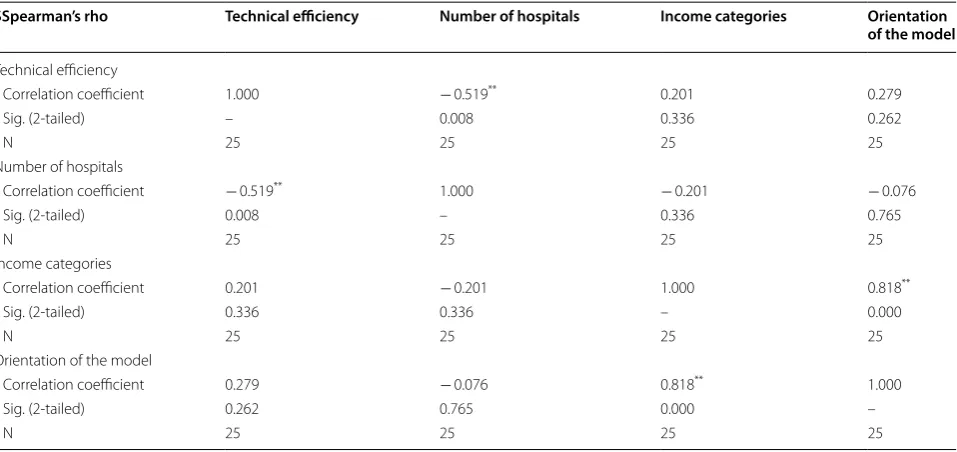
We estimated Spearman’s rank correlations between TE and predictor variables that included; methods of the analysis, orientation and specification of the models, number of inputs and outputs used, number of hospital
noi
tac
ifit
ne
dI
PubMed
(n 492) Medline(n 280) Cinahl(n 133) Embase(n158) Econlit(n 39) Cochrane(n 26)
Keyword
search (n 1128) Duplicates excluded (n 98)
gni
ne
erc
S
Studies screened for tle and abstract (n 1030)
Studies excluded in tle and abstract review; no efficiency analysis, no health centre units, or conducted in counteries other study areas (n 994)
Arcles selected to read in full text (n 36)
Studies excluded due to not available text (n 6); Turkish (n 4), Persian (n 1), not available (n 1).
Full text studies assessed for eligibility (n 30)
ytil
ibi
gil
E
Arcles excluded on full-text review (n 16) main reasons of exclusion;
• No efficiency assessment of hospitals as unit of the analysis (n
2); Radiology wards (n 1), physician (n 1).
• Performance, producvity or producon funcon
measurement instead of efficiency assessment (n 3).
• Descripve and methodology paper without efficiency
assessments (n 3)
• Quality assessment for health services (n 2)
• Social security or private hospitals only (n 3)
• No efficiency scores, nor variables data (n 2)
• Systemac review (n 1)
Arcles included and analysed (n 22) Studies included by reviewing reference lists of
the systemac review and the included studies (n 4)
Studies included by manual searching for relevant studies in Web of science and Google advance (n4)
de
dul
cnI
Table
ysician, specialist, nurses and others
.
Inpatient, outpatient, special patients
in the samples, countries and income categories in the reviewed studies, to test the internal validity of findings.
Table 3 illustrates this.
We found that the correlations were quite low, and some were even negative. Hospital numbers in the sam-ples were negatively correlated with TE scores, suggest-ing that models with small sample sizes had provided higher efficiency estimates. Moreover, a logistic
regres-sion model (Table 4) confirmed these relationships
between the number of hospitals and efficiency scores, with an odd ratio (OR) of 0.081 (95% confidence
inter-val CI 0.005: 1.300; P inter-value = 0.07) at 10% risk level. We
also found a significant correlation, of 82%, between
countries’ income levels and the orientation of the effi-ciency model used. Furthermore, studies conducted in high-income countries used output orientation models, which pursued the output-maximisation objective while keeping the inputs constant. The studies performed in upper-middle income countries, in contrast, used input orientation models that aimed to minimise the resources used while keeping output constant.
Discussion
The remarkable growth, in recent decades, of expenditure on healthcare in many countries has directed attention to the analysis of efficiency, the performance of pub-lic sectors and the need to provide popub-licy-makers with Table 2 Technical efficiency (TE) scores
Mean Standard
error SE Median Min Max
Pooled technical efficiency
TE 0.792 0.030 0.828 0.470 0.980
Pure/managerial TE 0.876 0.035 0.935 0.590 0.976
Scale TE 0.892 0.027 0.940 0.670 0.981
Data envelopment analysis
DEA 0.791 0.035 0.846 0.470 0.980
Stochastic frontier analysis
SFA 0.801 0.036 0.776 0.755 0.871
Upper-middle income 0.796 0.031 0.800 0.557 0.980
High income 0.778 0.104 0.859 0.470 0.923
Table 3 Spearman’s rank correlation between the efficiency scores and different studies’ characteristics
Income categories of the studied country (high or upper-middle); orientation of the efficiency model (input or output) **Correlation is significant at 0.01 level (2-tailed)
SSpearman’s rho Technical efficiency Number of hospitals Income categories Orientation of the model
Technical efficiency
Correlation coefficient 1.000 − 0.519** 0.201 0.279
Sig. (2-tailed) – 0.008 0.336 0.262
N 25 25 25 25
Number of hospitals
Correlation coefficient − 0.519** 1.000 − 0.201 − 0.076
Sig. (2-tailed) 0.008 – 0.336 0.765
N 25 25 25 25
Income categories
Correlation coefficient 0.201 − 0.201 1.000 0.818**
Sig. (2-tailed) 0.336 0.336 – 0.000
N 25 25 25 25
Orientation of the model
Correlation coefficient 0.279 − 0.076 0.818** 1.000
Sig. (2-tailed) 0.262 0.765 0.000 –
N 25 25 25 25
Table 4 Logistic regression between technical efficiency scores and model specifications
*P < 0.10
Variables Description Odds ratio OR (95% coefficient interval)
Methods SFA (Ref = DEA) 0.700 (0.028;73.113) Income categories High income
(Ref = Upper mid-dle Income)
3.337 (0.157;70.739)
Number of hospitals Continuous 0.081* (0.005;1.300) Number of
inputs/out-puts Continuous 0.436 (0.028;6.848)
evidence-based knowledge on which to base informed
decisions [5, 48]. We reviewed studies that measured
technical efficiency, which is defined by Farrell as pro-ducing the maximum amount of output from a specific amount of input or producing a given output from
mini-mum input quantities [11]. We assessed relevant
stud-ies conducted in public hospitals in the Gulf, Iran and Turkey. Despite dissimilarities between GCC and Iran and Turkey, there are similarities as well in the culture and the health system. These similarities give the latter two countries justifications to be included in the review and such an inclusion gives the opportunity to share the knowledge across countries in the similar settings for future empirical analyses of the public health systems.
We assessed the impact of model characteristics on the reported efficiency scores using meta-analysis based on 25 extracted observations from 22 different studies. Most of these studies were found in six high-quality databases of scientific publications, but this did not yield studies of GCC countries. We had to search the grey literature for Gulf-focused papers, which were not found in the indexed scientific databases because efficiency analysis is a new approach of research in the Gulf region. The stud-ies found as published literature and those sourced as grey literature were mutually exclusive. To the best of our knowledge, this is the first attempt by researchers to con-duct a systematic review and quantify the effect of model specifications on hospital efficiency scores in the GCC countries and comparable nations.
We found that DEA was the dominant method by which public hospital efficiency was assessed in the reviewed studies: just three studies applied the SFA
method, all conducted in Turkey [41–43]. In the Gulf
region and in Iran, efficiency was exclusively measured via DEA and other systematic reviews have found the
same method to be common internationally [12, 25]. The
use of DEA is well justified by its capability to handle multiple inputs and outputs in different units, and also its
functional flexibility in practical application [10, 49].
The reviewed studies originating from Iran and Tur-key primarily used the technology orientation of input, whereby output was fixed, and the scholars explored proportional reduction in the input. Such an approach is very practical, since hospital managers and policymak-ers have more control over inputs than they have over
outputs, as shown in previous research [50, 51]. In
con-trast, two of the four studies arising from Gulf countries
applied an output orientation model [45, 47], while the
remaining two studies employed both input and output
orientation model [28, 46]. Thus, the health-related
pol-icy objective within the GCC was to retain the inputs and explore proportional expansion in output. This approach complements the target of Gulf governments, which is to
enhance the provision of national and domestic health services to meet the growing demand for healthcare. In such countries, this is the primary goal of health care
development strategy plans [2, 52]. Furthermore, this
approach was appropriate because reduction of the exist-ing health resources is not the priority of Gulf nations’
health strategies, at least in recent years [2, 45].
Our meta-analysis showed no significant differences between the estimated efficiency in both technology orientations of efficiency analysis. Due to the scarcity of efficiency estimates and related knowledge in the Gulf region, we encourage further investigation and more research in this area. Ideally such study should be under-taken using a variety of technology orientations, consid-ering the goals and functions of the public hospitals.
The studies we reviewed often had limitations, which included aggregation of inputs, mainly in the labour
cat-egory [27] and aggregation of costs of different types of
capital and labour prices [41]. Outputs mainly focused on
healthcare activities, ignoring health outcomes and offer-ing no adjustment for differences in case mix or quality of care across hospitals. This might be the reason for high efficiency scores in some hospitals, despite a low
qual-ity of care [51]. Further limitations were heterogeneity in
sample (number and size of hospitals in each study; activ-ities of the hospitals, etc.), which might affect efficiency scores since in general, the studies did not make appro-priate adjustments in light of such heterogeneity. The studies often failed to describe the causes of inefficiency, did not try to evaluate the misspecification in efficiency models and also lacked internal validity of efficiency find-ings, which could skew the policy implications. Moreo-ver, like Varabyova in 2016, we found that the quality assessment of the studies revealed frequent failure to report production theory and the absence of justifica-tion/rationalisation of model assumption choices,
report-ing study limitations and the presence of outliers [23].
These limitations raised many issues of accuracy, reli-ability and generalizreli-ability of these studies. We suggest that researchers concentrate on the characteristics of the efficiency models and related methodological issues, and encourage transparent reporting of the relevant findings.
We observed, as other authors have done, that scarcity of data underlies many of these limitations. Most studies included in this review selected their variables according to the available secondary data sources, rather than col-lecting new and more relevant data to construct the best
possible measure of performance [51, 53]. It has been
argued (separately) by Afzali [17] and Hollingsworth [12]
2015 confirms that the same data discrepancies occur
in the GCC [2]. Thus, improving hospitals’ databases,
through quality data collection and processing tech-niques, the inclusion of data from different health provi-sion levels, and the capture of valid data that reflects the demand, quality of care and pattern of activities around health care are critical steps towards better quality
hospi-tal efficiency studies [17, 53]. Such improvements would
enhance further efficiency research by indicating the weaknesses in healthcare production process, and as a result would guide the policy-decision makers to poten-tial reforms in the region.
The findings from our meta-analysis showed no signifi-cant differences in the estimated efficiency scores, irre-spective of the analysis methods employed, i.e. SFA and DEA. Among the Turkish papers, three studies applied SFA methods and five used DEA. Although SFA reported higher efficiency scores, the difference was not statisti-cally significant and such finding was along the same
lines as most previous reviews [12, 50].
Technically, in the DEA approach the entire distance from a decision-making Unit (DMU) to the efficient fron-tier measures the inefficiency, while in SFA this distance includes both inefficiency and estimation error and con-sequently, the inefficiency shows a higher value in DEA
than in SFA even if we use the same data [54]. Although
the choice of DEA or SFA may have a substantial impact on the results, there is no agreement in the literature as
to which of these methods reflects the best practice [10,
25]. However, the choice of nonparametric and/or
para-metric methods in any analysis relies on the specification of the production function, the assumptions about the distribution of the error components, production the-ory orientations and the perspective of selecting returns
to scale assumptions [23, 25]. Our analysis in this study
found that DEA studies that applied VRS reported higher efficiency scores, though not to a significant extent, com-pared with those which used CRS assumptions, since the DEA under VRS assumption tightly enveloped the data
and more hospitals were placed on the frontier [10, 25].
Our analysis found a negative relationship between sample size and the estimated efficiency scores, as
observed in other studies [36, 40]. Similar findings have
been reported in previous literature reviews, which argued that inflated efficiency scores may occur with small sample size due to sparsity problems, meaning that a hospital can be considered efficient just because
there is no comparator within the sample [12, 16, 25].
Moreover, overestimates of efficiency scores on DEA can occur if the number of hospitals is small relative
to the number of input and output variables [49].
Sev-eral empirical analyses have had a small sample size in comparison with the number of the variables used and
reported high-efficiency scores [27, 31, 35, 39, 40]. To
remedy such problems, Hollingsworth suggested that the number of units used in efficiency assessment should be at least three times the combined counts of inputs and
outputs altogether [49]. Apparently, further development
of the efficiency models to meet the complexity of pro-duction in the public hospitals and demonstration of the efficiency findings is required.
Although we conducted a comprehensive literature search across several databases in our current review, we might have missed some relevant studies. To overcome this, we hand-searched the references and the grey lit-erature to identify more studies. Our findings regarding SFA could be better justified if more than three studies had been found for critical analysis in this review. The study site chosen for our review (the Gulf region), how-ever, may generate strong interest among policy-makers, stakeholders, researchers and academics. Another inter-esting point arising from our review of studies of Gulf Region is that the output-orientation was mostly pre-ferred to the input-orientation, while studies originating in other countries commonly used the input-orientation.
Conclusions and recommendations
This systematic review, the first of its kind to focus on the Gulf region, is expected to contribute to the body of knowledge and efficiency studies that my be used to plan future research and policy in the region. Our review has suggested that the methodology choices and tech-nology assumptions exert a high degree of influence on efficiency assessments, as has been found in literature reviews globally.
The number of studies conducted in the Gulf region was remarkably limited and the quality of those reviewed studies was poor in comparison with other relevant stud-ies from other countrstud-ies. The data used in the reviewed studies had considerable deficiencies for performing high quality efficiency estimates. The Gulf country studies focused on the output-orientation, unlike the reviewed studies in other countries which considered input-ori-entation. Estimations should, however, take the resource allocation policy in public hospitals into account while planning any efficiency analysis.
employ different methodologies, and assumptions and sensitivity analyses, to validate the findings around public hospital efficiency. Considering the strategic plans and goals of the governments about resource allocations and value for money in public hospitals, future researchers should make the base-case in their analyses.
Finally, to make the best practical use of such research in relation to policy and practice, relevant stakeholders should utilize the knowledge arising from efficiency studies in the Gulf region to convince their policy-makers to develop or amend policies in accord-ance with national requirements.
Acknowledgements
We would like to thank all authors of the reviewed papers and who kindly provided the research papers and data for conducting this research.
Authors’ contributions
AA participated in the design of the study, literature search, study selection, data extraction, data analysis, interpretation and drafting of the manuscript. SA participated in the study selection, data extraction and analysis and in drafting the manuscript. LN and JK participated in the design of the study, search and review process, drafting and review of the manuscript. All authors read and approved the final manuscript.
Funding
No direct funding was received to support this research.
Availability of data and materials
Details of the review protocol and full search strategy are available on PROSPERO (http://www.crd.york.ac.uk/PROSP ERO; registration number CRD42017074582). Further data and materials can be requested from the authors.
Ethics approval and consent to participate Not applicable.
Consent for publication Not applicable.
Competing interests
The authors have no competing interests and no affiliations with, or involve-ment in, any organization with any financial or non-financial interests. The authors are responsible for the content and writing of this manuscript. AA completed the research as part of a PhD degree.
Author details
1 Health Economics Group, Department of Clinical Sciences, Liverpool School of Tropical Medicine, LSTM, Room 1966-215-206, Pembroke Place, Liverpool L3 5QA, UK. 2 Department of Clinical Pharmacy, College of Pharmacy, Al-Jouf University, 2014, King Khaled Road, Sakakah, Saudi Arabia. 3 Health Econom-ics and Financing Research Group, Health System and Population Studies Division, International Centre for Diarrhoeal Disease Research, Bangladesh (icddr,b), Dhaka, Bangladesh. 4 Health Economics and Policy Research Group, Department of Learning, Informatics, Management and Ethics (LIME), Karo-linska Institute, Stockholm, Sweden. 5 Division of Health Sciences, University of Warwick, Warwick, UK. 6 Department of International Health Systems, Johns Hopkins Bloomberg School of Public Health, Baltimore, USA.
Received: 9 May 2018 Accepted: 1 August 2019
References
1. Khoja T, Rawaf S, Qidwai W, et al. Health care in Gulf cooperation council countries: a review of challenges and opportunities. Cureus. 2017;9(8):e1586. https ://doi.org/10.7759/cureu s.1586.
2. Ardent Advisory & Accounting. GCC healthcare sector report. A focus area for governments. Abu Dhabi, UAE; 2015. http://www.arden tadvi sory. com/files /GCC-Healt hcare -Secto r-Repor t.pdf. Accessed January 2018. 3. World Health Organization. World health statistics, Geneva, Switzerland;
2014. http://www.who.int/gho/publi catio ns/world _healt h_stati stics /2014/en/. Accessed 26 Jan 2018.
4. MOH portal.com. Statistics Book. (online); 2015. http://www.moh.gov.sa/ en/Minis try/Stati stics /book/Pages /defau lt.aspx. Accessed 18 Nov 2016. 5. Dieleman J, Campbell M, Chapin A, Eldrenkamp E, et al. Evolution and
patterns of global health financing 1995–2014: development assistance for health and government, prepaid private, and out-of-pocket health spending in 184 countries. Lancet. 2017;389(10083):1981–2004. 6. Ram P. Management of Healthcare in the Gulf Cooperation Council (GCC)
countries with special reference to Saudi Arabia. Int J Acad Res Bus Soc Sci. 2014. https ://doi.org/10.6007/ijarb ss/v4-i11/1326.
7. The World Bank. Country Data (online); 2018. https ://data.world bank.org/ indic ator/SH.MED.BEDS.ZS. Accessed 22 Mar 2018.
8. Mourshed M, Hedigar V, Lambert T. Gulf Cooperation Council healthcare: challenges and opportunities. Arab World Competitiveness Report (Part 5); 55–64, World Economic Forum, Geneva, Switzerland; 2007. http://cites eerx.ist.psu.edu/viewd oc/downl oad?doi=10.1.1.183.7279&rep=rep1&typ e=pdf. Accessed 10 Nov 2017.
9. MOH.com. Ministry of health strategic plan 2010–2020. (online); 2010.
http://www.moh.gov.sa/Minis try/About /Pages /Strat egy.aspx. Accessed 23 Oct 2016.
10. Jacobs R, Smith P, Street A. Measuring efficiency in health care: analytic techniques and health policy. Cambridge: Cambridge University; 2006. p. 3–31.
11. Farrell MJ. The measurement of productive efficiency. J Roy Stat Soc. 1957;120(3):253–90.
12. Hollingsworth B. Non-parametric and parametric applications measuring efficiency in health care. Healthcare Manage Sci. 2003;6:203–18. 13. Hanson K, et al. Towards improving hospital performance in Uganda
and Zambia: reflections and opportunities for autonomy. Health Policy. 2002;61:73–94.
14. Kelly E, Stoye G, Vera-Hernández M. Public hospital spending in England: evidence from national health service administrative records. Fiscal Stud. 2016;37(3–4):433–59.
15. Hussey PS, de Vries H, Romley J, Wang MC, Chen SS, Shekelle PG, McG-lynn EA. A systematic review of health care efficiency measures. Health Serv Res. 2009;44(3):784–805.
16. Kiadaliri A, Jafari M, Gerdtham U. Frontier-based techniques in measur-ing hospital efficiency in Iran: a systematic review and meta-regression analysis. BMC Health Serv Res. 2013;13:312.
17. Afzali HH, Moss JR, Mahmood MA. A conceptual framework for select-ing the most appropriate variables for measurselect-ing hospital efficiency with a focus on Iranian public hospitals. Health Serv Manage Res. 2009;22(2):81–91.
18. Hollingsworth B, Street A. The market for efficiency analysis of healthcare organisations. Health Econ. 2006;15:1055–9. https ://doi.org/10.1002/ hec.1169.
19. Dutta A, Bandyopadhyay S, Ghoseet A. Measurement and determinants of public hospital efficiency in West Bengal, India. J Asian Public Policy. 2014;7(3):231–44.
20. Cote DJ, et al. Predictors and rates of delayed symptomatic hyponatremia after transsphenoidal surgery: a systemastic review. World Neurosurg. 2016;88:1–6.
21. Moher D, Liberati A, Tetzlaff J, Altman DG. Preferred reporting items for systematic reviews and meta-analyses: the PRISMA statement. PLoS Med. 2009;6(7):e1000097.
22. The World Bank, World Bank Country and Lending Groups Data; 2017
https ://datah elpde sk.world bank.org/knowl edgeb ase/artic les/90651 9-world -bank-count ry-and-lendi ng-group s. Accessed June 2017. 23. Varabyova Y, Müller JM. The efficiency of health care production in OECD
•fast, convenient online submission
•
thorough peer review by experienced researchers in your field
• rapid publication on acceptance
• support for research data, including large and complex data types
•
gold Open Access which fosters wider collaboration and increased citations maximum visibility for your research: over 100M website views per year
•
At BMC, research is always in progress.
Learn more biomedcentral.com/submissions
Ready to submit your research? Choose BMC and benefit from:
24. Drummond M, Sculpher M, Torrance G, O’Brien B, Stoddart G. Methods for the economic evaluation of health care programmes. Oxford: Oxford University Press; 2005. p. 28–9.
25. Hollingsworth B. The measurement of efficiency and productivity of health care delivery. Health Econ. 2008;17:1107–28.
26. Yusefzadeh H, Ghaderi H, Bagherzade R, Barouni M. The efficiency and budgeting of public hospitals: case study of Iran. URCE Iran Red Crescent Med J. 2013;15(5):393–9.
27. Ahmadkiadaliri A, Haghparast-Bidgoli H, Zarei A. Measuring efficiency of general hospitals in the south of Iran. World Appl Sci J. 2011;13(6):1310–6. 28. Helal S, Elimam H. Measuring the efficiency of health services areas
in kingdom of Saudi Arabia using data envelopment analysis (DEA): a comparative study between the years 2014 and 2006. Int J Econ Finance. 2017;9(4):172–84.
29. Gok MS, Sezen B. Analyzing the ambiguous relationship between effi-ciency, quality and patient satisfaction in healthcare services: the case of public hospitals in Turkey. Health Policy. 2013;111(3):290–300.
30. Gok MS, Altindag E. Analysis of the cost and efficiency relationship: experience in the Turkish pay for performance system. Eur J Health Econ. 2015;16(5):459–69.
31. Hatam N, Moslehi SH, Askarian M, Shokrpour N, Keshtkaran A, Abbasi M. The efficiency of general public hospitals in Fars Province, Southern Iran. URCE Iran Red Crescent Med J. 2010;12(2):138–44.
32. Mehrtak M, Yusefzadeh H, Jaafaripooyan E. Pabon lasso and data envel-opment analysis: a complementary approach to hospital performance measurement. Glob J Health Sci. 2014;6(4):107–16.
33. Kalhor R, Amini S, Sokhanvar M, Lotfi F, Sharifi M, Kakemam E. Factors affecting the technical efficiency of general hospitals in Iran: data envel-opment analysis. J Egypt Public Health Assoc. 2016;91(1):20–5. 34. Rezaee MJ, Karimdadi A. Do geographical locations affect in hospitals
performance? A multi-group data envelopment analysis. J Med Syst. 2015;39(9):85.
35. Shahhoseini R, Tofighi S, Jaafaripooyan E, Safiaryan R. Efficiency measure-ment in developing countries: application of data envelopmeasure-ment analysis for Iranian hospitals. Health Serv Manage Res. 2011;24(2):75–80. 36. Ozgen Narci H, Ozcan YA, Sahin I, Tarcan M, Narci M. An examination of
competition and efficiency for hospital industry in Turkey. Health Care Manage Sci. 2015;18(4):407–18.
37. Sahin I, Ozcan YA. Public sector hospital efficiency for provincial markets in Turkey. URCE J Med Syst. 2000;24(6):307–20.
38. Sahin I, Ozcan YA, Ozgen H. Assessment of hospital efficiency under health transformation program in Turkey. CEJOR. 2011;19(1):19–37. 39. Jandaghi G, Matin HZ, Doremami M, Aghaziyarati M. Efficiency evaluation
of Qom public and private hospitals using data envelopment analysis. Eur J Econ Finance Adm Sci. 2010;22(22):83–92.
40. Farzianpour F, Hosseini S, Amali T, Hosseini S, Hosseini SS. The evaluation of relative efficiency of teaching hospitals. Am J Appl Sci. 2012;9(3):392–8.
41. Atilgan E, Caliskan Z. Turk Hastanelerinin Maliyet Etkinligi: Stokastik Sinir Analizi. The cost efficiency of Turkish hospitals: a stochastic frontier analy-sis. Iktisat Isletme ve Finans. 2015;30(355):9–30.
42. Atilgan E. Stochastic frontier analysis of hospital efficiency: does the model specification matter? J Bus Econ Finance. 2016;5(1):17–26. 43. Atilgan E. The technical efficiency of hospital inpatient care services: an
application for Turkish public hospitals. Bus Econ Res J. 2016;7(2):203–14. 44. Sheikhzadeh Y, Roudsari AV, Vahidi RG, Emrouznejad A, Dastgiri S. Public
and private hospital services reform using data envelopment analysis to measure technical, scale, allocative, and cost efficiencies. Health Promot Perspect. 2012;2(1):28–41.
45. Mahate A, Hamidi S. Frontier efficiency of hospitals in United Arab Emirates: an application of data envelopment analysis. J Hosp Adm. 2016;5(1):7–16.
46. Abou El-Seoud M. Measuring efficiency of reformed public hospitals in Saudi Arabia: an application of data envelopment analysis. Int J Econ Manage Sci. 2013;2(9):44–53.
47. Ramakrishnan R. Operations assessment of hospitals in the Sultanate of Oman. Int J Operations Prod Manage. 2005;25(1):39–54.
48. Jakovljevic MM, Ogura S. Health economics at the crossroads of centu-ries—from the past to the future. Front Public Health. 2016;4:115. https :// doi.org/10.3389/fpubh .2016.00115 .
49. Hollingsworth B. Evaluating efficiency of a health care system in the developed world. Encycl Health Econ. 2014;1(18):292–9.
50. O’Neill L, Rauner M, Heidenberger K, Kraus M. A cross-national compari-son and taxonomy of DEA-based hospital efficiency studies. Socioecon Plann Sci. 2008;42:158–89.
51. Pelone F, Kringos DF, Romaniello A, Archibugi M, Salsiri C, Ricciardi W. Primary care efficiency measurement using data envelopment analysis: a systematic review. J Med Syst. 2015. https ://doi.org/10.1007/s1091 6-014-0156-4.
52. Albejaidi F. Healthcare system in Saudi Arabia: an analysis of structure, total quality management and future challenges. J Altern Perspect Soc Sci. 2010;2(2):794–818.
53. Afzali HH, Moss JR, Mahmood AM. Exploring health professionals’ per-spectives on factors affecting Iranian hospital efficiency and suggestions for improvement. Int J Health Plan Manage. 2011;26:e17–29.
54. Hossain MK, Kamil AA, Baten MA, Mustafa A. Stochastic frontier approach and data envelopment analysis to total factor productivity and efficiency measurement of Bangladeshi rice. PLoS One. 2012;7(10):e46081.
Publisher’s Note