O R I G I N A L R E S E A R C H
Comparative Performance of Comorbidity
Measures in Predicting Health Outcomes in
Patients with Chronic Obstructive Pulmonary
Disease
This article was published in the following Dove Press journal: International Journal of Chronic Obstructive Pulmonary Disease
Zhe-Wei Zhan1
Yu-An Chen1,2
Yaa-Hui Dong1,2
1Faculty of Pharmacy, School of
Pharmaceutical Science, National Yang-Ming University, Taipei 112, Taiwan;
2Institute of Public Health, School of
Medicine, National Yang-Ming University, Taipei 112, Taiwan
Purpose: Multiple studies have suggested that comorbidities pose negative impacts on the survival of patients with chronic obstructive pulmonary disease (COPD); few have applied comorbidity measures driven from health insurance claims databases to predict various health outcomes. We aimed to examine the performance of commonly used comorbidity measures based on diagnosis and pharmacy dispensing claims information in predicting future death and hospitalization in COPD patients.
Methods:We identified COPD patients in a population-based Taiwanese database. We built logistic regression models with age, sex, and baseline comorbidities measured by either diagnosis or pharmacy claims information as predictors of subsequent-year death or hospi-talization in a random 50% sample and validated the discrimination in the other 50%. The diagnosis-based comorbidity measures included the Charlson Index and the Elixhauser comorbidity measure; the pharmacy-based comorbidity measures included the updated Chronic Disease Score (CDS) and the Pharmacy-Based Comorbidity Index (PBDI).
Results:We identified 428,251 eligible patients. For overall death, the Elixhauser comor-bidity measure showed the best predictive performance (c-statistic=0.832), followed by the PBDI (c-statistic=0.822), the Charlson Index (c-statistic=0.815), and the updated CDS (c-statistic=0.808). For overall hospitalization, the PBDI (c-statistics=0.730) and the Elixhauser comorbidity measure (c-statistics=0.724) outperformed the updated CDS (c-sta-tistics=0.714) and the Charlson Index (c-statistics=0.710). For hospitalization due to cardi-ovascular, cerebrcardi-ovascular, or respiratory diseases, the comorbidity models showed similar predictive ranks and demonstrated c-statistics higher than 0.75. However, none of the models could adequately predict hospitalization due to other reasons (c-statistics < 0.60).
Conclusion: Our study comprehensively compared the predictive performance of comor-bidity measures. The Elixhauser comorcomor-bidity measure and the PBDI are useful tools for describing comorbid conditions and predicting health outcomes in COPD patients.
Keywords:chronic obstructive pulmonary disease, diagnosis-based comorbidity measures, pharmacy-based comorbidity measures, health outcomes, health insurance claims database
Introduction
Chronic obstructive pulmonary disease (COPD) has tremendous health impacts
worldwide.1–3 It is symbolized by chronic respiratory symptoms and persistent
airflow limitation.4Because of the link between COPD and systemic inflammation,
several comorbidities, such as cardiovascular and cerebrovascular diseases, usually
Correspondence: Yaa-Hui Dong Faculty of Pharmacy, School of Pharmaceutical Science, National Yang-Ming University, 155, Sec.2, Linong Street, Taipei 112, Taiwan
Tel +886 2-28267986 Fax +886 2-28237829 Email [email protected]
International Journal of Chronic Obstructive Pulmonary Disease
Dove
press
open access to scientific and medical research
Open Access Full Text Article
International Journal of Chronic Obstructive Pulmonary Disease downloaded from https://www.dovepress.com/ by 118.70.13.36 on 24-Aug-2020
coexist with COPD and are significantly associated with
poor prognoses.4–8 Research has indicated that ischemic
heart disease, heart failure, stroke, and the number of comorbidities are associated with a 1.2 to 3.4-fold
increased risk of mortality.5–8Therefore, if we could
mea-sure comorbidities using a tool with predefined disease
categories and corresponding weights, it will be helpful
to predict patients’ future health status, stratify patients’
risk in advance, and develop potential care management plans.
With the increasing use of health insurance claims databases in health service research, several comorbidity measures based on claims information have emerged in the past several decades. Most of these measures are based on diagnoses assigned to patients in real practice settings,
including different versions of the Charlson Index9,10and
the Elixhauser comorbidity measure.11 Given the limited
number of diagnosis codes allowed in each database, diverse diagnosis coding practices among healthcare pro-fessionals, and potential coding errors, researchers have attempted to develop pharmacy-based comorbidity mea-sures that use drug dispensing information from health insurance claims databases to measure comorbidity status.
The Chronic Disease Score (CDS) is the first reported
pharmacy-based comorbidity measure in the U.S.12,13
The updated CDS was subsequently developed with
expanded disease categories.14 Instead of using disease
categories to classify comorbidities, Dong et al used drug categories to describe comorbidities, developed the Pharmacy-Based Disease Index (PBDI), and demonstrated its ability to predict future hospitalization in a Taiwanese
adult population.15 Multiple studies have applied these
measures in different populations and examined their per-formance in predicting mortality, morbidity, and a variety
of health utilization.16–22
Although studies have demonstrated that comorbidities pose negative impacts on the survival of patients with COPD, few studies have applied comorbidity measures driven from health insurance claims database to predict
subsequent health outcomes in this population.23,24 This
study aimed to examine the performance of commonly used diagnosis-based and pharmacy-based comorbidity measures to predict future death and hospitalization in
patients with COPD. Specifically, we also aimed to
explore if the PBDI, which was developed in
a Taiwanese adult population, could perform well in
a specific disease subgroup.
Methods
Data Sources and Study Population
A single-payer National Health Insurance program was initiated in Taiwan in 1995 and reached an enrollment rate
of 99% by 2014.25The Taiwan National Health Insurance
Database comprises comprehensive data of demographic and enrollment records, hospital admissions and outpatient visits, and pharmacy dispensing claims from hospitals, out-patient clinics, and community pharmacies for 99% of the total Taiwanese population (approximately 23 million), which could be linked to the National Death Registry to ascertain death information. All patient and healthcare
pro-vider identification codes are de-identified.26 The study
protocol was approved by the National Yang-Ming University Research Ethics Committee.
We identified patients with COPD as our study
popula-tion and defined these patients as those who had at least
one inpatient or outpatient COPD diagnosis (International
Classification of Diseases, 9th Revision, Clinical
Modification [ICD-9-CM] codes 491, 492, or 496) during
2013. The algorithm has been found to have a sensitivity
of 85.0% and a specificity of 78.4%.27 We excluded
patients with an age less than 40 years or more than 100 years in 2013, patients with ambiguous sex information, and patients who died during years of 2013 or 2014.
Ascertainment of Comorbidity Measures
Among the diagnosis-based comorbidity measures, the Charlson Index includes 17 disease categories that character-ize cardiovascular or cerebrovascular, endocrine, respiratory, gastric and hepatological, renal, neurological, oncological,
rheumatologic, and miscellaneous comorbidities.9,10 The
Elixhauser comorbidity measure includes 30 disease cate-gories that cover more comprehensive comorbidities of the
above systems.11For example, cardiac arrhythmia and
valv-ular disease are included in the Elixhauser comorbidity mea-sure but not in the Charlson Index. Moreover, the Elixhauser comorbidity measure covers psychological comorbidities such as depression and psychoses. Among the pharmacy-based comorbidity measures, the updated CDS includes 29
disease categories,14 and the PBDI includes 37 drug
categories.15Specifically, the PBDI has a unique strength of
including“drugs for chronic viral hepatitis”, which quantifies
a substantial disease burden in Asia and in Taiwan.
Tables S1-S4show disease or drug categories, diagnosis or drug codes, and the corresponding weights for each comor-bidity measure.
International Journal of Chronic Obstructive Pulmonary Disease downloaded from https://www.dovepress.com/ by 118.70.13.36 on 24-Aug-2020
For each eligible patient, we used hospital and out-patient diagnoses during the baseline year (i.e., 2014) to construct disease categories and calculate the Deyo score
according to the Deyo version of the Charlson Index.9,10
We also indicated if patients had any of the Elixhauser
comorbidities in the same year.11For the pharmacy-based
comorbidity measures, we extracted pharmacy dispensing claims from hospitals, outpatient clinics, and community pharmacies during the same one-year period, constructed
each patient’s medication profile, and calculated his or her
updated CDS and PBDI based on disease or drug cate-gories and the corresponding weights developed in the
original study.14,15
Ascertainment of Outcomes of Interest
Our outcomes of interest were overall death and overall hospitalization in the subsequent year (i.e., 2015). We also
examined if patients were hospitalized due to specific
causes, including cardiovascular disease, cerebrovascular
disease, or respiratory disease.Table S5provides detailed
information on causes of hospitalization and the corre-sponding hospitalization diagnosis codes. Patients were categorized as hospitalization due to other reasons if they did not have any of the hospitalization diagnosis codes
defined inTable S5.
Statistical Analyses
To compare the predictive performance of each comorbid-ity measure for subsequent-year death or hospitalization, we randomly divided the eligible patients into a training dataset and a validation dataset of equal size. In the
train-ing dataset, we fit separate logistic regression models for
each comorbidity and for each outcome of interest. Each comorbidity model included age, sex, plus either the Deyo score, the 30 indicators representing the presence or absence of the 30 Elixhauser comorbidities, the updated CDS, or the PBDI as independent variables and the out-come of interest as the dependent variable. A model with predictors of age and sex only served as the reference model. We calculated the predicted probabilities of
out-comes according to the estimated regression coefficients in
each model. Furthermore, each model created in the train-ing dataset was applied to the validation dataset. Three analytic methods were used in the training and validation datasets to evaluate how well each comorbidity model could predict subsequent-year outcomes.
First, we computed the c-statistic to evaluate each model’s
ability in discriminating patients who did and patients who did
not experience death or hospitalization in the
subsequent year.28Second, we computed the net reclassifi
ca-tion improvement (NRI) to evaluate if the individual comor-bidity models could reclassify more patients experiencing outcomes into a higher risk stratum and more patients not experiencing outcomes into a lower risk stratum than the
reference model. Specifically, we classified patients into
dif-ferent risk strata (i.e., very low, low, intermediate, and high) based on their predicted probabilities of experiencing out-comes derived by each model. Among patients with and
without subsequent-year outcomes, we constructed reclassifi
-cation tables by comparing the number of patients in each risk stratum of each comorbidity model with the reference model,
respectively. Based on the reclassification tables, we estimated
the NRI as [P(up|D=1)-P(down|D=1)] + [P(down|D=0)-P(up| D=0)], where D=1 if an individual experiences any outcome of interest in the subsequent year and D=0 otherwise; the upward movement (up) indicates an individual was
reclassi-fied into a higher risk stratum by the comorbidity model
versus the reference model, and the downward movement
(down) indicates reclassification in the opposite direction.
Therefore, the NRI represented the proportion of individuals
that were correctly reclassified, with a positive value
suggest-ing that the comorbidity model can classify more individuals
into the correct risk stratum than the reference model.29Third,
to evaluate the calibration of each model, we grouped patients into deciles according to the predicted probabilities of experi-encing outcomes in each model. We compared the predicted probability and the observed incidence of subsequent-year
outcomes within each decile.28
We conducted additional analyses to examine the robust-ness of model performance. First, we restricted the study population to those who had at least one inpatient or three outpatient COPD diagnoses during 2013 to minimize
poten-tial misclassification of the COPD population. In addition, we
excluded those who died in 2015 in the model that predicted
subsequent-year hospitalization to reduce the misclassifi
ca-tion of patients who died as alive and without hospitalizaca-tion. All statistical analyses were performed using SAS ver-sion 9.4 (SAS Institute, Cary, NC).
Results
Eligible Patients
We identified a total of 428,251 eligible patients
(Figure S1). The mean (standard deviation [SD]) age of the cohort was 67 (13) years, and 60% of the patients were male. The mean (SD) number of disease or drug
International Journal of Chronic Obstructive Pulmonary Disease downloaded from https://www.dovepress.com/ by 118.70.13.36 on 24-Aug-2020
categories ranged from 1.7 (1.4) to 5.9 (3.6) for different
comorbidity measures (Table 1). The most commonly
iden-tified comorbidities included hypertension, anxiety and
ten-sion, gastric acid disorder, and pain and inflammation. The
most commonly used non-respiratory medications included angiotensin converting enzyme inhibitors or angiotensin II receptor blockers, calcium channel blockers, glucocorticos-teroids, anxiolytics, drugs for peptic ulcer or
gastroesopha-geal reflux disease, and nonsteroidal anti-inflammatory
drugs.
During the subsequent year, approximately 6% and 27% of study patients died and were hospitalized, respectively. Most of the patients were hospitalized due to respiratory disease (15%), followed by cardiovascular disease (7%). Patients in the training dataset and patients in the validation dataset showed similar demographic characteristics, distri-bution of comorbidity measures, and probabilities of death
or hospitalization during the subsequent year (Table 1).
Predictive Performance of Different
Comorbidity Models
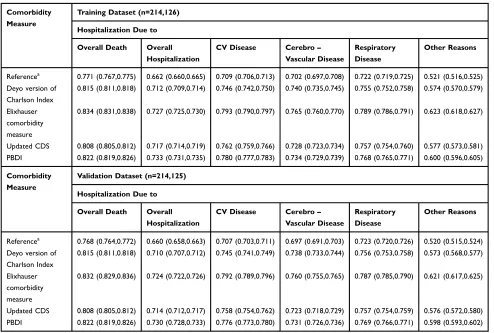
The c-statistics for subsequent-year health outcomes with
different comorbidity models are listed in Table 2. For
overall death in the validation dataset, the reference model with predictors of age and sex only yielded a c-statistic of 0.768; however, all the models additionally including different comorbidity measures reached c-statis-tics greater than 0.8. The Elixhauser comorbidity measure performed best (c-statistic=0.832), followed by the PBDI (c-statistic=0.822), the Deyo version of the Charlson Index
(c-statistic=0.815), and the updated CDS
(c-statis-tic=0.808). For overall hospitalization, the model discri-mination tended to be lower but still showed c-statistics greater than 0.7. The PBDI and the Elixhauser comorbidity measure performed best (c-statistics of 0.730 and 0.724, respectively), followed by the updated CDS and the Deyo version of the Charlson Index (c-statistics of 0.714 and
0.710, respectively). In terms of cause-specific
hospitaliza-tion, the Elixhauser comorbidity measure and the PBDI still had greater discrimination than the updated CDS and the Deyo version of the Charlson Index. Of interest, each comorbidity measure predicted hospitalization due to car-diovascular disease, respiratory disease, or cerebrovascular disease better than overall hospitalization. For example, for hospitalization due to cardiovascular disease and respiratory disease, the Elixhauser comorbidity measure had c-statistics of 0.792 and 0.787, and the PBDI had
c-statistics of 0.776 and 0.769. However, none of the models optimally predicted hospitalization due to other reasons, with c-statistics lower than 0.6.
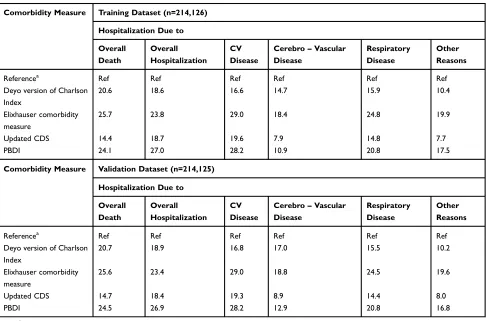
All the NRI values in Table 3 are positive, which
indicates the improved reclassification ability of each
comorbidity model versus the reference model for the
subsequent-year outcomes. In general, the reclassification
abilities of the Elixhauser comorbidity measure and the PBDI remained better than the Deyo version of the Charlson Index and the updated CDS for different out-comes. For example, for overall death and in the validation dataset, approximately 26%, 24%, 21%, and 15% of
indi-viduals were correctly reclassified by the Elixhauser
comorbidity measure, the PBDI, the Deyo version of the Charlson Index, and the updated CDS, respectively. The cut-off points of probabilities of each outcome for
differ-ent risk strata are shown inTable S6.
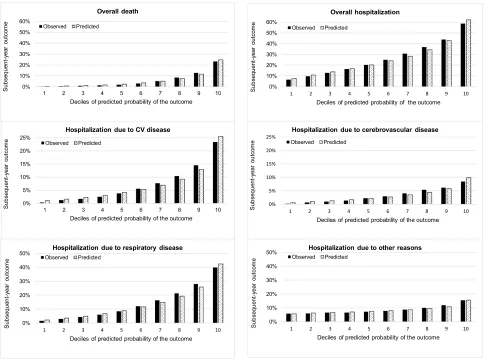
Figure 1presents the observed and predicted probabilities
of each outcome in each decile defined by the predicted
probabilities of outcomes of interest derived by the PBDI. The observed probabilities of overall death, overall
hospita-lization, and cause-specific hospitalization increased from
the lowest risk decile to the highest risk decile and closely matched the corresponding predicted probabilities. However, the observed and predicted probabilities of hospitalization due to other reasons did not greatly vary among risk deciles,
which suggested poor calibration abilities. The findings
derived by other comorbidity models show similar patterns (data not shown).
Results of Additional Analyses
When we restricted the study population to those who had at least one inpatient or three outpatient COPD diagnoses during 2013 or those who did not die in 2015, the model discrimination of the Elixhauser comorbidity measure and the PBDI were better than that of the Deyo version of the Charlson Index and the updated CDS for different out-comes, although the c-statistics tended to be lower than
that in the main analysis (Table S7andTable S8).
Discussion
This population-based study examined the predictive per-formance of a variety of comorbidity measures derived from health insurance claims for health outcomes in patients with COPD. The Elixhauser comorbidity measure per-formed best, followed by the PBDI, and in general, the Deyo version of the Charlson Index and the updated CDS showed similar predictive abilities for health outcomes. In
International Journal of Chronic Obstructive Pulmonary Disease downloaded from https://www.dovepress.com/ by 118.70.13.36 on 24-Aug-2020
Table 1Patient Characteristics of the Study Cohort
Characteristics Eligible Patients (n=428,251)
Training Dataset (n=214,126)
Validation Dataset (n=214,125)
Age, mean (SD), years 67.1 (13.2) 67.1 (13.2) 67.0 (13.2)
Male, % 256,337 (59.9) 128,034 (59.8) 128,303 (59.9)
Deyo disease categories (0–17), mean(SD) 1.7 (1.4) 1.7 (1.4) 1.7 (1.4)
Deyo score, mean(SD) 2.0 (1.9) 2.0 (1.9) 2.0 (1.9)
Elixhauser disease categories (0–30), mean(SD) 2.5 (1.8) 2.5 (1.8) 2.5 (1.8)
Elixhauser score, mean(SD) 5.4 (6.1) 5.4 (6.1) 5.4 (6.1)
Updated CDS, disease categories (0–29), mean(SD) 5.5 (3.2) 5.5 (3.2) 5.5 (3.2)
Updated CDS, score mean(SD) 4,213.0 (4,248.3) 4,215.0 (4,244.5) 4,210.9 (4,252.2)
PBDI, disease categories (0–37), mean(SD) 5.9 (3.6) 5.9 (3.6) 5.9 (3.6)
PBDI score, mean(SD) 1.1 (0.9) 1.1 (0.9) 1.1 (0.9)
Subsequent-year overall death, % 24,933 (5.8) 12,554 (5.9) 12,379 (5.8)
Subsequent-year overall hospitalization, % 116,062 (27.1) 58,172 (27.2) 57,890 (27.0)
Subsequent-year hospitalization due to CV diseasea, % 31,794 (7.4) 16,071 (7.5) 15,723 (7.3)
Subsequent-year hospitalization due to
cerebrovascular diseasea, %
14,643 (3.4) 7,337 (3.4) 7,306 (3.4)
Subsequent-year hospitalization due to respiratory diseasea, %
63,416 (14.8) 31,742 (14.8) 31,674 (14.8)
Subsequent-year hospitalization due to other reasons, % 37,705 (8.8) 18,932 (8.8) 18,773 (8.8)
Note:a
Patients may be counted for hospitalization due to multiple reasons. Abbreviation:CV, cardiovascular.
Table 2C-Statistics of Different Comorbidity Measures in Relation to Subsequent-Year Health Outcomes
Comorbidity Measure
Training Dataset (n=214,126)
Hospitalization Due to
Overall Death Overall Hospitalization
CV Disease Cerebro– Vascular Disease
Respiratory Disease
Other Reasons
Referencea 0.771 (0.767,0.775) 0.662 (0.660,0.665) 0.709 (0.706,0.713) 0.702 (0.697,0.708) 0.722 (0.719,0.725) 0.521 (0.516,0.525)
Deyo version of
Charlson Index
0.815 (0.811,0.818) 0.712 (0.709,0.714) 0.746 (0.742,0.750) 0.740 (0.735,0.745) 0.755 (0.752,0.758) 0.574 (0.570,0.579)
Elixhauser
comorbidity
measure
0.834 (0.831,0.838) 0.727 (0.725,0.730) 0.793 (0.790,0.797) 0.765 (0.760,0.770) 0.789 (0.786,0.791) 0.623 (0.618,0.627)
Updated CDS 0.808 (0.805,0.812) 0.717 (0.714,0.719) 0.762 (0.759,0.766) 0.728 (0.723,0.734) 0.757 (0.754,0.760) 0.577 (0.573,0.581)
PBDI 0.822 (0.819,0.826) 0.733 (0.731,0.735) 0.780 (0.777,0.783) 0.734 (0.729,0.739) 0.768 (0.765,0.771) 0.600 (0.596,0.605)
Comorbidity Measure
Validation Dataset (n=214,125)
Hospitalization Due to
Overall Death Overall Hospitalization
CV Disease Cerebro– Vascular Disease
Respiratory Disease
Other Reasons
Referencea 0.768 (0.764,0.772) 0.660 (0.658,0.663) 0.707 (0.703,0.711) 0.697 (0.691,0.703) 0.723 (0.720,0.726) 0.520 (0.515,0.524)
Deyo version of
Charlson Index
0.815 (0.811,0.818) 0.710 (0.707,0.712) 0.745 (0.741,0.749) 0.738 (0.733,0.744) 0.756 (0.753,0.758) 0.573 (0.568,0.577)
Elixhauser
comorbidity
measure
0.832 (0.829,0.836) 0.724 (0.722,0.726) 0.792 (0.789,0.796) 0.760 (0.755,0.765) 0.787 (0.785,0.790) 0.621 (0.617,0.625)
Updated CDS 0.808 (0.805,0.812) 0.714 (0.712,0.717) 0.758 (0.754,0.762) 0.723 (0.718,0.729) 0.757 (0.754,0.759) 0.576 (0.572,0.580)
PBDI 0.822 (0.819,0.826) 0.730 (0.728,0.733) 0.776 (0.773,0.780) 0.731 (0.726,0.736) 0.769 (0.766,0.771) 0.598 (0.593,0.602)
Note:a
A model including age and sex only as predictors.
Abbreviations:CDS, chronic disease score; CV, cardiovascular; PBDI, pharmacy-based disease indicator.
International Journal of Chronic Obstructive Pulmonary Disease downloaded from https://www.dovepress.com/ by 118.70.13.36 on 24-Aug-2020
terms of individual outcomes, all comorbidity measures had excellent discrimination in predicting overall death (c-sta-tistics > 0.8) and acceptable discrimination in predicting overall hospitalization (c-statistics > 0.7). Moreover, each comorbidity measure predicted hospitalization due to cardi-ovascular disease, respiratory disease, or cerebrcardi-ovascular disease better than overall hospitalization but did not ade-quately predict hospitalization due to other reasons. The performance ranks did not greatly differ for different
pre-dictive statistics or definitions of COPD or when we
restricted the study population to those who did not die in the subsequent year.
Comparison of Different Comorbidity
Measures
As the use of health insurance claims databases in health-care settings is increasing, our results provide important implications in terms of describing the health status of patients with COPD using health insurance claims infor-mation. Our study indicated that the Elixhauser comorbid-ity measure performed best in predicting any outcome of
interest in the subsequent year. Chu et al found the Elixhauser comorbidity measure yielded a higher c-statis-tic (0.701) than that of the Charlson Index (0.681) in predicting subsequent-year death among patients with
COPD,23 although the difference for measures was
mini-mal in another study conducted by Austin et al (c-statis-tics: 0.822 for the Elixhauser comorbidity measure and
0.819 for the Charlson Index).24 Quail et al also found
that the Elixhauser comorbidity measure had superior per-formance in predicting overall death and overall hospita-lization in a general population, an elderly population,
patients with diabetes, and patients with osteoporosis.18
Compared to other tested comorbidity measures, the Elixhauser comorbidity measure includes more comprehen-sive disease categories across organ systems of the human
body. The weights were derived specifically for individual
health outcomes in the current cohort. For example, for over-all death and overover-all hospitalization, the categories of meta-static cancer and alcohol abuse had the highest weights. For
cause-specific hospitalization, cardiovascular comorbidities
(congestive heart failure and cardiac arrhythmias),
Table 3Net Reclassification Improvement of Different Comorbidity Measures in Relation to Subsequent-Year Health Outcomes
Comorbidity Measure Training Dataset (n=214,126)
Hospitalization Due to
Overall Death
Overall Hospitalization
CV Disease
Cerebro–Vascular Disease
Respiratory Disease
Other Reasons
Referencea Ref Ref Ref Ref Ref Ref
Deyo version of Charlson Index
20.6 18.6 16.6 14.7 15.9 10.4
Elixhauser comorbidity measure
25.7 23.8 29.0 18.4 24.8 19.9
Updated CDS 14.4 18.7 19.6 7.9 14.8 7.7
PBDI 24.1 27.0 28.2 10.9 20.8 17.5
Comorbidity Measure Validation Dataset (n=214,125)
Hospitalization Due to
Overall Death
Overall Hospitalization
CV Disease
Cerebro–Vascular Disease
Respiratory Disease
Other Reasons
Referencea Ref Ref Ref Ref Ref Ref
Deyo version of Charlson Index
20.7 18.9 16.8 17.0 15.5 10.2
Elixhauser comorbidity measure
25.6 23.4 29.0 18.8 24.5 19.6
Updated CDS 14.7 18.4 19.3 8.9 14.4 8.0
PBDI 24.5 26.9 28.2 12.9 20.8 16.8
Note:a
A model including age and sex only as predictors.
Abbreviations:CDS, chronic disease score; CV, cardiovascular; PBDI, pharmacy-based disease indicator.
International Journal of Chronic Obstructive Pulmonary Disease downloaded from https://www.dovepress.com/ by 118.70.13.36 on 24-Aug-2020
cerebrovascular comorbidities (paralysis and other neurolo-gical disorders), and respiratory comorbidities (chronic
pul-monary disease) played the most influential roles (Table S9).
Therefore, it is not surprising that he Elixhauser comorbidity measure showed the best performance. However, it requires
a sufficient sample size, and it may be tedious to re-derive
weights for the 30 Elixhauser comorbidity categories for the outcome of interest and population each time it is used. Therefore, researchers need to consider the available sample size and to what extent they would like to achieve the pre-dictive performance when selecting candidate comorbidity measures for their target population.
Our study showed the PBDI performed right next to the Elixhauser comorbidity measure but better than the Deyo version of the Charlson Index and the updated CDS.
Several reasons may explain thesefindings. First, compared
to the updated CDS, the PBDI includes more drug cate-gories. In addition, the PBDI applies the weights derived
from a general Taiwanese population. Third, unlike many health insurance claims databases which do not have
infor-mation on drug use during hospitalization,30data on
inpa-tient drug use are available in Taiwan’s NHIRD.26 These
factors all facilitate the PBDI to reveal more comprehensive comorbidities and to better predict health outcomes.
Dong et al indicated that the PBDI performs numerically better than the Deyo version of the Charlson Index in pre-dicting the subsequent-year overall hospitalization in a general Taiwanese population (c-statistics of 0.715 and
0.691, respectively).15 The current study further
demon-strated satisfactory performance of the PBDI in predicting various health outcomes in patients with COPD. If we treat 37 PBDI drug categories, rather than a single PBDI score, as independent variables and apply the weights derived for each drug category, the PBDI can perform even better than the
Elixhauser comorbidity measure (Table S10). Compared to
Chu and Austin’s studies, which only examined the
0% 10% 20% 30% 40% 50% 60%
1 2 3 4 5 6 7 8 9 10
Subs e que nt -y ear ou tc om e
Deciles of predicted probability of the outcome
Overall death Observed Predicted 0% 10% 20% 30% 40% 50% 60%
1 2 3 4 5 6 7 8 9 10
Subs e que nt -y e a r o ut co m e
Deciles of predicted probability of the outcome
Overall hospitalization Observed Predicted 0% 5% 10% 15% 20% 25%
1 2 3 4 5 6 7 8 9 10
Subs e que nt -y e a r o ut co m e
Deciles of predicted probability of the outcome
Hospitalization due to CV disease
Observed Predicted 0% 5% 10% 15% 20% 25%
1 2 3 4 5 6 7 8 9 10
S u b seq u en t-year ou tc om e
Deciles of predicted probability of the outcome
Hospitalization due to cerebrovascular disease
Observed Predicted 0% 10% 20% 30% 40% 50%
1 2 3 4 5 6 7 8 9 10
Subs e que nt -y e a r o ut co m e
Deciles of predicted probability of the outcome
Hospitalization due to respiratory disease
Observed Predicted 0% 10% 20% 30% 40% 50%
1 2 3 4 5 6 7 8 9 10
Subs e que nt -y ear ou tc om e
Deciles of predicted probability of the outcome
Hospitalization due to other reasons
Observed Predicted
Figure 1Observed and predicted probabilities of subsequent-year outcomes among individuals in deciles defined by the predicted probability of the outcome defined by the PBDI in the validation dataset (n=214,125).
Abbreviations:CV, cardiovascular; PBDI, pharmacy-based disease indicator.
International Journal of Chronic Obstructive Pulmonary Disease downloaded from https://www.dovepress.com/ by 118.70.13.36 on 24-Aug-2020
predictive performance of diagnosis-based comorbidity
mea-sures in patients with COPD,23,24our study provides a more
complete comparison across diagnosis-based and
pharmacy-based comorbidity measures. Ourfindings suggest that the
PBDI, which is based on drug dispensing information, is useful to stratify patient risk and may facilitate the develop-ment of care managedevelop-ment plans in real practice. Further research can be conducted to examine its predictive ability in other disease populations or in other countries.
Comparison of Different Health Outcomes
Our study showed each comorbidity model better predicted overall death than overall hospitalization, which is consistent
with what has been observed in other studies.16–19,21
Compared to previous findings, our study further
demon-strated that each comorbidity model can still achieve satisfac-tory discrimination when we focused on hospitalization due to cardiovascular disease, cerebrovascular disease, or respiratory disease, which are the leading causes of hospitalization in the
COPD population.31–33 This observation may be because
compared to overall death and the leading causes of hospita-lization, patients hospitalized due to miscellaneous reasons are susceptible to non-disease factors that could not be captured by the comorbidity measures. These results also suggest that
researchers target disease-specific outcomes when applying
these comorbidity measures in COPD management.
Limitations
Our study has several limitations. First, we focused on comorbidity measures that use diagnosis and pharmacy dis-pensing claims data. Similar to most claims databases, the Taiwan health insurance claims database does not contain information on clinical parameters, such as the forced expira-tory volume in one second. Therefore, we could not compare the predictive performance of the claims-based comorbidity measures with that of available multi-dimensional indexes (such as the BODE and CODEX indexes) that are highly associated with COPD prognosis and require information on
many clinical parameters.34,35In addition, we did not
exam-ine the predictive abilities of the well-known Johns Hopkins Adjusted Clinical Group System because it requires
compu-tation with complex and commercial algorithms.36
Conclusion
In conclusion, our study comprehensively compared the predictive performance of various comorbidity measures and various health outcomes in the setting of a population-based health insurance claims database. The Elixhauser
comorbidity measure and the PBDI are useful tools for describing comorbid conditions and predicting health out-comes in patients with COPD.
Abbreviations
CDS, Chronic Disease Score; COPD, chronic obstructive
pulmonary disease; CV, cardiovascular; ICD-9-CM,
International Classification of Diseases, 9th Revision,
Clinical Modification; NRI, net reclassification
improve-ment; PBDI, Pharmacy-Based Disease Index.
Acknowledgments
This study was supported by the Ministry of Science and Technology, Taiwan grant MOST 106-2320-B-010-002. The funding source had no role in study design, collection, analysis and interpretation of data, writing of the report, or in the decision to submit the article for publication.
Author Contributions
Zhe-Wei Zhan, Yu-An Chen, and Yaa-Hui Dong
designed the study. Yaa-Hui Dong acquired data. Zhe-Wei Zhan and Yu-An Chen analyzed data. Zhe-Zhe-Wei Zhan, Yu-An Chen, and Yaa-Hui Dong interpreted data. Zhe-Wei Zhan and Yaa-Hui Dong drafted the manuscript. Yu-An Chen provided critical suggestion on the manuscript. Dr Dong is the grantor. All authors made substantial contributions to conception and design, acquisition of data or analysis and interpretation of data; took part in drafting the article or revising it critically
for important intellectual content; gave final approval of
the version to be published; and agree to be accountable for all aspects of the work.
Disclosure
The authors report no conflict of interest in this work.
References
1. GBD 2013 Mortality and Causes of Death Collaborators. Global, regional, and national age-sex specific all-cause and cause-specific mortality for 240 causes of death, 1990–2013: a systematic analysis for the global burden of disease study 2013. Lancet. 2015;385 (9963):117–171. doi:10.1016/S0140-6736(14)61682-2
2. World Health Organization. Projections of mortality and cause of death, 2015 and 2030.Available from:https://www.who.int/healthinfo/global_ burden_disease/projections/en/. Accessed January 29, 2020. Aaccessed 15 February2019.
3. GBD 2013 DALYs and HALE Collaborators. Global, regional, and national disability-adjusted life years (DALYs) for 306 diseases and injuries and healthy life expectancy (HALE) for 188 countries, 1990–2013: quantifying the epidemiological transition. Lancet. 2015;386(10009):2145–2191. doi:10.1378/chest.128.4.2640
International Journal of Chronic Obstructive Pulmonary Disease downloaded from https://www.dovepress.com/ by 118.70.13.36 on 24-Aug-2020
4. Global Initiative for Chronic Obstructive Lung Disease. Global strat-egy for the diagnosis, management and prevention of chronic obstructive pulmonary diseases. 2019 Report. Available from: https://goldcopd.org/wp-content/uploads/2018/11/GOLD-2019-v1. 7-FINAL-14Nov2018-WMS.pdf. Accessed January 29, 2020. Accessed 15 February2019.
5. Miller J, Edwards LD, Agustí A, et al. Evaluation of COPD Longitudinally to Identify Predictive Surrogate Endpoints (ECLIPSE) investigators. Comorbidity, systemic inflammation and outcomes in the ECLIPSE cohort. Respir Med. 2013;107 (9):1376–1384. doi:10.1016/j.rmed.2013.05.001
6. Divo M, Cote C, de Torres JP, et al. BODE collaborative group. Comorbidities and risk of mortality in patients with chronic obstruc-tive pulmonary disease. Am J Respir Crit Care Med. 2012;186 (2):155–161. doi:10.1164/rccm.201201-0034OC
7. Slenter RH, Sprooten RT, Kotz D, Wesseling G, Wouters EF, Rohde GG. Predictors of 1-year mortality at hospital admission for acute exacerbations of chronic obstructive pulmonary disease.
Respiration.2013;85(1):15–26. doi:10.1159/000342036
8. Almagro P, Cabrera FJ, Diez J, et al. Working group on COPD Spanish society of internal medicine. Comorbidities and short-term prognosis in patients hospitalized for acute exacerbation of COPD: the EPOC en Servicios de medicina interna (ESMI) study. Chest. 2012;142(5):1126–1133. doi:10.1378/chest.11-2413
9. Charlson ME, Pompei P, Ales KL, MacKenzie CR. A new method of classifying prognostic comorbidity in longitudinal studies: develop-ment and validation.J Chron Dis.1987;40(5):373–383. doi:10.1016/ 0021-9681(87)90171-8
10. Deyo RA, Cherkin DC, Ciol MA. Adapting a clinical comorbidity index for use with ICD-9CM administrative databases. J Clin
Epidemiol.1992;45(6):613–619. doi:10.1016/0895-4356(92)90133-8
11. Elixhauser A, Steiner C, Harris DR, Coffey RM. Comorbidity mea-sures for use with administrative data.Med Care.1998;36(1):8–27. doi:10.1097/00005650-199801000-00004
12. von Korff M, Wagner EH, Saunders K. A chronic disease score from automated pharmacy data. J Clin Epidemiol. 1992;45(2):197–203. doi:10.1016/0895-4356(92)90016-G
13. Johnson RE, Hornbrook MC, Nichols GA. Replicating the chronic disease score (CDS) from automated pharmacy data.J Clin Epidemiol. 1994;47(10):1191–1199. doi:10.1016/0895-4356(94)90106-6 14. Clark DO, Von Korff M, Saunders K, Baluch WM, Simon GE.
A chronic disease score with empirically derived weights. Med Care.1995;33(8):783–795. doi:10.1097/00005650-199508000-00004 15. Dong YH, Chang CH, Shau WY, Kuo RN, Lai MS, Chan KA. Development and validation of a pharmacy-based comorbidity mea-sure in a population-based automated health care database.
Pharmacotherapy.2013;33(2):126–136. doi:10.1002/phar.1176
16. Schneeweiss S, Seeger JD, Maclure M, Wang PS, Avorn J, Glynn RJ. Performance of comorbidity scores to control for confounding in epidemiologic studies using claims data.Am J Epidemiol.2001;154 (9):854–864. doi:10.1093/aje/154.9.854
17. Schneeweiss S, Wang PS, Avorn J, Maclure M, Levin R, Glynn RJ. Consistency of performance ranking of comorbidity adjustment scores in Canadian and U.S. utilization data. J Gen Intern Med. 2004;19(5 Pt 1):444–450. doi:10.1111/j.1525-1497.2004.30109.x 18. Quail JM, Lix LM, Osman BA, Teare GF. Comparing comorbidity
measures for predicting mortality and hospitalization in three population-based cohorts. BMC Health Serv Res. 2011;11:146. doi:10.1186/1472-6963-11-146
19. Lix LM, Quail J, Fadahunsi O, Teare GF. Predictive performance of comorbidity measures in administrative databases for diabetes cohorts. BMC Health Serv Res. 2013;13:340. doi:10.1186/1472-6963-13-340
20. Lix LM, Quail J, Teare G, Acan B. Performance of comorbidity measures for predicting outcomes in population-based osteoporosis cohorts. Osteoporos Int. 2011;22(10):2633–2643. doi:10.1007/s001 98-010-1516-7
21. Antoniou T, Ng R, Glazier RH, Kopp A, Austin PC. Comparison of comorbidity classification methods for predicting outcomes in a population-based cohort of adults with human immunodeficiency virus infection.Ann Epidemiol.2014;24(7):532–537. doi:10.1016/j. annepidem.2014.04.002
22. McArthur E, Bota SE, Sood MM, et al. Comparingfive comorbidity indices to predict mortality in chronic kidney disease: a retrospective cohort study.Can J Kidney Health Dis.2018;5:1–10. doi:10.1177/ 2054358118805418
23. Chu YT, Ng YY, Wu SC. Comparison of different comorbidity measures for use with administrative data in predicting short- and long-term mortality.BMC Health Serv Res.2010;10:140. doi:10.11 86/1472-6963-10-140
24. Austin PC, Stanbrook MB, Anderson GM, Newman A, Gershon AS. Comparative ability of comorbidity classification methods for admin-istrative data to predict outcomes in patients with chronic obstructive pulmonary disease.Ann Epidemiol.2012;22(12):881–887. doi:10.10 16/j.annepidem.2012.09.011
25. National Health Insurance Administration, Ministry of Health and Welfare, Taiwan. National Health Insurance Annual Report. Available from: https://www.nhi.gov.tw/Content_List.aspx?n= 9223A12B5B31CB37&topn=FB01D469347C76A7. Accessed 15 February 2019.
26. Lin LY, Warren-Gash C, Smeeth L, Chen PC. Data resource profile: the National Health Insurance Research Database (NHIRD).
Epidemiol Health.2018;40:e2018062. doi:10.4178/epih.e2018062
27. Gershon AS, Wang C, Guan J, Vasilevska-Ristovska J, Cicutto L, To T. Identifying individuals with physician diagnosed COPD in health administrative databases.COPD.2009;6(5):388–394. doi:10. 1080/15412550903140865
28. Steyerberg EW.Clinical Prediction Models: A Practical Approach to
Development, Validation, and Updating. New York: Spring Science
+Business Media, LLC;2009.
29. Pencina MJ, D’Agostino RB Sr, D’Agostino RB Jr, Vasan RS. Evaluating the added predictive ability of a new marker: from area under the ROC curve to reclassification and beyond. Stat Med. 2008;27(2):157–172. doi:10.1002/(ISSN)1097-0258
30. Sattler EL, Lee JS, Perri M 3rd. Medication (re)fill adherence mea-sures derived from pharmacy claims data in older Americans: a review of the literature. Drugs Aging. 2013;30(6):383–399. doi:10.1007/s40266-013-0074-z
31. Terzano C, Conti V, Di Stefano F, et al. Comorbidity, hospitalization, and mortality in COPD: results from a longitudinal study. Lung. 2010;188(4):321–329. doi:10.1007/s00408-009-9222-y
32. Curkendall SM, DeLuise C, Jones JK, et al. Cardiovascular disease in patients with chronic obstructive pulmonary disease, Saskatchewan Canada cardiovascular disease in COPD patients. Ann Epidemiol. 2006;16(1):63–70. doi:10.1016/j.annepidem.2005.04.008
33. Huiart L, Ernst P, Suissa S. Cardiovascular morbidity and mortality in COPD.Chest.2005;128(4):2640–2646. doi:10.1378/chest.128.4.2640 34. Celli BR, Cote CG, Marin JM, et al. The body-mass index, airflow
obstruction, dyspnea, and exercise capacity index in chronic obstruc-tive pulmonary disease.N Engl J Med. 2004;350(10):1005–1012. doi:10.1056/NEJMoa021322
35. Almagro P, Soriano JB, Cabrera FJ, et al. Short- and medium-term prog-nosis in patients hospitalized for COPD exacerbation: the CODEX index.
Chest.2014;145(5):972–980. doi:10.1378/chest.13-1328
36. Starfield B, Weiner J, Mumford L, Steinwachs D. Ambulatory care groups: a categorization of diagnoses for research and management.
Health Serv Res.1991;26(1):53–74.
International Journal of Chronic Obstructive Pulmonary Disease downloaded from https://www.dovepress.com/ by 118.70.13.36 on 24-Aug-2020
International Journal of Chronic Obstructive Pulmonary Disease
Dove
press
Publish your work in this journal
The International Journal of COPD is an international, peer-reviewed journal of therapeutics and pharmacology focusing on concise rapid reporting of clinical studies and reviews in COPD. Special focus is given to the pathophysiological processes underlying the disease, inter-vention programs, patient focused education, and self management
protocols. This journal is indexed on PubMed Central, MedLine and CAS. The manuscript management system is completely online and includes a very quick and fair peer-review system, which is all easy to use. Visit http://www.dovepress.com/testimonials.php to read real quotes from published authors.
Submit your manuscript here:https://www.dovepress.com/international-journal-of-chronic-obstructive-pulmonary-disease-journal
International Journal of Chronic Obstructive Pulmonary Disease downloaded from https://www.dovepress.com/ by 118.70.13.36 on 24-Aug-2020