University of South Carolina
Scholar Commons
Theses and Dissertations
5-2017
Assessing Women's attitudes Towards Genetic
Testing For Hereditary Breast Cancer
Taylor Jane Apostolico
University of South Carolina
Follow this and additional works at:https://scholarcommons.sc.edu/etd Part of theGenetics Commons
This Open Access Thesis is brought to you by Scholar Commons. It has been accepted for inclusion in Theses and Dissertations by an authorized administrator of Scholar Commons. For more information, please [email protected].
Recommended Citation
ASSESSING WOMEN’S ATTITUDES TOWARDS GENETIC TESTING FOR HEREDITARY BREAST CANCER
by
Taylor Jane Apostolico
Bachelor of Science Cornell University, 2015
Submitted in Partial Fulfillment of the Requirements
For the Degree of Master of Science in
Genetic Counseling
School of Medicine
University of South Carolina
2017
Accepted by:
Crystal R. Hill-Chapman, Director of Thesis
Sue P. Heiney, Reader
Ronald T. Murphy, Reader
ACKNOWLEDGMENTS
Eternal thanks are owed to my family, especially my parents, Joe and Eileen, and
my sister, Kaleigh, for their unconditional support, encouragement, and good humor
throughout the more challenging points of this journey.
I would like to thank my thesis committee for their time, expertise, and
contributions to this study. I am grateful to Dr. Crystal Hill-Chapman for helping develop
this project and dedicating so much effort into making it feasible. This study would not
have been possible without Dr. Sue Heiney, who’s input was essential in moving forward
with research design and participant recruitment, and Dr. Ronald Murphy, who made it
possible to connect with the amazing men and women who staff Florence’s Homeless
Connection.
I am sincerely grateful to all those who have contributed to the foundation,
implementation, and completion of this project, as well as to my training while at the
University of South Carolina. Thank you to all of my instructors and mentors throughout
this program who have provided me with both personal and professional standards to
aspire to reach.
Last but certainly not least, to my classmates – thank you for the supportive
shoulders, the open ears, and the countless laughs. I am privileged to have had the
opportunity to call such an inspirational, compassionate, and motivated group of women
ABSTRACT
OBJECTIVES: Hereditary Breast and Ovarian Cancer (HBOC) is an autosomal dominant
cancer predisposition syndrome with a 46-87% lifetime risk of breast cancer. Unaffected
women who have HBOC are eligible for more screening procedures and prophylactic
surgeries that may reduce the risk of developing cancer by up to 95%. The objectives of
this study were to assess women’s awareness of and interest in breast cancer genetic
testing services, as well as women’s attitudes and beliefs regarding the clinical utilization
of HBOC genetic testing across demographic categories. METHODS: Two-hundred and
sixty-eight women completed a 35-item survey designed to capture perceptions of HBOC
and genetic testing, attitudes towards genetic testing for HBOC, and demographics.
RESULTS: Two-hundred and eight women met participation criteria. One-hundred and
fifty-five (75%) indicated prior awareness of genetic testing services. One-hundred and
forty-three (69%) indicated interest in genetic testing for HBOC. Black women, women
with lower levels of education, and women with lower household incomes reported less
awareness, but similar levels of interest in genetic testing services when compared to
other participants. CONCLUSIONS: Women are interested in genetic testing for HBOC.
Specific counseling on barriers to minority and low socioeconomic communities, such as
cost and education regarding genetic testing procedures, may be beneficial in increasing
utilization of genetic testing for HBOC in these communities. Women who experience
TABLE OF CONTENTS
ACKNOWLEDGEMENTS ... iii
ABSTRACT ... iv
LIST OF TABLES ... vii
LIST OF FIGURES ... viii
CHAPTER I. BACKGROUND ...1
1.1Hereditary Breast Cancer ...1
1.2Hereditary Breast Cancer Screening ...3
1.3Genetic Testing for Hereditary Breast Cancer ...4
1.4Health Belief Model ...11
1.5Rationale ...13
1.6Purpose ...16
CHAPTER II. ASSESSING WOMEN’S ATTITUDES TOWARDS GENETIC TESTING FOR HEREDITARY BREAST CANCER ...17
2.1 Abstract ...18
2.2 Introduction ...19
2.3 Materials and Methods ...20
2.4 Results ...24
2.5 Discussion ...40
2.6 Limitations and Future Studies ...50
CHAPTER III. CONCLUSIONS ...55
REFERENCES ...56
APPENDIX A. Participant Resources ...65
APPENDIX B. Invitation to Participants ...66
APPENDIX C. Letter of Support ...67
APPENDIX D. Background Information ...68
LIST OF TABLES
Table 2.1 Participant demographic information ...26
Table 2.2 Demographic comparison of aware versus unaware participants ...27
Table 2.3 Demographic comparison of interested versus uninterested participants ...30
Table 2.4 Health Belief Model and comparison of groups ...31
LIST OF FIGURES
Figure 1.1 The Health Belief Model ...12
Figure 2.1 Agreement with benefits of genetic testing ...32
Figure 2.2 Agreement with barriers of genetic testing ...32
Figure 2.3. Race vs. agreement with benefits ...35
Figure 2.4 Race vs. agreement with barriers ...35
CHAPTER I. BACKGROUND
Hereditary breast and ovarian cancer (HBOC) is an autosomal dominant cancer
predisposition syndrome caused by germline mutations in the breast cancer 1 (BRCA1)
and breast cancer 2 (BRCA2) tumor suppressor genes. Individuals who have a pathogenic
gene mutation in BRCA1 or BRCA2 have a 46-87% life time risk of developing breast
cancer, compared to a general population risk of 12% (National Comprehensive Cancer
Network, 2016). A prophylactic bilateral mastectomy in mutation carriers has been found
to reduce the risk of breast cancer by at least 90% (Hartmann et al., 1999). An estimated
5-10% of all breast cancer cases are attributable to an inherited mutation (National
Cancer Institute, 2015).
1.1Hereditary Breast Cancer
Breast cancer is a cancer that develops from breast tissue. In the general population, one in eight women will develop breast cancer at some point in their lives, making it the second most common cancer in women (National Cancer Institute, 2014). The incidence of breast cancer has risen over the past 30 years, most frequently affecting white and black women (National Cancer Institute, 2013). Despite the high prevalence of diagnoses of breast cancer in white women, they are statistically the least likely to die once
include older age, higher breast density, a history of radiation therapy, a family or personal history of breast cancer, and genetic changes that predispose individuals to the development of breast cancer (National Cancer Institute, 2015).
Five to ten percent of all breast cancer cases are classified as ‘hereditary’, meaning that they are caused by an inherited genetic mutation that raises the risk of cancer development by ceasing or altering the function of cancer-preventing proteins (National Cancer Institute, 2016). The two most common genetic causes of breast cancer are the BRCA1 and BRCA2 genes, which are implicated in 20-25% of hereditary breast cancer cases (Pharoah et al., 2002). The prevalence of BRCA carriers in the general population is estimated to be 1 in 200-400. However, this estimate is based on data from breast cancer patient populations and may not reflect the true carrier frequency in the general population (Metcalfe et al., 2015).
The vast majority of genetic changes implicated in hereditary breast cancer are inherited in an autosomal dominant pattern, meaning only one mutated copy of the two genes is required to cause a person to have an increased risk of cancer. However,
tumorigenesis only occurs when both copies of the gene are pathogenically mutated. This happens naturally, or somatically, as a person ages either through errors in DNA
replication or through environmental exposures such as tobacco smoke or UV light. In persons with no inherited change, both genes will have been somatically mutated
throughout their life to cause cancer development. In persons with an inherited mutation in a cancer-susceptibility gene, only one detrimental environmental event that
pathogenically harms the DNA of the un-mutated copy of the gene permanently is needed to cause the onset of tumorigenesis, a phenomenon termed the ‘Knudson Two-Hit
Hypothesis’ (Anderson, 1992). Consequently, patients with an inherited mutation in a cancer-susceptibility gene tend to develop cancer at a younger age and at a greater frequency than those with no inherited mutation (Burke et al., 1997).
1.2Hereditary Breast Cancer Screening
Women who are determined to have a high risk of developing breast cancer, either through a known genetic mutation or an extensive family history, are eligible for and encouraged to seek high-risk screening procedures to decrease this risk (National Comprehensive Cancer Network, 2016). These procedures involve earlier and more frequent utilization of physical examinations and imaging techniques (National
(DeSantis et al., 2013; Berg et al., 2012). Women who are considered to have a high risk of developing breast cancer may also elect to have risk reducing procedures such as a prophylactic mastectomy, which has been shown to reduce the risk of breast cancer by as much as 90-95% (Rebbeck et al., 2004). Compared to other cancers, breast cancer has a low mortality rate, as approximately 89.7% of women who develop breast cancer will still be alive five years after their initial diagnosis (National Cancer Institute, 2014).
1.3Genetic Testing for Hereditary Breast Cancer
The BRCA1 gene was first sequenced in 1994 in a collaborative effort by Myriad, a genetic researching company, the University of Utah, the National Institute of Health, and McGill University (Williams-Jones, 2002). Shortly after, Myriad filed for
‘composition-of-matter’ and ‘methods-of-use’ patents on the BRCA1 gene, preventing other genetic researching institutions from sequencing the BRCA1 gene for commercial use (Williams-Jones, 2002). The sequencing of BRCA2 quickly followed and once again, Myriad was among the first to file a U.S. patent on the gene (Williams-Jones, 2002). Subsequently, Myriad gained control over the commerical market for genetic testing for all of the known hereditary breast cancer genes at the time.
There was initial backlash against the commercialization of BRCA sequencing, with the opposition fearing that the test was less focused on the prevention of breast cancer and more focused on increasing patient anxiety and the creation of demand for the product (Williams-Jones, 2002). Furthermore, Myriad’s patent on BRCA testing created barriers to clinical care and delays in research, leading to less effective and efficient testing at increased cost, ultimately creating wider health disparity gaps (Offit et al., 2013). Myriad’s patent was eventually overturned by the Supreme Court in 2013, opening the commercial market for hereditary cancer testing and promoting greater accessibility to these tests.
Genetic testing for a hereditary breast cancer mutation can be beneficial to the patient in multiple ways. If a patient has already been diagnosed with breast cancer, genetic testing can help inform her treatment. A positive result for a mutation in a cancer susceptibility gene may encourage her to opt for a double-mastectomy to reduce her likelihood of developing a secondary cancer, as opposed to a cancer-removing lumpectomy, which would leave behind more breast tissue and increase the risk of recurrence (Wevers, 2014). In any patient with a family history of breast cancer,
personally affected or not, knowledge of whether or not there is a hereditary mutation in the family can alter reproductive planning and help inform other family members if they are at risk as well (Donnelly et al., 2013). Unaffected patients who test positive for a mutation that increases their risk of developing breast cancer are eligible to begin following high-risk screening regimens to promote early detection of cancer if it does develop, and may begin to consider risk-reducing surgeries, like prophylactic
Receiving genetic testing, whether the result is positive or negative, has been shown to increase utilization of mammography and breast self-exams after result disclosure
(Botkin et al., 2003). Furthermore, women who know they have a mutation in the BRCA2 gene are eligible to begin taking Tamoxifen, a chemoprevention drug that reduces the risk of breast cancer in women with BRCA2 mutations by approximately 62% (King et al., 2001).
1.3.1 Patient Preferences
The impact of receiving a positive result for a BRCA mutation has been shown to have variable psychological impacts. Studies have suggested that a positive genetic testing result for a hereditary cancer syndrome initially leads to an increase in both general and cancer-specific anxiety for women with BRCA1 or BRCA2 mutations, but that this distress tends to subside significantly with time (Beran et al., 2008; Wilder-Smith et al., 2007). Women who report more intense emotional representations of hereditary cancer and difficulty understanding hereditary cancer are more likely to experience distress regarding hereditary cancer testing (Voorwinden & Jaspers, 2015).
Women cite many reasons as potential influences to sway them from pursing genetic testing. Fear of discrimination or stigmatization by employers and health
insurance companies by use of genetic information has historically been an influence on the decision to pursue genetic testing (Apse et al., 2004; Durfy et al., 1999). Women who perceive themselves to have a lower risk of developing cancer are less likely to accept an offer of genetic testing (Culver et al., 2001).
should pursue testing. Women who have children or a mother with a cancer history are more likely to choose to have testing sooner than those who do not (Hesse-Biber & An, 2016). Women also tend to factor in social factors when making decisions concerning their genetic testing and management (Hesse-Biber & An, 2016). Women are more likely to postpone genetic testing if they perceive themselves to have strong social supports (Hesse-Biber & An, 2016). For women who are not yet affected, the decision to pursue genetic testing for an adult-onset disease such as hereditary breast cancer is hypothesized to partially be a coping mechanism to combat the uncertainty of living at risk of
developing a disease at some point in the future and to obtain control over an otherwise minimally controllable situation (Gooding et al., 2005)
1.3.2 Patient Demographics
Education has been found to be a predictor of women’s awareness of and interest in genetic testing for hereditary cancer syndromes. Women who obtain higher levels of education are more likely to report awareness of genetic testing services for cancer (Mai et al., 2014; Tambor, Rimer, & Strigo, 1998). Reported interest in pursuing genetic counseling and testing services is also associated with higher levels of education (Culver et al., 2001; Lerman et al., 1994).
women of African, Asian, and Latina ancestry comprise a smaller portion, even when their numbers are combined (Hall et al., 2009; Susswein et al., 2008). Minority women tend to face more socioeconomic barriers to accessing genetic services, such as time limitations, difficulty accessing providers and referrals, geographic barriers, and language barriers (Forman & Hall, 2009; Thompson et al., 2003). Ethnicity and race also play a role on women’s attitudes and perspectives on cancer genetic testing. Minority
populations typically have greater levels of distrust in the medical community. Latina and African American women have previously been shown to be more concerned about testing abuses of genetic information when compared to Caucasian women (Glenn, Chawla, & Bastani, 2012; Thompson et al., 2003).
Income and insurance coverage both play a role in determining how likely a woman is to pursue genetic testing. Women who have higher income and utilize some form of health insurance are more likely to have had genetic testing (Lerman et al., 1996). Women who have lower incomes are more likely to agree with perceived disadvantages of genetic testing, such as fear of confidentiality, concern about the impact the result may have on the family, and a fear of being singled out, among others (Thompson et al., 2003). Recent research has suggested that women in low income communities are interested in receiving genetic counseling and testing, but face challenges related to access (Komenaka et al., 2015).
urban or suburban locations, due to distance, lack of awareness, lack of effective cancer risk reduction, and lack of patient interest (Koil et al., 2003).
1.3.3 Genetic Testing: Climate Changes Impacting Awareness and Interest
The Genetic Information Nondiscrimination Act (GINA) was approved in 2008. The main purpose of GINA was to prevent insurance companies and employers from discriminating based on genetic testing results (Feldman, 2012). Violations of GINA are punishable by monetary penalty. (Erwin, 2008). Misuse of genetic testing in the 1970s to discriminate against African Americans with sickle cell disease in the workplace and through insurance coverage fostered a mistrust of the clinical use of genetic information, and still remains a serious concern of many citizens today (Feldman, 2012). GINA was developed to encourage patients to receive genetic testing when it is deemed to be a helpful investigative tool to manage their health care, without fear of this information being used against them in the future. While knowledge about GINA is associated with a reduction in concern regarding health insurance discrimination, consumer knowledge about GINA is still limited (Allain, Friedman, & Senter, 2012).
The Patient Protection and Affordable Care Act (ACA) became law in 2010, and was fully implemented on January 1, 2014. One of the main purposes of the ACA was to guarantee access to universal, affordable, health insurance coverage. In 2007, an
allows for the reduction of the cost and the provision of Medicaid coverage for clinical preventative services, including advanced screening and genetic counseling and testing for women who are at high risk of developing breast cancer. (Koh & Sebelius, 2010). However, the ACA does not provide coverage for all screening techniques recommended, even for women with a known BRCA1/2 mutation, raising concerns that the coverage of genetic testing alone would have limited benefit in vulnerable populations (Walcott et al., 2014).
In 2013, awareness of genetic testing, for the BRCA genes specifically, increased dramatically due to media coverage of celebrity Angelina Jolie’s essay sharing her experiences with genetic testing and her subsequent decision to have a prophylactic mastectomy (Evans et al., 2014). The aftermath of this event led to global increases in referrals to genetic testing services and in requests for BRCA1/2 testing (Evans et al., 2014). Women who identified with Jolie in some way were found to be especially motivated to pursue genetic testing (Kosenko, Binder, & Hurley, 2016). In general, research suggests that celebrity experience and endorsement raises positive public perception of the subject and increases information seeking behaviors (Hoffman & Tan, 2013).
shown to be more cost-effective than family-history based approaches, but will still prove to be a costly and time-consuming process in a multi-million-person population such as the United States (Manchanda et al., 2015; Clain et al., 2015). General population screening of BRCA1 and BRCA2 may be a cost effective option to identify carriers, and seems to be a possibility within our grasp as small-scale implementations are already in effect (Wang, 2016).
1.4Health Belief Model
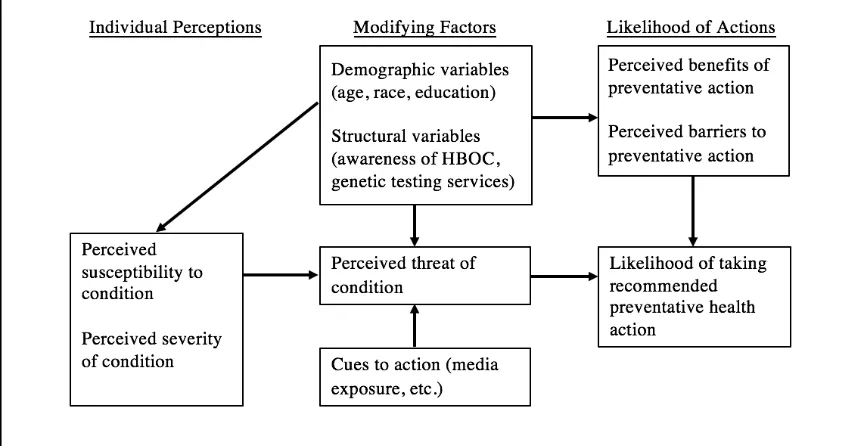
The Health Belief Model (HBM) was created out of psychological and behavioral theory in 1952 as a measure to assess factors impacting the utilization of preventative health services, such as screening and immunizations (Rosenstock, 1974). The original HBM consisted of four key dimensions – perceived susceptibility of developing a condition, perceived severity of the condition, perceived benefits of preventative action and perceived barriers to preventative action (Janz & Becker, 1984). The interactions of each component are summarized in Figure 1.
Perceived susceptibility encompasses a range of perceptions of risk from complete denial to imminent risk (Strecher & Rosenstock, 1997). Some individuals without a family history of breast cancer may not feel that they are susceptible to cancer
Figure 1.1 The Health Belief Model (Becker, 1974)
In the HBM, perceived susceptibility and severity are thought to motivate an individual to action. The reduction of perceived barriers is thought to provide easier accessibility for an action. If an individual believes they are at high risk for a health issue, such as developing breast cancer, an action to reduce risk is not likely to take place unless the individual believes there are substantial benefits associated with their efforts (Strecher & Rosenstock, 1997). Therefore, expressed interest in utilizing preventative services, such as BRCA1/2 genetic testing may be related to whether or not the perceived benefits of this action outweigh the perceived risks.
Along with the original four items of the Health Belief Model, perceptions of self-efficacy, or belief in one’s ability to successfully navigate tasks and challenges, have been proposed as an independent variable to partially explain interest in preventative health behavior (Rosenstock et al., 1988). Individuals must not only feel that the benefits of preventative action would outweigh the costs, but also feel that they are competent to overcome perceived barriers to take action.
1.5Rationale
over their health after deciding to pursue genetic testing (Gooding et al., 2005). Many studies following the initial rise in commercialized genetic testing suggested that education and perceived risk of developing breast cancer were the biggest predictors in women’s reported interest in genetic testing services, despite ethnicity and income. African American women and Hispanic women of low socioeconomic status have reported high interest in learning more about cancer genetic testing (Komenka et al., 2015).
However, literature has also shown that these services are primarily utilized by women who have had more education, have greater annual household incomes, have some form of health insurance, and are Caucasian (Lerman et al., 1996) Currently, services are reported to be underutilized by ethnic or racial minorities and women with lower socioeconomic statuses, despite the fact that hereditary breast cancer is no more or less likely to affect these populations, and is more likely to be the cause of death if it does develop either due to later diagnoses or more aggressive manifestations. The second goal of this study will be to attempt to clarify whether or not services are underutilized by these populations because they are unaware of these services or if the perceived utility of genetic testing in these populations is not high enough to outweigh concerns related to accessibility and psychological impact, or possibly a combination of the two.
discrimination and stigma. Celebrity use and publication of experiences with genetic testing have increased awareness of services and aided in normalizing the process. These factors together suggest that there may be differences in the way the general population of women now perceives genetic testing than they might have in its early days. The healthcare barriers and perceived disadvantages that women feel concerning genetic testing in 2016 may be very different than those that were identified in the early 2000s.
Despite all that has changed since BRCA testing was first commercialized in 1996 to make this service more accessible to underserved populations, research suggests that vulnerable and historically discriminated against populations still are not utilizing genetic testing services at as great a frequency (Glenn, Chawla & Bastani, 2012). However, in previous studies, women in these communities have expressed interest in these services. This raises a question of what factors are specifically preventing women from seeking genetic testing. Therefore, we hypothesize that while participants of all backgrounds will express similar levels of interest in genetic testing services, women from underserved populations will be more likely to cite concerns regarding accessibility and utility, and less likely to agree with the proposed benefits of genetic testing.
1.51 Potential Risks
A potential concern of this study is that presenting the risk of breast cancer may raise individual’s anxiety concerning their chance of having a hereditary cancer
directly. However, the results of the study may benefit current and future patients with hereditary breast cancer syndromes. Information gleaned from participants’ responses will aide in developing educational tools and outreach strategies to better include underserved populations.
1.6 Purpose
The current study explores the attitudes and beliefs of women across demographic characteristics concerning genetic testing for hereditary breast cancer. The first goal of this study is to identify factors that predict women’s interest in genetic testing for
CHAPTER II. ASSESSING WOMEN’S ATTITUDES TOWARDS GENETIC
TESTING FOR HEREDITARY BREAST CANCER1
1
2.1 Abstract
OBJECTIVES: Hereditary Breast and Ovarian Cancer (HBOC) is an autosomal dominant
cancer predisposition syndrome with a 46-87% lifetime risk of breast cancer. Unaffected
women who have HBOC are eligible for more screening procedures and prophylactic
surgeries that may reduce the risk of developing cancer by up to 95%. The objectives of
this study were to assess women’s awareness of and interest in breast cancer genetic
testing services, as well as women’s attitudes and beliefs regarding the clinical utilization
of HBOC genetic testing across demographic categories. METHODS: Two-hundred and
sixty-eight women completed a 35-item survey designed to capture perceptions of HBOC
and genetic testing, attitudes towards genetic testing for HBOC, and demographics.
RESULTS: Two-hundred and eight women met participation criteria. One-hundred and
fifty-five (75%) indicated prior awareness of genetic testing services. One-hundred and
forty-three (69%) indicated interest in genetic testing for HBOC. Black women, women
with lower levels of education, and women with lower household incomes reported less
awareness, but similar levels of interest in genetic testing services when compared to
other participants. CONCLUSIONS: Women are interested in genetic testing for HBOC.
Specific counseling on barriers to minority and low socioeconomic communities, such as
cost and education regarding genetic testing procedures, may be beneficial in increasing
utilization of genetic testing for HBOC in these communities. Women who experience
more discrimination may have increased perceptions of their susceptibility to hereditary
2.2 Introduction
Hereditary Breast and Ovarian Cancer (HBOC) is an autosomal dominant cancer predisposition syndrome caused by germline mutations in the breast cancer 1 (BRCA1) and breast cancer 2 (BRCA2) tumor suppressor genes. Individuals who have a pathogenic
gene mutation in either BRCA1 or BRCA2 have a 46-87% life time risk of developing
breast cancer, compared to a general population risk of 12% (National Cancer Institute,
2016). A prophylactic bilateral mastectomy in mutation carriers has been found to reduce
the risk of breast cancer by at least 90% (Hartmann et al., 2001).
Women who are determined to have a high risk of developing breast cancer,
either by known genetic variant or family history, are eligible and encouraged to seek
high-risk screening procedures to decrease this risk (National Comprehensive Cancer
Network, 2016). These procedures, including earlier and more frequent utilization of
physical examinations and imaging techniques, have been shown to detect a larger
number of cases of breast cancer at an earlier stage of disease (DeSantis et al., 2013; Berg
et al., 2012). Women found to be at higher risk of developing breast cancer are also
offered the option of having a risk reducing prophylactic procedure, such as a
mastectomy, which may reduce the risk of breast cancer by as much as 90-95% (Rebbeck
et al., 2004).
Genetic testing for a hereditary breast cancer mutation has multiple proposed
benefits. Asymptomatic patients who learn they have a mutation that increases their risk
of developing breast cancer can begin to follow high-risk screening regimens to promote
early detection, and may consider risk reducing surgeries (Scheuer et al., 2002).
been shown to increase utilization of mammography and breast self-exams post result
disclosure (Botkin et al., 2003).
Historically, genetic testing services have been underutilized by individuals who
are minorities and individuals who are in lower socioeconomic classes (Glenn, Chawla,
& Bastani, 2012; Thompson et al., 2003). Women reporting higher levels of education
are more likely to report awareness and interest in genetic testing services (Lerman et al.,
1994). However, within the past decade the climate surrounding genetic testing has
shifted, potentially increasing not only the general population’s awareness of genetic
testing services but also their ability to access these services. Our study aimed to
determine women’s awareness of and interest in breast cancer genetic testing services, as
well as women’s attitudes and beliefs regarding the potential clinical and personal
utilization of genetic testing for HBOC across multiple demographic categories.
2.3 Materials and methods
2.3.1 Design and participants
Women, age 18 or older, who had not yet undergone genetic testing for hereditary breast cancer syndromes in the United States were surveyed. Potential participants were required to meet eligibility criteria in order to proceed with the questionnaire to confirm that only the opinions of the targeted population would be captured by the study. Males were excluded from this study as the cancer risks and medical management
recommendations differ significantly between male and female BRCA1/2 carriers.
already been informed by the testing and counseling process. Women who were not from the United States were excluded as other countries not only differ in their guidelines and recommendations, but also in their national health insurance programs. Individuals who met exclusionary criteria were disqualified from participating in the questionnaire via the skip logic function of the questionnaire programming software provided by
SurveyMonkey.com. Based upon G* power program, we determined that at a statistical significance level of !=0.05, we would require 60 participants. The threshold for G* power was exceeded for all statistical analyses.
Responses were collected from November 1st, 2016 to February 8th, 2017. In order
private with the principle investigator, who assisted the participants in reading the background information and questionnaire, and documenting responses.
2.3.2 Instrument
An original questionnaire utilizing skip logic was developed through
SurveyMonkey.com. The questionnaire (Appendix E) was constructed by the principle investigator and contained thirty-five quantitative items used to measure categorical information from the participants. This measure was reviewed and edited by all members of the committee for face validity. The questionnaire utilized a series of multiple choice questions designed to assess the participant’s prior awareness of breast cancer genetic testing services and interest in genetic testing for hereditary breast cancer. One
continuous item was utilized to elucidate participants’ perceptions of their cancer risk (Gurmenkin Levy et al., 2006). Validated scales were utilized to ascertain participants’ perceived self-efficacy (Schwarzer & Jerusalem, 1995), perceptions of daily
discrimination (Krieger et al., 2005), and prior general knowledge regarding BRCA1/2 (Lerman et al., 1996). The questionnaire contained a version of the Health Belief Model (HBM) modified specifically for this questionnaire to assess perceived susceptibility and severity of hereditary breast cancer, and perceived benefits and barriers of preventive genetic testing (Wang et al., 2007; Jacobsen et al., 1997).
Cronbach’s alpha scores were calculated for each scale. For the perceived self-efficacy scale, ! = 0.99. For the daily discrimination scale, ! = 0.71. For the perceived
for participants’ prior knowledge of hereditary breast cancer was ! < 0.50, these items were not analyzed as a scale and instead analyzed separately.
Demographic information including age, gender, race, level of education, relationship status, region of residence in the United States, number of children, annual household income, and current method of health insurance was obtained. The survey also contained questions specific to breast cancer, including personal and family histories of breast cancer and genetic testing in order to better characterize whether or not the participant would be considered at high risk of having a hereditary cancer syndrome. The demographic and categorical data provided variables for statistical analysis.
Prior to beginning the questionnaire, all participants were provided with a brief and succinct definition of hereditary breast cancer and genetic counseling (Appendix D). Consent agreement was provided on the first page of the questionnaire in accordance with the protocol approved by the University of South Carolina Institutional Review Board.
2.3.3 Data Analysis
To analyze responses to the HBM, average ratings were calculated for each item regarding perceptions of disease susceptibility and severity, and the benefits and barriers of testing using the Likert scale format (strongly disagree = 1; disagree = 2; agree = 3; strongly agree = 4). Mann-Whitney U tests were used to examine the statistical
significance of associations between reported awareness and interest in genetic testing services and items of the HBM. Kruskal-Wallis H tests were used to examine the
statistical significance of associations between reported demographic factors and items of the HBM.
2.4 Results
2.4.1 Demographic Information
Of the 268 responses to the four-item section of the questionnaire that determined eligibility, 238 responses met criteria. Ineligible participants included men (n = 6), minors (n = 4), individuals who had already had genetic testing for BRCA1/2 (n = 17), and individuals who lived outside of the United States (n = 3). Of those who met criteria, 30 did not complete more than 80% of the survey and were excluded from data analysis, resulting in a total of 208 eligible responses.
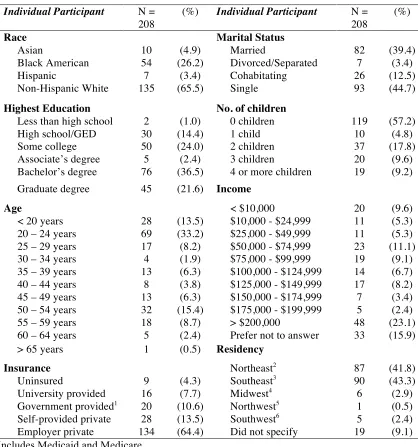
= 119), and lived in the eastern region of the United States (n = 177). Participants had a mode annual household income reported between $125,000 to $149,999 (n = 17). Demographics of individual respondents are shown in Table 2.1
2.4.2 Awareness of Genetic Testing Services
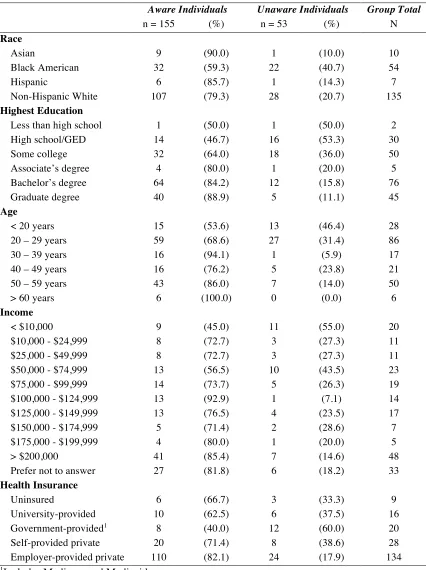
The majority of participants (74.5%) indicated that prior to this survey they were aware of genetic testing services for hereditary breast cancer. Statistical significance (p <
0.05) was noted in differences between average awareness of services within multiple
demographic factors, including race, highest level of education, health insurance coverage, and annual household income. A demographic comparison of women who reported awareness and those who did not can be found in Table 2.2.
Black women were statistically significantly less likely to have heard of genetic testing for hereditary breast cancer than non-Hispanic white women (p = 0.03). Women
who reported utilizing government-provided health insurance were less likely to be aware of services than women who reported utilizing employer provided private insurance (p <
0.01). Women who reported an annual household income of less than $10,000 were less
likely to be aware of services than women who reported an annual income of $200,000 or more (p = 0.03).
Age had a weak but statistically significantly relationship to awareness of genetic testing services (r = 0.23, p < 0.01). Younger women were less likely to be aware of
services than older women. Education also had a moderate but statistically significantly
correlation with awareness of testing services. Women who reported obtaining higher
levels of education were more likely to be aware of genetic testing services than those
Table 2.1 Participant demographic information
Individual Participant N =
208
(%) Individual Participant N =
208
(%)
Race Marital Status
Asian 10 (4.9) Married 82 (39.4) Black American 54 (26.2) Divorced/Separated 7 (3.4) Hispanic 7 (3.4) Cohabitating 26 (12.5) Non-Hispanic White 135 (65.5) Single 93 (44.7)
Highest Education No. of children
Less than high school 2 (1.0) 0 children 119 (57.2)
High school/GED 30 (14.4) 1 child 10 (4.8)
Some college 50 (24.0) 2 children 37 (17.8)
Associate’s degree 5 (2.4) 3 children 20 (9.6)
Bachelor’s degree 76 (36.5) 4 or more children 19 (9.2)
Graduate degree 45 (21.6) Income
Age < $10,000 20 (9.6)
< 20 years 28 (13.5) $10,000 - $24,999 11 (5.3)
20 – 24 years 69 (33.2) $25,000 - $49,999 11 (5.3) 25 – 29 years 17 (8.2) $50,000 - $74,999 23 (11.1) 30 – 34 years 4 (1.9) $75,000 - $99,999 19 (9.1) 35 – 39 years 13 (6.3) $100,000 - $124,999 14 (6.7) 40 – 44 years 8 (3.8) $125,000 - $149,999 17 (8.2) 45 – 49 years 13 (6.3) $150,000 - $174,999 7 (3.4) 50 – 54 years 32 (15.4) $175,000 - $199,999 5 (2.4) 55 – 59 years 18 (8.7) > $200,000 48 (23.1) 60 – 64 years 5 (2.4) Prefer not to answer 33 (15.9) > 65 years 1 (0.5) Residency
Insurance Northeast2 87 (41.8)
Uninsured 9 (4.3) Southeast3 90 (43.3) University provided 16 (7.7) Midwest4 6 (2.9)
Government provided1 20 (10.6) Northwest5 1 (0.5)
Self-provided private 28 (13.5) Southwest6 5 (2.4)
Employer private 134 (64.4) Did not specify 19 (9.1)
1Includes Medicaid and Medicare
2Includes ME, VT, NY, NH, MA, RI, CT, NJ, PA, DE, MD, DC 3Includes VA, WV, KY, TN, NC, SC, GA, FL, MS, AL, Puerto Rico 4Includes OH, IN, MI, IL, WI, MN
Table 2.2 Demographic comparison of aware versus unaware individuals
Aware Individuals Unaware Individuals Group Total
n = 155 (%) n = 53 (%) N
Race
Asian 9 (90.0) 1 (10.0) 10
Black American 32 (59.3) 22 (40.7) 54
Hispanic 6 (85.7) 1 (14.3) 7
Non-Hispanic White 107 (79.3) 28 (20.7) 135
Highest Education
Less than high school 1 (50.0) 1 (50.0) 2 High school/GED 14 (46.7) 16 (53.3) 30
Some college 32 (64.0) 18 (36.0) 50
Associate’s degree 4 (80.0) 1 (20.0) 5 Bachelor’s degree 64 (84.2) 12 (15.8) 76
Graduate degree 40 (88.9) 5 (11.1) 45
Age
< 20 years 15 (53.6) 13 (46.4) 28
20 – 29 years 59 (68.6) 27 (31.4) 86
30 – 39 years 16 (94.1) 1 (5.9) 17
40 – 49 years 16 (76.2) 5 (23.8) 21
50 – 59 years 43 (86.0) 7 (14.0) 50
> 60 years 6 (100.0) 0 (0.0) 6
Income
< $10,000 9 (45.0) 11 (55.0) 20
$10,000 - $24,999 8 (72.7) 3 (27.3) 11 $25,000 - $49,999 8 (72.7) 3 (27.3) 11 $50,000 - $74,999 13 (56.5) 10 (43.5) 23 $75,000 - $99,999 14 (73.7) 5 (26.3) 19 $100,000 - $124,999 13 (92.9) 1 (7.1) 14 $125,000 - $149,999 13 (76.5) 4 (23.5) 17 $150,000 - $174,999 5 (71.4) 2 (28.6) 7 $175,000 - $199,999 4 (80.0) 1 (20.0) 5
> $200,000 41 (85.4) 7 (14.6) 48
Prefer not to answer 27 (81.8) 6 (18.2) 33
Health Insurance
Uninsured 6 (66.7) 3 (33.3) 9
2.4.3 Interest in Genetic Testing for Hereditary Breast Cancer
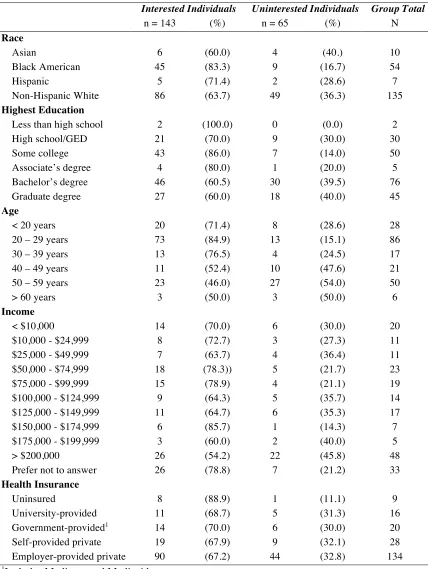
The majority of participants (68.75%) indicated they would be interested in pursuing genetic testing for hereditary breast cancer. One-way ANOVAs showed statistical significance (p < 0.05) between reported average interest within multiple demographic factors, including marital status and number of children. Married woman were statistically significantly less likely to report interest in testing than woman who had never been married (p < 0.01). Women who reported having no children were statistically significantly more likely to report interest in genetic testing for hereditary breast cancer than those who reported having 2 or more children (p < 0.01). Race did not have a statistically significantly association with interest in testing. However, a considerable trend towards significance was noted in that black women tended to be more likely to report interest in testing than non-Hispanic white women (p = 0.051).
Age had a moderate but statistically significantly relationship with interest in testing services (r = -0.32, p = 0.01), with younger women more frequently expressing interest in genetic testing for hereditary breast cancer. Highest level of education was found to have a weak but statistically significantly correlation with interest (r = -0.17, p = 0.01), with women who reported obtaining higher levels of education less frequently reporting interest than other participants. Women’s perceptions of their risk of developing breast cancer was not statistically significantly associated with interest in genetic testing.
Women who reported interest in genetic testing were statistically significantly more likely to perceive themselves to be at risk for a genetic mutation that would
to agree or strongly agree with the proposed benefits of genetic testing than those who were not interested (p < 0.01). Interested participants reported statistically significantly higher frequencies of day to day discrimination (p < 0.01). Prior awareness of testing services was not found to be statistically significantly associated with interest. There was no statistically significant difference between interested participants and uninterested participants concerning perceptions of the severity of a genetic predisposition to cancer, overall perceptions of barriers to genetic testing, perceptions of self-efficacy, and general knowledge of hereditary breast cancer. A comparison of the demographics of interested and uninterested participants can be found in Table 2.3.
2.4.4Health beliefs
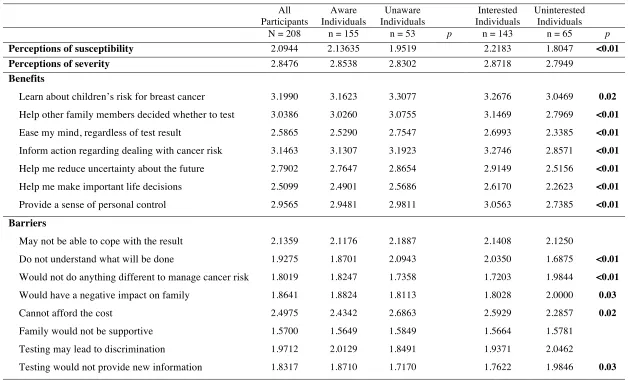
Table 2.4 represents 20 items that were derived from the HBM. The data was generated by the Likert scale rating format to determine individual perceptions of the susceptibility to and the severity of a genetic mutation that would increase their risk of breast cancer, as well as the benefits and barriers of preventative testing for BRCA1/2 pathogenic variants. A high average is associated with agreement (strongly agree = 4) to a statement, whereas a low average is associated with disagreement (strongly disagree = 1). Items were compared among demographic groups, analyzed, and averaged.
In general, women reported high agreement to the proposed benefits of genetic testing and low agreement to the proposed barriers of genetic testing (Figures 2.1 & 2.2). The most strongly agreed with benefits included learning about their children’s risk for breast cancer, informing action regarding dealing with cancer risk, and helping other family members decide whether to test. Women disagreed most strongly with the
Table 2.3 Demographic comparison of interested versus uninterested individuals
Interested Individuals Uninterested Individuals Group Total
n = 143 (%) n = 65 (%) N
Race
Asian 6 (60.0) 4 (40.) 10
Black American 45 (83.3) 9 (16.7) 54
Hispanic 5 (71.4) 2 (28.6) 7
Non-Hispanic White 86 (63.7) 49 (36.3) 135
Highest Education
Less than high school 2 (100.0) 0 (0.0) 2
High school/GED 21 (70.0) 9 (30.0) 30
Some college 43 (86.0) 7 (14.0) 50
Associate’s degree 4 (80.0) 1 (20.0) 5 Bachelor’s degree 46 (60.5) 30 (39.5) 76 Graduate degree 27 (60.0) 18 (40.0) 45
Age
< 20 years 20 (71.4) 8 (28.6) 28
20 – 29 years 73 (84.9) 13 (15.1) 86
30 – 39 years 13 (76.5) 4 (24.5) 17
40 – 49 years 11 (52.4) 10 (47.6) 21
50 – 59 years 23 (46.0) 27 (54.0) 50
> 60 years 3 (50.0) 3 (50.0) 6
Income
< $10,000 14 (70.0) 6 (30.0) 20
$10,000 - $24,999 8 (72.7) 3 (27.3) 11 $25,000 - $49,999 7 (63.7) 4 (36.4) 11 $50,000 - $74,999 18 (78.3)) 5 (21.7) 23 $75,000 - $99,999 15 (78.9) 4 (21.1) 19 $100,000 - $124,999 9 (64.3) 5 (35.7) 14 $125,000 - $149,999 11 (64.7) 6 (35.3) 17 $150,000 - $174,999 6 (85.7) 1 (14.3) 7 $175,000 - $199,999 3 (60.0) 2 (40.0) 5
> $200,000 26 (54.2) 22 (45.8) 48
Prefer not to answer 26 (78.8) 7 (21.2) 33
Health Insurance
Uninsured 8 (88.9) 1 (11.1) 9
31
Table 2.4 Health Belief Model and comparison of groups
All Participants
Aware Individuals
Unaware Individuals
Interested Individuals
Uninterested Individuals
N = 208 n = 155 n = 53 p n = 143 n = 65 p
Perceptions of susceptibility 2.0944 2.13635 1.9519 2.2183 1.8047 <0.01
Perceptions of severity 2.8476 2.8538 2.8302 2.8718 2.7949
Benefits
Learn about children’s risk for breast cancer 3.1990 3.1623 3.3077 3.2676 3.0469 0.02
Help other family members decided whether to test 3.0386 3.0260 3.0755 3.1469 2.7969 <0.01
Ease my mind, regardless of test result 2.5865 2.5290 2.7547 2.6993 2.3385 <0.01
Inform action regarding dealing with cancer risk 3.1463 3.1307 3.1923 3.2746 2.8571 <0.01
Help me reduce uncertainty about the future 2.7902 2.7647 2.8654 2.9149 2.5156 <0.01
Help me make important life decisions 2.5099 2.4901 2.5686 2.6170 2.2623 <0.01
Provide a sense of personal control 2.9565 2.9481 2.9811 3.0563 2.7385 <0.01
Barriers
May not be able to cope with the result 2.1359 2.1176 2.1887 2.1408 2.1250
Do not understand what will be done 1.9275 1.8701 2.0943 2.0350 1.6875 <0.01
Would not do anything different to manage cancer risk 1.8019 1.8247 1.7358 1.7203 1.9844 <0.01
Would have a negative impact on family 1.8641 1.8824 1.8113 1.8028 2.0000 0.03
Cannot afford the cost 2.4975 2.4342 2.6863 2.5929 2.2857 0.02
Family would not be supportive 1.5700 1.5649 1.5849 1.5664 1.5781
Testing may lead to discrimination 1.9712 2.0129 1.8491 1.9371 2.0462
Testing would not provide new information 1.8317 1.8710 1.7170 1.7622 1.9846 0.03
Figure 2.1 Agreement with benefits of genetic testing
Figure 2.2 Agreement with barriers of genetic testing
0 0.5 1 1.5 2 2.5 3 Family would not be supportive
Would not do anything different to manage cancer risk Testing would not provide new information Would have a negative impact on family Do not understand what will be done Testing may lead to discrimination May not be able to cope with results Cannot afford the cost
0 0.5 1 1.5 2 2.5 3 3.5 Help me make important life decisions
to do anything different to manage their cancer risk, and testing would not provide new
information. Women only agreed with one proposed barrier, that they would not be able
to afford the cost of testing.
Interest strongly influenced women’s perceptions of susceptibility, benefits, and
barriers to genetic testing for hereditary cancer (Table 2.4). Women who were interested
in testing were more likely to perceive themselves as susceptible to a genetic mutation
that would predispose them to breast cancer (p < 0.01). Interested participants agreed
more strongly with all proposed benefits to genetic testing (p < 0.01). Interested women
statistically significantly agreed more with the statement “I am afraid to undergo genetic
testing because I do not understand what will be done” (p < 0.01), and the statement “I
cannot afford the cost of genetic testing” (p = 0.02). Women who were not interested in
testing agreed statistically significantly more than interested women with a few barriers
to genetic testing, including the statements, “Genetic testing will not help me because I
would not do anything different to manage cancer risk” (p < 0.01), “Genetic testing will
have a negative impact on my family” (p = 0.03), and “Genetic testing will not tell me
anything new about my risk I do not already know” (p = 0.03). Interest had no
statistically significant effect on women’s reports of perceptions of the impact a
hereditary breast cancer syndrome would have on their lives or women’s reports of
self-efficacy.
Age played a role in influencing women’s perceptions of the benefits and barriers
to genetic testing. Younger women were more likely to agree with the statement,
“Genetic testing will help me make important life decisions” (p = 0.02). They more
because I may not be able to cope with the result” (p < 0.01), “I am afraid to undergo
genetic testing because I do not understand what will be done” (p < 0.01), and “I cannot
afford the cost of genetic testing” (p < 0.01).
There were statistically significant differences in the benefits and barriers women
most strongly agreed with between different racial groups (Figures 2.3 & 2.4). Black
women were statistically significantly more likely (p < 0.01) to agree with the statement
“Genetic testing will help me make important life decisions” than non-Hispanic white
women. In terms of barriers, black women were more likely to agree with the statements,
“I am afraid to undergo genetic testing because I may not be able to cope with the
results” (p = 0.02), “I am afraid to undergo testing because I do not understand what will
be done” (p < 0.01), and “I cannot afford the cost of genetic testing” (p < 0.01) than
non-Hispanic white women. Asian women were statistically significantly more likely to
agree with the statement “Genetic testing will not help me because I would not do
anything different to manage my cancer risk” (p = 0.01) than Hispanic women.
Highest level of education influenced women’s perceptions of the benefits and
barriers to genetic testing for hereditary cancer. Women who reported receiving less than
a bachelor degree were more likely to agree with the statement, “Genetic testing will help
me make important life decisions” (p < 0.01) than those that reported receiving a
bachelor’s degree. Women who reported receiving less than a bachelor degree were also
more likely to agree with the statements “I am afraid to undergo genetic testing because I
may not be able to cope with the results” (p = 0.03), “I am afraid to undergo genetic
testing because I do not understand what will be done” (p < 0.01), and “I cannot afford
Figure 2.3 Race vs. agreement with benefits
0 1 2 3 4
Help me make important life decisions Ease my mind, regardless of test result Help me reduce uncertainty about the future Provide a sense of personal control Help other family members decide whether to test Inform action regarding dealing with cancer risk Learn about children's risk for breast cancer
Asian Black Hispanic Non-Hispanic White
0 0.5 1 1.5 2 2.5 3
Family would not be supportive Would not do anything different to manage cancer risk Testing would not provide new information Would have a negative impact on family Do not understand what will be done Testing may lead to discrimination May not be able to cope with results Cannot afford the cost
Marital status was similarly associated with perceptions of benefits and barriers
regarding genetic testing for hereditary breast cancer. Women who reported never being
married were statistically significantly more likely to agree with the statements, “Genetic
testing will help me make important life decisions” (p < 0.01), “I am afraid to undergo
genetic testing because I may not be able to cope with the result” (p < 0.01), “I am afraid
to undergo genetic testing because I do not understand what will be done” (p < 0.01), and
“I cannot afford the cost for genetic testing” (p < 0.01) than women who reported that
they were married.
Women who reported having no children were more likely to agree with the
statements, “Genetic testing will help me make important life decisions” (p < 0.01). “I am
afraid to undergo genetic testing because I may not be able to cope with the result” (p <
0.01), “I am afraid to undergo genetic testing because I do not understand what will be
done” (p < 0.01), and “I cannot afford the cost for genetic testing” (p < 0.01) than women
who reported having two or more children. Women who reported having one child
trended to being less likely to agree with the statement, “Genetic testing to learn my risk
will help other family members decide whether to undergo testing” (p = 0.04) than
women who reported having no children or more than one child.
Participant’s reported insurance was only statistically significantly associated with
increased agreement with barriers to genetic testing. Participants who reported utilizing
government provided health insurance were more likely to agree with the statements “I
am afraid to undergo genetic testing because I may not be able to cope with the results”
(p < 0.01) than those that reported utilizing employer-provided health insurance. These
genetic testing because I do not understand what will be done” (p < 0.01) than
participants reporting utilization of university-provided health insurance or employer
provided health insurance. Participants who reported that they were currently uninsured
or utilizing university-provided health insurance were statistically significantly more
likely to agree with the statement, “I cannot afford the cost of genetic testing” (p < 0.01).
Participants who reported utilizing employer-provided or self-provided private insurance
more strongly agreed with the statement, “Genetic testing will not tell me anything new
about my risk I do not already know” (p = 0.01) than those who reported utilizing
university-provided health insurance.
Annual household income was also only statistically significantly associated with
increased agreement with barriers to genetic testing. Participants who reported annual
household incomes of less than $10,000 were statistically significantly more likely to
agree or strongly agree with the statement “I am afraid to undergo genetic testing because
I do not understand what will be done” (p < 0.01) than participants who reported annual
household incomes of greater than $200,000. Participants who reported annual household
incomes of less than $125,000 were statistically significantly more likely to agree with
the statement, “I cannot afford the cost for genetic testing” (p < 0.01) than participants
who reported annual incomes of greater than $200,000.
2.4.5 Discrimination
We examined our hypothesis that interest in genetic counseling would be lower
for those who have higher reports of perceived discrimination. Unexpectedly,
participants who reported higher frequencies of daily discrimination also reported greater
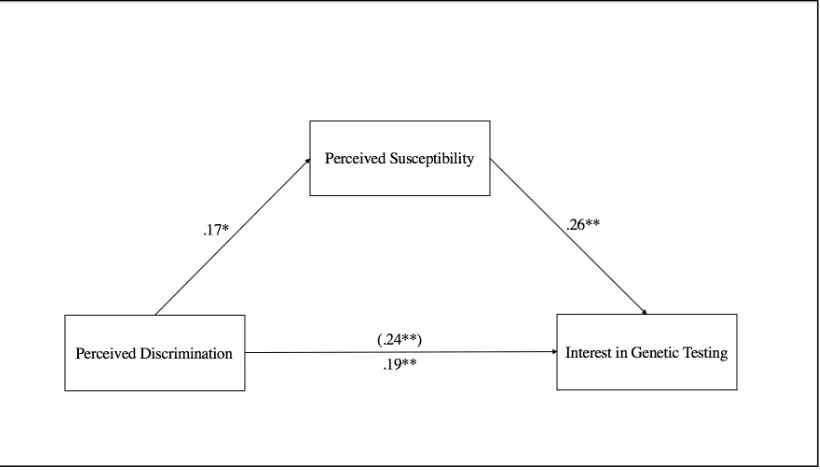
mediating role of perceived susceptibility of a having inherited a genetic mutation that
would predispose one to cancer between the relationship of perceived discrimination and
interest in genetic counseling. Although current perspectives on mediation propose that
the requirements outlined by Baron and Kenny (1986) are unnecessary (Shrout & Bolger,
2002), relations between our study variables did meet the expectations. Both the
predictor, perceived discrimination, and the mediator, perceived susceptibility, were
related to the outcome variable, genetic testing interest (Table 2.5). We present our
findings in the conventional Baron and Kenny format for ease of interpretation.
Table 2.5 Correlations between perceived discrimination, perceived susceptibility, and interest in genetic testing
1. 2. 3.
Perceived Susceptibility - .258** .173*
Interest in Genetic Counseling - .244**
Perceived Discrimination -
* Indicates p<0.05 ** Indicates p<0.01
Using a multiple logistic regression, we regressed the criterion variable of interest
in genetic testing on perceived discrimination in Step 1. In Step 2, we regressed interest
in genetic testing on both the predictor of perceived discrimination and on the proposed
mediator of perceived susceptibility and saw a reduction in the strength of perceived
discrimination to predict interest in genetic counseling. The third regression equation
provided an estimate of path c’, the relationship between perceived discrimination and
interest in genetic counseling, controlling for perceived susceptibility. When path c’ is
zero, there is evidence of complete mediation. Path c’ was found to be reduced, and no
longer statistically significant, suggesting partial mediation. The R2
be accounted for by the mediation of perceived discrimination by perceived
susceptibility.
We used the Sobel test to test the statistical significance of the mediating effect
and to determine whether the change from path c to path c’ of the standardized regression
coefficients was statistically significant. The statistically significant decrease (Sobel tests
= 2.24, p = .03) verified that perceived susceptibility partially mediated the relationship
between perceived discrimination and interest in genetic testing. A graphic representation
of this effect can be found in Figure 2.5
Figure 2.5 Mediating role of perceived susceptibility in the relationship between perceived discrimination and interest in genetic testing
2.4.6 BRCA1/2 Knowledge
In general, women in this study scored high on all measures of knowledge of
BRCA1/2. For 5 of the 6 items, greater than or equal to 77% of women were able to
to correctly identify the statement, “The BRCA gene causes about one half of all breast
cancers” as “False”.
2.5 Discussion
The purpose of this study was to assess women’s interest in and attitudes towards
genetic testing for hereditary breast cancer across multiple demographic factors. The
main goals of the study were to identify factors that predict women’s interest in testing
and to clarify women’s perceptions of the utility of testing through the use of a Health
Belief Model (HBM). Given the rapidly evolving attitudes towards and increasing
accessibility to genetic testing, potential consumers’ thoughts regarding this service are
especially pertinent.
Previous studies have shown that genetic testing services are primarily utilized by
Caucasian women with private health insurance, and higher levels of education and
income. Minorities are less likely to be aware of the genetic testing services available to
them (Glenn, Chawla, & Bastani, 2012). Minority women have previously cited barriers
to testing such as accessibility, language barriers, and distrust in the medical community
(Glenn, Chawla, & Bastani, 2012; Thompson et al., 2003).
2.5.1 Awareness of Genetic Testing Services
The results of this study suggest the majority of women are aware of genetic
testing services. Our study noted statistically significant differences in frequency of
awareness between multiple demographic categories. Among our participants, black
women, women who had lower levels of education, and women with lower annual
support the findings of previous studies, and indicate that further outreach in low
socioeconomic communities by genetics professionals may be beneficial in reducing
disparities among consumers (Komenaka et al., 2015; Mai et al., 2014).
2.5.2 Interest in Genetic Testing for Hereditary Breast Cancer
Over half of our participants expressed interest in utilizing genetic testing for
hereditary breast cancer syndromes. There were statistically significant differences
between the women who reported interest and those who did not. Some of these
differences appear to stem from family unit demographics. Single women were more
likely than married women to report interest, and women with no children were more
likely to report interest in testing than women with 2 or more children. This observation
adds support to previous findings suggesting women who perceive themselves to have
stronger social supports are more likely to postpone genetic testing (Hesse-Biber & An,
2016).
Age had a statistically significant relationship with interest in testing. Consistent
with previous findings, younger women were more likely to express interest in genetic
testing for hereditary breast cancer than older women in our sample. As patient
populations age, they have been found to have decreased interest in medical information
seeking (Turk-Charles, Meyerowitz, & Gatz, 1997). Alternatively, younger women’s
increased interest in testing may be attributable to more exposure or education on genetic
testing in their formal schooling, or an acknowledgement of the approaching midlife
years and the increased risk of cancer that accompanies them (Sanderson et al., 2004;
Women who reported receiving lower levels of education were more likely to
report interest in testing services than those who reported higher levels of education
Women who have higher levels of education may have more access and knowledge
regarding genetic technology and may be more aware of the limitations and indications
for genetic testing than those who have received lower levels of education (Sanderson et
al., 2004).
Notably, no statistically significant relationship between prior awareness of
testing services and interest in testing services was observed. Selected populations that
reported less awareness of services, such as black women and women with lower annual
incomes, did not have a statistically significant difference in their reported interest when
compared to other participants. However, black women did trend towards significance in
being more likely to report interest than non-Hispanic white women.
2.5.3 Health Belief Model
In this study, the Health Belief Model (HBM) provided a framework to better
understand women’s perceptions regarding the utility, benefits, barriers, and risks of
genetic testing for hereditary breast cancer. The HBM was used to not only examine
women’s perceptions as a whole, but also women’s perceptions within demographic
categories in order to help clarify differing attitudes towards genetic testing for hereditary
breast cancer.
Overall, participants expressed a positive attitude towards genetic testing for
hereditary breast cancer syndromes. On average, women agreed with all of the proposed
benefits to testing and disagreed with the majority of proposed barriers. Women agreed
their children’s risk for breast cancer, help inform action regarding dealing with cancer
risk, and help other family members make testing decisions. These benefits all confer
alterations to the personal health management of the participant and their family
members, and indicate that women are aware of and appreciate the clinical utility of this
testing.
As a whole, women in this study only agreed with one proposed barrier to genetic
testing for hereditary breast cancer syndromes. Participants were more likely to cite
agreement with the statement that they would not be able to afford the cost of testing,
suggesting that the perceived financial burden of genetic testing is a deterrent to women’s
decisions to pursue testing. Current billing procedures for genetic testing for hereditary
cancer syndromes are complex and vary based on indication, insurance plan, and the
laboratory chosen to complete the testing. The cost of genetic testing for hereditary
cancer billed to insurance may vary from $1,500 to $5,000, but if the patient is
determined to be an appropriate candidate for testing, out of pocket expenses are
anticipated to be much lower at approximately $100 (Invitae, 2017; Myriad Genetics,
2017). Currently, many laboratories offer financial assistance programs for underinsured
patients determined to be appropriate candidates for testing that can reduce the out of
pocket cost to less than $100 or waive the out of pocket cost completely.(Invitae, 2017;
Myriad Genetics, 2017). Education prior to the genetic counseling appointment regarding
the average anticipated cost of testing may help encourage women who believe this
service is not financially attainable to pursue genetic counseling when indicated.
Reported interest in testing was found to be statistically significantly associated
increase the risk of having breast cancer. Perceptions of severity were not significantly
different between interested and uninterested women. Stronger agreement with all of the
proposed benefits of genetic testing was statistically significantly associated with interest,
suggesting that women who are interested in testing are also more likely to perceive there
to be clinical and personal utility in testing than those who are not.
Women who did not report interest in genetic testing statistically significantly
agreed more with three of the proposed barriers and risks. Uninterested women were
more likely to believe that testing would not affect their decisions regarding the
management of cancer risk and would not provide new information about their cancer
risk. Both of these barriers relate to clinical utility and may indicate that women who are
not interested in testing are less likely to perceive testing would provide personal health
gain. The last barrier that uninterested women agreed statistically significantly more with
was that testing would have a negative impact on their families. Given that the women in
our sample who most frequently reported disinterest in testing were those who were
married with more than one child, it is possible that this finding may be partially
explained by appreciation for the significance a positive result would have on offspring.
There were statistically significant differences in our sample regarding attitudes
and beliefs of racial groups towards genetic testing for hereditary breast cancer. Black
women were statistically significantly less likely to be aware of testing services,
indicating that they may be receiving less exposure and education on genetic testing
services than other races. Interestingly, black women trended towards expressing
significantly more interest in testing services than non-Hispanic white women. These