THE SELECTIVE SEPARATION AND EXTRACTION OF METALS USING
MEMBRANE TECHNOLOGY
Alexandra H. Blitz-Raith BSc (Hons.) Dip.Ed.
DECLARATION
“I Alexandra Blitz-Raith declare that the Masters by Research thesis entitled “ The Selective Separation and Extraction of Metals Using Membrane Technology “ is no more than 60,000 words in length exclusive of tables, figures, appendices, references and footnotes. This thesis contains no material that has been admitted previously, in whole or on part, for the award of any other academic degree or diploma, except where otherwise indicated, this thesis is my own work.”
Signature Dated 21st
November 2012
ACKNOWLEDGEMENTS
I would like to thank Dr. Jim Sillitoe and Professor Chris Perera for their help and support in the compilation of this thesis.
PUBLICATIONS
1. Blitz-Raith, A. H., Paimin, R.;Kolev, S. D. (2005). The application of polymer liquid membranes to the extraction of cobalt(II) from aqueous solutions. International Solvent Extraction Conference, China.
2. Blitz-Raith, A. H., Paimina, Rohani , Cattrall, Robert W. and Kolev, Spas D. (2007). "Separation of cobalt(II) from nickel(II) by solid-phase extraction into Aliquat 336 chloride immobilized in
poly(vinyl chloride)." Talanta71(1): 419-423.
3. Provisional Patent No 2007900692 titled “Separation of Cobalt, Nickel and Iron in aqueous Solutions"
Abstract
The separation of Co(II), Ni(II) , Fe(II) and Fe(III) has been a problem that has vexed chemists for many years. Separation has been difficult because of the very similar chemical properties of these transition metals that are situated alongside each other in the Periodic Table.
The work contained in this thesis shows the membrane extraction of the metals: Cobalt(II), Nickel(II). Iron(II) and Iron(III) in aqueous media using a polymer “entangled” membrane containing the extractant Aliquat 336 and PVC (polyvinylchloride).
The studies of each metal were carried out in a variety of aqueous chloride, sulphate and nitrate media and it was found that the efficiency of the extraction was dependent upon the concentration of the anion in
solution. The stripping of the metal was completed using deionised water for each of the metals and the back extraction studies were then used to identify the metal complexes that were formed in the matrix of the membrane and hence to postulate the mechanism of the extraction in each case.
The ultimate aim of the thesis was to show the selective separation and extraction of Cobalt(II) from Nickel(II) and Nickel(II) from Cobalt(II) in aqueous chloride, sulphate and nitrate media and then the selective separation of these metals from Iron(II) and Iron(III) in the same media. This was achieved using the information from the individual extraction studies of each metal that were carried out in the aqueous media.
The innovative work in this thesis presents for the first time the selective separation of the three transition metals in a variety of aqueous media using a membrane that contained Aliquat 336/PVC. The process has a
Provisional Patent Number 2007900692, titled “Separation of Cobalt, Nickel and Iron in aqueous solutions”.
List of Tables
Chapter Three
Table 3.1 Solutions containing 100ppm of Co(II) 49 Table 3.2 Solutions containing 100ppm of Ni(II), Fe(II) and Fe(III) 49 Table 3.3 Instrumental parameters for AAS 50
Chapter Four
Table 4.1 Mole ratios of H/Co/Cl in the stripping solution after the back extraction of Co(II) using varying concentration with 40% (w/w) Aliquat 336/PVC membrane in a single vessel.
Table 4.2 Mole ratios of H/Ni/Cl in the stripping solution after the back extraction of Ni(II) using varying
concentration with 40% (w/w) Aliquat 336/PVC membrane in a single vessel. 66 65
Table 4.3 Mole ratios of H/Fe/Cl in the stripping solution after the back extraction of Fe(II) using varying
concentration with 40% (w/w) Aliquat 336/PVC membrane in a single.vessel. 66 Table 4.4 Mole ratios of H/Fe/Cl in the stripping solution after the back extraction of Fe(III) using varying
concentration with 40% (w/w) Aliquat 336/PVC membrane in a single vessel 67 Table 4.5 Influence of the hydrochloric acid concentration on the percentage of Co(II) extracted into 40%
(w/w) Aliquat 336/PVC solid absorbent membrane from a solution containing 100ppm Co(II). 70
List of Figures
Chapter Two
Figure 2.1. Emulsion liquid membrane [22] 13
Figure 2.2. Bulk liquid membrane [22] 15
Figure 2.3. Supported liquid membrane [22] 16
Figure 2.4. Hollow fibre supported liquid membrane [22] 17
Figure 2.5. Two module hollow fibre supported liquid membrane [22] 18
Figure 2.6. Spiral wound membrane [22] 18
Figure 2.7. Cationic Symport.[22] 21
Figure 2.8. Cationic Antiport.[22] 21
Figure 2.9. Anionic Antiport and Symport Transport [22]. 22
Figure 2.10. Chemical structure of (a) trioctyl phosphine oxide and (b) tributyl phosphate 24
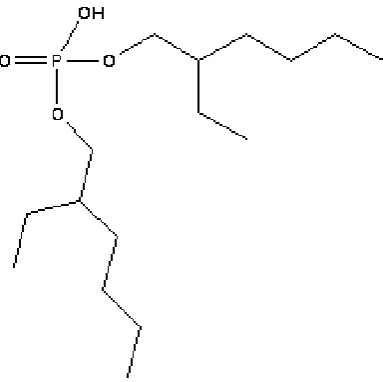
Figure 2.11. Chemical structure of di-(2 ethylhexyl) phosphoric acid 25
Figure 2.12. The chemical structure of (a) methyl ethyl ketoxime and (b) salicylaldoxime 26
Chapter Four Figure 4.1. Concentration vs. time curves for the extraction of the metal ion (Mn+ Figure 4.2. Aqueous Co(II) concentration vs. extraction time for membranes containing; 10%(), 20%(), 30%(Δ), 40%() and 50%() (w/w) Aliquat 336/PVC (feed solution composition: 100 ppm (Co(II) in 7.0 M HCl in single cell system). 57
) in HCl using quaternary (Aliquat 336), tertiary (Alamine 336), secondary (dioctylamine) and primary amines (decyclamine (Primene JMT)). 56
Figure 4.3. Aqueous Co(II) concentration vs. extraction time for membranes containing; 10%(), 20%(), 30%(Δ), 40%() and 50%() (w/w) Aliquat 336/PVC (feed solution composition: 100 ppm (Co(II) in 7.0 M HCl in the two cell system) .58
Figure 4.4: Influence of the concentration of HCl on the percentage of Co(II) extracted into a 40% (w/w) Aliquat 336/PVC membrane from a 100 mL solution containing 100 ppm Co(II). 59
Figure 4.5 Concentration of metal ion extracted in varying HCl using 40% (w/w) Aliquat336/PVCmembrane versus time. 60
Figure 4.6 Influence of concentration of HCl on the percentage of metal ion extracted into a 40% (w/w)
Aliquat 336/PVC membrane from 100mL solution of the metal ion containing 100ppm of the
metal ion. 61 Figure 4.7 Varying concentrations of Co(II) extracted in 7M HCl using the 40% (w.w) Aliquat 336/PVC
membrane. 62 Figure 4.8 Varying concentrations of Ni(II) extracted in 1M HCl using the 40% (w.w) Aliquat 336/PVC
membrane. 62 Figure 4.9 Varying concentrations of Fe(III) extracted in 3M HCl using the 40% (w.w) Aliquat 336/PVC
membrane. 63 Figure 4.10 Concentration vs. time curves for the extraction and back extraction for Co(II) the 40% (w/w)
Aliquat 336/PVC membrane (initial aqueous solution (): 100 ppm Co(II) in 7M HCl; back extraction
solution (): deionized water). 64 Figure 4.11Speciation diagram for aqueous Co(II) chlorocomplexes at different concentrations of
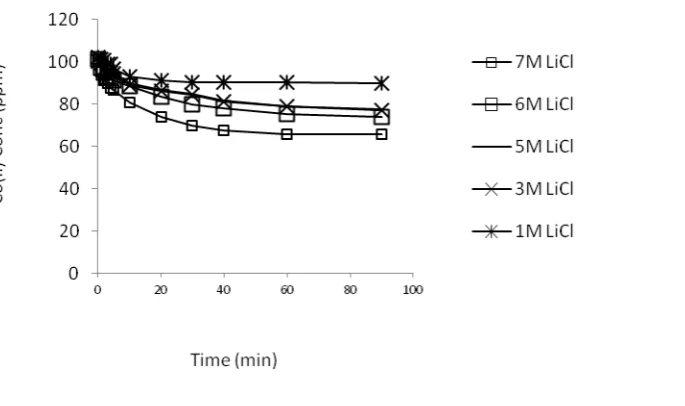
hydrochloric acid. [139]. 69 Figure 4.12. Concentration vs. time curves for the extraction of Co(II) concentration vs. time of contact
(initial concentration of aqueous Co(II) in varying concentrations of LiCl solution (100ppm.) for the 40%
(w/w)Aliquat 336/PVC membrane. 73 Figure 4.13 UV/Visible spectra obtained for solutions of 100ppm.of cobalt chloride in concentrations of HCl
ranging from 1.0M–10.0M. 76 Figure 4.14 UV/Visible spectra obtained for Aliquat 336/PVC membranes obtained for the extraction of
100ppm. cobalt chloride in varying concentrations of HCl. 76 Figure 4.15 Concentration vs. time curves for the comparison of the extraction of 100ppm Ni(II) () in
1.0M, HCl, LiCl, KCl, NaCl and CaCl2
Figure 4.16 UV/Visible spectra of Aliquat 336/PVC membrane obtained after the extraction of Ni(II) in
1.0M HCl. 80
solutions using 40% (w/w) Aliquat 336/PVC membrane. 78
Figure 4.17 Mole fractions of the individual Fe–Cl complexes, at varying [Cl–
], relative to the total amount of iron remaining in the aqueous phase (Hill et l.[144]). 81
Figure 4.18 Concentration vs. time curves for the extraction of Fe(III) (initial
concentration of aqueous Fe(III) in varying concentrations of LiCl solution-100ppm for the 40%(w/w)
membrane. A single vessel is used for this extraction. 82 Figure 4.19 Concentration vs. time curves for the extraction of 100ppm Co(II) in 5.0M, 2.0M and 1.0M
H2SO4
Figure 4.20 Concentration vs. time curve for the extraction of 100ppm Ni(II) in 5.0M, 2.0M and 1.0M H
solutions using the 40%(w/w) Aliquat 336/PVC membranes. 84
2SO4
Figure 4.21 Concentration vs. time curves for the extraction of 100ppm Fe(II) in varying concentrations of sulphuric acid
solutions using the 40%(w/w) Aliquat 336/PVC membrane 85
Figure 4.22 Concentration vs. time curves for the extraction of 100ppm Fe(III) in varying concentrations of sulphuric acid
solution using the 40%(w/w) Aliquat 336/PVC membrane. 85
Figure 4.23 Concentration vs. time curve for the back extraction for Co(II) in deionised water, 0.1M , 0.5M
and 1M sulphuric acid using 40%(w/w) Aliquat336/PVC membrane. 87 Figure 4.24. Concentration vs. time curve for the back extraction for Ni(II) in deionised water, 0.1M , 0.5M
and 1M sulphuric acid using 40%(w/w) Aliquat336/PVC membrane. 88 Figure 4.25 Back extraction curve for Fe(II) in deionised water. 89
solution using the 40%(w/w) Aliquat 336/PVC membrane. 86
Figure 4.26 Back extraction curve for Fe(III) in deionised water. 89 Figure 4.27.Concentration vs. time curves for the extraction of 100ppm Co(II) in 5M, 3M and 1M HNO3
Figure 4.28. Concentration vs. time curves for the extraction of 100PPM Co(II) in 2.0M, 1.0M and 0.5M, 0.2M and 0.1M H
solutions using the 40%(w/w) Aliquat 336/PVC membranes. 92
2C2O4 solutions using the 40% (w/w) Aliquat 336/PVC membranes
97
Chapter Five
Figure 5.1. Concentration vs. time curves for the selective extraction from a feed solution containing
110ppm Co(II) and 109ppm Ni(II) in 7.0M HCl. 103 Figure 5.2. Concentration vs. time curves for the selective separation from a feed solution containing
100ppm Ni(II) and 100ppm Co(II) in 1.0M HCl. 104 Figure 5. 3.Concentration vs.time curves for the selective separation from a feed solution containing
viii
Figure 5. 4. Concentration vs. time curves for the selective separation from a feed solution containing
100ppm Co(II) from 100ppm Ni(II) and 100ppm Fe(III) in 7.0M HCl. 106 Figure 5.5 Concentration vs. time curves for the selective separation from a feed solution containing
100ppm Ni(II) from 100ppm Co(II) and 100ppm Fe(II) in 1.0M HCl. 107 Figure 5. 6. Concentration vs. time curves for the selective separation from a feed solution containing
100ppm Ni(II) from 100ppm Co(II) and 100ppm Fe(III) in 1.0M HCl. 108 Figure 5.7. Concentration vs. time curves for the selective separation from a feed solution containing 100ppm Fe(II) from 100ppm Co(II) and 100ppm Ni(II) in 3.M HCl. 109 Figure 5.8. Concentration vs. time curves for the selective separation from a feed solution containing
ix
Table of Contents Declaration i
Acknowledgements ii
Publications iii
Abstract iv
List of Tables v
List of Figures vi
1.1 Introduction Chapter One 1
1.2 Traditional metal extraction from ore deposits 1
1.3 Extraction and separation from aqueous solution 2
1.4 Trace metal extraction from wastewater 3
1.5 The role of enabling technologies 4
1.6 The focus of this investigation 5
1.7 Thesis Overview 7
Chapter Two 9
Literature Review 2.1 Historical review 9
2.1.2 Contemporary studies of membrane function 10
2.1.3 Common types of liquid membranes 12
2.1.3.1 Emulsion liquid membranes 13
2.1.3.2 Bulk liquid membranes 15
2.1.3.3 Supported liquid membranes 16
2.1.3.4 Hollow fibre supported liquid membranes 17
2.1.3.5 Polymer liquid membranes 19
2.2.1 Cation transport 20
2.2.2 Anion transport 22
x
2.3 Extractants 23
2.3.1 Neutral or solvating extractants 23
2.3.2 Organic acid extractants 25
2.3.3 Chelating agents 26
2.3.4 Ion-pair extractants 27
2.4 General review of membrane extraction and separation studies 28
2.4.1 Extraction studies of cobalt, nickel and iron on aqueous media 28
2.4.1.1 Extraction of cobalt in chloride media 29
2.4.1.2 Extraction of nickel in chloride media 30
2.4.1.3 Extraction of iron in chloride media 31
2.4.2 Extraction of cobalt in sulphate media 33
2.4.3 Extraction of nickel in sulphate media 35
2.4.4 Extraction of iron in sulphate media 36
2.4.5 Extraction of cobalt in nitrate media 37
2.4.6 Extraction of nickel in nitrate media 38
2.4.7 Extraction of iron in nitrate media 38
2.4.8 Extraction of cobalt in oxalate media 38
2.5 Separation of cobalt, nickel and iron on aqueous media 39
2.5.1 Separation of cobalt, nickel and iron in chloride media 40
2.5.2 Separation of cobalt, nickel and iron in sulphate media 43
2.5.3 Separation of cobalt, nickel and iron in nitrate media 46
Chapter Three 48
Experimental 3.1 Materials 48
3.1.1 Reagents 48
3.1.2 Preparation of Co(II), Ni(II), Fe(II) and Fe(III) solutions 48
3.2 Apparatus and chemical analysis 50
3.3 Preparation of membranes 51
3.6 Back extraction 53
xi
Chapter Four 54
Membrane extraction studies of Cobalt(II), Nickel(II), Iron(II) and Iron(III) in aqueous media 4.1 Introduction 54
4.2 Results and Discussion 55
4.2.1 Membrane extraction studies of Co(II), Ni(II), Fe(II) and Fe(III) in chloride 55
Media 4.2.1.1 Membrane extractant studies 55
4.2.1.2 Efficiency of extraction of the membrane 57
4.2.1.3 The influence of hydrochloric acid concentration on the efficiency of membrane 58
extraction of Co(II) 4.2.1.4 Influence of hydrochloric acid concentration on the membrane extraction 59
studies of nickel(II), iron(II) and iron(III) 4.2.1.5 The influence of metal ion concentration on extraction efficiency 61
4.2.1.6 Back extraction studies 63
4.2.1.7 The postulation of the extracted species and mechanism of the membrane extraction from the equilibrium studies 67
4.2.2 Membrane extraction studies of Co(II), Ni(II), Fe(II) and Fe(III) from sulphuric acid 83
4.2.2.1 The influence of sulphuric acid concentration on the extraction 84
4.2.2.2 Back extraction studies 86
4.2.2.3 The postulation of the extracted species and mechanism of the membrane 89
extraction from the equilibrium studies 4.2.3 Membrane extraction studies of Co(II), Ni(II), Fe(II) and Fe(III) from 91
nitric acid 4.2.3.1 The influence of nitric acid concentration on the extraction 91
4.2.3.2 Back extraction studies 92
4.2.3.3 The postulation of the extracted species and mechanism of the membrane extraction from the equilibrium studies 93
4.2.4.1 The effect of concentration on the extraction of Co(II) 97
4.2.4.2 Back extraction studies 98
xii
4.2.4.3 The postulation of the extracted species and mechanism of the membrane 98
extraction from the equilibrium studies 4.3 Conclusion 99
Chapter Five 101
Selective separation and extraction of Cobalt(II), Nickel(II), Iron(II) and Iron(III) in aqueous media 5.1 Introduction 101
5.2. Results and Discussion 102
5.2.1 Selective separation studies of Co(II), Ni(II), Fe(II) and Fe(III) in aqueous chloride media 102
5.2.1.1 Selective separation studies of Co(II) from Ni(II) in hydrochloric acid 102
5.2.2 Selective separation studies of Ni(II) from Co(II) in chloride media 103
5.2.2.1 Selective separation studies of Ni(II) from Co(II) in hydrochloric acid 103
5.2.3 Selective separation of Co(II) from Ni(II) and Fe(II) 104
5.2.3.1 Selective separation of Co(II) from Ni(II) and Fe(II) in hydrochloric acid 104
5.2.4 Selective separation of Co(II) from Ni(II) and Fe(III) 106
5.2.4.1 Selective separation of Co(II) from Ni(II) and Fe(III) in hydrochloric acid 106
5.2.5 Selective separation of Ni(II) from Co(II) and Fe(II) 107
5.2.5.1 Selective separation of Ni(II) from Co(II) and Fe(II) in hydrochloric acid 107
5.2.6 Selective separation of Ni(II) from Co(II) and Fe(III) 108
5.2.6.1 Selective separation of Ni(II) from Co(II) and Fe(III) in hydrochloric acid 108
5.2.7 Selective separation of Fe(II) from Co(II) and Ni(II) 109
5.2.7.1 Selective separation of Fe(II) from Co(II) and Ni(II) in hydrochloric acid 109
5.2.8 Selective separation of Fe(III) from Co(II) and Ni(II) 110
5.2.8.1 Selective separation of Fe(III) from Co(II) and Ni(II) in hydrochloric acid 110
5.2.9 Selective separation studies of Co(II), Ni(II) and Fe(II) and Fe(III) in sulphuric acid 110
5.2.9.1 Selective separation of Co(II) from Ni(II) in sulphuric acid 110
5.2.9.2 Selective separation of Ni(II) from Co(II) in sulphuric acid 111
5.2.9.4 Selective separation of Fe(III) from Co(II) and Ni(II) in sulphuric acid 113
5.2.10 Selective separation studies of Co(II), Ni(II) , Fe(II) and Fe(III)from nitric 114
acid xiii
5.2.10.1 Selective separation of Co(II) from Ni(II) in nitric acid 114
5.2.10.2 Selective separation of Ni(II) from Co(II) in 1.0M nitric acid 115
5.2.10.3 Selective separation of Fe(II) from Co(II) and Ni(II) in nitric acid 116
5.2.10.4 Selective separation of Fe(III) from Co(II) and Ni(II) in nitric acid 117
5.3 Conclusion 119
Chapter Six Conclusion and Future Work 122
6.1 Conclusion 122
6.2 Future Work 123
References 126
xiv
Chapter One
1.1
Introduction
Cobalt and nickel are transition metals of significant industrial and economic importance. In the Earth’s crust they are estimated to have an abundance of 0.003% and 0.0089% respectively, of which 60% is in accessible mineral deposits, predominantly laterite, where they occur as cobalt and nickel oxides in combination with iron oxides and must be extracted from the surrounding matrix and then separated [1].
The wastewater resulting from the separation processes also needs to be cleaned and the trace metals
removed. There are difficulties in cleaning the metals and organic solvents from the wastewater that need to be addressed, because of their toxicity and potential to cause pollution and contamination in both water and soil.
These transition metals, Fe, Co and Ni which have atomic numbers 26, 27 and 28 respectively, share similar densities, high melting points and high boiling points. In addition, all have partially filled “d”orbitals which accounts for the remarkable similarity in their physical and chemical properties. Together, these similarities make extraction and separation of the three metals and their metal ions somewhat difficult.
The next sections briefly consider the traditional methods of metal extraction from ore deposits, and the current technologies that are used to achieve this. Also considered are the reasons for the need of the removal and extraction of the trace metals from wastewater.
1.2 Traditional metal extraction from ore deposits
The production of nickel from laterite ores has occurred for over 100 years [2].
1
resources. The remaining 70% are represented by the nickel-ferrous lateritic ores, which are also a major source of cobalt and are located closer to the earth’s surface [3].
The traditional extraction methods to remove these metals from the gangue material have included pressure acid leaching of the solid phase laterites using horizontal agitated autoclaves, and although the design of these autoclaves has improved in recent years better methods of separation have been found [3]. The main improvement in separation has been solvent extraction, which has been influenced by the development and commercial availability of new solvent extraction reagents and improvements in the design and engineering of solvent extraction equipment [3].
Sulphide or hydroxide precipitation before solvent extraction has also been a method used for recovery of nickel and cobalt [2, 3, 4], but with the increased worldwide pressure to find and operate in a more
environmentally friendly manner more research has been necessary to improve the technologies by which extraction processes are carried out.
1.3 Extraction and separation from aqueous solution
Direct solvent extraction for metals has been used for the past 60 years with the first application being the recovery of uranium. Some 10 years later, solvent extraction of copper was introduced [4]. Following this successful work with copper, there have been many solvent extraction plants that have been used for the recovery of other metals including cobalt and nickel, most of these being mixer settler in design [4]. Sulphate is the most common media that has been used along with some chloride-based systems. These methods were seen as having great potential provided that a highly selective, stable and inexpensive extractant could be found [5].
been used with some success, there are a number of factors that make these approaches unsatisfactory. These include the degradation of some extractants at high temperatures, poor phase separation and solvent
2
degradation and solvent losses [6]. Other factors that have a direct influence are the economy, cost factors and more importantly environmental concerns. Some examples of the chemicals used in the leaching process include hydrogen sulphide, ammonia and concentrated sulphuric acid as well as organic extractants such as Cyanex 272 and D2EHPA, Lix 841 which are used in the metal stripping process. The reoximation
(restoration of the extractant in the organic phase), can cause organic degradation [3]. Aromatic diluents that are used to remove the amine organic extractants and the use of aliphatic diluents have a lower flash point, but are more volatile and are a fire hazard [3]. In these processes the required chemicals and solvents, some of which are highly volatile, are not only expensive and come predominantly from the petrochemical industry, but are alsodifficult to dispose of in an environmentally friendly and appropriate manner.
These disadvanages mean that the identification and development of alternative extraction methods will be essential in the future and in this respect the use of membrane technolgy that does not use organic solvent would be very advantageous. Also it would be important to develop a system that could be used in situations where there are high concentrations (such as metal extraction from ore) and low concentrations (in waste and clean-up processes) of these valuable metal ions
1.4 Trace metal extraction from wastewater
The extraction of cobalt and nickel has led to many environmental concerns, in particular the pollution of groundwater. This pollution has occurred as a result of the acidic drainage from mines and mining processes and from the wastewaters that may contain toxic metals including arsenic, cobalt and nickel. Cyanide that is
3
commonly used in extraction and separation processes is also found in the wastewaters from chemical refining practices and there are often suspended solids and sludge in the residuals that may affect plant and marine life. This was reported by Gikas [7] in a recent journal article on the ‘single and combined effects of cobalt and nickel ions in activated sludge’. These studies were particularly useful in establishing criteria for the heavy metal tolerance levels in the environment and for establishing the fact that conventional
wastewater treatments may only partially remove these metals and metal complexes from the waste.
Further, solvent extraction processes in the ore refinement [8], metal finishing [9] and electroplating [10, 11, 12] industries give rise to waste streams that require treatment before discharge, and in each of these cases, there are significant concentrations of associated anions such as nitrate, sulphate and chloride and other metals which can cause traditional extraction methods to fail. The high concentration of chloride solution is very corrosive and difficult to handle, as is the sulphate and nitrate that is used in acid leaching processes of the ore [2].
A final consideration, which is a relatively recent development, is that the water used in many extraction procedures will be required for recycling, demanding that the metallic residues and anions be removed from large volumes of wastewater efficiently and cheaply.
1.5 The role of enabling technologies
be described as “enabling technologies” and are discussed in detail in a paper by Sikdar et al. [13]. These authors also outline some common environmental problems and suggest opportunities for the introduction of innovative separation technologies which include the application of membrane technology [13].
4
Membranes have existed in various forms in both biology and botany for centuries and they have been recognized and widely discussed for their transport properties of both gases and liquids [14]. The use of membrane separation processes can offer advantages such as high selectivity, low energy consumption, moderate cost to performance ratio and compact design in modern separation technology, These advantages and some disadvantages are reviewed in a paper by Suk et al. [15], which will be discussed further in Chapter 2.
Currently membrane technology has become one of the fastest growing areas of modern chemistry because of their importance in solvent extraction processes. These processes form the basis of metal separation techniques particularly in hydrometallurgy [16, 17]. They have been used to separate cobalt and nickel from sulphate leach solution during ore refinement, for the removal of metals such as nickel and zinc and
chromium that are commonly found in electroplating wastewaters [10, 11, 12], hazardous waste reduction such as the removal of metals including nickel and zinc, metal finishing wastewaters [9], and the general treatment of wastewater from a range of industrial sources [18, 19, 20, 21].
1.6 The focus of this investigation
5
In particular, the selective separation of cobalt(II) and nickel(II) has been a continuing problem. There have been many studies done [4, 5, 6] and most of them involved the use of organic extractants; however, these are volatile and hazardous solvents that often pose environmental problems in their disposal. Hence the development of a simple membrane extraction system that can separate these metals from aqueous solutions without the need for organic solvents would be an innovative solution to the removal of metals from the industrial wastewater that is a byproduct of such processes. It would also be advantageous if such a system had only a few steps to facilitate the selective separation process.
The decision for the selection of the PVC/Aliquat 336 membrane that was used for the extraction and separation of the three metals was made on the basis of research of the literature [22, 23, 24, 25, 26, 27. 28], for a simple system that did not involve the use of organic solvents. Such solvents are not only expensive, but also hazardous and environmentally unfriendly with regard to their disposal [6, 13]. Other systems that were considered included membranes made from a blend of polymers, but this was rejected as being more specific for rate controlling and medical purposes such as for drug delivery rather than a simple system for metal ion extraction and separation. The PVC/ Aliquat 336 membrane has already been proven effective for the extraction of single transition metals such as cadmium, palladium and gold from hydrochloric acid [22, 23, 29]. PVC is extremely inexpensive, environmentally friendly and can be recycled and when combined with the plasticiser Aliquat 336 it forms a stable, flexible and strong membrane with the Aliquat 336
combining with the long chain PVC so that it is effectively entangled with the PVC. This system is also very simple, in that the extraction can be done in aqueous acidic solutions and the back extraction can be
6
1.7 Thesis Overview
The aim of this work was to study the membrane extraction of three transition metals: cobalt, nickel and iron in aqueous media with the ultimate aim to effect their selective separation from each other in a variety of aqueous acidic solutions that included, chloride, sulphate and nitrate anions.
Chapter Two contains a literature review that explores the common types of liquid membranes and common types of extractants that have been used for the extraction of these metals from various media. The literature review continues with a closer look at previous studies that have been done on the extraction of cobalt. nickel and iron in chloride, sulphate, nitrate and cobalt in oxalate media and thus providing a point of comparison for the extraction of the metals from both monovalent and divalent anionic acidic solutions and then examines the separation of these metals in these same aqueous solutions.
Chapter Three explains the methods that were used in the experimental work as well as how the chemical analysis for the determination of chloride, sulphate, nitrate and oxalate ions in solution and back extraction studies (metal stripping) was carried out. It further records the preparation of the solutions that were used in the extraction and separation work and details the preparation of the membranes required for the membrane extraction studies. This section includes information on the changing of the counter-ions in the membrane for the studies done in chloride, sulphate, nitrate and oxalate media.
complexes commonly exhibit absorption bands in the UV /visible region of the spectra. These result from the energy differences in the d-electron states arising from the electron interactions of coordinated donor
7
atoms and can provide a useful tool for the identification of the complexes that are formed, particularly for the chloro- complexes of cobalt and nickel.
Experience from these single ion studies was used to achieve the selective separations of cobalt from nickel, the reverse selective separation of nickel from cobalt, and ultimately introducing a third metal iron and then selectively separating cobalt from nickel and iron, nickel from cobalt and iron and iron from cobalt and nickel in all of the media previously described.
This membrane extraction system for trace metals is registered under Provisional Patent No 2007900692 titled “Separation of Cobalt, Nickel and Iron in aqueous Solutions”, which is presented for the first time in Chapter Five.
8
Chapter Two
Literature Review
2.1 Historical review
There has been much written about the foundation studies of membrane transport, particularly in reference to the pioneering work of early botanists and cell physiologists. This work is relevant to the present
investigation in that while these studies were focused on developing an initial understanding of the mechanisms of the transport of gases and liquids across semi-permeable barriers, they underpin current approaches to metal extraction techniques using membranes.
One account of the early history of membrane transport which was reported in a review by Mason [14], highlights the early work done with pig bladders and illustrates some of the misconceptions relating to membrane transport which was not fully understood in the early years. In these early experiments, a portion of a pig’s bladder that had been submerged in water was used to cover a jar of ‘wine spirits’ and it was observed that the water flowed through the bladder into the wine faster than the leakage of wine spirits to the extent that the bladder would sometimes burst. This was the earliest conscious observation of osmosis, where water moved across a semi-permeable membrane from a region of high water concentration to low concentration.
semi-permeable membrane, and these observations indicated that a dynamic equilibrium state involving
concentration difference was reached with such membranes which could be described by thermodynamic
9
principles, whereas with a membrane that physically leaks, the equilibrium reached is due to completely uniform mixing [14].
2.1.2 Contemporary studies of membrane function
More recent work has suggested that the role of a membrane is determined by its particular characteristics and properties such as its composition, permeability and structure, and of especial interest to this
investigation is that these characteristics and properties are influenced by extractants that can be introduced into the membrane. As an example, polysulfone membranes that have had an aerosil (pure silicon dioxide) introduced in to the skin of the membrane, will markedly influence the permeability and retention
characteristics of the ultra filtration characteristics of the composite membrane [35, 36].
In other studies, membranes that were prepared from blends of poly(acrylic acid)-graft-poly(vinylidene fluoride) with poly(N-isopropylacrylamide) have also been examined using XRD. Also, the morphology of the membranes were observed using SEM in order to investigate physical factors that could affect the
permeability of the membrane. These results showed that the membranes were multi-stimuli-responsive and,
10
that they exhibited a strong and reversible pH and temperature dependent permeability to aqueous solutions [38].
The molecular weight of polymers and the molar mass of cellulose acetate membranes has been shown to affect the morphology of the membrane and their separation characteristics [24]. This understanding arose from electron micrographs that suggested that the molar mass of cellulose acetate influenced the membrane which was denser and there was less interconnection between the membrane voids in the fractionation [24]. This was of interest as the membrane that was to be used in the extraction and separation studies was composed of high molecular weight polyvinylchloride (PVC) and the extraction efficiency, which depends on the membrane structure, was an important factor in the specific selection of membrane.
The characteristics and morphology of the membrane seems to play an important role in extraction as these may affect the way in which extraction occurs, the design of the membrane and the type of extractant that is used, all of which can affect rate controlling characteristics [39]. It was found that with increasing pH there may have been enhanced electrostatic repulsion between the negatively charged membrane and the aqueous acid phase which may reduce the efficiency of extraction. Some membranes can exhibit strong and
reversible pH and temperature permeability to aqueous solutions [40] that also has a significant effect on extraction. Reverse morphology is exhibited in membranes when blends of polymers are combined and there is the possibility of the exchange of phases between the polymer blends where the minor component forms the continuous phase and the major component the dispersed phase [37].
Much has been written in the literature about the effects of temperature and pH on the stability and
that the membrane selected for this project must also be extremely stable and functional under similar conditions.
11
The poly(vinyl)chloride (PVC)/ Aliquat 336 membrane that has been used in the membrane extraction experiments in this study can be described as an ”entangled” membrane as it is believed that the Aliquat 336 molecules, that acts as a plasticiser, becomes entangled with the PVC polymer chains in the polymer matrix. It has already been shown that the extraction of metals using this system is dependent on the loading of the Aliquat 336, but this does not explain how the diffusion process occurs [26] and is a ‘gap’ which should be addressed in future work.
More recently, the surface properties and membrane morphology of the PVC/Aliquat336 membrane have been investigated using scanning electron microscopy and atomic force microscopy [42, 43]. Studies were carried out with scanning electron microscopy of a cross section of the membrane that was obtained by freeze-fracture. It was proposed that the increase in extraction rate of cadmium(II) observed in this system is linked to the formation of microstructures in the membrane film that are likely to be micro-channels [42]. Atomic force spectroscopy allowed study of the electrochemical properties of membranes, as well as the morphology and surface “roughness” in membranes [27, 44, 45]. The most likely reason for the surface “roughness” is that it is simply due to the exposure of one side of the membrane to air as it was prepared in a glass dish, whilst the other side is smooth. It has also been suggested that the Aliquat 336/PVC membranes have micro channels in the membranes that facilitate the transport of the Aliquat 336 molecules and metal complexes when the Aliquat 336 is at a level between 30 and 40% [42].
2.1.3 Common types of liquid membranes
project. In addition, the types of membrane transport processes such as cation transport and anion transport mechanisms are discussed and the extractants that have been commonly used in the extraction process are reviewed, because this information will be important in the attempt to achieve optimum extraction
efficiency. The classes of extractants included are neutral or solvating agents, organic acid extractants,
12
chelating agents and ion-pair extractants. The last section looks at the literature relevant to the extractive properties of membranes and is followed by a review of some of the work that has been done for the membrane extraction and separation of cobalt (II), nickel (II), iron (II) and iron (III) in aqueous media.
There are a number of types of membrane systems that may be used in the solvent extraction process, and depending upon the species to be extracted, the choice of membrane is crucial in order to maximize the extraction of the metal ions of interest. This is particularly so in the case of trace metal ions, such as those found in wastewaters [9, 20]. In addition, it is essential to be able to effectively strip the metal ions from the membrane using the minimum amount of expensive solvents.
The following sections illustrate and describe the main types of membranes that have been used for metal ion extraction in order to justify the selection of the most efficient system to be used.
2.1.3.1 Emulsion liquid membranes
Figure 2.1. Emulsion liquid membrane [46]
dispersing this emulsion in the aqueous source phase. Droplets of the emulsion are maintained in the source feed phase using agitation [47]. The first such system was reportedly used in 1968.
13
Other examples of emulsion liquid membrane systems include electrostatic pseudo liquid membranes (ESPLIM) that were used for the extraction and separation of cobalt and nickel [48], and liquid emulsion membranes (LEM) [49, 50, 51]. Emulsion liquid membranes are typically very thin and have a very large surface area per unit of the source phase volume, which enhances the transport rate. When the organic emulsion phase is added to the larger volume source phase, the concentration of the receiving phase increases.
Whilst one advantage of this system is that the membrane and carrier need only to be slightly hydrophobic or the carrier can be proton ionizable on the surface of the membrane to maintain the stability of this system, there are some disadvantages associated with emulsion liquid membranes. The stability of the membrane can be affected by changes in pH or the ionic strength of the feed phase and the emulsion membrane needs to remain intact during the extraction process. These are two common problems associated with the
emulsion liquid membrane in solution [52]. Swelling and leakage in the emulsion liquid membrane systems are studied in a paper by Pfeiffer et al. who studied the effects of surfactant concentration, osmotic pressure, internal phase volume fraction and external vessel stir rate and it was found that all of these variables had an effect on the leakage and swelling of the membrane system[47]. Stripping of the metal ions occurs via the addition of a stripping solution, such as ammonium thiocyanate [50].
14
2.1.3.2 Bulk liquid membranes
Figure 2.2. Bulk liquid membrane [46]
Bulk liquid membranes (BLM) as shown in Figure 2.2, have also been studied in some detail the earliest studies being in the late 1970’s and 1980’s [52, 53]. The organic membrane phase, typically chloroform, may contain a carrier (extractant) such as tri-n-octylamine (TNOA) that is placed on the bottom of the cell. The two less dense aqueous phases are placed on top and the system is constantly stirred. The stability of the membrane is maintained as long as the stirrer speed is not too high. A bulk liquid membrane was used in a study of the transport of cadmium (II) ions from an aqueous chloride source feed solution to an ammonium acetate strip solution by He et al. [29]. The amount of the species of interest was determined by the change in concentration of the receiving phase. This bulk liquid membrane is particularly useful for the transport of anionic and neutral species because the metal ions and H+ are co-transported. An example of such a
membrane to the membrane product interface, where protons are exchanged for copper(II) ions, which are released into the product phase. The carrier is regenerated, thus beginning a new separation cycle [54].
This type of membrane was not selected because it was thought that firstly, a more robust system would be more practical and secondly, it was thought that a system that did not have a need for the transport of neutral species would be more efficient.
15
2.1.3.3 Supported liquid membranes
Figure 2.3. Supported liquid membrane [46]
Figure 2.3 shows one of the simplest membrane systems which is a thin sheet of supported liquid membrane (SLM) which was first used in 1986. This membrane is usually made of polymer and the pores are filled with an organic phase and carrier, which is placed between the receiving phase and source phase, both of which are gently stirred. The main disadvantage of supported liquid membranes is the slow leaching of the membrane liquid phase into the receiver and feed solutions, thus reducing its lifetime. Whilst these
16
2.1.3.4Hollow fibre supported liquid membranes
Figure 2.4. Hollow fibre supported liquid membrane [46]
The most recent extraction studies include hollow fibre membranes [15, 16, 17] an example of which is shown in Figure 2.4. The hollow fibre system, which was developed in 1999, can be thought of in terms of a large cylinder with an outer nonporous shell. Inside the shell there are numerous thin fibres running
This system has advantages in that there is little loss or leakage, there is a large surface area for rapid transportation and the feed and receiving phases are easily recovered. However there are also some disadvantages such as the high capital cost, contamination of the membrane, pore fouling and the
requirement for a very hydrophobic solvent for metal ion recovery, which is also an environmental issue.
17
Figure 2.5. Two module hollow fibre supported liquid membrane [46]
Figure 2.6. Spiral wound membrane [46]
18
The spiral wound membrane in Figure 2.6, is essentially a flat membrane sandwich, wrapped around a perforated tube, through which the effluent diffuses out of the membrane. The sandwich is actually four layers, a membrane, a feed channel, another membrane, and a permeate channel, which forces all the separated material towards the perforated tube in the center [51].
The possible use of this system was ignored because of the prohibitive cost on a laboratory scale, and because of the complexity of the design, it has a high possibility of fouling of the membranes.
2.1.3.5 Polymer liquid membranes
organic solutes and are proven to have greater stability than other membrane types. A comprehensive summary of the current knowledge of this system was reported in a review by Ngheim et al. [66].
Whilst there are some basic problems that are fundamental to such solvent and membrane extraction processes including the loss of solvent, minimal separation and the disposal of the solvent, the polymer liquid membrane appears to combine the ease of use of supported liquid membranes while substantially reducing the loss of the liquid components. Such a membrane extraction process using a polymer supported liquid membrane forms the basis of this work that involves the selective separation of the three transition metals cobalt, nickel and iron in aqueous media.
19
2.2 Liquid membrane transport phenomenon
To more clearly understand the way in which the extraction occurs in the membrane it will be important to examine the current theories of transport phenomenon and thus information will then be able to be used to postulate the way in which the mechanism of extraction takes place.
There are four basic types of transport systems, each of which has its own mechanisms and carrier types. The four systems are cation transport, anion transport, neutral guest transport and switchable transport. However, in each of these systems, regardless of the mechanism the complexes that are formed must maintain charge neutrality [46]. This section will be restricted to cation transport and anion transport because of their relevance to the project.
2.2.1 Cation transport
1. At the AQ. I interface of the membrane, the metal ion salt is complexed with the carrier. 2. That complex diffuses across the membrane.
3. The release of the metal ion salt occurs at the AQ. II interface of the membrane. 4. The carrier diffuses back across the membrane, ready to continue.
20
Figure 2.7. Cationic Symport.[46]
For the antiport transport, an anionic carrier (I
-1. At the AQ. I interphase, the carrier forms a neutral complex with the metal cation. ) is used, so these four stages differ.
2. The ion-pair diffuses across the membrane.
4. The carrier complex with the counter-transported ion diffuses back across the
membrane. Figure 2.8. Cationic Antiport.[46]
21
2.2.2 Anion transport
As can be seen in Figure 2.9, anionic transport is similar in mechanism to that of the cationic transport, except for the use of a cationic carrier (I+) in place of the anionic carrier in the antiport configuration and where S
-For the antiport transport, a cationic carrier (I is the salt anion.
+
) is used and cationic carrier and co-transported anion X- form a neutral complex in the membrane as does the cationic carrier and metal salt anion (S
-For the symport transport the metal cation and salt anion diffuse across the membrane from the Aqueous Phase I and form a neutral complex with the cationic carrier and then the metal cation and salt anion diffuse across the membrane to the Aqueous Phase II.
Figure 2.9. Anionic Antiport and Symport Transport [46].
22
The mechanism of the extraction that will be postulated and discussed in Chapter Four will be linked back to this section in the discussion
2.3 Extractants
For metal ions to be concentrated in an organic liquid phase during the separation process, a carrier or extractant must be added to the aqueous phase to alter the structure of the metal complex and, consequently, its solubility characteristics between the aqueous and organic phases. In the context of this work, there are four basic classes of metal extractants, and in the following discussion these four classes are compared and contrasted on the basis of (i) their chemical structure, (ii) their extraction chemistry, and (iii) the metal species that can be extracted using these systems [65]. These four classes are chelating agents [30, 68, 69], ion-pair extractants [22, 23, 63, 64], neutral or solvating extractants [30, 68, 69], and organic acid
efficiency and specificity of the extraction of the metal ions [65], which is of special relevance to this project.
2.3.1 Neutral or solvating extractants
Neutral or solvating extractants are large organic molecules which form relatively stable adducts with metal ions. Examples are given in
Figure 2.10 (a) trioctylphosphine oxide and Figure 2.10 (b) tributyl phosphate, ketones and alcohols [20, 30, 68, 69].
23
Figure 2.10. Chemical structure of (a) trioctyl phosphine oxide and (b) tributyl phosphate.
Adduct formation can be represented by the following equation for the extraction of uranium, where (RO)3PO represents the extractant molecule.
2(RO)3PO(org) + UO2(NO3)2 ⇔ UO2(NO3)2 2(RO)3PO(org)
These reactions are kinetically fast and the resultant neutral metal complexes can be extracted using organic solvents. However, the selectivity is low and the organometallic complex must be soluble in an organic medium. Stripping can be done using concentrated nitric acid. However, because the metal extraction that will be investigated in this project will not involve the use of organic solvents, this class of extractant will not be used.
24
2.3.2 Organic acid extractants
Figure 2.11. Chemical structure of di-(2- ethylhexyl)phosphoric acid
The extraction chemistry is shown in the following example where an adduct is formed:
4RH(org) + Zn2+⇔ R2Zn .2RH(org) + 2H+
Phosphonic acids are widely used in the extraction of cobalt and involve commercial extractants such as Cyanex 272 [72-74]. Carboxylic acids can be used for the extraction of copper and nickel and di-(2-
ethylhexyl) phosphoric acid can be used to extract a wide variety of metals. The selectivity is often poor and careful pH control is required to achieve reasonable metal separation. For this reason, these extractants were not chosen as being a viable method of selective metal extraction for this project.
25
2.3.3 Chelating agents
Figure 2.12 (a) Figure 2.12 (b)
Figure 2.12. The chemical structure of (a) methyl ethyl ketoxime and (b) salicylaldoxime
There are electron pairs available in these molecules (N: and :OH) that are capable of assuming a cage-like structure around the metal ion to produce a stable metal complex. Cobalt and nickel are typical metal ions that are capable of forming chelates with ketoximes and salicylaldoximes. The resulting chemistry behind the extraction process with this class is summarised in the following equations, where M(H2O)n2+ represents
the aquated metal species which is soluble in aqueous solution, RH(org) represents the chelating agent, and
R2M(org) the metal chelate that is more soluble in an organic phase.
2RH(org) + M(H2O)n 2+ ⇔ R2M(org) + 2H+ +nH2O
From the equation above it can be seen that ketoxime and a salicylaldoxime extractants operate on a
hydrogen ion cycle, suggesting that stripping of the metal ion from the chelate can be achieved by alteration of pH in a reaction that is the simple reverse of the chelating process. Common commercial oxime-based extractants are LIXR 984N, LIXR 622N [31, 75-78] and Acorga M5640 [79], and these are the main commercial extractants that have been used for the extraction of copper [31].
26
of the solvent/extractant characteristics, are very selective for particular metal species [31] and are not appropriate for use in this project because of their toxicity.
2.3.4 Ion pair extractants
This class of extractants includes, primary amines, RNH2 [80, 81], secondary amines R2NH , tertiary
amines R3N [13, 20, 83, 84], and quaternary ammonium salts R3R’N+Cl- [20, 22, 23, 63, 64].
The extraction chemistry of quaternary and tertiary amines are described by the following equations in which M- represents the negatively charged aqueous metal complex, for example CoCl42-:
R3R’N+(org) + M-⇔ R3R’N+M- (org)
R
Equation 1
3N(org) + H+ ⇔ R3NH+(org)
R
Protonation Equation 2
3NH+ + M-⇔ R3NH+M-(org) + H+ Equation 3
The use of these compounds in practice is usually in the form of a commercial preparation such as the mixture of quaternary ammonium salts (Aliquat 336), whose application to the extraction of cobalt in aqueous acidic solution is represented by the following equations, where ACl represents Aliquat chloride:
2ACl + CoCl42- ⇔ A2 CoCl4 + 2Cl-
or
Equation 4
ACl + CoCl3- ⇔ A CoCl.3 + Cl- Equation5
This class of compounds is useful for the extraction of a number of heavy metals including uranium, cadmium, palladium, cobalt and gold because the ion pair compounds are relatively
27
stable, the kinetics of extraction and stripping are fast, and stripping can be conveniently carried out using Milli-Q water [30, 63, 64, 66]. However, as indicated earlier, the extraction usually involves a negative anion complex such as CoCl42-, and, in general, selectivity is high. Further, Aliquat 336 is not pH
This system was selected for this investigation as the Aliquat 336, when combined with the PVC, is recyclable and there is no need for the involvement of organic solvents in the separation or extraction.
2.4 General review of membrane extraction and separation studies
2.4.1 Extraction studies of cobalt, nickel and iron in aqueous media
As indicated in an earlier section, cobalt, nickel and iron are transition metals that share many similar properties and are often found together in nature or in commercially important processes. The efficient extraction and separation of these metals has been a problem that has perplexed chemists for decades, and consequently there have been many examples of solvent extraction studies of these metals that have been carried out in a variety of aqueous and acidic media. In this section, some of the work involving the extraction of cobalt(II), nickel(II), iron(II) and iron(III) from aqueous media is reviewed, describing the advantages and disadvantages of these early approaches.
For convenience, this section has been subdivided into extraction studies of these three transition metals from aqueous (i) chloride, (ii) sulphate, (iii) nitrate and
(iv) oxalate media.
28
2.4.1.1 Extraction of cobalt in chloride media
There are several studies discussed below which exhibit good results when using different types of
Emulsion liquid membranes have been used for the recovery and extraction of cobalt(II) using naphthenic acids as the carrier in kerosene as the membrane material [82]. Increased cobalt(II) concentration was found to be extracted with increased molarity of HCl when Cyanex 923 was used as extractant in toluene [74, 84]. This indicates that increasing chloride ion concentration is a factor, and that the nature of the extractant is critical. It was also found that the leaching capacity of Cyanex 923 was good and it was easy to recycle and strict control of the phase variables was unnecessary [74, 84]. In another study, liquid-liquid extraction of cobalt(II) in chloroform using calix[4] resorcinarene membrane and an aqueous liquid phase is shown to be more effective with increased acidity [52]. The pH value and the nature of the supporting salt in the
accepting phase were important factors in controlling the extraction and transfer processes [31]. When the chelating resin Dowex M-4195 containing the bis(2-pyrimidylmethyl)amine functional group had been used to extract cobalt(II) in concentrated chloride solutions [85], it was shown that the adsorption of the metal ions increased with increased pH, as the resin becomes protonated [85]. This paper was useful in that it suggested that by adjusting the chloride concentration the metal extraction was selective and the information could be used to select optimal experimental conditions. As indicated earlier the use of Aliquat 336 is not pH dependent, but is dependent on chloride ion concentration, so it would be a reasonable extractant to be used for the experimental work.
In a later study that also examined the effect of the chloride ion, the solvent extraction of cobalt(II) in 4.0 M and 7.0 M hydrochloric acid solutions was reported by Paimin et al. [86] using Aliquat 336 in chloroform. Further studies have been done using Aliquat 336-TBP (tri-n-butylphosphate) and Aliquat 336-tri-n-octylphosphine oxide in the separation of cobalt(II) and nickel(II) from chloride media showing the ability of cobalt(II) to form quaternary ammonium complexes with the Aliquat 336 [30]. Quaternary ammonium
29
salts such as Aliquat 336 (tri-n-octylmethylammonium chloride) and amines including Alamine 336 and Alamine 308 have been commonly used as extractants of cobalt(II) from chloride solutions, where tetrahedral complexes such as CoCl42- are usually formed. These complexes that are formed with Aliquat
Having established the importance of the chloride ion concentration and the complexes that are formed and that can be extracted, the third area of importance is the extractable species. The complex formation
following the transport of cobalt(II) through a supported liquid membrane using triethylamine (TEA) as a carrier in the organic solvent cyclohexanone supported by polypropylene polymeric hydrophobic nonporous film [56] was described. It was shown that the metal complexes that were formed in dilute hydrochloric acid (HCl) of 1M and 3.75M were the protonated TEA molecules that were attached to (CoCl3-) and (CoCl42-).
The possible mechanism was also discussed in the paper [56]. It was concluded that the species responsible for the transport of Co ions are LH. CoCl3- and LH2.CoCl4-2, ie. protonated TEA (LH) molecules attach to
the (CoCl3-) and (CoCl42-) anionic species. This was relevant to this study, in that it suggested the nature of
the extracted species that could be expected in these separations. It was therefore assumed that this transport will show similarities to those involved with the complexes that are formed in the extraction studies that will be discussed in Chapter Four.
2.4.1.2 Extraction of nickel in chloride media
Early anion-exchange studies on the system Ni(II)-HCl-Dowex-1 showed that nickel did not appear to be adsorbed as readily from concentrated hydrochloric acid solutions when compared with other transition metals [87]. However the chelating resin Dowex M-145 was later found to be useful for adsorbing Ni(II) from concentrated chloride solutions [88]. The adsorption of nickel was found to increase with pH as the resin became deprotonated [88], indicating that the effect of pH is an important factor in the extraction of nickel(II) and its ability to form chloro-complexes. The determination of the effect of pH on concentrated chloride solutions such as those found in nickel electroplating baths was studied to enable more efficient
30
control of the electroplating bath composition and to improve the plating characteristics using sequential injection analysis [17].
benzene as the organic phase and Ni(II) and a range of concentrations of hydrochloric acid from 1M to 10M were carried out. It was found from these studies that the nickel ion failed to be extracted in any of the higher hydrochloric acid concentrations, and was only extracted at the lower level. This information was useful as a guide to the acid concentration necessary for the successful extraction of nickel in aqueous chloride solutions [33].
The kinetics of extraction and back extraction of nickel using dodecylsalicyloxime (HDSO) as extractant with hexane as the organic phase were studied and the nickel complexes formed used as a basis for determining the mechanism of extraction[88]. Back extraction can be described as the “stripping” of the metal ions from the membrane. The extraction of nickel ions in chloride media was carried out using aldoxime extractants such as 2-ethylhexanal oxime (EHO) in dodecane in the presence of sodium chloride and nitrate to determine the effect of pH and chloride concentration on the extractability of Ni(II) ions [90] and the extracted species formulated. Further studies by the same group proposed a kinetic mechanism for pH greater than 4 for the formation of an alternative complex [91].
Although organic phases will not be used in this project, the results seen here are of interest, because of the concentration of HCl that was used in these studies. These findings will act as a guide in the investigation. Also, the nature of the complexes that were reported to have been formed in these works may be similar to the conditions used in this study.
2.4.1.3 Extraction of iron in chloride media
Dowex – 4195 is a macroporous polymer with a polystyrene–divinylbenzene matrix
31
The effect of chloride concentration on the extraction of iron(III) was also studied when an emulsion liquid membrane was used for the recovery of iron(III) from groundwater. It was found that the recovery of the iron(III) from the external feed phase increased with the addition of hydrochloric acid at concentration of 2-3M and decreased with the addition of sulphuric or nitric acid in the internal phase [92]. In addition, it was found that the subsequent demulsification was unsatisfactory but this was improved with the addition of 1.5M sulphuric acid to the hydrochloric acid at a ratio of 3:2 [93]. Iron(II) was extracted using Alizarin Red S with Aliquat 336 in chloroform at a pH exceeding 4.2 M [94]. It has been demonstrated that iron(III) which can be found in mineral pregnant leaching solutions or industrial wastewater streams, can be extracted using N,N’-dimethyl-N,N’-diphenylmalonamide and N,N’-dimethyl-N,N’-diphenyltetradecylmalonamide in acidic chloride media such as hydrochloric acid at concentrations higher than 3M [95, 96].
Other studies that examined the extraction of iron(III) included the use of Cyanex 923 as the mobile carrier with an immobilized liquid membrane for the extraction of iron(III) with hydrochloric acid in the feed phase [68]. In a later study mono(2-ethylhexyl)phosphoric acid in n-hexane was used as the organic phase with Fe(III) in HCl as the aqueous phase, and it was found that at 0.5M HCl the Fe(III) was able to be extracted [97]. Similarly, iron(III) could be extracted in hydrochloric acid with maximum extraction occurring at concentrations higher than 2M HCl using Aliquat 336 as the liquid ion-exchanger [33, 98]. These papers were useful in that they gave an indication of the possible range of chloride and acid concentrations for which iron(III) could be successfully extracted. Of special interest were the studies that used Aliquat 336 as
32
extractant, which will be used in this investigation. Unfortunately there was no information on the extraction of iron(II) from chloride solutions.
These studies indicated that the membrane extraction of Co(II) and Ni(II) were most likely to occur at high concentrations of chloride for cobalt(II) and low concentrations of chloride in the case of nickel(II). The membrane extraction of Fe(III) was most likely to occur with a chloride concentration midway between that required for the extraction of the Co(II) and Ni(II). The use of Aliquat 336 as the extractant was also an important consideration because the membrane extraction of these metals will not be dependent upon the pH of the aqueous media, but rather the chloride concentration of the aqueous chloride media. This is because the Aliquat 336 forms an “ion-pair” compound with the “metal chloride complex”. Whilst not all of these studies appear to be relevant to the work in this thesis they do provide a very good indication of the chloride concentrations that are likely to be most effective for the membrane extraction and separation of Co(II), Ni(II) and Fe(III) in chloride media.
2.4.2 Extraction of cobalt in sulphate media
The work in this thesis will explore the membrane extraction of cobalt, nickel and iron in sulphate media. In many industrial processes cobalt is extracted from ores by leaching with ammonia followed by sulphuric acid that is sometimes combined with nitric acid, which may leave significant concentrations of sulphate and nitrate ions [2, 3, 4].
Emulsion liquid membranes with polyethylene glycol (PEG) as a bi-functional surfactant (extractant and emulsifier) were used for the extraction of cobalt(II) in sulphate media. Equilibrium experiments were conducted at different concentrations of PEG at a constant pH of 2.0. The extraction rate was quite high due to the large interfacial area of the emulsion globules [48]. Organophosphoric acids such as D2EHPA (di(2-ethylhexyl) phosphonic acid) and organophosphinic acids such as Cyanex 272 are commonly used as extractants for the extraction of cobalt(II) from sulphate solutions [89]. Supported liquid membranes
33
the aqueous feed solution contained cobalt sulphate [59]. These details were relevant to the project because this paper provided an example of extraction where a supported liquid membrane was used and a similar membrane will be utilized in this project.
Permeation experiments were performed in order to ascertain the effect of stirrer speed and carrier concentration on the metal ion transport. It was found that at low stirring speeds, the permeation rate of metal ions was controlled mainly by the aqueous film diffusion, but at high stirring speeds the permeation rate was controlled by aqueous film diffusion and the membrane diffusion [99]. In further studies where Cyanex 272 was the carrier, some good results for the recovery of cobalt in sulphate solutions using liquid-liquid extraction were obtained where metal recovery from spent portable batteries was studied [99]. The extraction from sulphate media using liquid surfactant membranes have also been reported using Cyanex 272 as the extractant [100]. The experiments were carried out at a temperature of 50oC and it was found that at low concentrations of the carrier the recovery of cobalt was low. However, with an increased
concentration of Cyanex 272 the metal recovery improved [100]. In more recent studies, hollow fibre supported liquid membranes were used containing D2EHPA diluted in kerosene as a carrier with promising results [101], whilst the non-dispersive liquid –liquid extraction of cobalt(II) in sulphate media using a hollow fibre membrane with Cyanex 272 and Ionquest 801 as extractants were found to yield good results compared with previous studies for the removal of metal ions from dilute wastewater [102]. Liquid-liquid extraction using D2EHPA in hollow fibre membrane have also been successfully studied [103]. Liquid surfactant membranes using Cyanex 302 as carrier has been used to show high extractability for cobalt(II) in synthetic leaching liquor [104]. The pH of the external phase was found to have a profound effect on the liquid surfactant membrane process and the best results were obtained at an approximate pH of 4.1. Cyanex
34
302 was also found to have a higher extractability for cobalt than Cyanex 272, possibly
because of the higher acidity of Cyanex 302. Temperature increases favoured the permeation kinetics, but it was thought that the membrane breaking up at higher temperatures could potentially be a problem. [104].
![Figure 2.4. Hollow fibre supported liquid membrane [46]](https://thumb-us.123doks.com/thumbv2/123dok_us/7929409.1316649/32.595.52.346.344.614/figure-hollow-fibre-supported-liquid-membrane.webp)
![Figure 2.5. Two module hollow fibre supported liquid membrane [46]](https://thumb-us.123doks.com/thumbv2/123dok_us/7929409.1316649/33.595.36.456.266.547/figure-module-hollow-fibre-supported-liquid-membrane.webp)
![Figure 2.7. Cationic Symport.[46]](https://thumb-us.123doks.com/thumbv2/123dok_us/7929409.1316649/36.595.107.461.374.585/figure-cationic-symport.webp)
![Figure 2.9. Anionic Antiport and Symport Transport [46].](https://thumb-us.123doks.com/thumbv2/123dok_us/7929409.1316649/38.595.151.450.34.380/figure-anionic-antiport-and-symport-transport.webp)