Beagles
FORDUMmIES
‰About the Author
Susan McCulloughwrites about all things dog for media outlets all over the United States. She is the family life columnist for
Dog Fancy,the nation’s most widely read dog magazine, and also has published articles in Family Circle, The Washington Post, AKC Gazette, AKC Family Dog, Your Dog, and Popular Dogs.She also is the author of several dog-care books, including Housetraining For Dummies(Wiley, 2002) and Senior Dogs For Dummies (Wiley, 2004).
Susan belongs to the Dog Writers Association of America (DWAA) and the American Society of Journalists and Authors. She is a three-time winner of the DWAA Maxwell Award for excellence in writing about dogs, and won the 2001 Eukanuba Canine Health Award for outstanding writing about canine health.
Dedication
For Beagles everywhere
Author’s Acknowledgments
The author is just one member of a team that produces a book like this one. I want to thank everyone else who also made this book a reality, including
⻬Tracy Boggier, acquisitions editor at Wiley, who asked me to take on this project.
⻬Alissa Schwipps, senior project editor, who made our second book project together even more fun than the first.
⻬Nancy Fox, DVM, veterinarian and Beagle devotee, who made sure that the manuscript contains the best available info for those who love Snoopy-dogs.
⻬Stan Chappell, my husband, for reasons too numerous to elaborate on here.
⻬Julie Chappell, my daughter, for being exactly who she is.
Publisher’s Acknowledgments
We’re proud of this book; please send us your comments through our Dummies online regis-tration form located at www.dummies.com/register/.
Some of the people who helped bring this book to market include the following:
Acquisitions, Editorial, and Media Development
Senior Project Editor: Alissa Schwipps
Acquisitions Editor: Tracy Boggier
Copy Editors: Vicki Adang, Darren Meiss
Editorial Program Coordinator:
Hanna K. Scott
Technical Editor: Nancy Fox, DVM
Senior Editorial Manager: Jennifer Ehrlich
Editorial Assistants:Erin Calligan, David Lutton
Cover Photos:Ausloos, Henry/
Animals Animals Earth Scenes
Cartoons: Rich Tennant (www.the5thwave.com)
Composition Services
Project Coordinators: Heather Kolter and Jennifer Theriot
Layout and Graphics: Joyce Haughey, Stephanie D. Jumper, Barry Offringa, Brent Savage, Erin Zeltner
Special Art:Illustrations by Lisa S. Reed
Anniversary Logo Design:Richard Pacifico
Proofreaders: John Greenough, Charles Spencer, Techbooks
Indexer: Sherry Massey
Special Help
Carmen Krikorian
Publishing and Editorial for Consumer Dummies
Diane Graves Steele, Vice President and Publisher, Consumer Dummies
Joyce Pepple, Acquisitions Director, Consumer Dummies
Kristin A. Cocks, Product Development Director, Consumer Dummies
Michael Spring, Vice President and Publisher, Travel
Kelly Regan,Editorial Director, Travel
Publishing for Technology Dummies
Andy Cummings,Vice President and Publisher, Dummies Technology/General User
Composition Services
Gerry Fahey,Vice President of Production Services
Contents at a Glance
Introduction...1
Part I: Getting to Know Beagles ...7
Chapter 1: Beagles and You: Made for Each Other? ...9
Chapter 2: The Incredible, Lovable Beagle ...21
Chapter 3: Gonna Find Me a Beagle ...33
Chapter 4: Choosing Your Beagle Soul Mate...47
Part II: Starting Life with Your Beagle ...59
Chapter 5: Preparing for Your Beagle’s Arrival...61
Chapter 6: Welcoming Your Beagle Home...79
Chapter 7: Beginning a Beautiful Friendship ...91
Part III: Caring for Your Beagle ...105
Chapter 8: Feeding Your Beagle...107
Chapter 9: Getting Physical: Exercising Your Beagle ...121
Chapter 10: Sprucing Up Your Beagle...131
Chapter 11: Managing Your Beagle’s Day-to-Day Health ...147
Chapter 12: Dealing with Health Issues ...163
Chapter 13: Traveling (or Not) with Your Beagle ...179
Part IV: Training Your Beagle ...191
Chapter 14: Housetraining Your Beagle...193
Chapter 15: Schooling Your Beagle ...207
Chapter 16: Rehabbing the Delinquent Beagle ...223
Part V: The Part of Tens...235
Chapter 17: Ten Ways to Keep Your Beagle Healthy and Happy ...237
Chapter 18: Ten Mistakes You Don’t Need to Make with Your Beagle ...243
Chapter 19: Ten Unique Beagle Occupations and Activities ...249
Appendix: Wanna Know More?
Additional Resources...253
Table of Contents
Introduction ...1
About This Book ...1
Conventions Used in This Book ...2
What You’re Not to Read...3
Foolish Assumptions ...3
How This Book Is Organized...4
Part I: Getting to Know Beagles ...4
Part II: Starting Life with Your Beagle ...4
Part III: Caring for Your Beagle...5
Part IV: Training Your Beagle ...5
Part V: The Part of Tens...5
Icons Used in This Book...6
Where to Go from Here ...6
Part I: Getting to Know Beagles...7
Chapter 1: Beagles and You: Made for Each Other?. . . . 9
Ain’t Nothin’ but a Hound Dog ...9
The Beagle’s Bill of Rights...11
Lots of love ...11
Safe shelter ...11
Food, glorious food ...11
Room to run (preferably with you) ...12
A touch of class(es)...12
Great health care ...13
Good grooming ...13
Why Beagles Are Wonderful ...14
Buyer’s Remorse: Why a Beagle May Not Be Your Dream Dog ...14
What to Ask Yourself ...15
Why do I want a Beagle? ...15
Do I have commitment issues? ...17
Is my home good for a Beagle? ...18
Can I afford a Beagle? ...19
A Final Thought...20
Chapter 2: The Incredible, Lovable Beagle . . . 21
Mommy, Where Do Beagles Come From? ...21
The Official Beagle Blueprint...24
General appearance ...25
Why the World Loves Beagles . . . But ...28
Nobody’s Perfect...30
Chapter 3: Gonna Find Me a Beagle . . . 33
Good Places to Look...33
A matter of breeding ...33
Gimme shelter ...38
Rescue me!...40
Just Say No: Poor Places to Look...44
Classified newspaper ads ...44
Backyard breeders ...45
Pet stores ...45
Proceed with Caution: Adopting from the Internet ...46
Chapter 4: Choosing Your Beagle Soul Mate. . . 47
Narrowing Your Choices ...47
Male or female? ...47
Field dog, show dog, or pet? ...49
Puppy or adult?...49
Double your pleasure, double your fun? Maybe not ...50
Selecting a Puppy...51
Selecting an Adult Beagle...53
Pushing Papers...55
Buyer or adoption contract...55
AKC papers...56
Health clearances ...57
Care instructions ...58
Homeward Bound? Maybe Not...58
Part II: Starting Life with Your Beagle ...59
Chapter 5: Preparing for Your Beagle’s Arrival . . . 61
Choosing a Veterinarian ...61
Shopping for Beagle Basics ...63
Repeat after me: Crates aren’t cruel, crates aren’t cruel . . . ...63
Borrowing from baby: Gates and pens ...65
Picking out dishes...67
Chow time! ...67
This Beagle’s made for walkin’: Collars and leashes...68
Grooming gear...69
Clean-up equipment ...69
Extra comforts of home ...70
Beagles For Dummies
Part III: Caring for Your Beagle ...105
Chapter 8: Feeding Your Beagle. . . 107
What a Dog Wants . . . What a Dog Needs ...107
Choosing Your Beagle’s Chow ...108
Store-bought and savory ...109
Homemade and delicious ...110
To BARF or not to BARF? Feeding a raw food diet ...111
But is your chow of choice good for her? ...112
Making the switch...114
Getting the Skinny about Your Hound’s Pounds...114
Slimming the portly pooch...114
Picky, picky, picky...115
Attending to Ambience ...116
Treating Your Beagle Right ...118
Selecting scrumptious snacks...118
Keeping calories under control ...119
Avoiding Dangerous Dining ...119
Your Beagle’s Drinking Habits ...120
Chapter 9: Getting Physical:
Exercising Your Beagle. . . 121
Keep Him Moving, Keep Yourself Happy ...122
Trying Everyday Exercises ...122
Walk on the wild side ...123
Jog your memory (or at least your feet) ...123
Get in the swim ...124
Great Sports for You and Your Beagle...124
Goin’ to the show...125
Stay the (agility) course...125
Fetch that flyball ...126
Opt for obedience...126
Rally-ho! ...127
Dance with me: Canine freestyle...128
Join the hunt: Field trials ...128
Get on the right track ...129
Adjusting for Age ...130
Chapter 10: Sprucing Up Your Beagle. . . 131
Giving Her the Brush-off...131
Establishing a No-Critter Zone ...133
Fighting those fleas...133
Banishing those ticks ...134
Beagles For Dummies
Lather Up! Bathing Your Beagle ...135
From dirty dog to washed dog...136
Defusing the Beagle stink bomb ...137
Tending to Eyes and Ears...138
Cleaning the windows to the soul ...138
Wiping out the ears ...138
Brushing Those Pearlies ...140
Trimming the Tootsies ...142
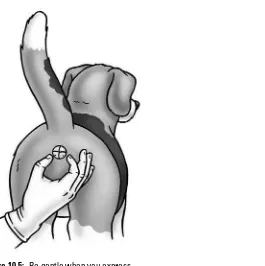
Addressing Your Beagle’s Bottom Line ...144
Winterizing Your Beagle ...146
Chapter 11: Managing Your Beagle’s
Day-to-Day Health . . . 147
Working with Your Vet...147
The wellness exam ...148
To immunize or not to immunize?...148
Should your Beagle have babies? ...151
Can I See Your ID? ...153
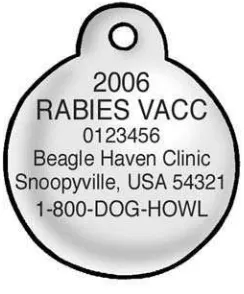
Playing tag(s) ...154
Tattoo you...155
A chip in the old (or not-so-old) Beagle...156
Maintaining Good Health at Home...156
Knowing what’s normal ...157
Checking vital signs...157
Stocking a first-aid kit...160
Giving meds ...161
Chapter 12: Dealing with Health Issues . . . 163
Treating Puppy Problems ...163
Cherry eye ...163
Chondrodysplasia...164
Puppy pyoderma ...164
Handling Adult Health Challenges ...164
Allergies ...164
Dental problems...165
Hypothyroidism ...165
Idiopathic epilepsy ...166
Intervertebral disc disease...166
Easing Your Beagle’s Golden Years...167
Arthritis...168
Cancer ...169
Cognitive dysfunction syndrome...170
Chapter 15: Schooling Your Beagle. . . 207
Decoding Your Beagle’s SOP...208
He lives by his nose...208
He never feels guilty ...209
He loves you, but . . . ...209
He needs consistency ...209
He wants to learn...210
Gearing Up for Training...210
Accentuating the positive with the right reward...210
Collar quandaries ...212
Leash options...213
Teaching the Basics Yourself...214
His name ...214
Sit ...215
Down ...216
Stay ...217
Recall...218
Off ...218
Walking on leash ...219
Go to your place ...219
Enrolling Your Beagle in Obedience Class ...220
Chapter 16: Rehabbing the Delinquent Beagle . . . 223
Solving Common Snoopy-dog Problems ...223
Huh? You talkin’ to me?...223
Putting the (play) bite on you...224
Knocking that chip off her shoulder ...225
Taming the bouncy Beagle ...227
Loving you waaaay too much ...227
Helping the bashful Beagle ...229
Shushing the barking Beagle ...230
Keeping the wanderer home ...230
Teaching treat-taking manners ...231
Picking Experts’ Brains ...232
Getting private lessons ...232
Trying day training ...232
Finding a Beagle shrink ...233
Reading your Beagle’s mind ...234
Part V: The Part of Tens...235
Chapter 17: Ten Ways to Keep Your Beagle
Healthy and Happy . . . 237
Find a Great Vet ...237
Give Her the Skinny ...238
Keep Her Moving...238
Do Fence Her In ...239
Take Her to School...239
Keep Her Pretty...240
Be Proactive...240
Trust Your Instincts ...241
Have a Sense of Humor ...242
Love, Love, Love ...242
Chapter 18: Ten Mistakes You Don’t Need
to Make with Your Beagle . . . 243
Not Doing Your Homework ...243
Choosing Too Quickly ...244
Bypassing the Crate...244
Expecting Housetraining to Be Easy...245
Failing to Be Vigilant...245
Thinking That Your Beagle Is a Person ...246
Doing Things on the Cheap ...246
Thinking That Your Beagle Can Train Himself ...247
Playing Doctor...247
Thinking That You Are More Important Than Bunnies ...248
Chapter 19: Ten Unique Beagle
Occupations and Activities . . . 249
Keeping Out Forbidden Fruit (and Other Stuff) ...249
Shaming a President ...250
Inspiring Children ...250
Nailing the Red Baron...251
Flying in (Way) Outer Space ...251
Comforting Other Dog Owners ...251
Knowing When to Mold ’Em ...252
Turning Out Termites ...252
Befriending the Famous ...252
Taking Us to Our Pasts ...252
Appendix: Wanna Know More?
Additional Resources...253
Turn the Pages ...253
Divine DVDs ...254
Peruse These Periodicals...255
Virtually Unparalleled ...256
Index ...257
Beagles For Dummies
Introduction
A
sk any prospective dog owner what breeds she has in mind, and almost without fail, she’ll include a Beagle on her list of possibilities. Her reasons aren’t hard to figure out. Beagles have so much going for them: They’re cute, they have easygoing person-alities, they’re small, they require relatively little grooming, and they’re fun. And did I mention that they’re cute? (I did? Well, no matter. Their cuteness is an attribute worth emphasizing.)But inevitably, even a package that appears as perfect as a Beagle seems to be also contains some imperfections. After all, as my father says, “Dogs are only human.” We humans are capable of wondrous achievements and considerable kindness — but alas, we are not perfect. We have enough flaws to make us interesting and then some. So, too, does the wonder-dog we call the Beagle.
Like any dog, a Beagle needs time and attention if he is to become the dream dog you’re seeking. Feeding, training, and multiple walks to the pooch potty are among the many tasks you’ll need to per-form to raise a Beagle well. But Beagles also may pose some breed-specific challenges. If you’re not prepared to deal with all of those challenges — general and breed-specific alike — you may find your-self gritting your teeth at your Snoopy-dog instead of delighting in his company.
I’ve written Beagles For Dummiesso you won’t have to grit your teeth — at least not very often. Instead, you’ll not only lose your heart to one of these incredibly adorable creatures, you’ll also come to appreciate the many wonderful qualities that Beagles bring to their people.
About This Book
Beagles For Dummieshas two reasons for being: first, to be a people-friendly guide that tells you everything you must know about this breed; and second, to give you enough information to decide whether Beagles are, in fact, the breed for you. Between this book’s covers, you find answers to questions like:
⻬What are Beagles supposed to look like and how are they sup-posed to behave?
⻬How do I know that a Beagle breeder is a reputable breeder?
⻬What do I need to do to survive my Beagle’s first few days at home? Heck, how do I survive, much less enjoy, his entire puppyhood?
⻬How and when should I feed my Beagle?
⻬What should I teach my Beagle to do? How do I teach him? What if I can’t teach him anything?
⻬What health problems is my Beagle likely to have when he’s young? How about when he grows up — or gets old?
This book answers all of those questions and a whole lot more. The great thing about this book is that you can find the answers to those questions and any others in any way you want. If you want to know everything about living with a Beagle, you may want to begin read-ing here and continue to the end. But if you have a specific concern, such as how to keep your Beagle out of the clothes hamper or why he tends to wander, feel free to skip the preliminaries. Instead, just scan the Table of Contents or Index and, from there, head to the pages that tell you exactly what you want to know.
Conventions Used in This Book
To help you navigate, this book, and all For Dummiesbooks, include the following conventions:⻬Italics emphasize and highlight new words or terms.
⻬Boldfaced text indicates the action parts of numbered steps.
⻬Monofontindicates a Web address.
As a writer who specializes in dog topics, I’ve added some conven-tions of my own. For example, most editors like to refer to dogs in gender-neutral terms. In other words, unless you’re talking about a specific dog such as Prince or Princess, you’re supposed to refer to members of the canine species as it.In this book, I break that rule.
Any dog, even when spayed or neutered, is clearly male or female and deserves the dignity of being referred to in that manner. For that reason, I refer to any dog as he, she, him,andher. I alternate between male and female pronouns in each chapter, using roughly an equal mix of each pronoun throughout the book. Either way, any of those pronouns apply to both genders unless I state otherwise. I also use the word who, not thator which, to refer to our four-legged friends.
Beagles For Dummies
I also like to write the way most people talk, even when the talk refers to a dog’s bodily wastes. Consequently, I talk about when dogs poopand pee,not when they do number oneand number two,
or tinkleor urinateor defecate.Sometimes I also use the term potty
to refer to bathroom matters. I also don’t favor euphemisms when discussing important subjects. That’s why I refer to the decision to end a dog’s life as euthanasia,not putting the dog to sleep.
What You’re Not to Read
This book is full of important, even essential, information to the would-be or actual Beagle owner, and I’ve assembled that informa-tion so you can find it easily and understand it the first time you read it. That said, not all of what you read fits the category of essential or even important; some falls under the interesting-but-you-really-don’t-need-to-know-it category. To help you distinguish between what you must know and what you can do without, I’ve made the latter easy to recognize. The material in the following list may be interesting — but if you skip it, you won’t be a deficient Beagle owner. Promise!
⻬Text in sidebars:The sidebars are shaded boxes that appear here and there throughout the book. They contain interesting tidbits that make you an even better Beagle owner — but if you skip them, you still know everything you need to know.
⻬Anything highlighted with a Technical Stuff icon: The infor-mation in these paragraphs is also interesting, but essential only if you’re looking to go way, way beyond the basics of Beagle ownership.
⻬The stuff on the copyright page:The material on this page isn’t even interesting, except to the publisher’s legal depart-ment. Feel free to skip this page unless you’re really into pub-lishing or copyright law — and in that case, I’m sure you’ll get more information on the subject somewhere else!
Foolish Assumptions
Every book is aimed at a certain type of reader, and this book is no exception. In writing this book, I’ve assumed that:
⻬You’re thinking about adding a Beagle to your family, and you want to find out more about the breed before making your final decision.
⻬You can’t decide whether to get a male or female Beagle, or whether to adopt a young puppy, an older puppy, or an adult dog.
⻬Your Beagle will arrive home soon, and you want to know how to get ready for his homecoming.
⻬You’ve either never had a Beagle before, or you had one in the distant past — and, either way, you need to find out as much as possible about Beagle care in the shortest possible time.
⻬You already own a Beagle and want some help schooling him in basics such as housetraining, coming when called, and sitting when told.
⻬You’re having trouble training your Beagle, and you need some guidance to surmount his (and your) learning curve.
How This Book Is Organized
If you read any part of Beagles For Dummies,no matter how small, you’ll add to your knowledge of how to raise and care for these wonderful dogs. Here’s how I organized the book to help you live happily ever after with a Beagle and to deal with any challenges that come your way.
Part I: Getting to Know Beagles
A decision to open your heart and home to a Beagle shouldn’t be made in haste. This part tells you what you need to know to choose your dream dog. You discover the breed’s origins and about how a healthy Beagle should look and act. You also discover good places to look for a Beagle and how to evaluate the puppies or dogs you see when you get there.
Part II: Starting Life
with Your Beagle
Now that you’ve selected the Beagle of your dreams, what do you do? Part II answers that question by guiding you through the whole process of preparing for your new dog’s arrival: bringing your Beagle home and not only surviving, but thriving, during the days
Beagles For Dummies
that follow the homecoming; puppy-proofing your house before your Beagle arrives; figuring out where your new dog should eat, sleep, poop, and play; coping with the hectic first day and night; and starting to bond with your Beagle. It’s all here.
Part III: Caring for Your Beagle
This part covers the nuts and bolts of Beagle care: what and how to feed your dog; common health issues and how to deal with them; and how to take great care of your Beagle whether you’re tending the home fires or out seeing the world. Here you get some ideas on how to sift through the dizzying array of feeding options for your dog; how to work with your vet to keep your Beagle healthy; and what to do when, inevitably, something goes wrong. Here, too, is where you find information on health conditions that are common to Beagles.
Part IV: Training Your Beagle
Charlie Brown may have said, “Happiness is a warm puppy,” but when that puppy is a Beagle, happiness also is a trained Beagle. You are your Beagle’s first and best teacher, and in this part you find the information and direction you need to mold your four-legged friend into a model citizen. You find out how to teach your Beagle proper potty protocol, which is a crucial component to living happily ever after with one of these dogs. You also discover how to teach basic commands and what you can do if your Beagle proves to be a chal-lenging student. Also included are pointers on how to work with experts such as dog trainers and animal behaviorists.
Part V: The Part of Tens
Here’s where you find information that provides extra hints on how to keep your Beagle healthy and happy and describes common mistakes that Beagle owners make. In addition, a final chapter lists some interesting facts about how Beagles — canine and otherwise — affect our lives.
Finally, if you want additional resources that provide more informa-tion about Beagles, I’ve included an appendix chock full of infor-mation and ideas at the very end of the book.
Icons Used in This Book
To help you find particular kinds of information as you read this book, keep your eyes peeled for the following icons:
This icon appears whenever an idea or item can save you time, money, or stress when taking care of your Beagle.
Any time you see this icon, you know the information that follows is so important that it’s worth reading more than once.
This icon flags information that highlights dangers to your Beagle’s health or well-being.
This icon appears next to information that’s interesting but not essential. Don’t be afraid to skip these paragraphs.
Where to Go from Here
You can read this book any way you choose. If you want to jump-start your knowledge of all things Beagle, jump-start at the beginning and continue through to the end. On the other hand, if you need to read up on just a couple of specific issues, mosey on over to the Table of Contents or to the Index to determine exactly where to find the information you need. For example, if you already have your Beagle and need to teach him to do his business outside rather than inside, head to Chapter 14. On the other hand, if you’re still trying to decide whether to get a Beagle, check out Chapters 1 and 2.
Finally, this book is meant to be a reference manual and guide, but it doesn’t replace the advice that veterinarians, trainers, and behaviorists can give in person after they work with you and your one-of-a-kind dog. If the suggestions here don’t work for you or your Beagle, or if you can’t find an answer to a particular question in this book, don’t hesitate to consult any of these professionals.
Beagles For Dummies
Part I
In this part . . .
Chapter 1
Beagles and You:
Made for Each Other?
In This Chapter
䊳Appreciating the Beagle’s nature
䊳Discovering what Beagles need from their people
䊳Comparing Beagle pluses and minuses
䊳Making the decision
W
ho can resist a Beagle? Those floppy ears, soulful eyes, and irrepressible good spirits can melt the heart of the most stone-cold human being on the planet. Even better, they’re low maintenance — as least when you compare them to long-haired breeds, such as Afghan Hounds, Golden Retrievers, and Collies. But despite their many great qualities, Beagles aren’t necessarily for everyone. To determine whether the Beagle is your dream dog, you need to know much more about the breed. This chapter sum-marizes the many advantages that Beagles offer to the wannabe dog owner, and also describes what Beagles need to live happily ever after with you.Ain’t Nothin’ but a Hound Dog
The American Kennel Club (AKC), which is the number-one arbiter of dog breeds in the United States, recognizes more than 150 breeds. To make more sense of these various manifestations of
Canis familiaris,the AKC has developed seven breed classifica-tions, or groups.The breeds within each group generally have simi-lar origins and talents, although they may not all look very much like each other.
noses enable hounds to be excellent hunters, and they can do their hunting without getting very much direction from their human partners. Many hounds, such as Greyhounds and Scottish Deerhounds, have great eyesight, too.
Physically and temperamentally, hounds are a pretty diverse group. Some breeds are sweet and mellow, others are feisty, and still others are somewhat aloof. Some, like the Afghan Hound, are quite large. Others, like the Dachshund, are notably short in stature. Coat types range from short and hard to long and soft, with a lot of variation in between. Still, most hounds are happy to curl up with you and share the love if they’ve had sufficient exer-cise and attention. And unlike some breeds that act as though they’re the canine embodiments of Velcro, hounds are relatively independent. Occasionally they need their space — and if you sometimes need your space, they understand and give it to you.
Within the Hound kingdom, the Beagle is the court jester. He’s a merry little dog who keeps everyone in stitches. He’s a sociable fellow who enjoys company without getting neurotic. And he can be plenty mischievous, not to mention sufficiently independent to get into that mischief from beyond your immediate purview.
Part I: Getting to Know Beagles
10
Other hound breeds
Beagles have plenty of company in the Hound group. Other breeds lumped into this category include:
Afghan Hound Ibizan Hound
American Foxhound Irish Wolfhound
Basenji Norwegian Elkhound
Basset Hound Otterhound
Black and Tan Coonhound Petit Basset Griffon Vendéen
Bloodhound Pharaoh Hound
Borzoi Rhodesian Ridgeback
Dachshund Saluki
English Foxhound Scottish Deerhound
Greyhound Whippet
The Beagle’s Bill of Rights
Just like the American colonists back at the time of theRevolutionary War, every Beagle has certain inalienable rights — needs that must be fulfilled in order to have a happy life with you. Most of these needs are pretty basic, and no less than what you’d want for yourself. In other words, a little empathy from you should result in a lot of comfort and joy for your Snoopy-dog. That empa-thy should help you realize that Beagles and all other dogs need and deserve the things described in the following sections.
Lots of love
Beagles are relatively independent dogs, but they’re also very social creatures. That means that a Beagle may have his own agenda, but that agenda almost always includes hanging out with his people as often as possible. He’s not necessarily a stick-to-your-side dog, but he certainly wants to be part of any action that’s going on within his household. If you’re looking for an aloof pooch who prefers solitude to companionship, the Beagle is not for you.
Safe shelter
As Chapter 2 explains, Beagles were originally bred to hunt rabbits, but the typical pet Beagle doesn’t get much opportunity to chase down bunnies (probably much to the bunnies’ relief!). For that reason, today’s Beagle isn’t meant to live a life in a yard, a dog-house, or an outdoor kennel. He should live in your house with you, and be part of your family.
That said, keeping your Beagle in your house can be a challenging enterprise. The little hound’s sense of humor may not always be to your liking; he has an uncanny ability to ferret out stuff that you don’t want him to have (lingerie, anyone?). Chapter 5 contains lots of suggestions on how to make your home a great place for a Beagle and also limit his ability to make mischief.
Food, glorious food
Beagles are relatively small, so you don’t need to worry about your canine companion running up a humongous food bill. Still your little hound does need enough nutritious food to keep his skin pink, his coat healthy, and his physique sleek. Chapter 8 explains not only what to feed your Beagle, but also how to feed him so he reaps the maximum possible benefit from every meal.
Room to run (preferably with you)
Like other dogs that were bred to hunt, the Beagle has a prodigious amount of energy — even though he’s pretty small for a hunting dog. Unless you’re giving your dog regular chances to chase down rabbits, you need to provide him with other opportunities to exer-cise. A couple of brisk, 20-minute walks each day can keep his mus-cles toned (not to mention what such strolls may do for your own health!), but don’t limit yourself to twice-daily turns around your block. Head on over to Chapter 9 to find ways to be active that both you and your little hound will love.
A touch of class(es)
All dogs need some training, and the Beagle is no exception. For one thing, the trained Beagle is probably a lot happier than his untrained counterpart. The unschooled dog makes lots of mistakes, such as messing in the house, jumping up on people, and trashing house-hold goods, but doesn’t understand why his people are always angry at him. How would you feel if someone you depended on was angry at you, and you had no idea why? Probably pretty miserable. The same is true of the clueless, untrained Beagle.
By contrast, the trained Beagle has a much better time of fitting in with his family. Because he knows that he’s not supposed to take a whiz on the white Berber carpet in the living room, he’ll never get scolded for doing so. Because he understands that he’s not sup-posed to become a canine pogo stick and jump all over his people, those people are happy to get down to his level and interact with him. The Beagle is a born extrovert, so all this positive interaction can’t help but make him happy.
And he’s not the only one who’s happy — the people in the trained Beagle’s life are happy, too. They have a family member who’s a pleasure to be around and who doesn’t cause undue stress. They don’t have to worry about their Snoopy-dog growling at strangers, snapping at anyone who comes near his favorite toy, or finding an unwelcome little deposit atop their favorite easy chair. People with trained dogs are free to truly enjoy their dogs. A trained dog is a true companion, a friend in the best sense of the word.
Finally, the trained Beagle also is more likely to be safe than his untrained counterpart. That’s because a Beagle with basic obedi-ence training will know how to come when he’s called, stop doing something when told to do so, and perform other maneuvers that can help keep him out of trouble.
Part I: Getting to Know Beagles
Part IV gives you the scoop on how to transform your clueless little hound into a well-mannered Beagle, and how to deal with a dog who’s got one or more challenging behavioral issues. Also included is information not only on how to train your Beagle your-self, but also on how to choose an obedience instructor and to choose among training options.
Great health care
Beagles generally are very healthy dogs — but like all dogs (and, for that matter, people), they need good medical care to stay that way. Providing such care is a two-pronged effort that consists of:
⻬Preventing illness:You and your veterinarian work together to keep all of your Beagle’s systems functioning at optimal levels. Such care includes regular checkups, immunizations when necessary, determining your Beagle’s reproductive future, and getting a handle on how your Beagle looks and acts when he’s healthy. Chapter 11 addresses all these issues and more.
⻬Treating illness or injury:You and your vet work in partner-ship to help your Beagle recover from any illness or injury he sustains. Chapter 12 outlines symptoms that require an emer-gency visit to your veterinarian or emeremer-gency clinic, those that require a phone call to your vet, and which ones should-n’t cause you any worry. Chapter 11 gives you the lowdown on how to care for your dog after the visit to the vet, including a primer on dispensing any medication the vet prescribes.
Although Beagles generally enjoy good health, they are more vul-nerable to certain conditions than other dogs are. Chapter 12 out-lines those conditions and describes how you and your vet can resolve them.
Good grooming
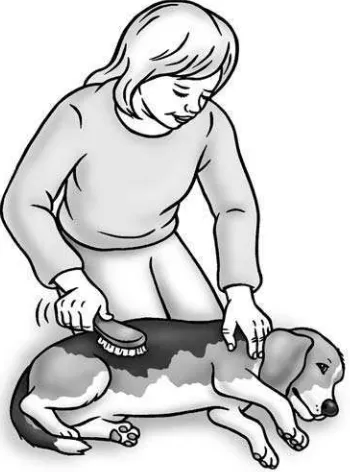
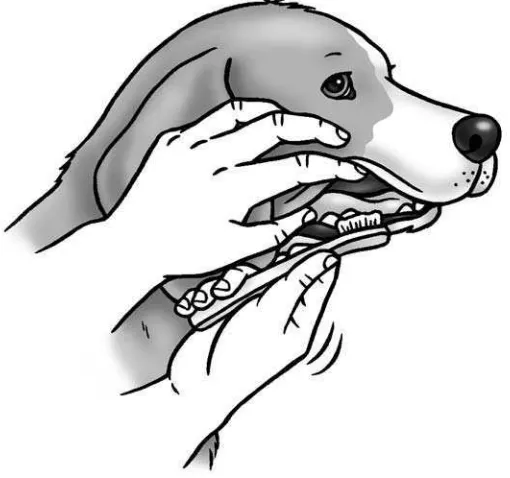
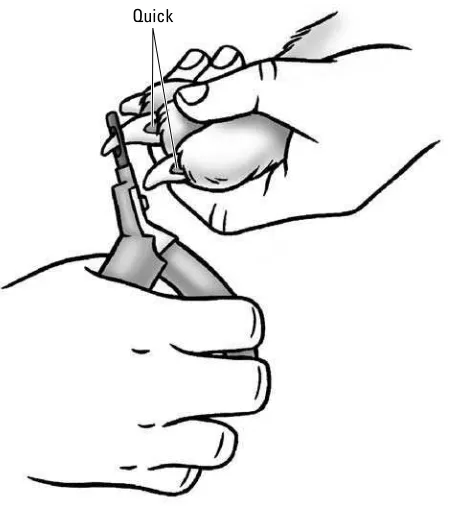
Unlike other dogs, especially those with long hair, Beagles need rel-atively little grooming. However, “little grooming” does not mean the same thing as “no grooming”! The Beagle does require certain sprucing-up rituals to look and feel his best. Among those rituals: daily tooth brushing, weekly coat brushing, a monthly bath, peri-odic ear cleaning and nail trims, and ongoing efforts to keep his coat free from parasites such as fleas and ticks. Chapter 10 offers a primer on how to groom your Beagle.
Why Beagles Are Wonderful
Beagles don’t win the breed popularity contest, but they come darn close. The American Kennel Club reports that in 2005, the most recent year for which figures are available, Beagles were the fifth-most popular of the AKC’s 154 recognized breeds. Only Labrador Retrievers, Golden Retrievers, Yorkshire Terriers, and German Shepherd Dogs drew more registrations than the Beagle did. The little hound has been consistently popular over several decades — in fact, the breed was number one in registrations from 1953 through 1959.
What’s behind the Beagle’s appeal? Probably several factors: For starters, they’re cute; they’re small; and they’re easy to groom. Other pluses are that most Beagles are multitalented, supersociable, and get along well with children.
Hop on over to Chapter 2 to get more info on why so many people choose to share their lives with one or more Beagles. You’ll also discover the Beagle’s European ancestry and get the lowdown on what a Snoopy-dog is supposed to look like.
Buyer’s Remorse: Why a Beagle
May Not Be Your Dream Dog
As wonderful as Beagles are, they’re not for everybody. In the interest of objectivity, it’s only fair that I outline some of the chal-lenges of trying to live happily ever after with one of these little hounds.
Among the Beagle’s less-than-sterling attributes is his occasional stubbornness — in fact, without training, the Beagle can be down-right ornery if his priorities conflict with yours. Part IV helps you counteract this independence — or at least channel it in another direction — by giving you detailed suggestions on how to civilize your little hound. I pay special attention to a frequent complaint from Beagle owners — that their dogs frequently flunk potty training — by devoting an entire chapter (Chapter 14) to housetraining.
Another possible problem that Beagle ownership may pose is that the dog’s short, hard coat is practically guaranteed to worsen any airborne allergies that a person has. If dog hair makes you sneeze, a Beagle’s presence may turn you into a sneezing machine.
Part I: Getting to Know Beagles
Another possible downside is the breed’s, well, mouthiness. Beagles are vocal creatures, and are not shy about expressing themselves in a regular dog bark or in that unique form of song known as howling. They are hounds, after all, and hounds do howl.
Chapter 2 explains what you may not like about Beagles, so you can make an objective decision about whether this breed is the right one for you and your family.
What to Ask Yourself
The best way to determine whether you’re ready to welcome a Beagle into your life is to ask yourself questions that help you assess your needs and the dog’s needs, and determine whether those two sets of priorities are compatible. This section offers points to ponder as you make this crucial decision.
Why do I want a Beagle?
Be sure that the reasons you want a Beagle result from your knowl-edge of the breed and yourself, not from misconceptions or will-o-the-wisp whims. Think about the issues in the following sections.
What do I like about Beagles?
Maybe you’re interested in Snoopy-dogs because you grew up with one, and your memories of that dog are warm, fuzzy, and soft-focus. But it’s important to remember that childhood memories don’t tell the whole story of life with an individual dog.
That Beagle you loved also may have driven your mother crazy, per-haps because the dog never learned basic bathroom manners. And even if that Beagle was housetrained (to your mom’s understand-able relief), that dog was a unique individual. You probably will never find a Beagle who’s quite like him — nor should you try to.
Or maybe you’ve met your neighbor’s Beagle and adore that dog’s friendly, outgoing personality. However, that dog not only has his own one-of-a-kind temperament, but also probably has had more than a little training and positive exposure to people. To help your Beagle be as sociable as your neighbor’s, you’ll need to put in lots
of time to teach him basic manners and help him learn that the world can be a friendly place.
Chapter 2 tells you more about Beagle traits, and Chapter 7 explains how to socialize your Beagle. Part IV discusses how to make your Beagle a good canine citizen.
Who is this dog for?
Only two answers to this question are okay: “for me” or “for me and my family.” In other words, no Beagle or other dog should be a gift — and please don’t bestow a Beagle on another person as a surprise. Chances are, that surprise or gift will not be welcome. Unless you know that the recipient is dying to have a dog and is prepared to care for one, give an inanimate gift, such as a plush Beagle or other stuffed animal, instead.
And please don’t get a Beagle “for the kids” unless you, the parent, are prepared to take full responsibility for the dog’s care. Little kids generally are too young and irresponsible to care for a dog prop-erly. Older kids and teens may have the necessary maturity, but they don’t have the necessary time. I’m lucky if my own teenage daughter has the time to walk our dog one night a week.
Fortunately, I adore our dog and am his main caregiver — so my daughter’s lack of time to help out isn’t an issue.
Have I recently lost a dog?
Living with a dog, no matter how wonderful he is, carries a major downside: He will probably die before you do. And when he does, the loss leaves a huge hole in your life — and in your heart. The same is true if your dog is simply lost and hasn’t returned, or if you had to relinquish the dog to a shelter or somewhere else because you could no longer live with the dog. At such times, it’s natural to want to fill those holes with a new canine companion. By doing so, you hope to staunch the flow of grief that’s flowing from your soul.
But unless you’ve come to terms with your loss, hold off on adding a new dog to your life. If you’re still angry or grieving over the dog who’s no longer here, you’ll have a hard time forming a bond with the dog who’s arrived. Any dog deserves to have a person who loves him without qualification. If you’re still coping with the loss of an earlier canine companion, bonding with a new dog can be all but impossible.
No animal can replace another. Each dog, whether he’s a Beagle or any other breed, is a unique individual and deserves to be appreci-ated as such. If you’re still processing the loss of your previous pooch, you’re not going to appreciate the special qualities a new dog will bring to your life. For both your sake and the new dog’s, hold off on bringing that dog into your life until your sadness and anger over the loss of the previous dog give way to happy memo-ries. I promise you that change will happen — in time.
Part I: Getting to Know Beagles
If you had to relinquish a dog to a shelter or rescue group because the dog had behavioral problems, or if you had problems that made dog ownership impossible, make sure all such issues are resolved before you bring a new dog into your life. Otherwise, the issues that doomed your relationship with Dog No. 1 are likely to recur with Dog No. 2.
Do I have commitment issues?
A Beagle has a pretty good life expectancy for a dog: 10 to 14 years on average, and in some cases, even longer. If you add a puppy to your household, you’re looking at more than a decade of care; with an older dog, your time together will be shorter, but the care you need to give will be the same. A Beagle from a shelter or rescue group may need even more care. Such dogs may have behavioral problems because they were mistreated or abandoned.
In any case, before you take any dog into your heart and home, you need to be sure that you can commit yourself to the animal for his entire lifetime. Consider the following questions:
Have I been thinking about getting a dog for a while?
You shouldn’t add a dog to your life on impulse. If you’ve suddenly seen a dog whom you want to adopt immediately, slow down. Unless you’ve pondered whether you’re ready for a dog and whether you can care for that dog properly, you need to wait. No dog deserves to be stuck with a person who’s made a hasty decision that she regrets — or, worse, to be abandoned or relinquished to a shelter because that impulsive person decided that she didn’t want a dog after all.Have I thought about how a dog will change my life?
When you welcome a dog into your home, your life changes. Gone are the days when you can leave the office at 5 or later and head over to the local watering hole to schmooze with friends or col-leagues — not when you have a dog who’s sitting at home waiting to be fed, taken out, and played with after being home alone all day. Gone, too, are the days when you can sleep in on Saturday morning or stay inside on a rainy evening — not when you have a pooch who needs to potty outside at those times.Your dog will need your care and attention every single day of his life — if not from you directly, then from someone trustworthy when you can’t be there. From now on, any plans you make must take into account not just what you want, but also what your dog needs.
Am I willing to put a dog’s needs ahead of my own desires?
A dog depends on you not only for basic care, but also for love and companionship — and you need to put that dependent individual’s needs ahead of what you may want. Ignore those needs and you’re likely to have a very neurotic dog.I learned this lesson one long-ago summer when, as a single, dog-owning woman living in a city, I rented a share in a beach house that was located several hours’ drive from my home. Every other weekend, I’d head to the beach house and board my dog in a local kennel. Within a month or so, Molly had become very skittish and would start freaking out whenever I was out of her sight, even when I went to the bathroom. (She’d cry outside the closed bath-room door.) I realized that between my being at work all day and being away on the weekends, Molly was literally crying for my attention. Her need for me was clear, so I ended my beach week-ends. Molly was much happier — and, in the end, so was I.
Is my home good for a Beagle?
The Beagle is a highly adaptable fellow, but not even a Snoopy-dog is suitable for each and every home. To determine whether your home is Beagle-friendly or even Beagle-neutral, consider the following:
Do I already have a dog?
Neither a “yes” nor a “no” automatically means that your domicile isn’t suitable for a Beagle. But if you do have a dog, and that dog is large, you may have a problem. That’s because in the inevitable jockeying for top-dog position that will ensue when your Beagle hits the scene — a jockeying that could include growls, snarls, and wrestling matches that rival the WWE’s SmackDown— a larger dog is likely to win, no matter how feisty your Beagle is. The best your Beagle can hope for is to escape uninjured.
In general, you’re better off if both dogs are of the same approxi-mate size and of opposite genders. Even then, however, you need to supervise the introductions and make sure the two dogs learn to get along. Chapter 6 describes how to introduce your new Beagle to any other canine members of your household.
What about my kids?
Beagles usually get along well with kids, assuming that the kids know how to treat a dog properly. But in too many families, that isn’t the case. If your children are under the age of 6, think twice
Part I: Getting to Know Beagles
about getting a Beagle or any other dog. Hop on over to Chapter 6 for suggestions on how to help your Beagle and your kids become best friends.
Do I live in an apartment?
A Beagle will not endear you to your neighbors if he gives in to his urge to howl. Think twice about bringing a Beagle into such close quarters. Your neighbors will be grateful.
Do I spend much time at home?
No one says that your Beagle needs to have you around 24/7, but this very social pooch will be much happier if you or someone else is around for at least part of the day. If you’re the sort who’s on the go outside your home from the break of dawn until the dead of night, you may have a hard time fitting a Beagle — or any other dog — into your life.
Can I afford a Beagle?
Dog ownership doesn’t come cheap. Beyond the upfront cost of buying or adopting the dog, you take on plenty of other expenses when you welcome a dog into your family. Here’s what you can expect to pay for over your Beagle’s lifetime:
⻬The dog:No matter where you get your Beagle — from a shel-ter, a rescue group, or a reputable breeder — you’ll have to part with some cash to bring that dog home. In mid-2006, the Beagle rescue group in my area charged a $200 adoption fee to cover the cost of that Beagle’s care in a foster home, spaying or neutering, and a microchip implant, among other expenses. A nearby animal shelter charged $100 to $300 to adopt a dog, depending on the animal’s size. A reputable breeder is likely to charge several hundred dollars for a puppy, particularly if the pup is a show prospect. Chapter 3 outlines where you should look for the Beagle of your dreams — and where you shouldn’t look, too.
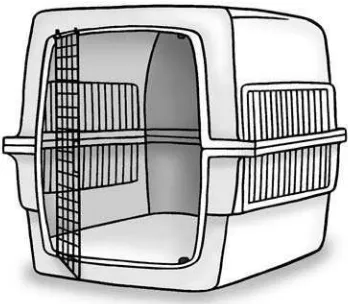
⻬Supplies: You’ll need to lay in some Beagle equipment before you acquire your Beagle: for starters, a crate, dishes, groom-ing gear, collar, leash, food, and toys. Chapter 5 tells you everything you need to buy for Beagle before he comes home.
⻬Medical care:Every Beagle needs a yearly wellness exam, as well as periodic immunizations against various diseases. And unless you plan to breed your Beagle, you’ll also have to pay for the dog to be spayed or neutered — unless you adopt a rescue or shelter dog who’s already been fixed. Additional
expenses will result when your Beagle gets sick and needs expert attention. Chapters 7 and 11 describe how you can work with your vet to keep your Beagle in the pink, and Chapter 12 discusses how to cope if your dog becomes ill or injured.
⻬Travel expenses:If you travel, you need to consider the costs of taking your Beagle with you or leaving him home. Chapter 13 covers the pro’s and con’s of either option.
A Final Thought
If you’ve thought carefully about why you want a Beagle, concluded that your domicile would be perfect for a little hound, determined that you will be a great parent and companion to a Snoopy-dog, and know that you can deal with the challenges this breed presents, con-gratulations! You’ve decided to add a wonderful dog to your life.
However, your decision-making is far from over. Now you need to determine whether you want a male or female Beagle; whether you want a puppy, young adult, or senior pooch; and where you want to start looking for your future companion. You also need to arm yourself with info on what to look for when evaluating the Beagles you meet. The rest of Part I will give you the scoop on how to find the Beagle who’s just right for you.
Part I: Getting to Know Beagles
Chapter 2
The Incredible,
Lovable Beagle
In This Chapter
䊳Discovering the Beagle’s origins
䊳Building the perfect Beagle
䊳Appreciating the Beagle’s qualities and talents
䊳Performing a Beagle reality check
N
o question about it: If we were to rate the various dog breeds for cuteness and adorability on a scale of 1 to 10, the Beagle would probably score a 15. The dog’s huge and winsome eyes, soft and floppy ears, and snuggle-able size appeal enormously to humans of all ages.But the Beagle is much more than a saucer-eyed canine love object. Like so many other breeds, the Beagle originated to work with people to perform one or more specific tasks for the benefit of human beings. In this chapter, I discuss what those tasks were, how the Beagle helped to accomplish them, and how the Beagle’s history affects the breed today.
Mommy, Where Do Beagles
Come From?
But while scholars may disagree as to when the little hound first appeared on the scene, those who study Beagle history do seem to agree that the ancestors of the Beagles we know today developed in England as early as the 1300s to hunt hares. In fact, in the pro-logue to The Canterbury Tales,the 13th century author Geoffrey Chaucer describes a prioress, or nun, who had “small houndes . . . that she fed with roasted flesh, and milk, and wastel bread.”
However, the breed name didn’t appear in print until at least a cen-tury later. The known debut of the name Beaglein the English lan-guage was in 1475, in a story called The Squire of Low Degree. The author, who is unknown, wrote, “With theyr begles in that place and seven-score raches [small French hounds] at his rechase . . .”
By the time Elizabeth I ascended the British throne in 1558, many British nobles liked to hunt rabbits with the help of pocket Beagles: very small hunting hounds that measured only 9 inches tall at the shoulder. (By comparison, today’s Beagles are supposed to meas-ure between 13 and 15 inches.)
Although these diminutive hounds pursued their long-eared quarry with great enthusiasm, the rise of fox hunting — which most nobles found far more exciting than hunting rabbits or hares — required hounds that were bigger and faster than the pocket Beagle. Consequently, by the mid-1700s, the popularity of Beagles among the English nobility declined in favor of a dog that is the ancestor of today’s Foxhound,a dog that is considerably larger than any Beagle, pocket-sized or otherwise.
But in the 1800s, the British began to regain their interest in hunting with Beagles. Under the leadership of the Reverend Philip Honeywood, among others, the British began to develop fine hunt-ing packs of Beagles. At the same time, many dog fanciers in England began to show their canine stock in events designed to build inter-est in breeding the dogs being shown. These events were the first
conformation dog shows,which live today in such well-known
Part I: Getting to Know Beagles
22
What’s in the name?
gatherings as England’s Crufts show and the American Westminster Kennel Club dog show. To provide a vehicle for showing Beagles, a group of British enthusiasts formed The Beagle Club in 1890.
Meanwhile, across the Atlantic Ocean, Beagles were earning their keep in American households by hunting game and thus helping to put food on American tables. But by the mid-19th century, Americans were becoming just as interested in dog shows as their counterparts on the other side of the pond.
Some Americans began importing high-quality British Beagles, and by 1884 — the same year that the American Kennel Club (AKC) formed (see the “Just what is the AKC, anyway?” sidebar) — these enthusiasts had formed the American-English Beagle Club to exhibit their dogs in conformation shows. At the same time, though, another group of enthusiasts formed the National Beagle Club (NBC) of America to not only improve the Beagle’s looks but also its ability to hunt game. By the end of the 19th century, the two clubs had merged into one organization dedicated to improv-ing the breed’s performance in the show rimprov-ing and in the field.
Although some of today’s Beagles have earned accolades as both conformation champions and field champions, many continue to excel in either one venue or the other. As I explain in Chapter 4, these differences are crucial considerations in what sort of Beagle companion you should search for and select.
Chapter 2: The Incredible, Lovable Beagle
23
Just what is the AKC, anyway?
The American Kennel Club (AKC), headquartered in New York City and Raleigh, North Carolina, records data and statistics for the 154 dog breeds — including the Beagle — that the club considers to be purebred. Among the info the club gathers are births of litters, registrations of individual dogs, and titles that dogs earn in events such as dog shows, agility trials, and competitive obedience.
But the AKC is more than just a registry. The organization also sponsors all kinds of events at which dogs earn those titles. These events include not only the three types listed above, but also such varied activities as tracking competitions, herding tests, and hunting trials. Although the AKC serves as a sponsor, the actual events are held by clubs that belong to the AKC, such as the National Beagle Club of America.
The Official Beagle Blueprint
Although Beagles have been around in one form or another for quite awhile, the Snoopy-dog that most people are familiar with is only a little more than a century old. That dog’s adorable face, tenacious personality, awesome scent-sniffing ability, and obses-sion with bunnies didn’t happen by accident — trust me, no hot doggy love and subsequent surprise puppies occurred here! Today’s best Beagles, like all high-quality purebred dogs, result from breedings that are carefully planned by human beings.
Why all the care in planning? Because human beings want Beagles to have a certain look and temperament. In fact, the National Beagle Club of America developed a multipage set of specifications that describe in precise detail what a perfect Beagle should look and act like. (Likewise, all other national breed clubs produce simi-lar specifications for their respective breeds.) This blueprint for a Beagle, which is called the breed standard,outlines what reputable breeders should try to produce in their Beagle puppies and what judges should look for when they assess Beagles in the conforma-tion show ring. The breed standard puts into words what a picture such as Figure 2-1 shows: the ideal Beagle.
Figure 2-1: Highlights of the Beagle breed standard.
The following sections describe the breed standard developed by the National Beagle Club and recognized by the AKC.
Short back Jaunty tail
Straight front legs Multicolored coat Long, rounded ears
Square muzzle
Part I: Getting to Know Beagles
General appearance
The AKC standard specifies that a Beagle should resemble a minia-ture Foxhound that is solid and big for his inches, with the wear-and-tear look of a hound that can last in the chase and follow his quarry to the death. In other words, the ideal Beagle can look cute, but he shouldn’t look frail or delicate. He should embody the look of a solid dog who will chase a rabbit or other quarry until the quarry gives up, wears out, and/or gets caught.
The standard also notes that Beagles come in two sizes: the 13-inch Beagle and the 15-inch Beagle. The 13-incher is supposed to be no taller than 13 inches at the front shoulder. Similarly, the 15-inch Beagle should not exceed 15 inches in height at the front shoulder.
Specific parts
Of course, the standard does much more than offer a big-picture description of what a Beagle should look like. The standard places far more emphasis on exactly how specific parts of the Beagle’s body should appear.
Chapter 2: The Incredible, Lovable Beagle
25
Decoding the breed standard
If you decide to read the actual breed standard approved by the National Beagle Club of America, you may encounter some puzzling terms. Here are definitions of the terms that are most likely to cause confusion:
⻬ Cow hocks:A condition in which the hind legs turn in on each other. Cow hocks and the opposite condition, divergent hocks, may affect the dog’s ability to move properly.
⻬ Forelegs:The front legs.
⻬ Loin:The area on each side of the backbone between the ribs and the hips.
⻬ Occipital:The bone at the back of the top of the skull. In some dogs, this bone is quite prominent, even triangular-looking.
⻬ Rib spring:The width of the chest.
⻬ Stop:An indentation at the midpoint of the face. A definite stop refers to a clear, distinct indentation between the top half and bottom half of the face.
If you plan on showing your Beagle, log onto the AKC Web site at www.akc.org/breeds/beagle, where you can find a copy of the actual breed standard.
Head
A Beagle’s skull should be fairly long, with a slight dome at the back part of the head. The skull as a whole should be relatively broad and full, not elongated. Those long, silky ears should reach almost to the end of the nose if drawn out straight, and they should be rounded at the tips. The eyes should be hazel or brown in color and should be large, set far apart, and have a gentle, plead-ing expression. The muzzle should have a square shape, and the profile should show a clear distinction between the bottom of the face and top of the face.
Body
Wrinkles are OK for Chinese Shar-pei but not for Beagles! The stan-dard stipulates that the neck and throat should not exhibit any skin folds. The shoulders should not be upright; rather, they should slope downward. The dog’s chest should be deep and broad but not out of proportion to the rest of the body. The Beagle’s back should be relatively short (no channeling of Dachshunds here!).
Legs, feet, and tail
The wiener dog takes another hit when the Beagle breed standard addresses legs, feet, and tails. The standard stipulates that a Beagle’s front legs should be straight, not crooked or — yes, the standard gets this specific — resembling the front legs of a Dachshund. The hips and thighs should be strong and muscular. The tail needs to be fairly high on the rump and carried in a jaunty fashion, but it should not curve over the back.
Coat and color
The Beagle should have a medium-length, easy-to-groom coat that lies close to the body and is hard to the touch. Silky tresses are a definite no-no.
As for coat color, the standard is vague, saying only that any recog-nized hound color is OK. The most common color is the black, white, and tan tri-color,but other colors common to hounds such as red and white, chocolate tri-color (solid chocolate brown instead of black), and shaded tri-color (varied shades of brown instead of black) are OK, too. So, too, is ticking: tiny spots of brown or black in white fur.
Part I: Getting to Know Beagles
Defects
The standard also discusses how judges should rate the less-than-perfect Beagle. Among the defects that would cause a judge to disqualify a dog from or deduct points in the show ring are the following:
⻬Height exceeding 15 inches
⻬A narrow skull
⻬A cranium that’s too high
⻬Small eyes
⻬Protruding eyes
⻬Excessively short ears
⻬Ears set too high on the head
⻬Ears that rise from their point of origin before falling
⻬Excessive skin folding at the throat
⻬Straight shoulders
⻬Excessively deep or shallow chest
⻬Swayed or excessively long back
⻬Cow hocks
⻬Excessively long tail
⻬A tail curved forward or over the dog’s back
⻬Lack of feathering at the end of the tail
⻬Soft coat
⻬Thin coat
Few, if any, Beagles meet all the standard’s criteria for perfection. Some deficiencies are no big deal in the show ring, while others are considered so serious that the dog can’t be shown. Still, disqualifi-cation from the show ring certainly doesn’t mean that the affected Beagle won’t be a wonderful, healthy pet or participant in other dog activities. Plenty of Beagles who don’t make the grade in con-formation can earn straight A’s as lively, loving companions — and more. Chapter 3 describes in greater detail how wannabe pet owners can find the Beagle of their dreams by buying or adopting the Snoopy-dog who would never make Westminster.
Why the World Loves Beagles
Every year, the AKC tallies up the number of dogs registered for each of the breeds the organization currently recognizes — and each year, Beagles pups and litters are among the breeds that garner the most registrations. For example, in 2005 — the last year for which registration stats were available at the time I was writing this book — the Beagle bagged the number 5 position out of 154 breeds. Only Yorkshire Terriers, German Shepherd Dogs, Golden Retrievers, and Labrador Retrievers drew more registrations. That’s not a fluke, either; the Beagle has held its own among the big dogs (and the Yorkie, too) for many years.
And it’s easy to see why. Beagles offer something for almost every-one, including the following:
⻬They’re adorable. Few people can resist the winsome eyes, soft muzzle, and all-around cuteness of a Beagle. Just one soulful gaze from this sweet-looking little hound is enough to render almost any dog lover totally smitten. And just one day with this happy-go-lucky little dog (the eyes may look sad, but the rest of the dog is happy, happy, happy) may well hook you for life.
⻬They’re low-maintenance. With a Beagle, you don’t have to worry about untangling the coat, creating a canine top-knot, or booking an appointment with the local groomer. Beagles do need bathing and brushing, as well as ear tending, puppy pedicures, and tooth care, but you can easily perform all those functions yourself — especially with the help of the tips included in Chapter 10.
Part I: Getting to Know Beagles
28
Fashion tips for the owner
⻬They’re small. The pocket Beagle may have been a Renaissance fad, but today’s Beagle is still pretty compact. That small size makes this breed ideal for people who can’t or don’t want to deal with the logistics of caring for larger dogs. (Believe me: Getting an 80-pound canine to get into the bathtub or out of the car when that dog would rather do some-thing else can be, um, challenging.) And if your leashed Beagle decides to make like a sled dog and pull you down the street while the two of you are walking, your size advantage can put a quick stop to such behavior. That said, Chapter 15 includes pointers on teaching your Beagle good walking manners, and using brute strength isn’t one of my recommendations.
⻬They’re versatile. Beagles are truly multitalented individuals. As Chapter 9 shows, they not only can excel in the conforma-tion ring but also in activities such as competitive obedience, agility, and flyball. Their superb noses make them natural trackers — and of course, they can write the book on hunting small game. But the Beagle’s potential doesn’t stop with these traditional dog activities. Hop on over to Chapter 19 to dis-cover how Beagles serve on the front lines of the war on terror and also are first-class detectors of hidden mold and termites.
⻬They’re sociable.Simply put, Beagles enjoy the company of human beings. They relish meeting and greeting just about any person. Beagles not only fit well into human families but also can employ their friendliness in another pursuit: as ther-apy dogs. These canine healers visit sick people in hospitals and elderly people who are confined to nursing homes. In fact, one of the best known therapy dogs of recent years was a Beagle. Her name was Dani, and she not only gave lots of canine TLC to pediatric cancer patients but also provided a lesson in courage to those patients when she was diagnosed with cancer herself. Fortunately, Dani survived her bout with the big C and continued her therapy duties. You may not want to perform therapy work with your dog, but Chapter 7 offers tips for bringing out the extrovert in any Beagle.
⻬They’re kid-friendly.Some breeds do better with children than others — and the Beagle is among those canines that can be wonderful companions for kids. The Beagle is small enough to be able to romp with children without knocking them over, but large and sturdy enough to interact with sometimes-clumsy kids with relative safety. Still, to minimize the likeli-hood of either kid or canine getting hurt when getting together, Chapter 7 provides information on how to help Beagles and children live happily ever after.
. . . But Nobody’s Perfect
Alas, as wonderful and appealing as the Beagle can be, the breed also has its dark side. Consider the following possible disadvan-tages of living with Snoopy-dogs:
⻬They are vocal. All dogs bark, but the Beagle adds a little something extra to his vocal repertoire: the howl. A Snoopy-dog who lifts his head in Beagle-song will certainly get the attention of the people around him — and, if he lives in an apartment, will almost certainly draw the ire of his human neighbors. Chapter 16 addresses ways to alleviate a clash between a vocal Beagle and human sanity.
⻬They may have bathroom issues. The Beagle has a reputation for being more difficult to housetrain than other breeds. Some experts theorize that Beagle bathroom issues arise because the dog’s nose is so sensitive that he can smell the tiniest vestige of
Part I: Getting to Know Beagles
30
A place just for Beagles
Unlike many American breed clubs, the National Beagle Club (NBC) of America has its very own farm: a 508-acre tract called The Institute Farm in Aldie, Virginia, which is south of Washington, DC.
Five members of the club formed a corporation dubbed The Institute Corporation for the express purpose of buying the land and administering the property for the NBC. In 1916, the group bought the land — although the name of the seller remains an open question. Records indicate that the corporation bought the land from the estate of one Isabella Skinner Turner. However, one of the corporation’s founders said that the land had been part of the estate of a gentleman who’d planned to use the tract for a hunt club. The gentleman, whose name is not known, sailed to England to buy a pack of hounds. To his great misfortune and that of the hounds, they sailed back to America on the RMS Titanic and perished when that ship struck an iceberg and sank in April 1912. Historians speculate that the gentleman had contracted to buy the prop-erty but had not completed the purchase before he and his hounds met their deaths.
left-behind accidents. Patience, consistency, and a commitment to total cleanup of bathroom indiscretions are the keys to teaching your Beagle proper potty protocol. Chapter 14 gives you the scoop on how to housetrain your four-legged friend.
⻬They follow their noses. Humorist Dave Barry makes his living by being funny — but when he described the Beagle as a nose with four legs, he wasn’t kidding. A dog with a nose sensitive enough to detect one piece of contraband fruit in a pile of luggage is likely to be far more tuned in to the world of smells than a human being would be. Such is the case with the Beagle, who — like the hound that he is — lives to follow the scent. This devotion to odor can get the Beagle into trouble — such as going through the garbage can indoors, wandering off the owner’s property outdoors and not looking back, and attempting to eat anything and every-thing, whether an item is meant to be eaten or not — if his owner isn’t vigilant. Chapter 5 describes ways that owners can make their homes impervious to Beagle explorations, and Chapter 15 lists steps owners can take to keep their odor-driven companions from wandering away from hearth and home.
⻬They won’t help your hay fever. No one can guarantee that any breed of dog will never trigger allergic reactions in people. However, some curly-coated dogs such as the Standard Poodle or Portuguese Water Dogs are less likely than most breeds to prompt the people in their lives to sneeze, sniffle, or suffer from watery eyes. On the other hand, the relatively short, straight hairs on the Beagle’s coat could make an allergy-prone person’s life a living hell — particularly during seasons when the dog