Depression-Avoidance Defences in Bipolar-Euthymia
Shara Granger BBSc., Grad Dip Psych
Thesis submitted in partial fulfilment of the degree of Doctor of Psychology
(Clinical Psychology)
Discipline of Psychology College of Arts Victoria University
ii
Table of Contents
Table of Contents ... ii
List of Appendices ... vi
List of Tables ... viii
Abstract ... ix
Doctor of Psychology Declaration ... xi
Acknowledgements ... xii
PART I: INTRODUCTION Chapter One: Thesis Overview and Background Information ... 1
1.1 Thesis Overview ... 1
1.2 Background Information ... 2
PART II: LITERATURE REVIEW Chapter Two: Bipolar disorder – Impairment, Aetiology and Treatment ... 5
2.1 Introduction ... 5
2.2 Definition of Bipolar Disorder ... 5
2.3 Diagnostic Criteria for Bipolar Disorder Mood Episodes ... 6
2.4 Diagnostic Criteria for Bipolar and Bipolar Related Disorders ... 8
2.5 Impairment and Morbidity/Mortality Rates Associated with Bipolar Disorder ... 9
2.5.1 Functional impairment. ... 9
2.5.2 Medical co-morbidity. ... 11
2.5.3 Mortality. ... 13
2.6 Delays in Diagnosing Bipolar Disorder ... 14
2.7 Treatment of Bipolar Disorder ... 15
2.8 Aetiology of Bipolar Disorder... 16
2.8.1 Biological factors. ... 16
2.8.2 Environmental factors. ... 17
2.8.3 Psychological factors. ... 18
iii
3.2 Negative Schema Theories ... 22
3.2.1 Beck’s cognitive model of depression. ... 22
3.2.2 Young’s schema theory. ... 25
3.3 Summary ... 32
Chapter Four:The Psychological Underpinnings of Bipolar Disorder ... 33
4.1 Introduction ... 33
4.2 Explicit Measures: Assessing State or Trait Markers of Bipolar Disorder? ... 33
4.3 Explicit Measures as an Assessment of Activated Schemas ... 35
4.4 Evidence for Defensive responding in Bipolar-Manic Individuals ... 36
4.5 Evidence for Defensive Responding in Bipolar-Euthymic Individuals ... 38
4.6 Limitations of Previous Research ... 41
4.7 Current Study ... 42
4.7.1 Rationale. ... 42
4.7.2 Aim and study design. ... 43
4.7.3 Hypotheses... 44
PART III: METHOD Chapter Five:Methodology of the Current Study... 47
5.1 Introduction ... 47
5.2 Participants ... 47
5.2.1 Power analysis. ... 47
5.2.2 Participant recruitment. ... 47
5.2.3 Participant attrition rates, exclusion criteria and Group allocation ... 49
5.2.4 Participant information. ... 50
5.3 Measures... 51
5.3.1 Screening measure. ... 51
5.3.2 Schema measures. ... 53
5.3.3 Mood induction measures. ... 56
5.4 Procedure ... 57
iv
5.5 Study Design ... 61
PART IV: RESULTS Chapter Six:Results of the Current Study... 63
6.1 Introduction ... 63
6.2 Data analyses ... 63
6.2.1 Data screening and analyses. ... 63
6.2.2 Calculating effect sizes. ... 66
6.3 Characteristics of the Participant Groups ... 67
6.3.1 All groups. ... 67
6.3.2 Bipolar and MMD groups. ... 71
6.4 Study Findings ... 72
6.4.1 Findings regarding primary hypothesis. ... 72
6.4.2 Findings regarding secondary hypotheses ... 74
PART V: DISCUSSION Chapter Seven:Discussion of Thesis Findings ... 84
7.1 Introduction ... 84
7.2 Findings of the Current Study ... 85
7.2.1 Primary hypotheses... 85
7.2.2 Secondary hypotheses. ... 86
7.2.3 Overall findings. ... 90
7.3 Limitations of the study... 91
7.4 Theoretical Implications of the Study’s Findings ... 94
7.4.1 Differences in negative schema activation in bipolar- and MDD-euthymia. ... 94
7.4.2 Low self-worth as characteristic of all bipolar states. ... 95
7.4.3 Implications for Young’s schema theory: Coping styles and reducing cognitive dissonance. ... 97
7.4.4 The impact of defensive responding on the validity of explicit measure of negative schemas. ... 100
7.5 Clinical Implications ... 101
v
vi
List of Appendices
APPENDIX A: Ethical Approval ... 123
APPENDIX B: The 18 early malapative schemas defined ... 125
APPENDIX C: Description of study provided to psychologists and support group hosts .... 133
APPENDIX D: Advertising business cards ... 135
APPENDIX E: List of recruitment websites ... 136
APPENDIX F: Description of the study posted on websites ... 140
APPENDIX G: Flowchart of survey blockas ... 142
APPENDIX H: Information to participants statement and consent form ... 144
APPENDIX I: Survey questions pertaining to basic demogaphics and exclusion criteria .... 148
APPENDIX J: Survey questions pertaining to demographic information... 151
APPENDIX K: Survey questions pertaining to psychiatric diagnoses ... 143
APPENDIX L: The Mood Disorder Questionnaire ... 158
APPENDIX M: The Altman Self-Rating Mania Scale... 161
APPENDIX N: The Patient Health Questionnaire-9 ... 163
APPENDIX O: The Dysfunctional Attitudes Scale ... 165
APPENDIX P: The Young Schema Questionnaire – Short Form, Version 3 ... 169
APPENDIX Q: The Pragmatic Inference Task ... 174
APPENDIX R: The Childhood Traumatic Events Scale ... 182
APPENDIX S: The Recent Traumatic Events Scale ... 186
vii
APPENDIX V: Survey completion notice ... 194
APPENDIX W: Participants’ country of residence ... 196
APPENDIX X: Participants’ ethnicities ... 198
viii List of Tables
Table 3.1: Conditional and Unconditional EMS... 28
Table 3.2: EMS Domains ... 29
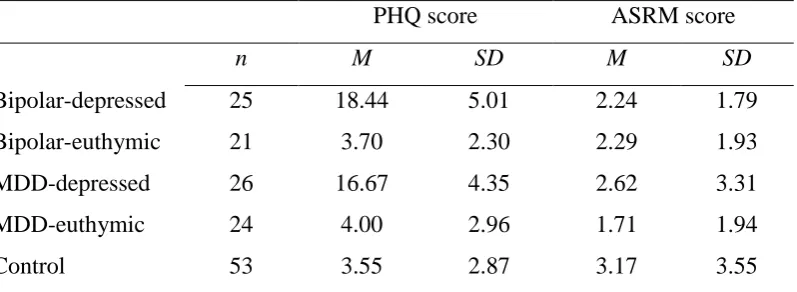
Table 6.1: Means and Standard Deviations of PHQ-9 and ASRM Scores for Participant Groups ... 69
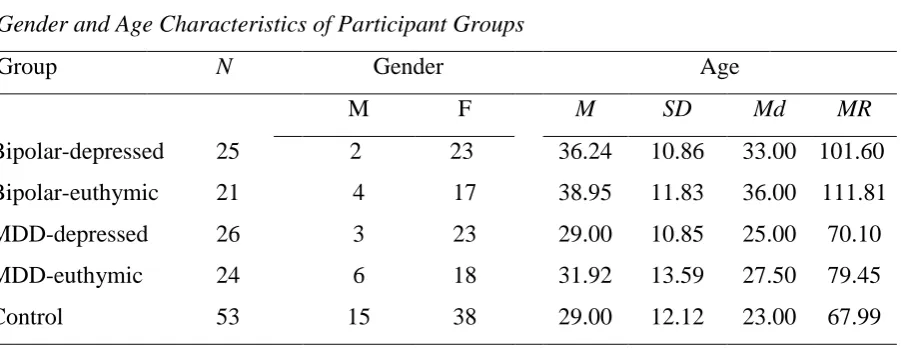
Table 6.2: Gender and Age Characteristics of Participant Groups ... 70
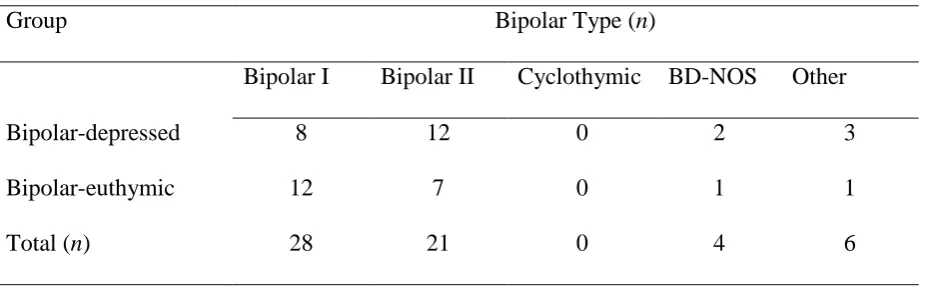
Table 6.3: Bipolar Type Diagnoses of Participants in the Bipolar Groups ... 72
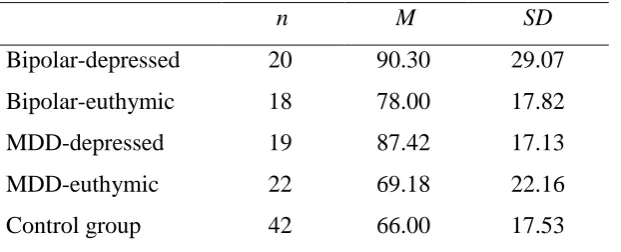
Table 6.4: Means and Standard Deviations of Defensive Responding Scores for Participant Groups ... 74
Table 6.5: Mean, Median and Mean Rank PIT-Failure Scores of Participant Groups ... 78
Table 6.6: Means and Standard Deviations of Failure to Achieve EMS Scores for Participant Groups ... 79
Table 6.7: Means and Standard Deviations of DAS-Total Scores for Participant Groups ... 80
Table 6.8: Means and Standard Deviations of YSQ-Total Scores for Participant Groups ... 81
Table 6.9: Means and Standard Deviations of YSQ-Unconditional EMS Scores for Participant Groups ... 82
Table 6.10: Means and Standard Deviations of YSQ-Conditional EMS Scores for Participant Groups ... 84
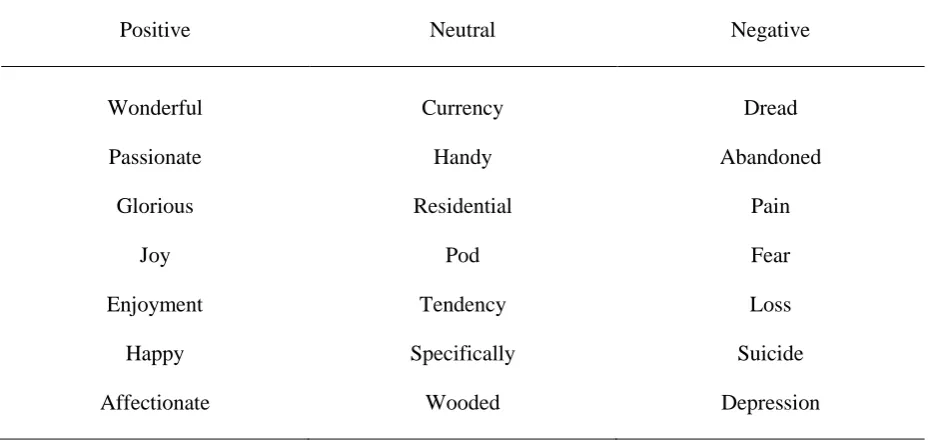
Table A.1:Positive, Neutral and Negative Words Included in the EST ... 193
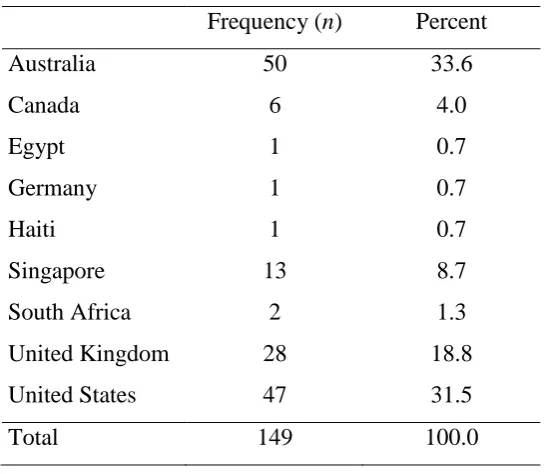
Table A.2: Participants’ Countries of Residence ... 197
Table A.3 Participants’ Ethnicities ... 199
ix Abstract
Contemporary accounts of the manic defence hypothesis propose that underlying mania are activated negative schemas that are psychically defended against. Indeed, research which has investigated the cognitive processes of bipolar-manic individuals has found that despite reporting high levels of perceived self-worth on explicit measures that assess consciously known cognitive processes, when assessed with implicit measures that assess subconscious processes, bipolar-manic individuals exhibit activated negative schemas of low self-worth comparable to bipolar-depressed individuals. These findings have lead researchers to propose that explicit measures of cognitive processes are confounded by defensive
responding in bipolar-manic individuals. Despite considerable inconsistencies being found in relation to the activated negative schemas of bipolar-euthymic individuals when assessed with explicit measures, to date, no study has investigated whether bipolar-euthymia is too characterised by defensive responding. The purpose of this study was to investigate whether bipolar-euthymic individuals respond defensively on explicit measures of negative schemas that were specifically designed to operationalise and assess negative schema content (the Dysfunctional Attitudes Scale - DAS and the Young Schema Questionnaire – YSQ), and to investigate whether, as proposed with bipolar-mania, bipolar-euthymia is characterised by depression-avoidance defences.
x
Young Schema Questionnaire Failure to Achieve schema, was characteristic of the bipolar-euthymic group but neither depressed group. Further analyses indicated that when assessed with explicit measures, bipolar-euthymic individuals endorsed negative schema content at a level intermediate between both depressed individuals (bipolar and MDD) and
xi
Doctor of Psychology Declaration
“I, Shara Granger, declare that the Doctor of Psychology (Clinical Psychology) thesis entitled ‘Depression-Avoidance Defences in Bipolar Euthymia” is no more than 40,000 words in length including quotes and exclusive of tables, figures, appendices, bibliography, references and footnotes. This thesis contains no material that has been submitted previously, in whole or in part, for the award of any other academic degree or diploma. Except where otherwise indicated, this thesis is my own work”.
Signature: _________________ Date: _________________
xii
Acknowledgements
Firstly, I would like to thank my supervisors, Dr Karen Hallam and Dr Alexia Pavlis. Karen, you never gave up on me or this study and I am so grateful for having shared this journey with you. You have been a constant source of knowledge and inspiration. I am so appreciative of your patience and guidance throughout this whole process. Alexia, I am so grateful that you offered both your time and your wisdom to contribute to the development of this thesis. I would also like to thank Dr Craig McNeil, who spent many hours both assisting me in understanding schemas and the development of the study. Dr Trish Altieri, I would like to thank you for your input into the study and your assistance with participant recruitment. Without you all, this thesis would not have been possible. Thank you. I would also like to express my gratitude to my supportive and understanding friends. You have helped me take much needed breaks to maintain my sanity without an ounce of pressure and have continued to be my ‘thesis cheerleaders’ - Thankyou. I would particularly like to thank Lyndsay Hoyle, Laura Davies and Dr Jenny Patterson. Lyndsay, I am so grateful that even during your own thesis struggles, you continued to offer me ongoing support and encouragement. You have an intuitive knack for knowing what I need to hear, at the time I need to hear it. Laura, you are like a sister to me. I have been so appreciate of your constant support and encouragement throughout not just this journey but my whole life. Jen, I couldn’t have gotten to this point without you! You showed continued confidence in me, even during times I felt defeated and you helped me refocus on countless occasions. The longer I know you, the more I am I inspired to try and acquire the strength and determination that you possess.
I would also like to thank the wonderful staff at DFATS for their continued support. I would particularly like to than my Senior Clinician, Gayani Maddumage; my pod-partner in crime, Conor Duggan; and Melanie Smerdon. You guys helped me keep my sanity throughout this whole process. Last but certainly not least, I would like to thank my family. My brother-in-law, Shannon, I am so grateful that you are a part of my family and so appreciative that you sacrificed many hours to help me understand the wonderful world that is Qualtrics – thank you! My brothers, Brent and Jay, you both continue to bring so much joy into my life and are nothing but encouraging. I am so thankful that you are not only my family but my closest friends. Brent, you have an uncanny ability to be both optimistic yet realistic at the same time and your wicked sense of humour has seen me laugh
1 PART I: INTRODUCTION
Chapter One
Thesis Overview and Background Information
1.1 Thesis Overview
This thesis is comprised of four parts, encompassing seven chapters. Part I, comprised of Chapter One, introduces the thesis, summarising relevant background information. Part II, comprising Chapters Two, Three and Four, reviews previous research relevant to the current study. Specifically, Chapter Two details DSM-5 (APA, 2013) diagnostic criteria for the ‘bipolar and related disorders’ and reviews the levels of functional impairment and medical morbidity/mortality rates associated with bipolar disorder. The ramifications of common delays in diagnosis and current treatment modalities are then discussed in Chapter Two, followed by a review of the literature pertaining to the aetiology of the disorder. This thesis is concerned with the psychological process involved in both the aetiology and maintenance of the disorder and as such, the manic defence hypothesis is detailed in the aetiological section. The manic defence hypothesis proposes that mania/hypomania in bipolar disorder results from a defence against underlying negative cognitions (Carlstedt, 2010; Klein, 1935, 1940; Lex, Hautzinger & Meyer, 2011; Neale, 1988), coined ‘negative schemas’ (Beck, 1967, 1976). Given the centrality of negative schemas in the psychological underpinnings of
2
Unanswered research questions arising from the limitations of previous research are then discussed in Chapter Four, providing the rationale for the current study. The aims and hypotheses of the current study are then detailed in Chapter Four. Part III, comprising Chapter Five, details the methodology of the current study, namely, the participant details, measures utilised and the procedures of the study. Part IV, comprising Chapter Six, details the data analyses used to investigate the study’s hypothesis and presents the results of the study. Part V, comprising Chapter Seven, discusses the findings of the study with respect to study’s hypotheses. The theoretical and clinical implications of the study’s findings are then discussed and the study’s limitations noted. Directions for future research are also discussed in Chapter Seven.
1.2 Background Information
Bipolar disorder - the class of mood disorders characterised by hypomanic/manic and often depressive episodes (APA, 2013), is associated with substantial functional impairment (Murray & Lopez, 1996) and high rates of both medical comorbidity and mortality
(Goldstein, Fagiolino, Houck, & Kupfer, 2009; Roshanaei-Moghaddam & Katon, 2009; Smith et al., 2013). Lifetime suicide prevalence rates of 36.3% and 32.4% for bipolar I disorder and bipolar II disorder, respectively, indicate the disorder has the highest suicide rate of all psychiatric disorders (American Psychiatric Association [APA], 2013; Novick, Swartz, & Frank, 2010). Aetiological studies of bipolar disorder have indicated that both biological and environmental factors, including psychological processes, are involved in both the development and maintenance of the disorder (Goodwin & Jamison, 2007; Tsuchiya, Byrne, & Mortensen, 2003).
3
in part, manic/hypomanic episodes arise as a result of subconscious psychological defences against the underlying negative cognitive processes that typically manifest in bipolar-depressive symptomatology (Carlstedt, 2010; Klein, 1935, 1940; Lex et al., 2011; Neale, 1988). Cognitive-based therapies label these underlying negative cognitive processes, ‘negative schemas’ (Beck, 1967, 1976; Young, 1990, 1999). Indeed, research conducted by Winters and Neale (1985) and Lyon, Startup and Bentall (1999), which aimed at testing the manic defence hypothesis, demonstrated that when explicit measures (i.e. direct measures of conscious cognitive processes through assessing the individual directly) were used to assess negative schemas, manic-bipolar individuals reported higher levels of self-esteem and
displayed a positive-attribution bias, when compared to both unipolar- and bipolar-depressed individuals, in addition to non-psychiatric controls. In contrast, when implicit measures (i.e. indirect, semi-projective/projective measures of subconscious cognitive processes) of
negative schemas were used, manic-bipolar individuals exhibited a negative attribution bias and schemas of low self-worth, comparable to both unipolar- and bipolar-depressed
individuals. This difference between the self-esteem reported by manic individuals and the self-esteem that is projected from underneath this external representation, indicated that implicit measures of negative schemas are able to assess activated negative schema content and are therefore valid measures of this cognitive construct. In contrast, these findings indicate that the validity of explicit measures is confounded by defensive responding as a result of the manic defences (Lyon et al.; Winters & Neale).
4
findings are indicative of depression-avoidance in bipolar-euthymia. Further support for depression-avoidance defences being employed in bipolar-euthymia has arisen from the findings of contemporary studies that have indicated when compared to controls, bipolar-euthymic individuals exhibit a more negative attributional style (Knowles et al., 2007), endorse more dysfunctional attitudes (Thomas, Bentall, Knowles & Tai, 2009), and exhibit stronger implicit negative self-associations (on an implicit association task) (Jabben et al., 2013). However, the results of studies investigating the activated negative schemas of bipolar-euthymic individuals with explicit measures, specifically designed to test negative schemas, have indicated that bipolar-euthymia is characterised by less negative schema activation than bipolar-depression (Jones et al., 2005; Reilly-Harrington et al., 2010). However, this does not account for why bipolar-euthymic individuals have been found to exhibit similar underlying negative cognitive styles to bipolar-depressed individuals when assessed with implicit measures (Kerr, Scott, & Phillips, 2005).
This thesis proposes that analogous to the manic defence hypothesis, which posits that mania results from the employment of depression-opposing defences (Carlstedt, 2010; Klein, 1935, 1940; Lex et al., 2011; Neale, 1988), variability between the scores on explicit and implicit measures of negative schemas among bipolar-euthymic individuals indicate that bipolar-euthymia is too being characterised by the employment of psychic defences against activated negative schemas. Specifically this thesis proposes that bipolar-euthymic
5
PART II: LITERATURE REVIEW
Chapter Two
Bipolar disorder – Impairment, Aetiology and Treatment
2.1 Introduction
Bipolar disorder, estimated to affect 1.8% of the global population (APA, 2013), is a debilitating disorder, which is both widely misdiagnosed and under-detected (Judd & Akiskal, 2003; Mitchell, Slade, & Andrews, 2004). This chapter details the Diagnostic and Statistical Manual of Mental Disorders (5th ed; DSM-5; APA, 2013) diagnostic criteria for each of the identified bipolar and bipolar-related disorders. Global functional impairment and morbidity/mortality rates associated with bipolar disorder are then detailed in this chapter, followed by current treatment approaches. The biological and environmental aetiological theories of the disorder are then reviewed.
2.2 Definition of Bipolar Disorder
Bipolar disorder refers to the class of mood disorders that affects the mood,
cognitions, perceptions and behaviour of an individual. The characterising feature of bipolar disorder is the occurrence of at least one manic or hypomanic episode. Although common in bipolar disorder, the occurrence of a major depressive episode(s) is not required for diagnosis (Goodwin & Jamison, 2007).
6
under the chapter, ‘Mood Disorders’. The DSM-5 now positions the chapter ‘Bipolar and Related Disorders’ between the chapters pertaining to ‘Depressive Disorders’ and
‘Schizophrenia Spectrum and other Psychotic Disorders’. The purpose of this positioning in the DSM-5 is to emphasise how bipolar disorder is the bridge that connects depressive and psychotic disorders, with respect to both the aetiology and symptomatology of the disorders.
2.3 Diagnostic Criteria for Bipolar Disorder Mood Episodes
The DSM-5 (APA, 2013) identifies three different mood episodes characteristic of bipolar disorder: manic, major depressive and hypomanic. In order to meet the diagnostic criteria for a bipolar mood episode, symptomatology must not be better accounted for by the effects of substance use/misuse or a medical condition.
The DSM-5 (APA, 2013) defines a manic episode as, “A distinct period of abnormally and persistently elevated, expansive or irritated mood and abnormally and persistently
increased goal-directed activity or energy, lasting at least one week and present most of the
7
The DSM-5 (APA, 2013) diagnostic criteria for a major depressive episode is the presence of five or more symptoms affecting an individual’s mood, cognitions, perceptions and/or behaviour, including: a depressed mood (most days and for the majority of each day – subjectively reported or observable); loss of interest in activities once regarded to be
enjoyable; substantial weight loss/gain (or a persistent change in appetite); and suicidal ideation. A depressive episode results in a noticeable impairment in the individual’s
occupational and/or social functioning and may or may not involve psychotic features. It is important to note however, that non-episodic psychotic features are not characteristic of bipolar disorder (APA).
The DSM-5 (APA, 2013) defines a hypomanic episode as, “A distinct period of abnormally and persistently elevated, expansive, or irritable mood and abnormally and
persistently increased activity or energy, lasting at least four consecutive days and present
most of the day, nearly every day” (p.124). A diagnosis of a hypomanic episode also requires the presence of at least three additional symptoms (four additional symptoms if the
individual’s mood is regarded to be irritable), that affect the individual’s cognitions,
perceptions or behaviour, including: increased talkativeness, distractibility and flight of ideas. A hypomanic episode is characterised by a noticeable change in an individual’s usual
functioning, although there is no substantial diminishment in the individual’s occupational or social functioning. Furthermore, the severity of the mood disturbance during a hypomanic episode will not warrant hospitalisation for treatment. As such, symptom severity and the duration of a hypomanic episode is both less than those of a manic episode. Psychotic features are indicative of a manic, not hypomanic, episode (APA).
8
to a general medical condition; other specified bipolar and related disorder; and unspecified bipolar and related disorder.
2.4 Diagnostic Criteria for Bipolar and Bipolar Related Disorders
Bipolar I disorder is characterised by a current or past occurrence of a manic episode. Although common in bipolar I disorder, the occurrence of at least one major depressive episode is not required for an individual to meet diagnostic criteria (APA, 2013).
Bipolar II disorder is characterised by the experience of at least one hypomanic and one major depressive episode over the course of an individual’s life, in the absence of a previous manic episode(s). If an individual has a past history of a manic episode(s), then bipolar I disorder should be considered (APA, 2013).
Cyclothymic disorder is characterised by fluctuations in mood for a
minimum period of two years (one year for an adolescent or child) incorporating periods of both depressive and hypomanic symptoms, which do not meet diagnostic criteria for either a hypomanic or major depressive episode. During the course of the mood disturbance, the symptoms are present the majority of time, with symptom-free periods not exceeding two months. To warrant a diagnosis of cyclothymic disorder, an individual must have never met diagnostic criteria for a manic, hypomanic or major depressive episode (APA, 2013).
9
meet diagnostic criteria for any of the preceding bipolar or bipolar related disorders. The term ‘specified’ applies when the clinician indicates why diagnostic criteria have not been met (APA).
2.5 Impairment and Morbidity/Mortality Rates Associated with Bipolar Disorder 2.5.1 Functional impairment.
Found to be the sixth leading cause of disability for individuals aged 14-44 years (Murray & Lopez, 1996) and along with schizophrenia, the leading cause of multiple psychiatric hospital admissions (Abood, Sharkey, Webb, Kelly, & Gill, 2002), bipolar disorder has long been associated with substantial impairment in global (i.e. social, occupational and psychological) functioning and high disability needs (Judd & Akiskal, 2003; Mitchell et al., 2004).
With respect to global functioning, both manic and major depressive episodes can be debilitating. The depressed individual can experience a low mood coupled with a substantial loss of interest or enjoyment in activities, including social interactions. Changes in appetite and sleep patterns are common and thoughts may be centred on feelings of helplessness and personal insignificance (APA, 2013). Concentration difficulties significantly impact on a person’s ability to work and maintain interests. Thoughts of suicide may also be present, which may ultimately lead to self-injurious behaviours, parasuicidal behaviours or suicide attempts (Joyce, Light, Rowe, Cloninger, & Kennedy, 2010; Zimmerman, et al., 2013). In contrast, the manic individual may have delusions of grandeur and present with inflated self-esteem (Goodwin & Jamison, 2007). They may experience difficulties concentrating on tasks and have racing thoughts (APA). Disinhibited, their behaviour may be vastly incongruent with their usual ethics/morals and they may act impulsively with little regard for
10
(National Collaborating Centre for Mental Health [NCCMH], 2006). The manic individual may experience a significant change in appetite and body weight and a significant decrease in sleep (APA). Psychotic symptoms, including delusions and hallucinations are also
experienced in up to 53.2% of manic individuals (Parker, et al., 2013).
Global functioning has been found to be significantly more impaired during a depressive episode, as opposed to a manic or hypomanic mood episode (Rosa at al., 2010). Unfortunately, individuals with bipolar disorder have been found to experience chronic or frequent depressive episodes up to 63% of the time (Uher, Mantere, Suominen, & Isometsa, 2013). Given that substantial functional impairment is not characteristic of hypomania, hypomania is the least debilitating mood episode (NCCMH, 2006). However, poorer global functioning is still observed in hypomanic individuals however when compared to euthymic or non-psychiatric individuals (Rosa, et al.).
Impaired global functioning is not isolated to bipolar mood episodes. Approximately two-thirds of individuals with bipolar disorder have been found to not achieve global
premorbid functional recovery, following syndromal remission (Goldberg & Harrow, 2011; Huxley & Baldessarini, 2007). Specifically, despite reductions in symptomatology,
individuals with bipolar disorder have been found to continue to exhibit deficits, persisting for up to one year post episodic recovery, in the areas of understanding, communicating, getting around, self-care, getting along with others, household/work activities and participation in society (as measured by the World Health Organisation Disability Assessment Scale; Perron, Bohnert, Vaughn, Bauer, & Kilbourne, 2010).
11
effectively for at least six months (in total) in the preceding year. This compared to 87% of MDD participants. Furthermore, Goldberg and Harrow found a significant relationship between impaired global outcome (as assessed via the presence of symptoms within the last year, rehospitalisation, deficits in role functioning, deficits in self-support and difficulties adapting to stress) and the onset of a depressive episode within the preceding year. This is consistent with the Huxley and Baldessarini’s (2007) review, which indicated that functional impairment is strongly associated with the depressive and dysphoric syndrome in bipolar disorder. This association between functional impairment and depressive episodes has been attributed to the slower recovery rate following a depressive episode compared to that of a manic episode (Rosa et al., 2010). Given this, it is unsurprising that bipolar II disorder, which is characterised by frequent major depressive episodes, has been found to result in greater deficits in global functioning than bipolar I disorder (Huxley & Baldessarini).
Further predictors of impaired global functioning have been found to include a co-morbid diagnosis of an Axis II disorder, not having maintained a stable intimate relationship, older age and frequent mood episodes (Grande, et al., 2013; Schoeyen, et al., 2013).
Considering the deficits in global functioning that are characteristic of bipolar disorder, it is unsurprising that individuals with bipolar disorder have also been found to have lower levels of self-reported ‘quality of life’ ratings (as measured by the World Health Organization Quality of Life Assessment—Abbreviated version), compared to those without the disorder (Brissos, Dias, & Kapczinski, 2008).
2.5.2 Medical co-morbidity.
12
67% of individuals with bipolar disorder were found to have at least one co-morbid physical condition. Furthermore, individuals with bipolar disorder were found to have a significantly greater risk of acquiring three or more physical conditions than those without the disorder. Viral hepatitis, Parkinson’s disease and constipation were found to have the highest
prevalence rates in individuals with bipolar disorder and were significantly more prevalent among bipolar individuals than those without the disorder. Chronic kidney disease, thyroid disorder, chronic pain and chronic obstructive pulmonary disorder were also found to be significantly more prevalent among individuals with bipolar disorder than those without. Smith et al. hypothesised that the side effects of psychotropic medications for bipolar
disorder may largely account for the high rates of medical co-morbidity. For example, lithium treatment is known to have effects on both kidney and thyroid functioning
(Müller-Oerlinghausen, Bauer, & Grof, 2012). They further hypothesised that the higher rates of hepatitis may be a result of the risk taking behaviours that may be exhibited in bipolar disorder (e.g. drug use, unprotected sexual intercourse). Cardiovascular disease (CVD) and hypertension have also been found to be significantly more likely (up to two-fold) in
individuals with bipolar disorder than those without the disorder. Furthermore, the onset of CVD and hypertension have been found to occur in individuals with bipolar disorder, up to 14 years earlier than those without the disorder (Goldstein et al., 2009).
Increased risk of co-morbid medical conditions among individuals with bipolar disorder has been attributed to a range of factors. In addition to those reasons listed above, individuals with bipolar disorder have higher rates of substance use (including alcohol and tobacco) (Diaz, et al., 2009; Lagerberg, et al., 2010; Farren, Hill, & Weiss, 2012), compared to those without the disorder, which significantly increases the risk of developing a range of physical health complications (Jones, et al., 2004). Furthermore, the side effects of
13
2012) and increased risk of developing metabolic syndrome (Fagiolini, Roy Chengappa, Soreca, & Chang, 2008). Roshanaei-Moghaddam and Katon (2009) hypothesised that stress-induced health complications may also be a contributing factor to the high rates of co-morbid medical conditions among individuals with bipolar disorder.
2.5.3 Mortality.
With high prevalence rates of co-morbid medical conditions among individuals with bipolar disorder, it is unsurprising that mortality rates are also higher in individuals with bipolar disorder compared to those without the disorder (Laursen, Munk-Olsen, Nordentoft, & Mortensen, 2007). Death due to natural causes is significantly more likely in individuals with bipolar disorder, with studies indicating that the risk of premature death is increased from between 35% to 200%. Premature death has been found to result from various physical illnesses, including cerebrovascular, respiratory and cardiovascular diseases/disorders
(Roshanaei-Moghaddam & Katon, 2009).
Suicide is the greatest psychiatric contributing factor to morbidity in bipolar disorder. Risk of suicide is 15 times greater in individuals with bipolar disorder compared to the general population and the disorder has the highest suicide rate of all psychiatric disorders, with bipolar I disorder and bipolar II disorder having lifetime suicide prevalence rates of 36.3% and 32.4%, respectively (APA, 2013). Suicide attempts amongst individuals with bipolar disorder have been found to be significantly associated with: alcohol and substance use, a family history of mood disorders and alcoholism, antidepressant-induced
14 2.6 Delays in Diagnosing Bipolar Disorder
Despite the onset of bipolar disorder usually occurring in adolescence or early adulthood (Rosa, et al., 2008), diagnosis usually occurs between 5-10 years following first episode onset (Baldessarini, Tondo, Baethge, Lepri, & Bratti, 2007; Drancourt, et al., 2013). Diagnostic delays are longest amongst individuals with bipolar II disorder, exceeding that of bipolar I disorder, by two years on average. Extended delays in diagnosis (and appropriate treatment) are significantly associated with increased risk of suicidal behaviours, greater number of mood episodes and increased severity of mood instability (e.g. rapid cycling) (Drancourt et al).
Despite earlier onset of the disorder (<18 years) being significantly associated with increased severity of the disorder, with respect to symptomatology and course (i.e. rapid cycling, presence of psychotic features, suicidal behaviours and co-morbidity with
personality and eating disorders; diagnostic delays are significantly longer among individuals with early onset bipolar disorder than individuals with late onset bipolar disorder (>18
years),. Although delays in treatment seeking among individuals with early onset bipolar disorder has been found to contribute to delays in diagnosis (Suominen et al., 2007), delays in correct diagnosis once mental health contact has been made continues to play a large role is diagnostic delays. Correct diagnosis since first mental health contact (among individuals with bipolar) have been found to have a median time of 21 months, with a quarter of
15
absence of manic episodes in bipolar II disorder (Goodwin & Jamison, 2007; Phillips & Kupfer, 2013).
2.7 Treatment of Bipolar Disorder
Psychotropic medications and psychotherapy are the two main treatment interventions for bipolar disorder. Less common interventions, which include Electroconvulsive Therapy, Rapid Transcranial Magnetic Stimulation and nutritional supplements, may also be
incorporated in treatment for bipolar disorder. The main psychotropic medications used for the treatment of bipolar disorder are lithium, anticonvulsants, antidepressants, typical antipsychotics, atypical antipsychotics and benzodiazepines (Goodwin & Jamison, 2007).
A major issue concerning pharmacological treatment of bipolar disorder is the high rates of medication non-compliance, with research indicating that more than 50% of individuals with bipolar disorder either cease pharmacological treatment prematurely, or follow medication regimes irregularly (Arvilommi, et al., 2014). Medication non-compliance among individuals with bipolar disorder has been linked to higher rates of relapse and
16 2.8 Aetiology of Bipolar Disorder
Although the specific aetiology of bipolar disorder remains unknown (Fowke, Ross, & Ashcroft, 2012; Frey, et al., 2013), research indicates that the development of bipolar disorder is contingent upon the interaction of both environmental and biological (including genetic) factors (Goodwin & Jamison, 2007; Tsuchiya et al., 2003). A complicating factor in
determining the disorder’s aetiology is the contrasting affective states characteristic of bipolar disorder: depression and mania, which appear to reflect opposing psychological processes (APA; Lyon et al., 1999; Winters & Neale, 1985). However, one of the more prominent psychological theories of bipolar disorder, the manic defence hypothesis, proposes that underlying both depression and mania/hypomania are depressogenic, cognitive processes (Carlstedt, 2010; Klein, 1935, 1940; Lex et al., 2011). The following section reviews the biological and envronemntal factors implicated in the aetiology of the disorder, in addition to the manic defence hypothesis.
2.8.1 Biological factors.
Numerous chromosomal regions and genes have been implicated in the aetiology of bipolar disorder (Greenwood, et al., 2012; Preisig, 2006; Rybakowski, et al., 2012;
Rybakowski, 2013). Given this, it is unsurprising that relatives of individuals diagnosed with bipolar disorder having been found, on average, to have a ten-fold increased risk of
17
Mathe, 1995). However, the lack of 100% concordance rates among MZ twins indicates that genetic factors are not solely implicated in the development of bipolar disorder. Based on these findings it has been proposed that bipolar disorder may be an example of an epigenetic illness with 79% of risk based on genetic influence and a 21% environmental influence (Kendler et al.).
2.8.2 Environmental factors.
Incidence of trauma is significantly higher in individuals with bipolar disorder compared to the general population (Grandin, Alloy, & Abramson, 2007), with studies indicating that between 80% to 94.2% of individuals with bipolar disorder have a history of childhood or adult trauma (Mowlds, et al., 2010; Maguire, McCusker, Meenagh, Mulholland, & Shannon, 2008). A lifetime trauma history in individuals with bipolar disorder is
associated with: an increase in the severity of the disorder; lower levels of health-related quality of life; higher rates of hospital admissions; greater interpersonal difficulties (Gershon, Johnson, & Miller, 2013; Maguire); a greater number of mood episodes; treatment
responsivity issues and increased likelihood of psychiatric co-morbidity (Kauer-Sant’Anna, et al., 2007; Daruy-Filho, Brietzke, Lafer & Grassi-Oliveira, 2011). In a recent study by Daglas et al. (2014), which investigated clinical outcomes in individuals with bipolar disorder at 12-months following first episode of psychotic mania, bipolar individuals with a history of trauma were found to have significantly higher manic, depressive and psychopathological symptomatology, in addition to poorer social and occupational functioning, when compared to bipolar individuals without a history of trauma.
18
Larson et al.’s study: ‘Childhood experience of sexual abuse’, ‘physical abuse’ and ‘emotional abuse/neglect’. Each factor was associated with differing characteristics of bipolar disorder: Higher sexual abuse factor scores were significantly associated with greater incidence of episodes; higher emotional abuse/neglect factor scores were significantly
associated with earlier onset of bipolar disorder and greater impairment in global functioning; and higher physical abuse factor scores were also significantly associated with greater
impairment in global functioning.
2.8.3 Psychological factors.
Melanie Klein’s early psychoanalytic accounts of bipolar disorder propose that mania serves as a defence against ‘melancholia’ (depression). Specifically, Klein (1935; 1940) proposed that manic defences, namely omnipotence, idealisation, control, disparagement and denial, are first evident in infancy and serve to protect the infant from the anxieties that result from the depressive position – a mental state concerned with depressive feelings arising from both the loss of a loved object and the fear of destroying the mother. According to Klein, the loved object that has been lost for the infant in the depressive position is the mother’s ‘good’ breast.
19
mother) and subsequently, the infant experiences both grief resulting from loss of the loved ‘good’ object (the good breast) and guilt about inadvertently having wanted to destroy both the good breast and the mother. In an attempt to defend against these anxieties resulting from the depressive position, the infant employs manic defences, namely, omnipotence, denial of psychic reality and idealization, to avoid the depressive mental anxieties that this realization gives rise to. Klein proposed that manic defences are a vital part of the infant’s development and that normal development entails the shifting between the depressive position and the manic position.
20
Contemporary accounts of the manic defence hypothesis propose that bipolar disorder is characterised by underlying feelings of inferiority and low self-esteem (Winters & Neale, 1985; Lyon et al., 1999; Neale, 1988). In the context of perceived failure, contemporary accounts propose that the individual with bipolar disorder endeavours to defend against these feelings by attempting to ascend into opposing feelings of omnipotence and triumph, via both engaging in grandiose thinking and striving for success. This ‘attempt to ascend’ manifests itself in the form of a manic episode (Carlstedt, 2010). Contemporary accounts of the manic defence hypothesis therefore regard mania to be a subconscious attempt to increase self-esteem to defend against negative cognitions and feelings of worthlessness that typically manifest in depressive symptomatology Thus, despite the symptom expression of mania being the polar opposite of depression, this ‘depression-avoidance hypothesis’ posits that underlying mania are the same negative cognitive processes characteristic of depression (Lex et al., 2011; Lyon et al.; Carlstedt, 2010; Neale). These negative cognitive processes have been coined ‘negative schemas’ and are detailed in the following chapter.
2.9 Summary
Since its original identification as manic-depressive illness in the latter part of the 19th Century (Kraepelin, 1902, as cited in Goodwin & Jamison, 2007), bipolar disorder has continued to be associated with high levels of disability (Murray & Lopez, 1996), co-morbid medical conditions (Goldstein et al., 2009; Smith et al., 2013) and high rates of suicide (APA, 2013). Despite this, bipolar disorder remains one of the most under-detected and
21
22 Chapter Three Schema Theories
3.1 Introduction
Contrary to the manic individual’s self-reported high self-esteem (Winters & Neale, 1985) and grandiose self-image (APA, 2013), the manic defence hypothesis proposes that mania is characterised by the same underlying, depressive cognitions as depression
(Carlstedt, 2010; Klein, 1935, 1940; Lex et al., 2011), termed negative schemas. This chapter details the notion of negative schemas, as proposed by prominent schema theorists Beck (1967, 1976) and Young (1990, 1999).
3.2 Negative Schema Theories
3.2.1 Beck’s cognitive model of depression.
In his cognitive model of depression, Beck (1967, 1976) defined schemas as a network of deeply held, conditional beliefs; assumptions; and personal strategies, which affect an individual’s interpretation, encoding and retrieval of information pertaining to personal life experiences. Schemas are proposed to develop early in life through exposure to one’s environment. Negative schemas are proposed to result from exposure to maladaptive events/experiences during childhood. Negative schemas are an established network of
23
Once activated, these negative schemas result in the manifestation of negative cognitions, feelings and behaviours.
Beck (1967, 1976) further proposed that negative schemas may be depressogenic, centred on themes of self-blame, personal deficiency and negative expectations, resulting in a cognitive vulnerability to depression. Depressogenic schemas are said to underlie the
negative cognitive biases that are prominent in depression. Negative cognitive biases refer to perceptual processing errors that result from internalized misperceptions of oneself and the world; they are the figurative ‘lens’ through which information is processed (Novacs & Beck, 1978). Beck (1967, 1976) identified several negative cognitive biases prominent in
depression, including: magnifying the experience of negative events; minimizing the
experience of positive events; all-or-nothing thinking; and a tendency to recall more negative life events, as opposed to positive events, which are often ignored. These cognitive biases then negatively ‘filter’ an individual’s interpretation, encoding and retrieval of information, and then give rise to cognitive distortions - conscious, negative thoughts that arise
automatically and involuntarily. Beck posited that for the depressed individual, cognitive distortions focus on themes related to the individual, their environment and their future. Beck termed these, ‘the cognitive triad’. These cognitive distortions then affect the individual’s emotional reactions and behaviour, manifesting in the affective and behavioural symptoms characteristic of depression. As an example of the cognitive triad, an individual may be unsuccessful in receiving a promotion at work. Upon hearing the news that they were unsuccessful, the individual automatically thinks to his or herself, “I’m no good
24
mood. Figure 3.1 illustrates the development of depressive symptomatology according to Beck’s cognitive model of depression.
Figure 3.1. Beck’s cognitive model of depression.
As noted earlier, Beck (1967, 1976) proposed that schemas are not always active and such, inactive negative schemas will not give rise to negative cognitive biases and cognitive distortions. Thus accounts for why depression is episodic and follows a stress-diathesis model (Braet, Vlierberghe, Vandevivere, Theuwis, & Bosmans, 2013). According to Beck, activation of negative schemas occurs when an individual is exposed to an event/situation that triggers the content of the schema. For example, an individual who has a negative
25
cognitive model of depression, activation of this schema will then result in biased
interpretations of oneself, the world and others – cognitive biases. Following from the above example, the activation of the personal deficiency schema may result in ‘all or nothing
thinking’ and ‘magnifying the experience of negative events’, which subsequently give rise to cognitive distortions, including, ‘Nobody will ever love me’, ‘I will die alone” and ‘I can’t do anything right”. These cognitive distortions may then subsequently give rise to feelings of helplessness and loneliness (emotional characteristics of depression) and maladaptive
behaviours including isolating oneself from others (behavioural characteristic of depression).
3.2.2 Young’s schema theory.
The notion of negative schema was further elaborated by Young (1990, 1999), who proposed that negative schemas arise from core emotional needs being unmet during childhood. Young identified five core emotional needs: “Secure attachments to others, including safety, stability, nurturance and acceptance; autonomy, competence and sense of identity; freedom to express valid needs and emotions; spontaneity and play; and realistic limits and self-control” (Young, Klosko, & Weishaar, 2003, p. 10). Young posited that unmet emotional needs during childhood result from an interplay between a child’s temperament (regarded to be innate and persistent) and particular early adverse relational experiences, namely:
1) Toxic frustration of needs – when the environment deprives the child of experiences required to meet their needs (e.g. deprivation of love);
2) Traumatization or victimization – when the child experiences traumatic events or is victimized;
26
deprives them of being able to meet a core need. For example, overprotective parenting may result in a child not establishing a sense of agency and autonomy; and
4) Selective internalization or identification with a significant other(s) - When a child identifies with a caregiver(s) and internalizes their thoughts, emotions, behaviours and actions (Young et al., 2003).
With respect to temperament, Young (1990, 1999) identified seven temperament dimensions: labile/nonreactive, dysthymic/optimistic, anxious/calm, obsessive/distractible, passive/aggressive, irritable/cheerful and shy/sociable. Young proposed a child’s
temperament impacts on their early relational experiences in two ways – (1) a child’s temperament may directly influence their environment (e.g. a child who has an obsessive temperament may elicit feelings of frustration in a parent); (2) and a child’s temperament may impact on their cognitive, emotional and behavioural reaction to stressors (e.g. a sociable child who is neglected by his mother may try to establish relationships with other family members. In contrast, a shy child may become socially withdrawn and avoid interactions with others). Young further noted that extremes of adverse relational experiences or emotionality (i.e. temperament), are likely to hinder the child’s core
emotional needs being met. Specifically, a severely noxious environment is likely to impact on a highly resilient child’s needs being met; and even in the context of adaptive early life experiences, a highly emotional temperament is likely to impact on a child’s needs being met, with the latter potentially producing psychopathology that appears environmentally unjustified (Young, 1990, 1999; Young et al., 2003).
Young (1990, 1999) proposed that the development of both poor coping
27
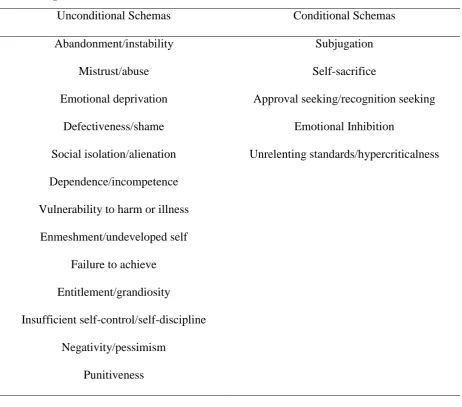
28 Table 3.1.
EMS Categorised into Conditional and Unconditional Schemas
Unconditional Schemas Conditional Schemas
Abandonment/instability Subjugation
Mistrust/abuse Self-sacrifice
Emotional deprivation Approval seeking/recognition seeking
Defectiveness/shame Emotional Inhibition
Social isolation/alienation Unrelenting standards/hypercriticalness Dependence/incompetence
Vulnerability to harm or illness Enmeshment/undeveloped self
Failure to achieve Entitlement/grandiosity
Insufficient self-control/self-discipline Negativity/pessimism
Punitiveness
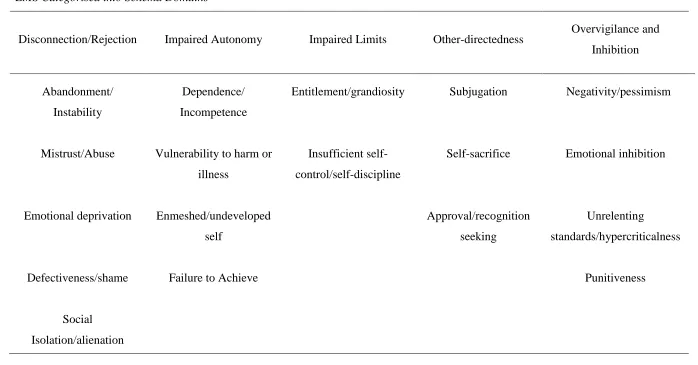
Furthermore, Young grouped EMS into five schema domains: Disconnection and Rejection; Impaired Autonomy and Performance; Impaired Limits; Other-Directedness; Overvigilance and Inhibition (Young et al., 2003). Table 3.2 shows the grouping of EMS into the five domains. The Disconnection and Rejection, Impaired Autonomy and
29 Table 3.2
EMS Categorised into Schema Domains
Disconnection/Rejection Impaired Autonomy Impaired Limits Other-directedness Overvigilance and Inhibition
Abandonment/ Instability
Dependence/ Incompetence
Entitlement/grandiosity Subjugation Negativity/pessimism
Mistrust/Abuse Vulnerability to harm or illness
Insufficient self-control/self-discipline
Self-sacrifice Emotional inhibition
Emotional deprivation Enmeshed/undeveloped self
Approval/recognition seeking
Unrelenting
standards/hypercriticalness
Defectiveness/shame Failure to Achieve Punitiveness
30 EMS are said to become activated in adulthood when environmental conditions
resemble the conditions that fostered the development of EMS. Activation of these EMS subsequently results in the individual experiencing strong negative emotional reactions and cognitions, manifesting in psychiatric symptomatology (e.g. depression and anxiety). EMS are also said to bias an individual’s perceptions and interactions with their environment (including others), so that they are congruent with their content. This includes interpreting events in a manner that is consistent with their EMS. For example, an individual who has developed the defectiveness/shame EMS, receives an e-mail from their boss informing them of an upcoming ‘writing skills’ workshop. The individual interprets this to indicate that their writing skills are perceived by management to be inadequate and that their boss considers their work to be subpar leading to psychological (sadness, rejection) and behavioural (withdrawal, avoidance) changes (Young, 1990, 1999; Young et al., 2003).
31
beliefs/cognitions so that they are congruent with one’s behaviour or life experiences.
Alternatively, an individual may attempt to achieve cognitive consonance through attempting to change one’s behaviour or life experiences so that they are in accord with one’s
beliefs/cognitions (Festinger). For example, extending on the previous example, the man who has stolen from the nightclub yet prides himself on his morals, has a number of means by which he may attempt to reduce cognitive dissonance and achieve consonance. For example, he may attempt to alter his original belief that stealing is immoral so that it is congruent with his behaviour. He may tell himself that stealing whilst intoxicated isn’t really stealing, as he was impaired during the theft. Similarly, he may tell himself that the nightclub overprices their drinks and that stealing from a thief is not immoral. Alternatively, he may change his behaviours so that they are more congruent with his beliefs by choosing to donate a large sum of money to charity and rationalising that his good deeds that day outweigh his theft the night before.
Young (1990, 1999) proposed that EMSs are then perpetuated by three maladaptive coping styles (surrender, avoidance and overcompensation), employed in an attempt to defend against the emotional disturbances evoked by maladaptive schemas. ‘Surrender’ refers to surrendering to one’s maladaptive schemas and repeating them’; ‘avoidance’ refers to attempting to block out the content of one’s maladaptive schemas; and ‘overcompensation’ refers to striving to feel the opposite to one’s maladaptive schemas. Each coping style is considered to have its own unique set of coping responses, that is, the actual behavioural or cognitive strategies utilised in an attempt to defend against the maladaptive schemas. Young labelled the EMS and/or coping styles that are currently activated for an individual, a
32 3.3 Summary
33 Chapter Four
The Psychological Underpinnings of Bipolar Disorder
4.1 Introduction
The psychological processes involved in the affective states of bipolar disorder remain vastly under-researched. This chapter reviews the findings of studies which have
investigated the negative schemas characteristic of bipolar disorder, to assist in understanding the psychological underpinnings of the disorder. The rationale for the current study based on limitations of previous research is then detailed, as are the aims and hypotheses of the current study.
4.2 Explicit Measures: Assessing State or Trait Markers of Bipolar Disorder? The Dysfunctional Attitudes Scale (DAS: Weissman & Beck, 1978) and Young Schema Questionnaire (YSQ: Young & Brown, 1990) were both developed as a means of operationalising and assessing negative schemas. Both assessments are self-administered inventories. The DAS was developed to assess for the presence and severity of dysfunctional attitudes associated with depressogenic schemas (Weissman & Beck), and the YSQ was developed to assess for the presence and severity of the 18 EMS, identified by Young (1990, 1999) to be characteristic of entrenched psychological disorders. Both measures are
34
ascertain whether the DAS and the YSQ do indeed assess stable trait markers of bipolar disorder, studies have investigated whether dysfunctional attitudes and EMS activation are present during non-episodic bipolar periods (euthymia), based on the premise that trait
markers should be evident during these euthymic periods (Jones et al. 2005). However, when compared to non-psychiatric controls, bipolar-euthymic individuals have been found to endorse greater levels of dysfunctional attitudes on the 24-item version of the DAS (DAS-24; Power, et al., 1994) (Jones et al.) and on the DAS sub-factors ‘Need for Approval’ and ‘Perfectionism’ (Scott et al., 2000), ‘Vulnerability’ and ‘Dependence’ (Bian, Yang, Li, Gan, & Zuo, 2007). Bipolar-euthymic individuals have also been found to score significantly higher on nearly all EMS of the YSQ than non-psychiatric controls, (Hawke & Provencher, 2012) and higher than MDD-euthymic individuals on the EMS: ‘Abandonment’, ‘Failure to Achieve’, ‘Insufficient Self-Control’, ‘Subjugation’, ‘Unrelenting Standards’ and
‘Enmeshment’ (Nillson, Staarup, & Halvorsen, 2014).
However, with respect to the DAS, the results of cross-sectional and longitudinal studies with bipolar individuals have not supported the stability of dysfunctional attitudes across the course of the disorder. For example, bipolar-depressed individuals have been found to endorse significantly more dysfunctional attitudes (as assessed with the DAS) than euthymic bipolar individuals (Jones, et al., 2005; Reilly-Harrington et al., 2010). In contrast, bipolar manic/hypomanic individuals have been found to endorse significantly less
dysfunctional attitudes than bipolar-depressed individuals (Reilly-Harrington et al.; Scott et al., 2000), although more than non-psychaitric controls (Goldberg, Gerstein, Wenze, Welker & Beck, 2008). Higher levels of dysfunctional attitude endorsement have also been
35
attitudes across differing mood states have lead researchers to conclude that the DAS assesses both state and trait markers of bipolar disorder (Alloy, Abramson, Walshaw, & Neeren, 2006; Reilly-Harrington, et al., 2010). Unfortunately, to date, no study has investigated potential differences in EMS endorsement across the course of the disorder. As such, it remains to be elucidated whether, for bipolar individuals, current mood state impacts on the level of EMS endorsement as assessed with the YSQ.
4.3 Explicit Measures as an Assessment of Activated Schemas
It has been argued that attempting to categorise the DAS and the YSQ as measures of either negative schemas (trait markers) or mood-dependent state markers, simplifies the complexity of negative schemas (Halvorsen et al., 2010; Wang et al., 2010). According to both Beck (1967, 1976) and Young (1990, 1999), negative schemas do not remain in a constant activated state and as such, despite being trait markers, their accessibility to then be reported upon will vary across the course of a disorder (Beck; Young). In accordance with this account of negative schemas, it has been proposed that the DAS assesses negative schema content that is more or less accessible depending on an individual’s mood state, due to differing levels of activation that give rise to those mood states (Babakhani & Startup, 2012). Based on this account, the finding that bipolar-mania is characterised by less dysfunctional attitudes than bipolar-depression (Reilly-Harrington et al., 2010; Scott et al., 2000) indicates that mania is characterised by less negative schema activation than bipolar-depression. Thus, this finding is not supportive of the manic defence hypothesis, which proposes that the levels of activated negative schemas of bipolar-manic individuals ought to be similar, if not near identical, to those of bipolar-depressed or unipolar depressed
36
4.4 Evidence for Defensive responding in Bipolar-Manic Individuals
The manic defence hypothesis proposes that activated negative schemas are defended against in mania and consequently, the resulting negative cognitions that typically accompany their activation are not consciously known to the manic individual (Carlstedt, 2010; Lex et al., 2011; Neale, 1988). This very notion of manic defences inherently implies that
investigating the activated negative schemas of bipolar-manic individuals with explicit measures is likely to be confounded by defensive responding, as explicit measures assess consciously known cognitive content (Lyon et al., 1999; Winters & Neale, 1985). To account for the possibility of defensive responding in bipolar-manic individuals on explicit measures, in a study conducted by Lyon et al. (1999), both implicit and explicit measures were used to investigate the negative schemas of bipolar-manic individuals. Implicit measures refer to indirect, projective/semiprojective measures that assess subconscious cognitive processes and are regarded to not be confounded by defensive responding; in contrast to explicit measures that assess conscious cognitive processes (Winters & Neale). Lyon et al.’s study consisted of one explicit measure of negative schemas, a parallel form of the Attibutional Style
Questionnaire (ASQ: Peterson, Semmel, von Baeyer, Abramson, Metalsky, & Seligman, 1982; Seligman, Abramson, Semmel, & von Baeyer, 1979), which they named the ASQ parallel form (ASQpf) and two implicit measures of negative schemas, the Pragmatic
37
negative scenarios. However, dissimilar to the ASQpf, the PIT scenarios imply both an internal and external locus of causality i.e. causality is ambiguous. Attributional style (i.e. negative or positive) is determined with the PIT by assessing whether an individual attributes more internal or external causes to the successful and failure scenario outcomes. The
developers of the PIT (Winters &Neale) proposed that the PIT controls for an individual’s ability to deceive himself of his true feelings and/or present in a socially-desirable manner, given its implicit/projective nature. Furthermore the developers proposed that a negative attributional style is indicative of a schema of low self-worth. Also incorporated into Lyon et al.’s study was an EST. Regarded to be an implicit measure, the notion behind the EST is that words that are congruent with a person’s underlying cognitive biases will be processed slower than words that are incongruent with a person’s underlying cognitive biases (Gotlib & McCann, 1984).
38
characterised by ‘surrendering’ to negative schemas and mania is characterised by ‘overcompensating’ for the negative schemas. Further support for the manic defence hypothesis arose in a more recent study conducted by Kerr et al. (2005), in which bipolar-manic individuals were found to exhibit similar congiitve styles to bipolar-depressed individuals, as assessed with a Card Stroop Task and an EST.
The above findings indicate that bipolar-manic individuals may endorse less
dysfunctional attitudes, as assessed with the DAS, than bipolar-depressed individuals (Reilly-Harrington et al., 2010; Scott et al., 2000) due to the explicit nature of the DAS being
confounded by defensive responding. However, if the DAS is indeed confounded by defensive responding, it would appear that manic defences do not entirely defend against activated negative schemas, as evidencecd by bipolar-manic individuals exhibiting higher levels of dysfunctional attitudes than non-psychaitric controls (Goldberg et al., 2008). Unfortunately however, in evaluating whether explicit measures are able to assess negative schemas, the majority of contemporary studies have adopted a more clinical understanding of trait markers as being not only persistent but stable (Chen et al., 2006). By doing so, research has focused more on the assessing whether the DAS and YSQ are able to assess stable
cognitive constructs (Lex, Meyer, Marquart, & Thau, 2008; Reilly-Harrington, et al., 2010; Wright, Lam, & Newsom-Davis, 2005). Thus, potential defensive responding on both the DAS and the YSQ is yet to be investigated.
4.5 Evidence for Defensive Responding in Bipolar-Euthymic Individuals
39
findings of a recent study conducted by Babakhani and Startup support this hypothesis. In their study, Babakhani and Startup found euthymic-bipolar participants endorsed more dysfunctional attitudes following attemped priming of their negative schemas via a solitary recollection mood induction technique. Based on these findings, Babakhani and Startup concluded that bipolar-euthymia inherently implies inactivation of negative schemas and that to assess their true propensity requires artificial activation.
However, it has been found that when assessed with implicit measures of negative cognitive style, a Card Stroop Task and an EST, bipolar-euthymic individuals demonstrate similar patterns of performance to both manic and depressed bipolar individuals, indicating similarities in underlying cognitive styles across the phases of the disorder (Kerr et al., 2005). This finding is not only indicative that bipolar-euthymia is characterised by underlying
negative cognitive processes similar to bipolar-depression but is indicative that explicit measures may be confounded by defensive responding in not only manic but bipolar-euthymic individuals also. Indeed, in an earlier study conducted by Winters and Neale (1985), bipolar-euthymic individuals were found to exhibit defensive responding on explicit measures of esteem. In their study, Winters and Neale aimed to investigate whether self-esteem remained at a stable low level throughout both manic and depressive episodes. However, despite their study being conducted to investigate the psychic defences of bipolar-manic individuals, in an effort to avoid the difficulties that would arise from interviewing an individual who is manic, their study was comprised of 16 remitted-manic bipolar outpatients. Also included in their study were 16 remitted unipolar depressive outpatients and 16 non-psychiatric individuals.
40
implicit measure that they utilised in their study – a pragmatic inference task (PIT), the measure which was later incorporated into Lyon et al.’s (1999) study. Winters and Neale’s study had three main hypotheses: (1) the bipolar-manic group’s reported levels of self-esteem would be similar to the control group and higher than the depressed group; (2) the bipolar-manic group would score higher than both groups on measures of self-deception and social desirability, indicative of manic defences; and (3) on the PIT, both the remitted-depressed and the bipolar-manic groups would attribute more external causes to successful outcomes and more internal causes to failure outcomes, compared to the control group. The results of their study indicated that on explicit measures of self-esteem, both the bipolar-manic and control groups exhibited similar levels of self-esteem, higher than the self-esteem levels of the remitted-depressed group. However, in contrast to the explicit measures of self-esteem, on the PIT, both the remitted-depressed and the bipolar-manic groups attributed more failure outcomes to internal causes (as opposed to external causes) than the control group. Furthermore, the bipolar-manic group were also found to score higher than both the remitted-depressed and control groups on the measures of social desirability and self-deception, indicative of defensive responding. Based on these findings, Winters and Neale concluded that bipolar-manic individuals possess underlying negative cognitions of low self-worth, comparable to depressed individuals, which are assessable via the use of implicit measures, as they are not compounded by defensiveness and self-deception (i.e. manic defences).
41
more recent study conducted by Knowles et al. (2007). Replicating the findings of Winters and Neale’s study, Knowles at al. found that when assessed with the PIT, bipolar-euthymic individuals exhibited a pessimistic attributional style, comparable to remitted unipolar individuals. In contrast, on explicit measures of self-esteem, bipolar-euthymic individuals were found to exhibit higher levels of self-esteem than remitted unipolar individuals. These findings indicate that bipolar-euthymia is characterised by defensive responding indicative of underlying activated negative schemas. Indeed, as with bipolar-manic individuals (Goldberg et al., 2008), defensive responding in bipolar-euthymic individuals would account for why bipolar-euthymic individuals endorse higher levels of dysfunctional attitudes when compared to non-psychiatric controls (Bian et al., 2007; Jones et al. 2005; Scott et al., 2000) but less when compared to bipolar-depressed individuals (Jones, et al., 2005; Reilly-Harrington et al., 2010).
4.6 Limitations of Previous Research
42
has indicated that implicit measures, being measures of subconscious cognitive processes, are able to control for defensive responding in bipolar individuals (Winters and Neale, 1985). Thus, the incorporation of an implicit measure into a study can provide a baseline measure of negative schema content, to which scores on explicit measures can be compared. This would enable investigation of potential defensive responding on explicit measures (Thomas, Bentall, Knowles & Tai, 2009). Conversely, implicit measures have not been incorporated in studies which have found on explicit measures, bipolar-euthymic individuals exhibit elevated levels of dysfunctional attitudes and implicit self-associations compared to non-psychiatric controls (Jabben et al., 2013; Thomas et al.), in addition to similarities in the cognitive processes between bipolar-euthymic and bipolar-depressed individuals (Kerr et al., 2005).
Furthermore, the one study which indicated that euthymia is characterised by inactivation of negative schemas by demonstrating increased endorsement of dysfunctional attitudes
following a mood induction technique specifically designed to activate negative schemas, did not incorporate an implicit measures into the study design (Babakhani & Startup, 2012). Thus, it remains unclear whether the priming of negative schemas did indeed activate
negative schemas or conversely whether it may have impacted on the efficacy of the defences employed during euthymia.
4.7 Current Study 4.7.1 Rationale.