1
Gender Differences in Stress, Appraisal, and Coping During Golf Putting 2
3
Mariana Kaiseler 4
Universidade do Porto, Portugal 5
Remco C. J. Polman 6
Victoria University, Australia 7
Adam R. Nicholls 8
University of Hull, UK 9
Date of Resubmission: 5th of September, 2012 10
11
Author Note: Mariana Kaiseler is with the Laboratório de Reabilitação Psicossocial, Faculdade de 12
Psicologia e de Ciências da Educação, Universidade do Porto, Porto, Portugal. 13
Email:[email protected] 14
Remco C.J. Polman is with Institute of Sport, Exercise and Active Living and School of Sport and 15
Exercise Science, Victoria University, Melbourne, Australia. E-mail: [email protected] 16
Adam R. Nicholls is with the Department of Psychology, University of Hull, Hull, UK. 17
E-mail: [email protected] 18
Correspondence concerning this article should be addressed to Mariana Kaiseler, Laboratório de 19
Reabilitação Psicossocial, Faculdade de Psicologia e de Ciências da Educação, Universidade do 20
22 23
Gender Differences in Stress, Appraisal, and Coping During Golf Putting 24
25 26 27 28 29 30 31 32 33
Date of Resubmission: 5th of September 34
Abstract 36
Gender differences in coping in sport have received increased attention but cross-sectional and 37
retrospective designs of studies have provided equivocal results and limited conclusions in the area. 38
To address this gap two studies were conducted investigating stress, appraisal and coping in males 39
and females when executing a golf putting task. The two studies were conducted under controlled 40
laboratory settings including a control and an experimental condition. Participants performed the 41
same golf putting task in both conditions. In the experimental condition stress was induced using a 42
combination of evaluation apprehension, funny putter, monetary inducement (study one) and, ego-43
threatening feedback (study two). Stress appraisal (type of stressor and its frequency) and coping 44
(strategies used and their frequency) were assessed online using the think aloud protocol. Stress 45
responses were assessed using self-report, physiological, and behavioral measures. Both studies 46
found similar stress responses for males and females (e.g., increased heart rate, task completion 47
time, and cognitive state anxiety) in the experimental condition. However, significant gender 48
differences were found in relation to the frequency of stressors cited and coping strategies used for 49
these particular stressors. Across both studies, females reported being more often concerned with 50
task execution and males with the outcome. Differences in coping strategies observed between the 51
genders were likely to be a consequence of different stress appraisals, in particular the frequency of 52
particular stressors appraised. Findings provide tentative support for the situational hypothesis as 53
males and females have a tendency to use similar coping strategies if they appraise the same 54
stressors within the same situation. 55
56
Keywords: stressors, coping, verbalizations, male, female 57
Gender Differences in Stress, Appraisal, and Coping During Golf Putting 59
Coping reviews have suggested that male and female athletes might utilize different coping 60
strategies when dealing with stressful encounters (Hoar, Kowalski, Gaudreau, & Crocker, 2006; 61
Nicholls & Polman, 2007). These gender differences in coping could be explained by a meta-62
analytic finding that males and females appraise events differently (Tamres, Janicki, & Helgeson, 63
2002) and the notion that appraisal directly influences coping (Lazarus & Folkman, 1984). Overall, 64
these reviews indicate that gender is an important variable in the stress, appraisal and coping 65
process. However, to date results concerning gender differences within sport have been equivocal 66
(Kaiseler & Polman, 2010). 67
Lazarus and Folkman’s (1984) transactional theory of stress and coping is the most widely 68
used model in sport (Nicholls & Polman, 2007) and contains a two-tiered appraisal process. Primary 69
appraisal is the process of assessing the impact of the event in relation to the individual’s physical 70
and psychological well-being. Females have been found to appraise a specific stressor more 71
severely than males. Also, females use more coping strategies in studies in which they reported 72
higher levels of stress intensity (Tamres et al., 2002). These findings suggest that previous gender 73
differences in coping behavior might be a result of appraisal differences among men and women. 74
Secondary appraisal is a cognitive evaluative process in which the person analyzes his or her coping 75
options in relation to the specific situation, focusing on minimizing harm and maximizing gains or 76
favorable outcomes (Lazarus & Folkman). 77
Coping has been defined by Lazarus and Folkman (1984) as “a constantly changing 78
cognitive and behavioral efforts to manage specific external and/or internal demands that are 79
appraised as taxing or exceeding the resources of the person” (p.141). Coping responses can be 80
categorized into three broad higher order dimensions (Nicholls & Polman, 2007). Problem-focused 81
coping describes strategies used to minimize distress by reducing or eliminating the stressor. 82
Emotion-focused coping involves strategies used to regulate emotional arousal and distress. Finally, 83
It has been debated whether coping should be measured at the strategy or the dimensional 85
level (Skinner, Edge, Altman, & Sherwood, 2003). A limitation of assessing coping at the 86
dimensional level is that a single coping strategy could be classified within more than one 87
dimension making it impossible to accurately classify a coping strategy. Also, gender differences in 88
coping might be limited to one or two strategies within these broad dimensions (Nicholls & 89
Polman, 2007). 90
Two contrasting hypotheses provide explanations why males and females may cope 91
differently. The dispositional hypothesis posits that males and females have different underlying 92
characteristics that cause different coping behaviors (Tamres et al., 2002). These underlying 93
differences can be biological or social in nature and include variation in emotional expression, 94
social support seeking, response to stress, and socialization. The dispositional hypothesis predicts 95
that gender differences in coping will be found across situations and social roles. The situational 96
hypothesis (Rosario, Schinn, Morch, & Huckabee, 1988) suggests that situations influence coping. 97
Differences in coping are likely to be influenced by the different stressors males and females 98
encounter, and/or the different roles males and females occupy in society. The situational 99
hypothesis predicts that gender differences will disappear when males and females experience the 100
same stressor under similar conditions (Sigmon, Stanton, & Snyder, 1995). 101
A limitation of the majority of research within the stress and coping sport literature relates to 102
how these constructs are assessed (see Nicholls & Ntoumanis, 2010 for a review). Most studies 103
have been retrospective in nature, asking participants to recall stressful situations and subsequent 104
coping behaviors with significant time lags. Retrospective assessment can be detrimental in terms of 105
accurate recall and appraisal significance. As suggested by Ptacek, Smith, Espe, and Raffety (1994) 106
as time passes participants’ reports about previous events become less accurate. Additionally, 107
gender differences in coping are especially likely to emerge when individuals are asked how they 108
usually cope with a stressor retrospectively, rather than how they coped with a stressor in real time 109
gender differences in coping for male and female soccer players, across three different soccer 111
scenarios, using a retrospective cross sectional design. Hoar, Crocker, Holt, and Tamminem (2010) 112
used a 12-month retrospective design when investigating gender differences in the type of coping 113
strategies adolescent athletes used to manage sport-related interpersonal stress. Although this study 114
contributed to our knowledge in this area by revealing that male and female adolescent’s athletes 115
coping efforts depend on the context of specific interpersonal stress sources, the results were 116
susceptible to memory decay. 117
In order to circumvent limitations associated with retrospective recall, Nicholls and Polman 118
(2008) adopted the think aloud (TA) protocol proposed by Ericsson and Simon (1993). There are 119
three levels of TA. Level 1 and 2 verbalizations require individuals to verbalize their thoughts. The 120
difference between Level 1 and 2 verbalizations is that Level 1 verbalizations do not need to be 121
transformed before being verbalized by the individual (e.g., adding up the cost of items in a 122
shopping list to calculate the cost) whereas Level 2 verbalizations require the individual to 123
transform their verbalizations (e.g., transforming images into words, such as describing one’s 124
thoughts on a piece of art). Level 3 verbalizations require participants to verbalize explanations of 125
their thoughts, ideas, or hypotheses (e.g., providing an explanation why certain action has been 126
performed). A review of 40 studies found no evidence that giving concurrent verbal expressions 127
(Level 1 or 2 TA) of one’s thoughts altered performance compared to individuals who completed 128
the same tasks silently (Ericsson & Simon, 1993). Nicholls and Polman (2008) assessed stress and 129
coping during golf performances, using Level 2 verbalizations (i.e., participants verbalized what 130
they were thinking), over six holes of golf. This study provided support for the notion that stress 131
and coping is a recursive process that changes across phases of the same performance. The golfers 132
often experienced several stressors before attempting to cope. However, this study did not assess 133
behavioral or physiological variables that might accompany stress and coping in achievement 134
(Vickers & Williams, 2007) and with participants taking longer to complete a motor task (Masters, 136
1992). 137
Finally, a limitation of most of the coping research is that it has not been investigated in 138
relation to the characteristics of the stressor (Crocker, Mosewich, Kowalski, & Besenski, 2010). 139
The current studies therefore investigated coping preferences at the strategy level in relation to 140
specific stressors. Two studies were conducted in which different forms of stress were induced. The 141
aim of both studies was to examined stress, appraisal and coping among male and female during the 142
execution of a golf putting task to determine whether the situational or dispositional hypothesis was 143
more accurate. In particular, the two studies examined the effect of gender on stress (physiological 144
functioning, behavior), appraisal, and coping during the completion of a golf putting task during a 145
control and experimental condition. It was predicted that males and females would report similar 146
coping strategies when they reported similar stressors during the putting task supporting the 147
situational hypothesis. 148
Study 1 149
Method 150
Participants 151
Participants were 37 (n = 19 males and n = 18 females) British University students aged 152
between 19 and 22 years old (M age = 20.74 years; SD = 1.87). Exclusion criteria for the study were 153
the possession of an official golf handicap or being a member of a golf club. The study was 154
approved by a University’s Research Ethics Committee and participants provided informed consent 155
prior to participating. 156
Apparatus and Questionnaire 157
The golf putting task was completed on an elevated 15 cm wooden putting surface, which 158
was 4 m in length and 1.80 m wide, covered with a carpet. A standard golf putter and white golf 159
balls were used by all participants. Putts were made from a distance of 2.30 m from the hole which 160
(Beilock & Carr, 2001). This putter consisted of a regular putter head attached to an S-shaped 162
curved and arbitrarily weighted putter shaft. Heart rate was assessed using the 810 Polar Heart Rate 163
monitor (Kempele, Finland) and anxiety was measured via the revised Competitive State Anxiety 164
Inventory (CSAI-2R; Cox, Martens, & Russell, 2003). The CSAI-2R is a multidimensional domain 165
specific instrument to assess anxiety in competitive sport situations. It consists of 17 questions, in 166
which participants were asked to answer “How are you feeling right now?” The scale uses a 4-point 167
Likert type response scale anchored at 1 = ‘Not at all’ and 4 = ‘Very much.’ The CSAI-2R has three 168
factors: Somatic anxiety (seven questions), Cognitive anxiety (five questions) and Self-confidence 169
(five questions). Because the present study was interested in anxiety the latter scale was not 170
considered. Good psychometric properties (reliability and fit indicators) have been reported for the 171
CSAI-2R (Cox et al., 2003). 172
Task completion time was recorded in the present study with a stopwatch. A video camera 173
(Sony DCR-VX1000E Camcorder, Thatcham, United Kingdom) mounted on a tri-pod was used in 174
the stress condition. Finally, participants’ verbalizations were recorded using a digital voice 175
recorder (Olympus WS-320M, China) and microphone. The voice recorder was placed in one of the 176
participant’s pockets whereas the microphone was clipped on the participant’s collar. 177
Procedure 178
The study consisted of two distinct conditions, a control and an experimental or stress 179
condition. Because of the within subject design the two conditions were presented in a counter 180
balanced order across participants. In both conditions participants were required to putt 20 golf balls 181
to the hole and to think aloud using level 2 verbalization. No time constraints were imposed on 182
participants in any of the conditions, but the total time taken to complete the set of 20 putts was 183
recorded in both conditions. After completing informed consent, participants attached the heart-rate 184
monitor belt to their chest and watch to their wrist. They were then instructed to sit quietly for 4 185
minutes to obtain a baseline heart-rate, and were allocated to one of the conditions. After the 186
CSAI-2R (Cox et al., 2003). Following this, the think aloud procedure was explained and the 188
training exercises were conducted (following Nicholls & Polman, 2008). Participants were 189
instructed to talk continuously throughout the 20 putts apart from when they were executing the 190
putt. If participants were silent for a period longer than 10 seconds they were asked to resume 191
thinking aloud (Ericsson & Simon, 1993). 192
In the control condition participants were required to putt 20 golf balls to the hole, using a 193
standard putter. In the experimental condition participants were required to putt 20 golf balls to the 194
hole, with induced stress. In this condition, a combination of evaluation apprehension, financial 195
inducement, and funny putter were used. For this purpose a video camera was brought into the room 196
and placed to the side and top of the golfing surface. This ensured that participants were aware of 197
being videotaped but the camera did not hinder their line of sight. The following statement was then 198
provided: 199
In the next set of 20 putts we would like you to use a newly designed putter which 200
is said to improve golf-putting performance. In addition to this, we are going to 201
film this part of the session. We are keen to discover how people adapt to using 202
this new putter. Finally, although we suggested that you could potentially earn £5 203
pounds by participating in this experiment we believe that you will need to earn 204
this reward. To this end, for every put you miss we will deduct 20 pence from the 205
possible £5 pounds you can earn with participating in this experiment. Remember, 206
you will still need to think aloud when putting the 20 balls. If you have any 207
questions please ask the researchers present. 208
Following this statement, participants were introduced to the funny putter. The video camera 209
was switched on and participants started putting in the experimental condition. 210
After completion of the 20 putts in both conditions, participants were required to complete 211
the post-test version of the CSAI-2R (Cox et al., 2003). Successful performance was defined by the 212
Analysis Strategy 214
Means, standard deviations, and internal consistency were calculated prior to statistical 215
analysis. A repeated measures multivariate analysis of variance (MANOVA) was conducted to 216
establish whether there were gender differences in the control and experimental condition for the 217
dependent variables heart rate, task completion time, state anxiety, and performance. In the instance 218
of a significant main or interaction effects follow-up repeated measures univariate analysis 219
(ANOVA) was conducted. 220
The think aloud data sets for the experimental condition were subjected to protocol analysis 221
(Ericsson & Simon, 1993). Data were transcribed verbatim, and each transcript was subjected to 222
checks for relevance and consistency. To fulfill the relevance criterion the verbalizations by the 223
participants should be relevant to the task, which in this case meant verbalizations associated with 224
golf putting performance. To fulfill the consistency criterion, verbalizations should be consistent 225
with verbalizations that precede them. Streams of consistent verbalizations are assumed to represent 226
cognitive processes as suggested by “can be used as evidence for the course and nature of these 227
processes” (Ericsson & Simon, p. 170). Following checks for relevance and consistency, each 228
transcript was subjected to a line-by-line inductive content analysis (Maykut & Morehouse, 1994) 229
to identify stressors and coping responses. Verbalizations that the first author perceived had caused 230
the golfers negative concern or worry, or had the potential to do so were coded as stressors. 231
Verbalizations that involved the golfers attempting to manage a stressor were coded as coping 232
strategies. Although some data were relevant to the golf putting task and consistent with the 233
participant’s performances, they were not coded as either a stressor or a coping strategy and were 234
subsequently removed from the analysis. Similar stressors and coping strategies were grouped 235
together as first-order themes and assigned a descriptive label and a rule of inclusion was written for 236
each theme. The encoded segments were then placed in chronological order as decision trees 237
data. Based on the outcomes of the protocol analysis coding coping strategies were linked to the 239
reported stressors. 240
Stressors and coping strategies were tallied for the males and females in the experimental 241
condition. The Chi-square statistic was used to compare gender differences in total number of 242
stressors reported. 243
Results 244
Stress Intervention 245
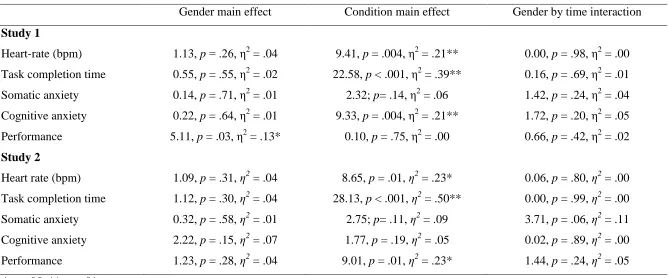
Table 1 provides the results of the dependent variables for the males and females in both the 246
control and stress condition. Adequate reliability was obtained for somatic (Cronbach α = .83 and 247
.86) and cognitive anxiety (α = .87 and .84) scales of the CSAI-R2 for the two assessments. 248
The repeated measures MANOVA had a significant time main effect (Wilks’ lambda = .65, 249
p < .001, η2 = .35) and gender main effect (F(1,31) = 4.06, p = .05; η2 = 10), but no interaction 250
effects (p > .05). Table 2 provides the results of the follow-up repeated measures ANOVA’s. 251
Significant condition main effects were obtained for heart-rate F(1,31) = 9.41, p = .004, η2 = 0.21, 252
task completion time F(1,31) = 22.58, p < .001, η2 = .39, and cognitive anxiety F(1,31) = 9.33, p = 253
.004, η2
= 0.21. Higher average heart-rate, increased task completion duration, and higher levels of 254
pre-condition cognitive state anxiety were obtained in the stress condition compared to the control 255
condition. However, no difference was obtained for somatic state-anxiety or performance. 256
The male and female participants appeared to respond similarly to the stress condition in 257
terms of heart-rate, task completion time, and self-reported somatic and cognitive state anxiety. 258
Except for performance no differences were obtained. 259
Stress type and gender 260
Table 3 provides an overview of the frequency of reported stressors by the male and female 261
participants in the stress condition. Due to a technical malfunction, the data were only available for 262
16 males and 15 females. In total, nine different stressors were identified. Four of the stressors were 263
aloud) and two with performing the task (task execution and physical discomfort). The final three 265
stressors were goal endangerment, lack of concentration, and outcome. No differences were found 266
between the males and females in the total number of stressors reported in the stress condition (χ2 = 267
0.64, p = .42). However, the females reported the putter (χ2 = 19.31, p < .001) and task execution (χ2 268
= 11.56, p < .001) significantly more frequently than males. The outcome was reported significantly 269
more frequently as a stressor by males than females (χ2
= 4.00, p = .05). 270
Gender, stressor type, and coping strategies 271
Table 3 provides an overview of the coping responses used by the male and female 272
participants in response to specific stressors during the stress condition. Males had a tendency to 273
use positive self-talk and relaxation to cope with outcome stressors. Females, on the other hand, 274
used external attributions to cope with the putter and task execution stressors. Few differences in 275
coping preferences were observed for stressors which were reported equally by the male and female 276
participants. 277
Discussion 278
The findings of Study 1 indicate that gender differences in coping are the result of the 279
appraisal process rather than gender per se (Folkman & Lazarus, 1980). This provides support for 280
the situational hypothesis. Study 1 was successful in inducing stress among the participants as 281
small, but significant increases in heart-rate, cognitive anxiety, and task completion time were 282
observed in the stress condition in comparison to the control condition. However, higher stress 283
levels did not result in performance decrements or changes in self-rated somatic anxiety. The latter 284
finding provides empirical support for Woodman and Hardy (2003) who stated that self-reported 285
somatic anxiety is of limited theoretical value in explaining the relationship between physiological 286
arousal and athletic performance. 287
Males were found to successfully hole more putts than the females. However, the absence of 288
other gender main effects in Study 1 suggests that males and females perceived stressors to be of 289
Females were significantly more concerned with the funny putter, and their technique in 291
comparison to the males. The males, on the other hand, were more concerned with the outcome. 292
Males and females have reported different types of stressors in the past (e.g., Ptacek, Smith, & 293
Dodge, 1994). However, this is the first study in which gender differences in appraisal have been 294
found despite being in an identical achievement situation. Previous research has found that males 295
are more concerned with the outcome (ego-orientation) in achievement situations and are more 296
competitive than females (Vazou, Ntoumanis, & Duda, 2006; White & Duda, 1994). Such gender 297
differences in motivational orientation could explain why the females in the present study were 298
more concerned with task execution and as such were more concerned with the putter than the 299
males. Similarly, this would also explain why the males reported outcome, an ego-orientated 300
stressor, more than the females in the stress condition. 301
Differences in coping between the genders in the present study appeared to be caused by the 302
males and females appraising the stressful event differently. Since few differences in coping 303
preferences were observed for stressors which were reported equally by the male and female 304
participants. In other words, coping differences found were only observed for stressor types in 305
which gender differences were observed in terms of its frequency. This supports previous research 306
which has found that individuals cope differently depending on the stressor type (Lee-Baggley, 307
Preece, & DeLongis, 2005). 308
Study 2 309
Introduction 310
The findings of Study 1 supported Tamres et al.’s (2002) suggestion that gender differences 311
in coping are likely to be a consequence of what stimuli are appraised as being stressful within a 312
stressful encounter. Although we did not find any differences between the genders in relation to the 313
intensity of the stressors experienced in Study 1, the male and female participants reported certain 314
stressors more frequently. These differences in the stimuli that was appraised as stressful could be 315
appraisal (Lazarus & Folkman, 1984) reflects an evaluation of the coping strategies an individual 317
could deploy and the belief that he or she could successfully perform the behaviors necessary to 318
manage a stressful situation. Therefore, during secondary appraisal the individual is assessing the 319
control he or she has over a stressor (Lazarus & Folkman, 1984). 320
Study 2 addressed one of the limitations of Study 1 by assessing participants’ control beliefs. 321
Another limitation of Study 1 was the relatively small stress response. As such Study 2 tried to 322
increase induced stress levels by utilizing a different stress manipulation. Finally, Study 2 was 323
conducted to establish whether findings could be replicated albeit in a different stress context. Like 324
Study 1, Study 2 examined whether the situational or dispositional hypothesis was more accurate in 325
explaining coping behavior among male and female. 326
Method 327
Participants 328
Participants were 31 (17 males and 14 females) British University students aged between 18 329
and 45 years old (M age = 23.35 years; SD = 7.30). Similarly to Study 1, participants were excluded 330
if they possessed an official golf handicap or were a member of a golf club. The study was 331
approved by a University’s Research Ethics Committee and participants provided informed consent 332
prior to participating. 333
Apparatus and Questionnaire 334
This study used the same golfing equipment as outlined in Study 1. The Participants also 335
completed a horizontal visual analogue scale to assess participant’s level of stress intensity and 336
control over the stress manipulation. Participants were asked to indicate how much stress the stress 337
manipulation caused and how much control they perceived they had over the stress intervention by 338
dissecting a 10 cm bipolar line anchored by two statements (‘not at all stressful’ vs. ‘extremely 339
stressful’ and ‘no control at all’ versus ‘full control’). The stress thermometer has already 340
demonstrated normal distribution properties and adequate variability (Kowalski & Crocker, 2001). 341
Similar procedures were followed as in Study 1. However, changes were introduced in the 343
induction of stress. Stress was induced using a combination of evaluation apprehension, prize 344
money, the introduction of a ‘funny putter,’ and ego-threatening feedback. The following statement 345
was provided at the beginning of the stress condition: 346
In the next set of 20 putts we would like you to use a newly designed putter which 347
is said to improve golf-putting performance. In addition to this we are going to 348
film this part of the session. We are keen to discover how people adapt to using 349
this new putter. In addition, we will have a prize for the person who holes the 350
most putts. You can win £25 pounds if you are the person who holes the most 351
putts. 352
After 10 attempts additional information was provided to the participants that included ego-353
threatening feedback (Baumeister, 1984). 354
So far, your performance is worse than expected you have holed (number of putts 355
they had missed so far) putts less than the best performer. 356
Analysis Strategy 357
A similar analysis strategy was adopted as previously described for Study 1. In addition, we 358
conducted independent t-test’s to establish whether the males and females differed in self-reported 359
stress intensity and control. 360
Results 361
Stress Intervention 362
Table 1 presents the means and standard deviations of the dependent variables for the males 363
and females in both the control and stress condition. Adequate reliability was obtained for somatic 364
(Cronbach α = .82 and .73) and cognitive anxiety (Cronbach α = .86 and .76) scales of the CSAI-R2 365
for the two measurements. 366
The repeated measures MANOVA had a significant time main effect (Wilks’ lambda = .86, 367
results of the repeated measures ANOVA. Significant condition main effects were obtained for 369
heart-rate F (1,29) = 8.65, p = .01, η2 = 0.23, task completion time F(1,29) = 28.13, p < .001, η2 = 370
0 .50, and performance F (1,29) = 9.01, p = .01, η2
= 0.23). Significantly higher average heart-rate 371
and increased completion time were found in the stress condition compared to the control condition. 372
In addition, participants performed significantly better in the control condition compared with the 373
stress condition. 374
No gender differences were observed in terms of stress response. Also, the male and female 375
participants did not report different levels of stress intensity t(29) = 0.07, p = .95 or perceived 376
control t(29) = 0.43, p = .67 after completion of the golf putting task. 377
Gender and stressor type 378
Table 4 provides an overview of the frequency of reported stressors by the male and female 379
participants in the stress condition. Overall, there was no gender difference in the number of 380
stressors reported (χ2
= 1.00, p = .32). Females, however, reported significantly more frequently 381
task execution (χ2
= 4.84, p = .03) as a stressor than the males. Males again reported more outcome 382
as a stressor (χ2
= 3.81, p = .05). 383
Gender, stressor type, and coping 384
Table 4 provides an overview of the coping responses by the male and female participants in 385
the stress condition in relation to the stressors reported. Differences in coping between the genders 386
were particularly apparent for the stressors task execution and outcome. The females used more 387
technique and positive self-talk coping strategies for both stressors, whereas the males used more 388
external attribution and goal-setting for the outcome stressor. However, females also used more 389
positive self-talk for the physical discomfort and speak aloud stressors, whereas the males used 390
acceptance for the physical discomfort stressor. 391
Discussion 392
In Study 2 we were successful in inducing increased levels of stress in the participants, as a 393
in the stress compared to the control condition. Similar to Study 1, there were differences in the 395
frequency of reported stressors between the genders. These differences partly explained why males 396
and females used different coping strategies. This study also obtained some differences in coping 397
behavior which were unrelated to differences in appraisal. As such differences in coping 398
preferences between the genders in Study 2 were only in part the result of males and females 399
appraising the stress situation differently in terms of frequency of reported stressors. Consequently, 400
this provides only partial support for the situational hypothesis. 401
No significant change was observed for the somatic or cognitive anxiety scale of the CSAI-402
2R (Cox et al., 2003). This finding might be due to the stress manipulation. The ego-threatening 403
feedback was only provided after ten attempts and as such did not influence pre-performance 404
anxiety levels. Females reported task execution as a stressor significantly more often than males 405
who in turn reported outcome more often than the females. These findings could be related to 406
differences in the motivational orientation among males and females within achievement situations. 407
Females are more likely to be task-orientated whereas males are more likely to be ego-orientated 408
(e.g., White & Duda, 1994). 409
Females reported more technique coping and self-talk to cope with stressors such as task 410
execution and outcome. Males, on the other hand, reported more external attribution for the stressor 411
outcome. The use of positive self-talk and technique coping among the females, and the use of 412
external attribution in the males would support Zuckerman’s (1979) observation. Women are more 413
inclined to attribute success to effort whereas men are more likely to attribute success to ability. 414
External attribution is a convenient coping strategy for outcome oriented participants who do not 415
achieve their expected goals. Study 2 also found some differences in coping for the stressors 416
physical discomfort and speak aloud. The females used more positive self-talk for both stressors 417
whereas the males used more acceptance and external attribution for the physical discomfort and 418
The findings of Study 2 were not exactly the same as Study 1. This suggests that different 420
stress manipulations influence the appraisal process and coping behavior of males and females. 421
Overall, the cognitive appraisal process, which is influenced by biological and social factors 422
(Taylor, Klein, Lewis, Guenewald, Gurung, & Updgraff, 2000), could explain the gender 423
differences in stressors reported. The different coping strategies reported in Study 2 are more likely 424
the consequence of these stressor appraisal differences. 425
General Discussion 426
We successfully induced stress in both Study 1 and Study 2. Significant and consistent 427
gender differences were observed in the different frequency of reported stressors. Across both 428
studies females reported being concerned with task execution and males with the outcome. Also, the 429
females reported the putter more frequently as a stressor in Study 1. Despite creating a similar stress 430
event for the participants, different stimuli were appraised more or less frequently as being stressful 431
by the male and female participants. These stressor appraisal differences between the genders could 432
be the result of different motivational orientation in achievement situations. The notion that males 433
are generally more ego-orientated and females more task-orientated (e.g., White & Duda, 1994) 434
might explain why males and females reported different stressors more or less frequently. It is 435
unclear whether such differences in motivational orientation are the result of social or biological 436
processes. That is, whether motivational orientation is a consequence of learning or genetics. 437
Gender differences in the stressors experienced have been reported previously in the 438
literature (Folkman & Lazarus, 1980). The results of the present studies suggest that even in a 439
controlled situation, gender differences transpire in the cognitive significance attributed to the 440
stressors encountered. The adopted methodology was crucial in obtaining this information, 441
contributing in this way to the full exploration of gender differences in coping. Thinking aloud 442
whilst executing a motor task allows the exploration of the stimuli that participants appraise as 443
being stressful in a controlled encounter during real time as opposed to a retrospective recall of a 444
for the notion that differences in stress appraisals cause male and female participants to deploy 446
different coping strategies (Lee-Baggley et al., 2005). Similar to Hoar et al.’s (2010) findings, 447
gender differences in coping observed in our two studies are likely to be caused by males and 448
females reporting different stressors, as opposed to differences in intensity of the one’s feelings 449
associated with different stressors. 450
There is currently no gold standard method of measuring coping. Ecological approaches 451
result in concrete descriptions, but this may miss reports of more complex, abstract problems, and 452
broader conceptualization of coping that are better perceived with some retrospection (Folkman & 453
Moskowitz, 2004). Think aloud protocols offer a promising avenue for stress and coping 454
researchers (for a review see Nicholls & Ntoumanis, 2010). The fullest understanding of coping will 455
be achieved using a combination of methodologies and research designs. 456
In conclusion, the findings from Study 1 and Study 2 indicate that although there were no 457
gender stress intensity differences, there were gender differences in terms of the frequencies of 458
certain stressors reported. When in the same stressful situation, males and females tend to differ in 459
what stimuli they appraise as being stressful and how often they appraise stressors. Gender 460
differences in stress appraisals observed in the studies might be the result of social roles males and 461
females play in society or achievement situations. These roles might shape appraisal in future stress 462
encounters. Alternatively, these differences might be due to dispositional factors. Future research 463
could consider stress appraisal in relation to gender and coping. The results of both our studies 464
suggest that variations in stressor appraisal can explain some of the differences observed in coping 465
between males and females. Our findings therefore provide tentative support for the situational 466
hypothesis. Finally, in line with previous research recommendations (Kaiseler et al., 2012) our 467
findings add support to the idea that applied practitioners should contemplate the cognitive 468
appraisal process before teaching different coping skills for male and female athletes. 469
References 471
Baumeister, R. F. (1984). Choking under pressure: Self-consciousness and paradoxical effects of 472
incentives on skillful performance. Journal of Personality and Social Psychology, 46, 610-473
620. doi:10.1037//0022-3514.46.3.610 474
Beilock, S. L., & Carr, T. H. (2001). On the fragility of skilled performance: What governs choking 475
under pressure? Journal of Experimental Psychology, 130, 4, 701-725. doi: 1100..11 1037 476
//0096-3445.130.4.701. 477
Contrada, R. J., & Baum, A. (2010). Handbook of Stress Science: Psychology, Biology, and Health. 478
New York: Springer Publishing Company. 479
Cox, R. H., Martens, M. P., & Russel, W. D. (2003). Measuring anxiety in athletics: The revised 480
competitive state inventory–2. Journal of Sport & Exercise Psychology, 25, 519-533. 481
Retrieved from http://journals.humankinetics.com/jsep 482
Crocker, P.R.E., Mosewich, A.D., Kowalski, K.C., & Besenski, L.J. (2010). Coping: Research 483
design and analysis issues. In A.R. Nicholls (Ed.) Coping in sport: Theory, methods, and 484
related constructs. New York: Nova Science Publishers. 485
Ericsson, K. A., & Simon, H. A. (1993). Verbal reports as data. Cambridge, MA: MIT Press. 486
Folkman, S., & Lazarus, R. S. (1980). An analysis of coping in a middle-aged community sample. 487
Journal of Health and Social Behavior, 21, 219-239. doi:10.2307/2136617 488
Folkman, S., & Moskowitz, J.T. (2004). Coping: Pitfalls and promise. Annual Review of
489
Psychology, 55, 745–774. doi: 10.1146/annurev.psych.55.090902.141456 490
Hoar, S.D., Kowalski, K.C., Gaudreau, P., & Crocker, P.R.E. (2006). A review of coping in sport. 491
In S. Hanton & S.D. Mellalieu (Eds.) Literature Reviews in Sport Psychology, (pp.47-90). 492
New York: Hauppauge. 493
Hoar, S.D., Crocker, P.R.E., Holt, N.L., Tamminen, K.A. (2010). Gender differences in adolescent 494
athletes’ coping with interpersonal stressors in sport: More similarities than differences? 495
Kaiseler, M., & Polman, R.C.J. (2010). Gender and coping in sport: Do male and female athletes 497
cope differently? In A.R. Nicholls (Ed.) Coping in sport: Theory, methods, and related 498
constructs. New York: Nova Science Publishers. 499
Kaiseler, M. H., Polman, R. C. J., & Nicholls, A. R. (2012). Effects of the Big Five personality 500
dimensions on appraisal, coping, and coping effectiveness in sport. European Journal of Sport 501
Science, 12, 62-72.DOI:10.1080/17461391.2010.551410. 502
Kowalski, K. C., & Crocker, P. R. E. (2001). Development and validation of the coping function 503
questionnaire for adolescents in sport. Journal of Sport & Exercise Psychology, 23, 136-155. 504
Retrieved from http://journals.humankinetics.com/jsep 505
Lazarus, R.S., & Folkman, S. (1984). Stress, appraisal and coping. New York: Springer. 506
Lee-Baggley, D., Preece, M., & DeLongis, A. (2005). Coping with interpersonal stress: Role of Big 507
Five traits. Journal of Personality, 73-1141-1180. doi: 10.1111/j.1467-6494.2005.00345 508
Masters, R. S. W. (1992). Knowledge, knerves, and know-how: The role of explicit versus implicit 509
knowledge in the breakdown of a complex motor skill under pressure. British Journal of 510
Psychology, 83, 343-358. Retrieved from www.bpsjournals.co.uk 511
Maykut, P., & Morehouse, R. (1994). Beginning qualitative research: A philosophic and practical 512
guide. London: The Falmer Press. 513
Nicholls, A. R., & Ntoumanis, N. (2010). Traditional and new methods of assessing coping in sport. 514
In A. R. Nicholls (Ed.) Coping in sport: Theory, methods, and related constructs. New York: 515
Nova Science Publishers. 516
Nicholls, A. R., & Polman, R. C. J. (2007). Coping in sport: A systematic review. Journal of Sport 517
Sciences, 25, 11-31. doi: 10.1080/02640410600630654 518
Nicholls, A. R., & Polman, R. C. J. (2008).Think Aloud: Acute stress and coping strategies during 519
Ptacek., J. T., Smith, R. E., & Dodge, K. L. (1994). Gender differences in coping with stress: When 521
stressors and appraisals do not differ. Personality and Social Psychology Bulletin, 20, 421-522
430. doi: 10.1177/0146167294204009 523
Ptacek, J. T., Smith, R. E., Espe, K., & Rafferty, B. (1994). Limited correspondence between daily 524
coping efforts and retrospective coping recall. Psychological Assessment, 6, 41-49. Retrieved 525
from http://linkinghub.elsev ier.com/retrieve/pii/S1040359002004611 526
Rosario, M., Shinn, M., Morch, H., & Carol, B. H. (1988).Gender differences in coping and social 527
supports: Testing socialization and role constraint theories. Journal of Community Psychology 528
16, 55-69. doi: 10.1002/1520-6629(198801) 529
Sigmon, S. T., Stanton, A. L., & Snyder, C. R. (1995). Gender differences in coping: A further test 530
of socialization and role constraint theories. Sex Roles, 33, 565-587. doi:10.1007/BF01547718 531
Skinner, E.A., Edge, K., Altman, J., & Sherwood, H. (2003). Searching for the structure of coping: 532
A review and critique of category systems for classifying ways of coping. Psychological 533
Bulletin, 129, 216-269. doi:10.1037/0033-2909.129.2.216 534
Tamres, L.K., Janicki, D., & Helgeson, V.S. (2002). Sex differences in coping behavior: A meta-535
analytic review and an examination of relative coping. Personality and Social Psychology 536
Review 6, 2-30. doi: 10.1207/S15327957PSPR0601_1 537
Taylor, S. E., Klein, L. C., Lewis, B. P., Guenewald, T. L., Gurung, R. A. & Updgraff, J. A. (2000). 538
Biobehavioral responses to stress in females: Tend-and-be-friend, not fight-or-flight. 539
Psychological Review, 107, 411-429. doi:10.1037/0033-295X.107.3.411 540
Vazou, S., Ntoumanis, N., & Duda, J. L. (2006). Predicting young athletes’ motivational indices as 541
a function of their perceptions of the coach- and peer-created climate. Psychology of Sport & 542
Exercise, 7, 215-233. doi:10.1016/j.psychsport.2005.08.007 543
Vickers, J. N. & Williams, A. M. (2007). Performing under pressure: the effects of physiological 544
arousal, cognitive anxiety, and gaze control in biathlon. Journal of Motor Behaviour, 39, 5, 545
Zuckerman, M. (1979). Attribution of success and failure revisited; or: The motivational bias is 547
alive and well in attribution theory. Journal of Personality, 47, 147–163. doi:10.1111/j.1467-548
6494.1979.tb00202.x 549
White, S. A., & Duda, J. L. (1994). The relationship of gender, level of sport involvement, and 550
participation motivation to task and ego orientation. International Journal of Sport 551
Psychology, 25, 4-18. 552
Woodman, T., & Hardy L. (2003). The relative impact of cognitive anxiety and self-confidence 553
upon sport performance: A meta-analysis. Journal Sports Sciences, 21(6), 443-457. 554
Table 1 556
Mean and Standard Deviations for the Dependent Variables for Males and Females Separately, and for the sample as a whole in the Control and 557
Experimental Conditions for Study 1 and Study 2. 558
559
Males control
Females control
Overall control
Male Stress
Female Stress
Overall Stress
M SD M SD M SD M SD M SD M SD
Study 1
Heart-rate (BPM) 95.65 10.02 92.08 9.95 93.91 10.01 98.77 9.91 95.24 9.91 97.06 9.94
Task completion time 4.76 1.55 4.45 1.40 4.61 1.47 5.39 1.64 4.98 1.45 5.19 1.54
Somatic anxiety 16.16 5.31 14.60 4.53 15.40 4.93 16.47 3.91 17.06 5.29 16.75 4.57
Cognitive anxiety 19.26 6.01 17.22 5.27 18.27 5.67 20.94 5.31 21.44 6.46 21.18 5.82
Performance 9.89 5.65 6.44 3.31 8.21 4.92 9.26 4.45 6.72 3.59 8.02 4.20
Study 2
Heart-rate (BPM) 91.29 15.68 86.43 9.24 89.06 13.19 93.41 16.98 88.21 8.28 91.06 13.80
Task completion time 4.05 1.35 3.61 0.67 3.85 1.10 4.77 1.48 4.34 0.98 4.57 1.27
Somatic anxiety 14.11 4.19 13.67 3.20 13.91 3.72 13.94 4.41 15.92 4.55 14.84 4.51
Cognitive anxiety 13.88 4.32 16.71 5.24 15.16 4.89 14.94 6.09 17.57 6.08 16.12 6.13
Performance 11.18 3.89 8.86 5.08 10.13 4.54 9.19 4.28 8.00 5.05 8.65 4.60
Stress Intensity 4.17 2.51 4.11 2.30 4.15 2.37
Table 2 560
Results of the Repeated Measures Analysis of Variance (gender (2) by condition (no-stress vs. stress) Including Effect Size for Study 1 (F(1,31)) and 561
Study 2 (F(1,29)). 562
563
Gender main effect Condition main effect Gender by time interaction Study 1
Heart-rate (bpm) 1.13, p = .26, η2 = .04 9.41, p = .004, η2 = .21** 0.00, p = .98, η2 = .00 Task completion time 0.55, p = .55, η2 = .02 22.58, p < .001, η2 = .39** 0.16, p = .69, η2 = .01 Somatic anxiety 0.14, p = .71, η2 = .01 2.32; p= .14, η2 = .06 1.42, p = .24, η2 = .04 Cognitive anxiety 0.22, p = .64, η2 = .01 9.33, p = .004, η2 = .21** 1.72, p = .20, η2 = .05 Performance 5.11, p = .03, η2 = .13* 0.10, p = .75, η2 = .00 0.66, p = .42, η2 = .02 Study 2
Heart rate (bpm) 1.09, p = .31, η2 = .04 8.65, p = .01, η2 = .23* 0.06, p = .80, η2 = .00 Task completion time 1.12, p = .30, η2 = .04 28.13, p < .001, η2 = .50** 0.00, p = .99, η2 = .00 Somatic anxiety 0.32, p = .58, η2 = .01 2.75; p= .11, η2 = .09 3.71, p = .06, η2 = .11 Cognitive anxiety 2.22, p = .15, η2 = .07 1.77, p = .19, η2 = .05 0.02, p = .89, η2 = .00 Performance 1.23, p = .28, η2 = .04 9.01, p = .01, η2 = .23* 1.44, p = .24, η2 = .05
Table 3 565
The Stressors Reported by Females and Males in the Experimental Stress Condition from Study 1 566
and the Coping Strategies Utilized to Manage each Stressor. 567
568
Stressors Coping Males Stress
(n = 16)
Females Stress (n = 15)
Evaluation apprehension
3 (2) 1-2; 0.18 5(5) 1-1; 0.33
Take time - 1 (1) 1-1; 0.06
Positive self-talk 2 (1) 2-2; 0.12 1 (1) 1-1; 0.06
Relaxation - 1 (1) 1-1; 0.06
Financial inducement 21 (8) 1-4; 1.31 22 (9) 1-4; 1.46
Concentration 2 (2) 1-1; 0.12 2 (2) 1-1; 0.12
Planning 3 (2) 1-2; 0.19 1 (1) 1-1; 0.06
Take time 1 (1) 1-1; 0.06 1 (1) 1-1; 0.06
Technique 4 (2) 2-2; 0.25 3 (2) 1-2; 0.20
Acceptance 1 (1) 1-1; 0.06 2 (2) 1-1; 0.12
Positive self-talk 10 (5) 1-3; 0.63 7 (4) 1-3; 0.47
Relaxation 1 (1) 1-1; 0.06 -
Blocking 1 (1) 1-1; 0.06 -
External attribution 1 (1) 1-1; 0.06 1 (1) 1-1; 0.06
Putter* 13 (7) 1-4; 0.81 32(12) 1-5; 2.1
Concentration 3 (2) 1-2; 0.18 -
Goal setting 1 (1) 1-1; 0.06 2 (2) 1-1; 0.12
Take time - 1 (1) 1-1; 0.06
Acceptance - 5 (3) 1-2; 0.33
Positive self-talk 5 (3) 1-2; 0.31 8 (4) 1-3; 0.53
Relaxation 1 (1) 1-1; 0.06 -
Blocking 2 (2) 1-1; 0.12 -
External attribution - 3 (2) 1-2; 0.20
Task execution* 15(9) 1-4; 0.93 29 (11) 1-6; 1.93
Concentration 1 (1) 1-1; 0.06 3 (2) 1-2; 0.20 Goal setting 4 (3) 1-2; 0.25 4 (3) 1-2; 0.26
Take time 5 (3) 1-3; 0.31 1 (1) 1-1; 0.06
Technique 22 (6) 1-8; 1.37 15 (5) 1-4; 1.0
Acceptance 5 (3) 1-3; 0.31 4 (3) 1-3; 0.26
Imagery 4 (3) 1-3; 0.25 1 (1) 1-1; 0.06
Relaxation 6 (2) 2-4; 0.25 2 (2) 1-1; 0.12
Blocking 4 (2) 1-2; 0.25 4 (2) 2-2; 0.26
Lack of coping 1 (1) 1-1; 0.06 3 (3) 1-1; 0.20 External attribution 4 (2) 1-3; 0.25 6 (4) 1-2; 0.40
Outcome* 37(12) 1-5; 2.31 23(10) 1-4; 1.53
Goal setting 12 (3) 3-6; 0.75 4 (3) 1-2; 0.26
Planning 6 (3) 1-3; 0.37 -
Take time - 1 (1) 1-1; 0.06
Acceptance 4 (3) 1-2; 0.25 -
Positive self-talk 10 (5) 1-3; 0.63 2 (2) 1-1; 0.12
Relaxation 2 (2) 1-1; 0.25 -
External attribution 1 (1) 1-1; 0.06 -
Physical discomfort 8(5) 1-2; 0.50 3(2) 1-2; 0.20
Goal setting - 3 (2) 1-2; 0.20
Take time - 1 (1) 1-1; 0.06
Positive self-talk 1 (1) 1-1; 0.06 2 (2) 1-1; 0.12 Wishful thinking 2 (2) 1-1; 0.25
Blocking 1 (1) 1-1; 0.06 -
Speak aloud 1(1) 1-1; 0.06 7(3) 1-3; 0.46
Concentration - 4 (2) 1-2; 0.26
Positive self-talk 1 (1) 1-1; 0.06 1 (1) 1-1; 0.06
Lack of coping - 3 (2) 1-2; 0.20
Goal endangerment - 1(1) 1-1; 0.06
Lack of concentration 2(1) 2-2; 0.12 2(2) 1-1; 0.12
Note. The first number represents the absolute frequency of the reported stressors or coping 569
strategies. Between brackets how many participants reported this stressor or coping strategy followed 570
by the range. Finally, the relative frequency is reported (absolute number of reported divided by the 571
Table 4 573
The Stressors Reported by Females and Males in the Experimental Stress Condition in Study 2 and 574
the Coping Strategies used to manage each stressor. 575
576
Stressors Coping Males experimental
(n = 17)
Females experimental (n = 14)
Evaluation apprehension 5 (4) 1-2; 0.29 3 (3) 1-1; 0.21
Financial inducement 7 (5) 1-2; 0.41 4 (3) 1-2; 0.21
Technique 2 (2) 1-1; 0.11 -
Relaxation 1 (1) 1-1; 0.06 -
Blocking 2 (2) 1-1; 0.11 1 (1) 1-1; 0.07
Putter 19 (9) 1-5; 1.11 14 (8) 1-3; 1.00
Take time - 2 (2) 1-1; 0.14
Technique 18 (6) 1-7; 1.05 12 (5) 2-4; 0.86
Acceptance 1 (1) 1-1; 0.07
External attribution 1 (1) 1-1; 0.06 1 (1) 1-1; 0.07
Goal endangerment 2 (2) 1-1; 0.11 2( 1) 1-1; 0.12
Technique 2 (2) 1-1; 0.11 -
Positive self-talk 1 (1) 1-1; 0.06 -
Lack of concentration 2 (2) 1-1; 0.11 3 (3) 1-1; 0.21
Concentration 2 (2) 1-1; 0.11 1 (1) 1-1; 0.07
Technique - 4 (3) 1-2; 0.29
Positive self-talk 2 (2) 1-1; 0.11 -
Task execution* 28 (10) 1-5; 1.64 36 (13) 1-5; 2.57
Concentration 8 (4) 1-4; 0.47 6 (5) 1-2; 0.42 Goal setting 4 (4) 1-1; 0.24 4 (3) 1-2; 0.29
Planning 1 (1) 1-1; 0.06 4 (2) 1-3; 0.29
Technique 14 (5) 1-5; 0.82 20 (5) 2-8; 1.43
Acceptance 2 (2) 1-1; 0.14
Positive self-talk 20 (6) 1-5; 1.18 22 (6) 1-8; 1.50
Outcome* 37 (13) 3-5; 2.17 22 (10) 1-5; 1.57
Concentration 1 (1) 1-1; 0.06 -
Goal setting 5 (3) 1-3; 0.29 1 (1) 1-1; 0.07
Take time 3 (2) 1-2; 0.17 4 (3) 1-2; 0.29
Technique 8 (4) 1-3; 0.47 10 (4) 2-3; 0.71
Positive self-talk 3 (3) 1-1; 0.17 9 (4) 1-3; 0.64
Physical discomfort 3 (3) 1-1; 0.18 3 (3) 1-1; 021
Goal setting 3 (2) 1-2; 0.18 -
Technique - 2 (2) 1-1; 0.14
Acceptance 7 (3) 1-4; 0.41 2 (2) 1-1; 0.14
Positive self-talk - 5 (3) 1-3; 0.36
Wishful thinking 1 (1) 1-1; 0.06 1 (1) 1-1; 0.07
Speak aloud 8 (4) 1-4; 0.47 3 (3) 1-1; 0.21
Acceptance 1 (1) 1-1; 0.06 1 (1) 1-1; 0.07
Positive self-talk - 5 (3) 1-3; 0.36
External attribution 3 (2) 1-2; 0.18 -
Note. The first number represents the absolute frequency of the reported stressors or coping 577
strategies. Between brackets how many participants reported this stressor or coping strategy followed 578
by the range. Finally, the relative frequency is reported (absolute number of reported divided by the 579
total number of participants of which data were obtained). *p < .05 580